Green Tara Is the Bodhisattva Known for Her Compassion and Swiftness
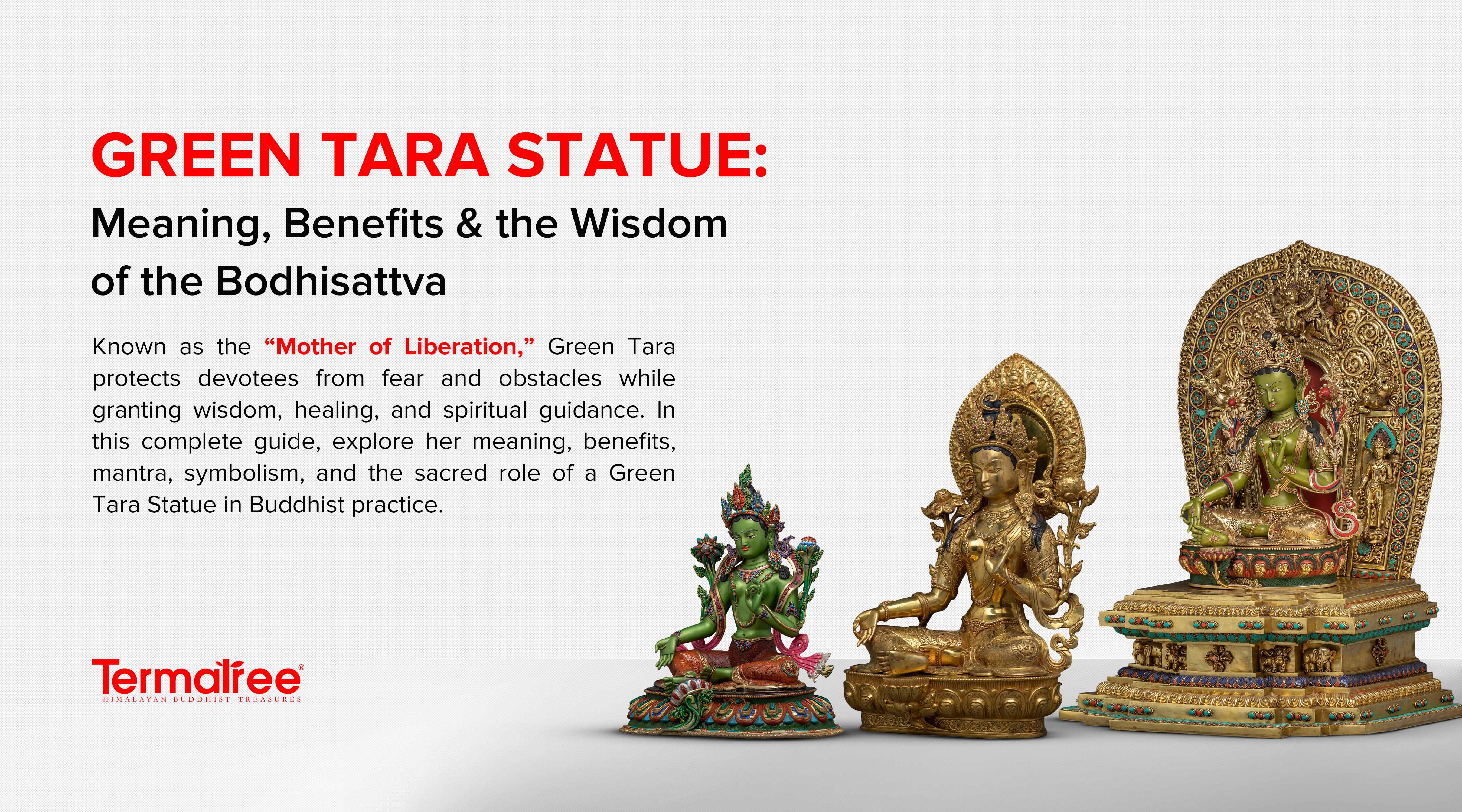
The Green Tara statue has a way of captivating you right from the start with its calm aura and yet there’s an undeniable sense of readiness in her stance. Her right leg is slightly extended, almost as if she’s about to step forward and come to your rescue. Meanwhile, her left leg is folded in meditation, firmly grounded in tranquility. This striking contrast showcases her as a figure of profound wisdom and the quick compassion to leap into action when needed.
Green Tara feels close and nurturing, always prepared to respond like a mother to her child's call. Thus, she has been a beloved figure in Buddhism, seen not just as a statue or a thangka painting but as a living symbol of protection, compassion, and quick help in times of need. In this read, explore who she is, the meaning behind her form, how she compares to White Tara, the story of her origin, the 21 forms she takes, and what her posture and jewelry represent.
The Emanation of Mother Tara: Born Out of Tears
According to Tibetan tradition, Tara emerged from the tears of Avalokiteśvara (Chenrezig), the Bodhisattva of Infinite Compassion. As Avalokiteśvara gazed upon the endless suffering in the world, his heart shattered. He wept out of love, despair, and the heavy burden of wanting to free all beings from pain. From those tears, a beautiful lotus blossomed and from that lotus, Tara came into being. She didn’t just spring from sorrow; she was born from the active compassion that flows through grief and transforms it into strength.
While Avalokiteśvara embodies the watchful eye that perceives all suffering, Tara is the dynamic force that rises to confront it. She is compassion in action; quick, fearless, and tireless. While Chenrezig reflects, Tara takes action. Her origin story conveys a core teaching in Mahayana Buddhism: compassion must be both felt and expressed. It needs to move, speak, and take shape. Tara is that shape; the living embodiment of love that never hesitates. In this sense, her birth is more than just a myth; it’s a powerful message. It teaches us that even in our darkest moments of helplessness or heartbreak, something extraordinary can emerge. From grief, we find action. From despair, we cultivate resolve. From tears, a goddess arises.
Want to read more on How Does Mother Tara Emanate? Read the blog here.
Tara: The Feminine Bodhisattva Who Defied Tradition
In the early days of Buddhism, most Bodhisattvas were portrayed as male figures, making it quite uncommon to find a feminine presence at the heart of spiritual devotion. But then came Tara, who shattered that mold. Legend has it that Tara was once a devoted princess named Jñānacandra or Yeshe Dawa in Tibetan. She practiced with great dedication and amassed a wealth of merit. When people suggested she pray to be reborn as a man to reach Buddhahood, she boldly declined. Instead, she made a groundbreaking vow: “In this life and all future ones, I will stay in female form until every being is liberated. May I demonstrate that enlightenment goes beyond gender, and that being feminine is not a barrier to awakening.”
This vow turned Tara into a shining symbol of feminine empowerment. Green Tara, in particular, is revered not just as a savior and nurturing figure, but also as a representation of feminine strength and agency. She embodies qualities that are often overlooked in male-dominated religious traditions; compassion combined with bravery, nurturing alongside decisive action. For practitioners, especially women, her statue stands as both a spiritual guide and a powerful affirmation: a reminder that wisdom and liberation are meant for everyone.
Dive deep into The Legend of Tara: From the Dakini to the Bodhisattva of Compassion here.
Green Tara: The Emerald Light of Compassion in Action
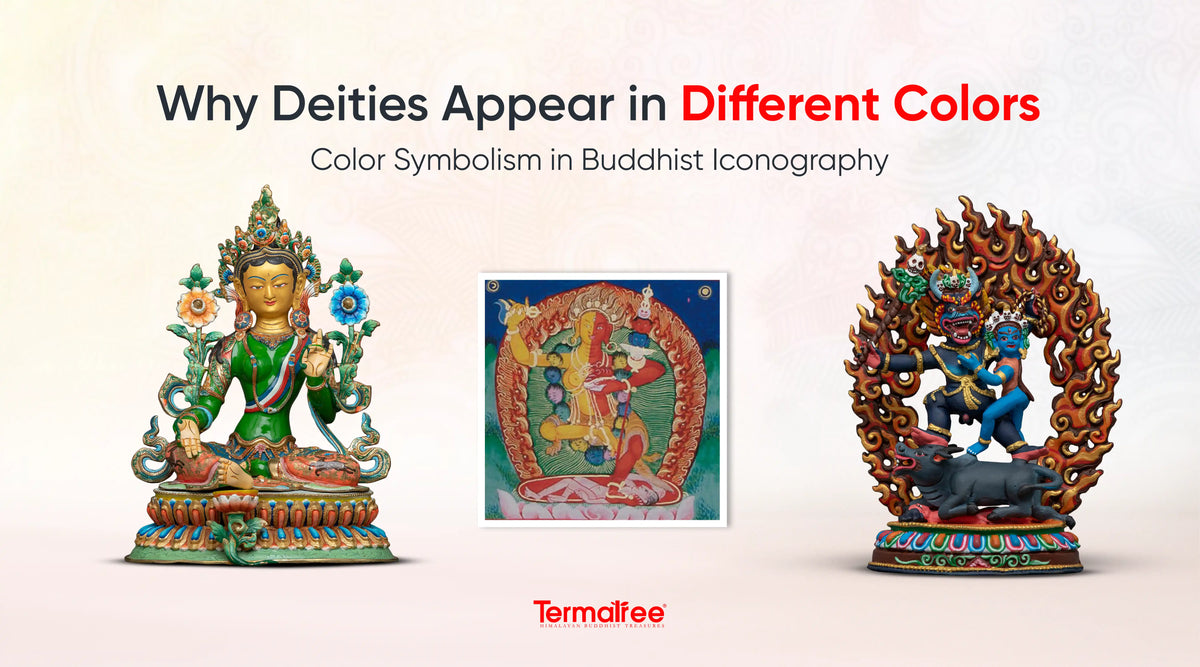
At the core of Green Tara’s importance lies her vibrant color; green, symbolizing energy, renewal, and the essence of life itself. In Buddhist art, green signifies the element of air and wind, embodying activity, movement, and speed. Just like the wind that flows freely in every direction, her compassion knows no bounds, effortlessly overcoming any obstacles in its path. Thus, she is often referred to as the “Swift One” because, unlike many Buddhas or Bodhisattvas who embody stillness and reflection, Tara is always ready to spring into action.
This means that devotees seek her guidance in times of fear, danger, or uncertainty whether they’re navigating perilous Himalayan trails or dealing with the everyday storms of life. A Green Tara statue beautifully captures this blend of energies: a sense of calm rooted in meditation, paired with a readiness for action. Her face radiates serenity, her posture is elegant, her gestures are protective, and her presence is both comforting and empowering.
Read our blog on how to Empower Your Spirit: Harnessing the Energy of Buddhist Green Tara here.
White Tara and Green Tara: A Dynamic Pair

In Buddhist traditions, Mother Tara appears in various forms, with White Tara and Green Tara being the most prominent ones. Both are regarded as motherly figures, embodying enlightened compassion, but they each have their unique energies:
- White Tara symbolizes longevity, healing, and tranquility. She exudes calmness and nurturing qualities, often depicted with seven eyes (located on her palms, soles, and forehead), which represent heightened awareness and vigilance. Statues of White Tara are commonly placed on altars to invite blessings of good health, longevity, and peace of mind.
- On the other hand, Green Tara embodies fearless compassion and swift protection. While White Tara provides a soothing, nurturing presence, Green Tara is quick to act, helping to remove obstacles, fears, and dangers. Her right hand is extended in a gesture of generosity (varada mudra), while her left hand forms the protective gesture (abhaya mudra).
Together, the statues of White and Green Tara create a harmonious balance: one offers serenity and healing, while the other provides courage and immediate support. Many practitioners choose to keep both on their altars to foster a well-rounded spiritual journey, embracing quiet inner healing alongside bold outward action.
Read More about White Tara and Green Tara: An Insightful Comparison through this link.
Who Are The 21 Taras?
Bodhisattva Tara is deeply revered for her embodiment of compassion and her active role in helping all sentient beings. While Tara takes on many forms, Tibetan Buddhism highlights her 21 main emanations, each representing a distinct energy aimed at tackling specific challenges and fulfilling needs along the spiritual journey. At the center of these 21 Taras is Green Tara, affectionately known as the "Swift One." She symbolizes the dynamic force of compassion, always ready to lend a hand and shield those who are suffering.
She acts as the heart of all 21 emanations, with her energy being fundamental to the various forms of Tara. Each of the other forms radiates from the core energy of Green Tara, which is why she occupies such a central role in Tara worship.
| Tara Name | Attribute | Symbolism |
|---|---|---|
| Green Tara | Seated, one leg extended, hand in generosity mudra | Swift action, active compassion, protection from obstacles |
| White Tara | Seated in meditation, seven eyes | Healing, purity, longevity |
| Red Tara | Dynamic, seated or standing, with flaming aura | Magnetizing energy, vitality, transformation |
| Black Tara | Wrathful, holding weapon or riding a horse | Protection from dark forces, overcoming negativity |
| Yellow Tara | Seated with peaceful posture | Prosperity, wealth, abundance |
| Blue Tara | Seated, hands in wisdom gesture | Wisdom, insight, spiritual clarity |
| Pink Tara | Seated with compassionate posture | Love, devotion, emotional healing |
| Purple Tara | Protective stance, holding implement | Spiritual power, protection from harmful influences |
| Golden Tara | Seated with serene demeanor | Success, spiritual achievement, wealth |
| Silver Tara | Seated in meditation posture | Purity, clarity, spiritual enlightenment |
| Maroon Tara | Fierce posture, compassionate expression | Courage, strength, overcoming fear and obstacles |
| Violet Tara | Seated in a contemplative pose | Transformation, change, spiritual growth |
| Turquoise Tara | Seated, hand in healing gesture | Rejuvenation, physical and emotional well-being |
| Amber Tara | Seated with relaxed posture | Wisdom, knowledge, enlightenment |
| Indigo Tara | Seated with teaching gesture | Intuition, psychic abilities, inner vision |
| Crimson Tara | Dynamic pose, powerful energy | Passion, energy, active removal of obstacles |
| Emerald Tara | Balanced, peaceful posture | Harmony, balance, spiritual alignment |
| Ivory Tara | Seated in peaceful pose | Innocence, purity, protection from harmful influences |
| Scarlet Tara | Vibrant, dynamic posture | Courage, vitality, overcoming fear and challenges |
| Cobalt Tara | Stern expression, protective pose | Strength, protection from negative forces |
| Opal Tara | Serene posture with healing gesture | Healing, transformation, spiritual growth |
Every Tara form comes with its own special mantra and purpose. When you recite the Praises to the 21 Taras, a prayer that calls upon each form, it helps to clear your mind and spirit, nurturing the qualities that each Tara embodies. People often say this prayer in front of a Green Tara statue or thangka, as her powerful energy unites the blessings of all 21 forms.
Get to know more about the 21 Tara Praise, Meaning And Benefits Of The Mantra here.
Why Is Green Tara at the Center?
Green Tara holds a special place as the embodiment of compassion, acting as a unifying force for all. She is viewed as the most approachable and immediate form of Tara, always ready to step in and help clear away obstacles while showering her blessings on those who seek her aid. Devotees feel that by calling upon Green Tara, they tap into the full range of her manifestations, enabling her to support them in various aspects of their spiritual paths. Her pivotal role in Tara worship emphasizes the collective nature of compassion, which goes beyond individual desires to encompass everything from healing and longevity to protection and prosperity. With her infinite love and quick response, Green Tara represents both the source and the ultimate expression of the qualities found in all the twenty-one Taras.
Green Tara, the Fearless One: Protection and Liberation from Fear
One of Green Tara’s most beloved roles is as The Fearless One — a swift protector who offers refuge from both external dangers and the internal fears that keep us trapped. Tibetan texts describe her as the liberator from the “Eight Great Fears,” each one representing both a physical danger and a deeper, psychological affliction:
-
Lions – pride
-
Elephants – ignorance
-
Fire – anger
-
Snakes – jealousy
-
Thieves – wrong views
-
Prisons – greed and attachment
-
Water – desire and uncontrolled emotions
-
Demons – doubt and delusion
These fears are not just ancient metaphors; they are as relevant today as ever. We encounter them every day, both in our thoughts and in the world around us. Emotions like pride, anger, jealousy, confusion, and doubt are just as tangible and constraining as any physical danger. Tara’s presence helps to alleviate these inner struggles, providing us with the courage and clarity needed to rise above them. In the Himalayan regions, travelers would call upon Tara when navigating treacherous paths.
Her image served as a beacon of strength against wild animals, natural disasters, and even bandits. Yet, for those on a spiritual quest, her true power lies in freeing the mind. When we connect with Green Tara, we tap into a force that confronts fear directly — not by running away from it, but by slicing through it with wisdom and compassion. Having a Green Tara statue on your home or temple altar invites her protective energy into your space. It serves as a constant reminder of her swift action and our own ability to embody courageous compassion.
Tara’s Mantra: A Call for Swift Compassion
Green Tara’s mantra is:
"Om Tare Tuttare Ture Soha"
It is one of the most widely recited in Tibetan Buddhism. It is simple, powerful, and deeply transformative.
-
"Om" – the sacred syllable, the essence of the universe
-
"Tare" – liberator from suffering and samsara
-
"Tuttare" – remover of inner fears and obstacles
-
"Ture" – giver of success and spiritual strength
-
"Soha" – a closing syllable meaning “so be it,” sealing the intention
Chanting this mantra is believed to tap into Tara’s swift energy, creating a direct connection to her compassionate actions. For many who practice, repeating it daily fosters a sense of inner peace, clarity, and protection. It is a way to let go of fear, connect with wisdom, and invite Mother Tara's blessings into your life. When you say the mantra in front of her image or statue, it becomes even more powerful as it becomes a ritual filled with intention, a heartfelt plea for assistance, and a moment to deeply connect with the feminine energy of enlightened action.
Discover The Sacred Sound: Exploring the Role of Mantras in Buddhist Rituals here.
Green Tara Iconography: A Blueprint of Enlightened Compassion
Every detail of a Green Tara statue is thoughtfully selected, not just for its aesthetic appeal but as a meaningful teaching tool. In Vajrayana Buddhism, sacred art transcends mere decoration; it's a form of meditation. The proportions, posture, ornaments, and hand gestures (mudras) adhere to specific iconographic texts, transforming each statue into a visual scripture of Dharma.
1. Lotus Throne and Posture: Purity in Action

Green Tara is almost always depicted seated upon a fully blossomed lotus throne, which is one of the central symbols in Buddhism. The lotus rises unsullied from muddy waters, symbolizing the potential to attain enlightenment despite the suffering of samsara.
-
The Open Blossom: Unlike closed buds that represent potential, Tara’s lotus is in full bloom, symbolizing complete awakening.
-
The Right Leg Extended: Her right leg rests on a smaller lotus pedestal, ready to rise. This posture signifies her swiftness in responding to suffering, showing that Tara’s compassionate action comes quickly to those in need.
-
The Left Leg Folded: This leg signifies grounding in meditation and wisdom, showing that Tara’s compassionate activity is grounded in deep inner stillness.
The combination of the lotus throne and the way one sits sends a powerful message: genuine compassionate action comes from a deep inner understanding, and true wisdom reveals itself through compassionate involvement.
Read About The Gorgeous Green Tara Sculpture Elegantly Perched on Her Lotus Throne here.
2. The Hand Gestures (Mudras): Generosity and Refuge
The mudras in Green Tara’s statues carry profound spiritual teachings. These hand gestures are not just decorative; they embody her compassionate qualities.
-
Right Hand (Varada Mudra – Gesture of Generosity): Her right hand extends downward, palm open. This gesture symbolizes supreme generosity, reminding practitioners that spiritual life is grounded in giving, whether it be time, resources, or compassion.
-
Left Hand (Abhaya Mudra – Gesture of Refuge and Protection): Her left hand is gracefully lifted near her heart, delicately holding the stem of a blue lotus (utpala). The way her thumb and ring finger come together beautifully symbolizes the harmony of wisdom and compassion. Meanwhile, the three fingers that point upward represent the Three Jewels: Buddha, Dharma, and Sangha. This gesture is a powerful sign of protection against fear and offers a safe haven on the Buddhist path.
Together, these mudras communicate the dual purpose of Green Tara: to protect and provide. She removes fear and grants blessings, embodying refuge and generosity.
3. Draped in Meaning: Tara’s Clothing and Adornments
Tara’s attire is rich with symbolic meaning, reminding practitioners of the qualities of enlightenment.
-
Jeweled Crown: Typically adorned with five points, this crown symbolizes the Five Wisdoms of the Buddhas:
-
Mirror-like wisdom
-
Wisdom of equality
-
Discriminating wisdom
-
All-accomplishing wisdom
-
Dharmadhatu (ultimate reality) wisdom
-
-
Necklaces, Earrings, and Armlets: These ornaments symbolize the Six Perfections of a Bodhisattva: generosity, morality, patience, energy, concentration, and wisdom. They are not mere adornments but spiritual jewels that reflect Tara’s enlightened qualities.
-
Flowing Silks and Robes: Unlike the austere robes of monks, Tara wears the elegant garments of a Bodhisattva, representing her freedom from attachment and her role as a figure of beauty and inspiration.
-
The Utpala Lotus: Held delicately in her left hand, the blue lotus represents wisdom. The utpala is special because it blooms at night, symbolizing Tara’s compassion as a light in the darkest hours.
Read More about Draped in Meaning: Tara Attire's (Tara Clothing) Symbolism Explored in Buddhism here.
4. Green Tara on the Snow Lion: A Radiant Fusion of Courage and Joy

While most statues depict Tara on a lotus throne, some rare iconographies show her seated upon a Snow Lion.
-
The Snow Lion is a mythological Tibetan creature, guardian of the snowy Himalayan peaks. It symbolizes fearlessness, courage, and joy that is beyond conditions.
-
When Tara is shown riding or seated upon a Snow Lion, the imagery amplifies her qualities. She is not only compassionate and generous but also powerful, unshakable, and sovereign.
This depiction is especially important for practitioners who need courage in times of uncertainty. It reminds them that compassion is not weakness rather it is strength in its purest form, fearless and radiant.
Read More about Green Tara Seated on Snow Lion: A Radiant Fusion of Compassion and Courage.
Why Green Tara Statues Are Called “Living Images”
In Tibetan Buddhism, the process of consecrating statues involves rituals where mantras, prayers, and sacred substances are placed inside them. Once consecrated, a statue is regarded as a “living image," a vessel that channels the blessings of the deity. For practitioners, sitting in front of a consecrated Green Tara statue is more than just a symbolic act; it’s a genuine experience.
The statue embodies Tara herself, radiating her compassion and wisdom. Daily offerings of candles, incense, and flowers help nurture this connection, turning the statue into a constant reminder of the practitioner’s journey toward fearless compassion. For devotees, a Green Tara statue is far from just an inanimate object. When consecrated, it becomes a living presence, filled with the Mother's blessings. Regular offerings of water, flowers, incense, and candlelight help sustain this bond. Practitioners often sit before the statue, visualizing Tara descending into their hearts, radiating light, and clearing away obstacles. The statue serves as a focal point—not for distant worship, but for communion and embodiment. By gazing at her image, practitioners are reminded of their own ability to show compassion, their own courage, and their potential for swift action.
Explore Our Top 5 Green Tara Statues | Timeless Treasures for Your Altar and Heart here.
Statues as Empowerment: The Role of Green Tara in Practice
When placed upon an altar, a Green Tara statue becomes the focal point of daily meditation and ritual practice. She is not viewed as a distant deity but as an ever-present protector and guide.
-
Consecrated Statues as Living Beings – Through ritual empowerment (rabné in Tibetan), a statue is “animated” with sacred energy. Monks or lamas insert mantras, relics, and blessings into the hollow body of the statue. Once consecrated, it is treated as a living Tara.
-
Personal Altars – Devotees place smaller statues in home shrines, offering water bowls, incense, and butter lamps each morning. These rituals reaffirm Tara’s presence in daily life.
-
Meditation Focus – Practitioners visualize Tara’s form while gazing upon her statue, internalizing her qualities of compassion, fearlessness, and generosity.
In this way, Green Tara statues become more than sacred art—they are tools of empowerment, reminding us of the enlightened qualities already latent within us.
The Blessings of Green Tara: How Her Devotion Transforms the Practitioner
Devotion to Green Tara is so much more than just a ritual; it evolves into a vibrant practice that influences every aspect of life. Renowned for her quick and compassionate energy, Shyama Tara provides both protection and a pathway to inner transformation. Through the use of mantras, meditation, and a heartfelt connection with her image, her followers discover a wealth of powerful benefits that help them navigate the journey toward wisdom and fearless compassion.
1. Liberation from Fear
Green Tara is most known for liberating beings from fear—whether physical danger or inner anxieties. Her presence dissolves hesitation, instills courage, and encourages compassionate action even in uncertainty.
2. Protection from Obstacles
She shields devotees from the “eight great fears”—lions (pride), elephants (ignorance), fire (anger), snakes (jealousy), thieves (wrong views), prisons (greed), water (desire), and demons (doubt). Each fear represents both literal danger and symbolic affliction.
3. Healing and Renewal
Although White Tara is more directly associated with healing, Green Tara also embodies renewal. Her green color, linked to air and vitality, inspires practitioners to overcome stagnation and embrace fresh beginnings.
4. Swift Response
Unlike some deities who embody distant cosmic principles, Green Tara is called the Swift Savior as she is believed to respond instantly to prayers. This immediacy strengthens faith and deepens the practitioner’s bond with her.
5. Feminine Empowerment
Tara’s vow to remain female until all beings are liberated makes her a figure of empowerment. She demonstrates that enlightenment transcends gender, inspiring especially women practitioners to embrace their own path with confidence.
6. Awakening Compassion in Daily Life
Perhaps Tara’s greatest benefit is how she inspires devotees to embody compassion and not as abstract sentiment but as fearless, decisive action in the world.
Conclusion: Living with the Green Tara Statue
A Green Tara statue is so much more than just a decorative piece. It stands as a vibrant symbol of fearless compassion, reflecting the enlightened qualities we strive to nurture within ourselves, and serves as a guiding force that encourages us to take action. Through her graceful posture, meaningful mudras, and beautiful adornments, she teaches us that wisdom and compassion go hand in hand. Her mantras and praises provide us with protection, empowerment, and a sense of renewal.
With her vow and presence, she inspires practitioners from various cultures and throughout the ages. Ultimately, Green Tara urges us to go beyond mere admiration. She invites us to embody her qualities—to recognize suffering with clarity, to respond without delay, and to act courageously, grounded in compassion. Whether we find her statue in a serene Himalayan monastery or in a bustling modern apartment, she serves as a constant reminder of this path. Sitting in front of Green Tara is a gentle reminder of our own potential; to be calm in wisdom and bold in compassion. Perhaps her greatest gift is showing us that enlightenment isn’t something far away; it’s as close as the next act of kindness we can offer.
Choose your Green Tara statue from our curated collection at Termatree.