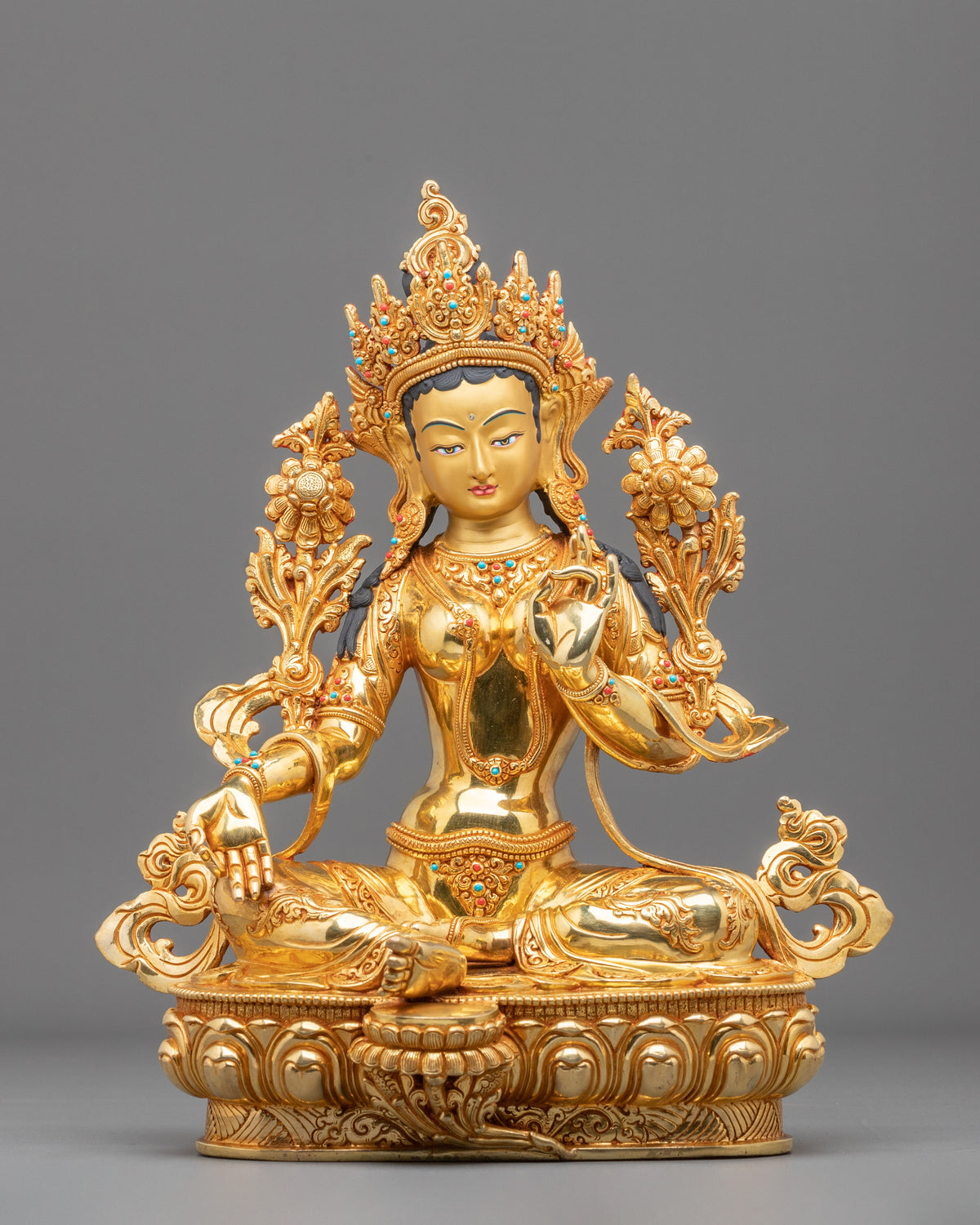
Green Tara
1137 products
Showing 1 - 24 of 1137 products
Green Tara: The Bodhisattva of Compassionate Action
Green Tara is perhaps the most beloved. She embodies the principle of compassion and the ability to protect from harm in Tibetan Buddhism. It is because of this ability that she is also referred to as the "Mother of Liberation," or "Mother of Mercy." People have great respect for Green Tara, and they often call upon her for help when they are feeling fearful, anxious, or otherwise in danger. She provides a pathway to liberation from fear and other obstacles to living a full and free life.
Iconography and Symbolism
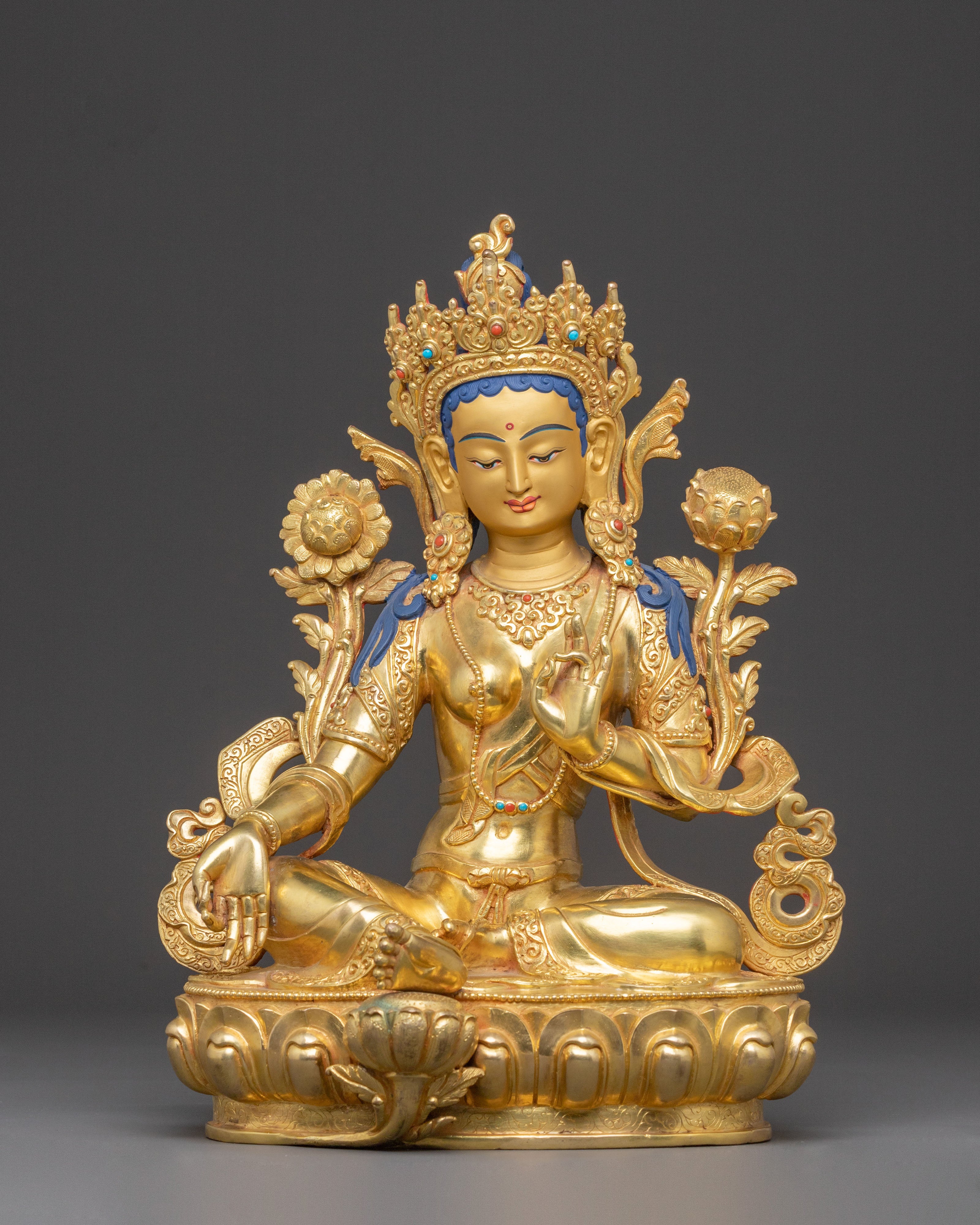
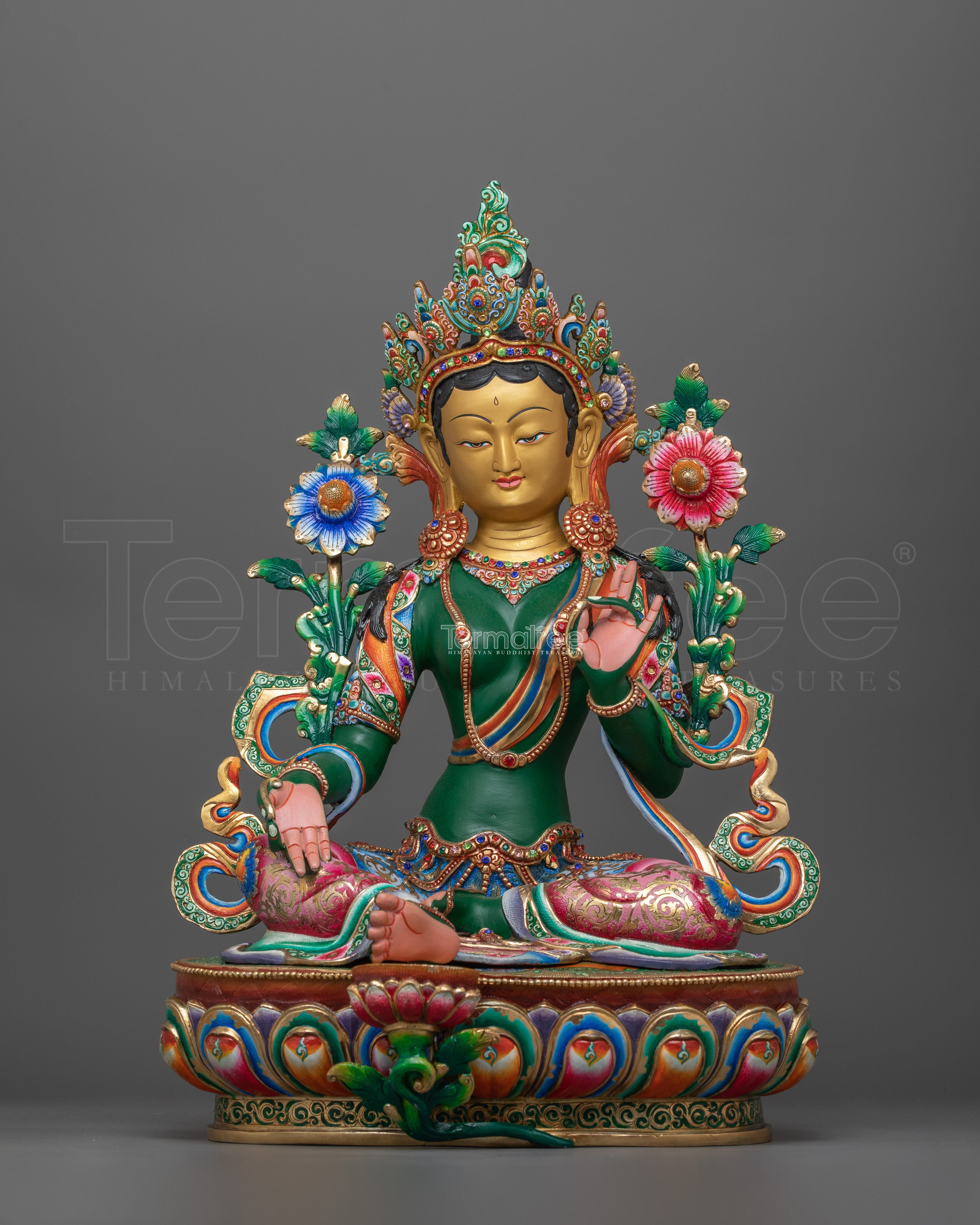
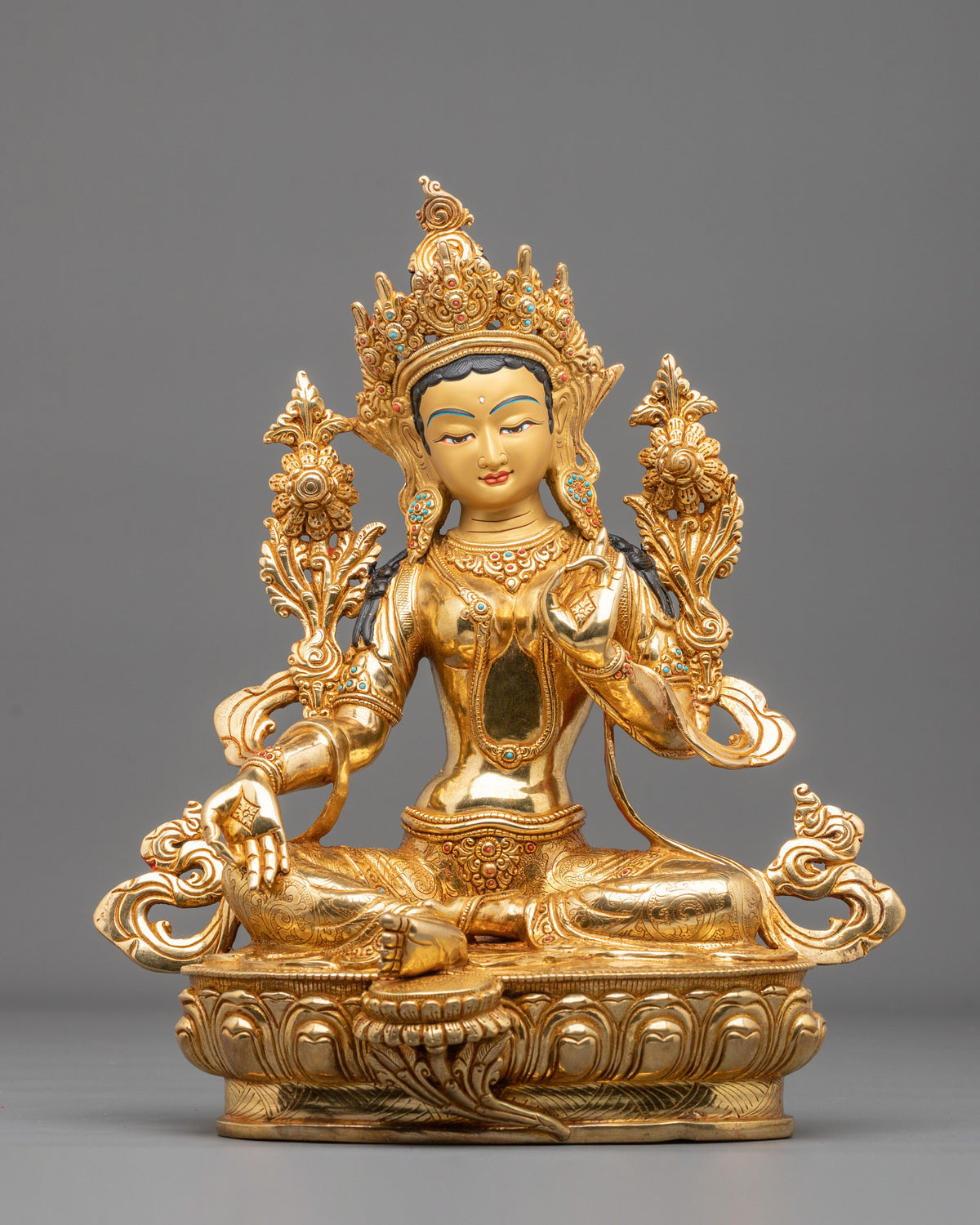
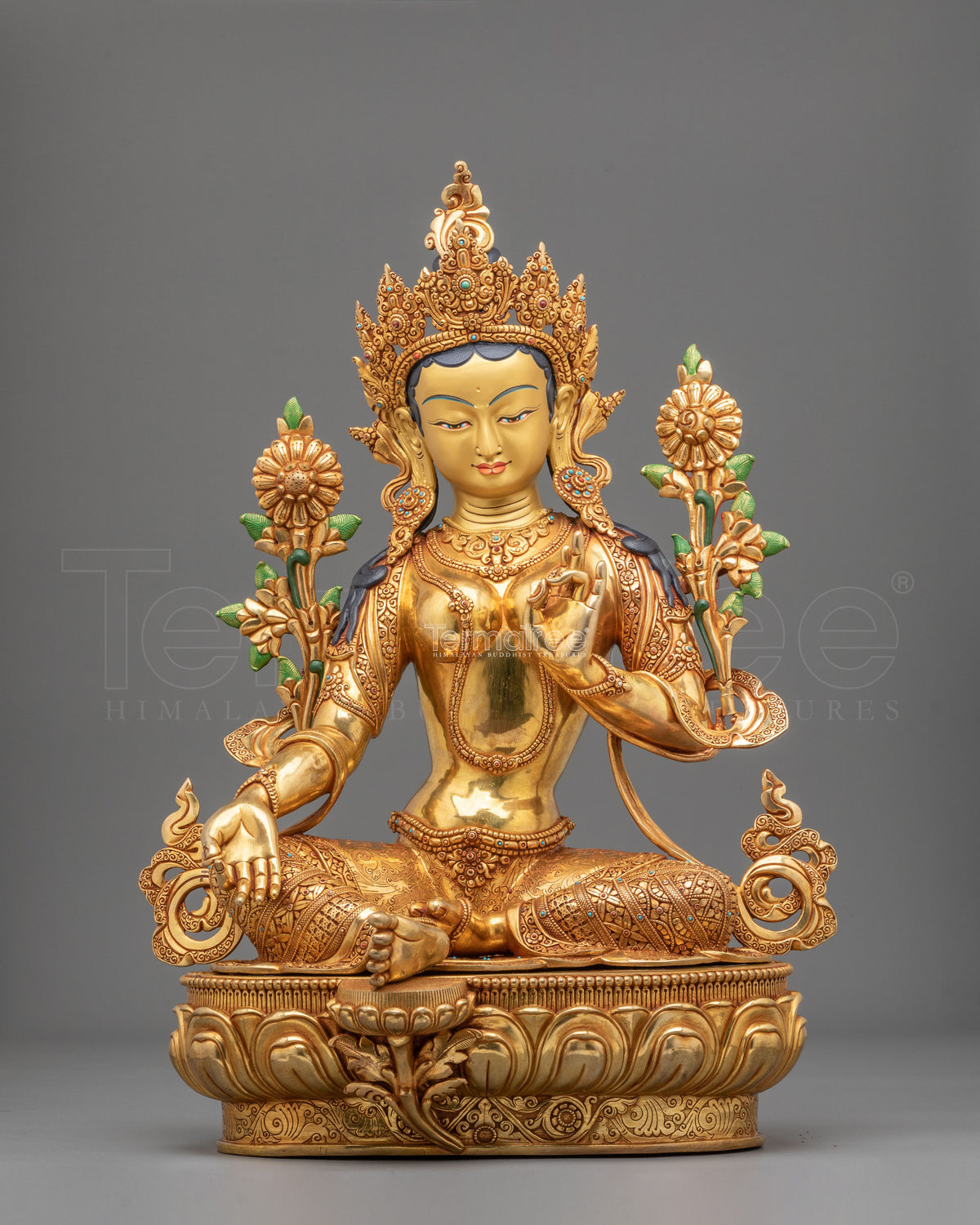
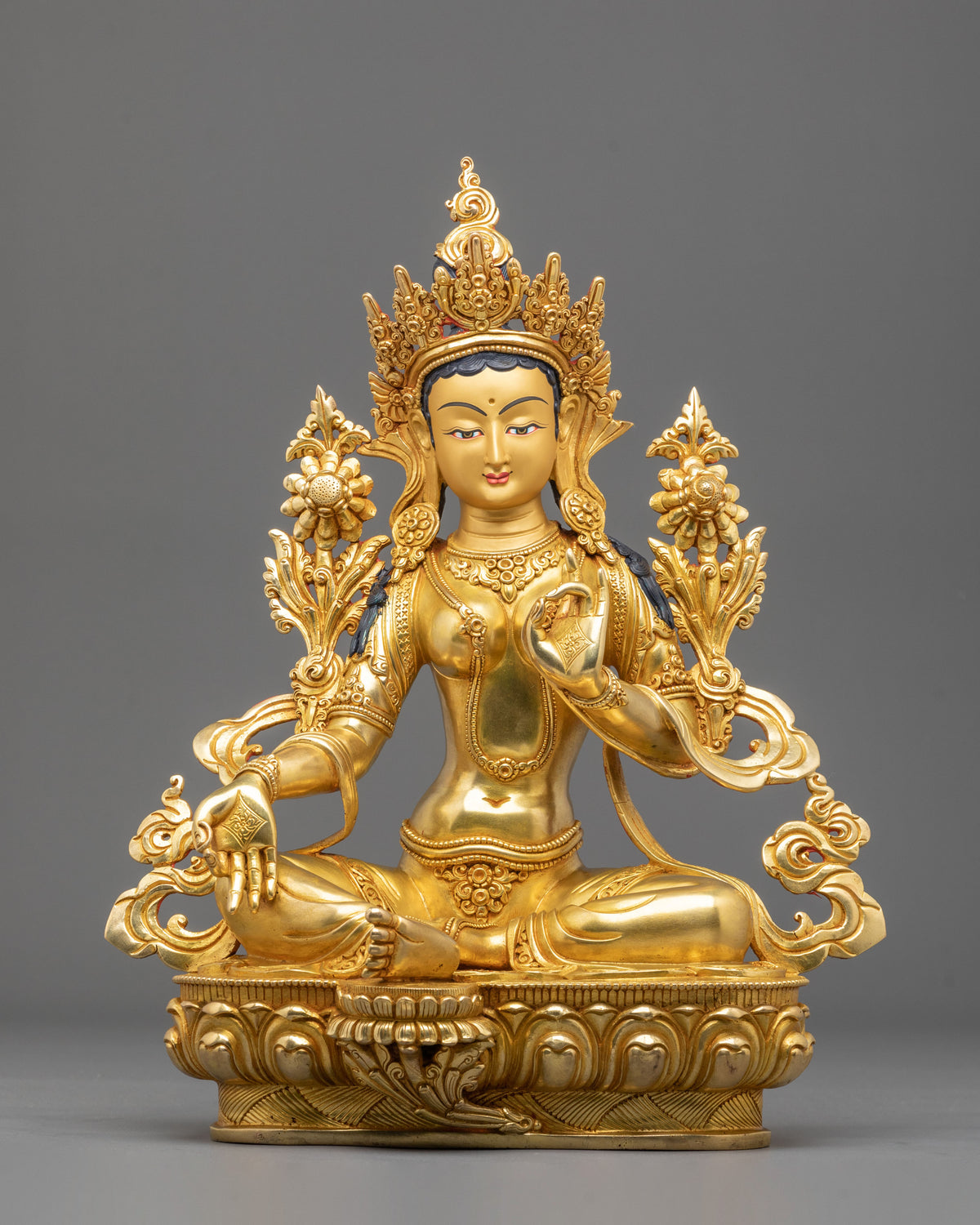
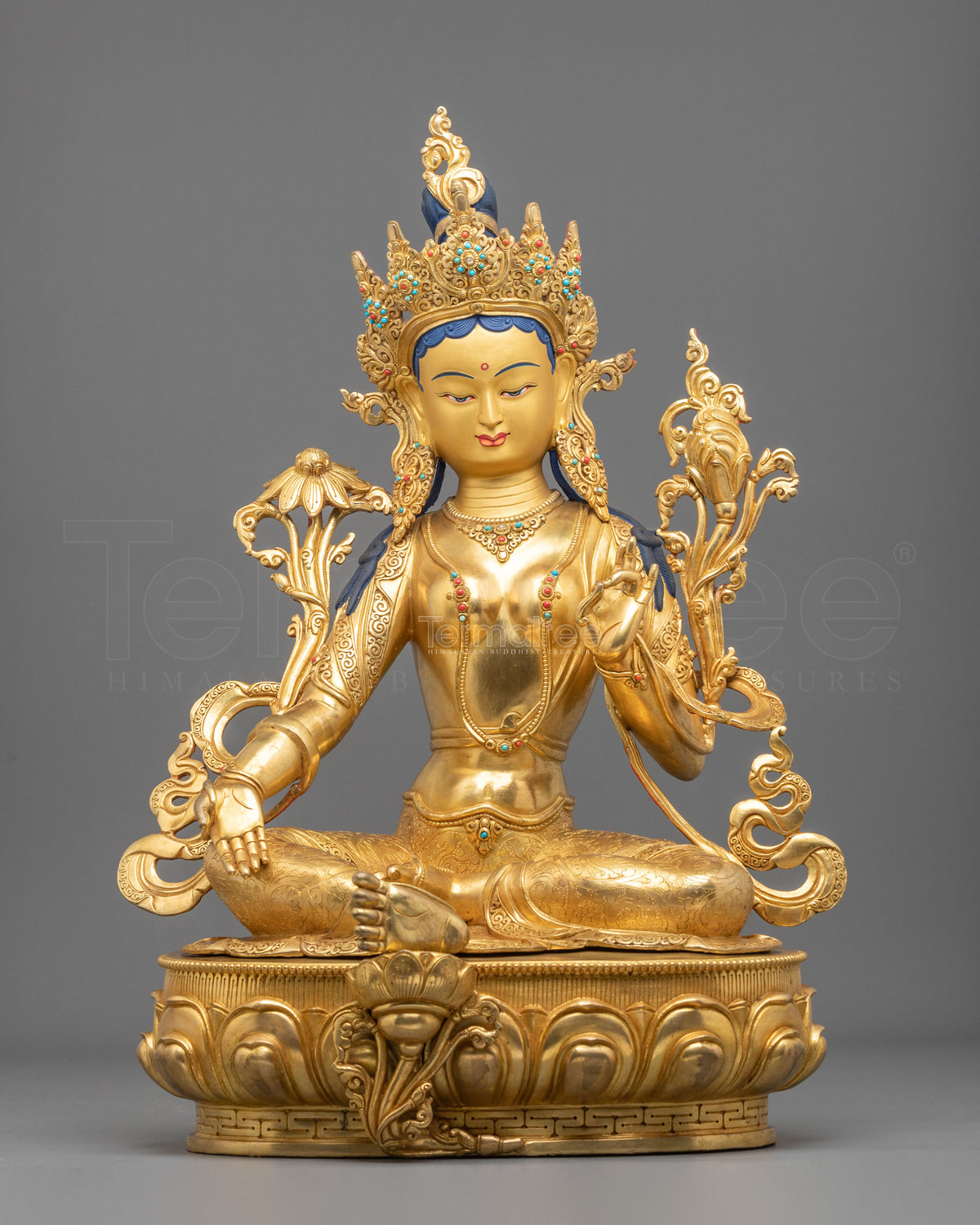
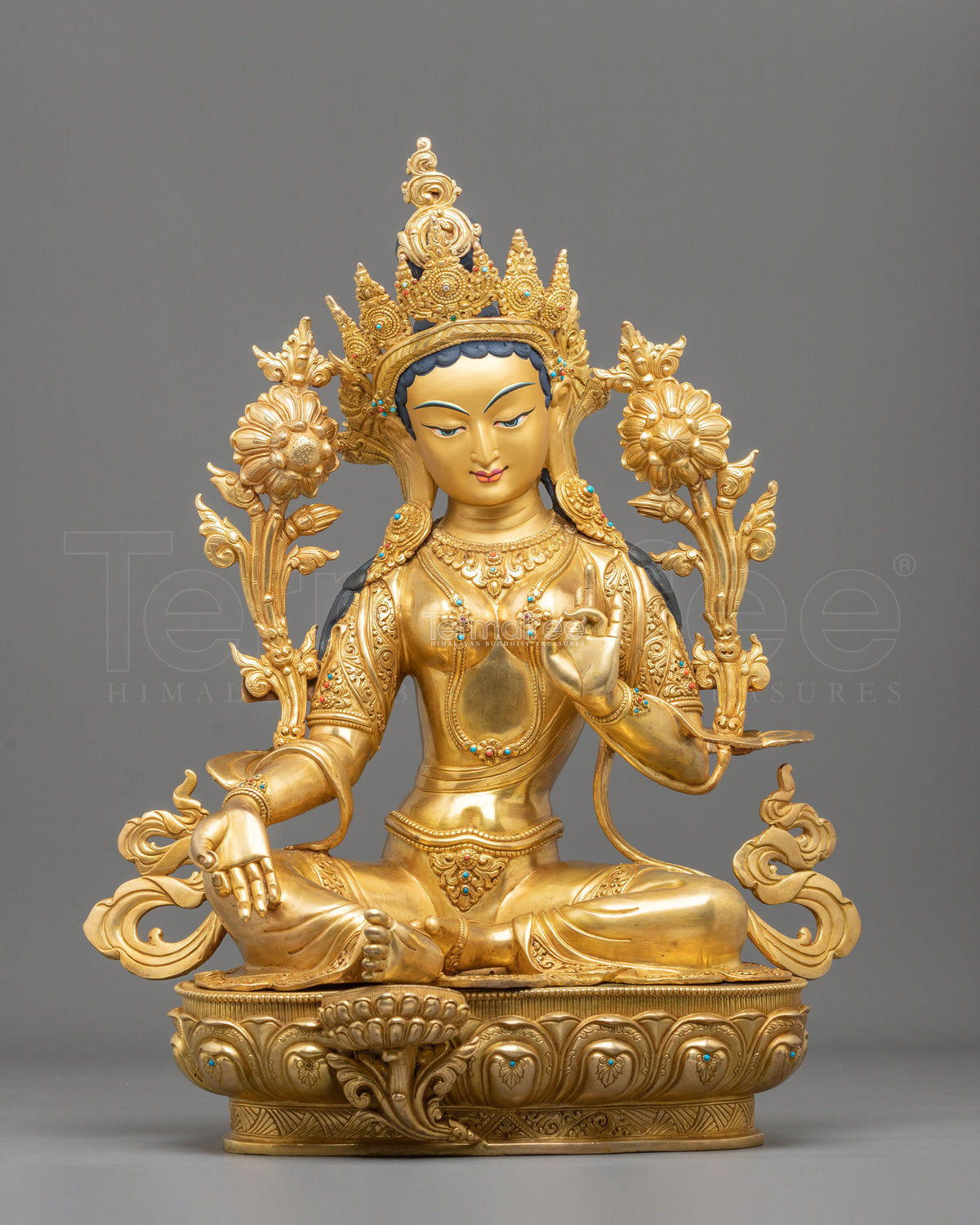
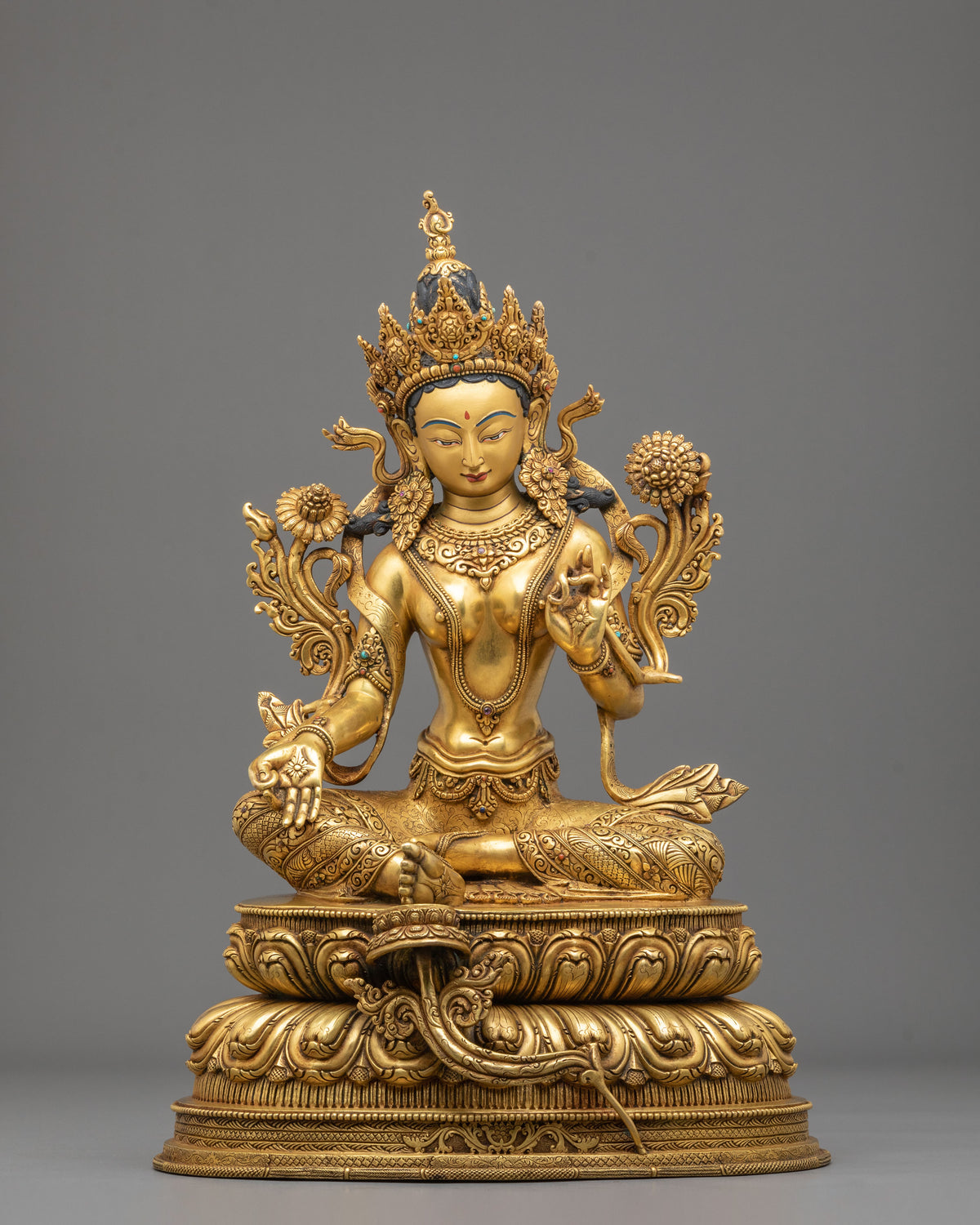
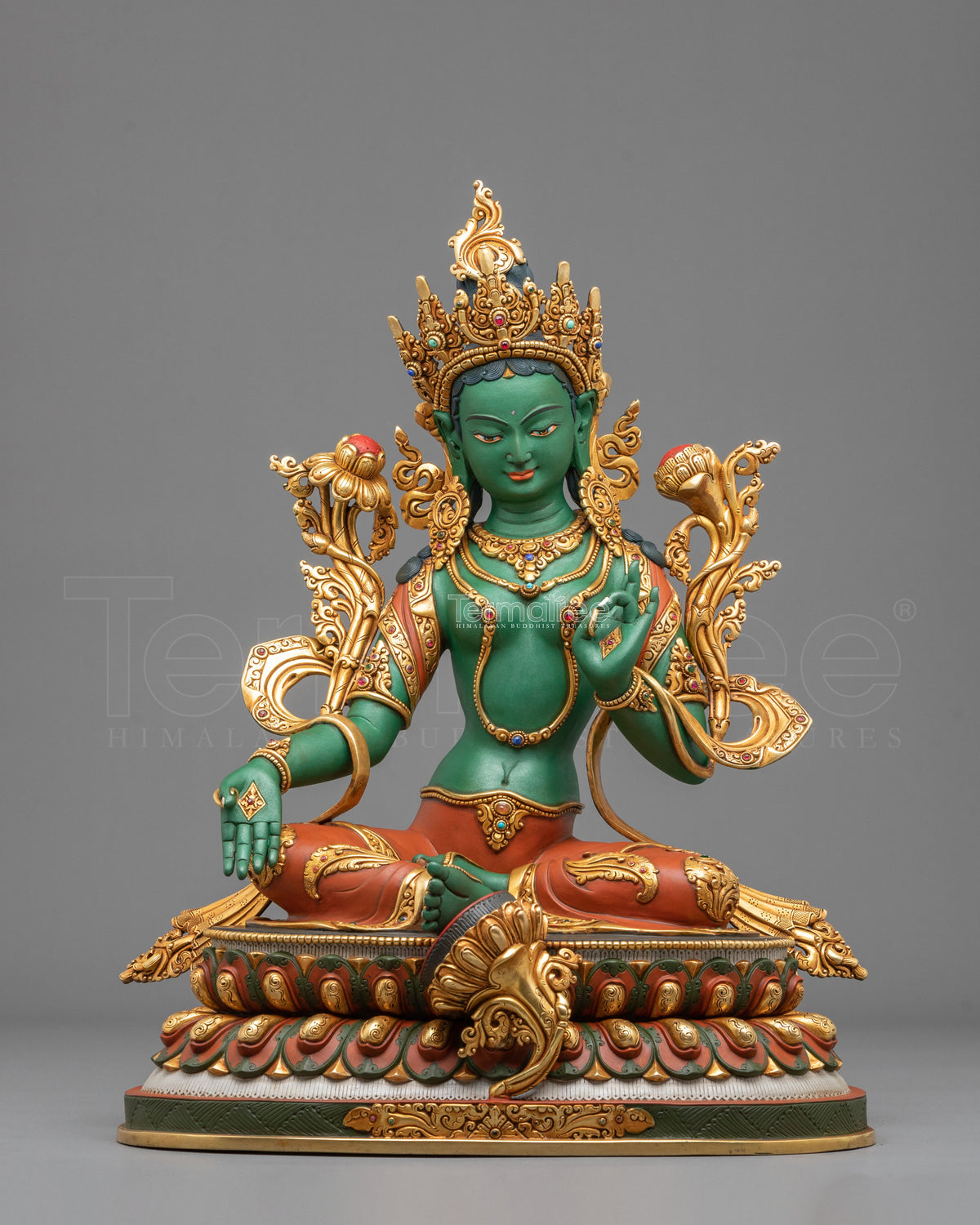
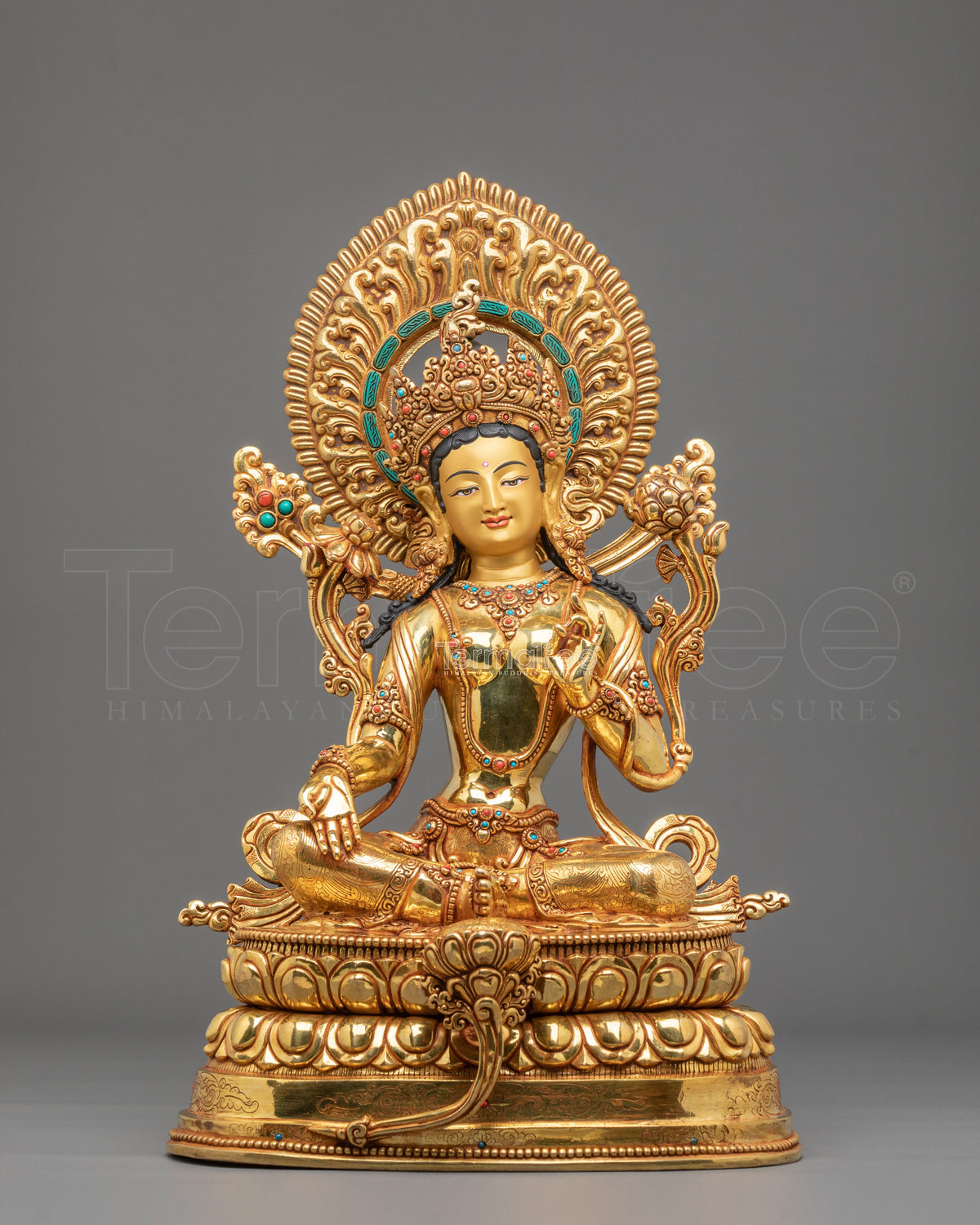
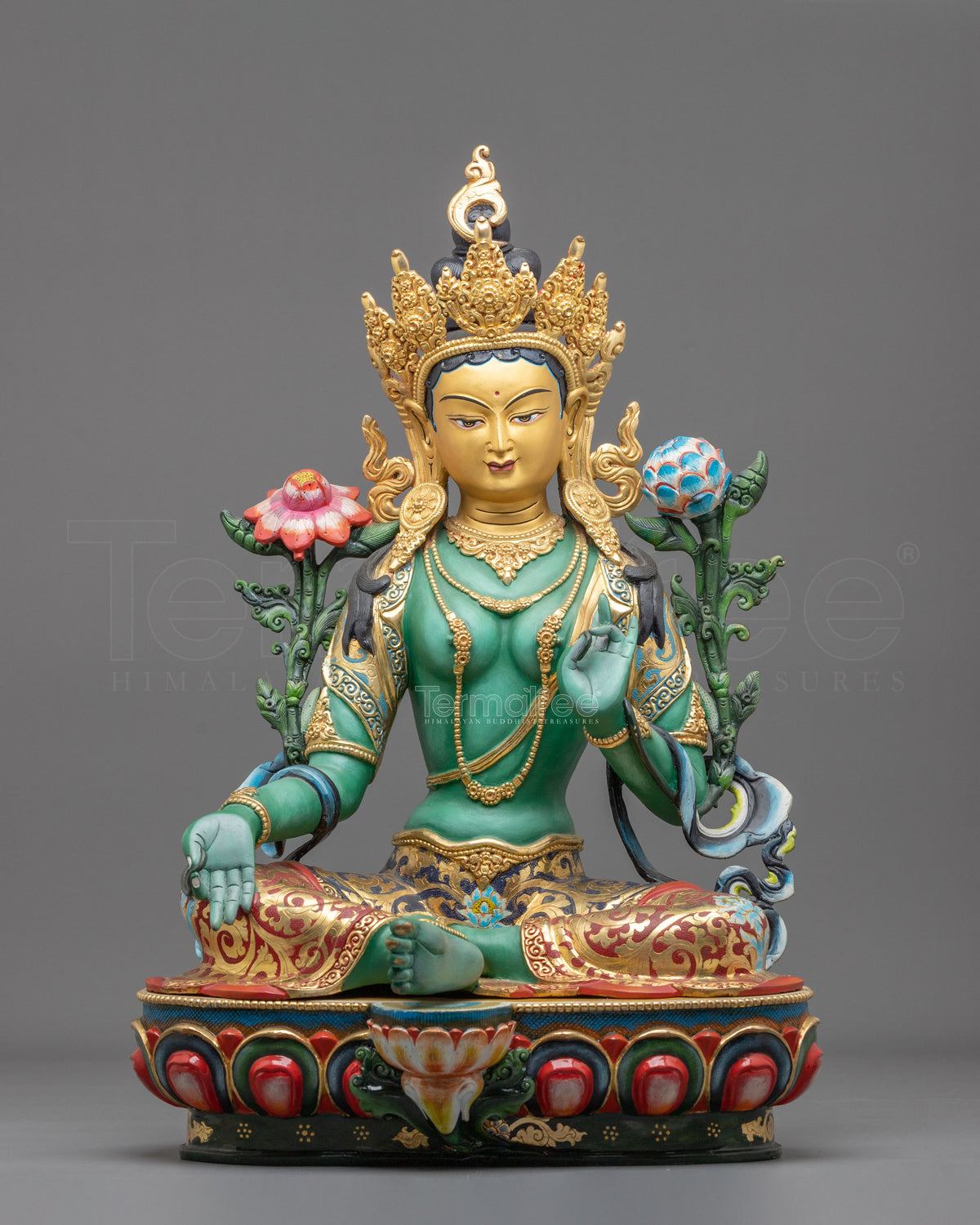
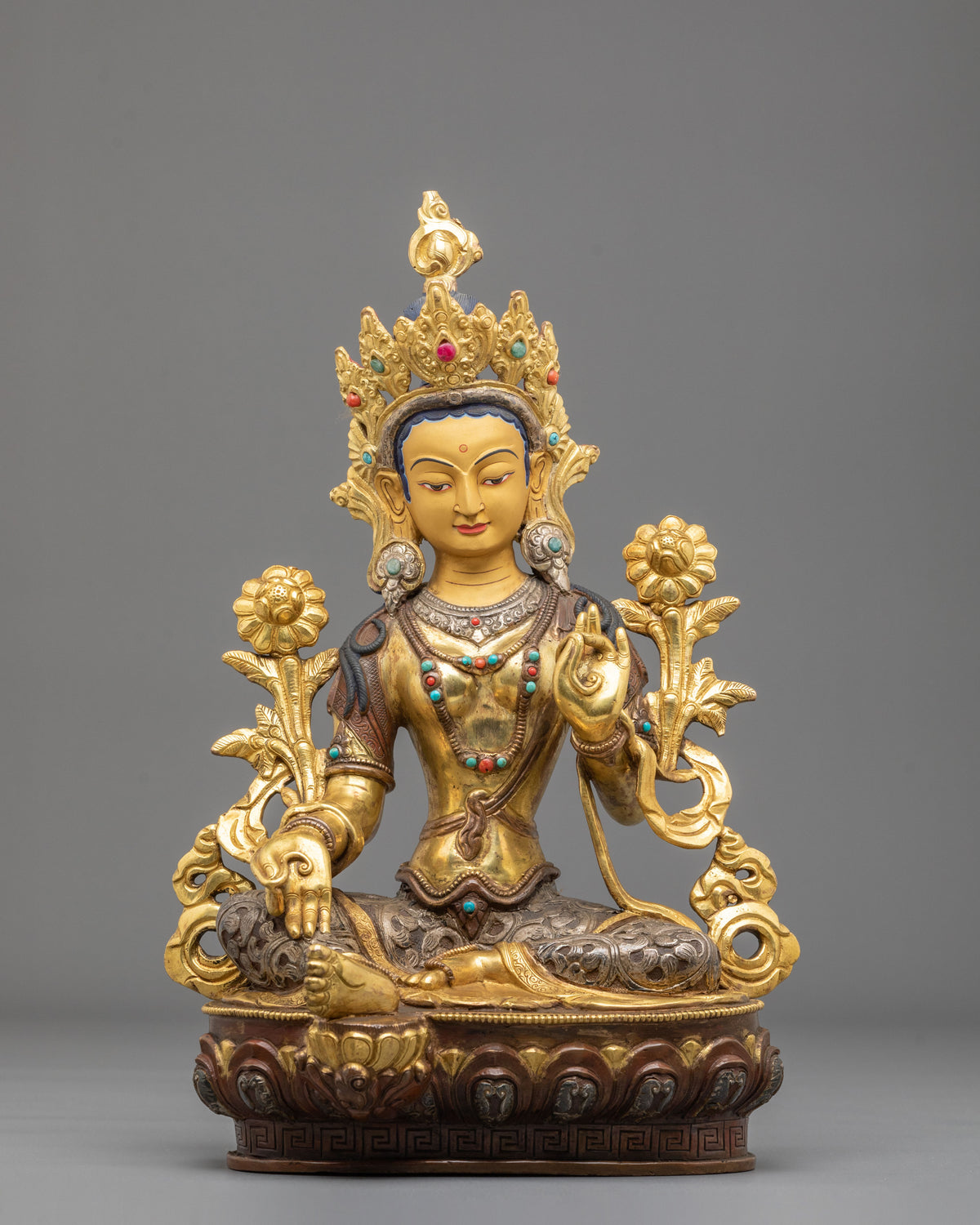
Green Tara is typically depicted in a beautiful, young female form seated in a position of peaceful but alert repose called 'royal ease' (Lalit asana) with one leg bent and the other straight; this position is a symbolic reminder that she is always ready to help those who call upon her for assistance.
The green color associated with Green Tara represents health, active compassion, and swift action; green is also often used to signify someone who responds quickly to a request for help or support, and to bring relief to those who are in fear.
Her Seven Eyes: Green Tara has seven eyes. Two are on her face, two are on her hands, two are on her feet, and one is in the middle of her forehead. These seven eyes represent her ability to see all beings' suffering in all realms and to respond with compassionate wisdom immediately.
Mudra of Protection: Green Tara has a gesture of protection (abhaya mudra) held in her right hand with the palm facing out to represent that she is fearless. Many times she holds a lotus flower in her left hand to represent purity, enlightenment, and growth in the pursuit of wisdom.
Posture and Attire: Green Tara is often depicted wearing a crown and fine jewels, symbolizing her royalty and generosity. Visually, she radiates a feeling of beauty, peace, and wisdom, prompting a person to seek within for the power of strength and wisdom needed to endure and overcome hardship.
Green Tara’s Role in Buddhist Practice
Green Tara’s ability to provide immediate and decisive assistance to those in need is her strongest attribute; hence, she is often thought of as a protector (call upon, in times of crisis, or when in danger; or when spiritual/material difficulties are present). The general belief is that her mantra and practice will allow individuals to overcome their fears, alleviate their worries, and handle the challenges of life.
Anyone may use Green Tara's practice, no matter how far they advance along the path of their Buddhist practice. The mantra associated with Green Tara is considered by many within Tibetan Buddhism to be one of the most potent requests for Green Tara's protection and beneficent blessing, making her one of the top three most widely recognized figures within Tibetan Buddhism, for personal use and group use.
The Green Tara Mantra
The most recognised mantra associated with Green Tara is:
"Om Tare Tuttare Ture Soha"
Through this powerful invocation of Green Tara and her qualities, the mantra harnesses Green Tara's compassionate energy and allows you to connect with it. The mantra is defined as:
Om: This sound is a bridge connecting all beings and all realms of existence; it is the original sound of creation.
Tare: The power of Tara is invoked by this syllable for protection from harm and suffering; it expresses her ability to eliminate the causes of fear and struggle.
Tuttare: This syllable indicates liberation from suffering and the capability to endure through challenges that arise and prevent one from achieving true freedom within the cycle of repeated births (samsara).
Ture: This sound conveys Tara's supreme truth, as well as the moderate, speedy nature of Tara's compassion, and conveys the ability of Tara's compassion to aid rapidly in alleviating pain and removing obstructions.
Soha: This sound signifies the completion of the mantra; it indicates complete faith and trust in the guidance and protection provided by Tara.
Benefits of Reciting the Green Tara Mantra
According to devotees, the recitation of the mantra "Om Tare Tuttare Ture Soha" brings the Divine Green Tara into one's presence with the resulting benefit of receiving protection and the healing power of Tara. It assists the practitioner in removing any hindrances that may impede their progress on their spiritual path. Not only does this mantra help to heal one from inner challenges (such as fear, attachment, and ignorance), it also assists the practitioner with healing physical ailments, as well as any spiritual difficulties one may encounter
Green Tara in Tibetan Buddhism
Many practitioners of Tibetan Buddhism pray to Green Tara because she is considered to be a powerful goddess who embodies compassionate action. She is called the "Mother of All Buddhas". For followers of Vajrayana Buddhism, Green Tara is one of the most important figures for meditation and deity yoga. Her role is as the protector of practitioners on the Bodhisattva path, and therefore, serves as an inspiration for practitioners working hard to help others free themselves from suffering.
Green Tara as a Woman of Wisdom and Compassion
Green Tara is considered to embody the feminine aspect of compassion and wisdom in Tibetan Buddhism. While other deities are viewed as mothers and nurturers, Tara is seen to embody both the nurturing and dynamic aspects of compassion. She exemplifies how compassion is incorporated into our world through the feminine aspect of Tara. The feminine aspect of Tara serves to recognize the significance of incorporating feminine attributes into the practices of Buddhism. She exemplifies the ability to embody strength, wisdom, and love all at once.
Legacy and Impact
Each day, people worldwide draw inspiration from the legacy of Green Tara. As a universal protector, healer, and guide, she represents a major aspect of Tibetan Buddhism and other Buddhist communities globally. Millions of individuals continue to recite her mantra, which helps provide peace, security, and spiritual power to those seeking her blessings.
Green Tara serves as a reminder that true freedom comes from being compassionate, and through sincere prayer, devotion, and meditation, we can acquire the strength and intelligence necessary to confront our fears and break free from whatever prevents us from realizing our full potential.