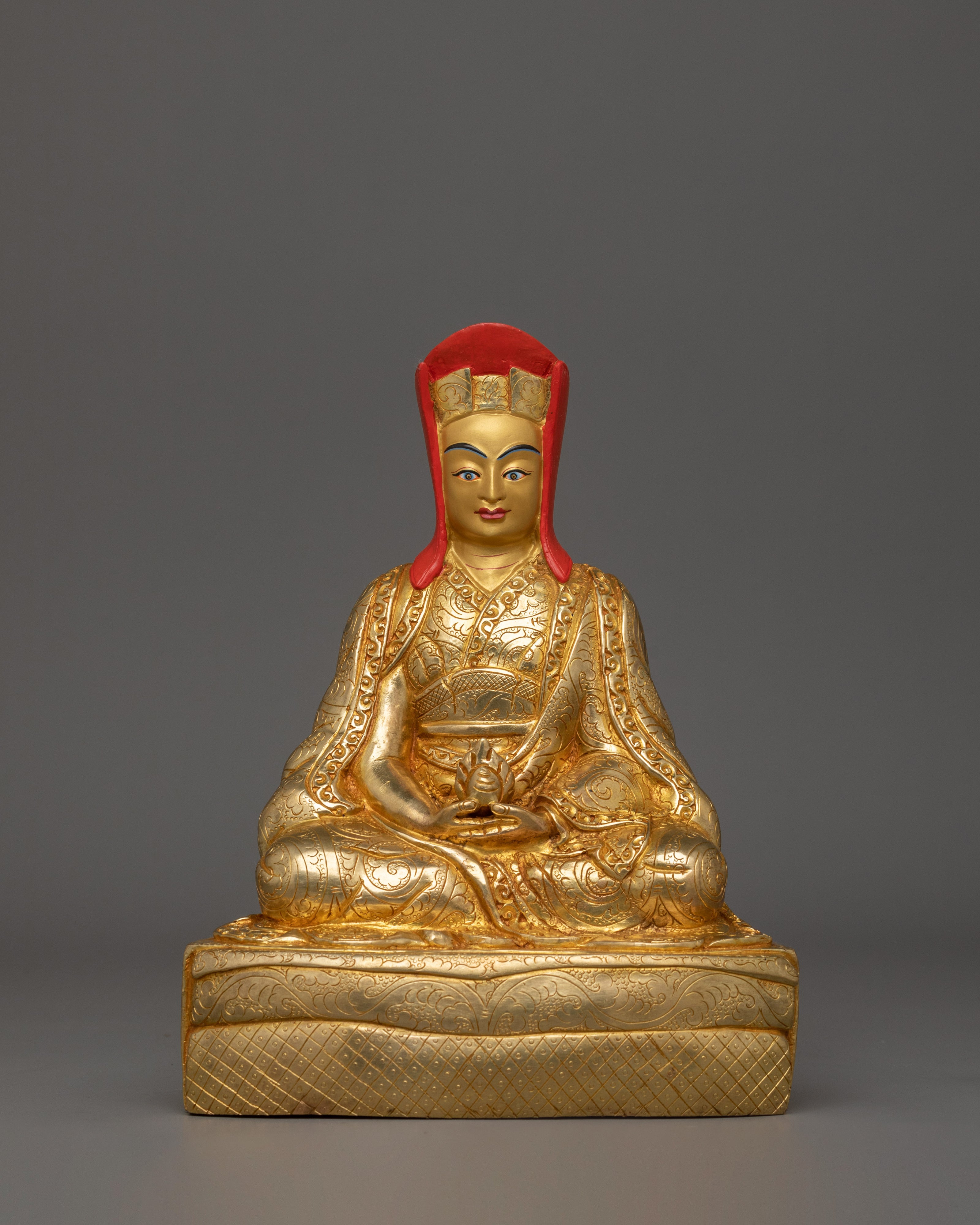
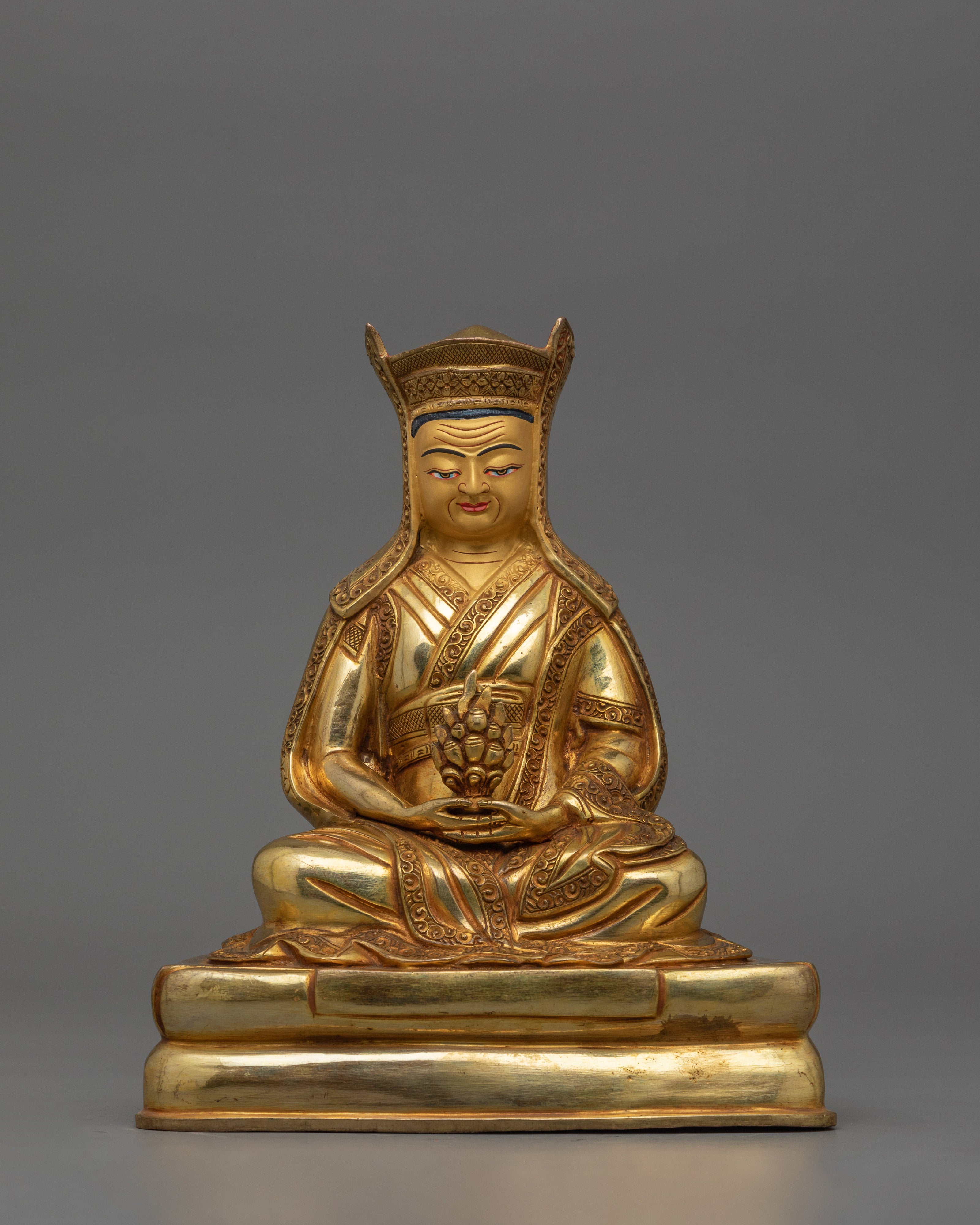
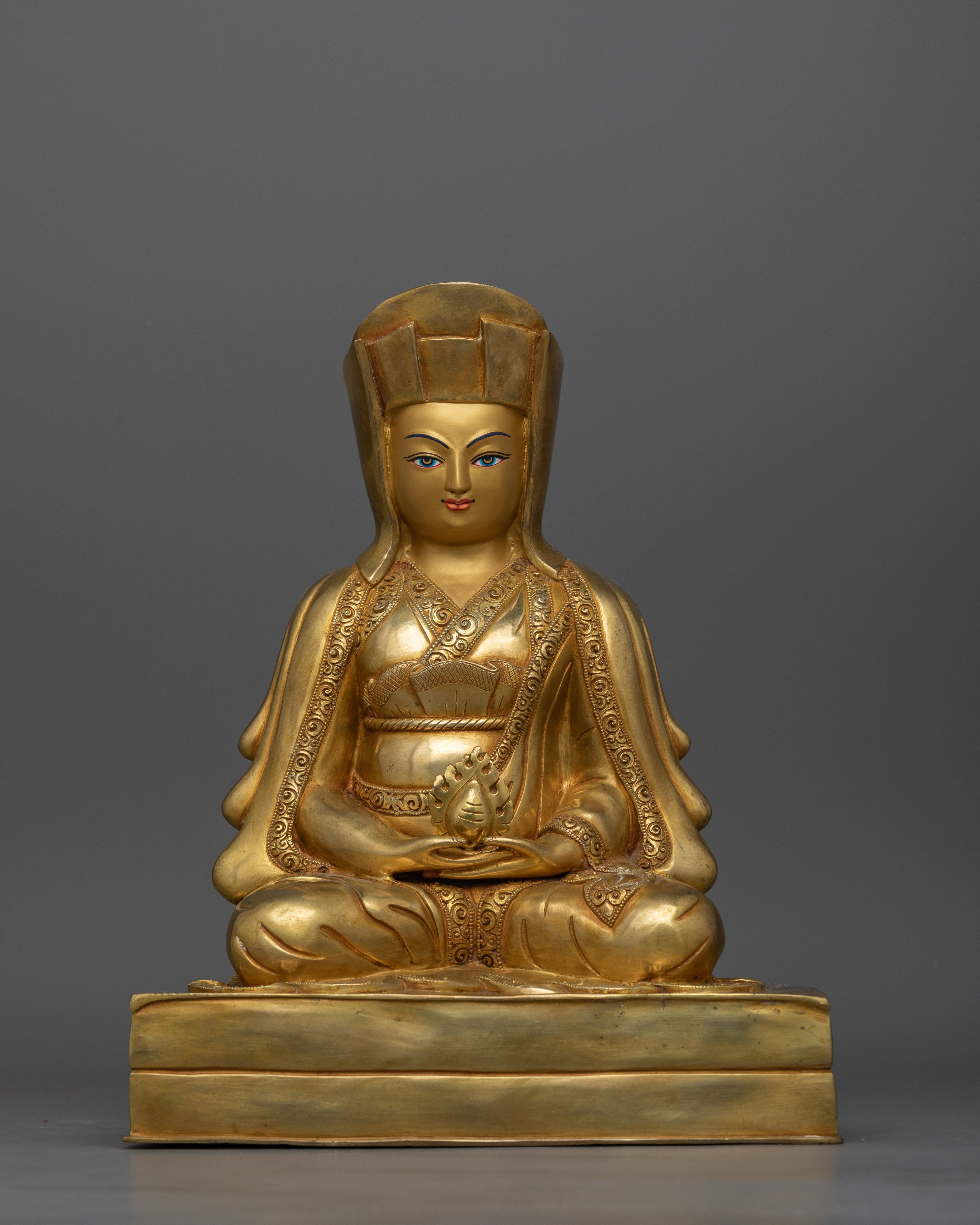
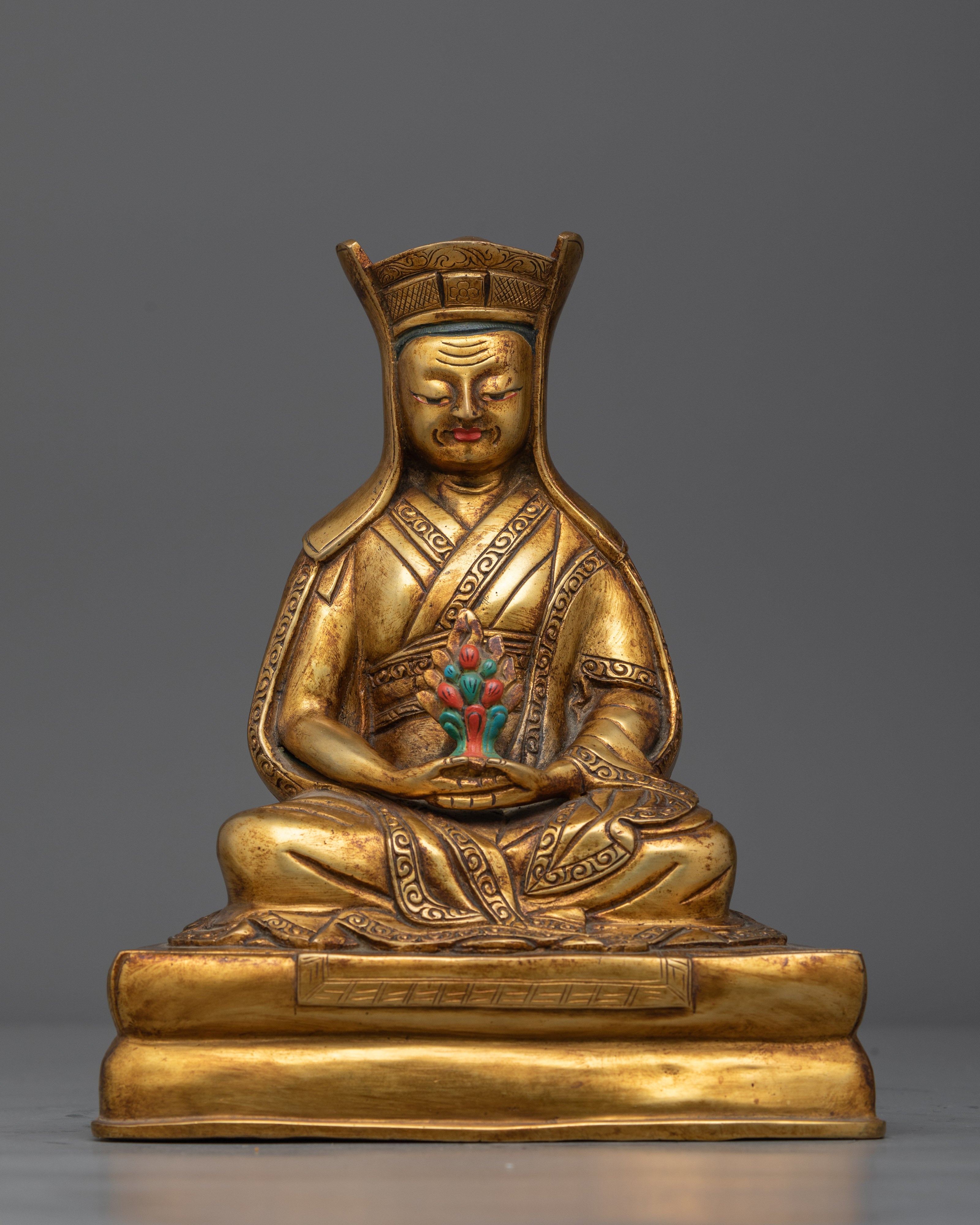
Gampopa Kagyu Master: Founder of the Dagpo Kagyu School
Gampopa, also known as "Dakpo Lhaje" or "Dagpo Rinpoche", was a Tibetan Buddhist master, physician, and the founder of the Dagpo monastic order. He was Milarepa's main disciple who unified the Kadam school's monastic-scholastic (sutra) legacy with the Kagyu lineage's esoteric tantric and mind-realization (Mahamudra) teachings. Gampopa wrote the fundamental text The Jewel Ornament of Liberation ("Norbu Tharpa"), a basic Lamrim-style literature widely used in Tibetan Buddhism.
Iconography and Symbolism
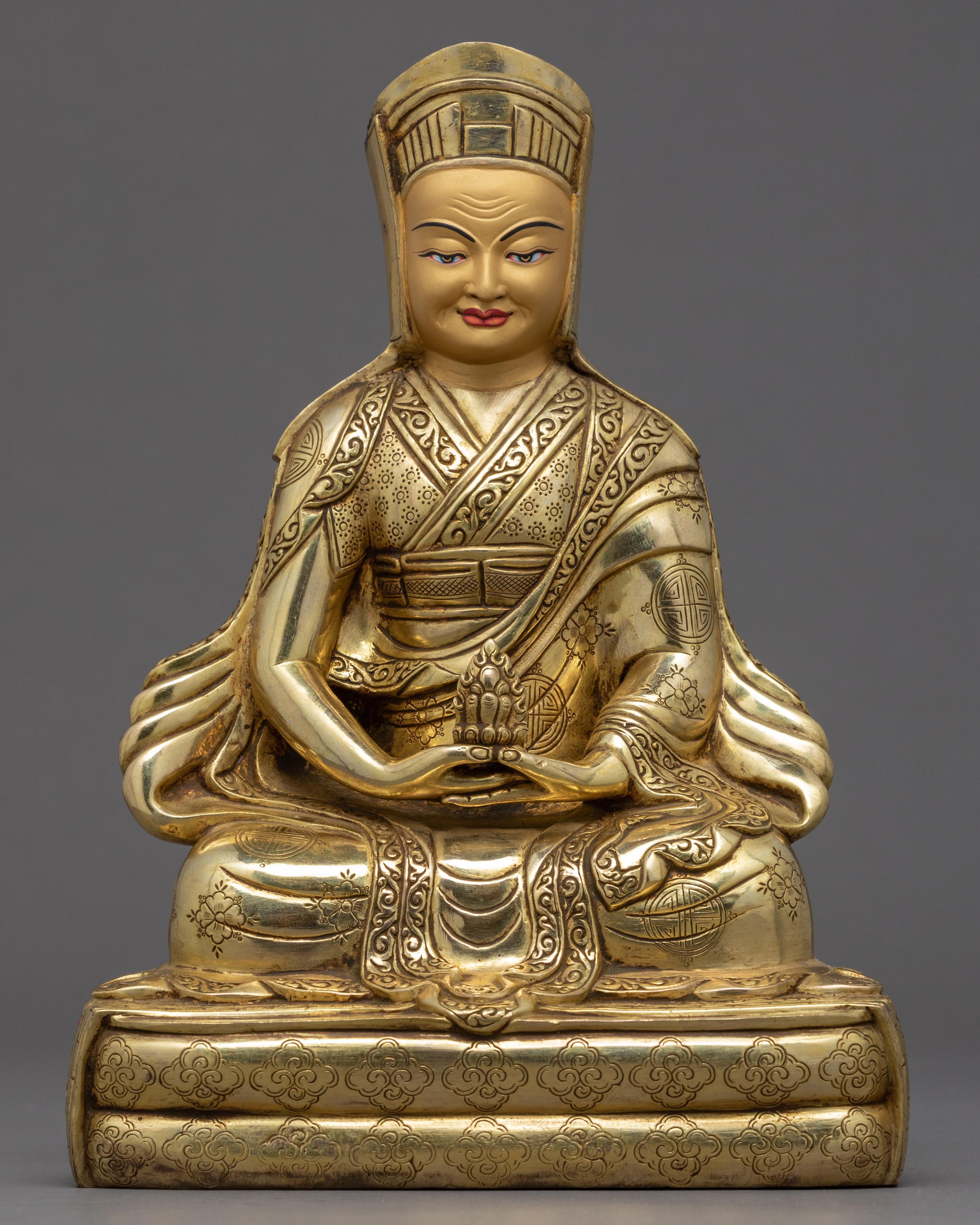
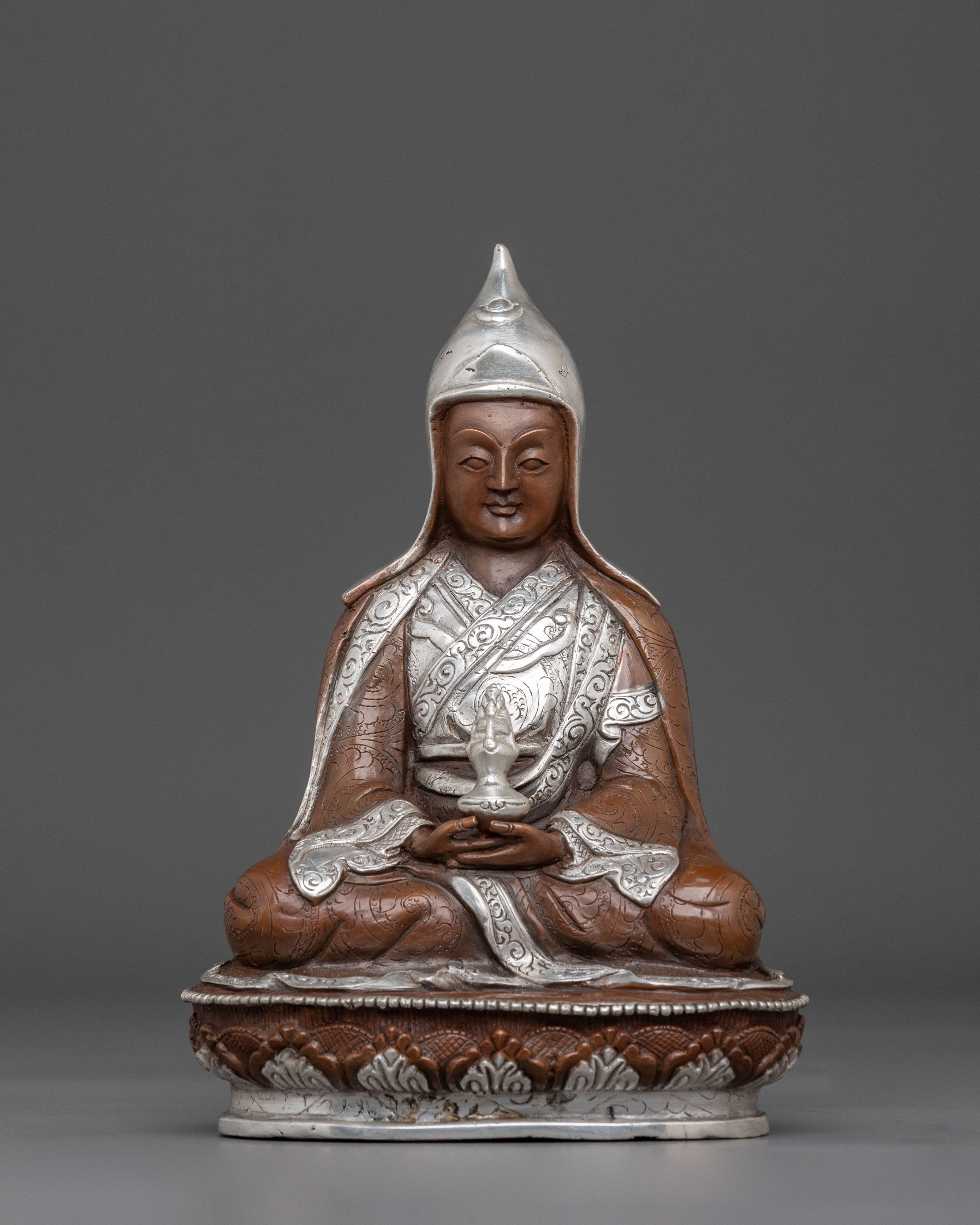
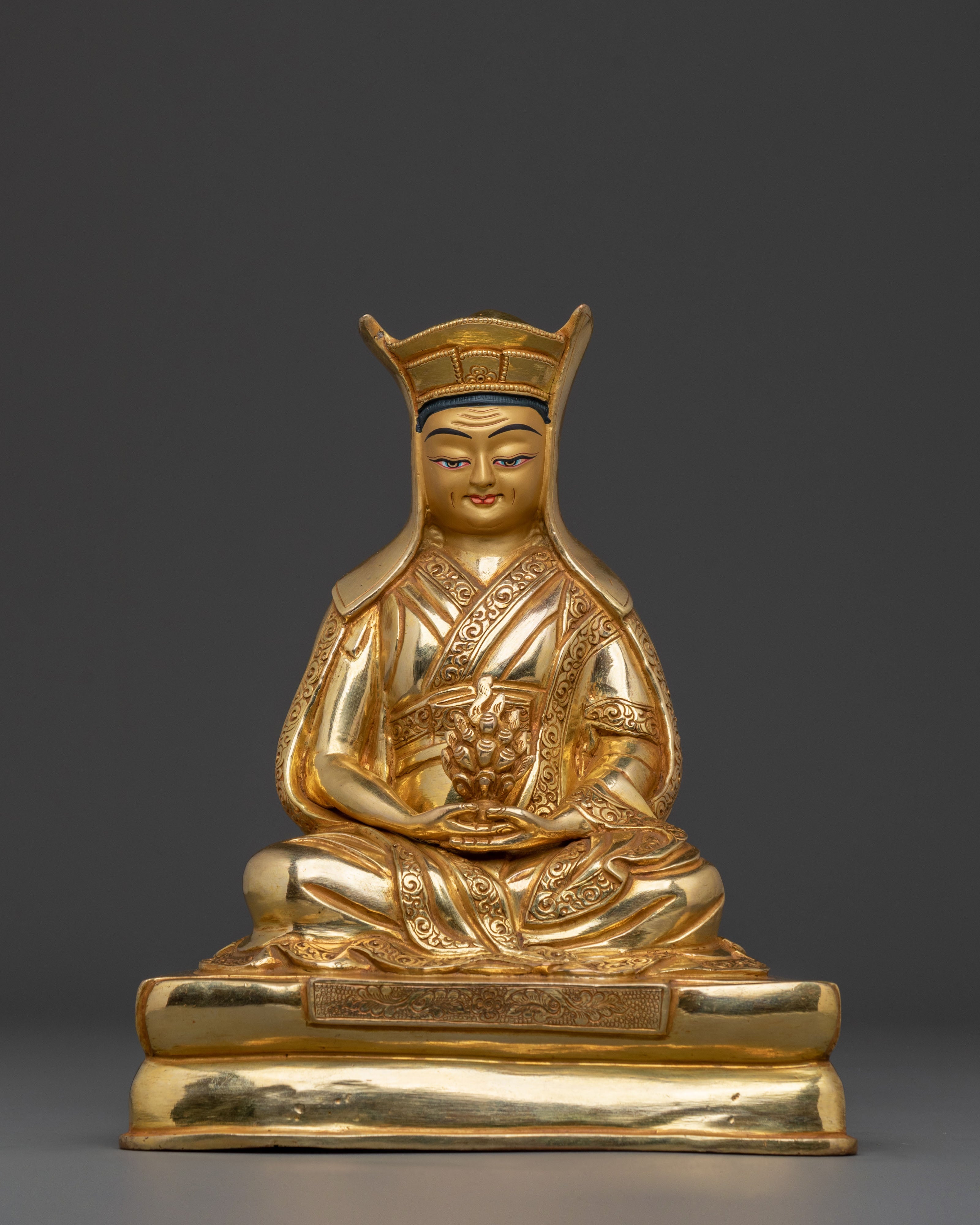
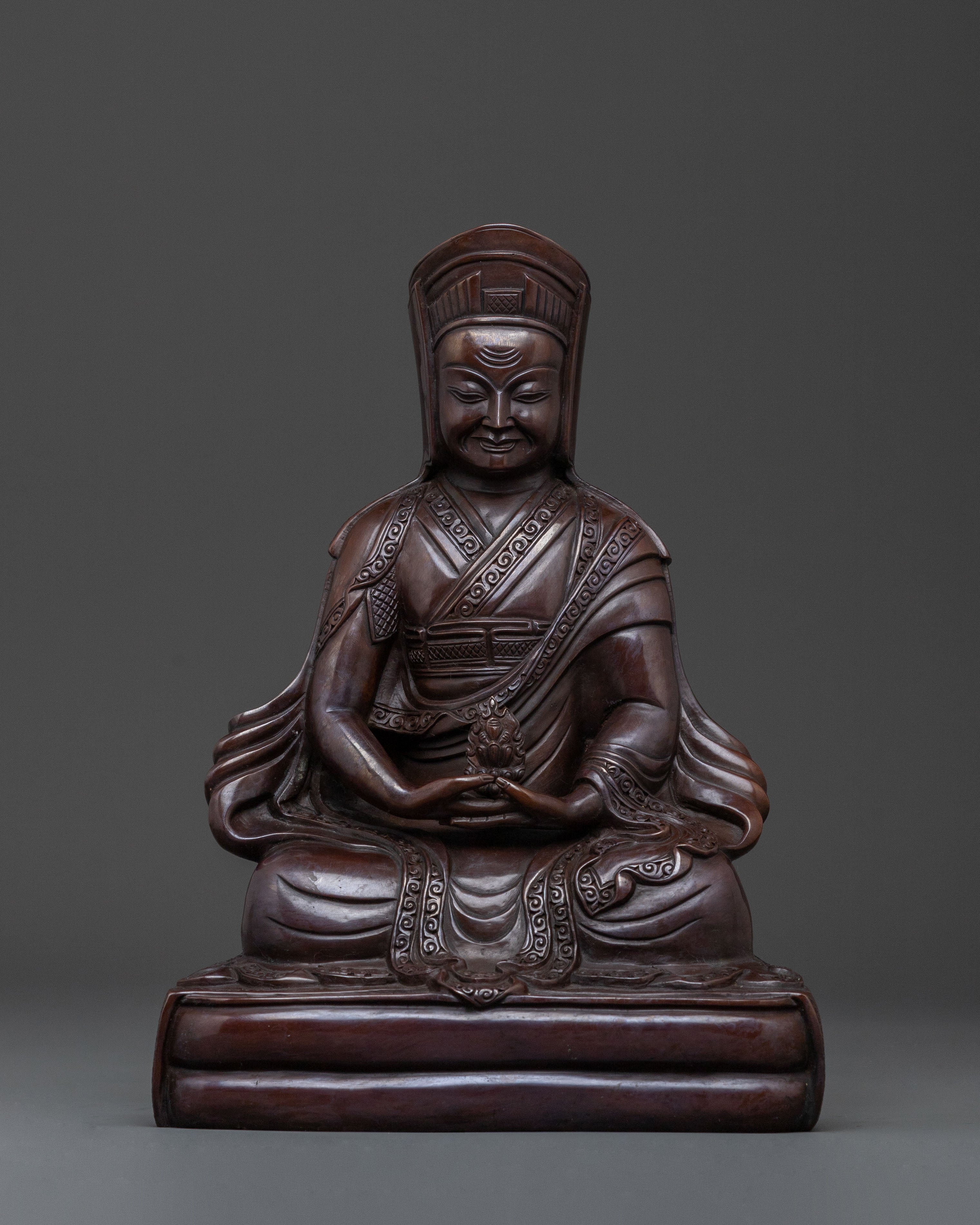
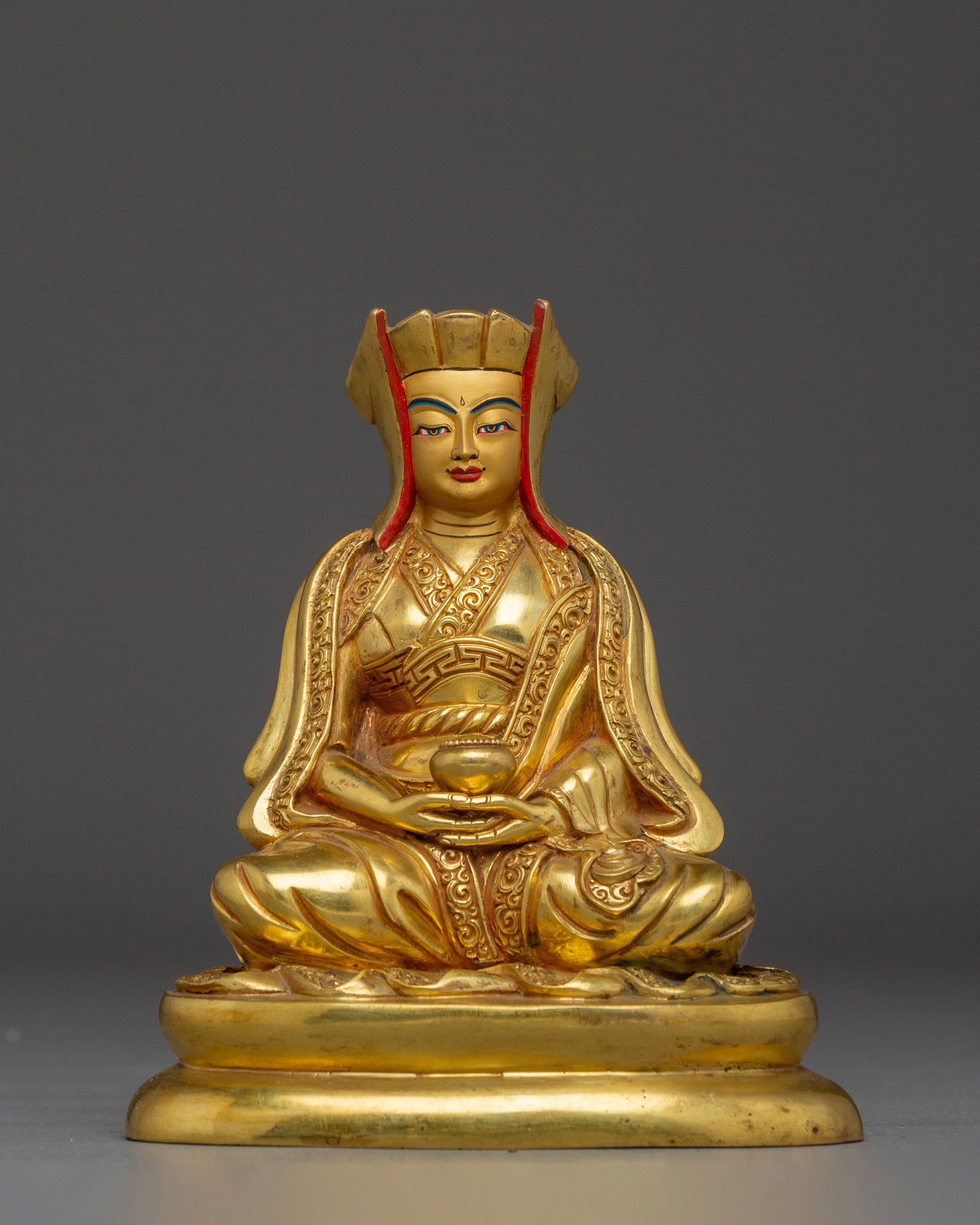
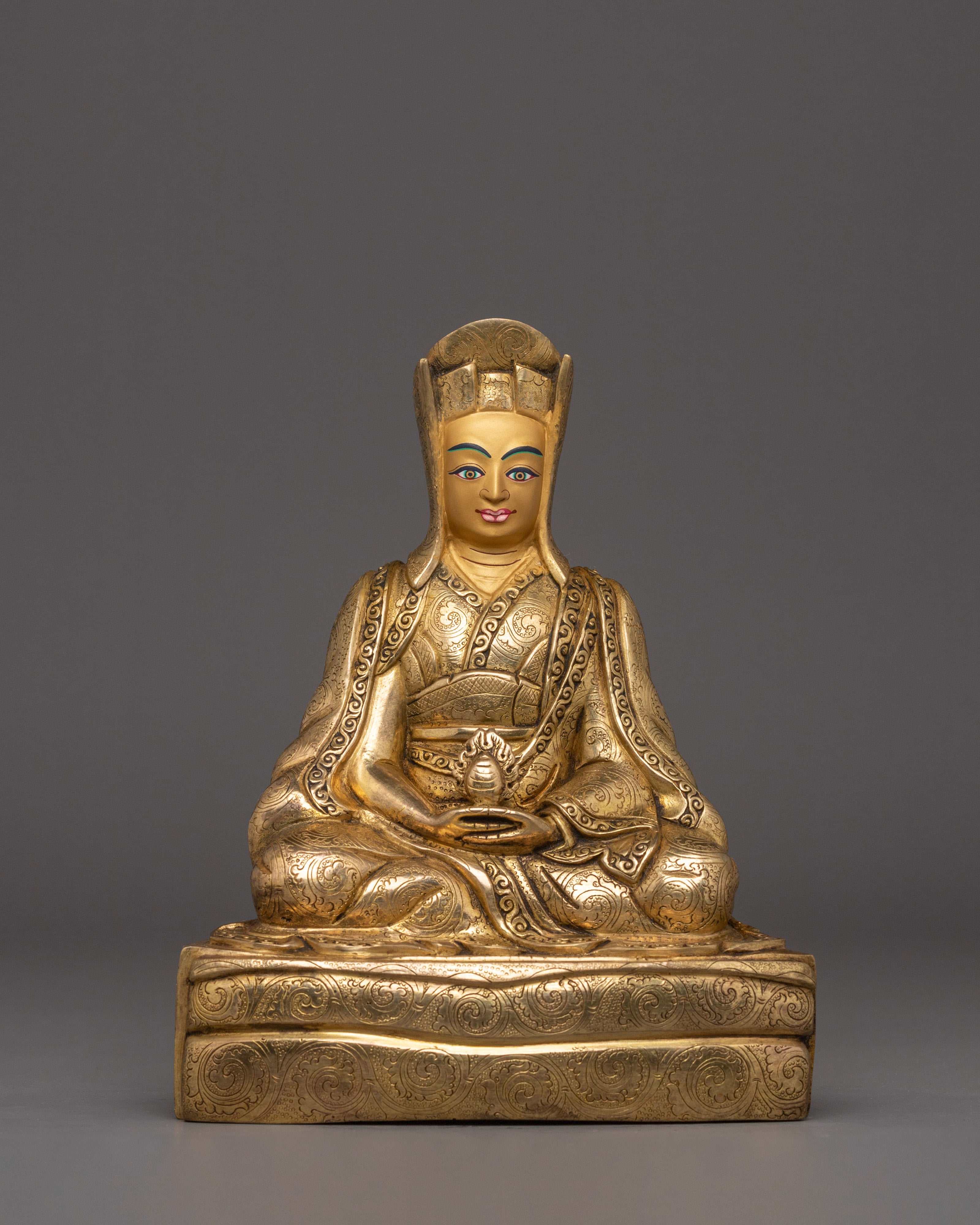
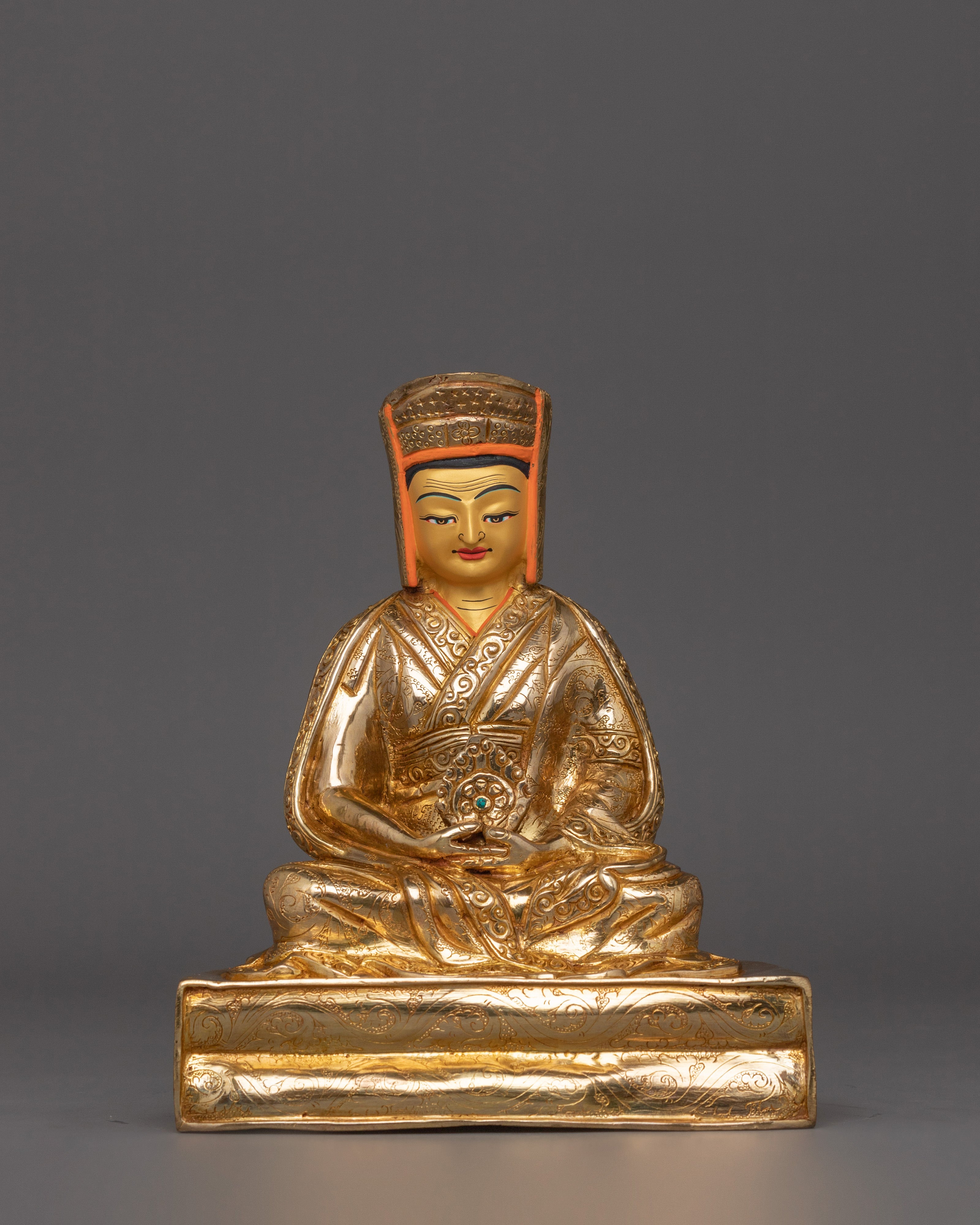
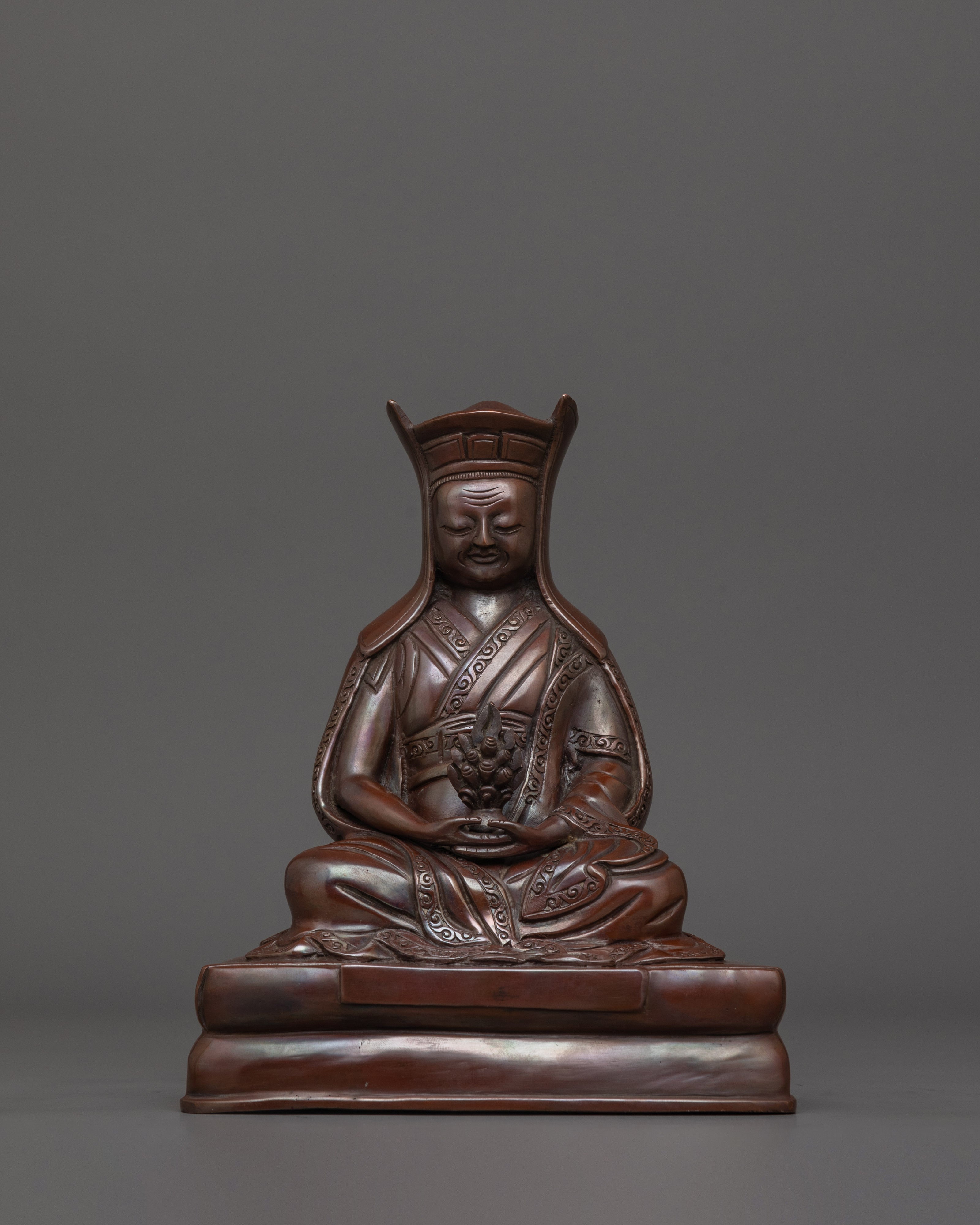
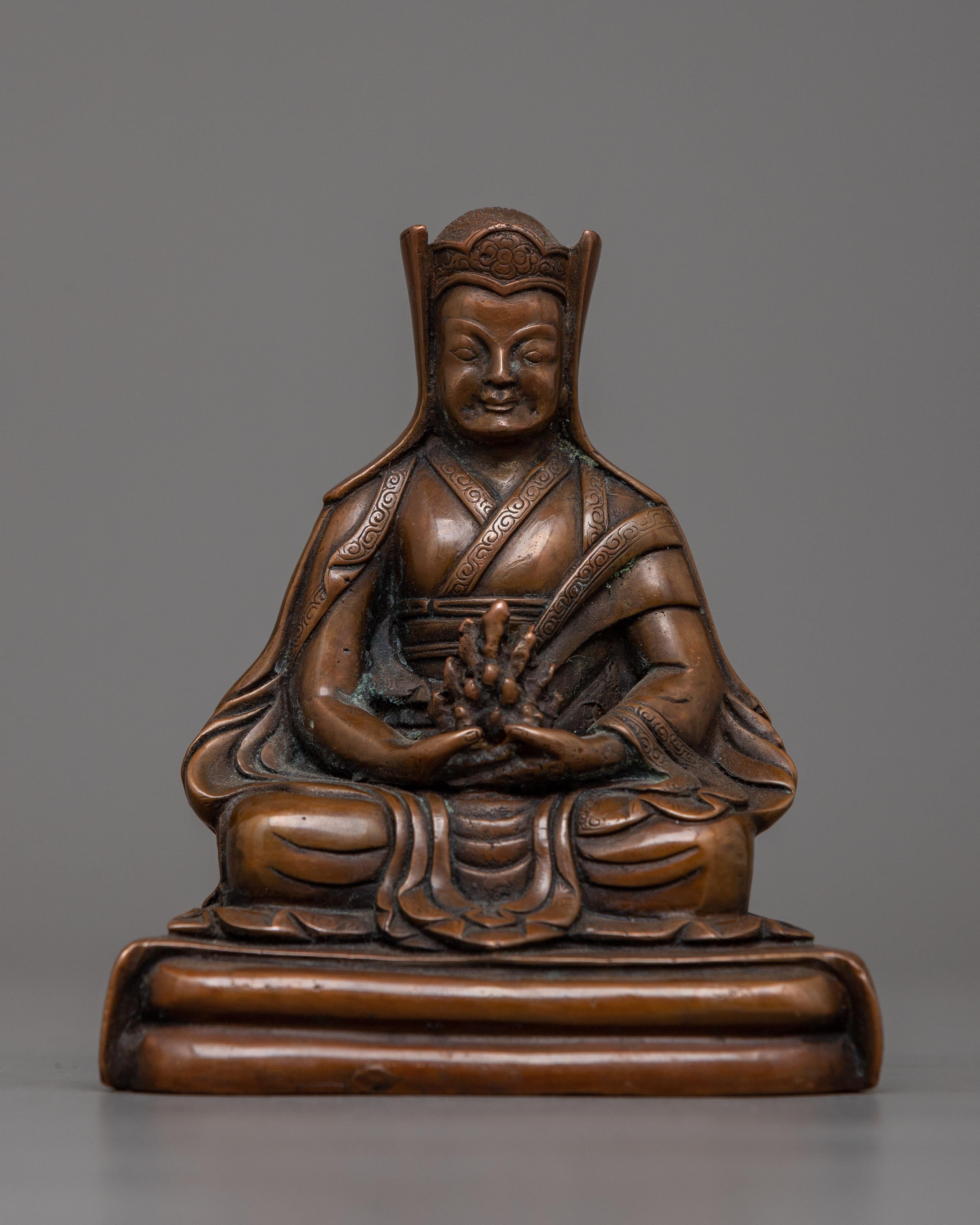
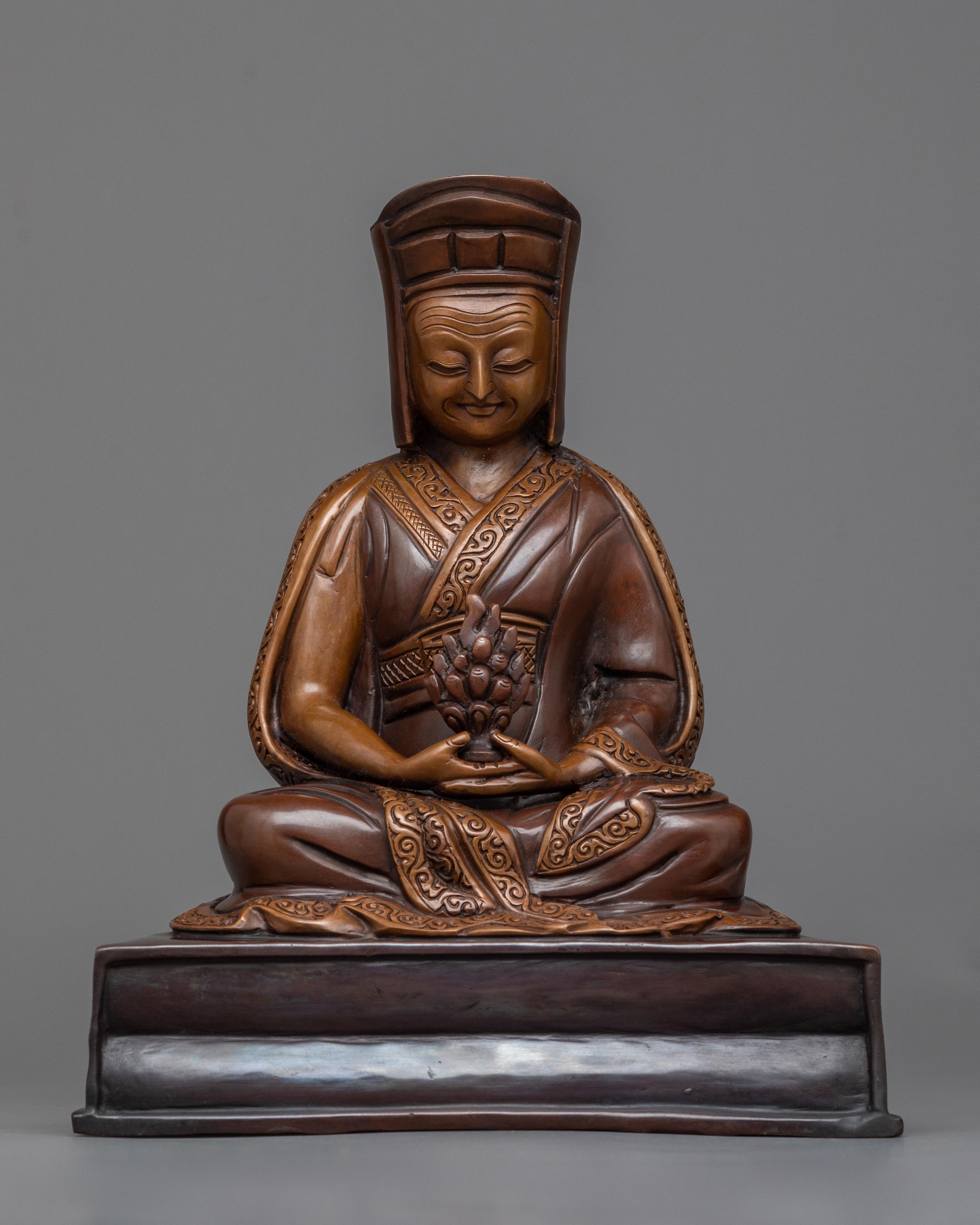
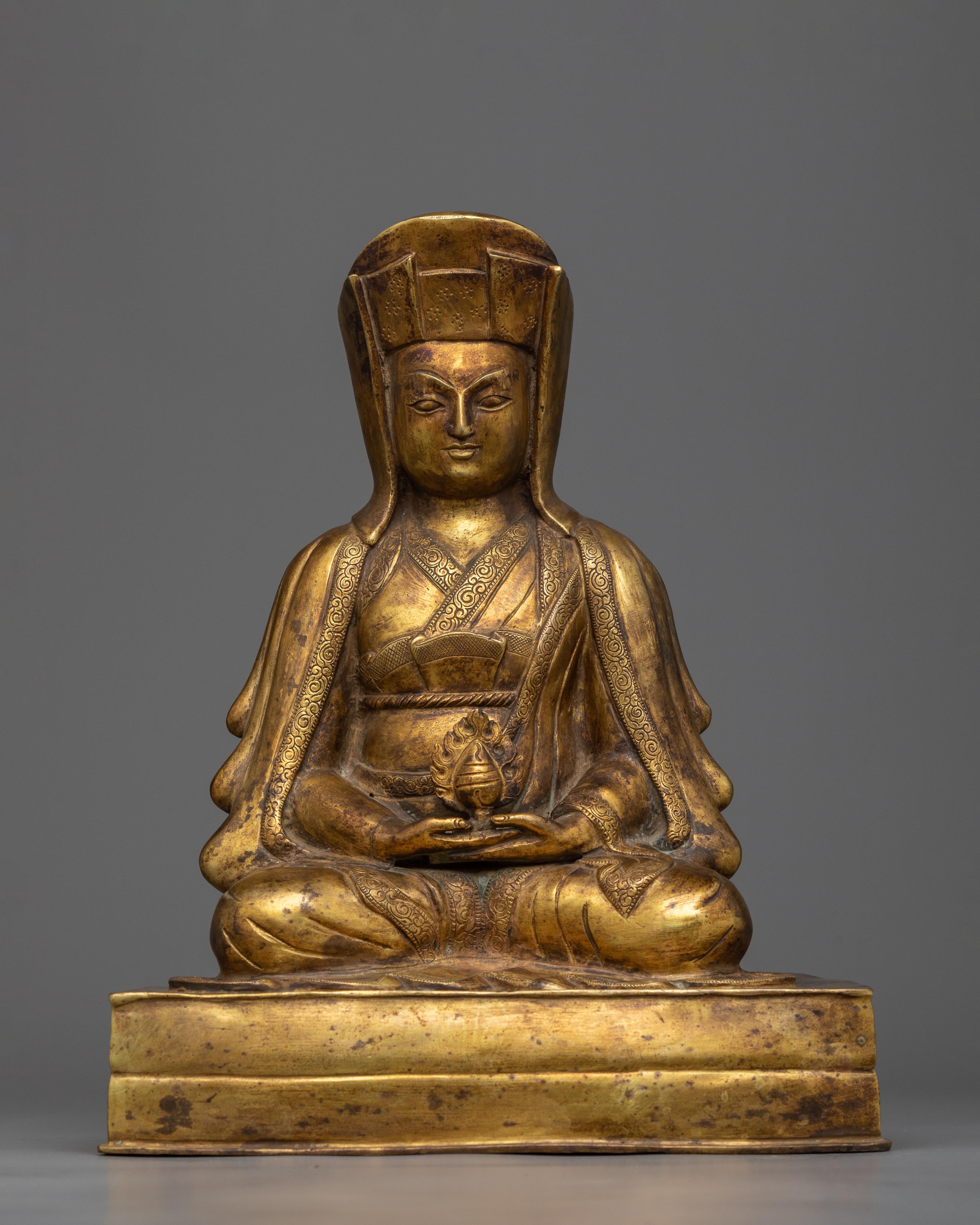
Monastic Robes & Red Hat: Gampopa is shown wearing monastic robes and a red-capped hat, indicating his full ordination. The attire emphasizes both his function as a monastery founder and his renunciation of secular life.
Teaching Gesture with Lotus, vajra and bell: A typical representation portrays him reclining in a meditation position, hands in the teaching gesture (dharma chakra mudra), holding lotus flowers with stems rising to his shoulders, supporting a vajra scepter and bell. This symbolizes the union of method (compassion/skillful means) and wisdom in his teachings.
Why Choose a Gampopa Statue?
Connection to Kagyu Lineage: Gampopa's statue is a direct link to the origin of the Dagpo Kagyu lineage. Having his statue connects you to a living tradition of Mahamudra practice, monastic discipline, and tantric lineage transmission.
Symbol of Integration: Gampopa, who combined sutra-based Lamrim (gradual path) with tantric Mahamudra, represents a balanced spiritual practice that includes intense study and enlightenment.
Inspiration for Practitioners & Students: Gampopa's life, from doctor and householder to realized master, serves as a compelling example for Buddhists that transformation, commitment, and compassion are attainable in any life.
Reminder of Compassionate Service and Healing: Since he began as a physician, his statue may be used as a symbol of loving service to others, healing (body and mind), and compassionate commitment, combining spiritual enlightenment with tangible usefulness for people.
Support for Meditation and Inner Realization: His monument can serve as a focal point for meditation, introspection, and inspiration, reminding practitioners of the potential of waking regardless of their background or history.