
The Interdependence of Masculine and Feminine Energies in Buddhism
Buddhism is viewed through the lens of male figures, including Siddhartha Gautama, the historical Buddha, and male Bodhisattvas, such as Avalokiteshvara, who are revered. The tradition, however, also holds deep respect and appreciation for feminine energy, as it is an important factor on the path to spiritual realization and enlightenment. The feminine in Buddhism is not an incidental motif, but it is primary to the tradition as depicted by venerated female Buddhas, Bodhisattvas, the embodiment of wisdom, compassion, and caring might. Furthermore, the spiritual agency of women practitioners has never ceased playing a crucial role in the history of Buddhism. The energy of the feminine in Buddhism, whether it is the exalted ones or the greatness of the qualities symbolized, is essential to the wisdom, compassion, and liberation.
Understanding the Feminine in Buddhist Philosophy

The female principle in Buddhist thinking is not simply a social role or an organ of biology; it is usually wisdom, space, and the very source of consciousness itself. A different tradition, such as Tantric Buddhism, in the Vajrayana school of sunyata (emptiness), the ultimate nature of things, is sometimes called feminine since it is the limitless emptiness where all things are born and vanish. This is an indispensable property of spiritual realization, where the element of openness or spaciousness enables the free passage of insight and wisdom, and the feminine principle is therefore very sacred.
The Balance Between Masculine and Feminine Energy in Buddhism

Buddhism implies that male and female energy must be equal to realize the spiritual. Masculine energy is associated with the method, action, and practical execution, whereas feminine energy is associated with wisdom, compassion, and awareness. The two are mutually beneficial and have to collaborate to achieve enlightenment.
Wisdom (prajna) and method (upaya) are respectively complementary forces in Mahayana and Vajrayana Buddhism. The feminine principle, frequently symbolized by female characters, is the receptive nurturing trait of wisdom, whereas the masculine principle is linked to action to make such wisdom visible in the world. Buddhism teaches the need to combine the two energies in which wisdom (feminine) and method (masculine) merge to lead those who practice it to spiritual liberation. This equilibrium lies at the heart of a whole spiritual journey where compassion and proactive wisdom combine to form internal harmony and external peace.
Female Buddhas and Bodhisattvas: Embodiments of the Divine Feminine
1. Tara: The Compassionate Liberator

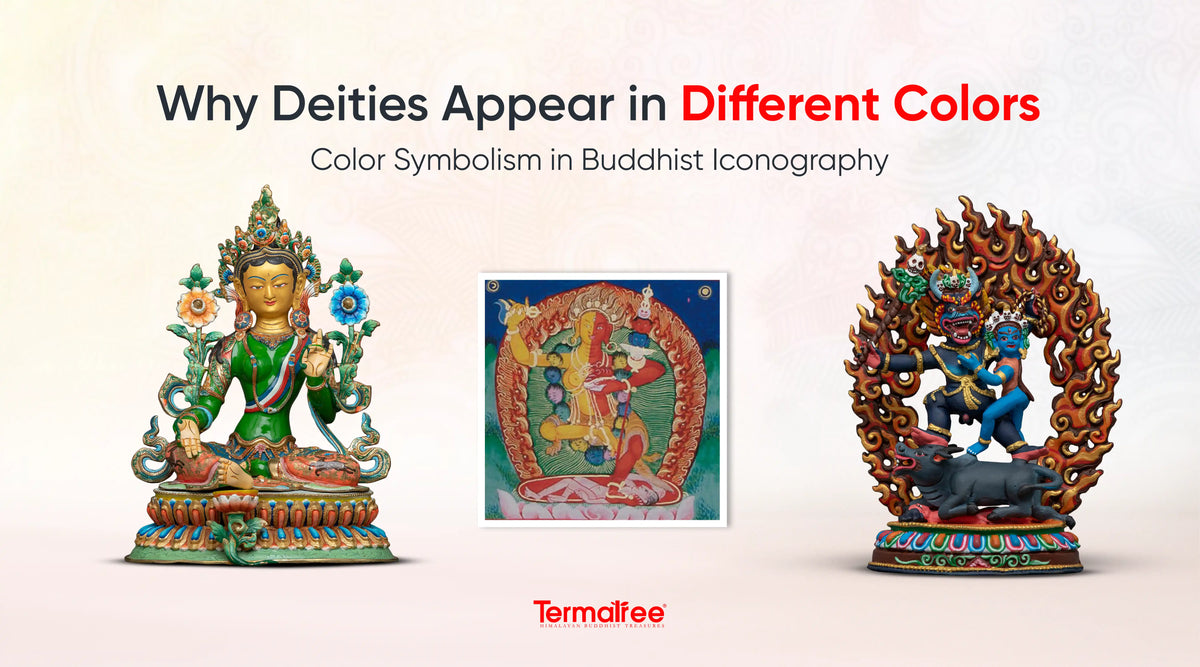
One of the most important feminine figures in Buddhist cosmology is Tārā, often called the Mother of Liberation. She manifests herself in many forms: Green Tara, White Tara, Red Tara, and others, discovering the peculiarities of each of them: compassion, protection, longevity, and healing.
Traditional stories state that because Tara vowed to be reborn as a female bodhisattva, not only to demonstrate that gender does not become an obstacle to the state of enlightenment, but also to influence beings through her uncompromising bravery and benevolence. According to senior teachers such as the Dalai Lama, the vow of Tara points to the inclusivity of the vision of Buddhism: only weak-minded worldlings believe gender can limit enlightenment. Her renowned recitation, Praise to Tara in Twenty-One Verses, is recited throughout the Tibetan Buddhist world to remind them that compassion and fearless effort are the key to liberation.
2. Prajnaparamita Devi: The Mother of All Buddhas

Prajnaparamita Devi is another female personage of Mahayana Buddhism and is the embodiment of transcendent wisdom. She is the Great Mother and is said to represent prajna, which is wisdom that sees the ultimate reality that is not illusion. She is the origin of all the Buddhas, as her name literally translates to the perfection of wisdom.
She plays a central role in tantric texts and practices, and contemplating her figure helps practitioners to eliminate ego, dualism, and ignorance, which are some of the main steps on the way to enlightenment.
3. Dakinis: Sky Dancers of Wisdom

In Vajrayana Buddhism, ḍākinīs are female spirits or enlightened beings embodying dynamic wisdom energy. Their name can be translated as something like "sky dancer," which means freedom, movement, and formlessness of reality. They are spiritual muses and catalysts, and assist the practitioners to overcome hard conceptual blockages and open their eyes to the actual reality of the mind.
Some ḍākinīs are wrathful or fierce, manifestations of transformative power, which is required to slice off ignorance, whereas others are serene manifestations of insight. Buddhism's feminine energy is active, liberating, and formative in itself in terms of realization.
Historical Perspectives: Women in Early Buddhist Communities
 (Photo from Sreenivasarao's Blog)
The acknowledgement of women by Buddhism is not that symbolic; rather, it has a strong historical basis in the role of women in the Sangha at its inception. When the Buddha took a radical step in the society of ancient India, where women were not frequently permitted to receive religious appointments, they were granted the right to ordain and receive spiritual salvation. He believed that anyone, regardless of sex, could awaken the spirit. The significance of women in early Buddhism is also provided in documents such as the Therigatha, which is a collection of poems by early Buddhist nuns. Through these verses, women are depicted as having developed a lot of spiritual knowledge and as influencing the masses and the monastic society significantly. Their ways, theology, and prudence helped in the formulation of the course of Buddhism in its initial years.
Among the most outstanding representatives of this history, there is Mahapajapati Gotamii, the mother of the Buddha and the first woman ever. ordained as a nun. Her boldness to ordain, even though she faced opposition in society, played a big role in bringing the female monastic order into existence. The activities of Mahapajapati reflected the message of Buddha that gender does not limit the enlightenment process and initiated the way for women to the spiritual life in its full form.
Feminine Energy and Meditation Practice
Female Buddhas and Bodhisattvas are common subjects of meditation and visualization, especially in Tibetan Vajrayana, which aims to develop the necessary qualities of compassion, wisdom, and inner strength. Such images as Tara, visualized to foster fearlessness, and Prajnaparamita, which enhances knowledge about emptiness (sunyata), are powerful symbols. Such female embodiments cannot be taken as mere manifestations of divine aspects alone; they serve as mirrors that reflect inner aspects that all practitioners already have.
Such practice brings out one of the core principles of Buddhism: the qualities that these personalities hold are not just the outward idols or far-off ideals but the manifestation of our potential. They are not invoking something outside themselves; they are accessing their dormant wisdom, compassion, and strength by meditating on these women. These traditions keep in mind that the divine feminine in its different manifestations is not distinct but rather an inseparable element of the process of enlightenment for all beings. These are essential attributes that are opened and revealed through feminine energy in the meditation, leading to elevated spiritual growth and development.
Contemporary Reflections: Gender, Practice, and Equality
 Buddhism has always provided women with spiritual opportunities, and there are still some instances of cultural and institutional obstacles. As an example, some areas have derailed or even opposed the complete ordination of women to the monastic orders, especially the lineage of Bhikkhuni. This problem has given rise to contemporary movements seeking to restore these lineages and to verify that women can fully participate in Buddhist scholarship and leadership.
In spite of such difficulties, the very philosophy of Buddhism states that every creature has Buddha-nature, and the idea of spiritual realization is gender-neutral. The feminine Buddhism uses is also a good reminder that enlightenment is not gender-based, as it brings upon the deity, the practice of meditation, and the history of Buddhism. Instead, it is an outcome of wisdom and compassion combined that exists in beings of all forms. According to this perspective, the elements of feminine and masculine energy are required to achieve enlightenment, and therefore, the development of spirituality is not gender specific.
Conclusion: Feminine Energy as a Gateway to Enlightenment
Honoring the feminine in Buddhism is not an exercise of piety but a profound appreciation that wisdom, kindness, openness, and relational awareness are the keys to spiritual awakening. By the exalted beings such as Tara, Prajnaparamita, and the dakinis, Buddhism preaches the feminine principle as essential to the achievement of Buddhahood. These characters have attributes that contribute to self-development and awakening, and prove the fact that feminine energy is a mighty and radiant power on the way to liberation.
Buddhism, both in practice and philosophy, welcomes all practitioners, regardless of gender, to be wise, compassionate, and insightful, as the feminine tradition symbolizes. This has nothing to do with gender exaltation or feminine over masculine and everything to do with accepting the universality in all our qualities, such as wisdom, compassion, nurturing, and creativity, which result in spiritual liberation, inner peace, and enlightened existence. With these qualities incorporated into our practice, we develop enlightenment and a closer relationship with the world we live in, which provides balance and compassion in our day-to-day lives.