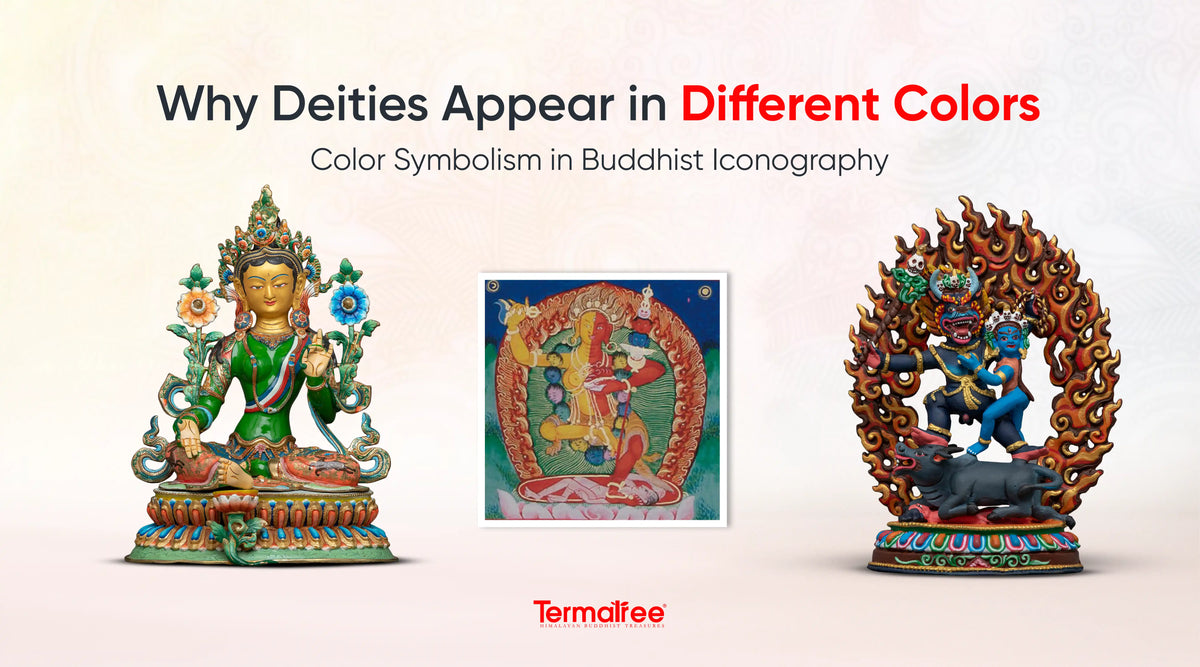

Sacred Art of Thangkas and Statues: Visual Scriptures and Silent Companions in Buddhist Practice
In Himalayan Buddhist settings, a single room might hold two very different sacred objects: a vibrant Thangka humming with reds, blues, and golds; and a calm, monochrome Buddha statue glowing in quiet restraint. The two forms show opposite characteristics because the artist designed their visual appearance to demonstrate their understanding of how visual elements affect human thinking. Thangkas explode with color because they are designed to teach, to guide, and to activate the imagination, while statues tend to remain plain because they are meant to be steady, to be quiet, and to embody stillness. Each has a distinct function in the spiritual life of the practitioner.
Sacred Forms: Thangkas That Teach and Statues That Calm

In Himalayan Buddhist practice, Thangkas and statues serve as two complementary sacred forms: one unfolds in color and detail, the other rests in stillness and simplicity. A thangka is a painted scroll, usually on cotton or silk, that functions like a visual scripture, compressing cosmology, doctrine, and meditation instructions into a single image. It is filled with multiple figures: Buddhas, bodhisattvas, protectors, and mandala-like spaces where each hue is coded: white for purity, blue for wisdom, red for compassion, yellow and gold for enlightenment, and green for skillful action. Practitioners use Thangkas in meditation and ritual, letting the brilliance guide visualization and inner understanding; the painting literally “teaches” through its luminous composition.
In contrast, a Buddhist statue is typically a single, three‑dimensional figure, often carved from stone or wood, cast in bronze, or molded in clay, and frequently left in a simple or monochrome form. Even when gilded, its palette is restrained, emphasizing calm dignity over visual complexity. The statue serves as an active presence that people can view from the altar, which serves as a permanent point of worship and silent reflection. The plain design of the artwork shows a dedication to spiritual life, which creates a space for users to experience their thoughts. Where the thangka uses color to unfold layers of meaning, the statue uses simplicity to hold the space of stillness, so together they map the full rhythm of practice for the mind that studies and visualizes and the mind that simply rests in the Buddha’s presence.
Color as Code: Symbolism in Thangka Painting
|
Color |
Meaning in Thangka Art |
|
White |
Purity, healing, and the sublimation of ignorance. |
|
Blue |
Vast, open wisdom, protection, and the pacification of aggression are all essential. |
|
Red |
Active compassion, power, magnetizing energy, and the transformation of desire. |
|
Yellow / Gold |
Enlightenment, illumination, generosity, and the highest teachings. |
|
Green |
Skillful action, accomplishment, growth, and balanced compassionate energy. |
In a thangka, these colors are not merely decorative; they help practitioners visualize specific states of mind and deities precisely as described in meditation manuals. When a yogi gazes at a red Tara or a blue Vajrasattva, the color itself becomes a doorway into that energy, turning the painting into a living map of the path.
Types of Thangka
The colors in a thangka serve dual functions because they decorate the artwork yet enable meditation practitioners to achieve precise mental and divine visualization. Through his red Tara and blue Vajrasattva meditation, the yogi discovers that the painting creates a dynamic path toward becoming one with that energy.
Based on Background Color
1. Tson‑thang
 The term "Tson‑thang" describes Thangkas that display colorful backgrounds that include multiple color layers and atmospheric gradient effects. The vibrant ground serves to enhance both the figures and symbols within the painting which makes it ideal for meditative practices that involve energetic deities and complex mandala designs.
2. Ser‑thang / Serti
 Ser‑thang or Serti features a yellow or gold background, which symbolizes illumination, enrichment, and the highest teachings. The gold background creates a radiant environment that showcases the central deity through an artistic design, using both outline and color to give it a majestic appearance suitable for practices of wisdom and prosperity.
3. Tsal‑thang / Mar‑thang (Marti)
 The Tsal‑thang and Mar‑thang designations use a red background, which represents intense protective energy that provides strength to its defenders. The red field shows dynamic energy through its display of colored figures which include gold and silver elements that create an intense atmosphere that suits the wrathful deities and practices that aim to conquer obstacles and negative powers.
4. Nag‑thang / Nagti
 The black background of Nag-thang or Nagti creates an artistic work which generates mysterious and extensive astral imagery that transcends human visual limitations. The dark ground reveals all elements of the deity and its sacred items, which artists present in gold and silver, thus creating this meditation style, which enables practitioners to access profound hidden learning and remove their mental barriers.
Unique Technique and Materials
Embroidered Thangkas
Embroidered Thangkas are created by two methods: sewing silk or brocade pieces together or stitching detailed patterns directly onto the fabric. Thangkas made from textiles are suitable for processions and major shrines and monasteries because their strong construction makes them easy to move, while their appearance remains impressive from far away. The stitching creates rich textures that produce a three-dimensional effect that allows people to experience their spiritual power through touch.
Traditional Methods
Traditional Thangka painting follows a slow, disciplined process that requires artists to learn from their mentors and study sacred texts. The artist begins his work after making a handmade cotton or silk canvas, which he prepares with a clay-and-animal-glue ground. He first draws his design using iconographic grids before applying natural mineral and vegetable pigments. He then applies ink outlines before adding gold to essential design parts. Every step is often accompanied by ritual awareness, and the finished Thangka is consecrated, making it a living object of practice rather than a mere decorative image.
Modern Methods
Modern Thangka production sometimes incorporates chemical pigments, synthetic canvas, and digital layout tools, speeding up the process and lowering costs. The new methods that improve access to Thangkas work to protect traditional material and symbolic meaning. Contemporary artists develop authentic artworks through their use of modern methods, which combine with ancient artistic traditions to establish connections between historical artwork and current artistic methods.
Types of Buddhist Statues
Buddhist statues exist in multiple types, which differ according to their materials, designs, regional origins, and intended symbolic purposes. The Buddha's different attributes, which include compassion and wisdom and protection, become recognized through these variations, which enable practitioners to perform various meditation and devotional activities.
By Material
1. Stone and Rock‑Carved Statues

Buddhist countries use stone statues, which artists carve from marble and sandstone and granite, as their primary statue material because it provides durable properties. The statues exist in temples and caves and outdoor shrines because their enduring nature represents the permanent nature of enlightenment. Artists can choose to keep the stone's natural state or create a polished finish while applying thin layers of gold or paint to emphasize specific features.
2. Wooden Statues

The Himalayan and East Asian traditions highly value wooden Buddha statues, which skilled craftsmen create by carving softwood and hardwood into intricate flowing designs. The wood material enables detailed representation of the statues' robes and facial features and body postures. The wooden statues create a warm and natural appearance, which makes them suitable for home altars and personal practice.
3. Bronze and Metal Statues

Bronze, brass, and other metal statues are cast in molds and then finished by hand, often with fine chasing, gilding, and inlay. Buddhas made of gilded bronze can be found in temples and monasteries which exist throughout Nepal and Tibet and Southeast Asia. The reflective surface of a well‑gilded statue can symbolize the luminous, radiant nature of an awakened mind.
4. Stucco and Clay Statues

Artists create stucco and clay statues by shaping plaster or clay into their desired forms and applying paint or gold leaf for finishing. The material is lightweight and easy to shape, which makes it a preferred choice for creating large temple statues and wall relief sculptures. The sacred forms of communities can be renewed and restored through the process of recasting or repainting stucco and clay images, which are less durable than stone or metal.
By Style and Region
Theravada Style
In Theravada‑influenced countries such as Sri Lanka, Thailand, and Myanmar, Buddha statues tend to be elegant and serene, with smooth, flowing robes and a calm, inward‑turning expression. The simplicity and purity of Buddha's human characteristics from the historical Buddha serve as the main point of focus, while all but one of the images maintain their original plain white or gilded appearance, which contains no additional decorative elements.
Himalayan Style
Buddha and Bodhisattva statues in the Himalayan regions display their complete ornamentation through their detailed jewelry and their ceremonial items, which depict the Vajrayana cosmology and tantric practices. The postures may be highly precise, mirroring meditative mudras and stances, and the finishing is often a mix of subtle color and gold that balances detail with dignity.
East Asian Style
In China, Korea, and Japan, Buddha statues range from spare, monastic forms to richly adorned enlightened figures. The styles often blend local aesthetics such as flowing robes, gentle smiles, and flowing drapery while still preserving canonical postures and gestures. Many East Asian images are painted and gilded, blending the quietness of the statue with the subtle warmth of color.
By Finish and Color
Monochrome and Plain Statues

Many traditional statues are intentionally kept plain or monochrome, in natural stone, unpainted wood, or simple white stucco. The basic finishing work reveals three main elements because it displays both Buddha's silent existence and his teachings on renunciation and humility.
Gilded and Polychrome Statues

The statues display their rich appearance through gilded sections and their multiple colors which painters used to create various hues that show on the gold crown and sacred clothing and face and body details. In this mode, color is used sparingly, to dignify rather than distract, so the image remains a bearer of sacred symbolism rather than decorative spectacle.
Different Roles, Shared Purpose of Thangkas and Statues
The contrast between Thangkas and statues is not about one being “better” than the other, but about the different spiritual roles the same sacred art can play. The different forms of the practice reveal various aspects of the practitioner's mental state and life experiences, but they both lead to one ultimate objective, which is awakening and compassion. Thangkas and statues exist as artistic partners that help practitioners progress through their meditative journey because each art form has its own visual design, which creates a special meditative experience.
Thangkas: Visual Scriptures That Teach
The Thangka functions like a visual scripture, unfolding doctrine, cosmology, and meditation instructions through color, composition, and intricate detail. Every line, proportion, and hue is guided by canonical texts and iconographic grids, so nothing in the painting is accidental. The practitioners use their visual and emotional perception to understand the hidden message that the colorful palette presents through its various colors that represent different concepts.
People use thangkas as they display them on altars and walls, which serve as their main spot for practicing visualization, mantra recitation, and meditation. The expert uses his brilliant work to create an effect that attracts viewers, leading them to experience the divine world through his visualization of the deity and the mandala. The Thangka presents its wisdom to practitioners who study, interpret, and internalize its teachings, which suits them especially during times when their minds actively learn with curiosity.
Statues: Silent Companions That Calm
The statue exists as a practice companion that provides practitioners with stillness, sacredness, and present through its design. Carved from stone or wood, cast in bronze, or shaped in clay, many Buddhist images are left in a monochrome or softly gilded state, with minimal ornamentation. The palette maintains its controlled appearance through its colored elements, which create an atmosphere of dignity and tranquility yet fail to produce any visual complexity.
The statue on the altar does not display multiple narratives because it exists as a single entity that depicts the Buddha's presence through its sitting and breathing form. The statue's simple design enables practitioners to release their sensory distractions and mental activities, which then serve as a constant guide for making offerings, practicing devotion, and engaging in silent meditation. The statue imparts wisdom through its silent presence, which teaches more effectively than theatrical displays. It most clearly comes to the mind that is ready to rest, to bow, and to simply be with the Buddha rather than analyze him.
Shared Purpose: Two Strategies for the Same Path

In this way, both Thangkas and statues rely on aesthetic choices made with deep intention. Thangkas use color, symbolism, and narrative density to activate the imagination and guide visualization: Statues use simplicity, form, and stillness to support presence and quiet awareness. One is dynamic and didactic, the other grounded and contemplative, yet both serve the same central aim: turning the mind toward clarity, compassion, and awakening.
So the next time you stand before a fiery red Thangka and a softly gilded Buddha statue in the same shrine, you are not just seeing “colorful art” versus “plain figure.” You are encountering color as a teacher and stillness as a teacher two elegant, complementary strategies for the same path of Buddhist practice. One invites you to study and imagine; the other, to sit and simply see. The two of them demonstrate all artistic possibilities that serve spiritual purposes.
Final Thoughts: Honoring the Living Tradition
Thangkas and Buddhist statues exist as active cultural expressions that have continued their tradition through the artistic and educational work of their practitioners since ancient times. The artwork of thangkas and statues contains their colors and carving patterns, which demonstrate the artists' creative journey and their dedication to their artistic work. The artists who create these works base their work on years of apprenticeship and sacred texts and their understanding of ritual practice, to share Himalayan knowledge and artistic tradition with modern audiences. The tradition exists in a state of active development. Modern artists experiment with new materials, techniques, and contexts while still respecting the core iconography and symbolism that give these images their power. Museums, digital archives, and councils like the Himalayan Art Council are helping to preserve authorship, authenticity, and understanding so that Thangkas and statues can be appreciated not only as art but also as vital guides on the path.