Introducing statue of the week: Magnificient Statue of Buddha Shakyamuni
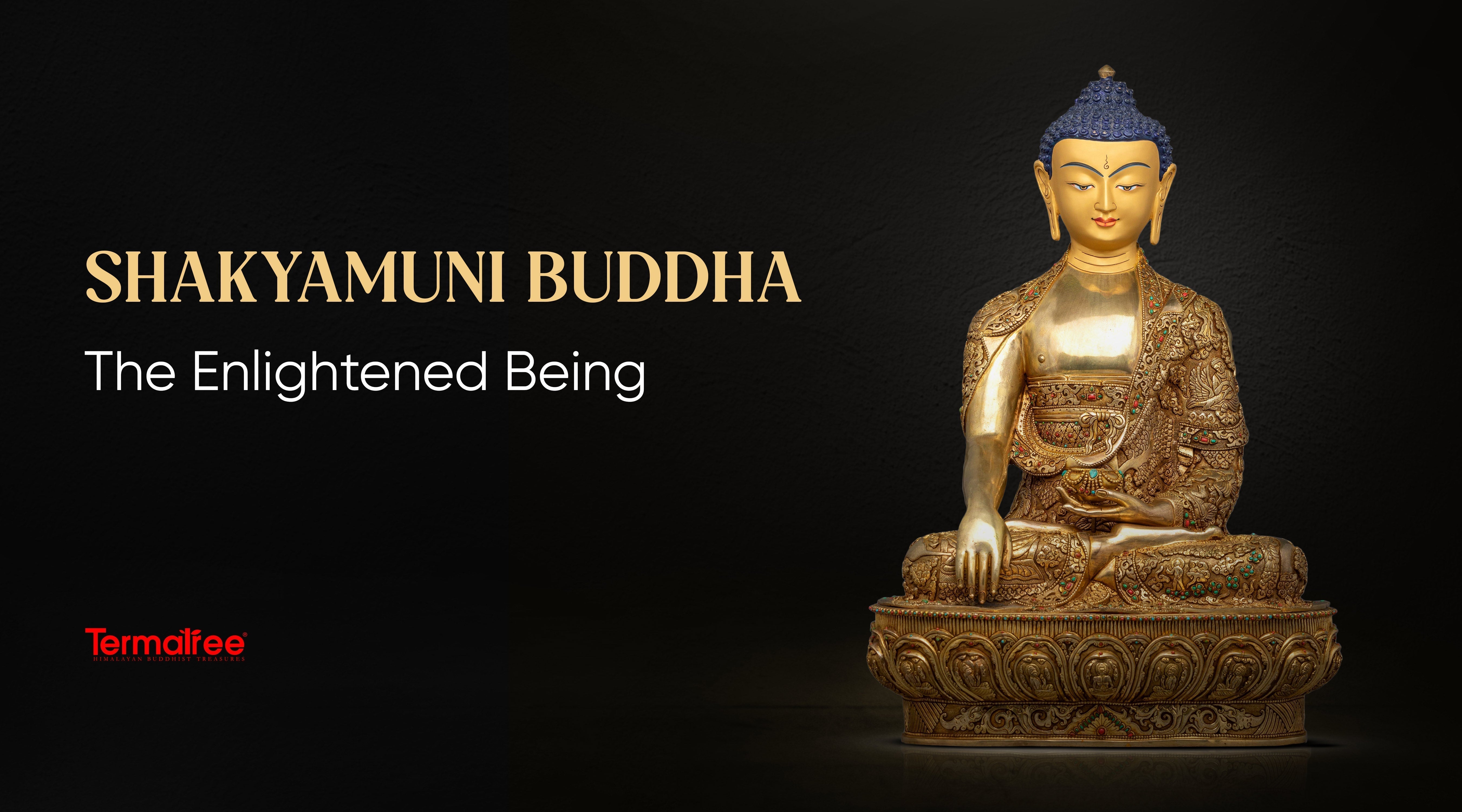
Introducing our Statue of the Week, a remarkable Shakyamuni Buddha statue featuring intricately carved scenes from his complete life story, making it a truly unique and deeply significant addition to any collection.. This sacred form stands at 22” (56 cm) in height and 14.5” (37 cm) at the base, with a weight of 15.78 kg. Crafted from 24K Gold Gilded, Copper Body, and Acrylic Paintings, it carries a balanced presence of elegance and spiritual depth.
What makes this statue truly exceptional is its narrative quality. It does not simply represent the Buddha in a single moment. Instead, it presents his entire journey toward enlightenment through detailed carvings, offering both a visual and contemplative experience. It is well suited for altars, meditation spaces, and collections that value meaningful craftsmanship.
Craftsmanship and Details of the Statue:

This statue has been crafted in Patan using the traditional lost wax technique, a method that requires both patience and precision. The main form was created by master artisan Nuchche Raj Shakya, while the intricate carvings were completed by Dinesh Shakya.
With fifteen years of age, the statue carries a quiet sense of refinement that comes from time and careful preservation. The 24K gold gilding enhances its presence, while the copper body provides strength and longevity. The acrylic paintings bring definition and clarity to each detail, allowing the expressions and carvings to be appreciated fully. Every aspect reflects the dedication and discipline of skilled Nepali artisans.
Magnificient Carvings of the Shakyamuni Buddha: Statue:
The carvings on this Termatree Buddha unfold as a continuous and deeply meaningful narrative of Siddhartha Gautama’s life, allowing the viewer to witness each stage of his transformation into the Enlightened One.
1. The Birth of the Buddha

The journey begins with the birth of Siddhartha Gautama. As a newborn, he is shown taking seven steps, with one hand pointing toward the sky. This gesture signifies his unique destiny and the emergence of a being who would one day reveal the path to liberation. It represents not pride, but the awakening of supreme awareness that transcends ordinary existence.
2. Buddha with Queen Mayadevi

The next carving presents a quiet and tender moment, where the young Siddhartha rests beside his mother, Queen Mayadevi. This scene expresses both love and stillness, while gently reminding us of impermanence. Despite the short time they shared, this connection reflects the conditions that give rise to life and the inevitable cycle of change that the Buddha would later teach.
3. The Wounded Swan

As a young prince, Siddhartha encounters a wounded swan struck by an arrow. While others saw it as a matter of ownership, Siddhartha chose compassion. He protected and healed the bird, demonstrating that life should be preserved, not claimed. This moment reveals the early presence of karuṇā, compassion, which would later become central to his teachings.
4. The Four Passing Sights

Living a sheltered life within the palace, Siddhartha was unaware of suffering until he encountered four sights that changed everything. He saw an old man and realized that aging is unavoidable. He saw a sick person and understood the reality of illness. He witnessed a funeral and recognized the certainty of death. Finally, he saw a wandering ascetic who radiated peace, suggesting that there may be a way beyond suffering. These encounters awakened a deep resolve within him to seek truth.
5. Sujata’s Offering of Milk Rice

After leaving the palace, Siddhartha practiced extreme austerities, believing self-denial would lead to enlightenment. His body became weak, and his efforts brought him no closer to truth. At this moment, Sujata offered him a simple bowl of milk rice. By accepting it, Siddhartha realized that neither indulgence nor extreme hardship leads to awakening. This marked the discovery of the Middle Way, a path of balance that became fundamental to his teaching.
6. Taming the Elephant Nalagiri

In one powerful episode, a furious elephant named Nalagiri was sent to harm the Buddha. As the elephant charged, the Buddha remained completely calm and unmoving. His presence radiated such peace that the elephant slowed, approached gently, and bowed. This moment illustrates that true strength lies not in force, but in inner stability and compassion that can transform even aggression.
7. The Transformation of Angulimala

Angulimala was a feared bandit who had taken many lives. When he pursued the Buddha, expecting another victim, he encountered something entirely different. The Buddha remained calm and spoke with clarity, revealing the emptiness of Angulimala’s actions. Confronted with this wisdom, Angulimala experienced a profound change of heart, renounced violence, and became a devoted practitioner. This scene shows that no being is beyond transformation.
8. Descent from the Celestial Realm

After attaining enlightenment, the Buddha is said to have ascended to teach his mother and celestial beings. Upon completing this, he descended back to the human realm. This moment reflects the universal nature of his teachings, extending beyond the human world and returning again to benefit all beings with compassion and wisdom. It is also believed that Hindu gods such as Mahadeva, Bramha and Vishnu joined this celebration with Buddha.
9. Parinirvana

The final carving depicts the Buddha lying peacefully as he enters Parinirvana. Surrounded by disciples, his passing is calm and composed, free from fear or attachment. This moment represents the completion of his journey and the final liberation from the cycle of birth and death. It is not an end in sorrow, but a state of ultimate peace.
Together, these carvings form a complete spiritual narrative. They allow the observer not only to see the life of the Buddha, but to reflect upon the stages of awakening, from innocence and compassion to wisdom (prajñā) and ultimate liberation.
Why Choose This Shakyamuni Buddha Statue?
- A one-of-a-kind, uniquely handcrafted statue
- Expertly made in the Himalayan region, ensuring cultural authenticity
- Intricate carvings that beautifully depict the life and journey of Lord Buddha
- Crafted using authentic, traditional materials for lasting spiritual value