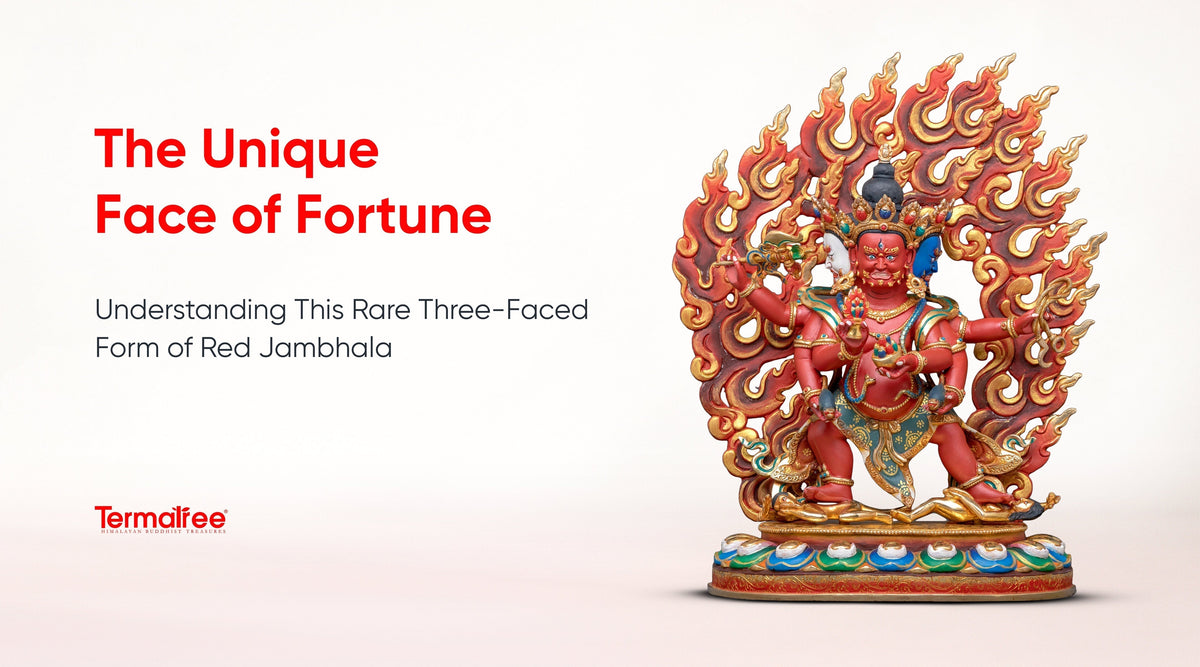

Dombi Heruka: The Wrathful Deity of Compassion and Wisdom in Tibetan Buddhism
Dombi Heruka is a significant deity of Vajrayana Tibetan Buddhism. He plays a crucial role in religious activities. He is considered one of the emanations of the bodhisattva Avalokiteshvara (Chenrezig), who embodies compassion. He is characterized by his violent and figurative images, which are necessary to eliminate ignorance and attachment on the path towards enlightenment.
According to Vajrayana Buddhism, this tradition emphasizes fast spiritual enlightenment by using rituals, visualization, mantras, and meditation. He serves as the leader of these secret practices. The Tiger Rider is a powerful presence invoked by practitioners during meditation to help them escape suffering. His enraged figure symbolizes the type of wisdom that dismantles the barriers of the mind and makes people realize nothingness. He assists individuals seeking liberation by guiding them through practices such as Chöd, where they confront their most intense fears and attachments. The recipient needs both scorching passion and tender pity.
The Origins of Dombi Heruka

Dombi Heruka is a renowned figure in Tibetan Buddhist meditation, particularly associated with the secret Vajrayana school. The Vajrayana pantheon of gods has the term "Heruka." It usually signifies the defeat of ignorance, attachment, and delusion. Usually depicted with frightening expressions, these gods demonstrate their ability to cut through the illusions of daily life.
The origin of Dombi Heruka is rather incomprehensible, as it is rooted in the Tibetan Buddhist tradition. Many people believe him to be a historical figure who attained the highest spiritual understanding. His participation in the Chod rituals designed to slice through the ego is what further makes him important in Vajrayana Buddhism. Some folktales refer to him as an excellent yogi and saint who performed various miraculous acts that assisted in propagating the Buddhist doctrine, in particular, meditation and ritual practices.
Iconography of Dombi Heruka
Hands and Gestures: The deity's right hand is raised high to signify security and the power to overcome challenges. The left hand can hold a ritual object or weapon, symbolizing wisdom and cutting through attachment and ignorance.
Posture: Sits in a cross-legged position, a position of serene power and profound concentration. He strikes a balance between sympathetic wisdom and wrathful defense.
Animal Companion: The lion symbolizes strength, bravery, and the ability to overcome all challenges. It also demonstrates how the deity conquers ignorance and malevolent powers.
Facial Expressions: His frustrated face shows compassionate wisdom that cuts through attachment and delusion. It is not the anger but the power to change things.
Crown and ornaments: The crown and jewelry are symbols of spiritual royalty, a high rank among the gods, and the deity's connection with enlightened wisdom.
- Right Hand: Snake may be a representation of change, vitality, and disillusionment of the shed skin. It is the triumph of the negative forces, e.g., ignorance or delusions.
- Left Hand: Hold a skull cup or some other ritual piece such as a bell, which indicates emptiness, change and loss of attachment.
Flowered Background: The flowers are symbols of spiritual development, purity, and the opening of wisdom that supports the deity's role in assisting humans in achieving enlightenment.
The Tale of Compassion

Dombi Heruka was a simple and impoverished man who lived in a village in Tibet. He was a well-known, kind person who was caring despite his issues. One day, an Prosperous and standoffish man, who happened to be a merchant, came through the village. He rejected the food offered by Dombi and mocked him for being poor. He smiled, wished the merchant well, and did not take his rejection personally or with ill will. The gesture was a sign of actual compassion, although the merchant was rude.
One such occasion was a night that Dombi experienced a vision of the bodhisattva Avalokiteshvara when he was in deepening meditation. The bodhisattva brought him wisdom and made him realize what true compassion is. The following day, when the merchant got in trouble, he sought the assistance of Dombi. Now enlightened, the merchant came to realize that true riches lay in taking care of others and doing good to them, and not in possession. The wisdom of Dombi transformed the ways and changed the heart of the merchant; it demonstrated that the qualities of being unselfish and kind could make a person enlightened.
This tale illustrates the role played by Dombi Heruka as a fierce man, but a kind man. His wrath is no anger, but a ruthless wisdom, which assists in destroying illusion and ignorance, and leads beings to an understanding of their real character. What he teaches is that liberation is not in external wealth but instead in inner wisdom and compassion, and the desire to loosen the attachments.
"The only way to free yourself from the ego is to embrace the very thing you fear the most—this is where true liberation begins."
– Dombi Heruka.
The Lineage of Dombi Heruka
The teachings of Dombi Heruka, like those of most other holy deities in Tibetan Buddhism, are transmitted through a line of master-disciple relationships, particularly in Choden and Tantric Buddhism. The tradition of Chöd is directly connected with the name of the revered Tibetan saint Machig Labdrön, or, as they say, the principal patron of this ritual. He plays a significant role in it. The Madhyamaka philosophy greatly influenced the Chod teachings of Machig Labdrön. Nagarjuna's teachings on the emptiness (sunyata) of everything greatly influenced her. In this lineage, he aims to help the practitioner transcend self-illusion and recognize the inherent emptiness of everything.
Transmission of Teachings

Different lineages spread the doctrine of Dombi Heruka, with the Nyingma and Kagyu schools of Tibetan Buddhism being the main ones. These are schools of the so-called tantric and esoteric orientations, in which deities such as him are considered advantageous for spiritual development and inner transformation.
Nyingma Lineage
The oldest of the four principal schools of Tibetan Buddhism is the Nyingma school, which claims that the practice of Dombi Heruka is very akin to the Dzogchen teaching. The name of Dzogchen is the Great Perfection. It focuses on helping you achieve your true self. The furious body of the tiger rider is used to illustrate the immense power needed to dismantle the delusion of self and the world.
Kagyu Lineage
Dombi Heruka is also part of the Kagyu tradition of tantra, which emphasizes meditation and teacher-student transmission. The Kagyu school, which is the school of Mahamudra, teaches and interprets angry deities, such as Dombi, as relevant to the realization of the mind's actuality. Individuals practicing them employ visualization and meditative methods to understand that nothing is real.
Historical Significance and Influence on Tibetan Culture
Dombi Heruka is a leader in Tibetan Buddhism, particularly within the Vajrayana and Chod schools. Though his origin is unclear, his influence on the Buddhist practices, particularly in Chod, is extensive. He is an emblem of the act of dedicating the body to deities to conquer attachments, an important element of Tantric Buddhism, and was popularized more by the saint Machig Labdrön. The doctrine of Heruka greatly influenced the spread of Buddhism in Tibet and formed the basis of Nyingma and Kagyu. Nyingma, based on the Dzogchen tradition, encourages the process of shedding self-delusions to get out of samsara. Heruka pointed out that liberation does not need only tender compassion but also harsh wisdom needed to face and cut attachments, and this is reflected in Chod rituals. In the Kagyu school, the path of Mahamudra, which is based on direct experiences of the actual nature of the mind, is associated with him. His vengeful incarnation brings a challenge to the way things were perceived and is a way of making a person realize his/her true self. In general, he has made a great contribution to the Tibetan Buddhist doctrines of wisdom, compassion, and the interrelationship of all beings.
Role in Vajrayana and Chöd Practices

Dombi Heruka has a significant role in the Chöd lineage; it is one of the many methods within this lineage, and therefore, it is an essential meditation form for helping a practitioner be free of their ego. He helps practitioners face their deepest fears, attachments, and limitations rooted in their personal identity and ego-based lifestyle. The Chöd also encourages a practitioner to visualize themselves giving their bodies and lives to the deities. The approach and wisdom of the Vajrayana tradition are manifested in the use of numerous sacred instruments during the Chöd version of meditation, such as bells and drums.
Many deities, including Dombi Heruka, are part of the Chöd system, symbolizing the need to release mental and emotional blockages associated with one's ego. These gods guard the character and become a symbol of the necessity to forget the attachment to personal identity and the worldly interests connected with it. Furthermore, the role of Dombi Heruka in meditation is often associated with the concept of emptiness (shunyata). According to Vajrayana Buddhism, nothing, including the self, is actually independent. Meditating on these forms, people come to know that all is an illusion. The angry, fierce appearance of Dombi Heruka is an artful manner of assisting the practitioner in comprehending how knowledge may shatter the illusions that trap him or her in the circle of life and death (samsara).
Ritual and Practice
- Role in Vajrayana Rituals: Dombi Heruka is a key figure in Vajrayana rituals, especially in the Nyingma and Kagyu traditions, where people use mantras and visualizations to call on his energy.
- Mantras and Visualizations: Practitioners chant mantras and visualize Dombi Heruka to awaken his powerful energy, which is believed to transform challenges and provide spiritual guidance.
- Meditative visualization: It is when you envision yourself as Dombi Heruka or as a safe man in the wrathful mercy. This assists you in becoming a spiritually growing person.
- The wrathful compassion of Dombi Heruka is a powerful wisdom, but it goes to work to eliminate ignorance and attachment.
- Offerings and prayers: Individuals who are offering prayers and ritual gifts to Dombi Heruka do so seeking his assistance in solving their issues.
Conclusion:
Dombi Heruka is an extremely significant personage in Tibetan Buddhism. He is an embodiment of the fine line between pity and anger, which is needed to overcome the ego and the misconceptions. His doctrines are founded upon the practice of Vajrayana and Chöd, and they enable individuals to achieve enlightenment by confronting their greatest fears and attachments. He assists individuals to overcome their illusions about themselves by means of rituals, meditation, and visualization. This brings them to the liberation and the awareness of emptiness. His teachings are still being followed and practiced in Tibetan Buddhism as a way of ensuring true wisdom is achieved by renouncing the self and adopting the manner of compassion.