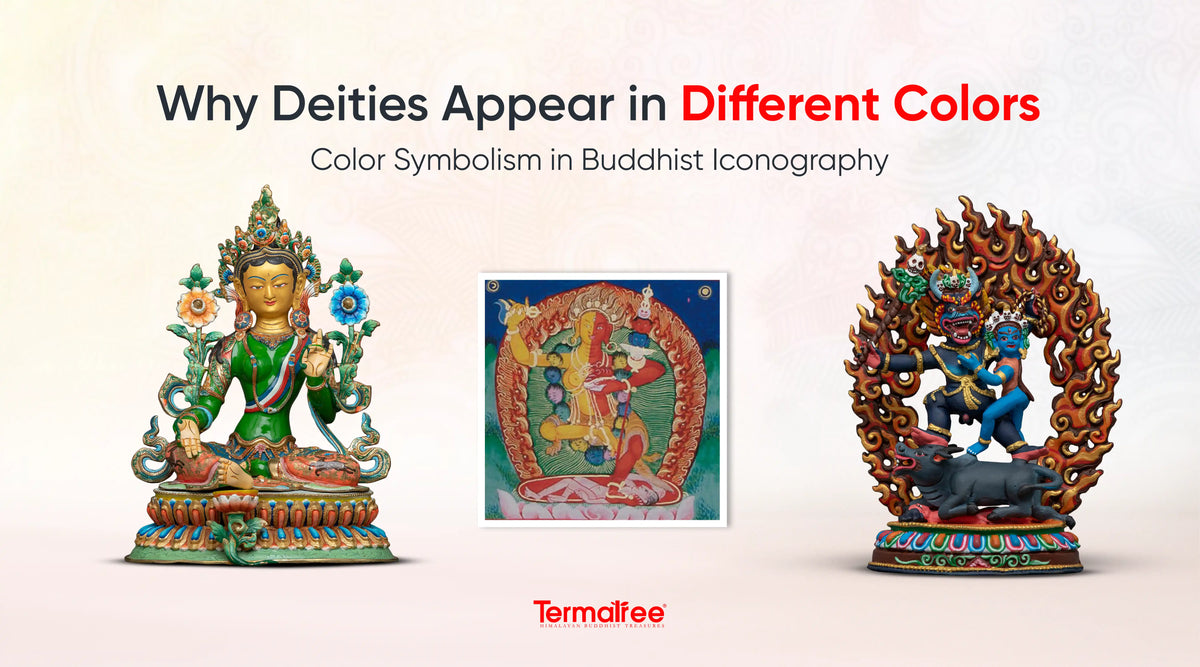

Wrathful Guardians: Iconographic Differences and Roles of Dorje Lekpa and Pehar Gyalpo
The Tibetan Buddhist tradition identifies Dorje Lekpa and Pehar Gyalpo as powerful protectors who defend the faith through their roles as dharmapalas and their origins as wild spirits. Guru Rinpoche bound to protect the Dharma. Dorje Lekpa protects Nyingma terma treasures and sacred sites and tantric practitioners through his specialized wrathful form, while Pehar Gyalpo operates as the Dalai Lama's Nechung oracle, who controls five gyalpo kings to defend all Buddhist centers through his active power. Their visual representations display a complete opposite between a minimalistic display of power and a detailed display of life force, which shows their two different states of power because their two different states of power are through which they maintain vigilance status against their oracular abilities.
Who Are Dorje Lekpa?

Dorje Lekpa is an indigenous Tibetan spirit who started as a war and gambling deity. He became a protector of Nyingma terma teachings when Guru Rinpoche made an oath to preserve their hidden treasures, which tertöns, tantric practitioners, and sacred sites had discovered.
Origins
The native Tibetan spirit Dorje Lekpa starts as a fierce deity who connects to both warfare and gambling but later becomes a protective force for Nyingma terma teachings and tantric practitioners and sacred sites. His guardianship shows that he protects both the local area and its holy sites through his supervision of revealed texts and regional sacredness.
Who is Pehar Gyalpo?
Pehar Gyalpo from the region leads five gyalpo spirit kings who represent body, speech, and mind and their respective qualities and activities. His activity form, which was subdued at Samye Monastery, now protects all Buddhist institutions while serving as the state oracle for the Dalai Lamas through the Nechung Monastery. Both of them exhibit enlightened wrath, which transforms chaotic energies into Dharma guardians.
Origins
Pehar Gyalpo hails from the region outside Tibet, heading five gyalpo kings that embody body, speech, mind, qualities, and activity; his activity form dominates iconography. Bound at Samye Monastery, he guards all Buddhist institutions and acts as the Dalai Lamas' oracle through Nechung Monastery.
Union of Dorje Lekpa and Pehar Gyalpo
Dorje Lekpa and Pehar Gyalpo are fierce worldly protectors (dharmapalas) in Tibetan Buddhism, both originally wild spirits oath-bound by Guru Rinpoche (Padmasambhava) to safeguard the Dharma. Dorje Lekpa protects Nyingma terma treasures and tantric practitioners and sacred sites by using his efficient anger. Pehar Gyalpo protects all Buddhist centers through his leadership of five gyalpo kings, and he operates as the Nechung oracle of the Dalai Lama with multiple active forms. Their iconographies show complete difference because they display two opposing design styles, which show their defenders' need to monitor their oracular powers.
Core Iconographic Traits
Dorje Lekpa's Appearance

-
The Nyingma tradition respects Dorje Lekpa, who shows himself as a simple figure with his single red face and two arms because he holds a meteoric iron vajra in his right hand while his left hand carries a heart or skullcup pressed to his heart.
-
He wears flowing garments and sturdy boots and a distinctive round yellow domed hat while he often rides a snow lion or oath-bound goat that he controls from his lotus throne above a dead body.
-
His presence exists between black smoke and wisdom flames because he shows controlled strength that protects the secret terma teachings and holy Nyingma locations.
- The thangka of Dorje Lekpa displays his unique appearance, featuring one face, red skin, flaming hair, a staff, and a white snow lion, which provides a clear comparison to Pehar's complex design.
Pehar Gyalpo's Appearance

- Pehar Gyalpo, central to the Gelug lineage as the state oracle at Nechung Monastery, displays explosive complexity in his activity form: a white or navy blue body with three faces (central white, right white, and left red, all three-eyed) and six arms wielding a sword/stick, bow/arrow, and hook/knife.
- Adorned with bone and jewel ornaments, severed-head garlands, tiger or leopard skins, and a yellow cymbal-shaped hat featuring a multicolored brim, he mounts a white snow lion with a green mane amid raging wisdom flames.
- His other forms vary, such as the mind aspect on an elephant, emphasizing his role as leader of five gyalpo kings, safeguarding all Tibetan Buddhist traditions with prophetic dynamism.
Comparative Analysis of Dorje Lekpa and Pehar Gyalpo
|
Feature |
Dorje Lekpa |
Pehar Gyalpo |
|
Faces & Arms |
Features 1 wrathful face and 2 arms. |
Displays 3 faces (all 3-eyed) and 6 arms. |
|
Body Color |
Red or wrathful skin. |
White or navy-blue body. |
|
Headgear |
Round yellow domed hat. |
Yellow cymbal hat with multicolored brim. |
|
Key Implements |
Holds vajra and heart/skullcup. |
Brandishes sword/stick, bow/arrow, hook/knife. |
|
Mount |
Snow lion or Goat |
Snow lion or green horse |
|
Adornments |
Flowing garments and boots. |
Bones, jewels, severed heads, and animal skins. |
|
Aura & Base |
Black smoke, wisdom fire, lotus over a corpse. |
Wisdom fire. |
|
Primary Role |
Terma and site protector |
Oracle and universal guardian |
|
Linages |
Nyingma Lineage |
Gelug Lineage |
Cultural and Buddhist Significance

The assembly hall of Nechung Monastery displays a mural that shows Pehar as a Gyalpo spirit. Dorje Lekpa and Pehar Gyalpo demonstrate Tibetan Buddhism's ability to merge different belief systems by combining Bon and local spirit traditions with Vajrayana teachings, which use wild beings to achieve Buddhist enlightenment through Guru Rinpoche's divine mastery. Cultural expressions of their presence are found in thangkas, rituals, monastery murals, and oracular trances. Pehar Gyalpo guides Dalai Lamas through Nechung mediums that shape Tibetan politics and prophetic traditions, while Dorje Lekpa creates sacred objects through his Bhutanese rituals, which include ritual dorjes. The krodha-vighnantaka wrathful deities of Buddhism show terrifying forms that express "fierce compassion" because they eliminate ego and delusions and all barriers to enlightenment while guiding practitioners through tantric paths by using primordial wisdom's energetic flow. The Nechung Monastery mural of Pehar Gyalpo shows his cultural significance to Tibetan oracular traditions because he appears as a fierce protector who stands against flames.
Their Sacred Union of Dorje Lekpa and Pehar Gyalpo

The Nyingma sect and ecumenical Tibetan traditions treat Dorje Lekpa and Pehar Gyalpo as a divine couple who complete each other through their union. The first couple represents the unified defense, which safeguards the hidden terma knowledge and protects all future prophecies from public exposure. The more uncommon yab-yum representation demonstrates how Vajrayana Buddhism combines its male destructive force with its female spiritual wisdom to vanquish all hindrances while their shared snow lion mounts create synchronized protection of Dharma. Through their artistic representation advanced sadhanas achieve Nyingma terma authenticity, which unites with the Gelug oracular scope to present complete enlightened activity.
Symbolic Significance Dorje Lekpa and Pehar Gyalpo
Dorje Lekpa's basic design elements convey the strict application of Dharma, which he enforces through his unbreakable vajra weapon that he uses to overcome any barriers that obstruct the Nyingma tertöns' hidden terma teachings. Pehar Gyalpo's multiple faces and arms and various forms show his complete control over the five aggregates, which he uses to transmit prophetic knowledge through Nechung oracles that assist Tibetan leaders while safeguarding the entire Buddhist community from both external dangers and internal conflicts. The two deities display enlightened wrath through their ability to transform primal chaos into eternal defenders who guarantee Dharma will ultimately prevail over all forms of ignorance and obstacles.
Practices and Invocation

The Nechung oracle ceremonies serve as the primary means of invoking Pehar Gyalpo, allowing trained monks to enter deep meditation during their Nechung Monastery ceremonies. This enables them to transmit his predictions, which help address national emergencies, monastic conflicts, and personal issues faced by the Dalai Lama and Tibetan leaders. The sacred ceremonies feature powerful drum and trumpet sounds, cymbal crashes, and masked dancers who represent his royal entourage. The protective pujas offer dedicated offerings to his five distinct forms, which include Body (white, horse-mounted); Speech (yellow, Garuda); Mind (red, elephant); Qualities (green, lion); and Activity (blue, snow lion) through incense and alcohol libations and blood offerings and tsok feasts, which create his protective energies through their ritual bonds. His oracular guidance has historically shaped major Tibetan decisions, from military strategies to succession matters, while lay practitioners worldwide recite his heart mantra
OM PEHAR GYALPO HRIH SVHA
in daily sadhanas or during life-threatening exigencies, affirming his enduring role as prophecy's fierce mouthpiece.
Modern Intrepretation of Dorje Lekpa and Pehar Gyalpo
Dorje Lekpa and Pehar Gyalpo keep their importance for Tibetan exile communities because Nechung oracle consultations serve both the Dalai Lama and the international Buddhist community. The images of these deities exist on altars throughout the world, as people use them for pujas that protect against modern challenges, including political exile and cultural loss, and which connect ancient power with present-day Buddhist practices.
Conclusion
The Tibetan Buddhist protection system maintains two everlasting protectors through Dorje Lekpa and Pehar Gyalpo, who display opposite yet matching iconography, which shows Dorje Lekpa creating Nyingma terma protection through his minimalistic power and Pehar Gyalpo producing multiple explosive elements that show Gelug state oracles while he creates a visual display of Buddhist wrath. The worldly protectors demonstrate Vajrayana's alchemical power, which transforms essential disorder into permanent Dharma guardians through their dedicated force whose power destroys ego-based illusions while they safeguard holy traditions that exist through time. The Nechung thunderous trance ceremonies, Nyingma terma unveilings, and global exile pujas demonstrate their long-lasting presence through gilded statues, vibrant thangkas, and heart mantras that connect ancient Himalayan holy sites with modern-day practitioners around the world, while the wrathful protectors maintain their endless watch, helping the Dharma shine victorious over ignorance, challenges, and the passage of time.