The Bodhisattva of Infinite Compassion and Universal Care in Ancient Path and Modern Life
Lokeshvara, the bodhisattva of infinite compassion and universal care, is one of the most worshiped deities in Mahāyāna and Vajrayāna Buddhism. Known by his Sanskrit name of Avalokiteśvara and manifested in the Tibetan and East Asian traditions as Chenrezig or Guanyin/Kannon, Lokeshvara represents an archetypical being that forgoes personal liberation to benefit all other sentient beings.
Who Is Lokeshvara?

The name Lokeshvara literally means “Lord of the World,” signaling a sovereign who watches over all beings with boundless care rather than ruling over them with power. In Mahāyāna Buddhism he is the bodhisattva of infinite compassion (mahākaruṇā), whose profound vow is to delay final nirvāṇa until all living beings are freed from suffering and the cycle of rebirth.
Lokeshvara is not worshipped as a creator god but as a living embodiment of compassion, a guide who uses wisdom and skillful means (upāya) to meet each being where they are, offering whatever help is most needed. From Nepal and Tibet to Cambodia, China, and Japan, his image and name appear in art, temples, and daily practice, showing how deeply this vow of universal care has touched millions of lives.
Origin of Lokeshvara (Avalokiteśvara)
Lokeshvara, known in Sanskrit as Avalokiteśvara originated in early Mahāyāna Buddhism in India around the 1st–2nd century CE. Rather than descending from a single story or myth, Lokeshvara grew out of the Mahāyāna ideal of the compassion of all buddhas, gradually crystallizing into a distinct bodhisattva figure who embodies universal care and responds to the cries of suffering beings.
The Lotus Sutra together with the Karandavyuha Sutra established Avalokiteśvara as a major bodhisattva in Mahāyāna Buddhism, which portrayed him as a compassionate being who transformed into multiple forms to protect and lead all living beings. Over time, Indian artists and devotees began to depict him as a graceful, princely figure holding a lotus (Padmapāṇi), shaping the classical Indian and Himalayan form that would later spread into Nepal, Tibet, Southeast Asia, and East Asia as Lokeshvara, Chenrezig, Guanyin, and Kannon.
Scholars also note that the name Lokeshvara reflects both Buddhist and non‑Buddhist influences: the Sanskrit elements evoke the idea of a “lord of the world,” a title familiar from Hindu deities such as Vishnu and Śhiva, yet Buddhist tradition reinterpreted the title as a compassionate savior rather than a creator god. In this way, Lokeshvara’s origin is not a single event but a gradual unfolding rooted in early Indian Mahāyāna thought, shaped by Indian and Hindu cultural ideas, and then reshaped by each region that welcomed him as the bodhisattva of infinite compassion.
Names and Forms Across Traditions
1. Avalokiteśvara

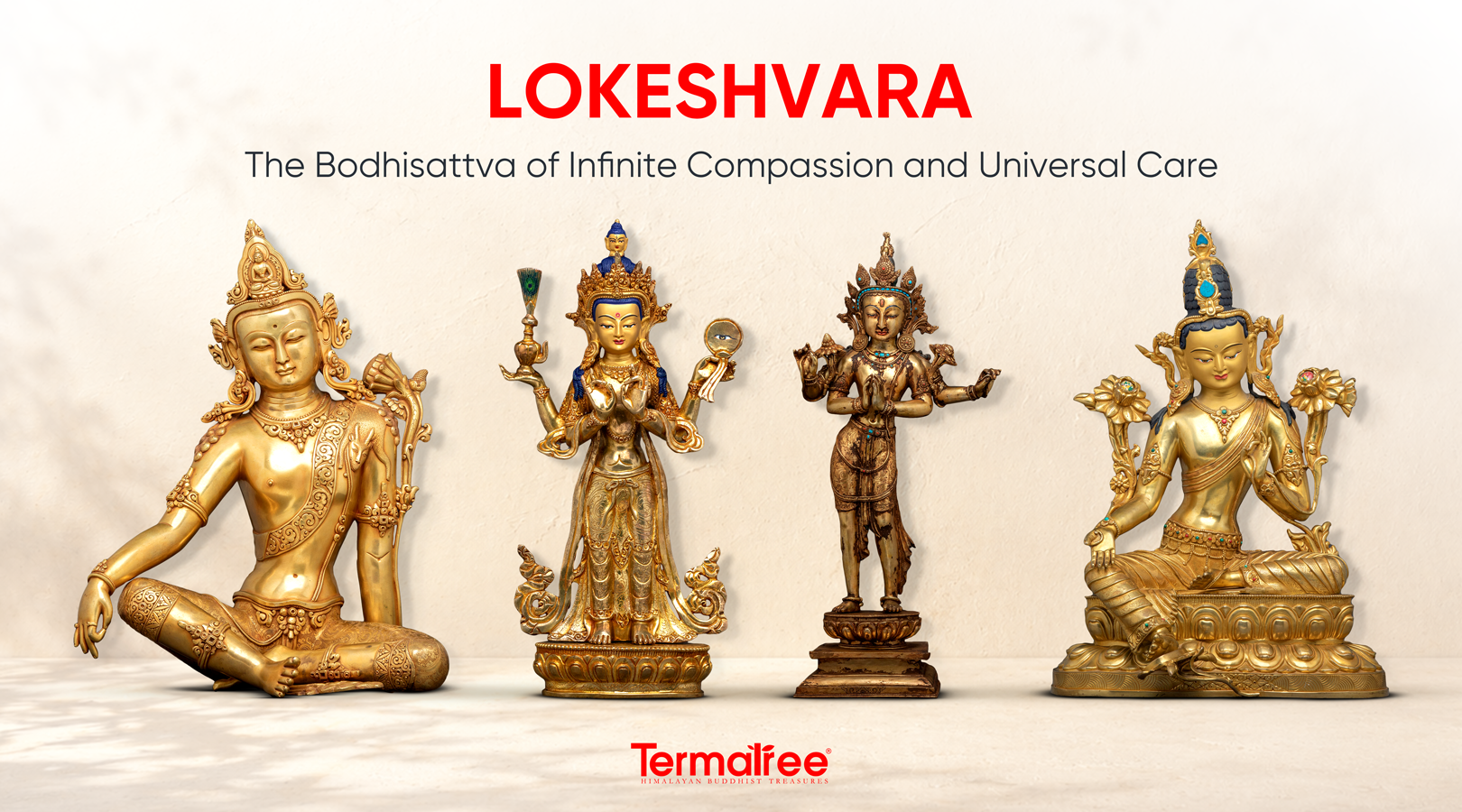
In India and the Himalayan Buddhist world, Avalokiteśvara is the classical Sanskrit form of the bodhisattva of compassion, often portrayed as a graceful, gentle, princely figure holding a lotus. Avalokiteśvara appears in early Indian Buddhist art and later in Himalayan thangkas as a serene being who embodies the caring, watchful presence of enlightenment. This classical form serves as the root from which many regional versions such as Padmapāṇi, Chenrezig, and Guanyin develop, always reflecting the same core vow: to ease the suffering of all beings without exception.
2. Padmapāṇi Lokeshvara

Padmapāṇi Lokeshvara, meaning "Lotus holder," is one of the most common forms of Avalokiteśvara in Nepal and the Himalayas. The lotus he holds shows that pure awakening exists because compassion and enlightenment can develop in every situation. Padmapāṇi appears in the artistic tradition as a peaceful royal figure who spreads protection through his gentle demeanor, which shows devotees that authentic compassion combines force with tranquil energy.
3. Chenrezig

In Tibetan Buddhism, Avalokiteśvara is known as Chenrezig, a central figure who embodies the compassion of all buddhas and is closely linked with the famous six‑syllable mantra Oṃ Maṇi Padme Hūṃ. Practitioners visualize Chenrezig in meditation, recite his mantra, and offer prayers to purify negative karma, increase loving‑kindness, and strengthen the wish to benefit others. Through this practice, Chenrezig is not only considered an external savior but also a mirror of one’s own innate compassionate nature.
4. Guanyin or Kannon

In East Asian Buddhism, Avalokiteśvara appears as Guanyin in China and Kannon in Japan and Korea, often depicted as a serene, feminine, or gender‑ambiguous savior. Guanyin and Kannon are especially known for responding to cries for help in times of danger, illness, or distress, such as during storms or shipwrecks, and are commonly shown holding a willow branch or a vase of pure water. These images emphasize motherly care and boundless readiness to help, making Guanyin and Kannon some of the most beloved and widely venerated figures in East Asian religious life.
Symbolism and Iconography
Lokeshvara’s image is rich with symbols that speak directly to the heart:
Two‑Armed Padmapāṇi Lokeshvara
-
In his most common “peaceful” form, Lokeshvara stands or sits gracefully, often with a lotus in his left hand, symbolizing purity and enlightenment blooming from the mud of worldly suffering.
-
His gentle expression and downward‑gazing eyes reflect continuous, non‑judgmental attention to the pain of others, reminding practitioners that true compassion sees beings as they are, not how we wish them to be.
Eleven‑Headed, Thousand‑Armed Lokeshvara

-
The eleven‑headed, thousand‑armed Avalokiteśvara is one of the most awe‑inspiring forms. The eleven heads represent his ability to “hear” the cries of beings in all directions; the thousand arms and eyes in the palms signify his capacity to help everywhere at once.
-
Often, the crown of heads includes a small image of Amitābha Buddha, showing that Lokeshvara’s compassion is rooted in the wisdom and light of the Buddha’s pure realm.
Colors, Ornaments, and Attributes
-
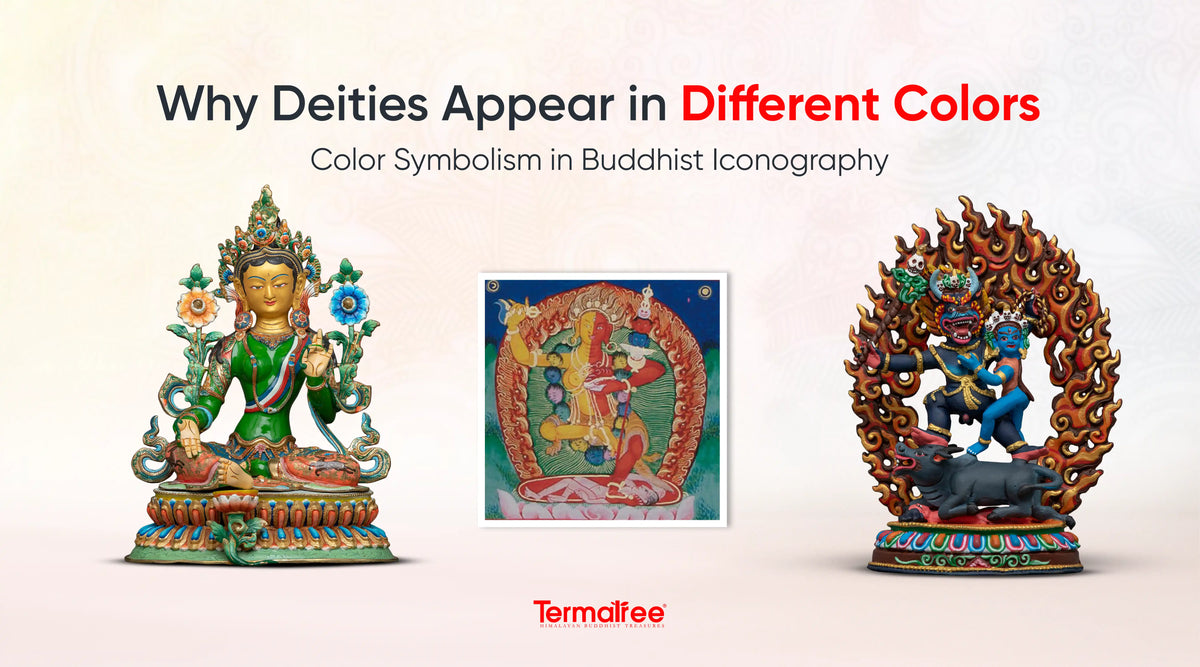
White or jade‑green forms symbolize peace, purity, and healing, while red or other colors appear in tantric contexts, associated with specific activities such as protection or removal of obstacles.
-
Common attributes include a lotus, prayer beads (mala), vase, and occasionally a small Buddha image above the crown, all of which point to the intersection of compassion, practice, and wisdom.
Practices Devoted to Lokeshvara
Devotion to Lokeshvara requires both belief and the practice of meditation and mantra and ritual, which trains the heart to develop greater compassion and present-moment awareness.
1. Mantra: “Oṃ Maṇi Padme Hūṃ”
The most famous practice connected with Lokeshvara is the recitation of
“Oṃ Maṇi Padme Hūṃ,"
a mantra that condenses the essence of compassion and the path to enlightenment. Many practitioners repeat the mantra 108, 1,000, or many thousands of times daily, using mala beads to count, transforming routine repetition into a meditation on kindness, patience, and the wish to ease suffering.
2. Meditation and Visualization

In Vajrayāna practice, devotees visualize Lokeshvara in his chosen form, often sitting in front of oneself or above the crown of the head while generating the feeling of compassion flowing from the heart rather than from the intellect.
Short daily invocations such as “Homage to Lokeshvara, holder of the lotus, who protects all beings from suffering” help keep the bodhisattva’s presence alive in ordinary life.
3. Offerings and Rituals
In temples and home shrines, worshippers bring offerings, which include water and flowers and incense and butter lamps, to Lokeshvara for their use as offerings, which show both the purity and the temporary nature of things and the brightness of wisdom. The festivals and special rituals of Nepal, Tibet, and the Himalayan region use Lokeshvara to provide health benefits, protective services, and spiritual guidance, clearly showing that compassion is the essential basis for human well-being.
Modern Interpretation of Lokeshvara
In the present day, Lokeshvara functions as both a sacred character and an active representation of moral compassion, which people should practice in their interactions with others amid the divided societies and environmental challenges and mental health difficulties that exist in today's world. Rather than a distant, otherworldly savior, he invites practitioners to treat compassion as a practical, everyday stance, listening deeply, resisting indifference, and acting in ways that reduce harm and foster connection. At the same time, his thousand‑armed, eleven‑headed form becomes a metaphor for the many ways one person or group can help through listening, teaching, healing, activism, and mindful presence, reminding us that compassion is not limited to a single method or moment. For those new to spirituality, practices centered on Lokeshvara such as visualizing his form while repeating or silently wishing relief for others offer a gentle, image‑based entry into mindfulness and emotional resilience, turning him less into a supernatural king of the world and more into a mirror of our capacity to care, encouraging us to widen our circle of concern from “me and mine” to “all beings.”
Conclusion: Lokeshvara as a Guide for Today
Lokeshvara whether as Avalokiteśvara, Padmapāṇi, Chenrezig, Guanyin, or Kannon—remains one of the most enduring figures in Buddhist life because his core message is both timeless and urgently relevant: compassion is the heart of liberation. His image, mantra, and vow invite practitioners to pause, soften, and respond to suffering with wisdom and presence, rather than fear or avoidance.
Lokeshvara shows that people should practice their faith by staying present in their current moment instead of trying to leave their current life behind. The path of Lokeshvara requires practitioners to transform their ideal of infinite compassion through their daily actions, which include practicing mantra repetition and showing kindness and participating in service work to help those who lack power and voice.