
The Sacred Symbols of Vajrayana Buddhism: Six Jewel Ornaments and Five Silken Garments
In Vajrayana Buddhism, the depiction of deities serves as more than mere art; it embodies significant symbolic meanings that illustrate teachings and attributes of the deities. Representing peace, wisdom, and mercy, these images reflect the potential for tranquility and enlightenment. Key religious symbols, such as the Six Jewel Ornaments and Five Silken Garments, denote divine power and spiritual purity. Every detail of an image of a deity is carefully selected to depict aspects of enlightenment. Buddhist paintings and artwork depict both the beauty and spirituality of deities, representing the Buddha's enlightened mind and the guiding aspects of the path to enlightenment. While they position themselves as beautiful, they also express how we must transform our physical selves into the realm of spirituality.
Likewise, both the Six Blessed Jewels and the Five Heavenly Robes are meant to assist practitioners in staying aligned with the spiritual path of Vajrayana Buddhism and provide a connection to sacredness as well. Both works are profoundly spiritual and prompt one to reflect on divine qualities and ways to incorporate them into everyday life. This paper explores the ambiguous meanings of these decorations and their role in aiding personal enlightenment.
Cultural Roots of Ancient India

Historically, in ancient Indian civilizations, the design and appearance of a king's or queen's jewelry or clothing were considered a direct reflection of their divinity and status as rulers. Therefore, they provided proof of their capability of giving strength, protection, and spiritual guidance to their subjects. The jewelry was also viewed as being linked with beauty, wealth, and prosperity, and it functioned as both an amulet and a fortune. The six jewel ornaments represent the completeness of the deities' enlightened qualities and their ultimate spiritual perfection.
Advancement in Vajrayana Buddhism
The 7th-8th centuries CE saw the rise of Vajrayana Buddhism, a new form of spirituality with mystical and tantric practices. The considerable amount of inspiration from ritual, meditation, and visualizing the deity to achieve enlightenment implies a requirement for quick attainment of such enlightenment through these practices. As such, Vajrayana practitioners view deity images as a symbol of acquired qualities of wisdom, compassion, and power, and the clothing of the deities thus features colorful iconography and ornaments that represent such divine attributes through their shimmering qualities.
Ritual tools were designed to be artistic and elegant; instead, they were functional tools that served as an avenue by which practitioners could make spiritual connections with the divine through ritualistic means. The gods were considered spiritual guides who helped people to surmount challenges and move on to Buddhahood.
Six Jewel Ornaments of a Peaceful God of Vajrayana

The goddess wears the six jewel ornaments to demonstrate her divine features and to amplify her spiritual power. They represent utmost wisdom and enlightenment, encompassing both material and spiritual riches. The special meaning of each piece is somehow connected to the god's traits.
1. Crown: The crown is the most essential piece of jewelry, as it symbolizes the god's control and knowledge. It represents a clear mind and the ability to govern the world with compassion and profound wisdom. The crown is the highest degree of spiritual success and realization.
2. Earrings: Earrings represent the god's power to hear clearly, symbolizing profound understanding and listening to the cries of suffering beings. This means that the ear's aperture represents wisdom, encouraging the deities to act benevolently towards the needs of all creatures.
3. Armlets: Each armlet, deity-gifted, is protective and powerful. The armlets demonstrate how the deity can be invoked to grant its user spiritual strength, protect the practitioner from harm, and help them overcome difficult situations. The armlets also point to the god as the protector of the Dharma.
4. Necklace:
-
Choker Necklace: signifies protection through religious and moral unity. It represents Dharma (compassion and wisdom); hence, it provides safety.
-
Middle-Length Necklace: represents the synthesis between embodied beings and the transcendent levels of reality; this necklace of wisdom helps individuals establish harmony in spiritual practice.
-
Long Necklace: symbolizes a sense of attachment to immortality, generosity, and plenty; the god's eternal wisdom; and the protection of all creatures living on this planet.
5. Bracelets: The deities of Vajrayana wear bracelets signifying their power and safety, indicating their ability to navigate the world free from entanglements. The bracelets, symbolizing liberation from suffering, provide spiritual support to people during difficult times. The divine feminine (goddess) guides individuals through her grace and virtue.
6. Anklets: The anklets symbolize the deity's unwavering effort to liberate all living creatures from their bonds and bring enlightenment. The jingling serves as a reminder of the deity's continuous, loving work. They highlight the deity's ability to move gracefully through the world without attachments, guiding others toward freedom.
Five Silken Garments: Marks of Divine Grace

The peaceful Vajrayana deities adorn the Five Silken Garments as evidence of their purity, mastery of spirituality, and the five lineages of Buddhas. The god is also more ethereal, which underscores the divine, brilliant nature of these garments. Every item of a silk garment possesses an intricate spiritual meaning that can be explained by the deity's features and the practitioner's spiritual pilgrimage.
-
Blue Silk Scarf: The scarf is a symbol of infinite wisdom; blue represents unlimited knowledge and the endless potential for spiritual cultivation through transcending physical existence. Through its vast scope of spiritual expansion, blue represents the divine and infinite outer space.
-
Five-Colored Crown Pendants: Colors represent the five wisdoms of the Buddha families—yellow (earth), green (water), red (fire), white (air), and blue (space). Their presence on the crown necklace reflects the interaction of all elements and how their collaboration produces wisdom.
-
White Upper Garment: Represents purity and flawlessness; represents the deity's ability to cleanse ignorance and signifies the light gained on the path to Buddhahood.
-
Lower Skirt Garment: Embodies earth and the deity's stability; reflects maternal nature and provides practitioners with a stable foundation for spiritual development.
-
Sleeves (or a Long Scarf) for Dancing: Represents joyful nature and freedom in wisdom; illustrates divine play and the deity's ability to move gracefully between realms.
Symbolism of the Ornaments and Garments

All five clothes reflect yet another element of the Buddha's character of wisdom, cleanness, grounding, and compassionate action. The garments demonstrate the combined essence of the deity's divine nature with an emphasis on the spiritual and, above all else, will always be found with silk, the most expensive and prestigious fabric, symbolizing the highest and most esteemed position of the deity in a continual quest to assist humankind from suffering via kindness, security, and caring and supporting humanity towards attaining their highest potential as humans.
Similarly, the Five Silken Garments correspond to the five Buddha families in Vajrayana Buddhism. Each of the five clothes represents another aspect of the Buddha's nature: wisdom, purity, grounding, and compassionate action. The garments represent the deity's divine connection to both the spiritual and the cosmos. Silk is a luxurious and costly material; therefore, its use signifies the deity's exalted position, embodying both holiness and divinity.
Influence on Buddhist Iconography
Over time, such decorations played a significant role in how religious art and iconography depicted Vajrayana deities. The specific application of jewelry and clothing in the illustration of gods and goddesses helped practitioners associate with their desired qualities at both the visual and mental levels. Individuals who engaged in meditation and visualization would imagine them as holy symbols, tapping into their power and blessings.
The Six Jewel Ornaments and the Five Silken Garments, combined, represent the ideal combination of material and spiritual affluence, wisdom, purity, and kindness. These signs remain highly significant in Vajrayana Buddhism, its artifacts, practices, and religion. They are effective reminders of what one needs to achieve enlightenment.
Representation of Ornaments and Garments in Thangka and Statues
Vajrayana Buddhism emphasizes the six jewel ornaments and the five silken garments. They are not just mentioned in holy books; they also play a significant role in religious paintings, namely in Thangkas and deities' statues. These pictures are not merely artworks; they are spiritual implements intended to develop certain aspects of practice and are advantageous in meditation and other spiritual practices.
Thangkas

Female Bodhisattva Green Tara Thangka (Photo from Enlightenment Thangka)
Thangkas, hand-painted scrolls, depict Buddhist gods and goddesses and objects that represent them, such as the Six Jewel Ornaments and the Five Silken Garments. The garments and ornaments are well-drawn, so the clothes convey enlightened aspects of the deity, such as wisdom, compassion, and power. The Ornaments represent protection and sovereignty, whereas the Five Silken Garments symbolize purity and a connection to the five families of Buddha in the universe. Thangkas are not only beautiful ornaments but also serve as visual aids for meditation, allowing individuals to associate the deities' features on a more personal level. When people closely examine these Thangkas, they contemplate the hidden, more profound meanings within them. Such reflection helps them become more compassionate and wise. The practice of meditation invokes the grace of a deity on your spiritual path to achieving enlightenment, concentration, and clarity.
Statues

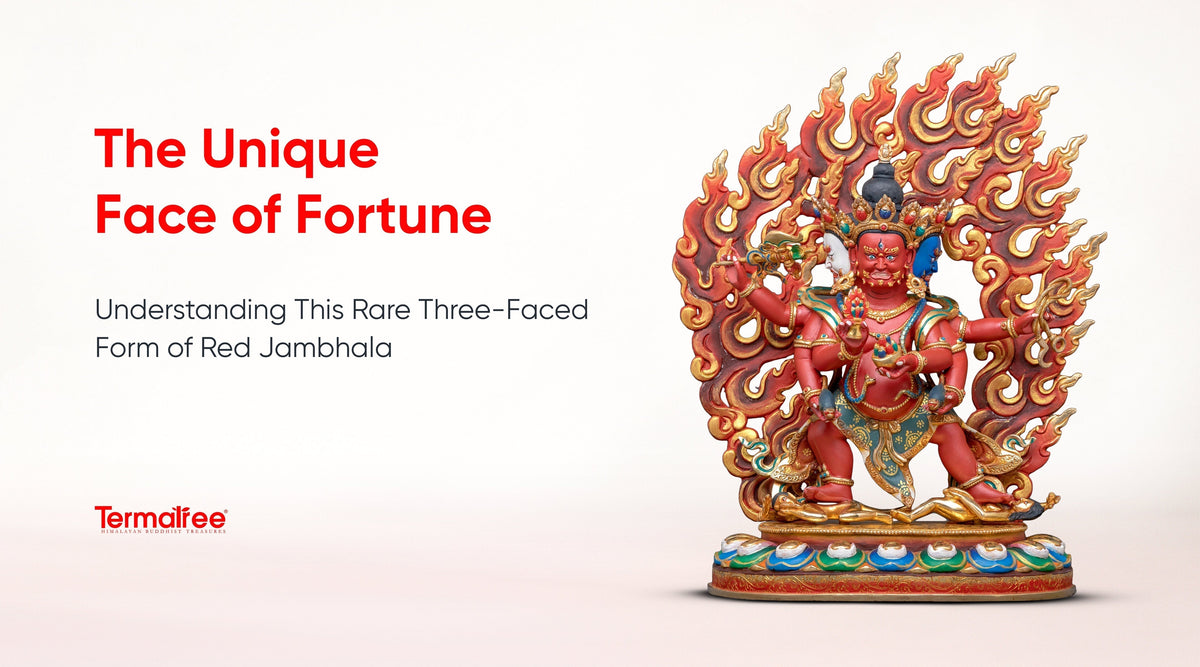
The presence of gods in Vajrayana Buddhism is more tangible than the flat, painted images in Thangkas, which serve to illustrate their sacredness. These are three-dimensional statues decorated with six jewel ornaments and five silken garments, the treatment of which is an essential part of practitioners' meditation. They are usually placed in temples or in individuals' homes for prayer and contemplation. The elaborate decorations reveal the deity's power and grace, and they help practitioners remain in the present and relate to the enlightened aspects of the deity. When human beings meditate, they imagine themselves as gods. Such thinking will help them internalize wisdom and compassion, which, in turn, will aid them in meditating more deeply and relating to the deity's qualities.
Conclusion
Vajrayana Buddhism has a very significant symbol in the Six Jewel Ornaments and Five Silken Garments. They are substantial spiritual virtues that are associated with the gods. These symbols were important not only because of their decorative and clothing aspects. They are closely related to Buddhist doctrines and remind practitioners to acquire wisdom, compassion, and protection on their spiritual paths. Meditating on these symbols, found in Thangkas or statues, aids the manifestation of the gods' enlightened qualities in practitioners' lives.
The detailed, colorful images of the jewelry of the deities in the Thangkas make a perfect way to meditate and reflect on the divine, wiser, and kinder. Conversely, statues offer a physical, three-dimensional link to the divine presence, enabling practitioners to feel the deity's presence in the surrounding space, which facilitates contemplation, visualization, and the construction of divine qualities. All these forms of religious artwork are incredibly significant in assisting human beings in their journey towards enlightenment. They are also quite useful instruments of self-discovery and personal development. The Ornaments and Five Silken Garments remain reminders of the divine features practitioners desire. These religious signs are a significant aspect of Vajrayana Buddhism since they are visible and touchable. They make people wiser, kinder, and freer spiritually.