Introducing Vajrayogini: The Dakini of Transformative Wisdom

At Termatree, we take great care in presenting sacred Himalayan sculptures that embody both profound spiritual symbolism and the remarkable craftsmanship of traditional artisans. Each week, we highlight a special sacred representation from our collection as our “Statue of the Week.” For this week, we are honored to present a powerful statue of Vajrayogini, one of the most revered female deities in Vajrayana Buddhism.
Vajrayogini is widely regarded as the embodiment of transformative wisdom and the direct path to awakening. Within tantric Buddhist traditions, she represents the realization of ultimate truth through deep insight and spiritual discipline. Her dynamic form, powerful symbolism, and fearless presence reflect the profound teachings of Vajrayana practice.
This particular statue captures the fierce yet liberating essence of Vajrayogini while preserving the refined artistic traditions that have flourished in the Kathmandu Valley for centuries.
Stat![]() ue Specifications:
ue Specifications:

Size: 16.5”/42cm (Height) x 11”/28cm (Base)
Weight: 4.06 kg
Material: Copper Body, Gold, and Acrylic Paintings, 24K Gold Gilding
This statue is crafted from a copper body and enhanced with delicate gold gilding and detailed acrylic paintings. The combination of these materials allows the sculpture to display both vibrancy and refinement, highlighting the intricate details of the deity’s ornaments, facial expression, and sacred implements.
Traditional Craftsmanship from Patan

This sacred statue was made in Patan, Nepal, a historic city renowned for its centuries-old tradition of sacred metalwork. Patan has long been one of the most important centers of Himalayan Buddhist sculpture, where skilled artisans preserve techniques passed down through generations.
The statue was produced using the traditional lost-wax casting technique, a meticulous and time-honored process widely used in the creation of sacred Himalayan sculptures. In this method, artisans first sculpt the entire form in wax, carefully shaping every detail of the deity’s ornaments, posture, and expression. A clay mold is then formed around the wax model and heated so that the wax melts away, leaving a hollow cavity into which molten metal is poured.
Once the metal cools, the clay mold is carefully removed to reveal the statue. Since the mold is broken during the process, each sculpture created through this technique is unique. The statue then undergoes extensive finishing work, including carving fine details, applying gold gilding, and hand-painting the surface with traditional pigments.
Through this meticulous process, artisans bring the sacred form of Vajrayogini to life while maintaining the authenticity of Himalayan spiritual artistry.
Iconography of Vajrayogini:

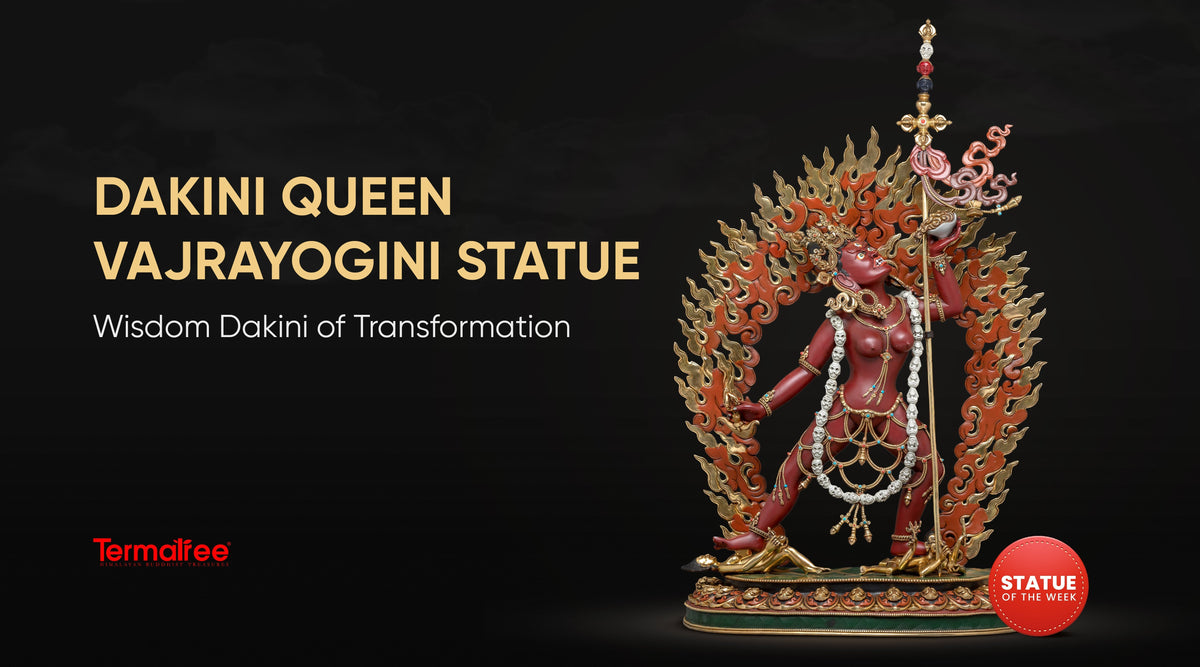
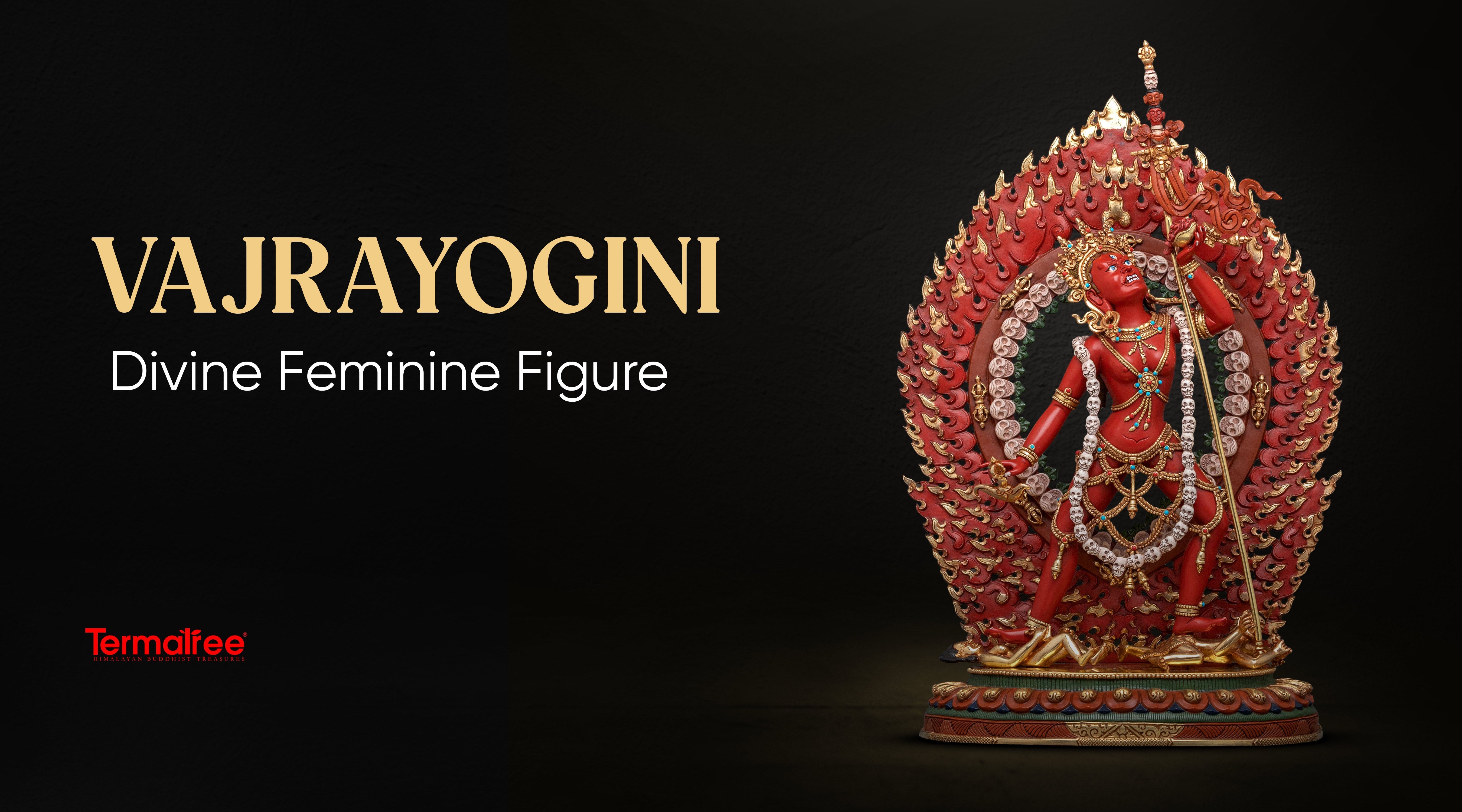
One of the most distinctive aspects of this statue is Vajrayogini’s red body, which differs from the gold appearance commonly seen in many sculptures. This choice reflects a more iconographically accurate representation of the deity as described in traditional Vajrayana teachings. The red color symbolizes the blazing energy of wisdom and the transformative power that burns away ignorance and attachment.
Vajrayogini stands in a dynamic posture upon two subdued figures identified as Bhairava (or Mahadeva) and Kalaratri. These figures symbolize the forces of ignorance, ego, and delusion that bind beings within the cycle of samsara. By standing upon them, Vajrayogini represents the triumph of awakened wisdom over these limitations.
In her right hand, she holds a kartika, the curved ritual knife used in tantric practices. The kartika symbolizes the cutting through of ego-clinging and dualistic perception, representing the sharp wisdom that removes ignorance at its root.
Her left hand raises a skull cup (kapala) from which she drinks blood. Within tantric symbolism, this act represents the transformation of negative emotions and attachments into enlightened awareness. Rather than rejecting human experience, Vajrayogini demonstrates the tantric principle that even the most difficult aspects of existence can be transformed into the path toward awakening.
Resting against her left shoulder is the khatvanga trident, a symbolic tantric staff associated with advanced spiritual realization. The khatvanga represents the union of wisdom and skillful means, an essential teaching within Vajrayana Buddhism.
Sacred Ornaments and Symbolic Elements

Vajrayogini is depicted naked and adorned only with minimal silk garments, symbolizing ultimate truth beyond conceptual coverings and worldly illusion. Her form represents the realization of emptiness (śūnyatā).
Around her neck she wears a garland of fifty freshly severed skulls, representing the purification and transformation of conceptual thoughts and the limitations of ordinary speech and perception.
Behind her rises a radiant flaming halo, symbolizing the blazing energy of awakened wisdom. Within this halo appears a circle of fifty flesh skulls surrounded by vajra symbols, representing the transformation of mental states into enlightened awareness.
On her head she wears a five-pointed crown representing the Five Dhyani Buddhas, signifying the five aspects of enlightened wisdom.
She stands gracefully upon a sun disc resting on a lotus base, symbolizing radiant clarity emerging from purity and spiritual awakening.
What Makes This Vajrayogini Statue Truly Special?
Several unique aspects make this sacred statue particularly meaningful for collectors, practitioners, and admirers of Himalayan Buddhist art.
Authentic Red Iconography
Unlike many statues that present Vajrayogini in a fully gilded form, this sculpture depicts her in the traditional red body color, closely following classical tantric iconographic descriptions. This enhances both the visual authenticity and symbolic meaning of the representation.
Iconographic Accuracy
Every element of the statue—from the kartika and skull cup to the khatvanga and the subdued figures beneath her feet—carefully follows traditional Vajrayana iconography. Such accuracy ensures that the statue remains faithful to the spiritual teachings and visual traditions associated with Vajrayogini.
Authentic Himalayan Craftsmanship
This statue is handcrafted in Patan, Nepal, one of the most important centers of Himalayan sacred metalwork. Using the traditional lost-wax casting method, artisans preserve techniques that have been practiced for centuries.
Exceptional Detailing and Carving
The sculpture features beautifully refined carvings and intricate detailing, from the ornaments and crown to the flaming halo and skull garland. These details reflect the patience, devotion, and artistic mastery required to create sacred Himalayan statues.