
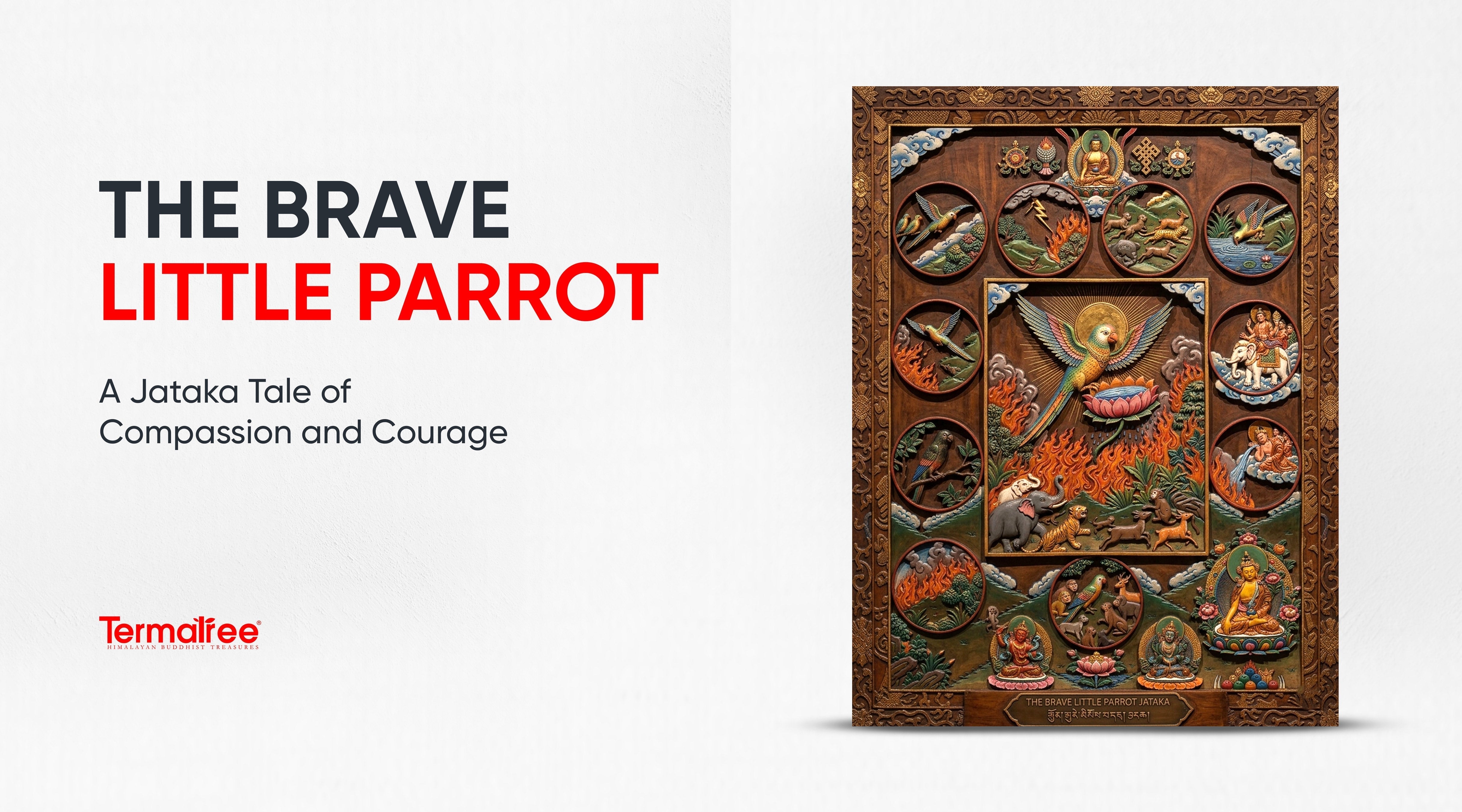
The Brave Little Parrot and the Burning Forest
Jataka tales, ancient Buddhist stories recounting the previous lives of the Buddha, have captivated audiences for a long time with their profound moral lessons delivered through enchanting animal fables. The stories come from the Pali Canon and have been handed down by the Buddha over his years of teaching, embodying the Buddhist virtues such as generosity, patience, and wisdom. Of these classic stories, one that stands out is the Brave Little Parrot, a poignant tale of compassion and courage that resonates in the hearts of people everywhere, across different ages and cultures. This beloved story, often called the Kakavarniya Jataka or "Parrot Jataka" in various traditions, inspires with its vivid depiction of selflessness in the face of grave danger, showing how even modest acts of kindness can spark extraordinary transformation and divine intervention.
The Story of the Brave Little Parrot

In a lush green forest, a massive fire erupted, flames leaping from tree to tree and trapping terrified birds high in a tall fig tree, who were too scared to fly away. As the fire blazed, a little green parrot, small but brave, dipped its wings in a stream not far away and began to drop water on the flames, hoeing the fire with its wings, ignoring the scoffing of the other animals, out of pure pity for its friends, who were trapped in the flames.
The deities watched in awe from the heavens; one deity, deeply touched by the parrot's tireless persistence, transformed into a massive rain cloud and descended, unleashing a mighty torrent that swiftly doused the flames and saved the village. The entire forest and its creatures. Animals emerged cheering, celebrating the miracle sparked by one little bird's unwavering kindness.
This Jataka tale from ancient Pali texts portrays the Buddha's past life as the parrot, embodying karuna (compassion) and virya (effort) on the Bodhisattva path. Its simplicity of morals inspires all ages, and its tiny actions make a difference when done in selflessness.
Core Lessons from the Tale
Such a way of presenting complex ethics in simple stories that are easy to remember for both children and adults.
- Compassion transcends size: Here's the small parrot who shows that when loving kindness toward all beings is present, the smallest actions make the most significant difference.
- Courage as persistence: Courage is not something that the parrot ceases to do; when it encounters impossible odds, it shows diligent effort, one of the six perfections (paramitas) on the Bodhisattva path, demonstrating that courage is nothing but persistent effort toward enlightenment.
- The reward of karma: The pure, impartial intention of the parrot is what brings about divine intervention; wholesome actions sow wholesome seeds, which in turn bear wholesome fruits, sometimes in miraculous ways, quite beyond human effort (Buddhist karma).
- Nature's sanctity: The destructive fire symbolizes ignorance (avijja) that harms all life, urging us to live in mindful harmony with the environment, echoing the Buddha's emphasis on interdependence and protecting our shared world.
Buddha's Teachings Embodied

As a Bodhisattva Jataka, the tale portrays Siddhartha Gautama's pre-enlightenment life, fulfilling the six perfections (paramitas). The parrot's determination is that of the Four Great Vows: "Beings are numberless; I vow to free them," focusing on other people's welfare rather than self.
It refers to the Four Noble Truths—fire as dukkha (suffering), its cause as heedlessness, its cessation as rain (enlightenment), and the path as right effort on the Noble Eightfold Path. Buddha taught such stories to illustrate karuna and prajna (wisdom), fostering awakening in listeners.
|
Teaching |
Parrot's Action |
Dharma Link |
|
Karuna (Compassion) |
Risks all to save trapped birds |
Ends universal suffering |
|
Virya (Effort) |
Endless water drops |
Right Effort in Eightfold Path |
|
Bodhisattva Vow |
Aids despite impossibility |
Vow of "Free All Beings" |
|
Four Noble Truths |
Fire-to-rain arc |
Identify, end, way out of dukkha |
Cultural Significance behind the Little Parrot
The Brave Little Parrot Jataka story is a significant cultural strand in Buddhist Asia, from the Indian subcontinent to the Himalayan region and all the way to Southeast Asia, and it forms a crucial thread in the spiritual and communal life of this region. A sacred text of ancient oral tradition, it is chanted on significant festivals, such as the Buddhist Vesak (the celebration of Buddha's birth, enlightenment, and parinirvana) and Tibetan Losar, when members of a family and monks congregate in temples or households and share its message, strengthening ties among family and generations and thus reinforcing ethical values central to the Nepali, Thai, Burmese, and Sri Lankan traditions.
The story is depicted in artistic expression on the temple walls and manuscripts in the Kathmandu Valley: the thangka images vividly depict the parrot's story amidst flames, and ancient Indian stupas, such as Amaravati, depict the story in floral motifs that represent enlightenment. It guides daily rituals, puppetry performances, and folk songs in rural villages, fostering the Bodhisattva's timeless wisdom in devotional practices and moral education ensures its enduring legacy in everyday life.
Depictions of Parrot in Craftsmanship

Thangka Paintings
In Nepal and Tibet, Thangka paintings beautifully capture the Brave Little Parrot Jataka tale in vibrant, detailed scrolls used for teaching in monasteries. The figures are enlightened, as are the lotus borders and the birds in the stream and the burning forest. The tiny parrot is flying between the stream and the burning forest, with its wings dripping water. The birds that are caught are in a fig tree; the deities are turning into rain clouds above it. Fashioned from cotton or silk by artisans in Kathmandu, thangkas serve to tell the tale of the Bodhisattva's compassion, making it portable for use in meditation in the practice of Tibetan Buddhism.
Statues and Sculptures
A single statue of the parrot is uncommon but occurs in repoussé metalwork and stone carvings in Asia. Nepali artists make statues of the bird while it is flying, made from hammered copper with parts of its feathers singed off, and offer them up as "living treasures" in religious collections. Reliefs of stupa artworks from Amaravati transform into brass icons in Bodh Gaya, and stone gilded statues of parrots in Thai temples symbolize heroic karuna, attracting the devotees to contemplate selfless actions in sacred space.
Modern Interpretation of Brave Little Parrot

In today's world of crisis, the Brave Little Parrot is a remarkable metaphor for climate action and personal resilience. The parrot's repetitive and persistent spitting of water signifies the daily, seemingly insignificant actions that can collectively create significant impacts in the world when taken in combination with other factors, such as global crises like wildfires and deforestation. These actions, however, when multiplied throughout the world, can bring about transformation, like that of divine rain. As part of the mindfulness practices, it teaches that compassion is not an act of grandeur but of persistent effort, about doing things selflessly even when difficult, and about collective karma or eco dharma, as called for in the modern world.
Conclusion
The Jataka story of the brave little parrot is a testament to the profound power of compassion, courage and the timeless wisdom of the Buddha. It illustrates an insignificant being's unselfish determination and demonstrates that such deeds can alter destiny and represent the Bodhisattva path, in which compassion and courage overcome the sense that effort is futile. It reminds modern readers of the reality of suffering, whether it be in the environment, in oneself, or in one's community, and to make a sincere effort that will bring about positive karma instead of giving up and becoming despondent.
The imagery of the parrot's singed feathers serves as a poignant reminder to nurture kindness and resilience in our daily lives, whether through environmental protection, support for others, or inner peace cultivation. The moral of this old story is applicable to today's world, and it also reminds us that something good can come from simple, humble actions that help make our community a better place and help us grow as individuals.