Yeshe Tsogyal: The Wisdom Dakini and Mother of Tibetan Buddhism
Yeshe Tsogyal is one of the most revered female figures in Tibetan Buddhism, celebrated as a great dakini, enlightened master, and spiritual companion of Guru Rinpoche (Padmasambhava). Known as the “Mother of Tibetan Buddhism,” she played a crucial role in preserving and spreading the teachings of Vajrayana Buddhism in Tibet.
According to Buddhist tradition, Yeshe Tsogyal received profound tantric teachings from Guru Rinpoche and became a highly realized practitioner through years of meditation and spiritual discipline. She is regarded as an embodiment of enlightened wisdom, representing the transformation of ordinary experience into awakened awareness.
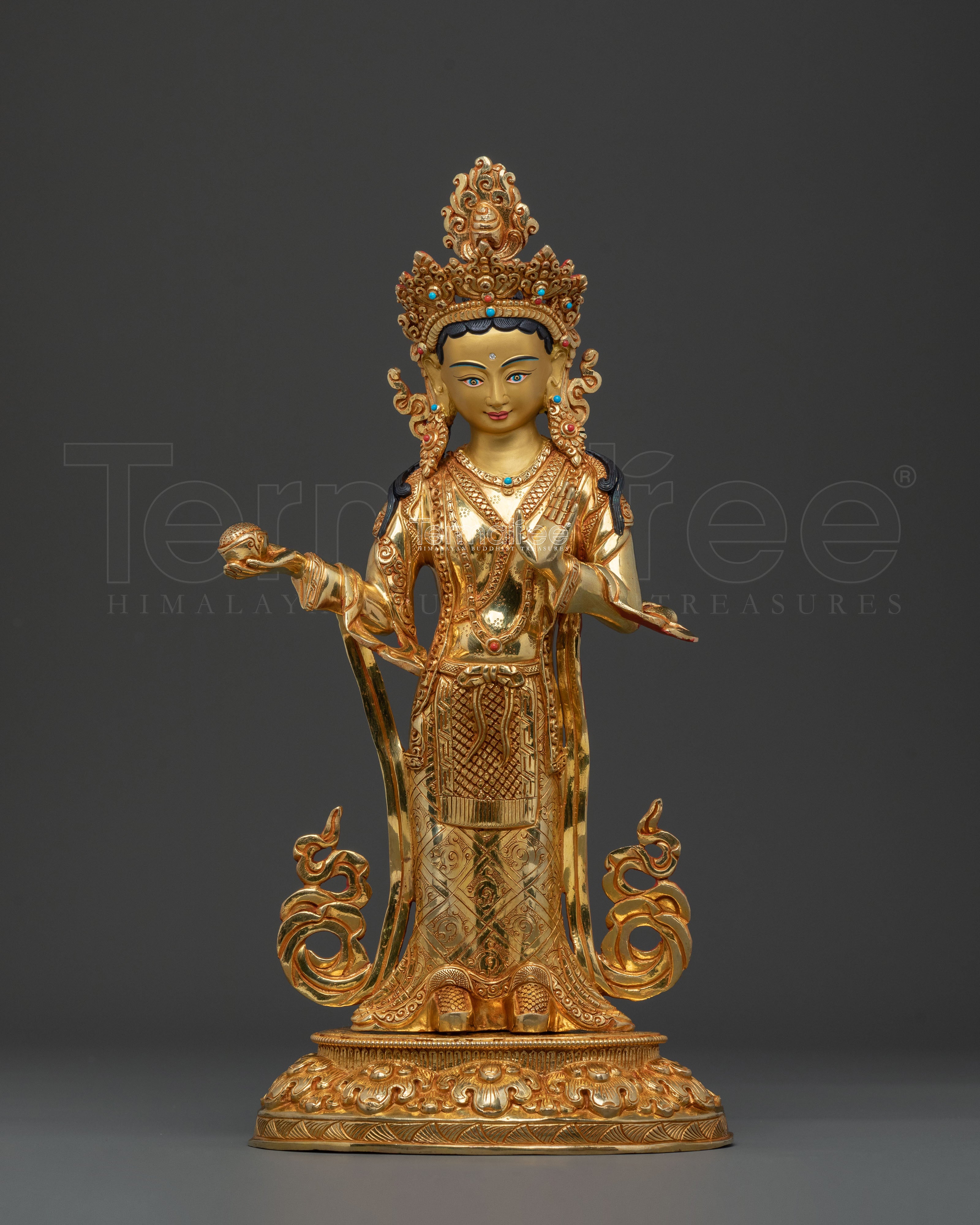
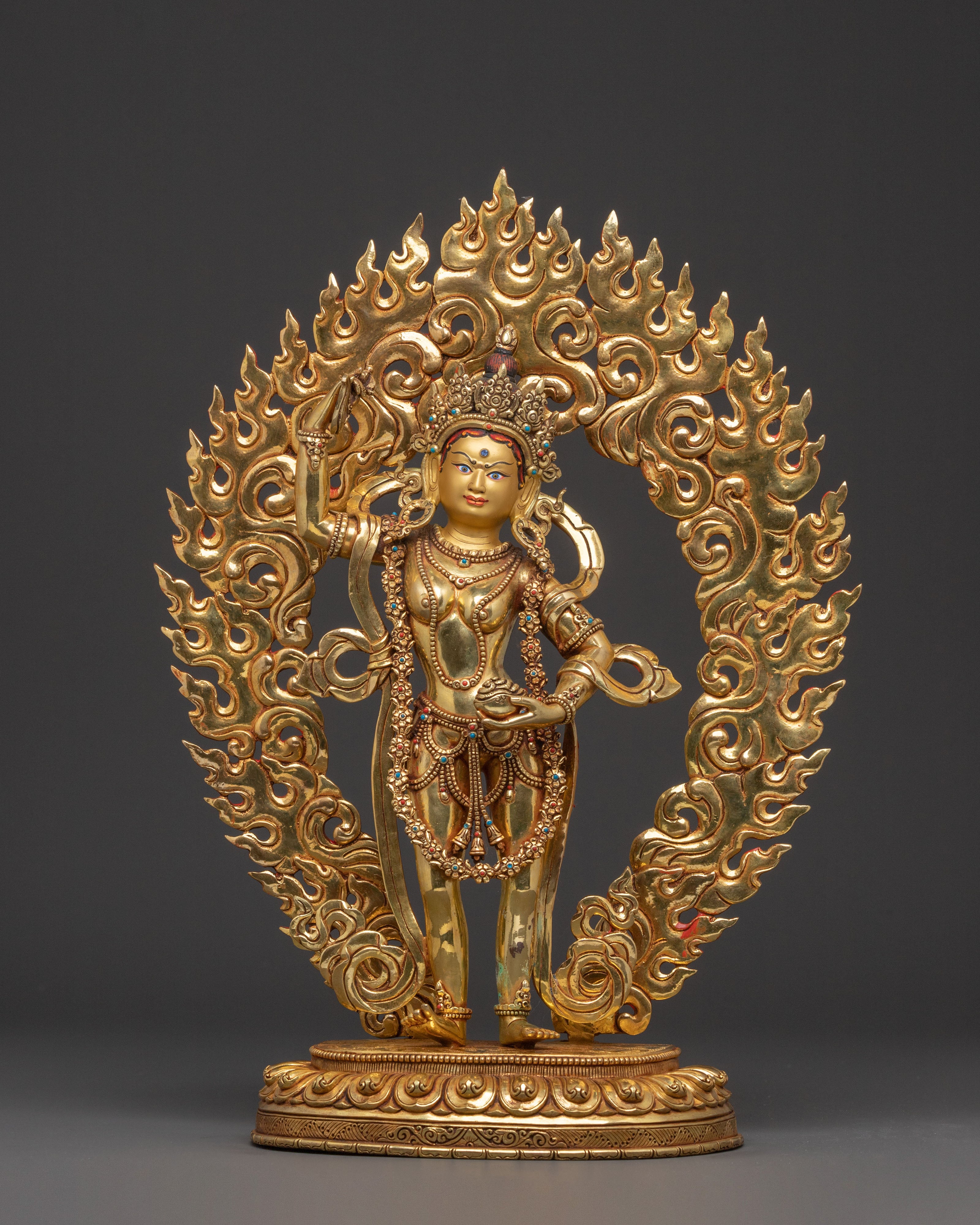
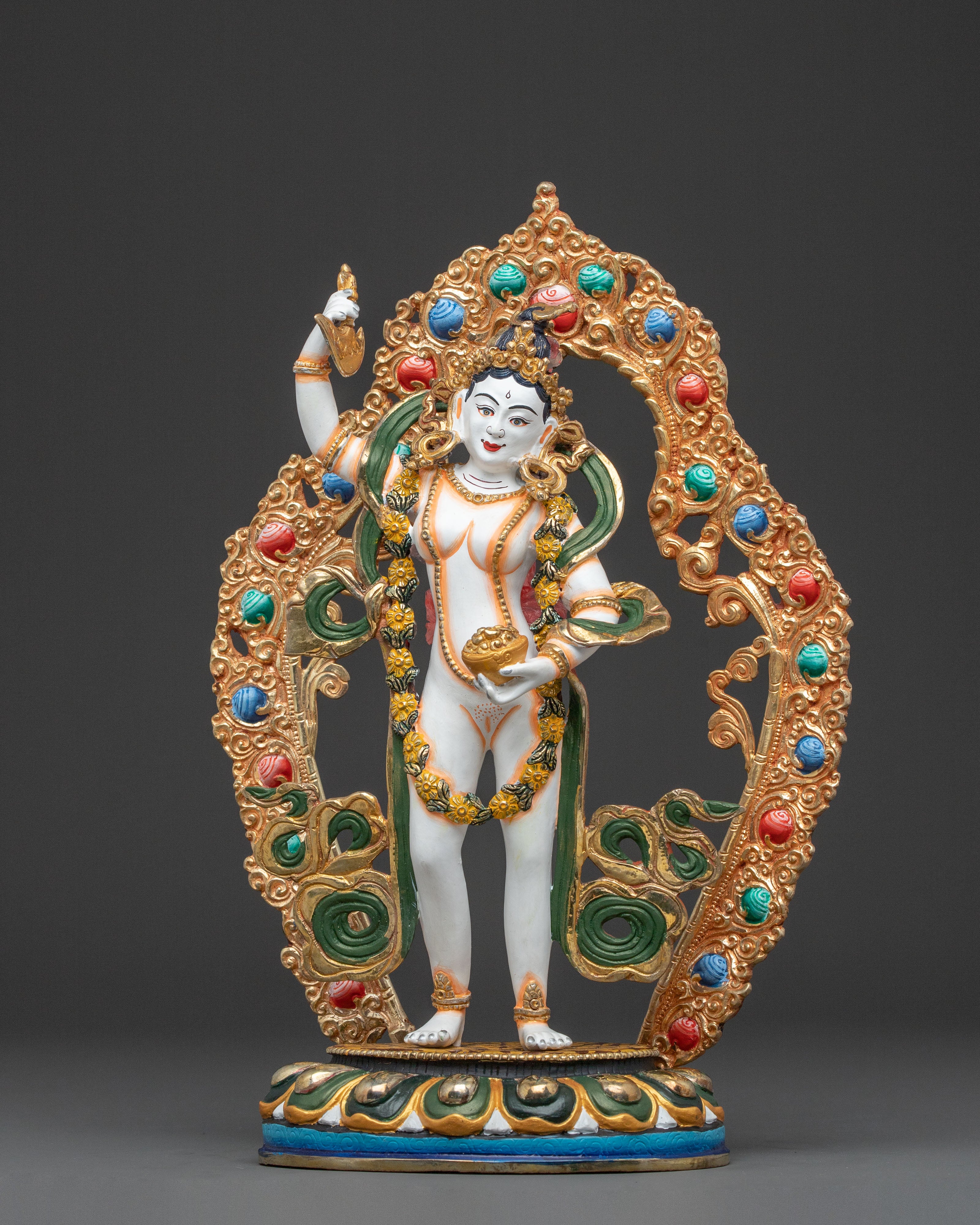
Traditional Himalayan Craftsmanship: Each statue is carefully crafted by skilled artisans following traditional Buddhist artistic methods, preserving the sacred iconography associated with Yeshe Tsogyal.
Authentic Iconographic Details: From her peaceful expression and graceful posture to her symbolic ornaments and sacred attributes, every detail reflects her role as a wisdom dakini and enlightened practitioner.
Gold Gilded and Detailed Finishes: Selected statues feature intricate gold gilding, hand-painted details, and traditional embellishments, enhancing their sacred presence for altars, meditation spaces, and spiritual collections.
Various Sizes and Styles: Available in different sizes and artistic styles, allowing practitioners and collectors to choose a meaningful representation suitable for personal practice or sacred spaces.
Attributes and Iconography of Yeshe Tsogyal Statue
Yeshe Tsogyal is commonly portrayed as a graceful female figure seated in a peaceful meditative posture, representing wisdom, realization, and compassionate activity.
Posture:
Yeshe Tsogyal is usually depicted seated in a relaxed meditative posture, often in lalitasana (royal ease posture) or a meditation posture. This represents her accomplishment as a realized practitioner and her mastery of Vajrayana teachings.
Attire:
As a dakini, she is often shown wearing elegant garments, ornaments, and jewelry. These symbolize enlightened qualities and the transformation of ordinary experience into wisdom rather than worldly attachment.
Right Hand:
Her right hand is commonly shown in a gesture of teaching or blessing. In some depictions, she may hold a vajra, representing indestructible awareness and the unchanging nature of awakened wisdom.
Left Hand:
Her left hand may hold a skull cup (kapala) containing nectar, symbolizing the transformation of negative emotions and ordinary perception into enlightened wisdom. However, attributes vary depending on the specific lineage and artistic tradition.
Khatvanga Staff:
When depicted as a tantric dakini, Yeshe Tsogyal may be accompanied by a khatvanga staff, a symbolic tantric attribute associated with enlightened wisdom, transformation, and the union of method and wisdom. In many representations of Padmasambhava, the khatvanga is also connected with his consorts, including Yeshe Tsogyal.
Why Choose a Yeshe Tsogyal Statue?
Honor a Female Enlightened Master: Yeshe Tsogyal represents the possibility of complete spiritual realization and serves as an inspiration for practitioners across generations.
Symbol of Wisdom and Transformation: Her image reminds practitioners to transform challenges, emotions, and experiences into opportunities for awakening.
Connection with Vajrayana Lineage: As a close disciple of Guru Rinpoche, she represents the preservation and transmission of precious tantric teachings.
Sacred Himalayan Artwork: Each statue reflects traditional craftsmanship and the devotion of artisans who preserve Himalayan Buddhist artistic heritage.
Why Keep a Yeshe Tsogyal Statue on Your Altar?
Inspire Wisdom and Awareness: Her presence encourages practitioners to cultivate mindfulness, meditation, and spiritual understanding.
Support Vajrayana Practice: She is honored as a source of blessings for those following tantric Buddhist teachings.
Remember the Power of Practice: Yeshe Tsogyal’s life represents dedication, perseverance, and the achievement of realization through sincere practice.