


Description
Hand-Crafted 24K Gold-Coated Padmasambhava Sculpture | A Grand Tribute to Vajrayana Tradition
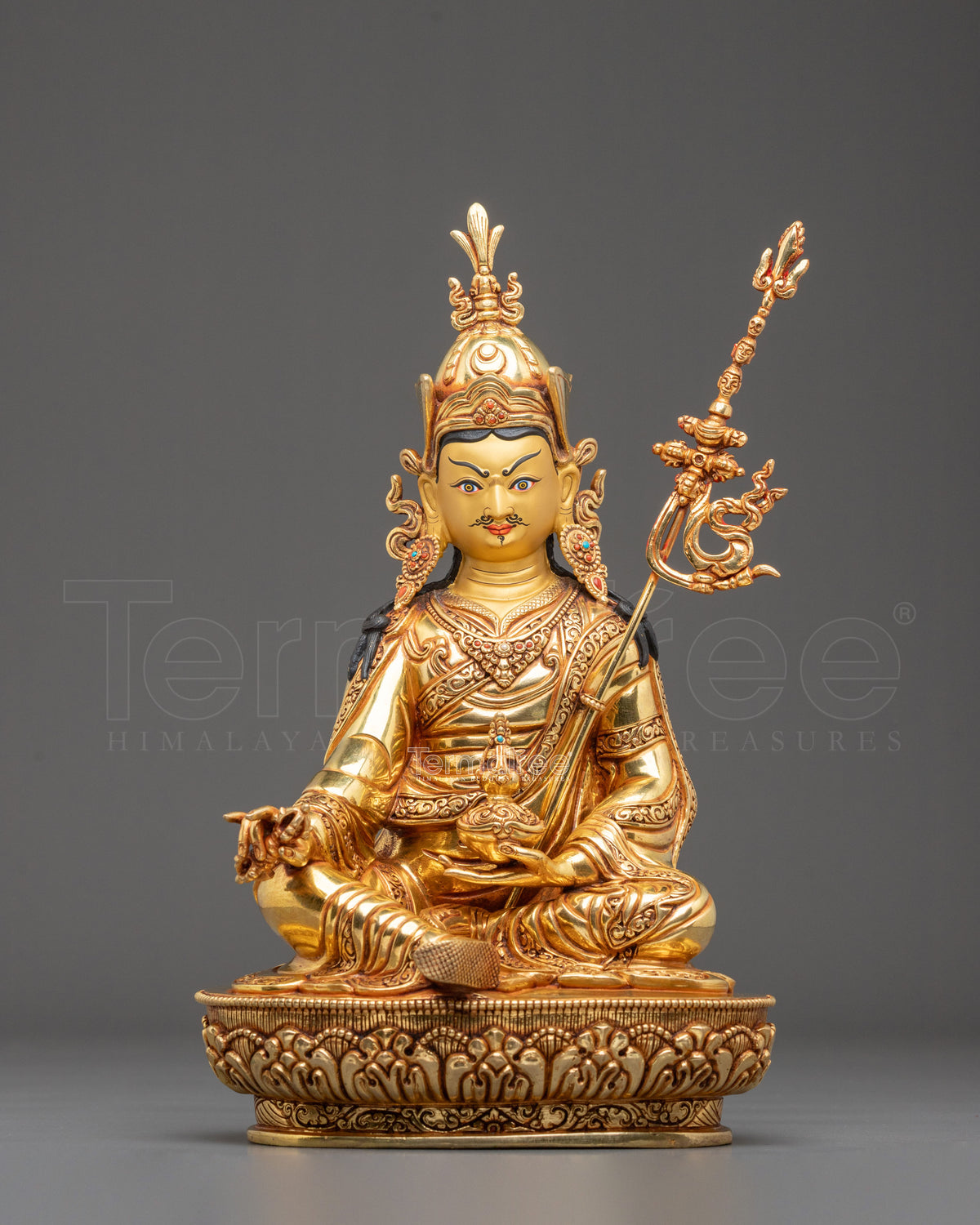
This Hand-Crafted 24K Gold-Coated Padmasambhava Sculpture measures 12.4”/31.5cm in height with a 7.8”/20cm base and weighs 2.6 kg. Handcrafted in Nepal from a copper body, the sculpture is finished with 24K gold gilding, detailed acrylic painting, and carefully placed gemstones that add luminosity, color, and refined decorative depth to the surface. The balanced proportions, precise metalwork, and meticulous hand-finishing reflect the skill of Nepalese artisans and the enduring traditions of Himalayan Buddhist craftsmanship. Spiritually, the figure is associated with wisdom, protection, spiritual transformation, and the transmission of Vajrayana teachings.
Guru Rinpoche, also known as Padmasambhava, is depicted as a revered tantric master embodying wisdom, compassion, spiritual power, and enlightened activity. Seated gracefully in a relaxed royal posture upon a lotus seat, he holds a vajra in his right hand, symbolizing indestructible wisdom and awakened power, while his left hand rests in his lap holding a skull cup, representing the transformation of ordinary experience into enlightened awareness. His khatvanga staff rests against his left shoulder, symbolizing tantric mastery and the union of wisdom and skillful means. His distinctive lotus hat is richly detailed and serves as one of his principal identifying features. His calm yet commanding expression, moustache and beard, elongated earlobes, earrings, necklaces, bracelets, and layered robes emphasize his identity as a realized tantric master. The lotus seat represents purity and awakening, while his sacred implements and composed posture reflect his role in protecting the Dharma, overcoming obstacles, and transmitting Vajrayana teachings.
Size: 12.4”/31.5cm (Height) x 7.8”/20cm (Base)
Weight: 2.6 kg
Material: 24K Gold-Gilded, Acrylic Painting, Copper Body, Gemstones
Guru Rinpoche, also known as Padmasambhava, is traditionally associated with the ancient region of Oddiyana and became one of the most important masters in the establishment of Vajrayana Buddhism in Tibet during the 8th century. Revered as the “Precious Master,” he played a central role in transmitting tantric teachings, overcoming obstacles to the spread of Buddhism, and establishing practices that became especially important within the Nyingma tradition. He is also closely connected with the concealment of sacred teachings known as terma for future generations. Spiritually, he represents wisdom, protection, transformation, enlightened activity, and the preservation of Vajrayana teachings.