






Description
Reverent 24k Gold Gilded Dzambhala Copper Statue for Abundance
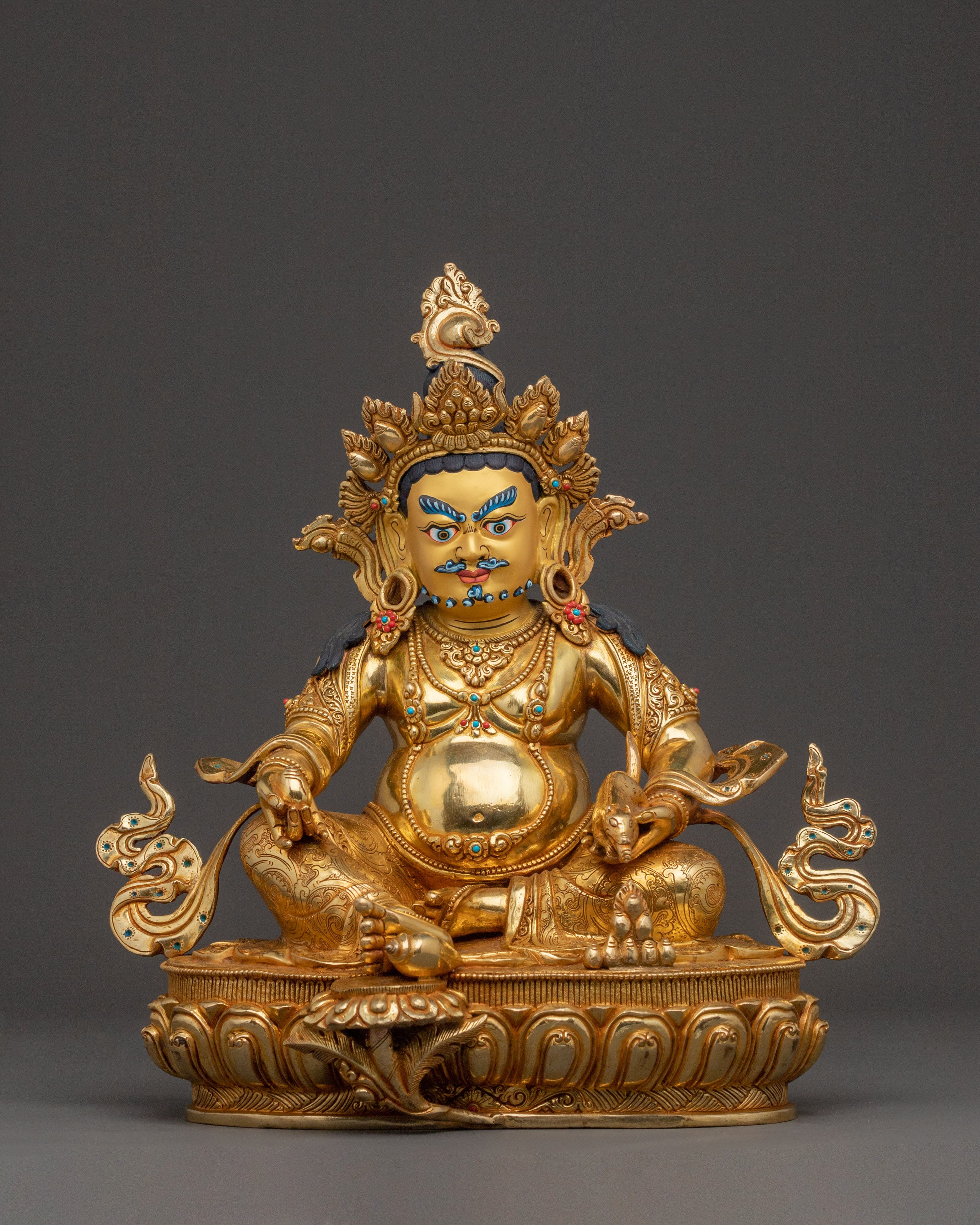
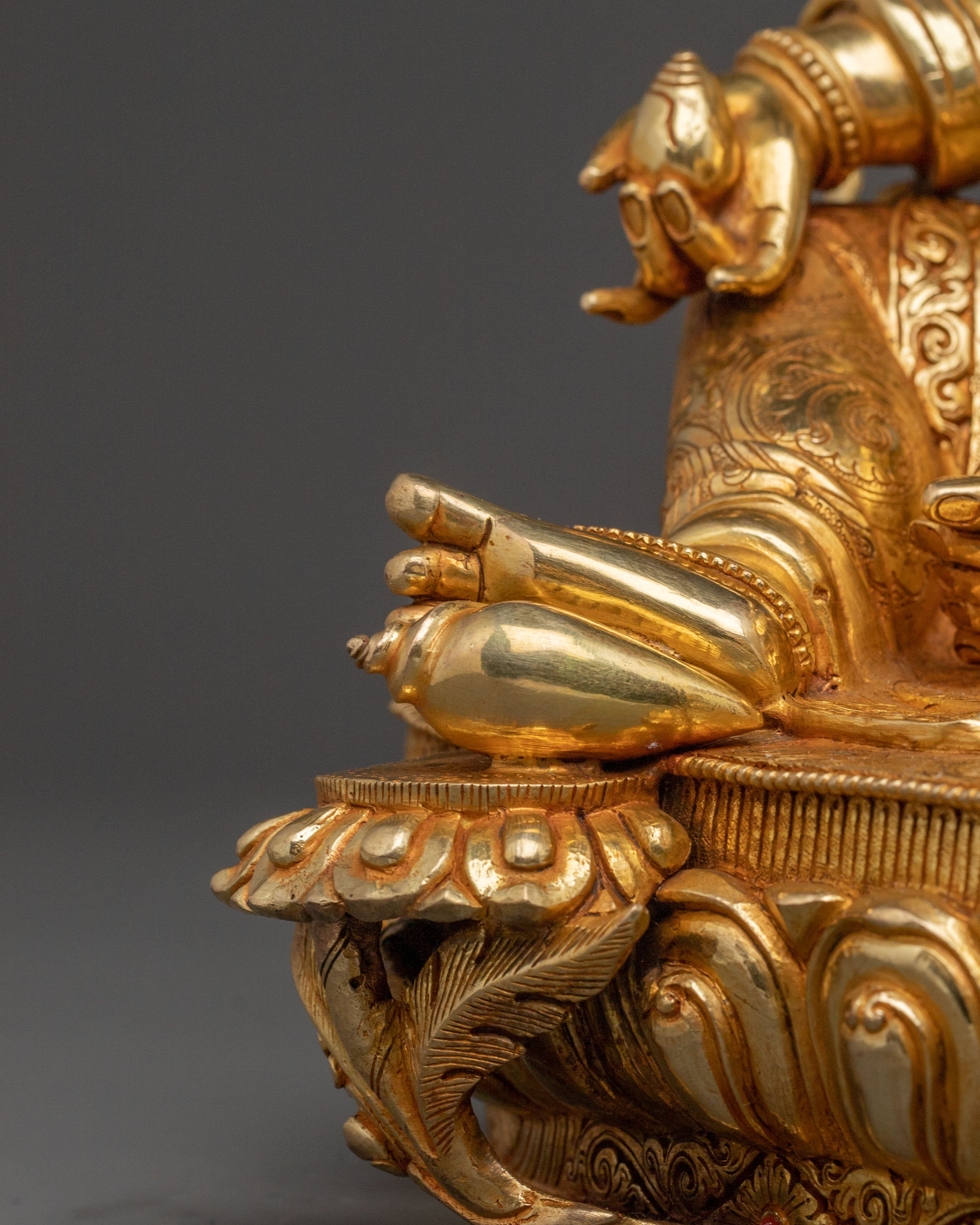
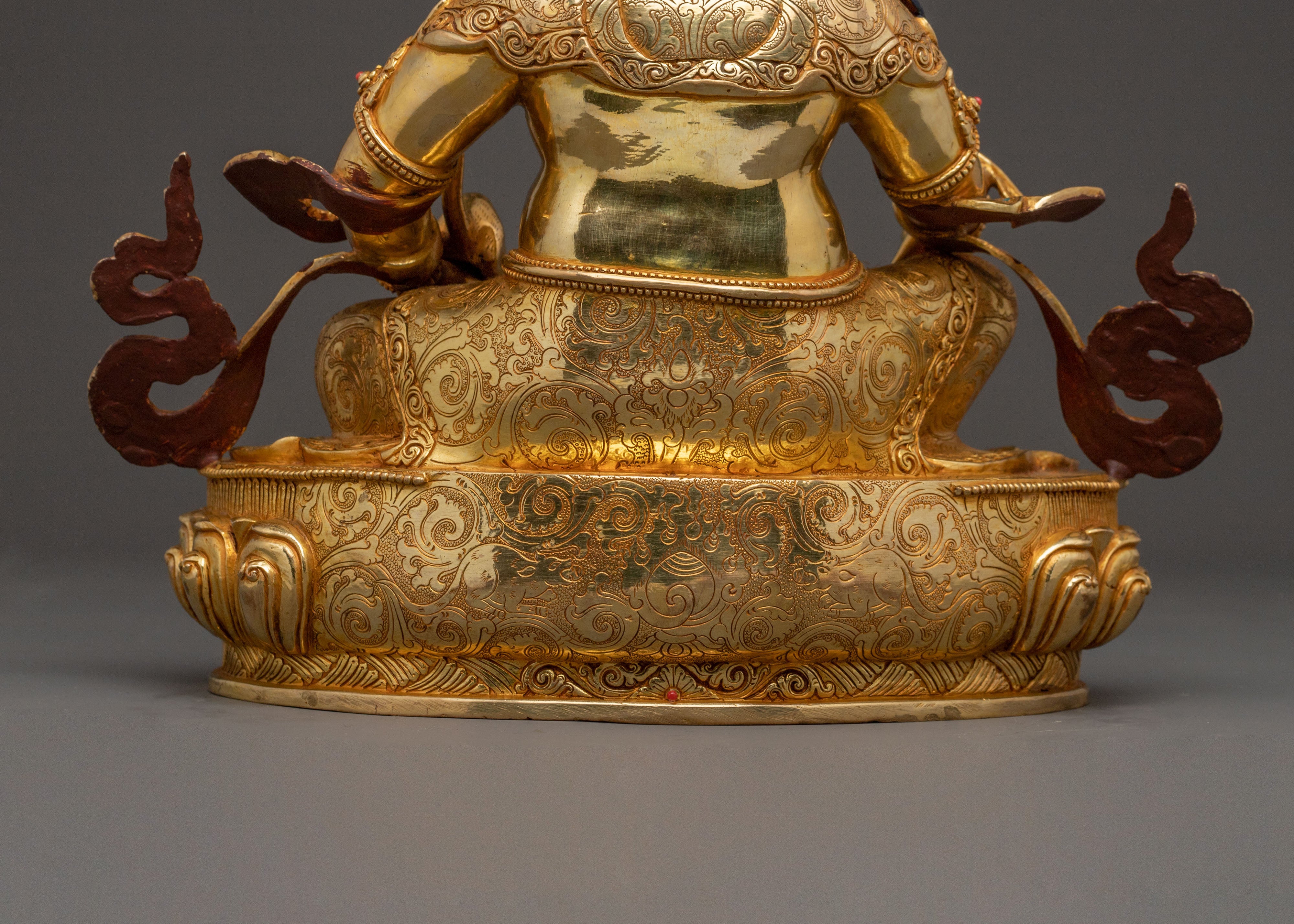
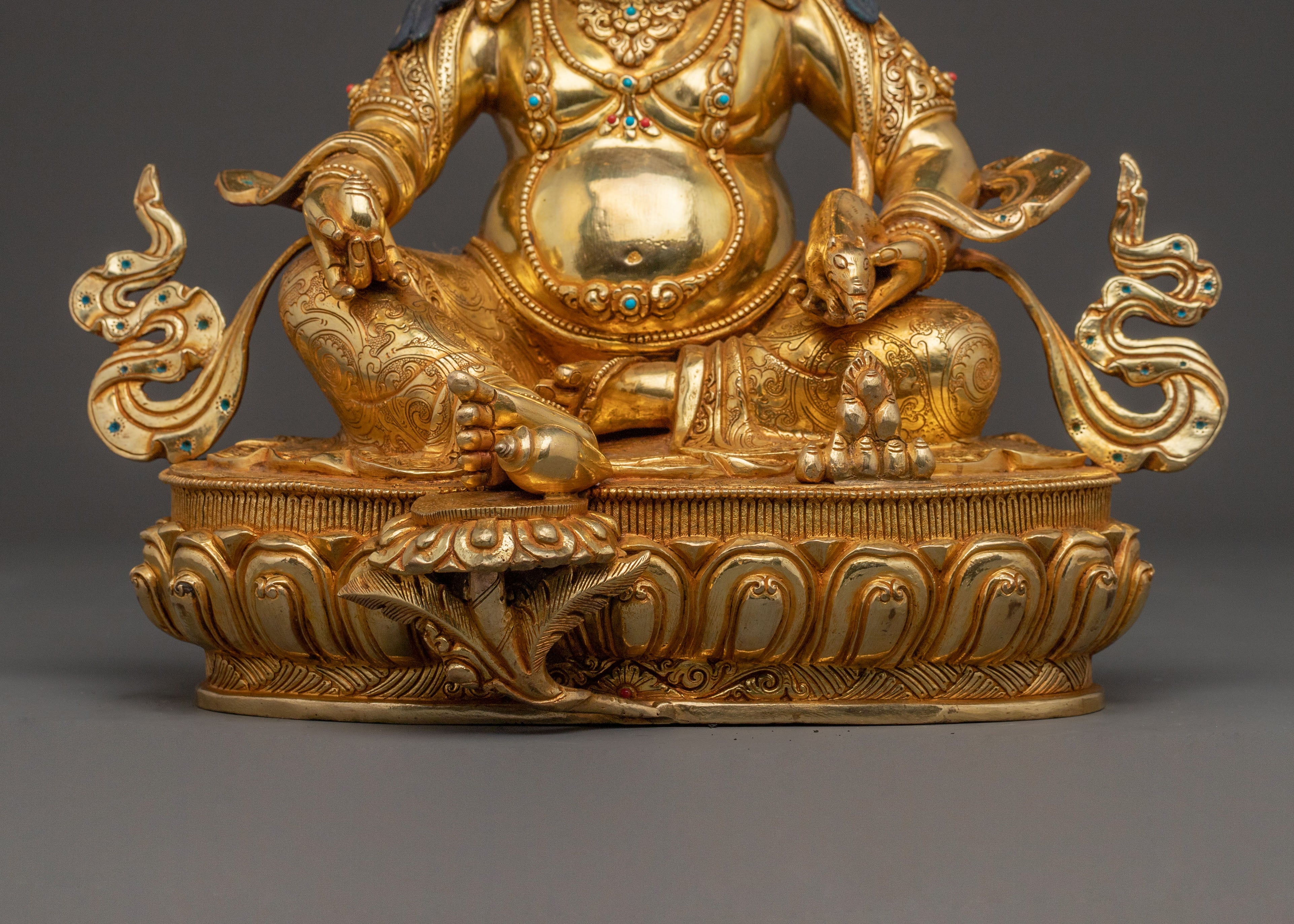
Adorned in radiant splendour, this 24k gold-gilded Dzambhala copper statue emanates a profound aura of spiritual prosperity. Handcrafted by master artisans in Nepal, this divine representation of the Buddhist god of wealth stands 12.6 inches tall, poised to bestow blessings of abundance upon any sacred space. Its gleaming form and intricate details reflect a commitment to both artistry and devotion, making it a powerful piece of Buddhist art.
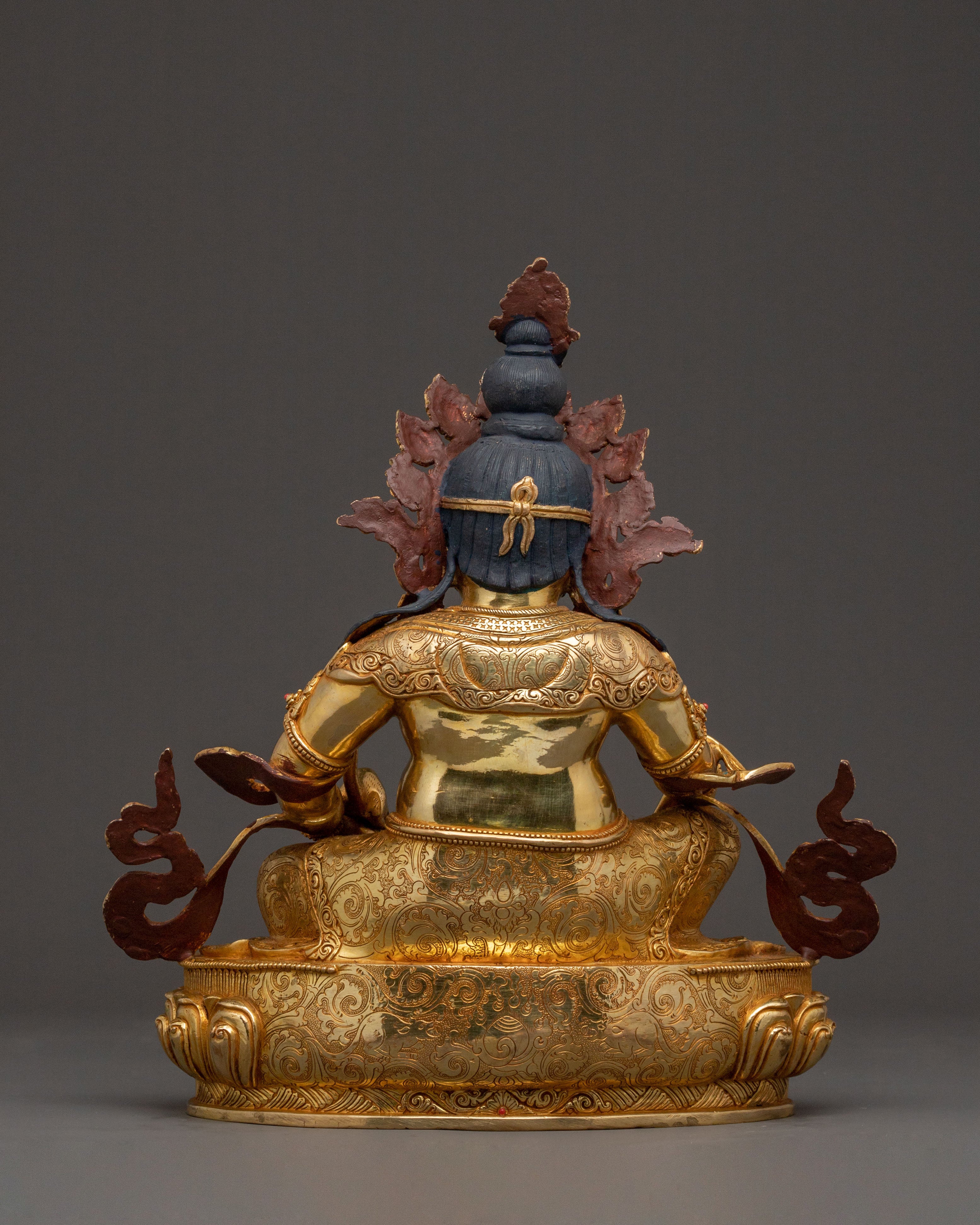
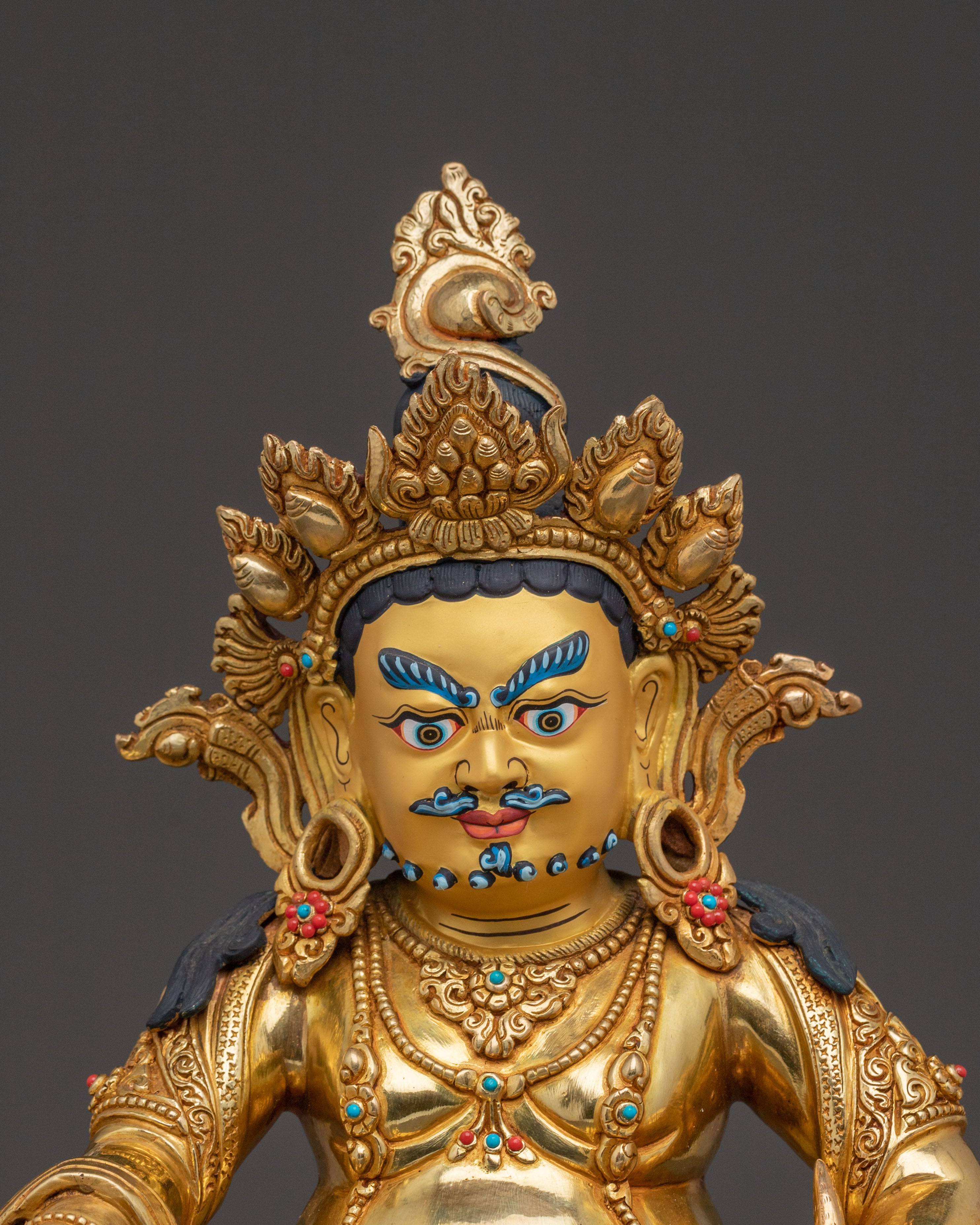
This Dzambhala statue is a testament to authentic Nepalese craftsmanship. Each curve and contour is meticulously shaped by hand, then painstakingly gilded with pure 24K gold, bringing a luminous finish to the deity's form. The delicate brushwork of acrylic paints adds depth and vibrancy, enhancing the statue's sacred presence and highlighting its exquisite details.
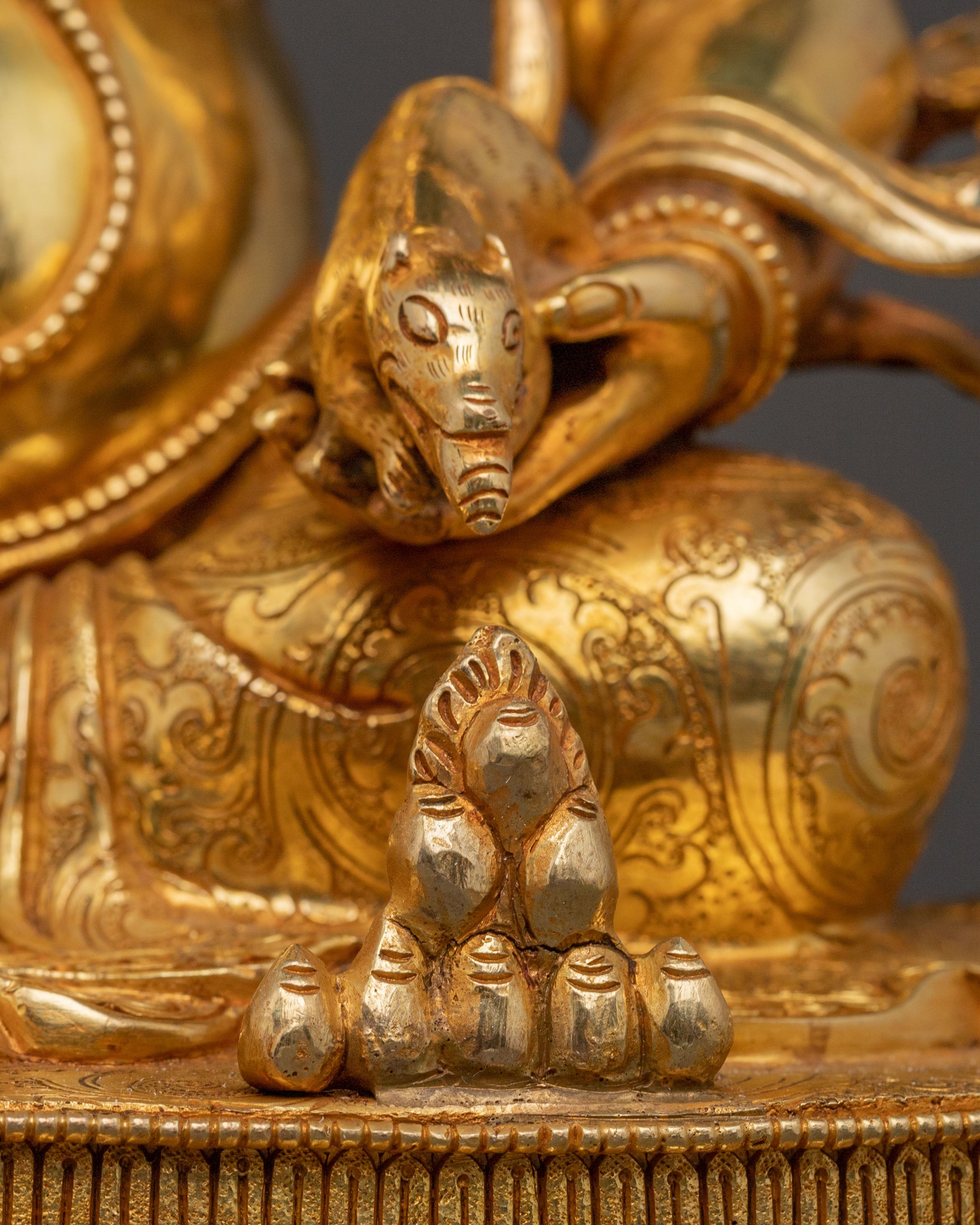
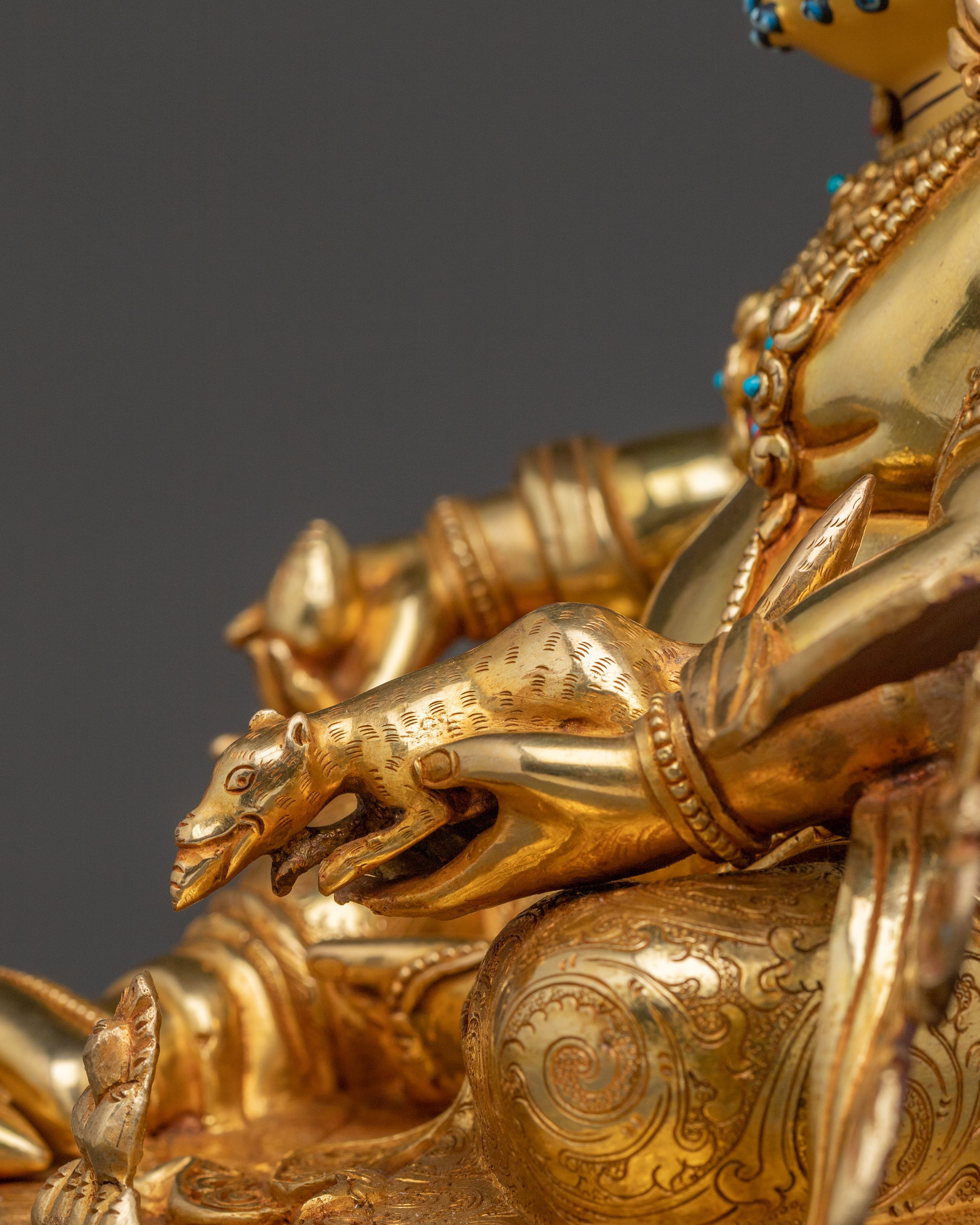
Dzambhala, the Yellow God of Wealth, is revered for his capacity to alleviate poverty and bring financial stability, enabling practitioners to focus on their spiritual path. His iconography often includes a mongoose expelling jewels and a bowl of precious gems, symbolizing the flow of boundless wealth and fortune. Meditating upon his form fosters generosity and gratitude, purifying negative karma associated with material desires.
Size: 12.6”/32cm (Height) x 11.8”/30cm (Base)
Weight: 4.88 kg
Material: 24K Gold Gilded, Acrylic Paintings, Copper Body, Gemstones
Dzambhala, known as Jambhala in Sanskrit, is a prominent Buddhist god of wealth and a member of the Jewel Family (Ratnasambhava). He is often depicted holding a mongoose that spits out jewels, symbolising his power to overcome poverty and grant prosperity. Within Tibetan Buddhism, he is considered an emanation of Avalokiteshvara or Manjushri, committed to helping beings achieve material and spiritual wealth through ethical means and generous practice.