Avalokiteshvara Compassion Statue: Embodiment of Universal Love
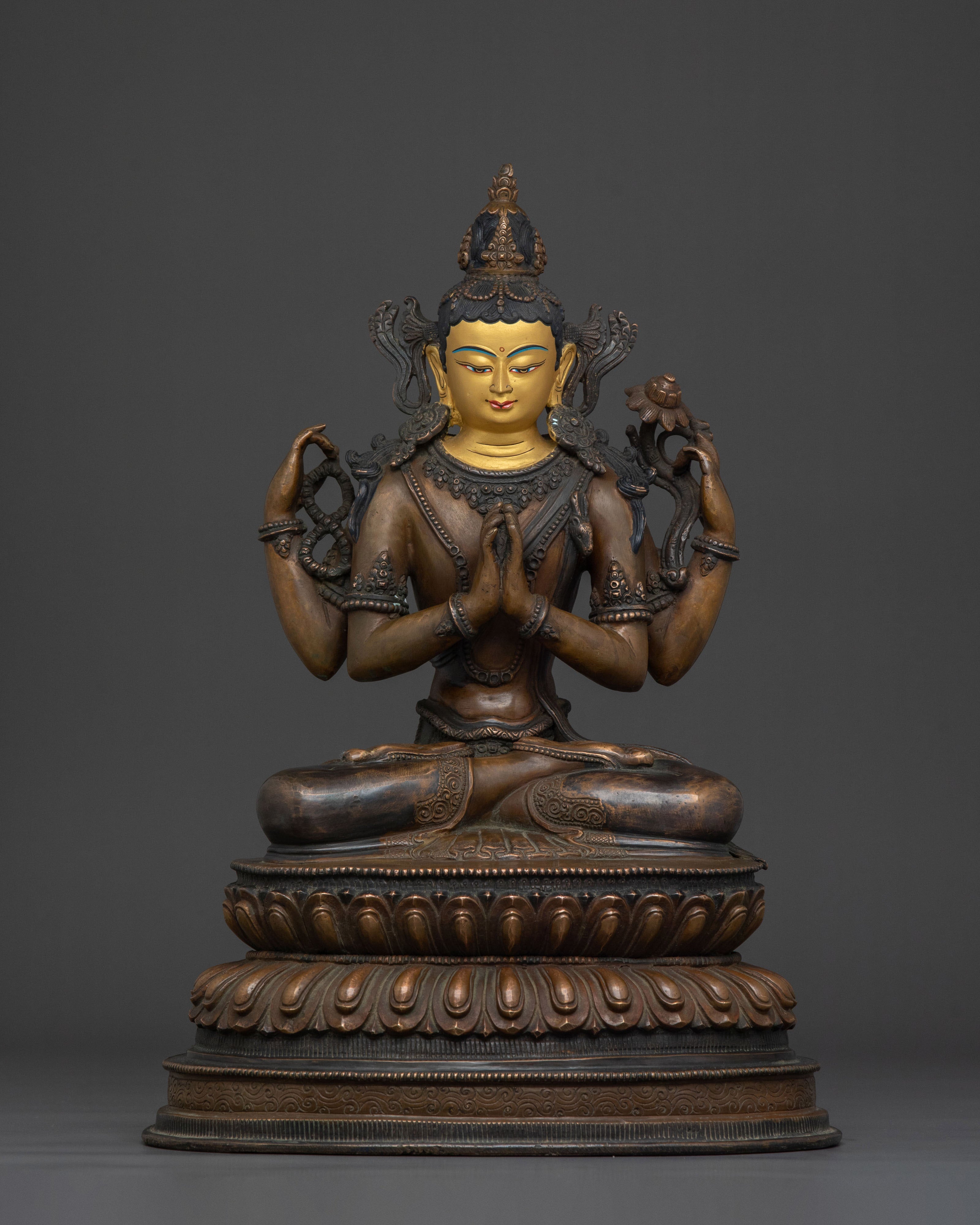
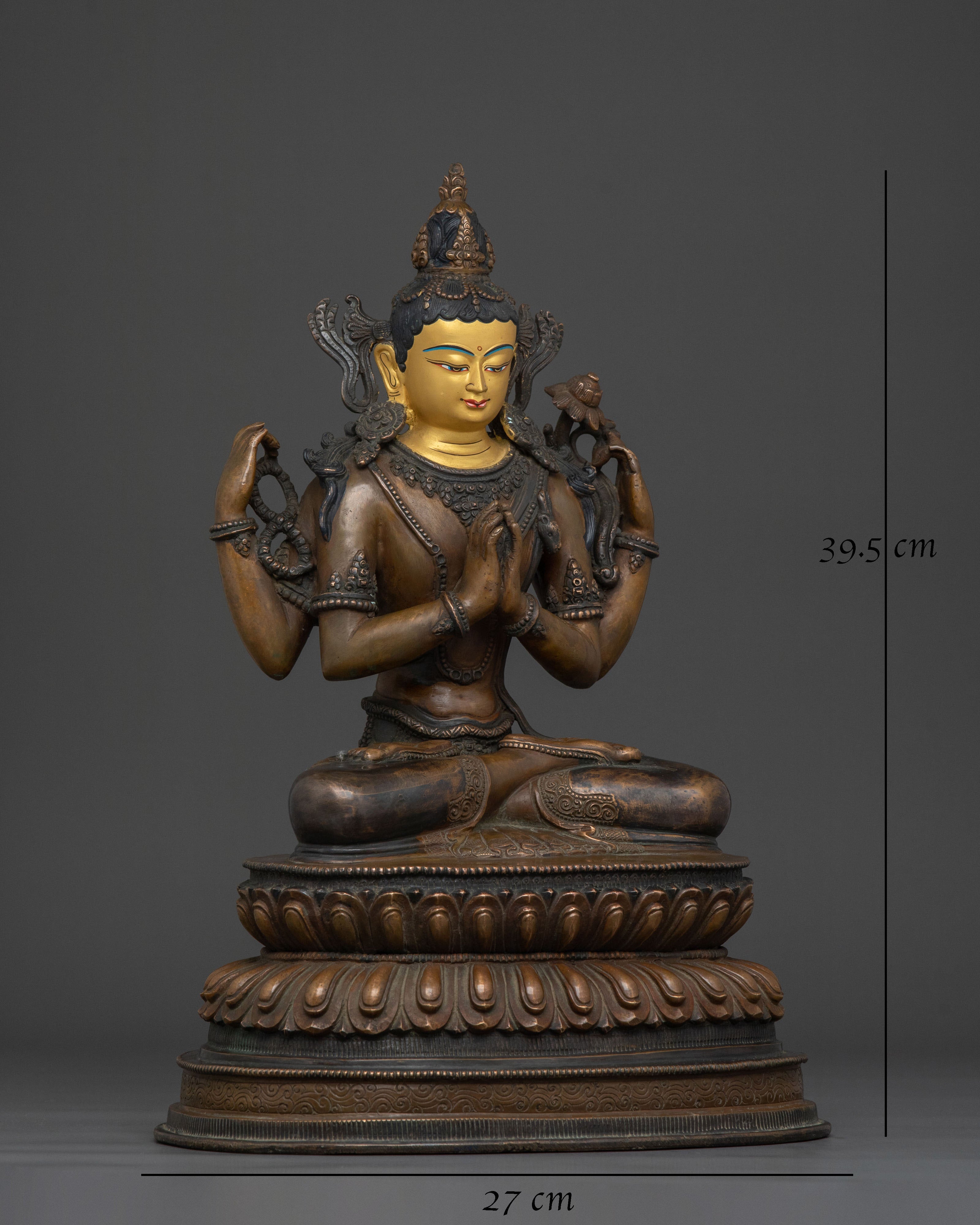
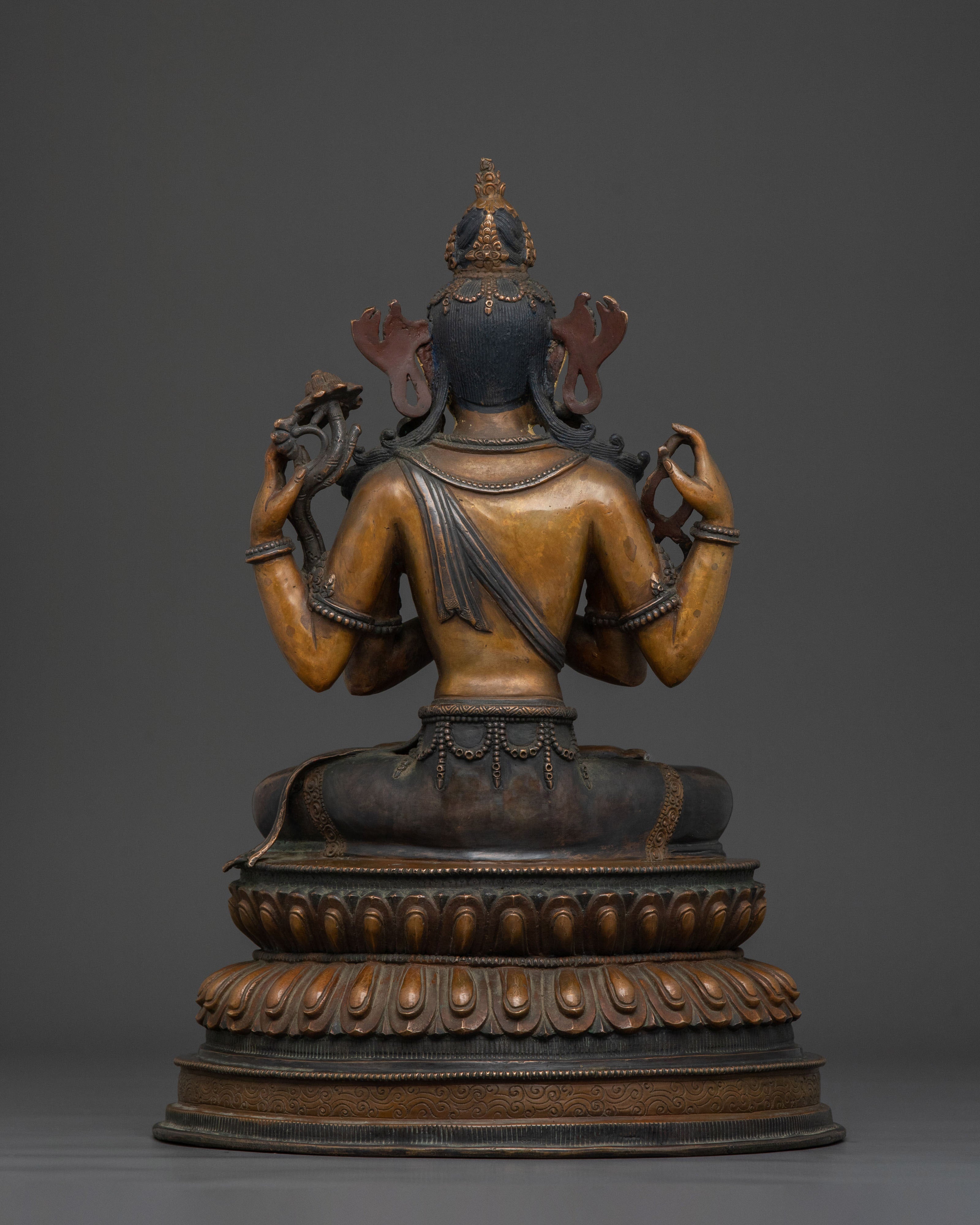
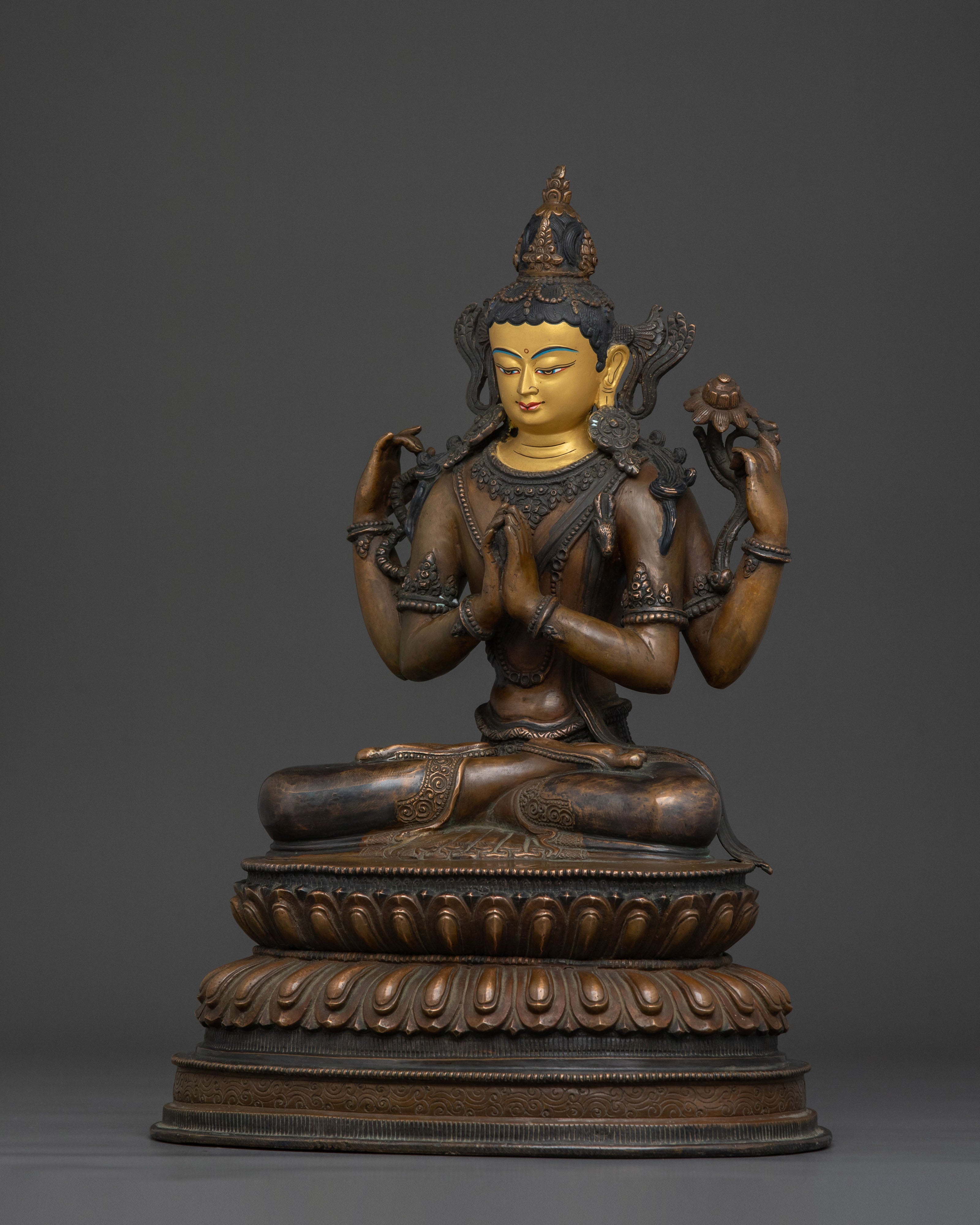
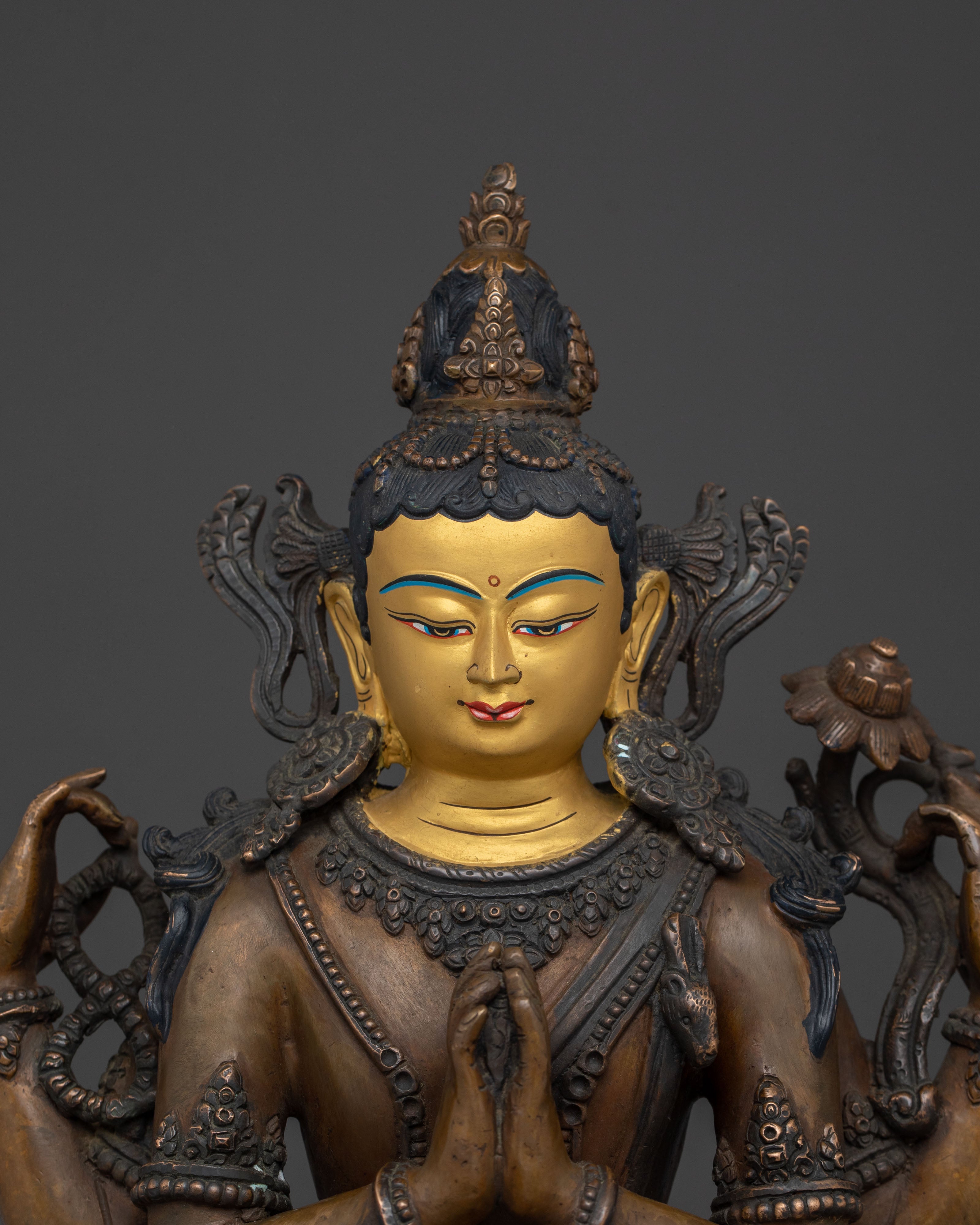
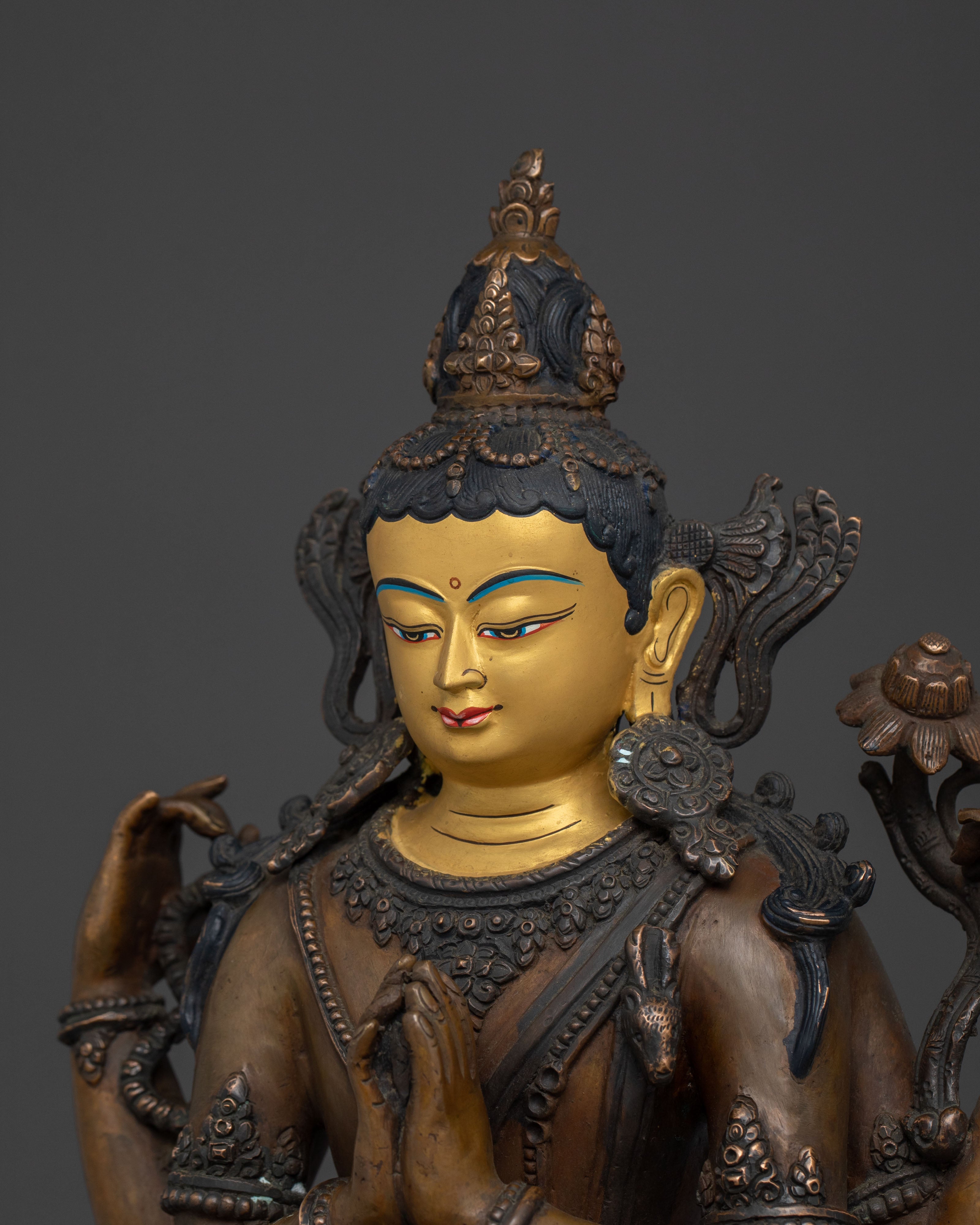
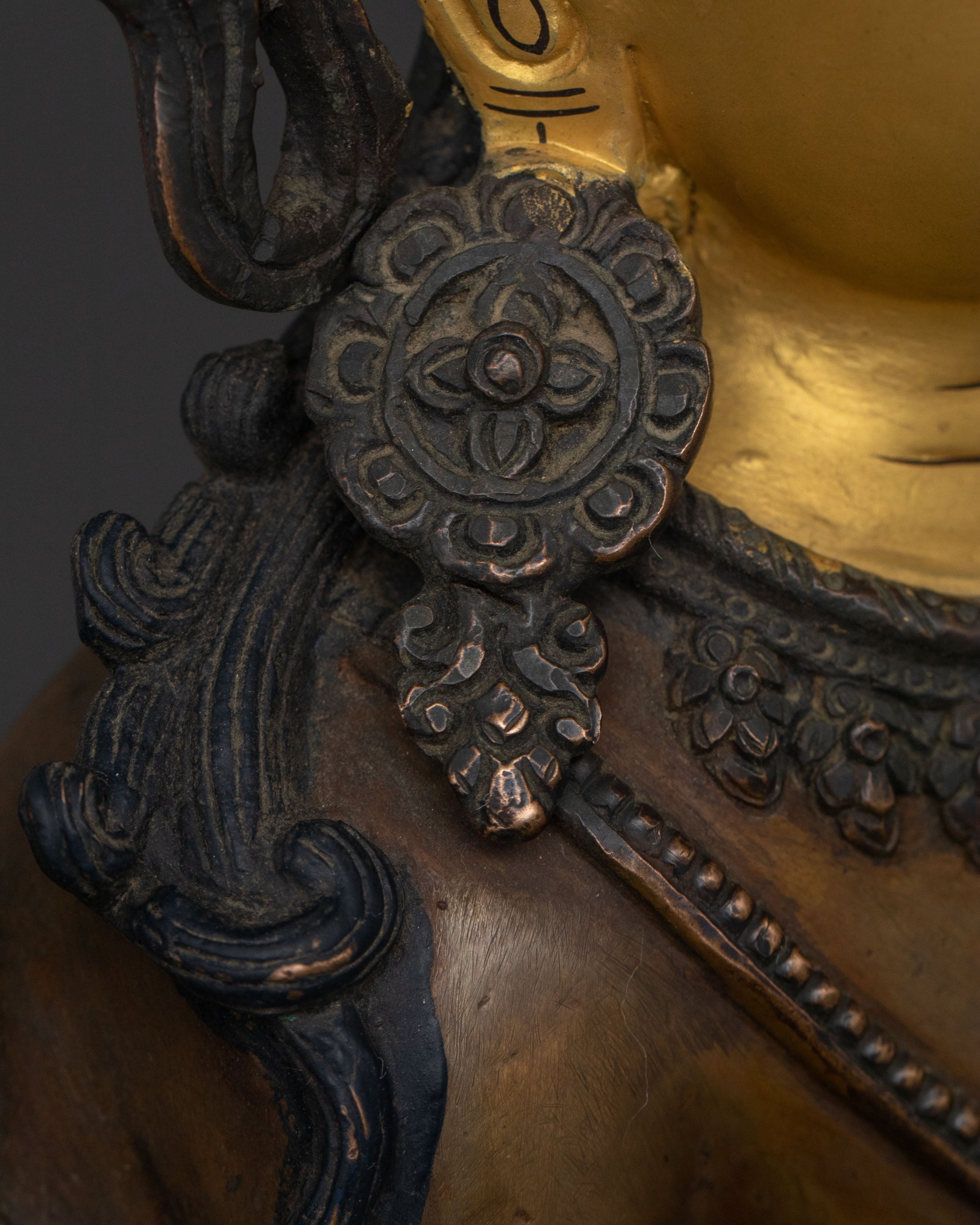
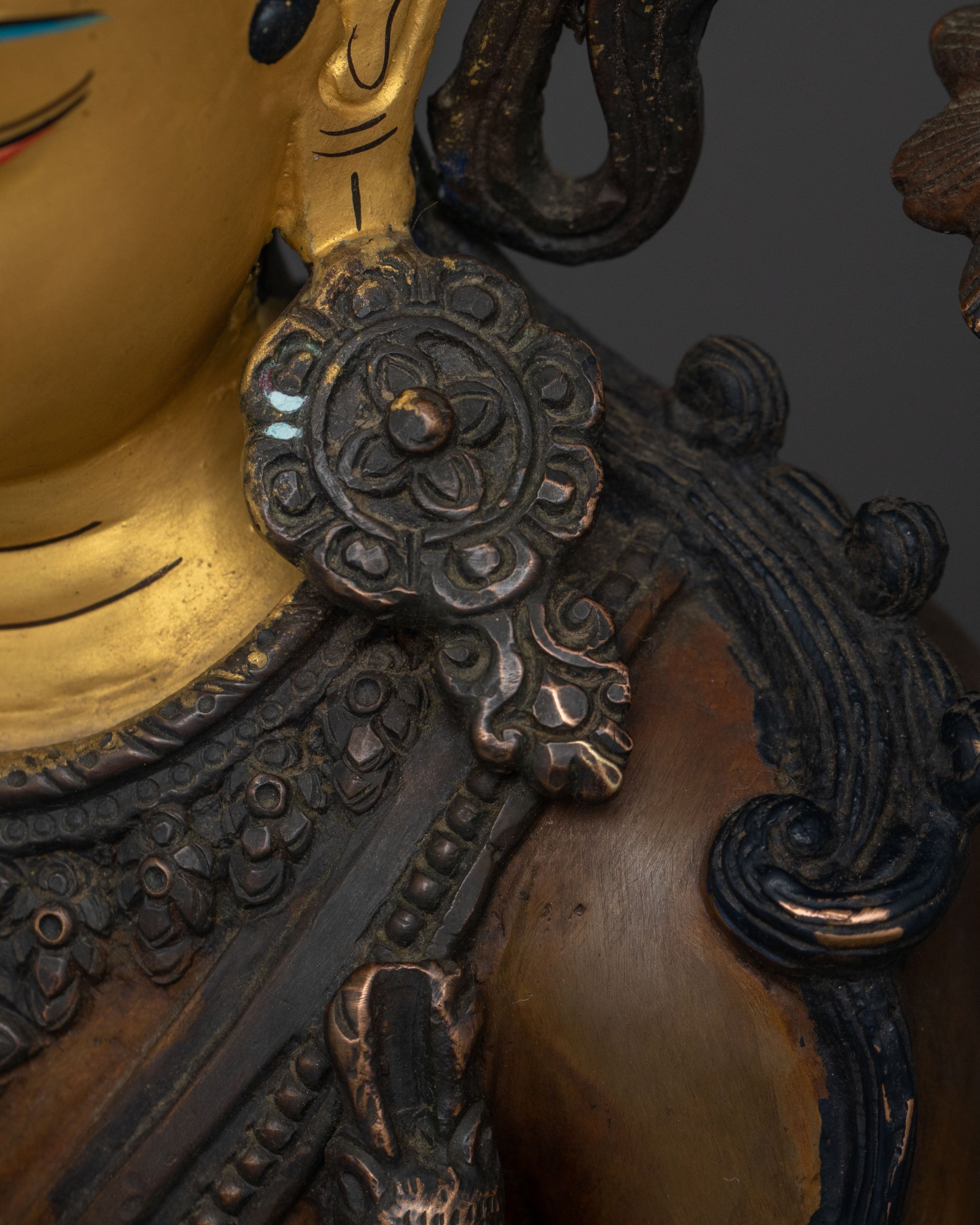
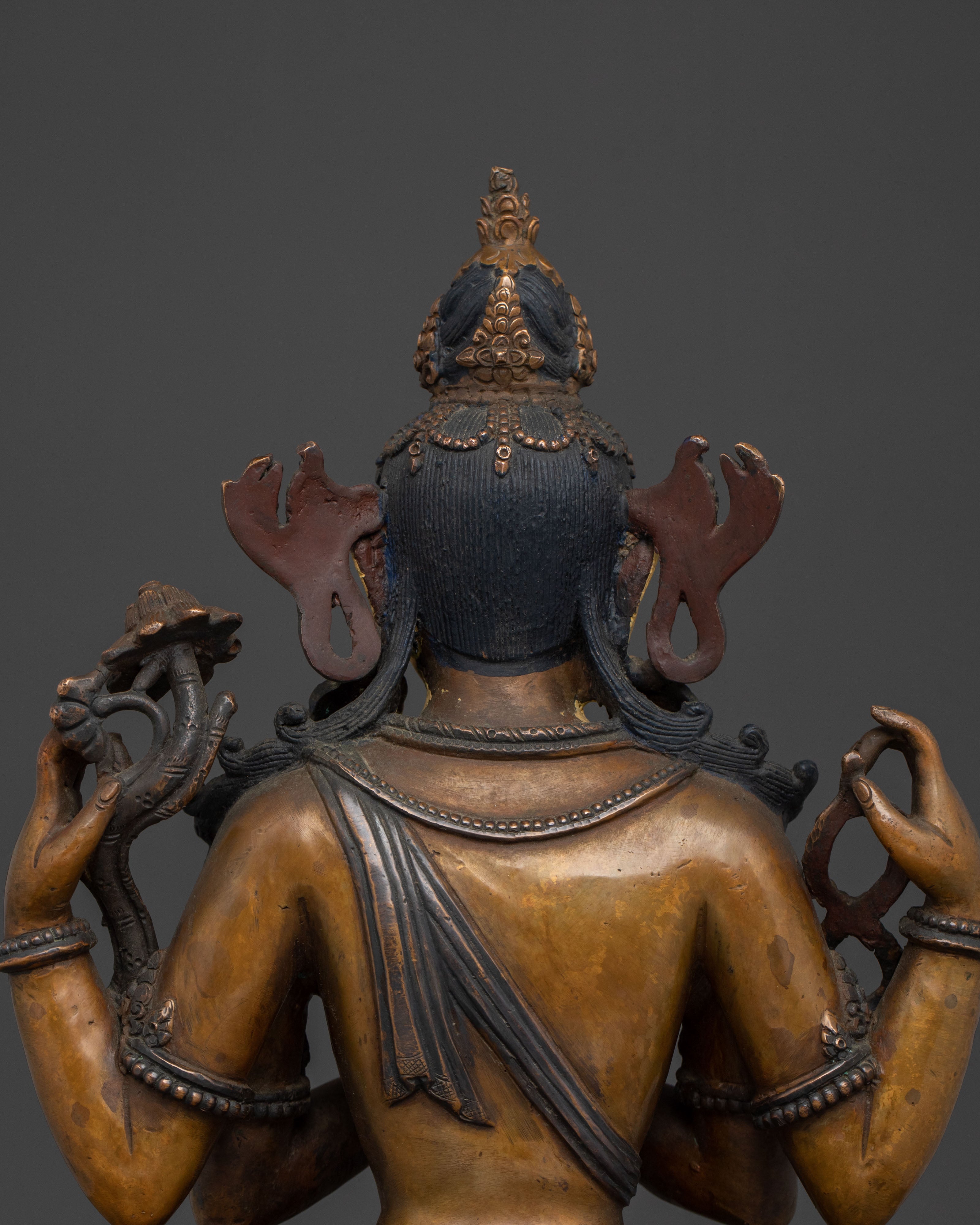
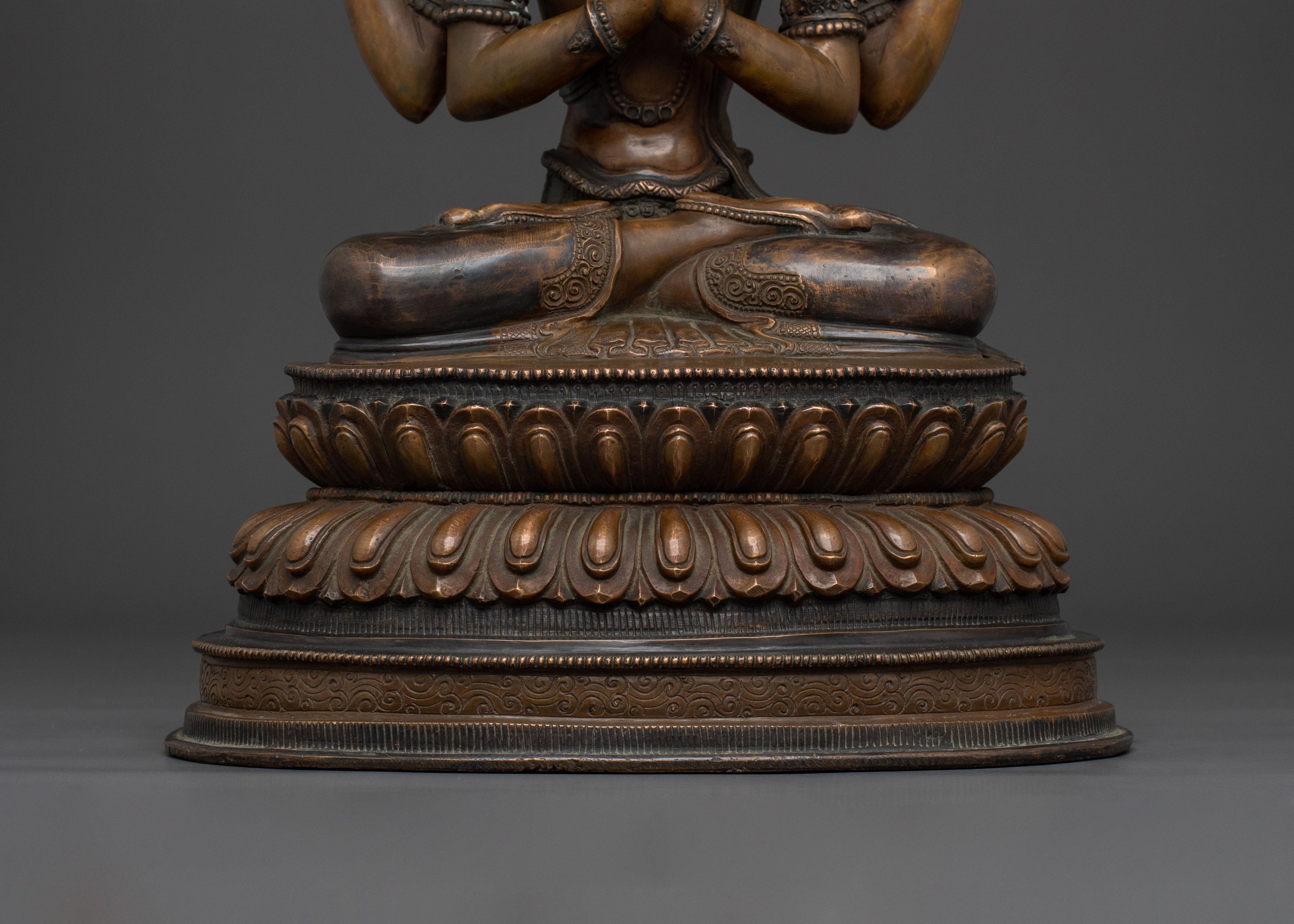
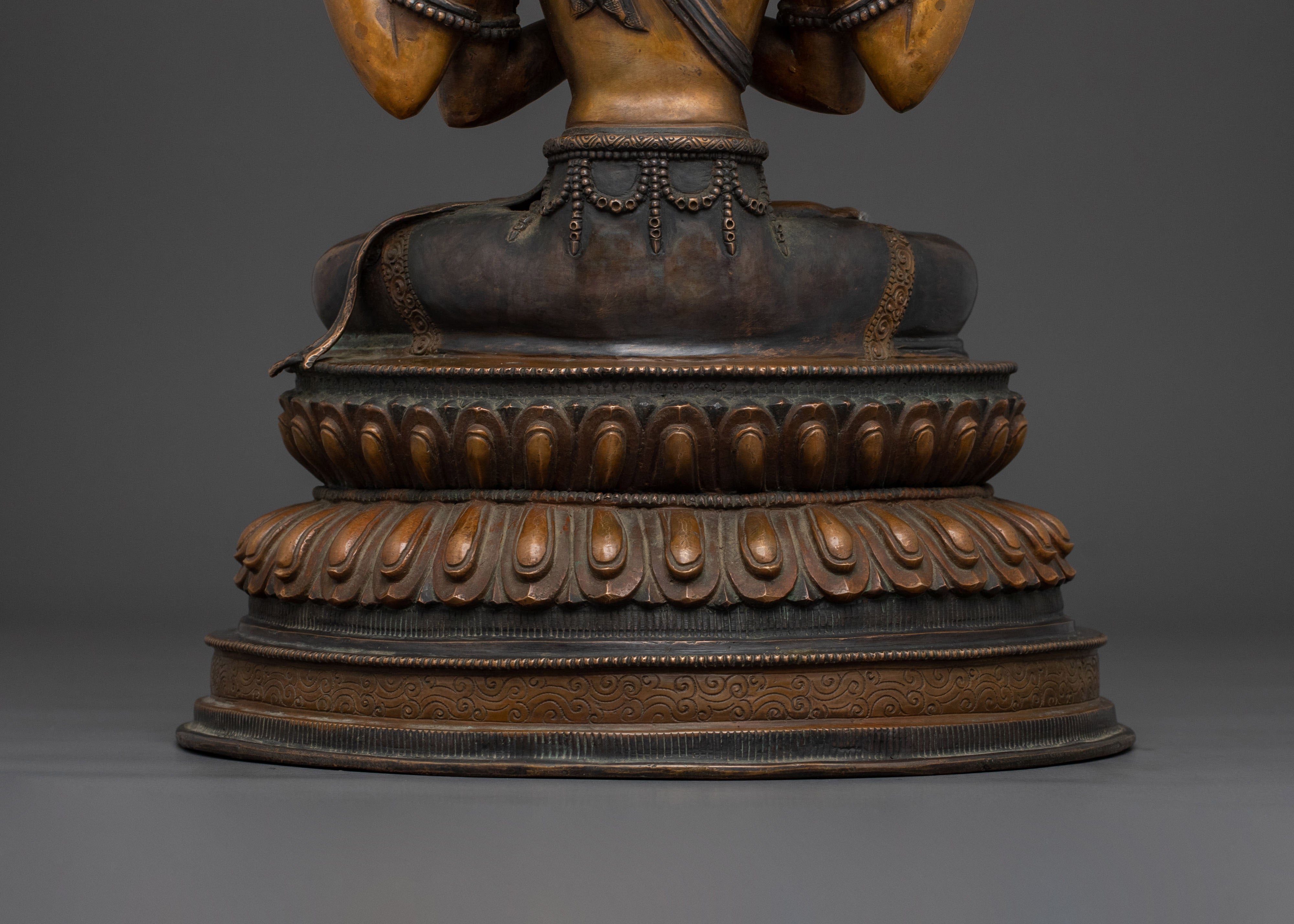
This Avalokiteshvara Compassion Statue is a finely handcrafted Buddhist sculpture created by skilled Nepali artisans, measuring 15.55 inches (39.5cm) in height with a 10.63-inch (27cm) base and weighing 6.55 kg. Crafted from an oxidized copper body and richly adorned with 24K gold gilding and detailed acrylic painting, this statue reflects the exceptional craftsmanship and traditional techniques of Himalayan metalwork. Its elegant design, radiant finish, and serene presence make it suitable for Buddhist altars, meditation spaces, or spiritual collections.
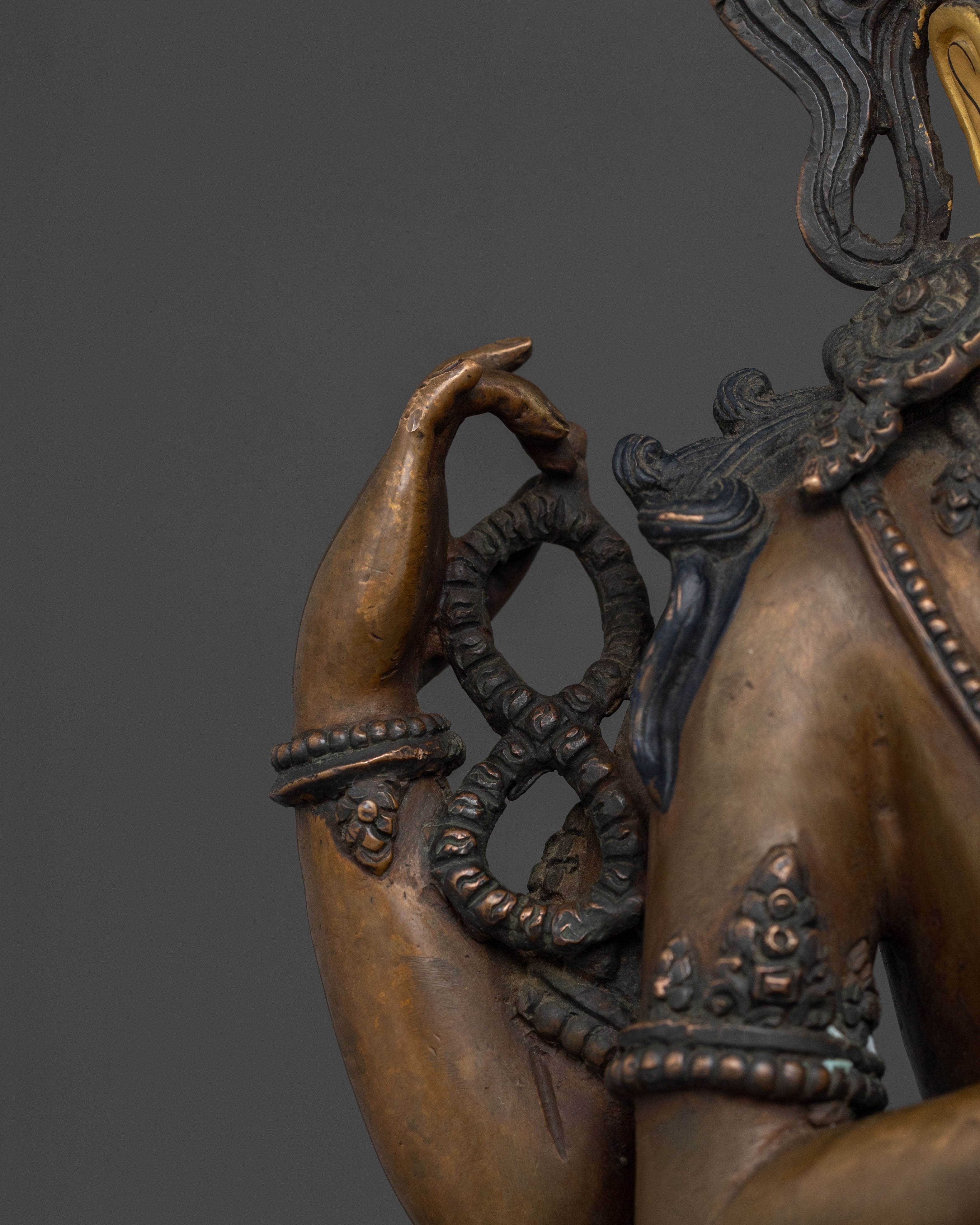
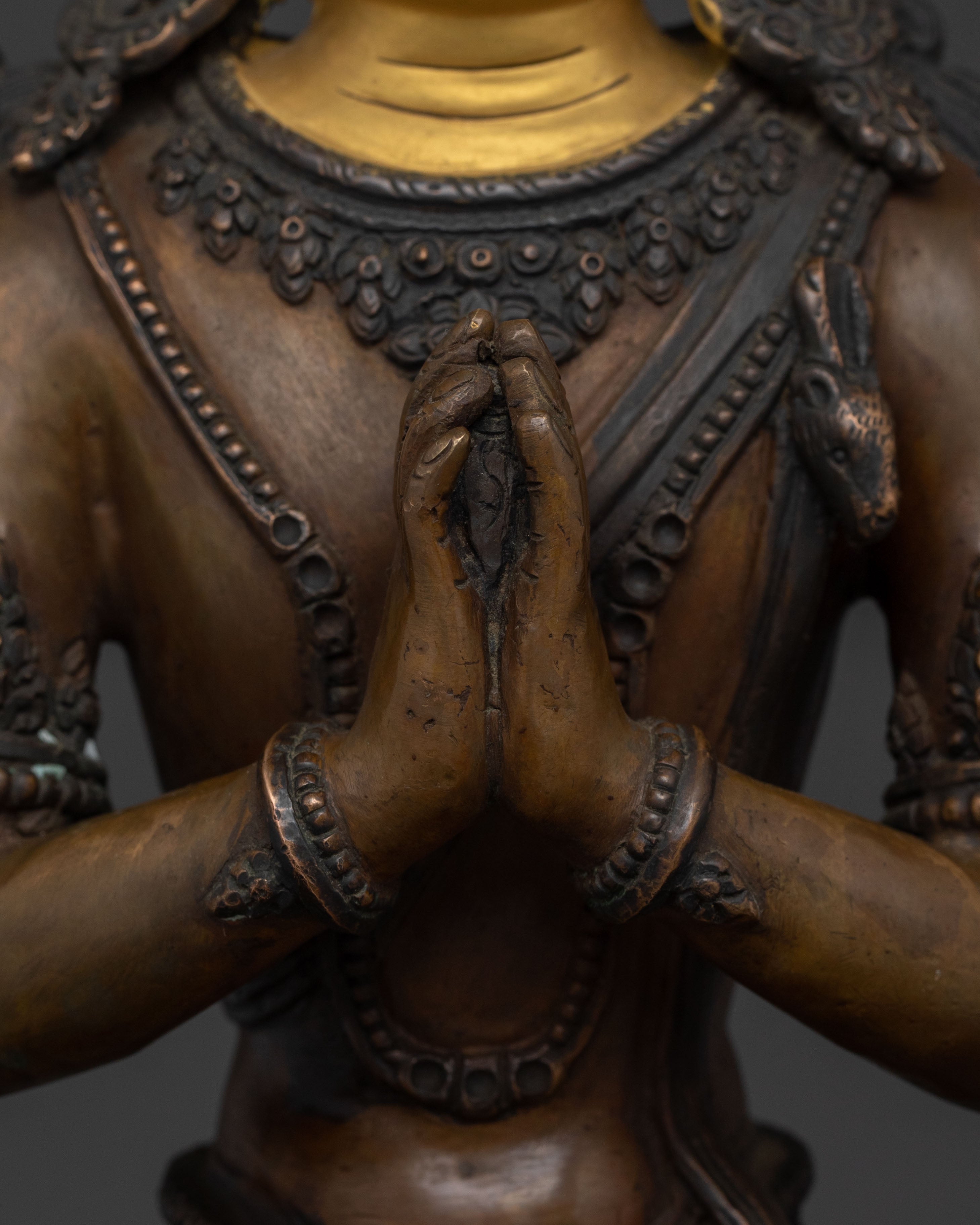
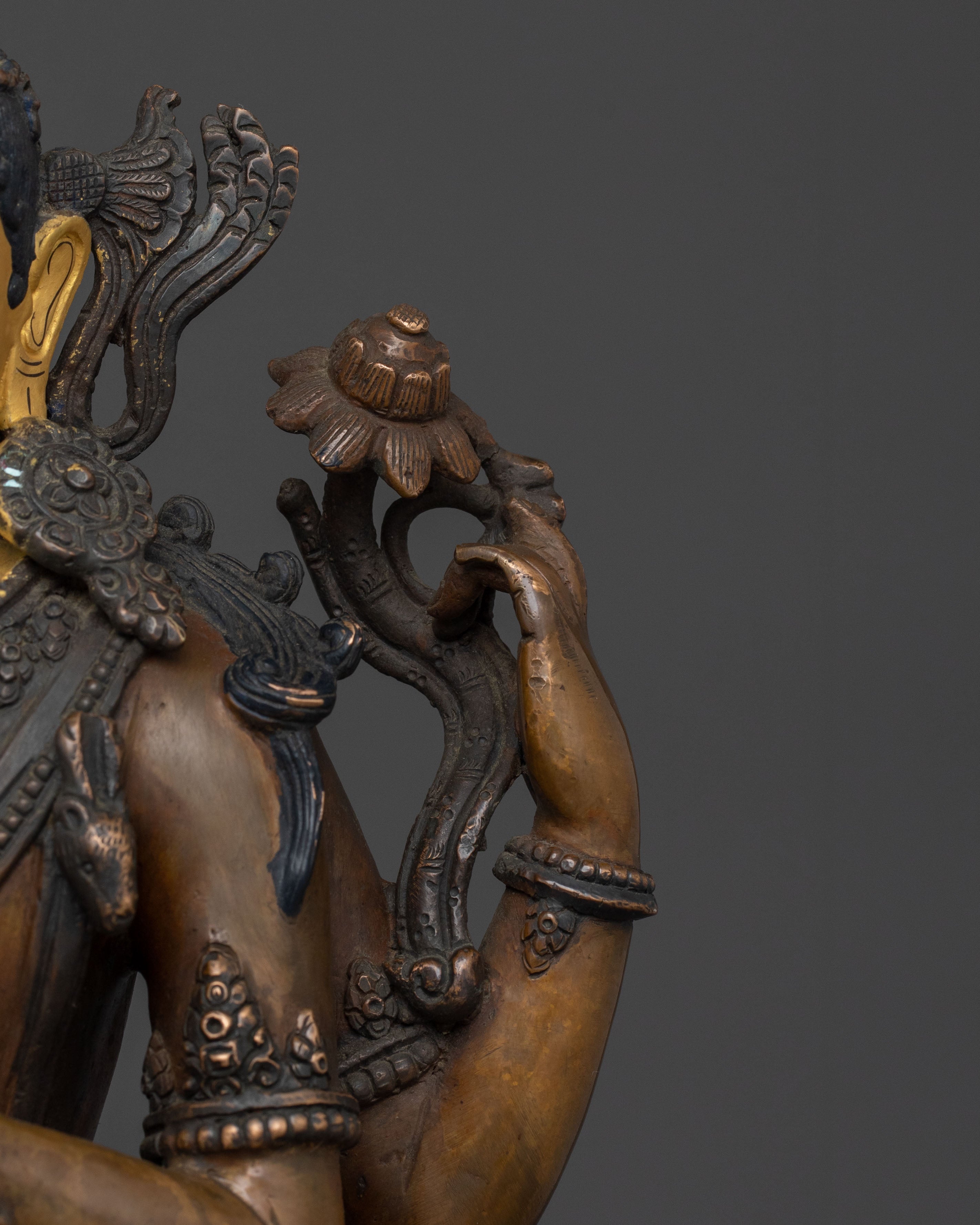
Chenrezig, also known as Avalokiteshvara, is the Bodhisattva of Infinite Compassion, embodying the boundless love, mercy, and compassionate activity of all Buddhas. He is traditionally depicted in his four-armed form, symbolizing the four immeasurables—love, compassion, joy, and equanimity—and his limitless ability to benefit all sentient beings. His two central hands are joined at his heart in Anjali Mudra, holding the wish-fulfilling jewel (Chintamani), representing his compassionate vow to relieve suffering and fulfill the spiritual needs of beings. His upper right hand holds a crystal mala (rosary), symbolizing continuous meditation, mantra recitation, and the unbroken practice of compassion, while his upper left hand holds a blooming lotus, representing purity, spiritual awakening, and the ability to remain unstained by worldly suffering. Seated peacefully upon a lotus throne, Chenrezig’s serene expression reflects wisdom, patience, and loving-kindness. This sacred statue serves as a powerful meditation and devotional focus, inspiring practitioners to cultivate compassion, selflessness, mindfulness, and the aspiration to bring benefit and liberation to all beings.
Size: 15.55”/39.5cm (Height) x 10.63”/27cm (Base)
Weight: 6.55 kg
Material: 24K Gold Gilded, Acrylic Painting, Oxidized Copper Body
Chenrezig, known as Avalokiteshvara in Sanskrit, is the Bodhisattva of Great Compassion in Mahayana Buddhism. He is revered for his unwavering vow to postpone his own Buddhahood until all sentient beings are liberated from suffering. In Tibetan Buddhism, he is considered the patron deity of Tibet, and the Dalai Lamas are believed to be his emanations. His mantra "Om Mani Padme Hum" is widely recited as an invocation of his compassionate energy.