Buddhist Teacher Guru Rinpoche Statue: Embodiment of Profound Wisdom
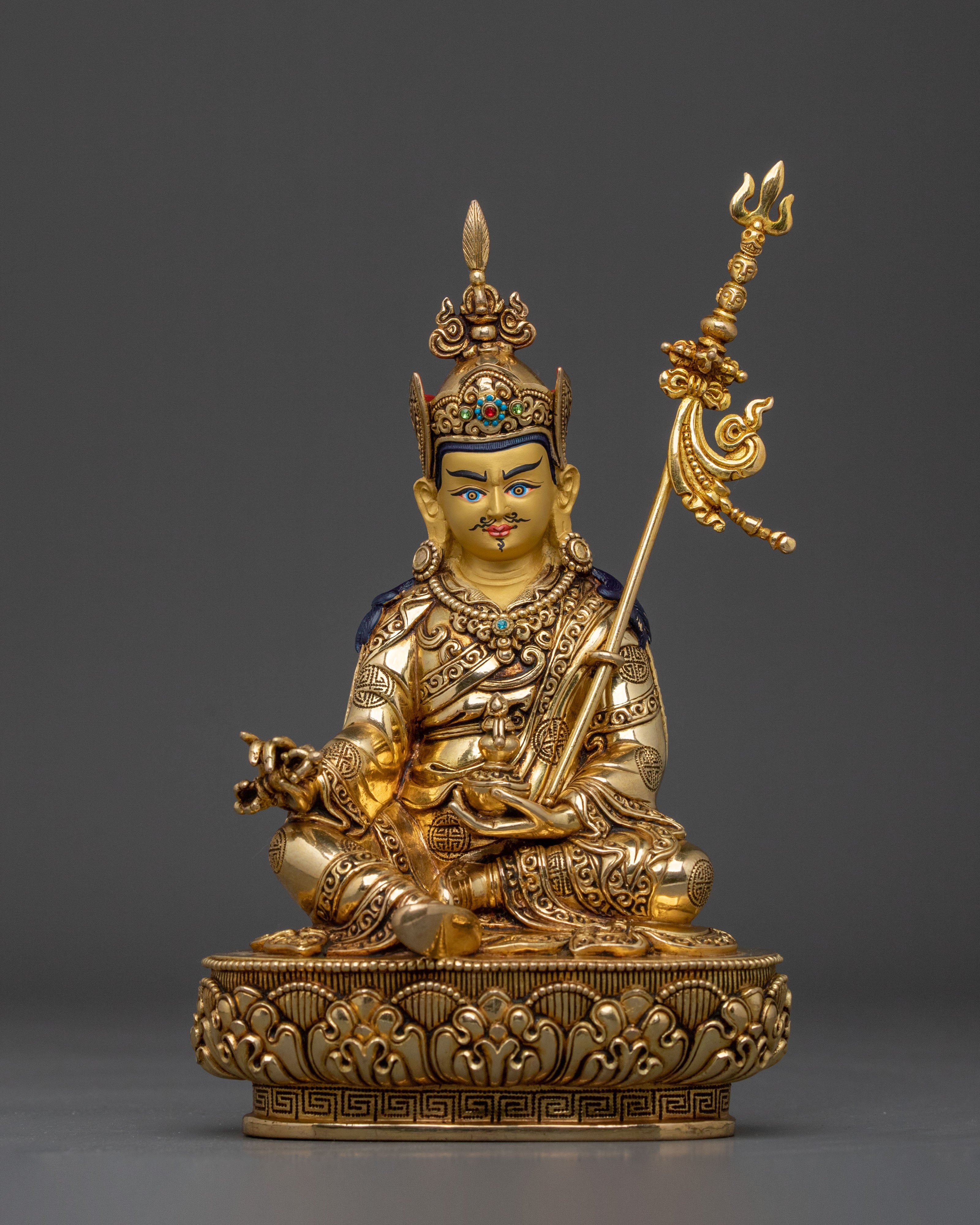
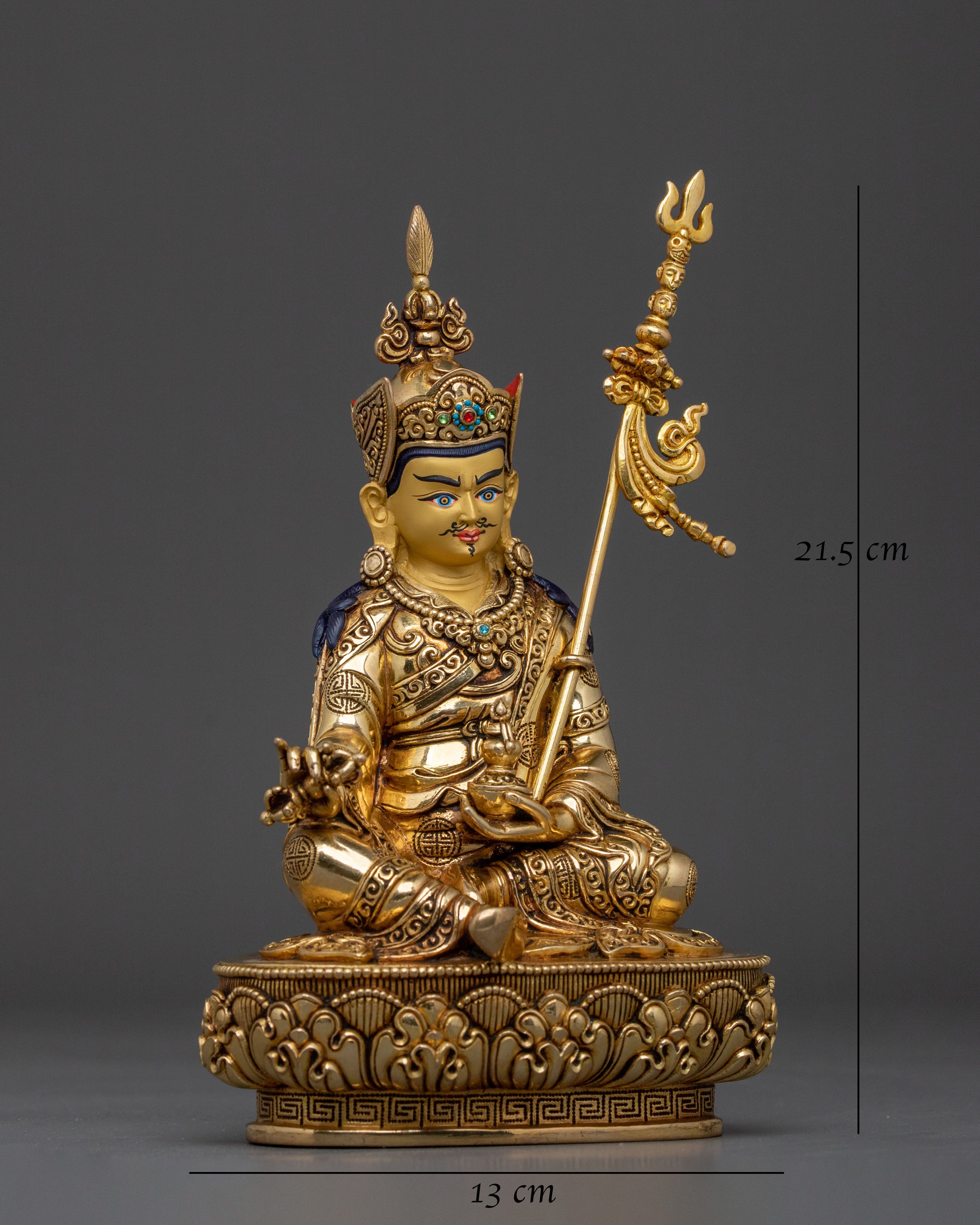
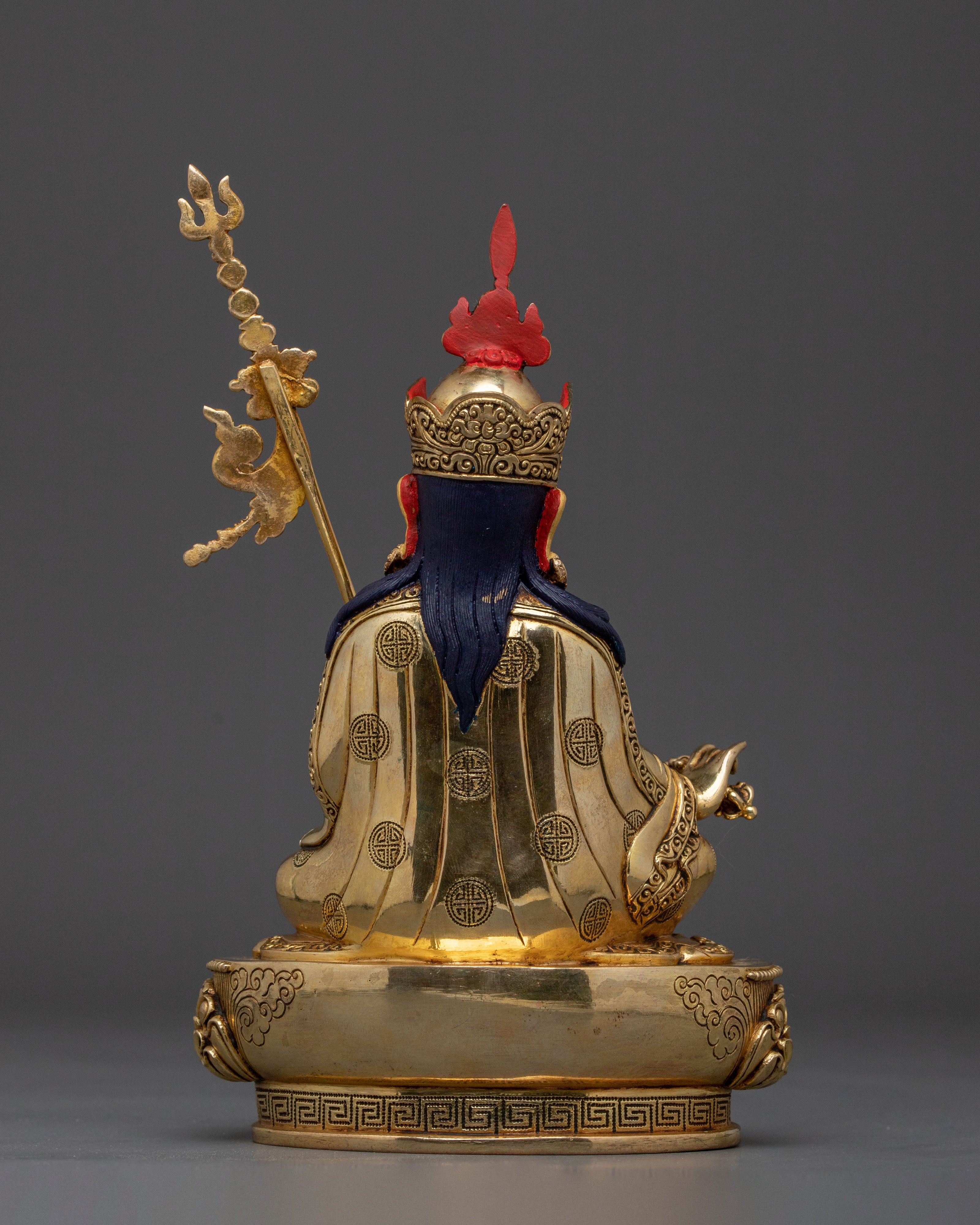
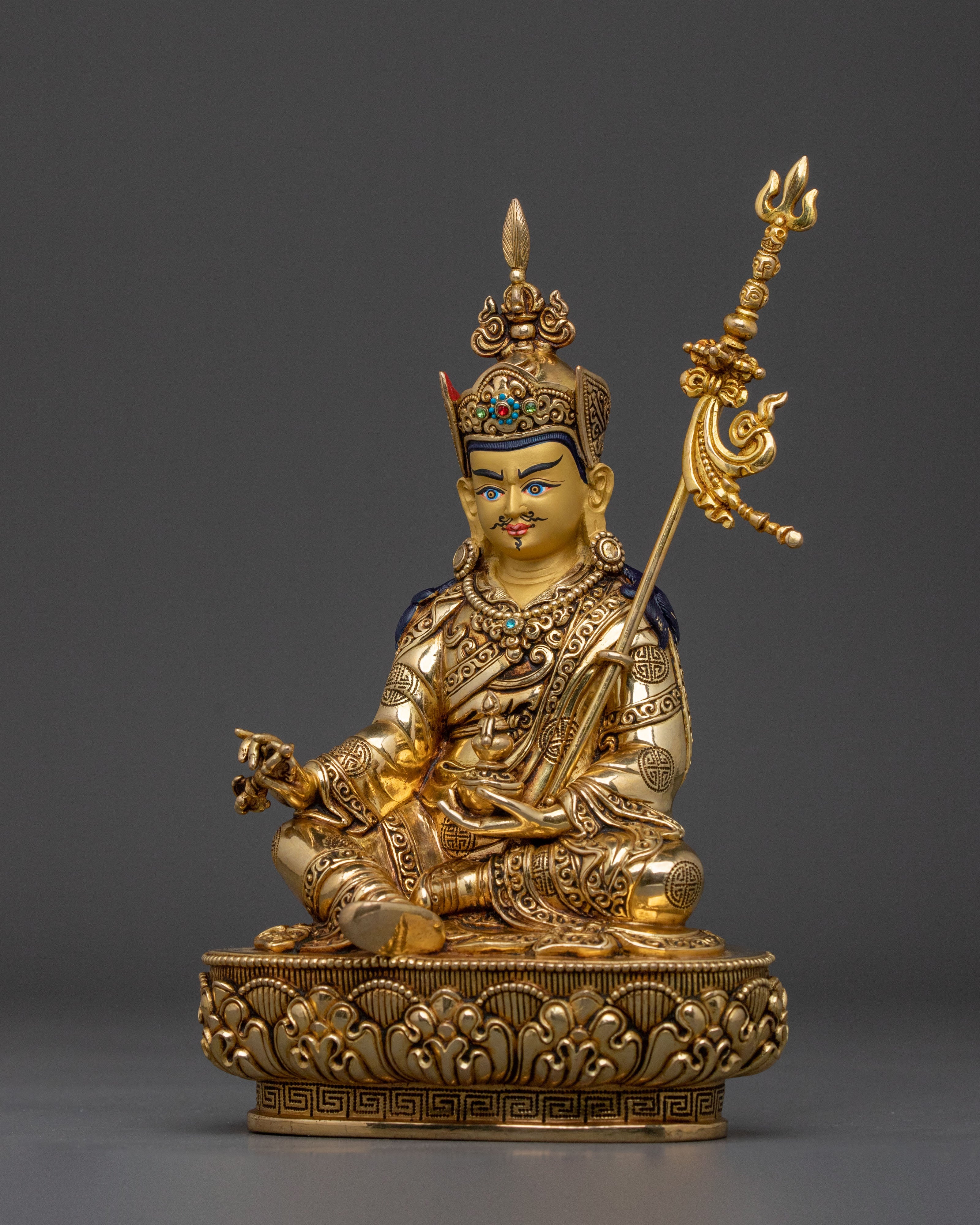
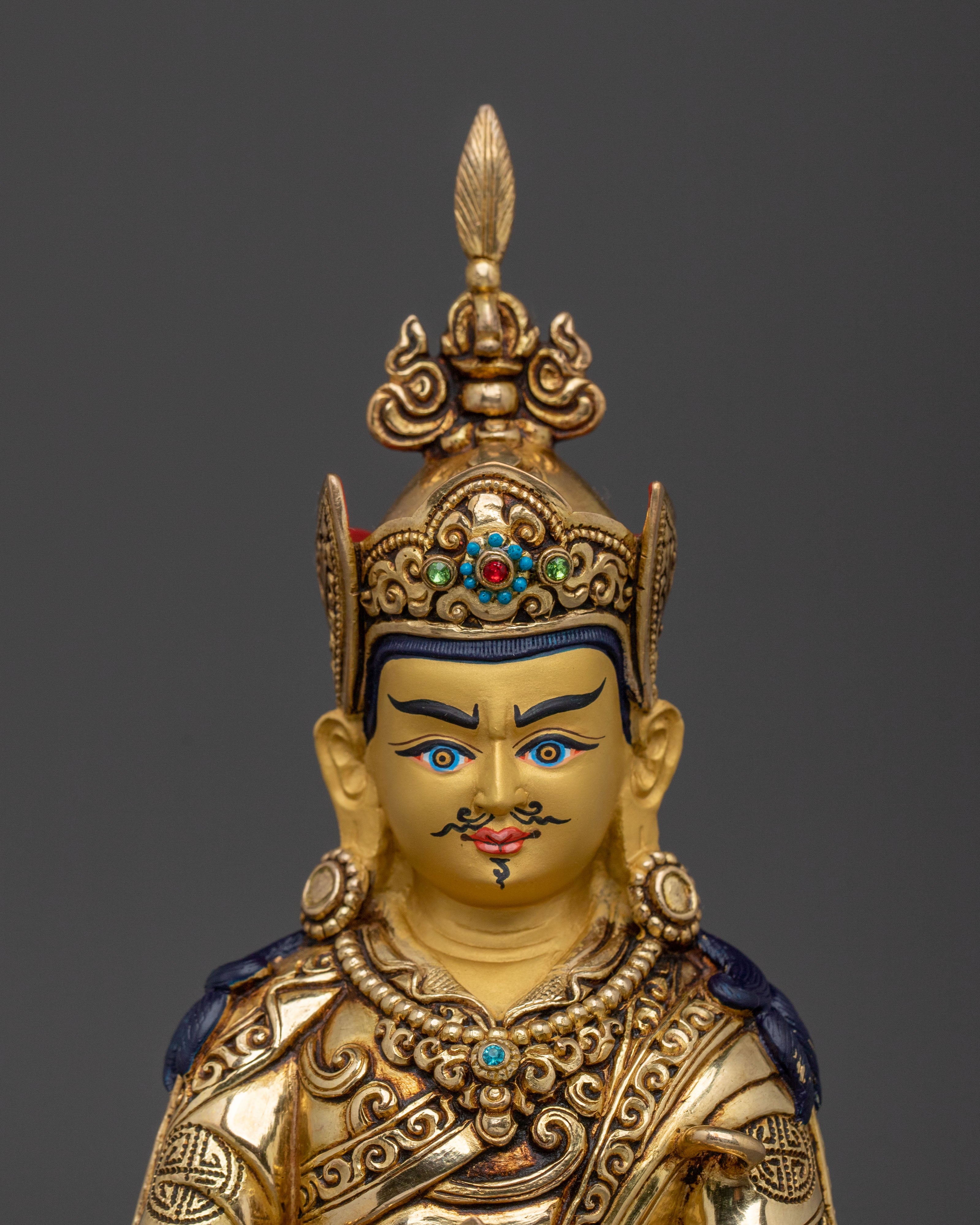
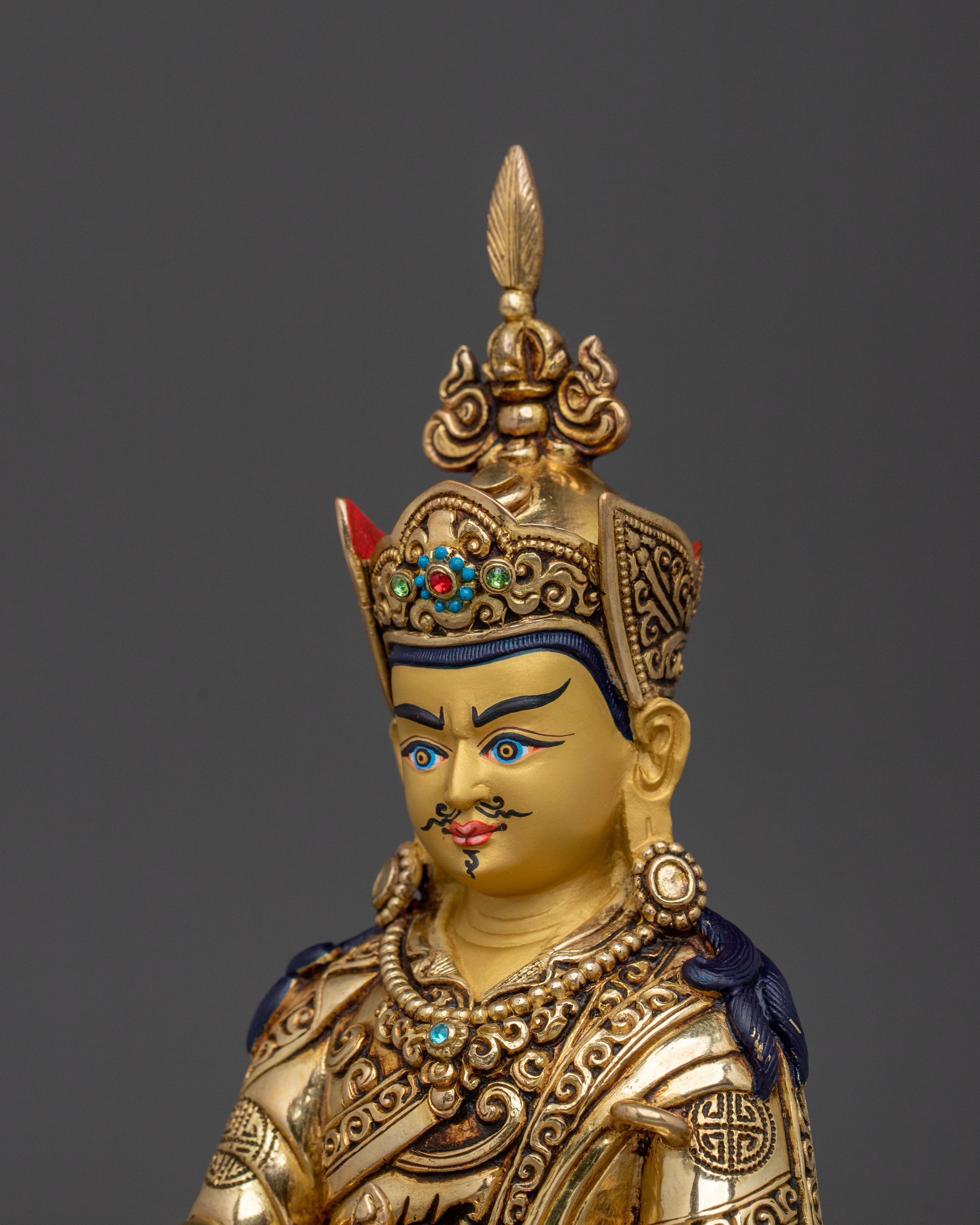
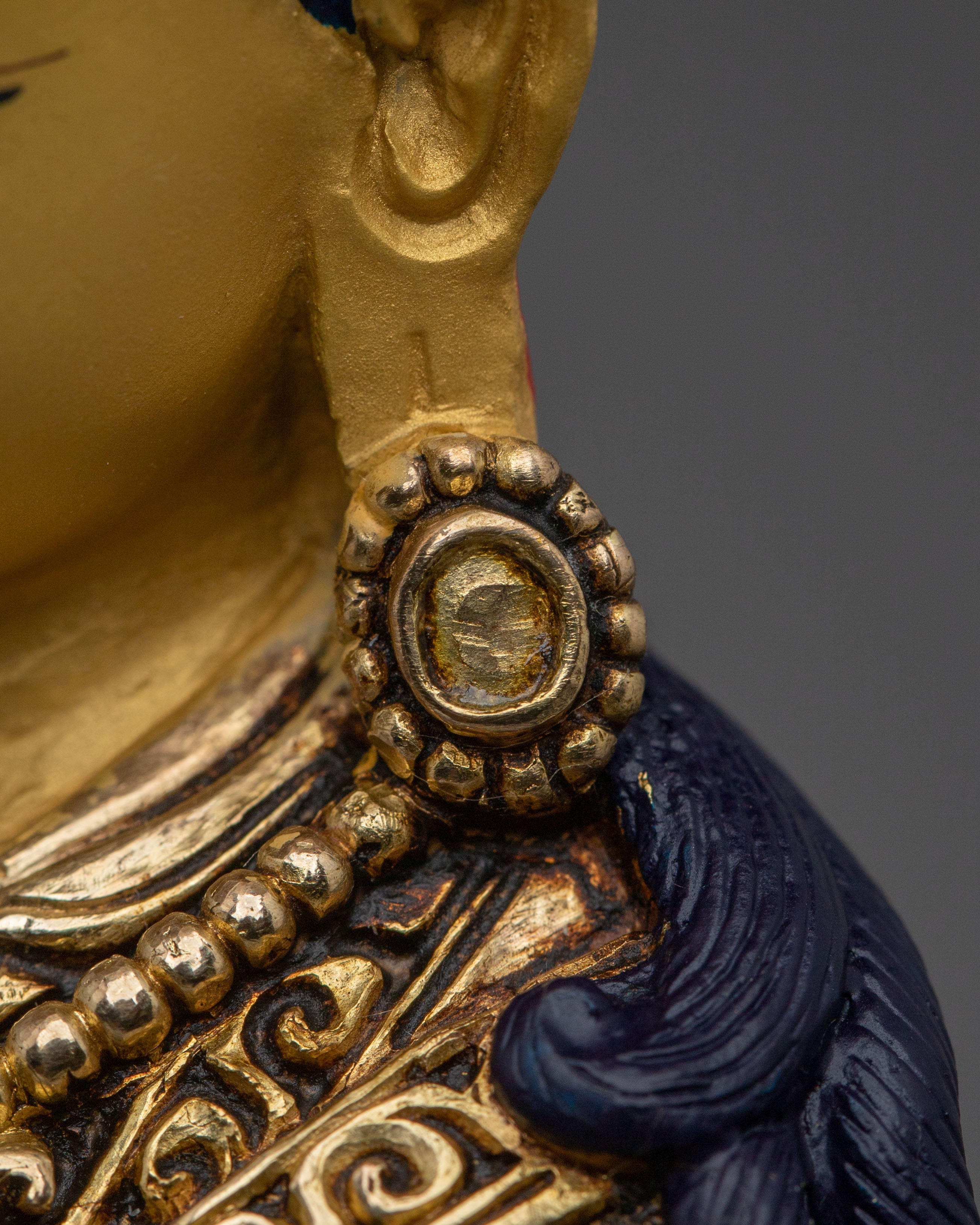
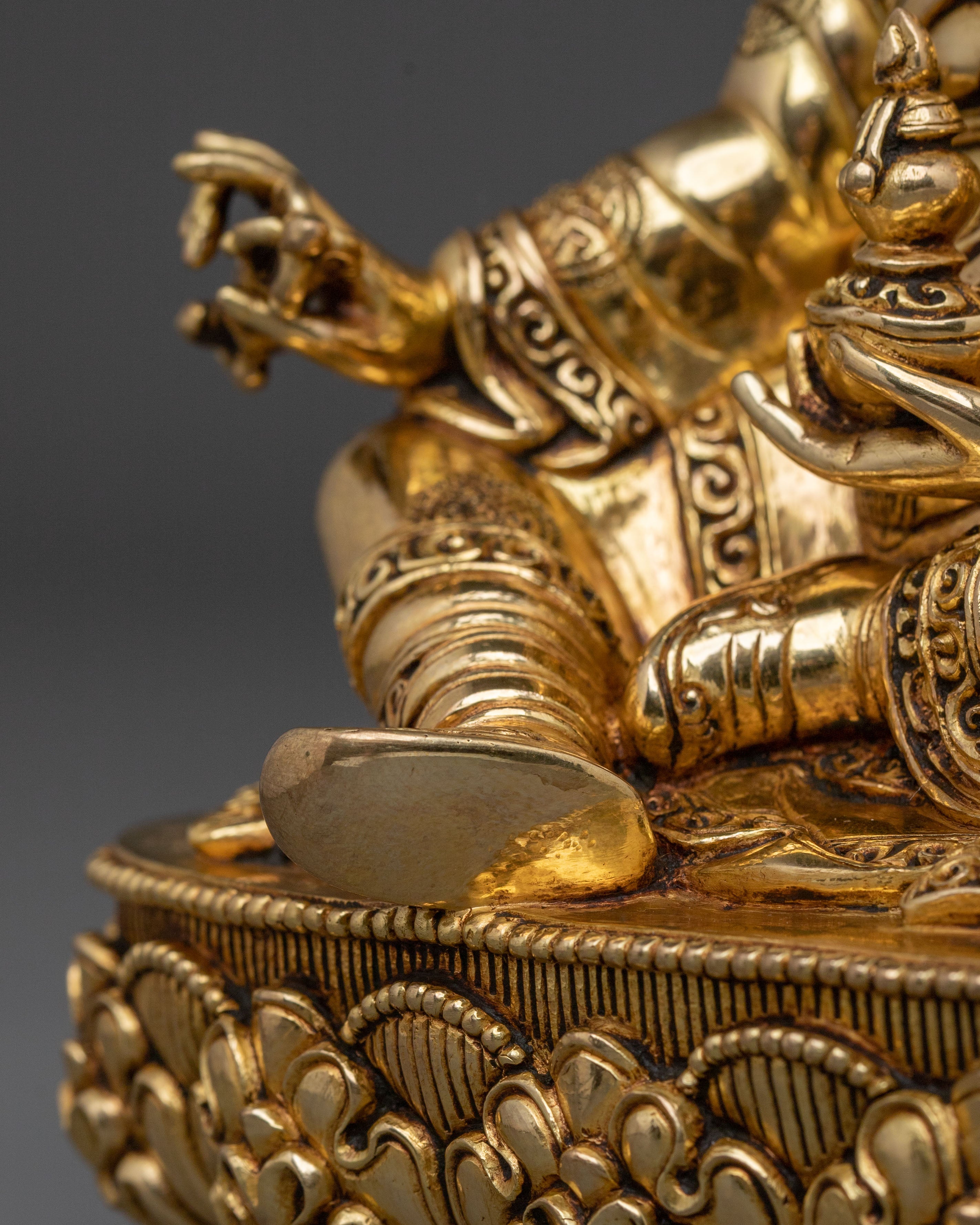
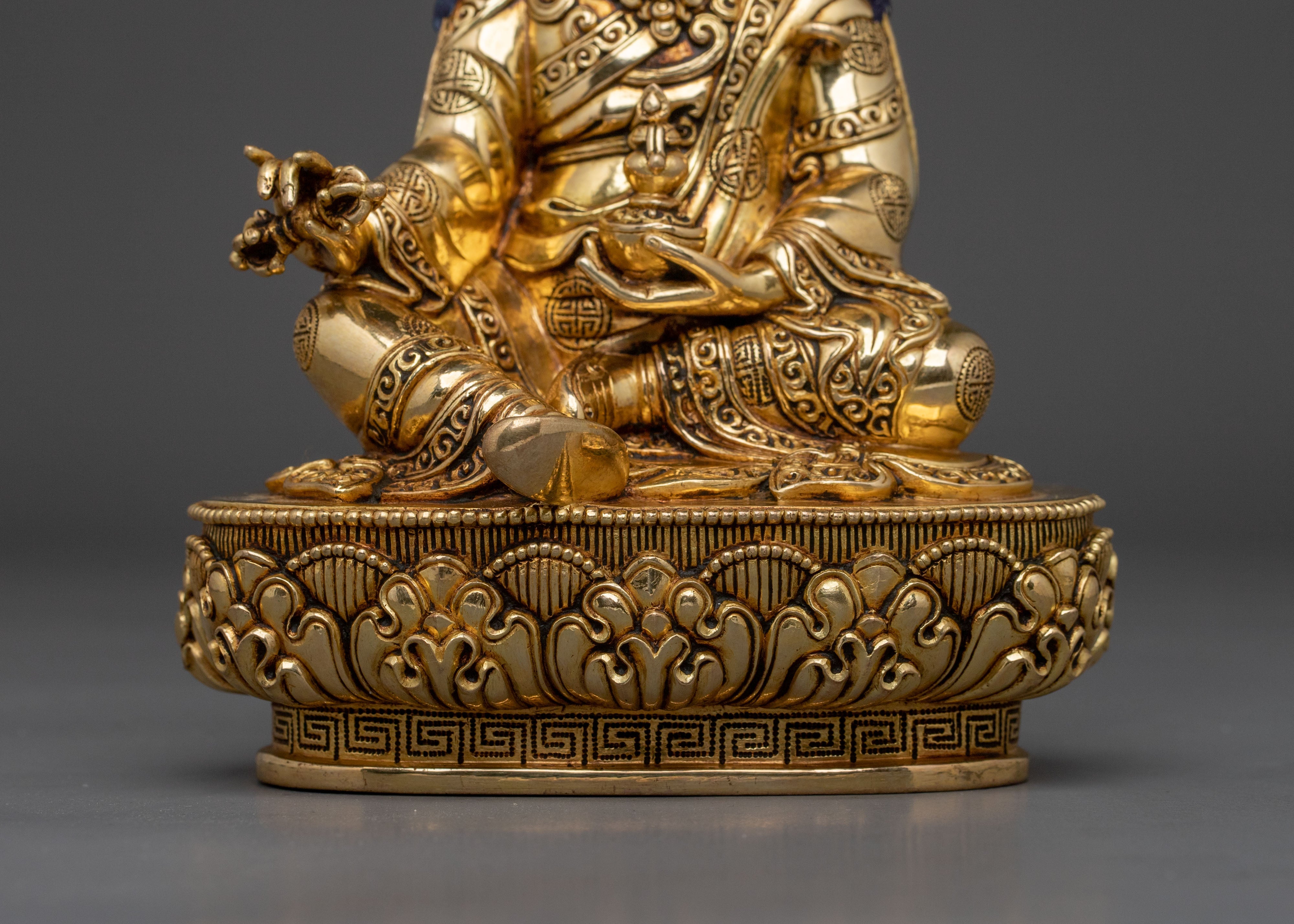
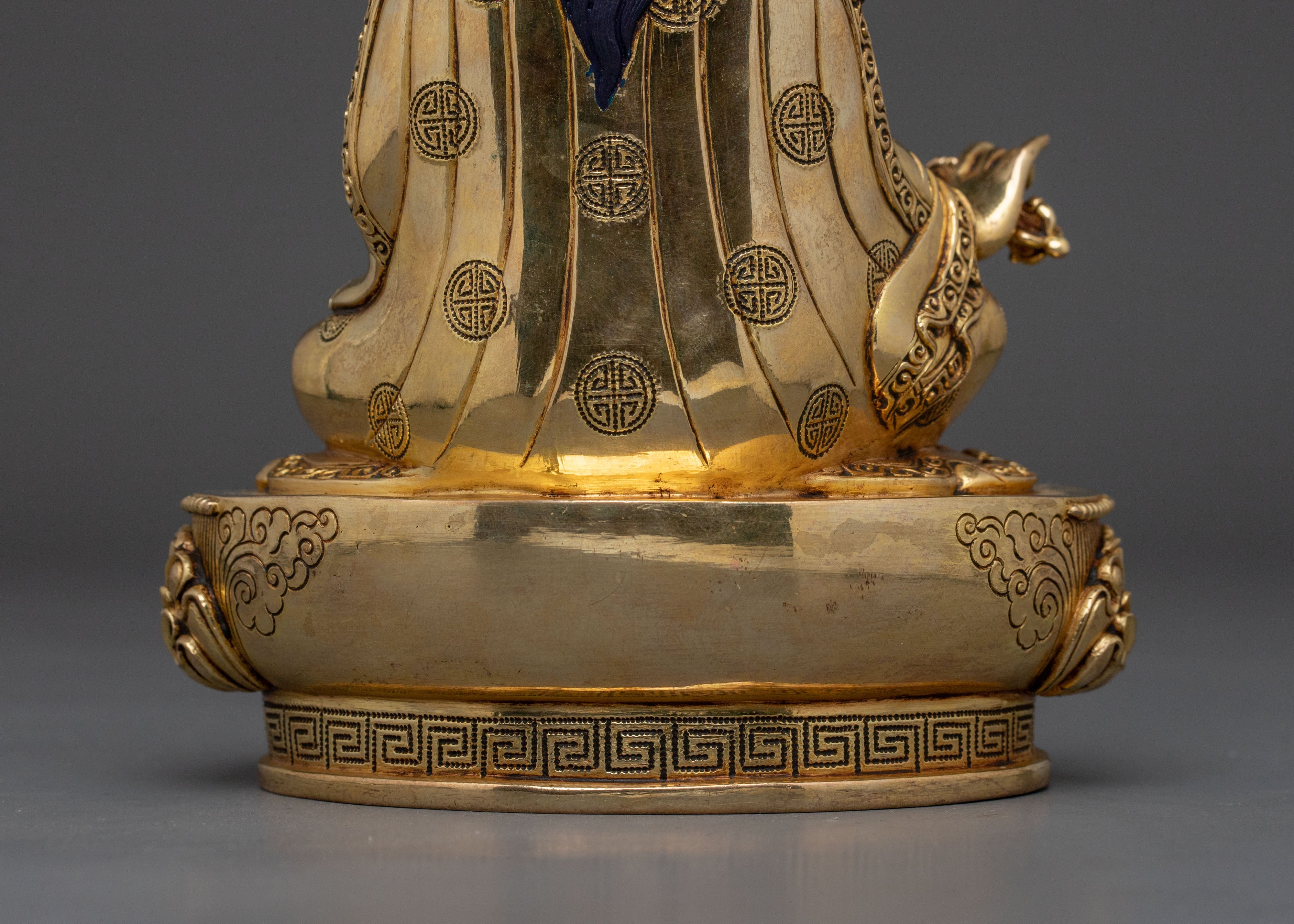
This Guru Rinpoche statue embodies the profound wisdom, enlightened guidance, and protective presence of Guru Rinpoche. Handcrafted in Nepal, this sacred sculpture stands 21.5cm (8.46 inches) tall with a 13cm (5.12 inches) base and weighs 1.1kg, offering a balanced and serene presence for personal altars, meditation spaces, or sacred collections. Expertly formed from a solid copper body, it is adorned with 24K gold gilding, delicate acrylic painting, and carefully set gemstones that enhance its sacred artistry. The serene expression and refined details reflect spiritual mastery and compassionate guidance, making it a meaningful focal point for devotion and contemplative practice.
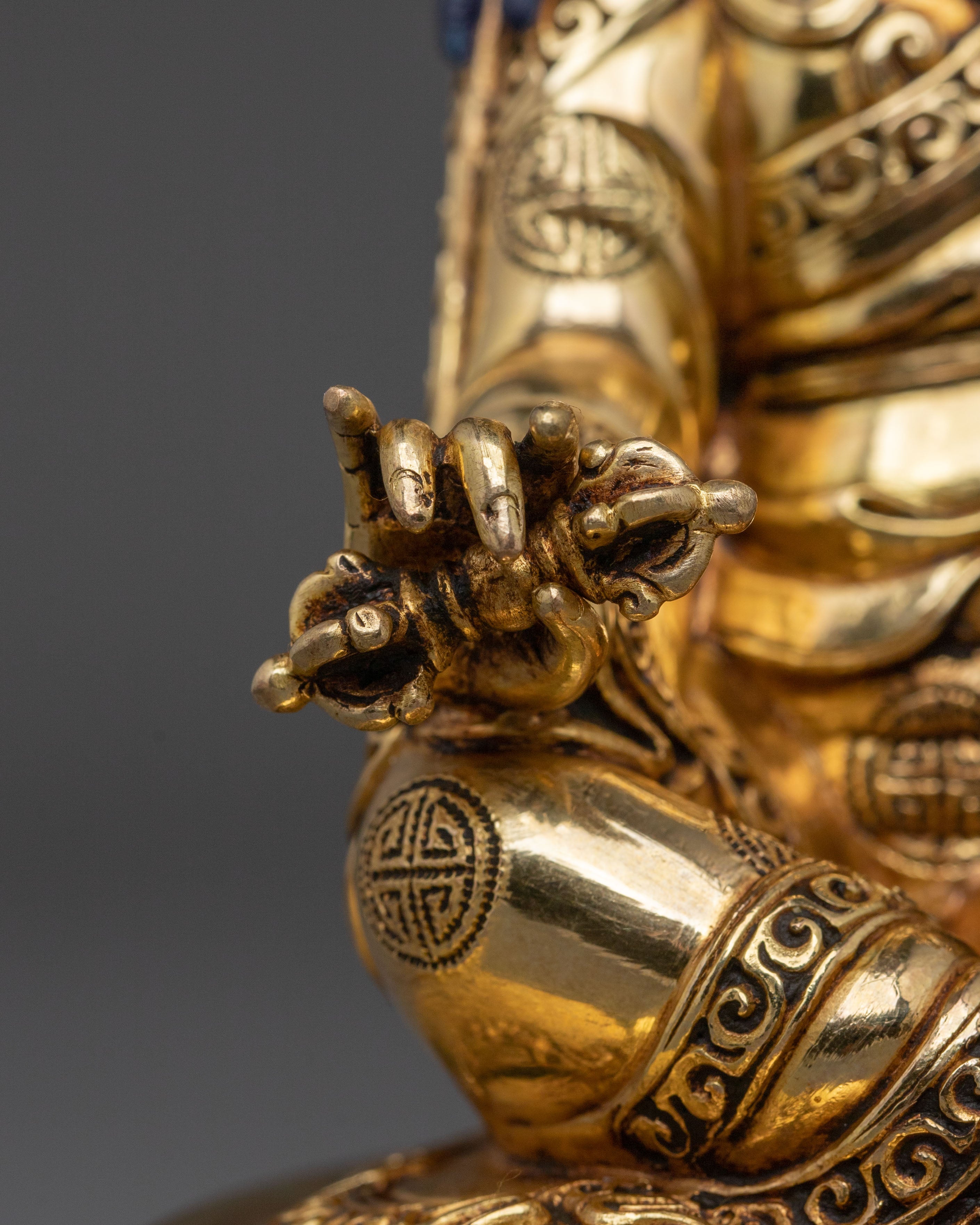
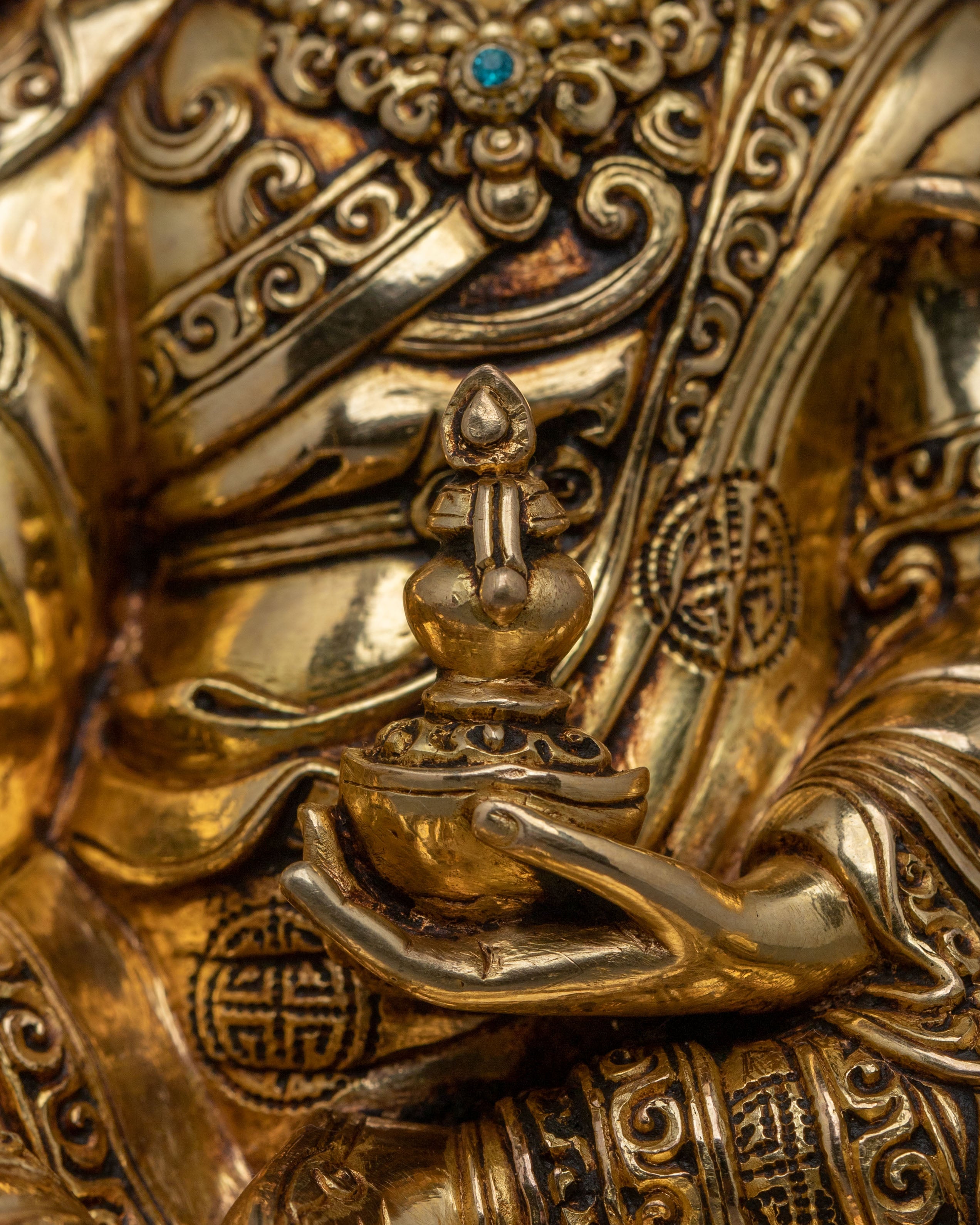
Guru Rinpoche, also known as Padmasambhava, is depicted as the great tantric master who brought Vajrayana Buddhism to Tibet, embodying the union of wisdom, compassion, and enlightened power. He is often shown seated in a regal yet yogic posture, symbolizing mastery over both worldly and spiritual realms. In his right hand, he holds a vajra, representing indestructible wisdom that cuts through ignorance, while his left hand holds a skull cup containing the nectar of realization, symbolizing the transformation of defilements into enlightened awareness. Resting against his shoulder is the khatvanga staff, representing his tantric consort, the inseparable union of bliss and emptiness, and mastery over the three kayas. His lotus crown signifies miraculous birth and spiritual authority, while his serene yet powerful expression reflects his role as the “Second Buddha,” inspiring protection, inner transformation, and the direct realization of primordial awareness.
Size: 8.46”/21.5cm (Height) x 5.12”/13cm (Base)
Weight: 1.1 kg
Material: 24K Gold Gilded, Acrylic Painting, Copper Body, Gemstones
Guru Rinpoche, also known as Padmasambhava, is revered across all schools of Tibetan Buddhism as the Second Buddha. He traveled to Tibet in the 8th century at the invitation of King Trisong Detsen and played a pivotal role in subduing negative forces and establishing the first Buddhist monastery, Samye. His teachings and enlightened activities are central to the Nyingma tradition, emphasizing the direct path to enlightenment.