


Description
Dzambhala Copper Sculpture | A Revered Buddhist Deity of Wealth and Good Fortune
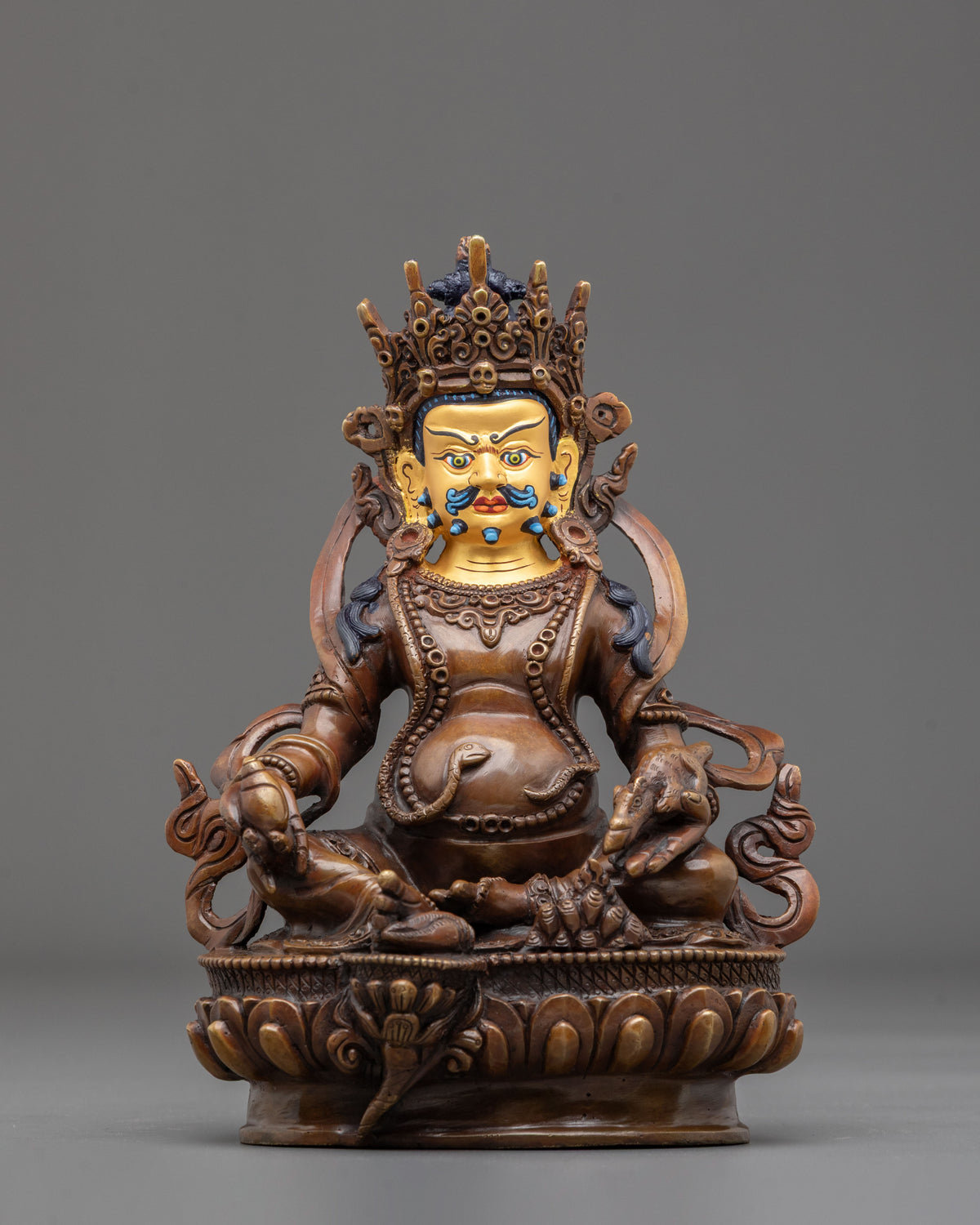
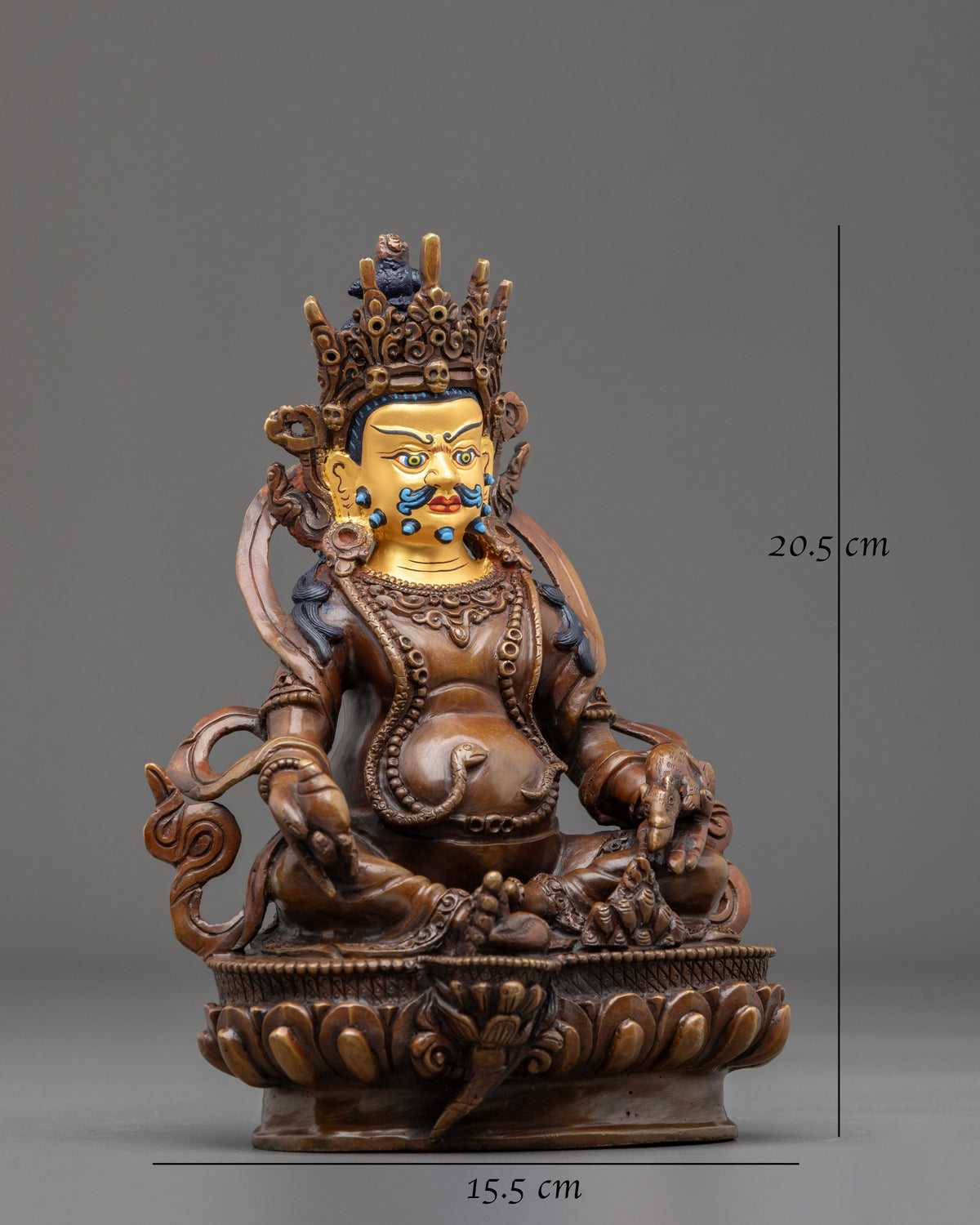
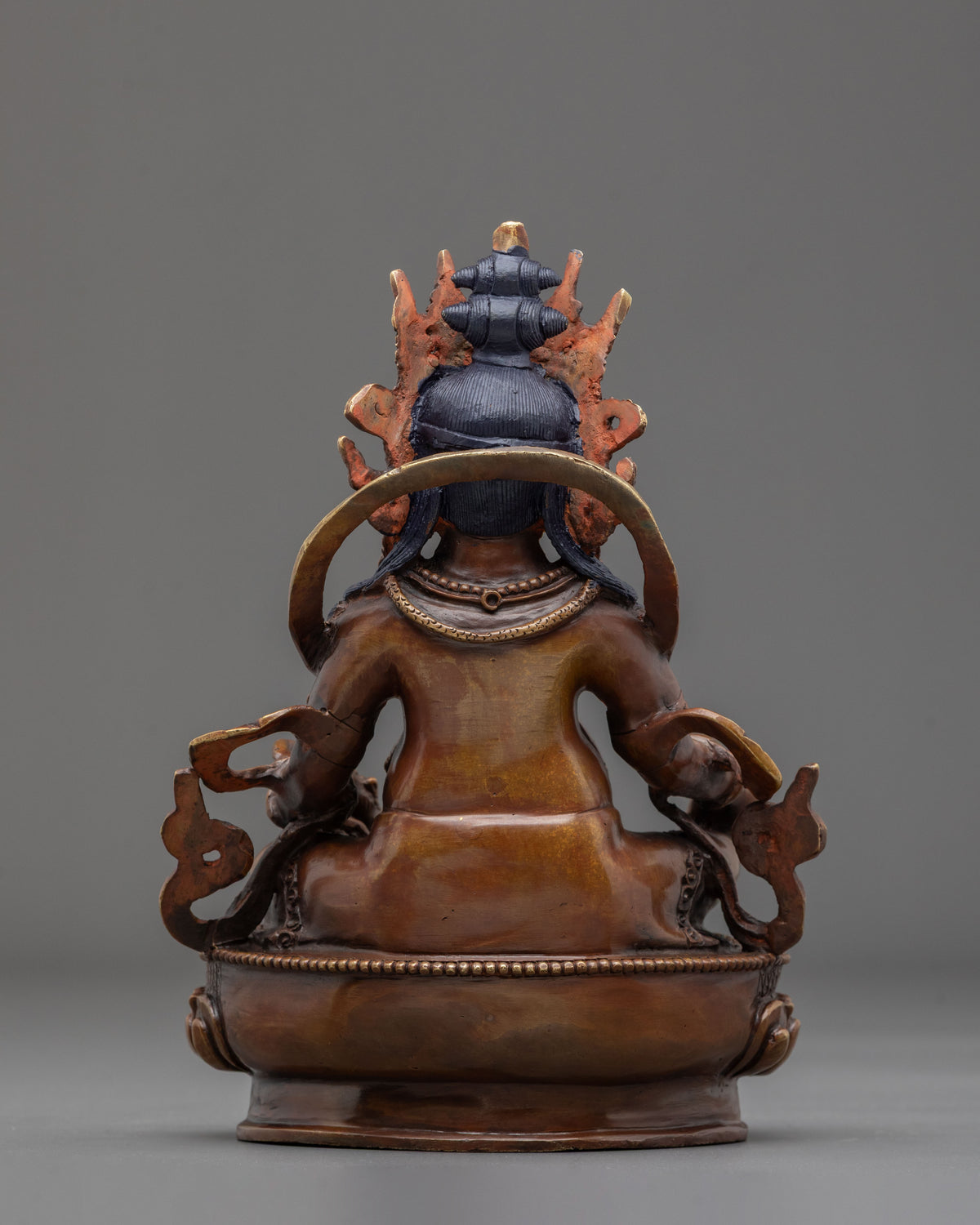
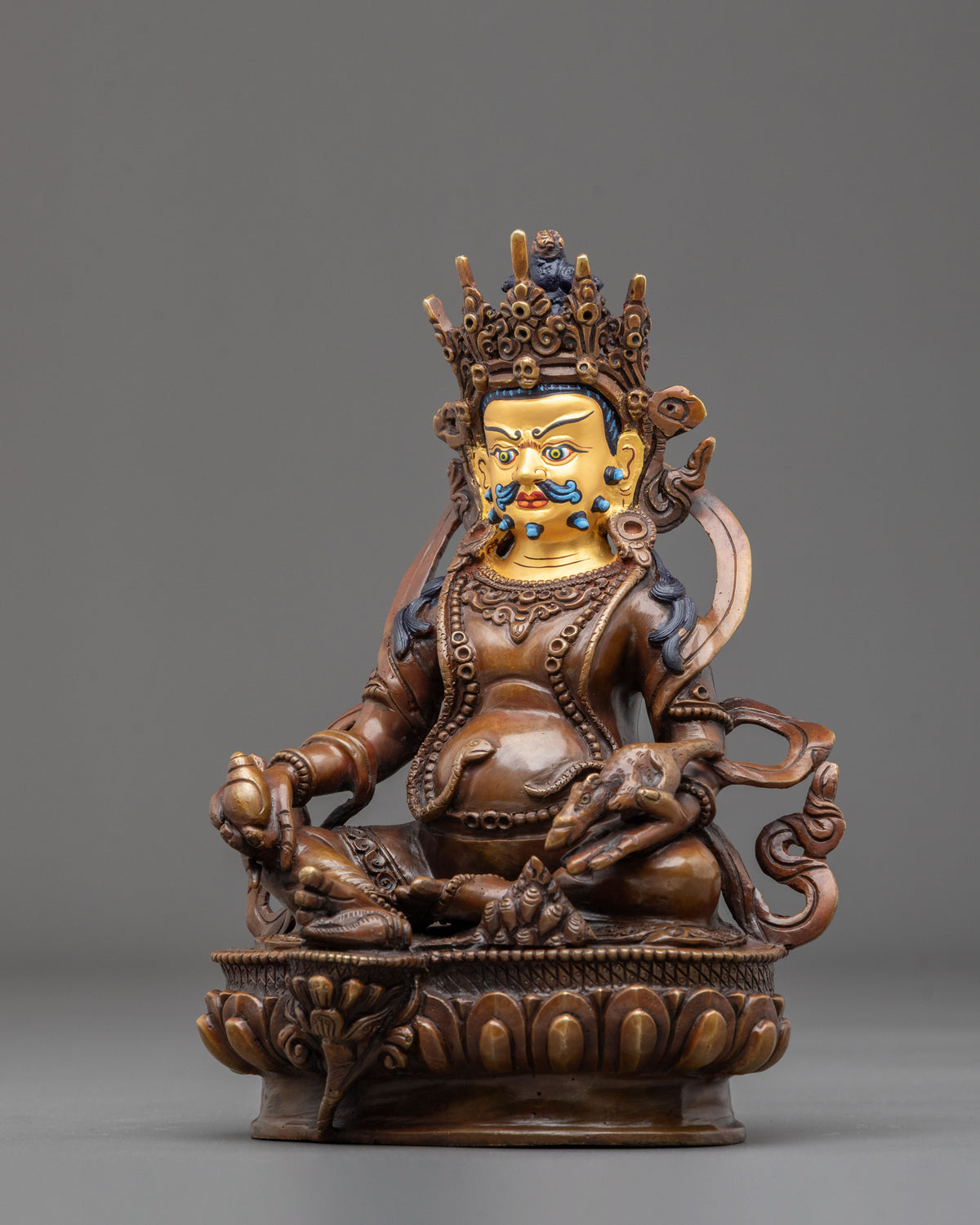
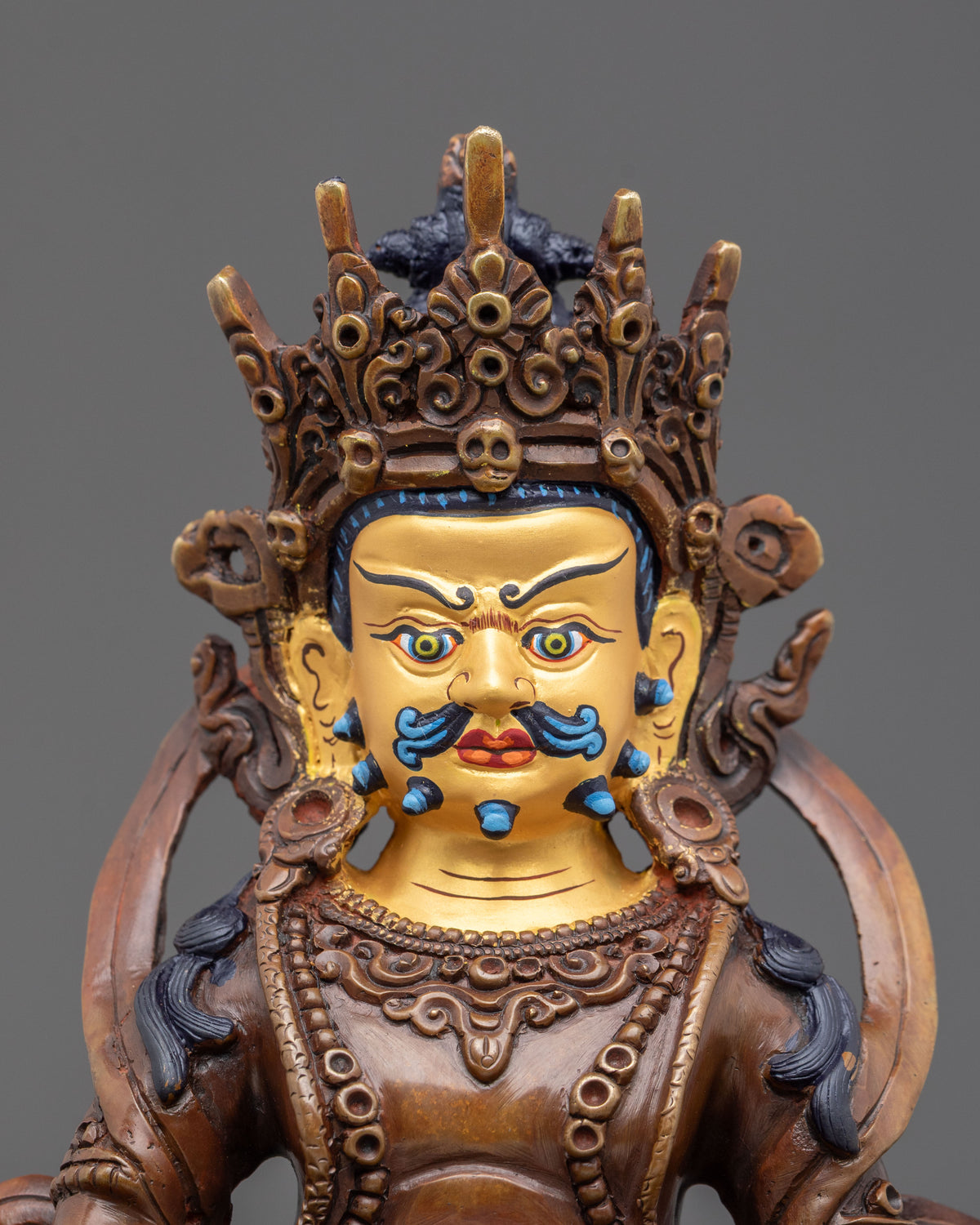
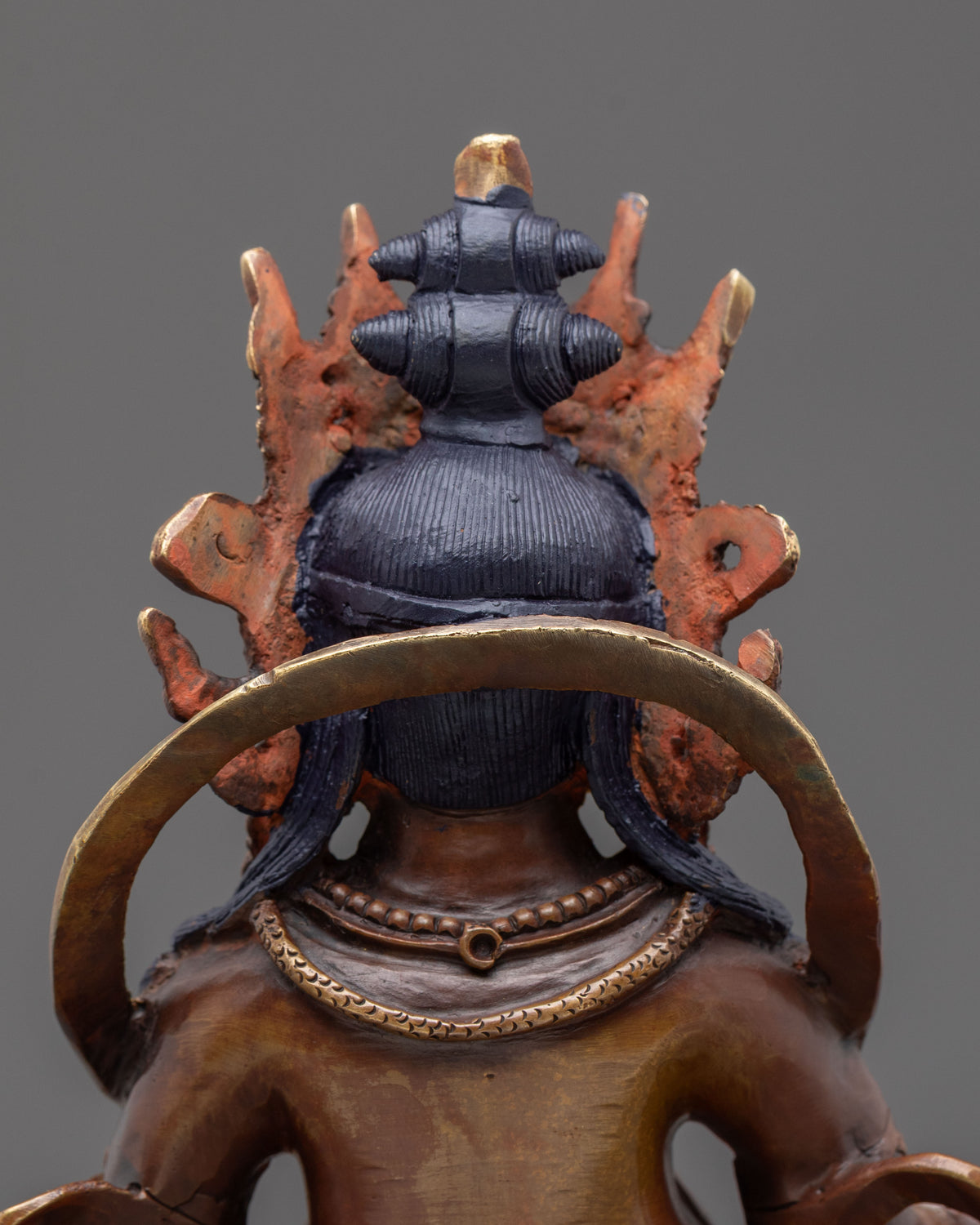
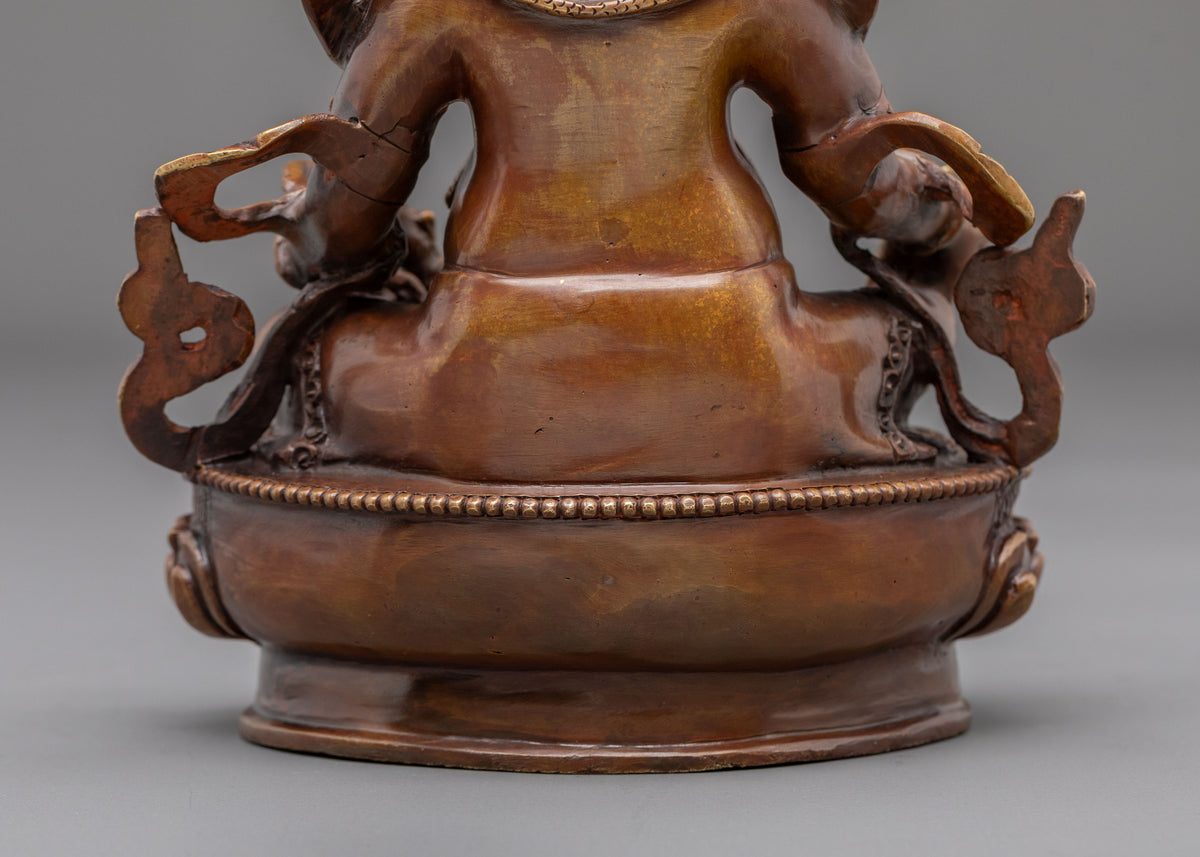
This Dzambhala Copper Sculpture measures 8.0”/20.5cm in height with a 6.1”/15.5cm base and weighs 1.24 kg. Handcrafted in Nepal from an oxidized copper body, the sculpture combines a deep, naturally darkened finish with 24K gold gilding and detailed acrylic painting, creating a refined contrast across the carefully worked surface. The controlled oxidation, luminous gilded accents, precise metalwork, and meticulous hand-finishing reflect the skill of Nepalese artisans and the enduring traditions of Himalayan Buddhist craftsmanship. Spiritually, the figure is associated with prosperity, generosity, abundance, and the removal of material obstacles.
Dzambhala Iconography
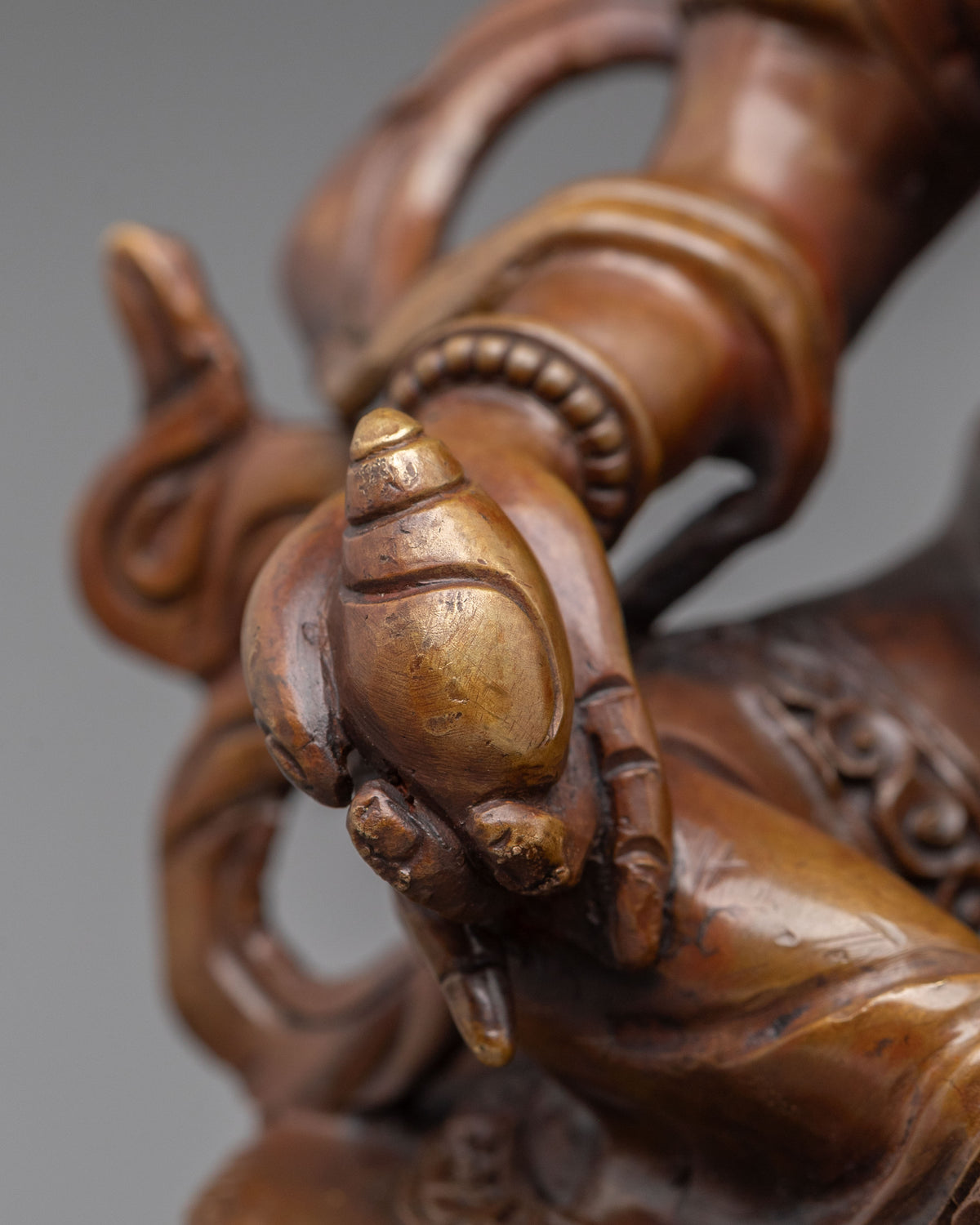
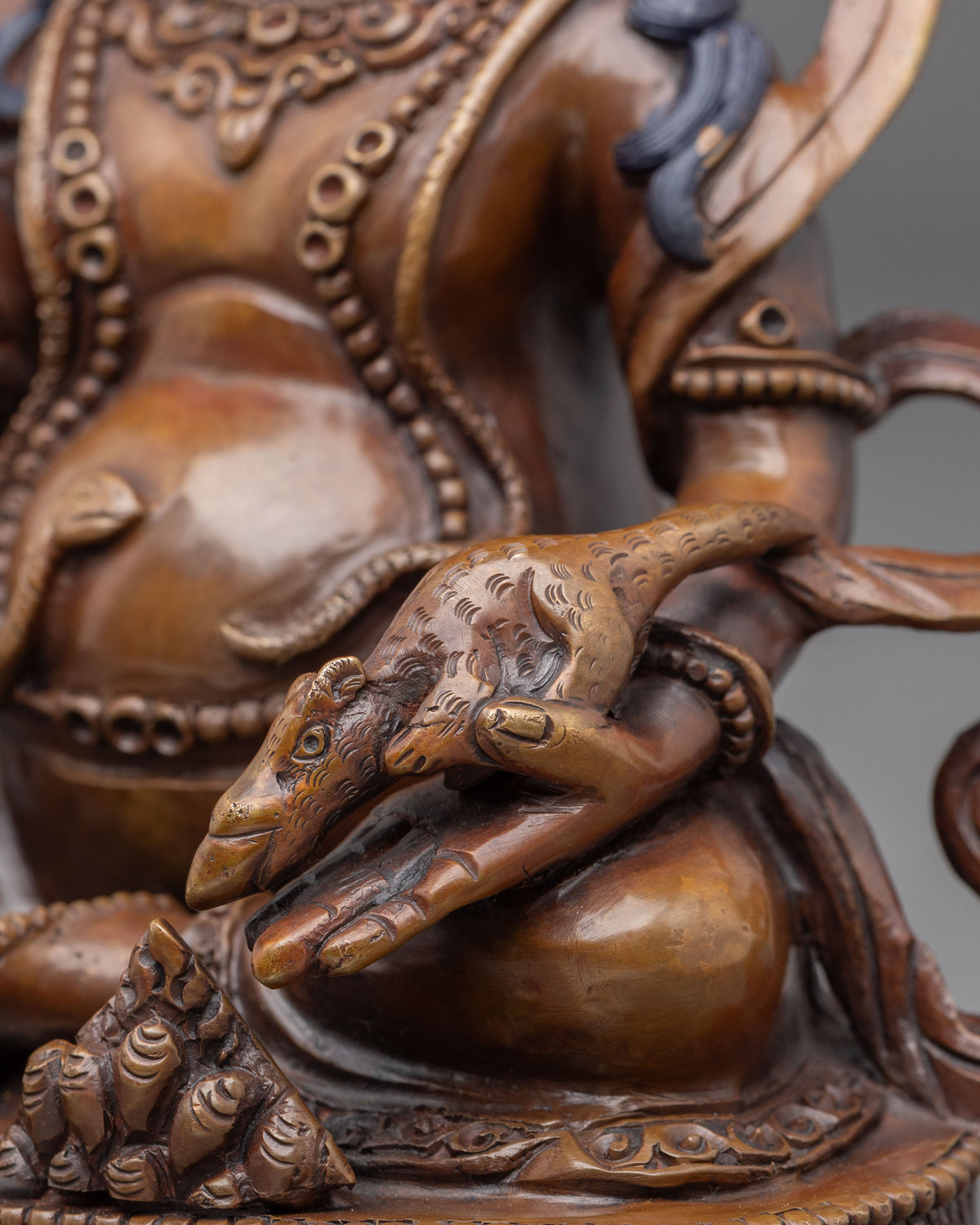
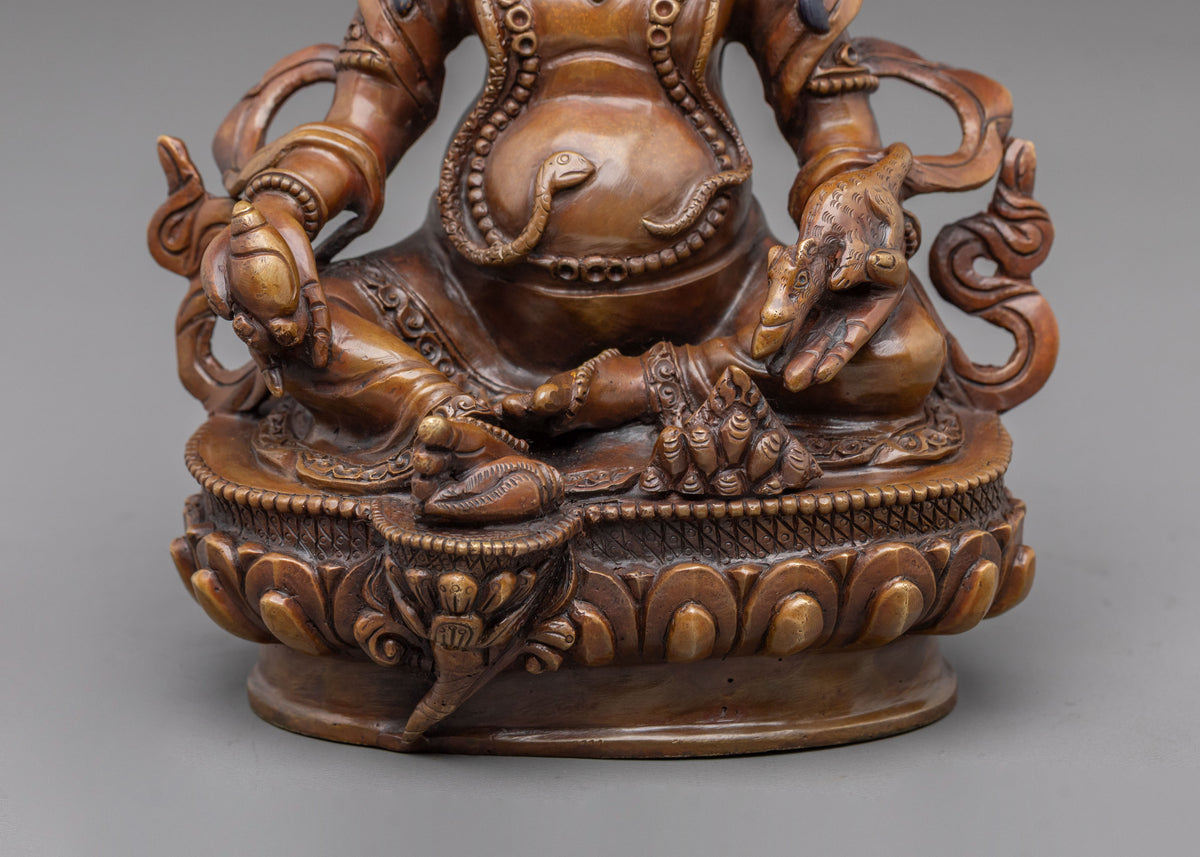
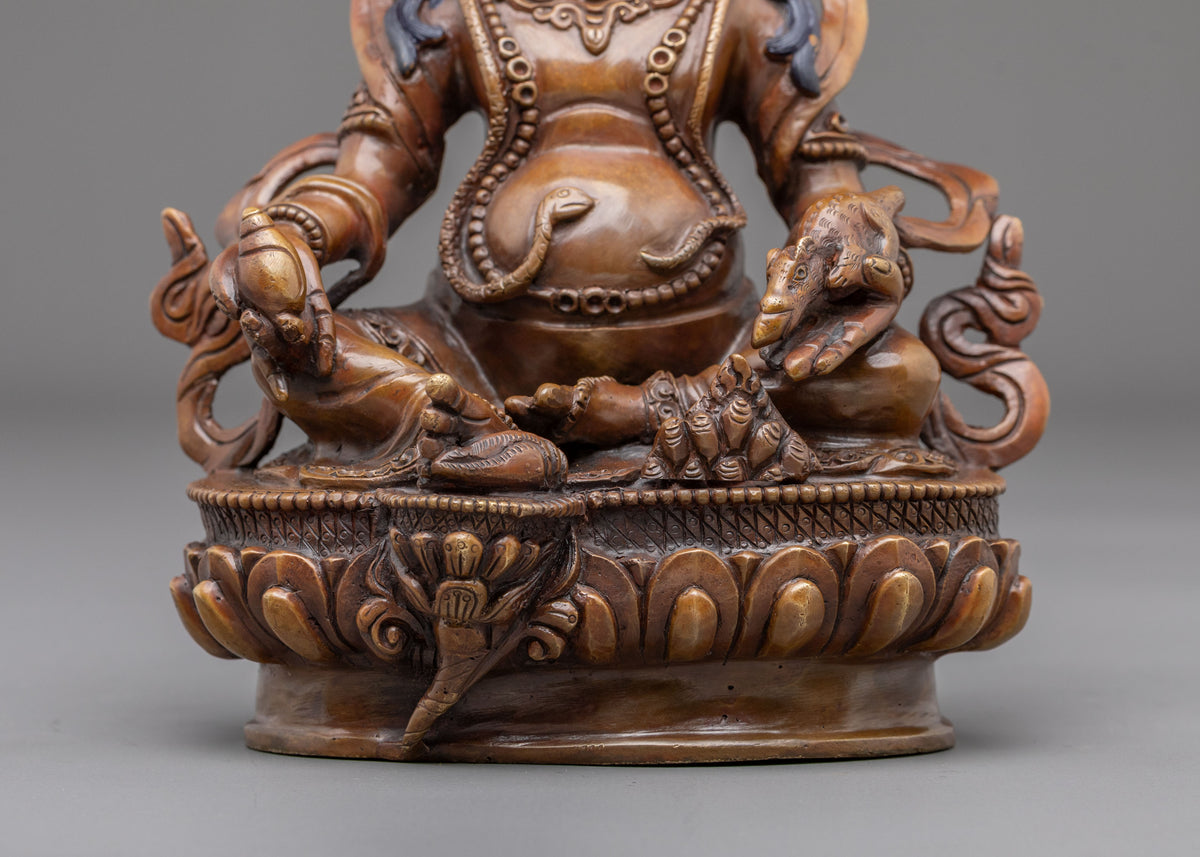
Dzambhala is depicted as a powerful wealth deity embodying generosity, prosperity, abundance, and protection from poverty and obstacles. Seated in a relaxed royal posture upon a lotus throne, he maintains a strong and dignified presence. His right hand holds a citron fruit, symbolizing abundance, nourishment, and the fulfillment of virtuous aspirations, while his left hand holds a mongoose, traditionally associated with the release of precious jewels and the transformation of greed into generosity. His elaborate jeweled crown, large earrings, layered necklaces, armlets, bracelets, waist ornaments, and richly patterned garments emphasize his prosperous and regal appearance. The carefully modeled facial expression conveys both serenity and strength, while the richly carved lotus throne represents purity and the proper cultivation of abundance. Together, the citron, mongoose, royal ornaments, relaxed posture, and lotus seat express Dzambhala’s role in cultivating generosity, material and spiritual prosperity, protection, and the wise use of abundance.
Size: 8.0”/20.5cm (Height) x 6.1”/15.5cm (Base)
Weight: 1.24 kg
Material: 24K Gold-Gilded, Acrylic Painting, Oxidized Copper Body
Dzambhala originates in Indian Buddhist tradition and later became an important wealth deity within Tibetan Vajrayana Buddhism. He is closely associated with prosperity, abundance, generosity, and the removal of material obstacles that may interfere with spiritual practice. Several forms are recognized in Himalayan Buddhism, including Yellow, White, Black, Green, and Red Dzambhala, each connected with distinct qualities and ritual traditions. Spiritually, his significance extends beyond material wealth, emphasizing generosity, merit, and the wise use of resources in support of oneself, others, and the Dharma.