Embodying Fierce Compassion: A Chaturbhuja Mahakala With Consort Statue
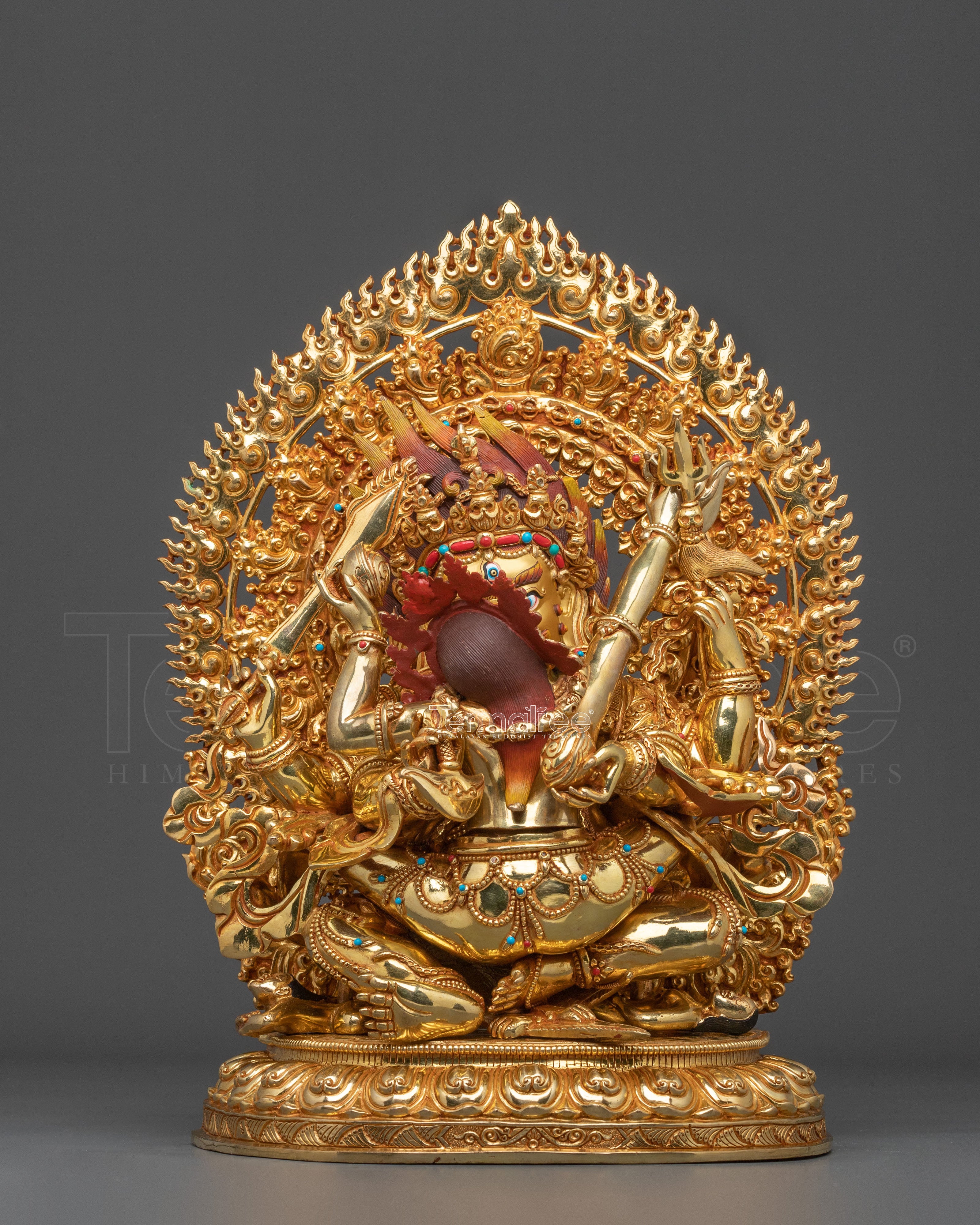
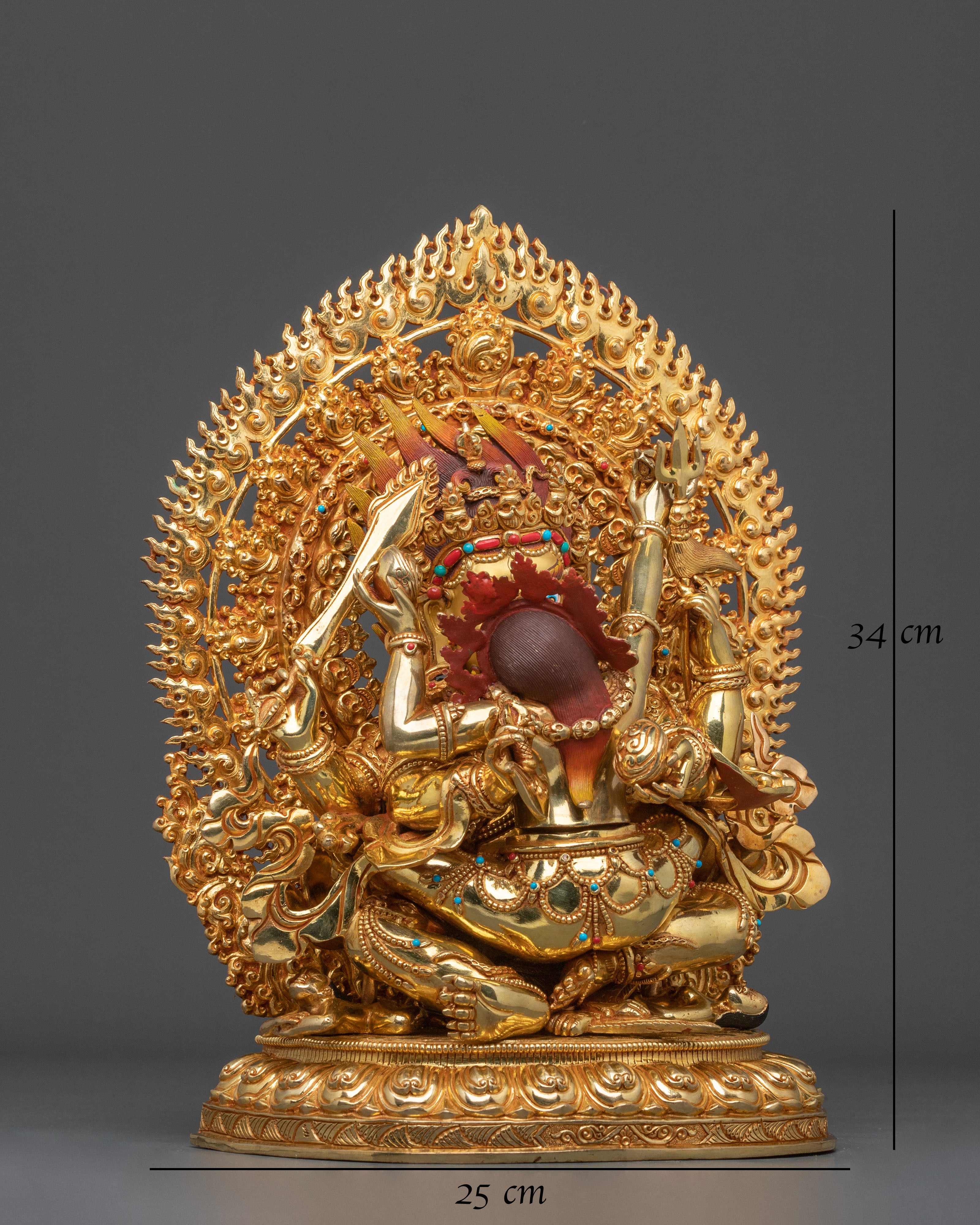
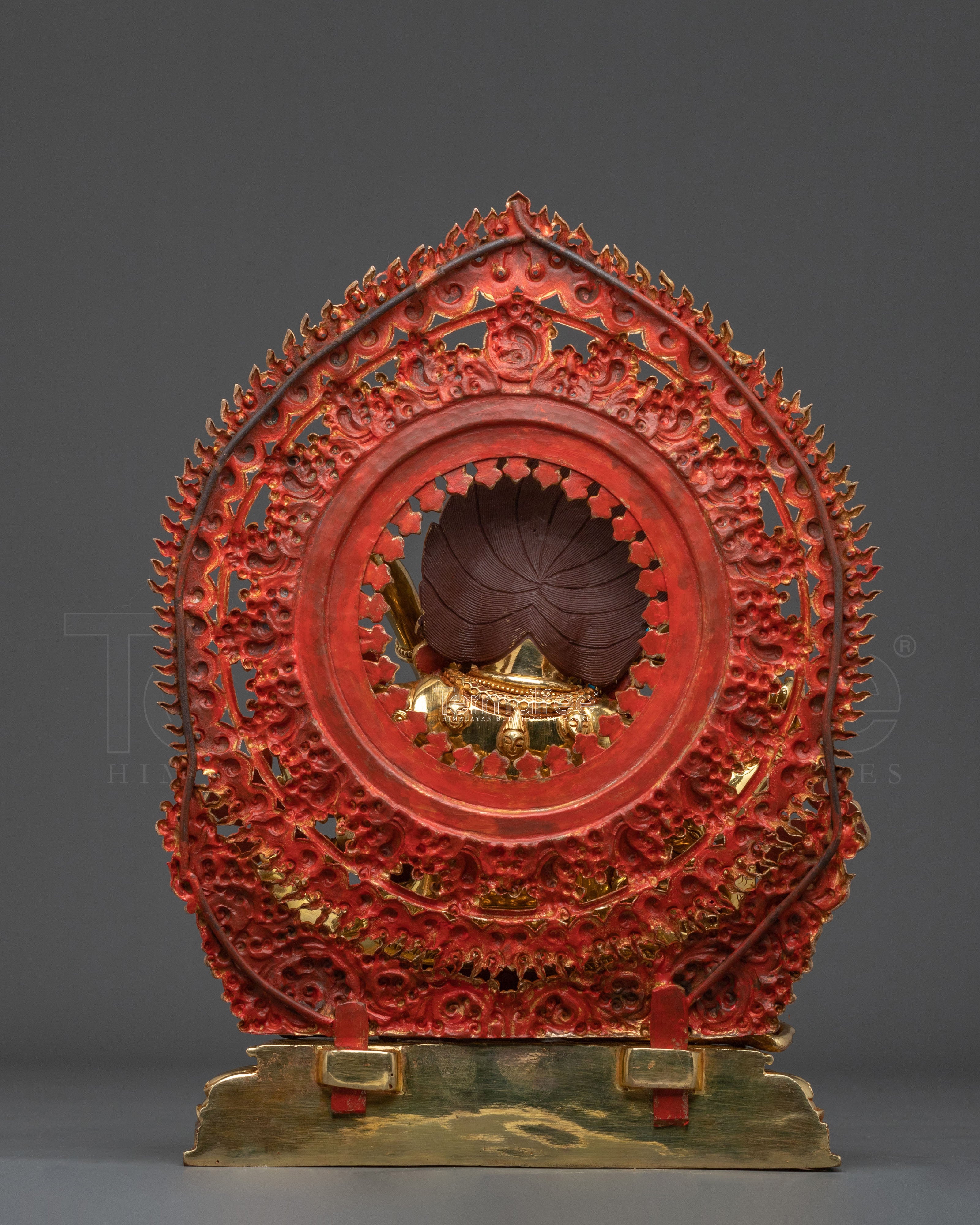
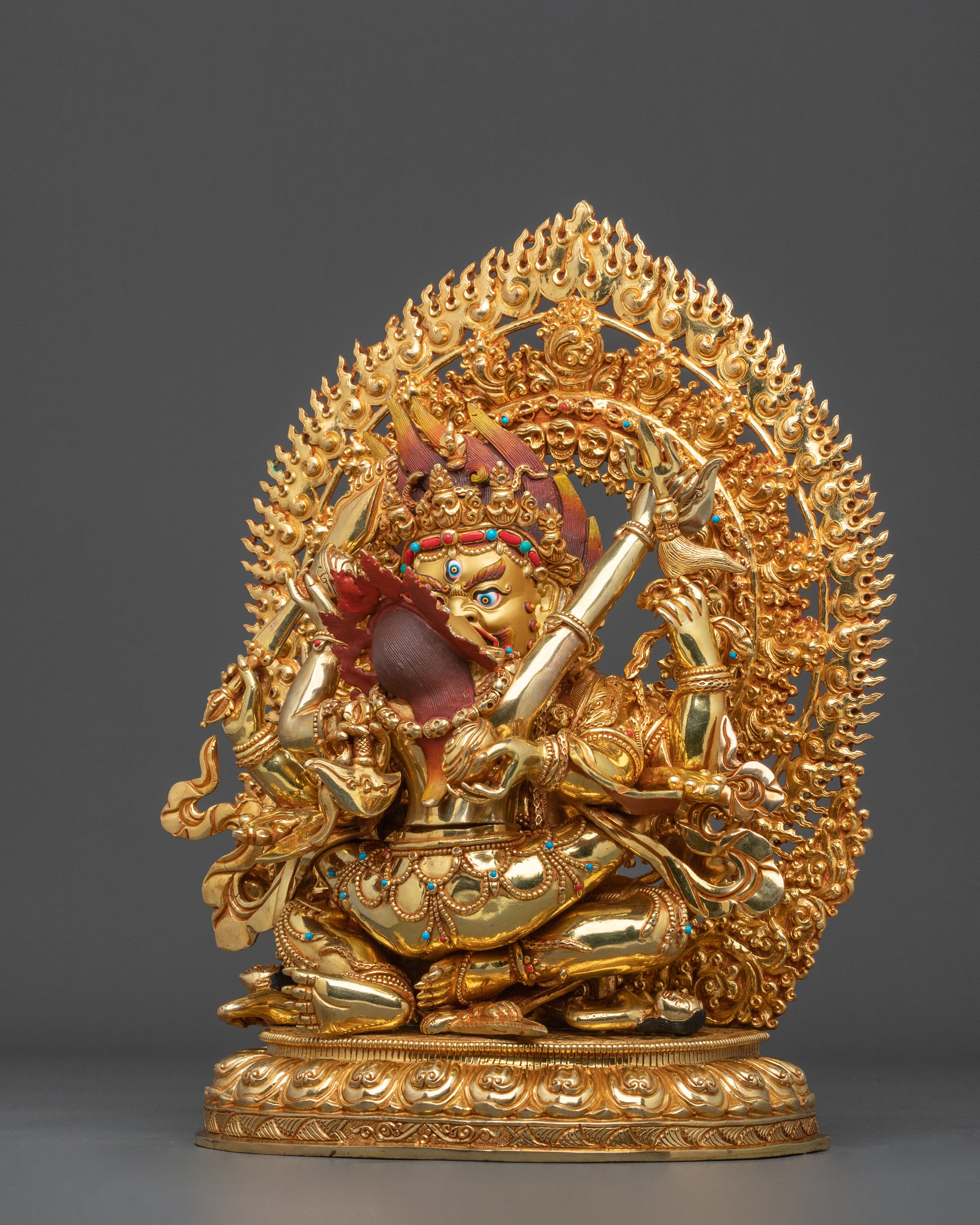
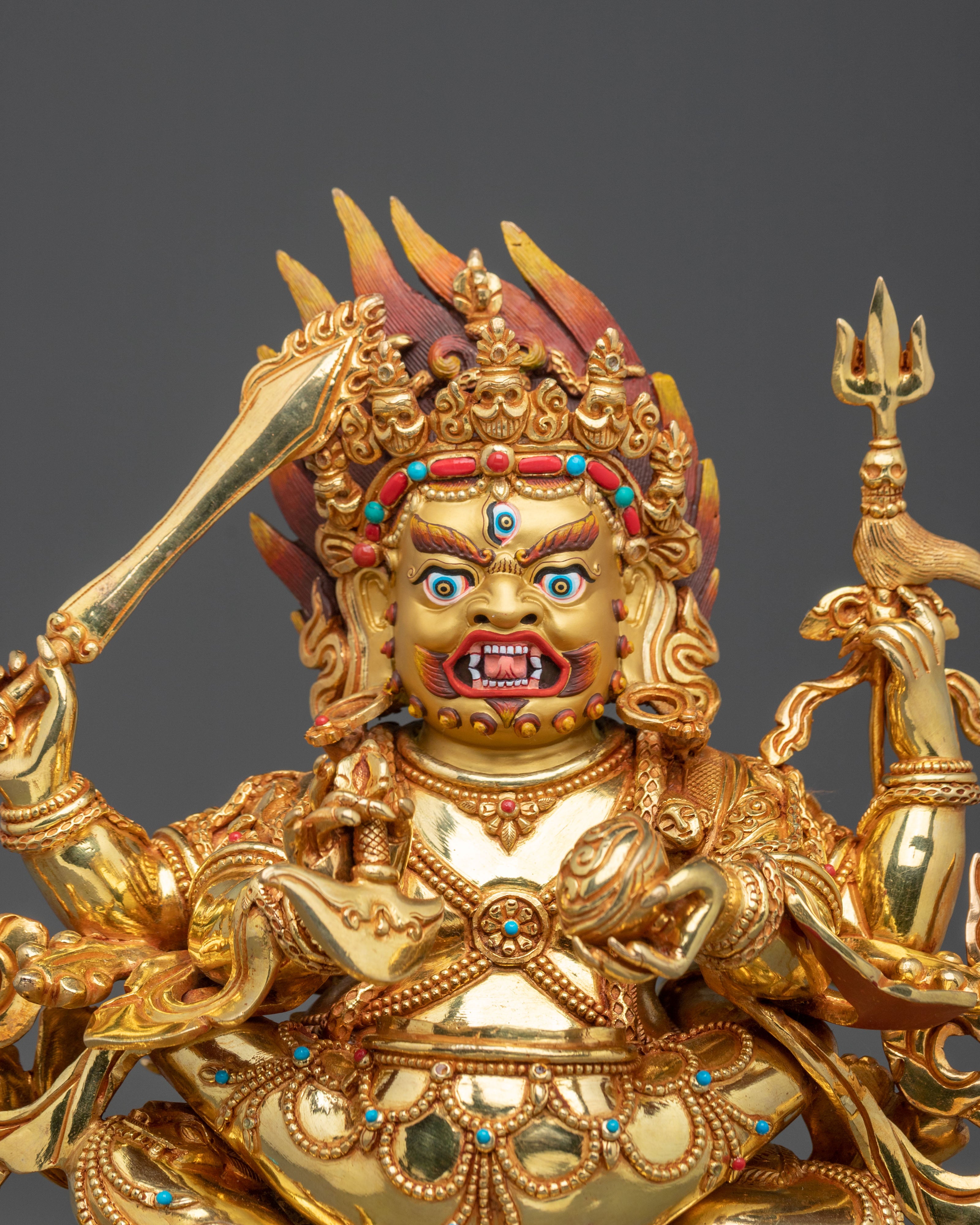
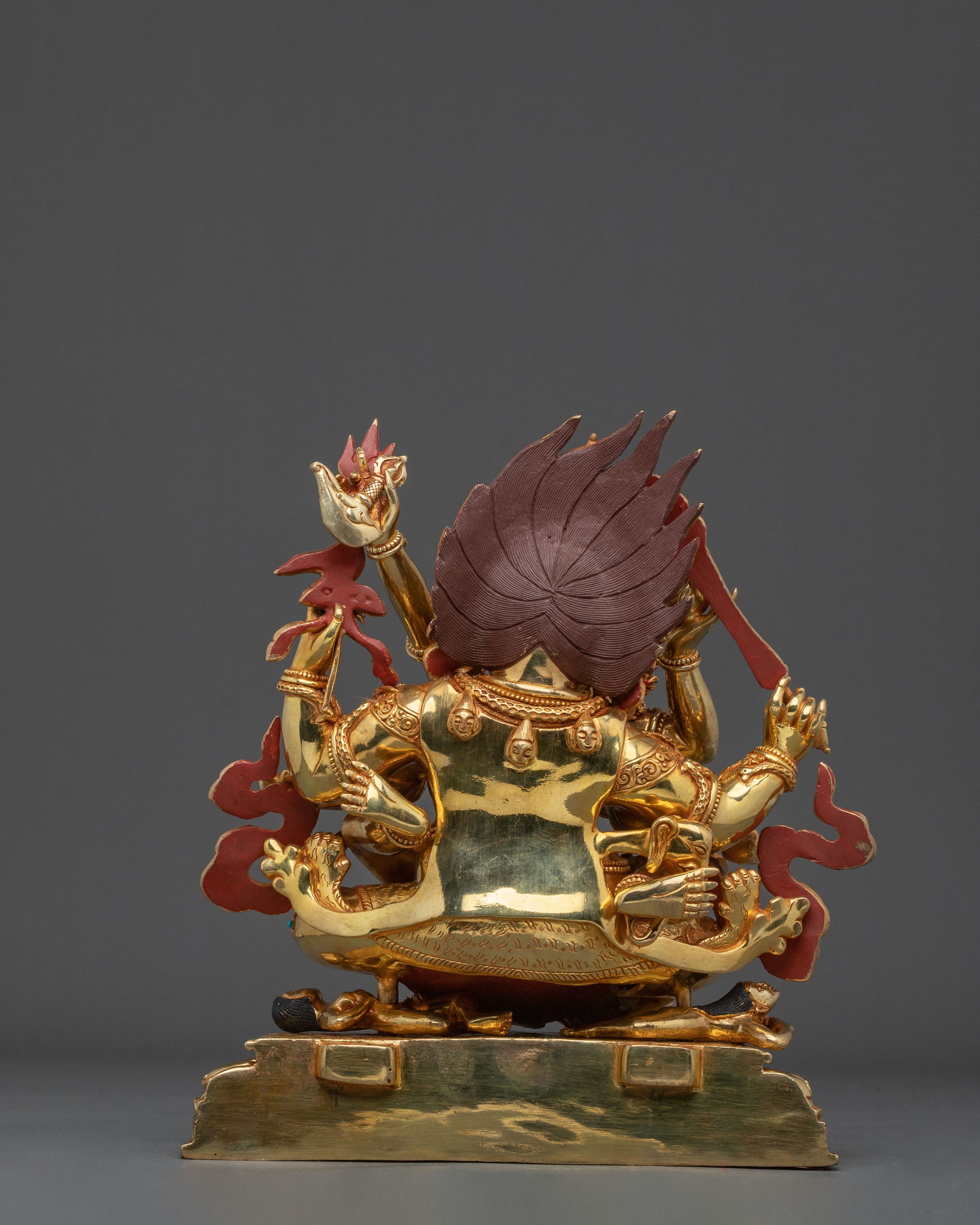
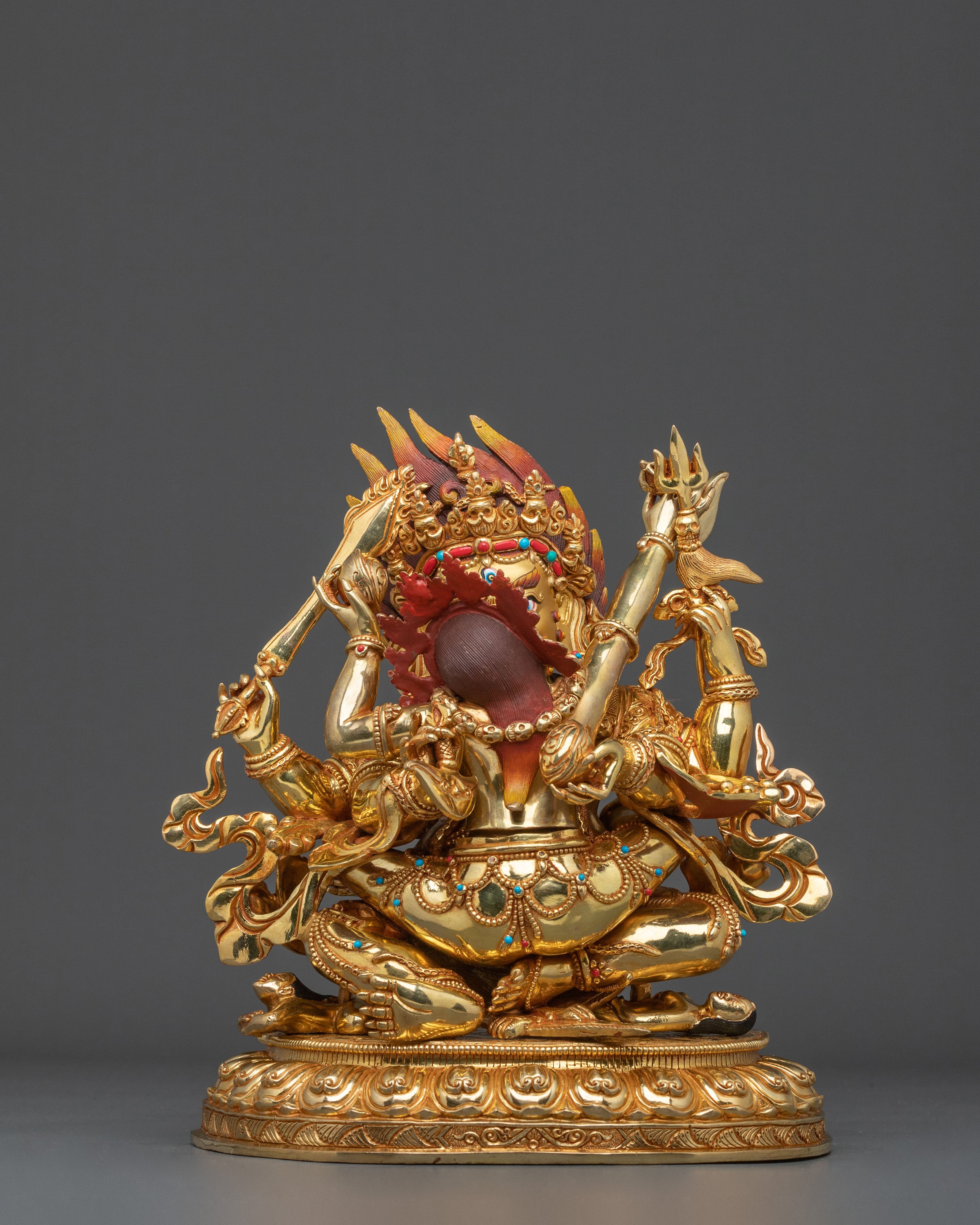
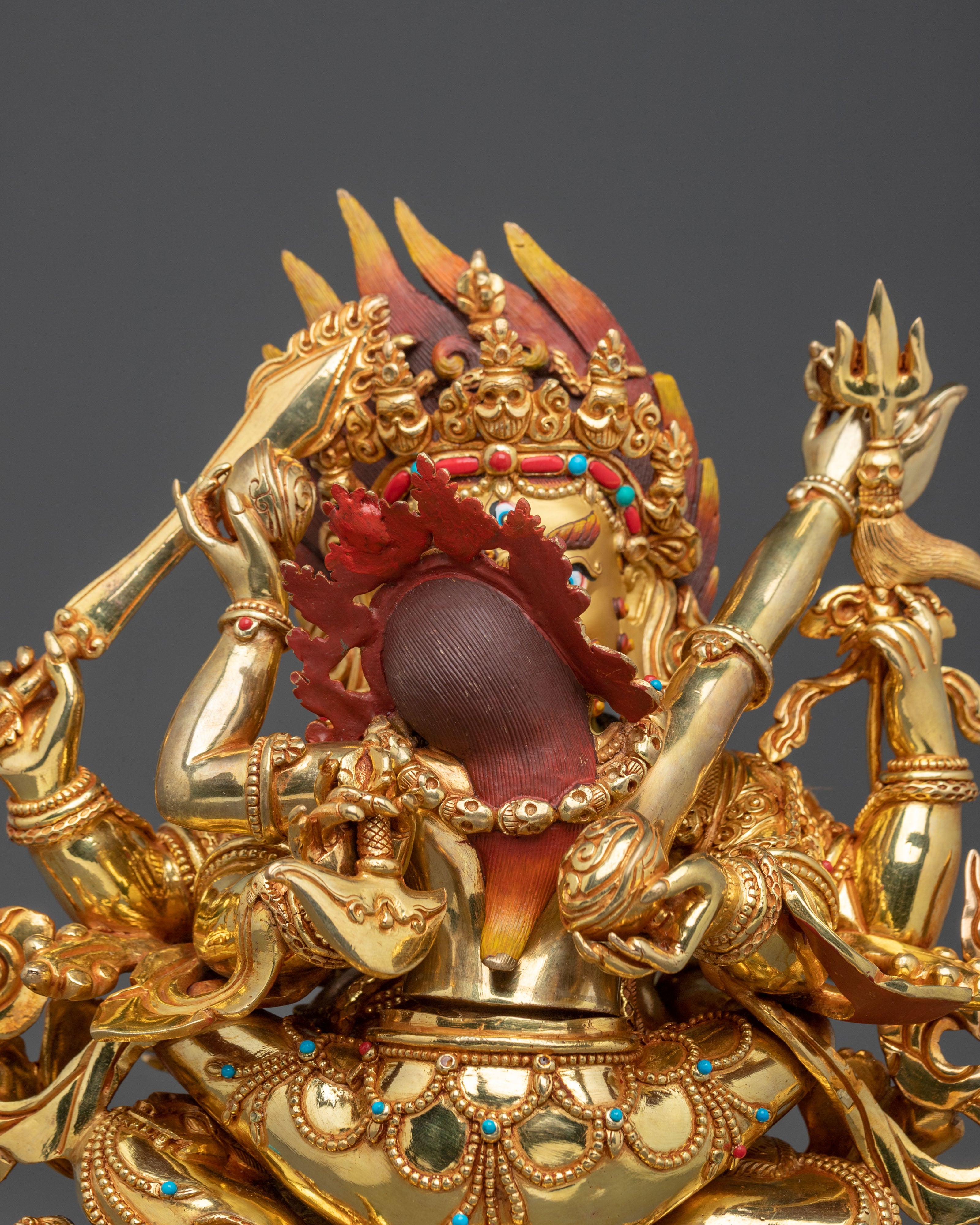
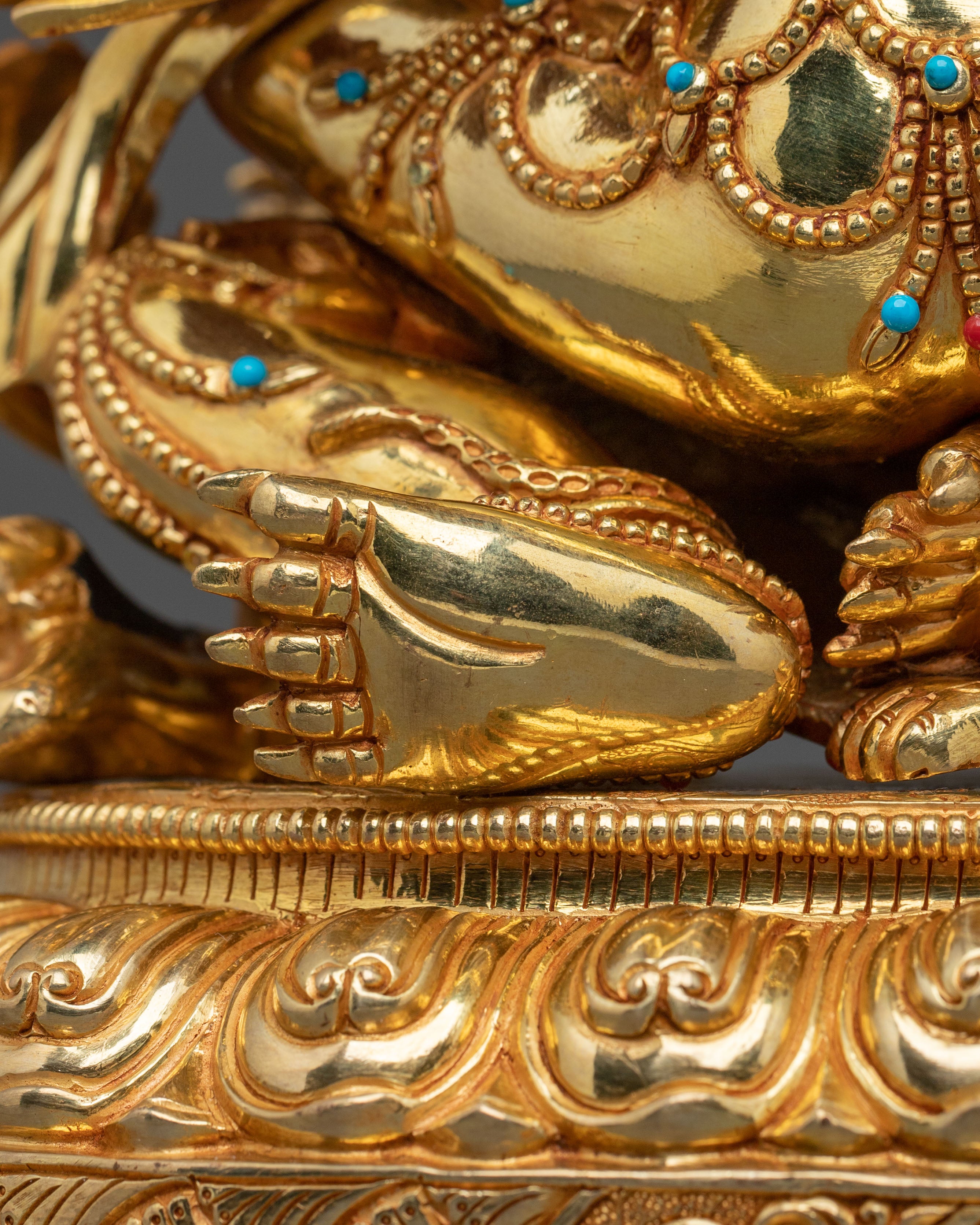
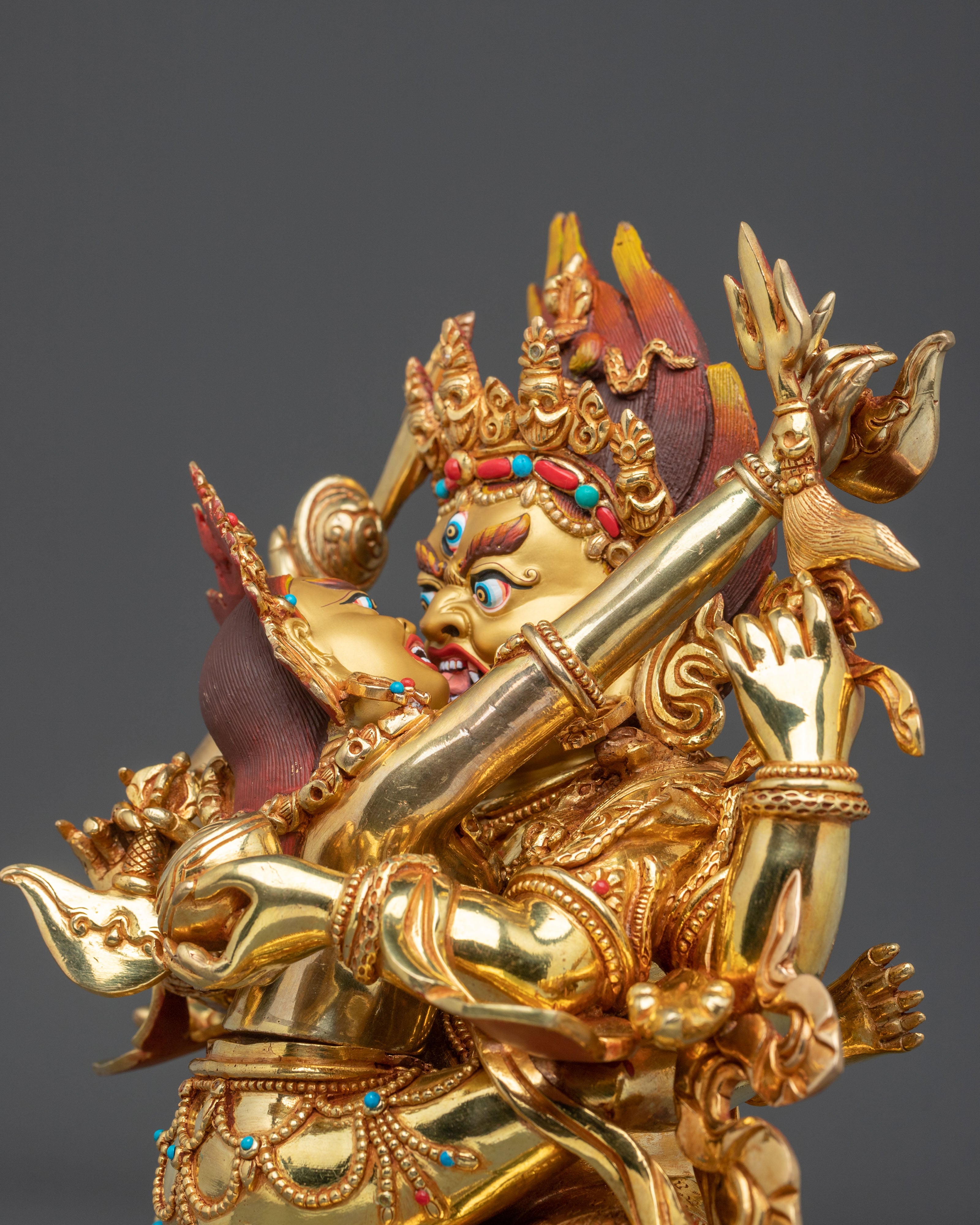
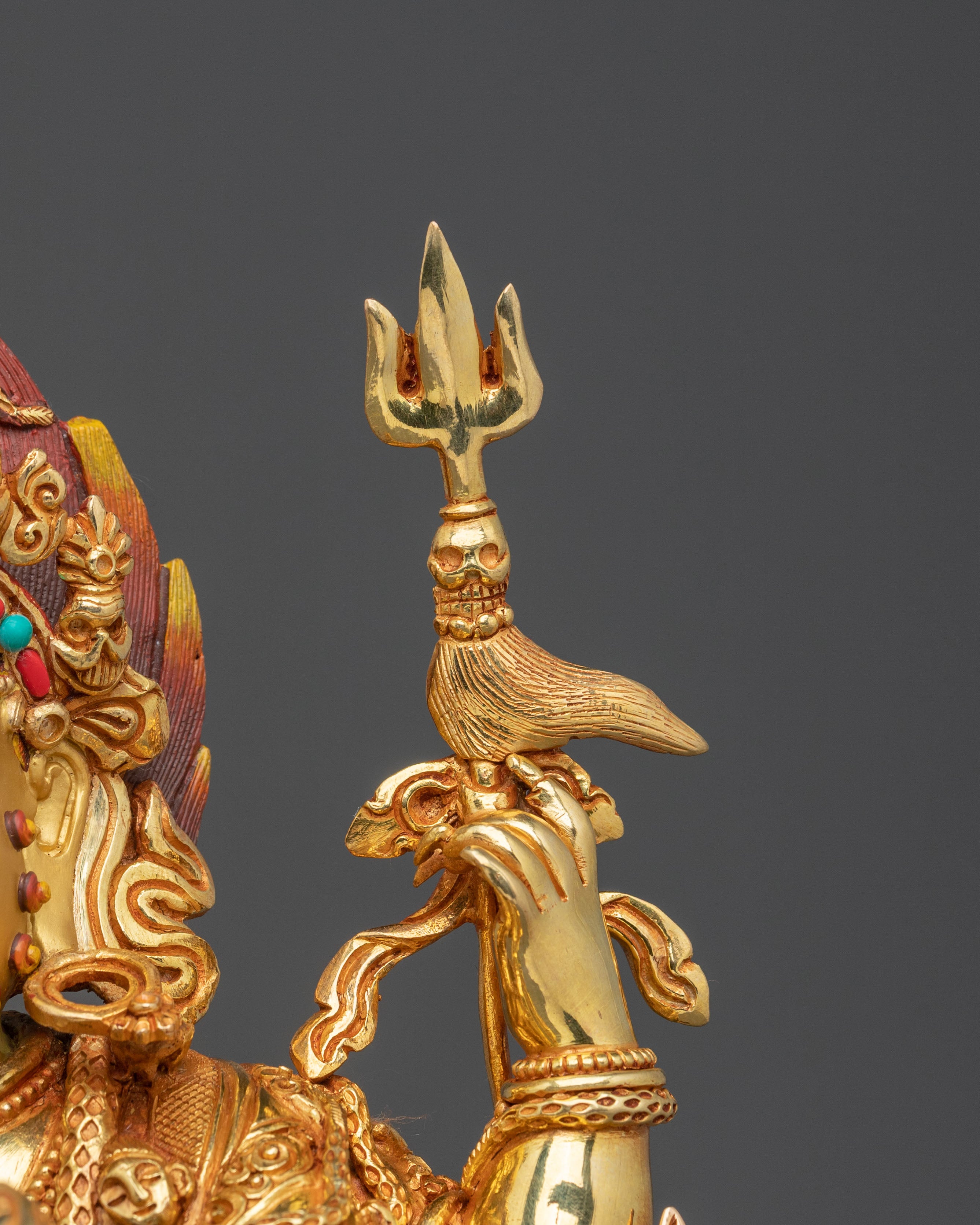
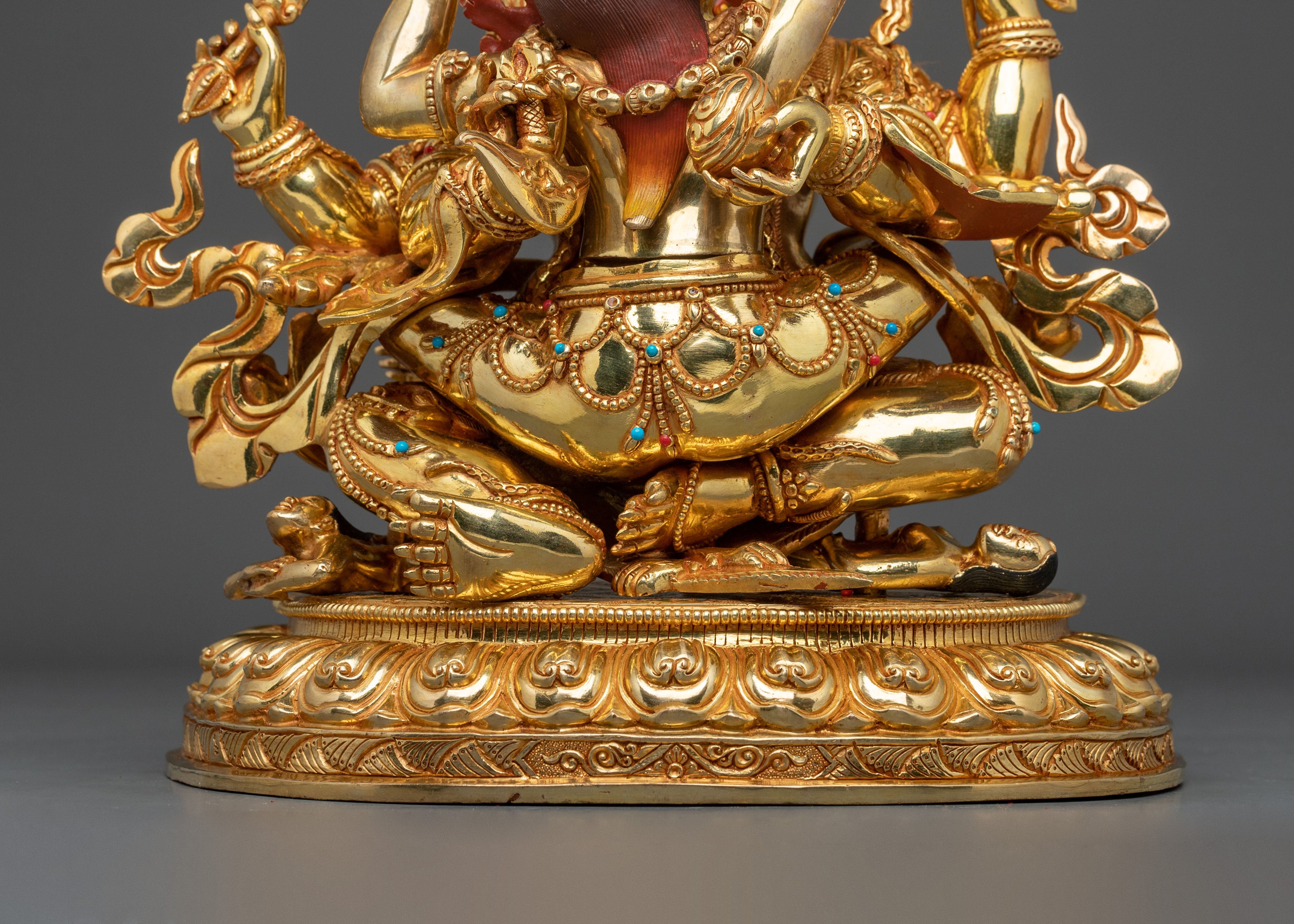
Chaturbhuja Mahakala With Consort Statue is a magnificent handcrafted Buddhist sculpture created by skilled Nepali artisans, measuring 13.39 inches (34cm) in height with a 9.8 inches (25cm) base and weighing 6.98 kg. Crafted from a copper body and richly adorned with 24K gold gilding, detailed acrylic painting, and gemstone embellishments, this sculpture reflects the exceptional artistry and traditional techniques of Himalayan Vajrayana craftsmanship. Its intricate wrathful form, elaborate flaming aureole, and detailed ornamentation make it a remarkable centerpiece for Buddhist altars, meditation spaces, monasteries, or sacred collections.
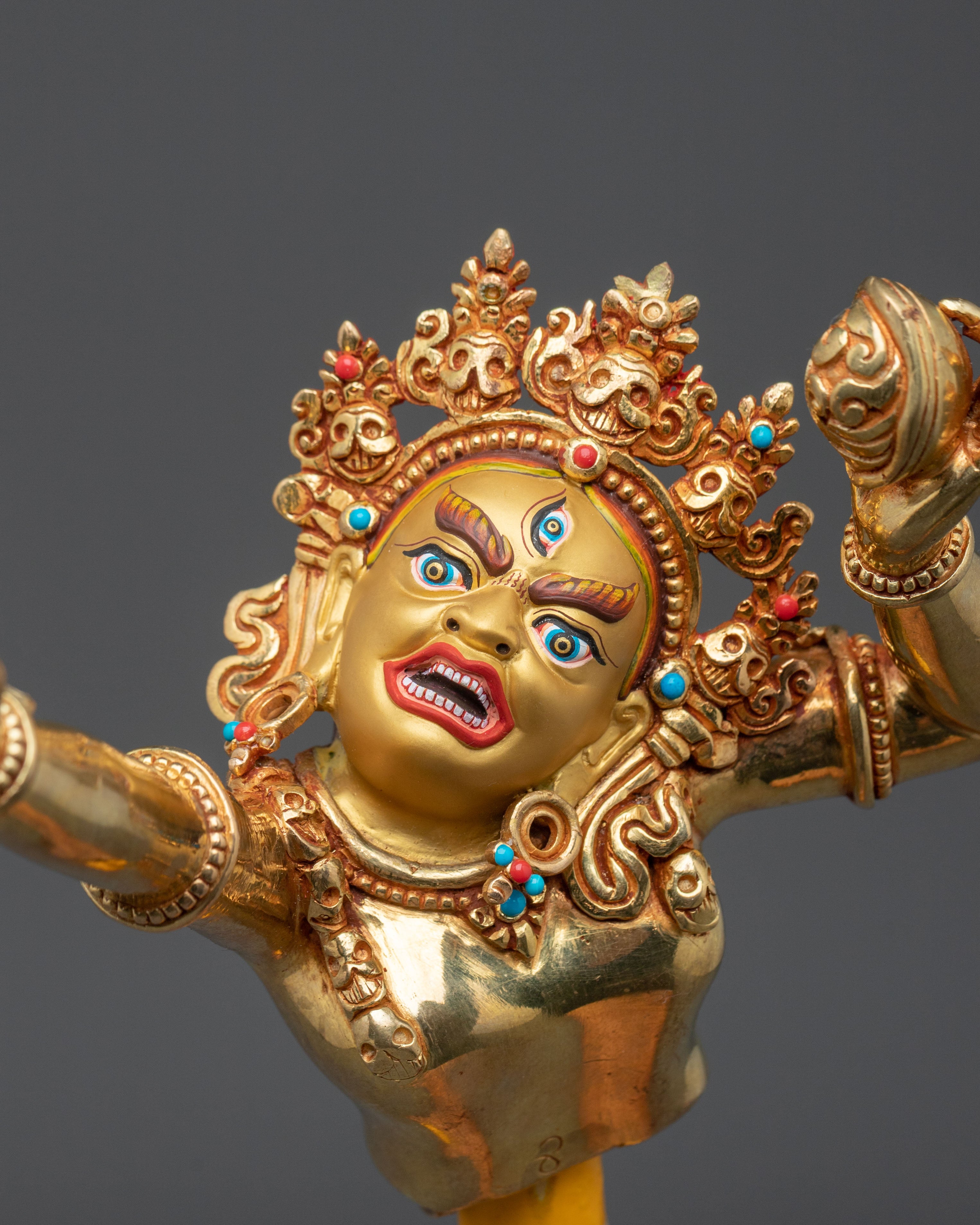
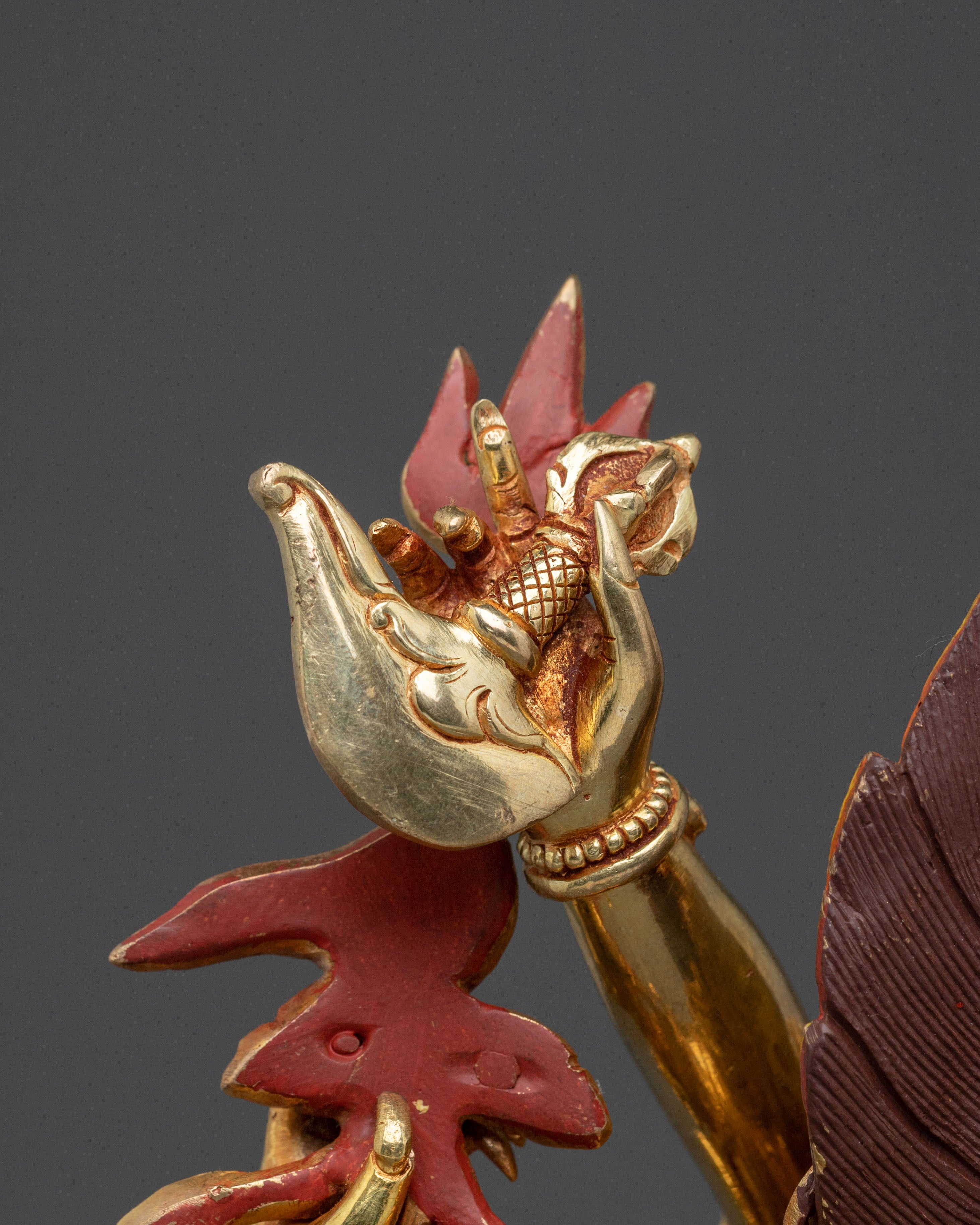
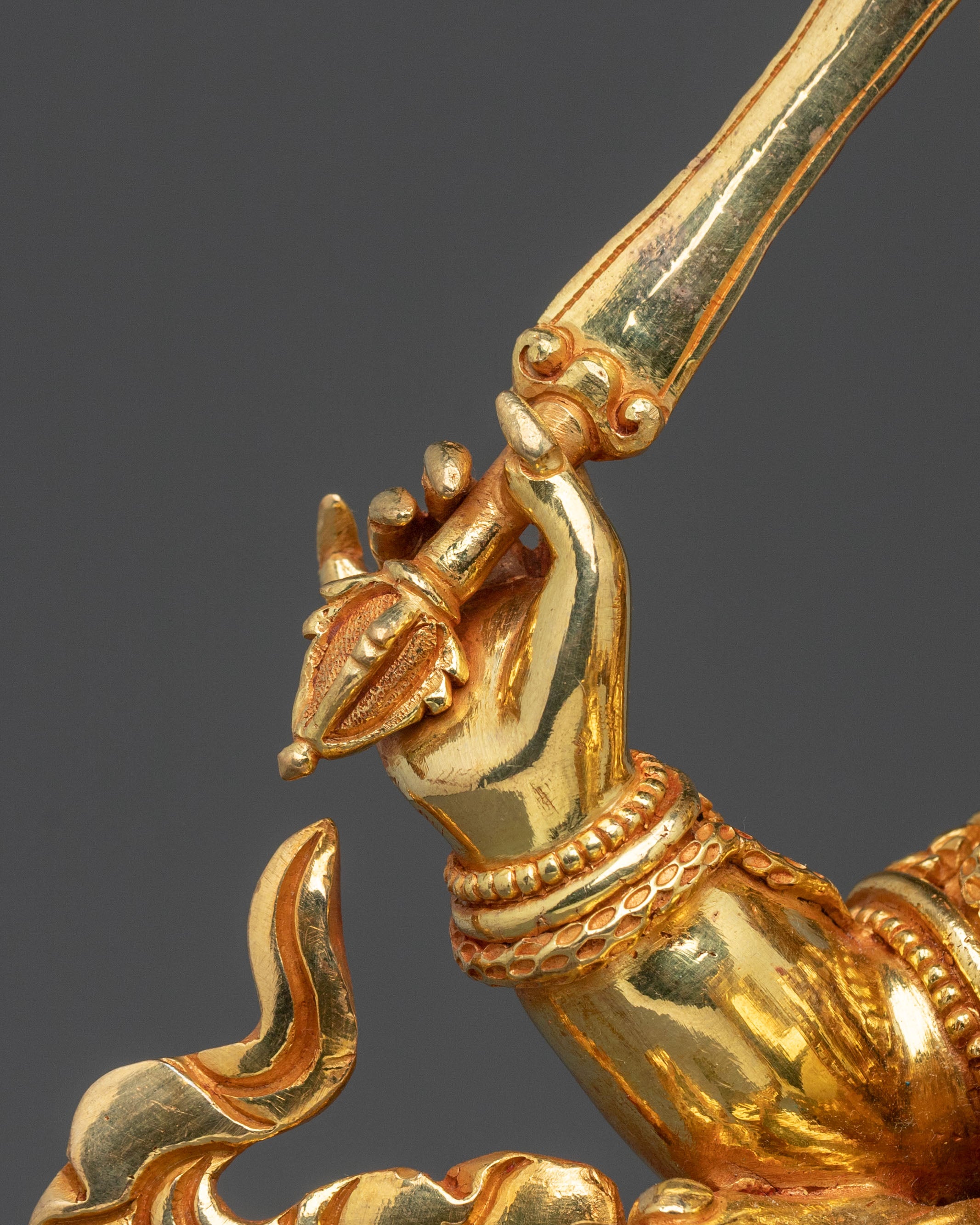
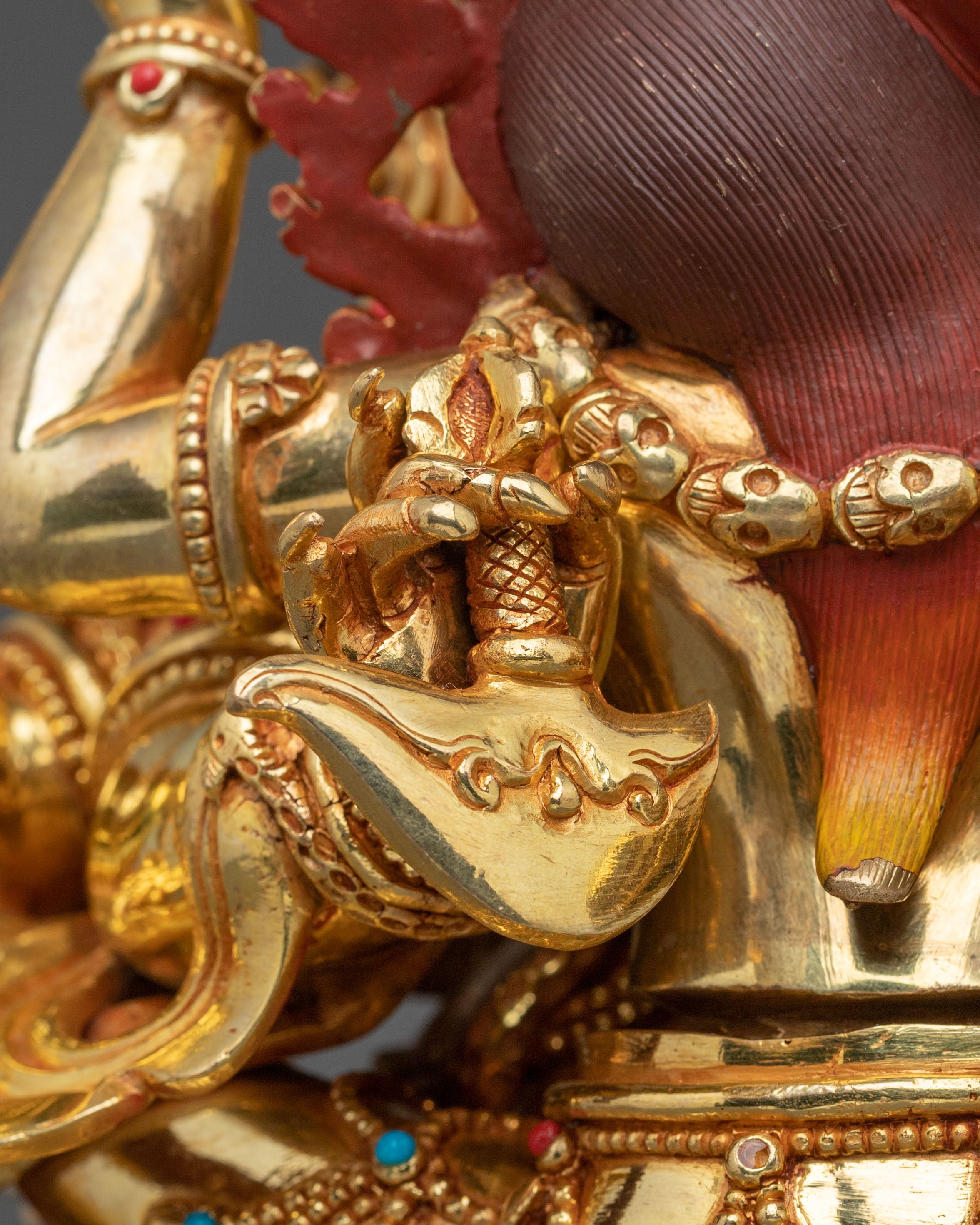
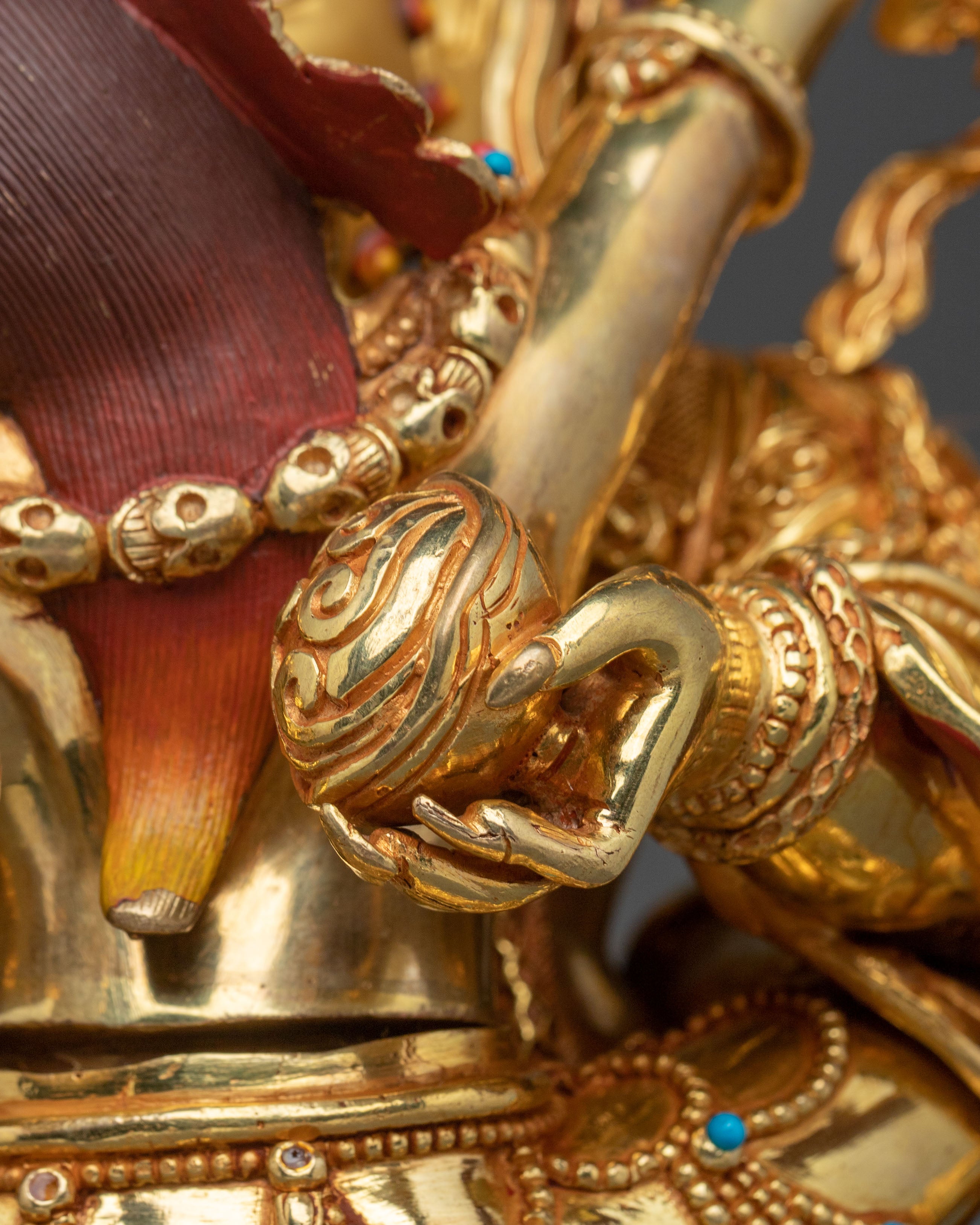
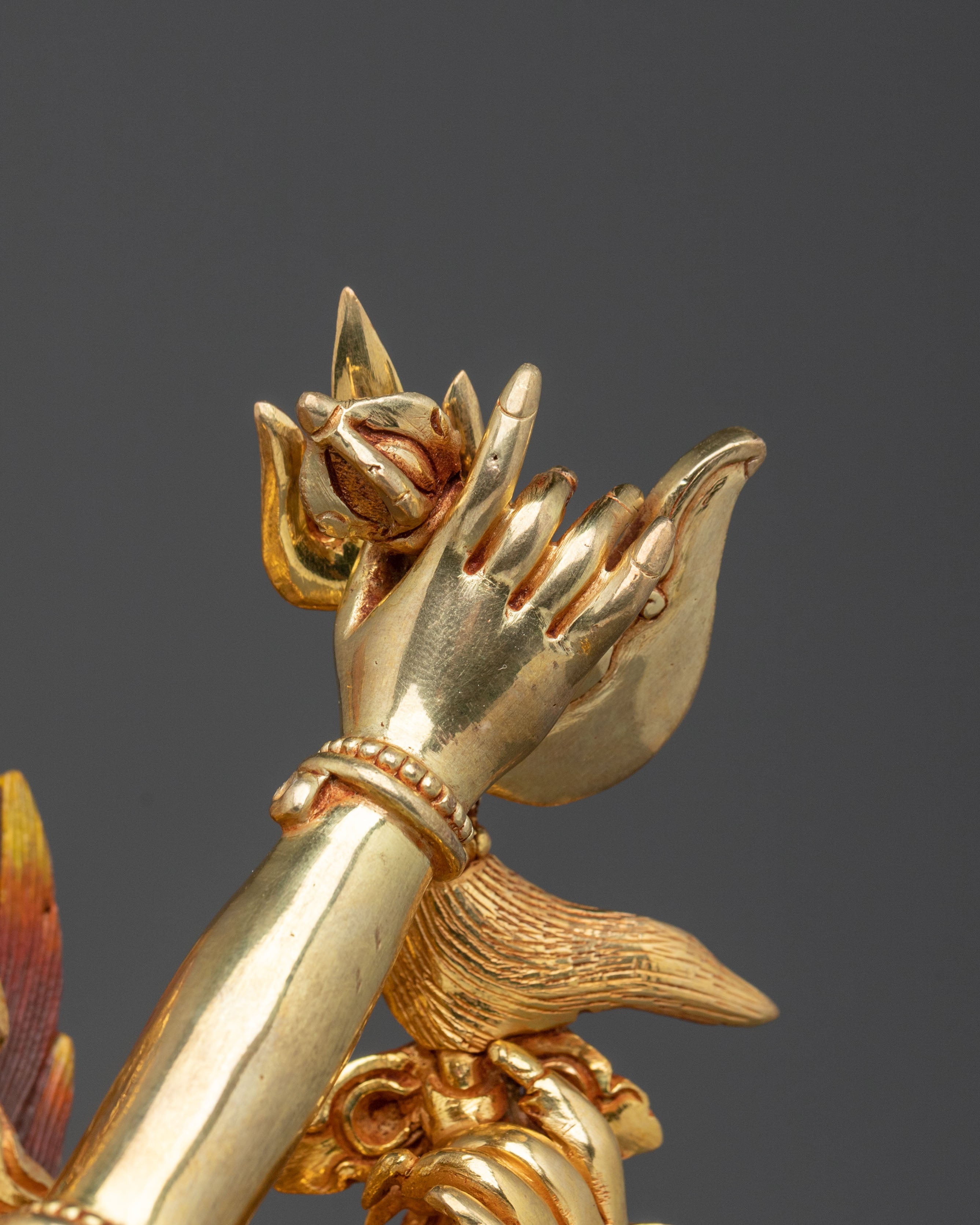
The sculpture depicts Chaturbhuja Mahakala, the four-armed wrathful protector deity revered in Tibetan Buddhism as a powerful guardian of the Dharma. He is portrayed together with his consort, symbolizing the inseparable union of compassion and wisdom, method and realization. His four arms represent the four enlightened activities of pacifying, enriching, magnetizing, and subjugating negative forces. In his hands, he holds sacred attributes including the curved knife and skull cup, symbolizing the cutting away of ego and the transformation of ignorance into wisdom. His fierce expression, crown of skulls, flowing ornaments, and surrounding flames represent the powerful energy of enlightened protection that removes obstacles and safeguards spiritual practice. The 24K gold gilding, gemstone details, and vibrant acrylic painting enhance the sacred presence of the sculpture, showcasing the devotion and precision of Himalayan artisans.
Size: 13.39”/34cm (Height) x 9.8 ”/ 25cm (Base)
Weight: 6.98 kg
Material: 24K Gold Gilded, Acrylic Painting, Copper Body, Gemstones
Chaturbhuja Mahakala, the Four-Armed Great Black One, is a principal protector deity in Tibetan Buddhism, manifesting as a fierce emanation of Avalokiteshvara. He is revered for his swift action in overcoming obstacles to spiritual practice and for safeguarding the Dharma. His consort, often depicted embracing him, represents prajna (wisdom), symbolizing the union of wisdom and compassion, which are essential for enlightenment. Together, they embody the complete victory over inner and outer delusions.