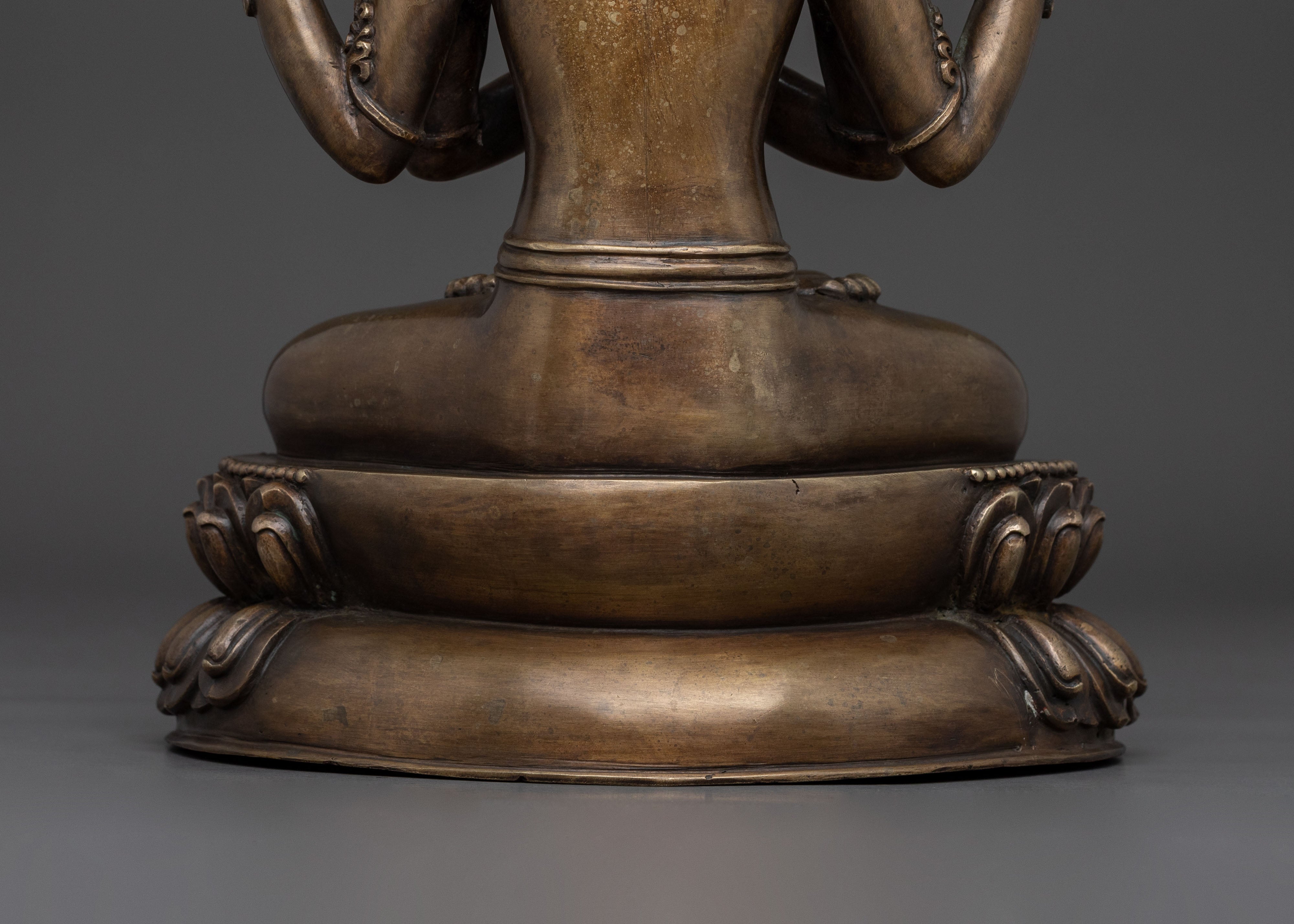
Chenrezig Prayer Statue: Emblem of Boundless Compassion
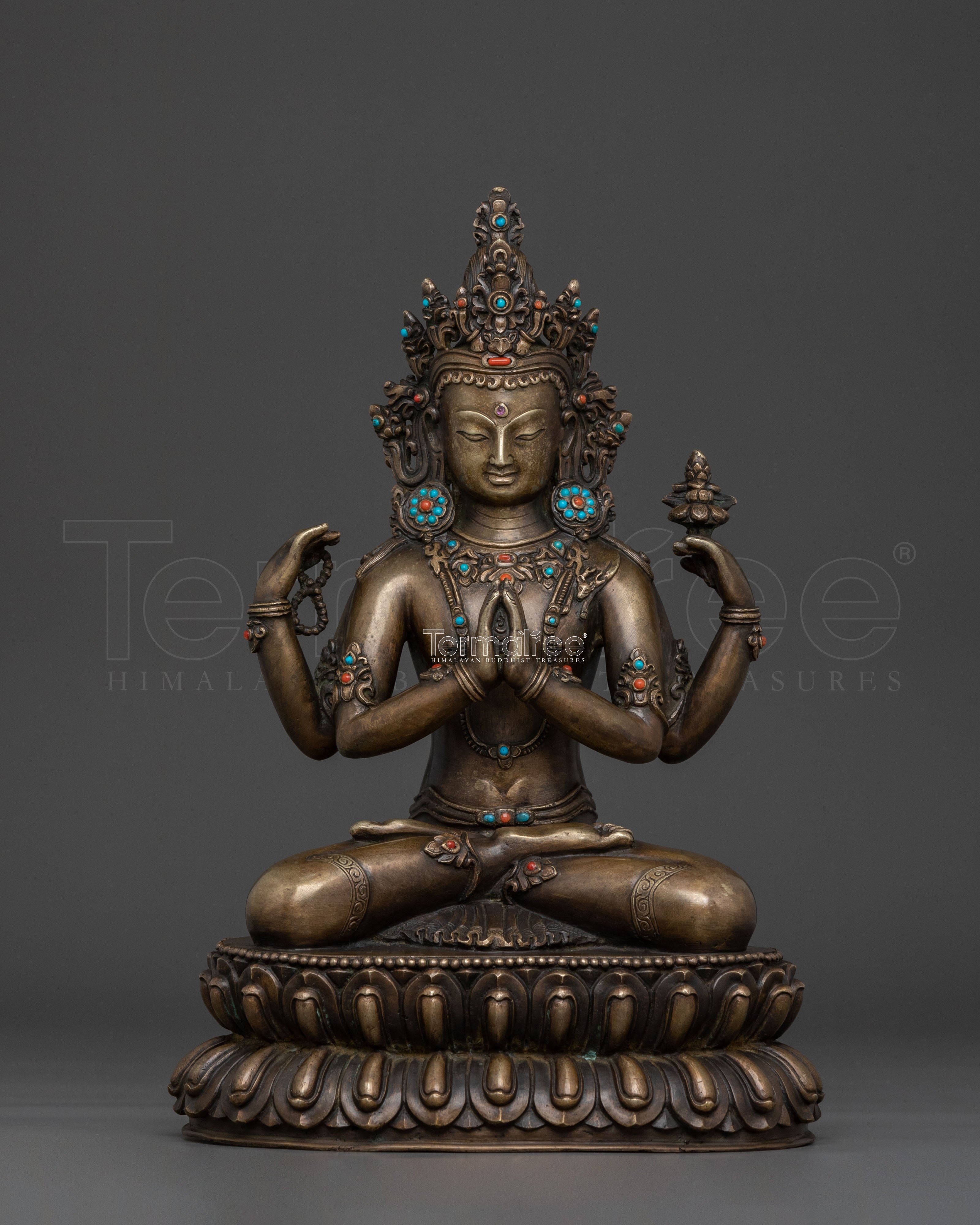
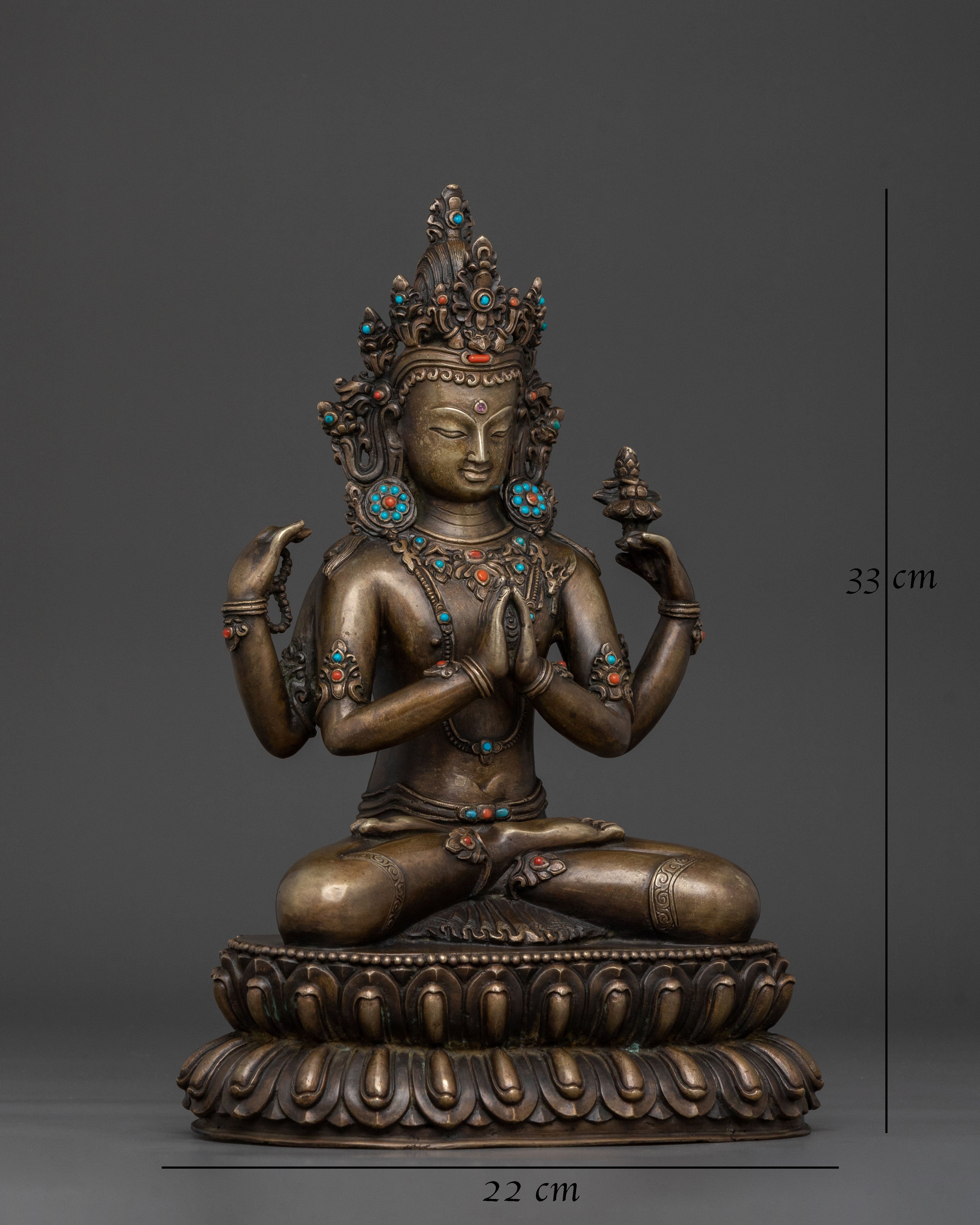
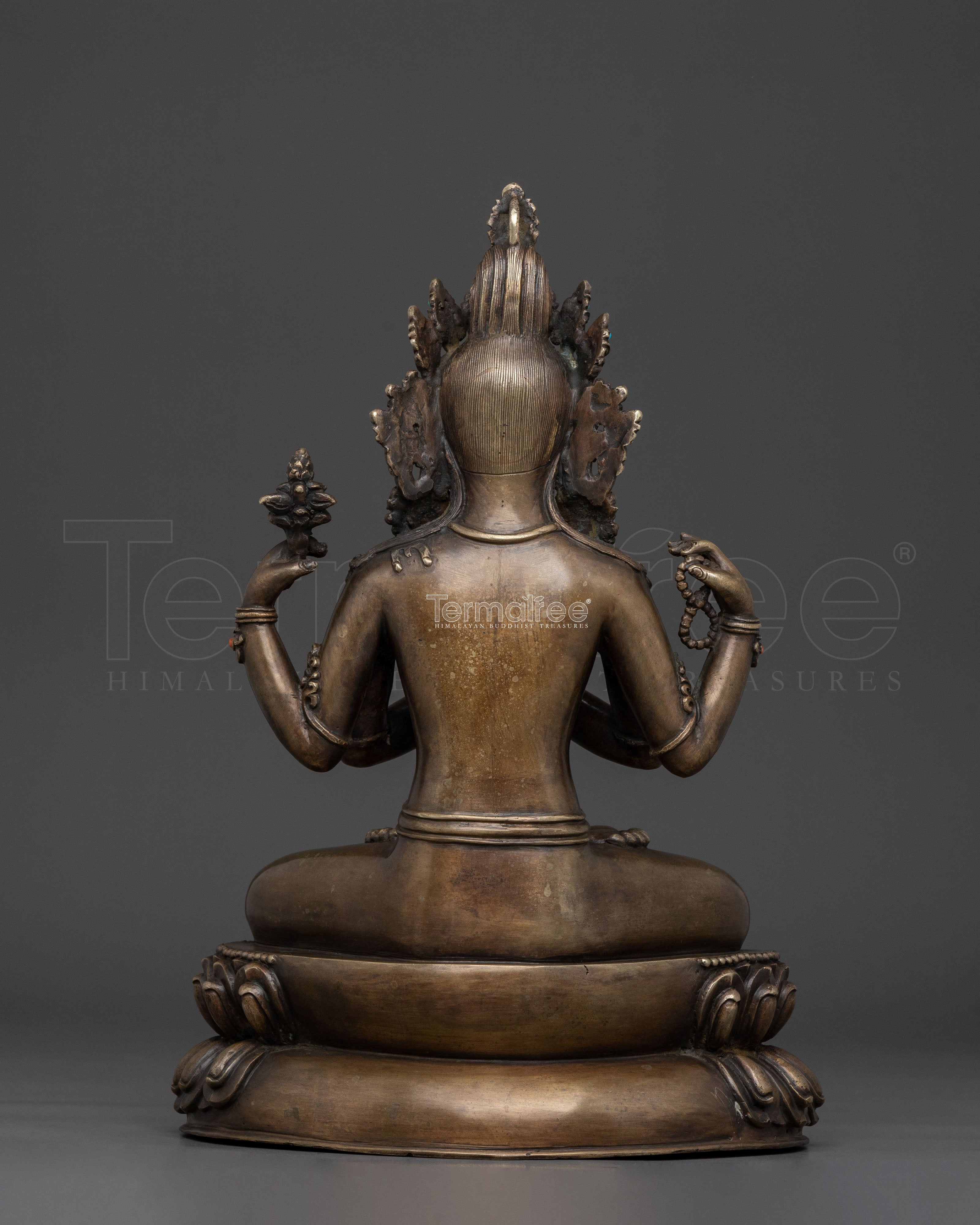
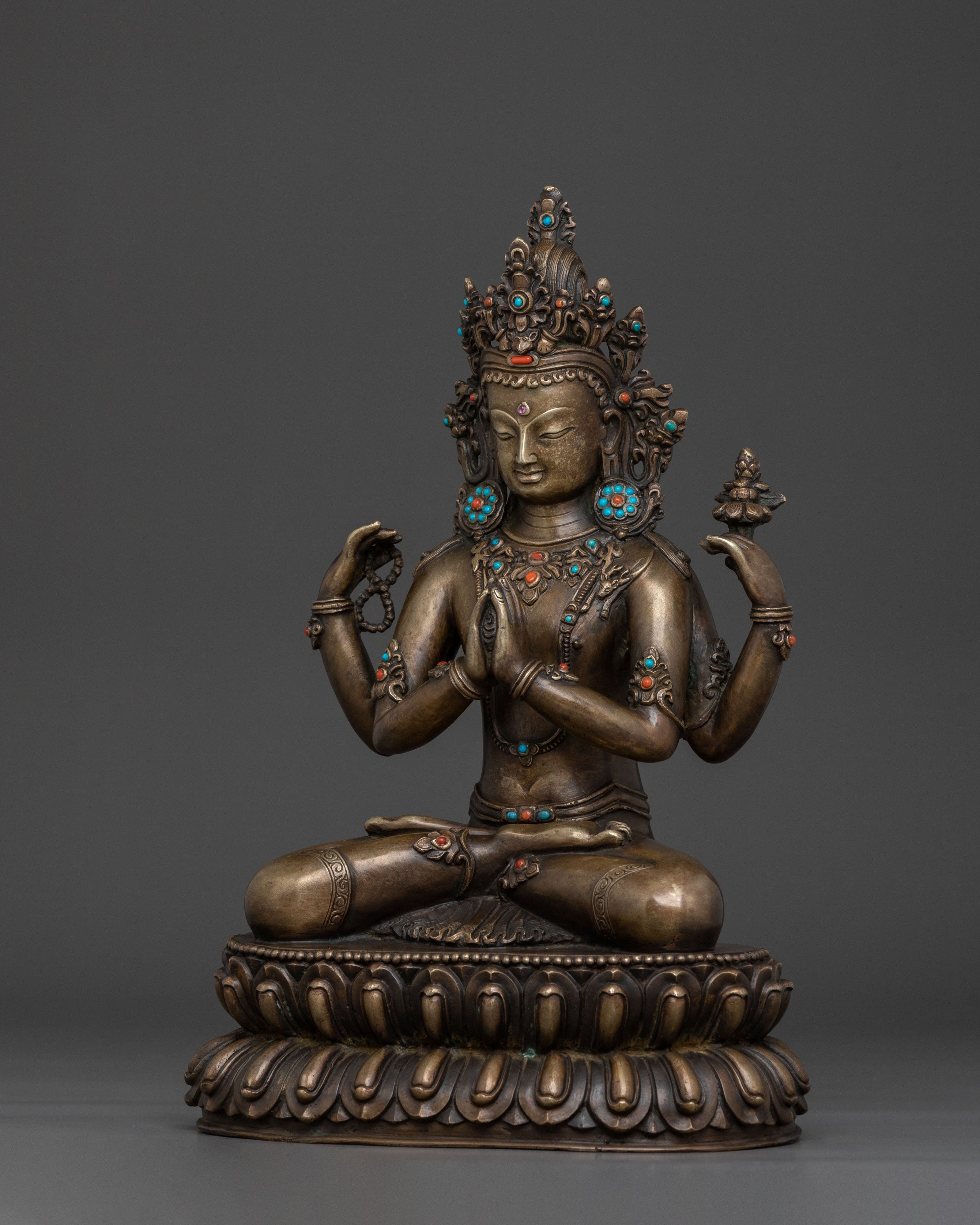
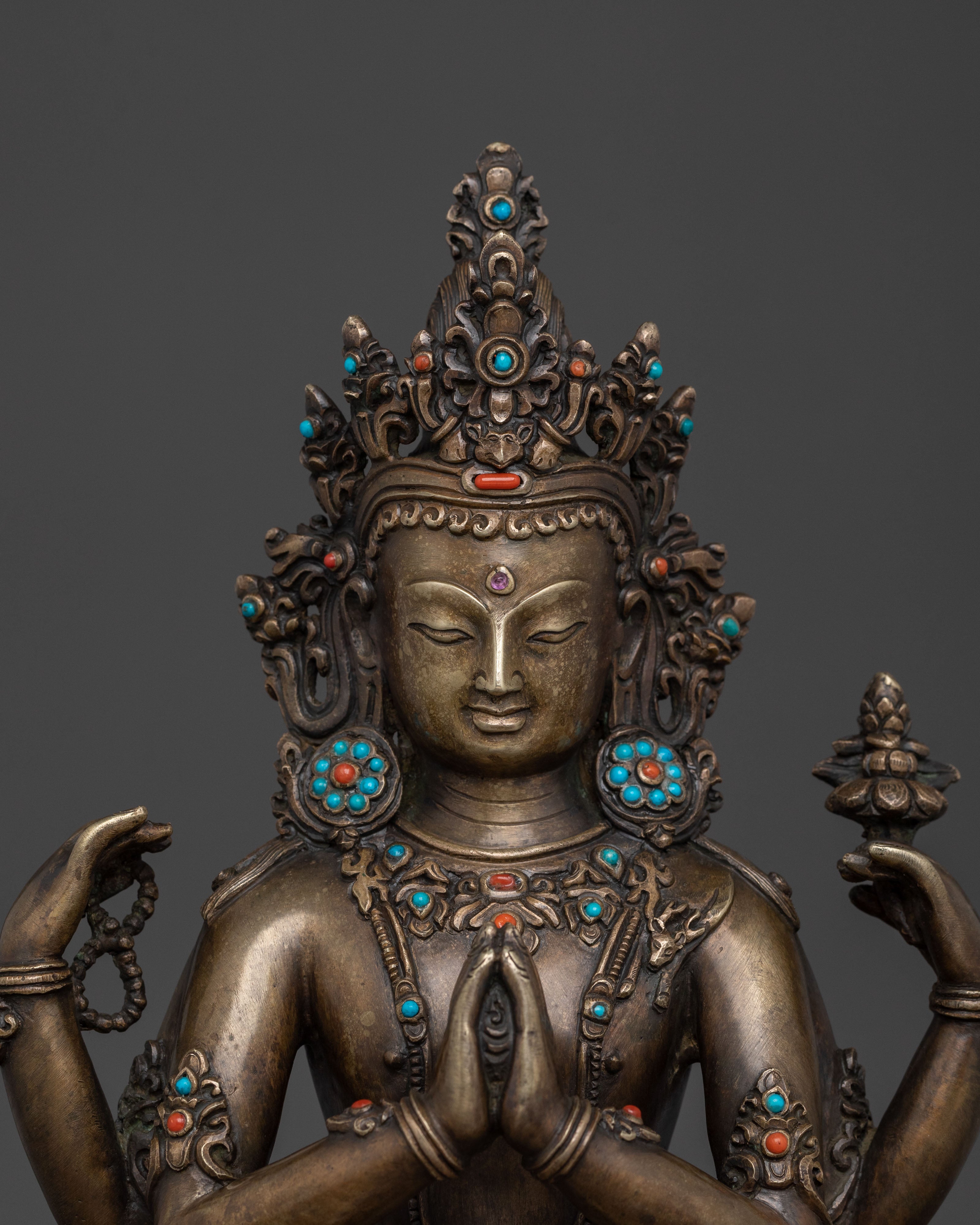
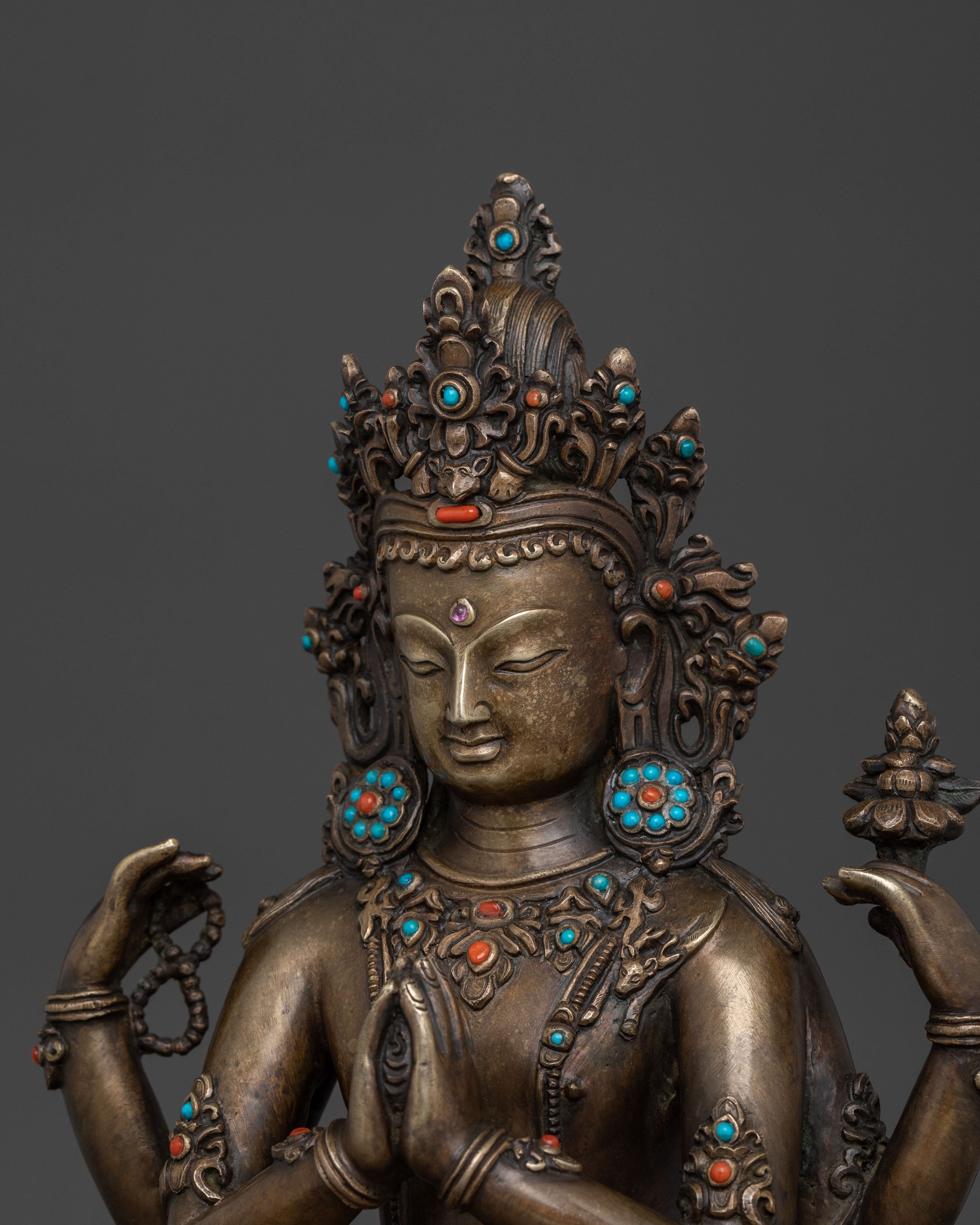
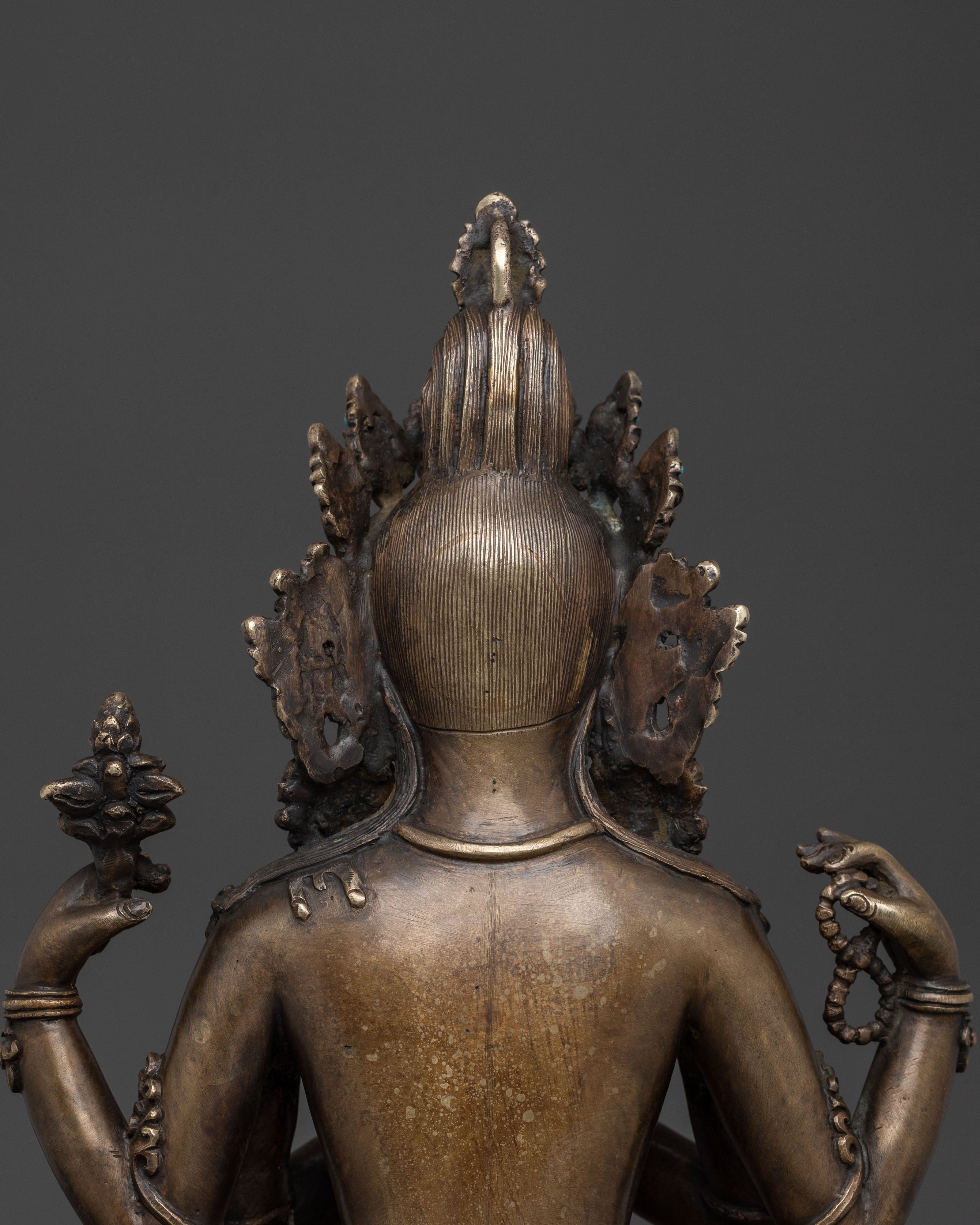
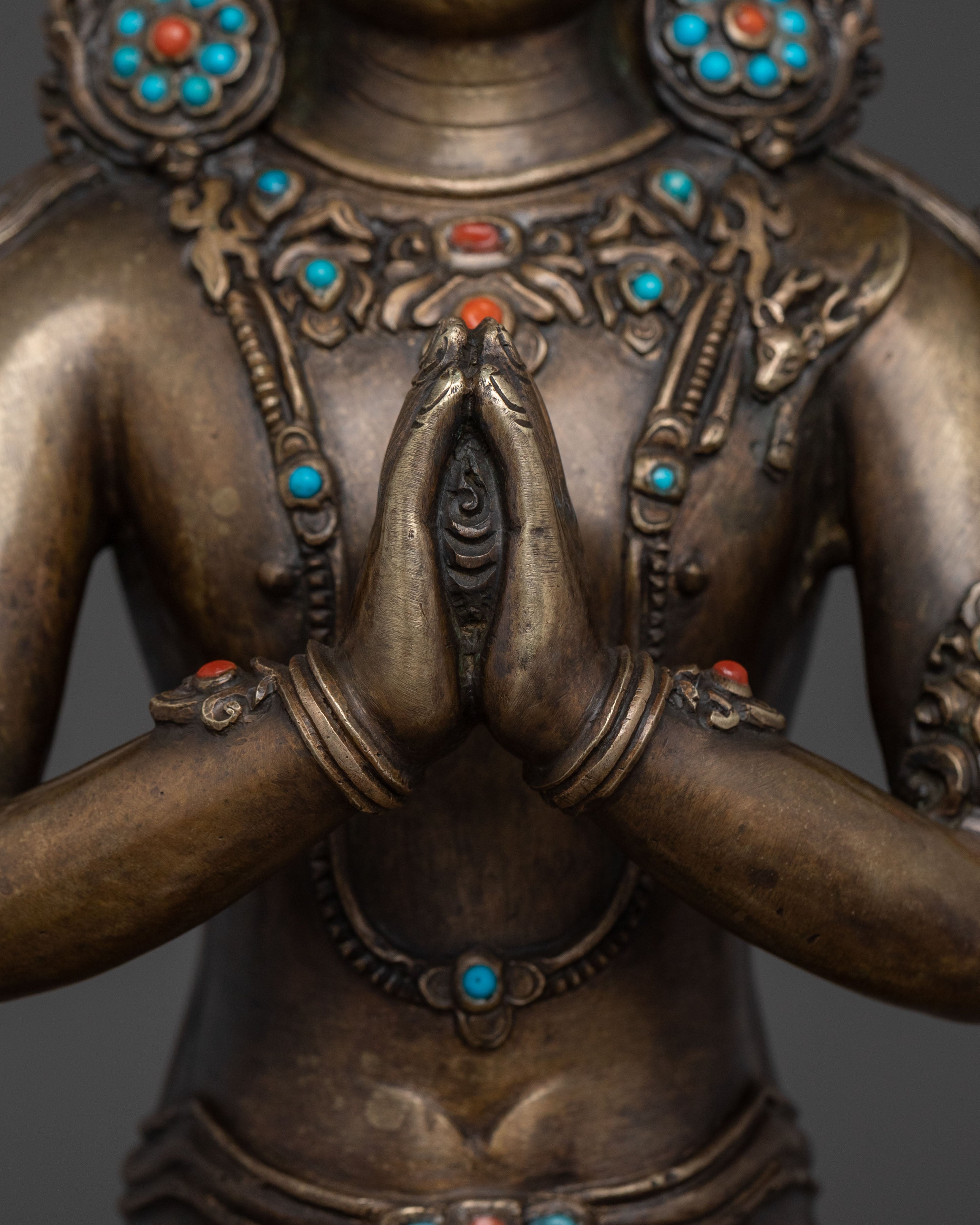
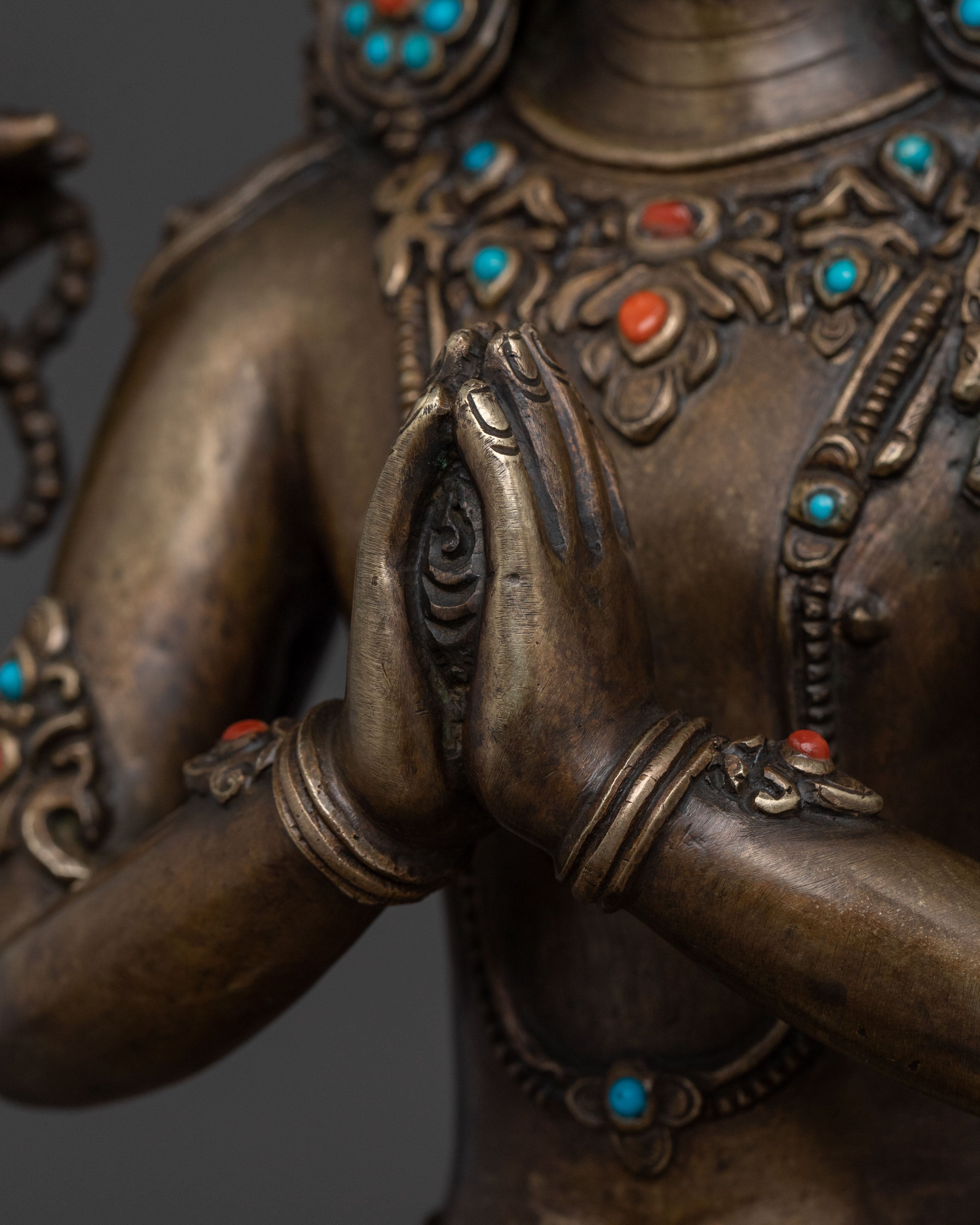
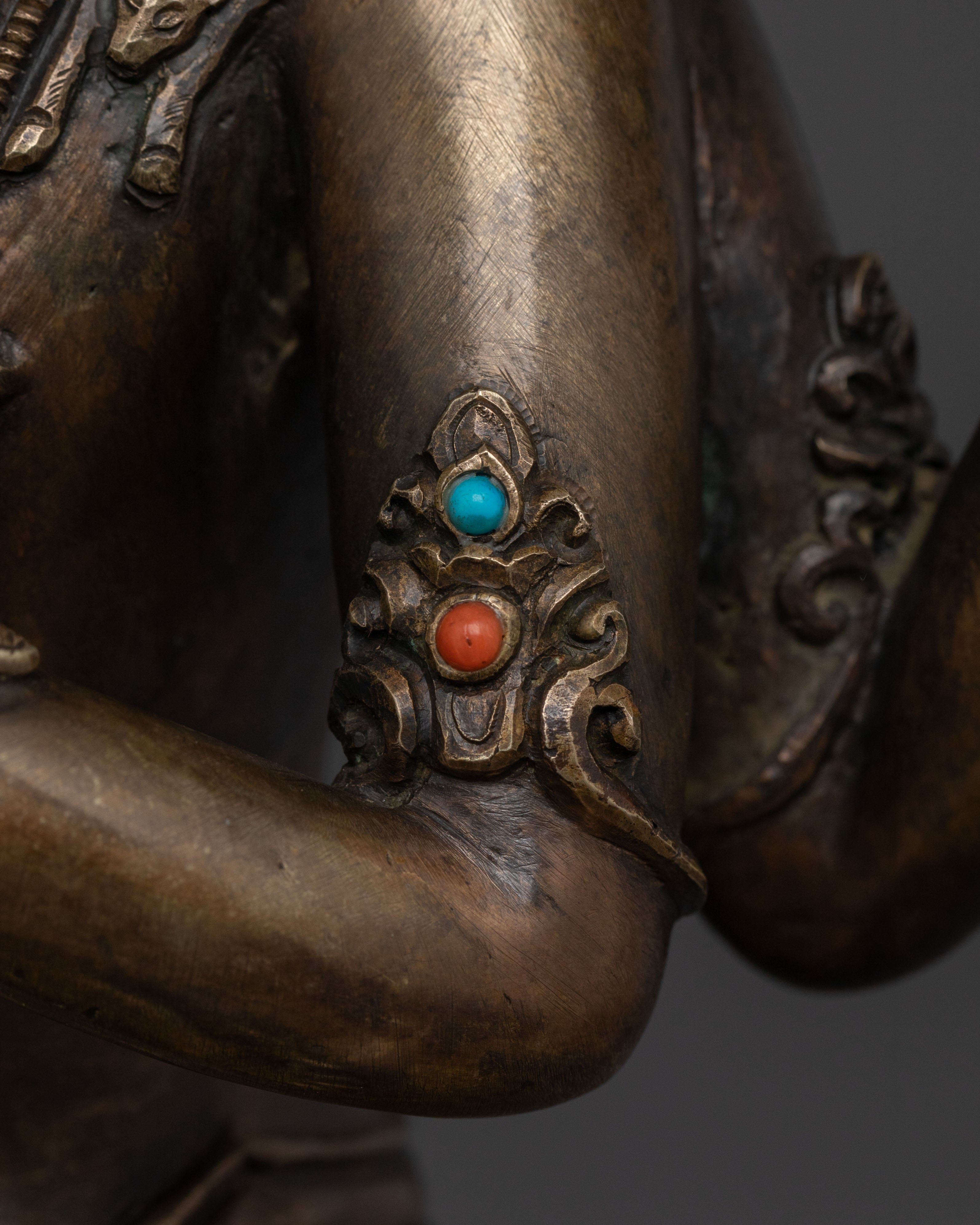
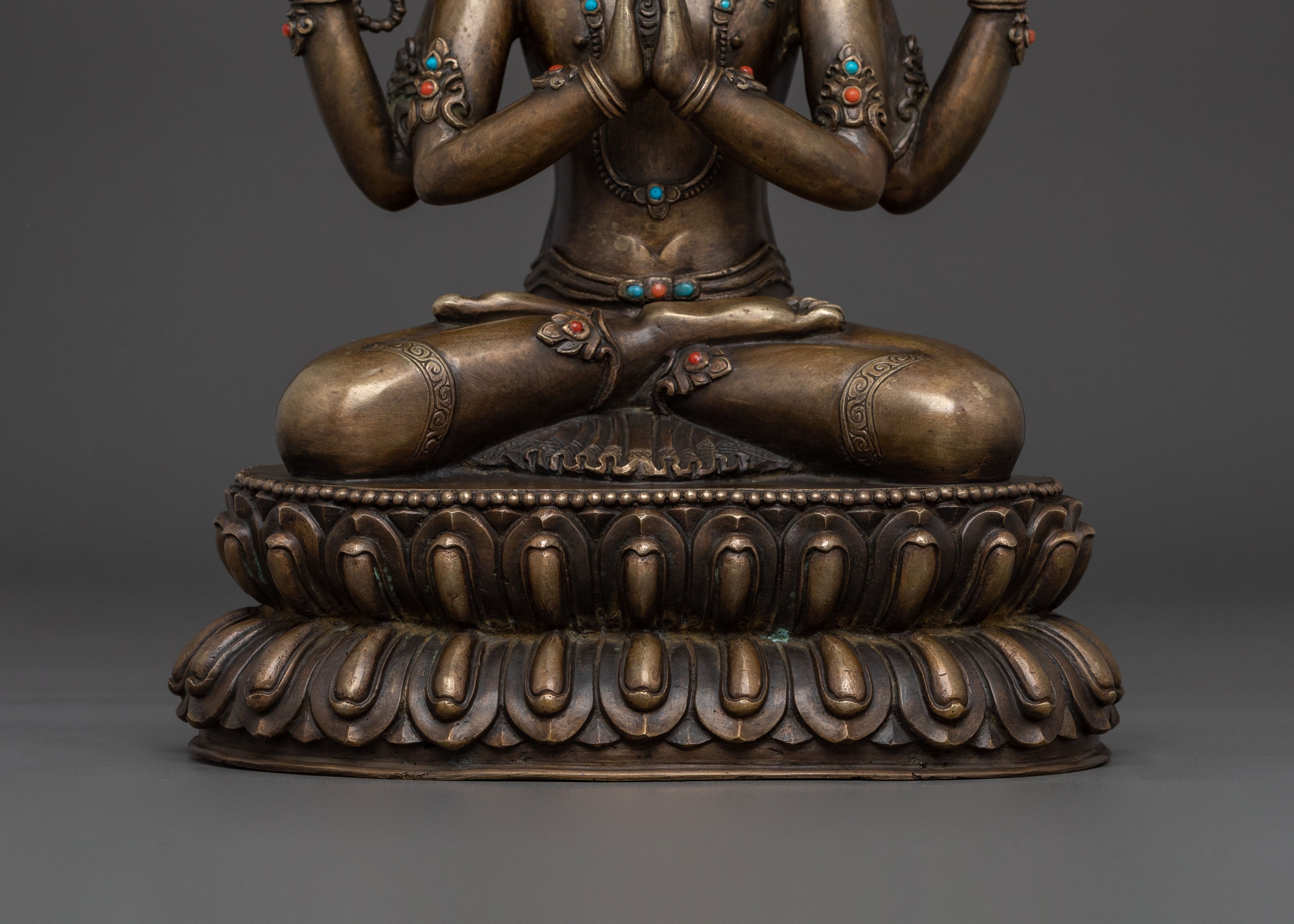
Handcrafted in Nepal, this sacred Chenrezig prayer statue embodies boundless compassion, loving-kindness, and the enlightened aspiration to benefit all sentient beings. Standing 33 cm (13 inches) tall with a 22 cm (8.7 inches) base and weighing 4.14 kg, it is expertly crafted from bronze and adorned with carefully set gemstones, showcasing the refined artistry and traditional techniques of Himalayan metalwork. The intricate craftsmanship highlights Chenrezig’s serene expression, prayerful posture, and compassionate presence, while the deeply engraved carvings produce a magnificent 3D-like effect, enhancing the depth and sacred details of the sculpture. Revered as the Bodhisattva of Compassion, Chenrezig represents the limitless love and mercy that guides beings toward peace and liberation. This finely crafted statue serves as a meaningful centerpiece for Buddhist altars, meditation spaces, temples, or sacred collections, inspiring devotion, empathy, inner peace, and the cultivation of universal compassion.
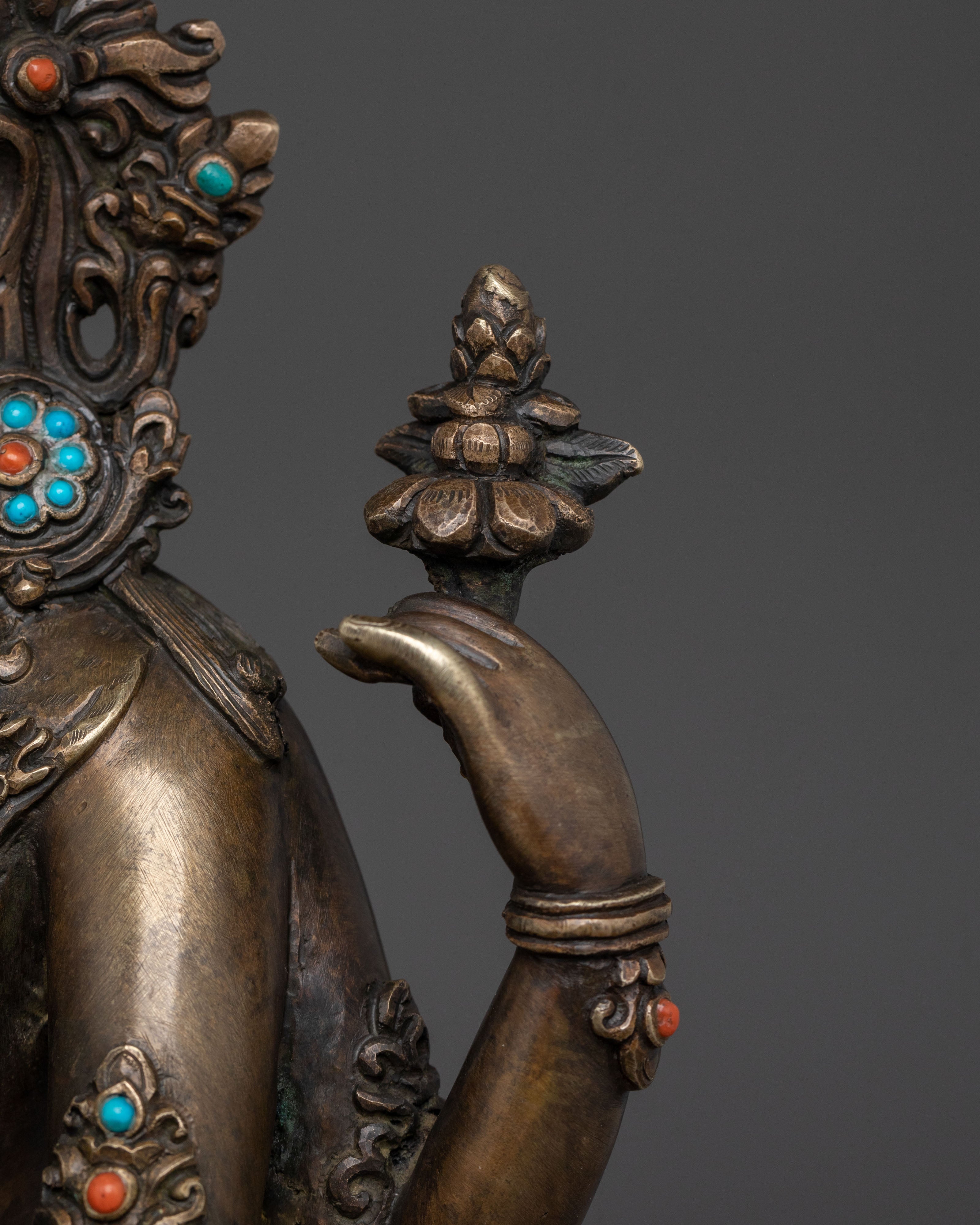
Chenrezig (Avalokiteshvara), the Bodhisattva of Infinite Compassion, embodies the boundless love, mercy, and compassionate activity of all Buddhas. He is revered for his unwavering vow to liberate all sentient beings from suffering and guide them toward awakening. In his four-armed form, Chenrezig symbolizes the limitless reach of compassion and the four immeasurables—love, compassion, joy, and equanimity. His two central hands are joined at his heart, holding the wish-fulfilling jewel (Chintamani), representing universal compassion and the enlightened mind’s aspiration to benefit all beings. His upper right hand holds a crystal mala, symbolizing continuous compassionate practice and the recitation of sacred mantras, while his upper left hand holds a blooming utpala lotus, representing purity, spiritual awakening, and compassion flourishing beyond worldly suffering. His serene expression reflects wisdom, patience, and loving-kindness, while his graceful ornaments symbolize the richness of enlightened qualities. This sacred statue serves as a powerful meditation and devotional focus, inspiring practitioners to cultivate compassion, selflessness, mindfulness, and the aspiration to bring peace and liberation to all beings.
Size: 13.0”/33cm (Height) x 8.7”/22cm (Base)
Weight: 4.14 kg
Material: Gemstones, BRONZE
Chenrezig, known as Avalokiteshvara in Sanskrit, is the Bodhisattva of Compassion, revered across all schools of Buddhism. He embodies the boundless compassion of all Buddhas, tirelessly working to alleviate suffering in the world. Often depicted with multiple arms and heads, he symbolizes his capacity to perceive and respond to the cries of all sentient beings. His mantra, Om Mani Padme Hum, is one of the most widely recited in Tibetan Buddhism.