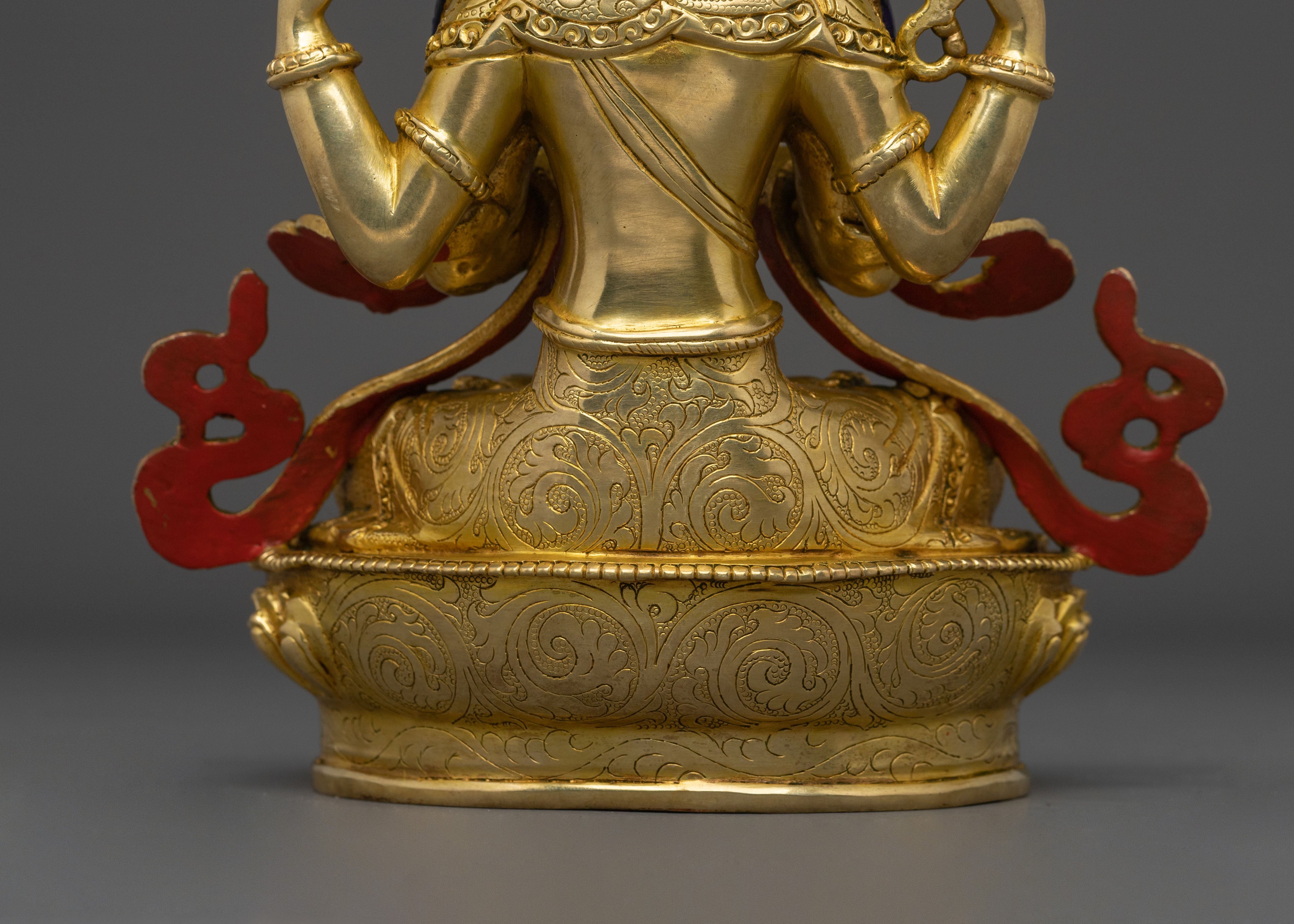
Chenrezig Sacred Statue | Embodiment of Universal Love
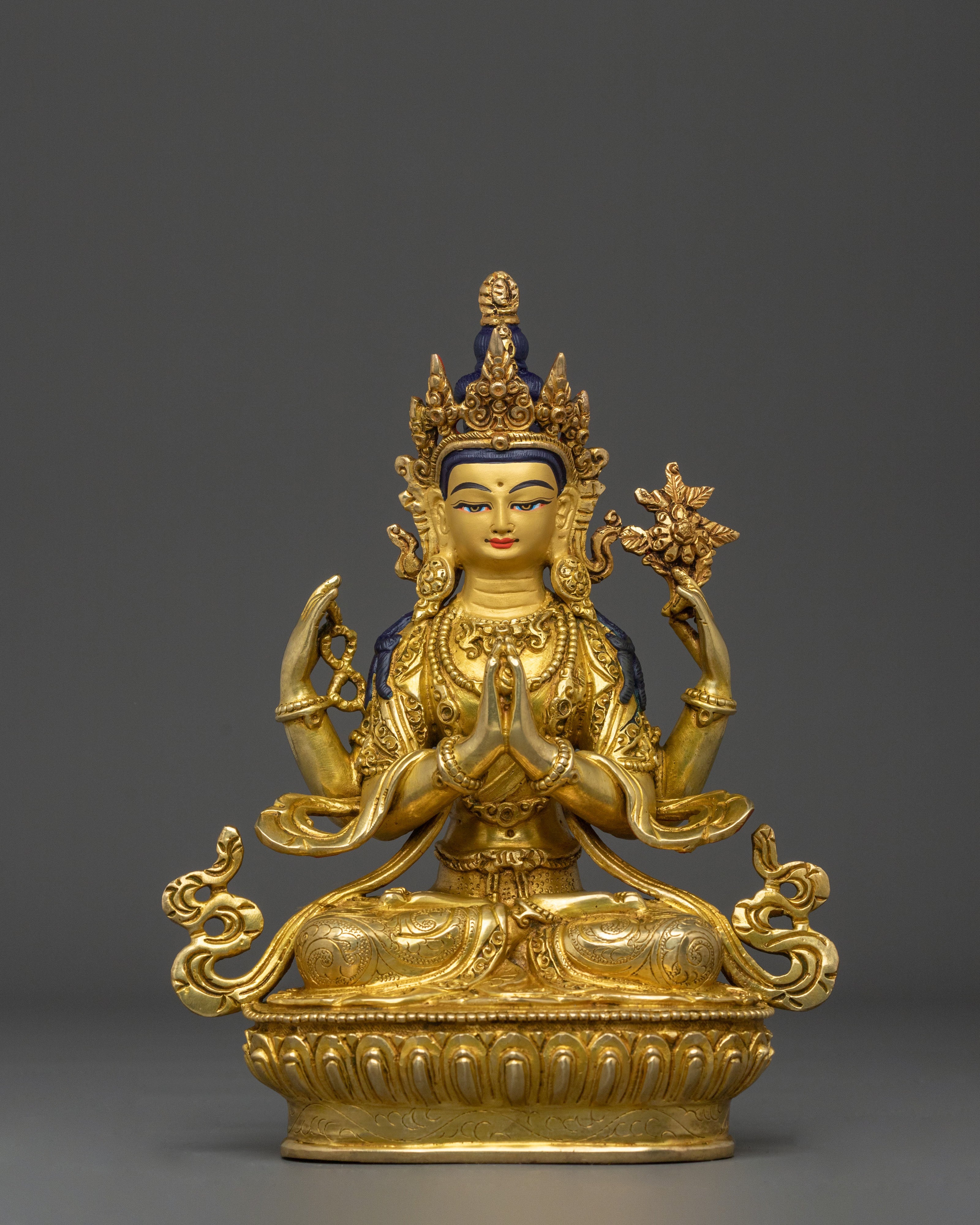
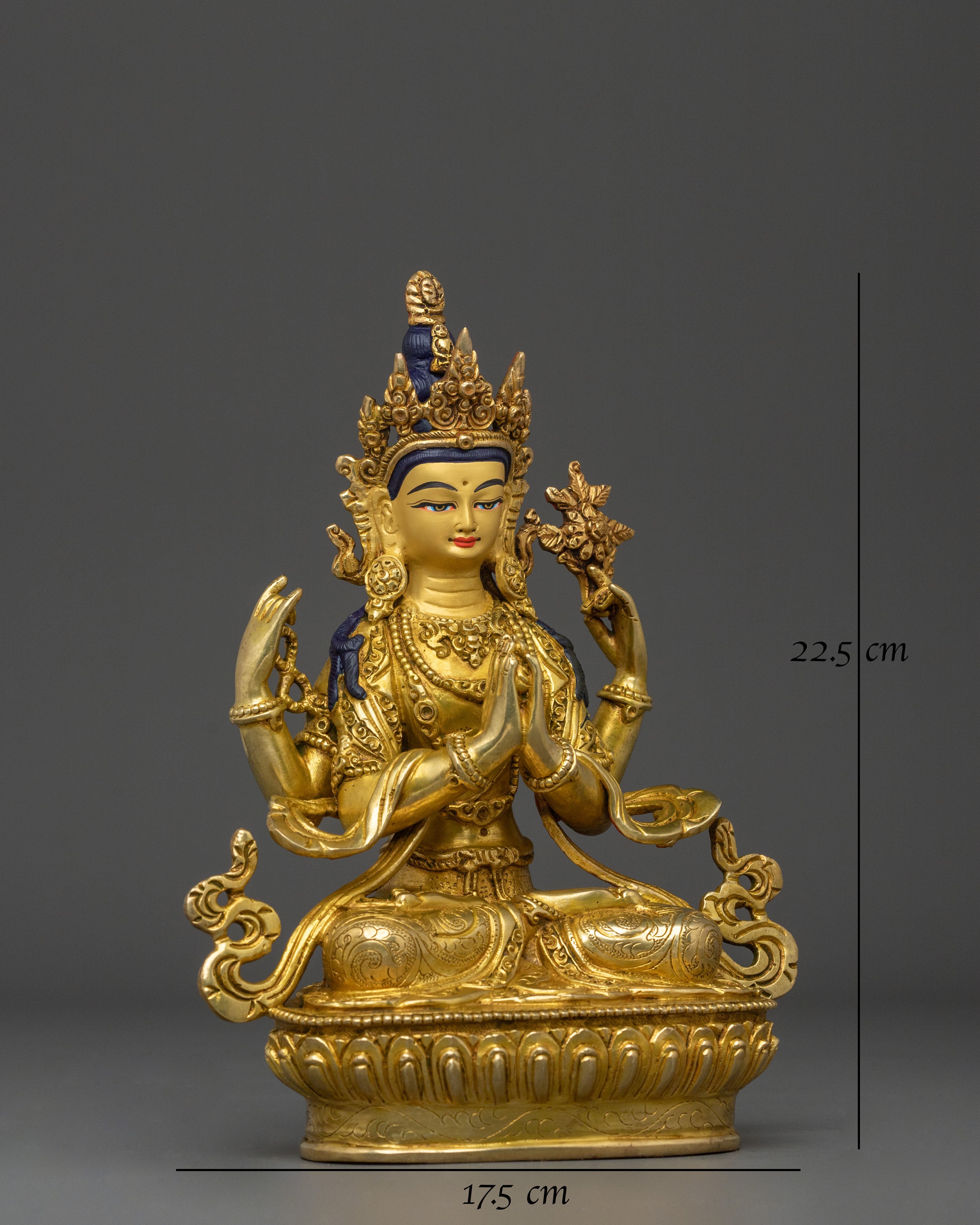
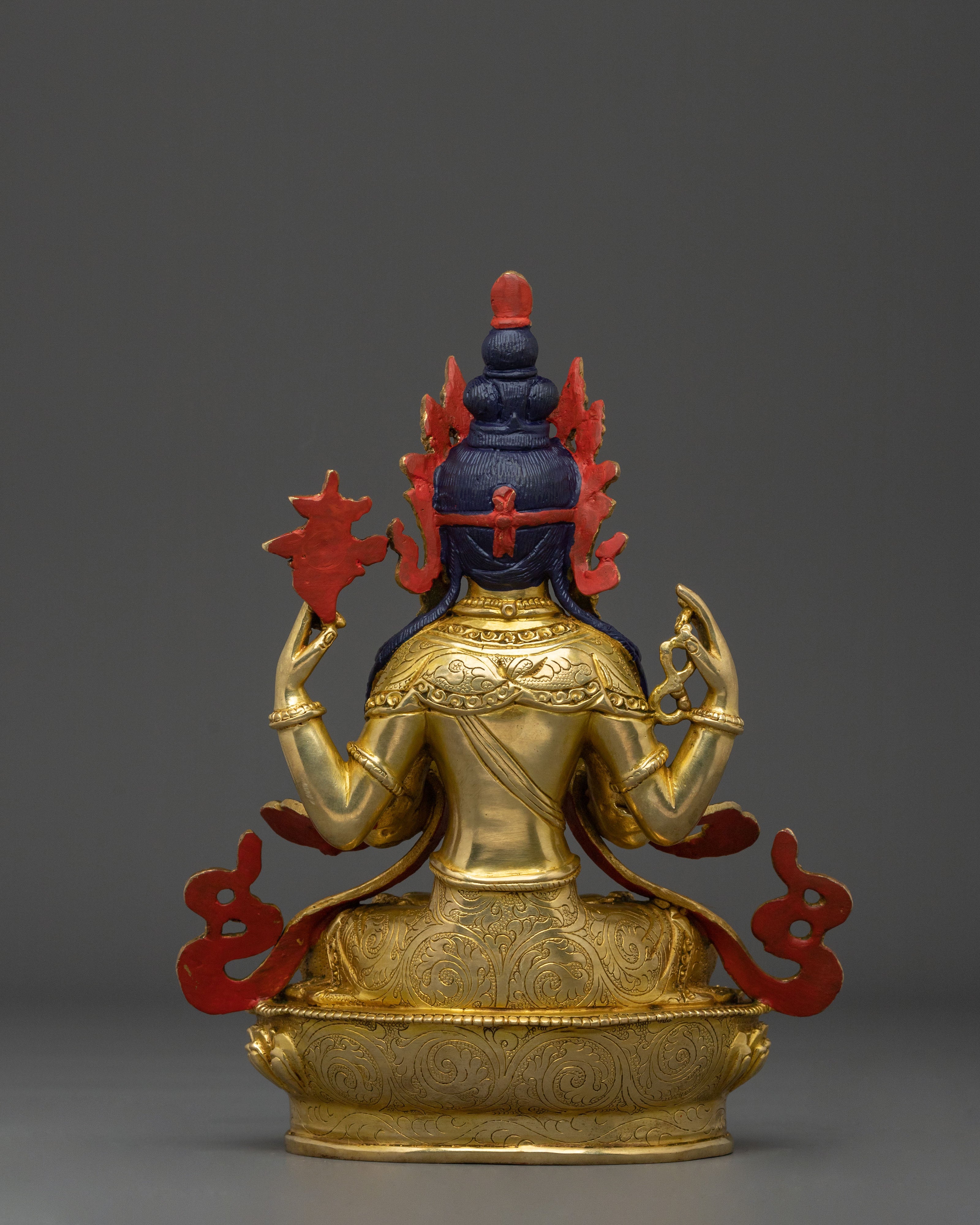
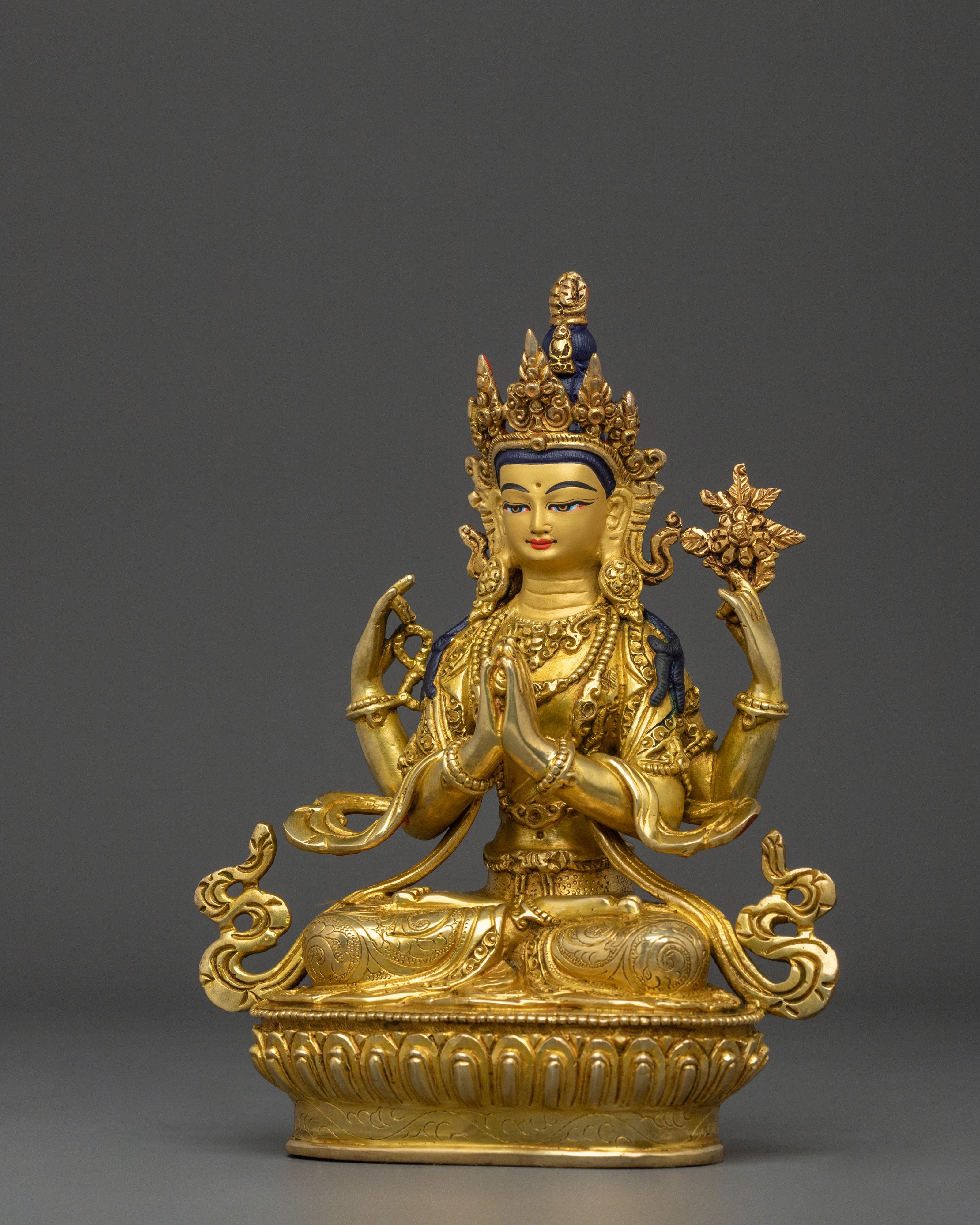
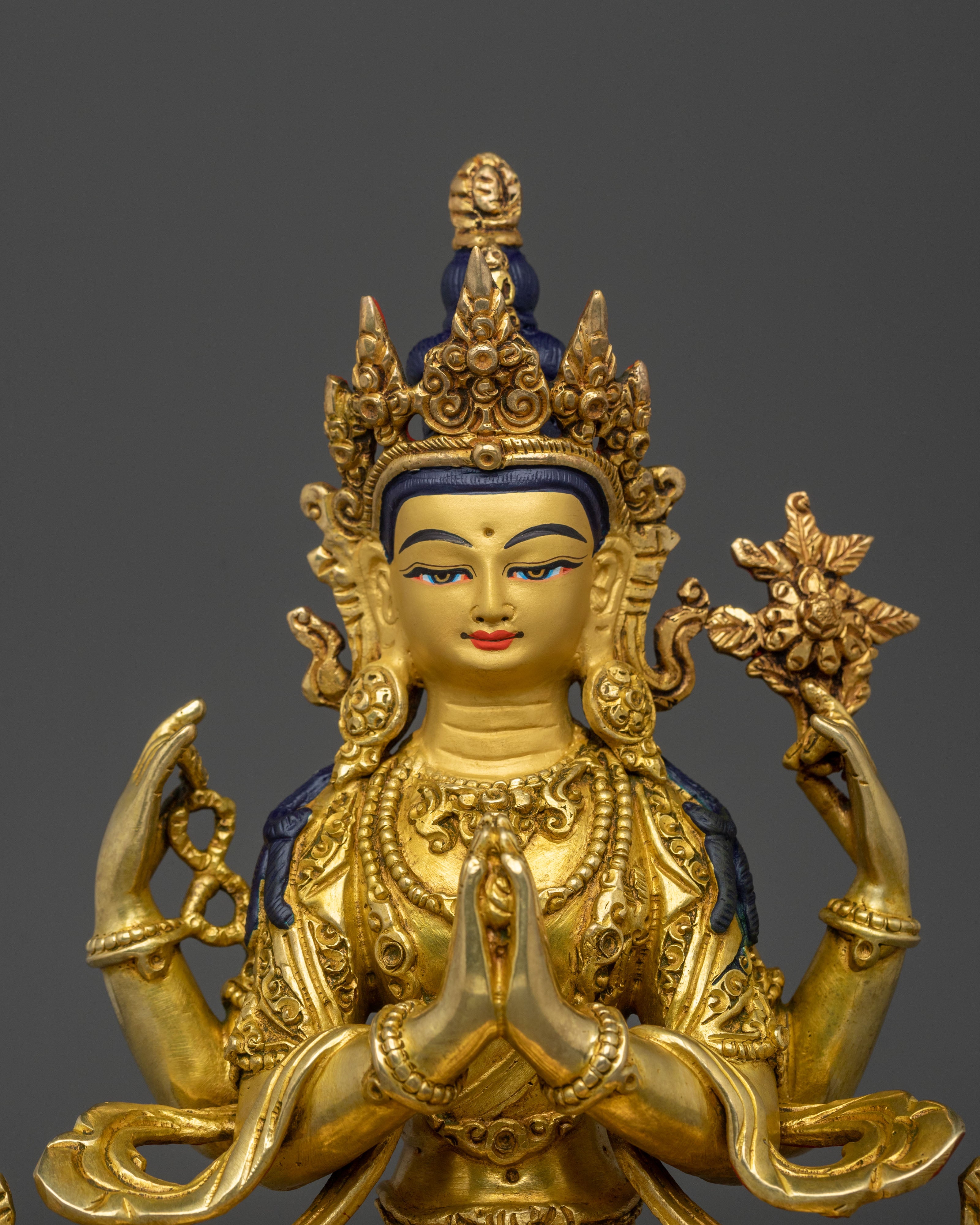
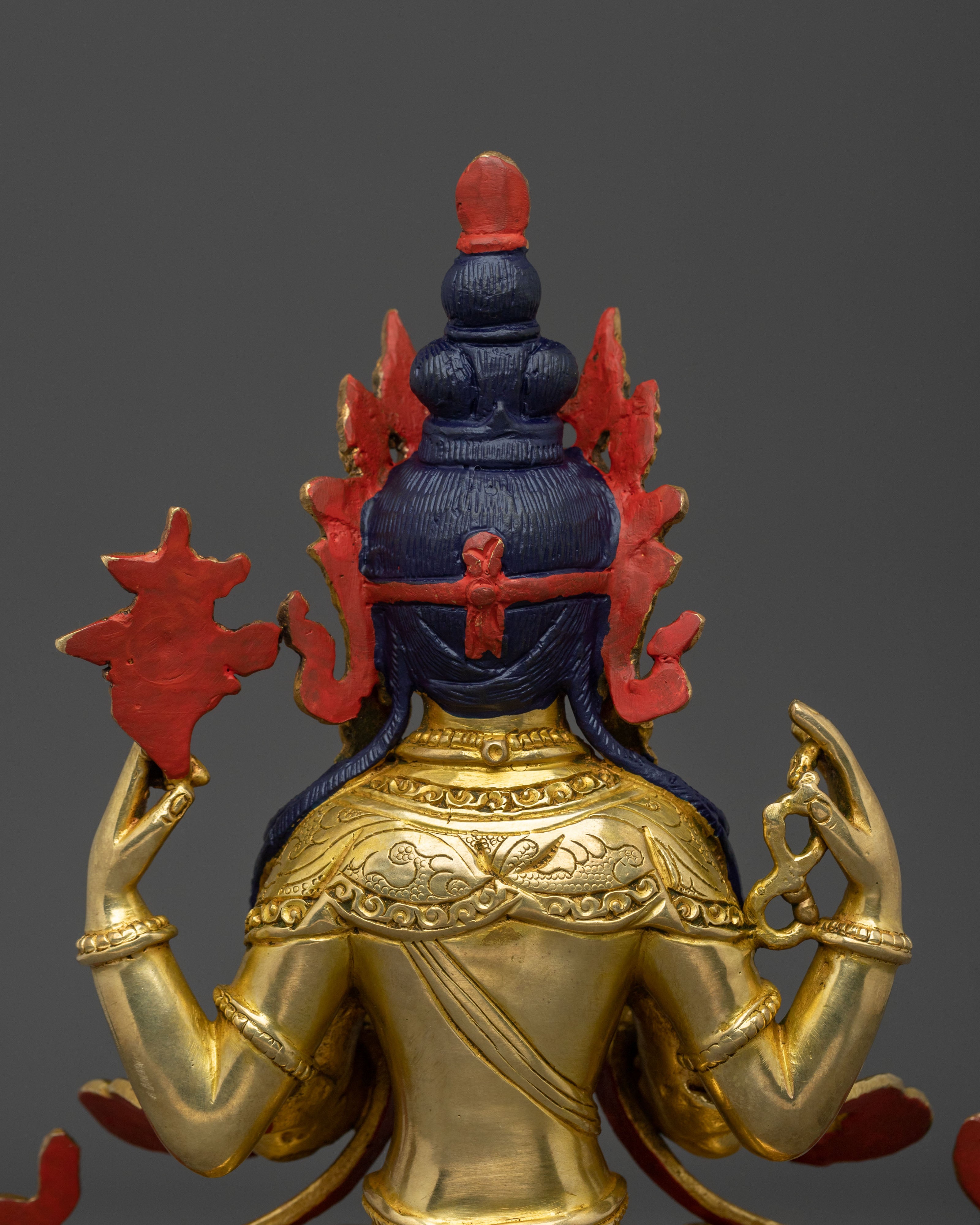
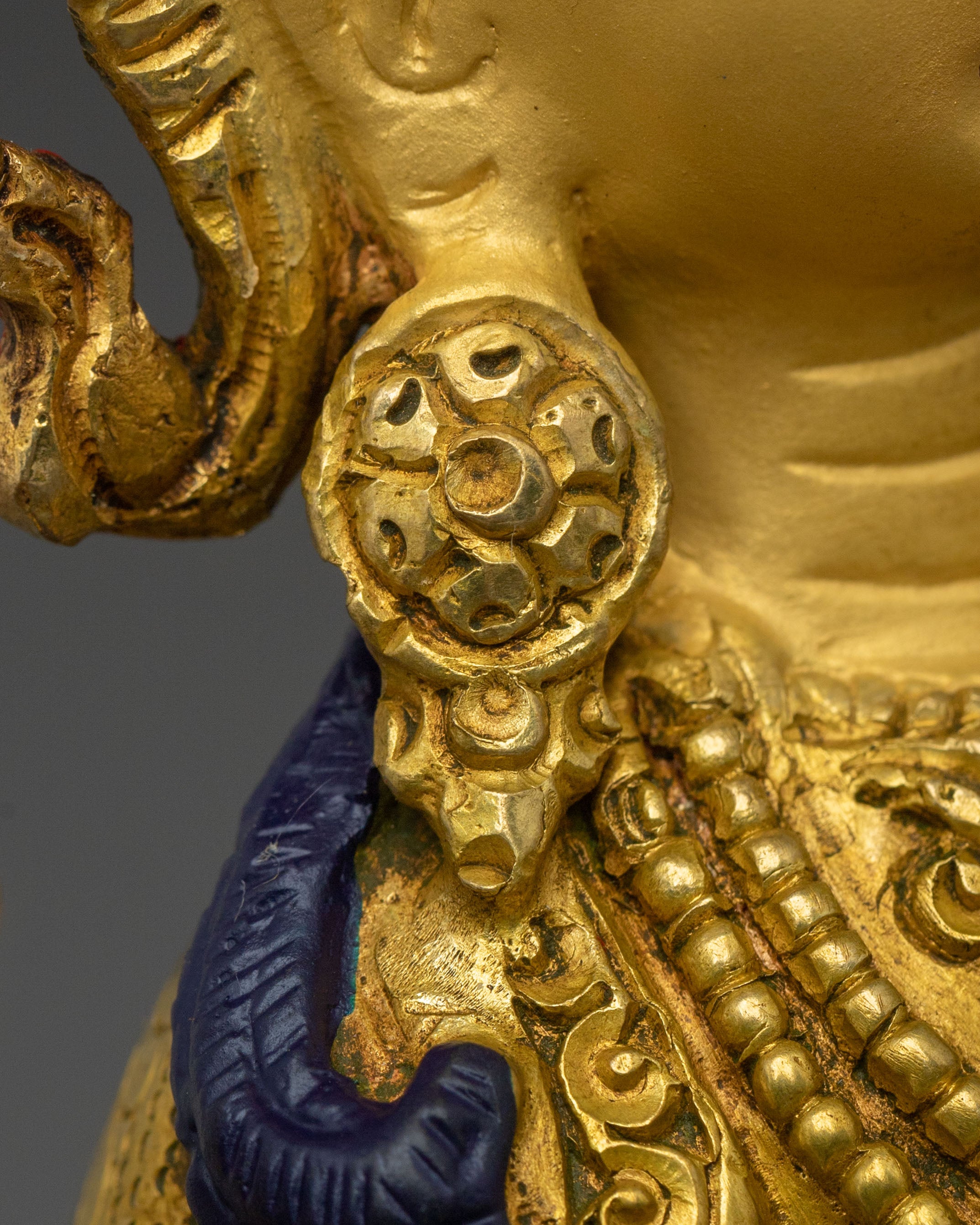
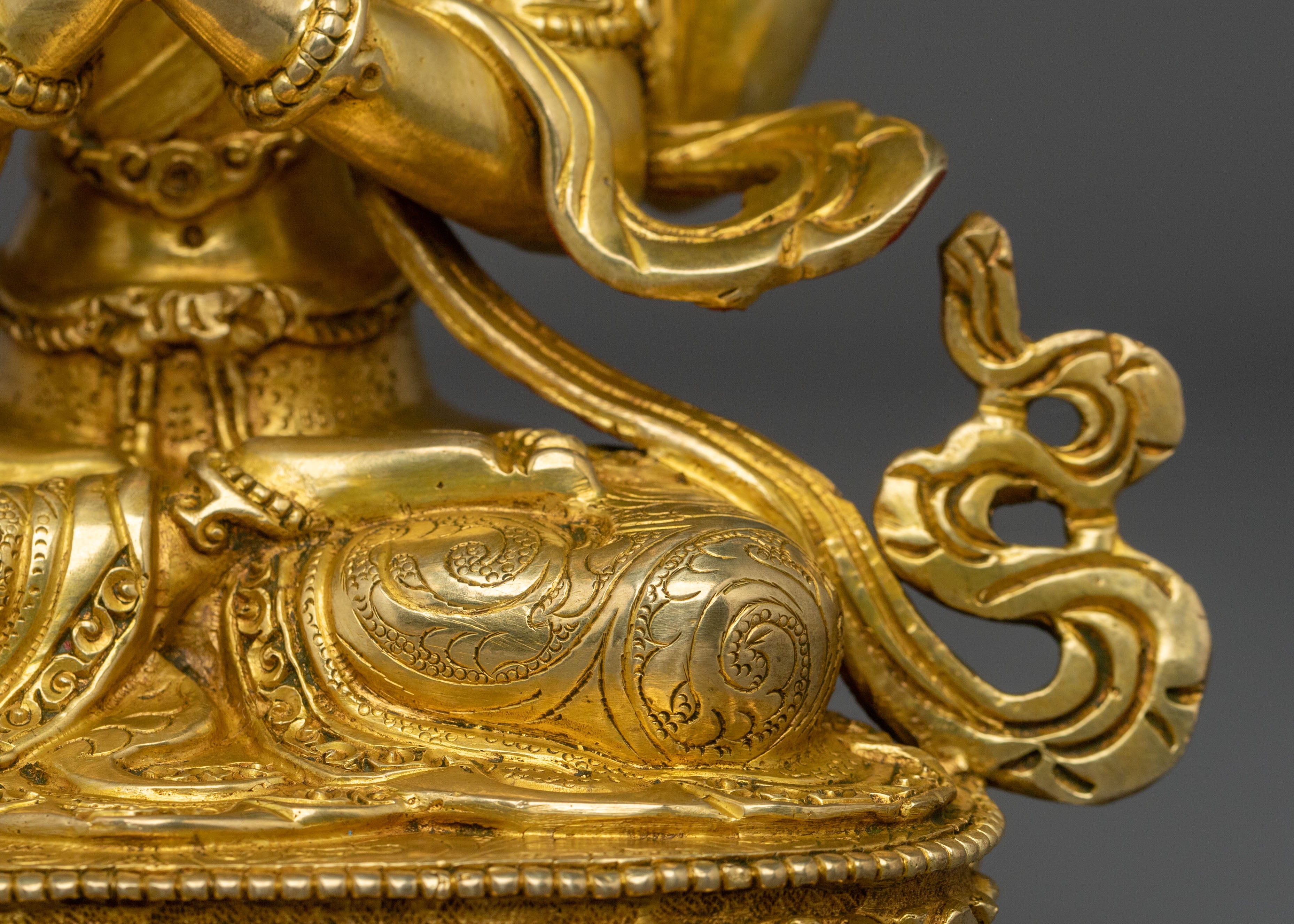
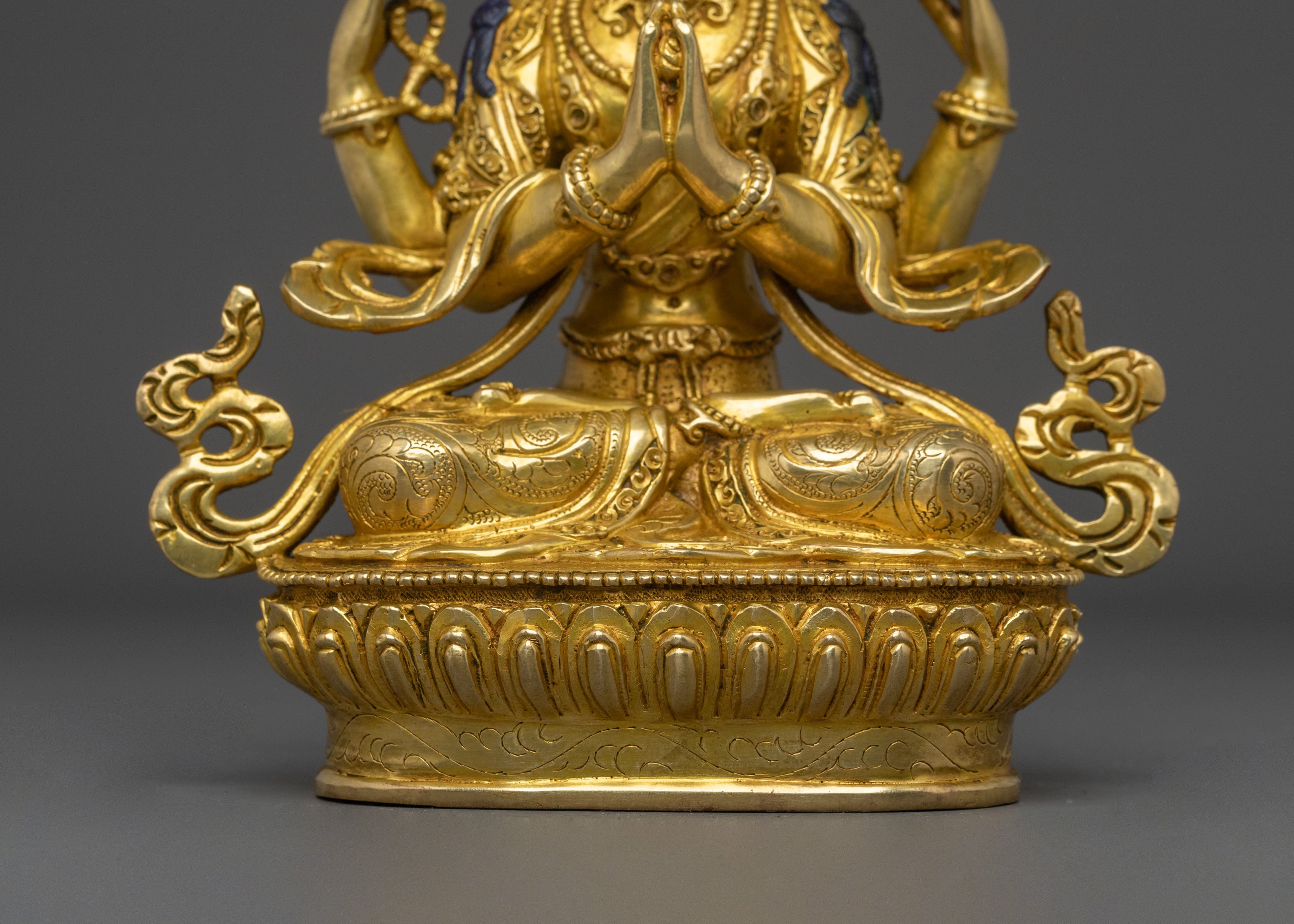
Handcrafted in Nepal, this sacred Chenrezig statue embodies boundless compassion, loving-kindness, and the universal aspiration to relieve the suffering of all beings. Standing 22.5 cm (8.86 inches) tall with a 17.5 cm (6.89 inches) base and weighing 1.95 kg, it is expertly formed from a solid copper body and adorned with radiant 24K gold gilding and intricate acrylic painting. The gentle posture and serene expression reflect Chenrezig’s role as the Bodhisattva of Compassion, offering guidance, protection, and inspiration. This finely crafted sculpture makes a meaningful focal point for altars, meditation spaces, or sacred collections, cultivating devotion, empathy, and inner peace.
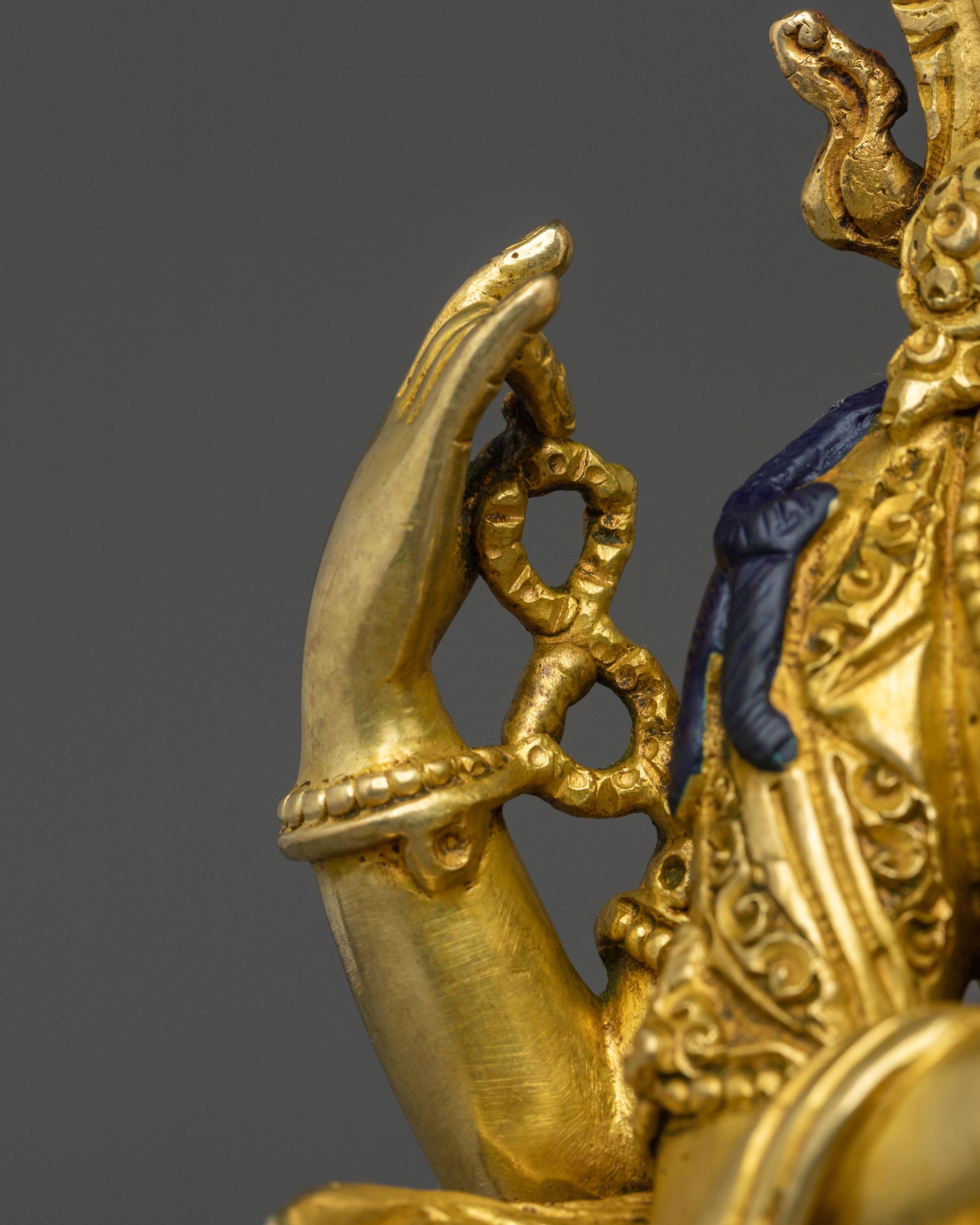
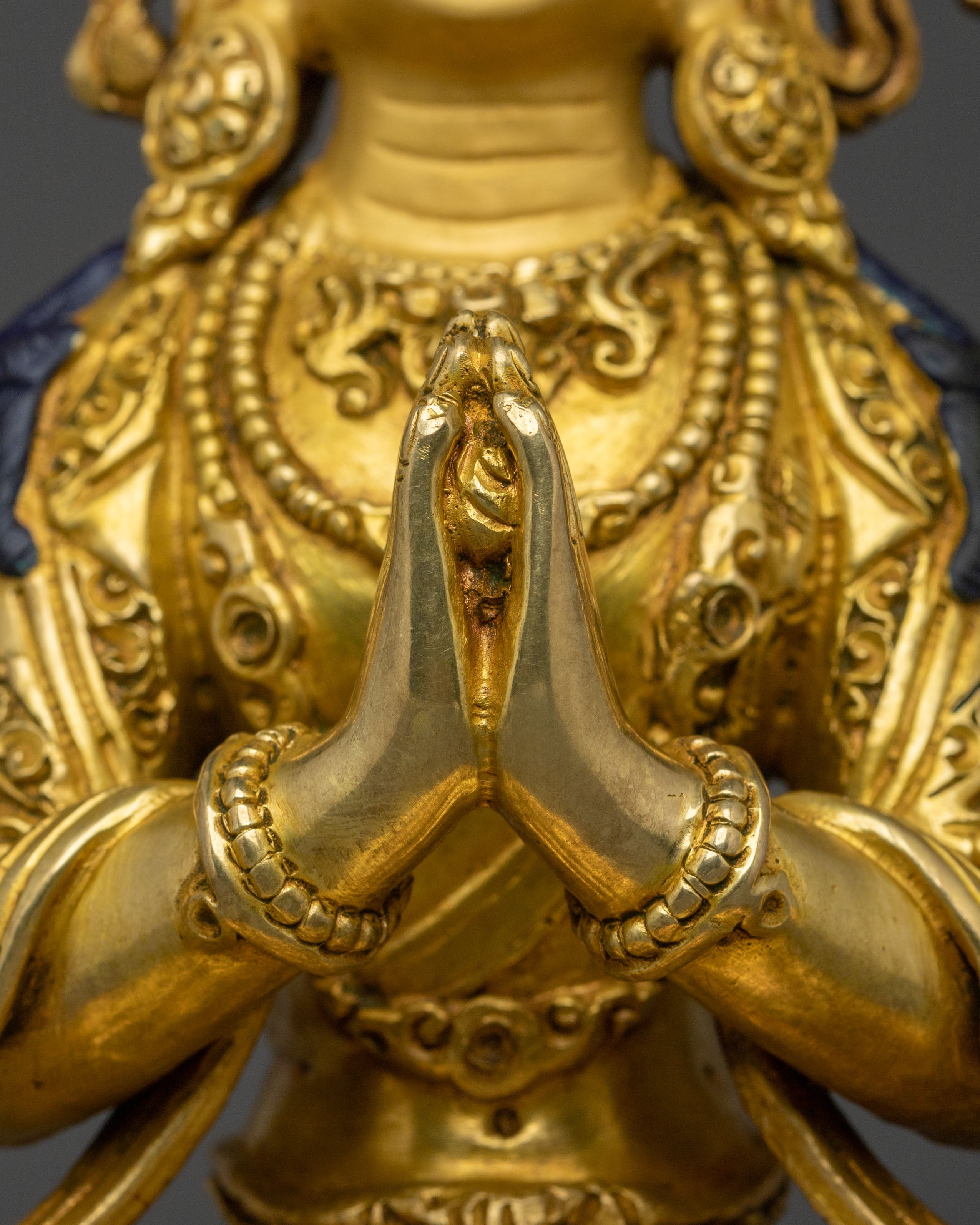
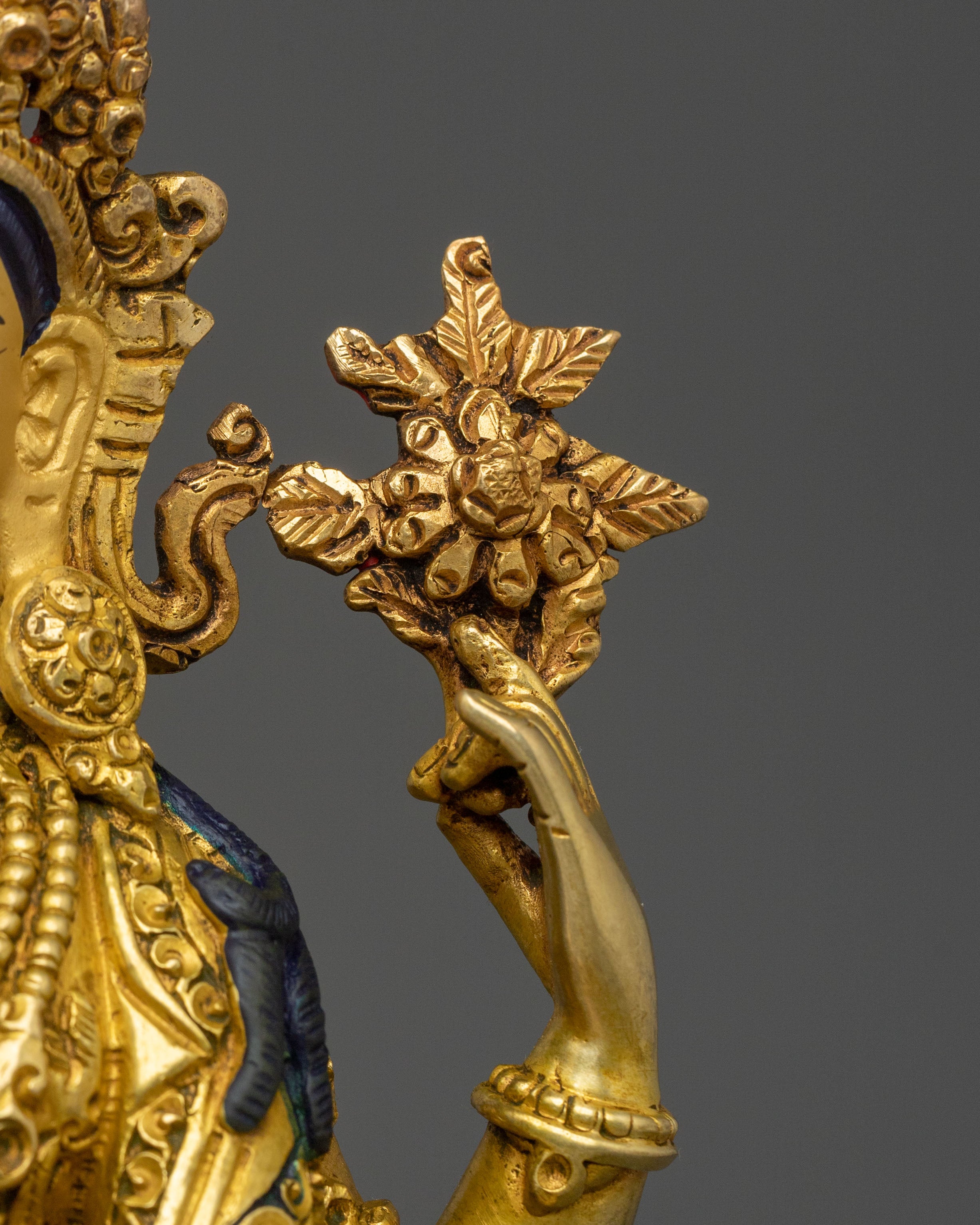
Chenrezig, also known as Avalokiteshvara, is the Bodhisattva of Infinite Compassion, revered for his unwavering commitment to alleviate the suffering of all beings. In his four-armed form, his two central hands are pressed together at his heart, holding the wish-fulfilling jewel (Chintamani), symbolizing universal love, the enlightened mind, and his compassionate vow to aid all sentient beings. His upper right hand holds a crystal mala (rosary), representing continuous practice, the recitation of mantras, and the cultivation of mindfulness, while his upper left hand holds a blooming lotus, signifying purity, spiritual awakening, and the blossoming of wisdom amidst worldly challenges. With a serene and gentle expression, Chenrezig embodies active compassion, loving-kindness, and the aspiration to guide all beings toward enlightenment. This meditation statue serves as a powerful devotional focus, inspiring practitioners to cultivate empathy, selflessness, and the transformative power of compassion in both meditation and daily life.
Size: 8.86”/22.5cm (Height) x 6.89”/17.5cm (Base)
Weight: 1.95 kg
Material: 24K Gold Gilded, Acrylic Painting, Copper Body
Chenrezig, known in Sanskrit as Avalokiteshvara, is revered across all schools of Buddhism as the Bodhisattva of Compassion. He embodies the selfless desire to free all sentient beings from suffering and is frequently invoked in prayers and mantras, most notably the universal "Om Mani Padme Hum." In Tibetan Buddhism, he is considered the patron deity of Tibet and is often depicted in various forms, including the four-armed and thousand-armed manifestations, each symbolizing aspects of his boundless activity.