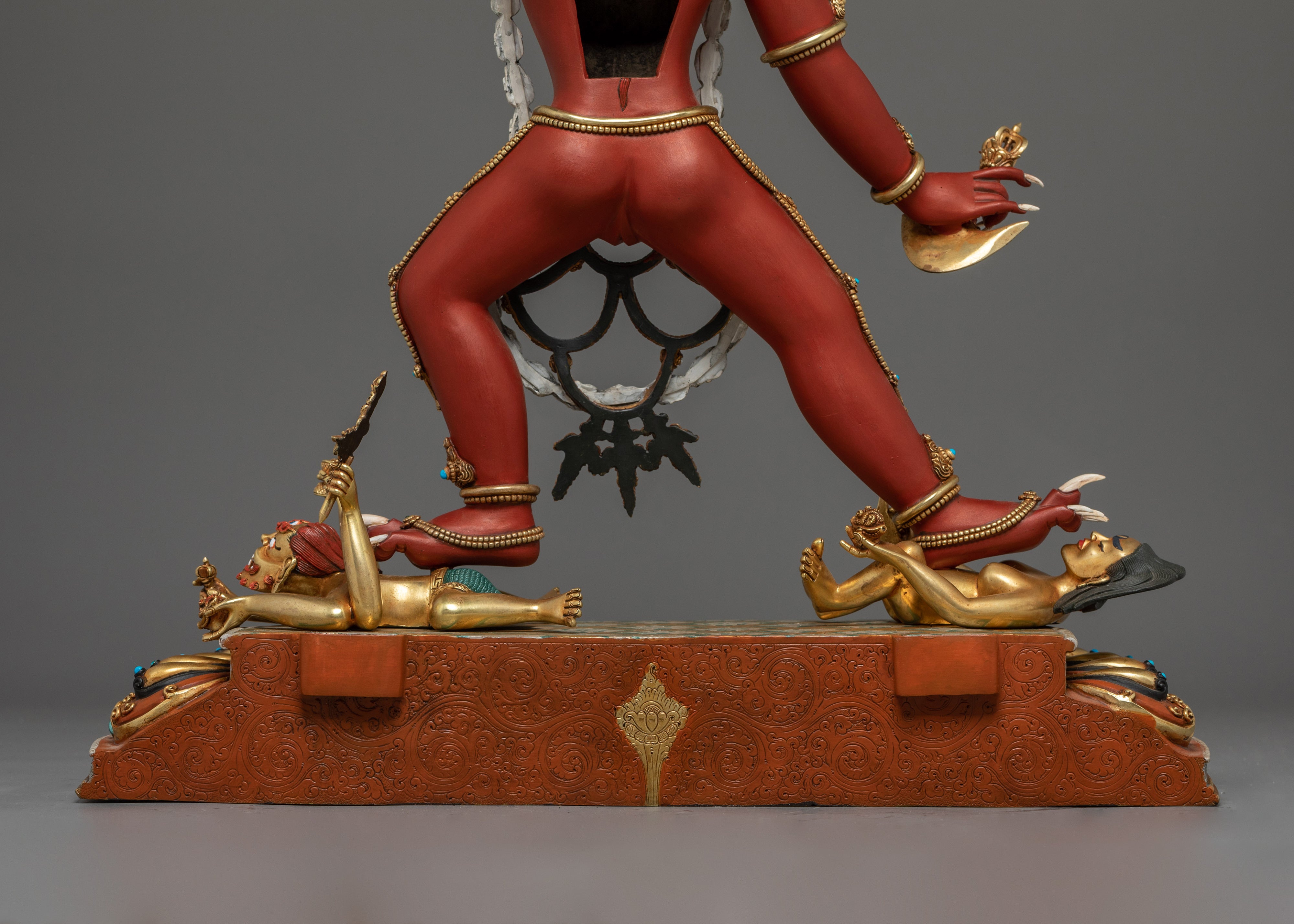
Himalayan Handmade Vajrayogini Statue for Ritual Spaces
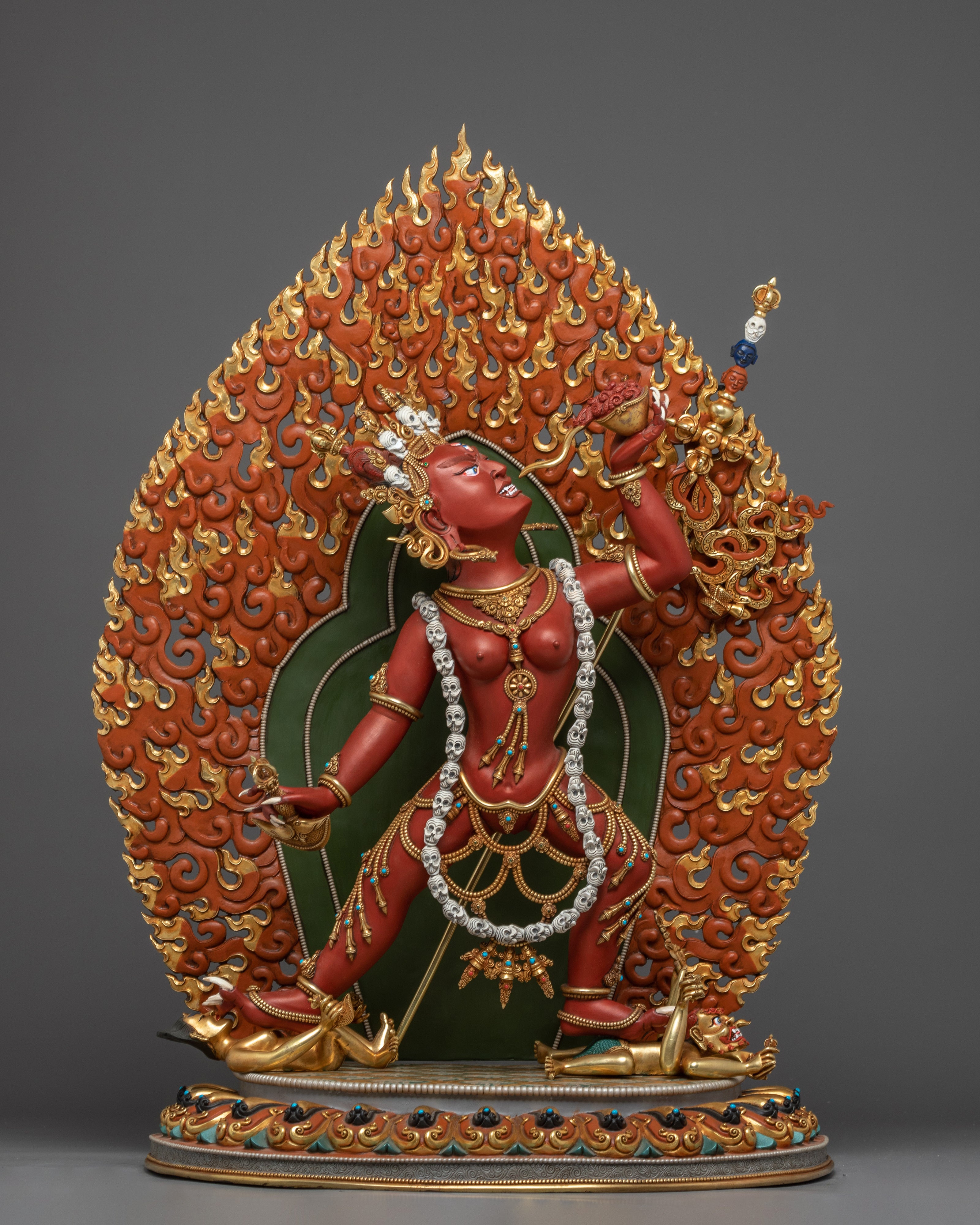
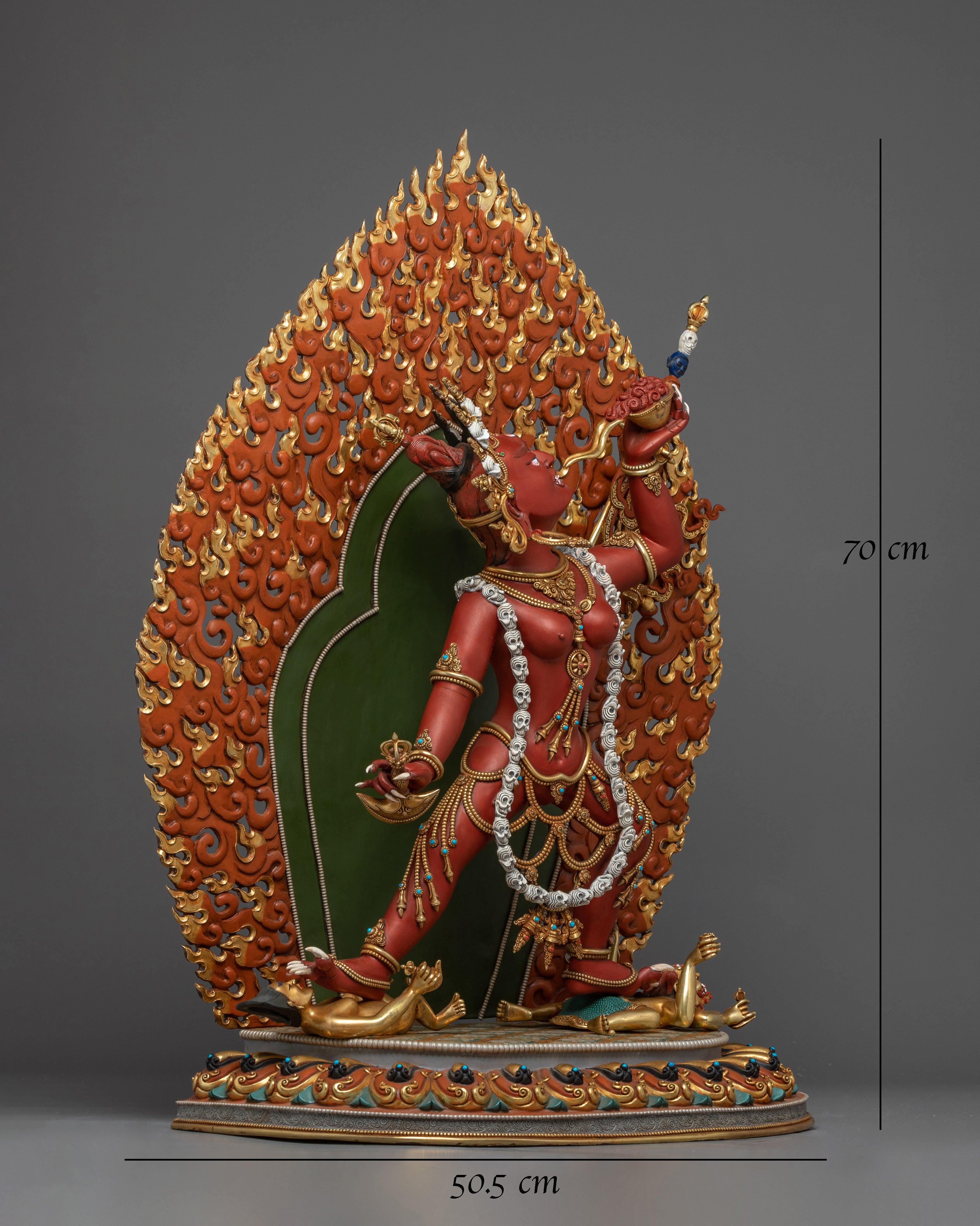
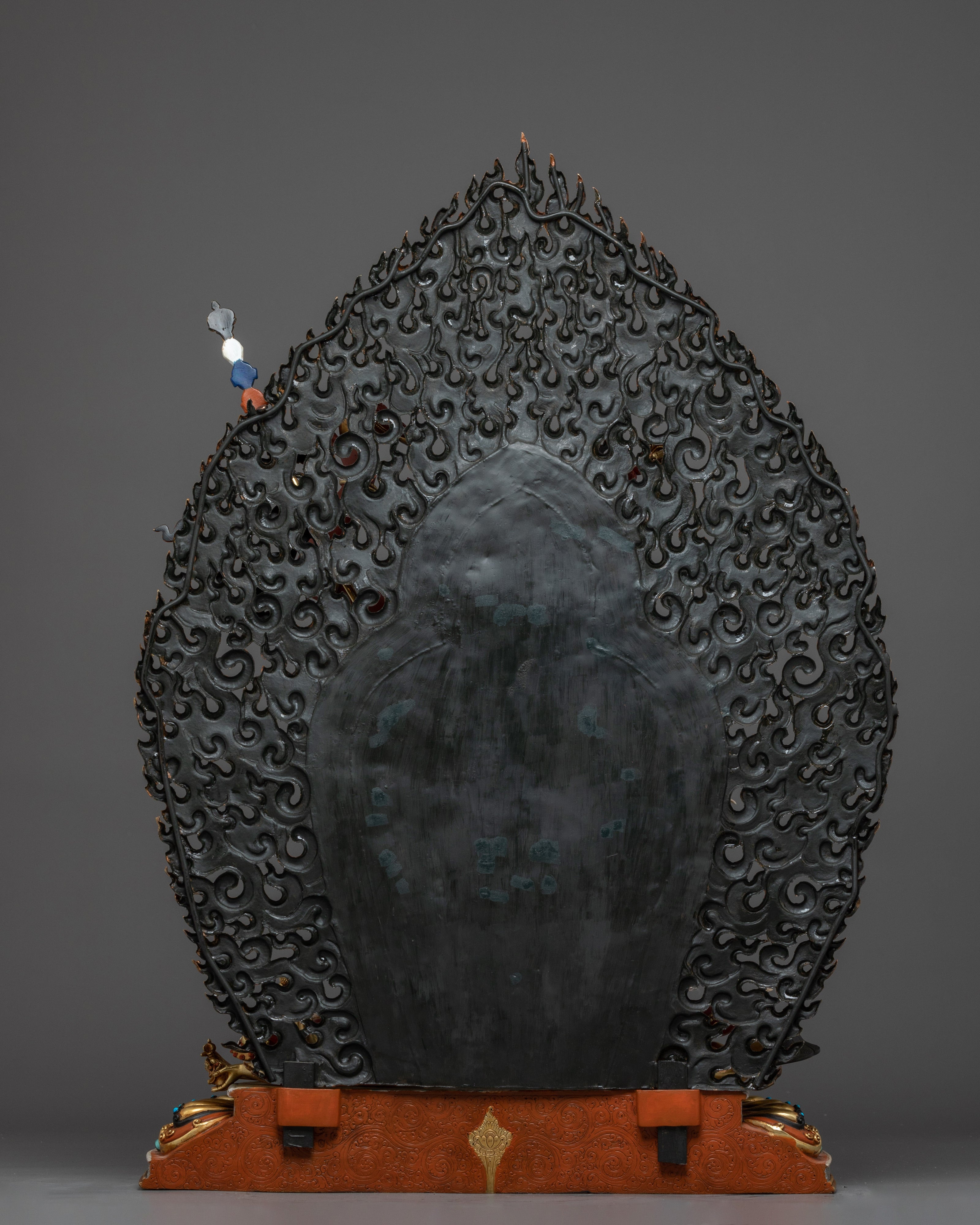
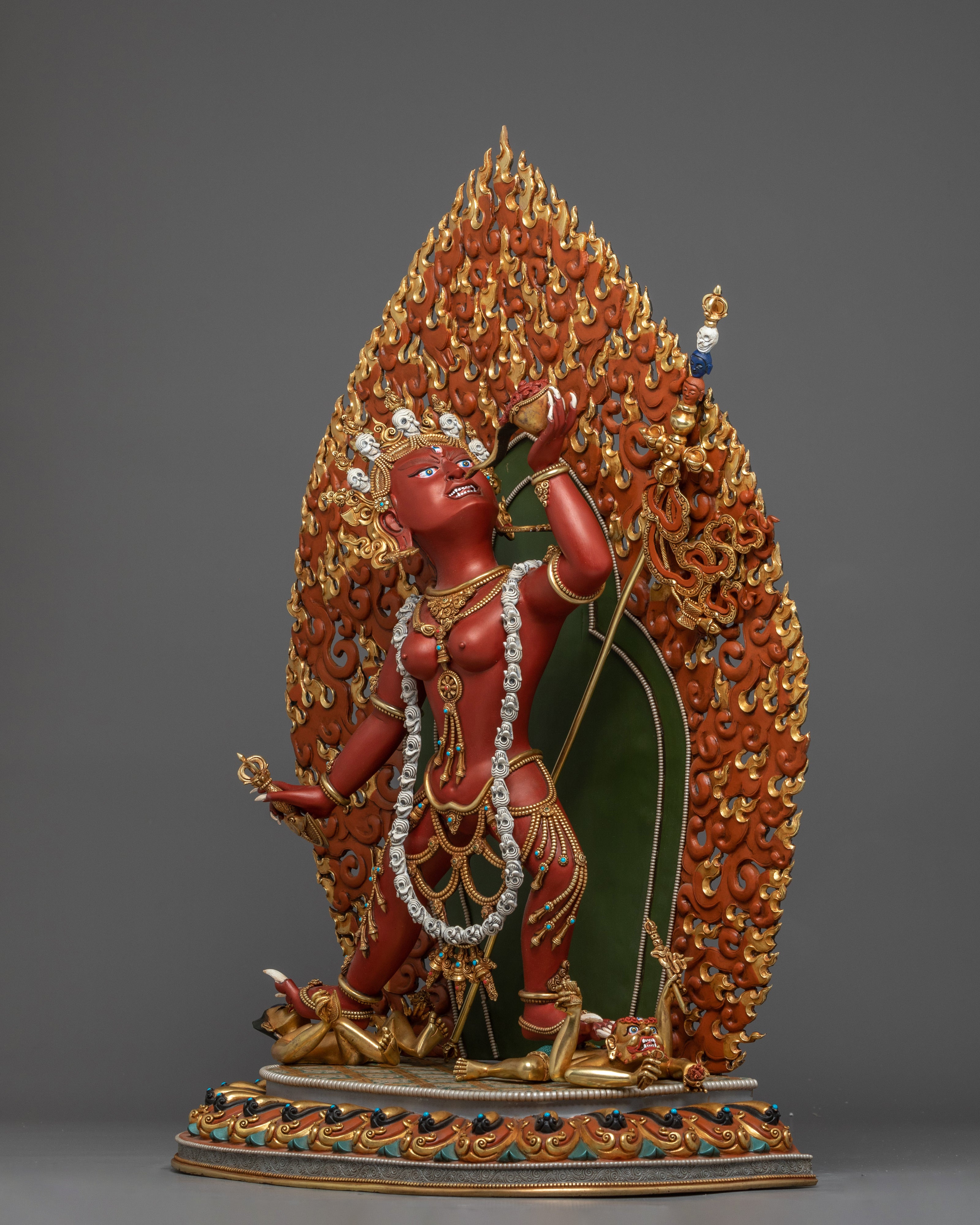
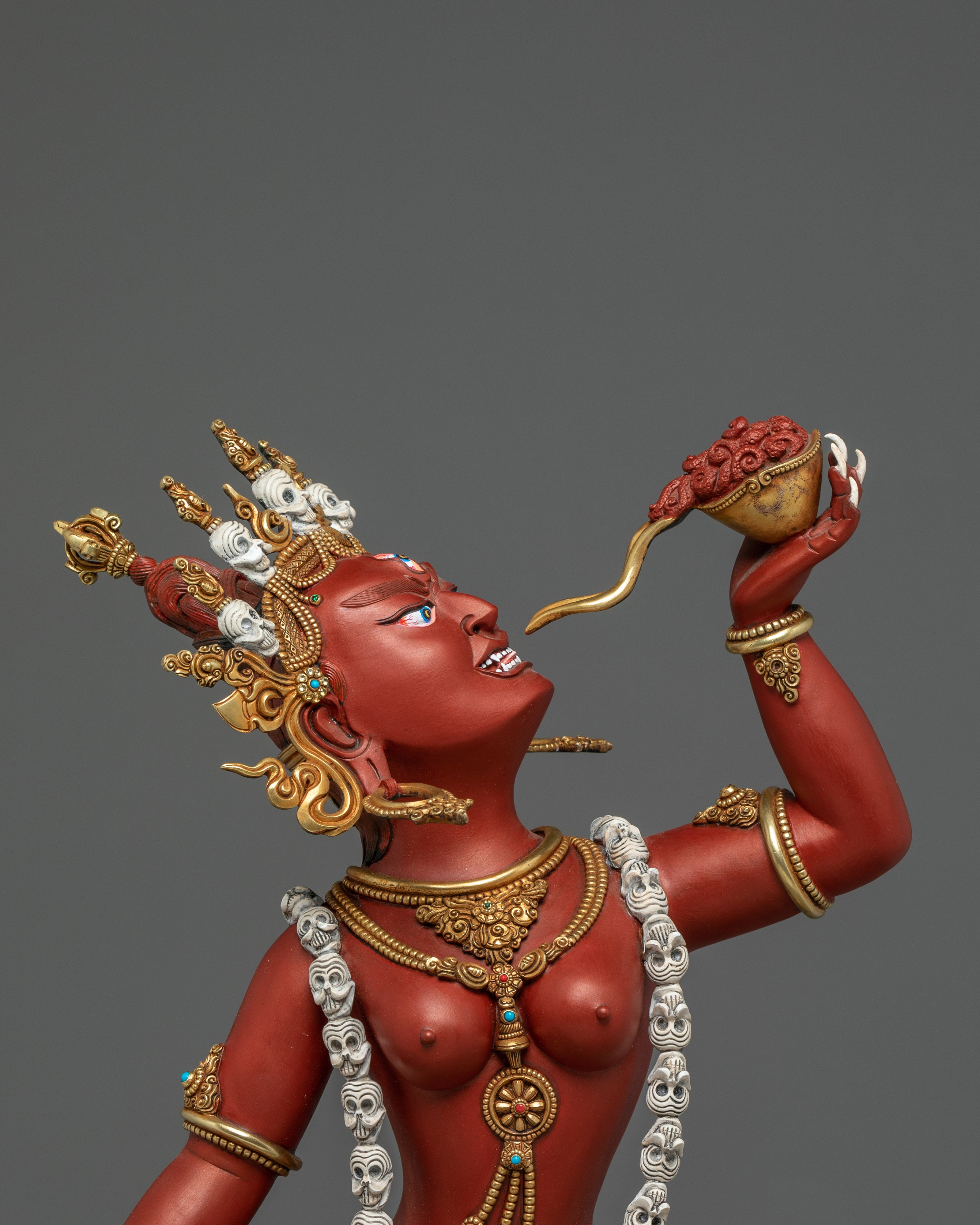
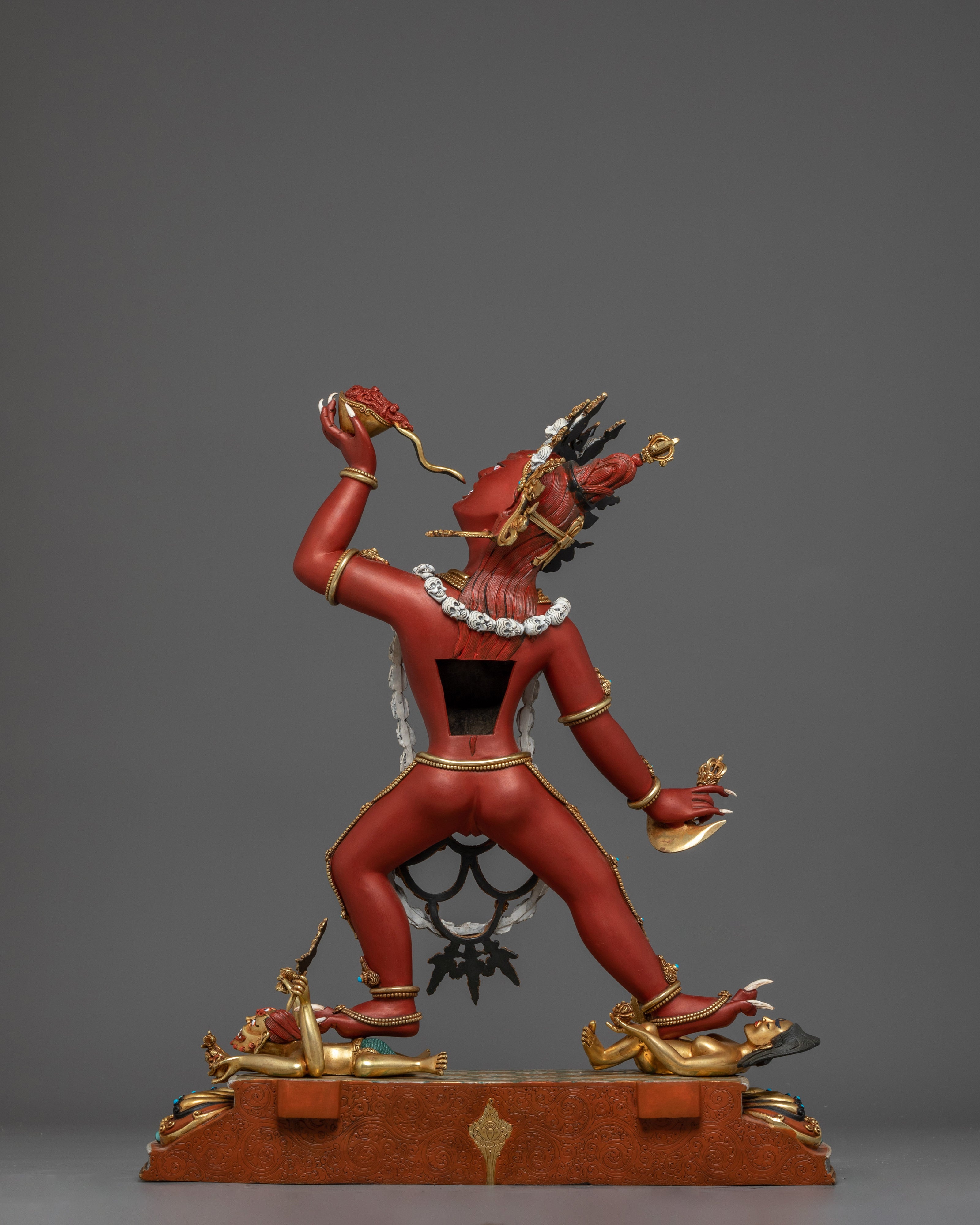
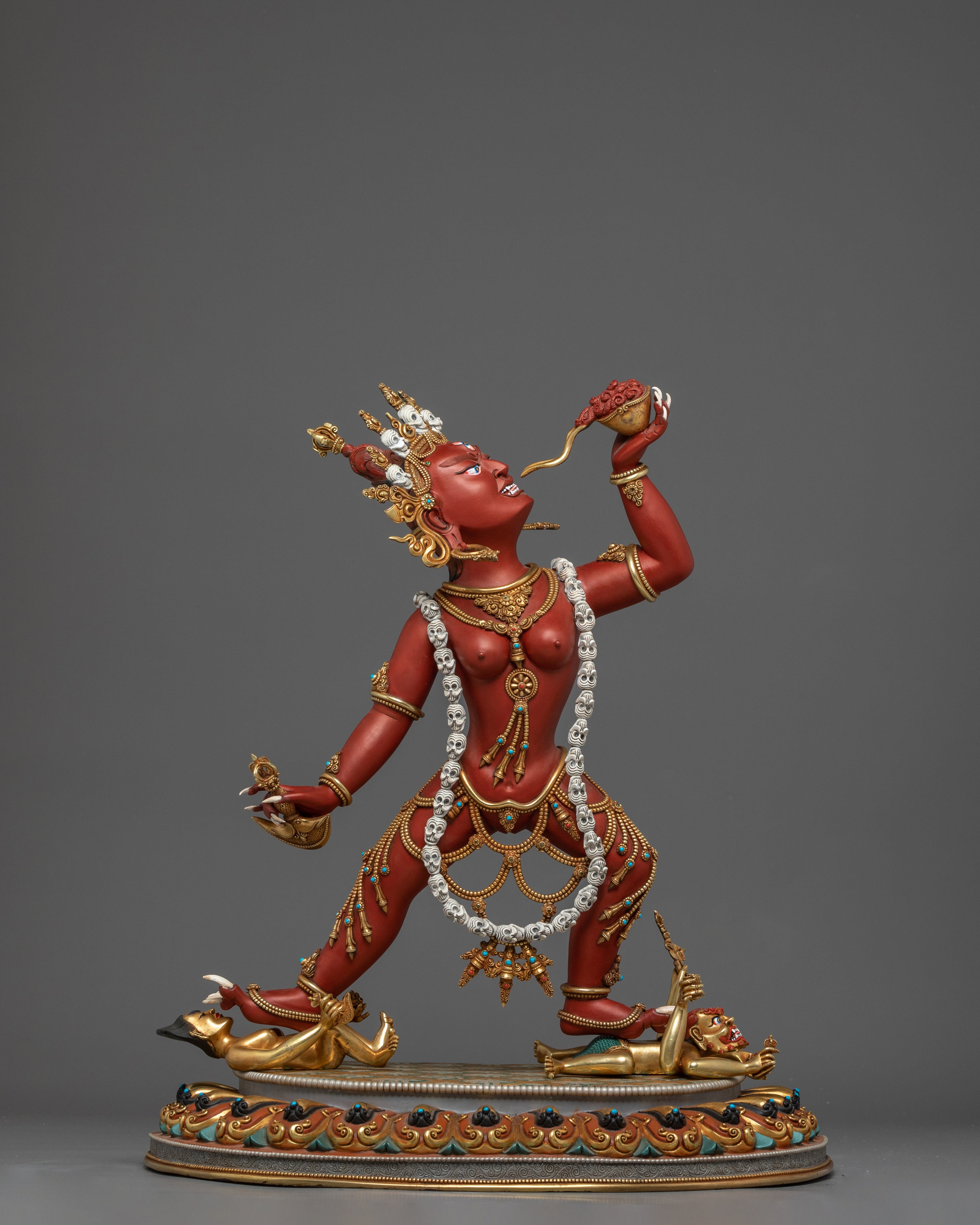
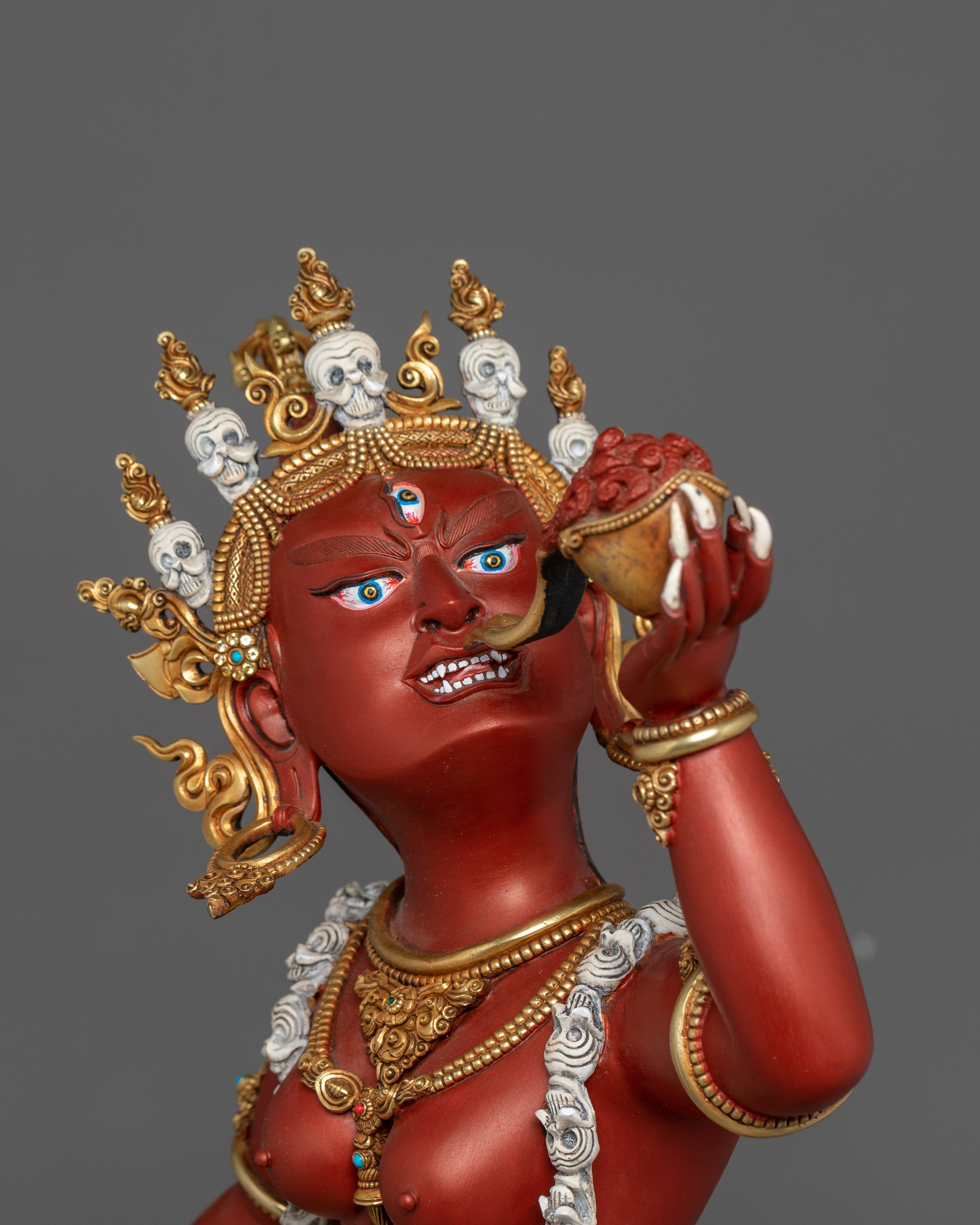
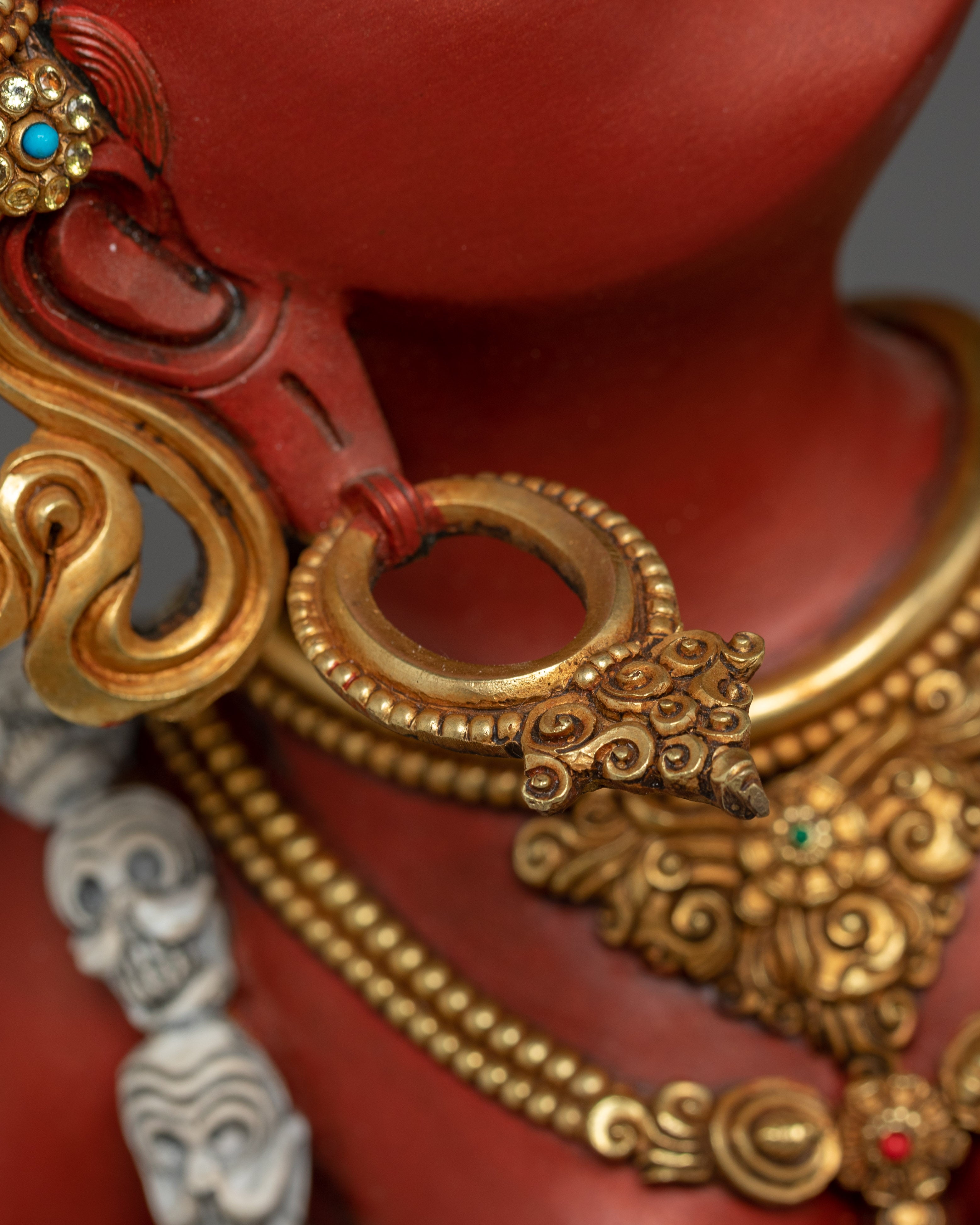
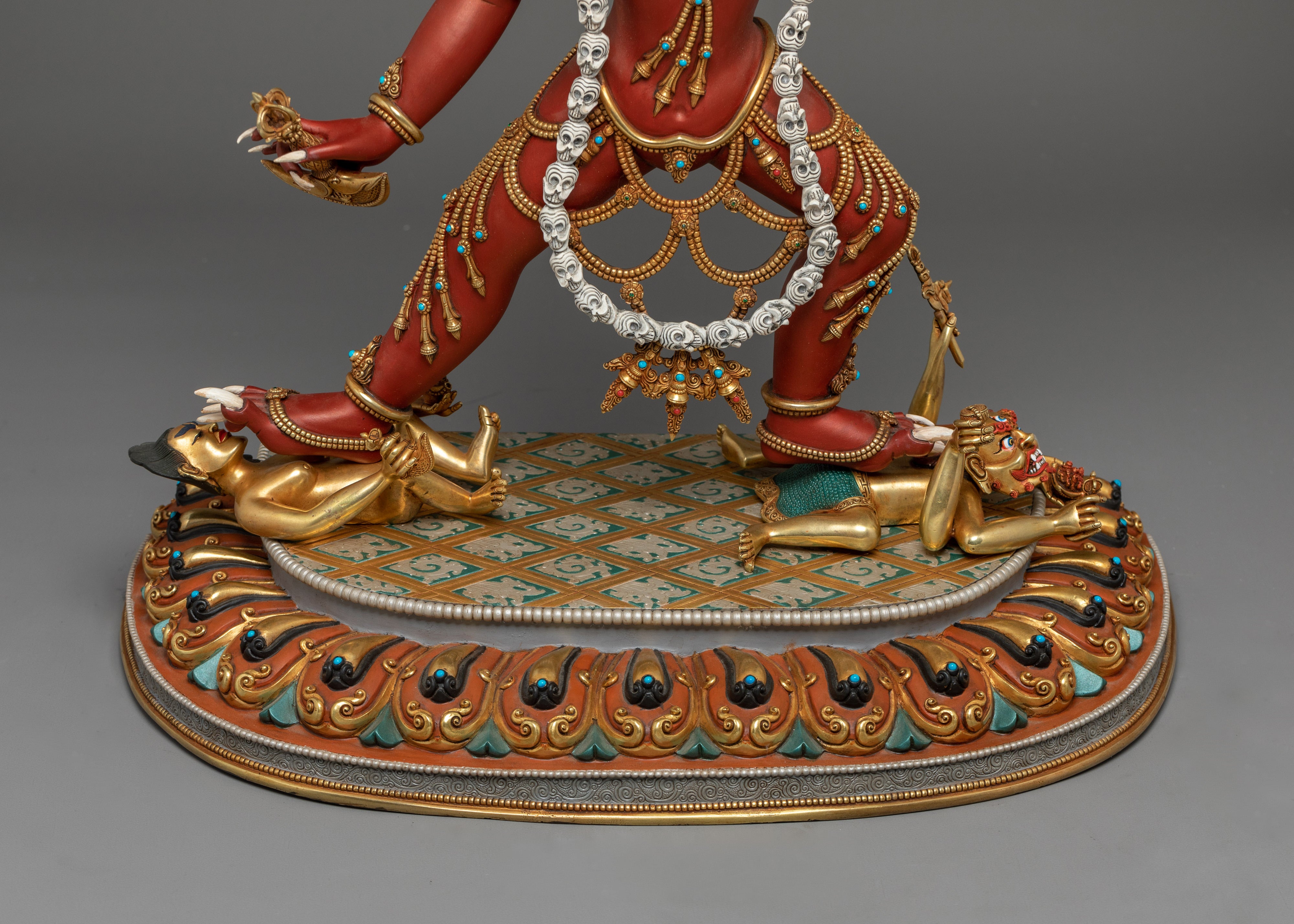
This Himalayan Handmade Vajrayogini Statue for ritual spaces stands 27.6” (70 cm) in height with a base width of 19.9” (50.5 cm) and weighs 15.30 kg. Expertly crafted from a copper body and richly adorned with 24K gold gilding and detailed acrylic paintings, the statue is covered with a triple layer of 24K gold gilding and carved with deeply engraved details that produce a magnificent 3D-like effect. Handcrafted by skilled Nepali artisans, it reflects both sacred meaning and traditional artistry, making it an inspiring addition to altars, meditation areas, or personal ritual collections.
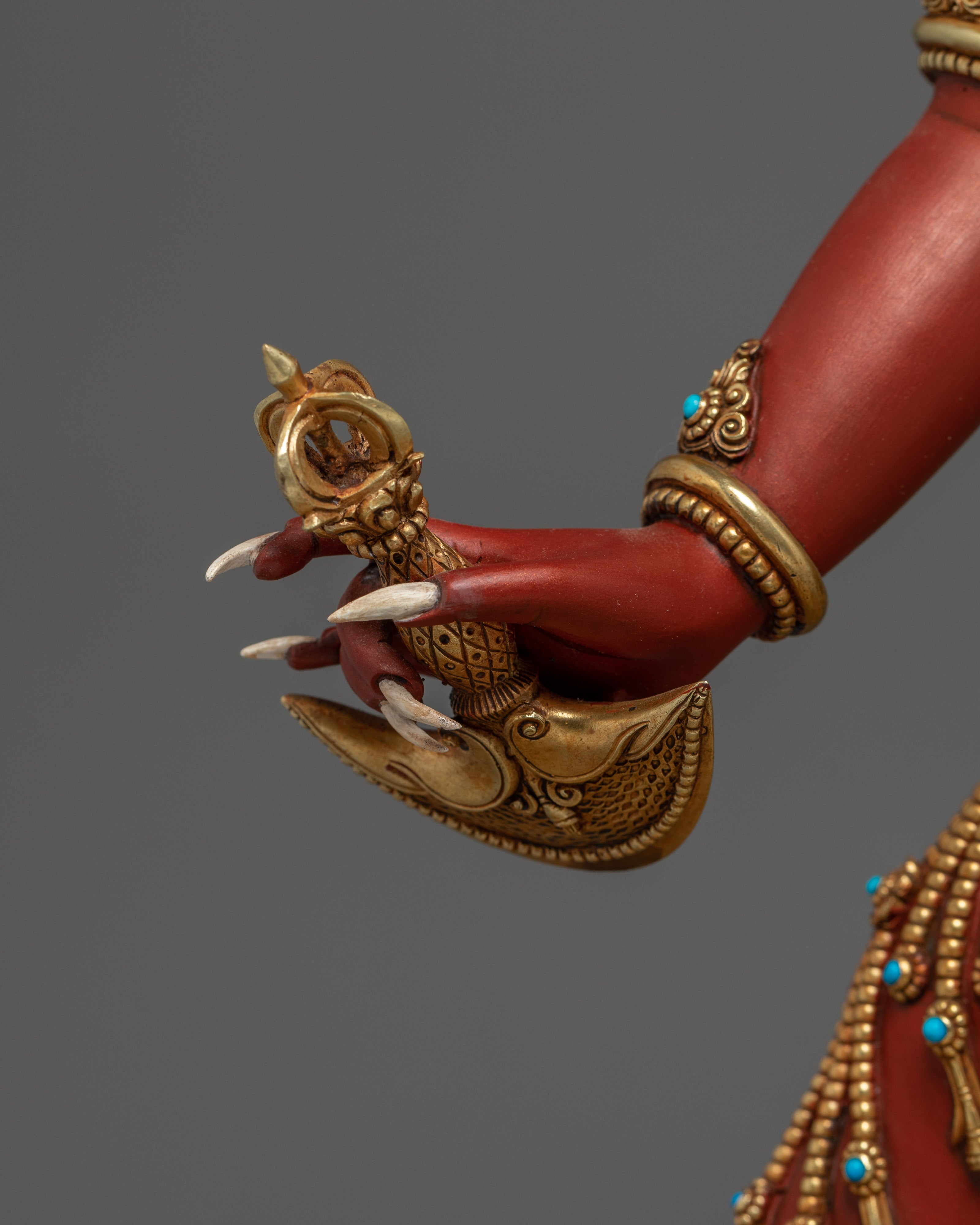
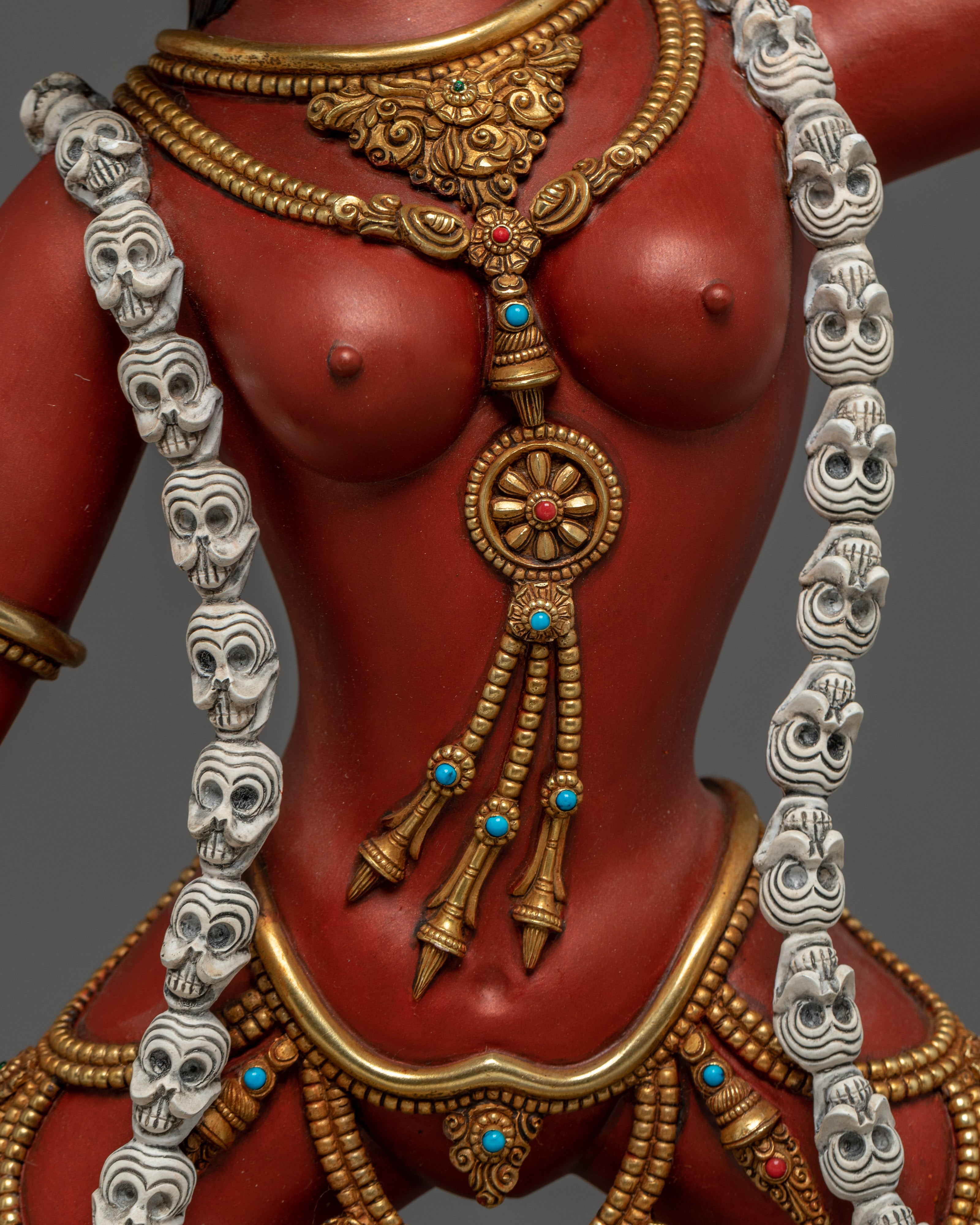
In her iconography, Vajrayoginī is depicted with a red-colored body, shown naked to symbolize freedom from attachment and illusion. She stands in a dynamic dancing posture, crowned with a five-skull crown that represents the transformation of the five poisons into wisdom. In her right hand, she wields a kartika (ritual flaying knife), symbolizing the severing of ignorance and ego, while in her left hand, she raises a skull cup from which she drinks, representing the transformation of desire into enlightened awareness. She is further adorned with a necklace of fifty skulls, denoting purified speech and mantra, and encircled by a radiant, flaming halo that embodies her fierce yet compassionate energy.
Size: 27.6”/70cm (Height) x 19.9”/50.5cm (Base)
Weight: 15.30 kg
Material: 24K Gold Gilded, Acrylic Paintings, Copper Body
Vajrayoginī is one of the most revered female deities in Vajrayana Buddhism, regarded as the supreme embodiment of wisdom and enlightened energy. She is considered a dakini—a spiritual guide and protector—who helps practitioners cut through ignorance, attachment, and illusion to realize the true nature of reality.
She is typically depicted in a red, semi-wrathful form, symbolizing passion transformed into wisdom, and is associated with practices of transformation, liberation, and the union of wisdom and compassion. Vajrayoginī is seen as the essence of all female Buddhas and is often described as the “Queen of Dakinis.”