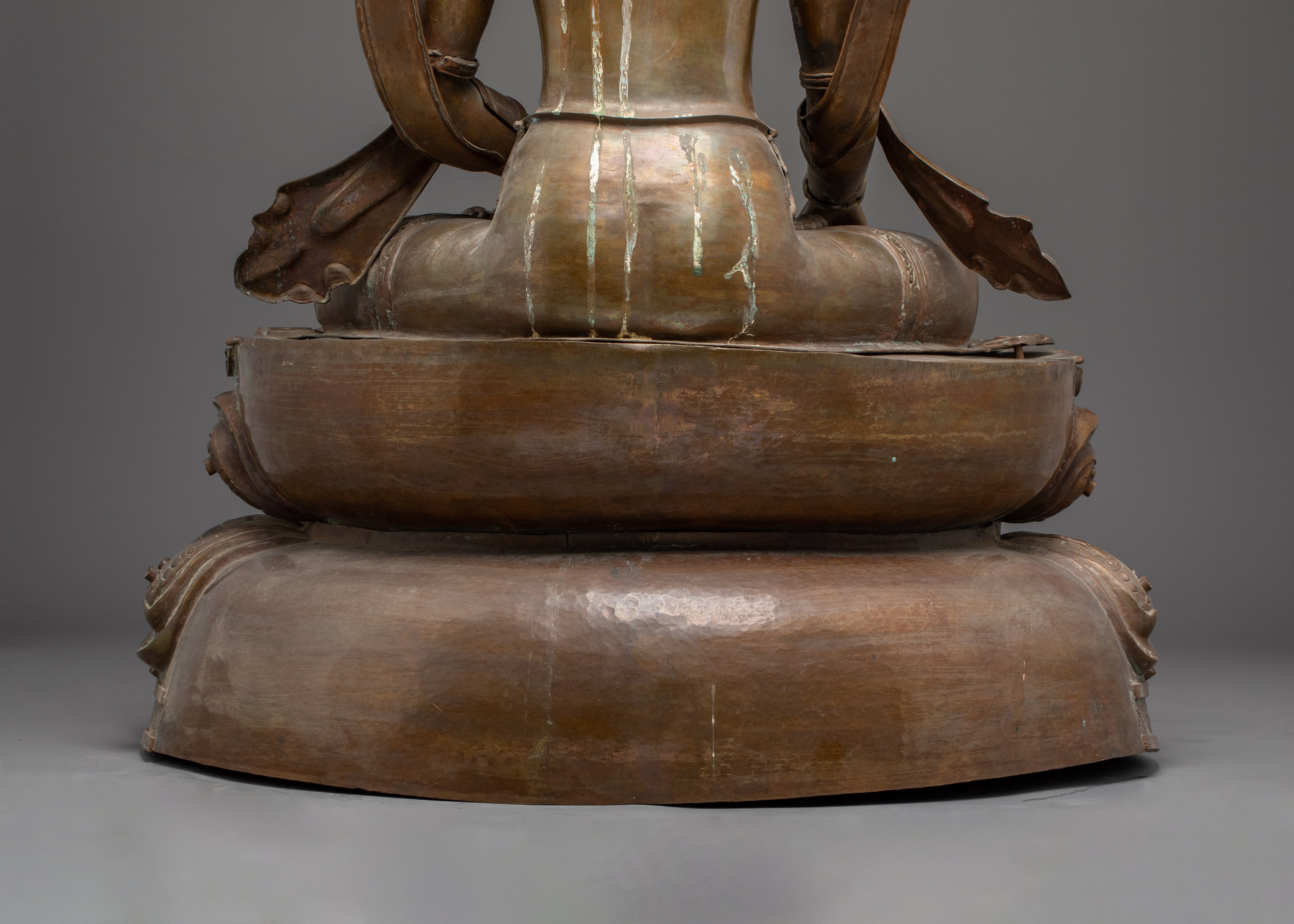
The Crown Shayamuni Buddha, Meditation Art | Traditional Himalayan Copper Statue
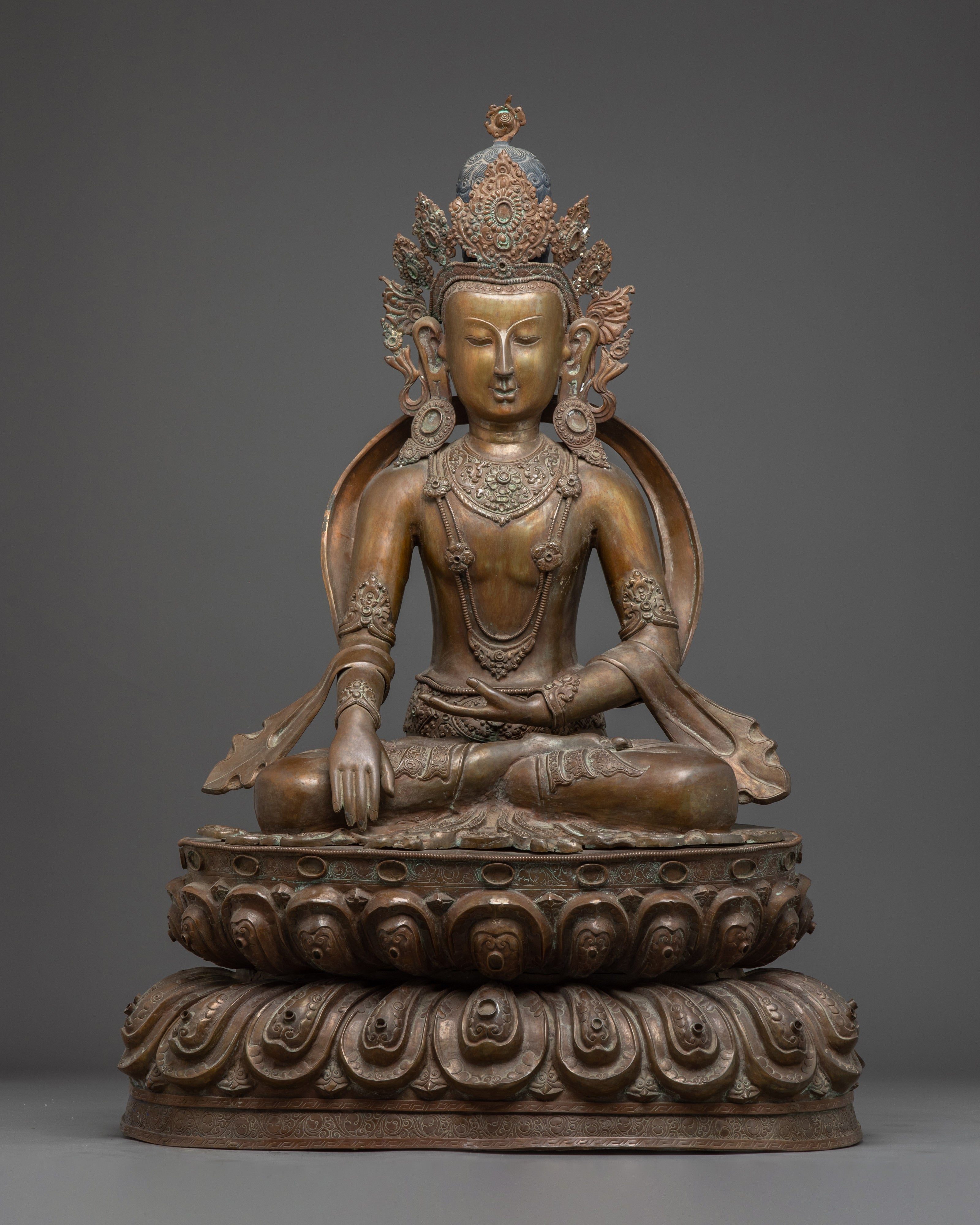
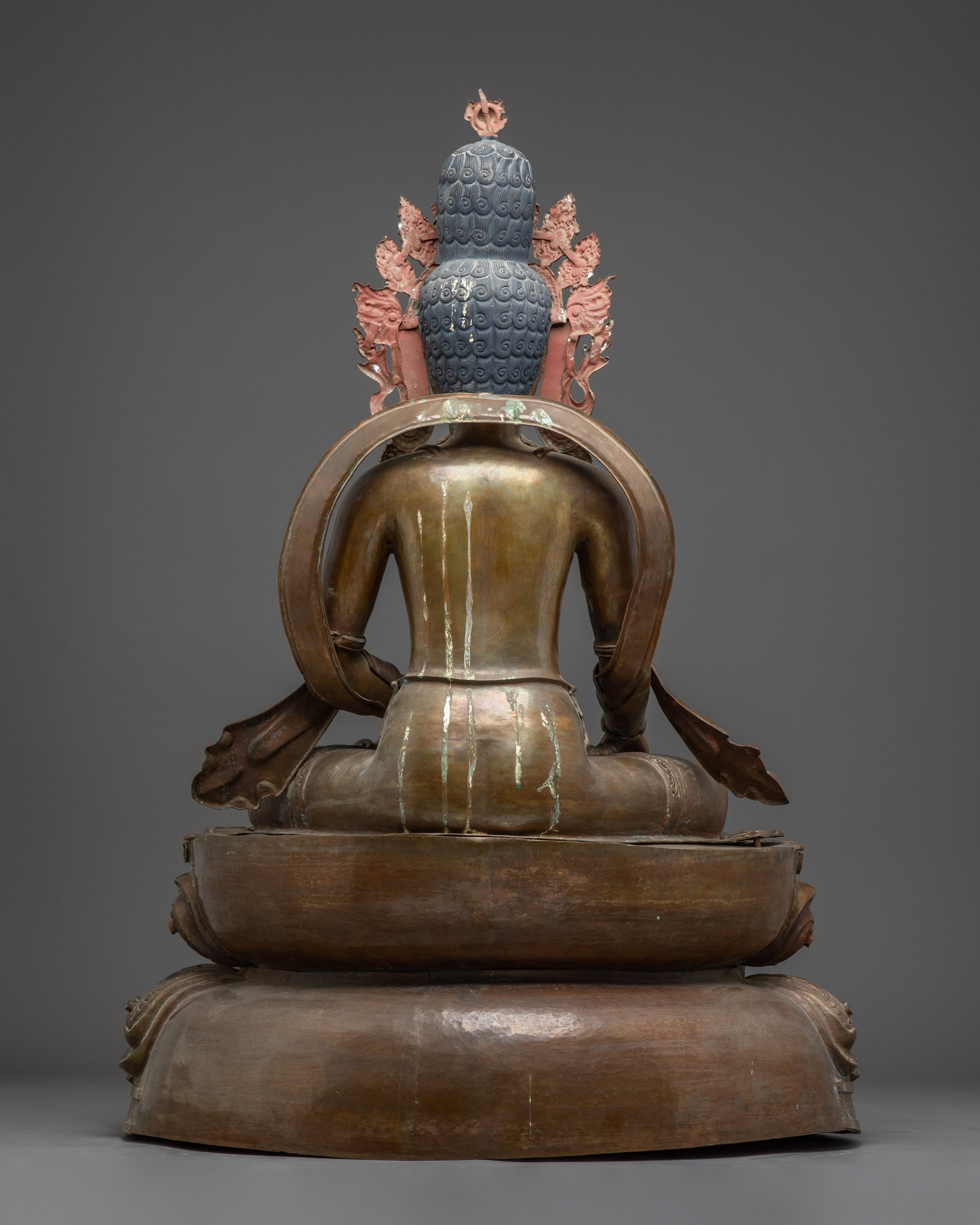
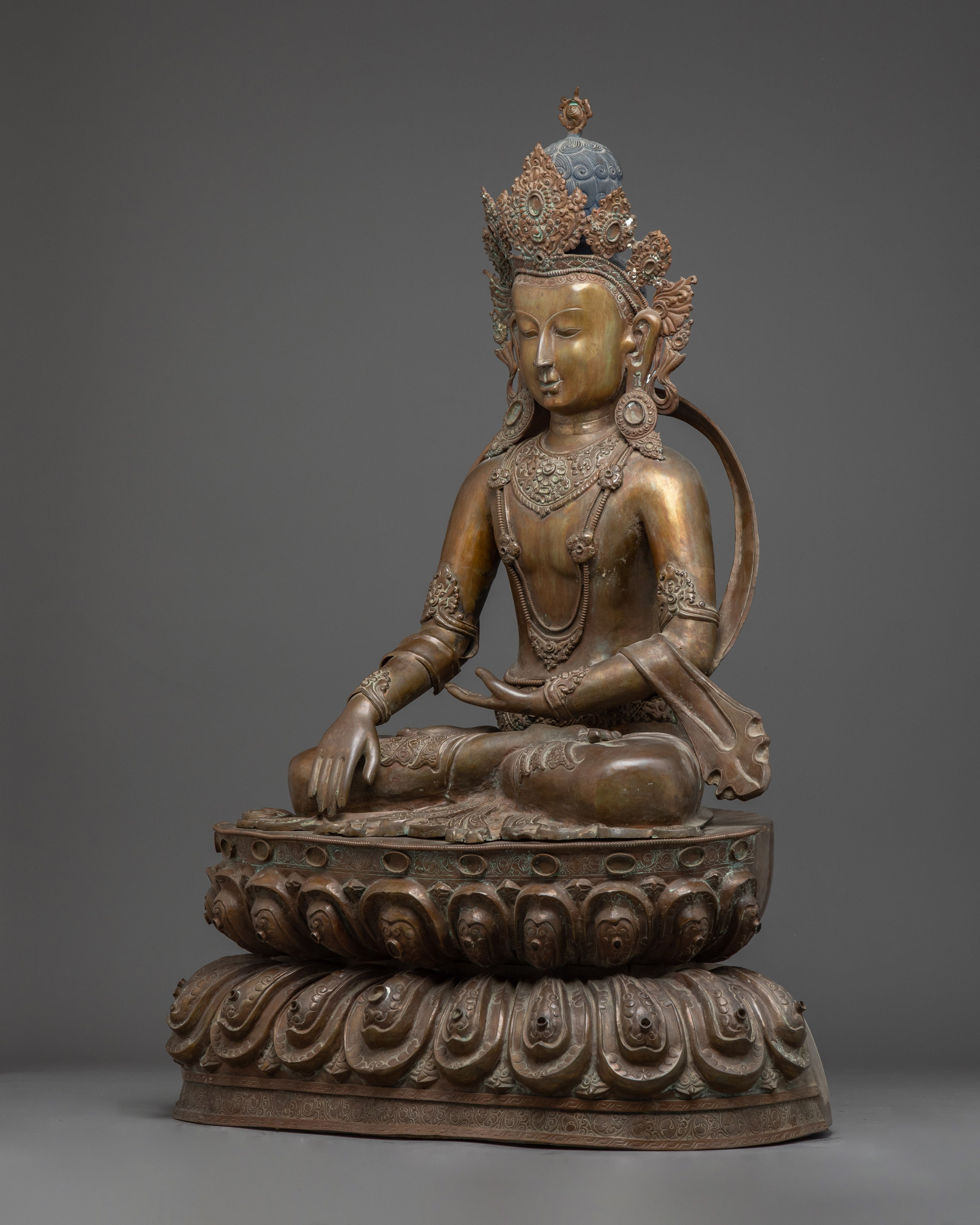
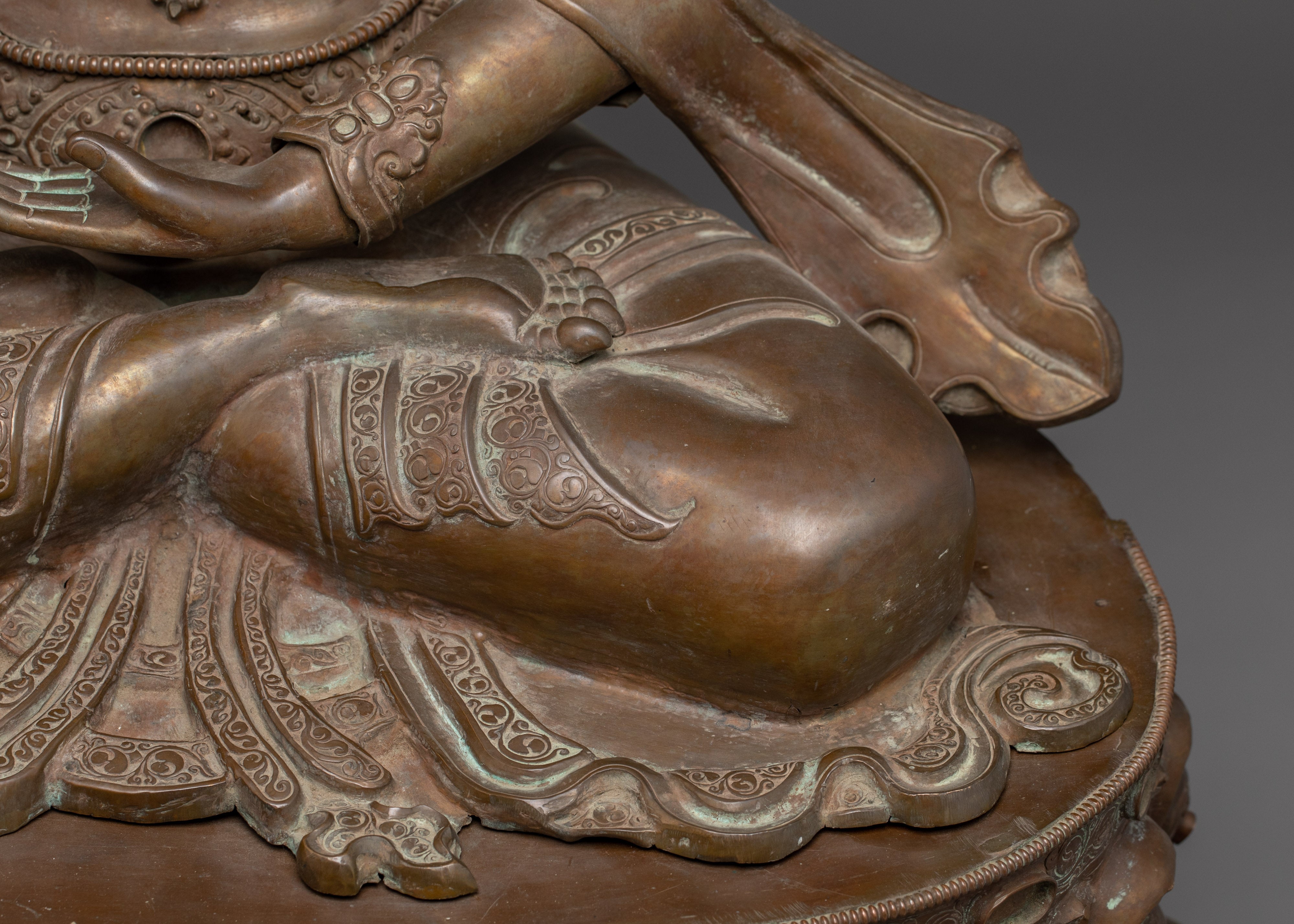
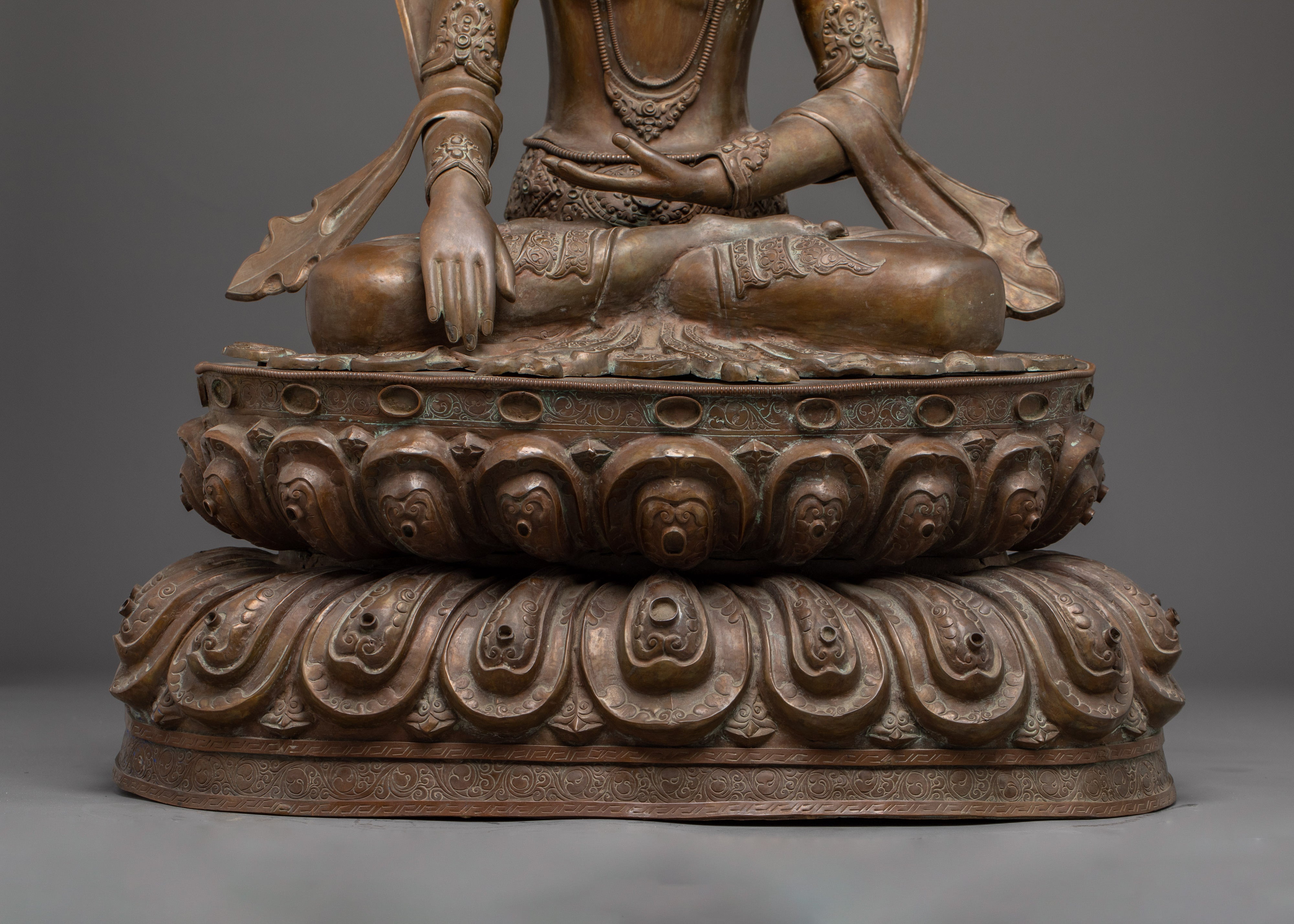
Crown Shayamuni Buddha, Meditation Art measures an impressive 29.9 inches (76 cm) in height and 21.3 inches (54 cm) across the base, with a total weight of 9.46 kilograms. Crafted from an oxidized copper body, it features detailed acrylic paintings that highlight the figure’s intricate features and sacred symbolism. The oxidized finish provides an antique, time-worn appearance, adding depth and historical character to the piece. Ideal for spiritual spaces or as a decorative focal point, this statue combines traditional craftsmanship with a rich, aged aesthetic.
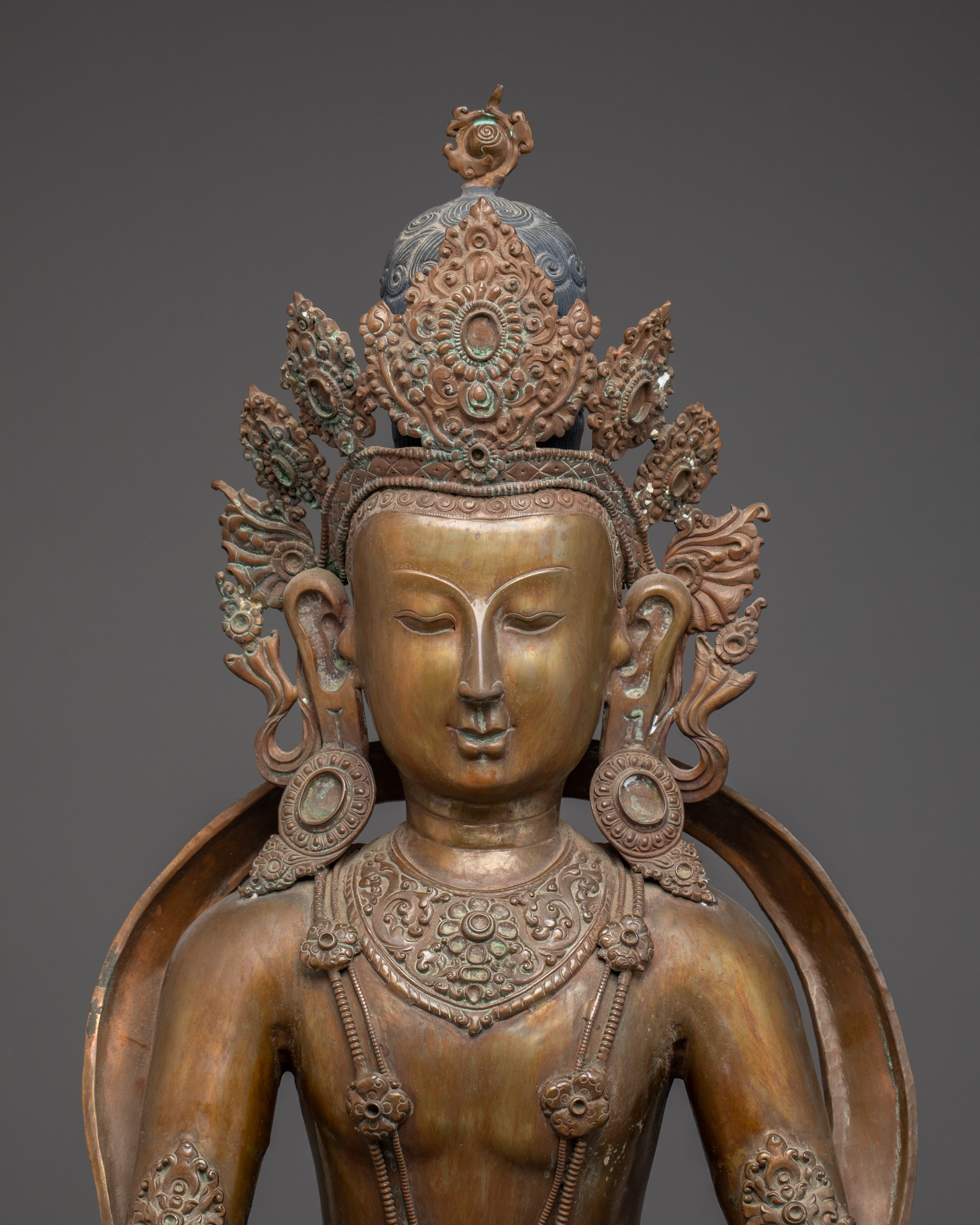
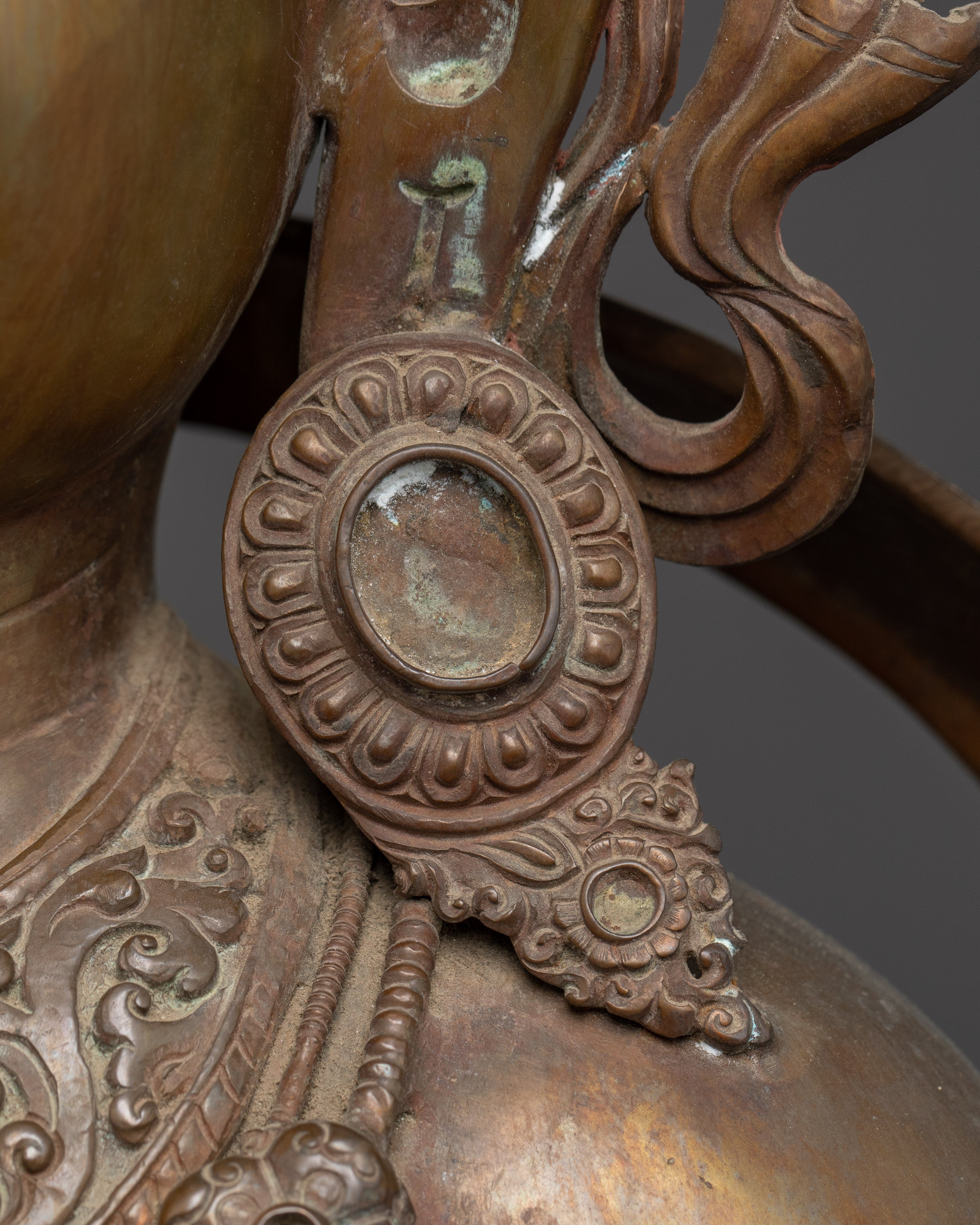
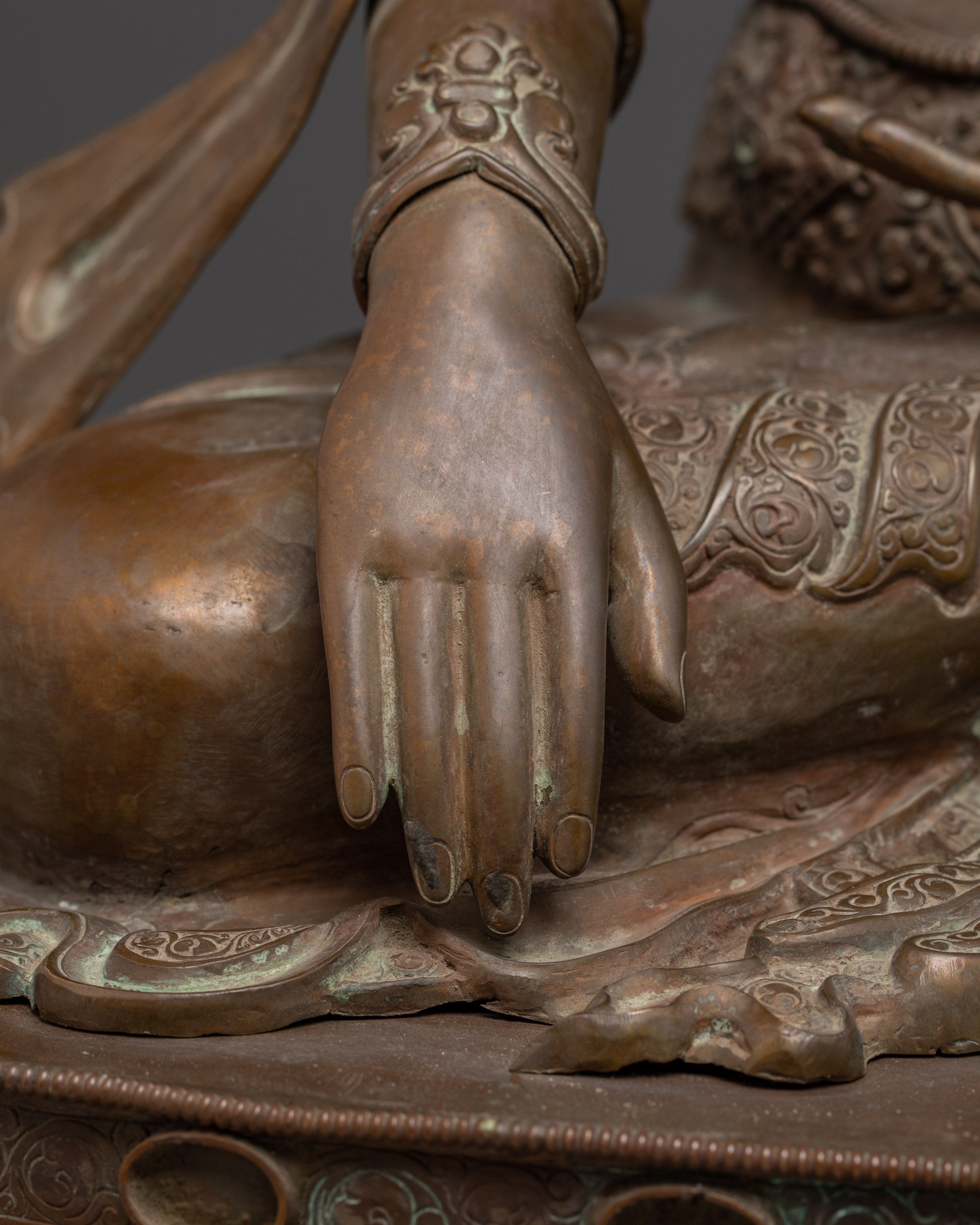
Shakyamuni Buddha is depicted in a calm, meditative state with half-closed eyes, embodying profound inner peace and an awakened presence. His right hand is in the bhūmisparśa mudrā (earth-touching gesture), signifying the moment he called the Earth to witness his enlightenment. His left hand holds an alms bowl, symbolizing renunciation and the simplicity of the monastic path. Replacing the traditional uṣṇīṣa and coiled hair, he is adorned with a five-pointed crown representing the Five Dhyani Buddhas, emphasizing his transcendent wisdom. He sits gracefully in the vajra posture on a moon disc lotus base, conveying stability, spiritual purity, and unwavering focus. This refined iconography honors the profound presence of the historical Buddha—serene, dignified, and deeply symbolic.
Size: 29.9”/76cm (Height) x 21.3”/54cm (Base)
Weight: 9.46 kg
Material: Acrylic Paintings, Oxidized Copper Body, Antique Finish
Gautama Buddha, also known as Shakyamuni Buddha, was a spiritual teacher and the founder of Buddhism, born as Siddhartha Gautama in ancient Nepal. Renouncing his royal life in search of truth, he attained enlightenment under the Bodhi tree and shared the path to liberation from suffering. At the core of his teachings are the Four Noble Truths: the truth of suffering (duḥkha), its origin (samudaya), its cessation (nirodha), and the path leading to its cessation (mārga). This path is known as the Noble Eightfold Path, which includes right view, right intention, right speech, right action, right livelihood, right effort, right mindfulness, and right concentration—a guide to ethical conduct, mental discipline, and wisdom that leads to the end of suffering and ultimate freedom (nirvāṇa).