


Description
Himalayan Decorative Shakyamuni Buddha Statue | Historical Buddha
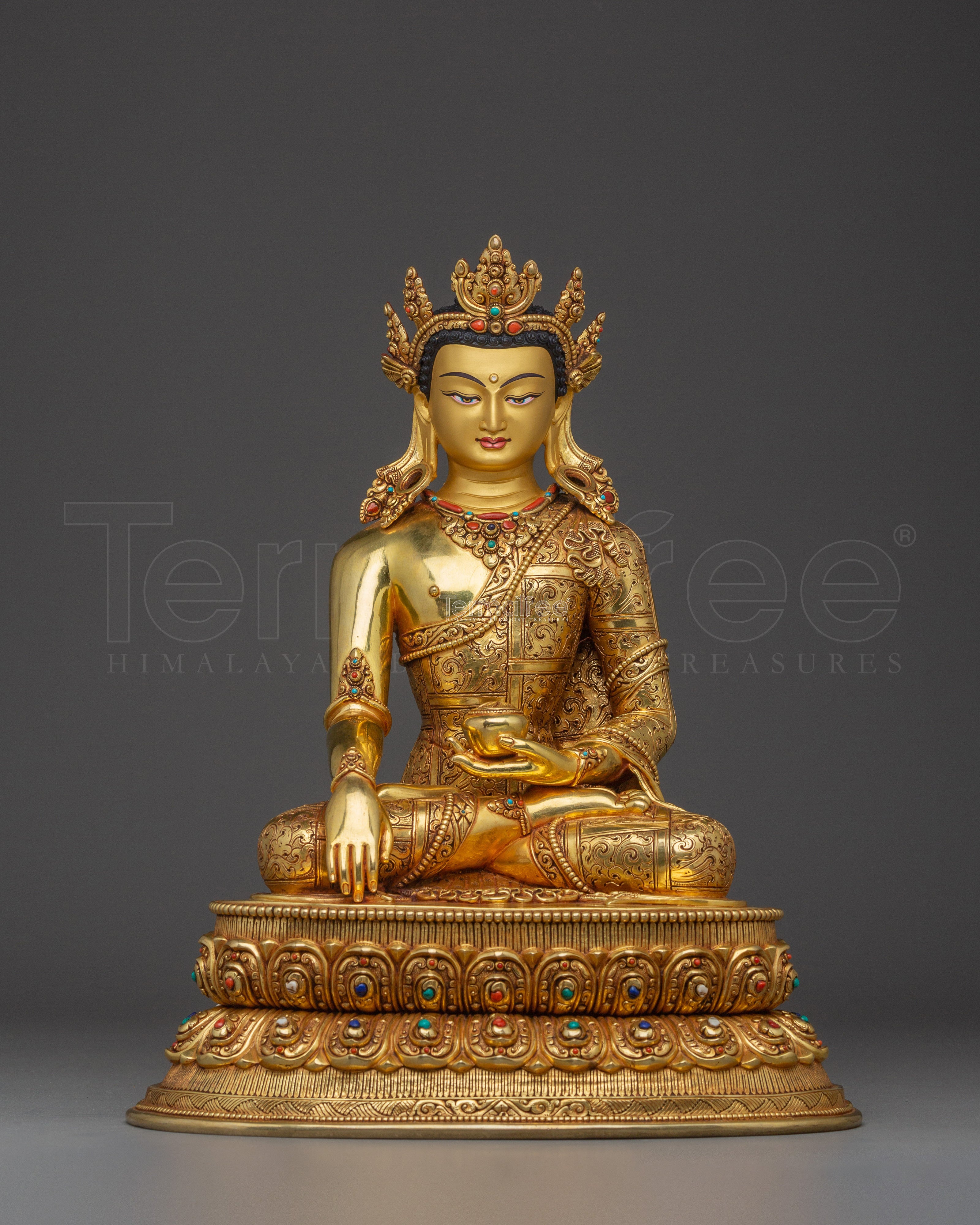
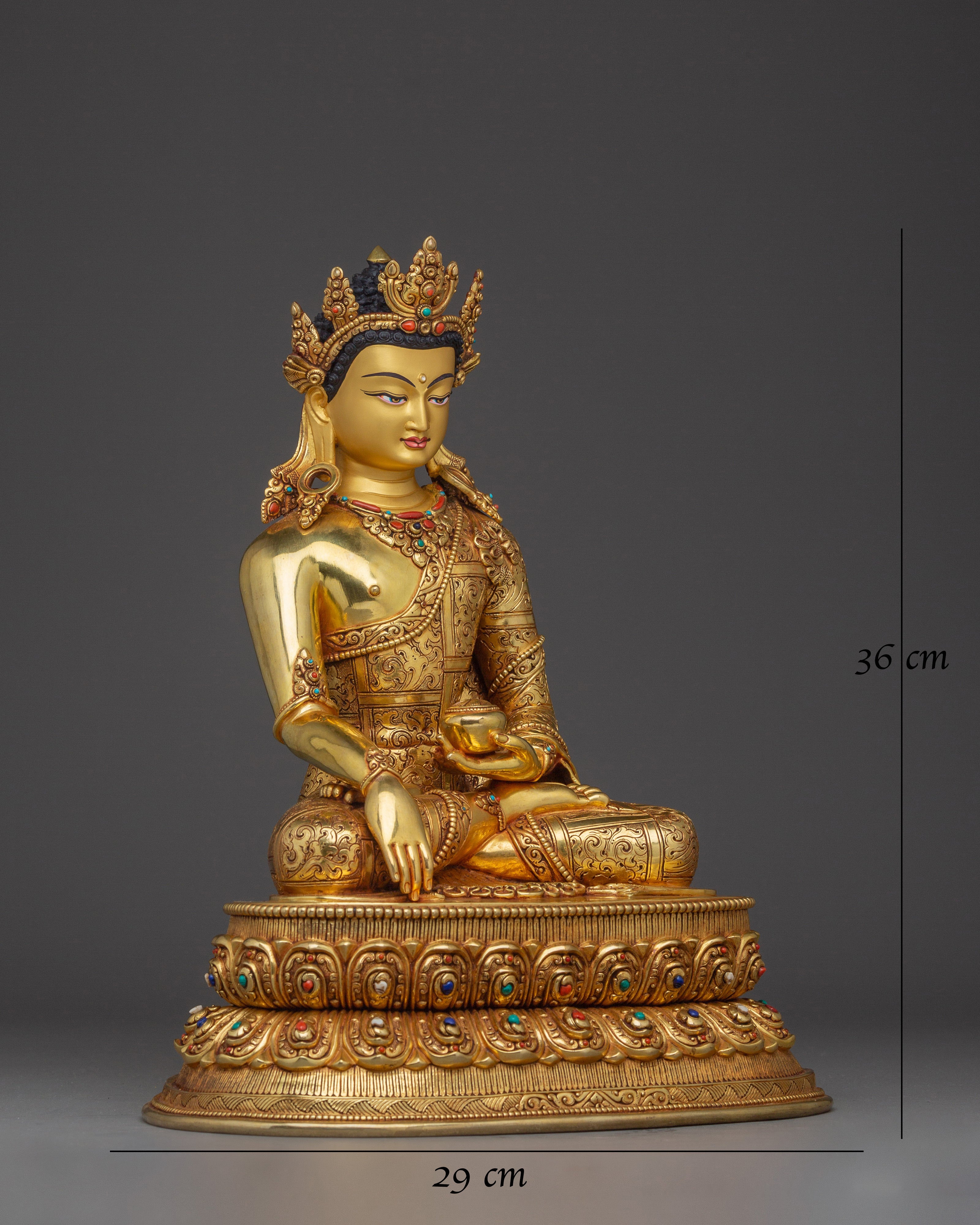
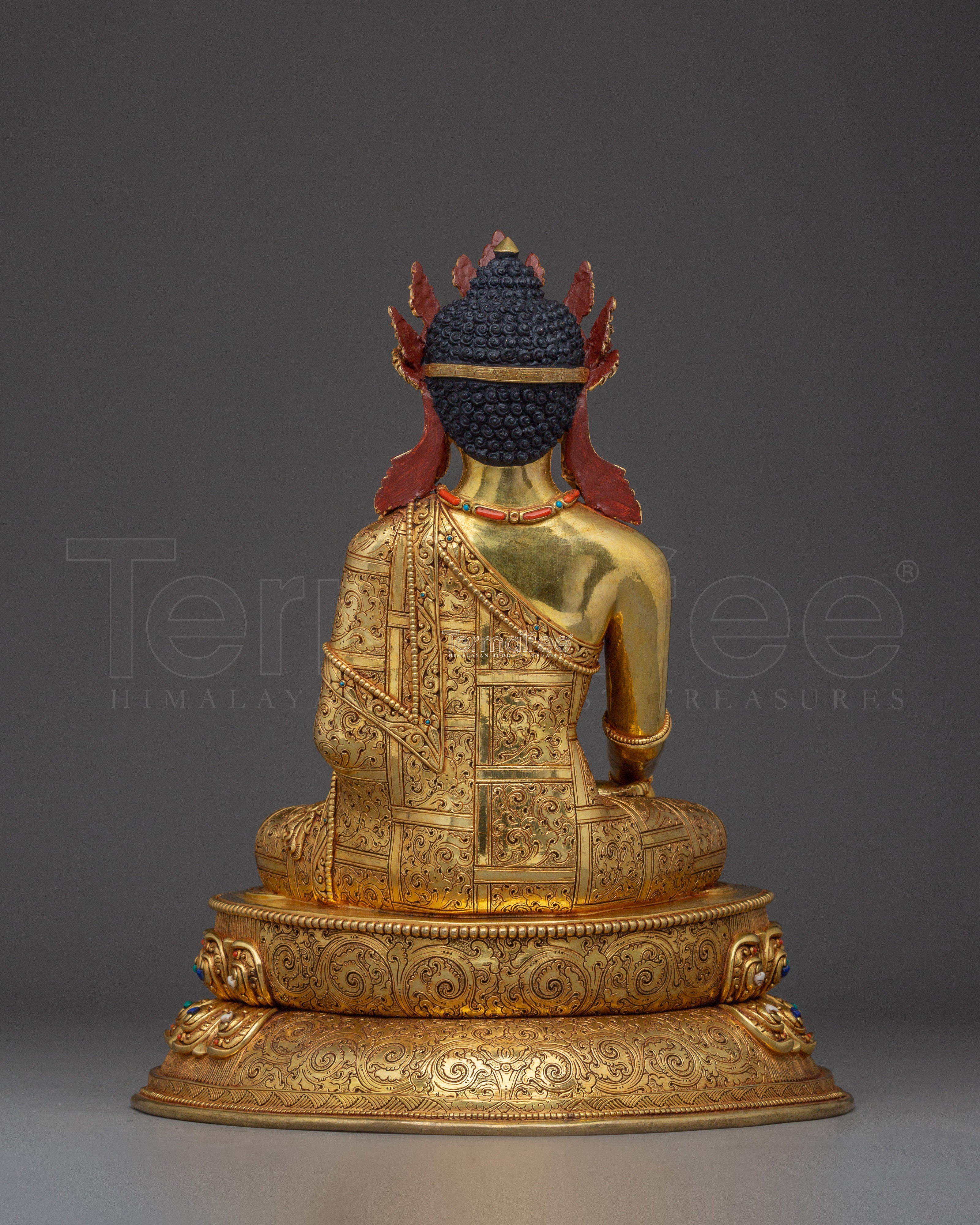
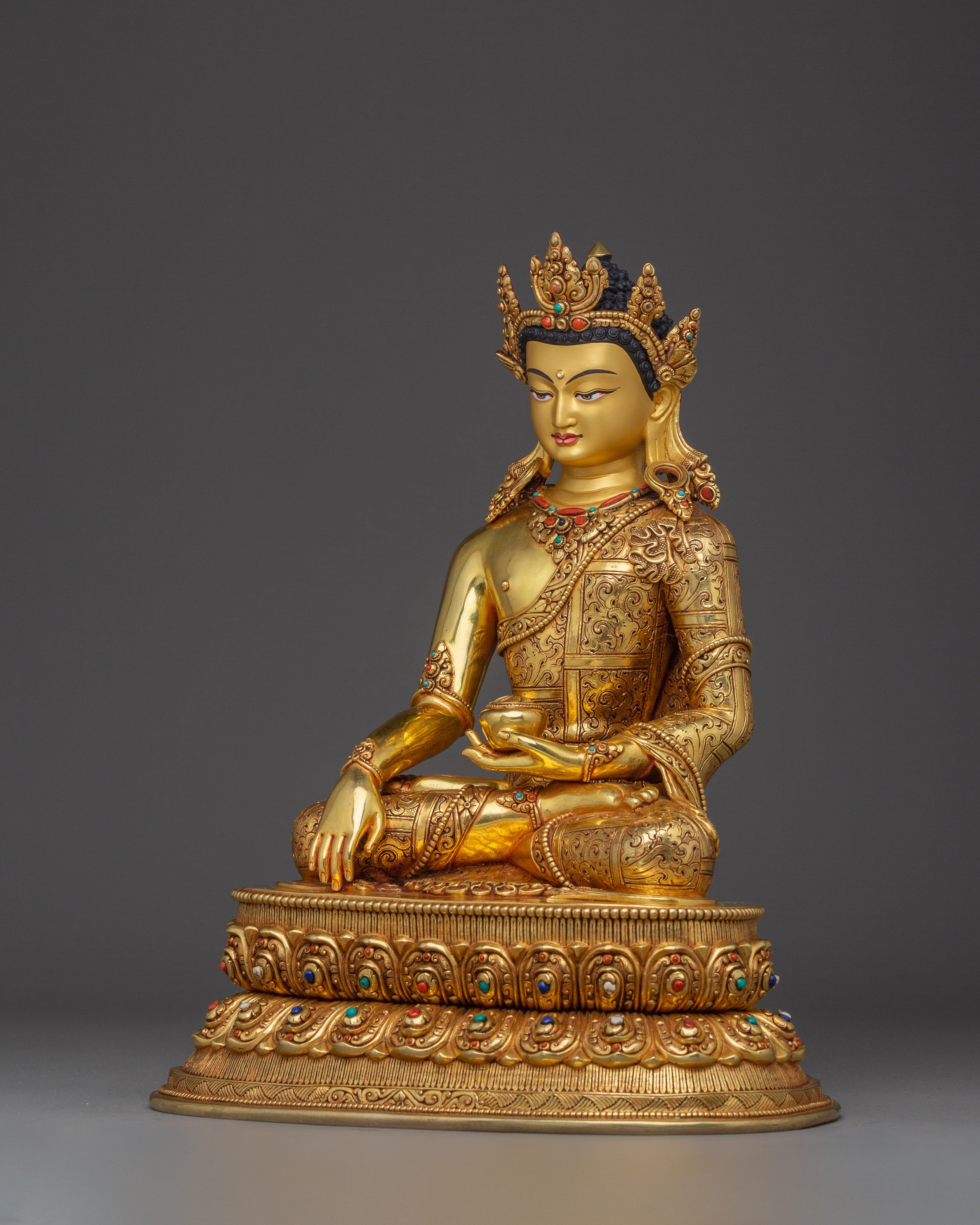
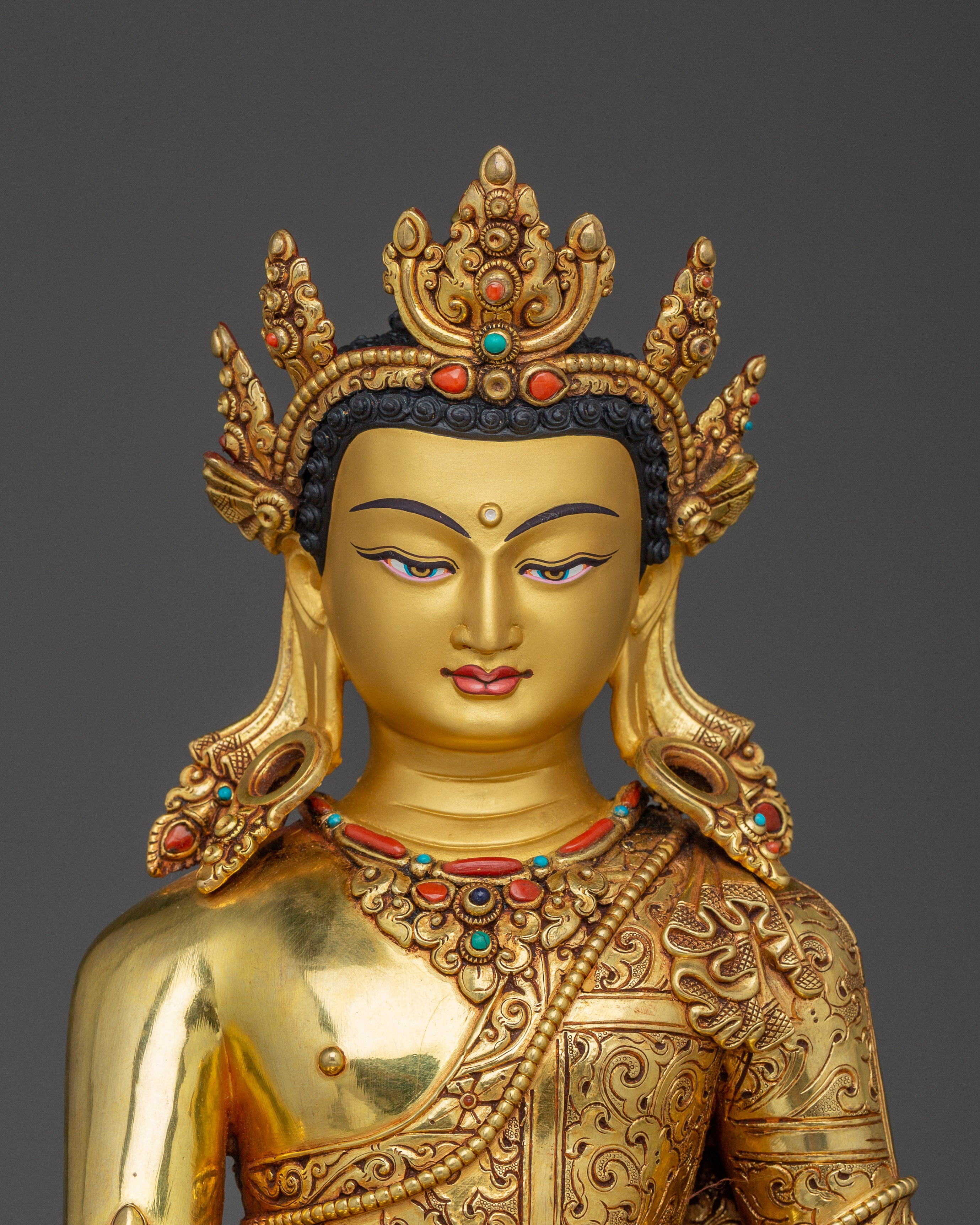
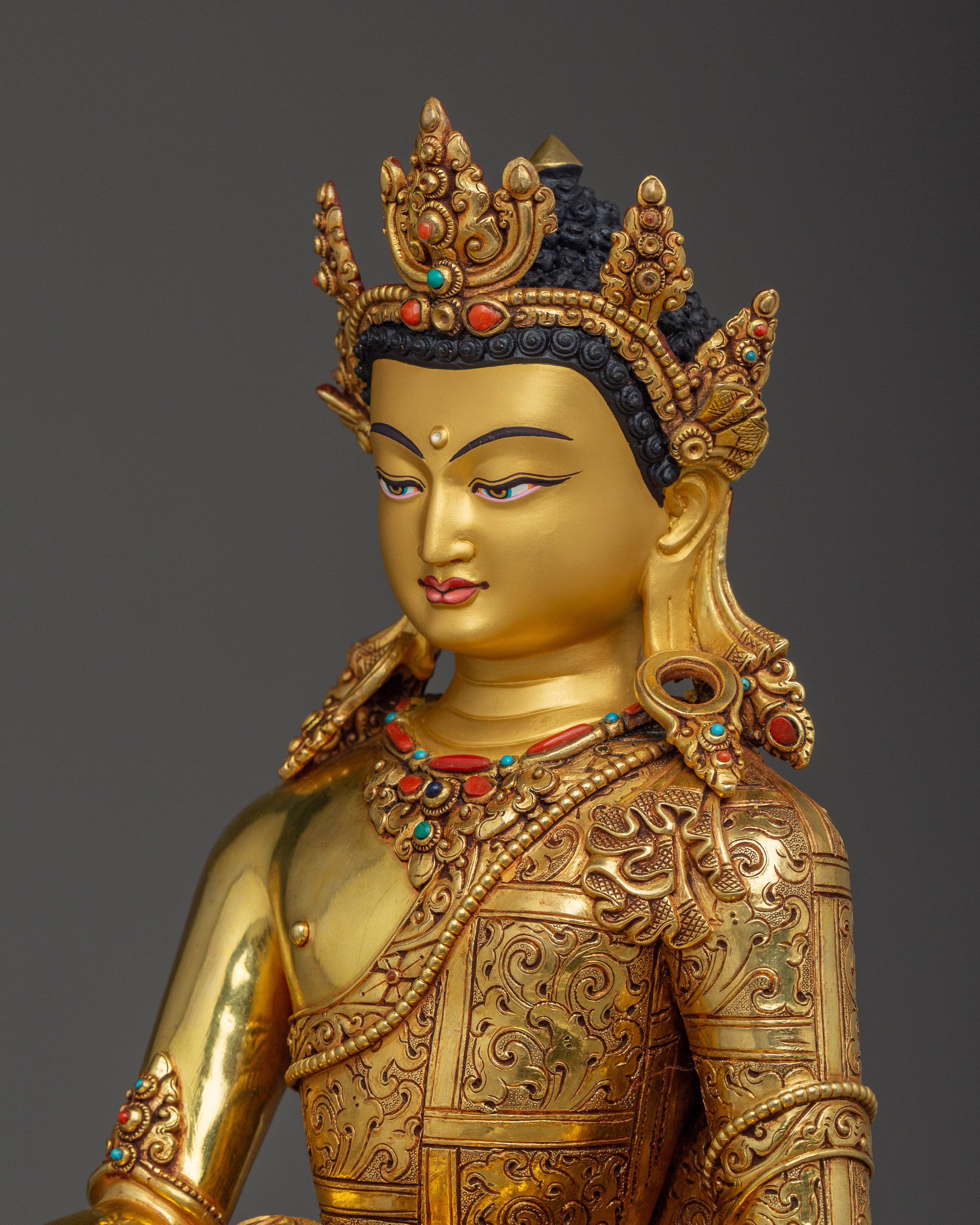
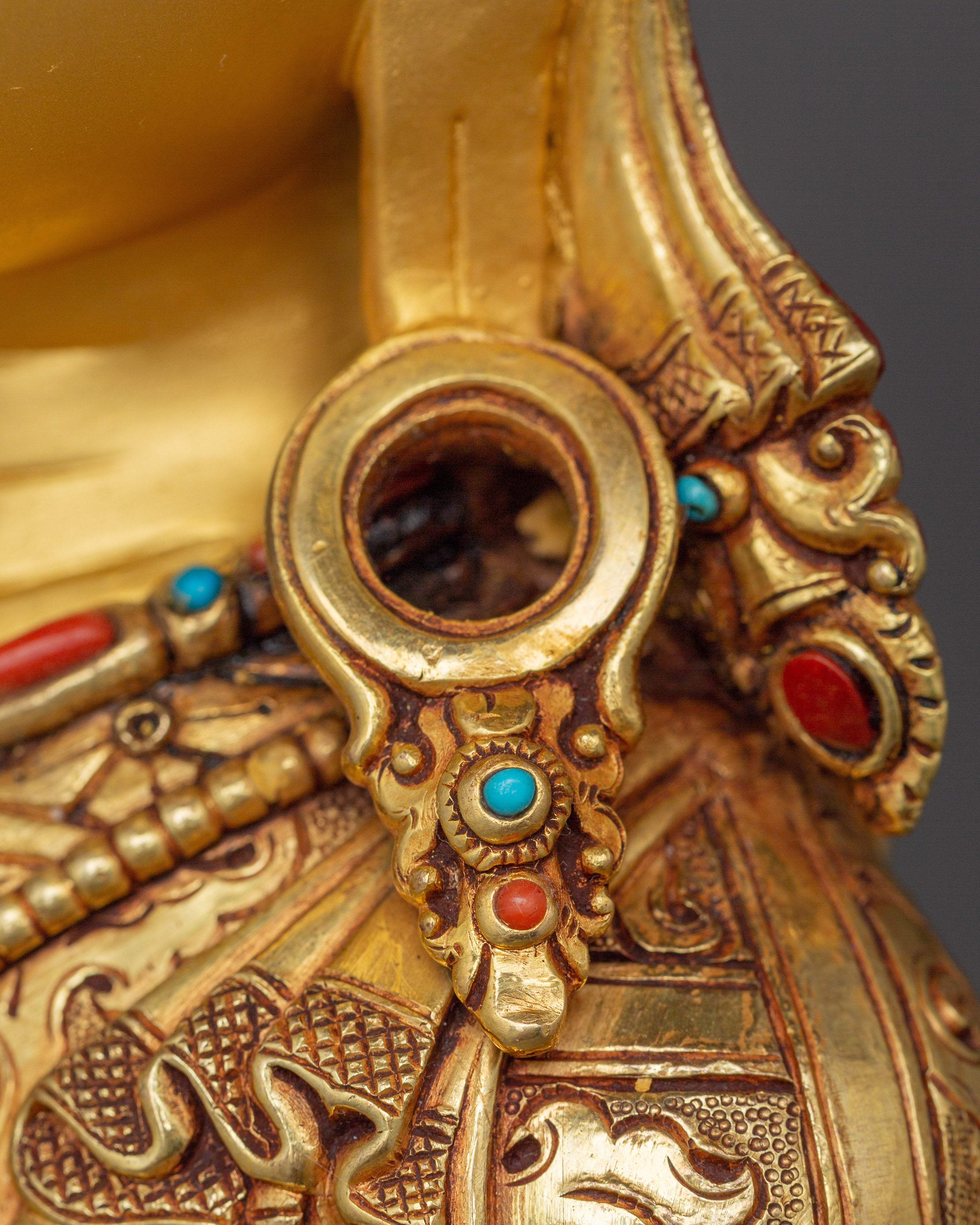
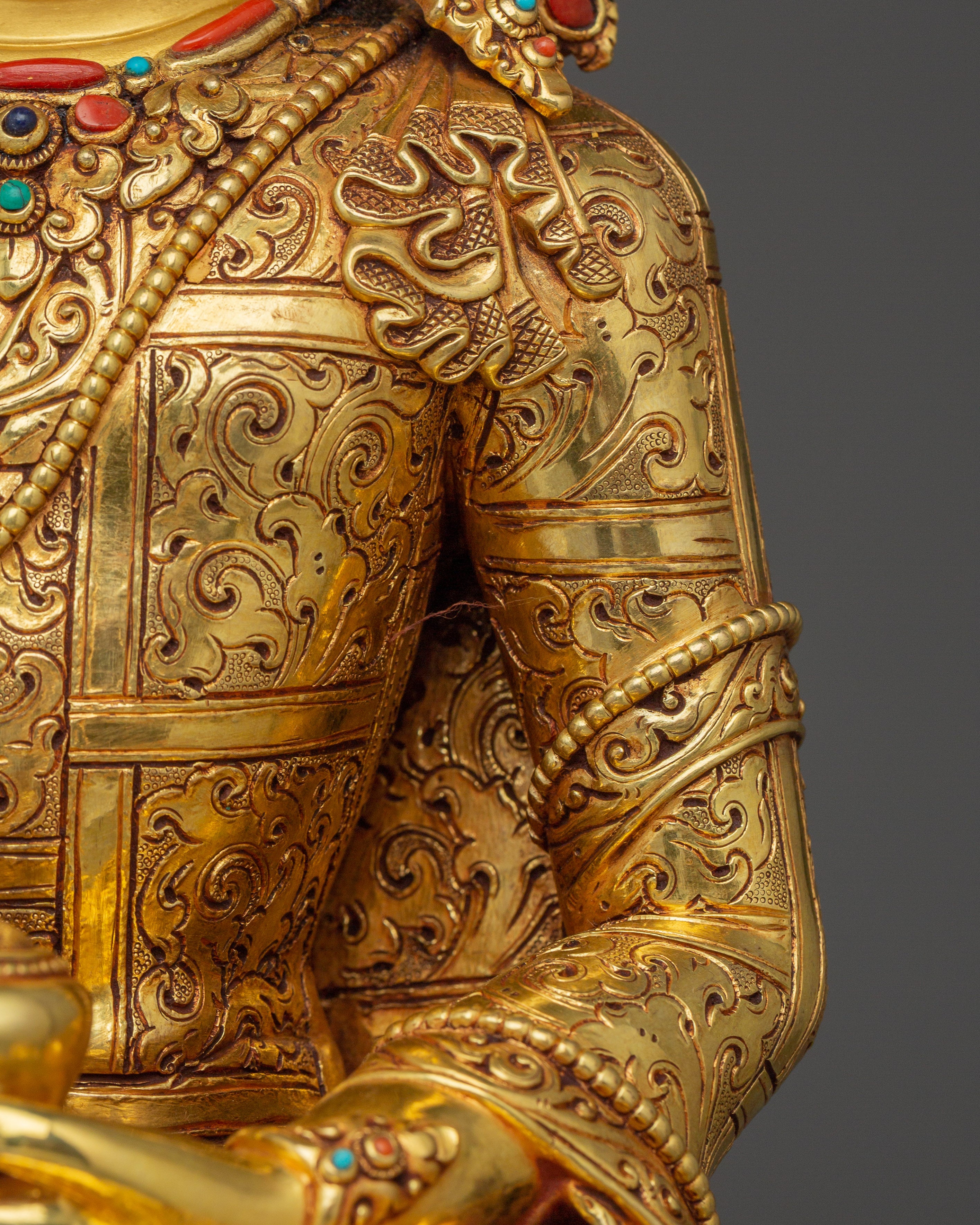
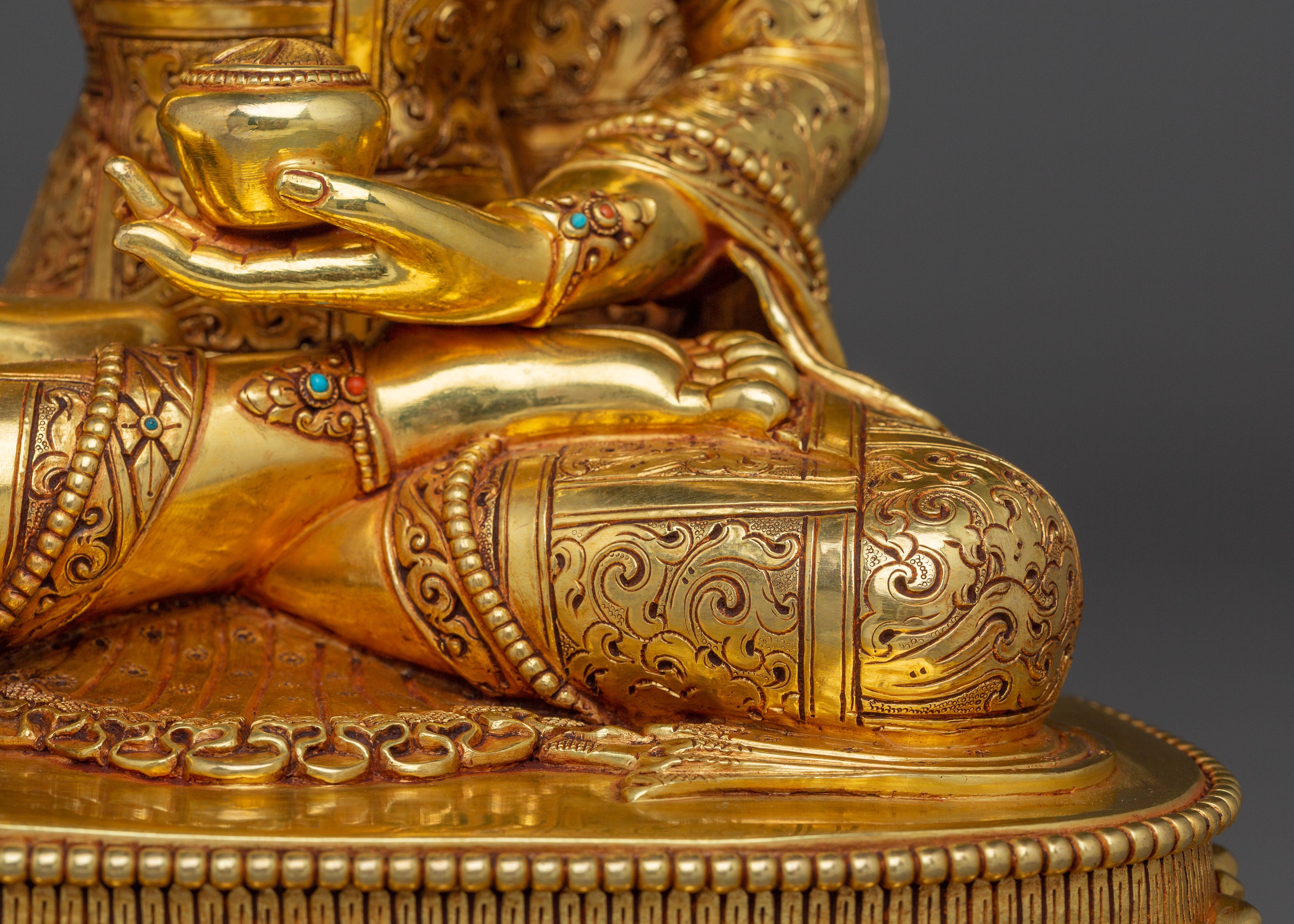
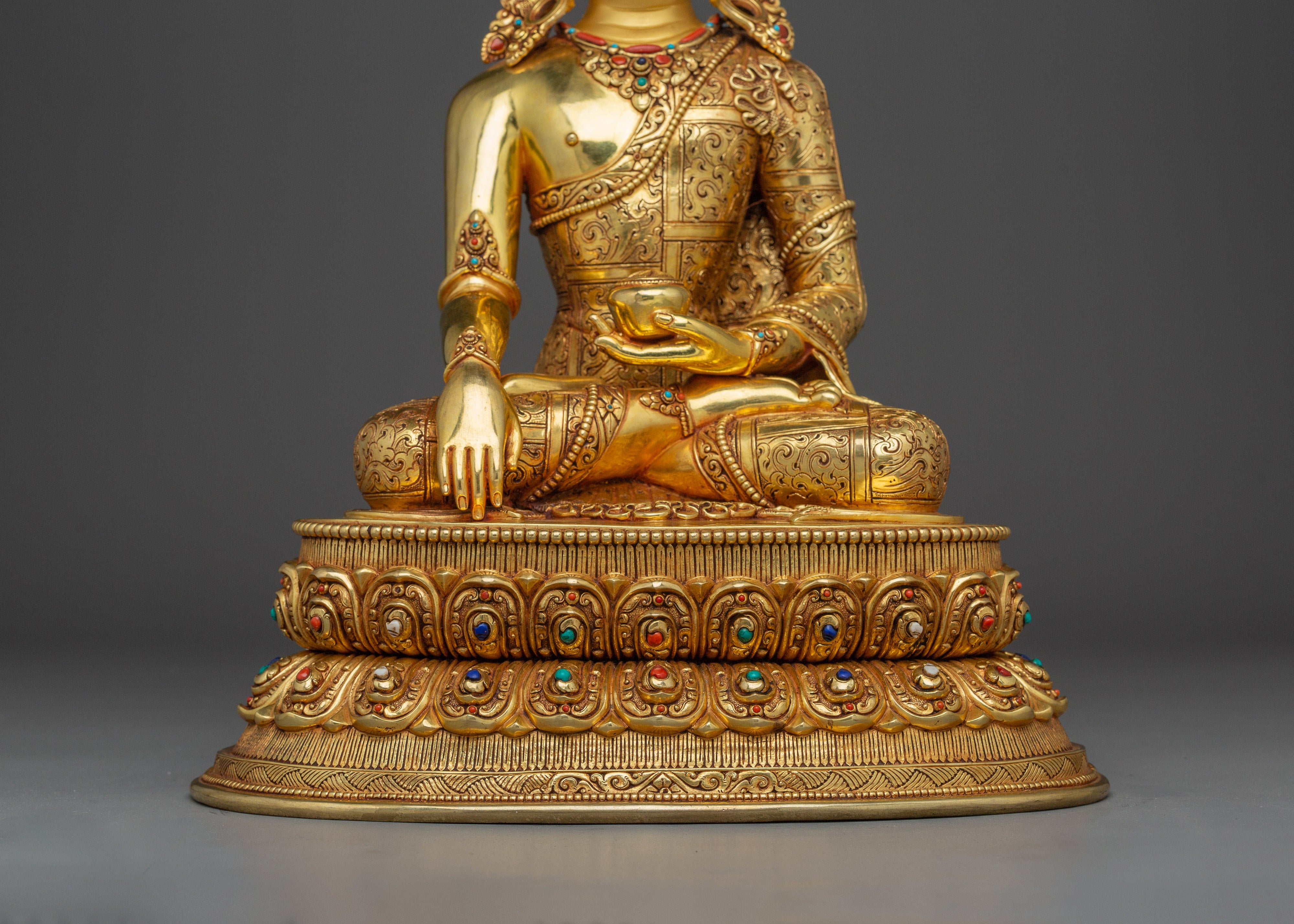
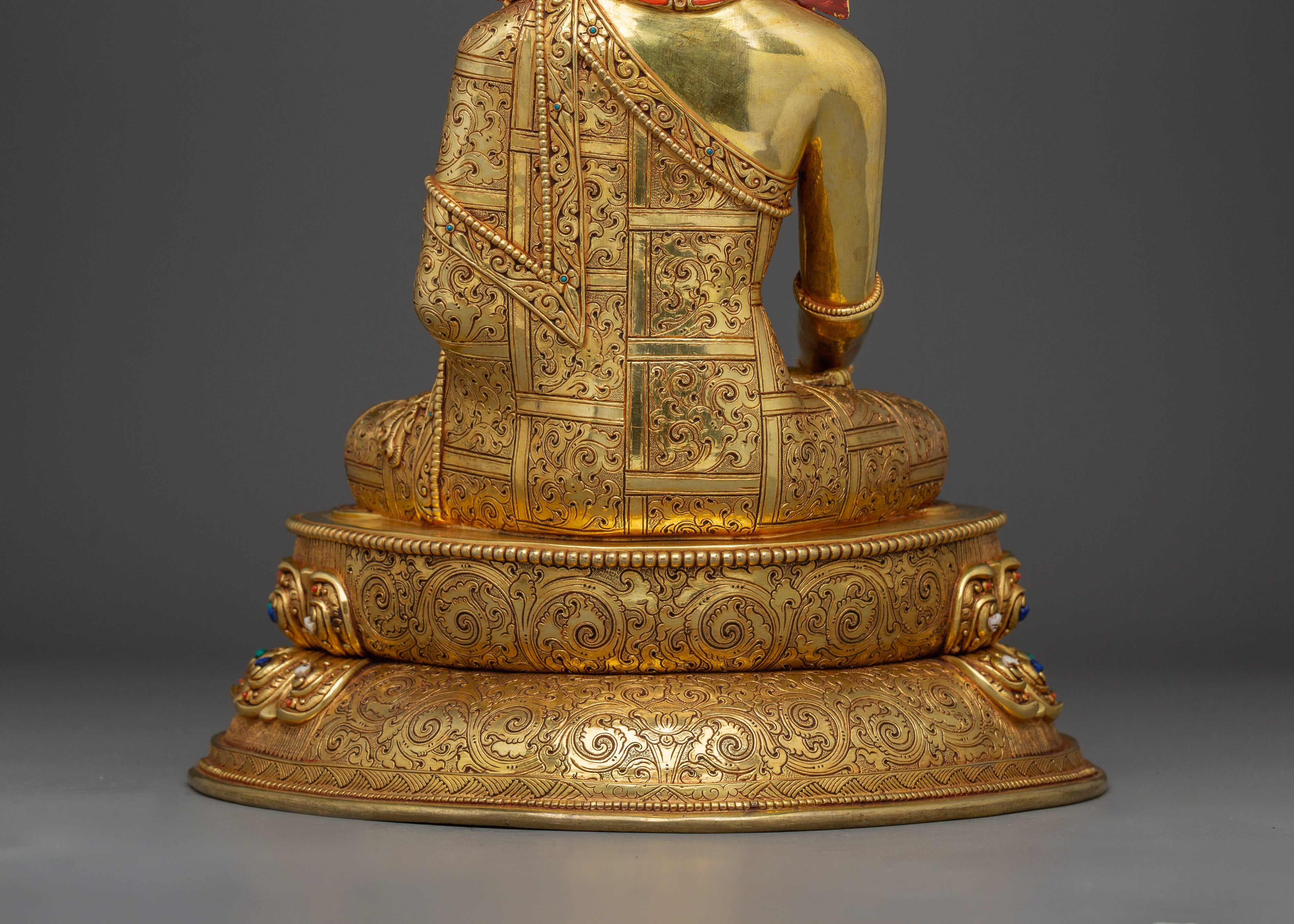
The Decorative Shakyamuni Buddha Statue stands 14.2 inches (36 cm) tall and has a base measuring 11.4 inches (29 cm), weighing 7.03 kilograms. It features copper, covered with a triple layer of 24K gold gilding, and carved with deeply engraved carvings that produce a magnificent 3D-like effect. This sculpture, handcrafted by expert Nepalese artisans, elegantly symbolizes Himalayan Buddhism's sacred traditions, making it an appropriate addition to altars, meditation places, or sacred collections.
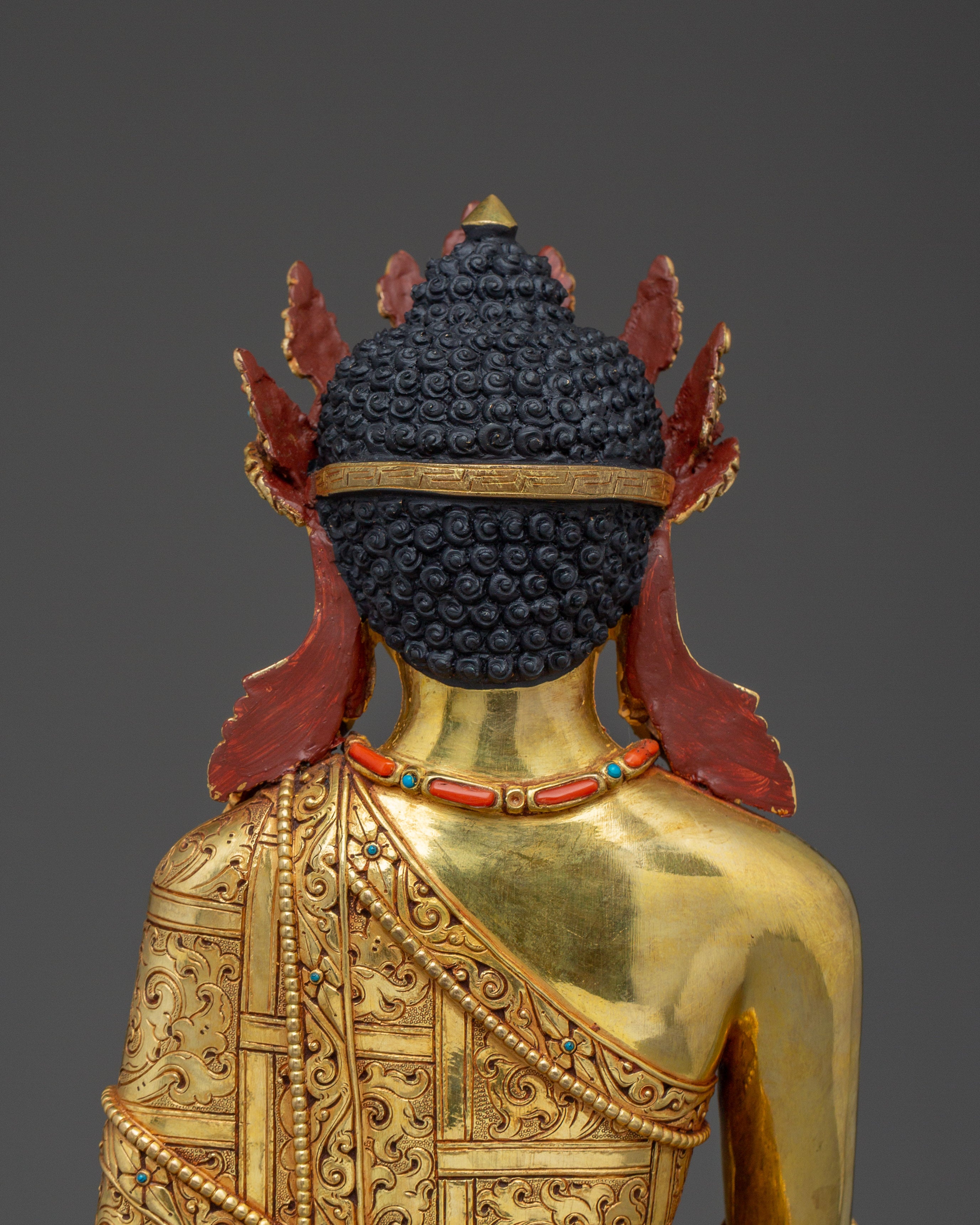
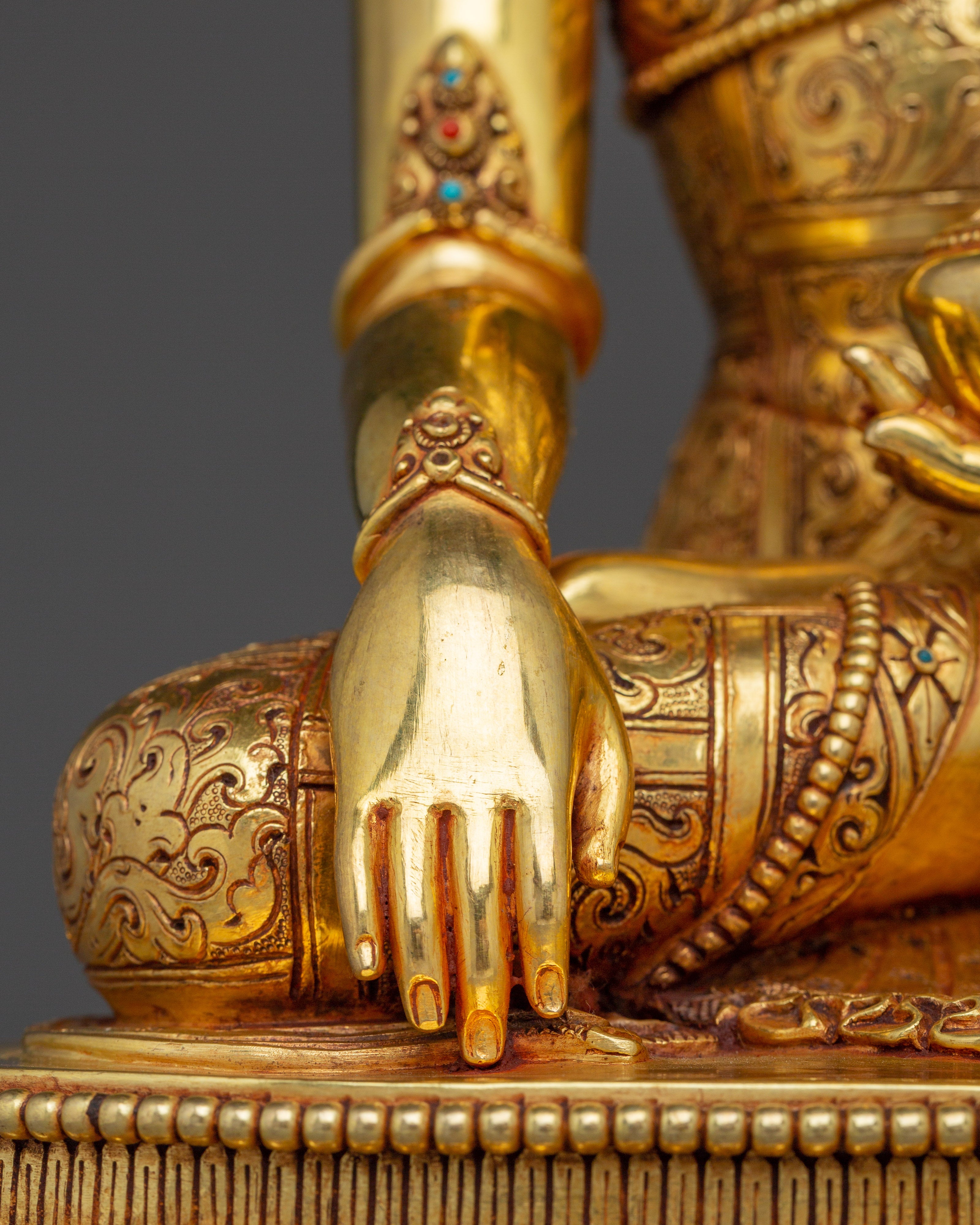
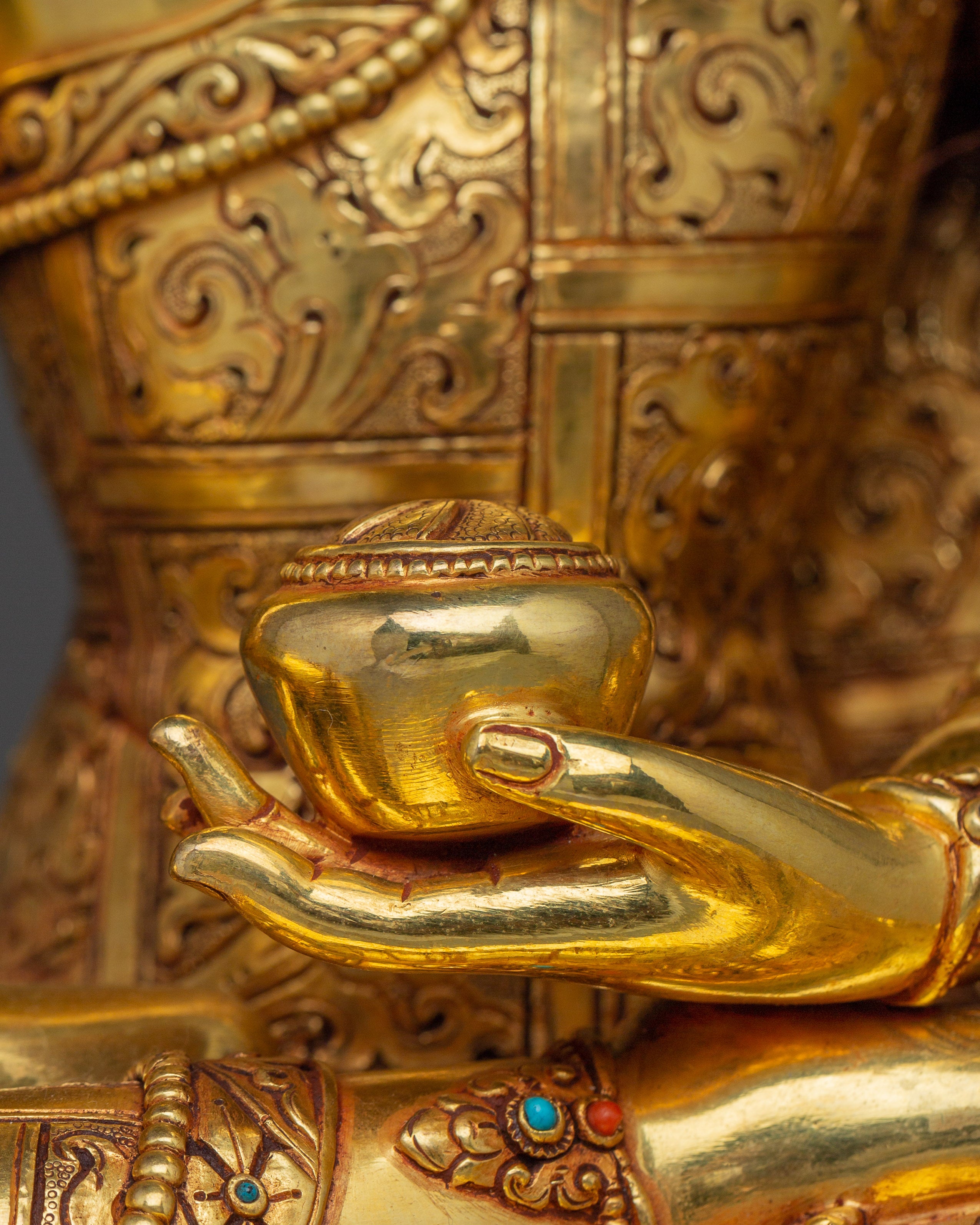
This Shakyamuni Buddha statue, also known as the "Sage of the Shakya Clan," captures the moment of the Buddha’s profound enlightenment beneath the Bodhi tree. He represents spiritual awakening and purity in the Vajra posture (Padmasana) on a lotus base. His right hand is positioned in the Bhumisparsha Mudra, symbolizing his call to the earth as a witness to his enlightenment. He holds an alms bowl in his left hand, reflecting his renunciation of materialism. The ushnisha on top of his head signifies wisdom, while his elongated ears represent his noble birth and deep connection to worldly and spiritual realms. The spiral curls on his head also symbolize the snails that shielded him from the sun during his meditation, signifying nature's protection. His calm and peaceful expression conveys deep tranquility and inner peace.
Size: 14.2”/36cm (Height) x 11.4”/29cm (Base)
Weight: 7.03 kg
Material: 24K Gold Gilded, Gold & Acrylic Paintings, Copper Body, Gemstones
Shakyamuni Buddha, also known as Siddhartha Gautama, is the founder of Buddhism and is regarded as the historical Buddha. Born as a prince in the Shakya clan in ancient India, he renounced his royal life in search of enlightenment. After years of deep meditation and self-discipline, he attained enlightenment under the Bodhi tree and became known as "Shakyamuni," which means "the Sage of the Shakya Clan." Shakyamuni Buddha taught the path to liberation through the Four Noble Truths and the Eightfold Path, guiding individuals to overcome suffering (dukkha) and reach Nirvana, a state of ultimate peace and freedom from the cycle of birth, death, and rebirth (samsara). His teachings emphasize wisdom, ethical conduct, and mental discipline to achieve enlightenment.