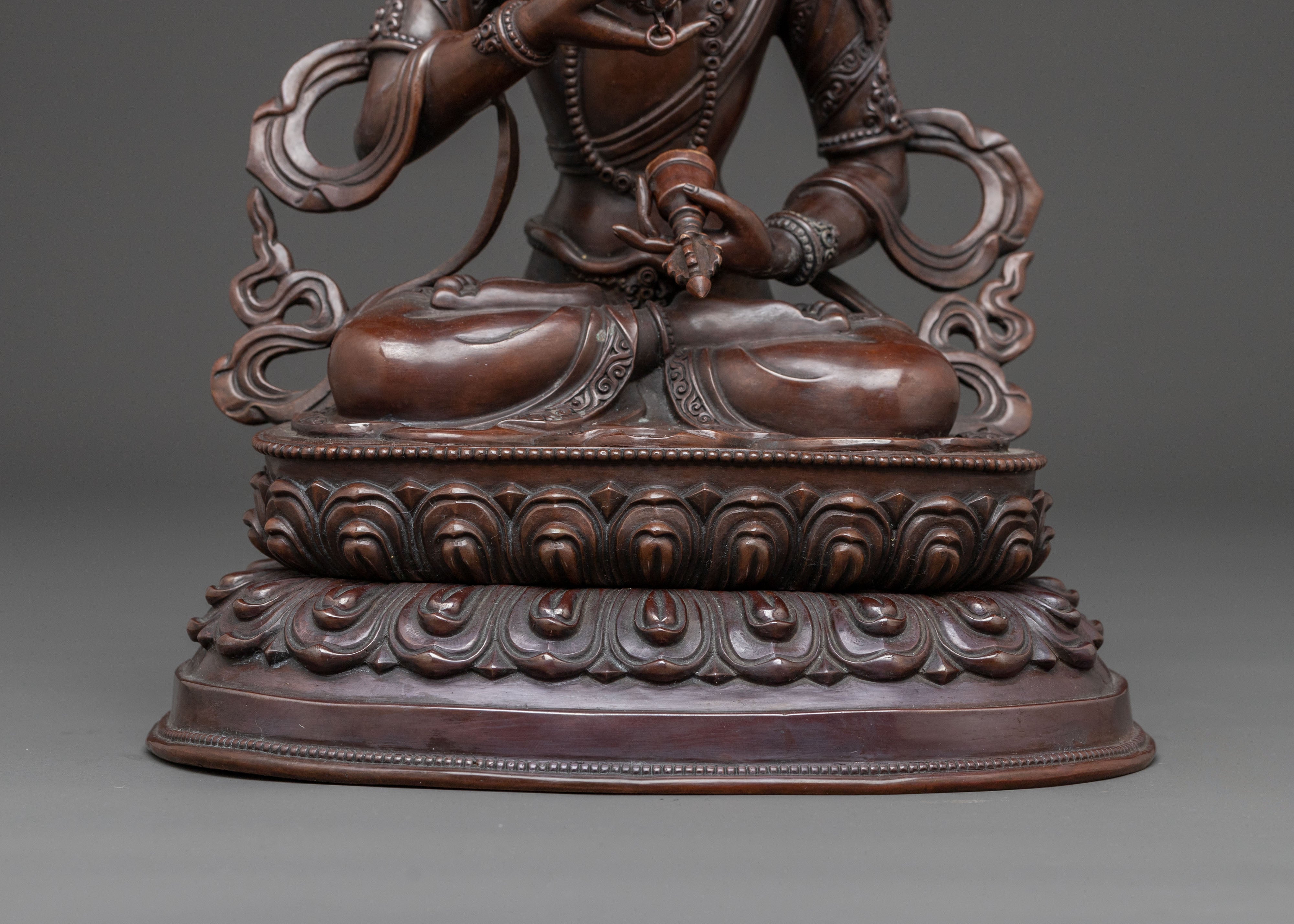
Divine Vajrasattva Sculpture: Embracing Pure Wisdom and Compassion
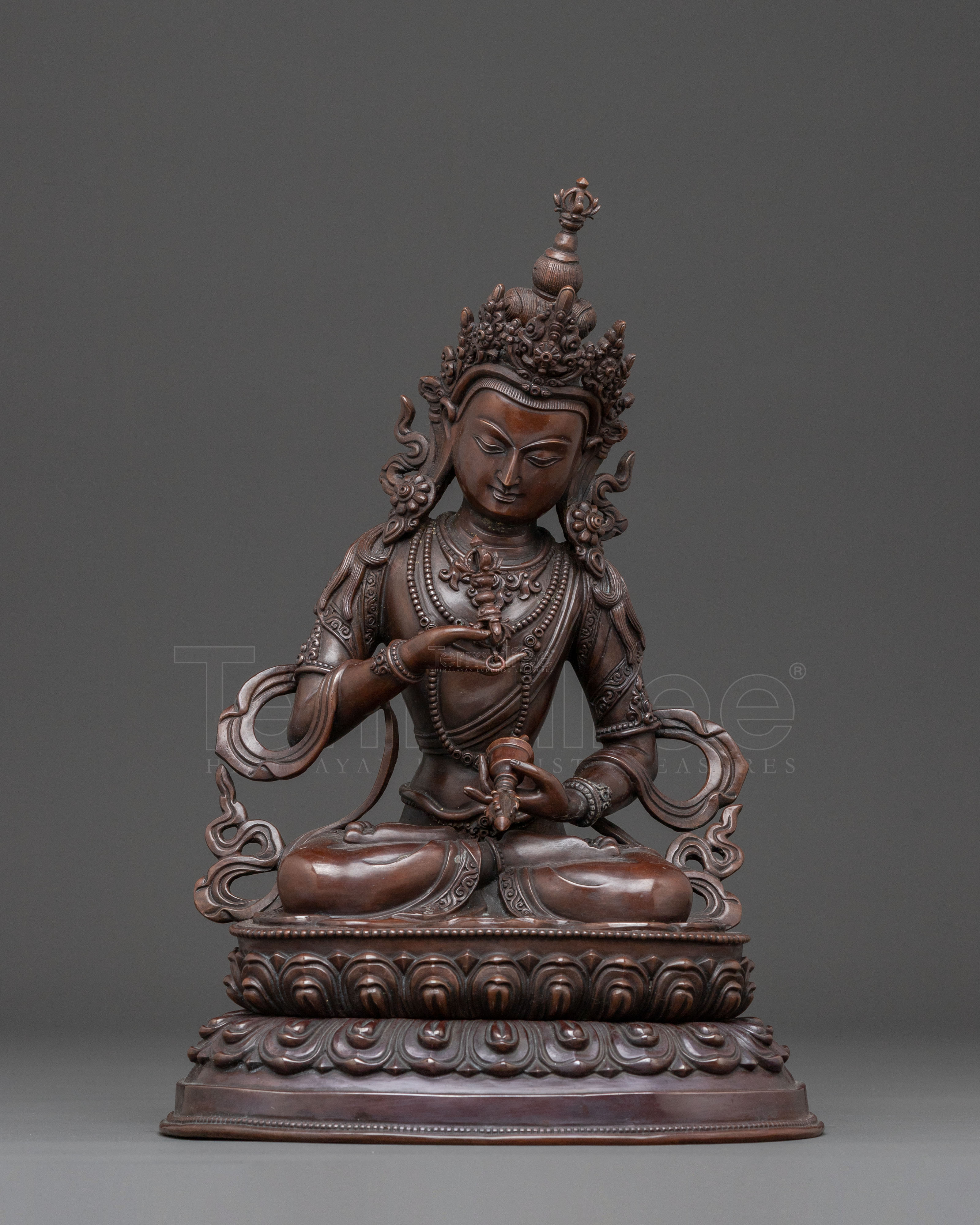
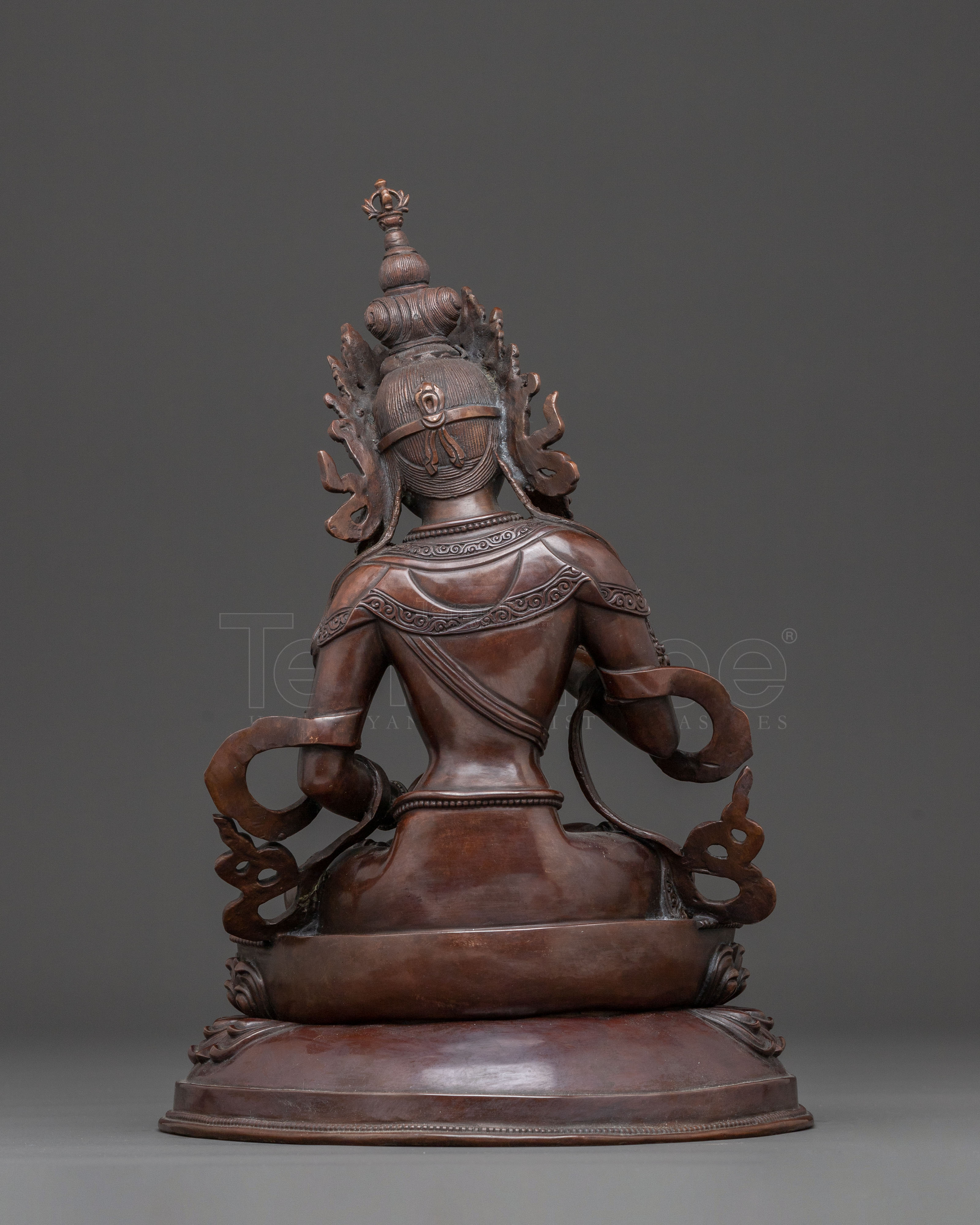
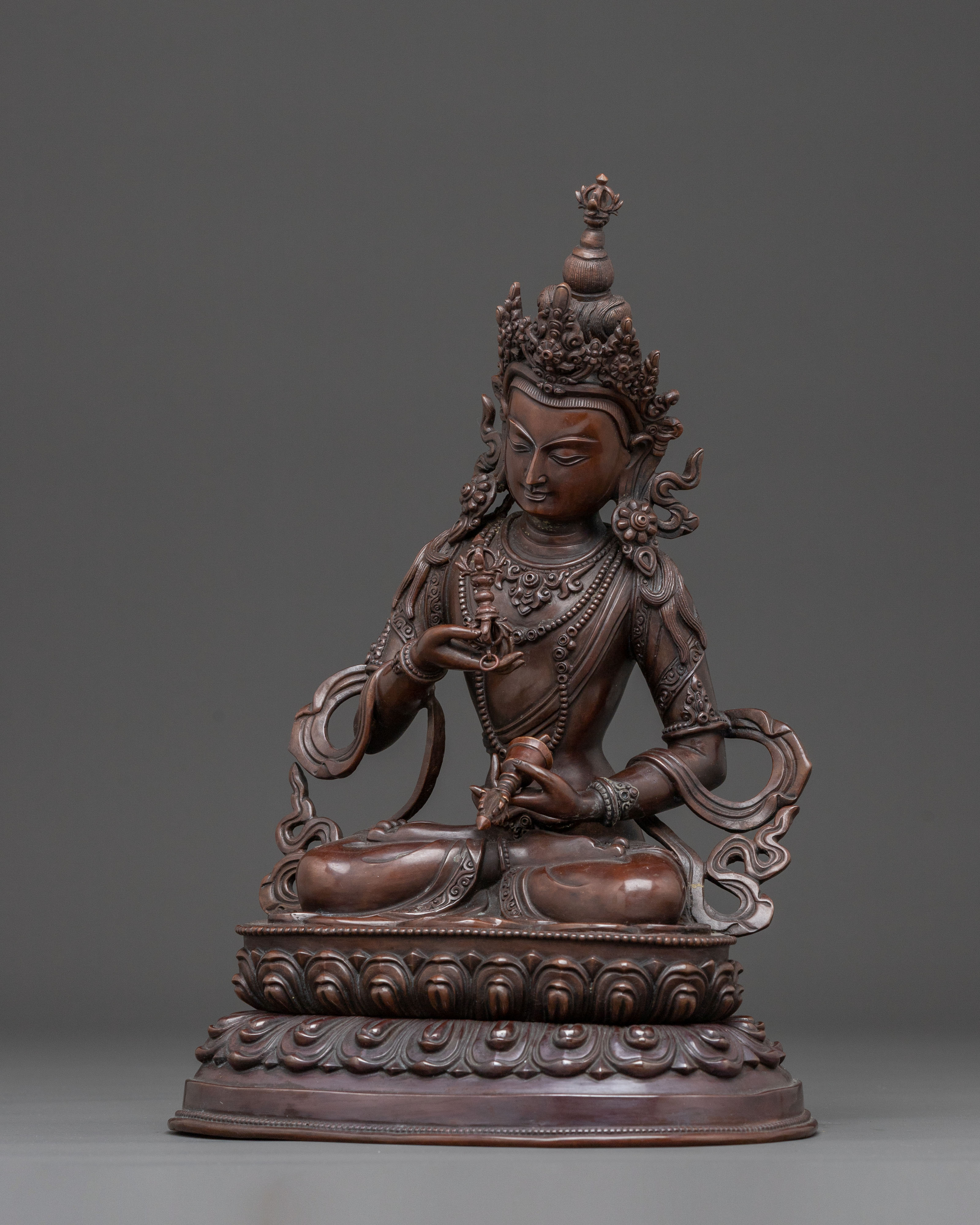
Behold this exquisite, divine Vajrasattva sculpture, embodying profound purification and serene wisdom. This statue of Vajrasattva, the Bodhisattva of Purification, stands at 33cm, commanding a tranquil presence as he sits gracefully in Padmasana upon a finely detailed double lotus base. Crafted from an oxidised copper body, the piece resonates with a timeless spiritual depth, its dark, antique patina enhancing every intricate feature and lending a sacred aura that inspires quiet contemplation.
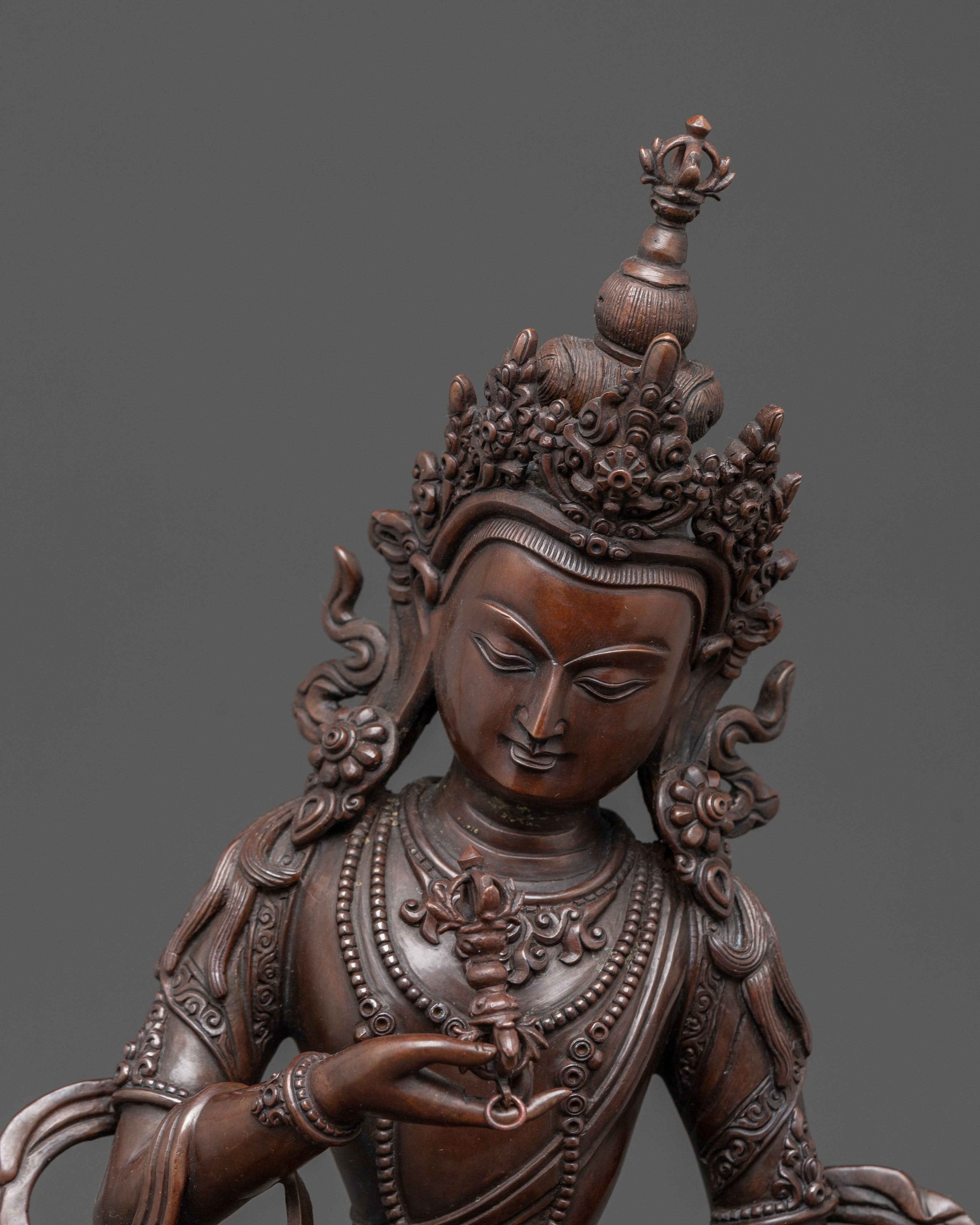
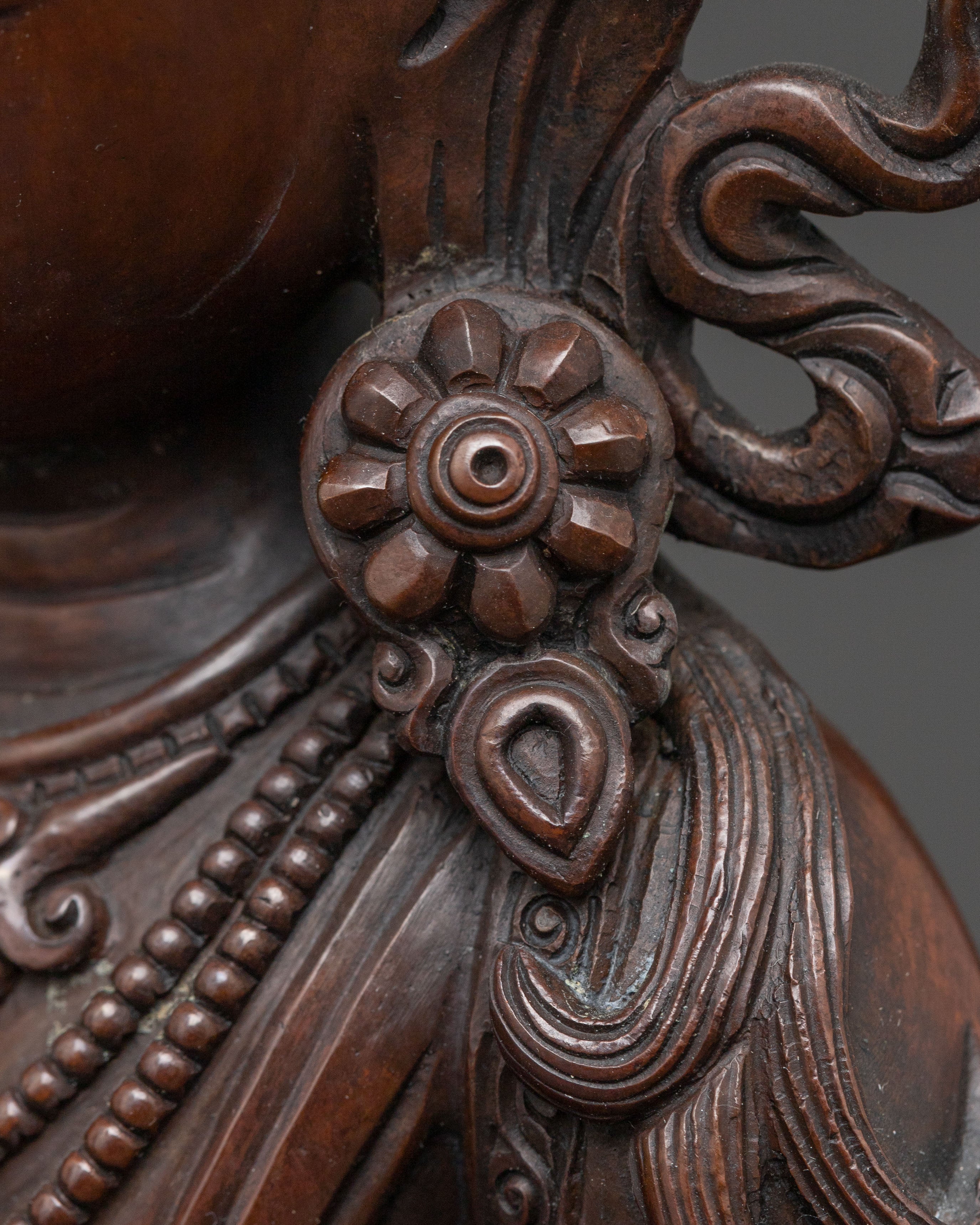
This meticulously handcrafted in Nepal Buddhist art piece is a testament to the enduring legacy of Nepalese artisans, specifically from the Kathmandu Valley, renowned for their sophisticated Himalayan craftsmanship. The oxidized copper body is carefully treated to achieve a rich, dark patina, which not only protects the metal but also highlights the exquisite repoussé and chasing details of Vajrasattva’s elaborate crown, jewelry, and flowing garments. This method ensures both durability and aesthetic depth.
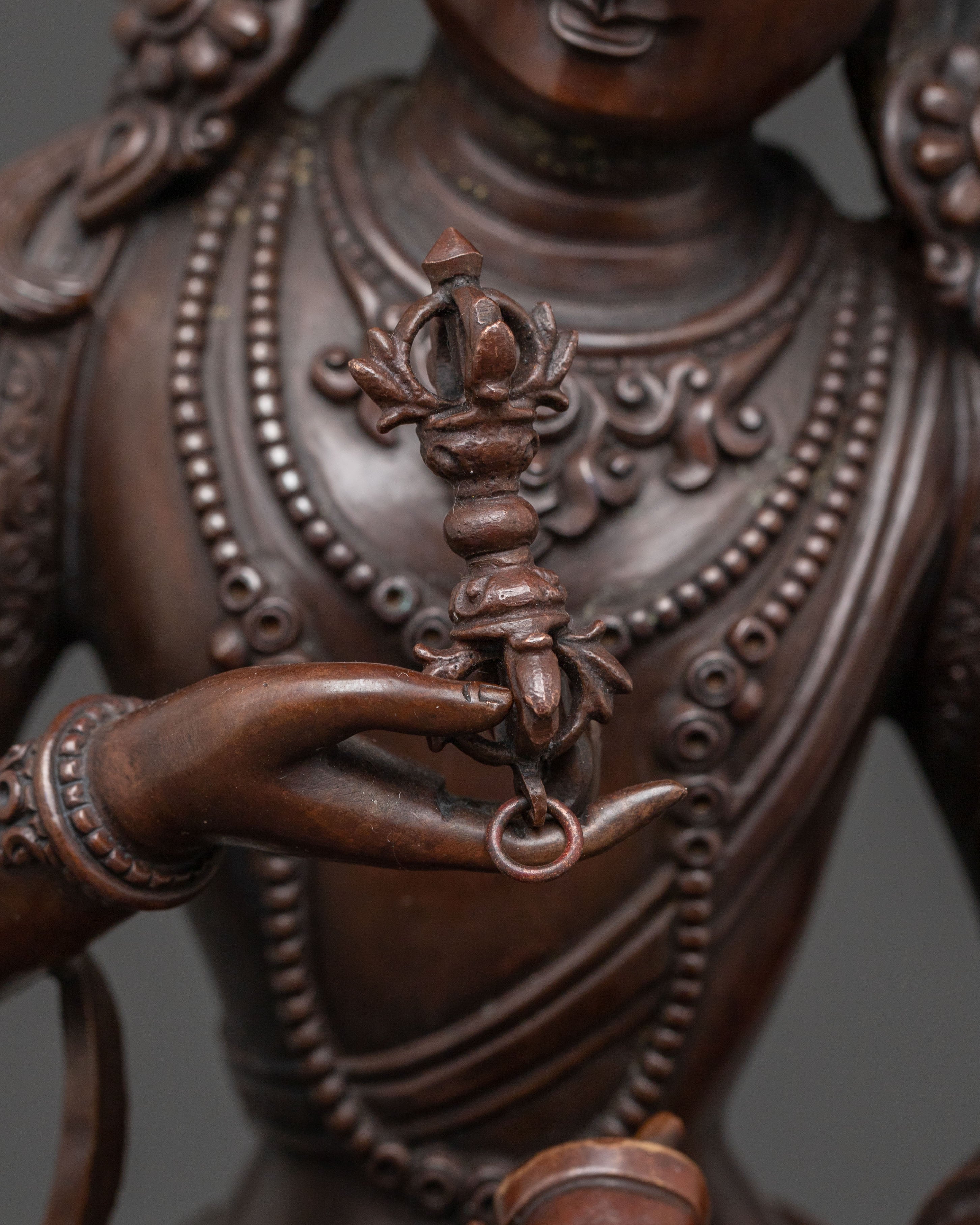
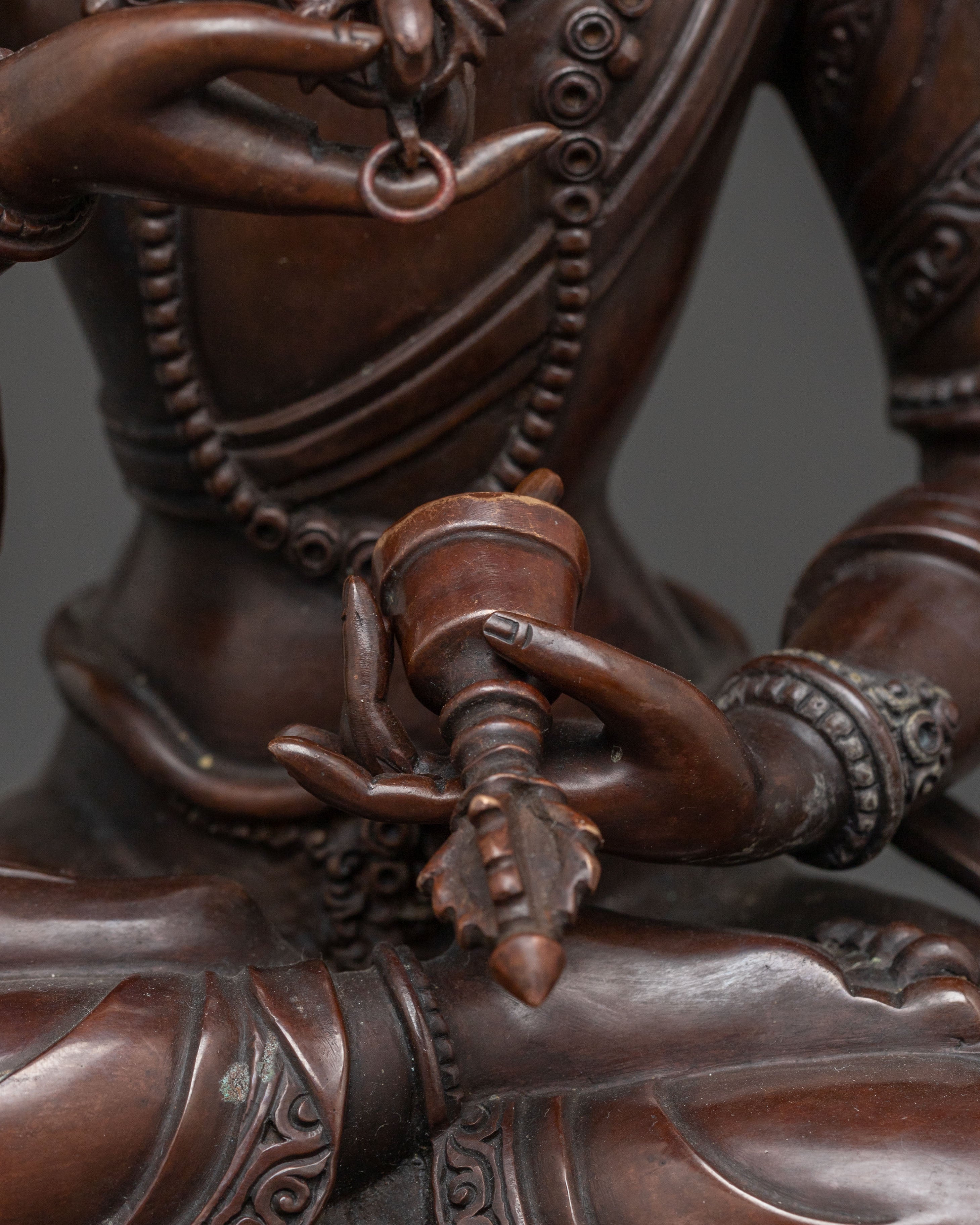
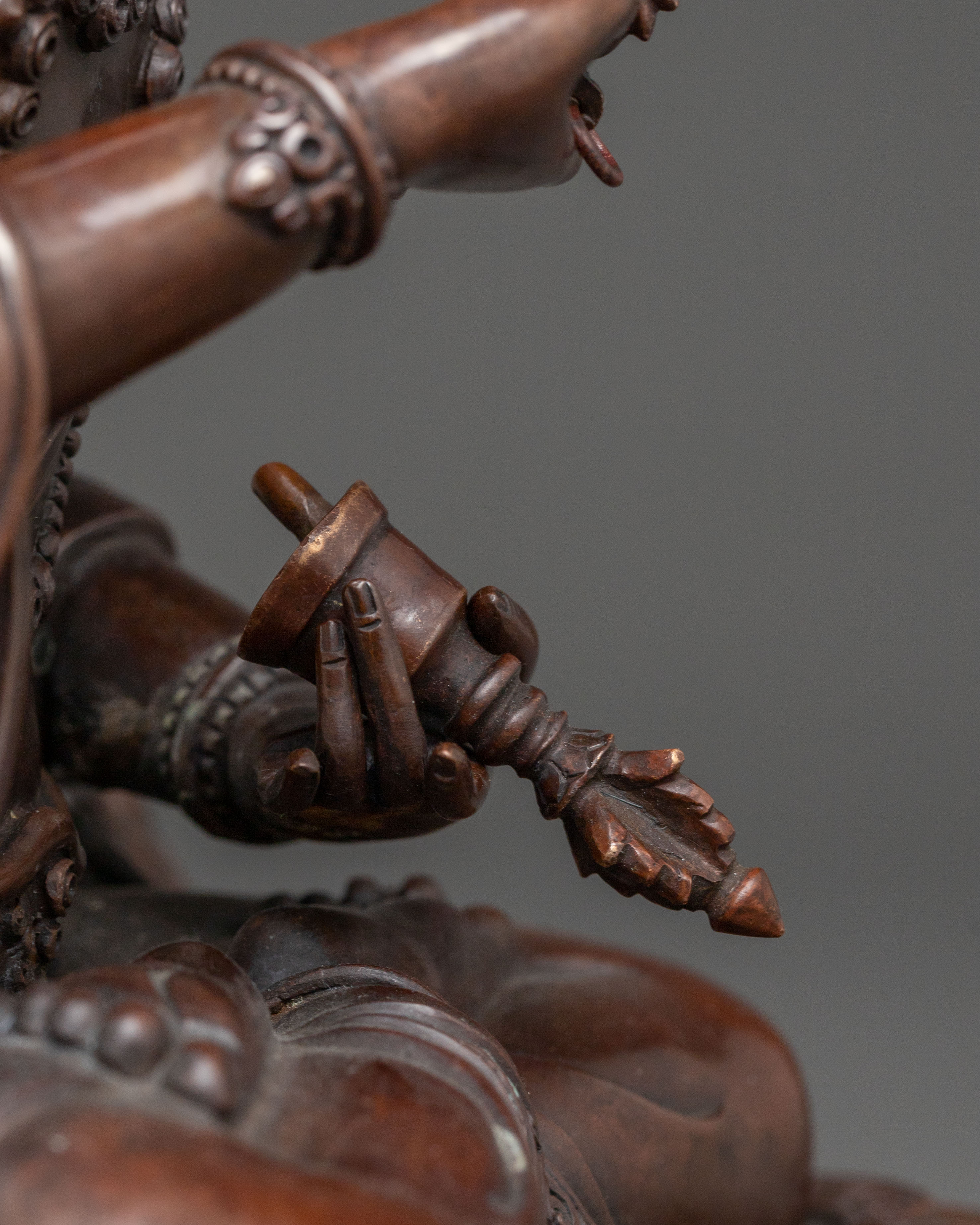
The iconography of this divine-vajrasattva-sculpture is rich with spiritual meaning. Vajrasattva holds the five-pronged vajra at his heart, symbolizing indestructible wisdom and unwavering method, while his left hand rests at his hip, grasping a bell (ghanta), representing the profound wisdom of emptiness. The profound union of these implements signifies the inseparable path of wisdom and compassion, central to advanced tantric practice. His adorned form as a Sambhogakaya Buddha further conveys the Six Perfections, guiding practitioners toward complete inner purity.
Size: 13”/33cm (Height) x 8.8”/22.5cm (Base)
Weight: 3.44 kg
Material: Oxidised Copper Body
Vajrasattva is a pivotal figure in Mahayana and especially Vajrayana Buddhism, revered as the Bodhisattva of Purification. He embodies the pristine purity of all Buddhas and is extensively invoked in meditations and practices aimed at purifying negative karma, transgressions, and obscurations, as well as upholding sacred tantric vows. His profound practice is considered fundamental for spiritual regeneration and progress on the path to enlightenment within many Buddhist traditions.