Handmade Pehar Gyalpo Statue: Protector of the Dharma
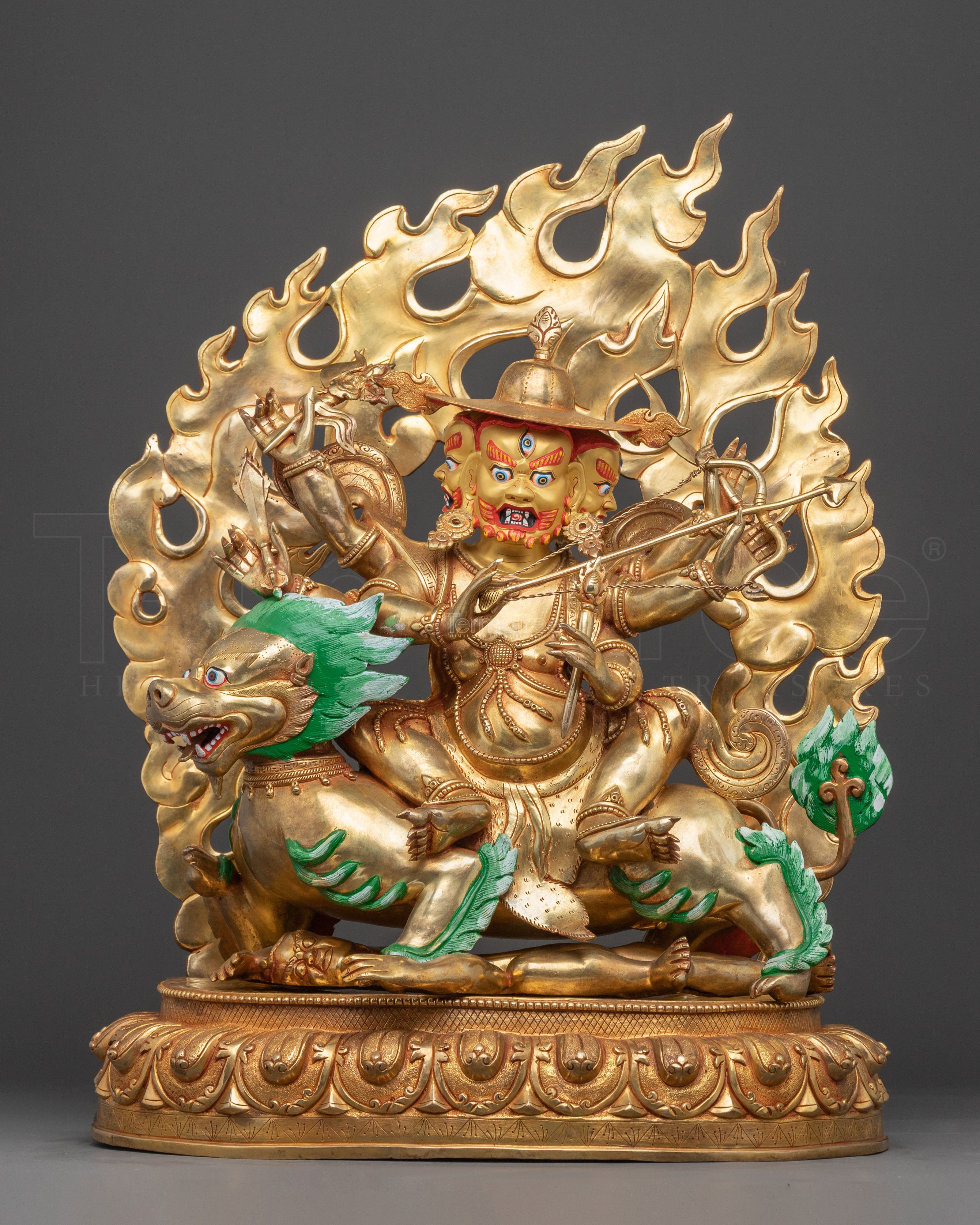
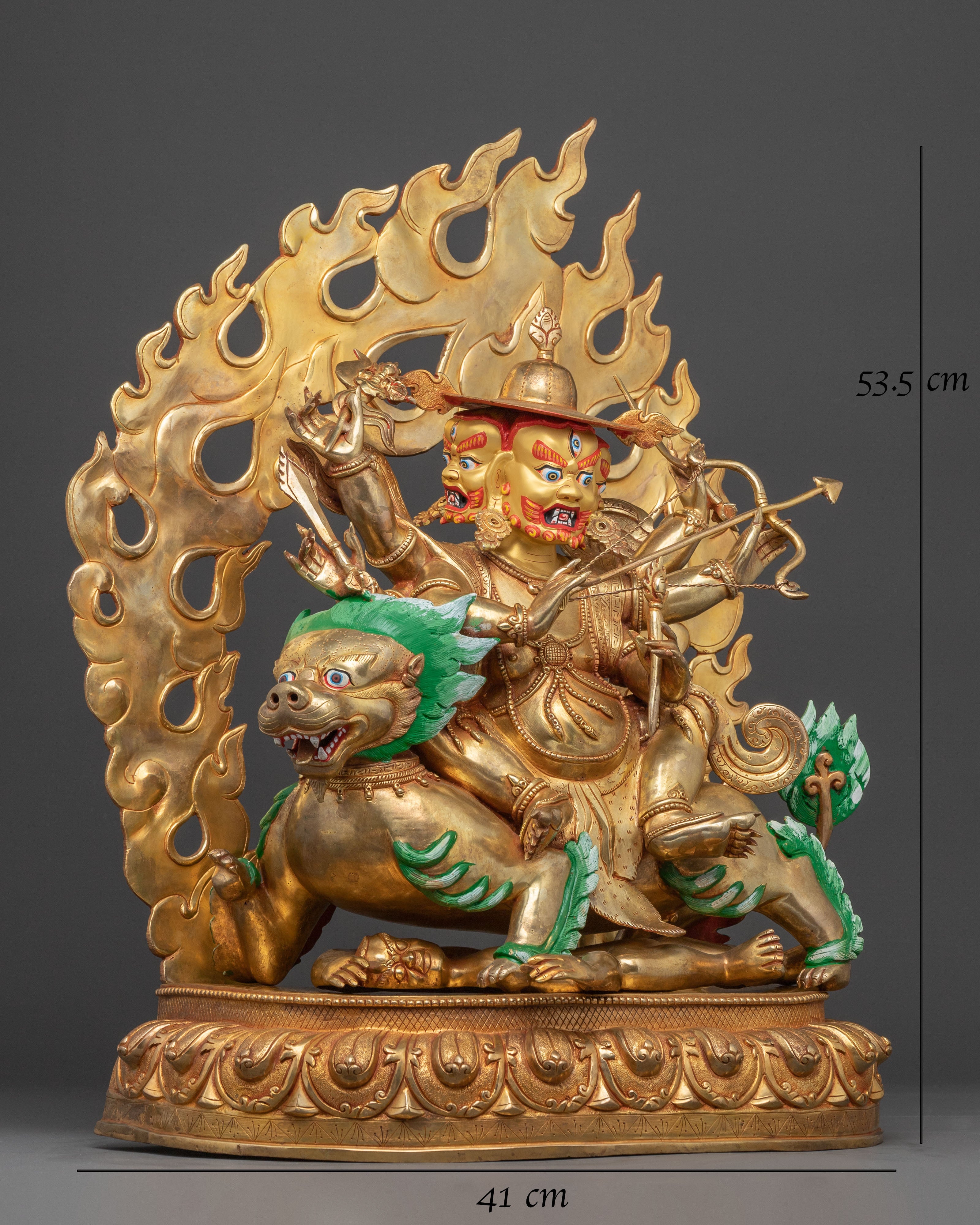
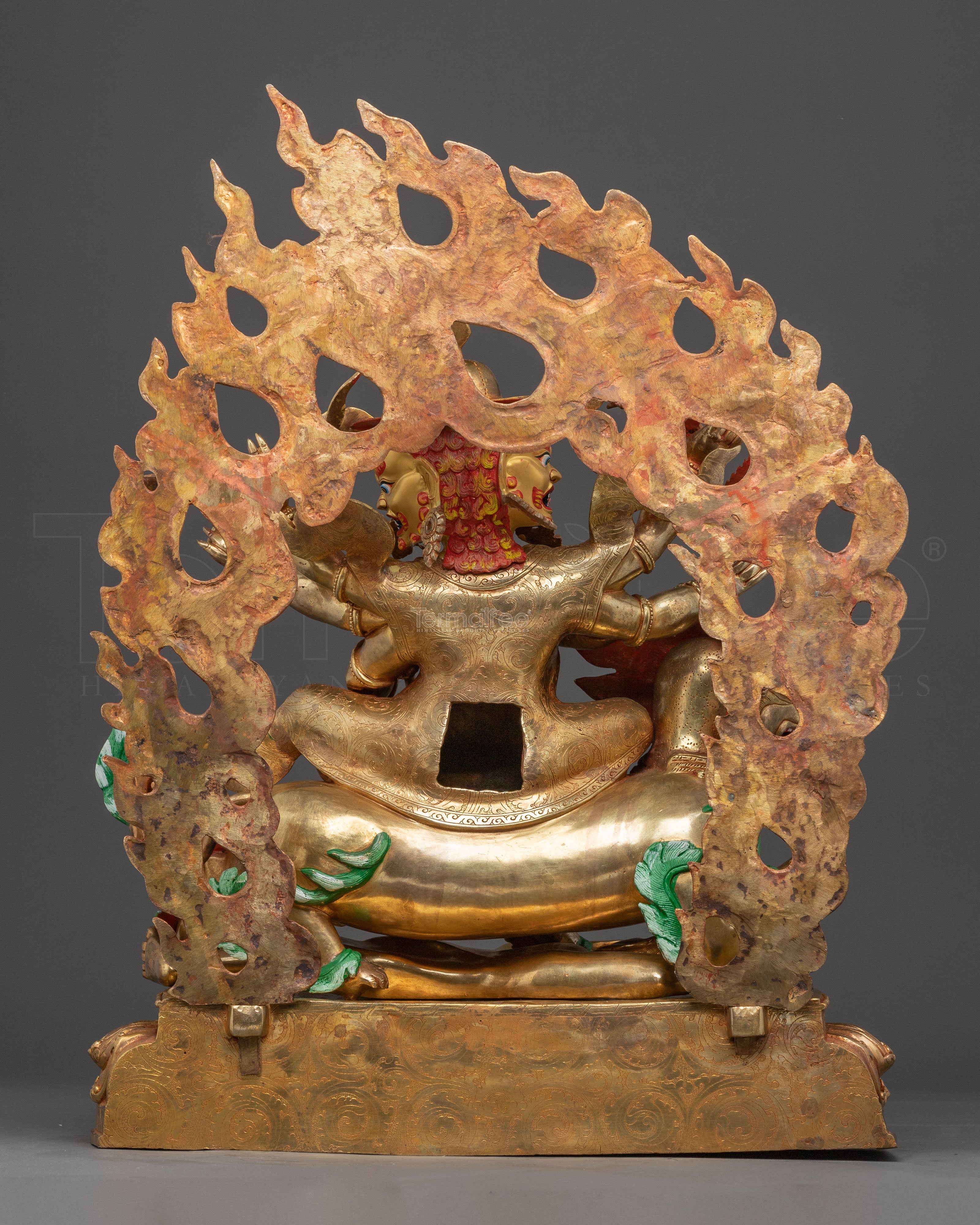
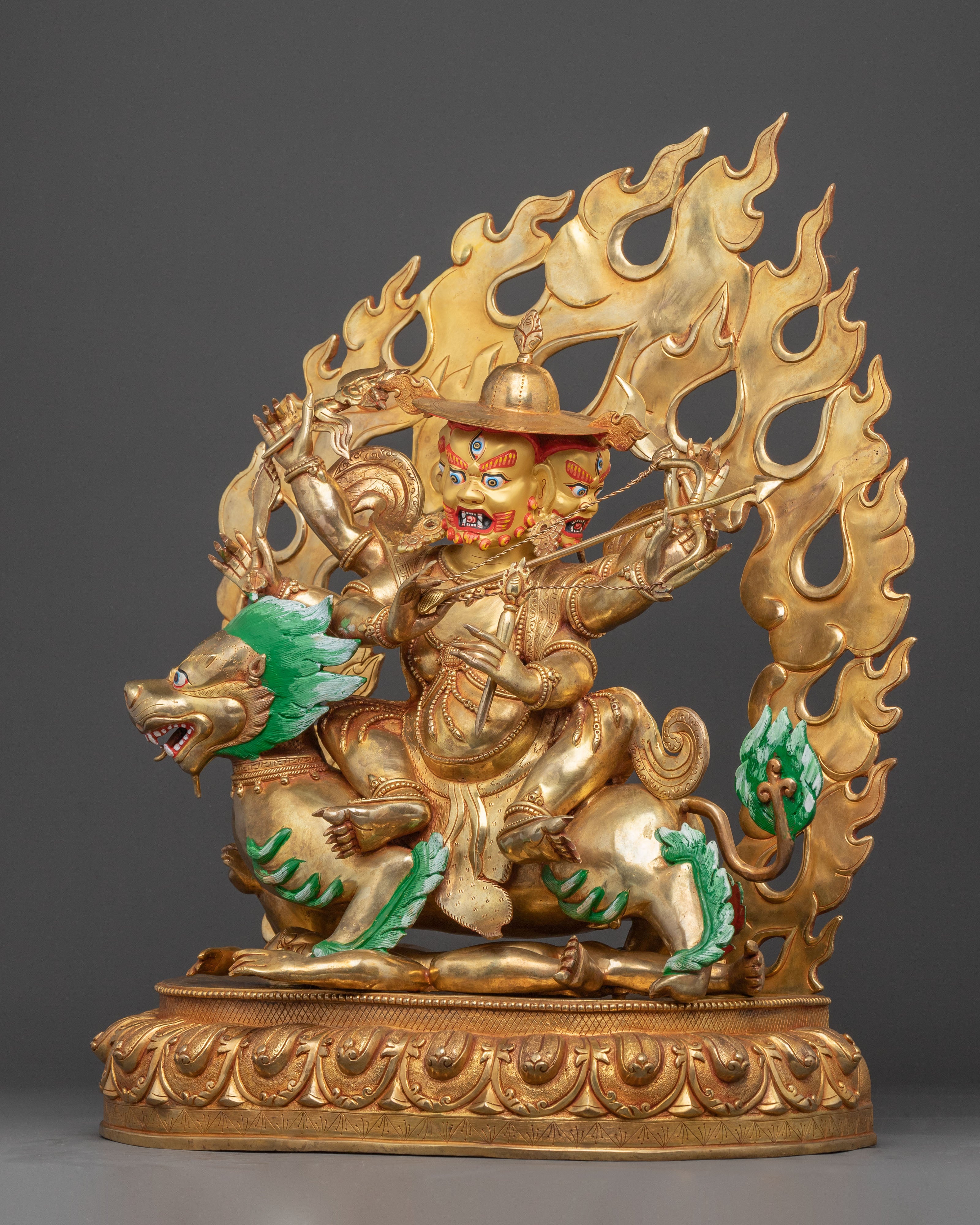
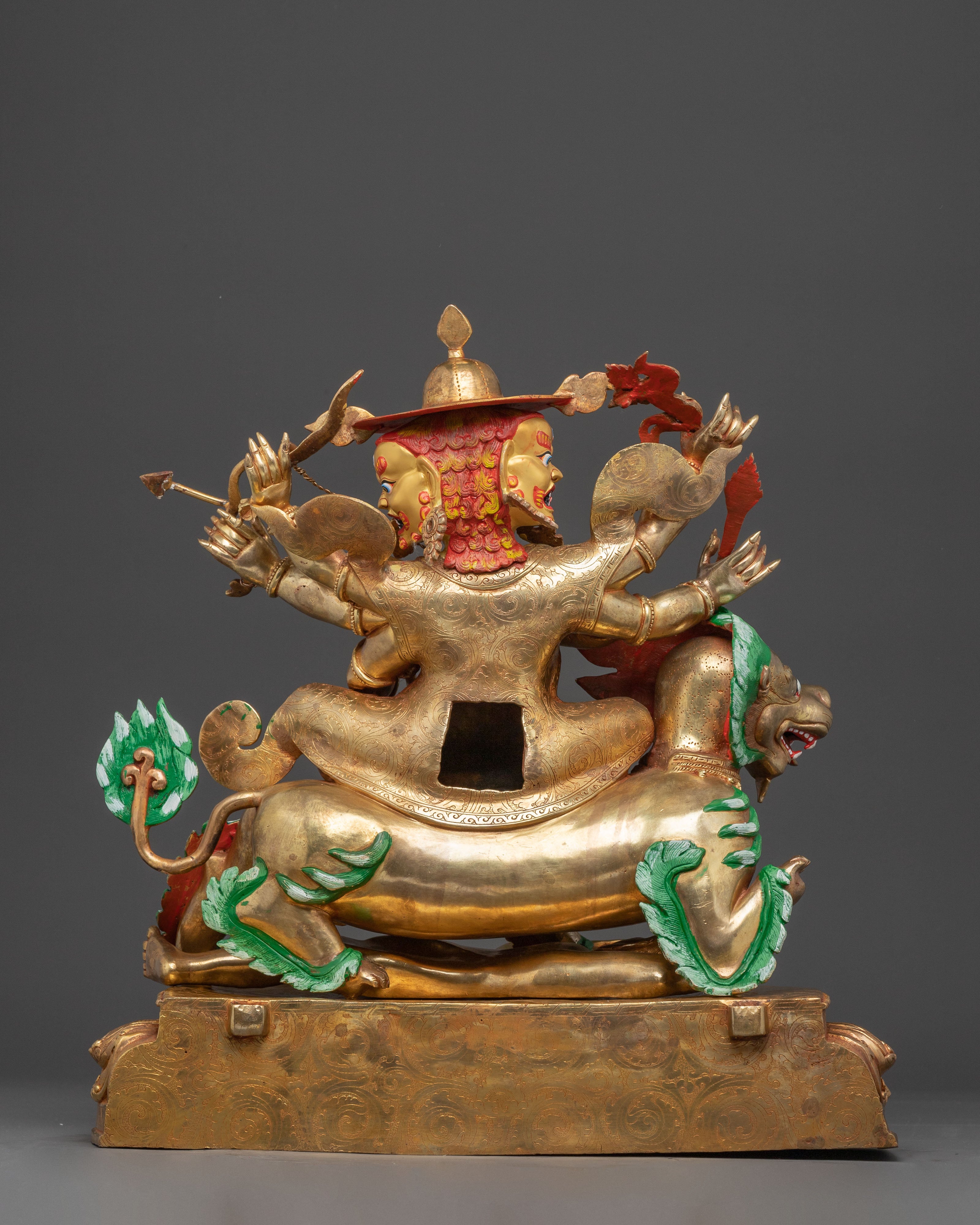
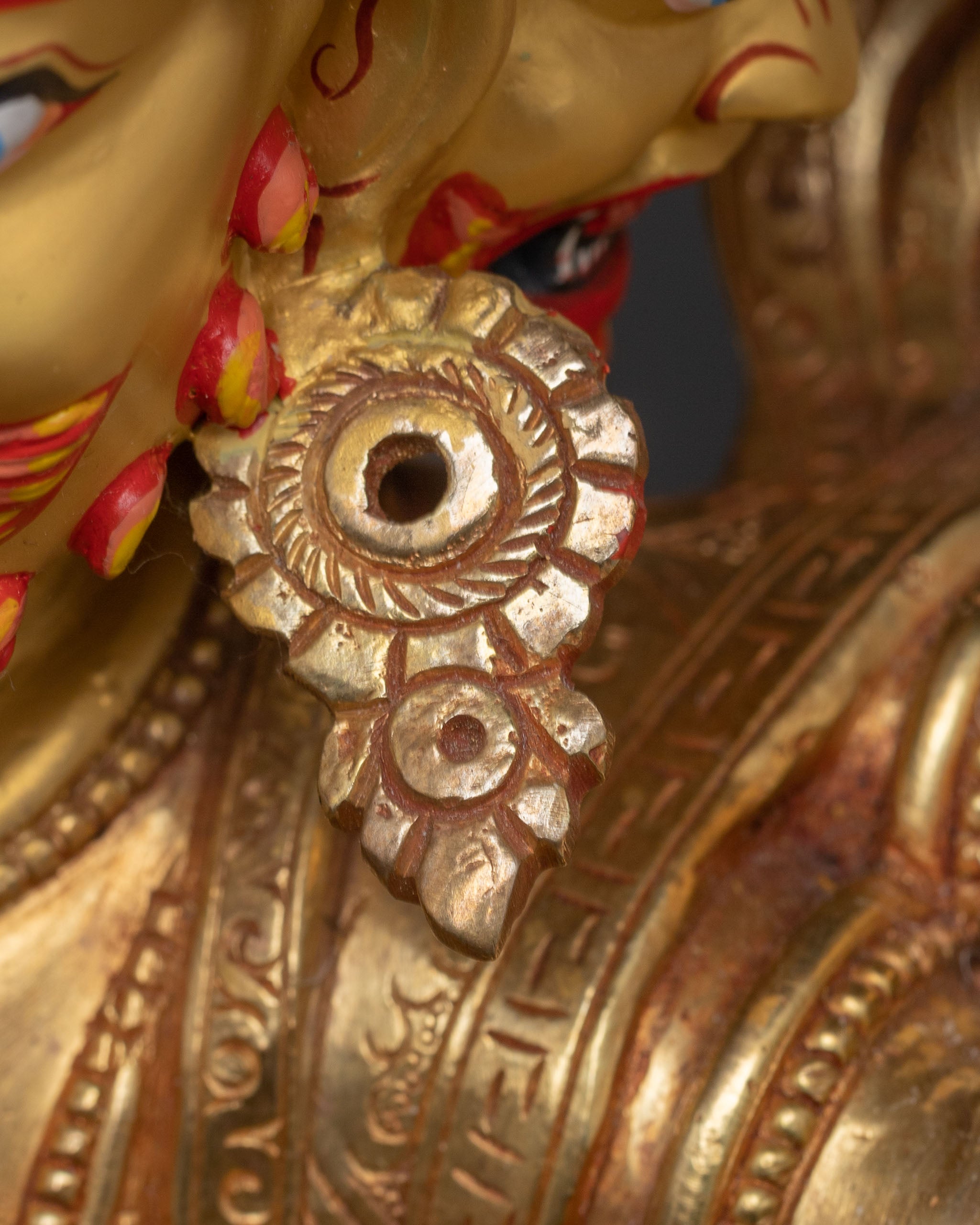
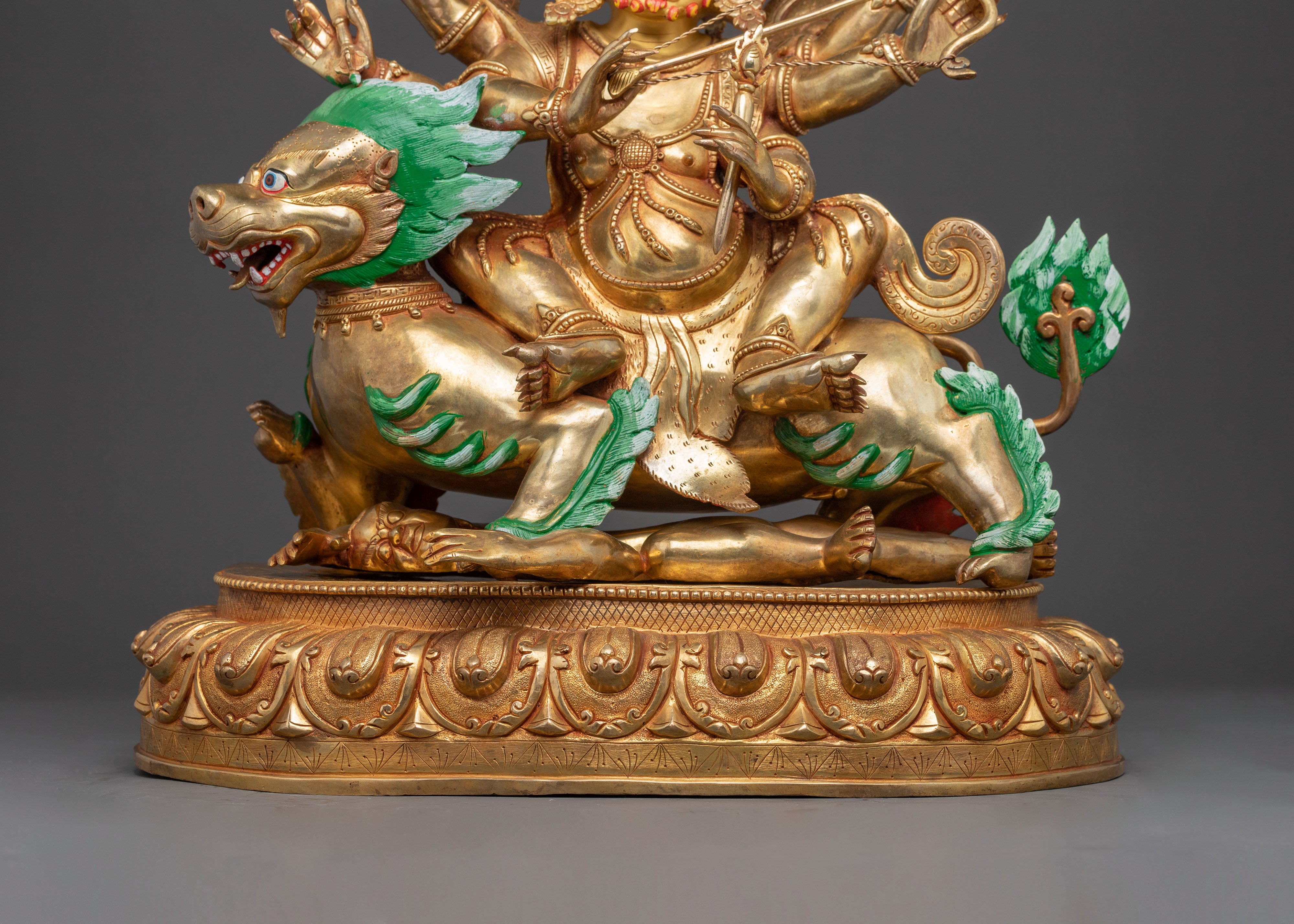
This handmade Pehar Gyalpo statue, also known as the Protector of the Dharma, stands 21.1”/53.5cm tall and 16.1”/41cm at the base, weighing 14.19 kg. Made from copper, covered with a triple layer of 24K gold gilding, and carved with deeply engraved carvings that produce a magnificent 3D-like effect. This sculpture, adorned with hand-carved gemstones crafted by expert Nepalese artisans, elegantly symbolizes Himalayan Buddhism's sacred traditions and is an appropriate addition to altars, meditation spaces, or holy collections.
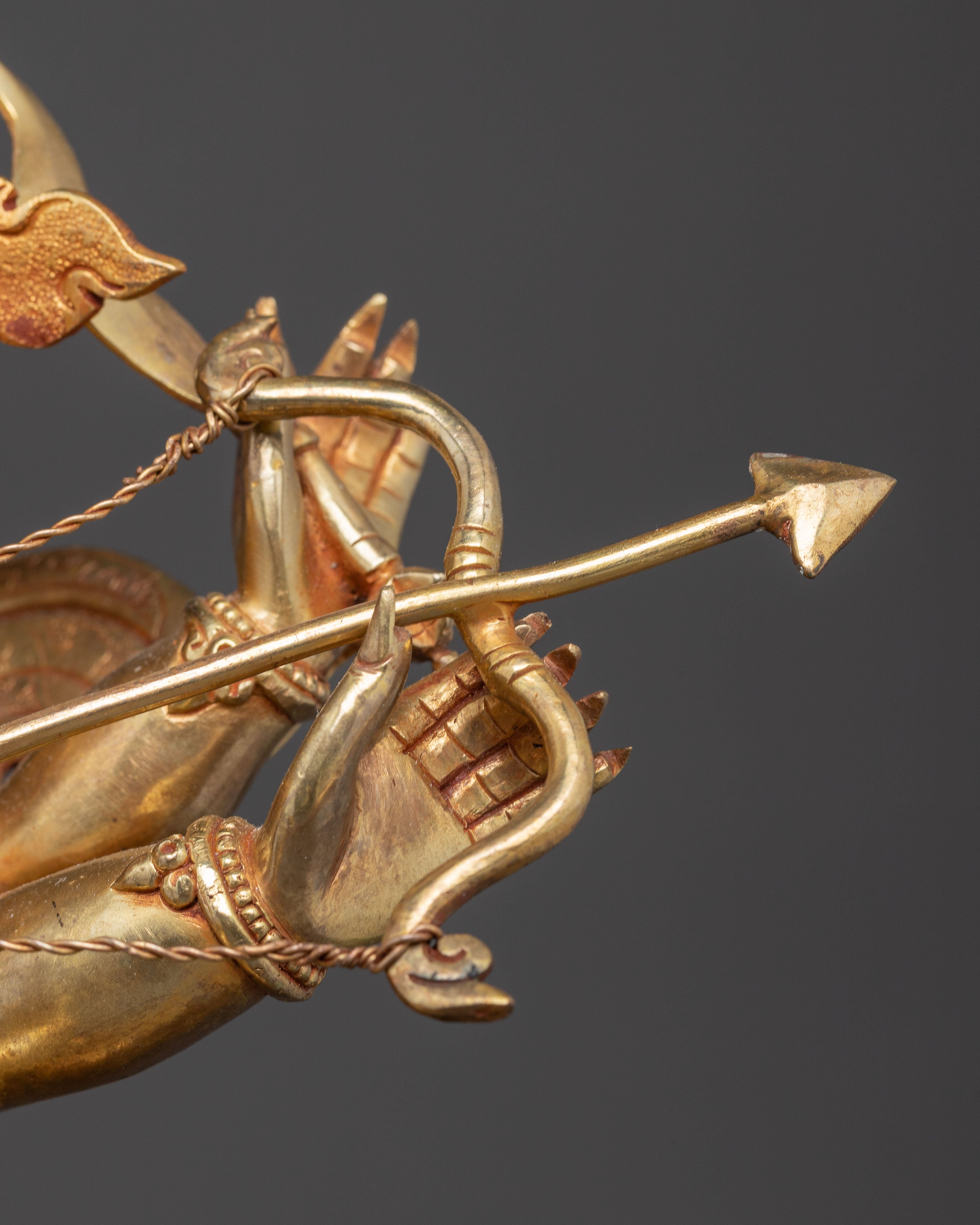
Pehar Gyalpo is a powerful and wrathful protector deity in Tibetan Buddhism, particularly within the Nyingma tradition. He is depicted with three faces, symbolizing his ability to perceive all aspects of existence and to see beyond the ordinary realm. Typically armed with a long-handled hook, razor-sharp knife, sword, stick, bow, and arrow, Pehar Gyalpo's array of weapons signifies his fierce determination to cut through ignorance and protect the Dharma. He is often shown wearing a yellow, cymbal-shaped hat (tipshu), along with tiger or leopard skins and a necklace made of freshly severed heads, which symbolize his mastery over fear and his ability to transform negative forces. Surrounded by dark, fiery flames of wisdom, Pehar Gyalpo's presence represents the destructive power of wisdom that burns away all delusions, obstacles, and harmful influences, safeguarding practitioners and the sacred teachings of Buddhism.
Size: 21.1”/53.5cm (Height) x 16.1”/41cm (Base)
Weight: 14.19kg
Materials: Copper Body, 24K Gold Gilded, Gold & Acrylic Paintings
Pehar Gyalpo is a wrathful protector deity in Tibetan Buddhism, especially revered in the Nyingma and Kagyu traditions. He is considered a guardian of the Dharma and a powerful figure who helps protect practitioners from obstacles, negative influences, and harmful spirits. Pehar Gyalpo is often depicted with a fearsome appearance, embodying both strength and protection, and is associated with the safeguarding of sacred teachings. He is said to be a protector of temples and monastic communities, helping to preserve spiritual practice and ensure the safety of the faithful. His mantra and rituals are used to invoke his blessings and protection against spiritual and physical dangers.