


Description
Drogon Chogyal Phagpa Copper Statue: An Embodiment of Sacred Lineage
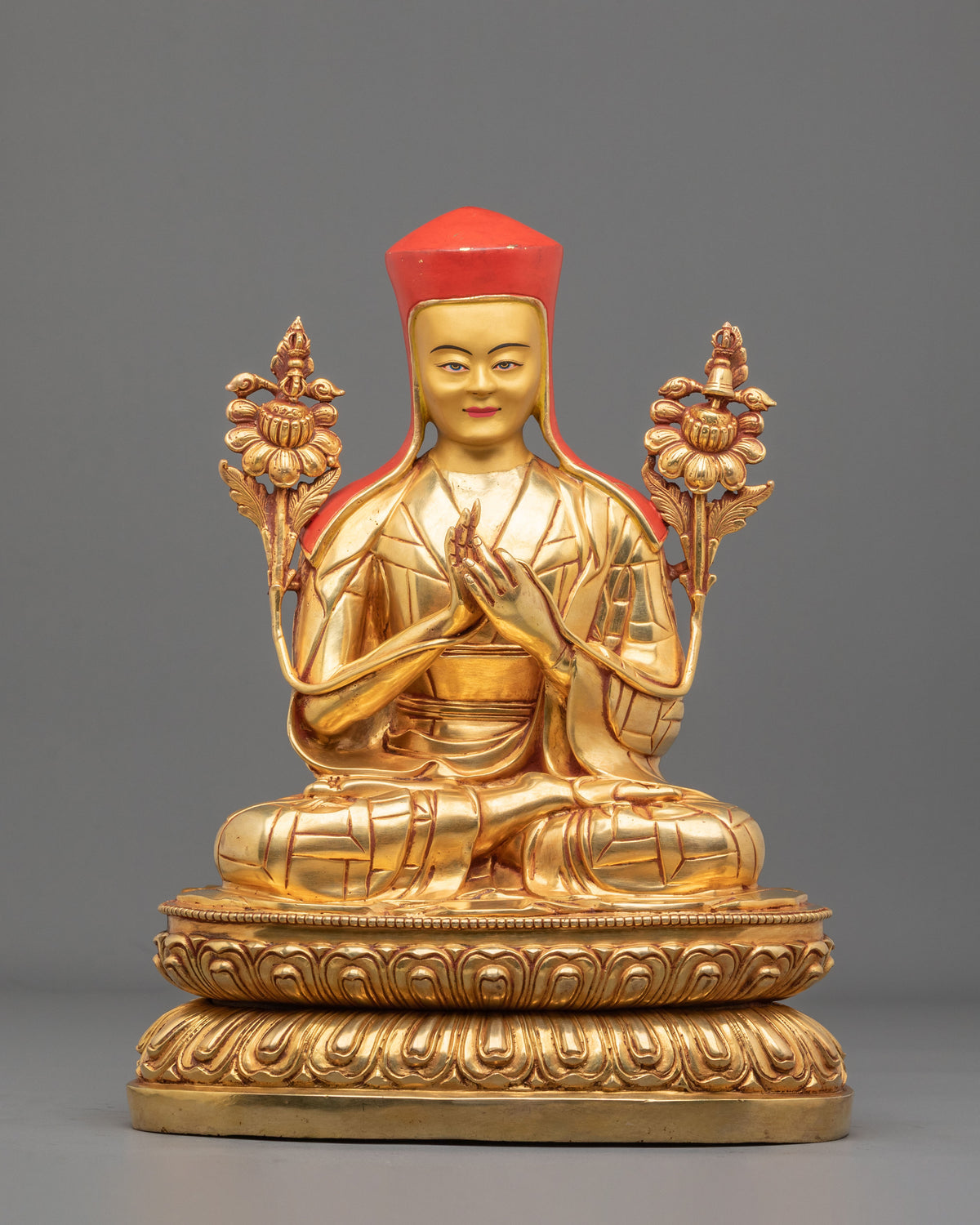
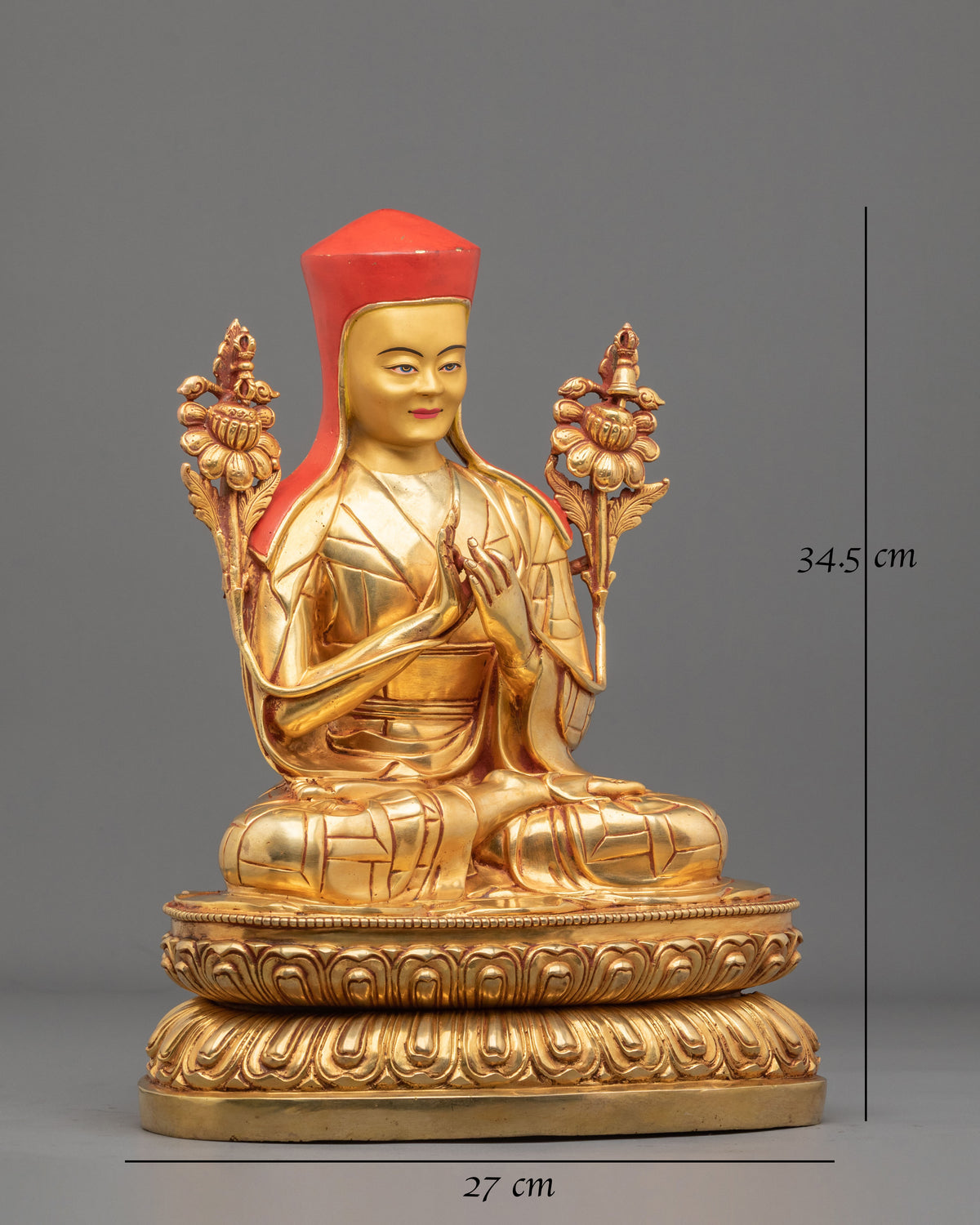
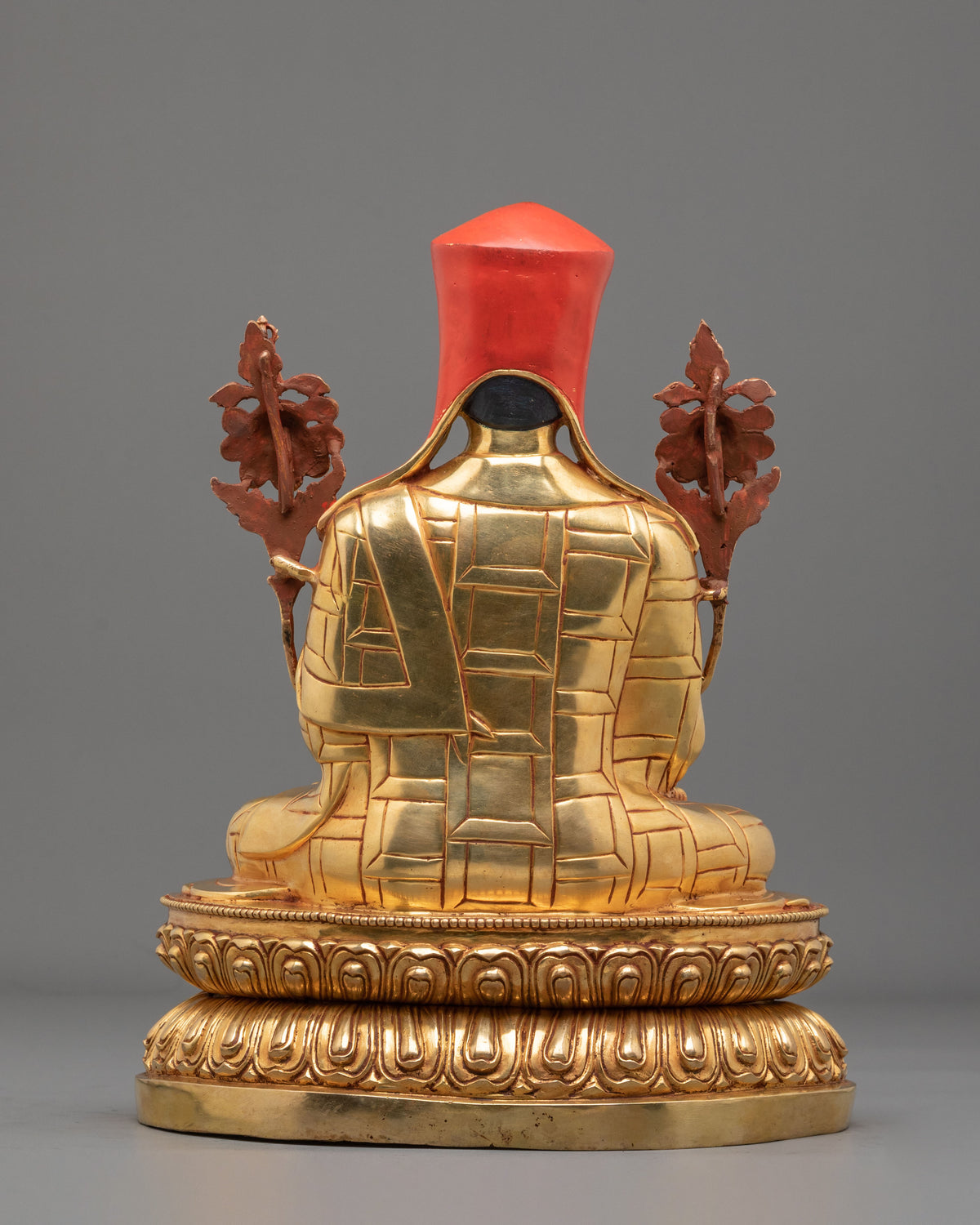
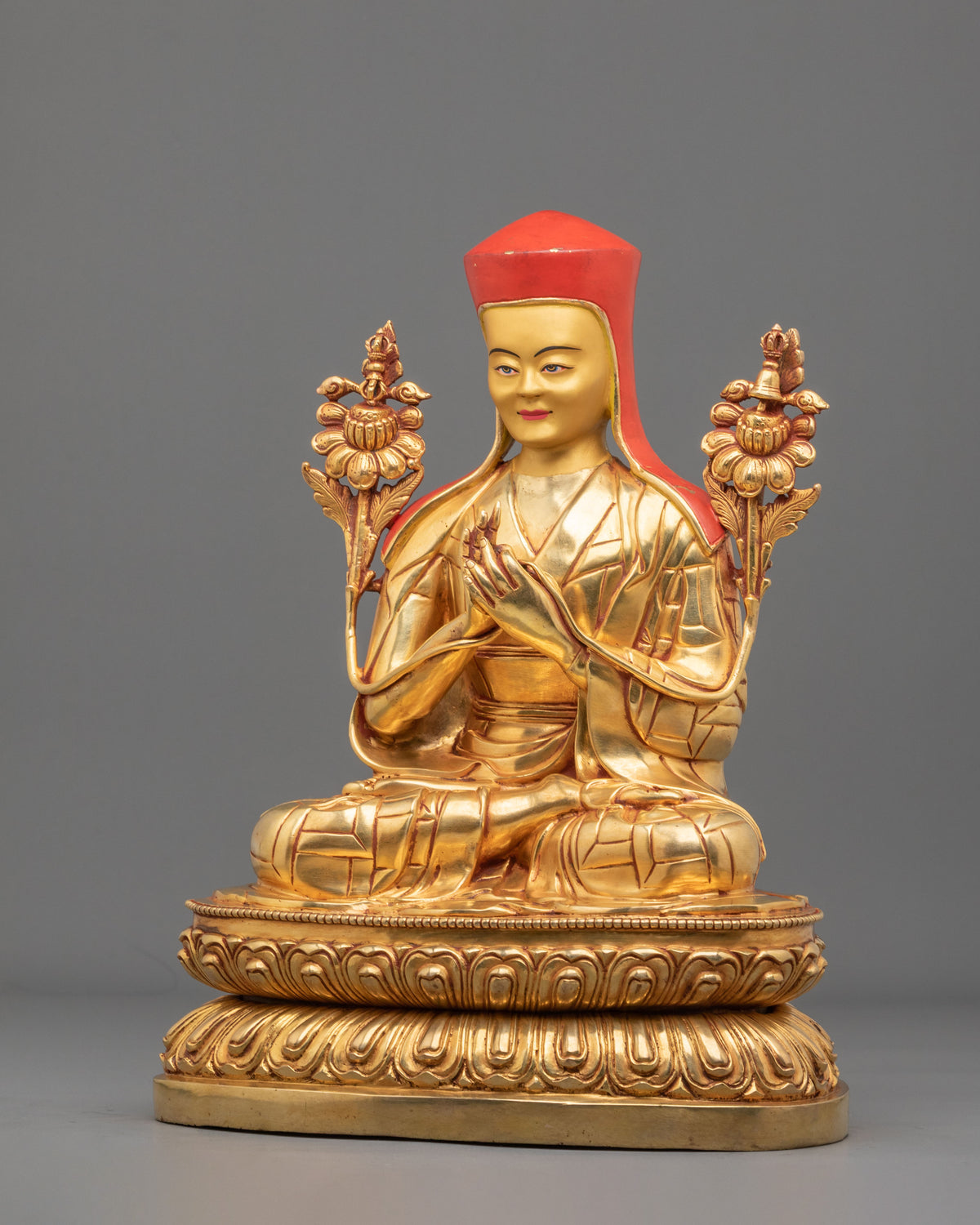
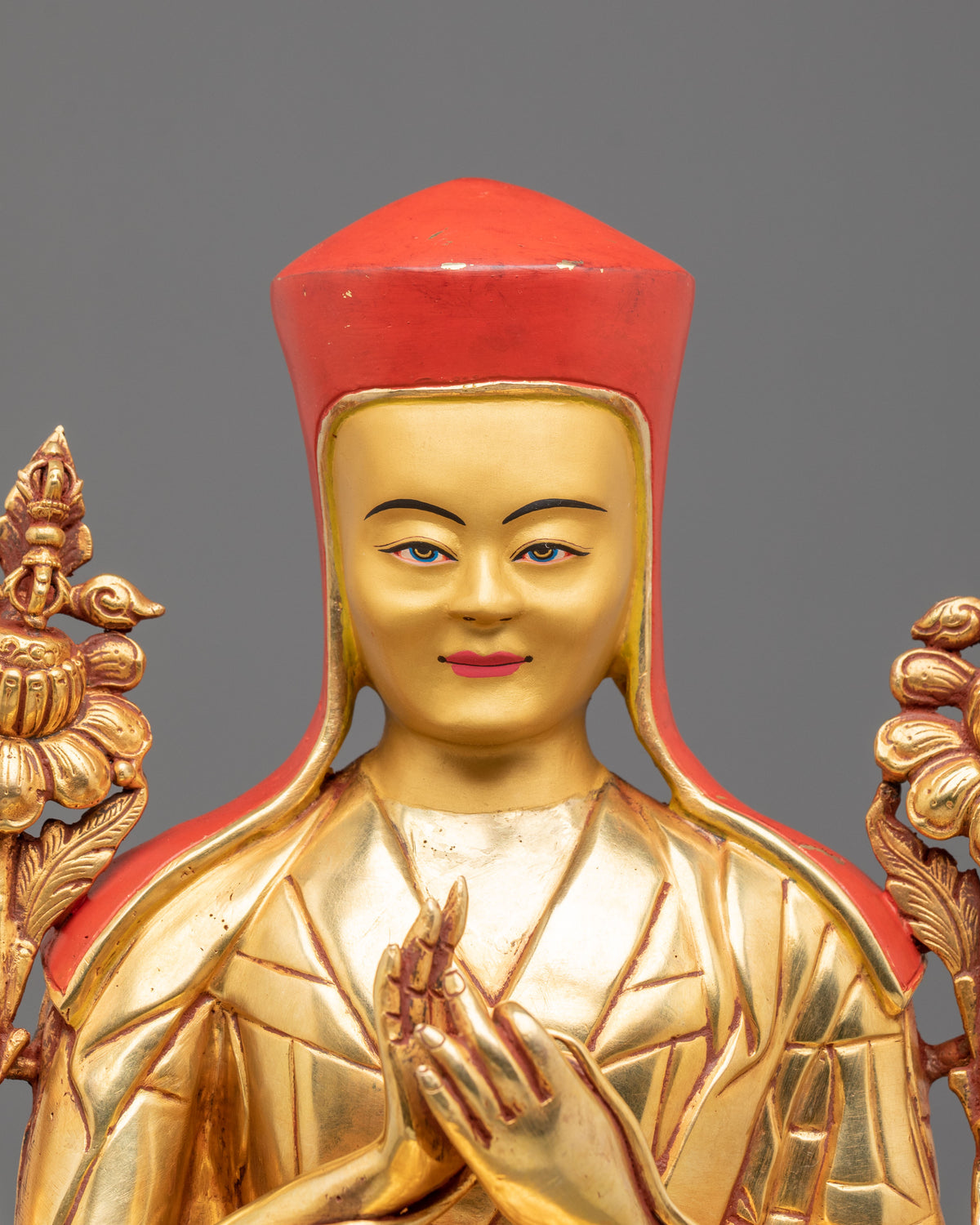
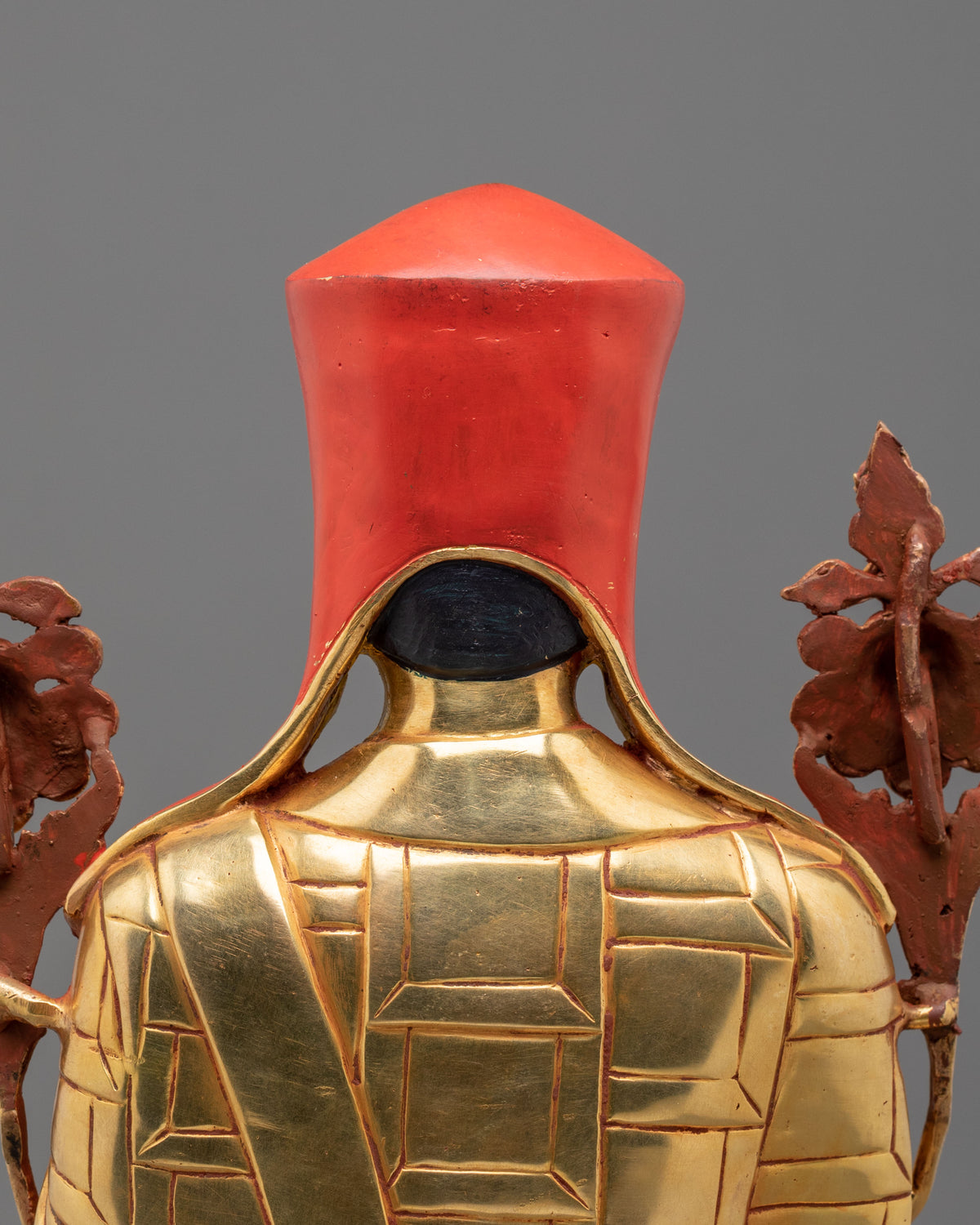
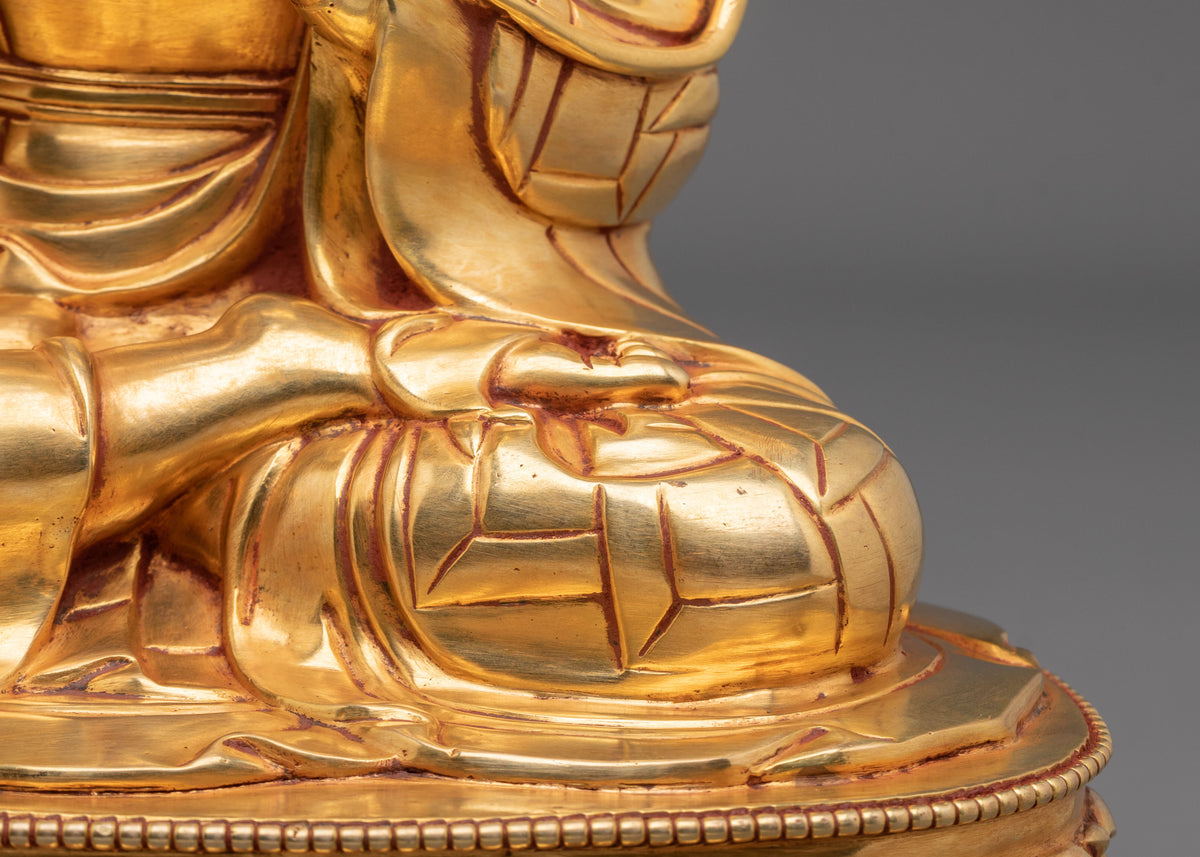
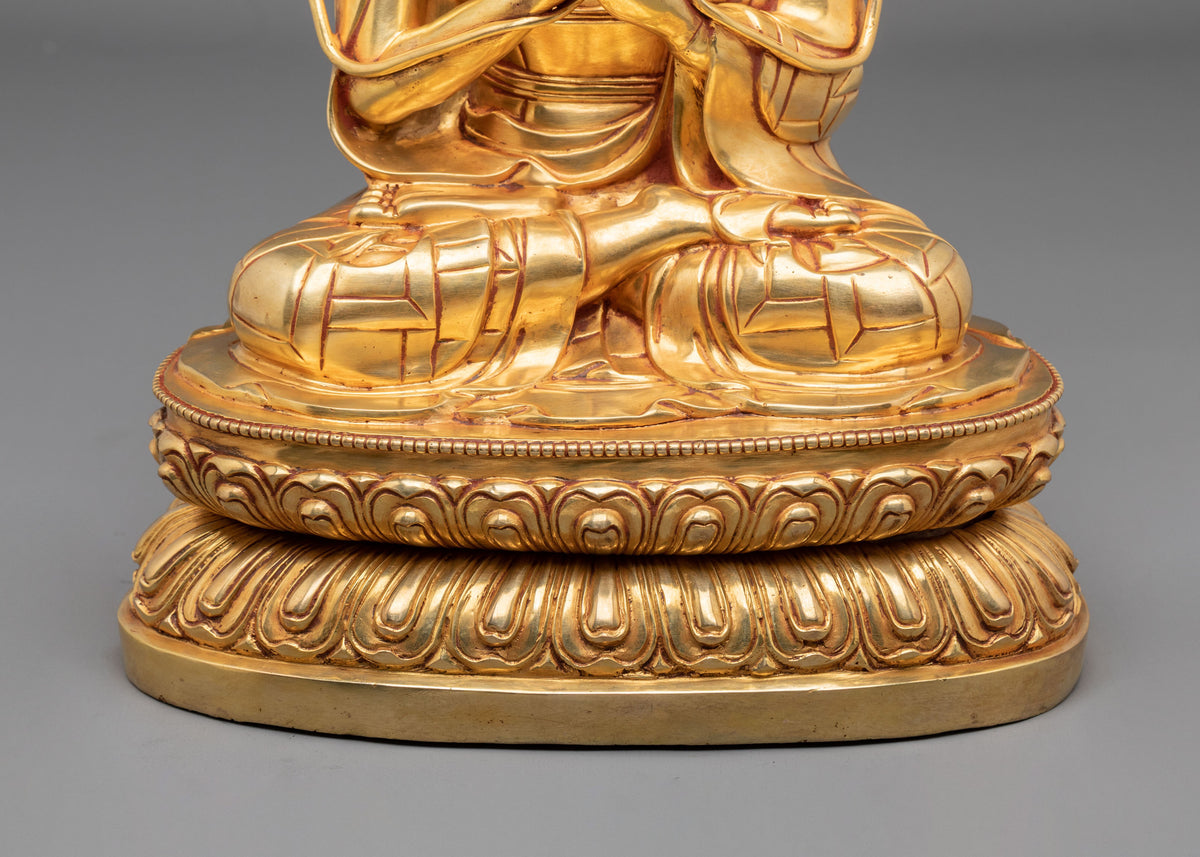
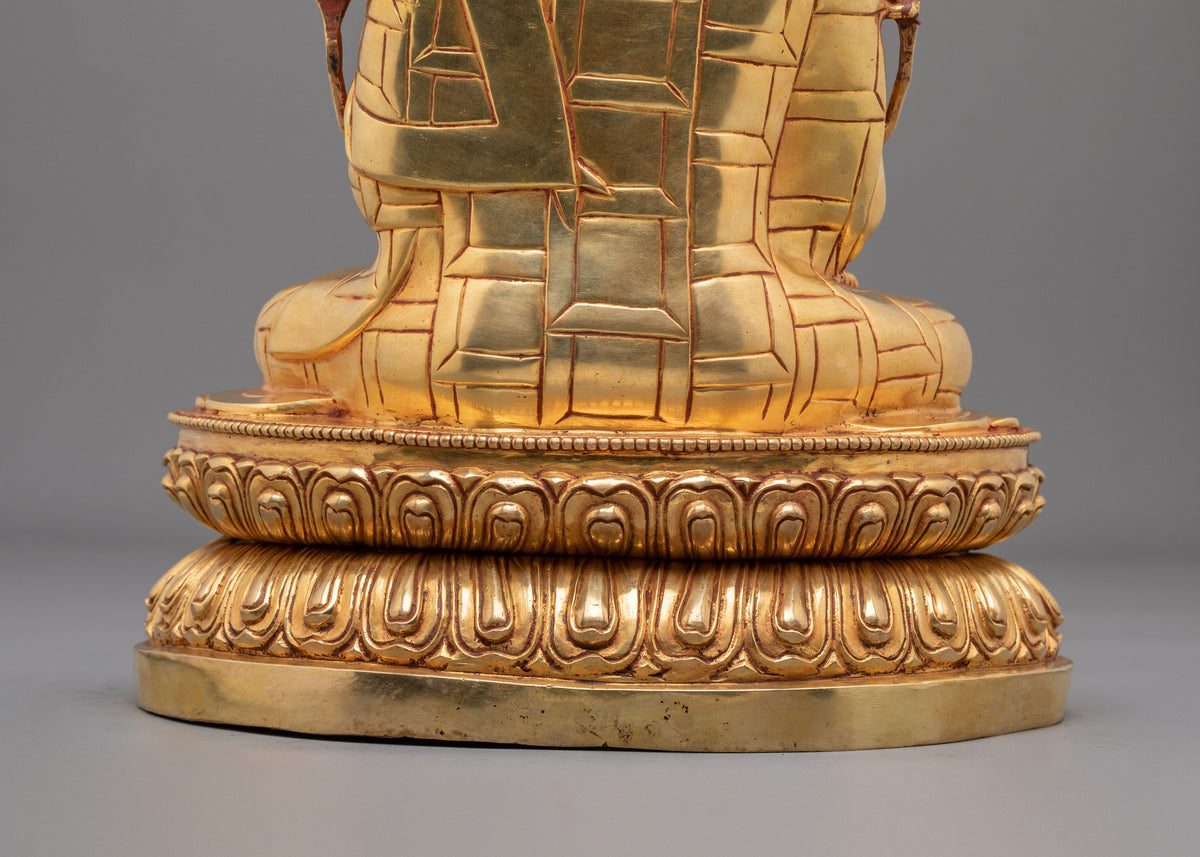
This Drogon Chogyal Phagpa Copper Statue measures 13.58”/34.5cm in height with a 10.63”/27cm base and weighs 5.03 kg. Crafted by skilled Nepali artisans, this sculpture features a copper body finished with 24K gold gilding and detailed acrylic painting. The radiant gold surface highlights the finely engraved details across the master’s robes, lotus pedestal, floral offerings, and decorative elements, while the acrylic painting adds refined colors to the distinctive red hat and facial features. The combination of traditional copper craftsmanship, gold gilding, and painted details creates an elegant representation of Drogon Chogyal Phagpa, making this statue suitable for Buddhist altars, meditation spaces, Dharma centers, monasteries, or spiritual collections.
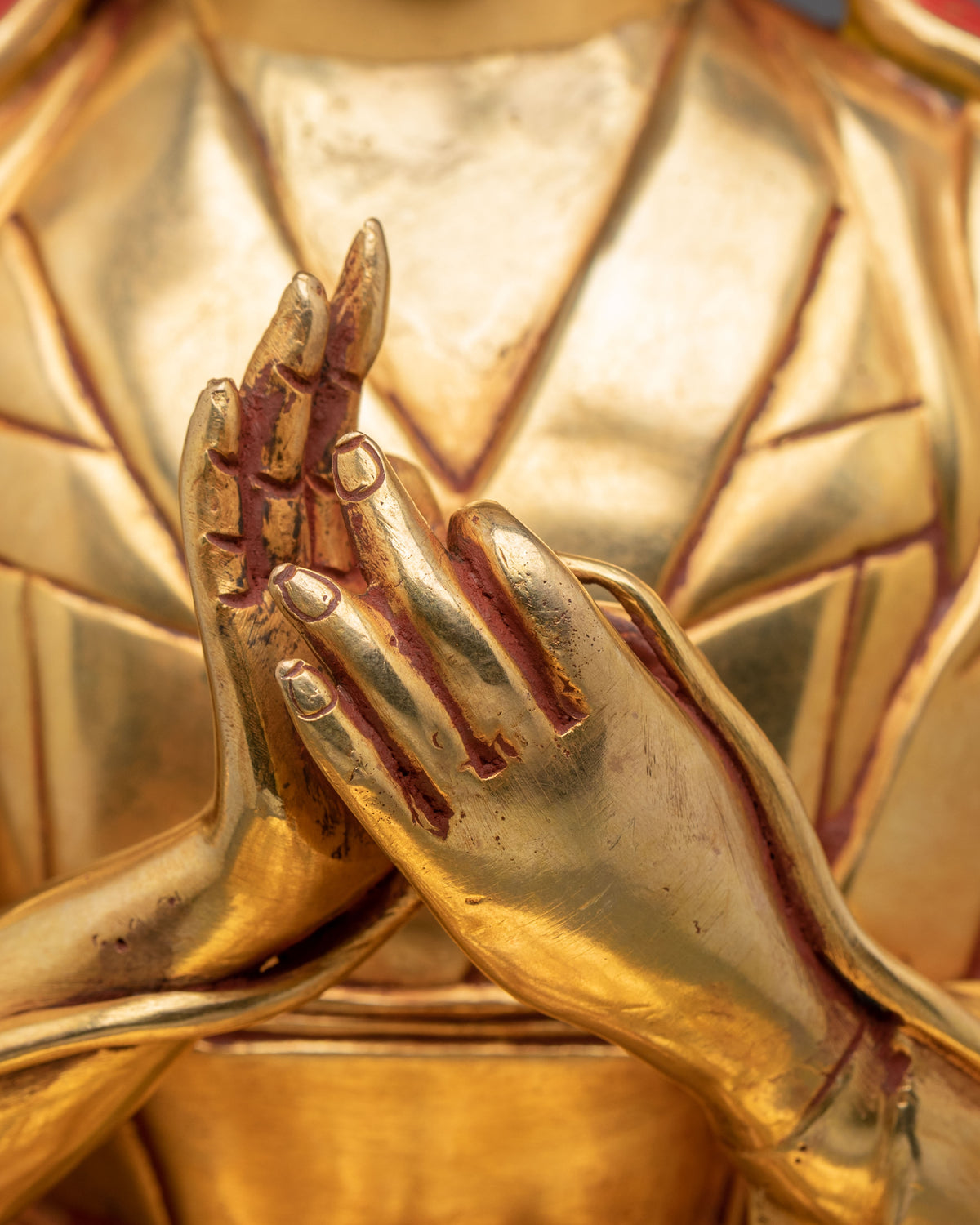
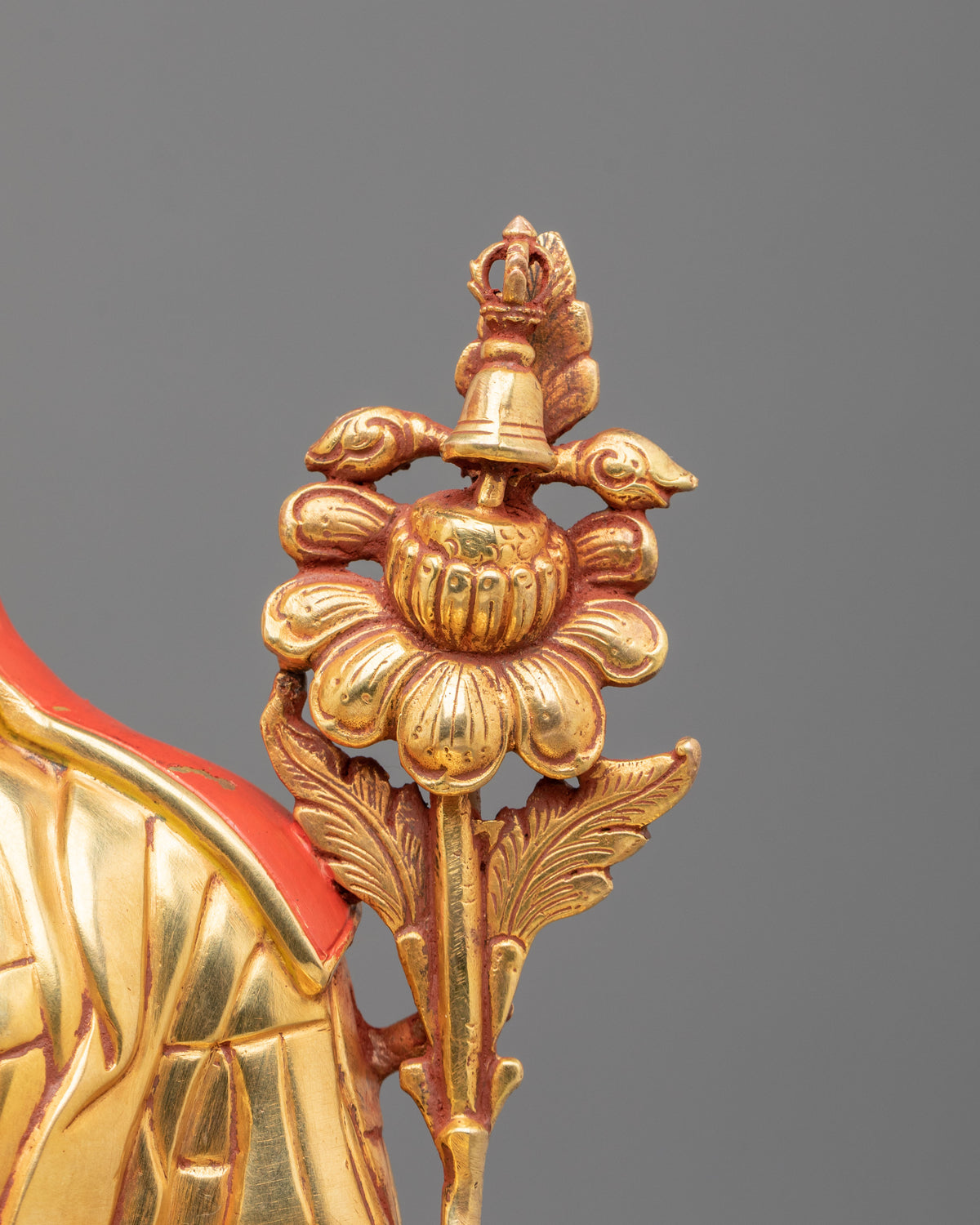
The sculpture depicts Drogon Chogyal Phagpa seated upon an intricately carved lotus pedestal as a revered Sakya lineage master. He is shown wearing a distinctive red hat and traditional monastic robes with carefully carved folds and layered details. His hands are placed together in front of his chest in a teaching gesture, while lotus flowers rise on both sides of his body, supporting decorative elements. His calm facial expression, elongated earlobes, composed seated posture, and refined robes reflect his role as a scholar, teacher, and spiritual lineage holder. The detailed lotus throne, symmetrical floral arrangement, and elegant gold finish create a traditional Himalayan representation of Drogon Chogyal Phagpa.
Size: 13.58”/34.5cm (Height) x 10.63”/27cm (Base)
Weight: 5.03 kg
Material: 24K Gold Gilded, Acrylic Painting, Copper Body
Drogon Chogyal Phagpa (1235–1280) was a pivotal figure in Tibetan Buddhism, a Sakya master who served as the Imperial Preceptor to Kublai Khan and played a crucial role in establishing the Sakya school's political and spiritual influence. He is celebrated for his vast scholarship, meditative attainments, and for uniting various Tibetan Buddhist traditions under his guidance during a critical period in Tibetan history.