




Description
Handcrafted Dzambhala Sculpture | Buddhist Deity of Wealth and Generosity
This Handcrafted Dzambhala Sculpture measures 10.6”/27cm in height with an 8.8”/22.5cm base and weighs 3.18 kg. Handcrafted in Nepal from a copper body, the sculpture is finished with 24K gold gilding and detailed acrylic painting that add warmth, contrast, and definition to the carefully worked surface. The balanced proportions, refined metalwork, and meticulous hand-finishing reflect the skill of Nepalese artisans and the enduring traditions of Himalayan Buddhist craftsmanship. Spiritually, the figure is associated with prosperity, generosity, abundance, and the removal of material obstacles, making this piece meaningful for Buddhist altars, meditation spaces, Dharma centers, or sacred collections.
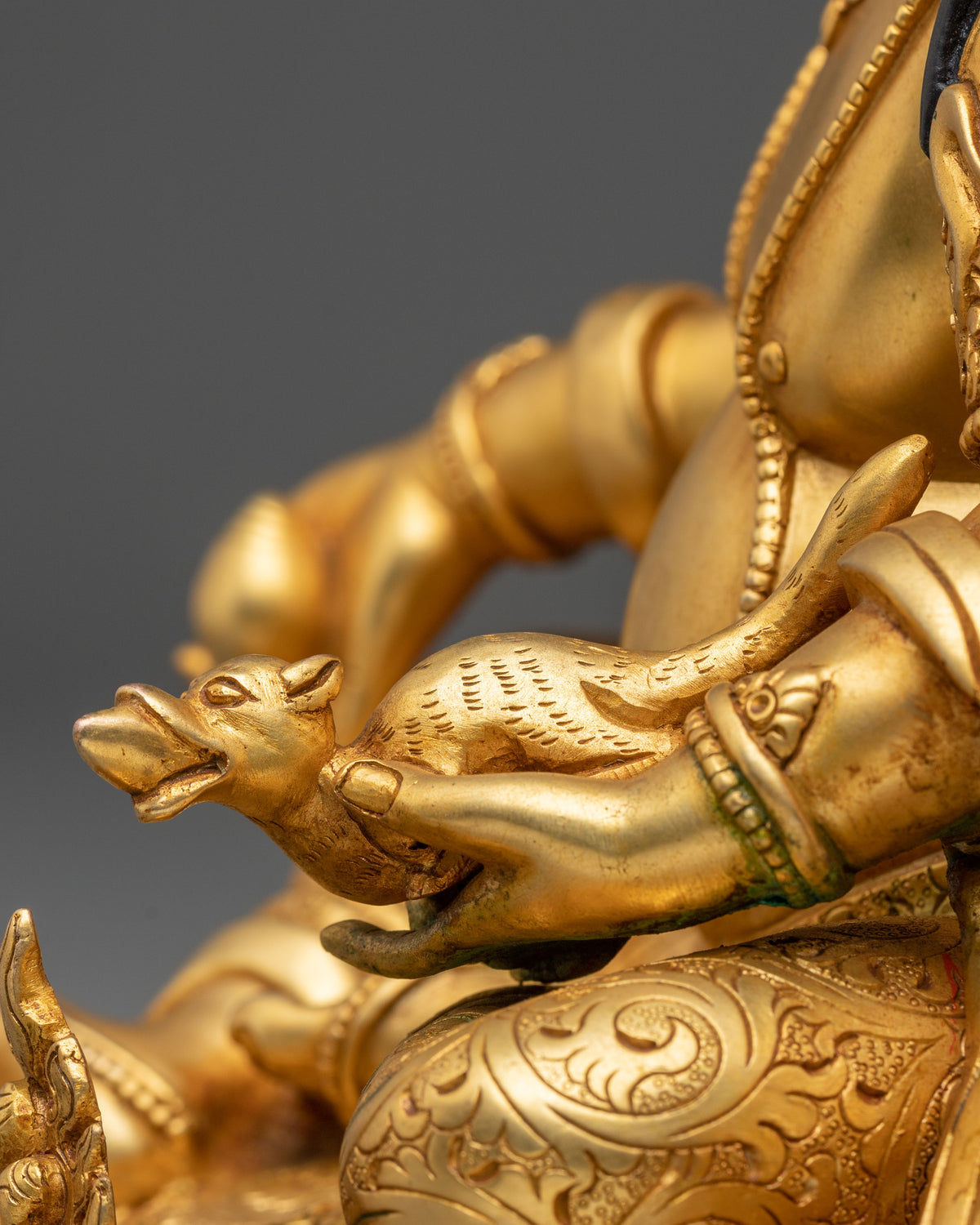
This Dzambhala is depicted in his traditional wealth-deity form, seated in a relaxed royal posture upon a richly carved lotus throne. His rounded body and composed yet commanding expression convey generosity, abundance, prosperity, and the accumulation of merit. His right hand holds a citron fruit, symbolizing auspicious abundance, while his left hand supports a mongoose, traditionally associated with the bestowal of jewels and precious wealth. He is richly adorned with an elaborate jeweled crown, large earrings, layered necklaces, armlets, bracelets, waist ornaments, and richly patterned garments, with flowing scarves extending gracefully around his body. His relaxed seated posture emphasizes his regal nature, while the lotus throne provides a sacred foundation symbolizing purity and the flourishing of virtuous qualities. The citron, mongoose, lotus seat, peaceful expression, elaborate ornaments, and flowing garments together express the distinctive sacred iconography associated with generosity, abundance, and spiritual prosperity.
Size: 10.6”/27cm (Height) x 8.8”/22.5cm (Base)
Weight: 3.18 kg
Material: 24K Gold-Gilded, Acrylic Painting, Copper Body
Dzambhala originates in Indian Buddhist tradition and later became an important wealth deity within Tibetan Vajrayana Buddhism. He is associated with prosperity, abundance, generosity, and the removal of material obstacles that may interfere with spiritual practice. Several forms are recognized in Himalayan Buddhism, including Yellow, White, Black, Green, and Red Dzambhala, each connected with distinct qualities and practices. Spiritually, his significance extends beyond material wealth, emphasizing generosity, merit, and the responsible use of resources to support oneself, others, and the Dharma.