


Description
Handmade Dzambhala Buddhist Statue | A Revered Symbol of Fortune and Generosity
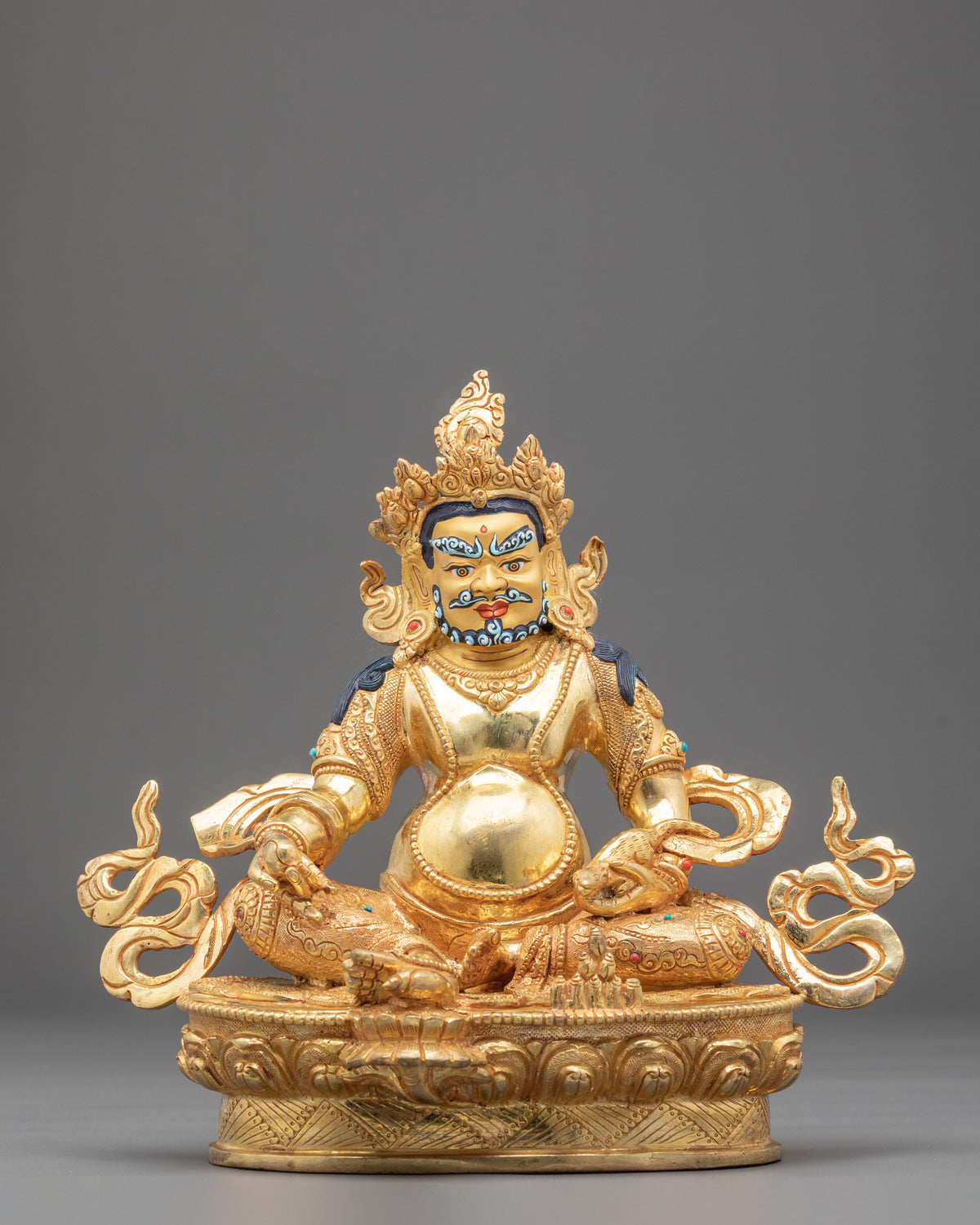
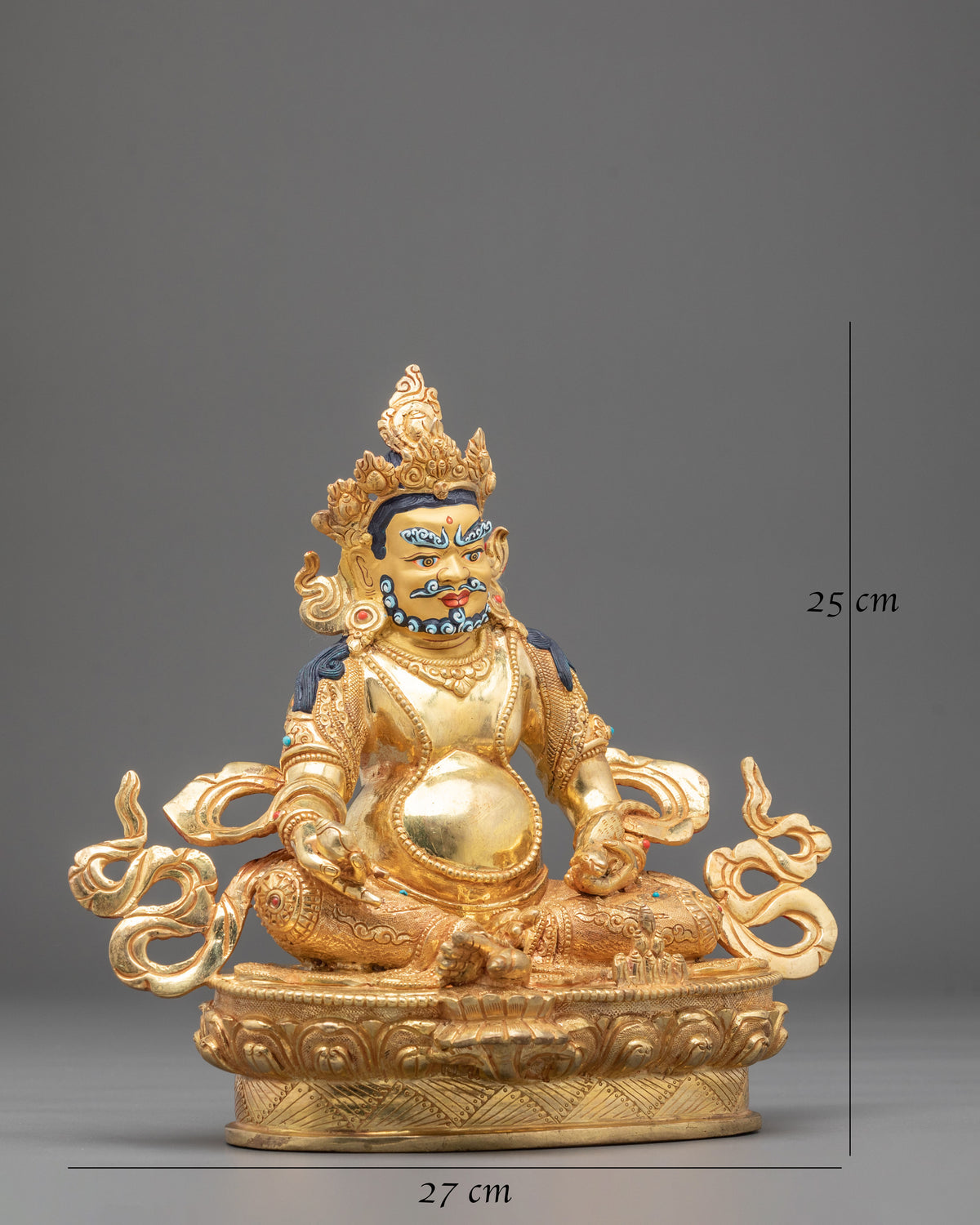
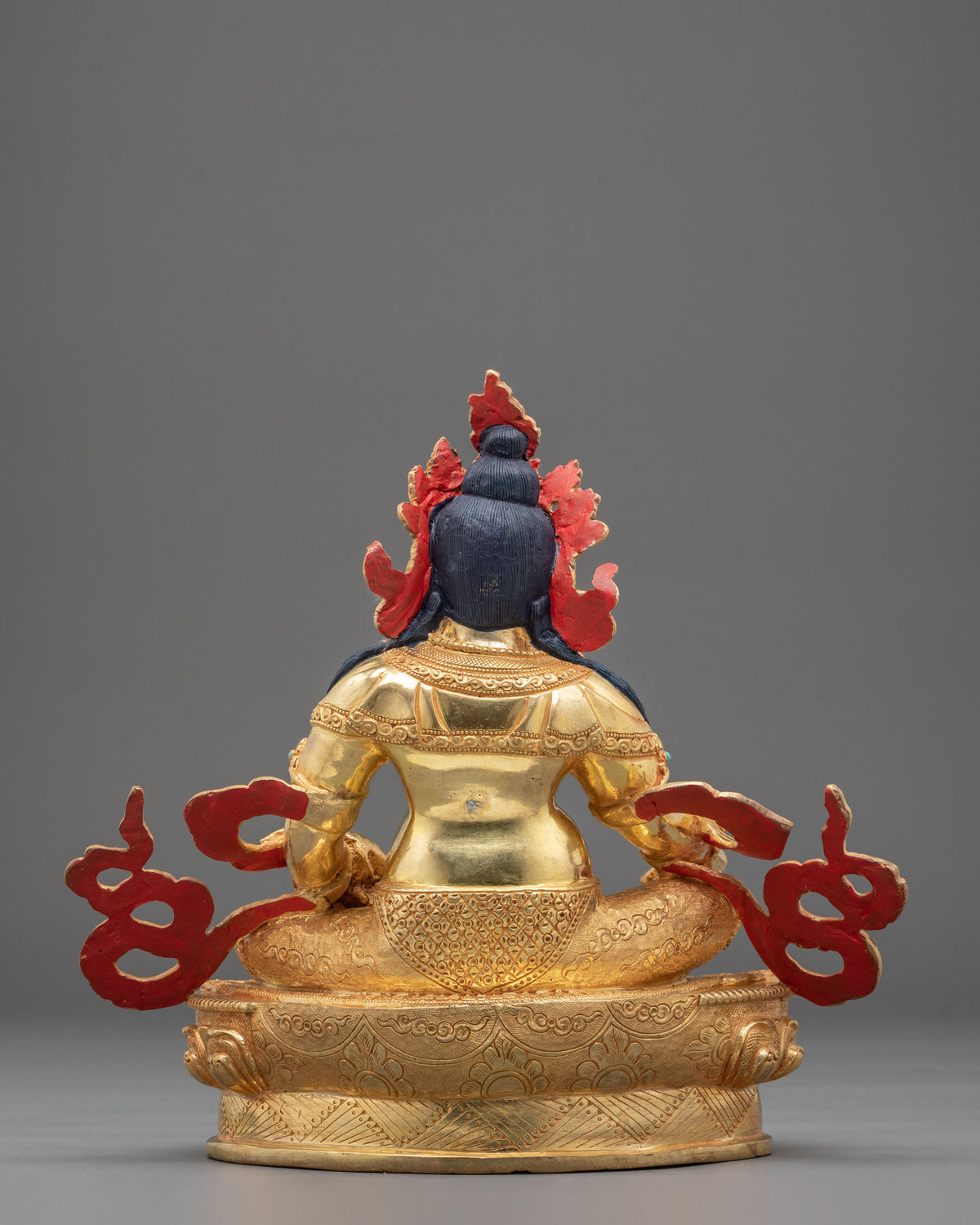
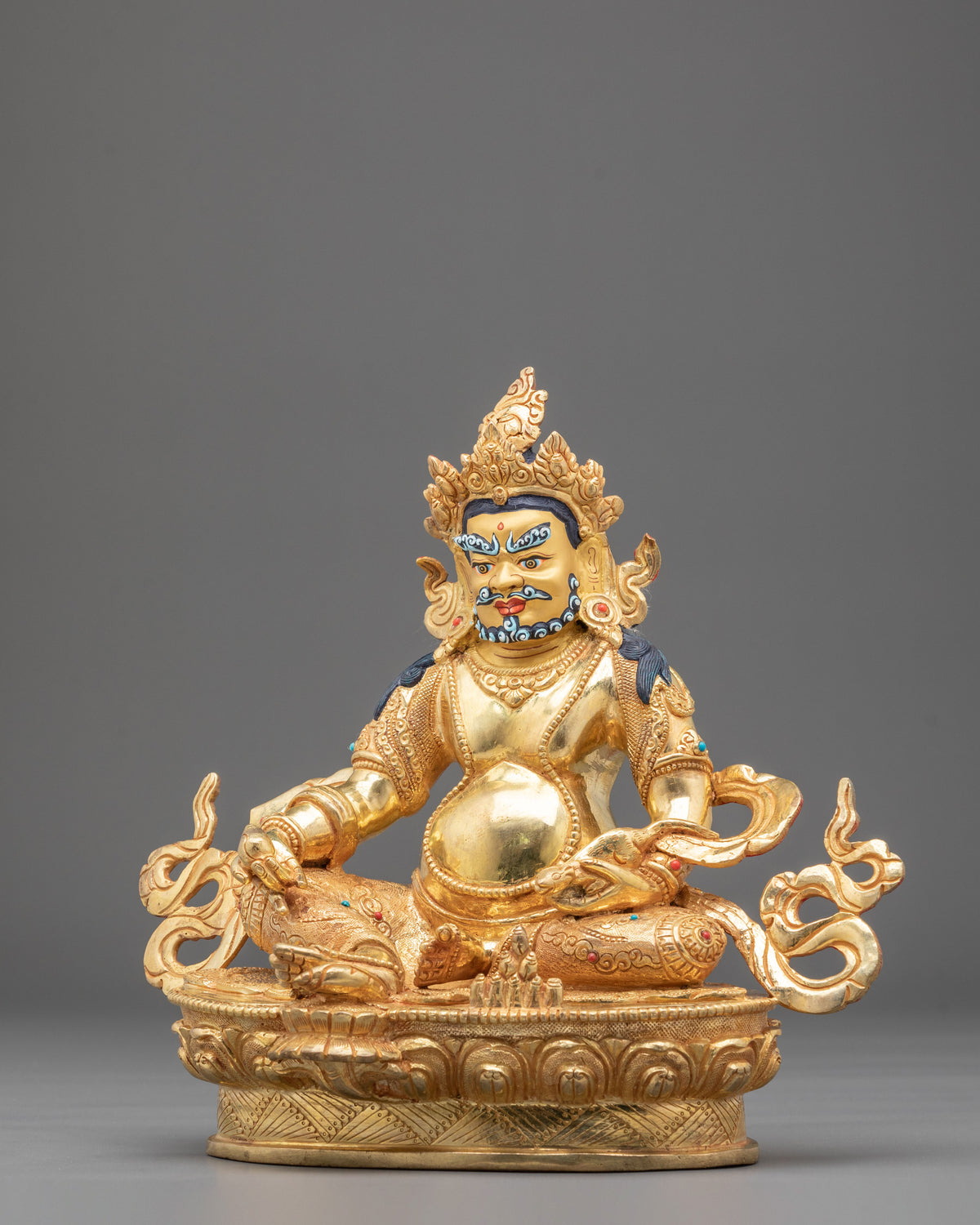
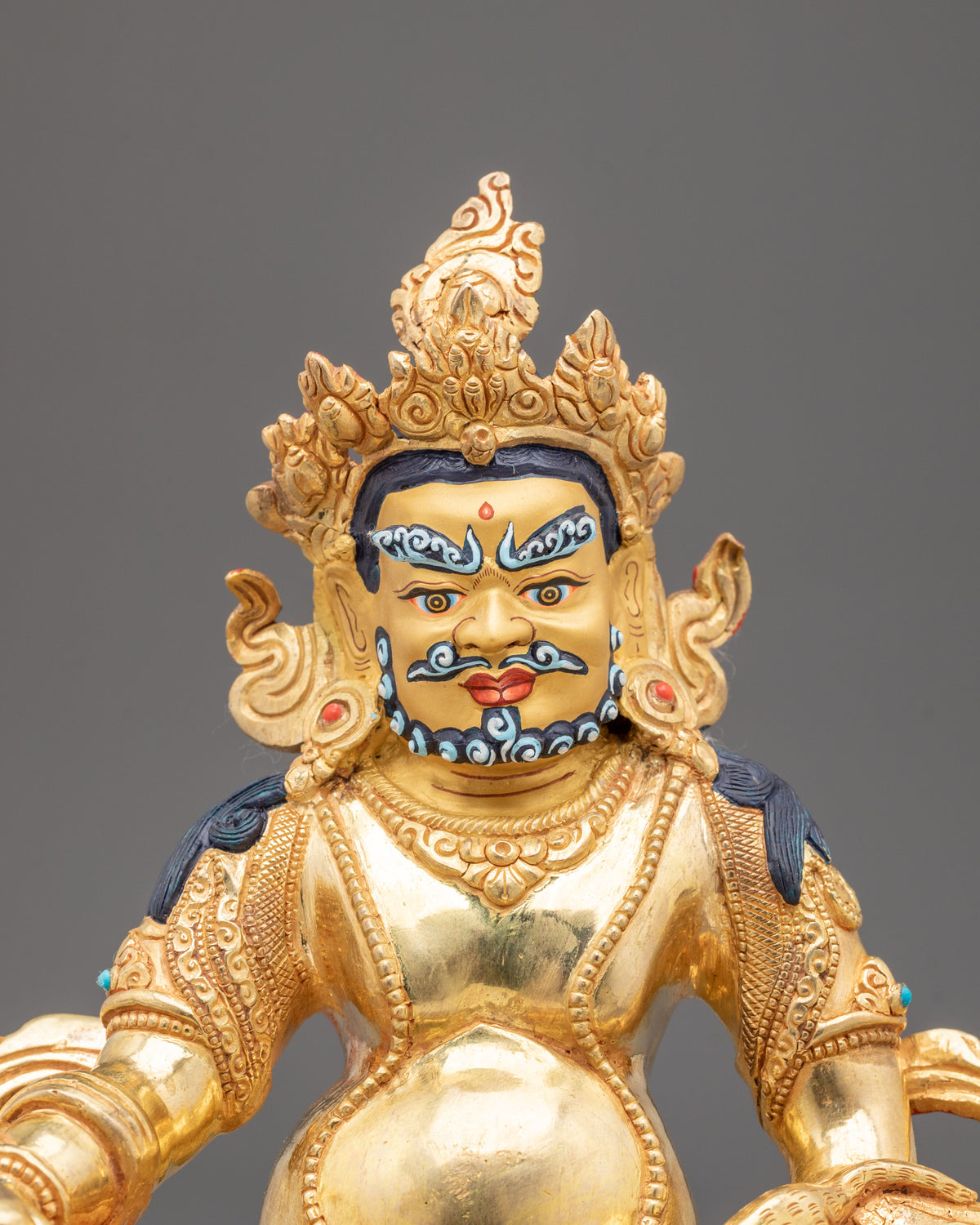
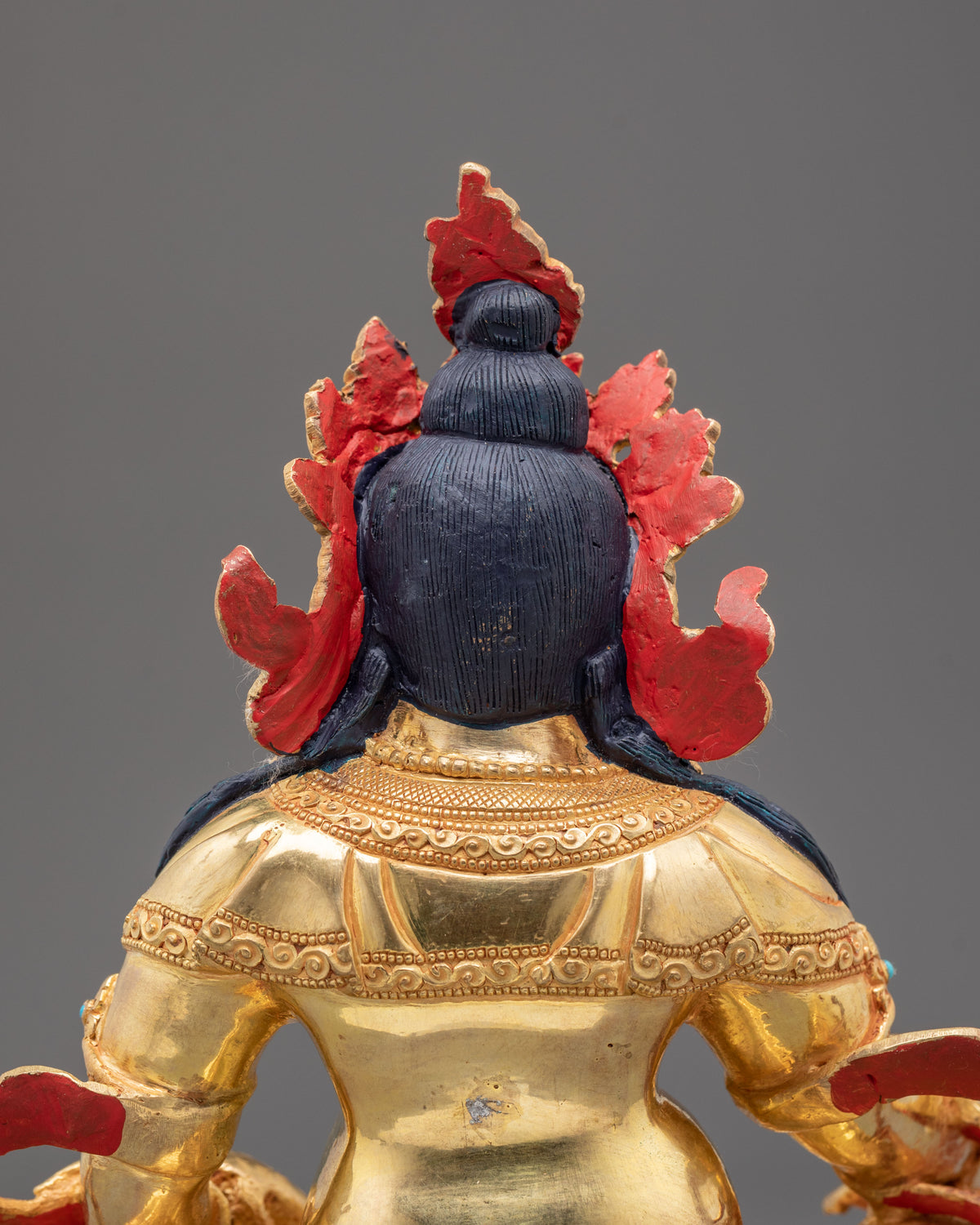
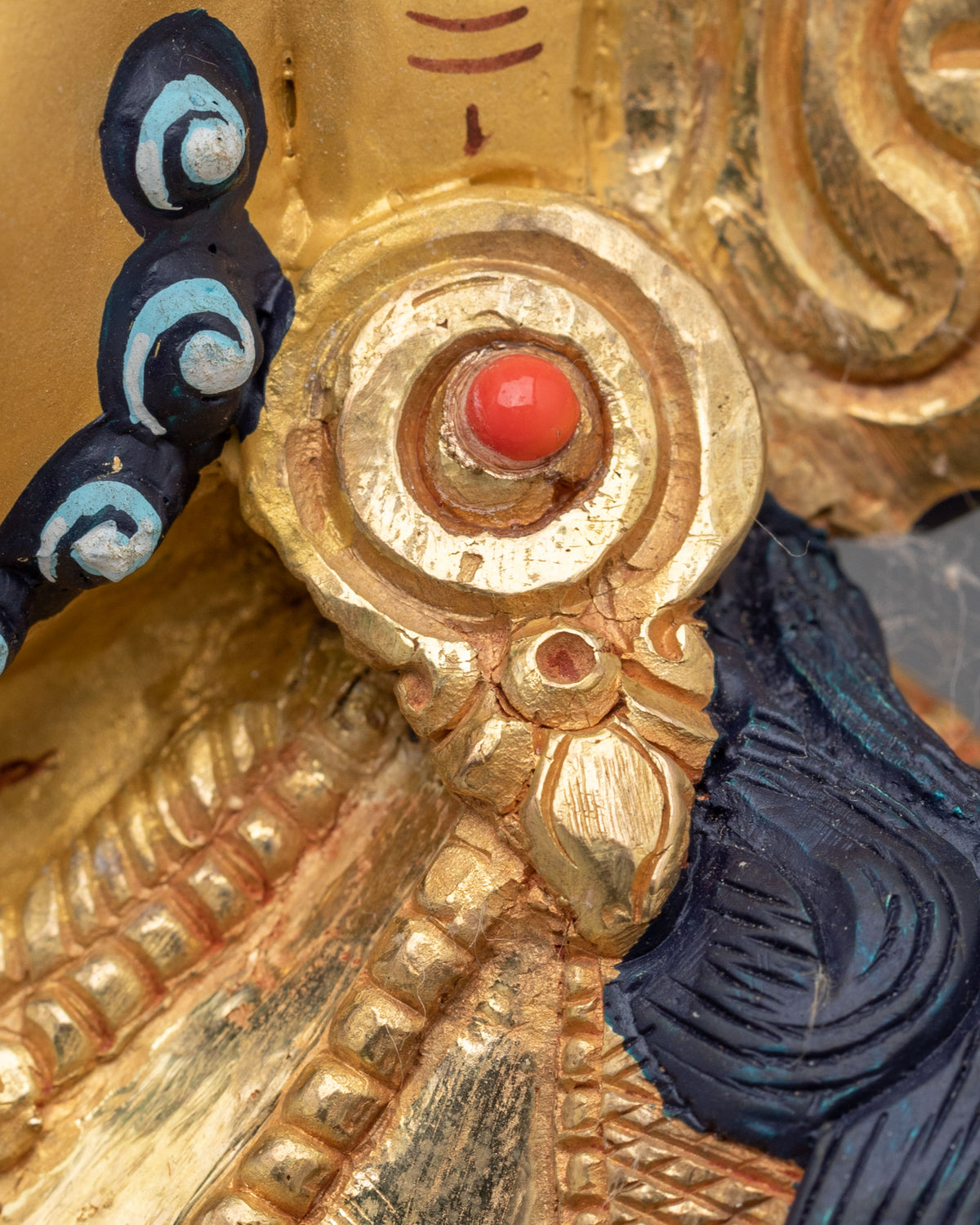
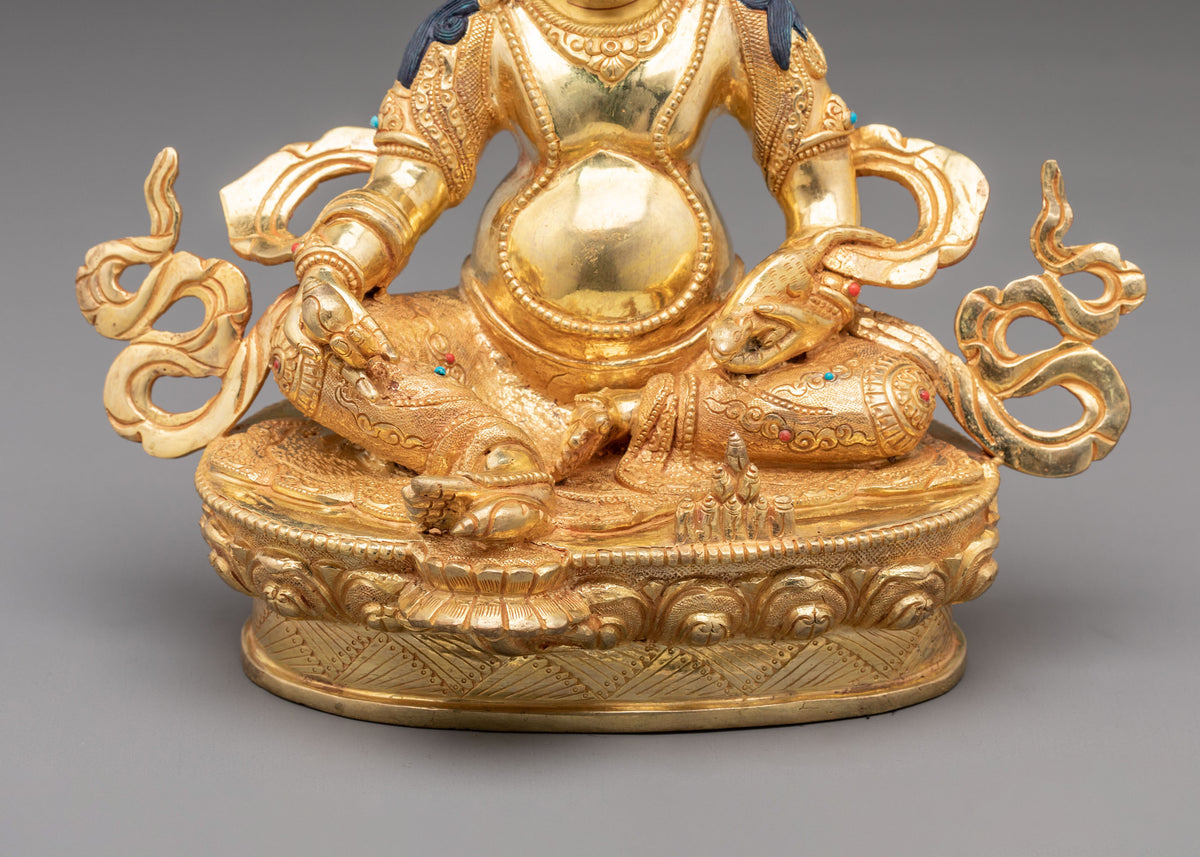
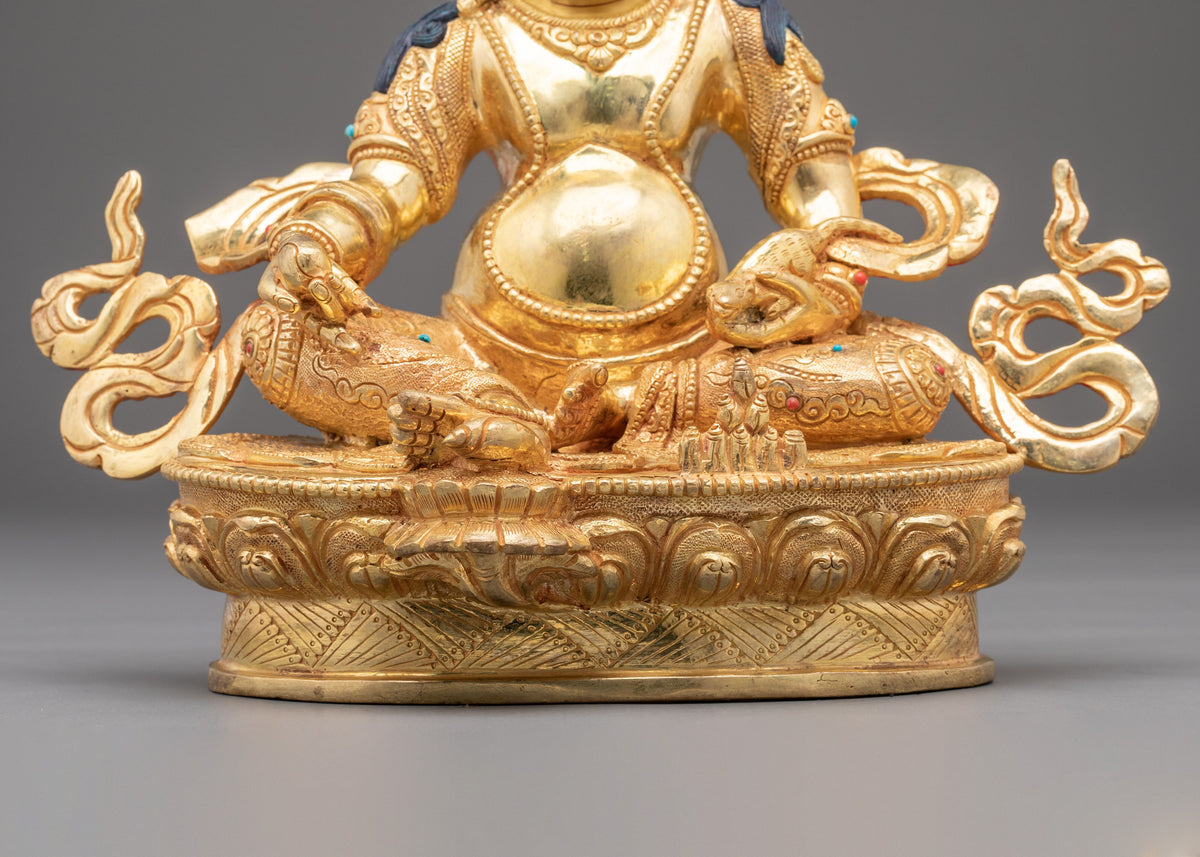
Handmade Dzambhala Buddhist Statue measures 9.84”/25cm in height with a 10.63”/27cm base and weighs 3.51 kg. Handcrafted in Nepal from a copper body, the sculpture is enriched with 24K gold gilding, detailed acrylic painting, and carefully placed gemstones that add depth and visual refinement to the hand-finished surface. The combination of traditional metalwork, radiant gilding, and decorative embellishment reflects the precision of skilled Nepalese artisans and the enduring character of Himalayan Buddhist craftsmanship. Spiritually, the figure is associated with prosperity, generosity, abundance, and the removal of material obstacles, making this piece meaningful for Buddhist altars, meditation spaces, Dharma centers, or sacred collections.
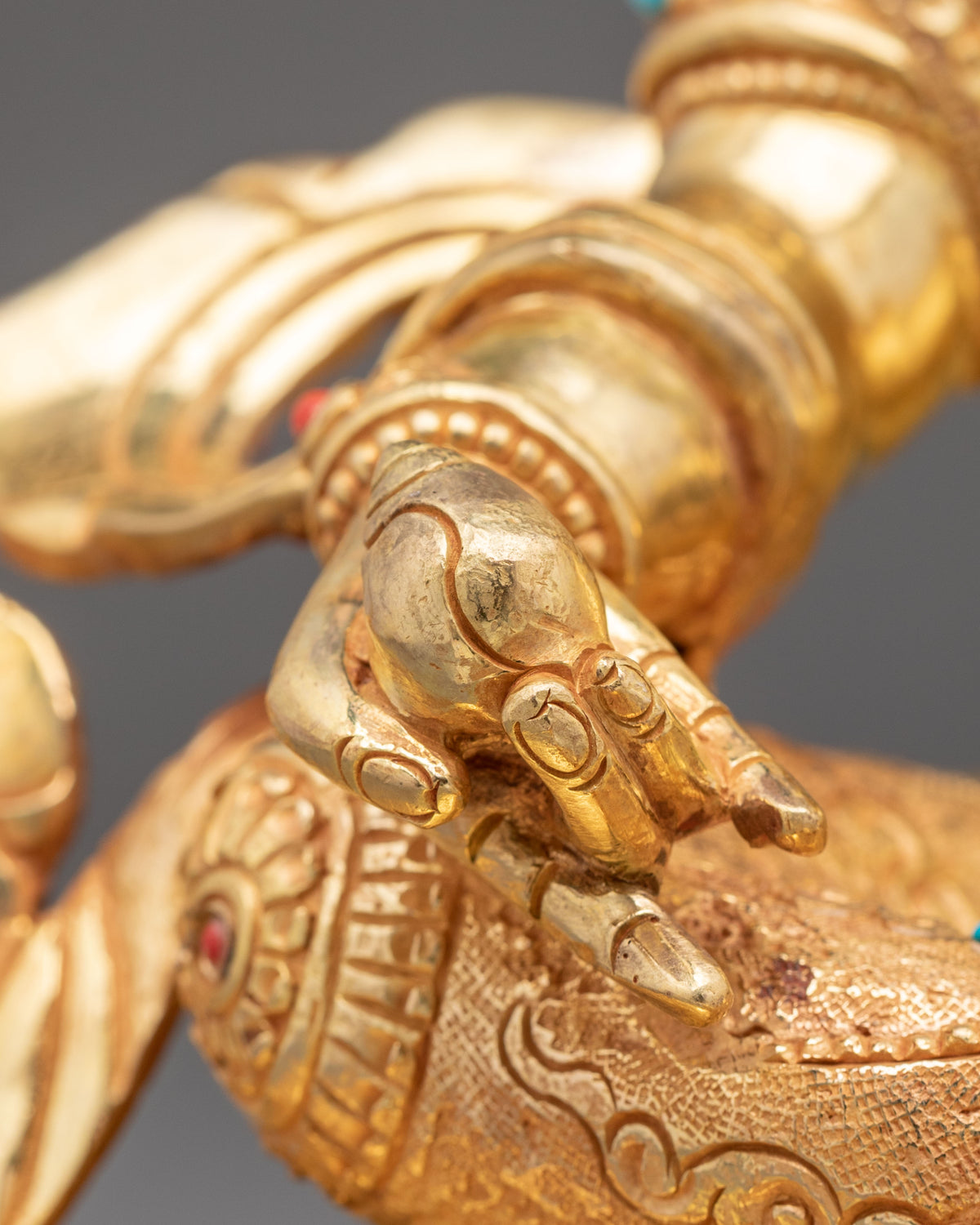
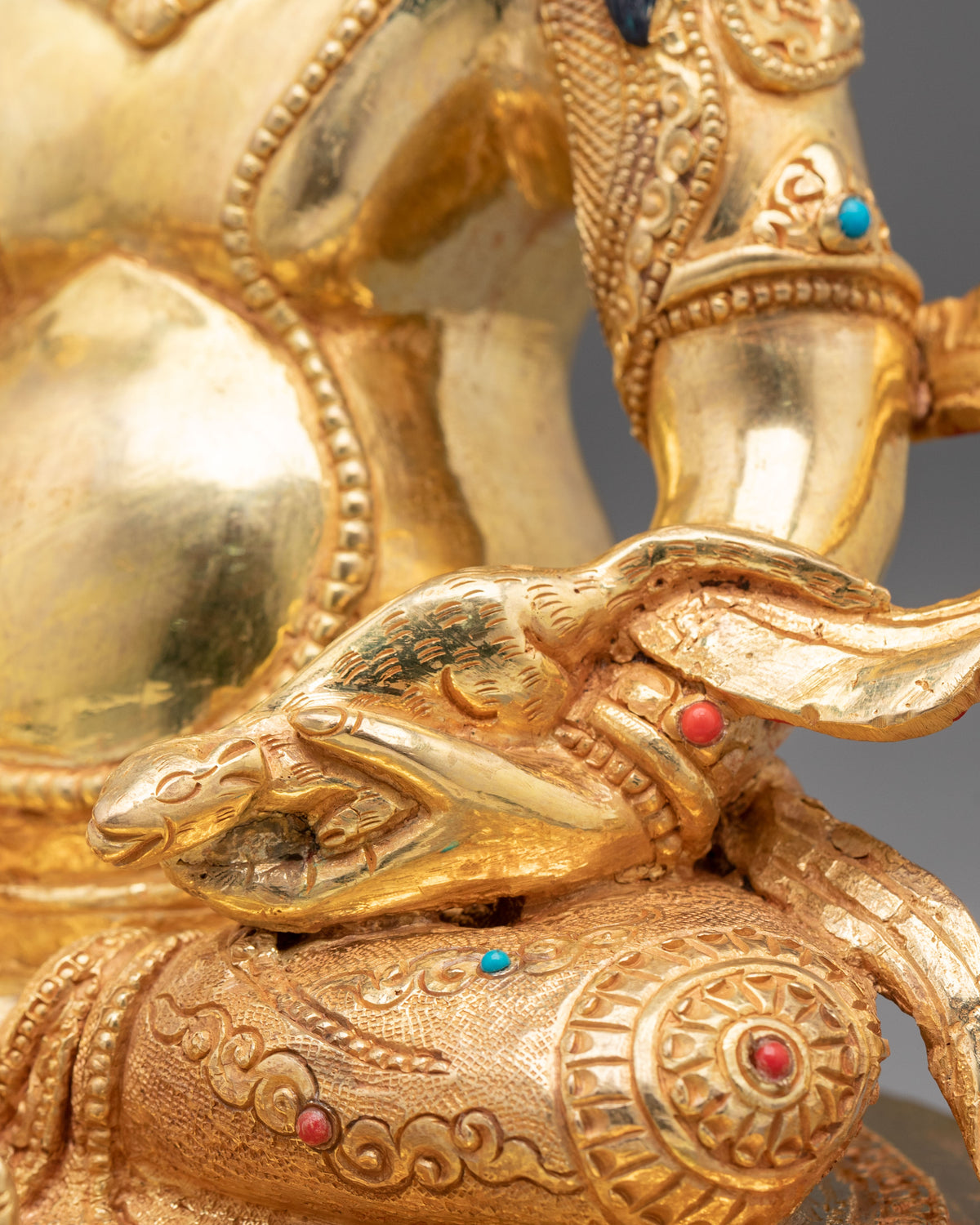
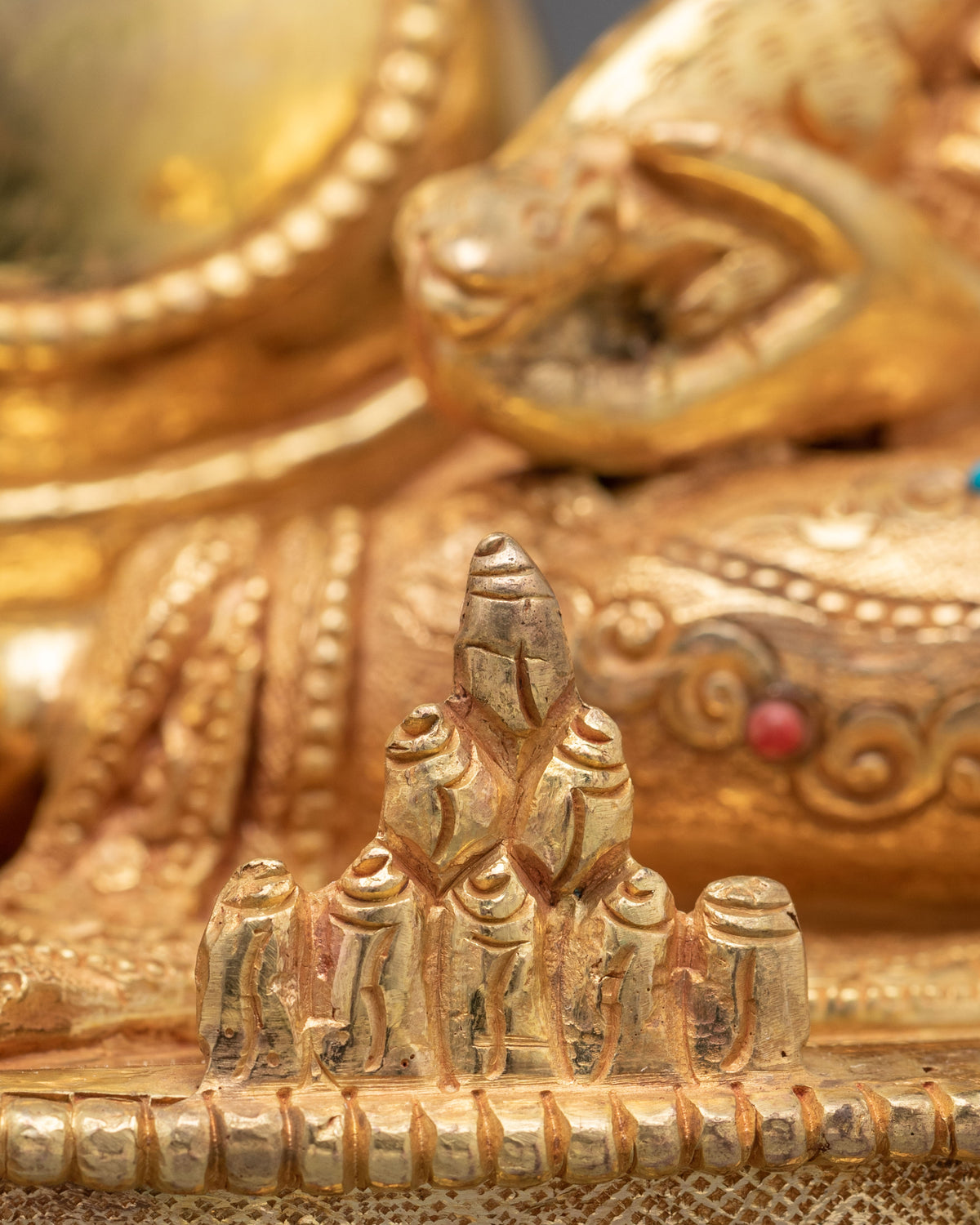
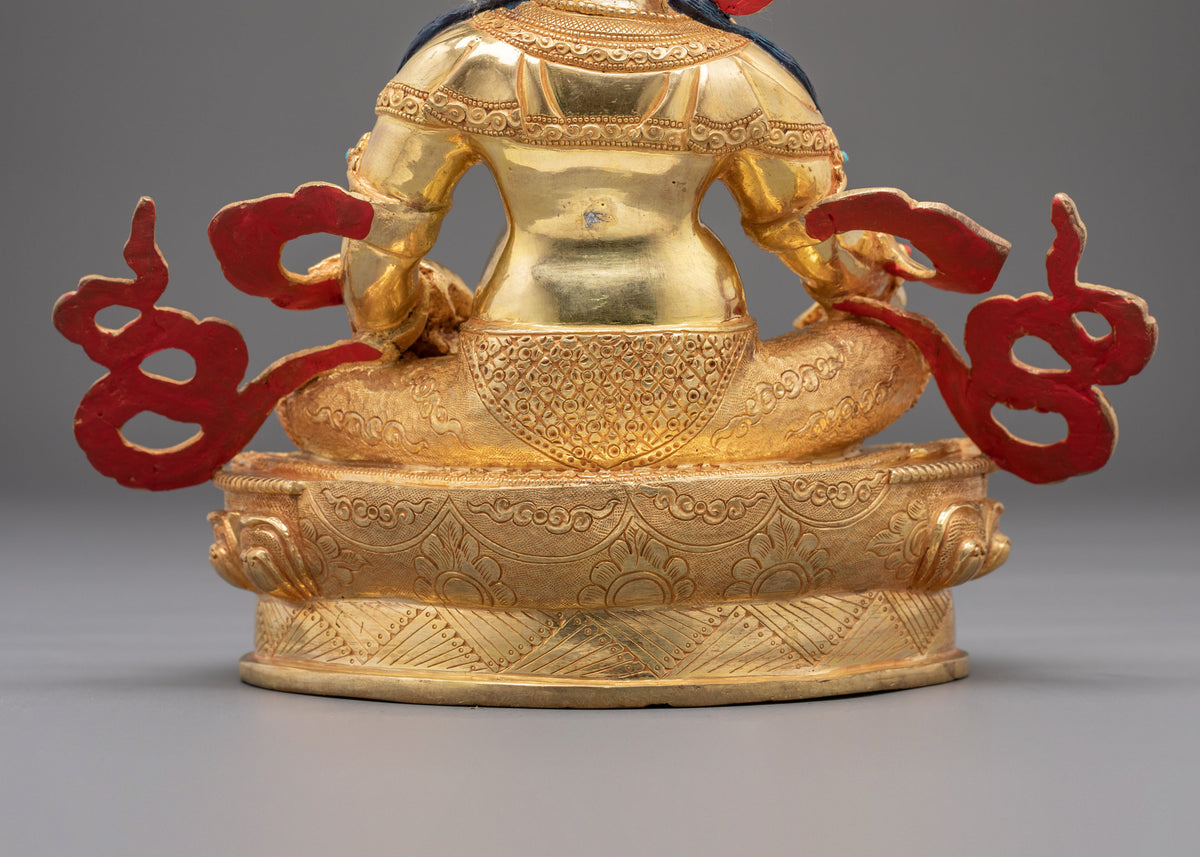
This Dzambhala is depicted seated cross-legged on an ornate lotus pedestal, with a rounded belly, broad chest, and a strong, composed presence. His face has wide-open eyes, a prominent moustache, and beard-like blue facial detailing, with a red mark at the center of the forehead. He wears an elaborate crown with a central crest, large circular earrings, layered necklaces, and richly decorated arm ornaments. Both arms extend downward, with the hands resting near the knees and holding small animal-like forms visible in the composition. His garments are heavily patterned with engraved floral and scroll motifs, while long curling scarf-like elements extend outward on both sides. The double-layered lotus pedestal is richly carved with repeated petals and geometric ornamentation, completing the detailed traditional Himalayan sculptural design.
Size: 9.84”/25cm (Height) x 10.63”/27cm (Base)
Weight: 3.51 kg
Material: 24K Gold-gilded, Copper Body, Acrylic Painting, Gemstones
Dzambhala is widely revered as the protector of all lineages and the god of wealth in the Buddhist tradition. He is considered an emanation of Avalokiteshvara or Ratnasambhava, appearing in various forms to alleviate poverty and suffering so that practitioners may focus on their spiritual path without the distraction of material lack. By practicing his mantra and honoring his presence, devotees aim to develop the inner wealth of wisdom and the outer wealth necessary for dharma activities and global welfare.