Handcrafted Dzambhala Sacred Statue | Embodiment of Abundance
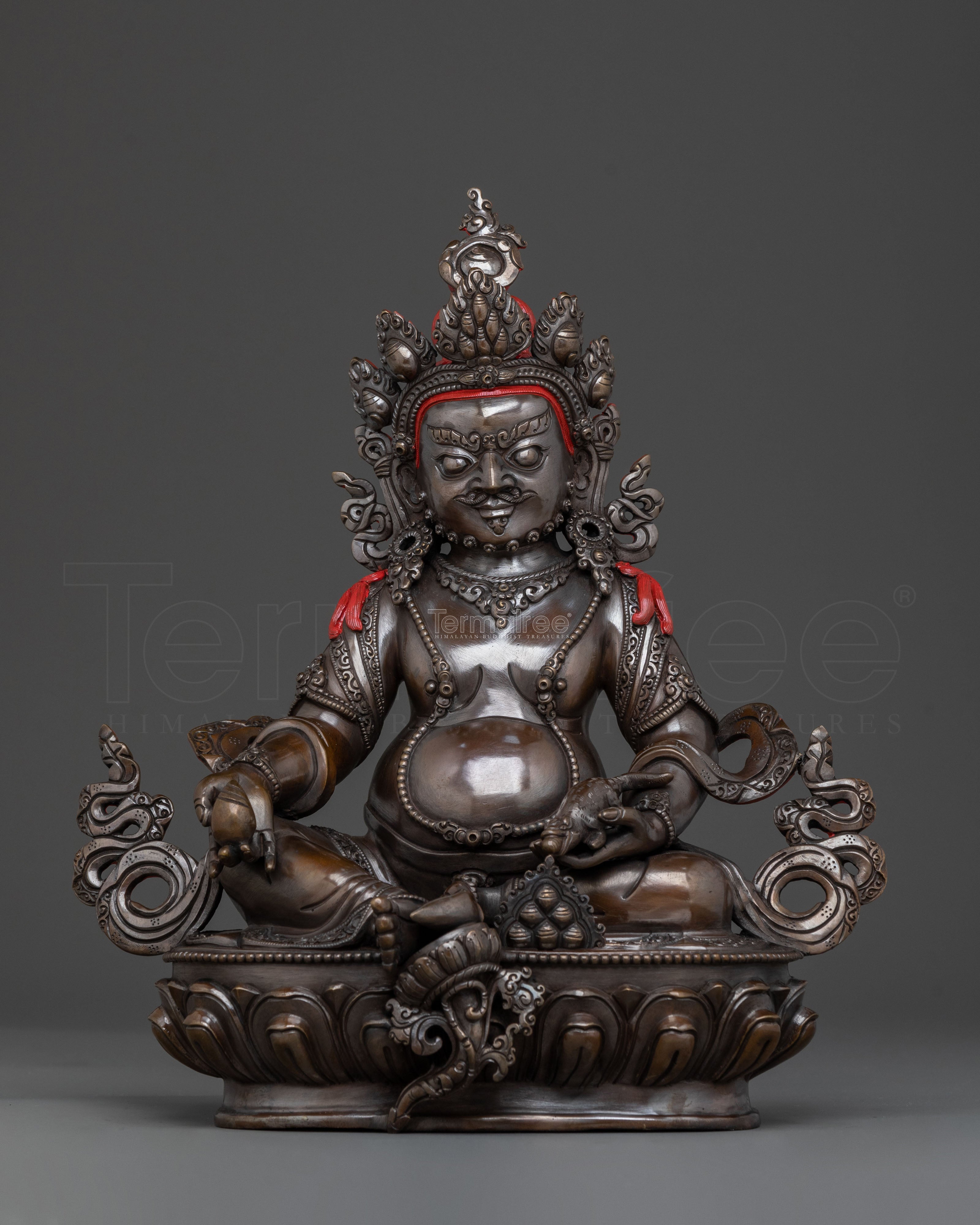
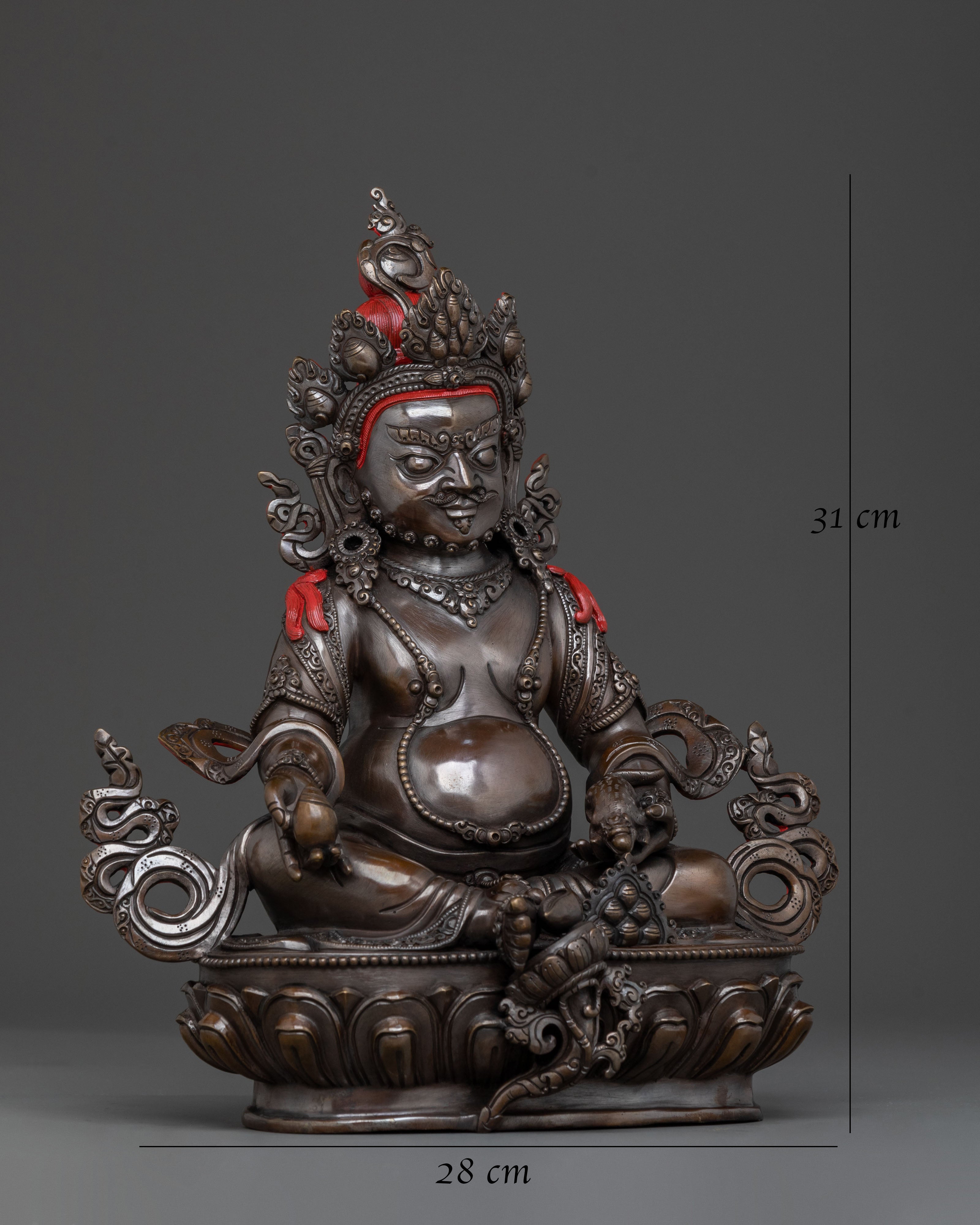
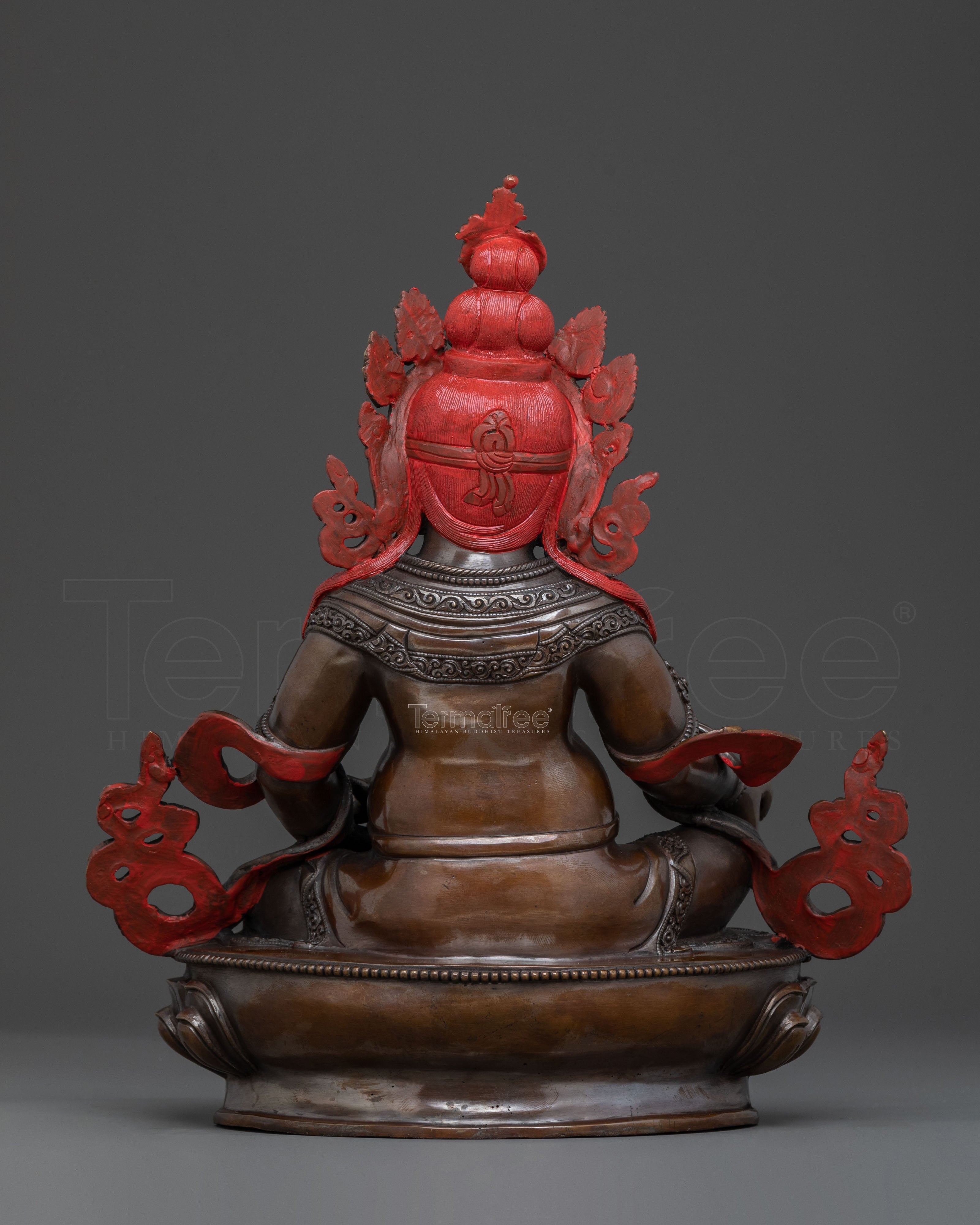
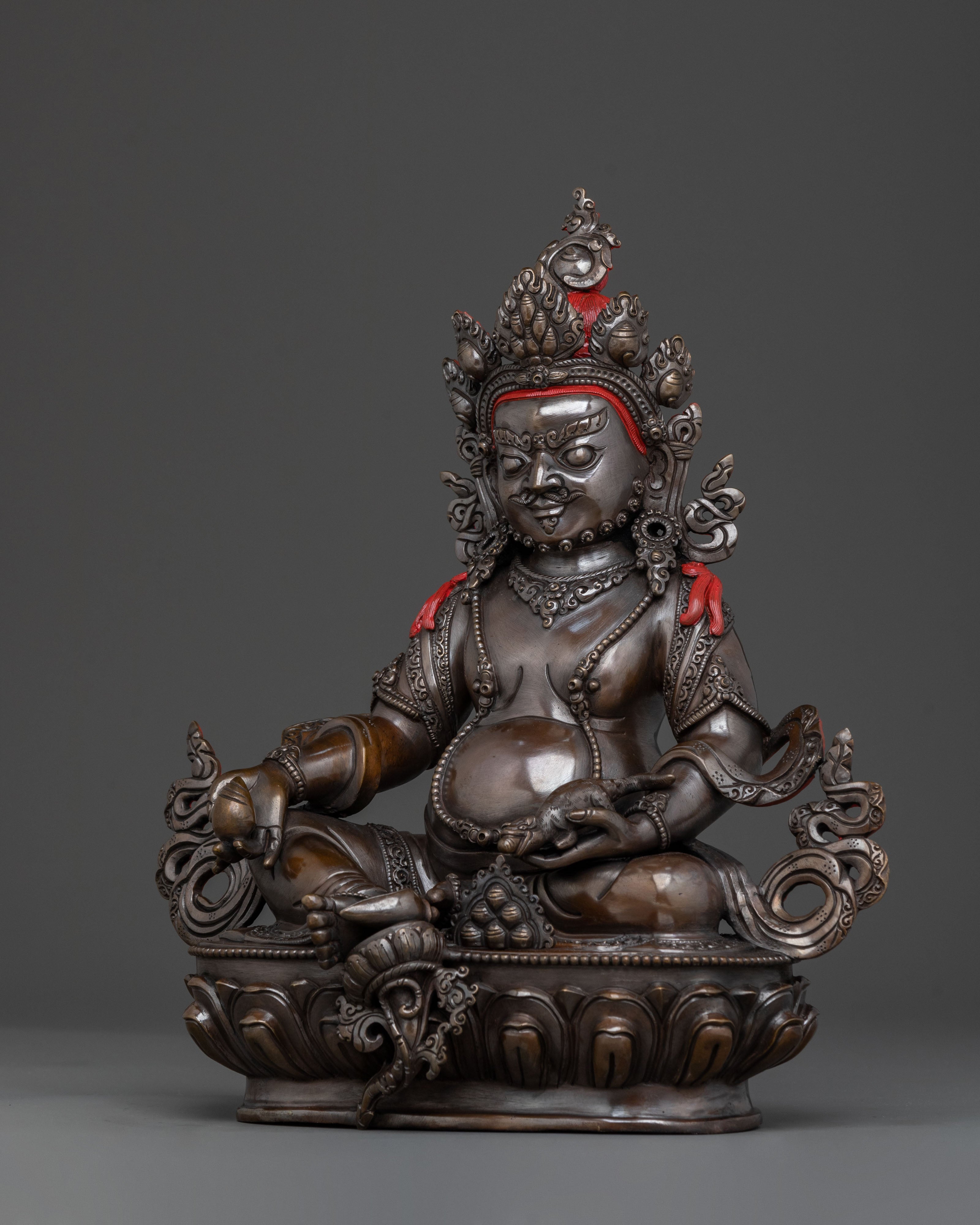
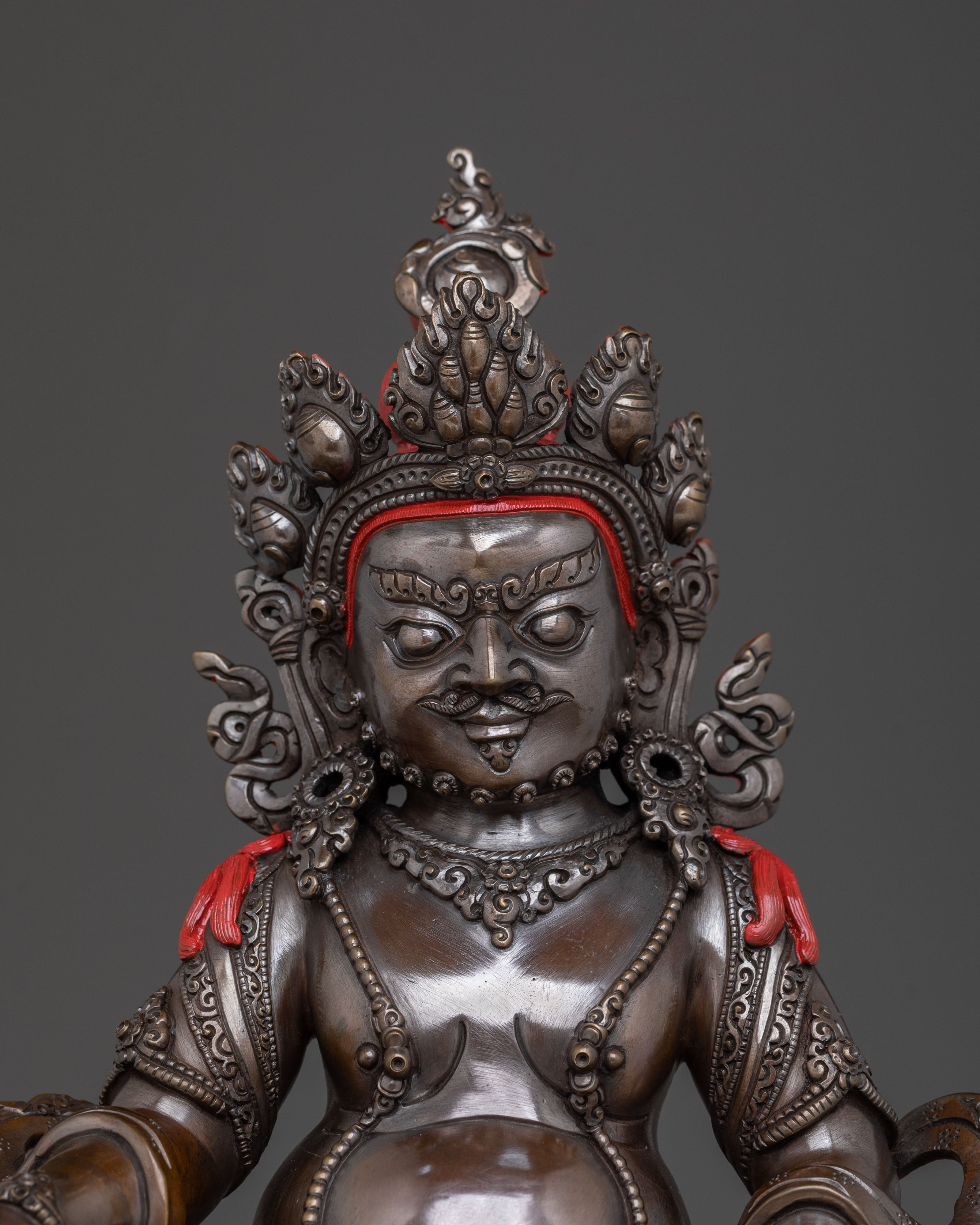
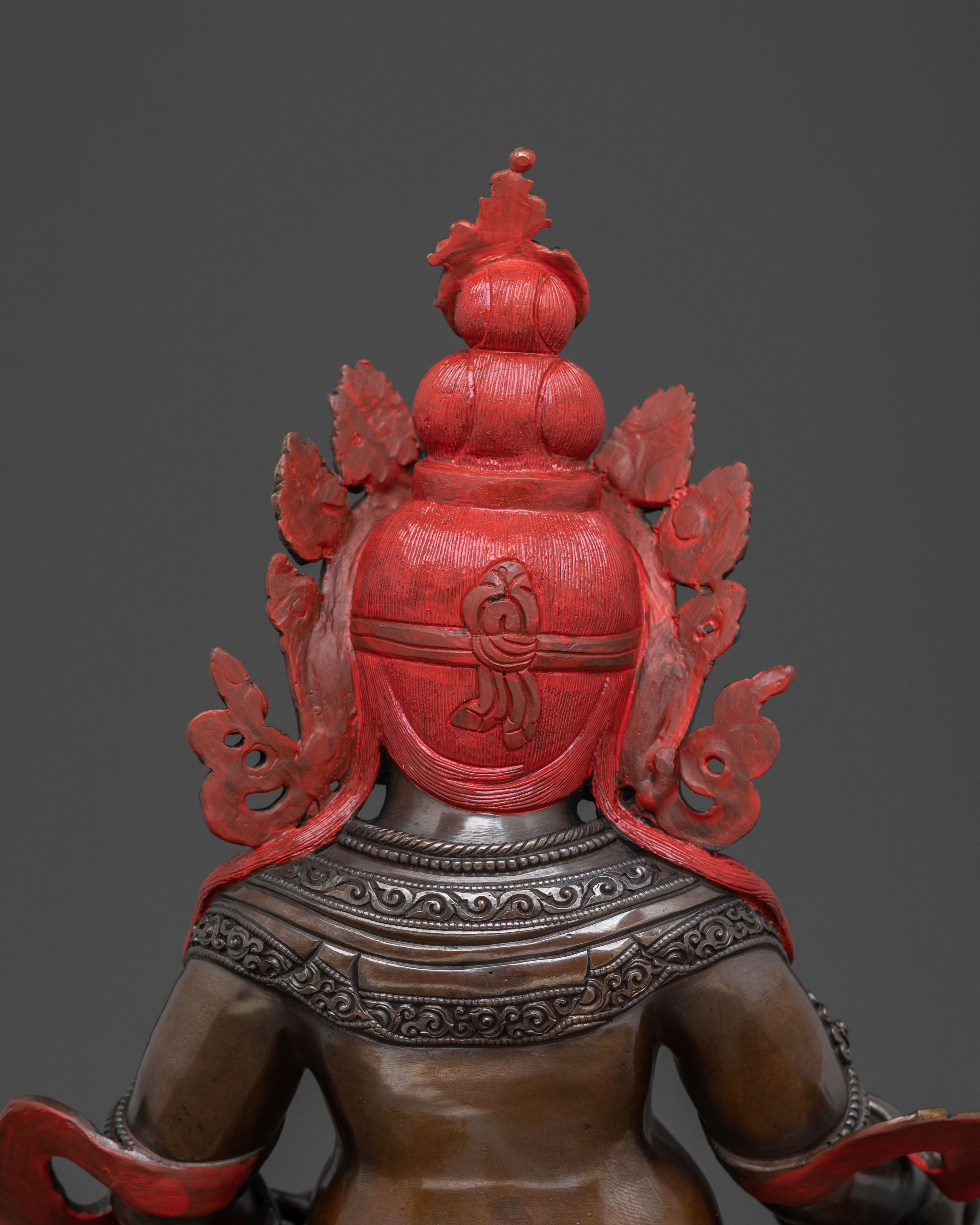
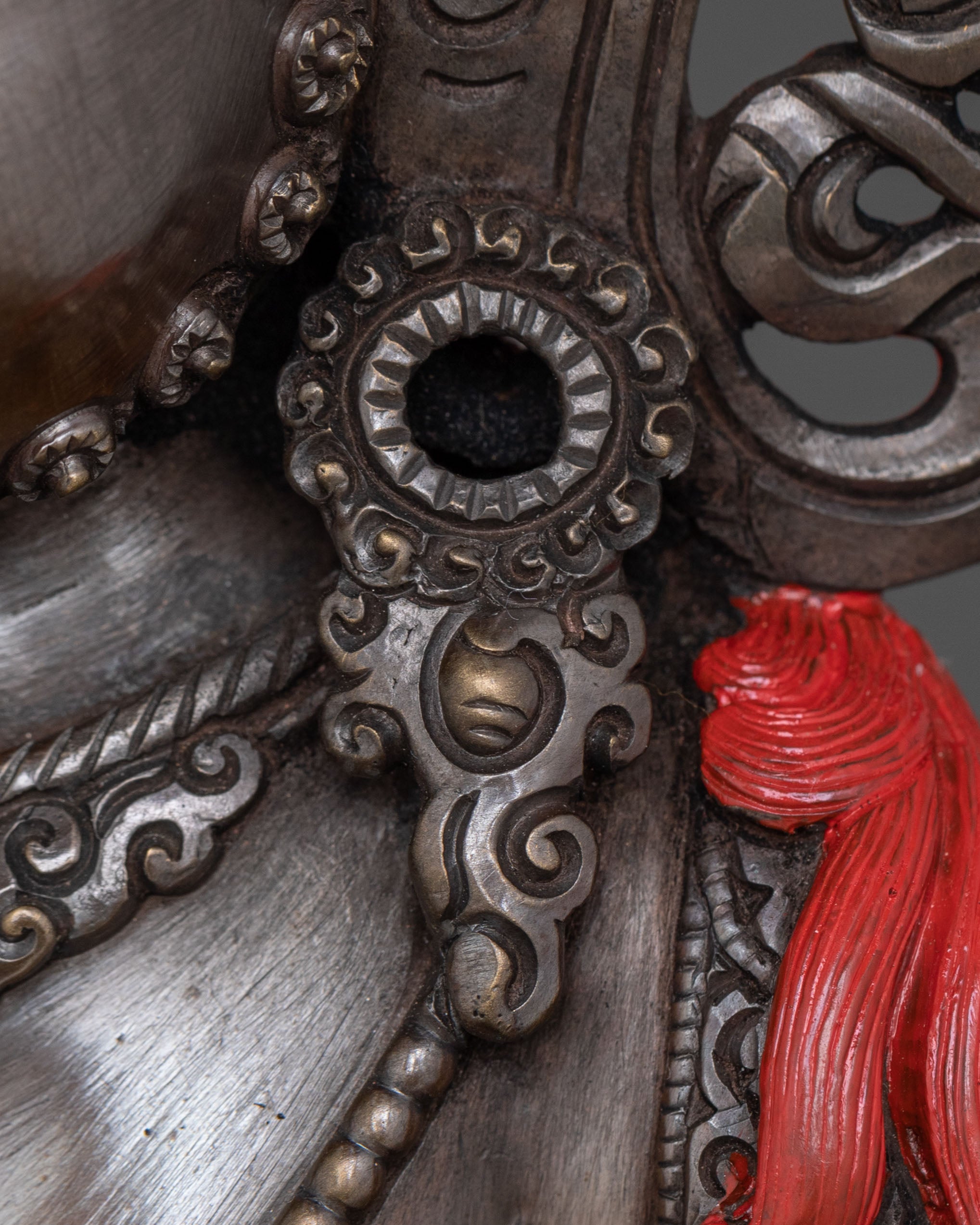
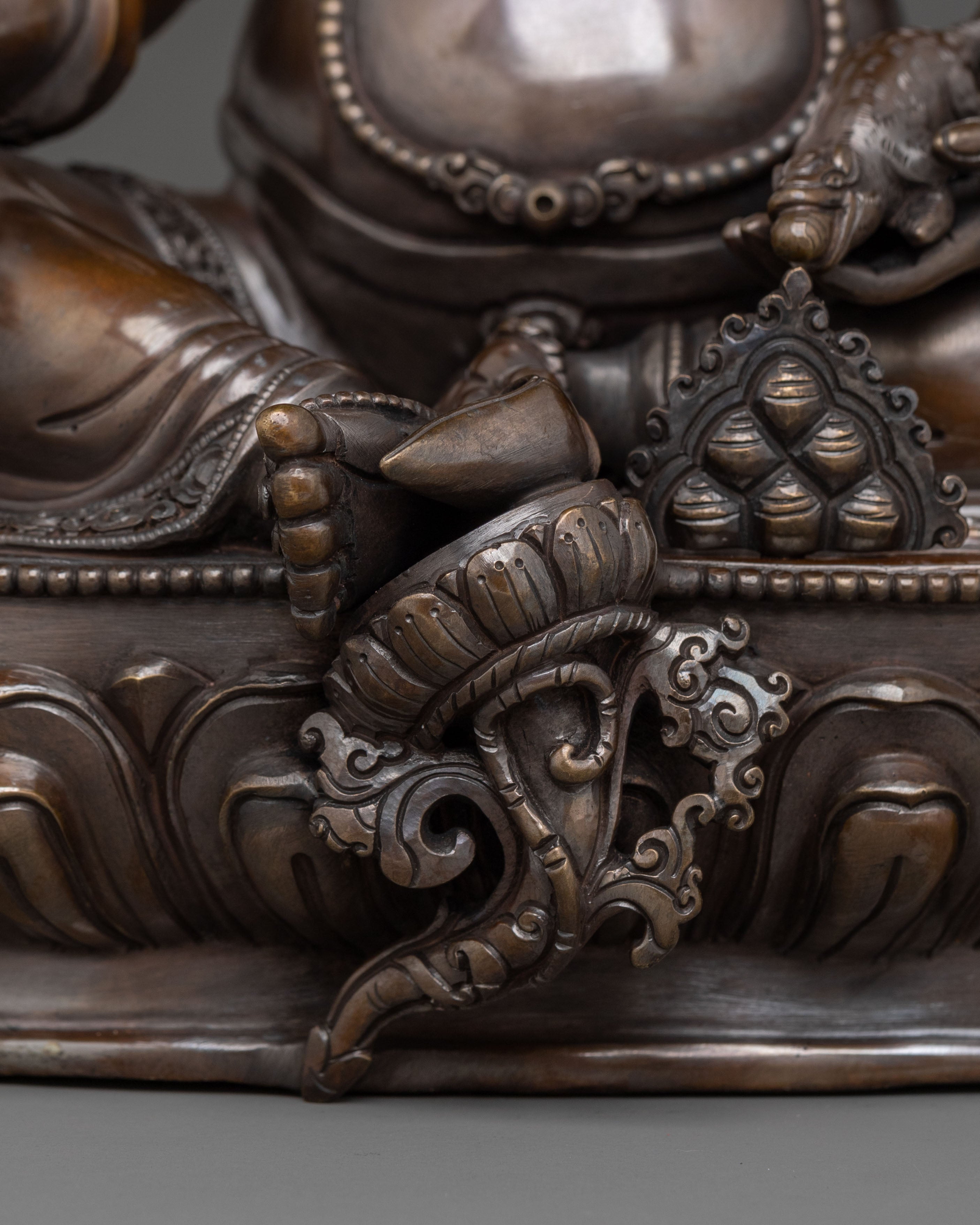
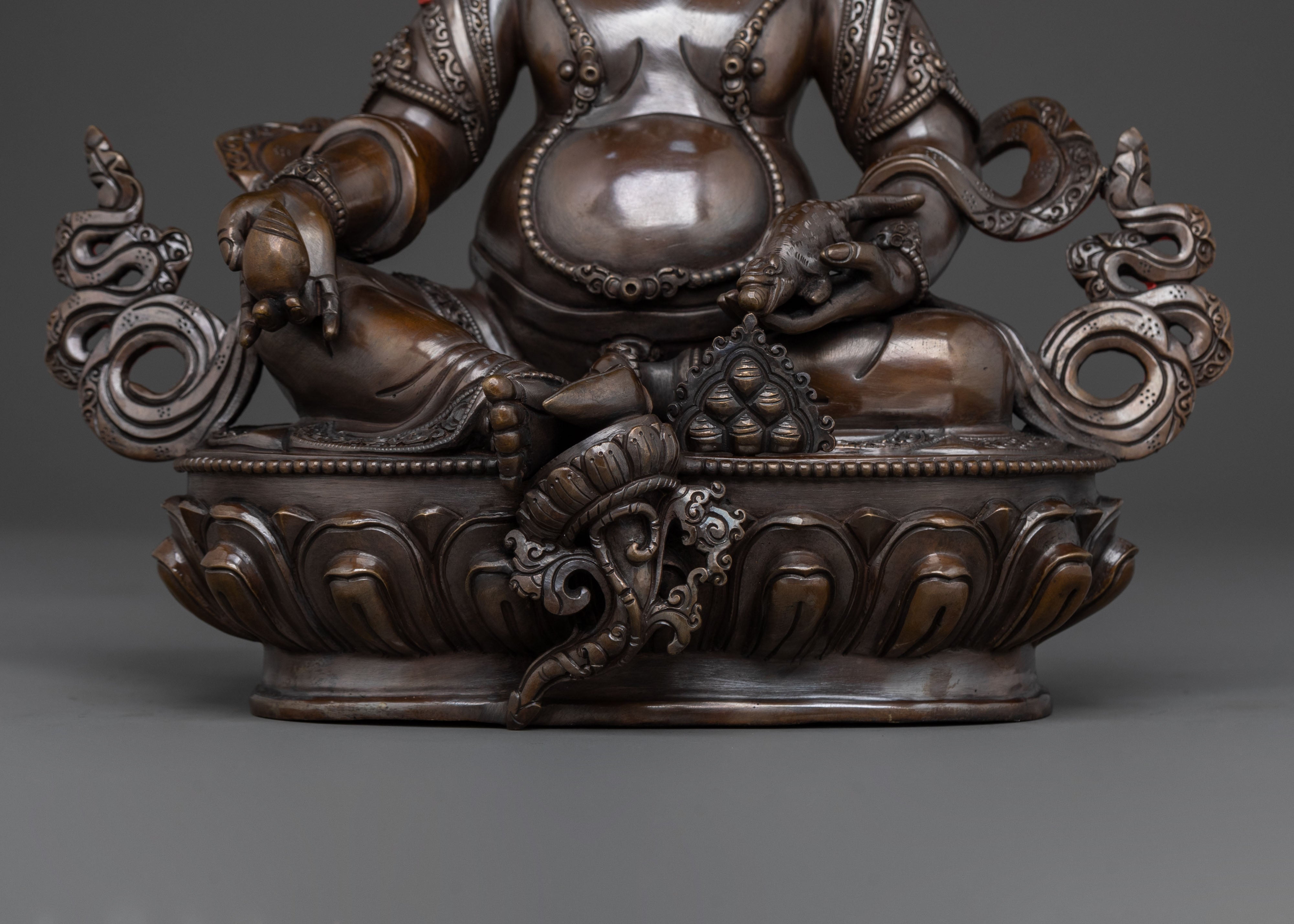
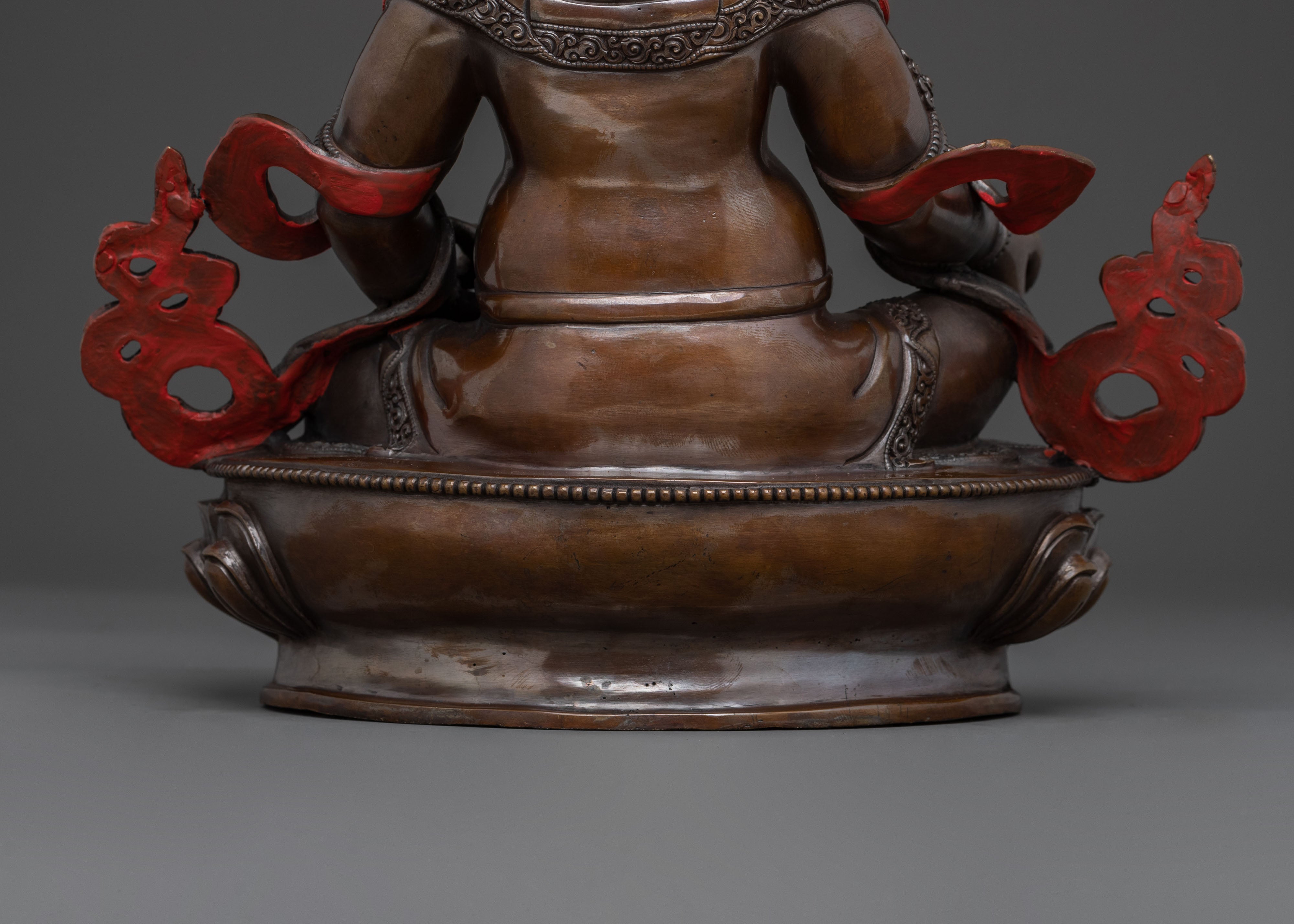
Arising in profound elegance, this Dzambhala sacred statue embodies the blessings of wealth, prosperity, and spiritual abundance. Standing 31 cm (12.2”) tall on a 28 cm (11”) base and weighing 3.75 kg, it is meticulously handcrafted from a durable oxidized copper body. Delicate acrylic paintings highlight the intricate features, while the substantial weight and refined form convey a commanding, serene presence. Perfect for altars, meditation spaces, or sacred collections, this exquisite statue invites contemplation, generosity, and devotional reflection. A masterful example of Nepalese craftsmanship, it serves as both a spiritual focal point and a symbol of divine abundance.
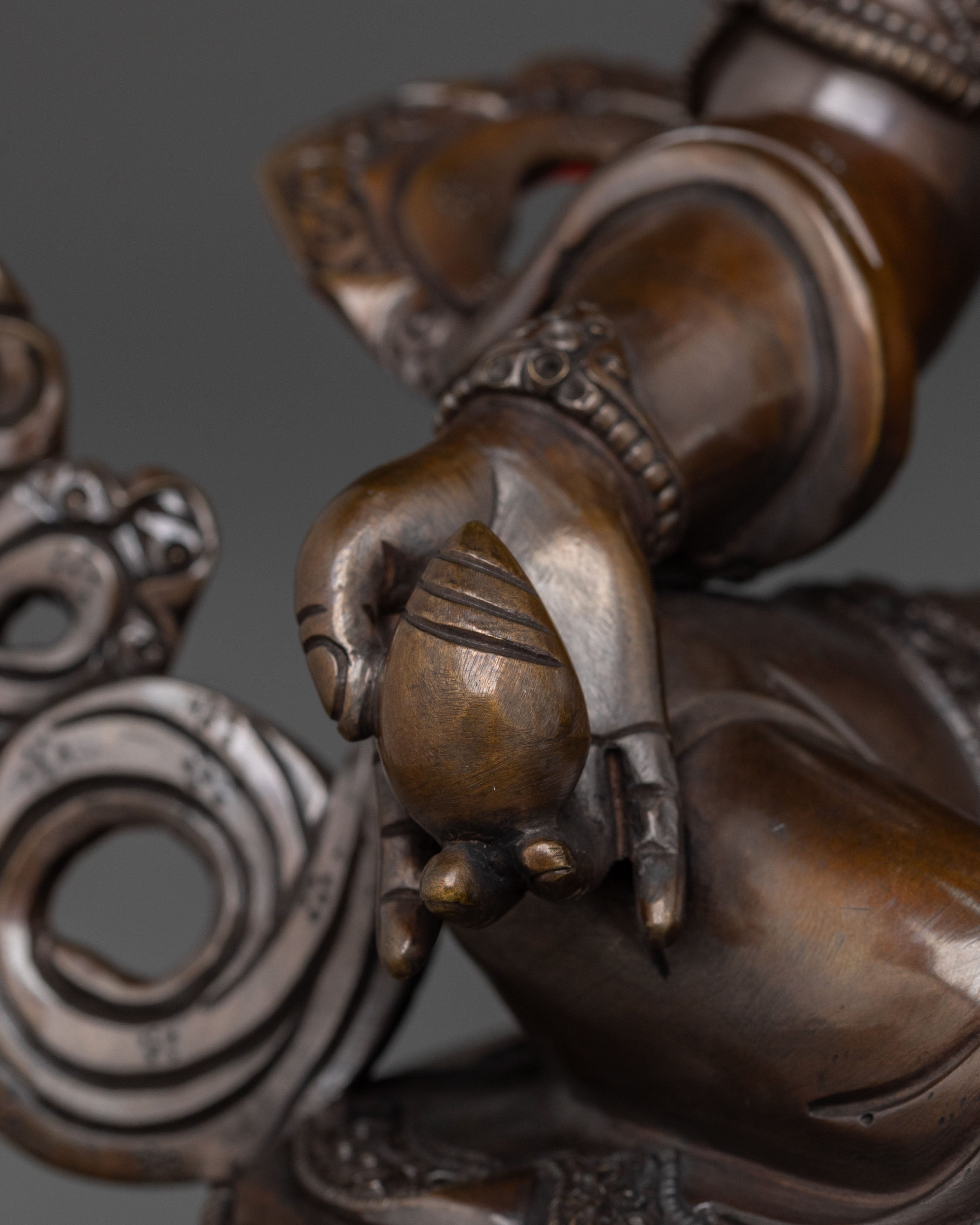
Dzambhala, the Bodhisattva of Wealth and Abundance, is depicted seated on a lotus or treasure-adorned throne, embodying the harmonious flow of material prosperity and spiritual blessings. His left hand holds the jewel-spitting mongoose, symbolizing generosity, the eradication of scarcity, and the mindful sharing of resources, while his right hand cradles a citron fruit (jambira), representing prosperity and nourishment. Adorned with flowing robes, jeweled ornaments, and a serene yet commanding presence, this meditation statue inspires practitioners to cultivate generosity, purify attachment, and open the heart to universal abundance. Placed in a sacred space, it fosters inner richness, devotion, and the alignment of worldly and spiritual wealth.
Size: 12.2”/31cm (Height) x 11”/28cm (Base)
Weight: 3.75 kg
Material: Oxidized Copper Body, Acrylic Paintings
Dzambhala (Jambhala) is the Buddhist God of Wealth and the protector of the Dharma. He is traditionally depicted holding a mongoose that vomits jewels, symbolizing his power to bestow wealth and eliminate poverty. His practice is associated with generating financial stability and promoting generosity, enabling practitioners to better support spiritual endeavors and aid others. There are five forms of Dzambhala, each associated with different colors and aspects of wealth. This particular representation typically aligns with Yellow Dzambhala, the most common form.