Dzambhala Spiritual Statue: Embodiment of Abundance and Benevolence
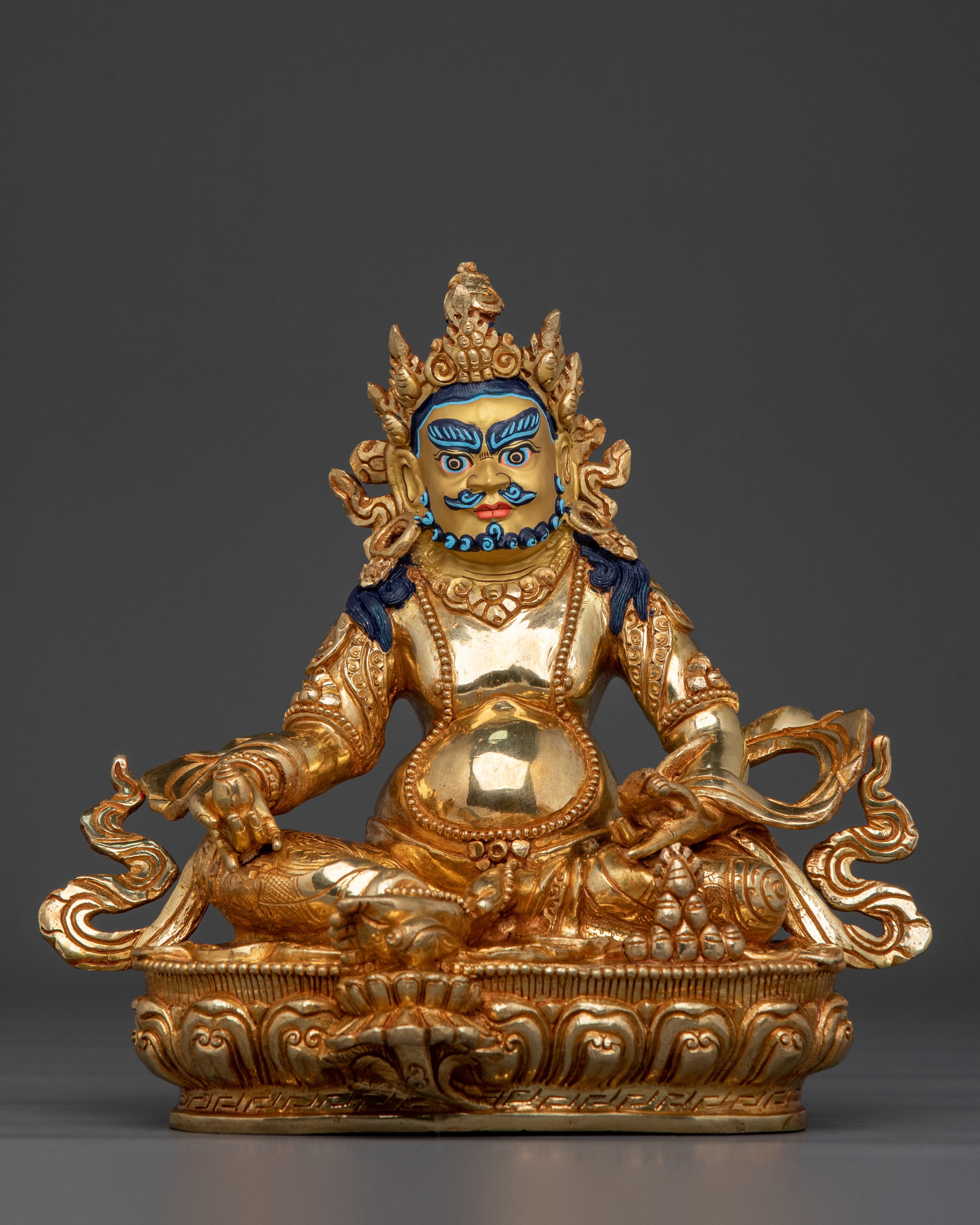
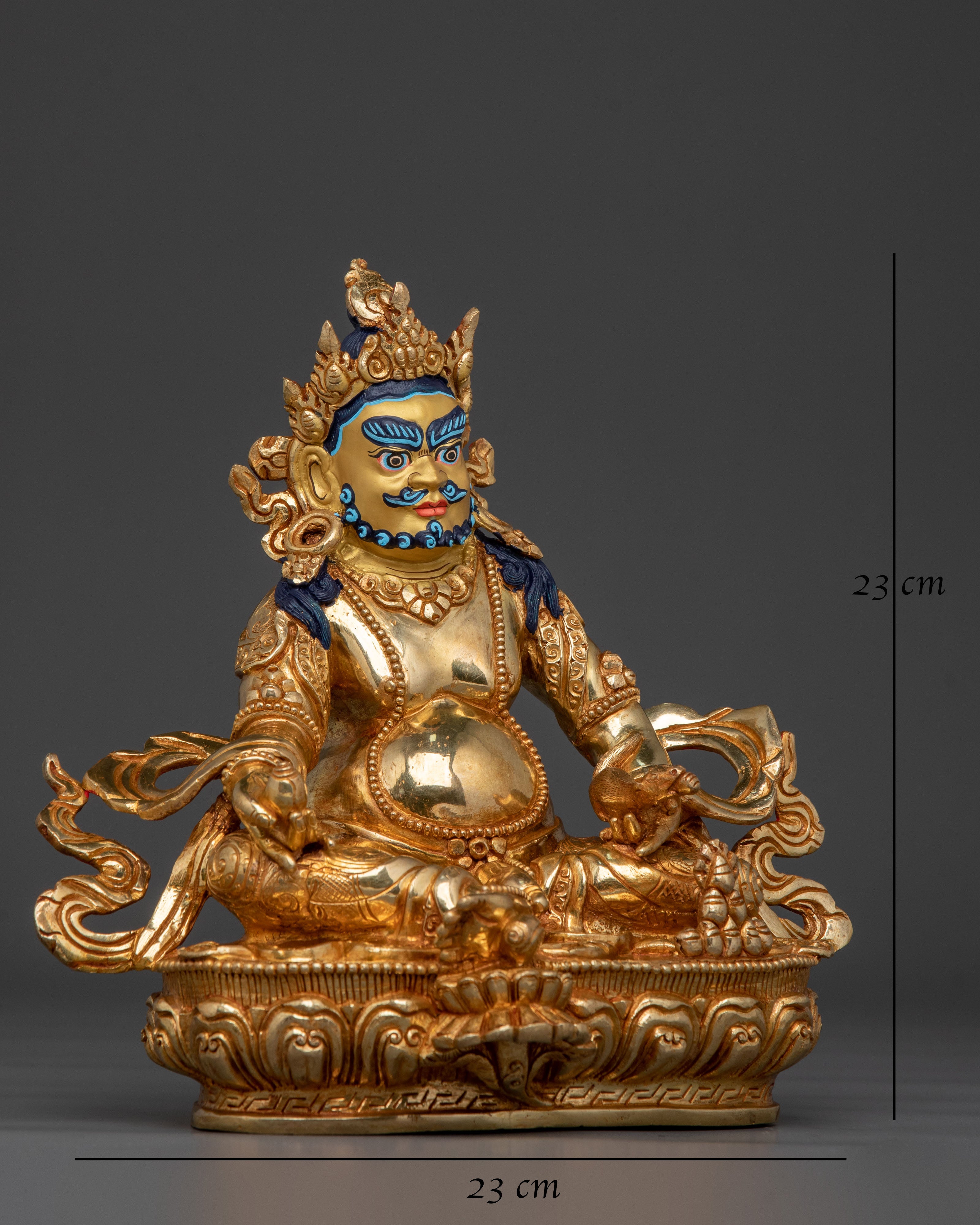
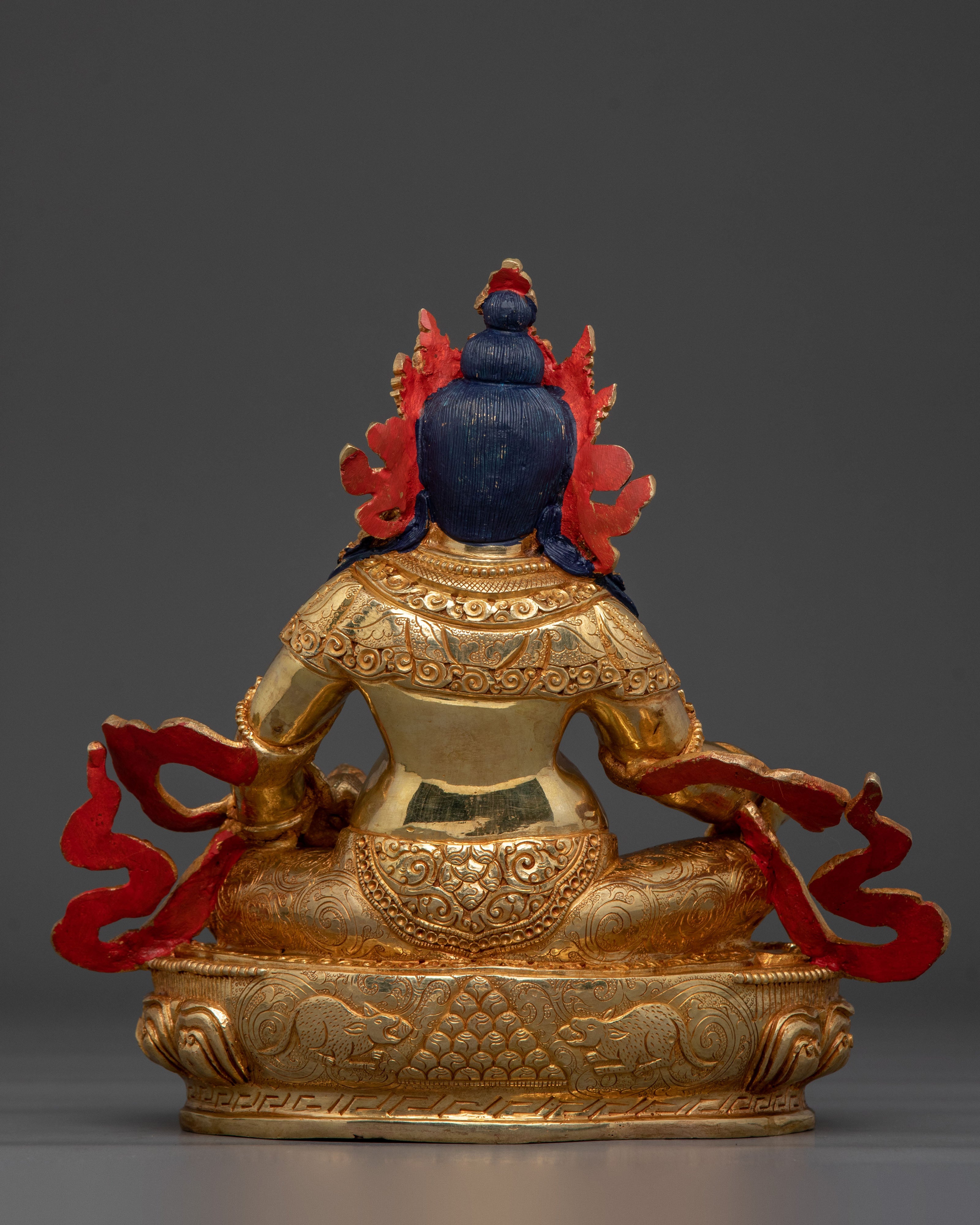
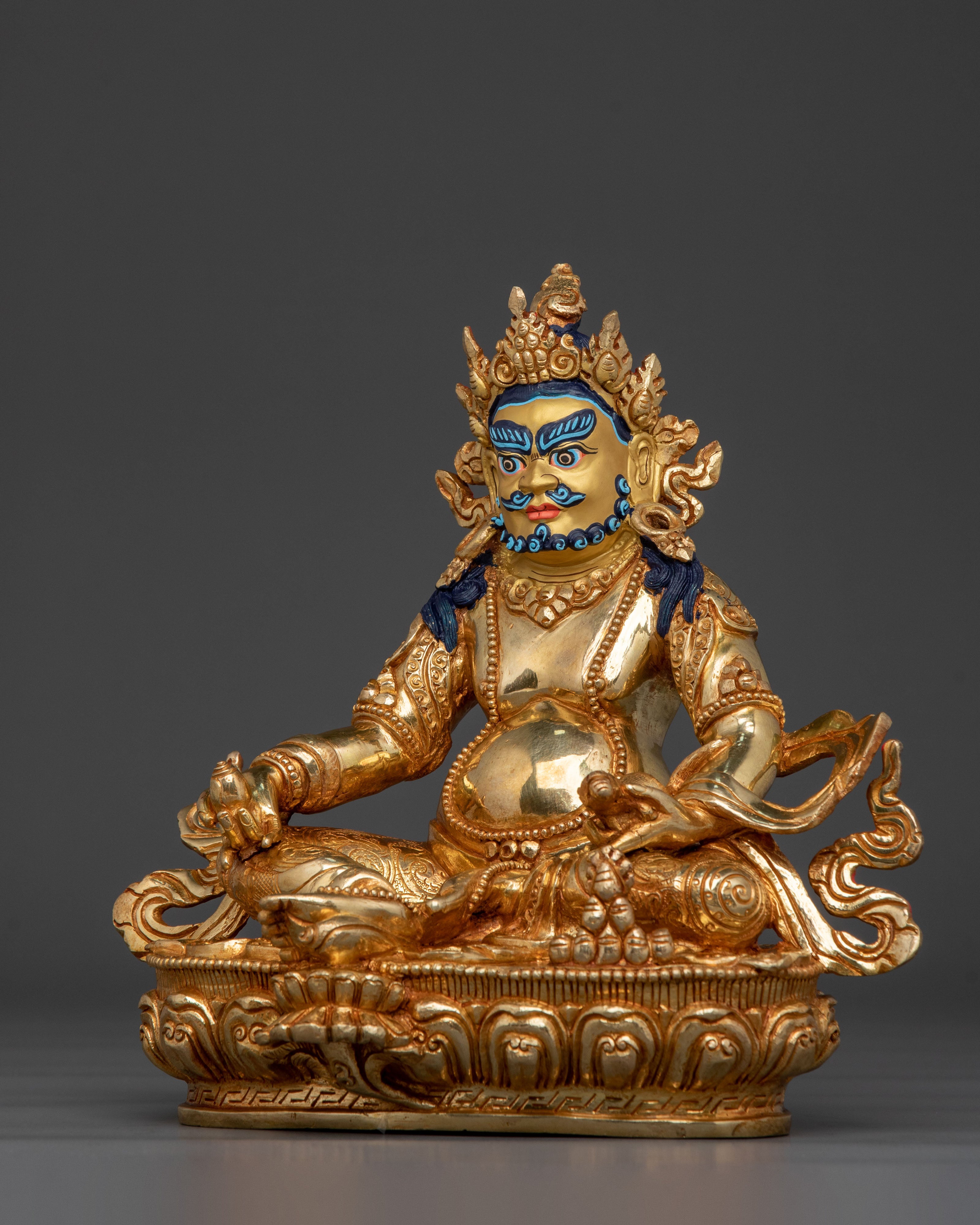
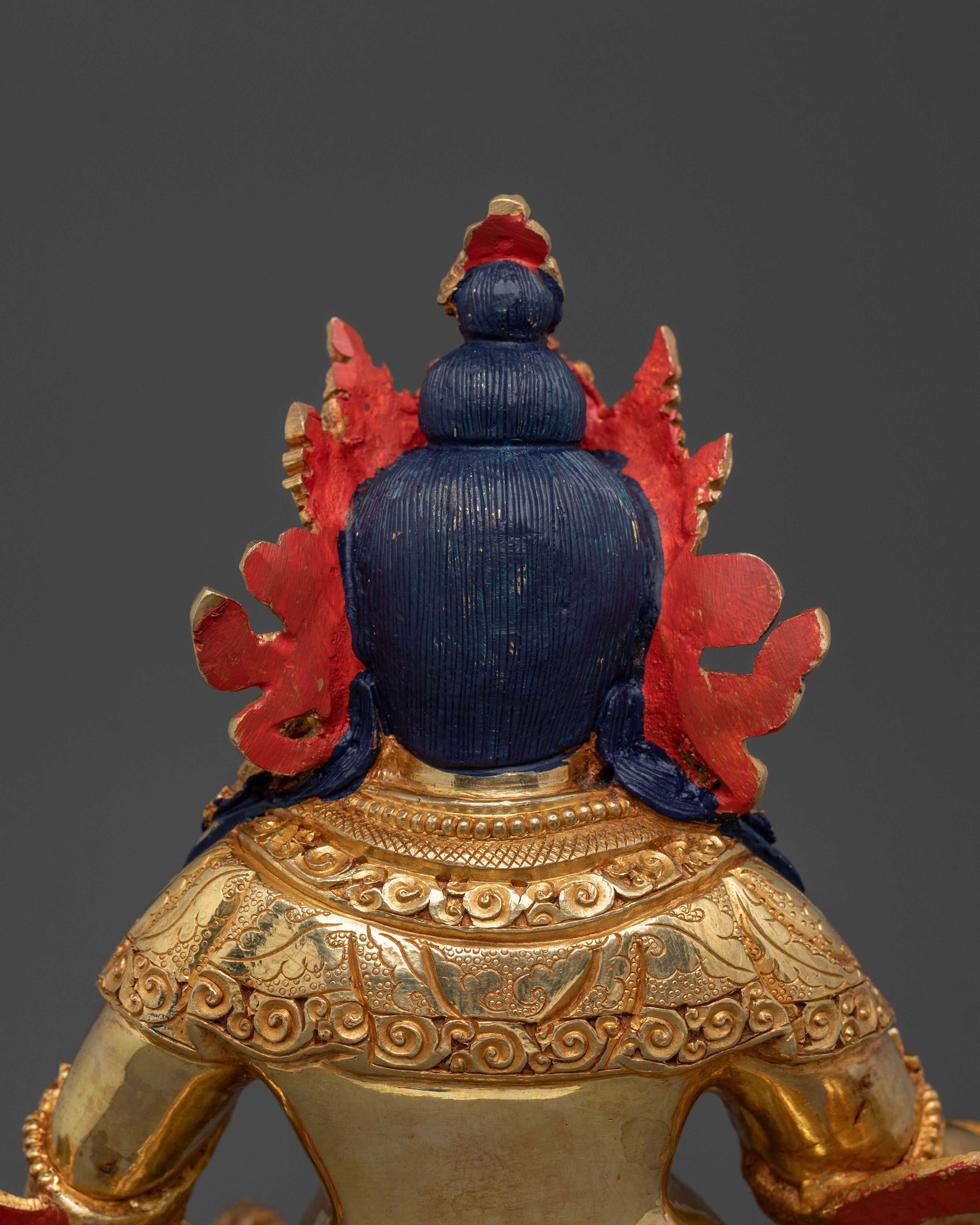
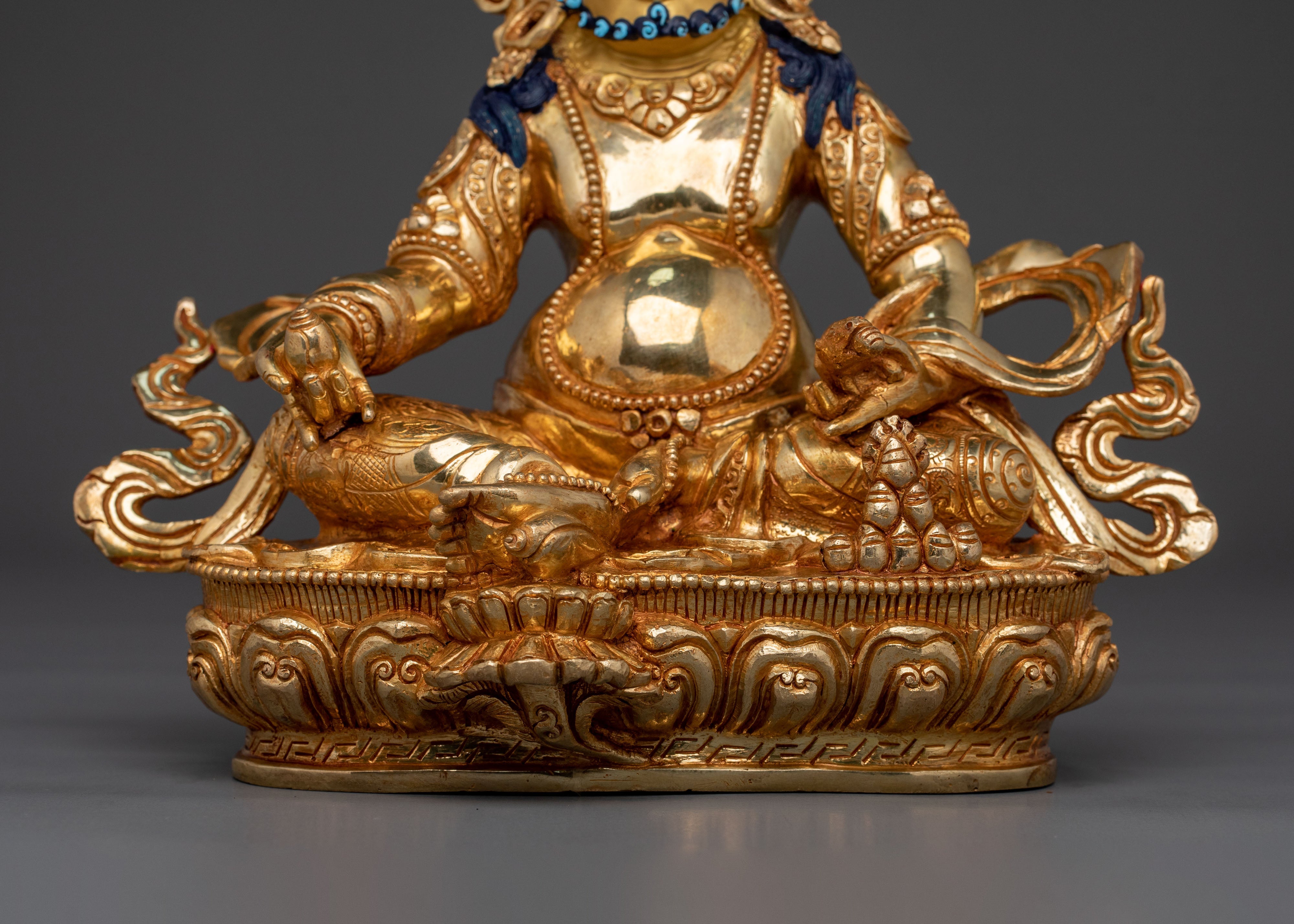
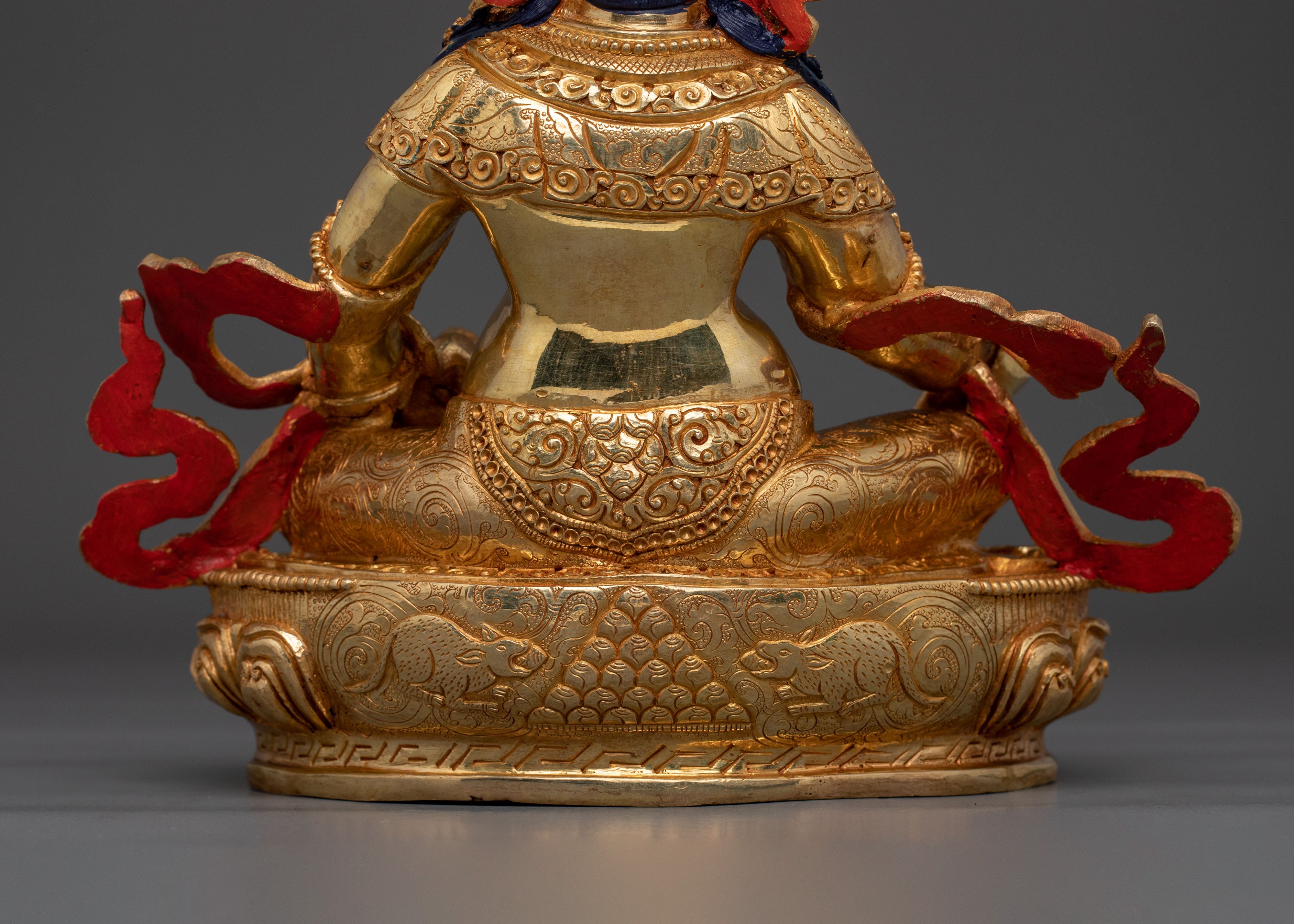
This exquisite Dzambhala Spiritual Decor Statue is meticulously handcrafted by skilled Nepali artisans, preserving the rich traditions of Himalayan Buddhist craftsmanship. Standing 9 inches (23 cm) in height with a 9-inch (23 cm) base and weighing 2.63 kg, this elegant sculpture is expertly crafted from a copper body and beautifully adorned with radiant 24K gold gilding and vibrant acrylic painting. Its balanced proportions, intricate detailing, and luminous finish make it a distinguished centerpiece for Buddhist altars, meditation spaces, temples, or treasured spiritual collections.
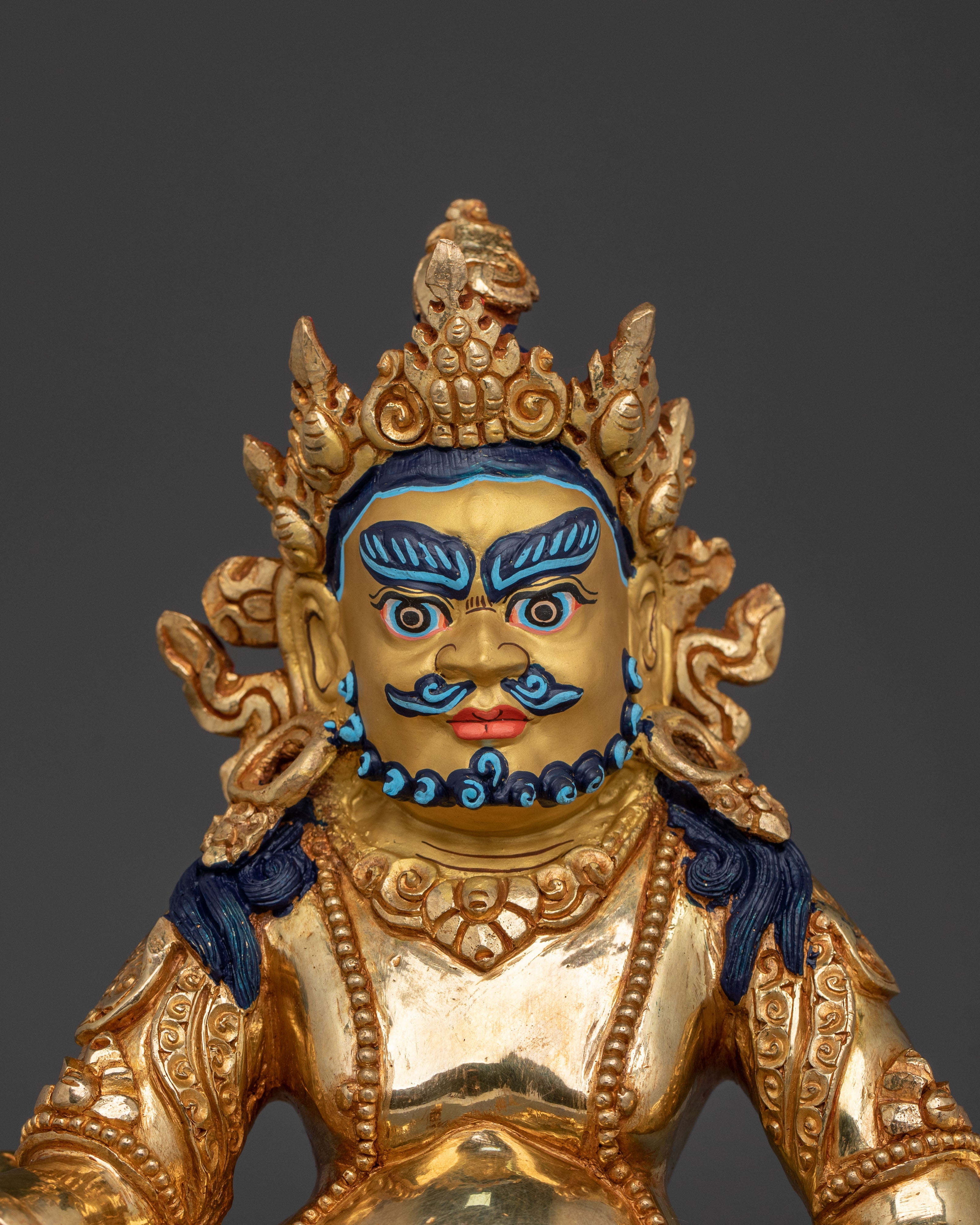
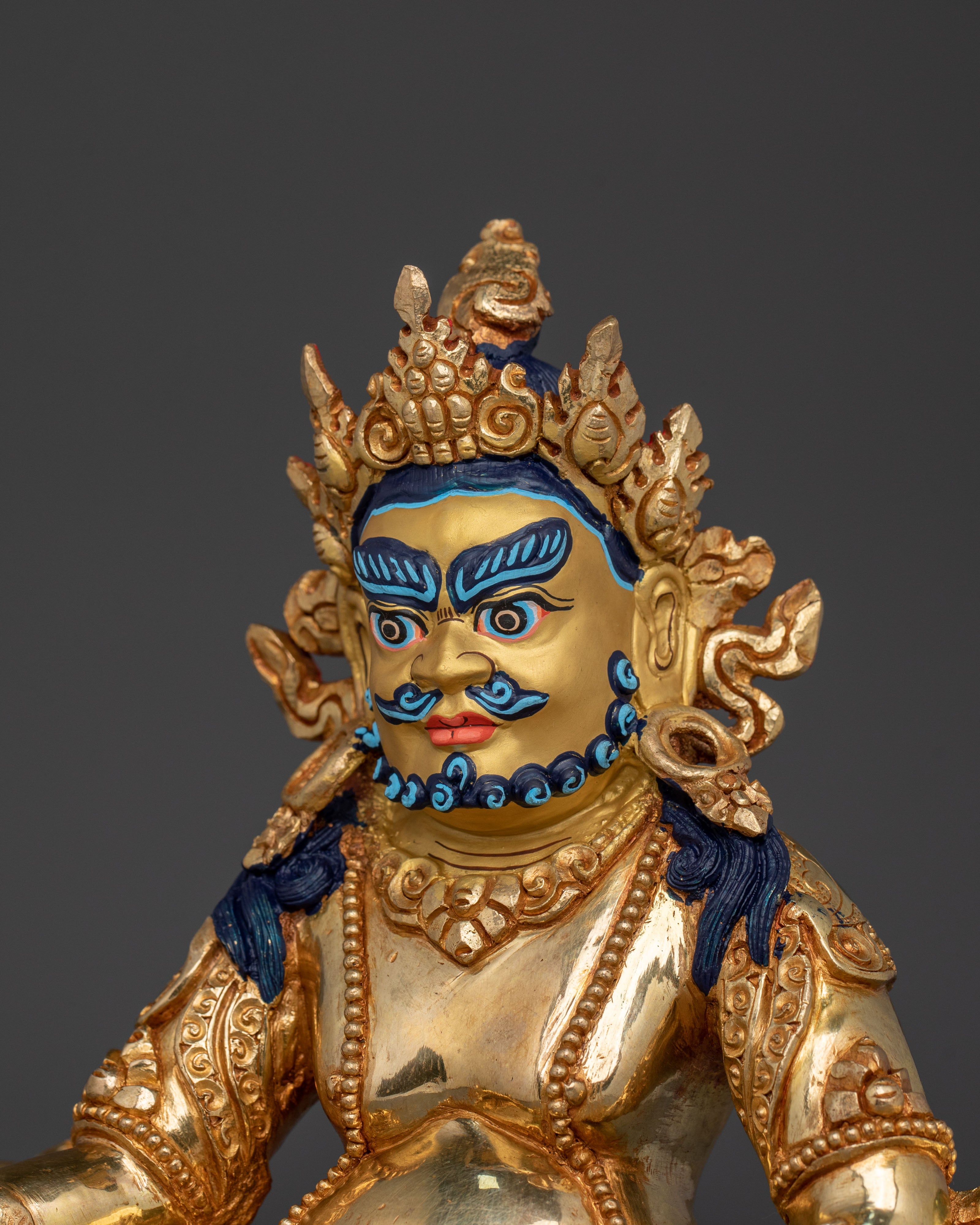
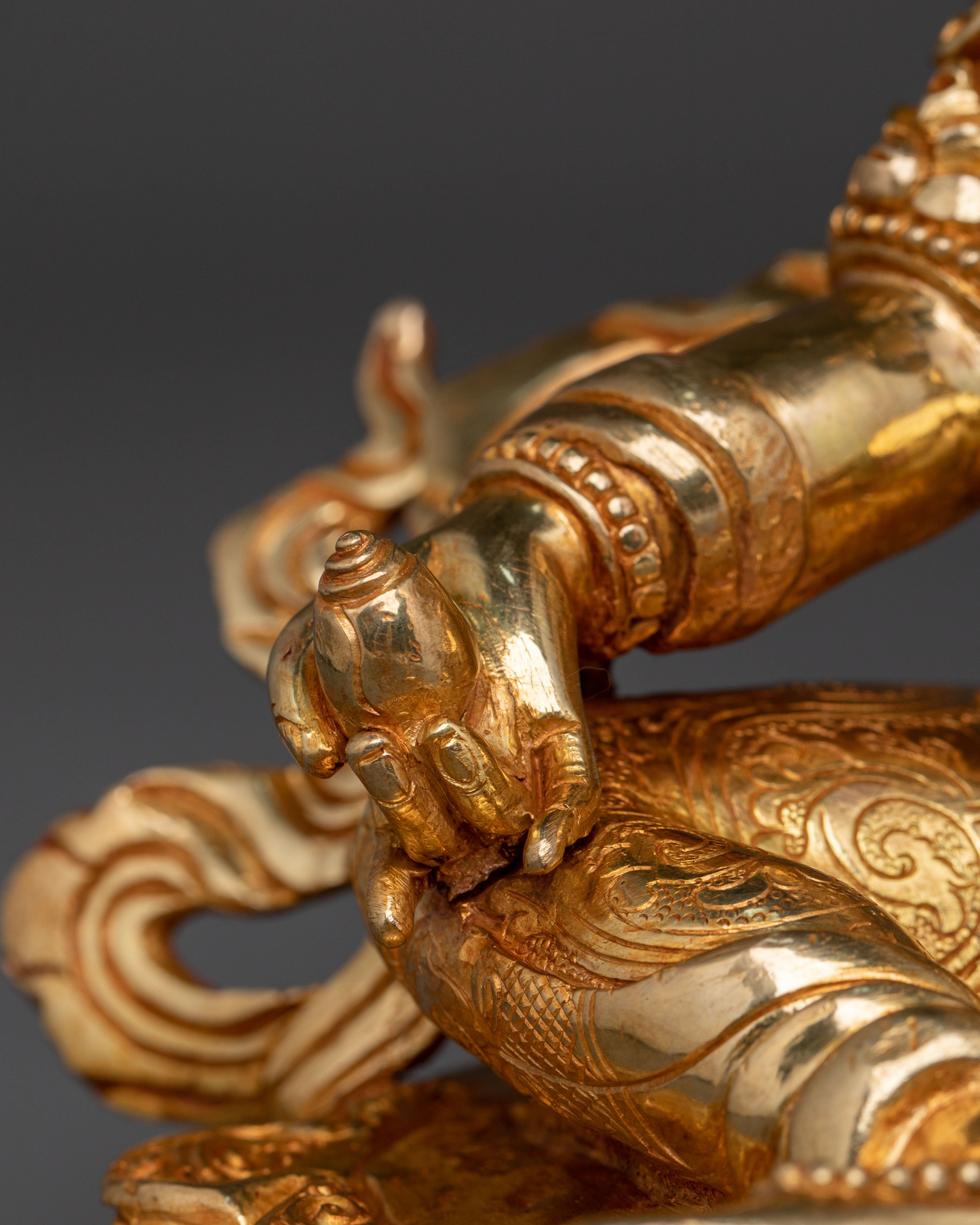
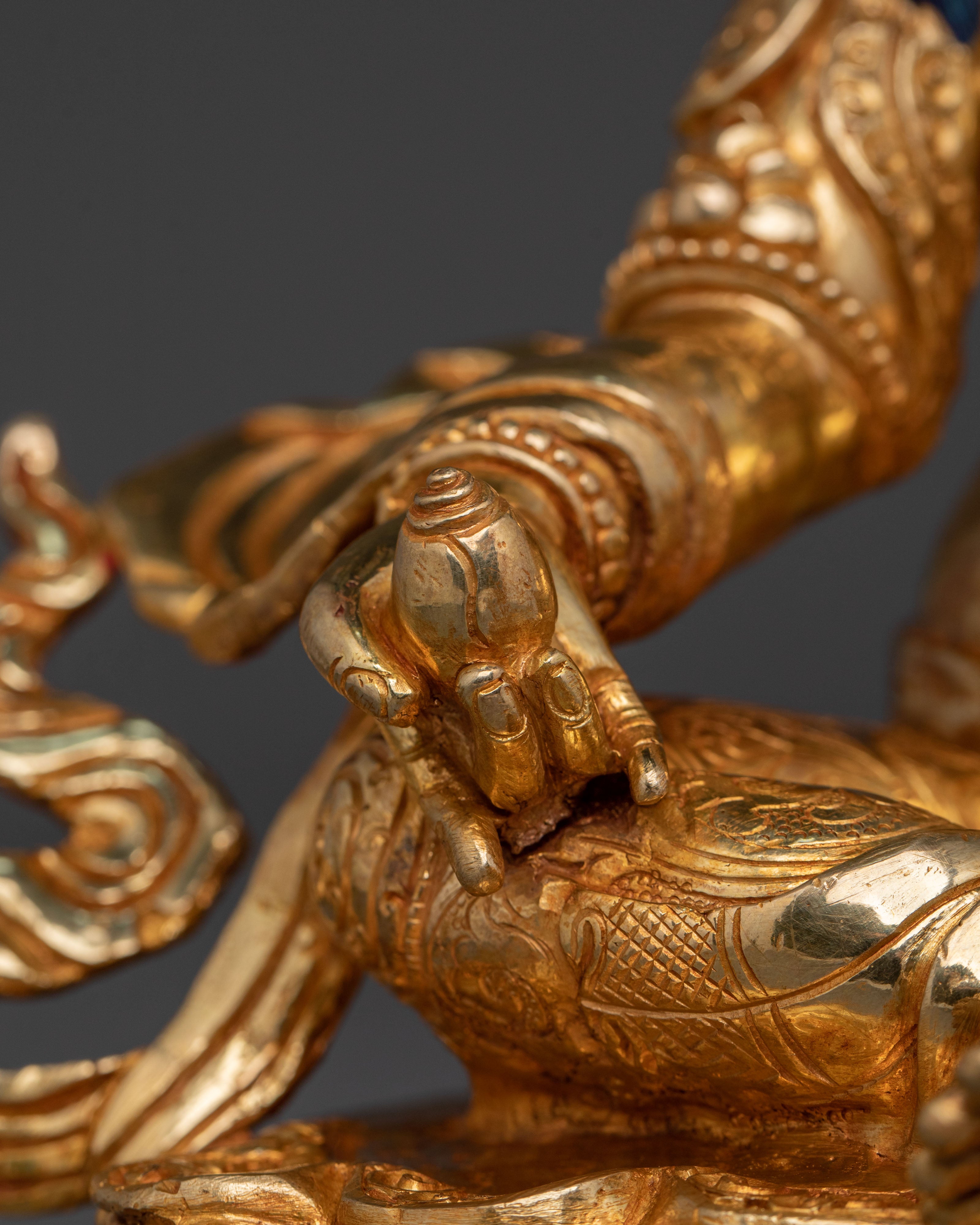
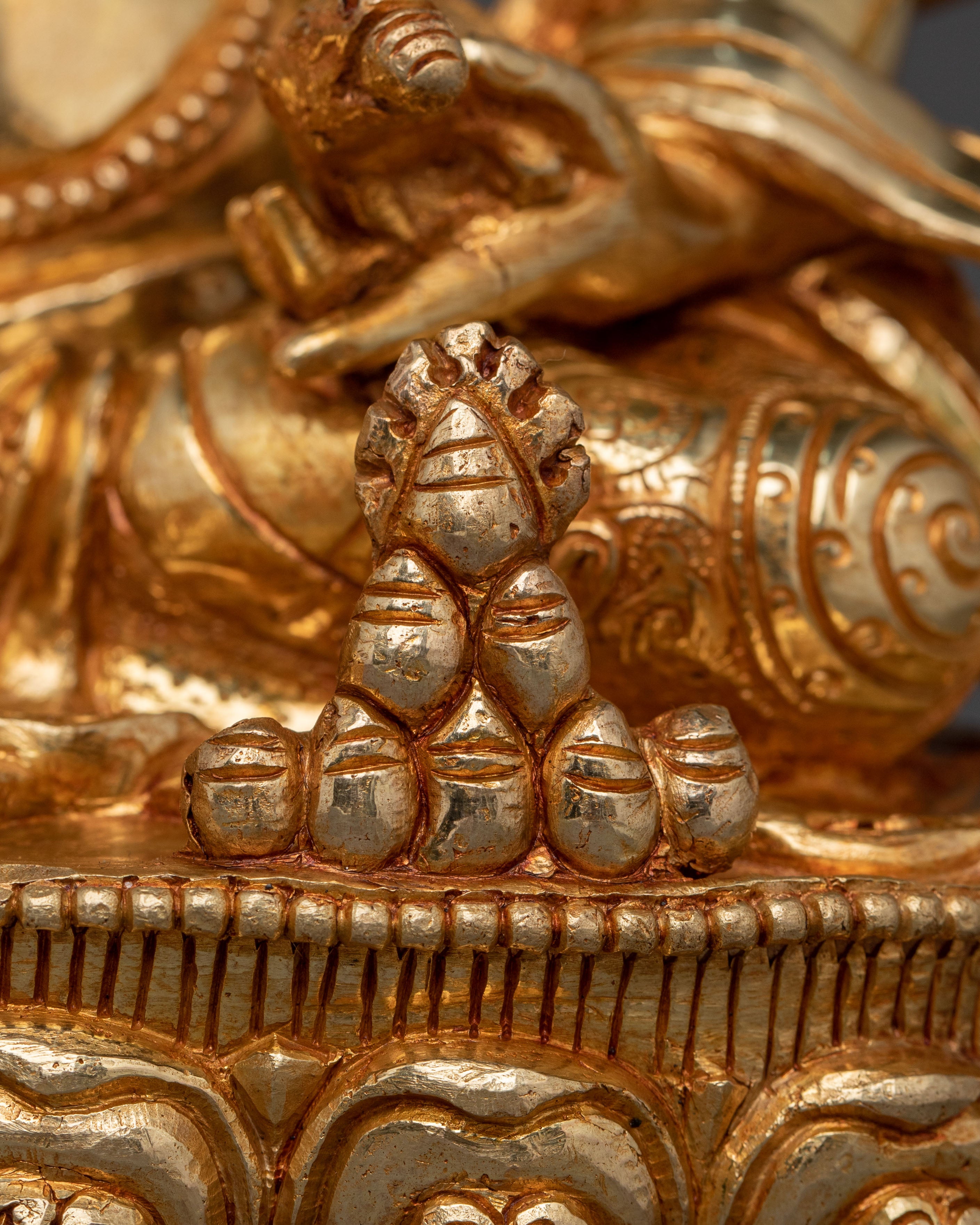
The statue portrays Dzambhala, the Buddhist deity of prosperity, seated in a powerful royal posture upon an intricately crafted lotus throne. His right hand holds a citron fruit, symbolizing abundance and generosity, while his left hand holds a mongoose that releases precious jewels, representing the bestowal of wealth and prosperity. He is depicted with a majestic expression, adorned with an elaborate jeweled crown, large earrings, layered necklaces, armlets, bracelets, anklets, and richly decorated garments enhanced with brilliant 24K gold gilding and colorful acrylic painting. The detailed ornaments, expressive features, and finely sculpted lotus pedestal reflect the exceptional craftsmanship and artistic precision of skilled Nepali artisans.
Size: 9”/23cm (Height) x 9”/23cm (Base)
Weight: 2.63 kg
Material: 24K Gold Gilded, Acrylic Painting, Copper Body
Dzambhala (also known as Jambhala) is a central figure in Tibetan Buddhism, venerated as a guardian and provider of wealth and prosperity. He is often considered an emanation of Avalokiteshvara, the Bodhisattva of Compassion, or sometimes as a manifestation of the Buddha Ratnasambhava. His practice encourages practitioners to cultivate generosity, gratitude, and the deep understanding that material resources can serve to support spiritual endeavors and benefit all sentient beings. He is believed to alleviate poverty, thereby allowing individuals to more freely pursue their spiritual path without worldly impediments.