








Description
Handcrafted Chenrezig Copper Sculpture | A Sacred Symbol of Love and Peace
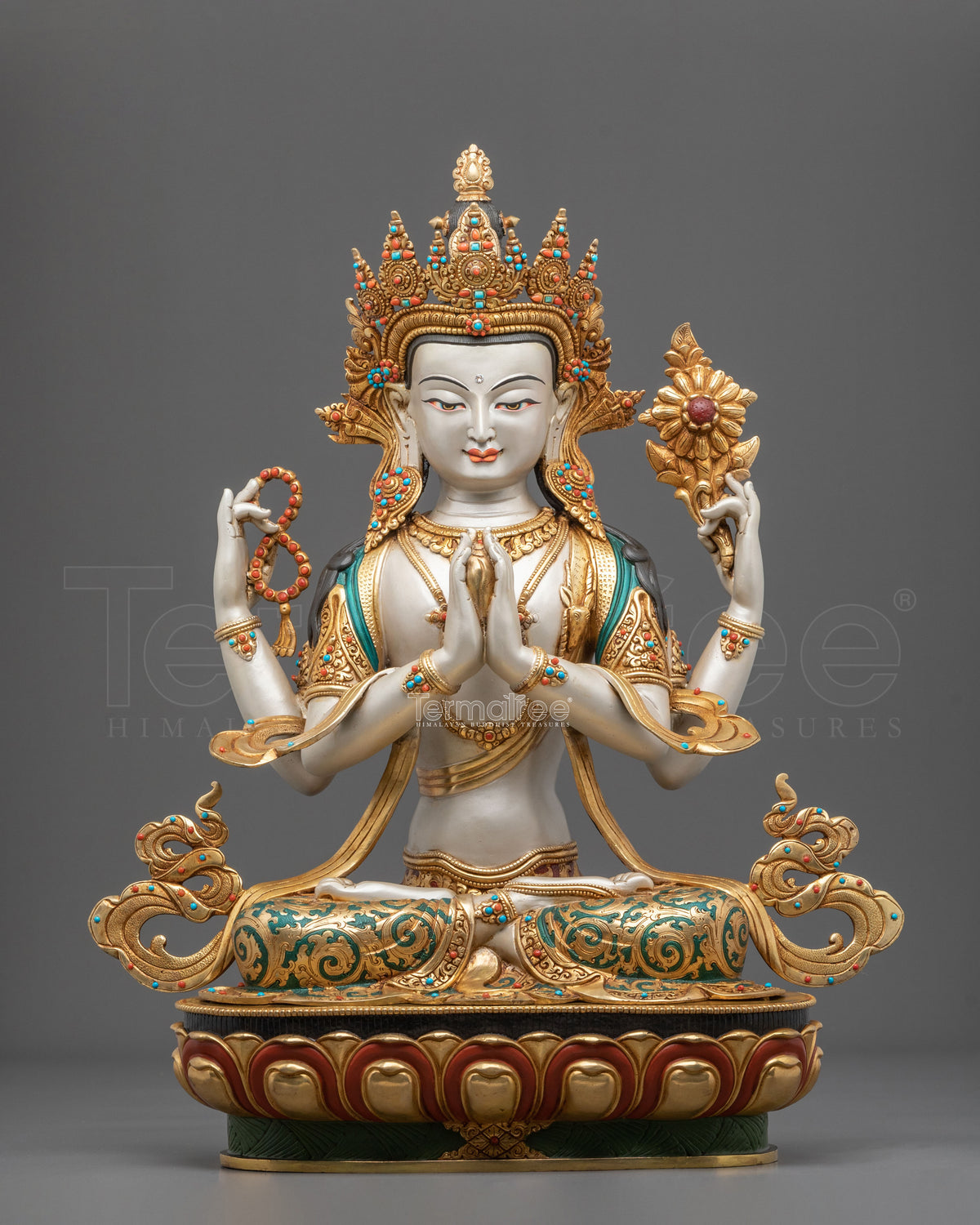
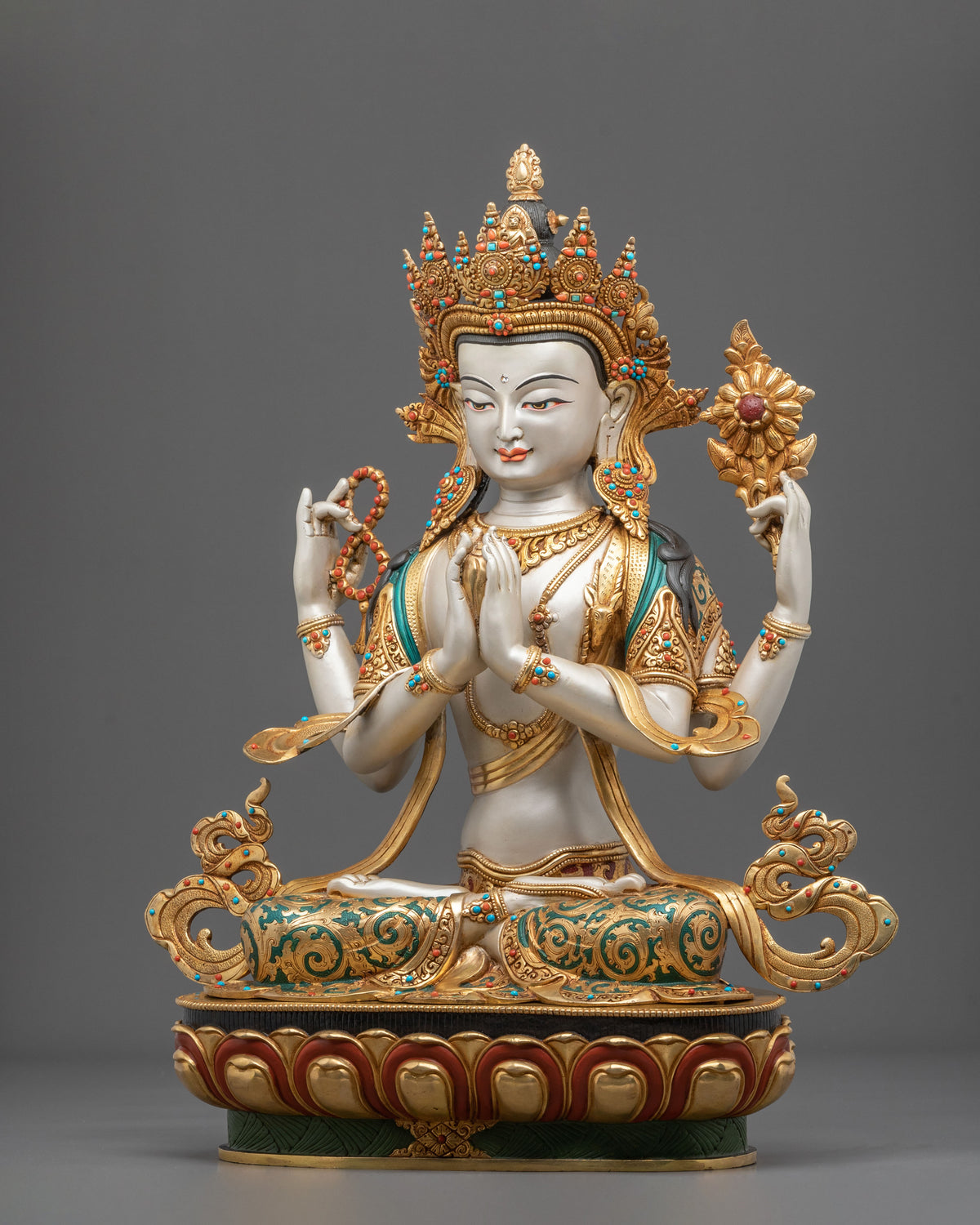
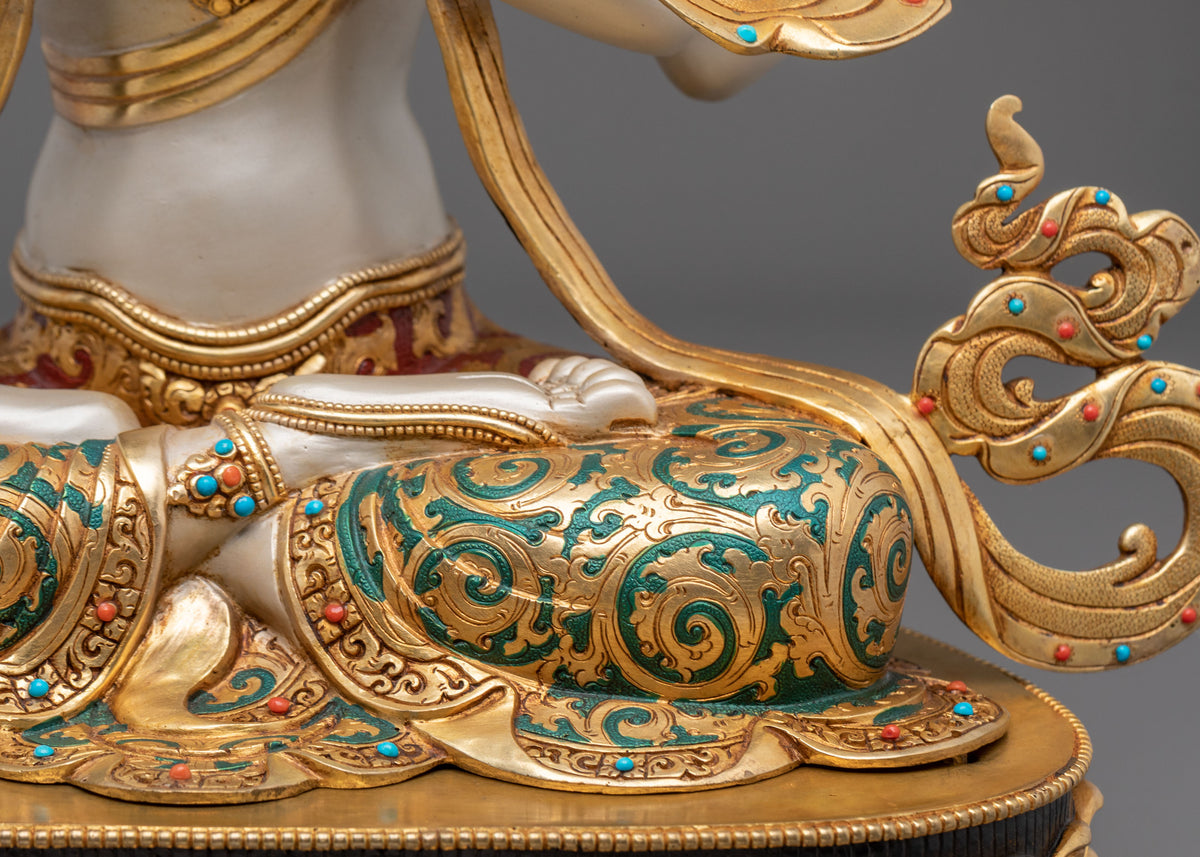
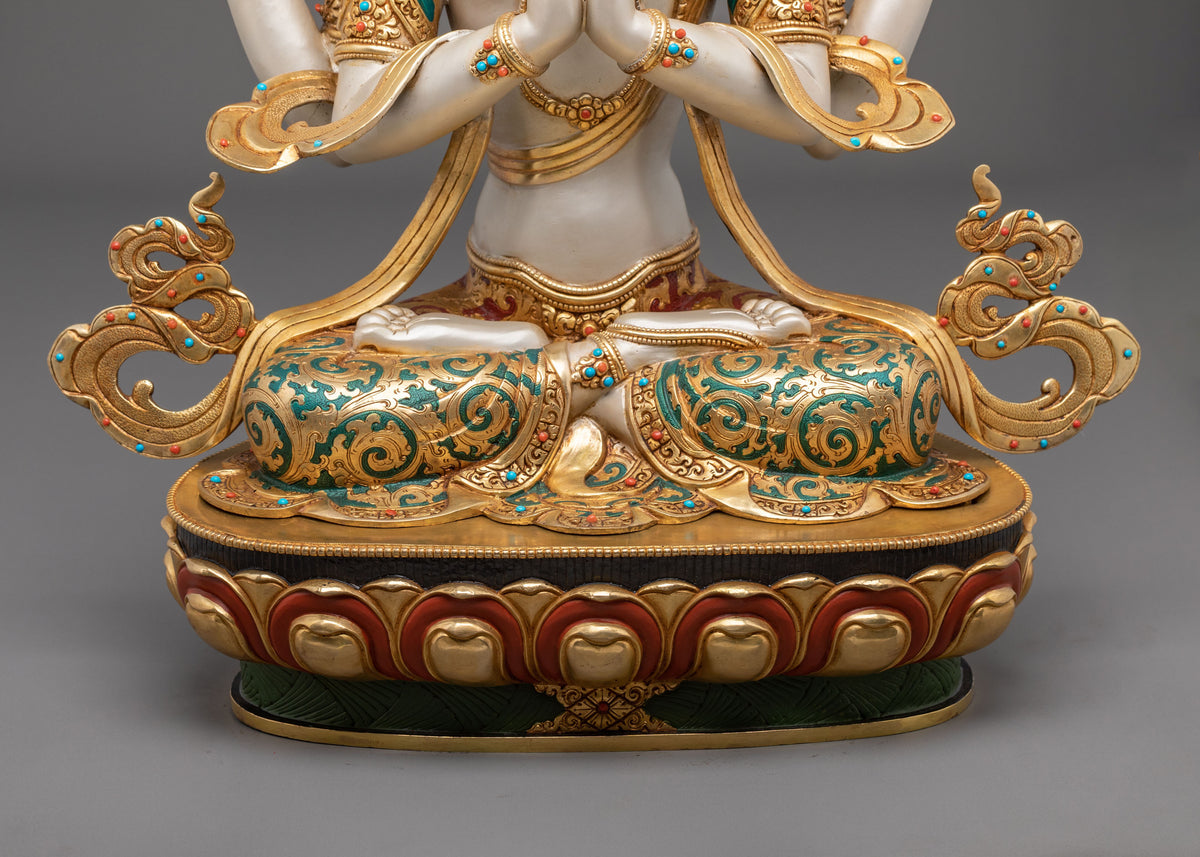
This Handcrafted Chenrezig Copper Sculpture measures 18.8”/48cm in height with a 15.1”/38.5cm base and weighs 9.69 kg. Handcrafted in Nepal from a copper body, the sculpture is enhanced with gold and acrylic painting and carefully placed gemstones that add color, contrast, and refined decorative depth to the surface. The balanced proportions, precise metalwork, and meticulous hand-finishing reflect the skill of Nepalese artisans and the enduring traditions of Himalayan Buddhist craftsmanship. Spiritually, the figure embodies compassion, mercy, and the aspiration to relieve the suffering of all sentient beings, making this piece meaningful for Buddhist altars, meditation spaces, Dharma centers, monasteries, or sacred collections.
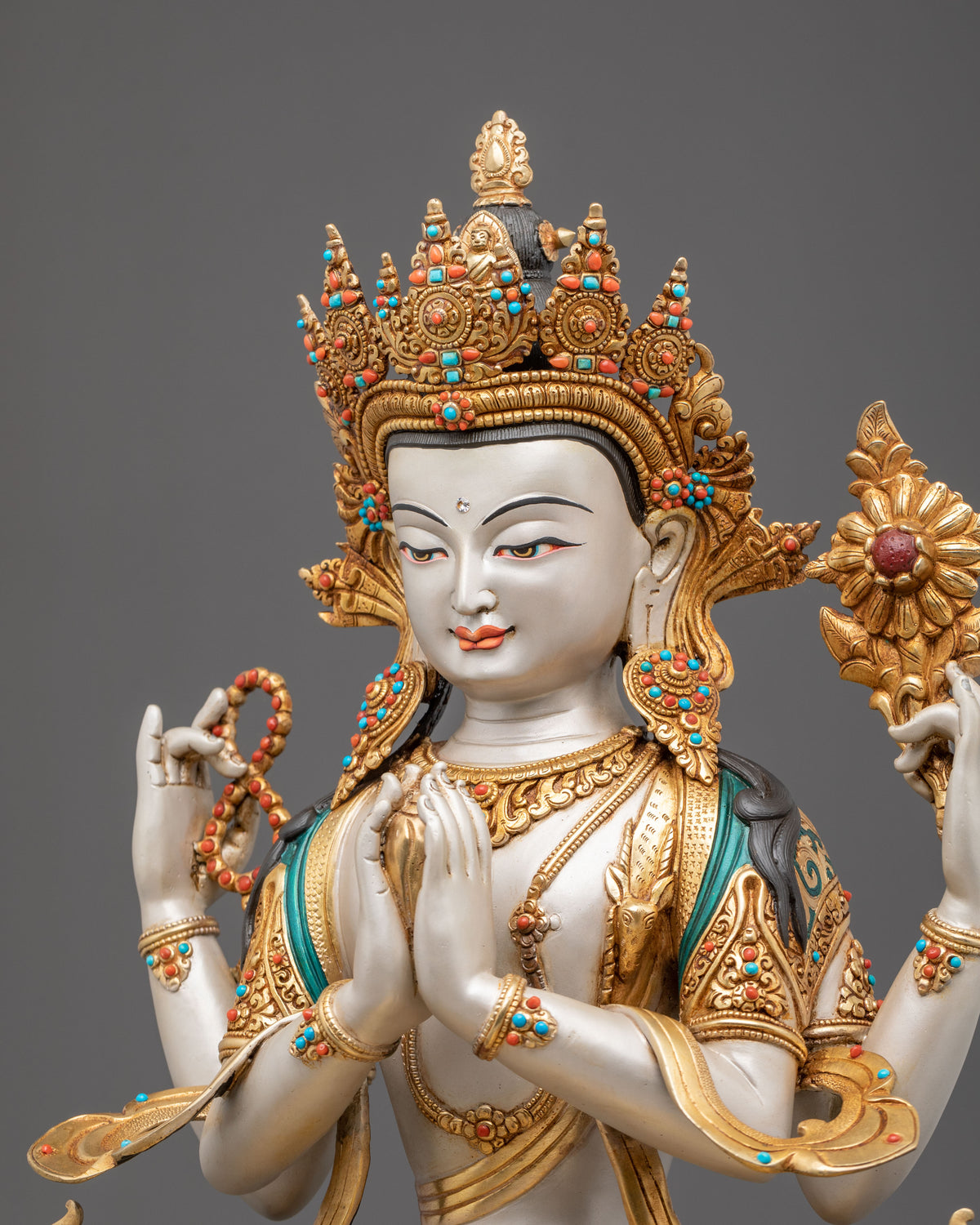
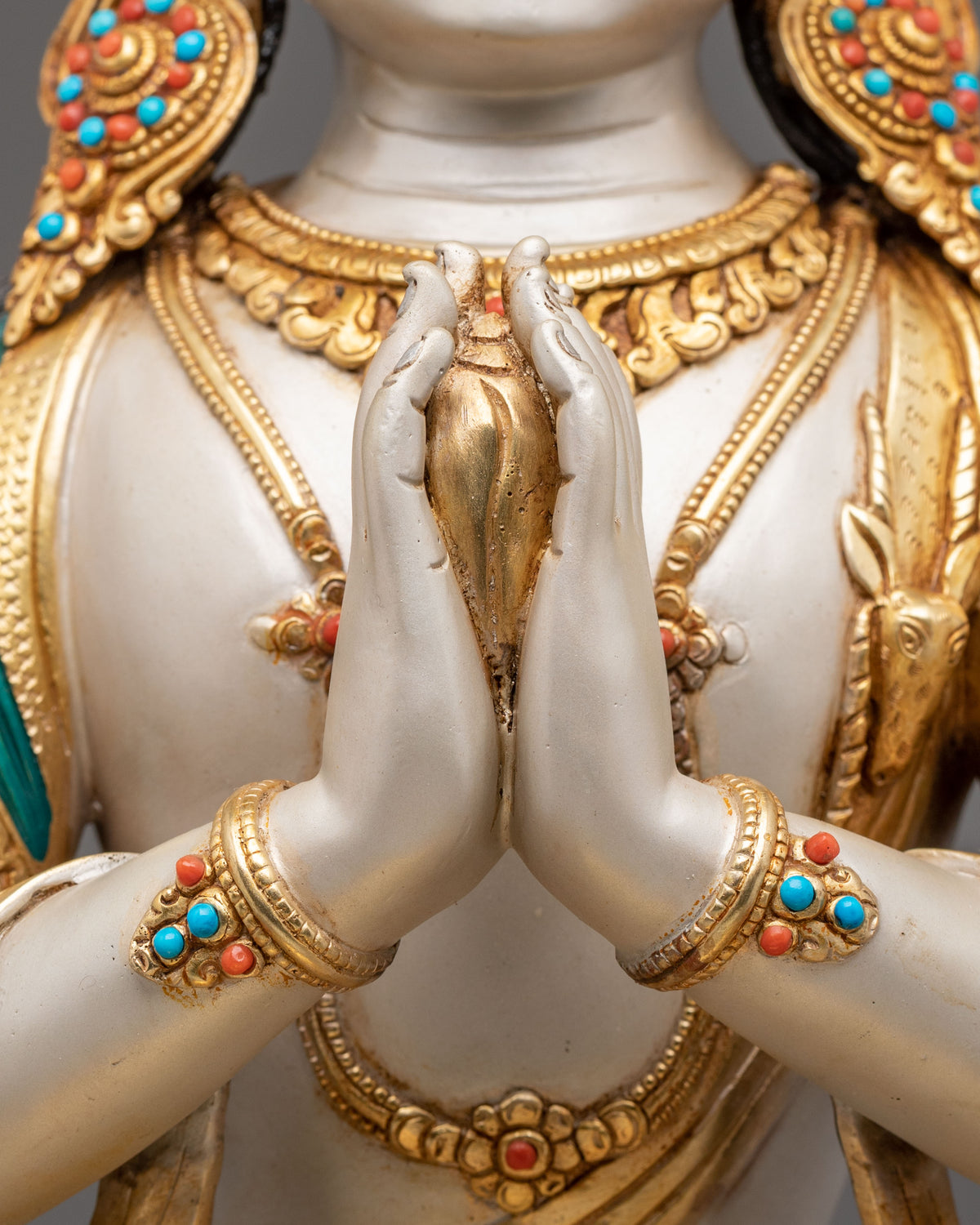
This revered four-armed form embodies boundless compassion, loving-kindness, and the compassionate activity of all Buddhas. Seated gracefully in the full lotus posture upon a lotus throne, Chenrezig represents meditative stability and awakened compassion. The front two hands are joined at the heart in Anjali Mudra, traditionally holding the wish-fulfilling jewel between the palms, symbolizing the union of wisdom and skillful means. The upper right hand holds a mala, representing continuous mantra recitation and the unceasing activity of compassion, while the upper left hand holds an utpala lotus, symbolizing purity, wisdom, and spiritual awakening. His peaceful expression, elaborate crown, celestial garments, jewelry, and flowing scarves emphasize his enlightened bodhisattva nature, while the lotus throne represents purity and liberation. Together, the four arms and sacred attributes express the aspiration to relieve suffering, overcome obstacles, and guide all sentient beings toward awakening.
Size: 18.8”/48cm (Height) x 15.1”/38.5cm (Base)
Weight: 9.69 kg
Material: Gemstones, Copper Body, Gold and Acrylic Painting
Chenrezig, known in Sanskrit as Avalokiteshvara, originates in Indian Mahayana Buddhism and later became one of the most important bodhisattvas in Tibetan and Himalayan Buddhist traditions. He is revered as the embodiment of compassion and represents the aspiration to relieve the suffering of all sentient beings. His practice was transmitted from India into Tibet, where it became central to prayer, meditation, and devotional traditions across several schools. In Tibetan Buddhism, he is especially associated with the mantra “Om Mani Padme Hum,” as well as compassion, mercy, loving-kindness, and the cultivation of an altruistic mind dedicated to the welfare and liberation of others.