Radiant Golden Gautama Buddha Sculpture | Buddhist Spiritual Decor
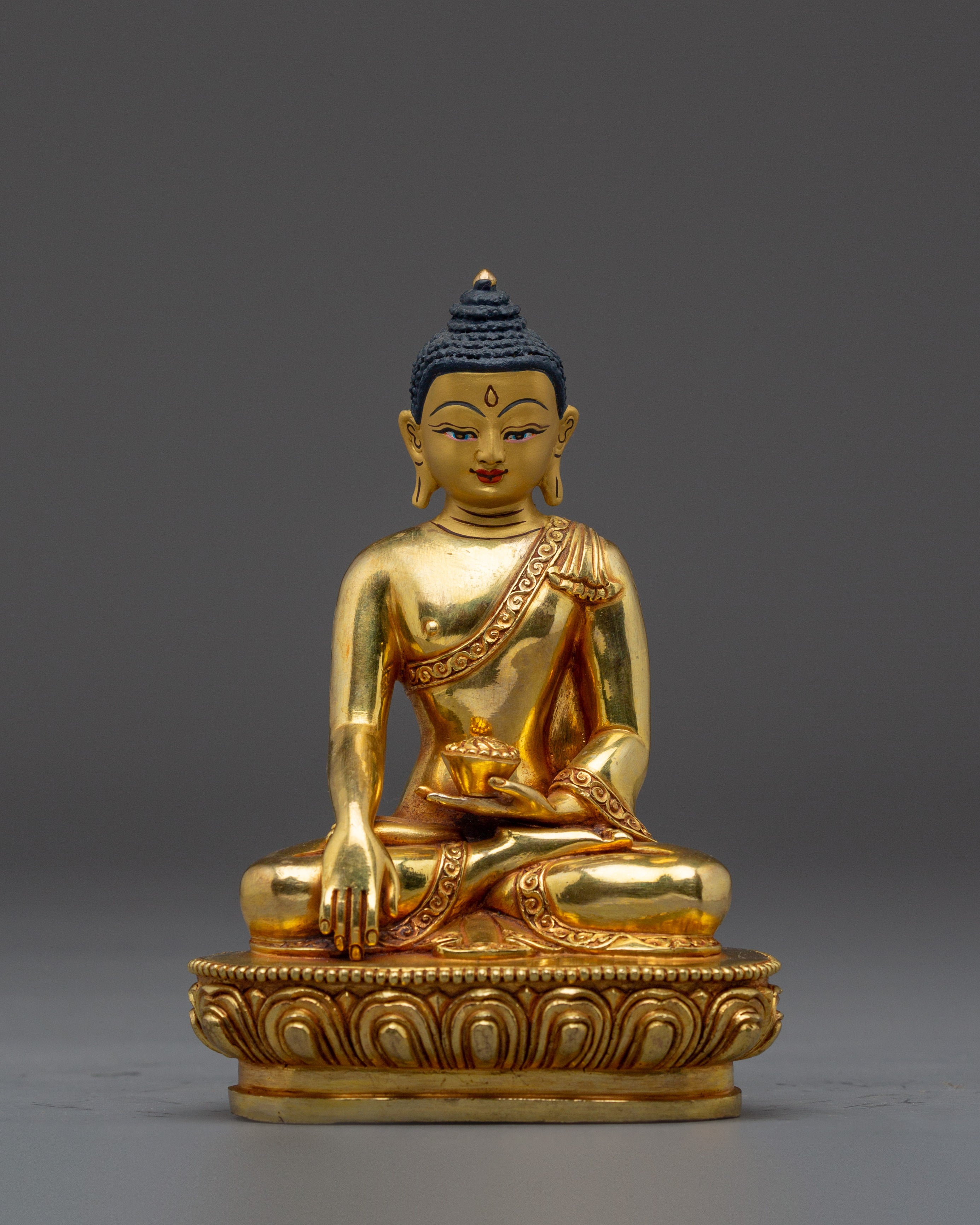
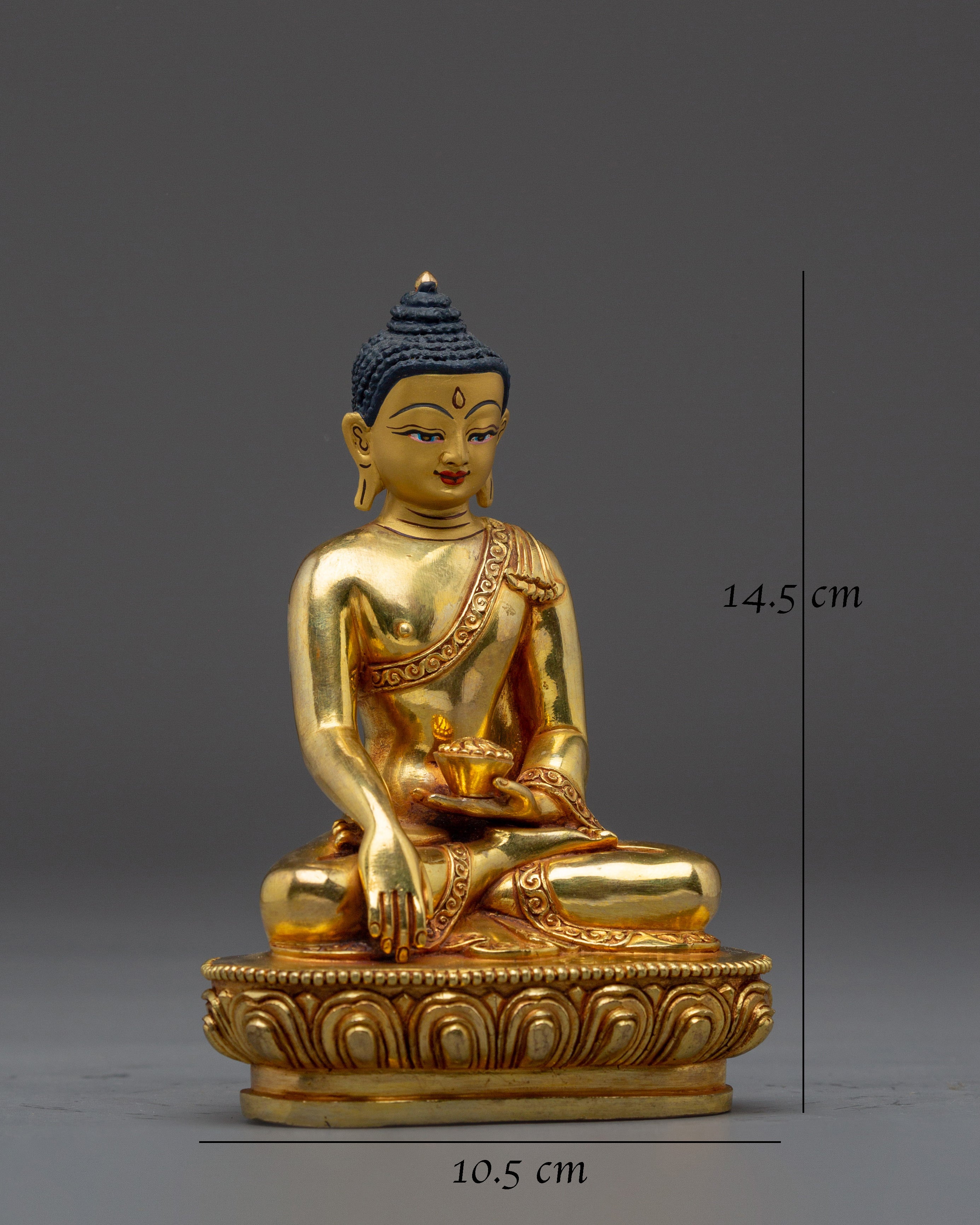
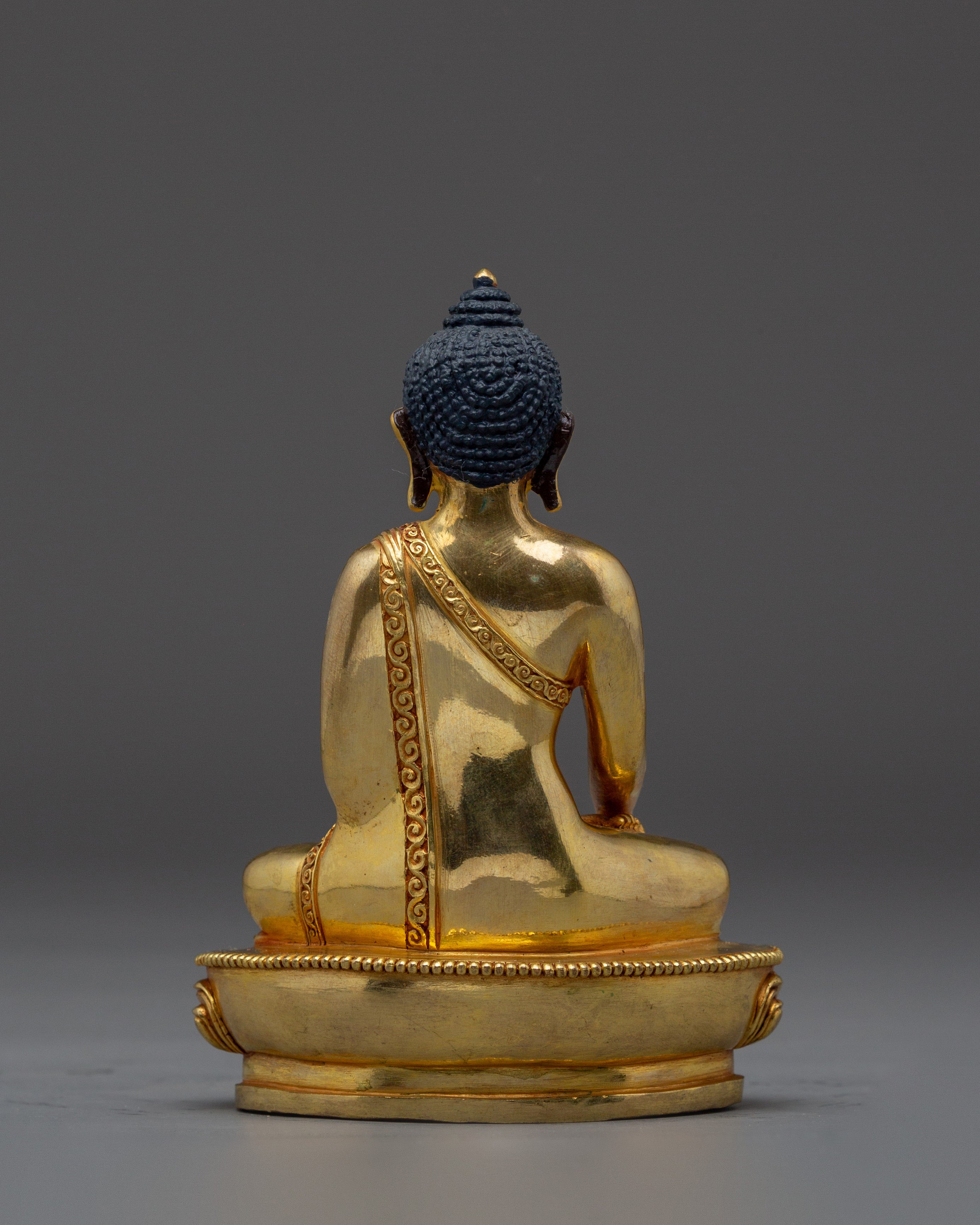
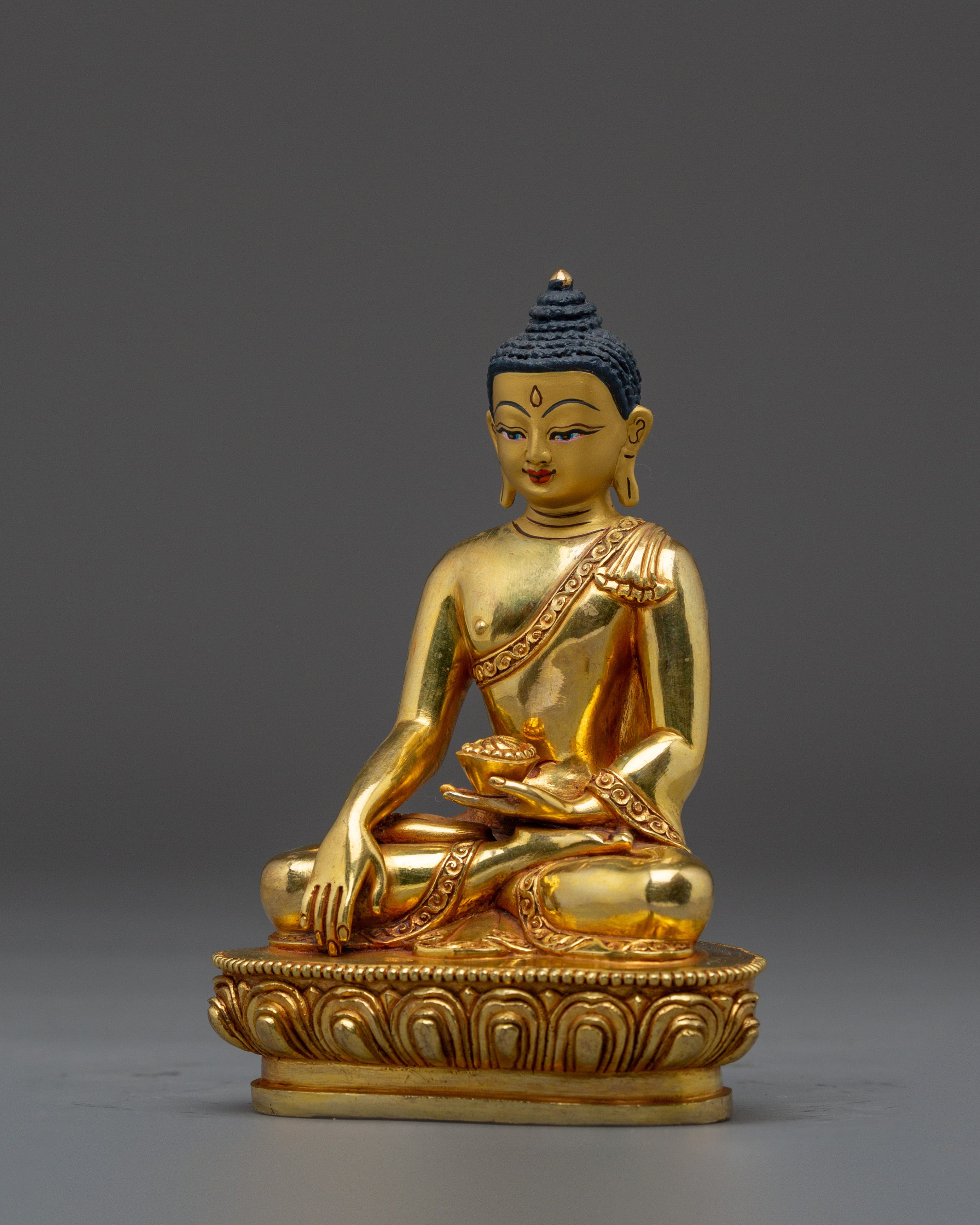
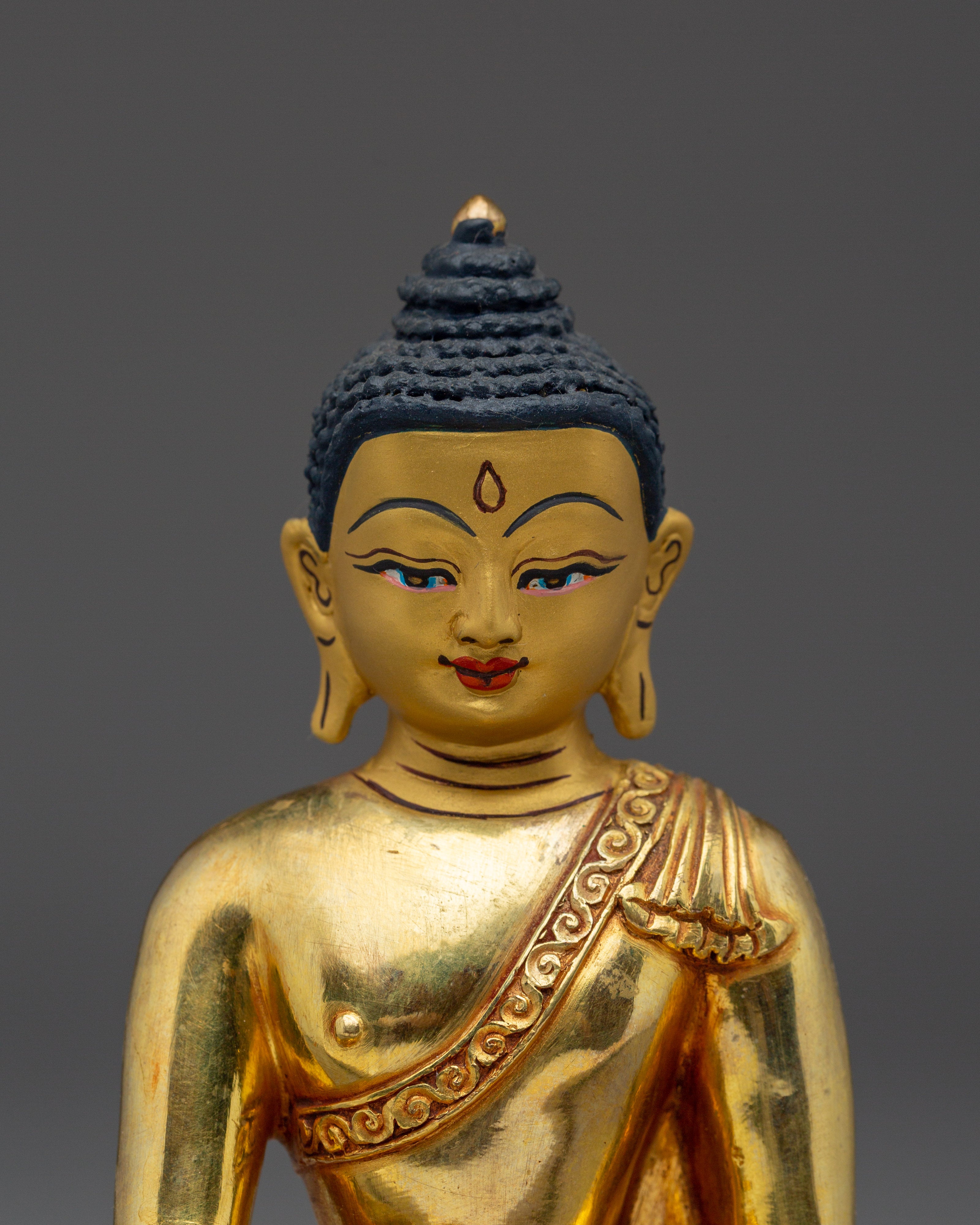
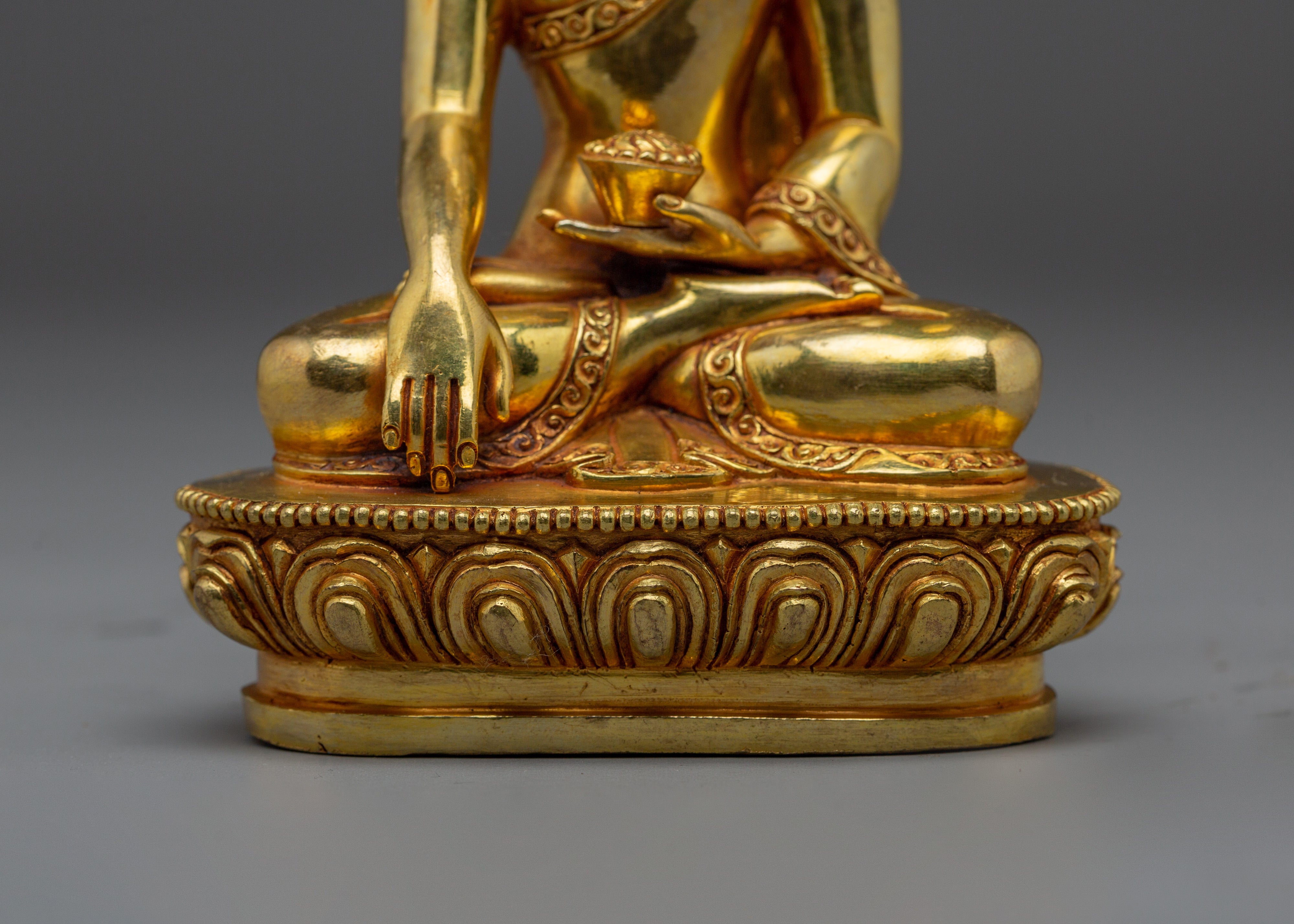
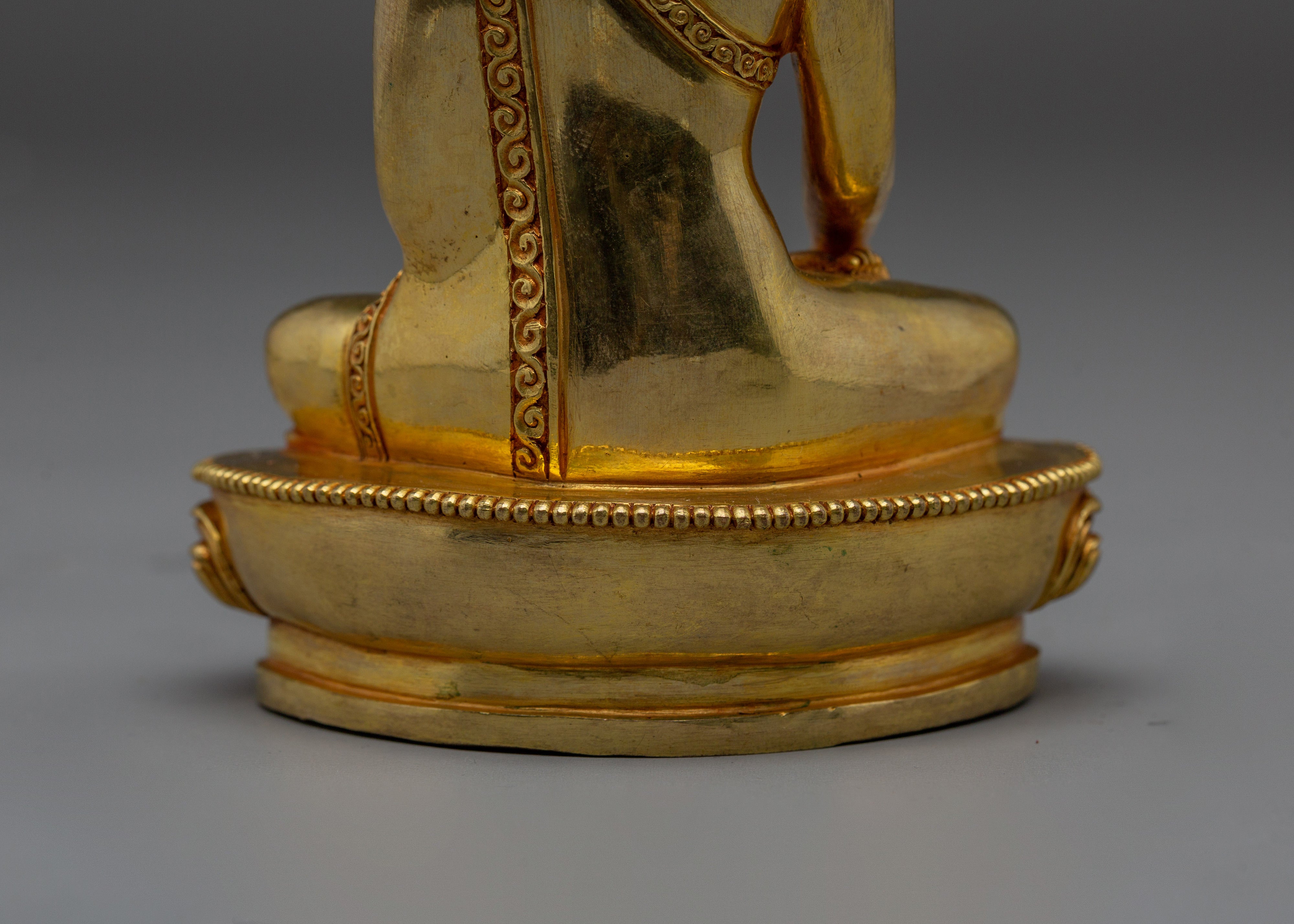
This Golden Gautama Buddha Sculpture measures 5.7”/14.5cm in height and 4.1”/10.5cm at the base, weighing 0.62 kg. is made of copper, covered with a triple layer of 24K gold gilding, and carved with deeply engraved carvings that produce a magnificent 3D-like effect, it reflects the meticulous craftsmanship of skilled Nepali artisans. Its compact size is perfect for personal altars, meditation spaces, or as a meaningful spiritual decor piece that brings calm and wisdom into any setting.
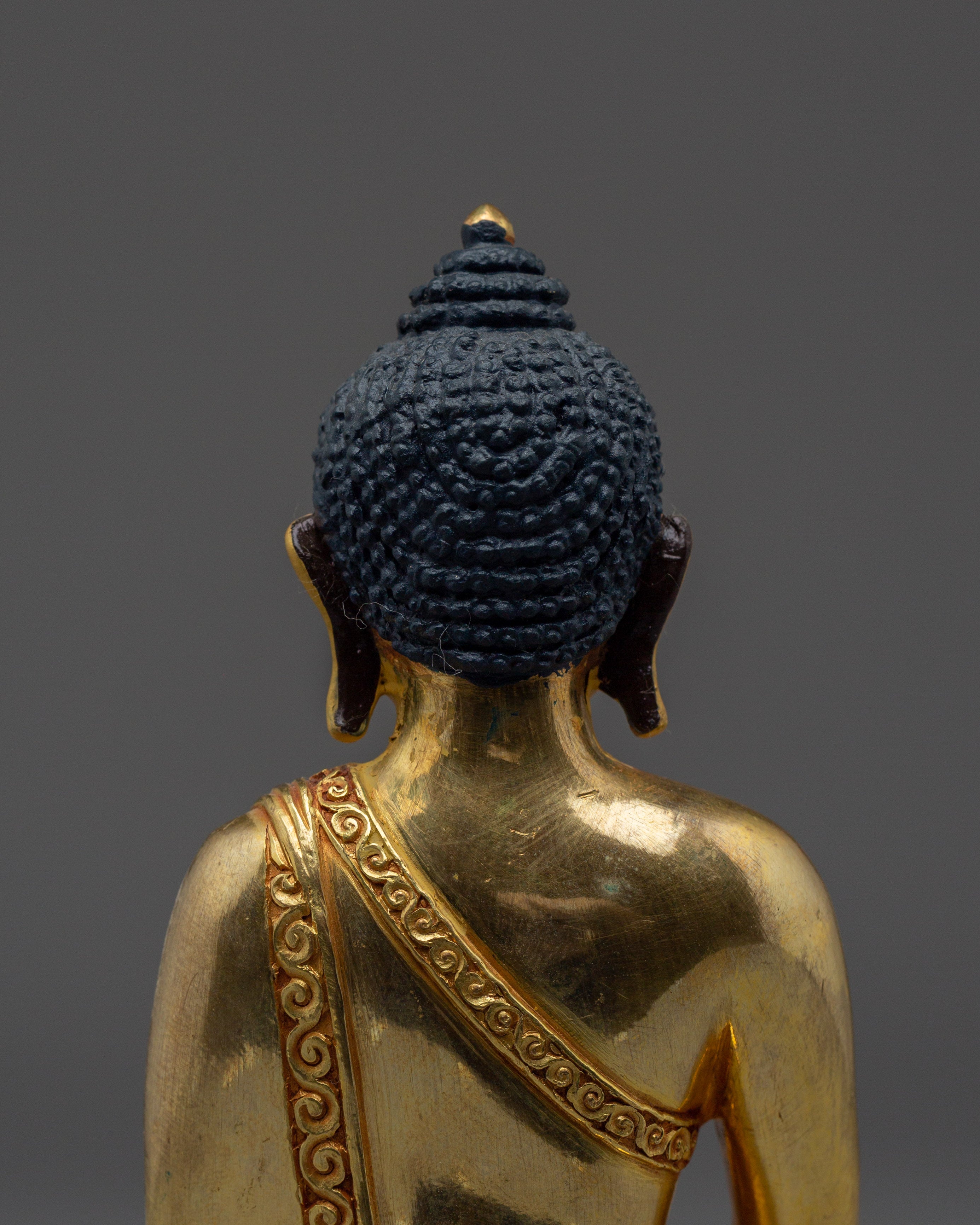
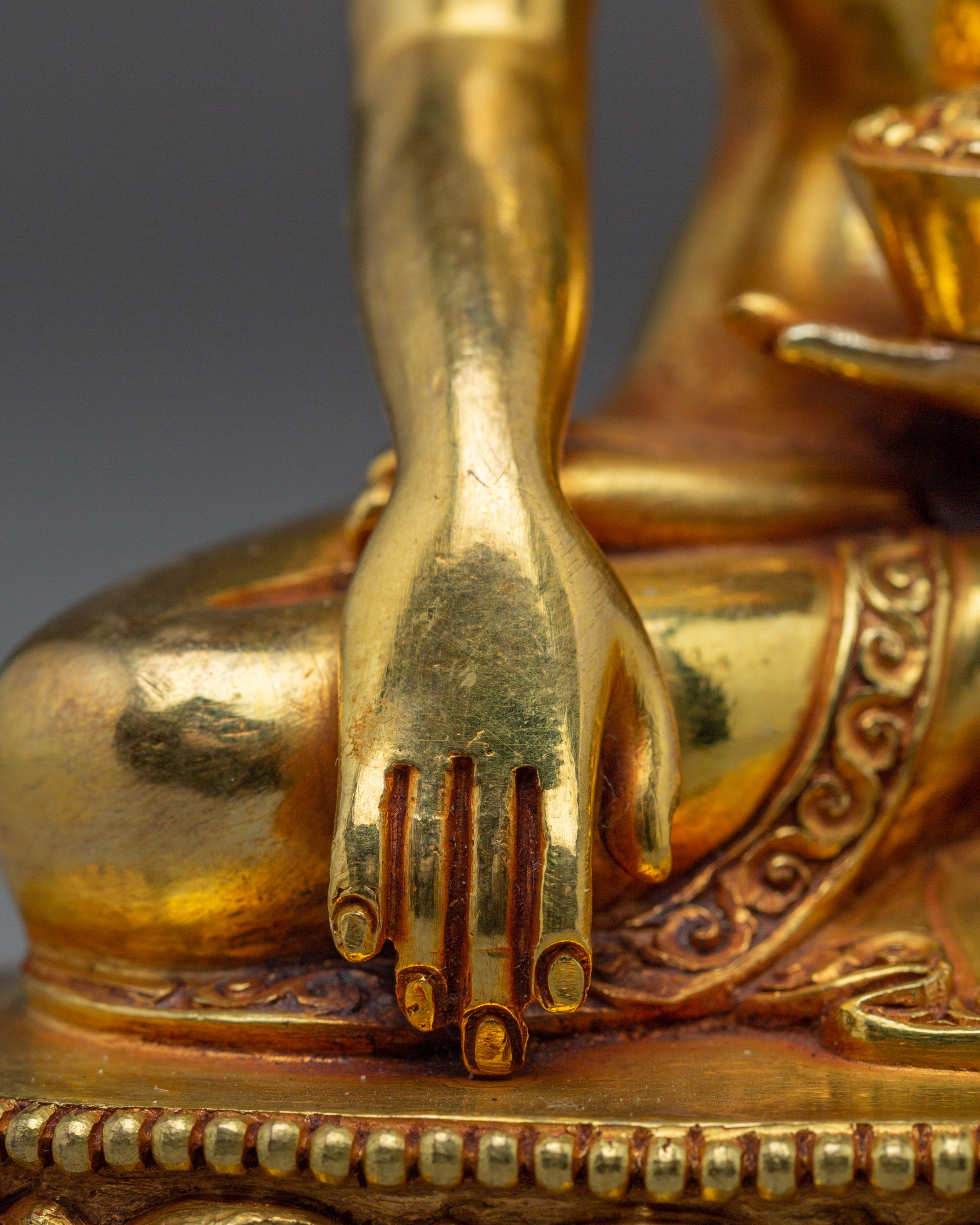
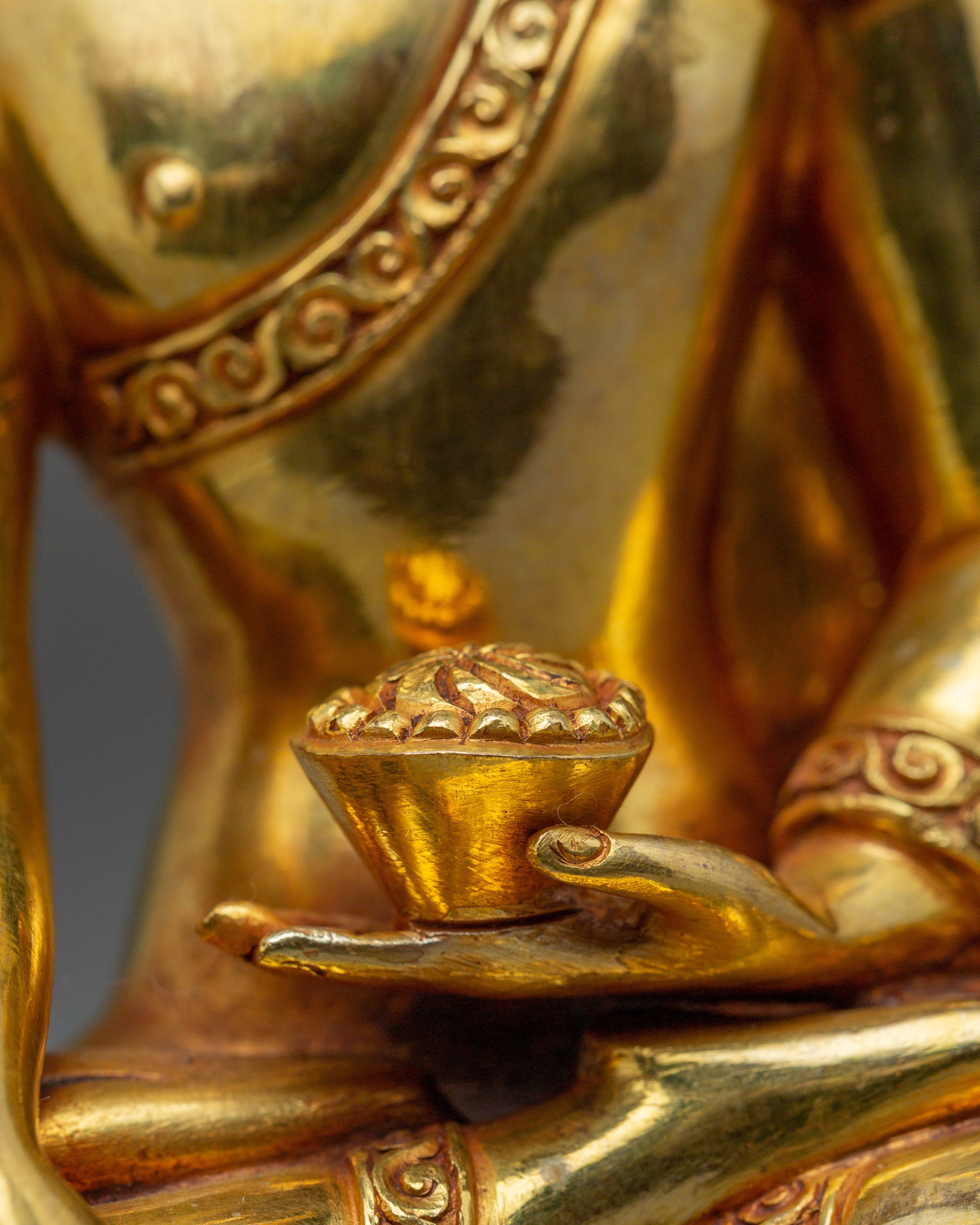
Shakyamuni Buddha is portrayed in a serene meditative pose with half-closed eyes, reflecting deep inner peace and awakened awareness. His right hand performs the bhūmisparśa mudrā, or earth-touching gesture, marking the moment he called the Earth to bear witness to his enlightenment. In his left hand, he holds an alms bowl, symbolizing renunciation and the simplicity of the monastic life. His head is crowned with the uṣṇīṣa, a symbol of supreme wisdom, and his hair is styled in tight snail-like curls—an homage to the legend of snails shielding him from the sun during long meditation sessions. Seated in the vajra posture atop a moon disc lotus base, he embodies stability, spiritual purity, and unwavering concentration. This elegant depiction captures the profound dignity and symbolic depth of the historical Buddha.
Size: 5.7”/14.5cm (Height) x 4.1”/10.5cm (Base)
Weight: 0.62 kg
Material: 24K Gold Gilded, Gold & Acrylic Paintings, Copper Body
Gautama Buddha, also known as Shakyamuni Buddha, was a spiritual teacher and the founder of Buddhism, born as Siddhartha Gautama in ancient Nepal. Renouncing his royal life in search of truth, he attained enlightenment under the Bodhi tree and shared the path to liberation from suffering. At the core of his teachings are the Four Noble Truths: the truth of suffering (duḥkha), its origin (samudaya), its cessation (nirodha), and the path leading to its cessation (mārga). This path is known as the Noble Eightfold Path, which includes right view, right intention, right speech, right action, right livelihood, right effort, right mindfulness, and right concentration—a guide to ethical conduct, mental discipline, and wisdom that leads to the end of suffering and ultimate freedom (nirvāṇa).