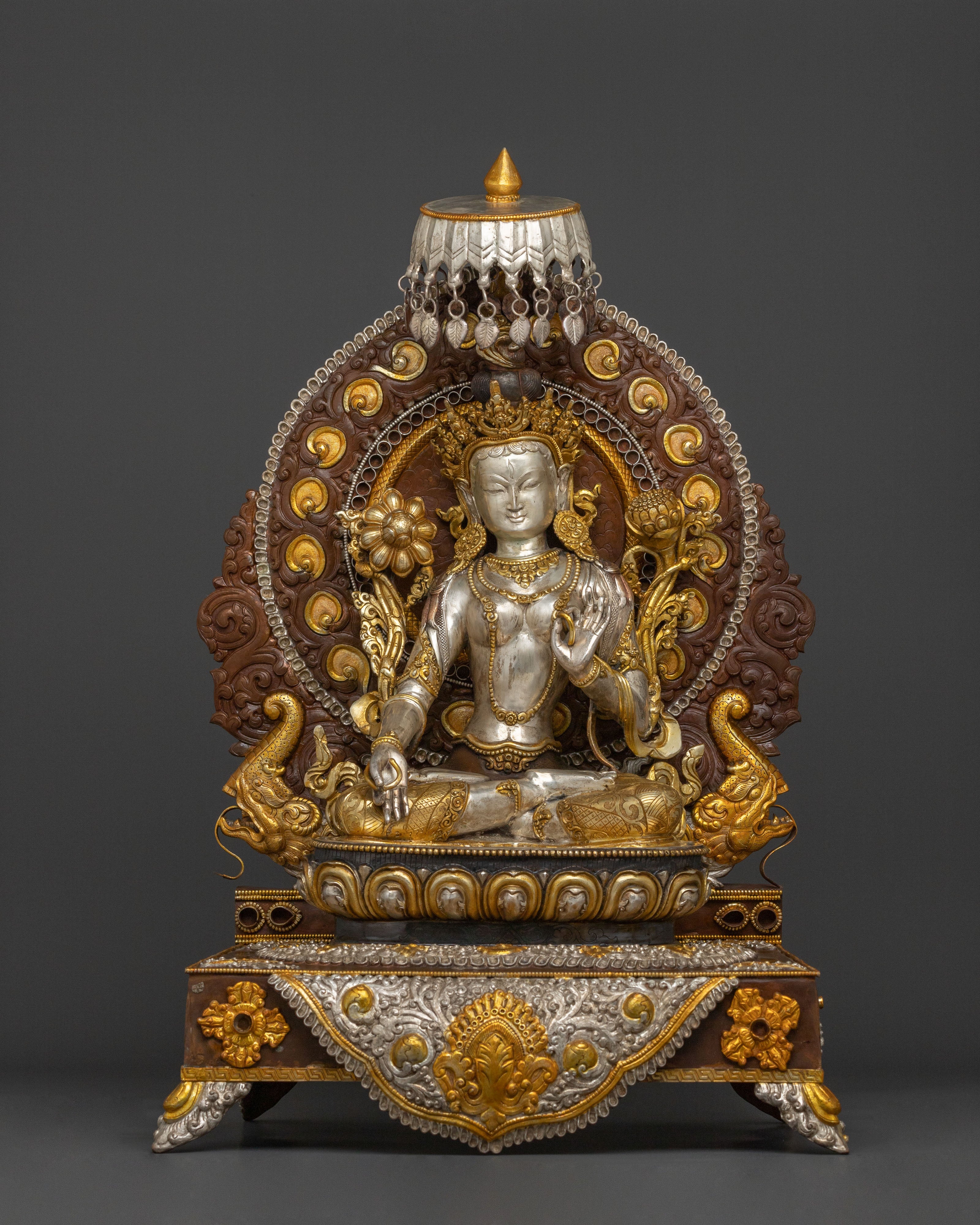
White Tara on Throne: Embodiment of Swift Compassion
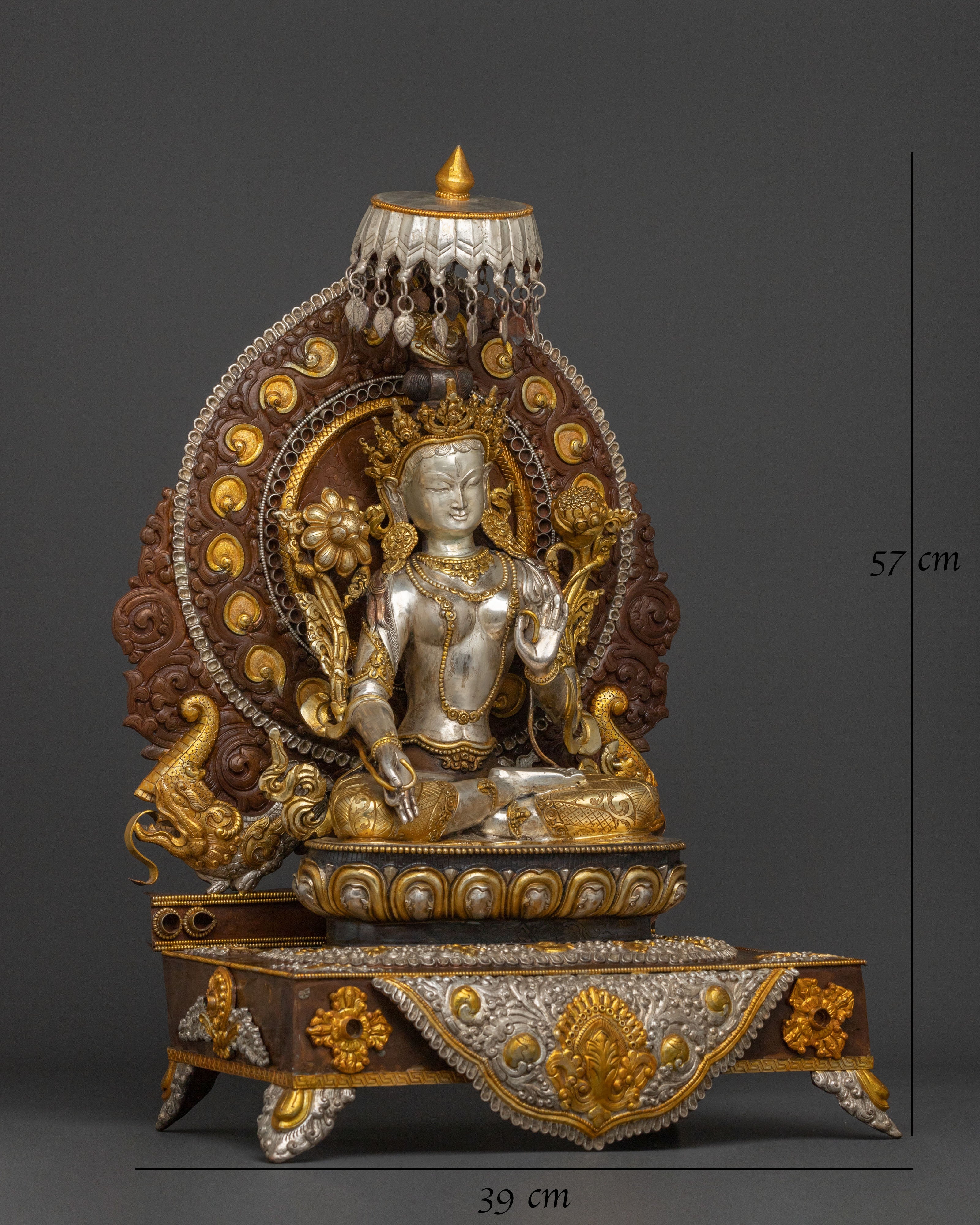
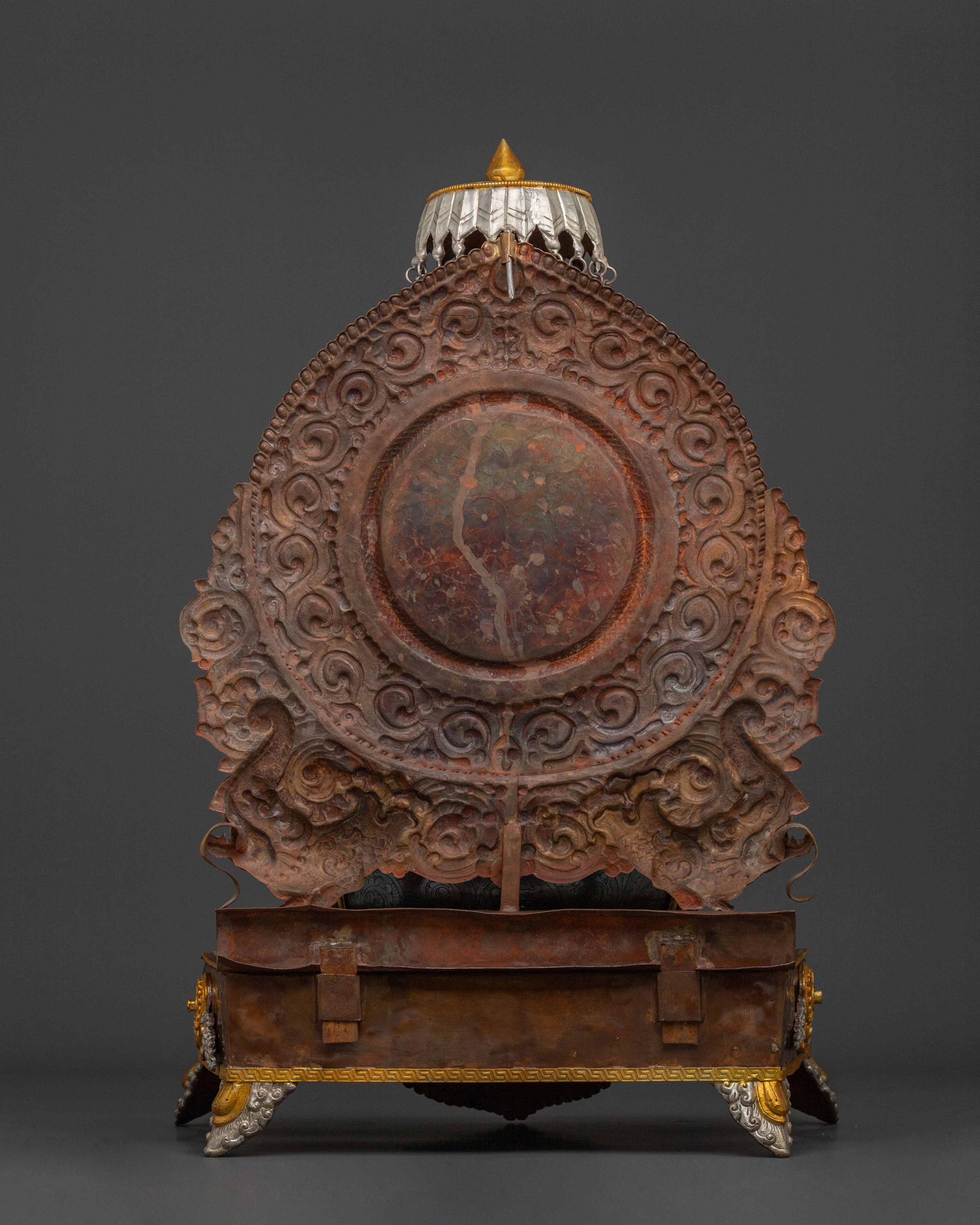
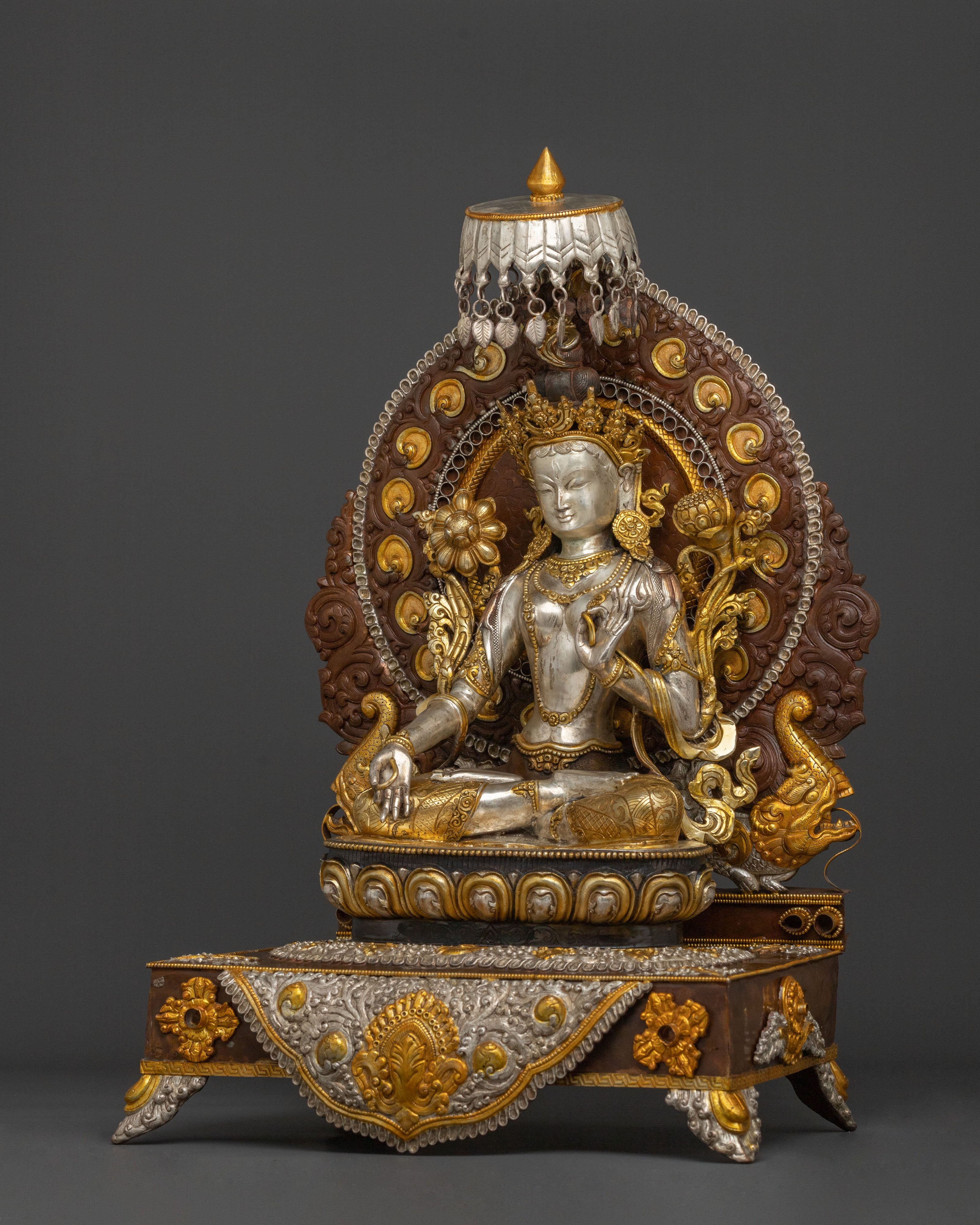
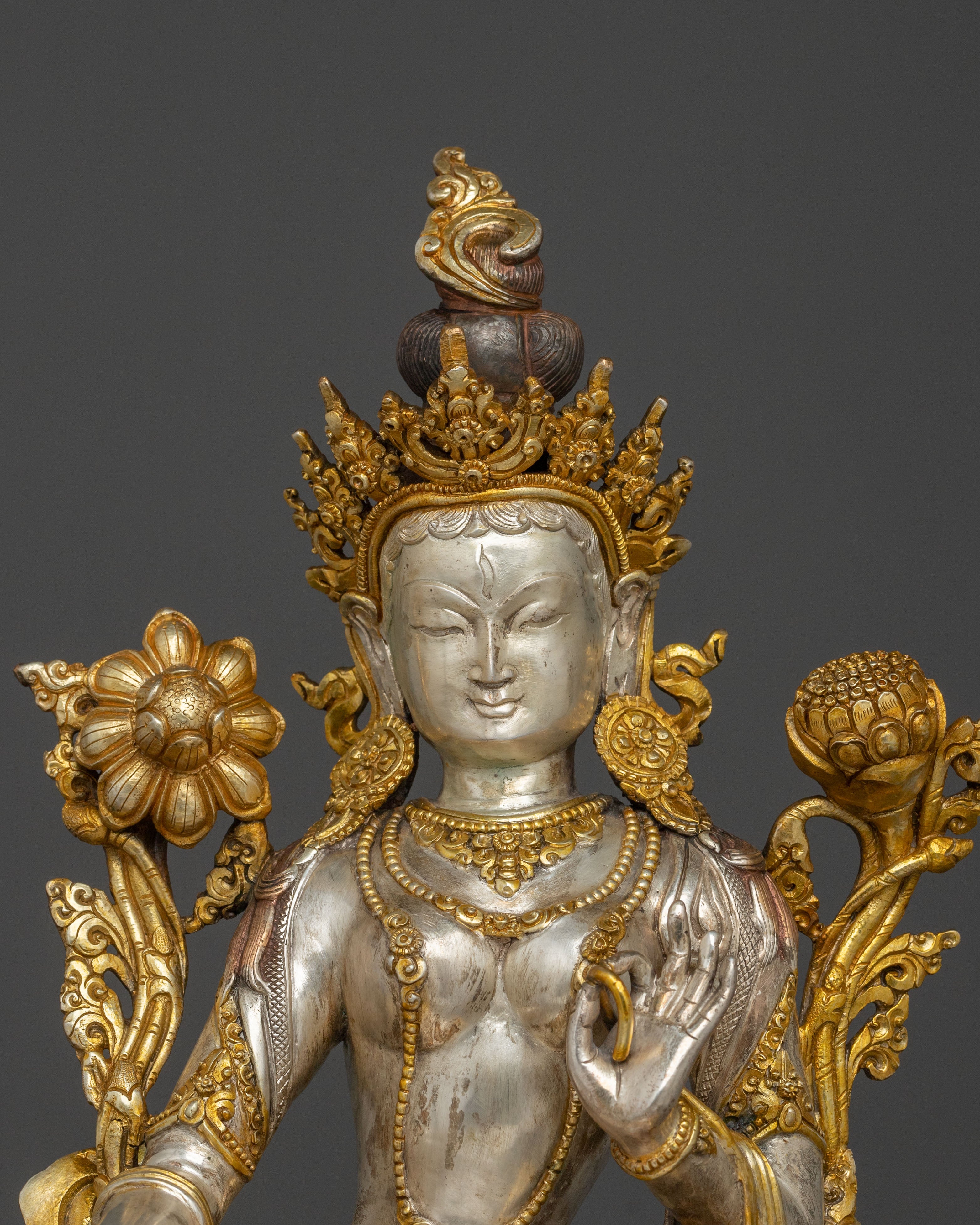
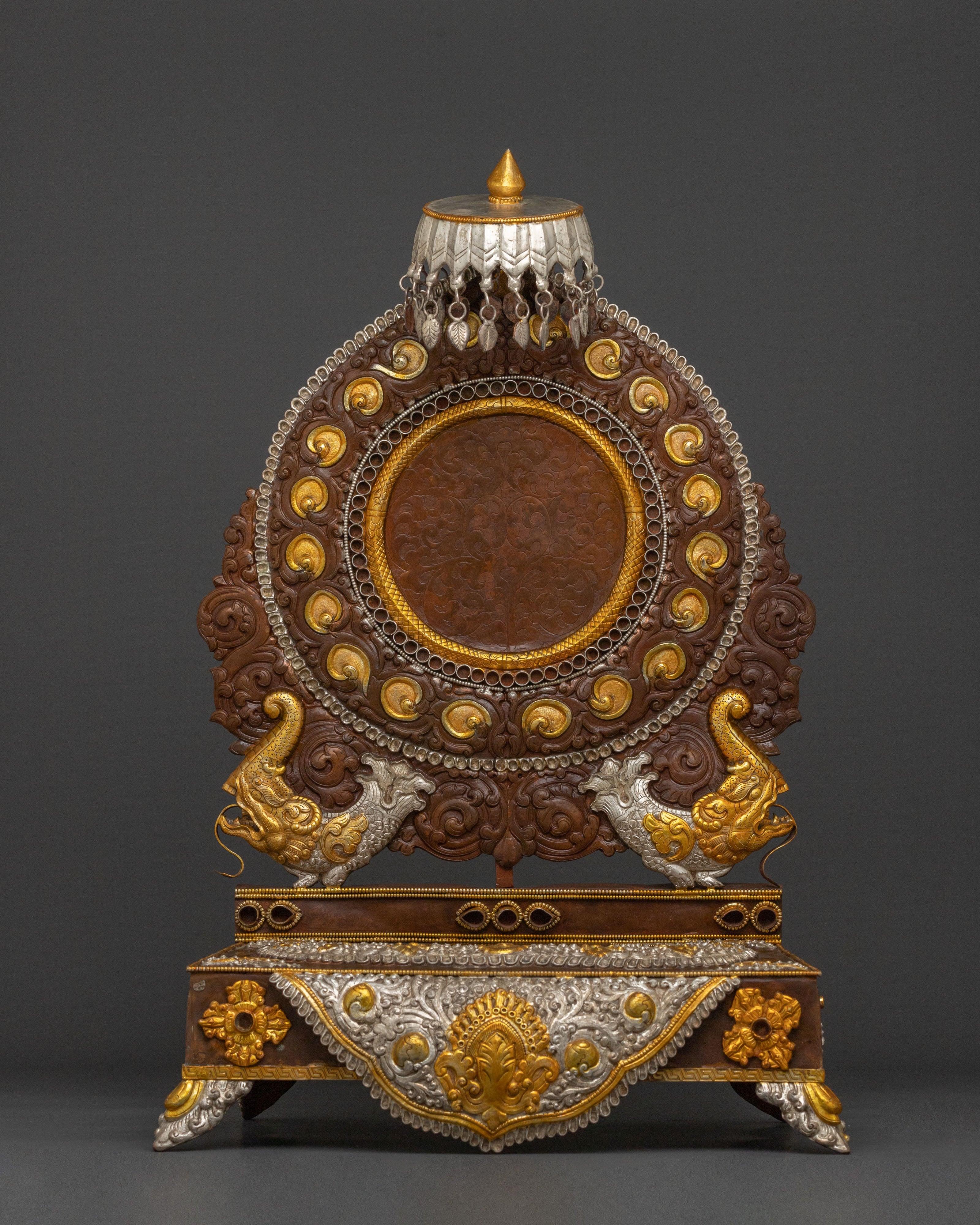
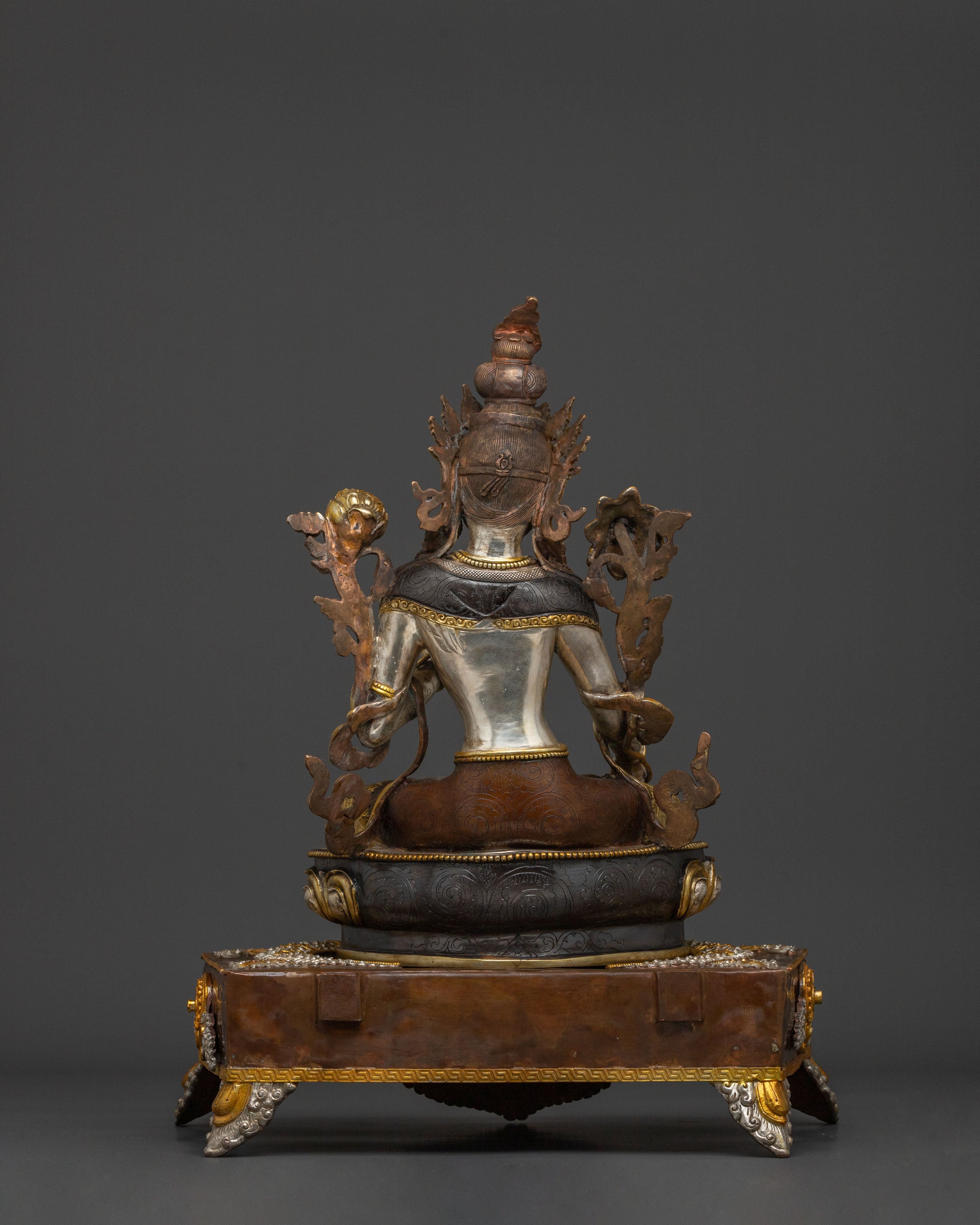
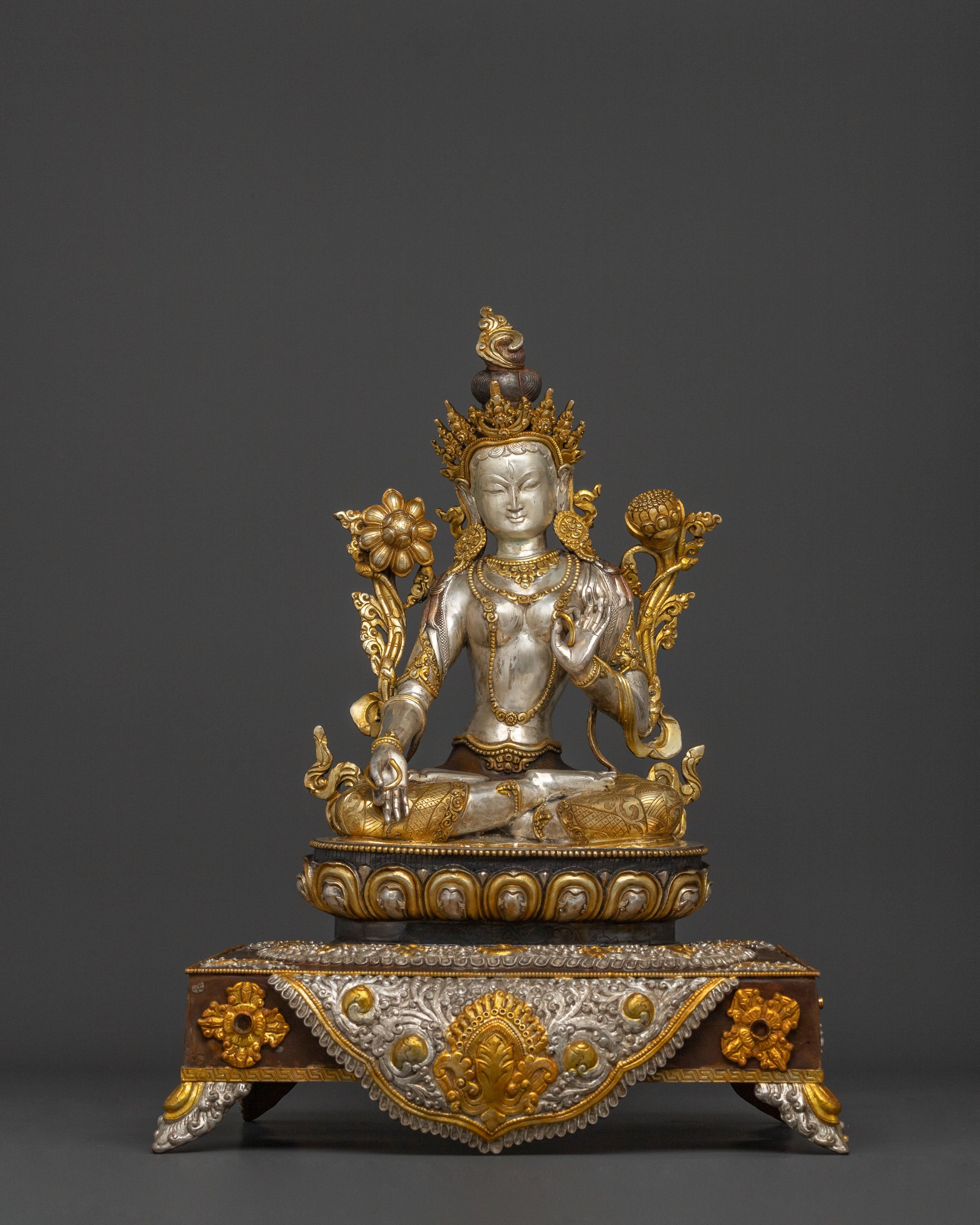
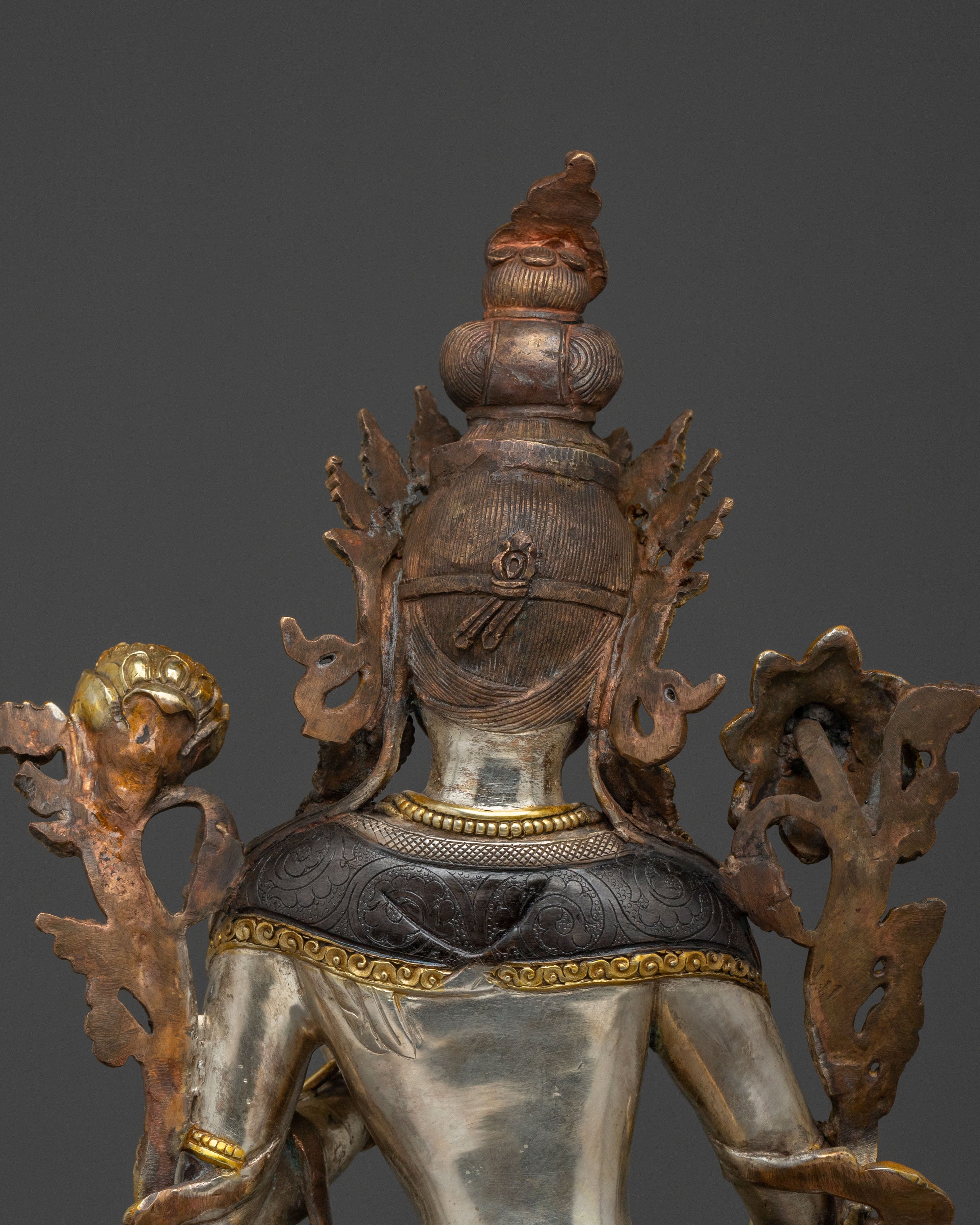
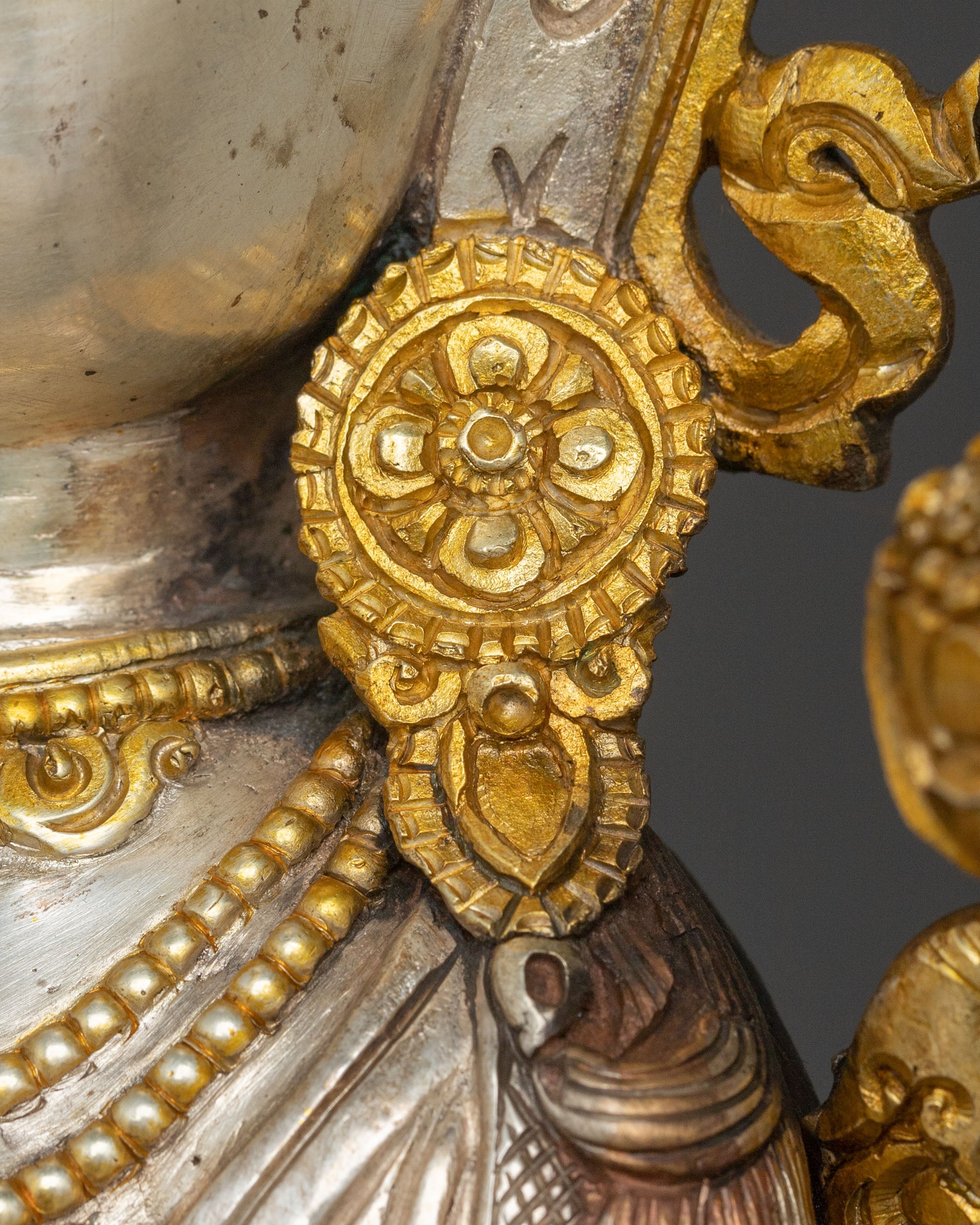
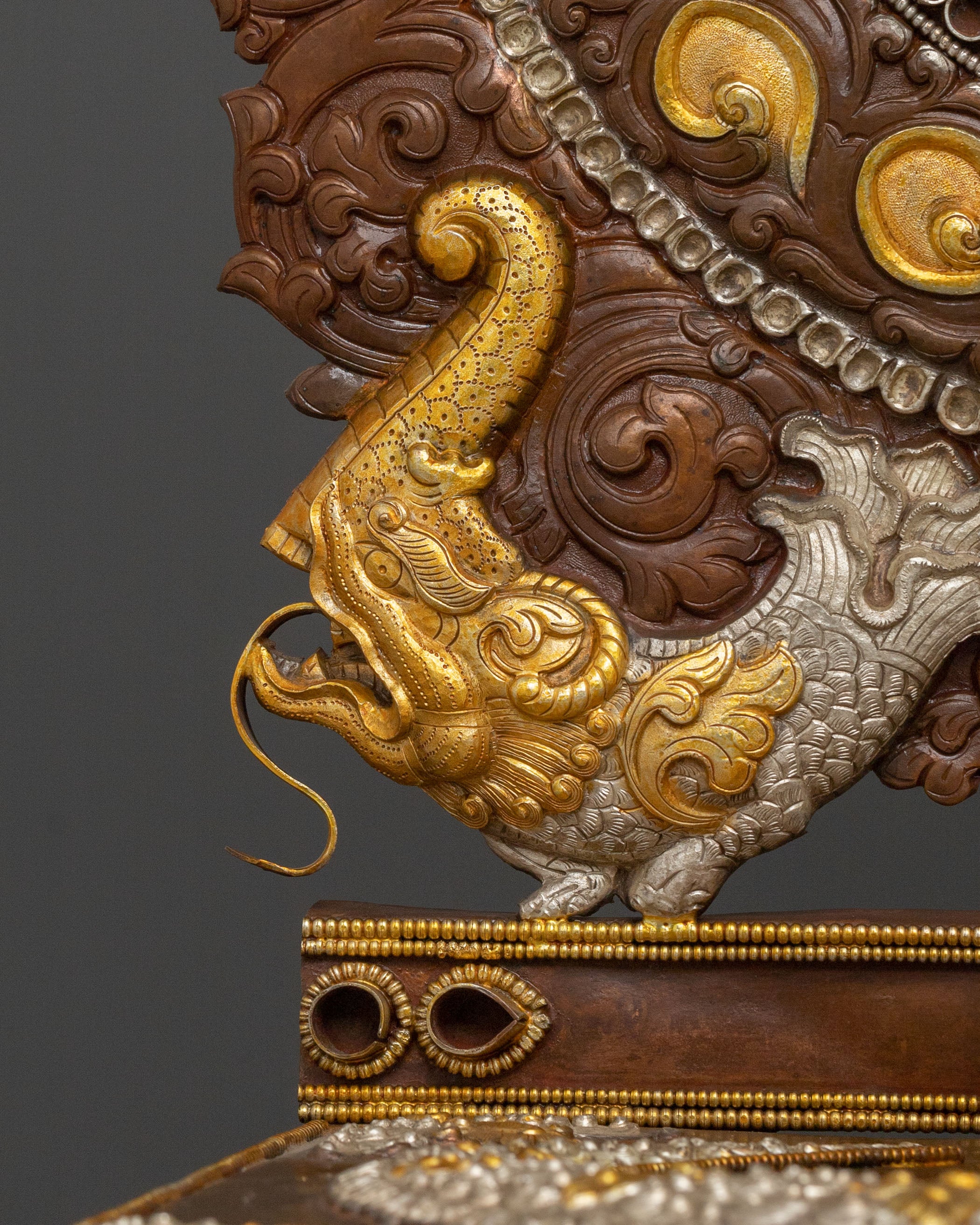
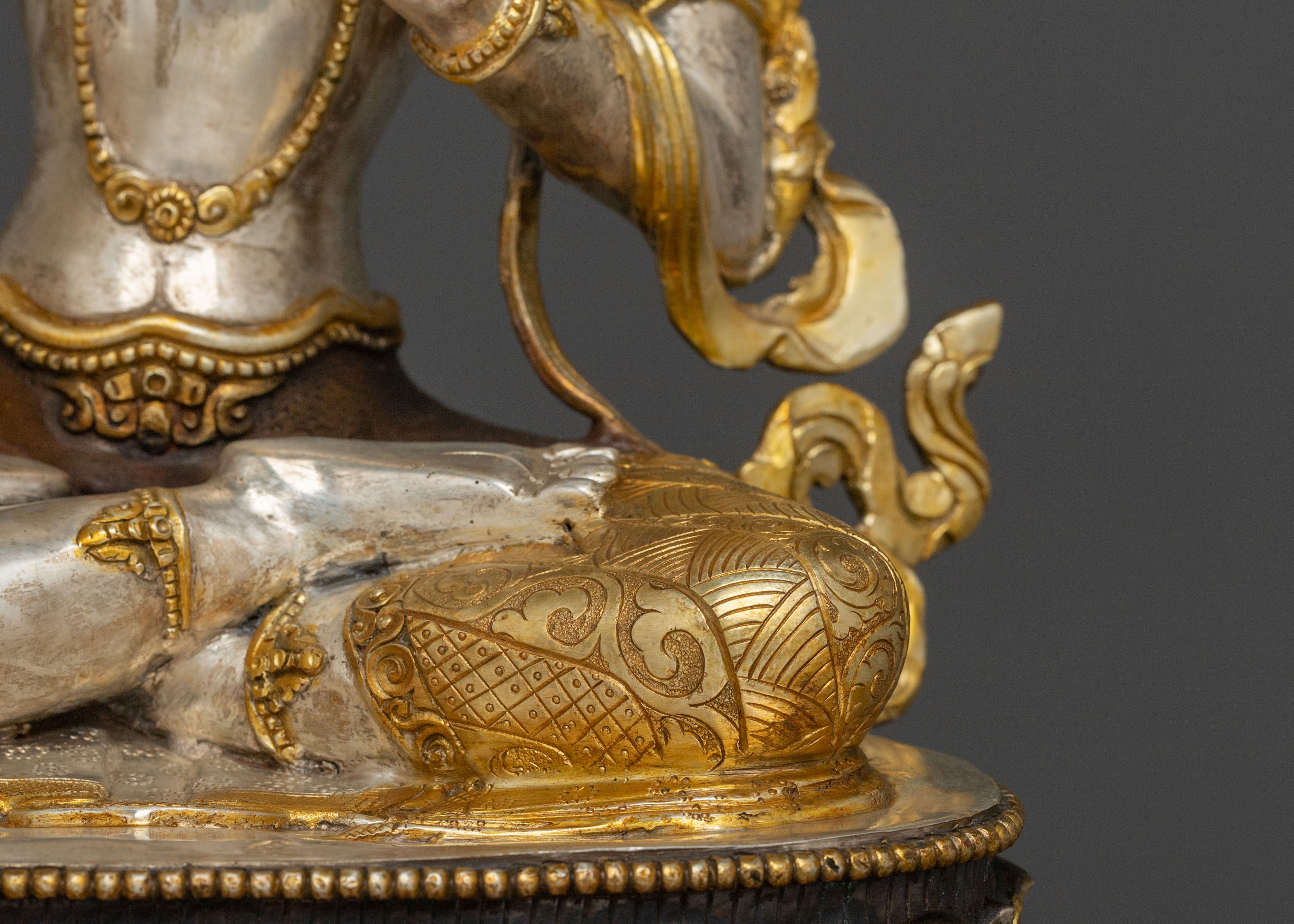
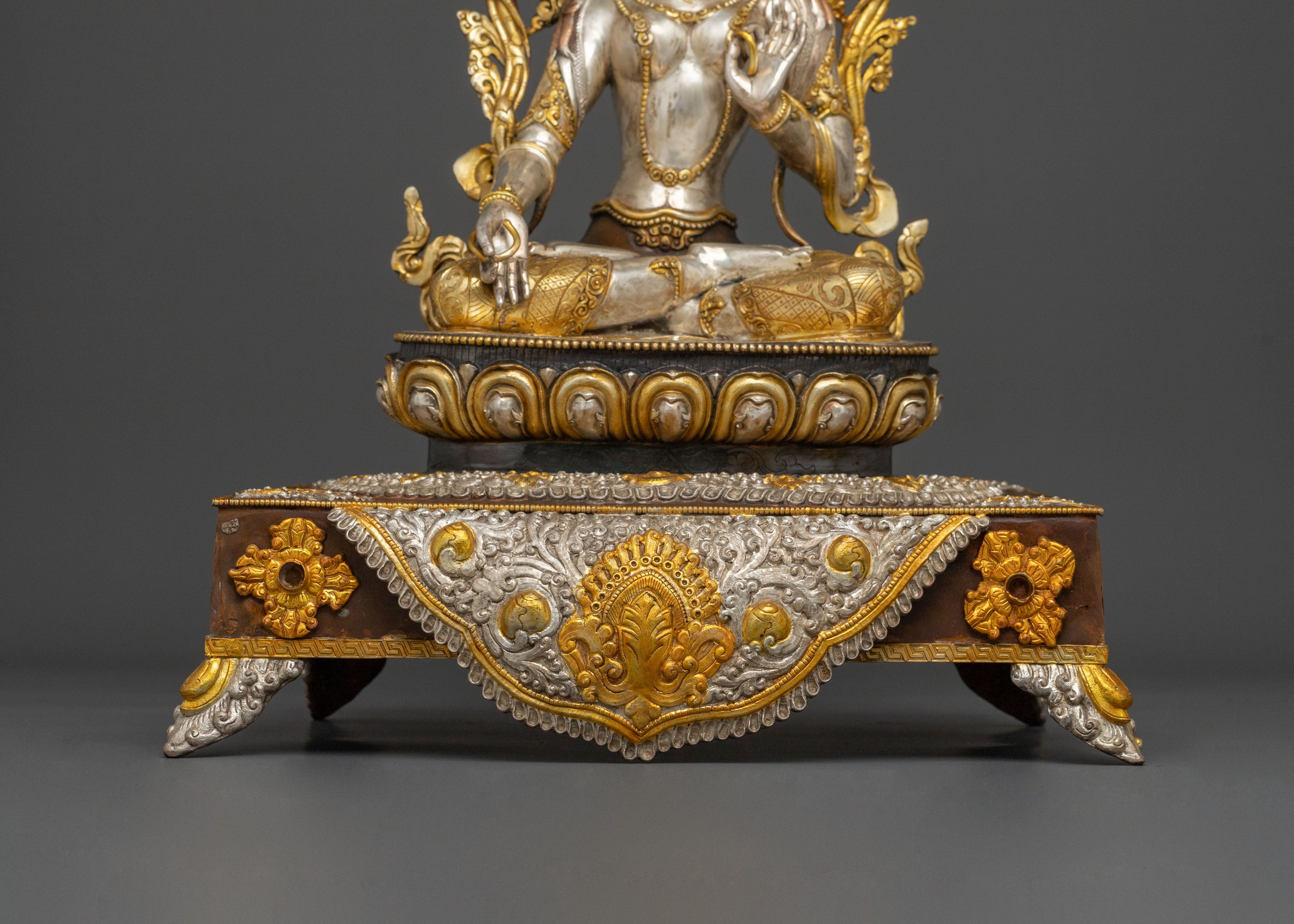
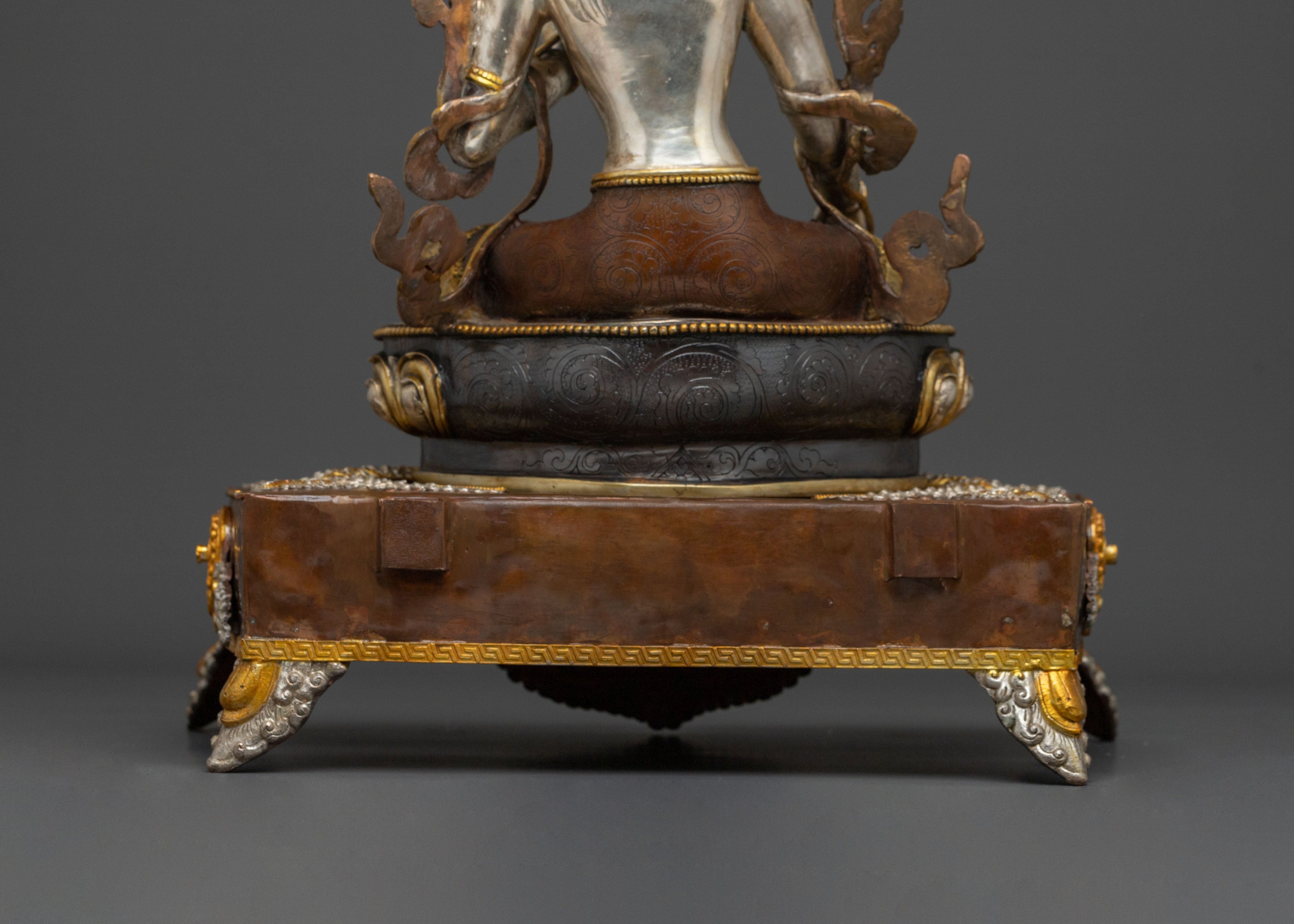
Handcrafted in Nepal, this sacred White Tara statue on throne embodies swift compassion, healing, and enlightened protection. Standing 57 cm (22.4 inches) tall with a 39 cm (15.3 inches) base and weighing 8.51 kg, it is meticulously formed from a durable oxidized copper body with silver plating and enhanced with gold electroplating, detailed acrylic painting, and refined copper accents. Covered with a triple layer of 24K gold gilding and featuring deeply engraved carvings that create a magnificent 3D-like effect, this statue showcases the exceptional artistry of traditional Himalayan metalwork. The poised posture and serene expression reflect White Tara’s readiness to alleviate suffering, making this luminous statue a powerful focal point for altars, meditation spaces, or sacred collections, inspiring devotion, healing, and spiritual well-being.
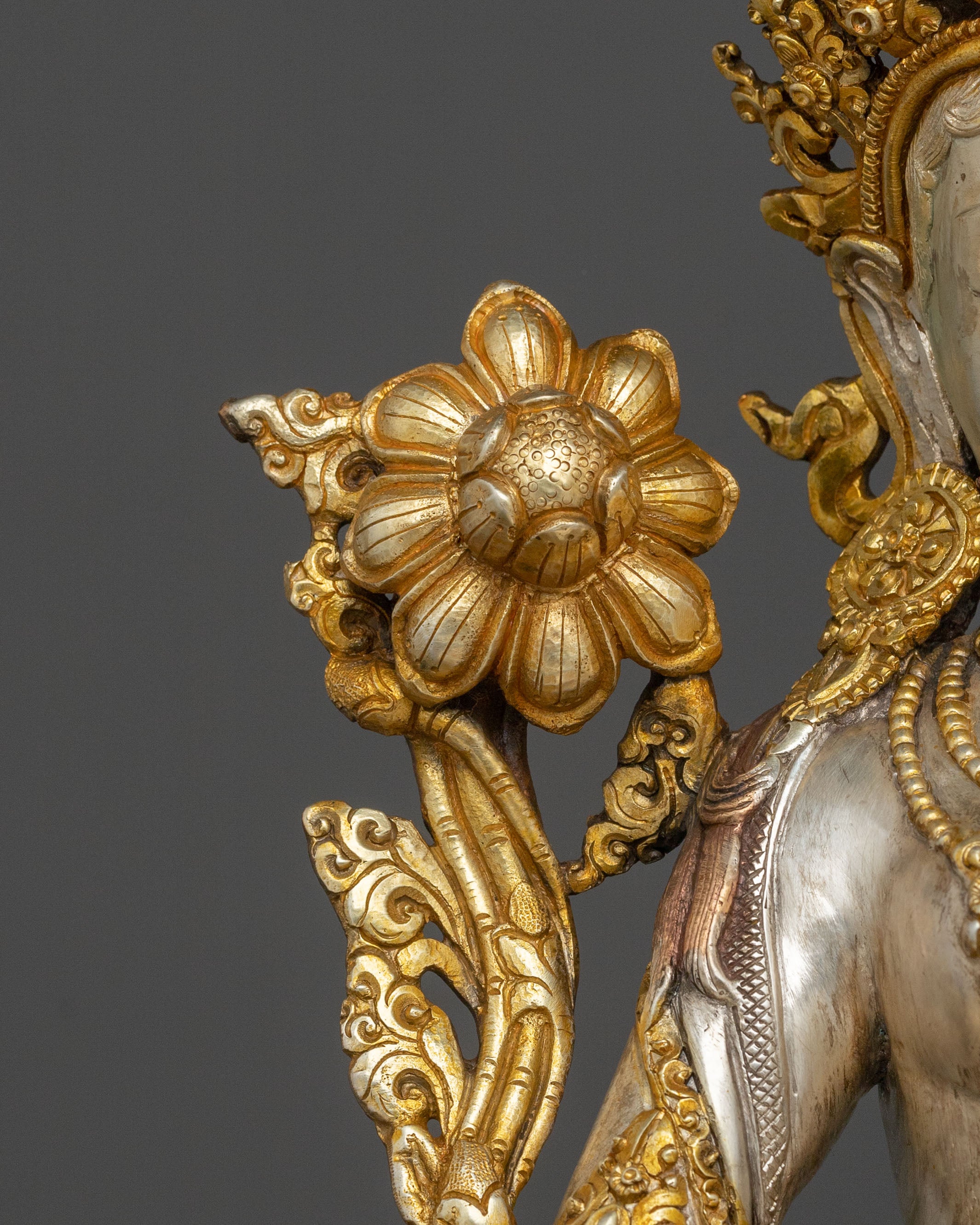
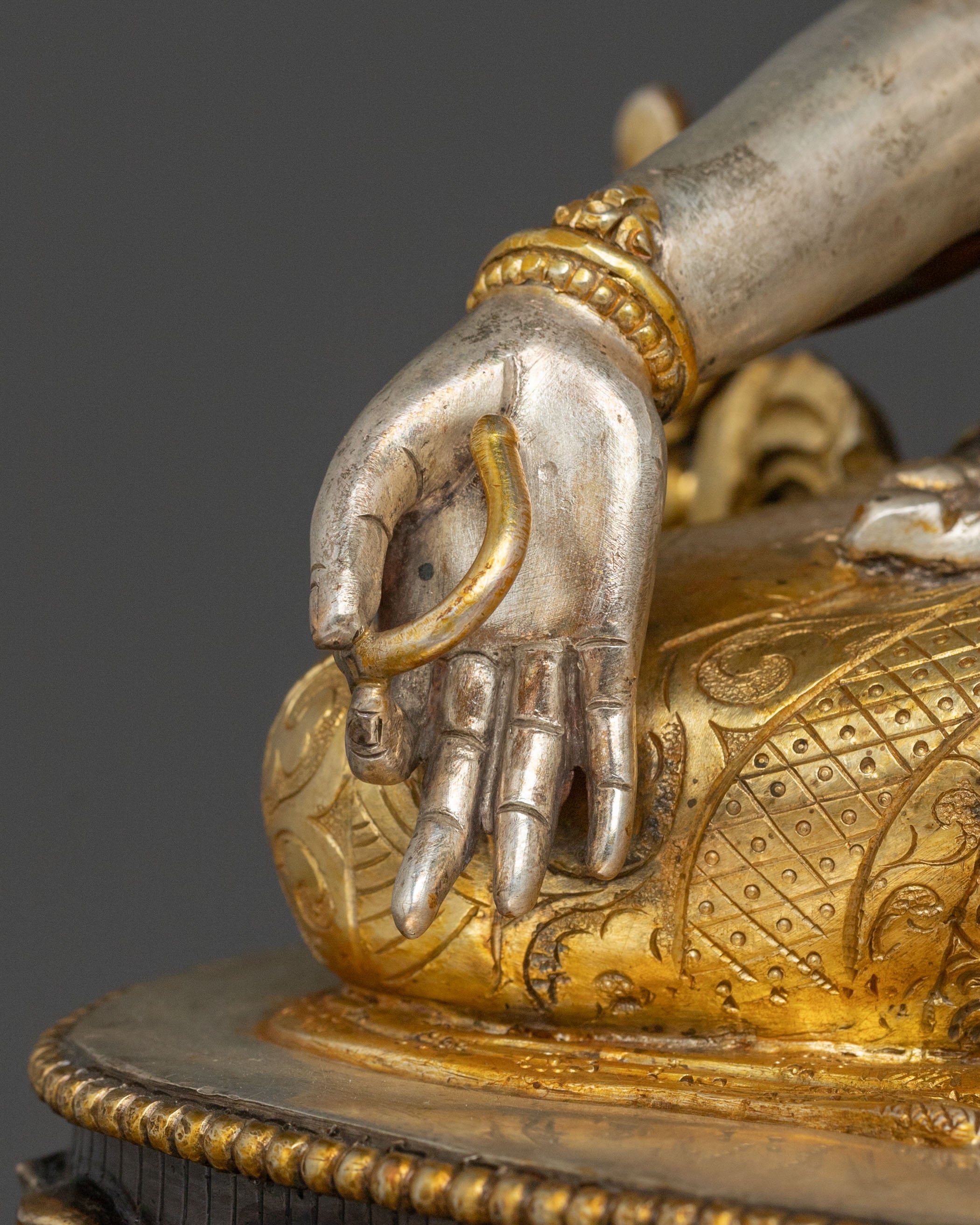
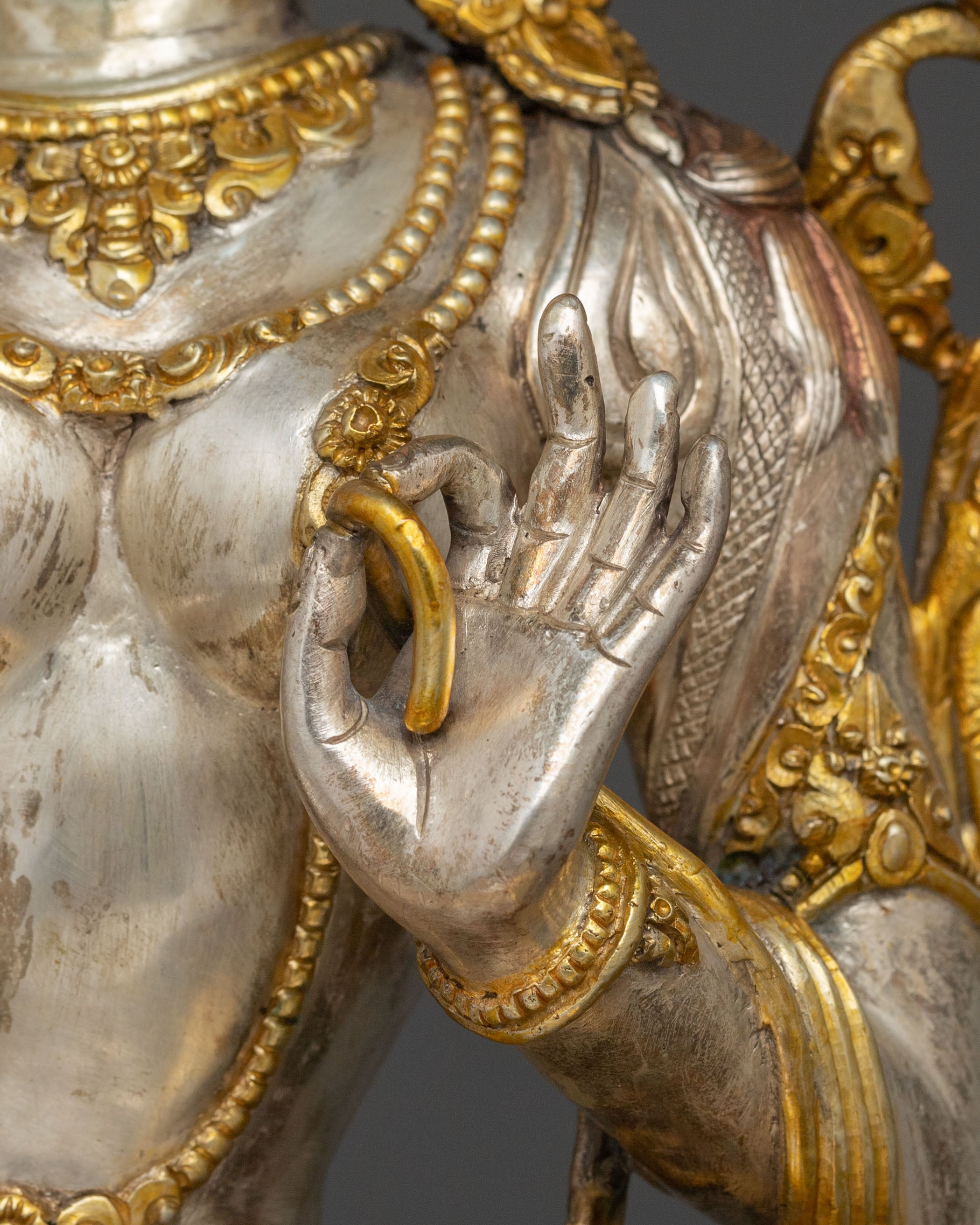
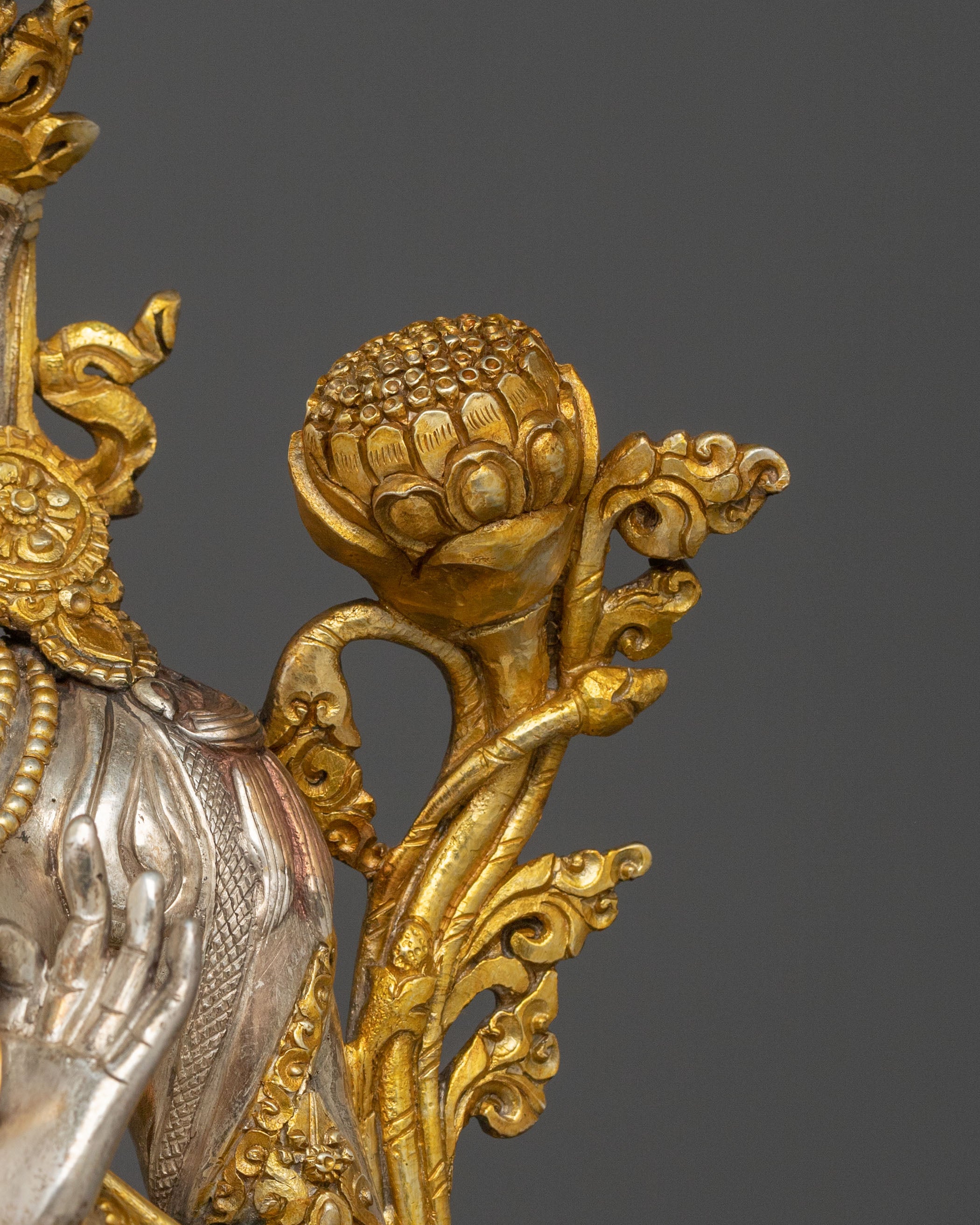
White Tara, a principal female deity in Tibetan Buddhism, embodies compassion, healing, and longevity. She is typically depicted with a serene white body, symbolizing purity and the eradication of defilements, and seven eyes—on her face, palms, and soles—representing her omniscient awareness of suffering across all realms. Seated in vajra posture on a lotus throne, her right hand forms the Varada Mudra, offering blessings and spiritual fulfillment, while her left hand holds a blossoming utpala lotus, signifying purity, healing, and spiritual awakening. Her gentle yet vigilant expression conveys both nurturing compassion and protective energy. This sacred statue serves as a meditation and devotional focus, inspiring practitioners to cultivate inner peace, longevity, mindfulness, and the active alleviation of suffering in daily practice.
Size: 22.4”/57cm (Height) x 15.3”/39cm (Base)
Weight: 8.51 kg
Material: Silver Plating, Oxidized Copper Body, Gold Electro Plating, Acrylic Painting, Copper Body
White Tara, also known as Sita Tara, is a highly revered female Buddha in Tibetan Buddhism, embodying compassion, long life, and healing. Often depicted seated on a lotus throne with seven eyes—on her face, palms, and soles—she symbolizes heightened awareness and the ability to perceive the suffering of all beings. Practitioners invoke her blessings for health, longevity, and protection from obstacles, making her a central figure for meditation, spiritual practice, and sacred devotion.