Coming Soon

Guru Rinpoche Altar Statue | Symbol of Enlightenmen

SKU: GRBU23848

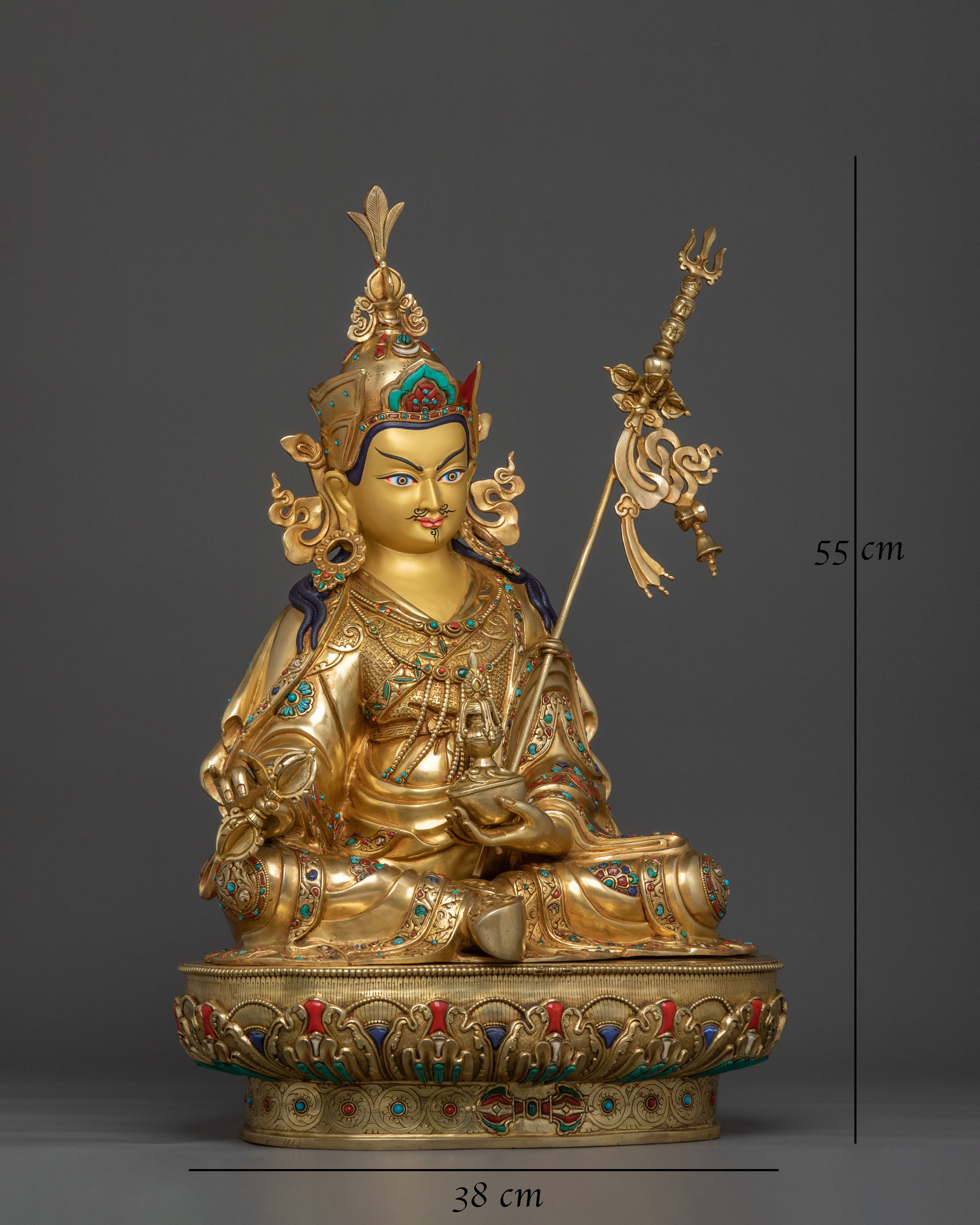
Size: 55cm x 38cm

Compare

Estimated Delivery: Jul 27 – Jul 29, Free Shipping

🕊️ Need Assistance with Your Order?
We are here to help you in any way we can.
📱 WhatsApp us:
+977 980-6393361   +977 981-3655420
Thank you for allowing us to be a part of your Dharma journey.

Description

Guru Rinpoche Altar Statue: A Radiant Symbol of Tantric Wisdom

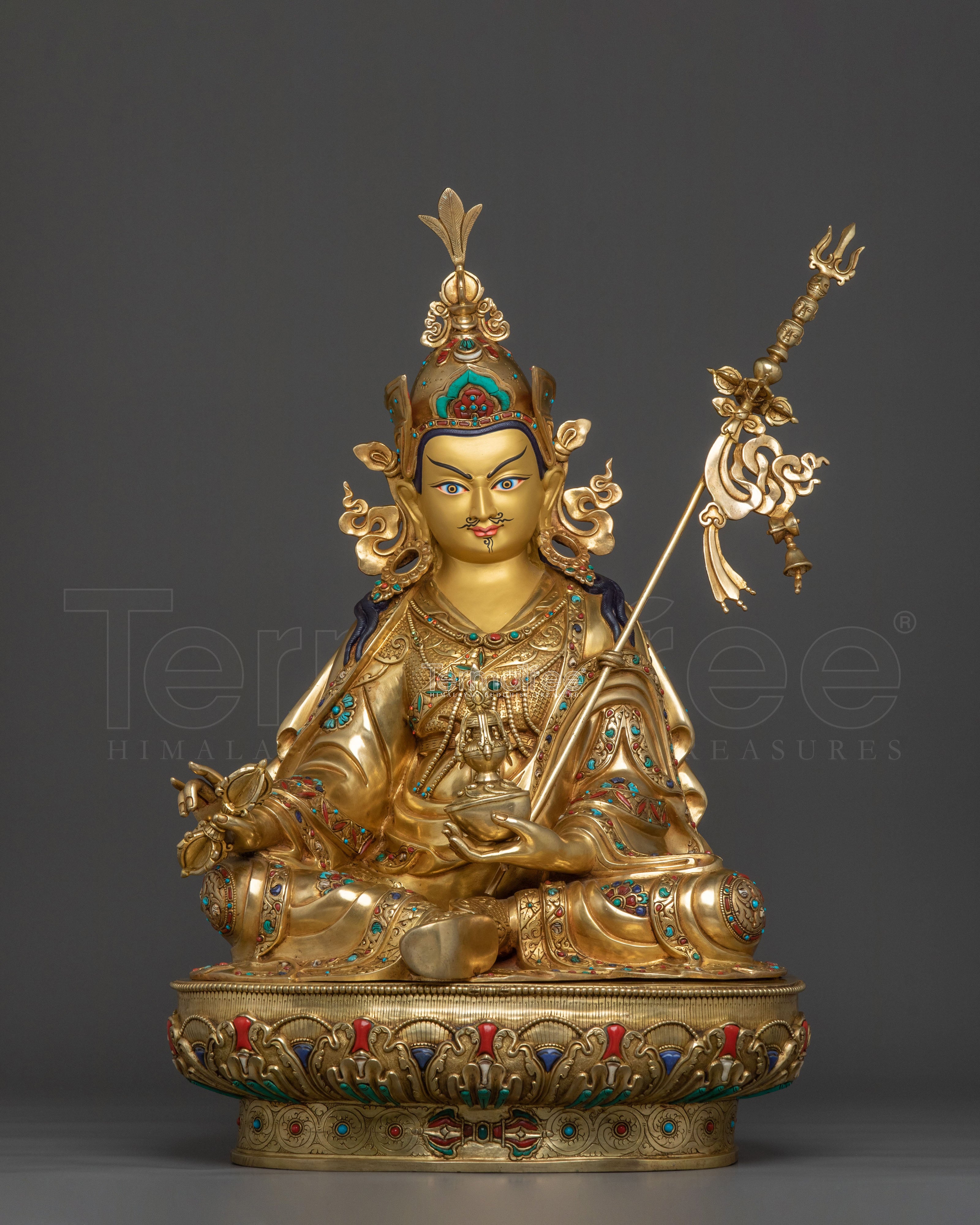
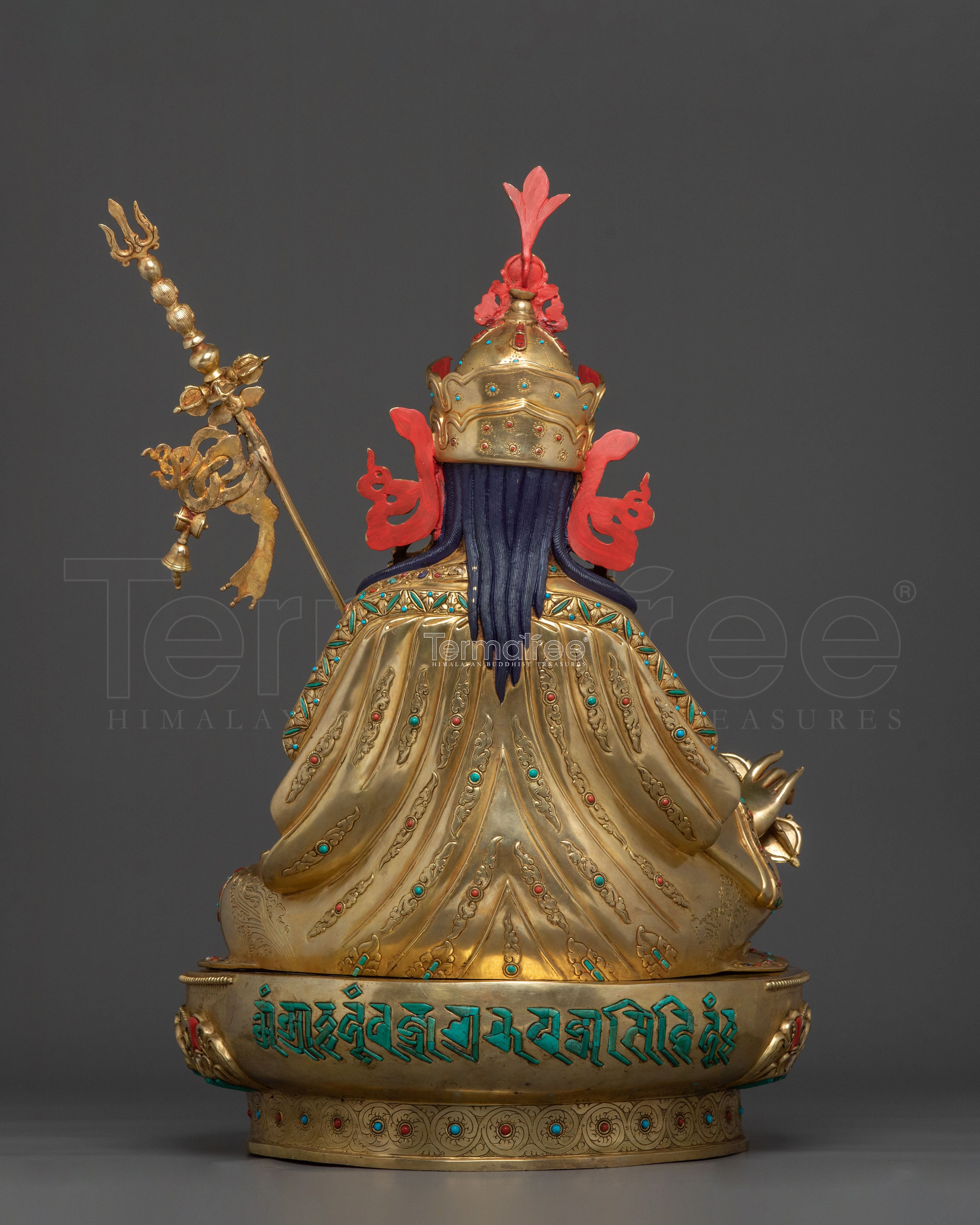
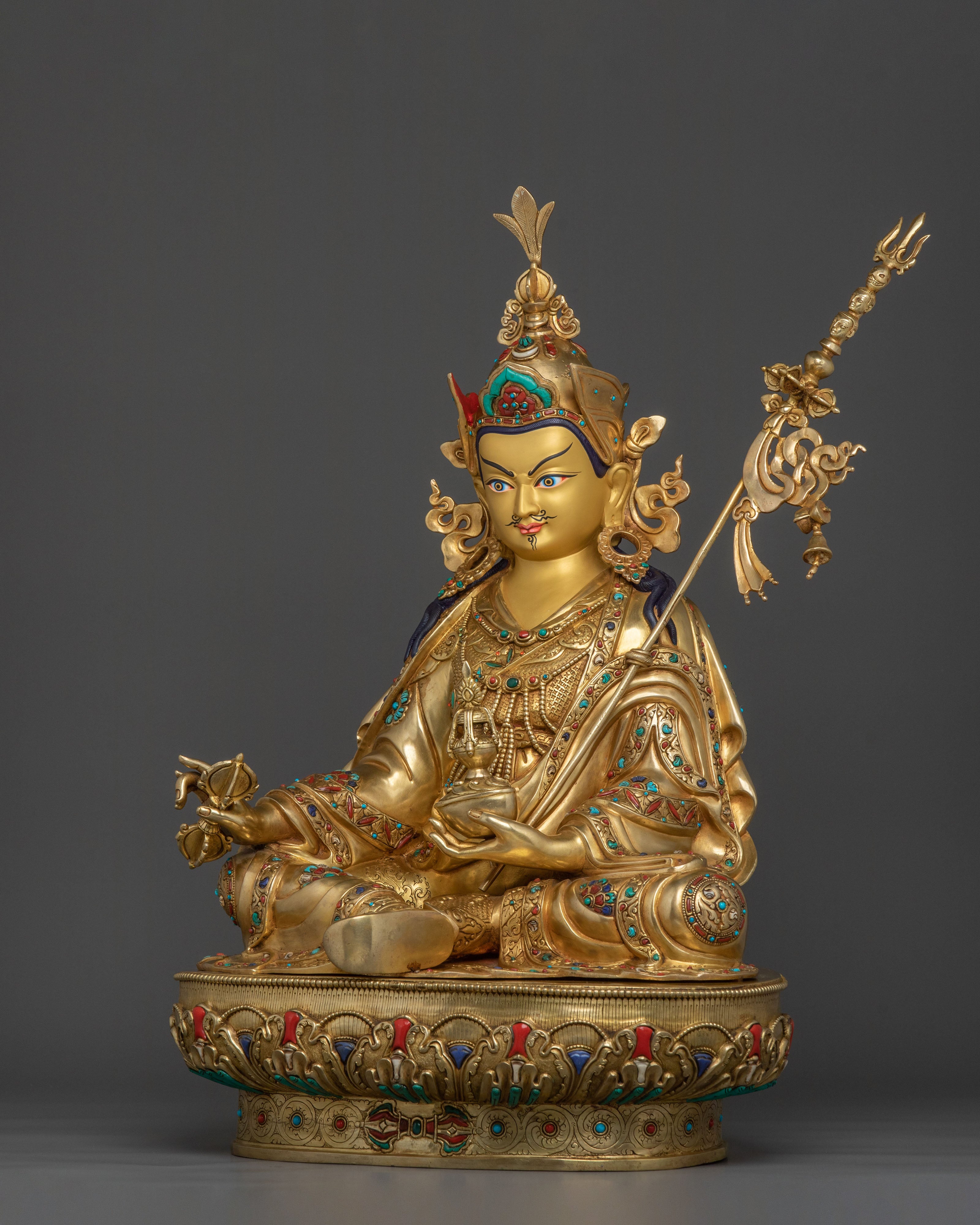
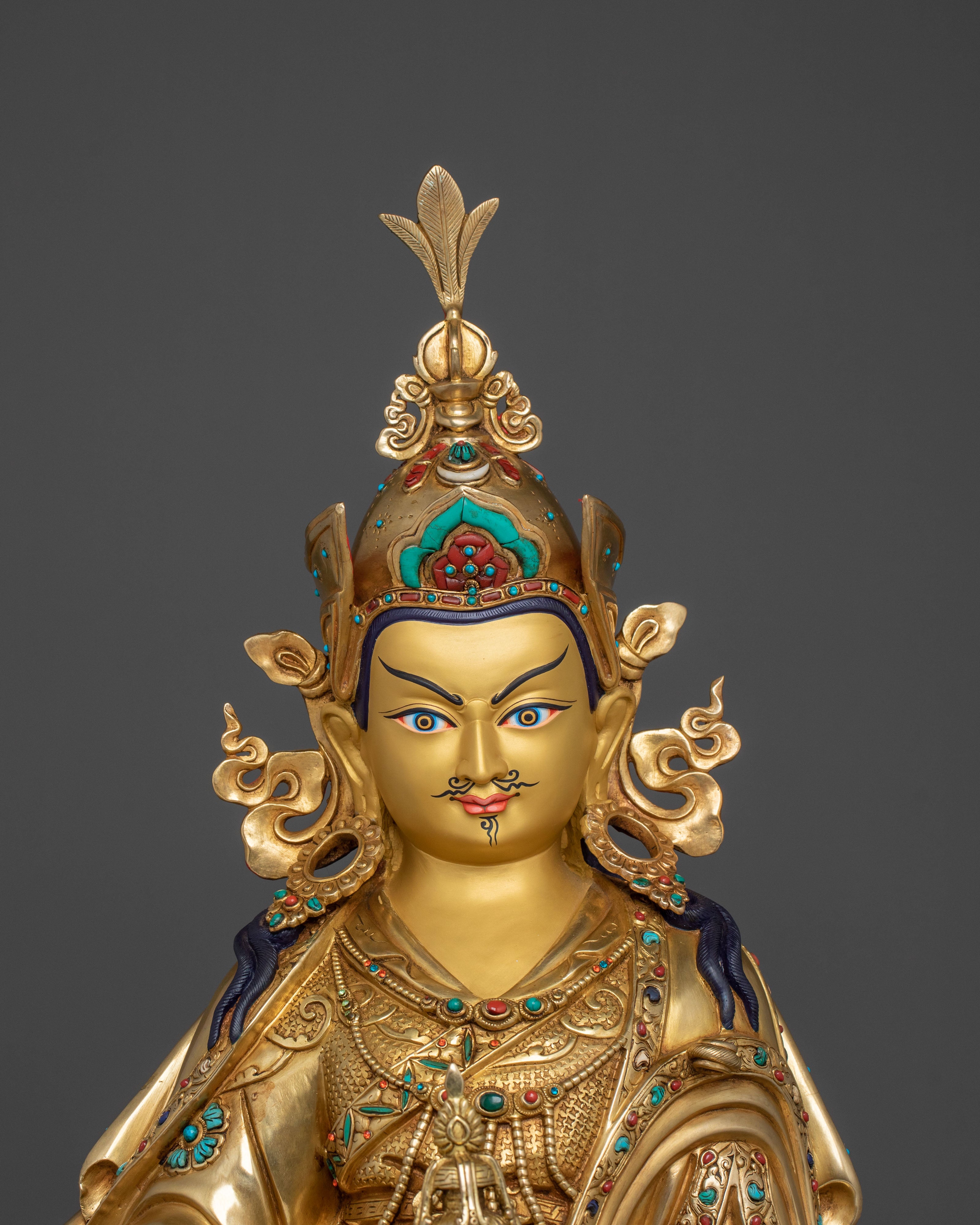
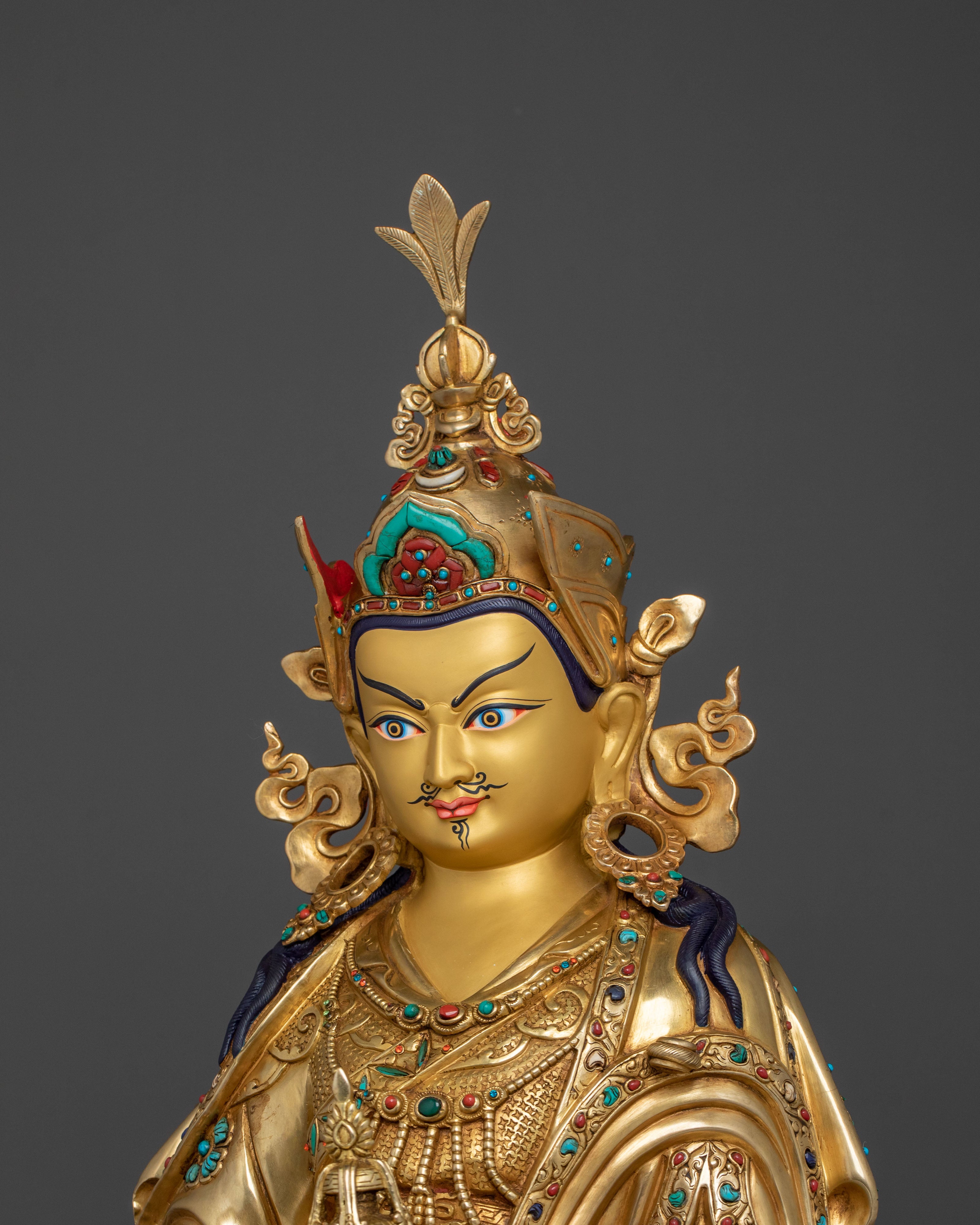
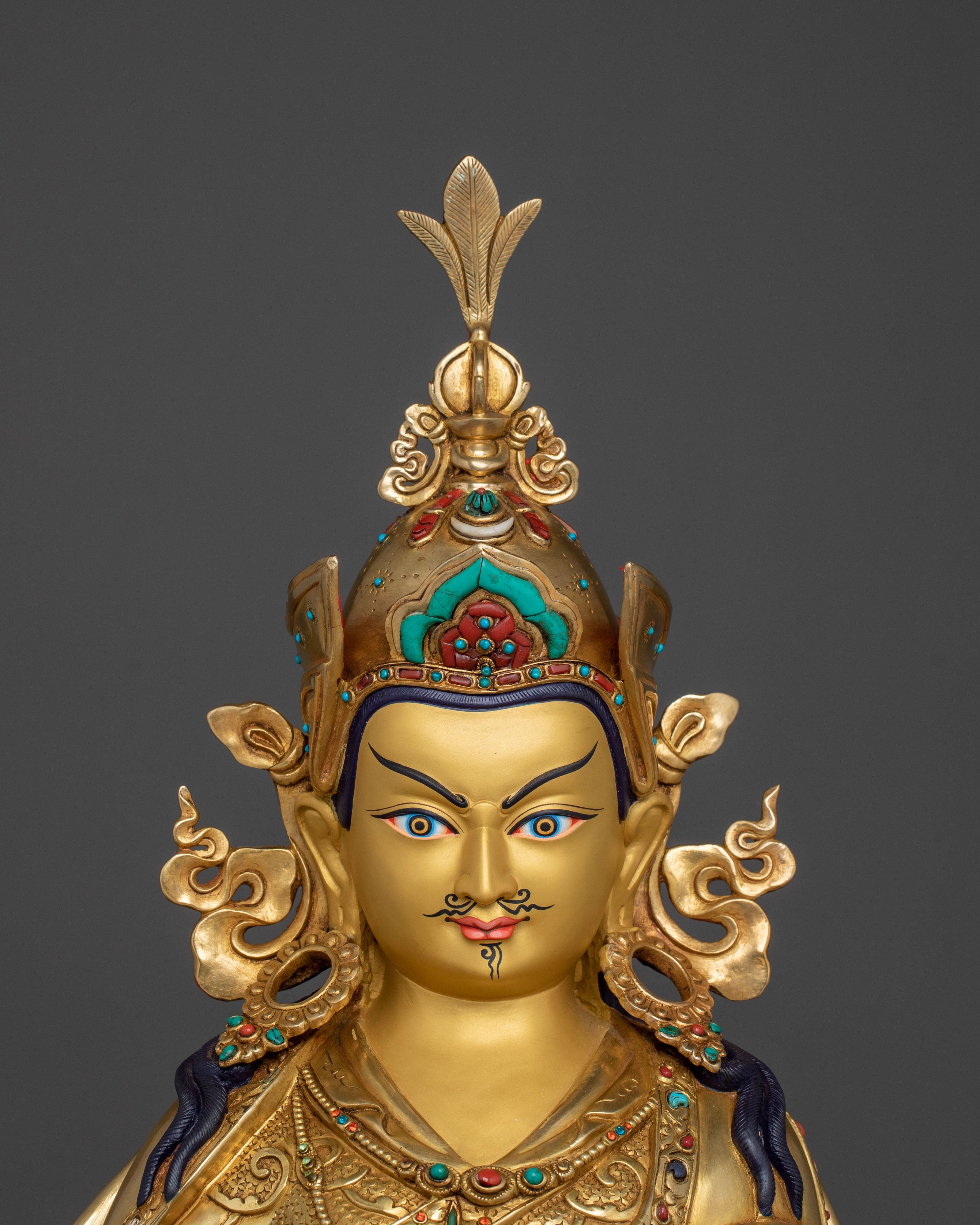
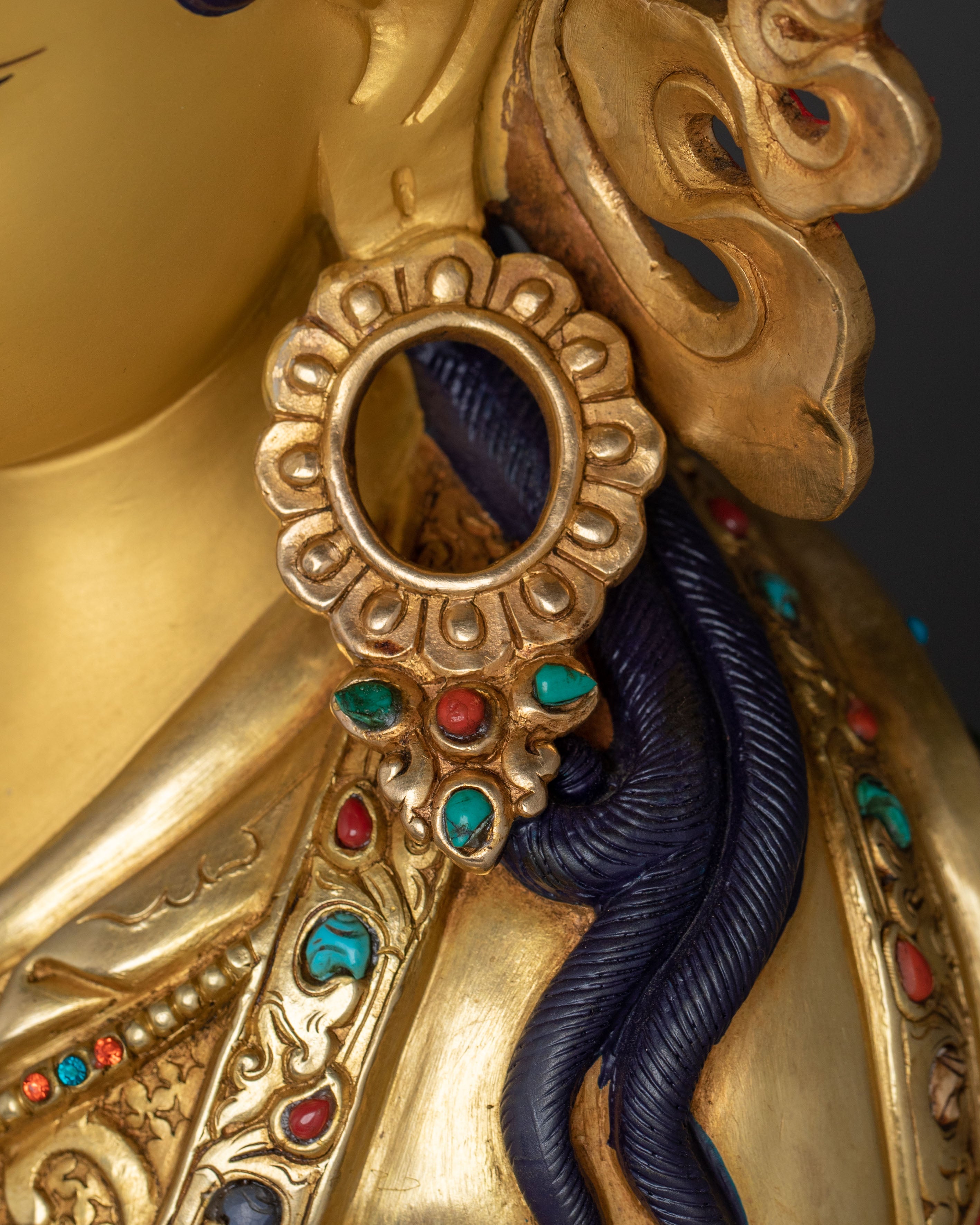
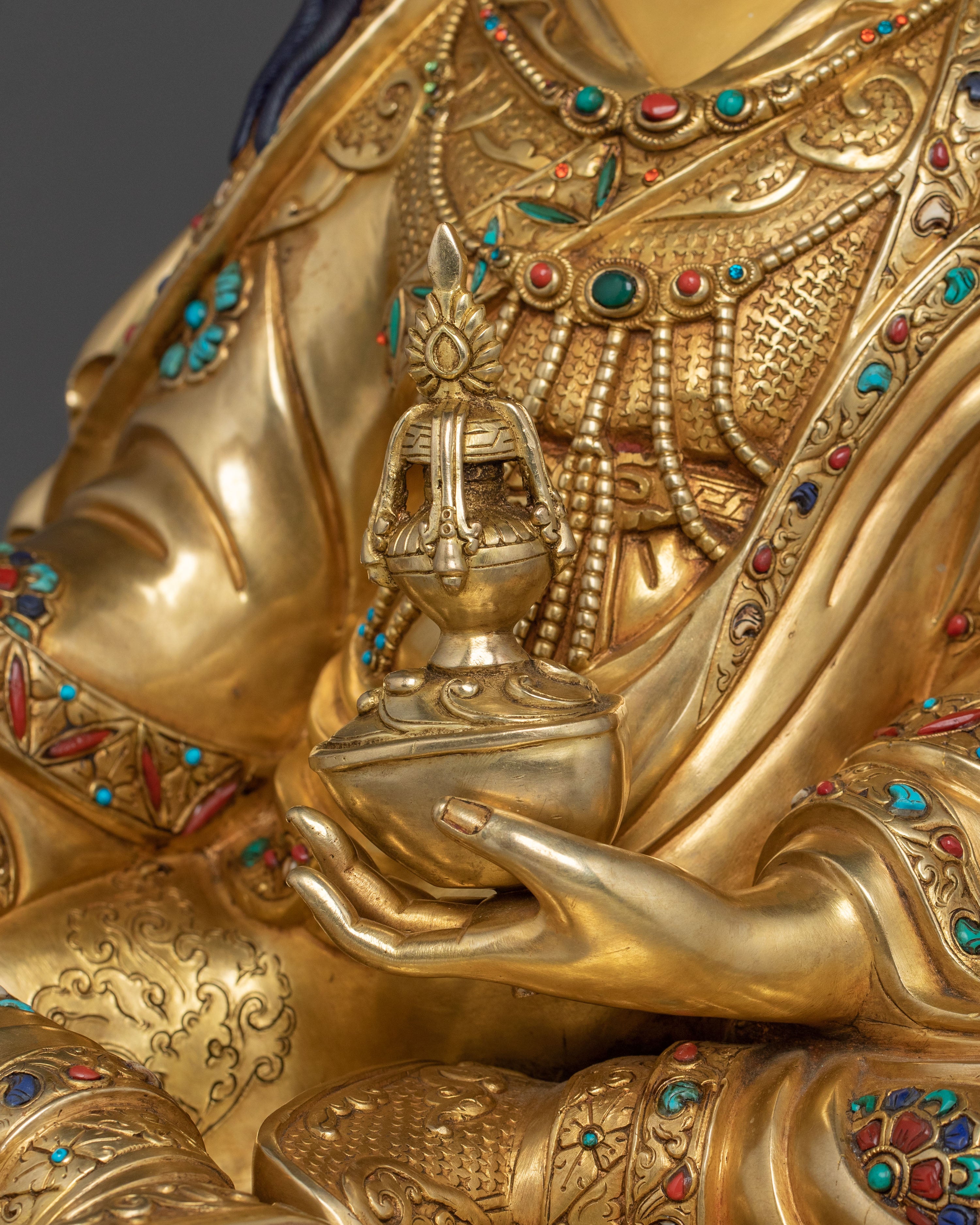
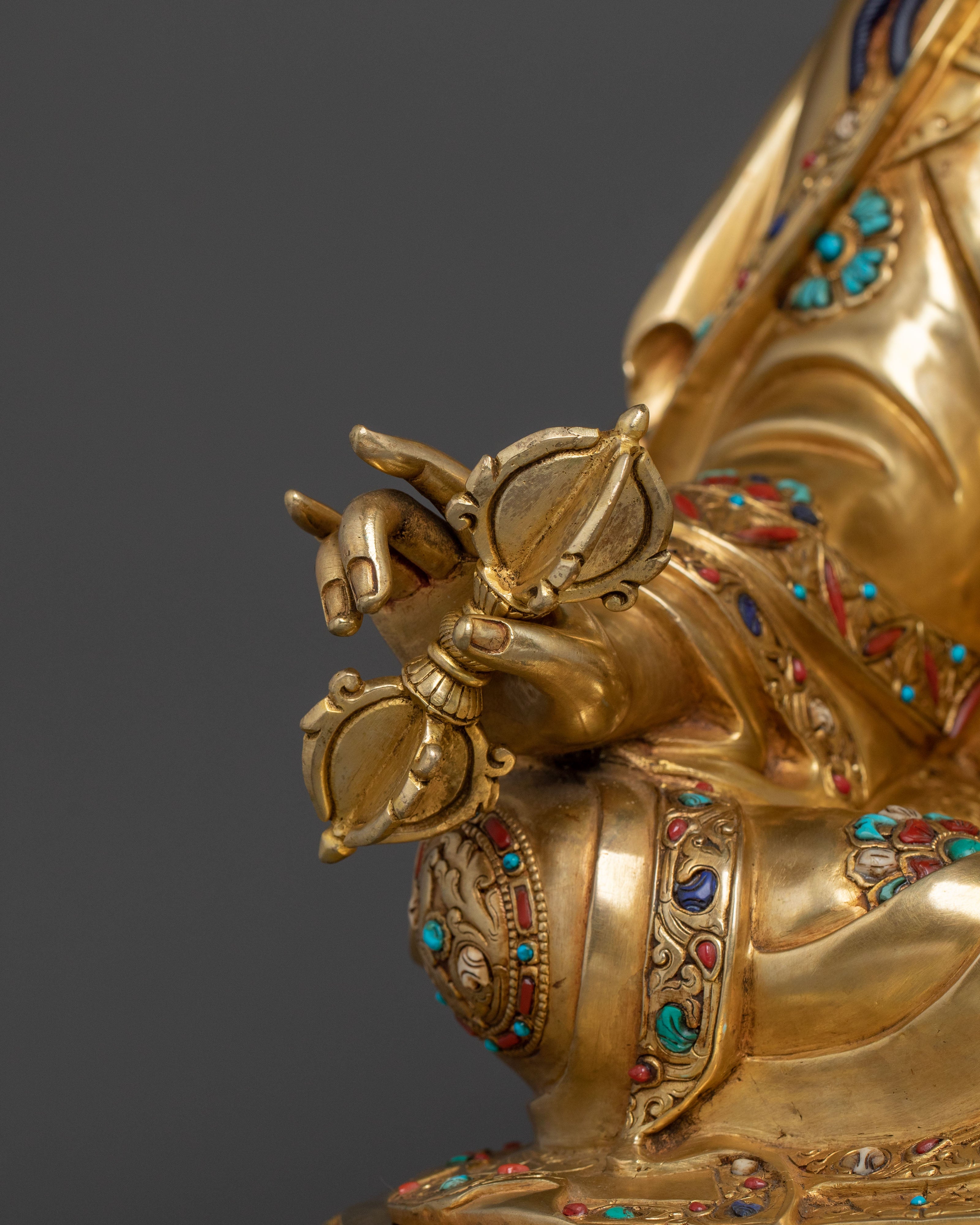
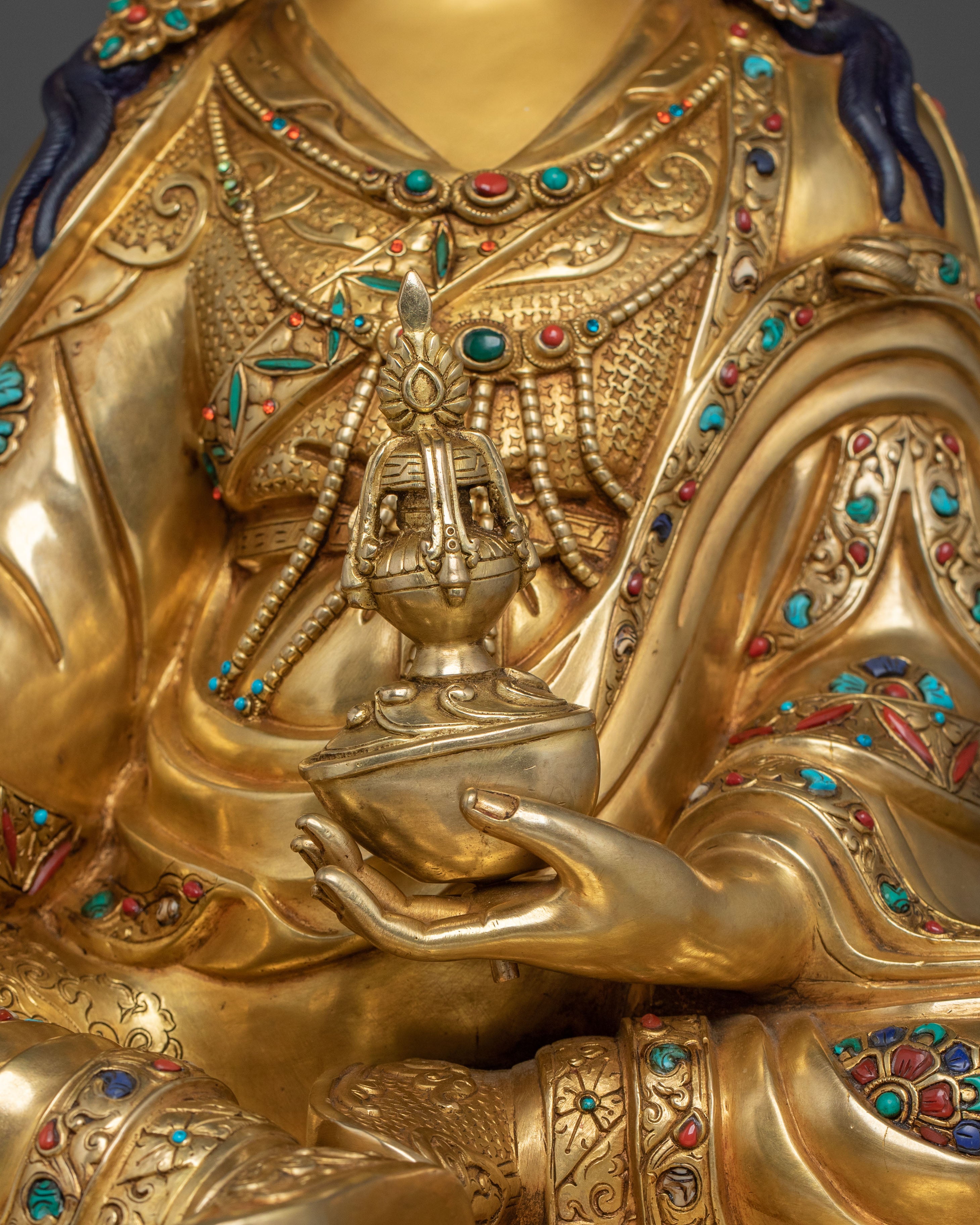
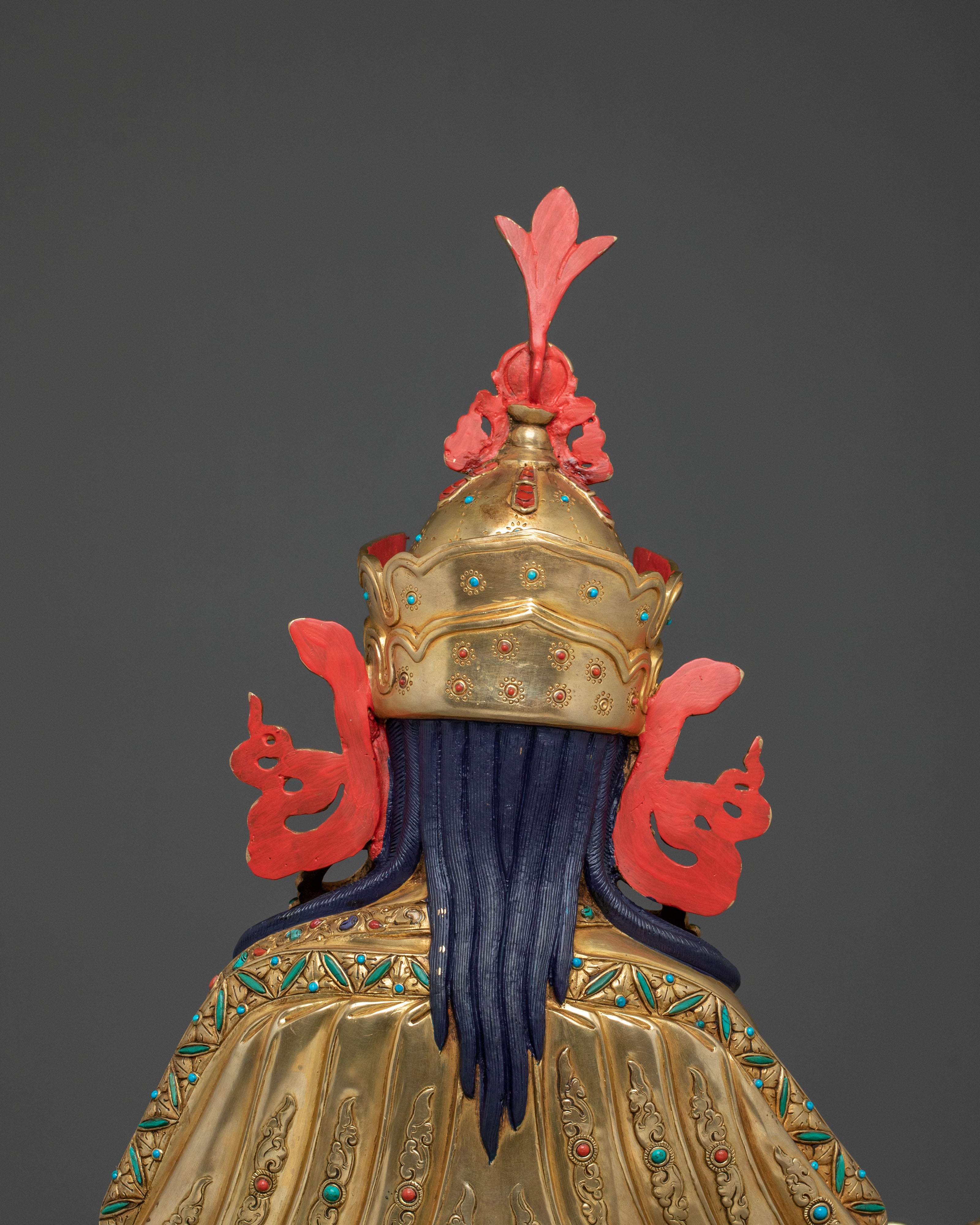
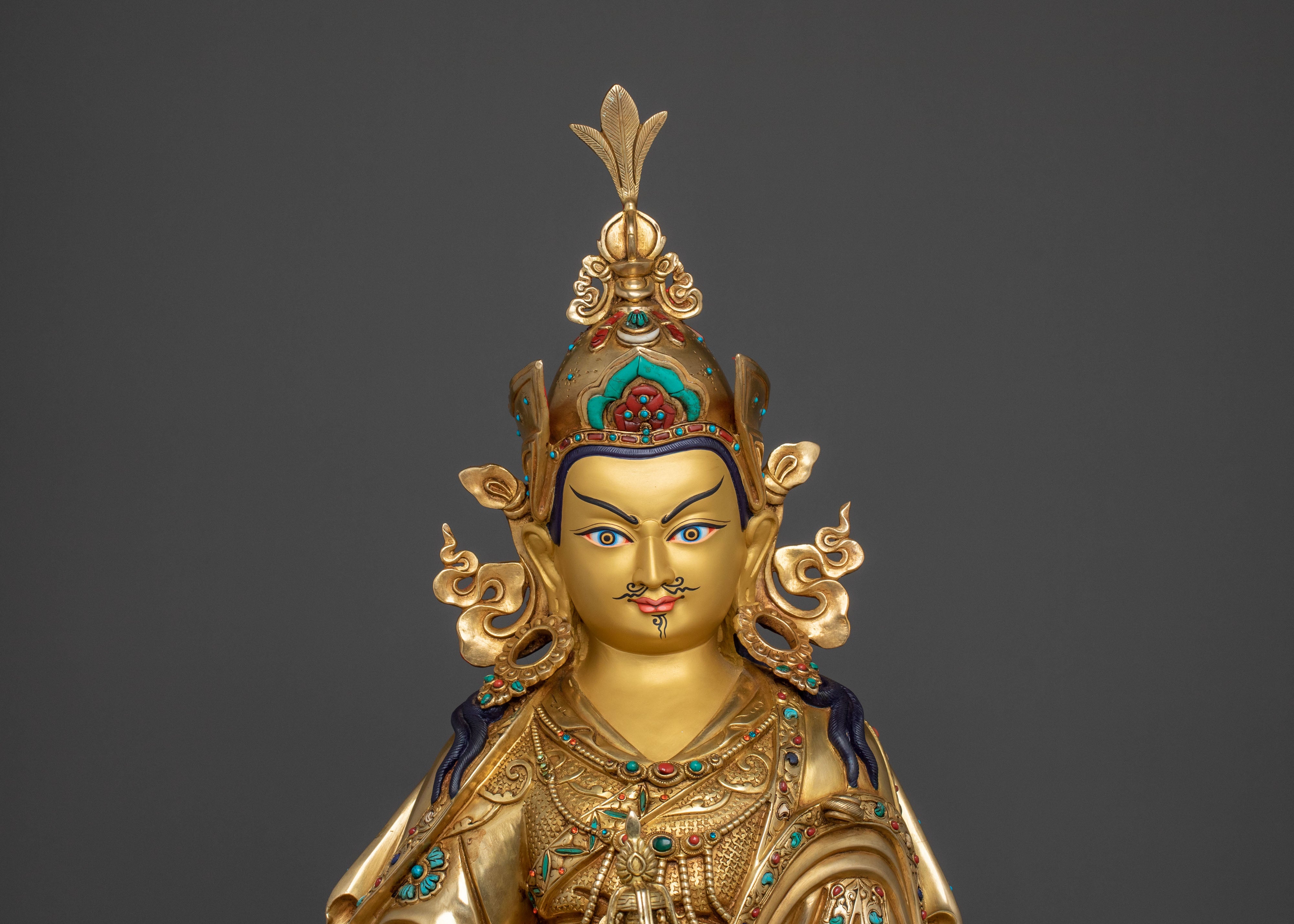
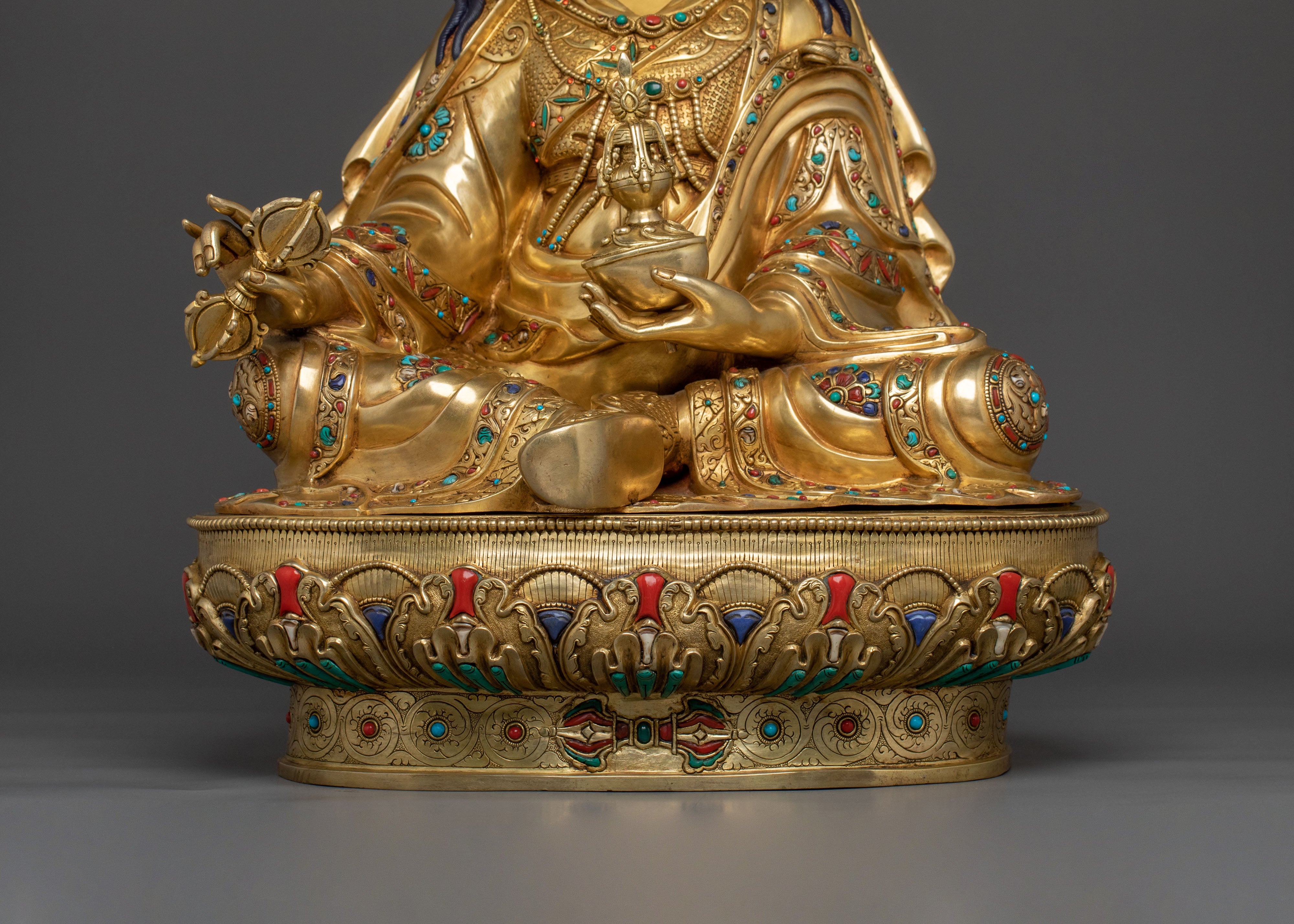
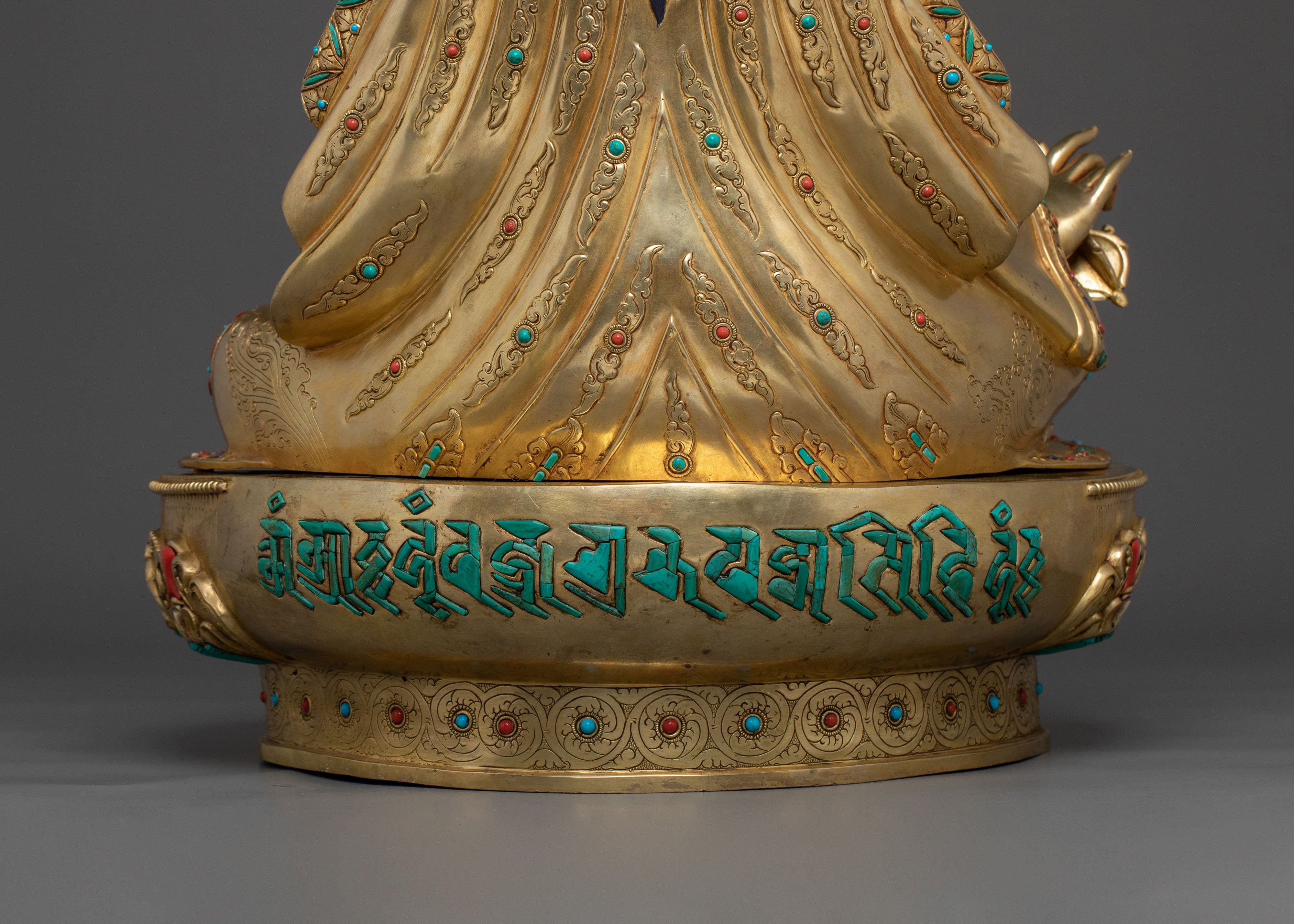
Guru Rinpoche Altar Statue is a finely handcrafted Buddhist sculpture created by skilled Nepali artisans, measuring 21.65 inches (55cm) in height with a 4.99 inches (12.68cm) base and weighing 12.68 kg. Crafted from a copper body and richly adorned with 24K gold gilding, detailed acrylic painting, and gemstones, this statue reflects the exceptional artistry and traditional techniques of Himalayan metalwork. Its majestic design, radiant finish, and intricate details make it suitable for large Buddhist altars, meditation spaces, or sacred collections.

The sculpture depicts Guru Rinpoche, also known as Padmasambhava, the revered master who brought Vajrayana Buddhism to Tibet, seated gracefully upon a lotus pedestal in a traditional meditative posture. He holds a vajra in his right hand and a ritual kapala in his left hand, symbolizing enlightened activity and mastery over negative forces. The figure features a serene yet commanding facial expression, elaborate crown, detailed jewelry, and intricately carved robes. The gemstones, 24K gold gilding, and acrylic painting enhance the sacred ornaments, lotus base, and ritual implements, highlighting the precision and devotion of Himalayan artisans.

Size: 21.65”/55cm (Height) x 4.99”/12.68cm (Base)
Weight: 12.68 kg
Material: 24K Gold Gilded, Acrylic Painting, Copper Body, Gemstones

Guru Rinpoche, or Padmasambhava, is revered as the "Second Buddha" by followers of Tibetan Buddhism. He is credited with bringing Vajrayana Buddhism to Tibet in the 8th century, establishing the first monastery there, Samye. Often depicted holding a vajra in his right hand and a skull cup in his left, he symbolizes the complete realization of the Dharma and the ability to tame negative forces. His teachings and practice continue to be central to the Nyingma school and other traditions.

You may also like

Recently viewed