

Description
Statue of Guru Rinpoche Art, Enlightened Vajra Holder | The Lotus-Born Master
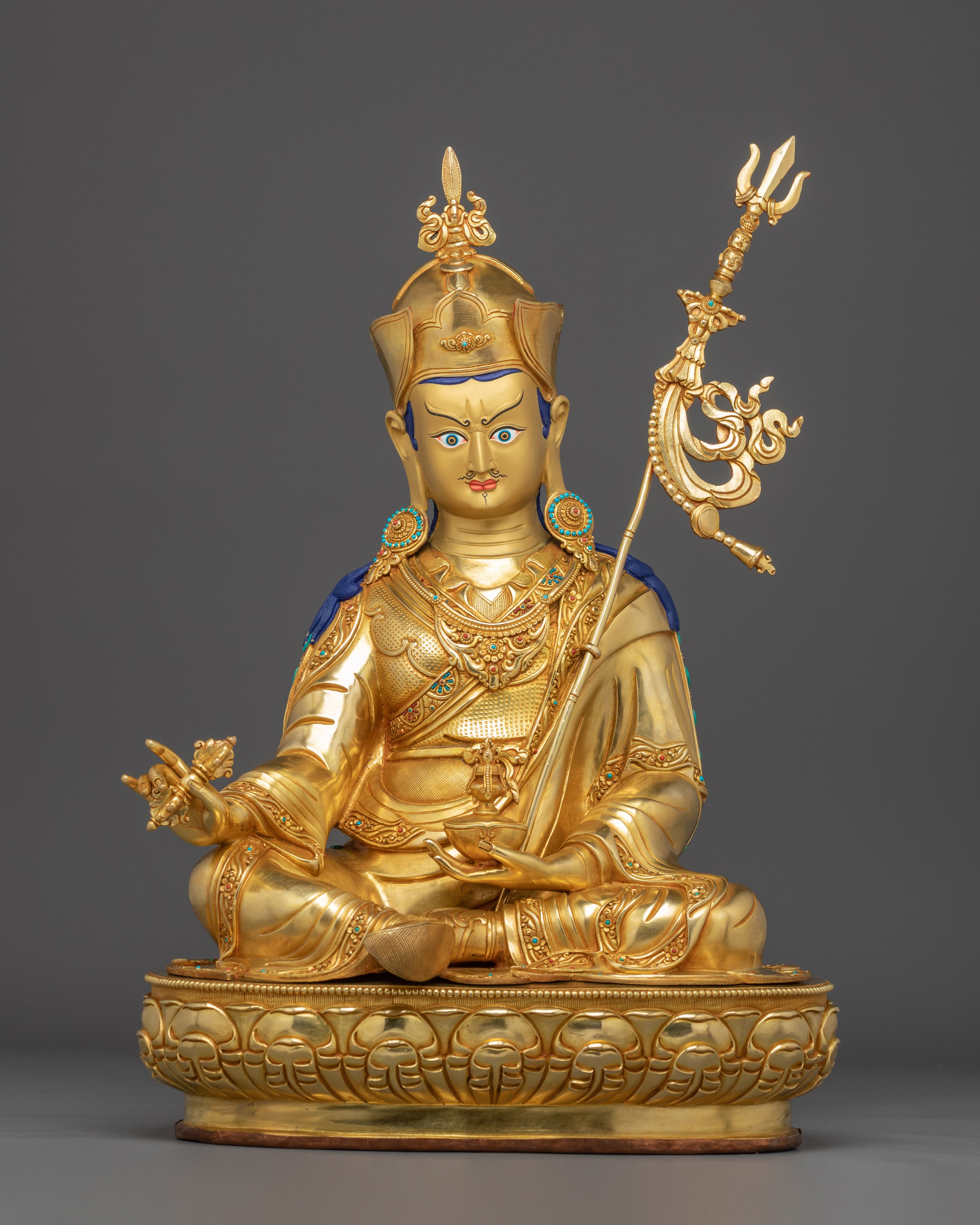
Guru Rinpoche Art, Enlightened Vajra Holder, stands at 50.5 cm (19.9 inches) tall with a 36 cm (14.2 inches) wide base and weighs 10.11 kg. Expertly handcrafted from a copper body, it is beautifully gilded with 24K gold and detailed with acrylic paintings, showcasing refined craftsmanship in a petite form. Perfect for small altars, meditation corners, or as a spiritual gift, this piece blends traditional Himalayan artistry with timeless spiritual presence.
Guru Rinpoche is represented sitting in a royal posture, presenting confidence and spiritual mastery. His right hand holds a vajra, which represents indestructible power, while his left hand holds a skull cup (kapala) filled with the nectar of wisdom. The khatvanga, a trident ornamented with symbolic components reflecting his tantric attainment and the union of wisdom and compassion, rests on his left shoulder.
Size: 19.9”/50.5cm (Height) × 14.2”/36cm (Width)
Weight: 10.11kg
Material: 24K Gold Gilded, Gold & Acrylic Paintings, Copper Body, Gemstones
In Tibetan Buddhism, Guru Rinpoche, also known as Padmasambhava, is a highly revered figure frequently referred to as the "Second Buddha" due to his pivotal role in introducing Buddhism to Tibet. Samye Monastery, the first Buddhist monastery in Tibet, was built because it is credited with driving out local spirits and impediments. The core teachings of Tibetan Buddhism are those of Guru Rinpoche, who brought Vajrayana (Tantric) Buddhism to Tibet and blended it with the native Bon tradition. He is revered for his mastery of spiritual practices and his significant influence on the development of Tibetan Buddhism. His legacy comprises a multitude of teachings and books.