Guru Rinpoche Buddhist Statue | Embodiment of Wisdom
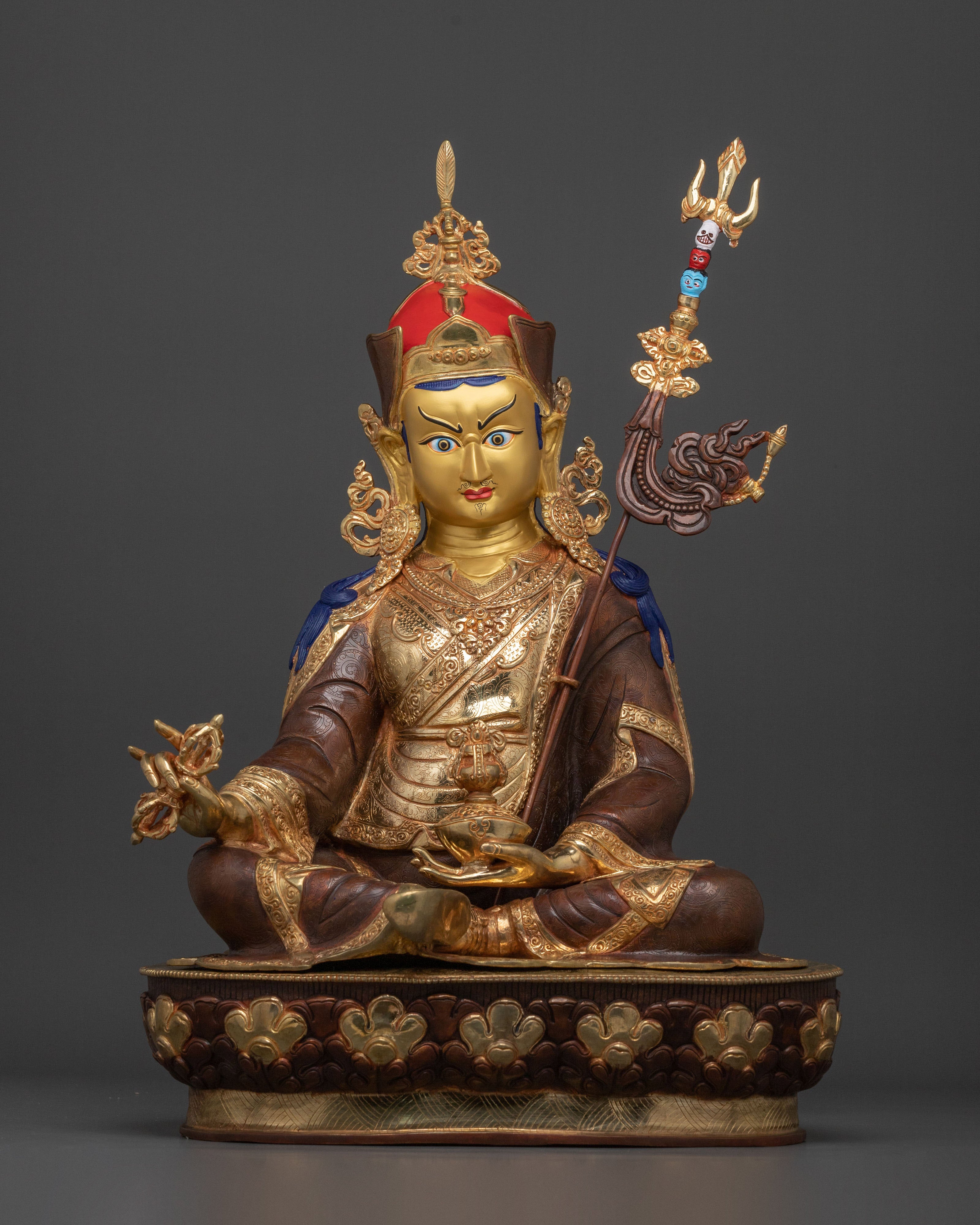
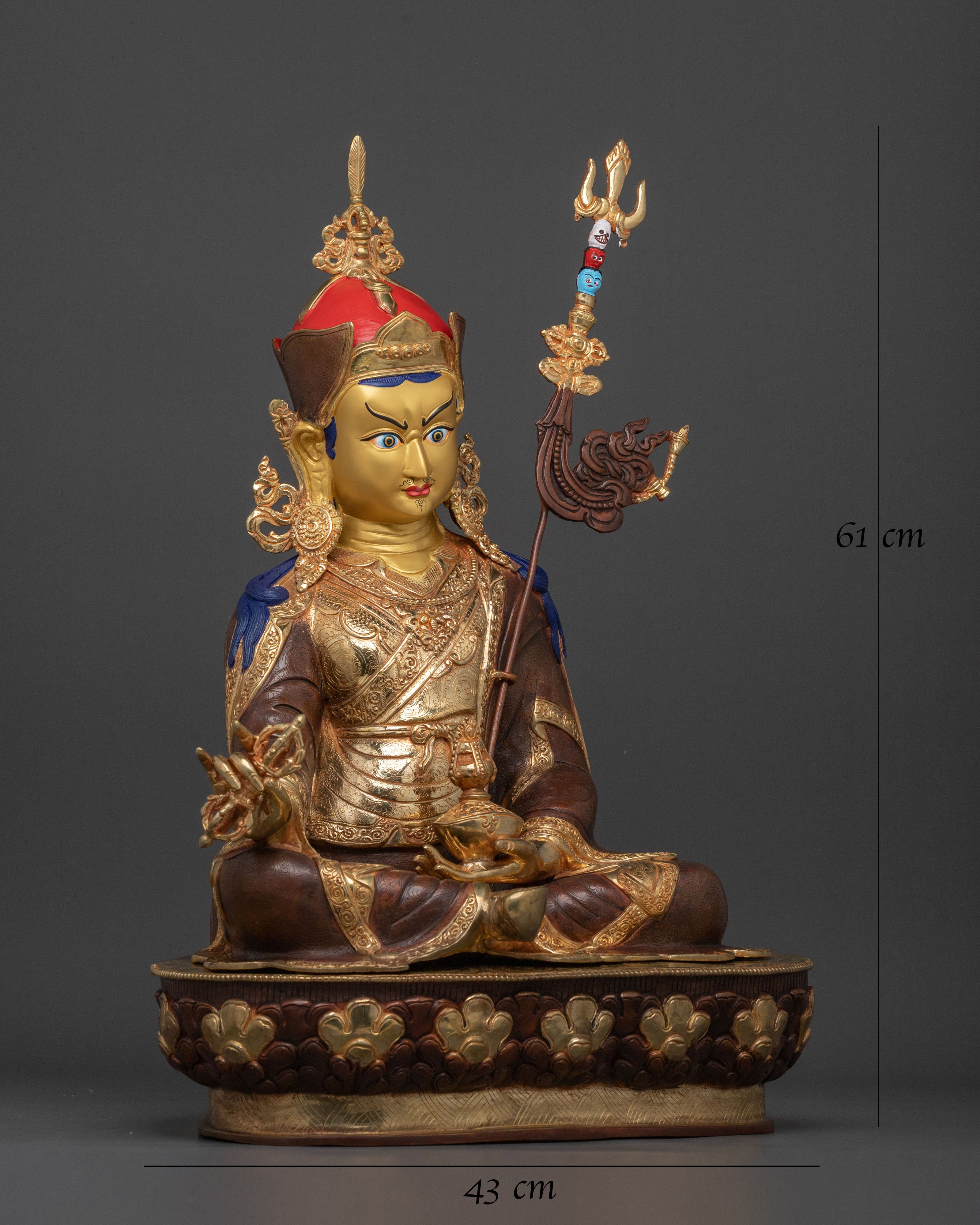
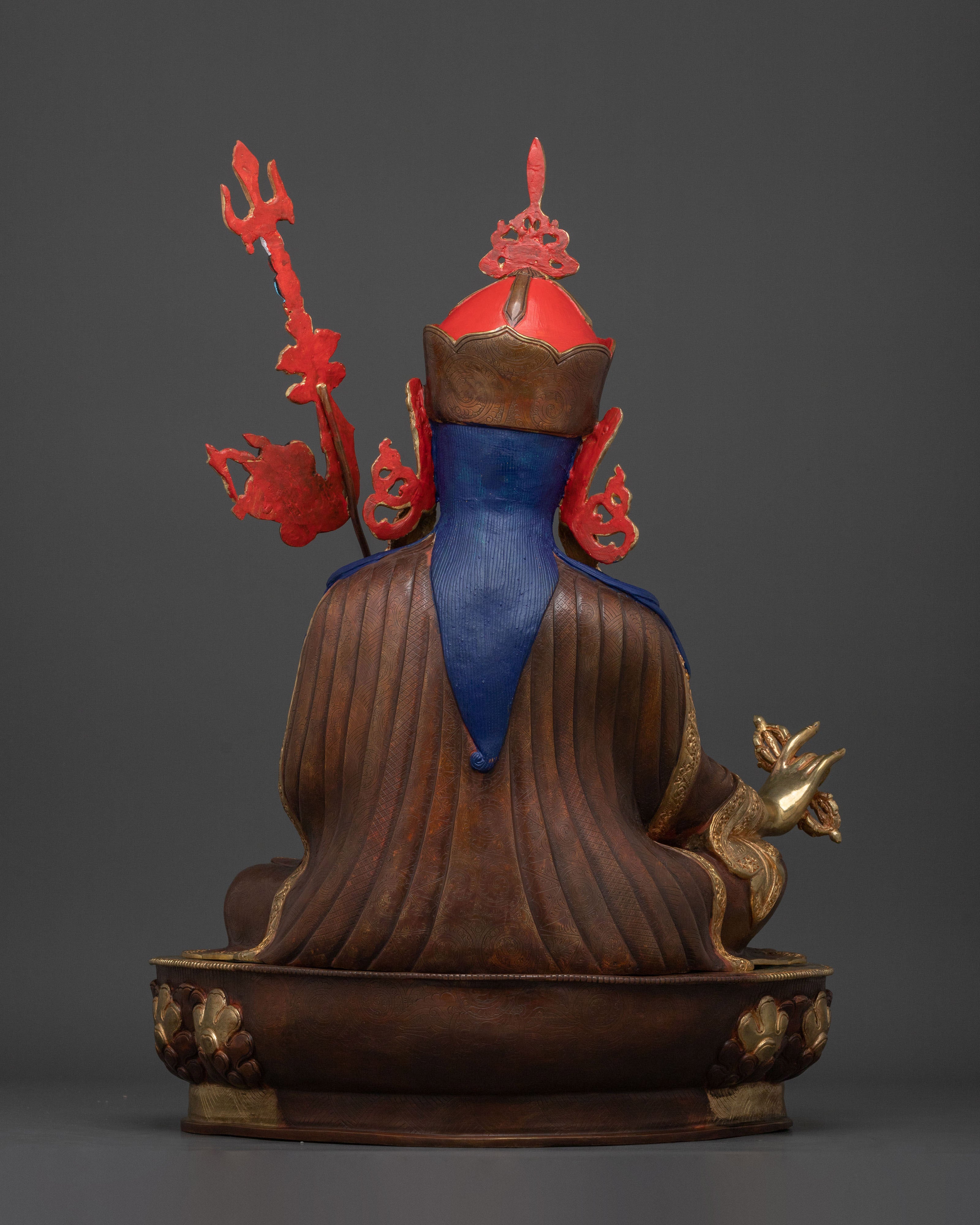
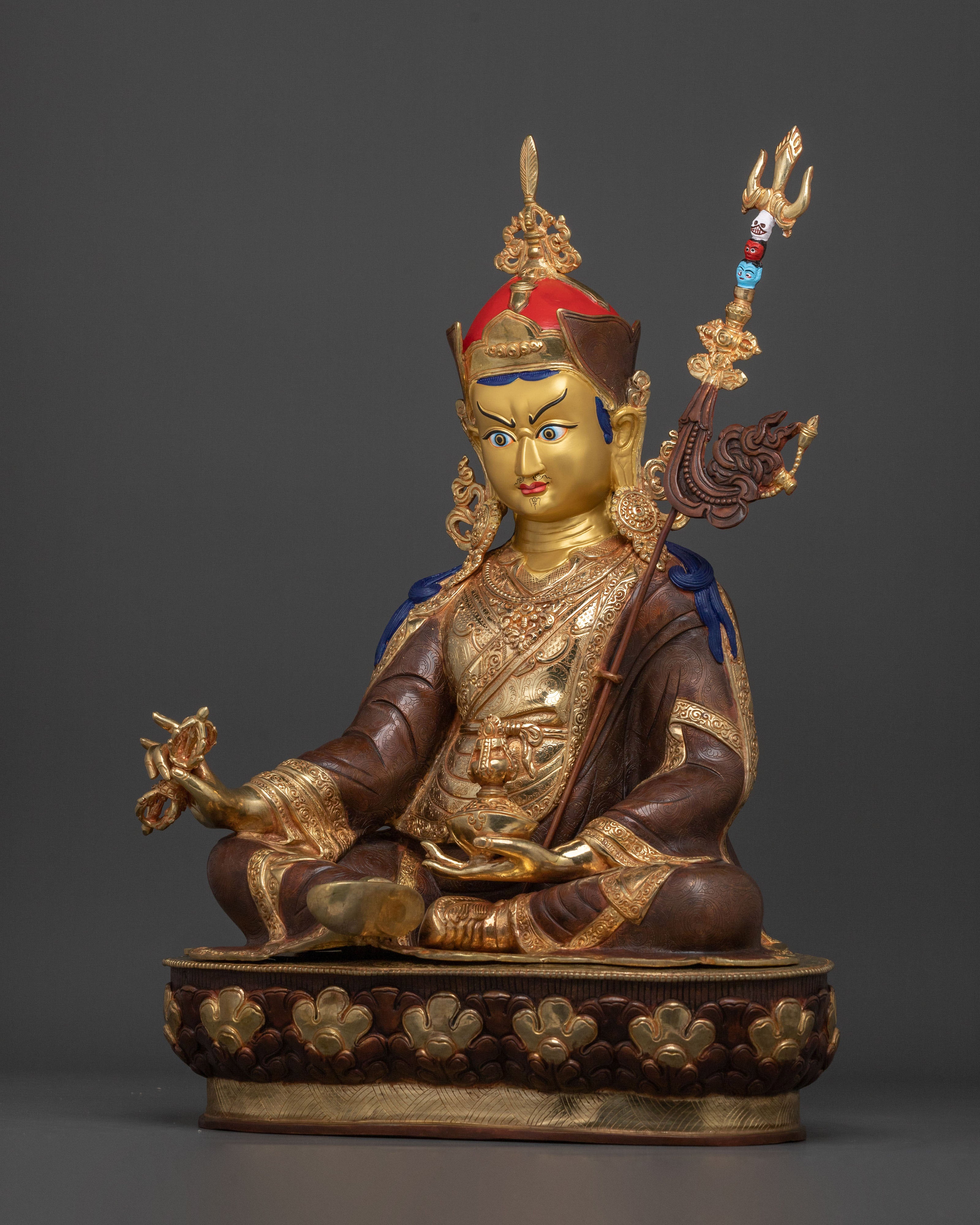
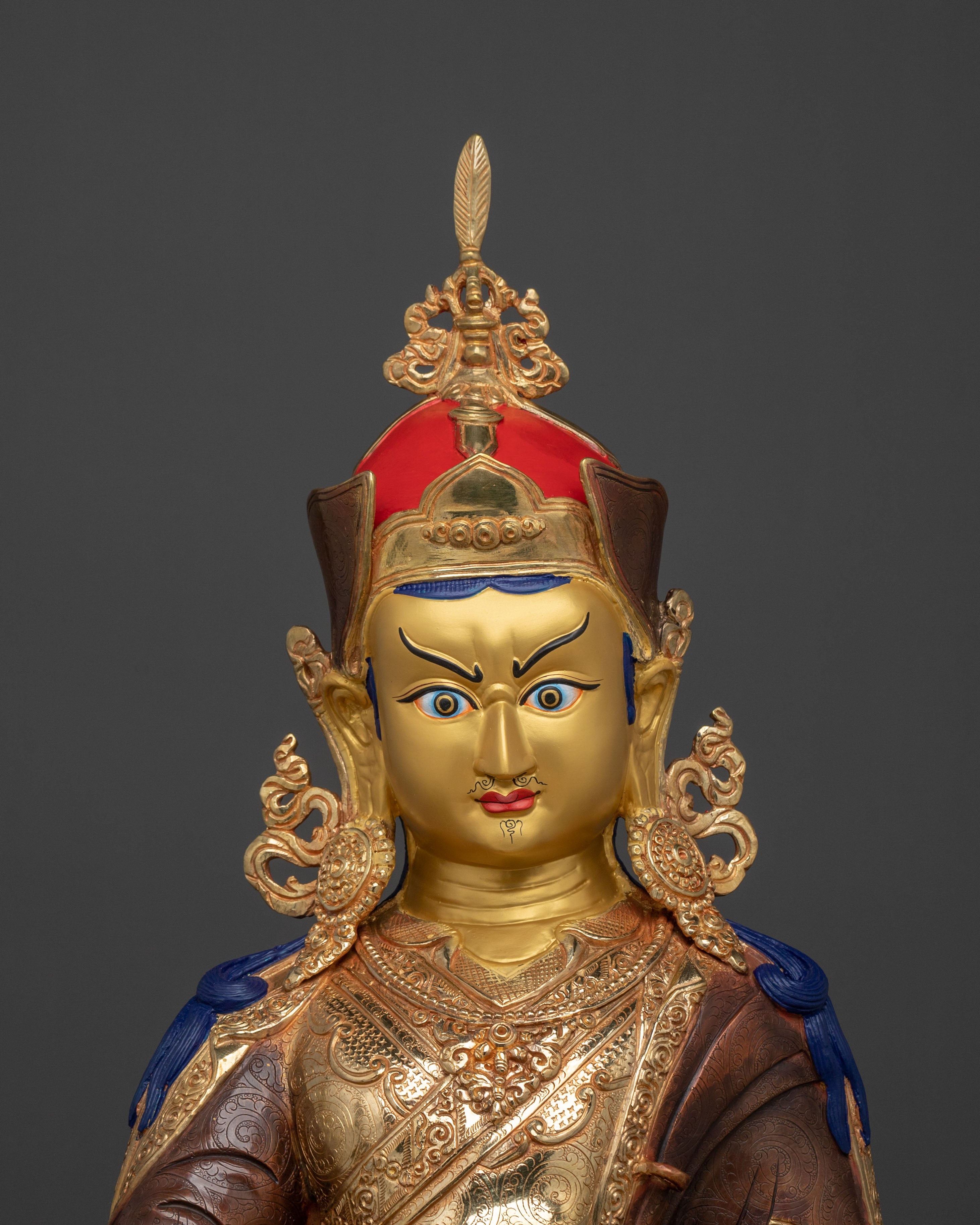
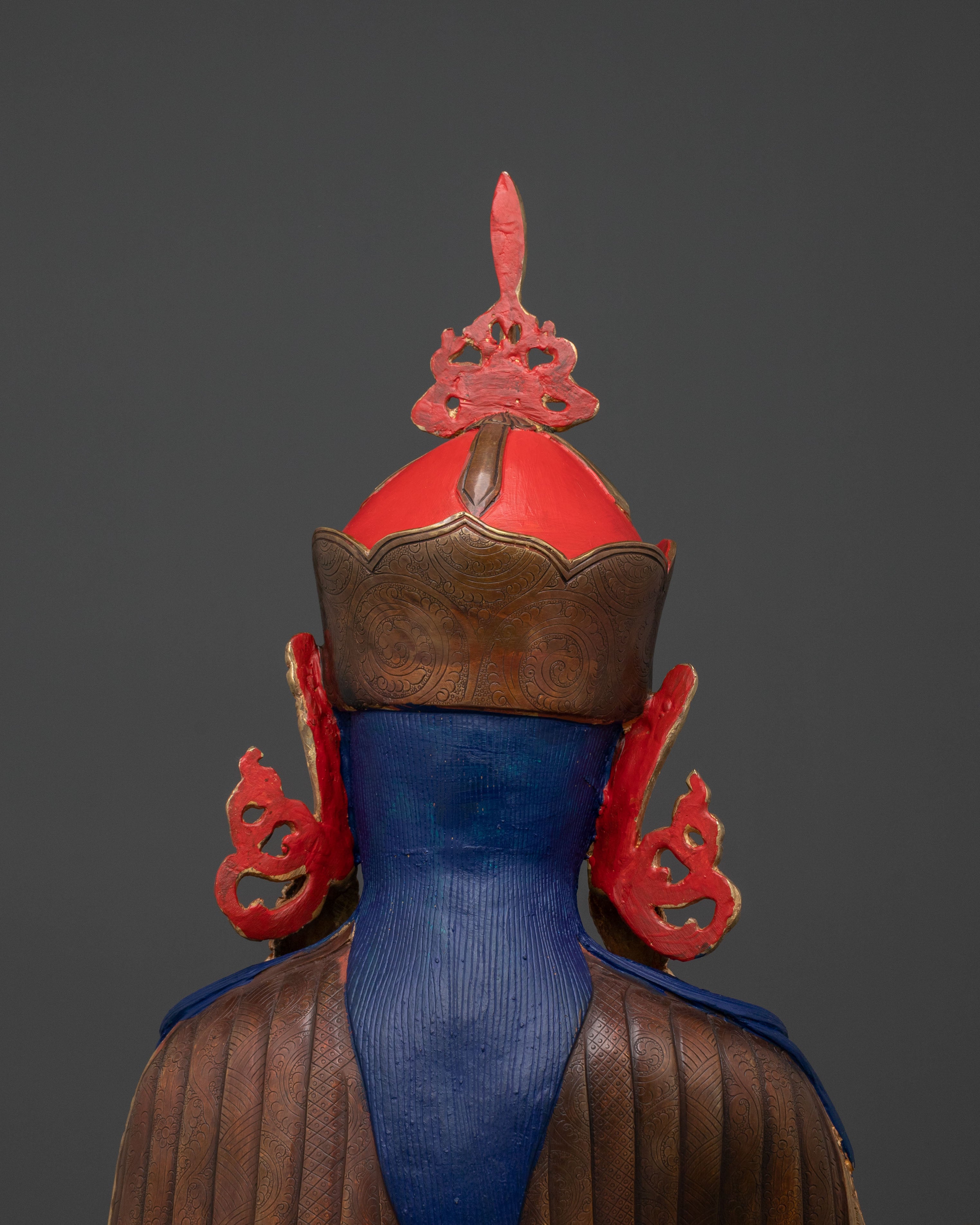
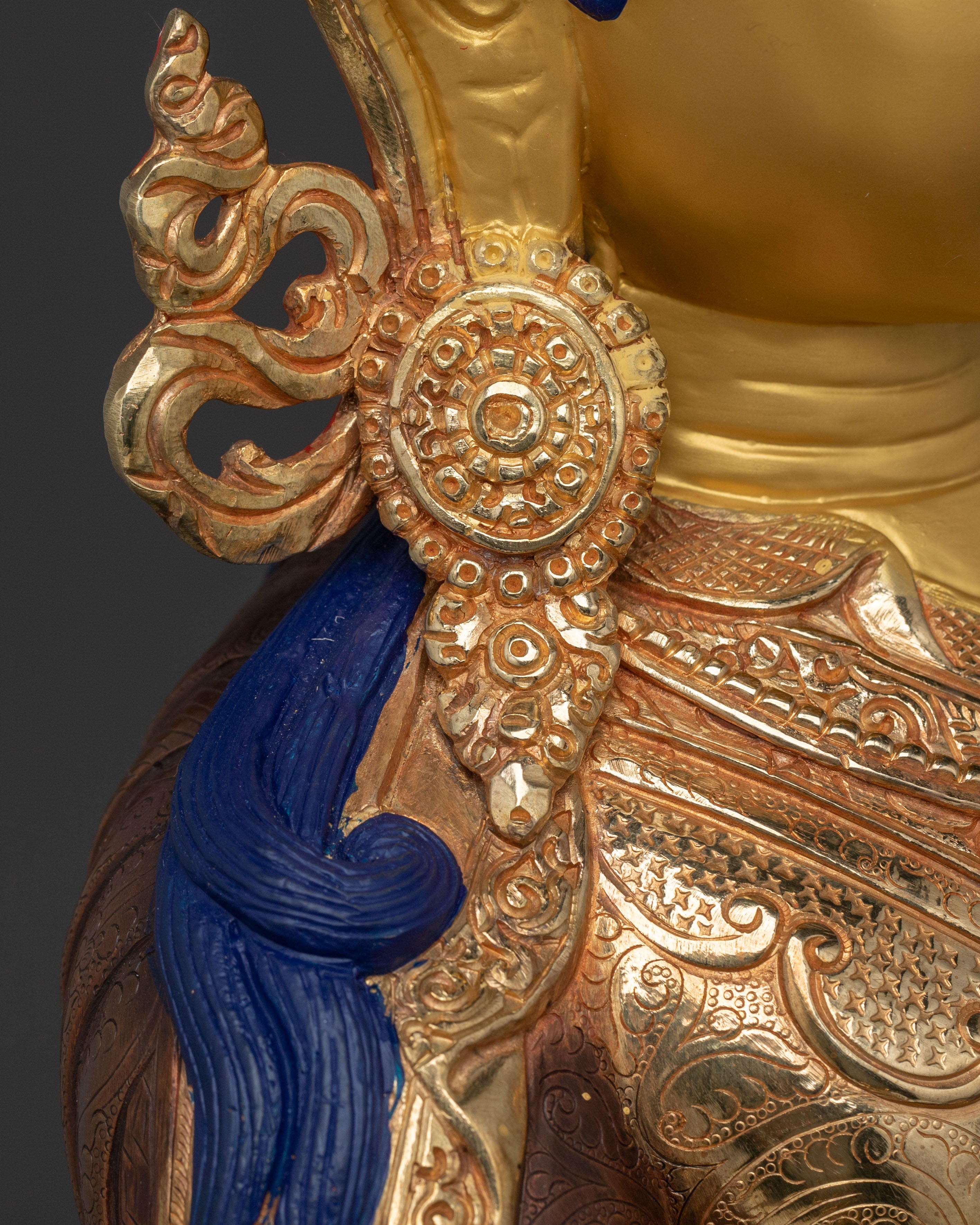
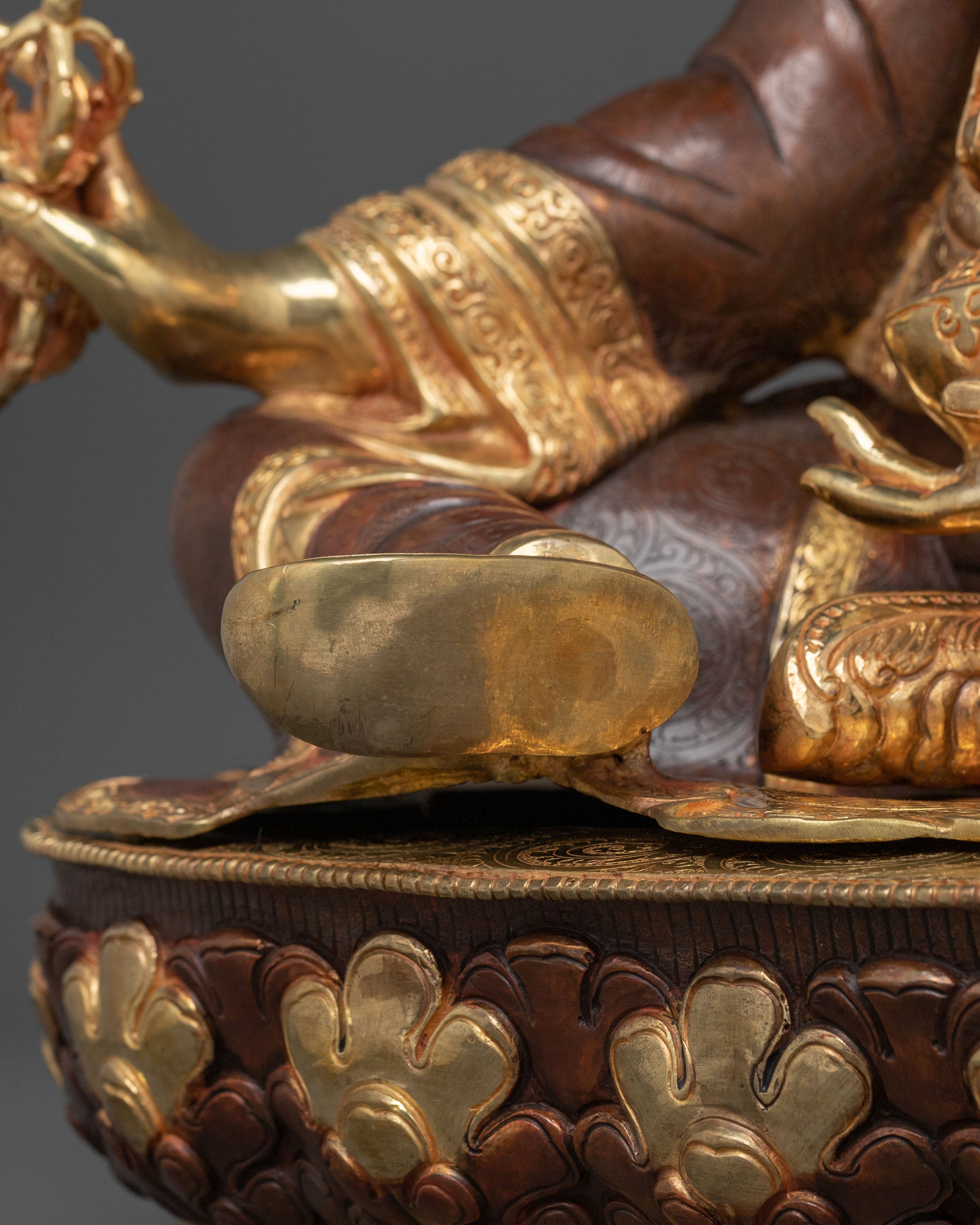
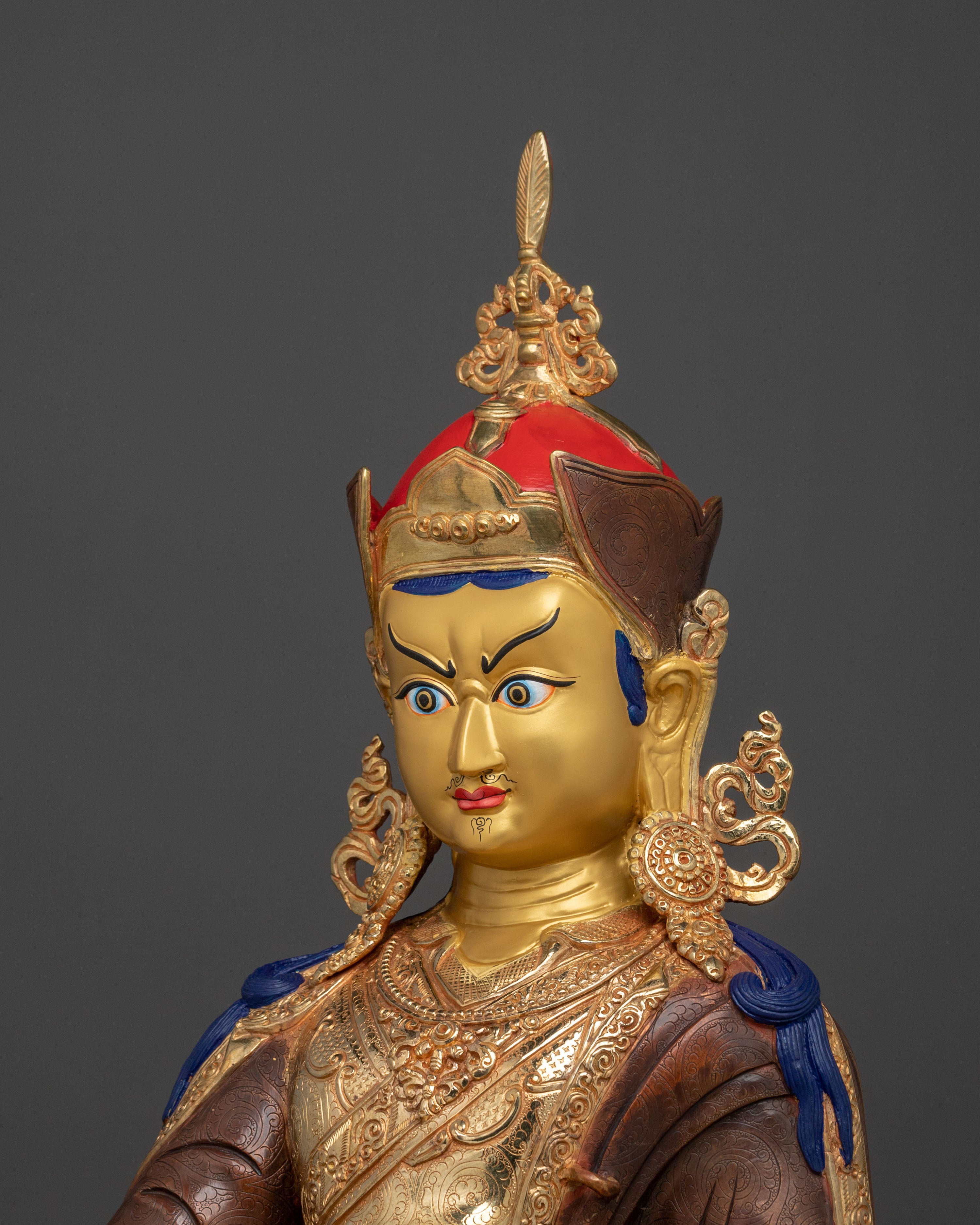
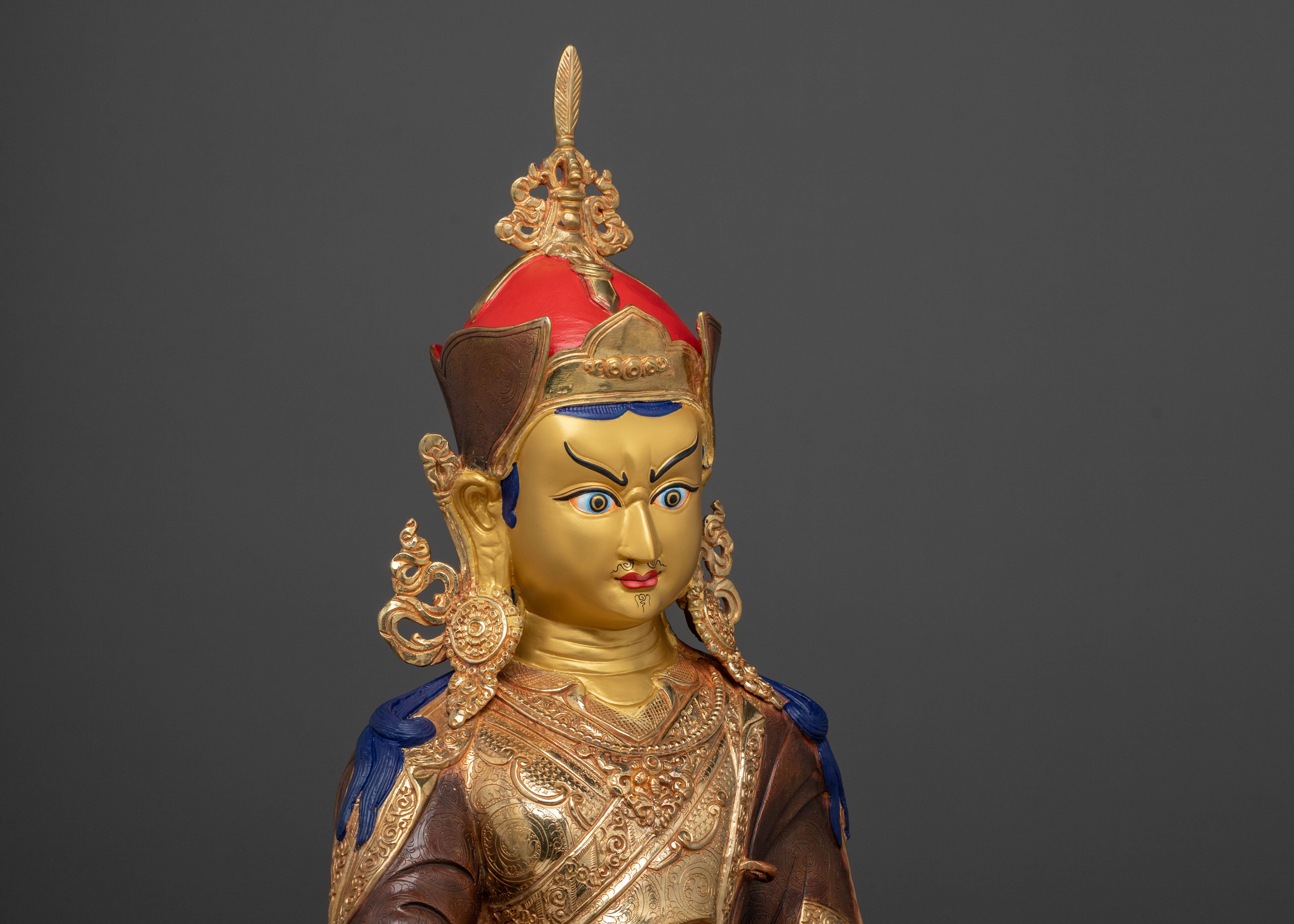
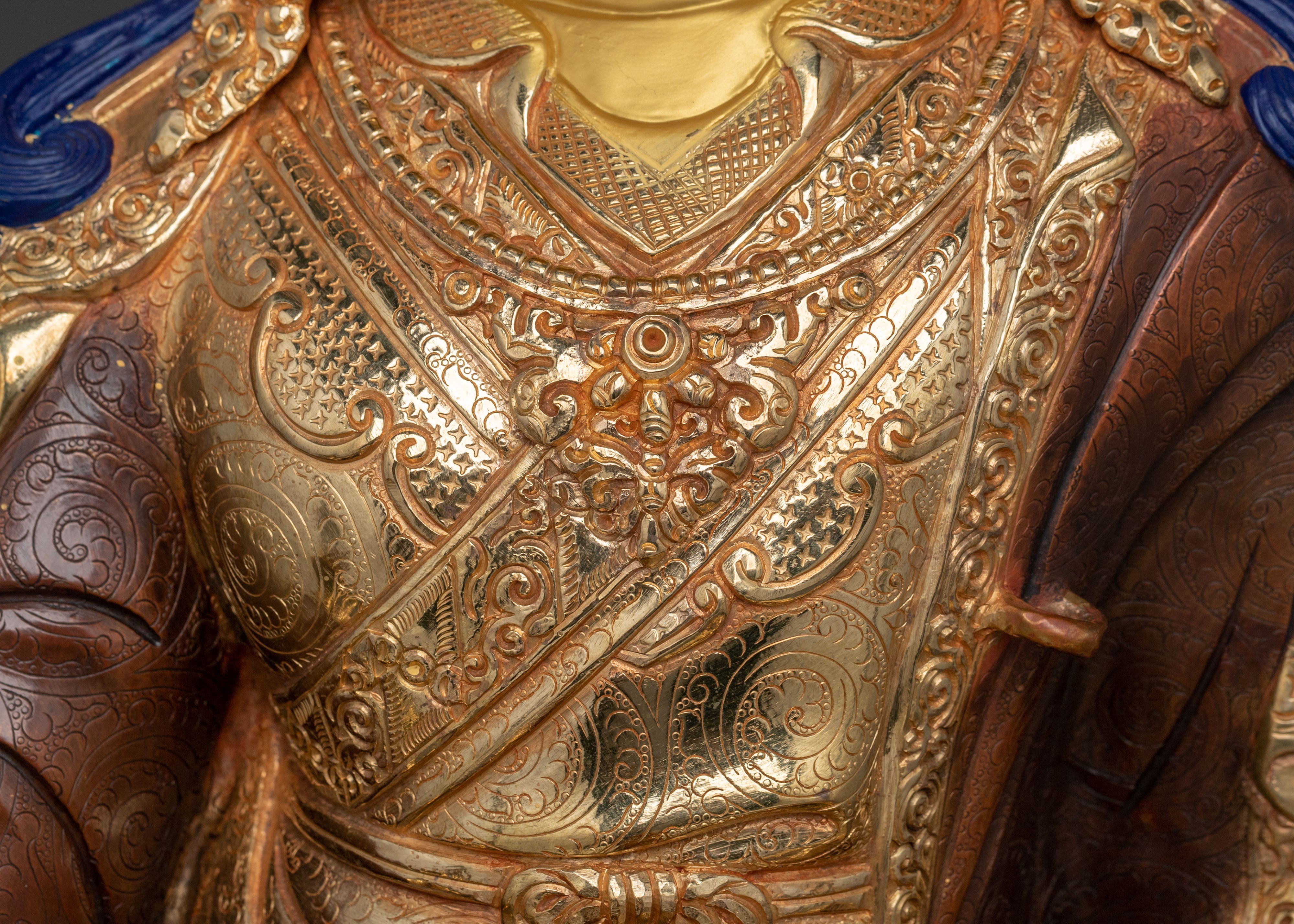
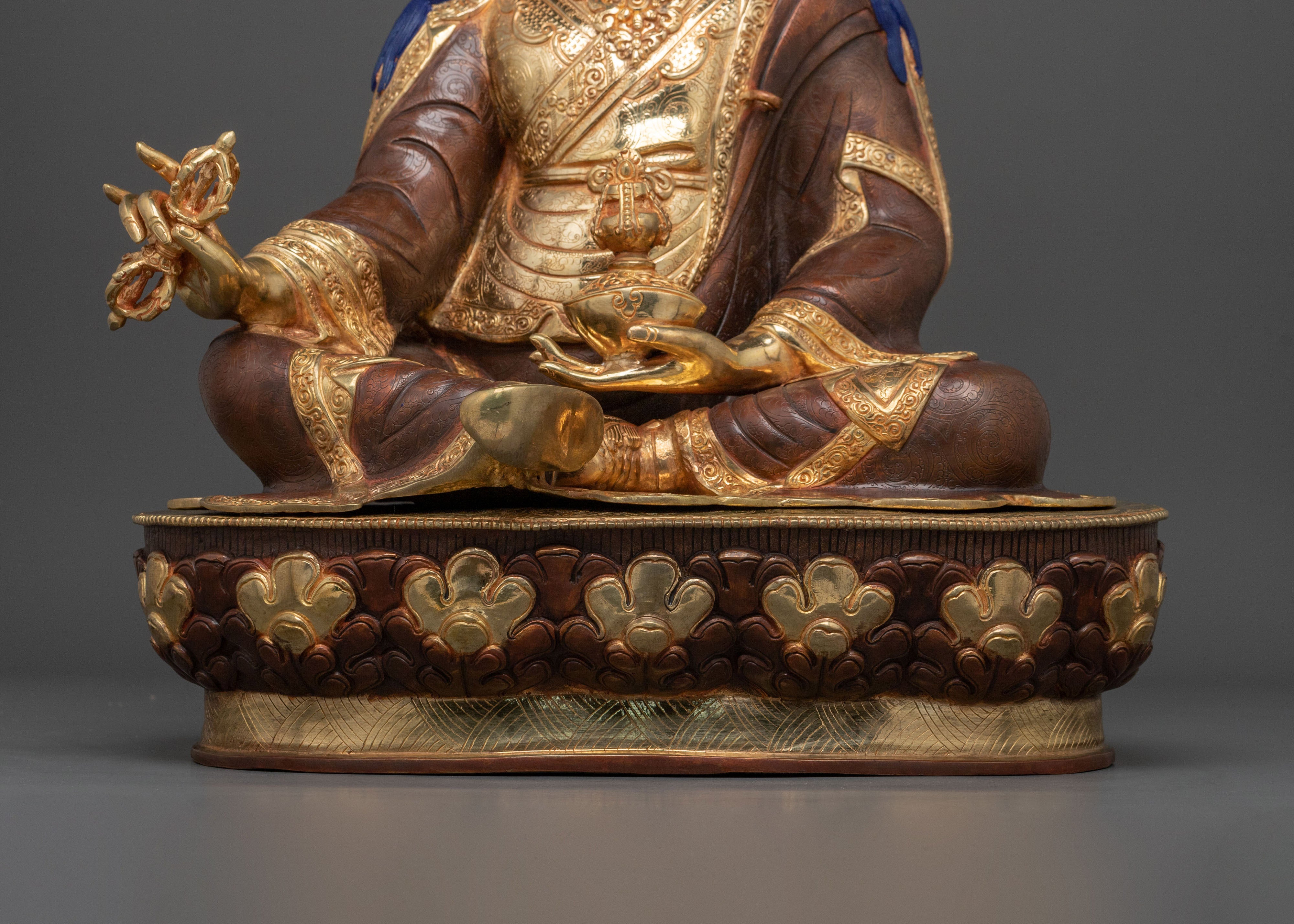
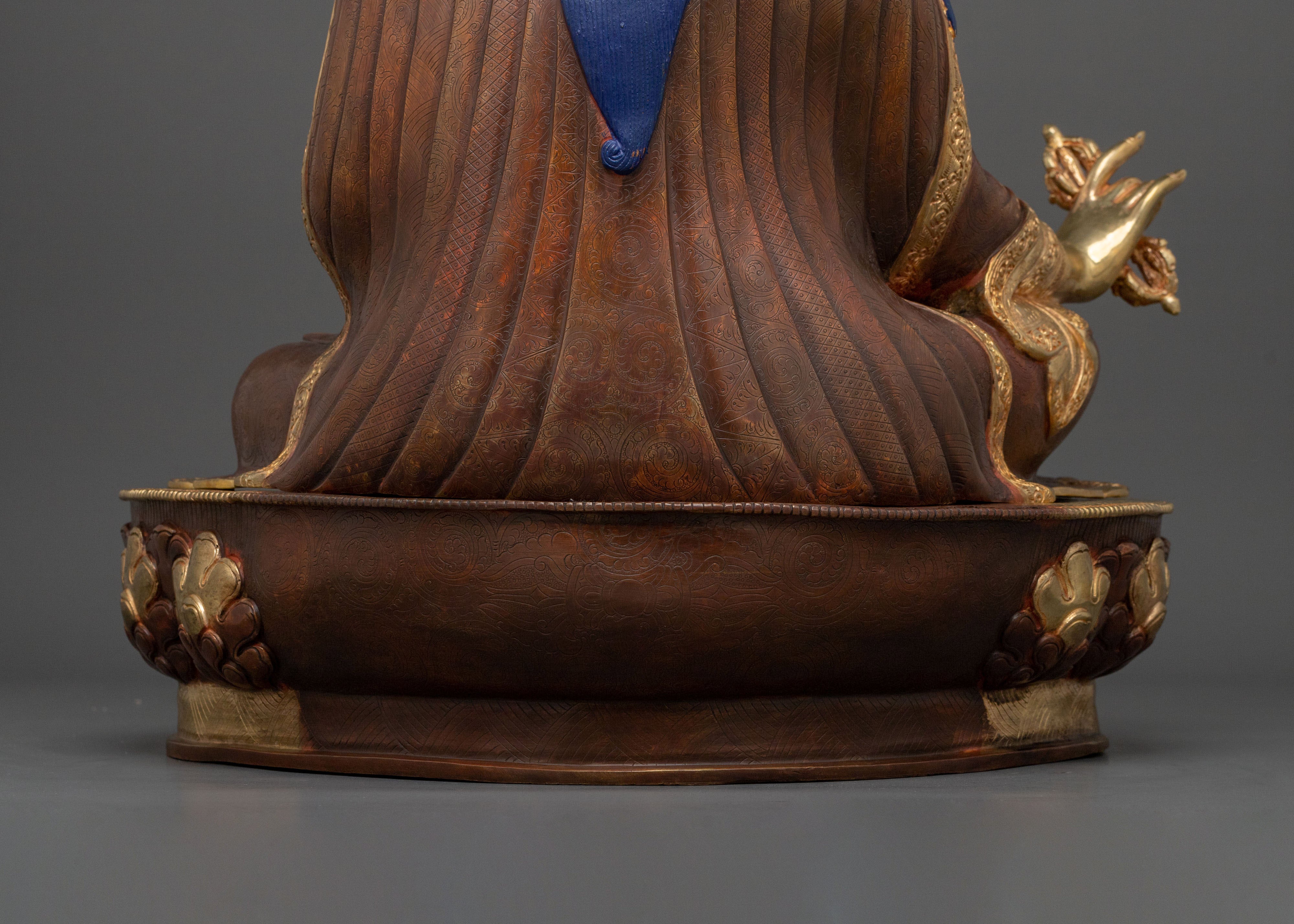
Guru Rinpoche Buddhist statue embodies the enlightened presence of Padmasambhava, the great master who brought Vajrayana Buddhism to Tibet and symbolizes the union of wisdom, compassion, and powerful enlightened activity. Standing at an impressive 61cm (24.0 inches) with a 43cm (16.9 inches) base and weighing 14.53kg, this majestic sculpture is expertly crafted from a solid copper body, richly adorned with 24K gold gilding and detailed acrylic paintings that highlight its sacred iconography with radiant clarity. The powerful yet serene expression of Guru Rinpoche reflects mastery over obstacles and transformative spiritual force, while every finely finished detail enhances its commanding presence. Originating from Nepal, this masterpiece represents authentic Himalayan craftsmanship, making it a profound centerpiece for meditation halls, altars, and sacred collections dedicated to wisdom, protection, and enlightenment.
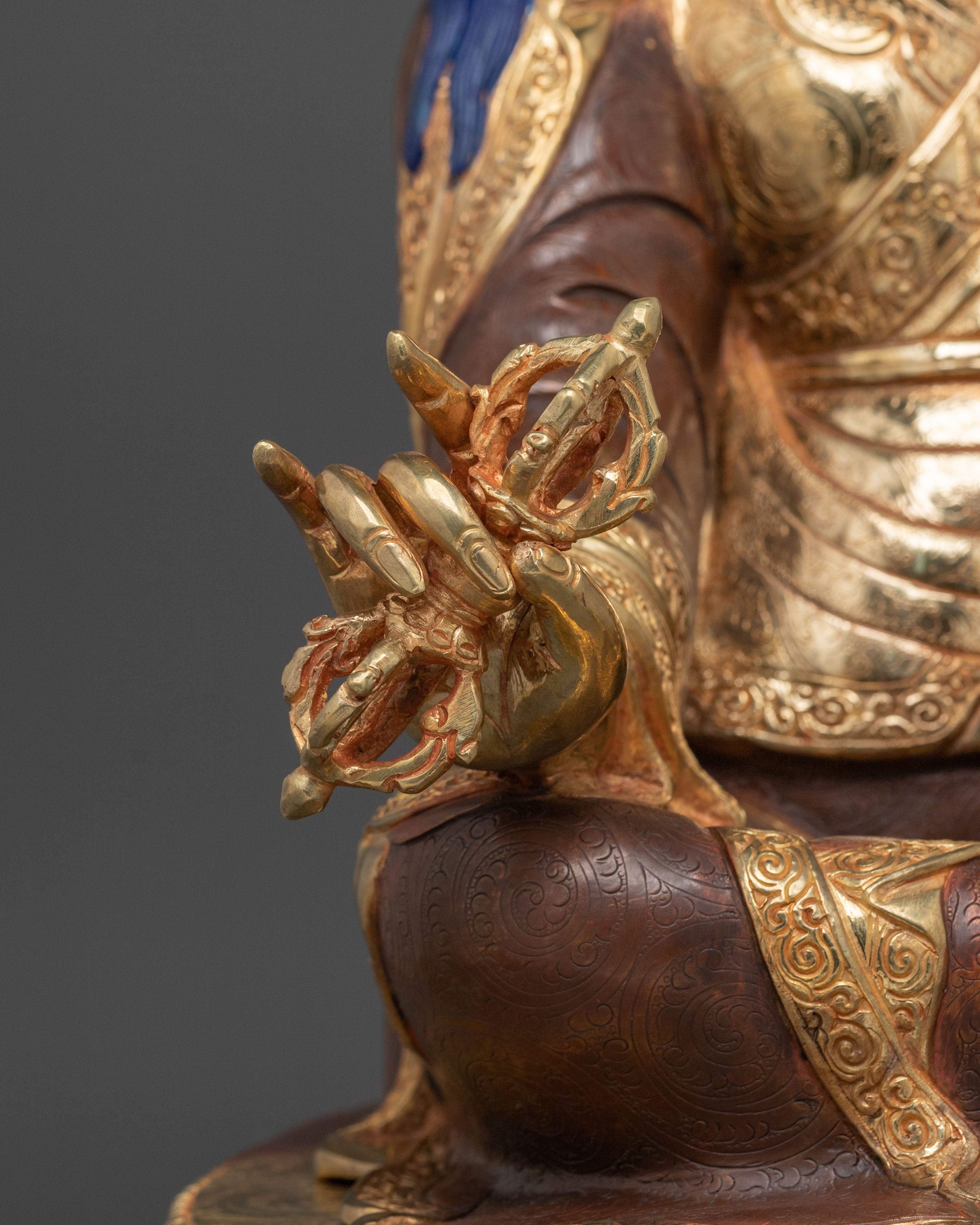
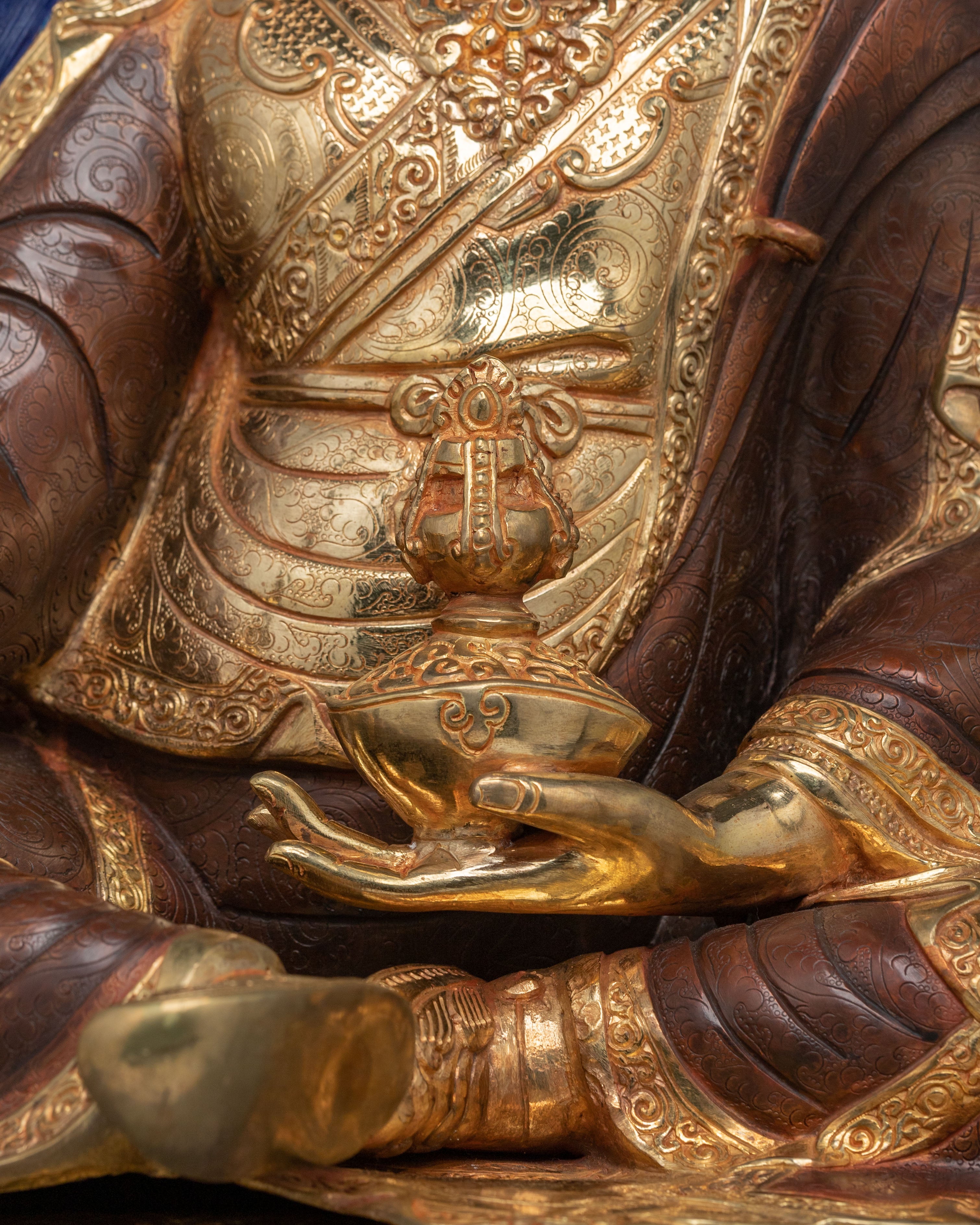
Guru Rinpoche, also known as Padmasambhava, is traditionally depicted in a regal seated posture symbolizing enlightened activity, tantric mastery, and spiritual authority. He wears the distinctive lotus crown hat, representing his realization of all Buddha families and his role in establishing Vajrayana Buddhism in Tibet. In his right hand, he holds a vajra, symbolizing indestructible wisdom and the power to cut through ignorance, while in his left hand he supports a skull cup containing the nectar of realization, representing transformed perception and enlightened awareness. Resting against his shoulder is the khatvanga staff, symbolizing the union of wisdom and compassion as well as mastery over the tantric path and subtle energies. Together, these attributes express his fully awakened state and his role as the great tantric master who transforms obstacles into liberation.
Size: 24.0”/61cm (Height) x 16.9”/43cm (Base)
Weight: 14.53 kg
Material: 24K Gold Gilded, Acrylic Paintings, Copper Body
Guru Rinpoche, or Padmasambhava, is the historical master who established Vajrayana Buddhism in Tibet during the 8th century. Revered as the "Second Buddha," he is celebrated for conquering spiritual obstacles and hiding termas (sacred treasures of teachings) for future generations. His teachings emphasize the immediacy of realizing one's own Buddha-nature, making him one of the most beloved and protective figures in Himalayan Buddhism.