


Description
Guru Rinpoche: Embodiment of Profound Wisdom and Protection
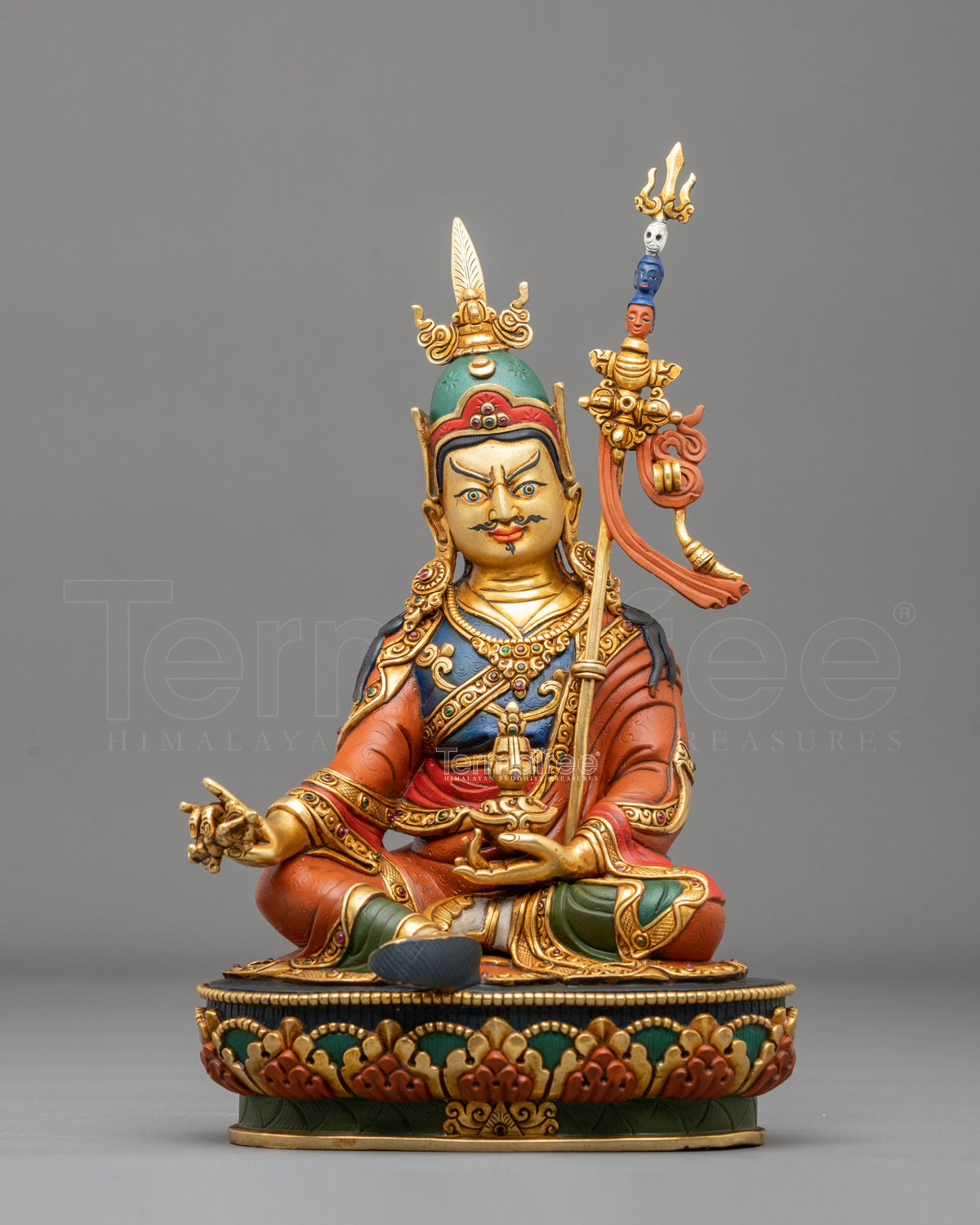
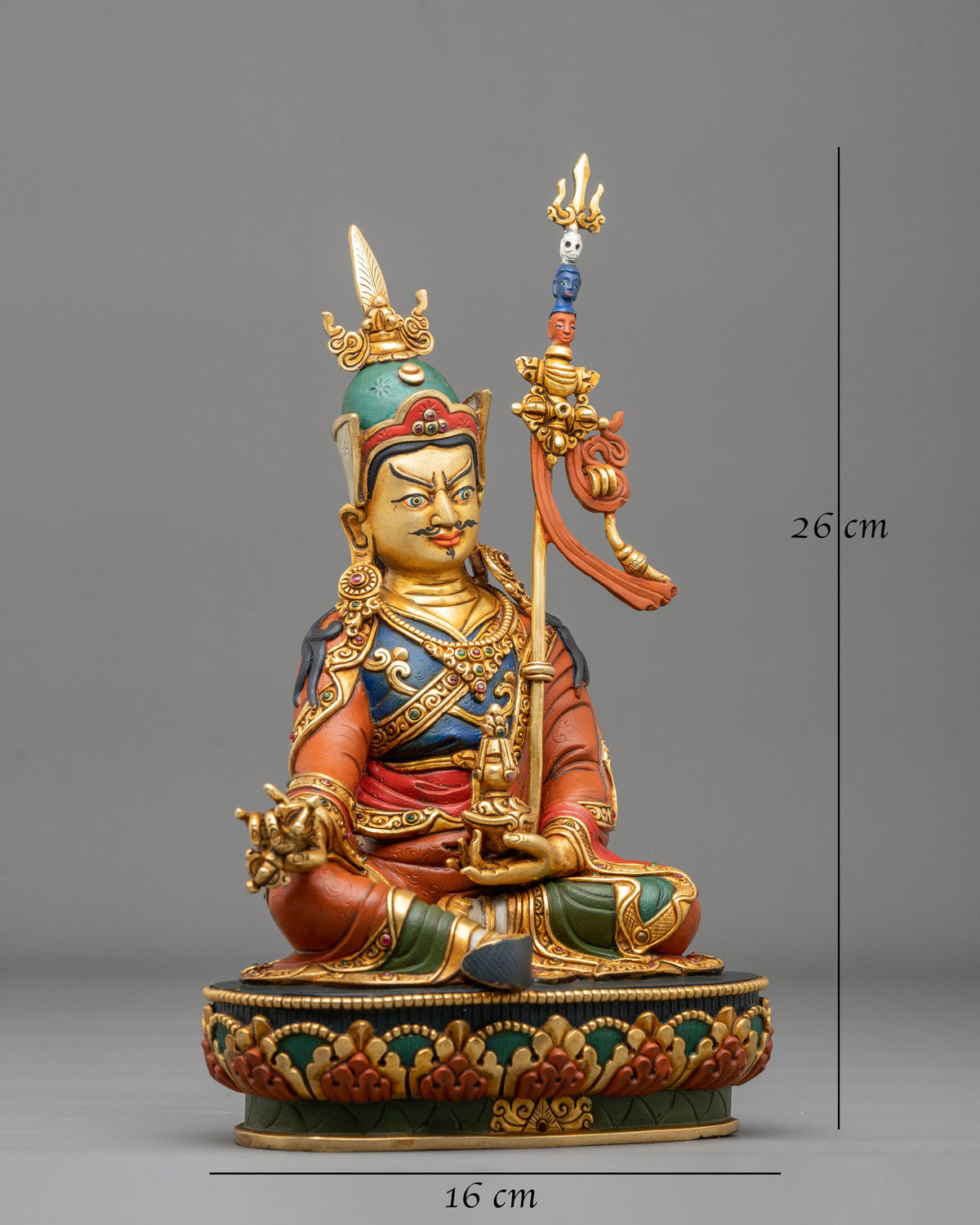
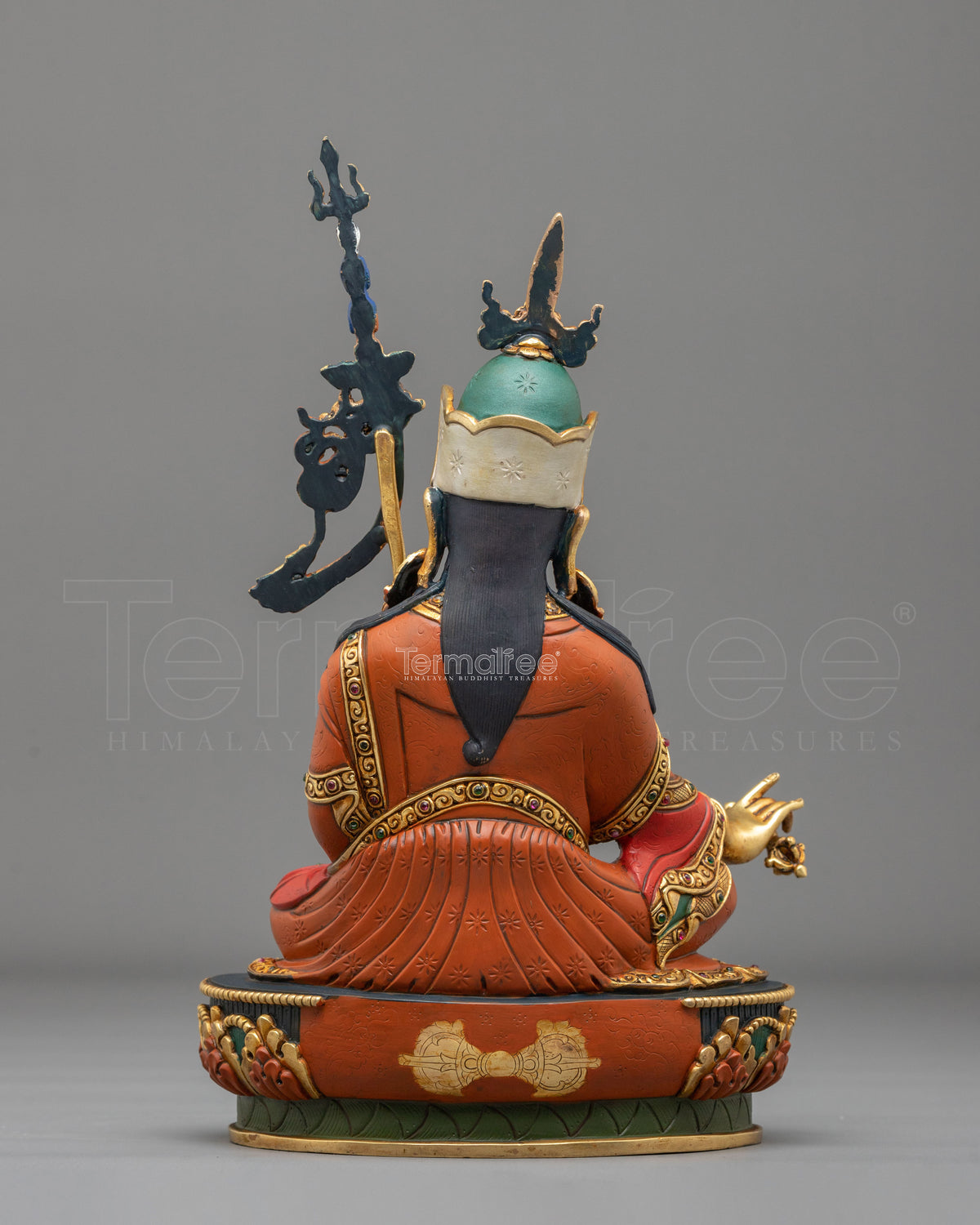
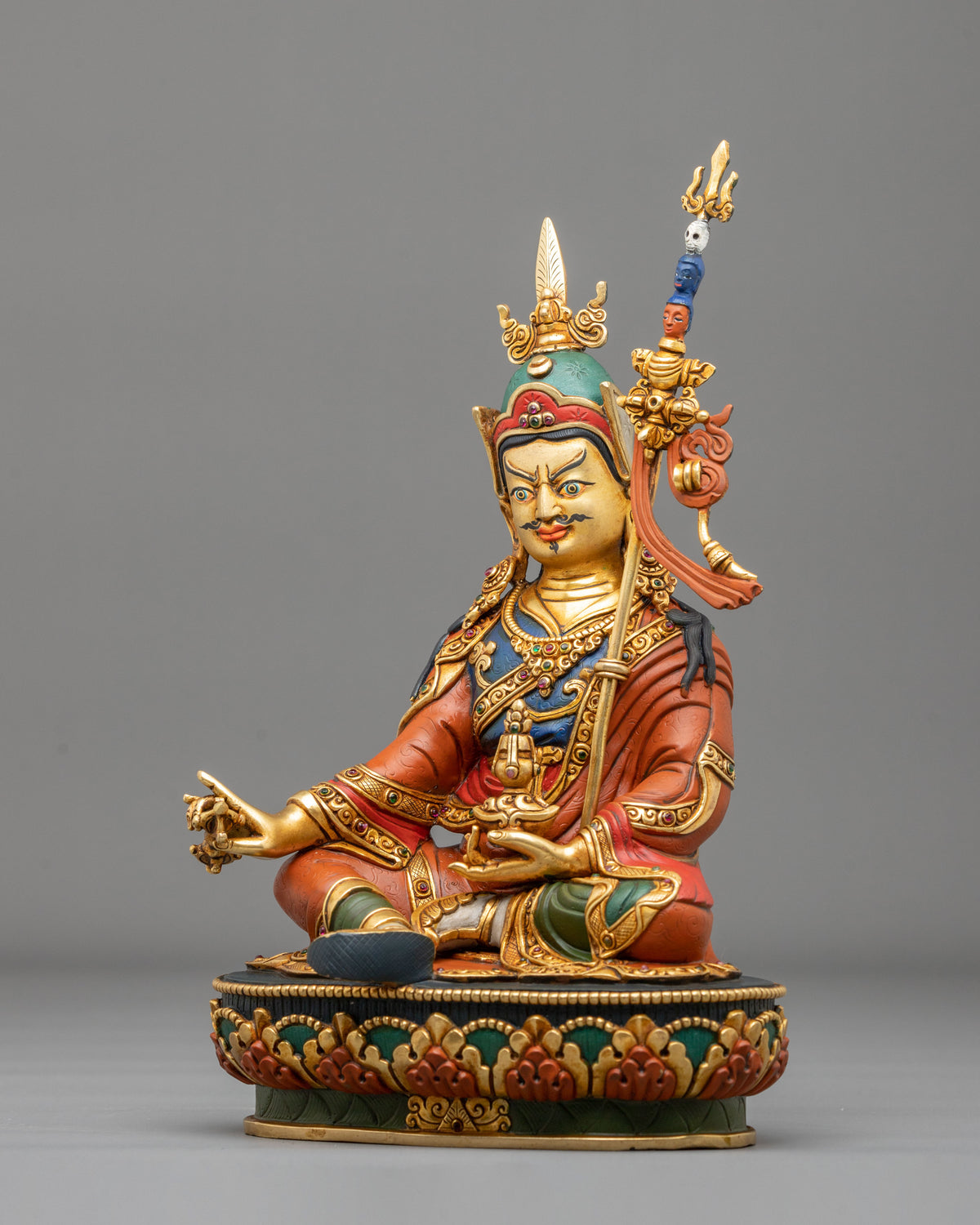
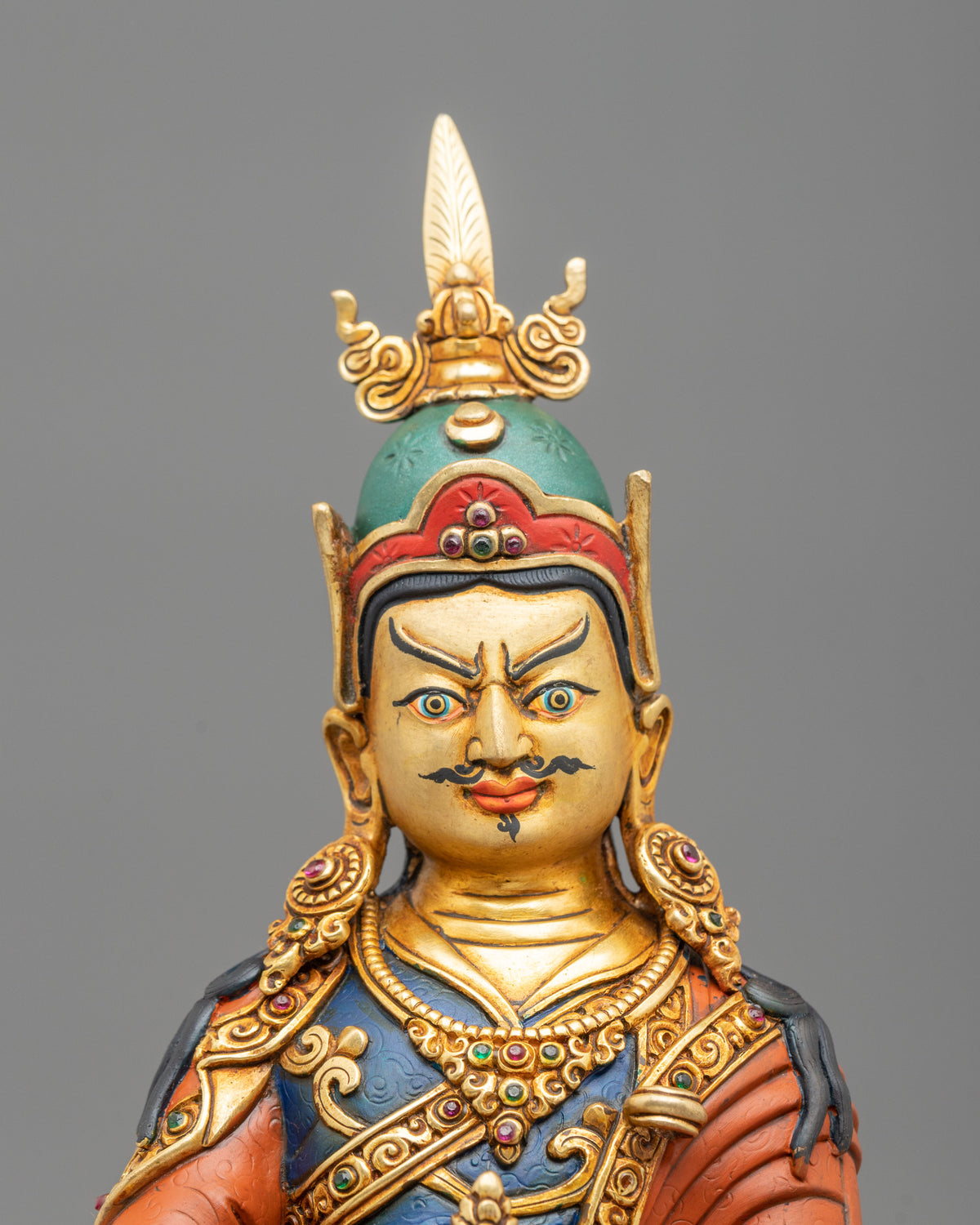
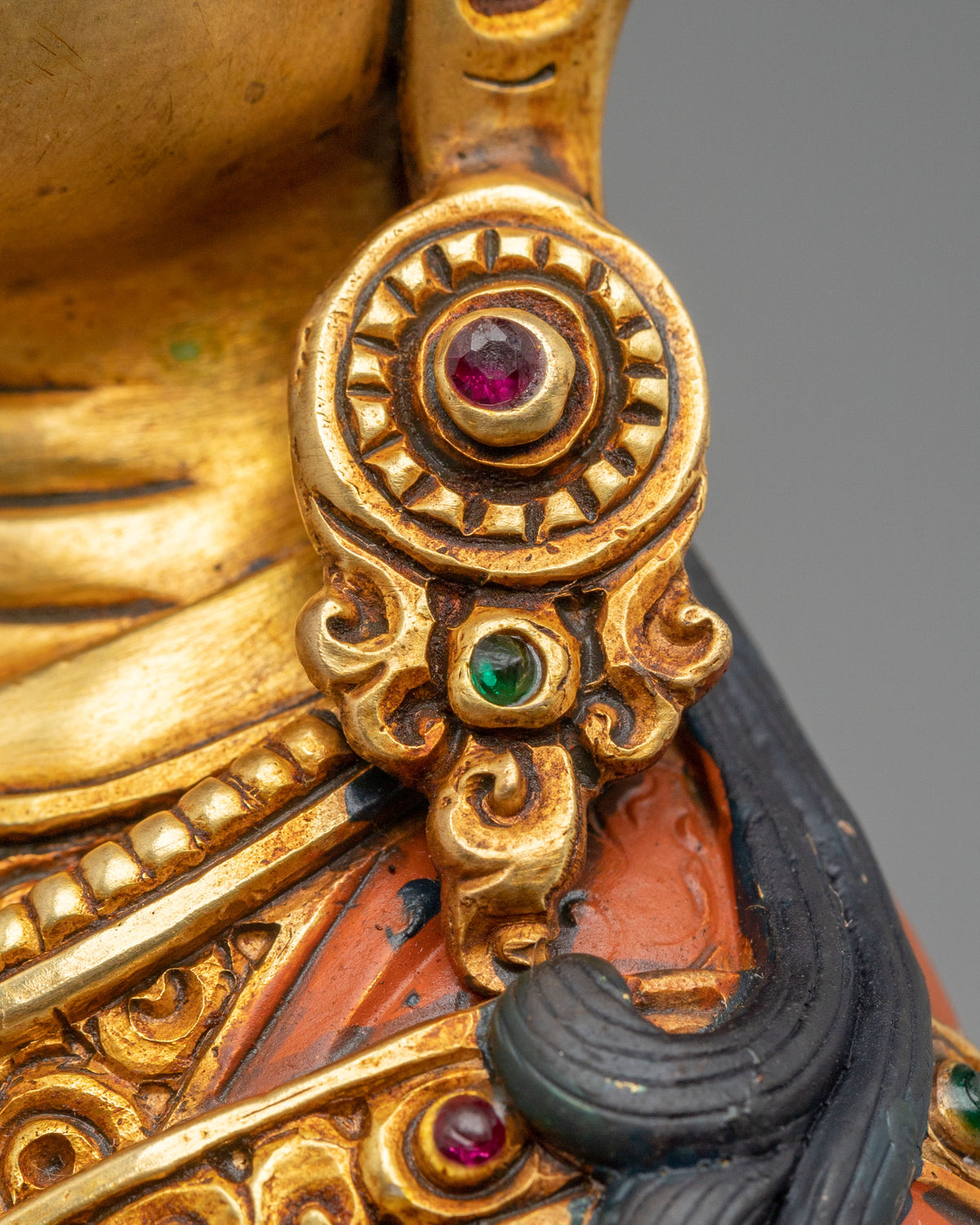
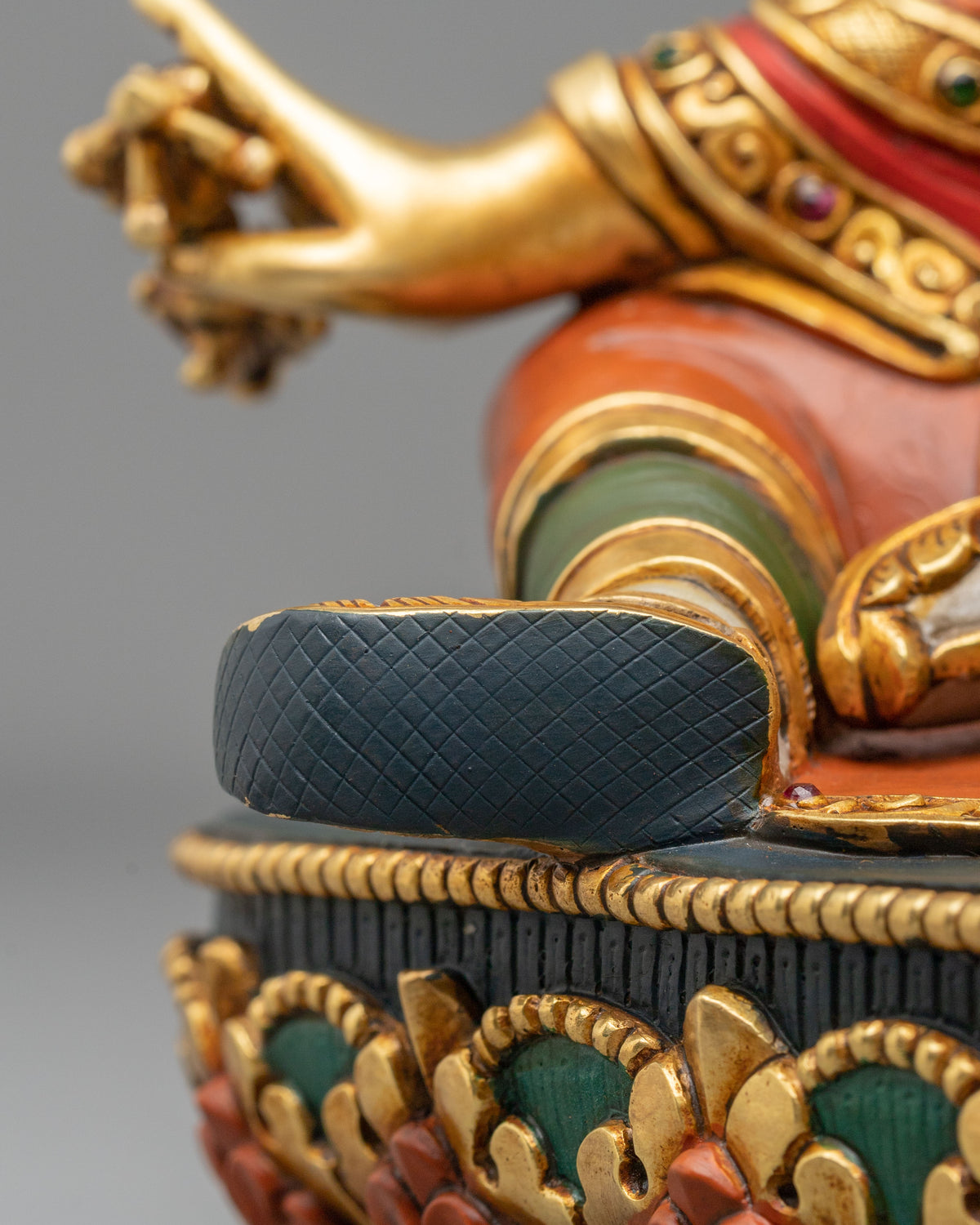
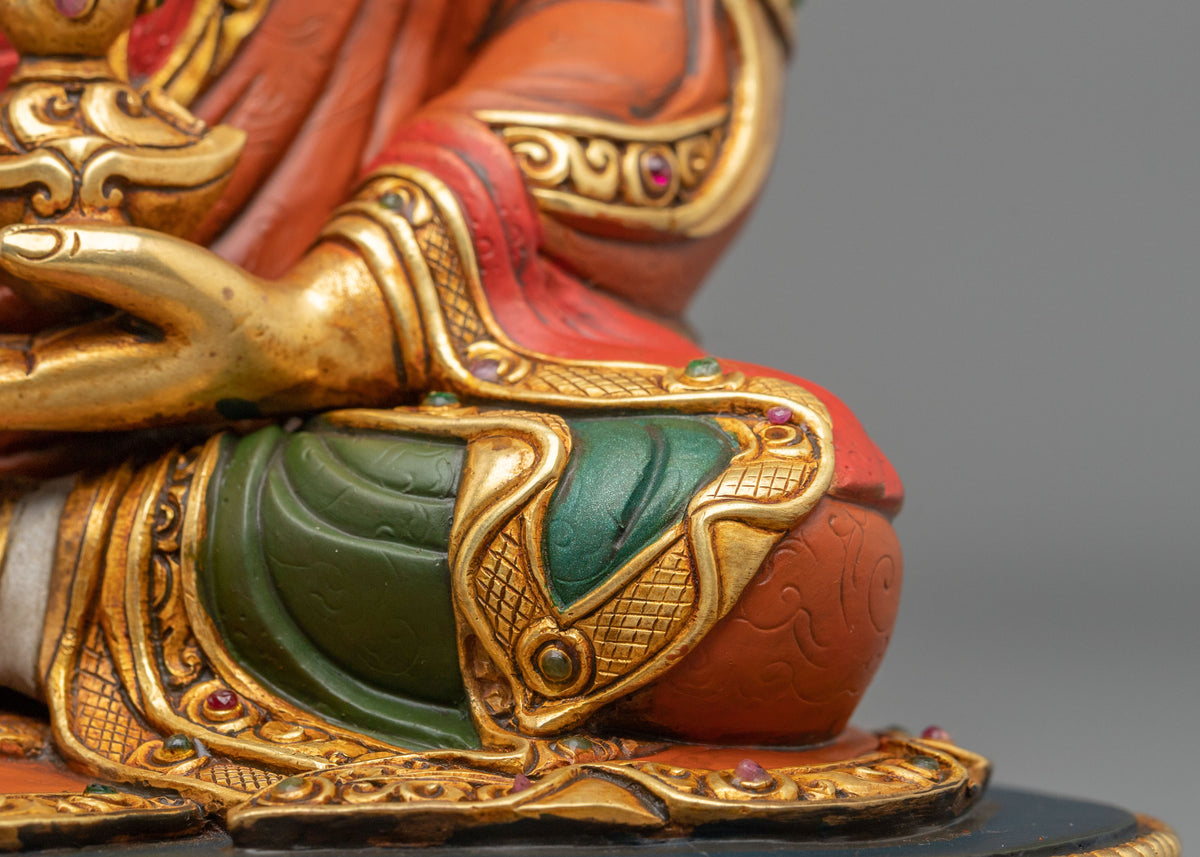
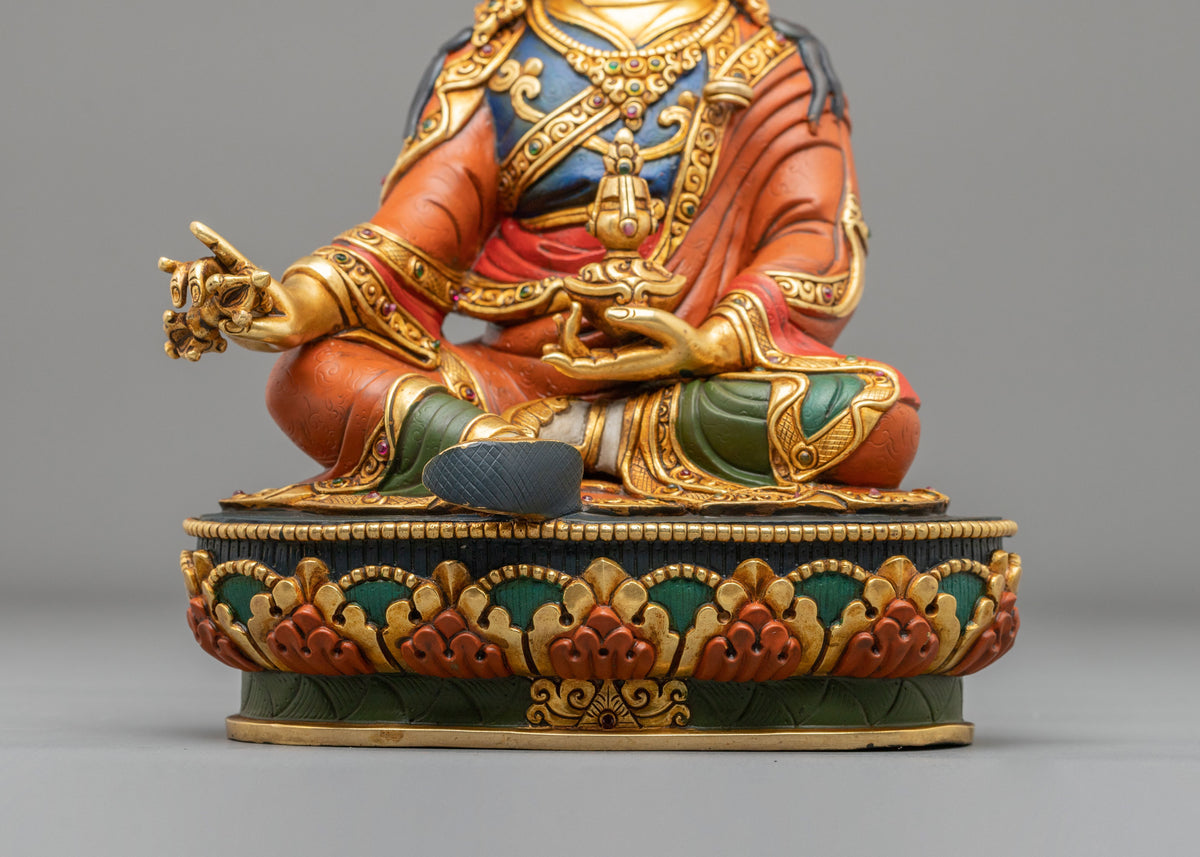
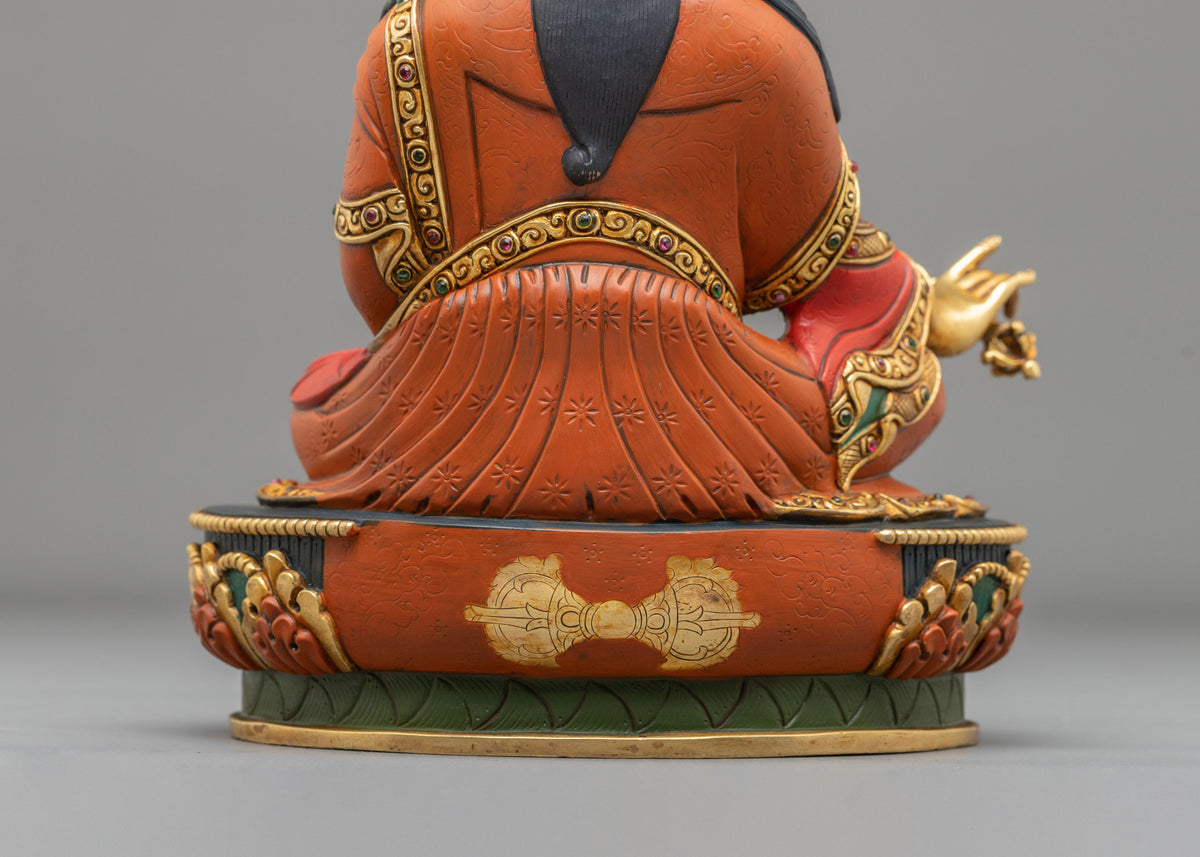
This Guru Rinpoche Statue measures 10.2”/26cm in height with a 6.3”/16cm base and weighs 1.63 kg. Handcrafted by skilled artisans, this sculpture features a copper body enhanced with gold detailing, intricate acrylic painting, and carefully placed gemstones. The vibrant colors and refined decorative elements highlight the elaborate robes, crown, lotus pedestal, and sacred attributes of Guru Rinpoche. The finely carved details across the ornaments, garments, and facial features reflect traditional Himalayan sculpture techniques, while the balanced proportions and richly decorated appearance make this statue suitable for Buddhist altars, meditation spaces, monasteries, Dharma centers, or spiritual collections.
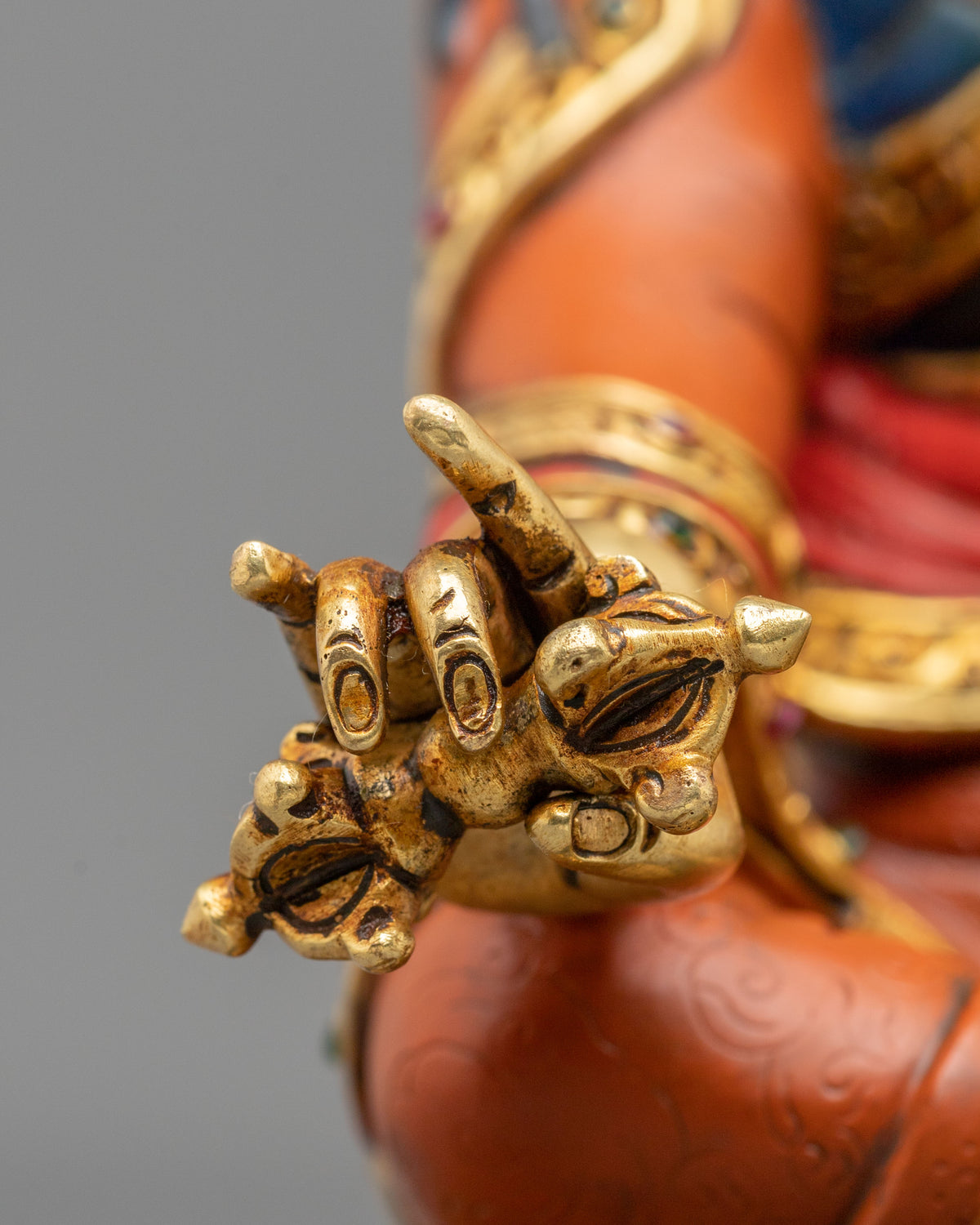
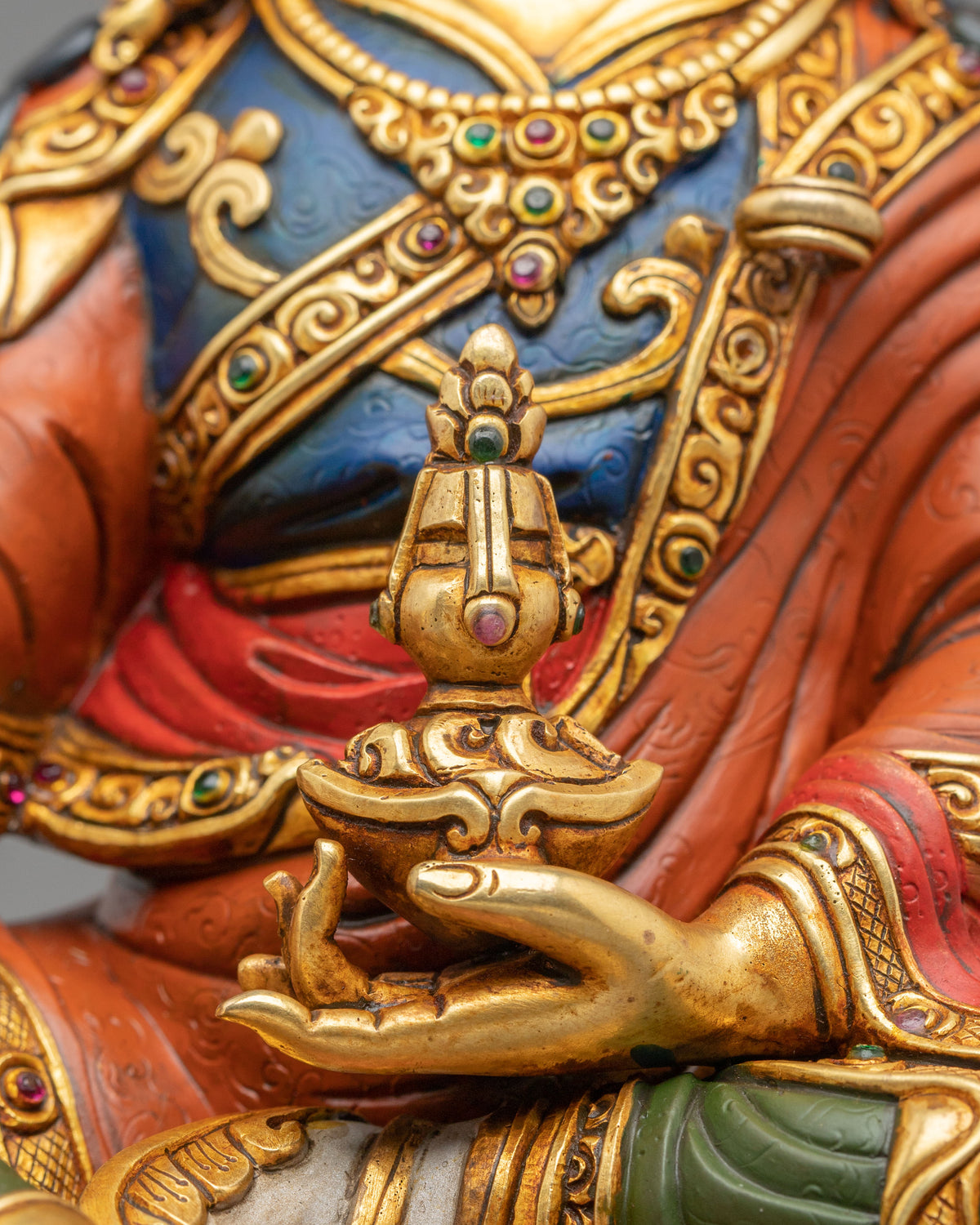
The sculpture depicts Guru Rinpoche, also known as Padmasambhava, seated majestically upon a lotus pedestal in his traditional royal appearance. He is shown wearing a three-pointed lotus hat adorned with a half-vajra and vulture feather, symbolizing his enlightened realization and spiritual power. His right hand holds a vajra, representing indestructible wisdom and compassion, while his left hand supports a skull cup containing the vase of longevity, symbolizing transformation and spiritual accomplishment. Resting against his left shoulder is the khatvanga trident, associated with tantric wisdom and his enlightened consort symbolism. He wears richly detailed robes, including the monk’s garments, tantric robes, and royal ornaments, decorated with intricate patterns and gemstone accents. His peaceful yet powerful expression, elaborate crown, flowing garments, symbolic ritual objects, and ornate lotus throne create a meaningful representation of Guru Rinpoche in traditional Himalayan Buddhist art.
Size: 10.2”/26cm (Height) x 6.3”/16cm (Base)
Weight: 1.63 kg
Material: Gold and Acrylic Painting, Copper Body, Gemstones
Guru Rinpoche, or Padmasambhava, is celebrated as the Lotus-Born master who brought Vajrayana Buddhism from India to Tibet in the 8th century. Revered as a second Buddha, he is credited with subduing local deities and transforming them into Dharma protectors, laying the foundation for the thriving Buddhist traditions that continue to this day. He embodies the enlightened activity and power to overcome all obstacles, both worldly and spiritual.