Guru Rinpoche Statue | Honoring His Transmission of Vajrayana Teachings
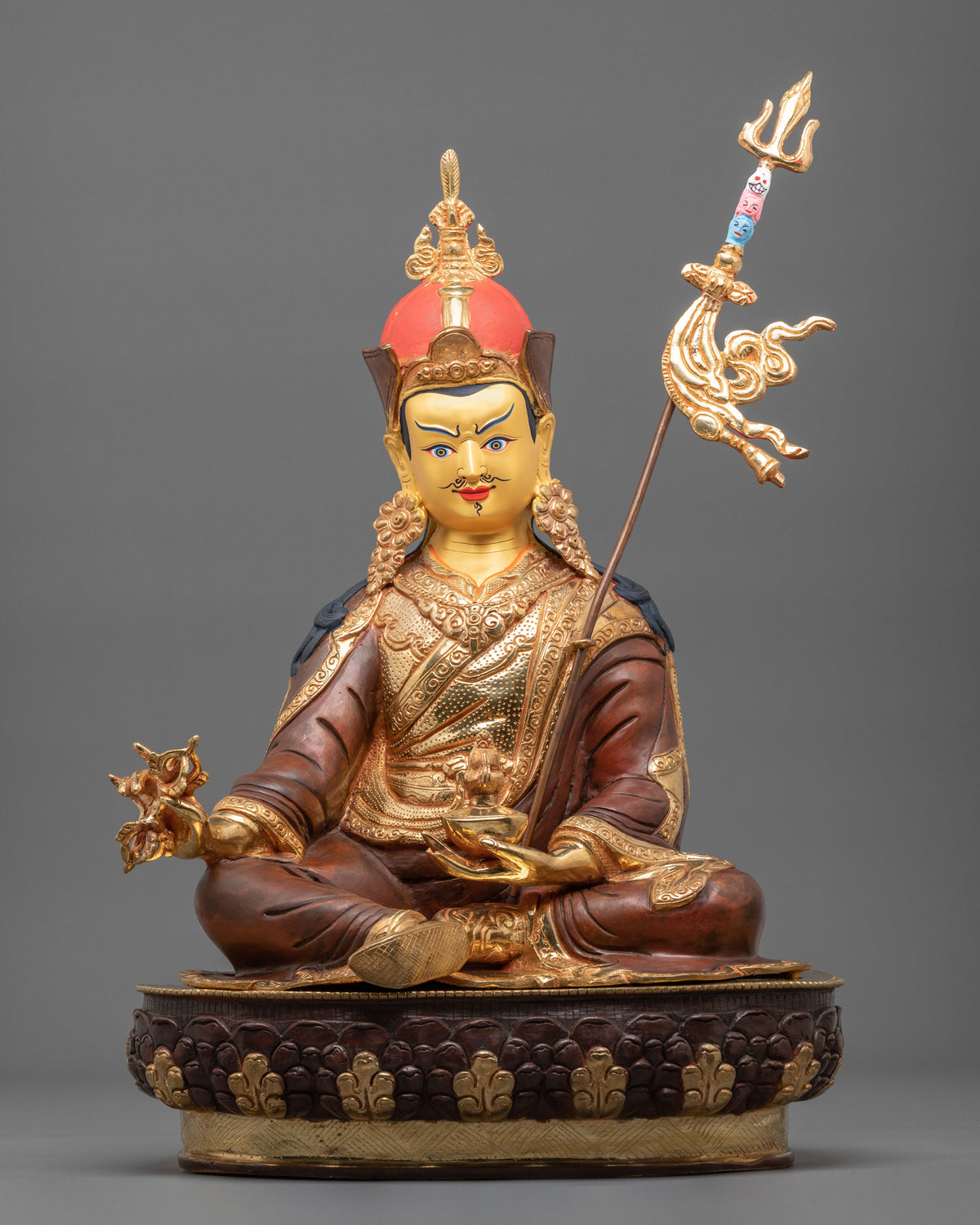
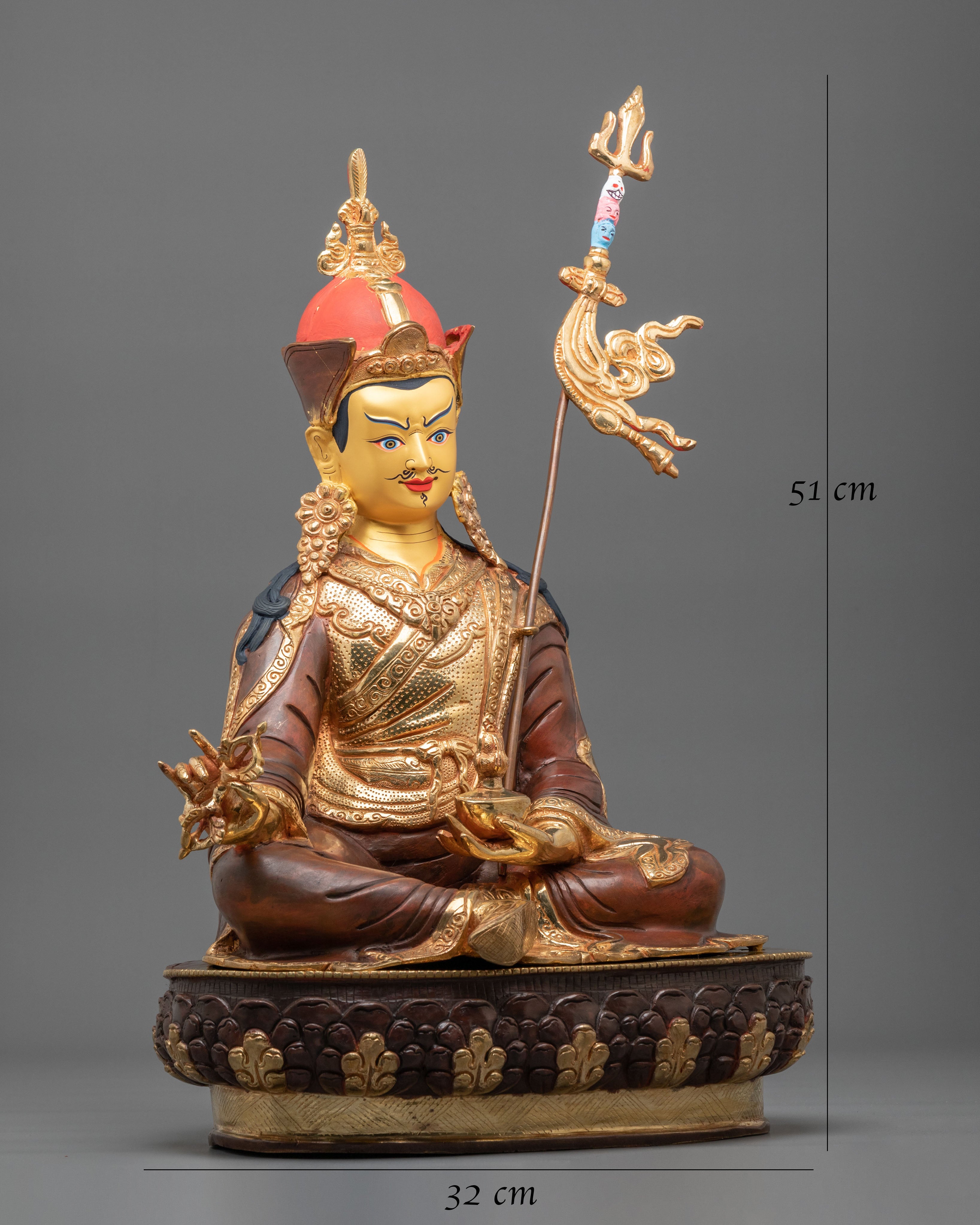
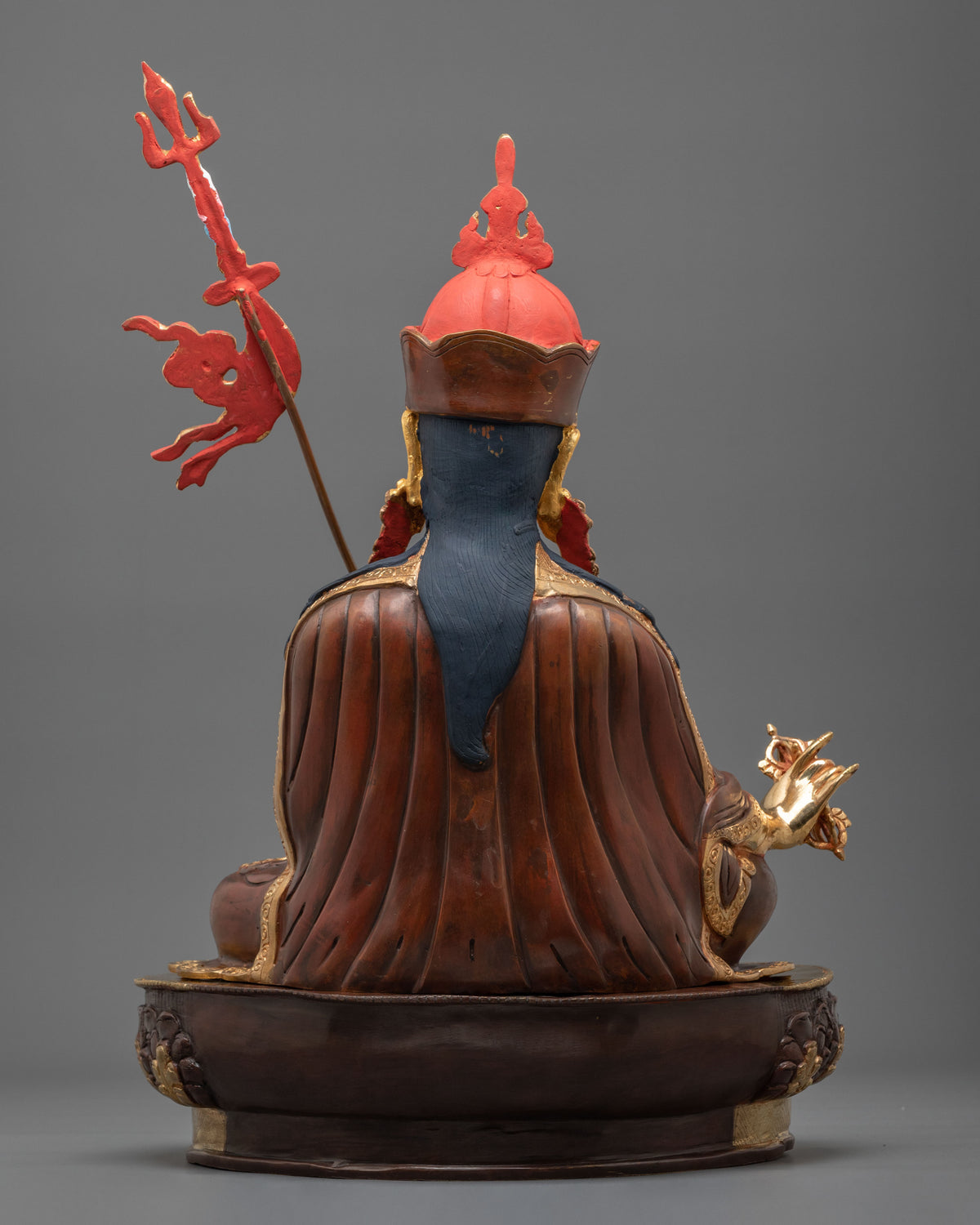
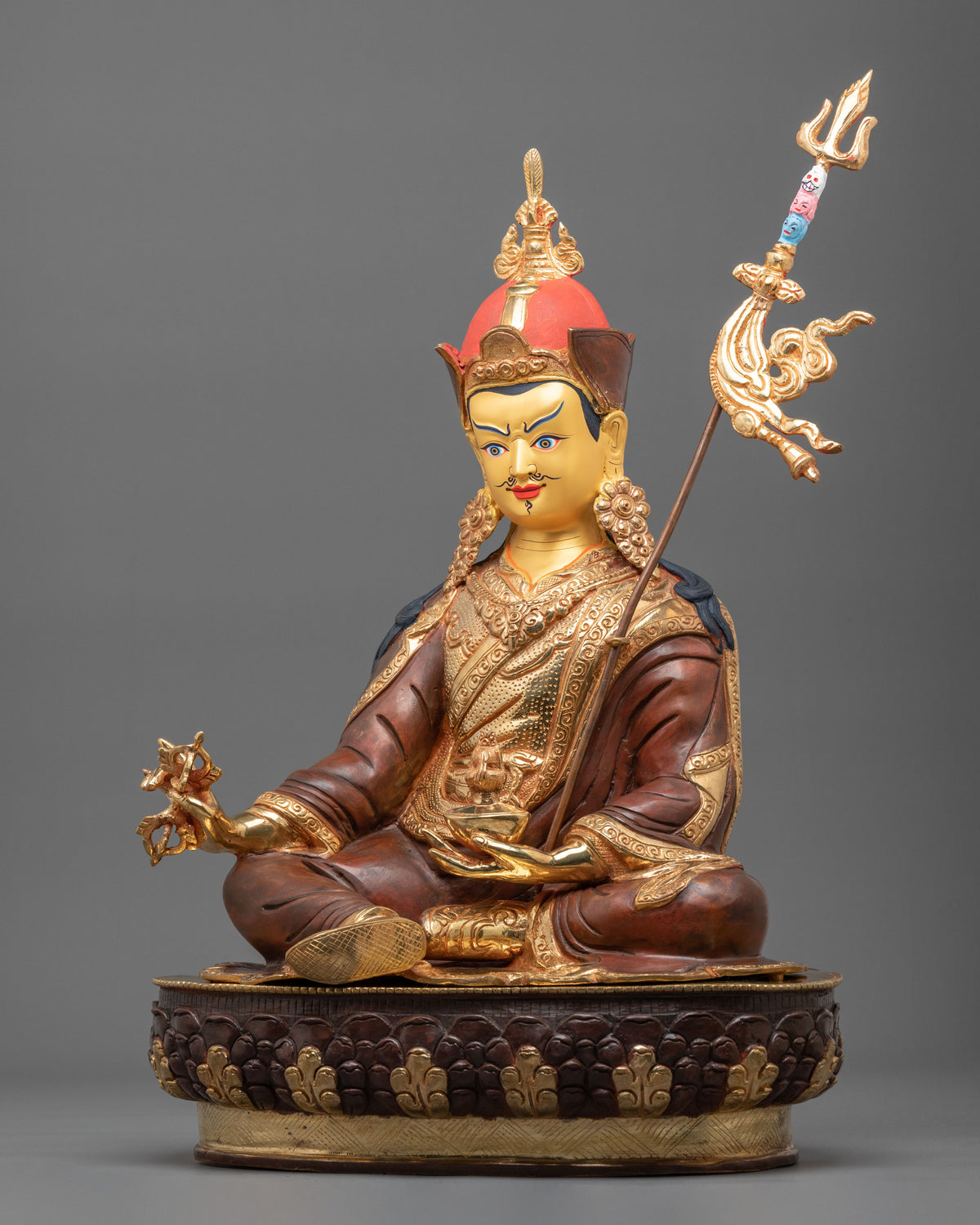
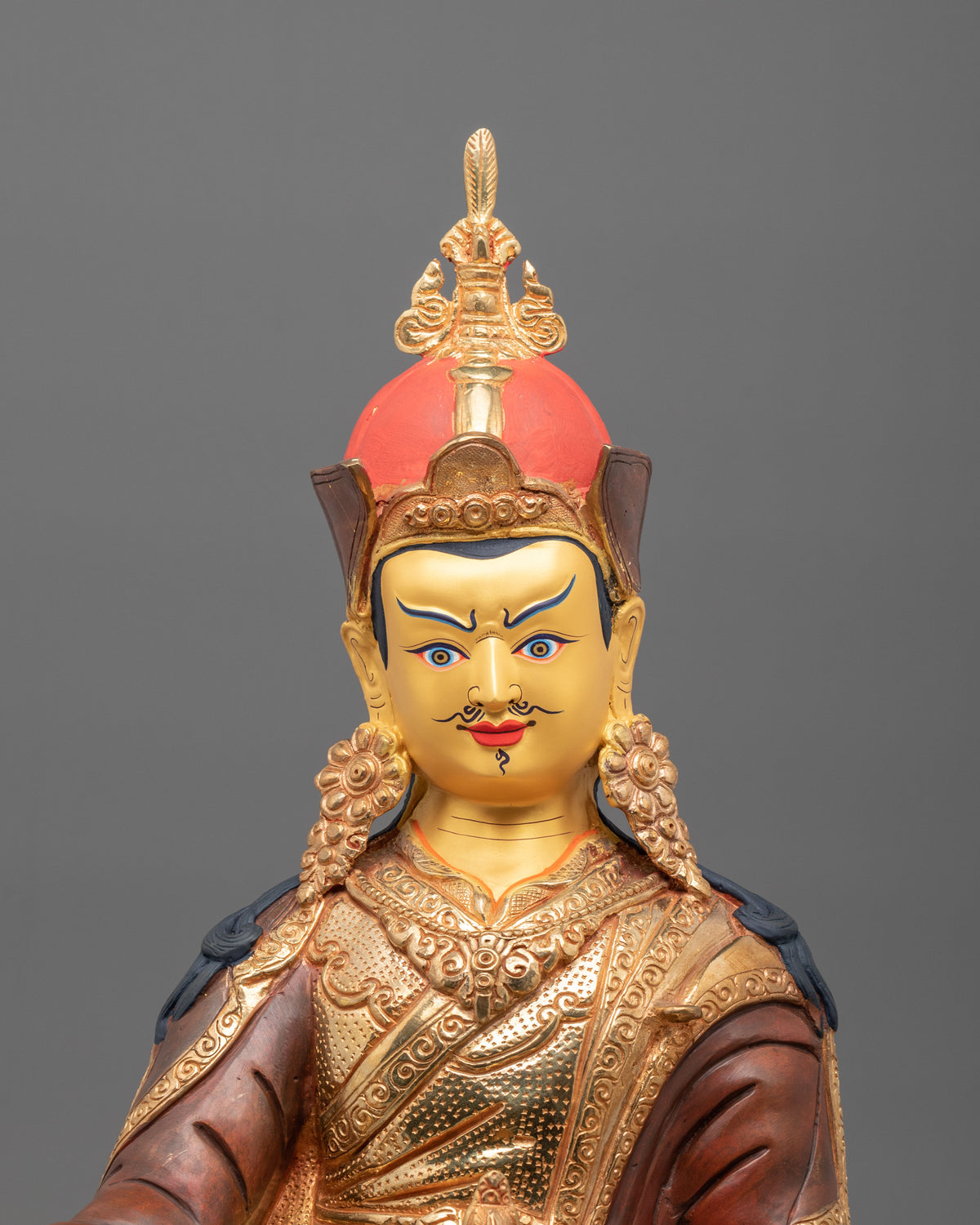
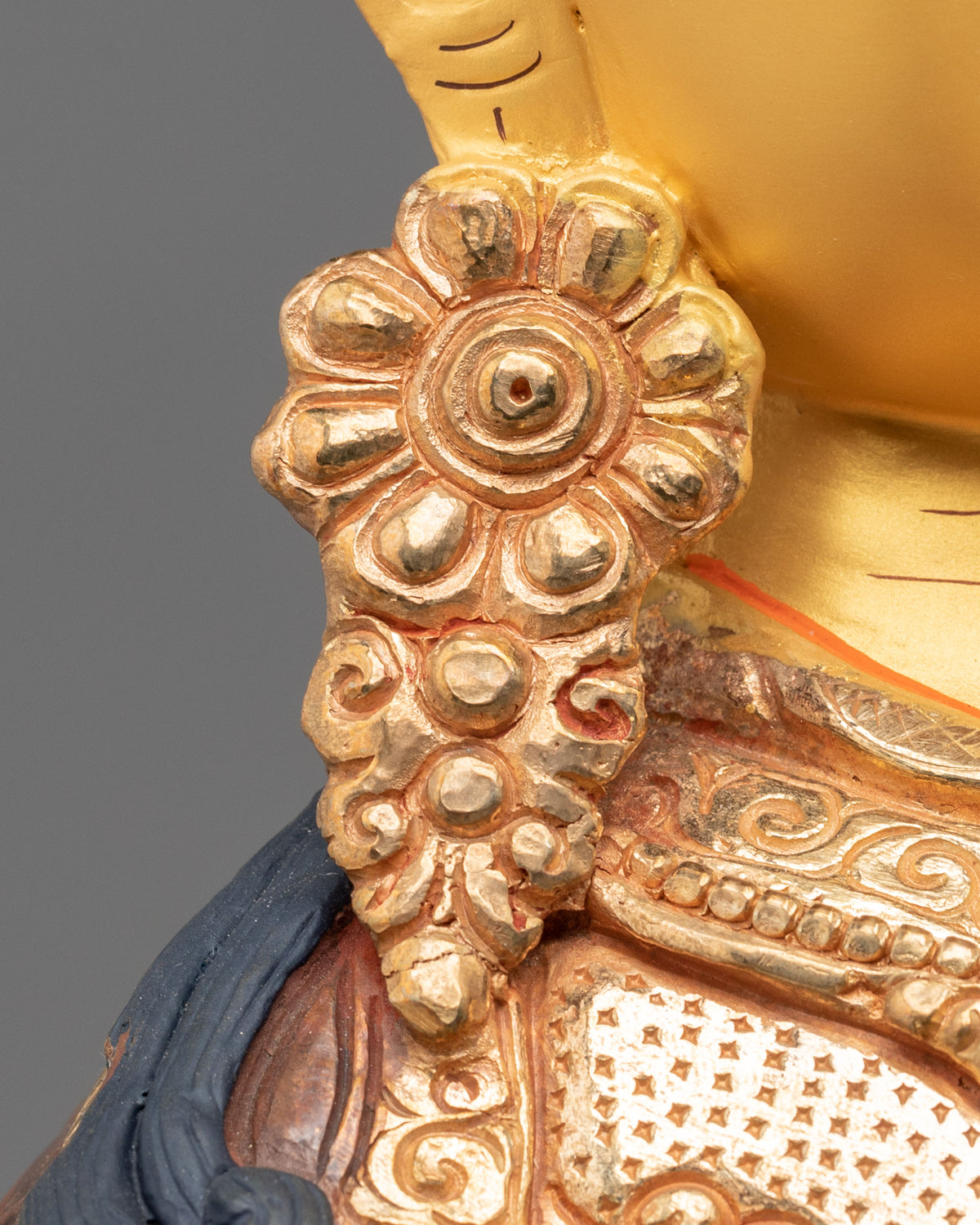
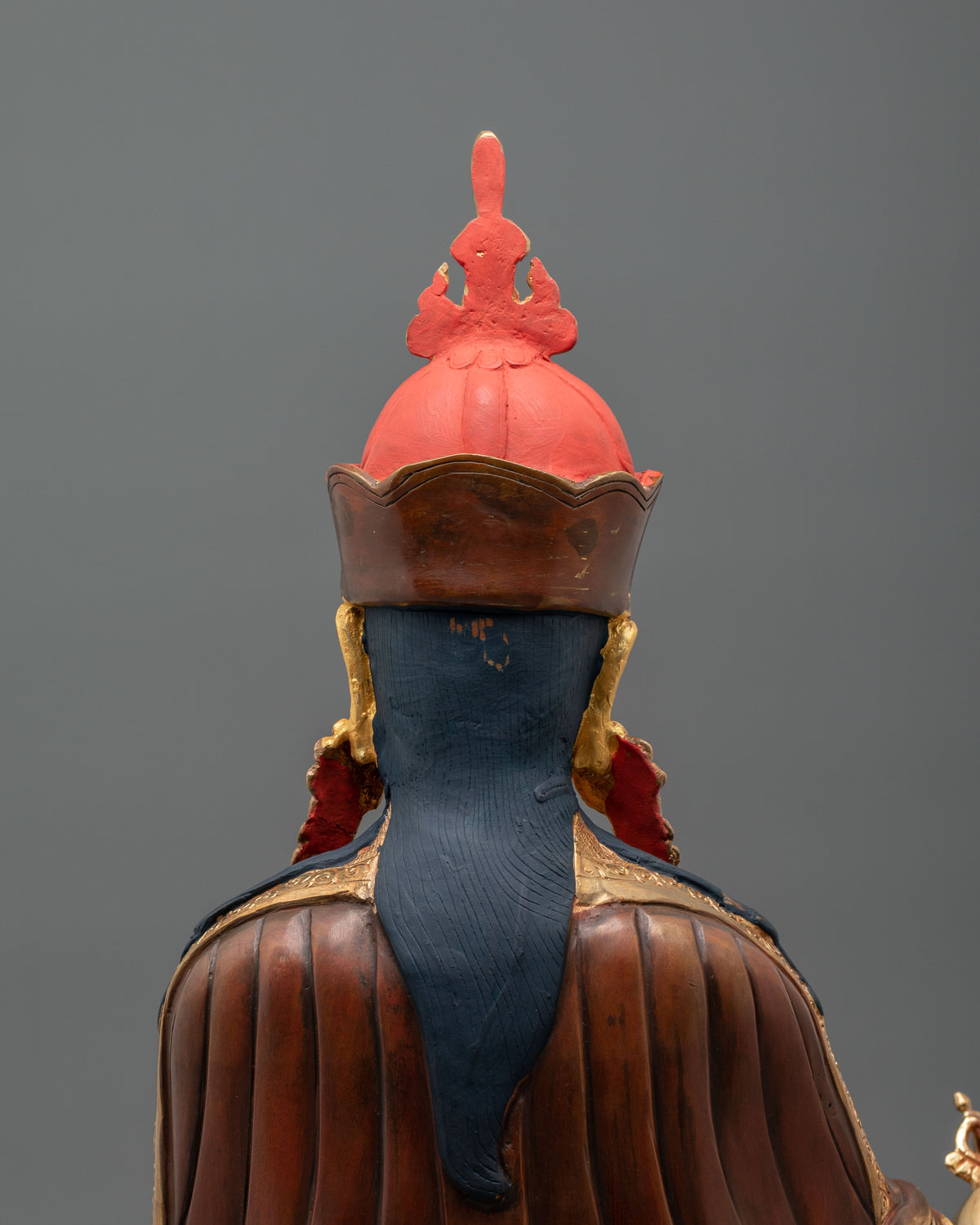
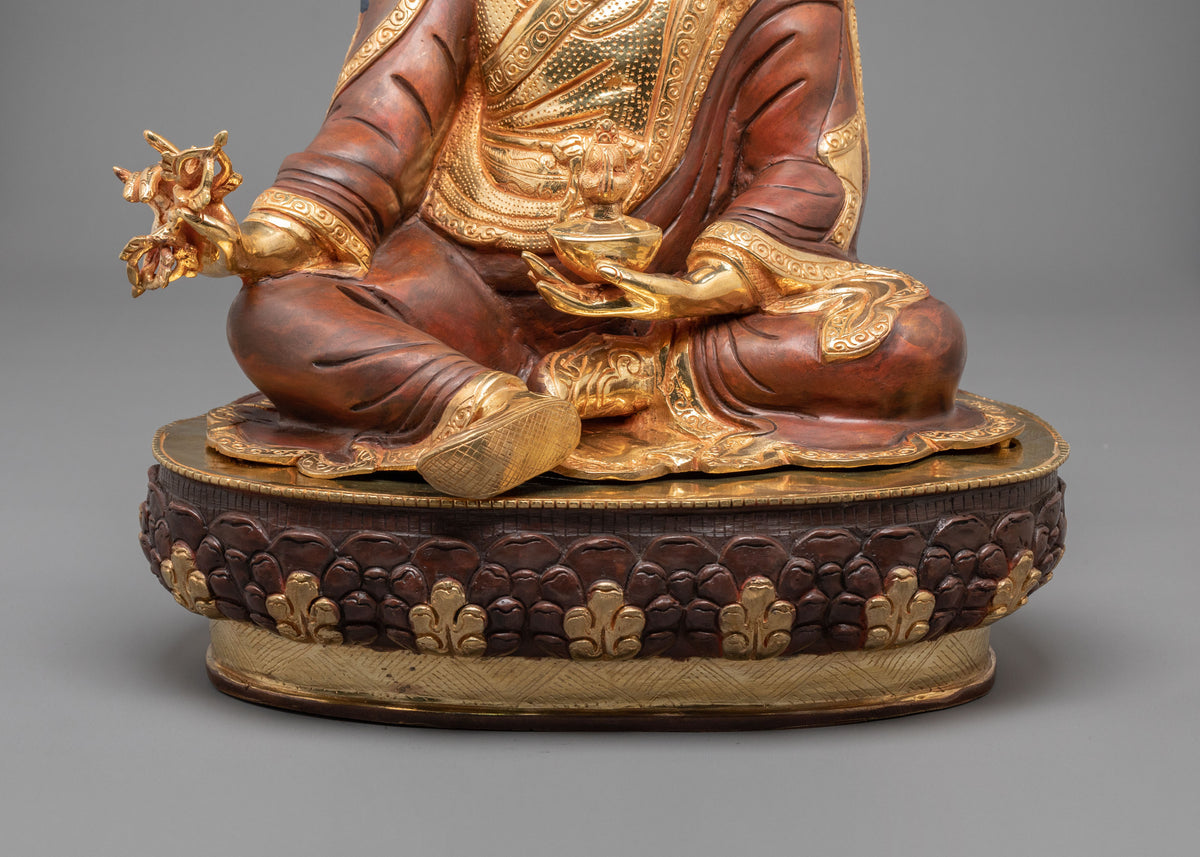
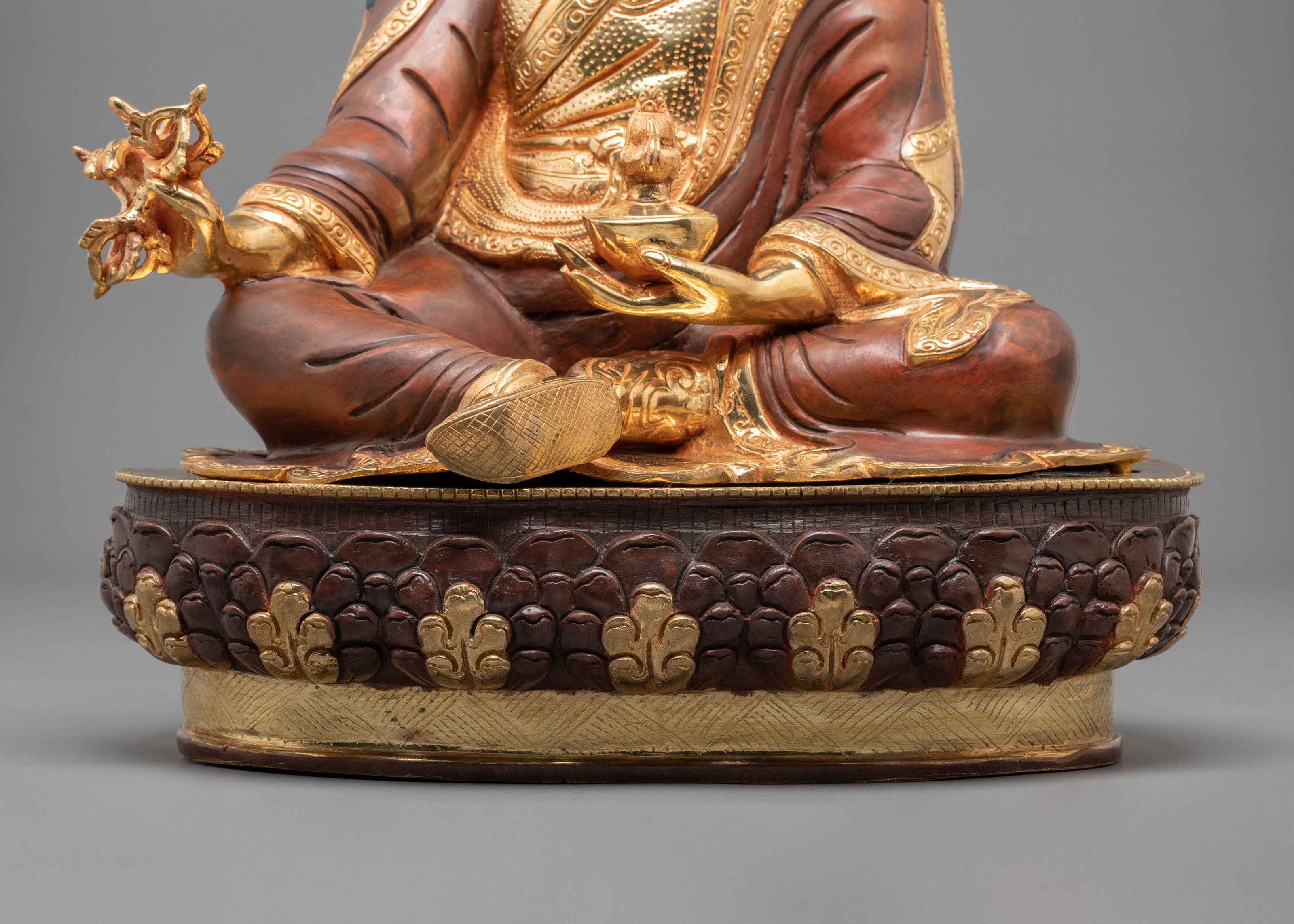
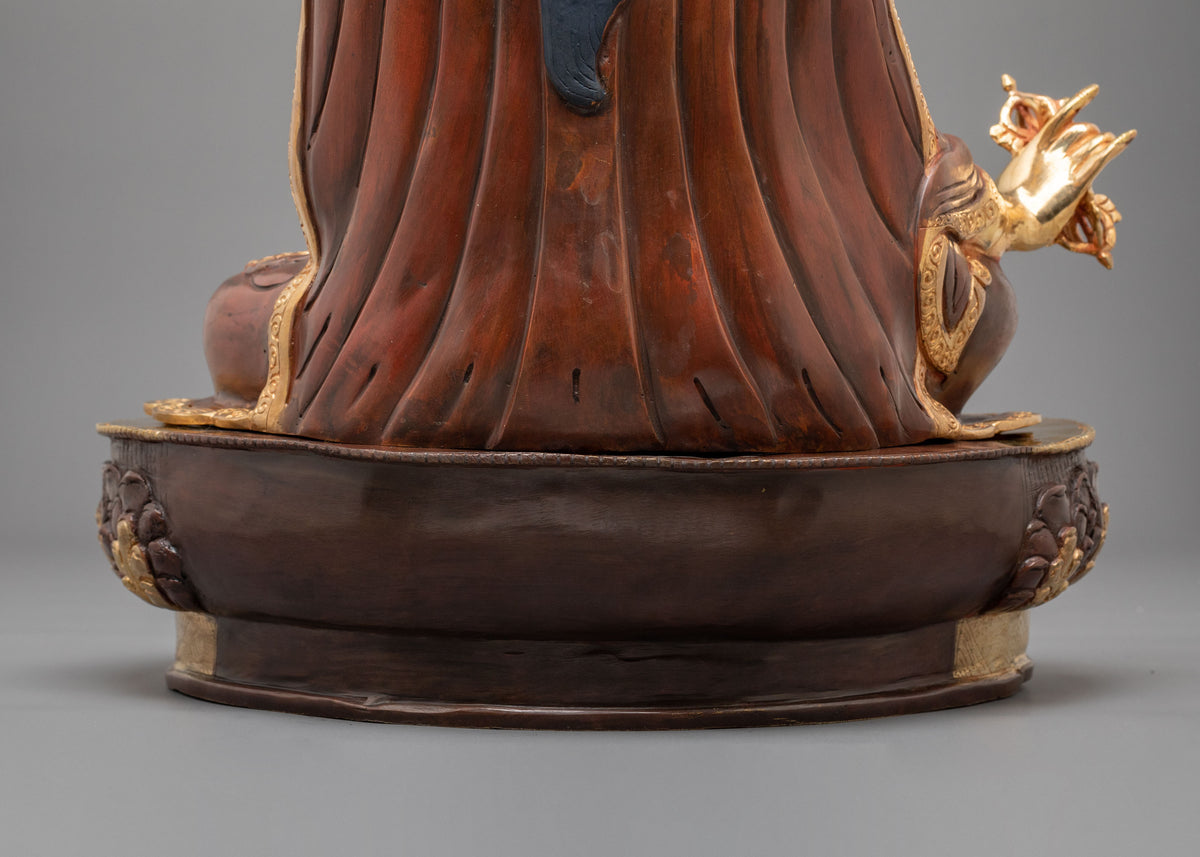
Standing 20 inches (51 cm) tall with a 12.5-inch (32 cm) base, this Guru Rinpoche Statue offers a substantial focal point for a Buddhist shrine. The copper sculpture weighs 9.14 kg and combines 24K gold gilding with acrylic painting. Warm brown robes contrast with the luminous face and golden garment details, while the red lotus hat draws attention to the master’s composed expression. A tall ritual staff rises diagonally beside his shoulder, giving the seated composition a distinctive silhouette. The dark pedestal, accented with golden decorative motifs, completes the presentation. Its generous scale and rich palette make the piece well suited to a temple altar, spacious meditation room, or collection honoring the masters of Tibetan Buddhism.
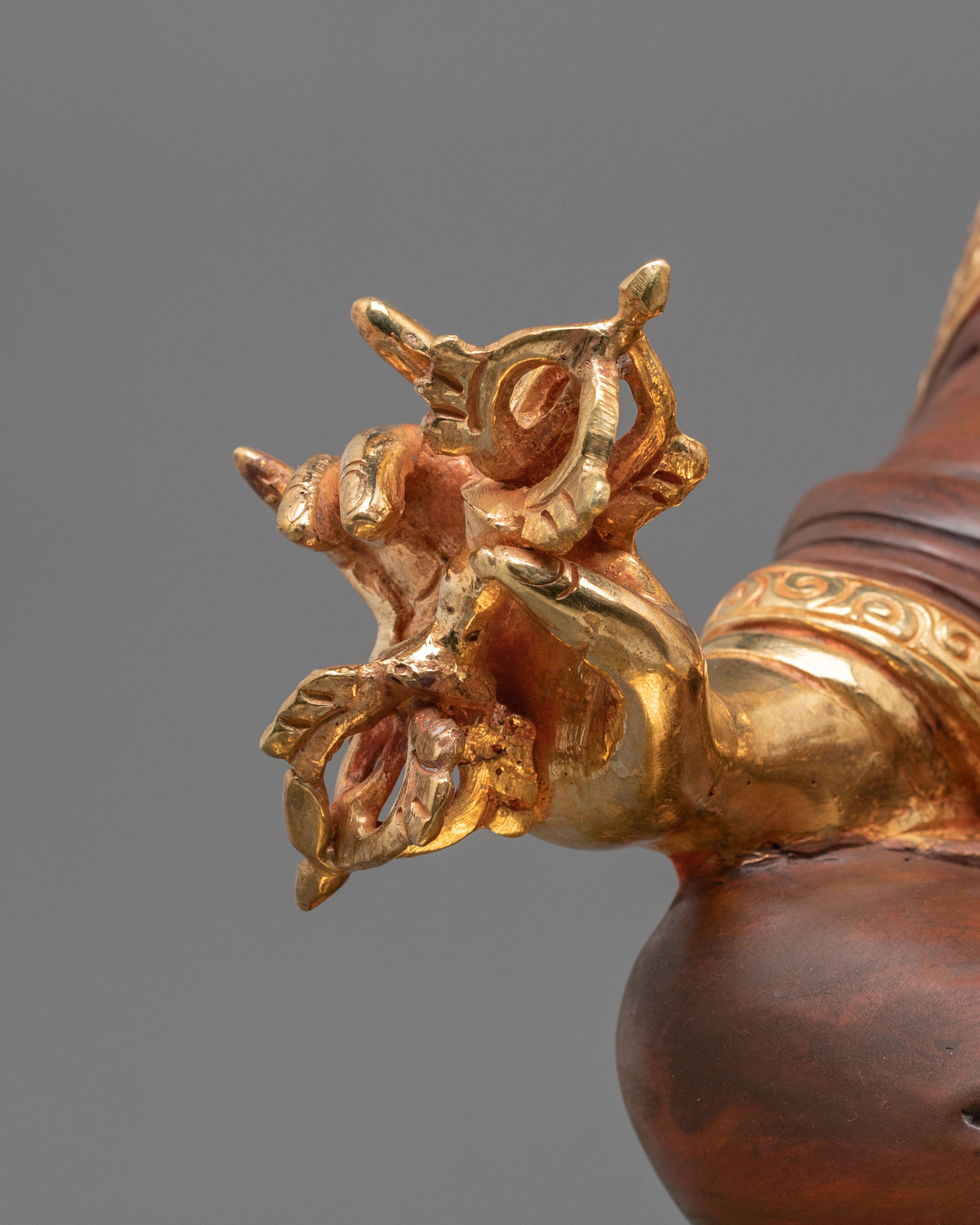
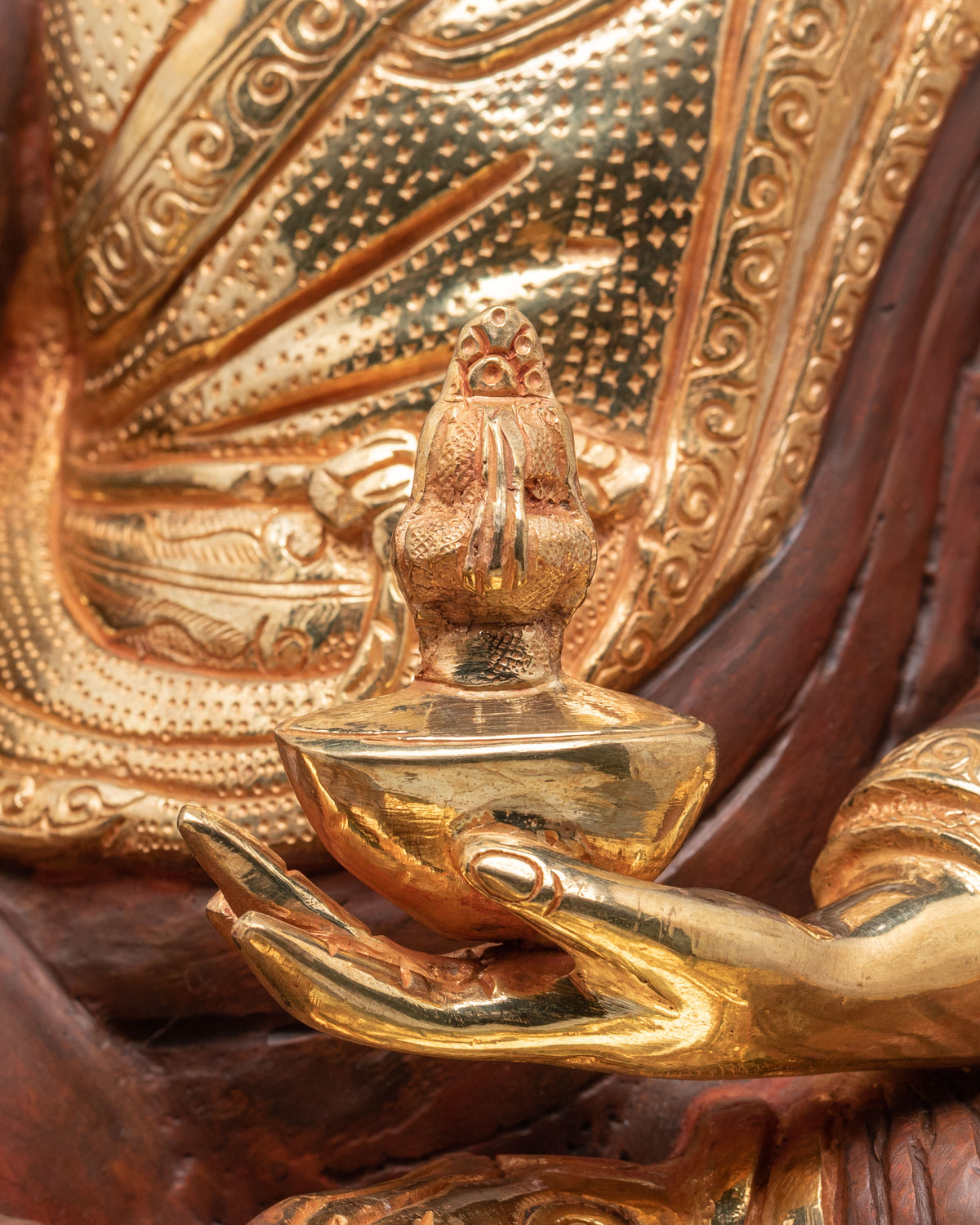
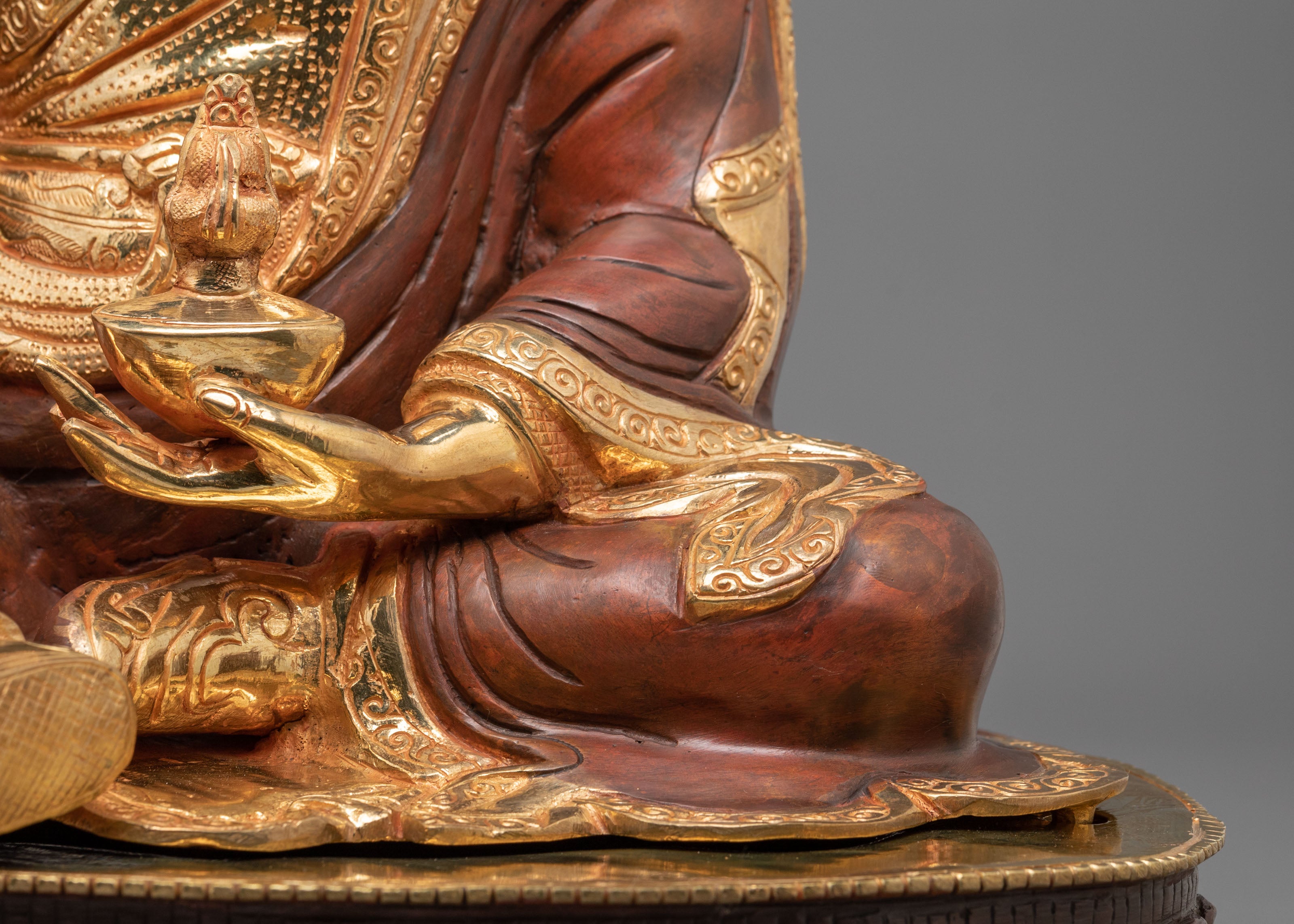
Guru Rinpoche, also known as Padmasambhava, is depicted seated with his legs folded, wearing layered robes and his characteristic lotus hat. His right hand holds a vajra beside his knee, symbolizing indestructible awakened awareness and the power of enlightened activity. His left hand supports a kapala, or skull cup, in his lap, traditionally containing wisdom nectar and a longevity vase. The khatvanga staff rests beside his left shoulder; its stacked heads represent the three kayas, or dimensions of Buddhahood, while the staff also signifies the wisdom consort. His lotus hat expresses his connection with the five Buddha families, and his layered clothing brings together the identities of tantric practitioner, monastic teacher, and spiritual sovereign. These attributes present the master as an embodiment of wisdom and compassionate action, central to the transmission of Vajrayana Buddhism in Tibet.
Size: 20”/51cm (Height) x 12.5”/32cm (Base)
Weight: 9.14 kg
Material: 24K Gold Gilded, Acrylic Painting, Copper Body
Guru Rinpoche, meaning "Precious Master," is the historical figure credited with establishing Vajrayana Buddhism in Tibet during the 8th century. Known for his extraordinary spiritual accomplishments and ability to subdue negative forces, he is considered a second Buddha by many schools of Tibetan Buddhism, embodying enlightenment, protection, and the dispelling of illusion. A timeless embodiment of profound wisdom, crafted to inspire quiet practice and enduring reverence.
Explore our Guru Rinpoche Statue Collection.