


Description
Guru Rinpoche Golden Statue on Throne | Embodiment of Profound Wisdom
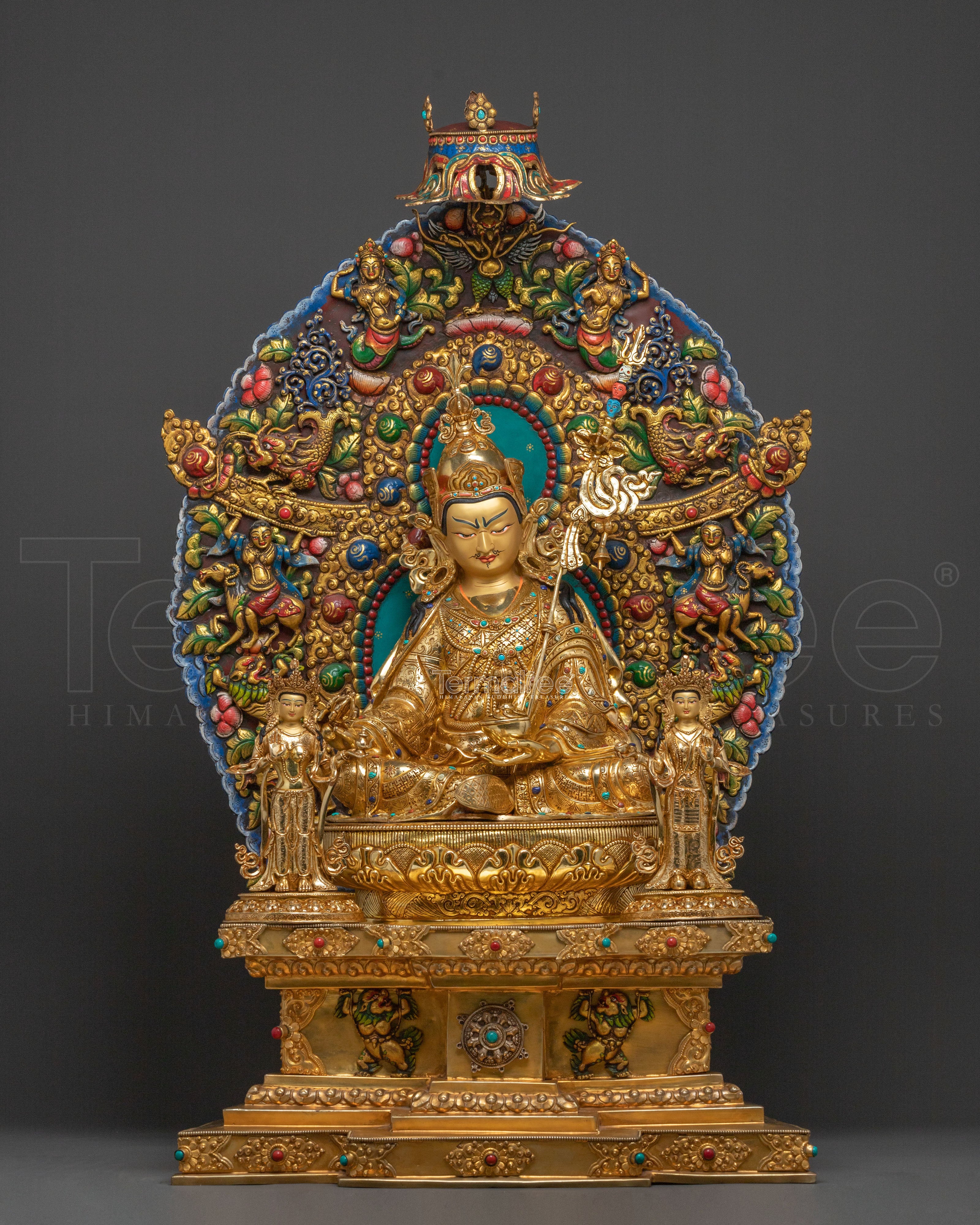
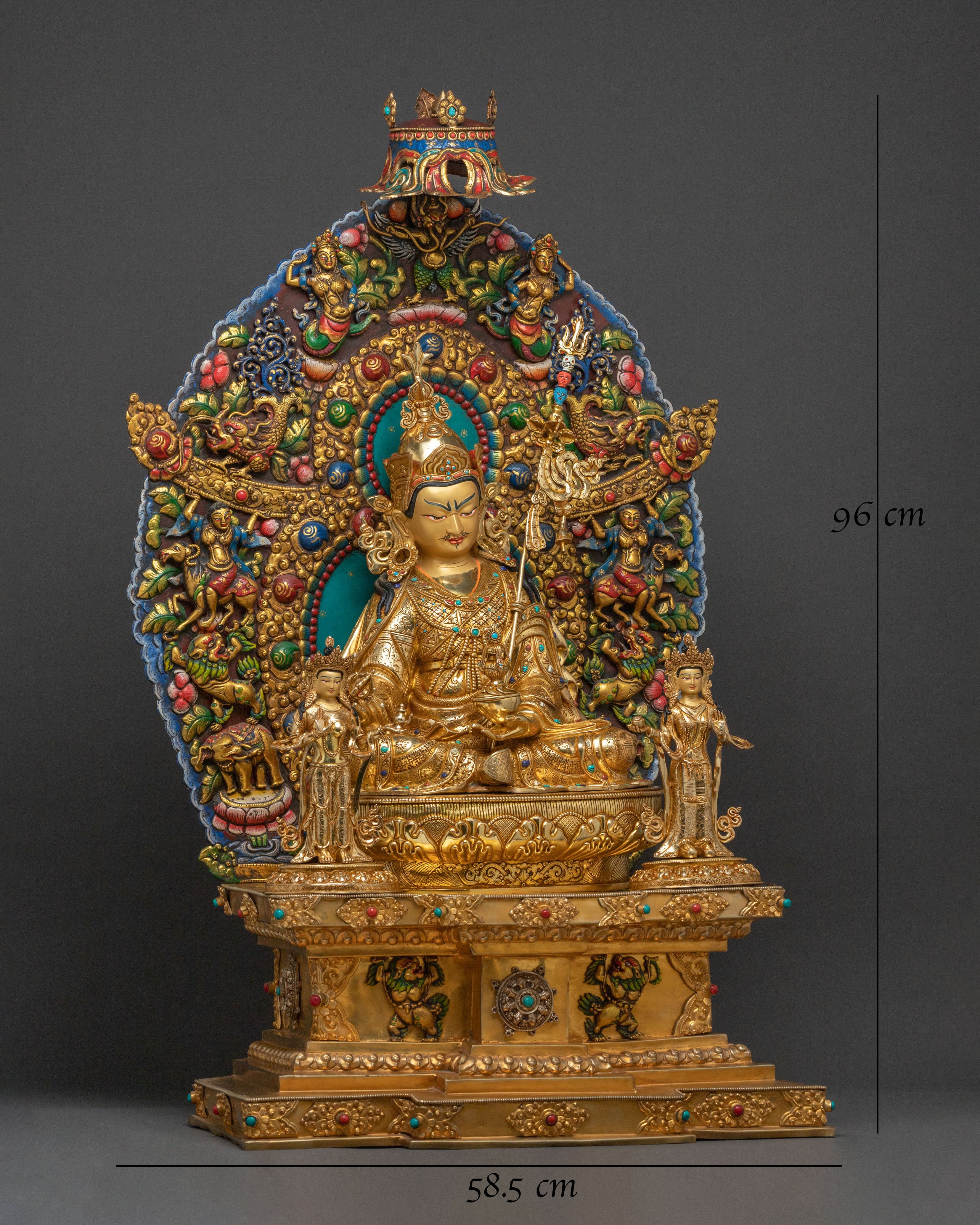
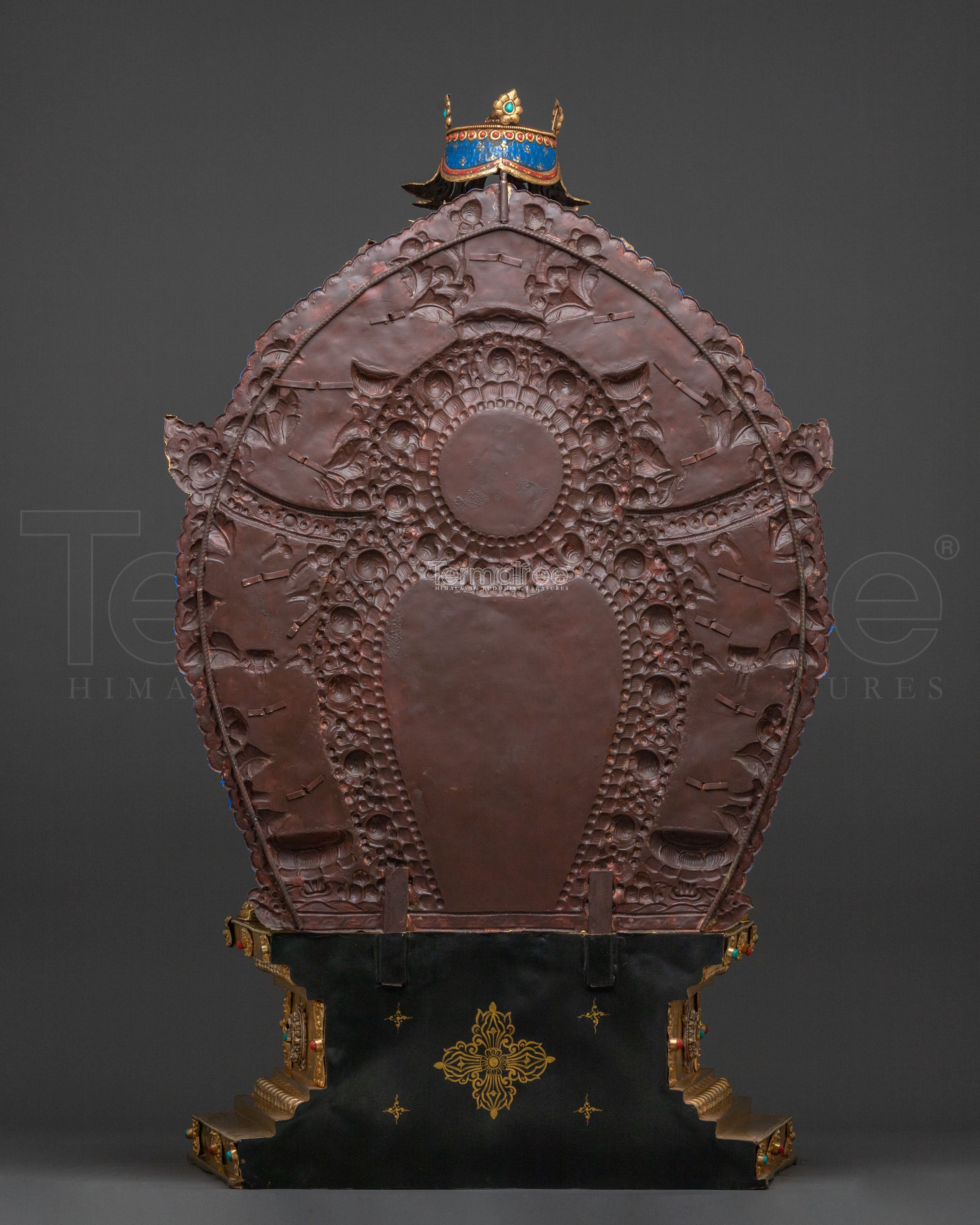
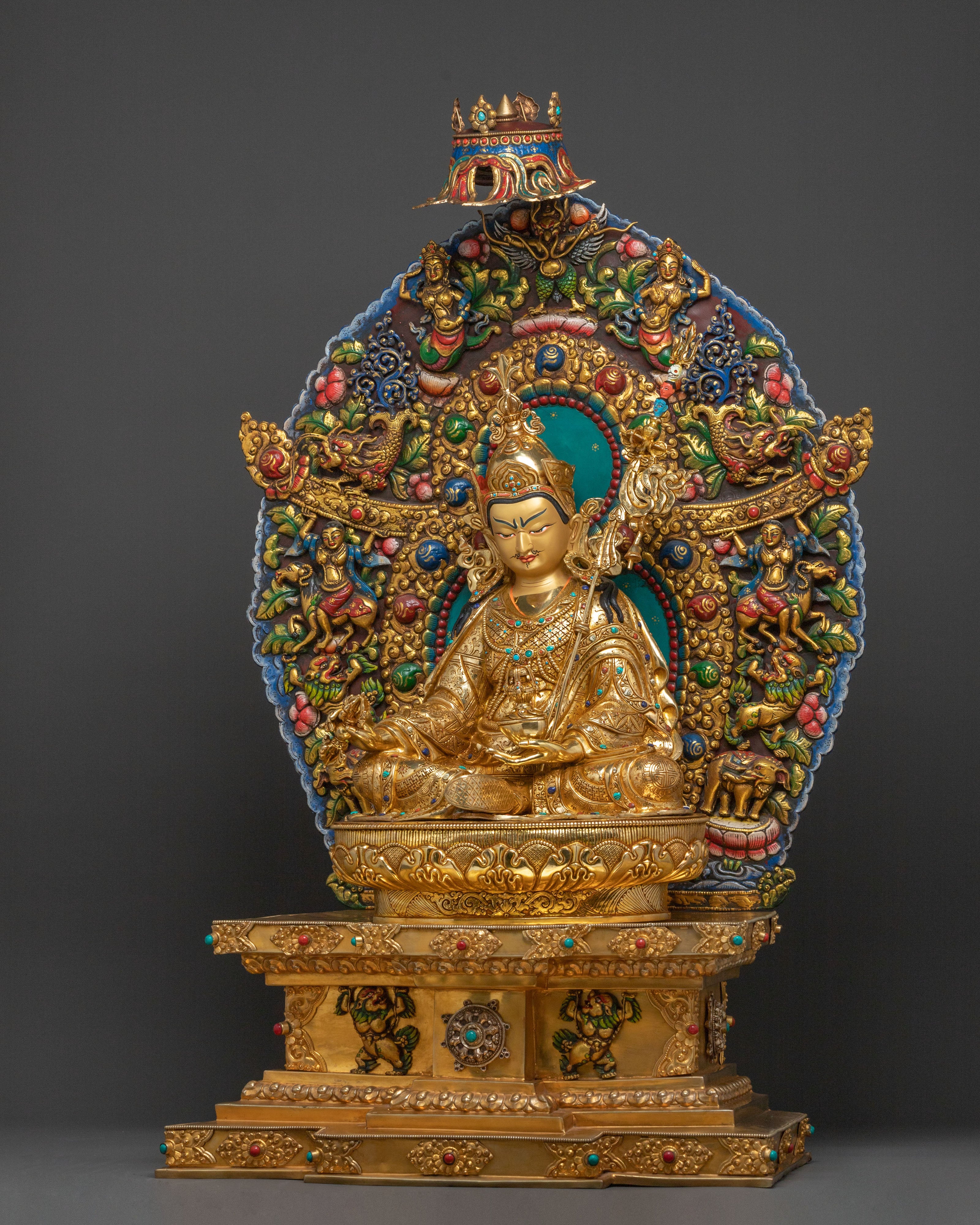
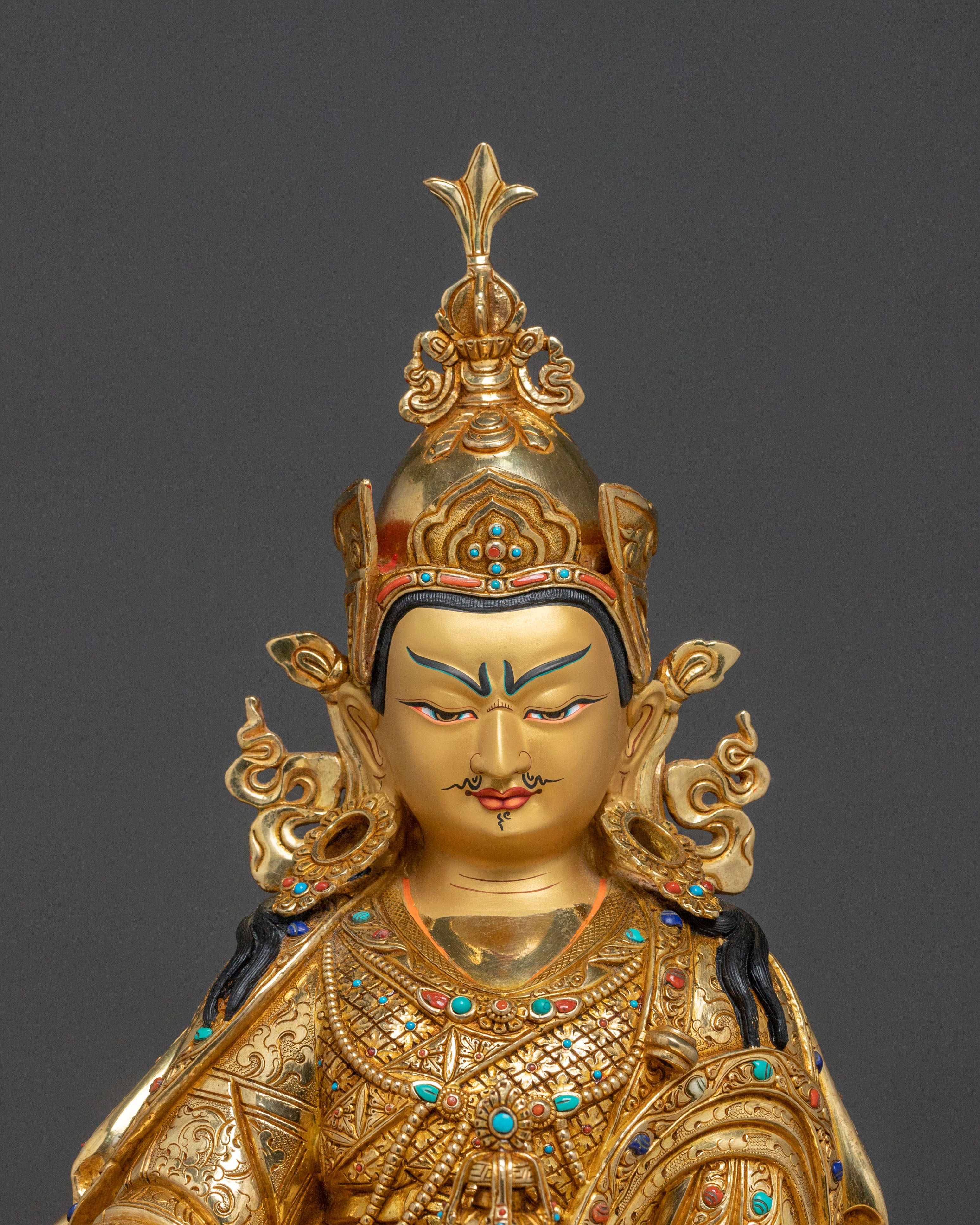
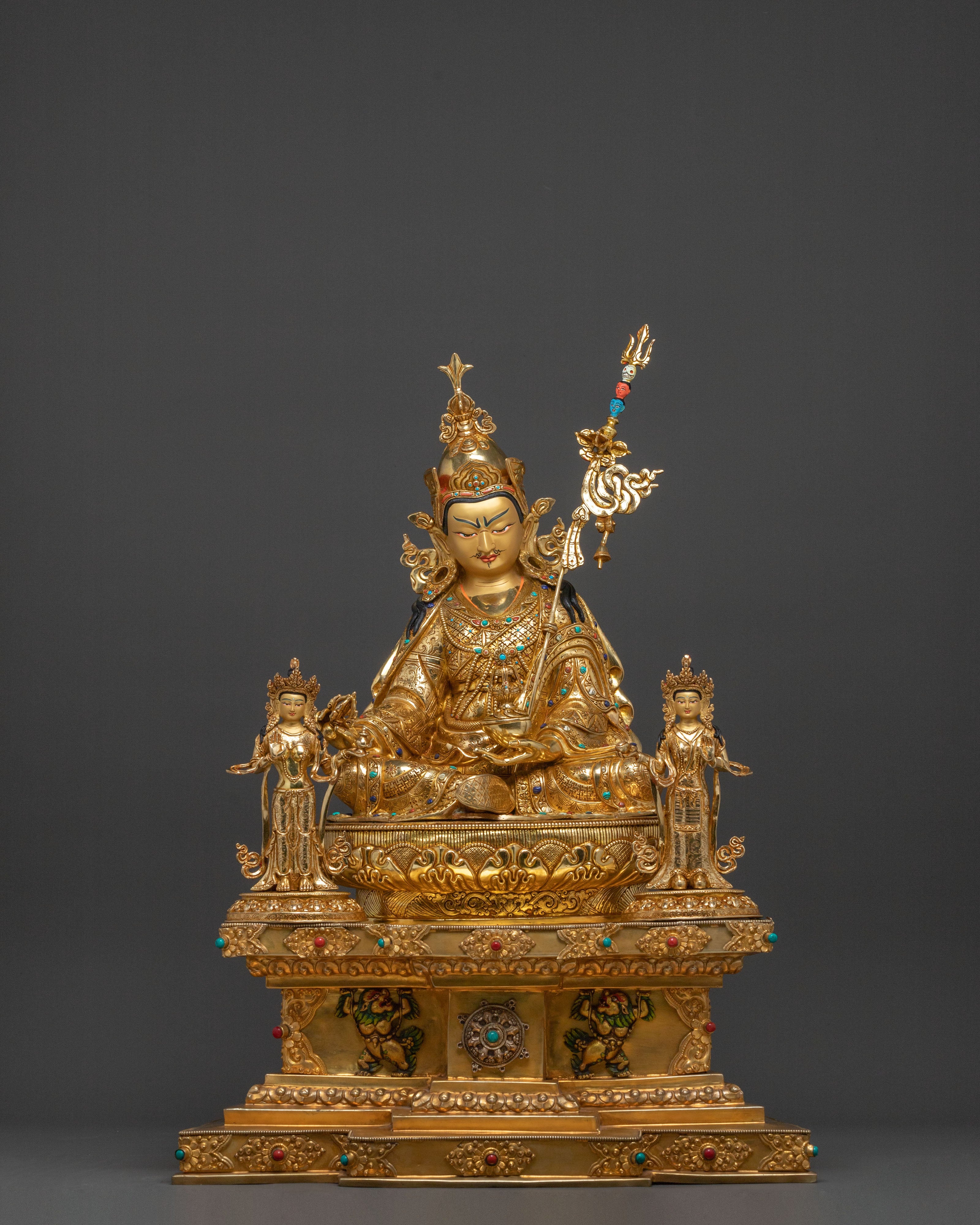
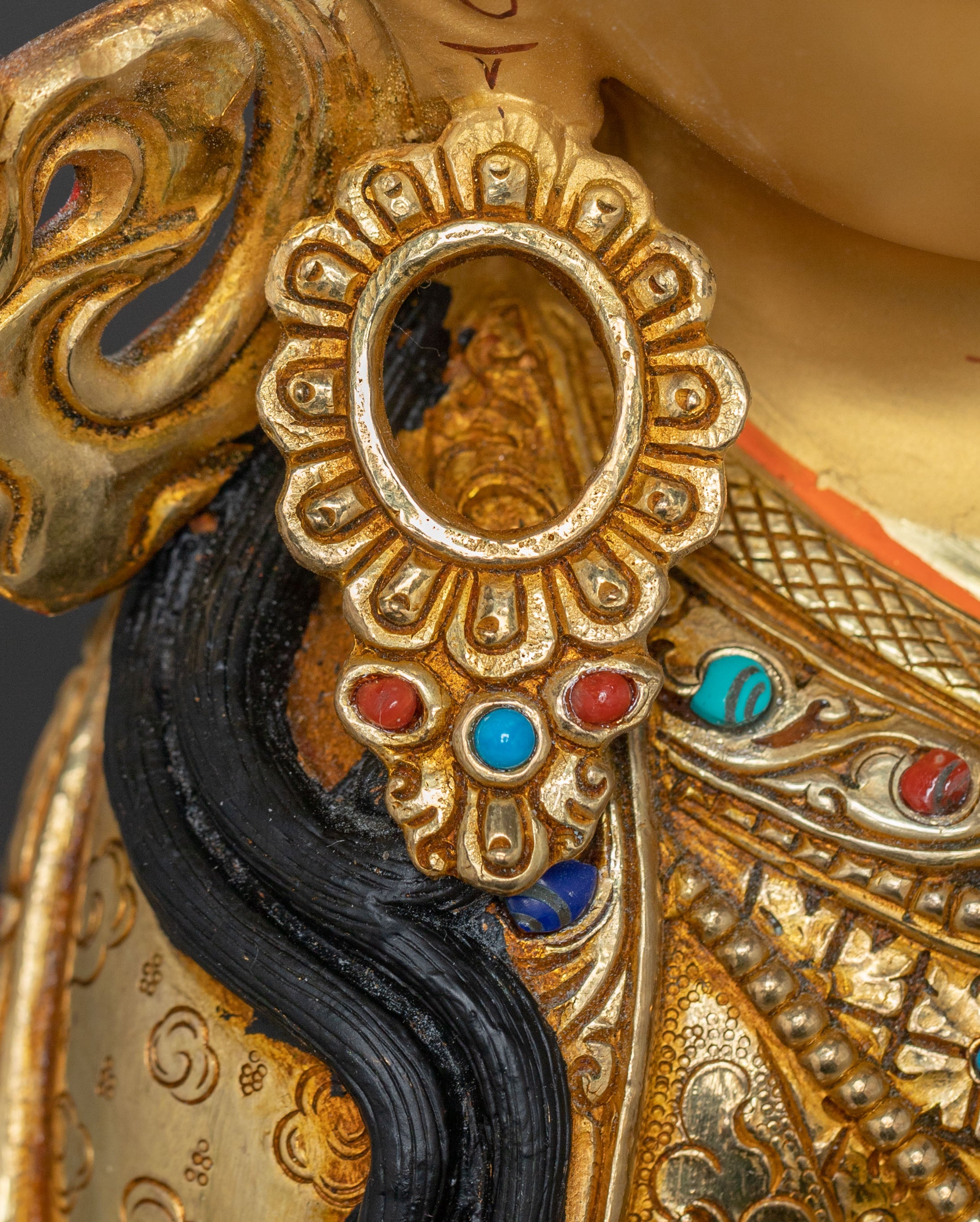
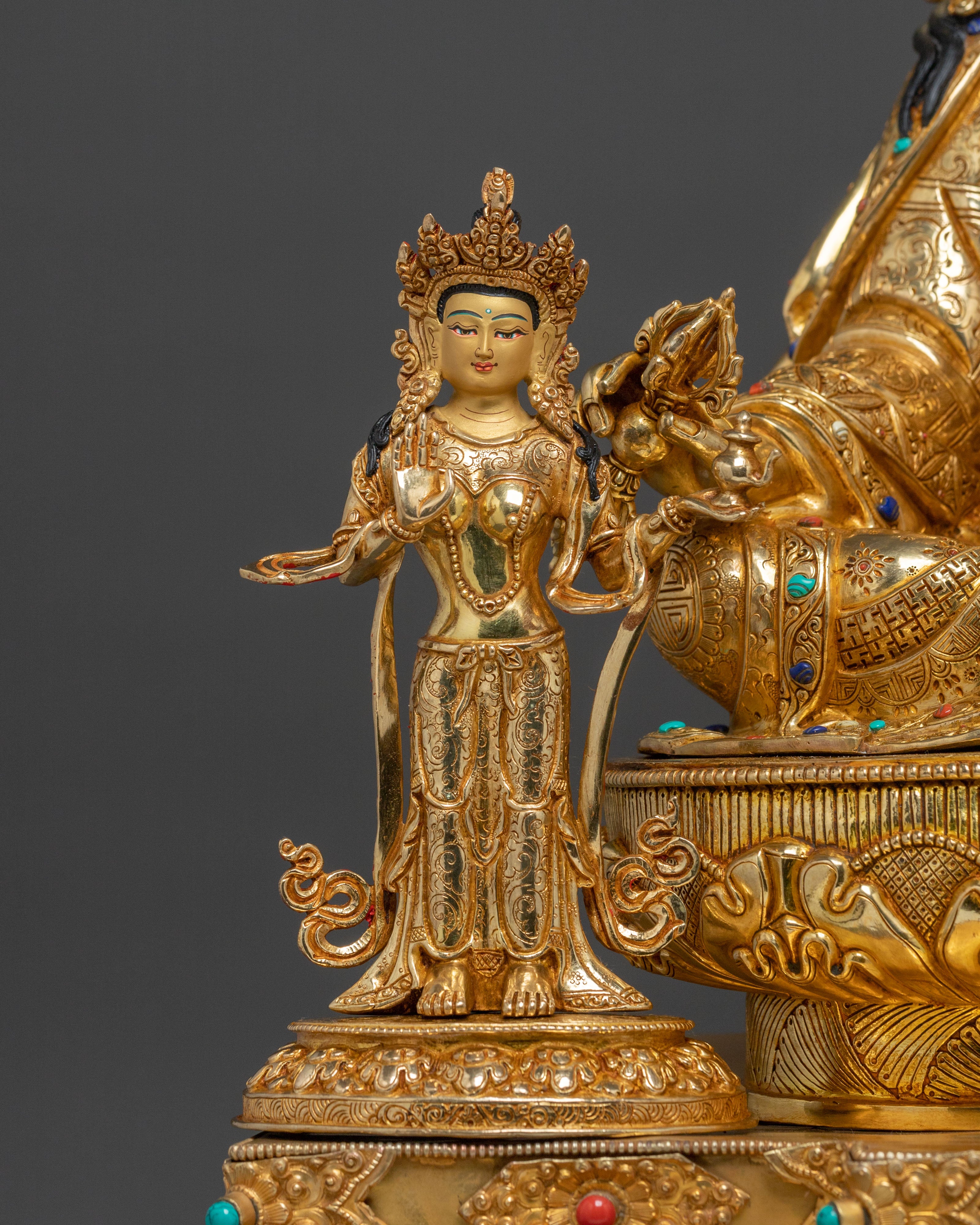
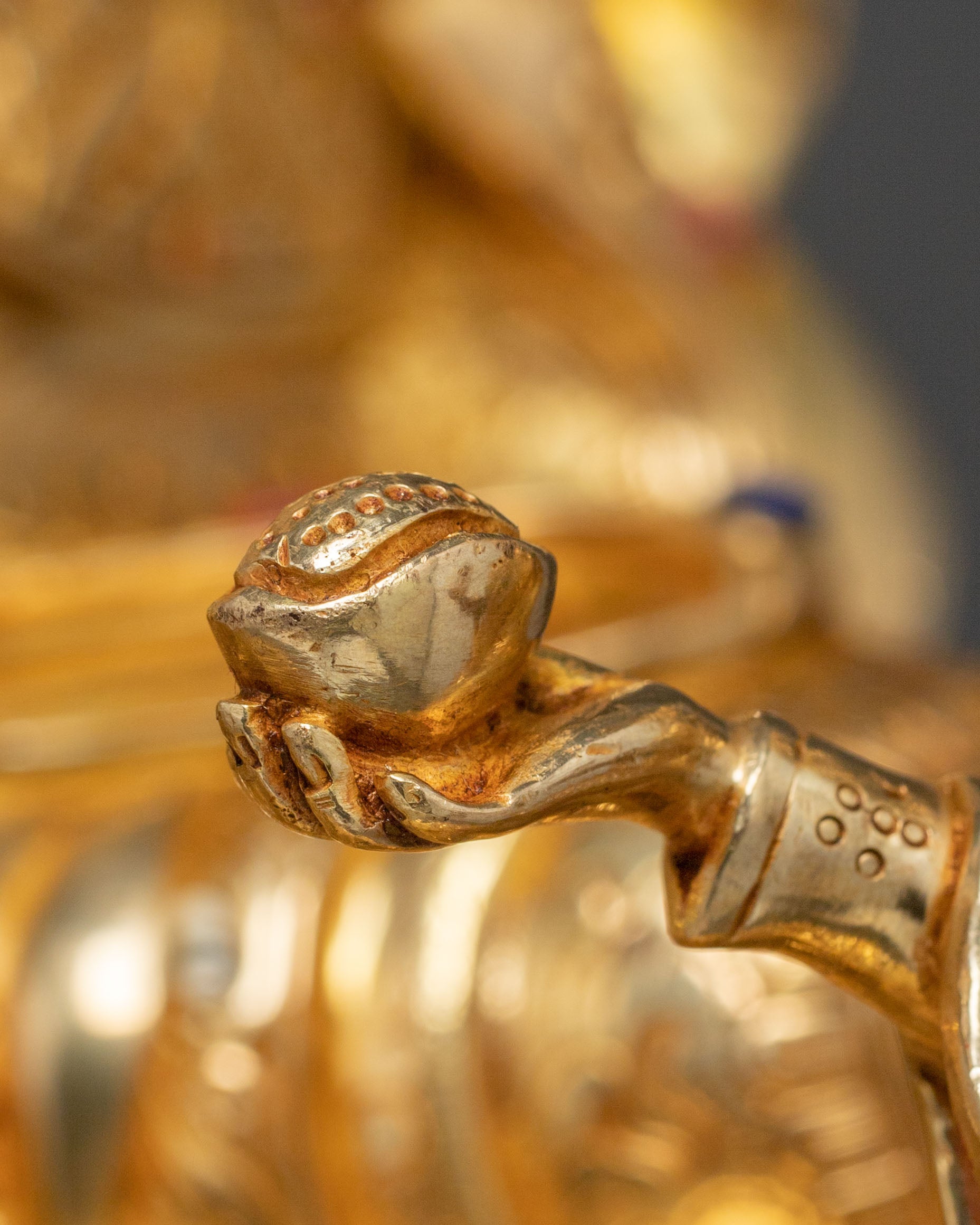
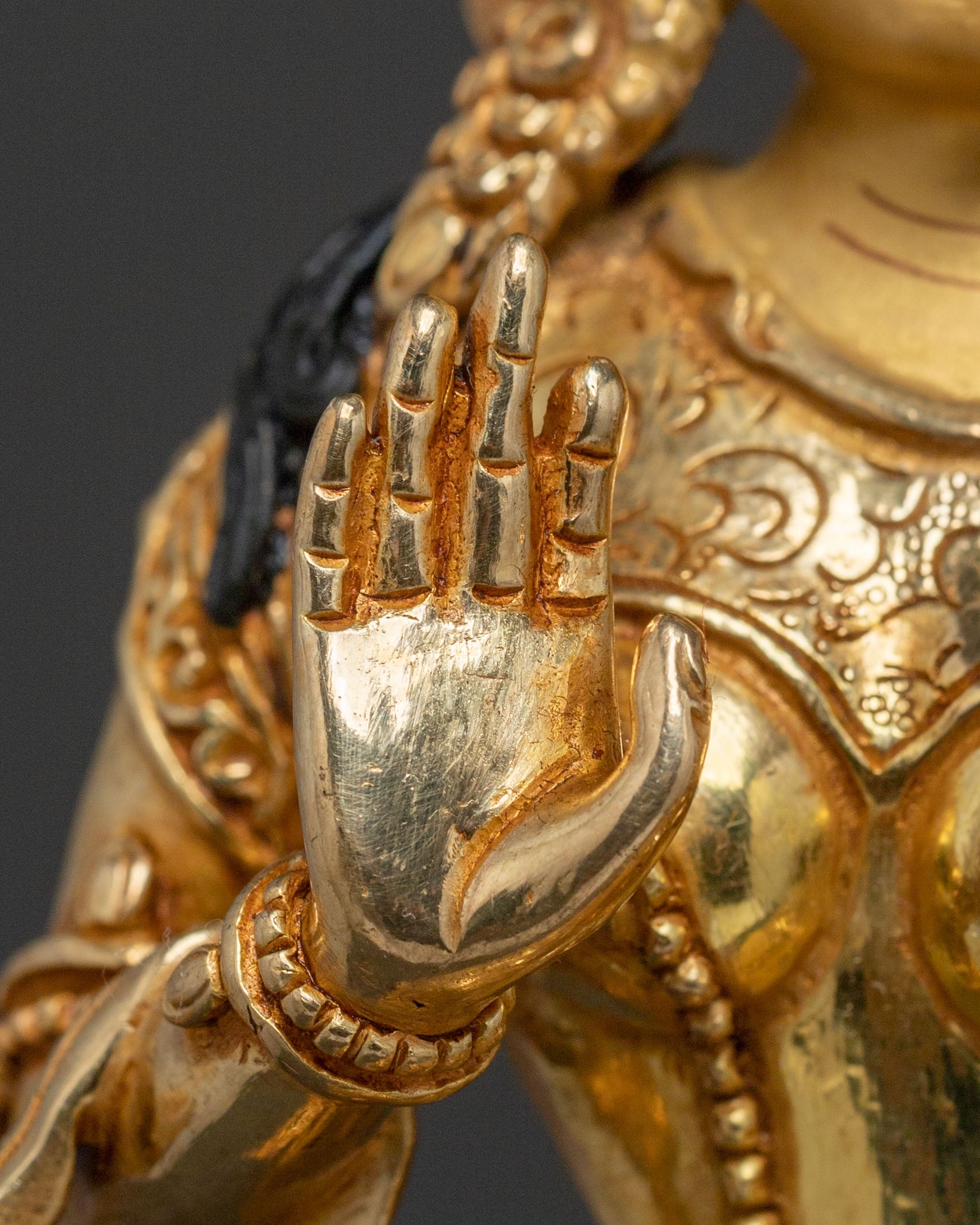
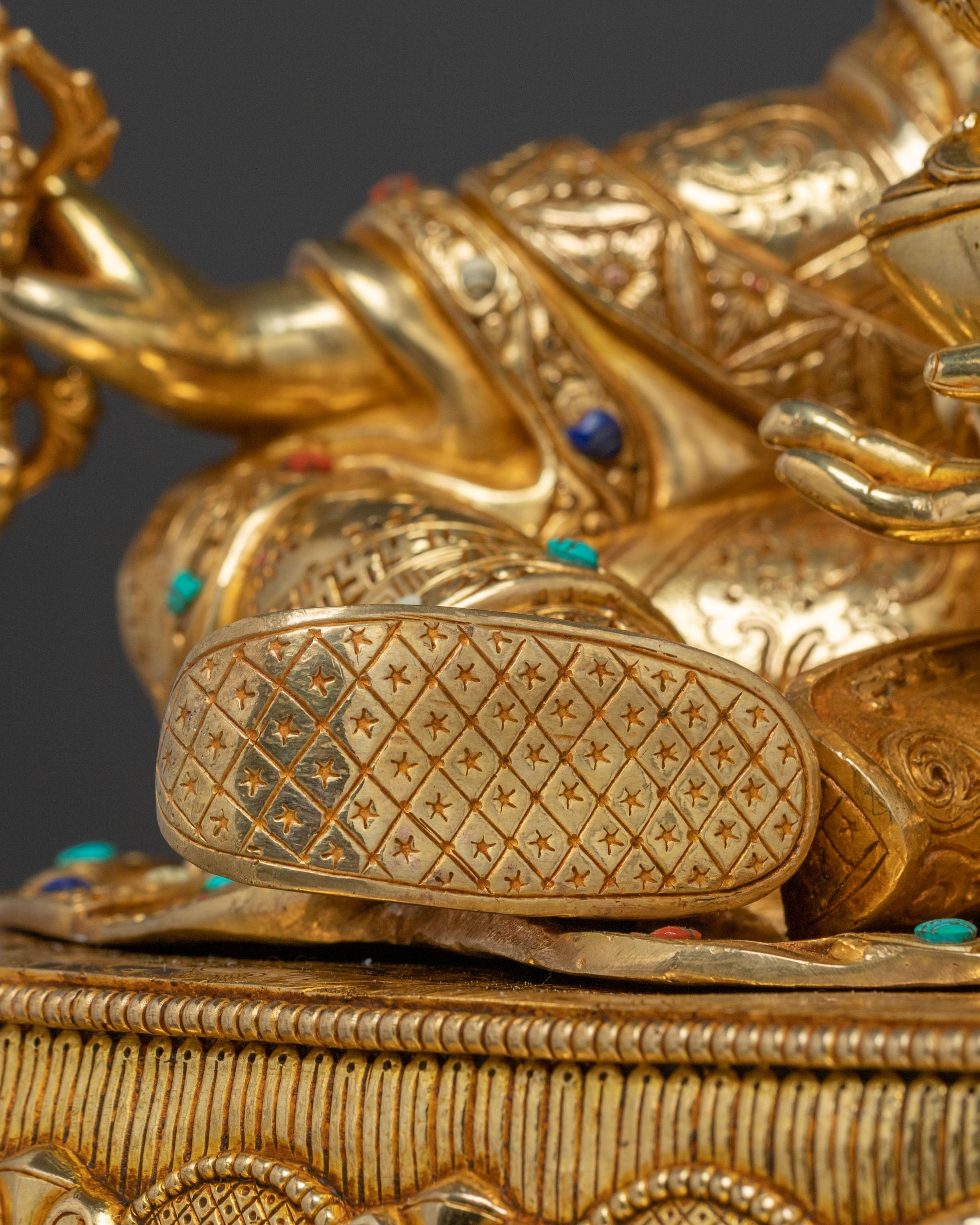
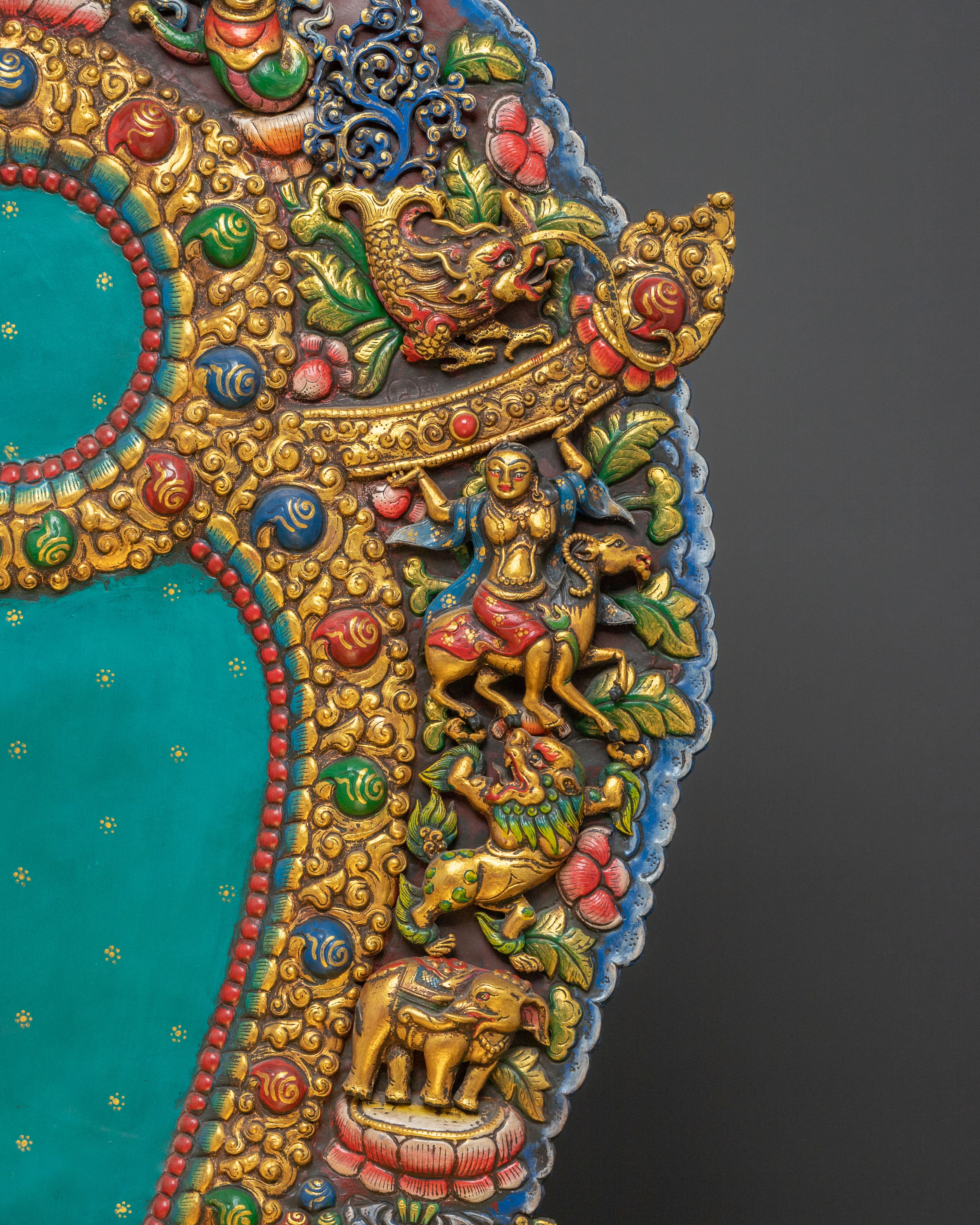
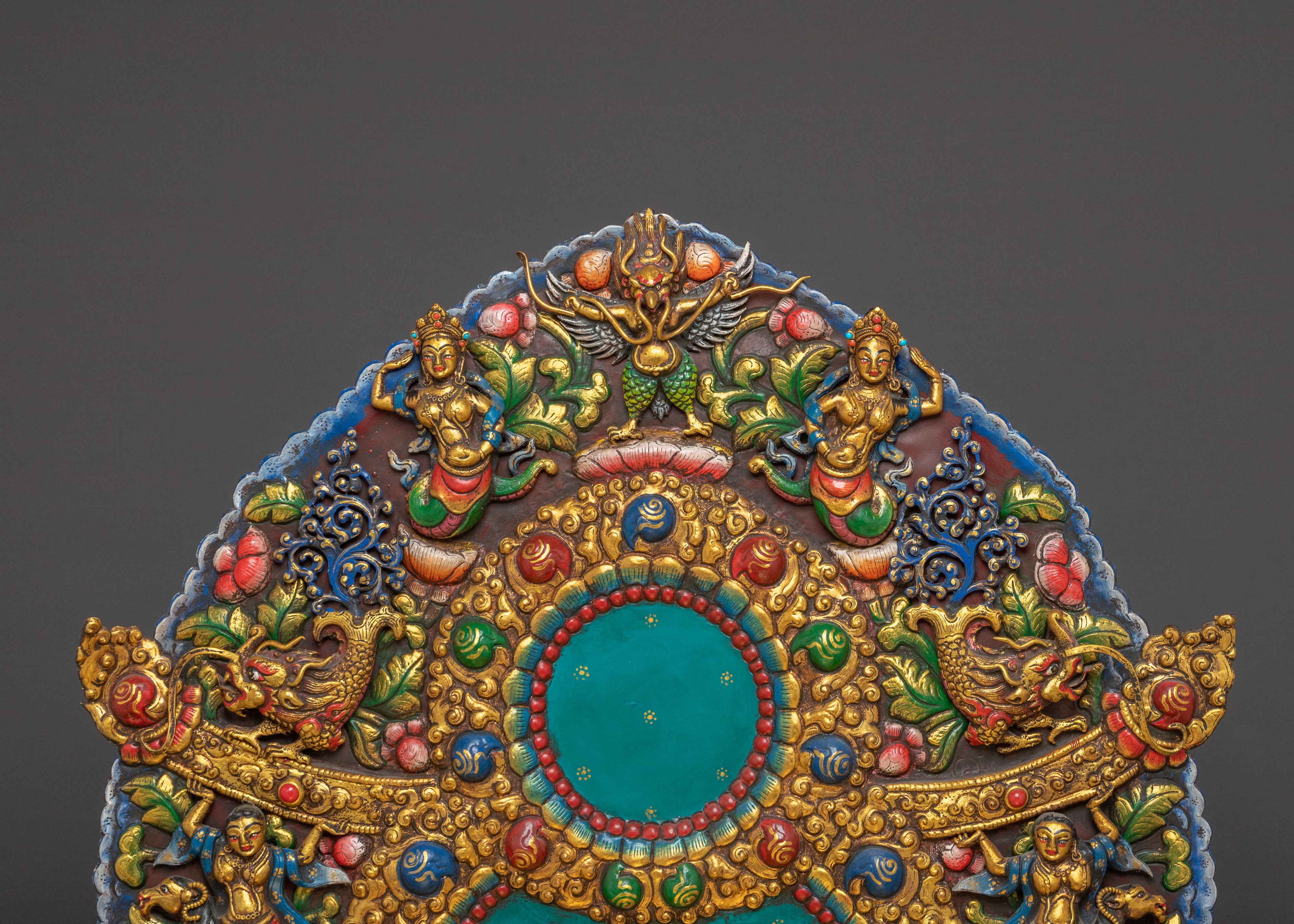
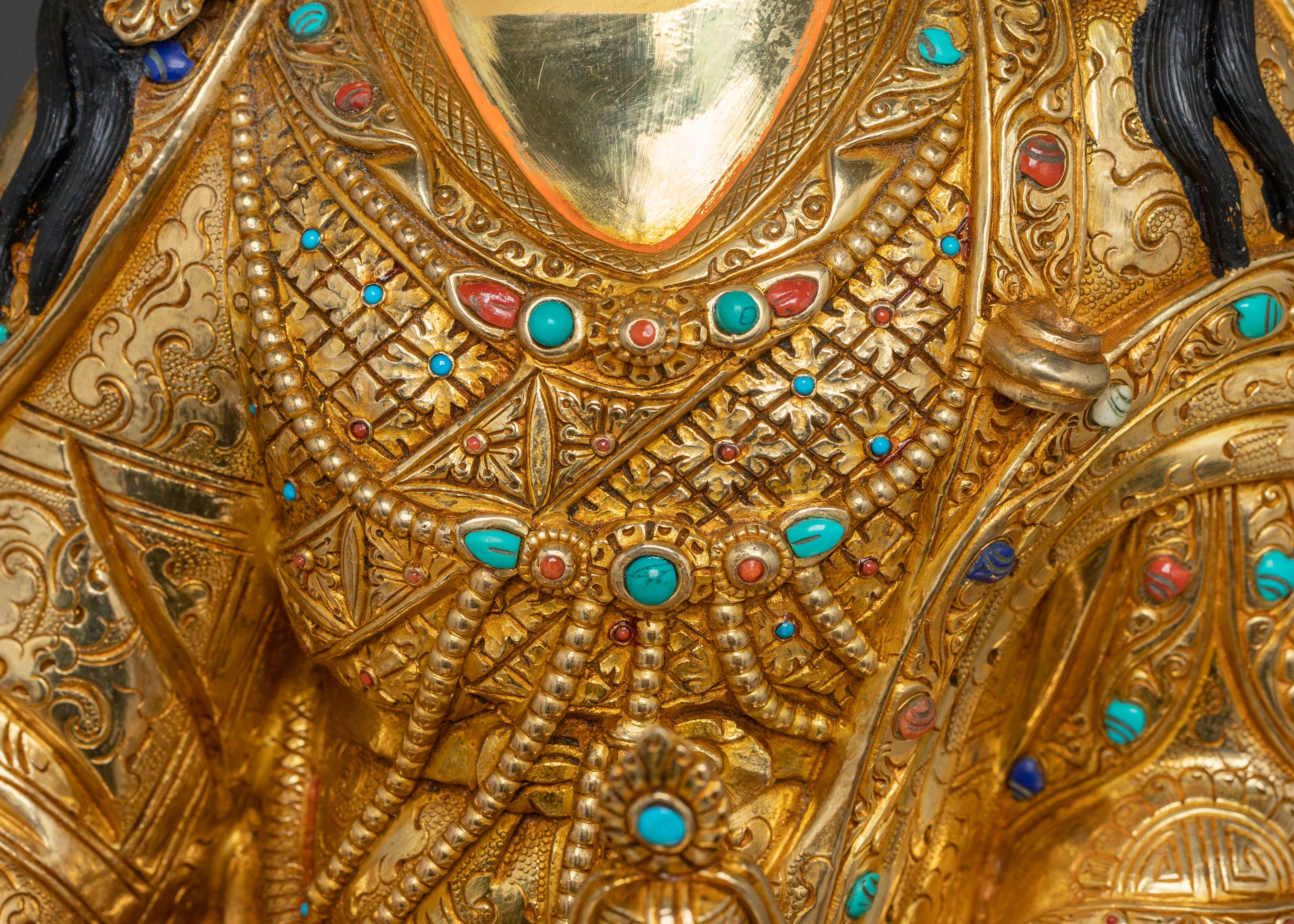
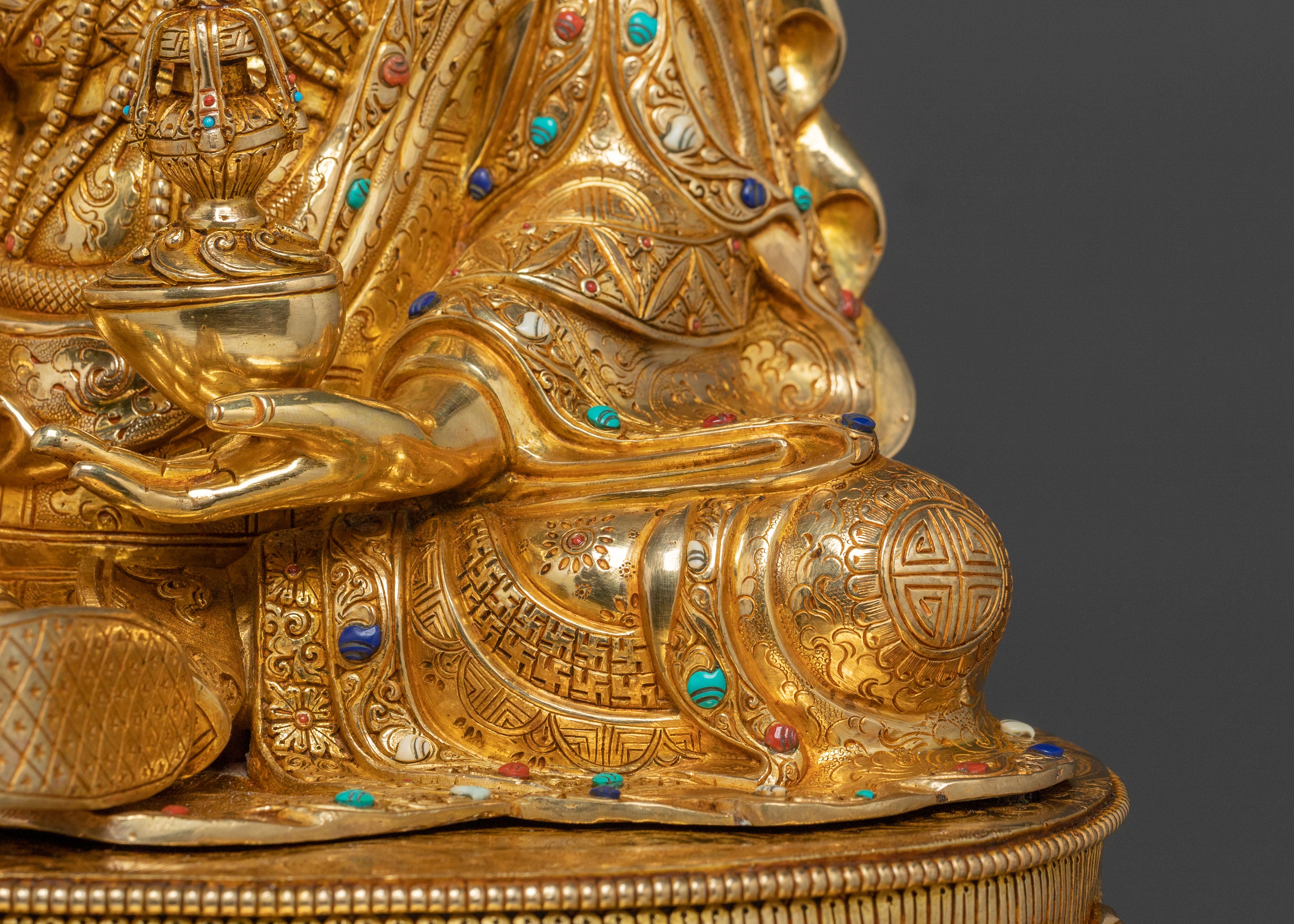
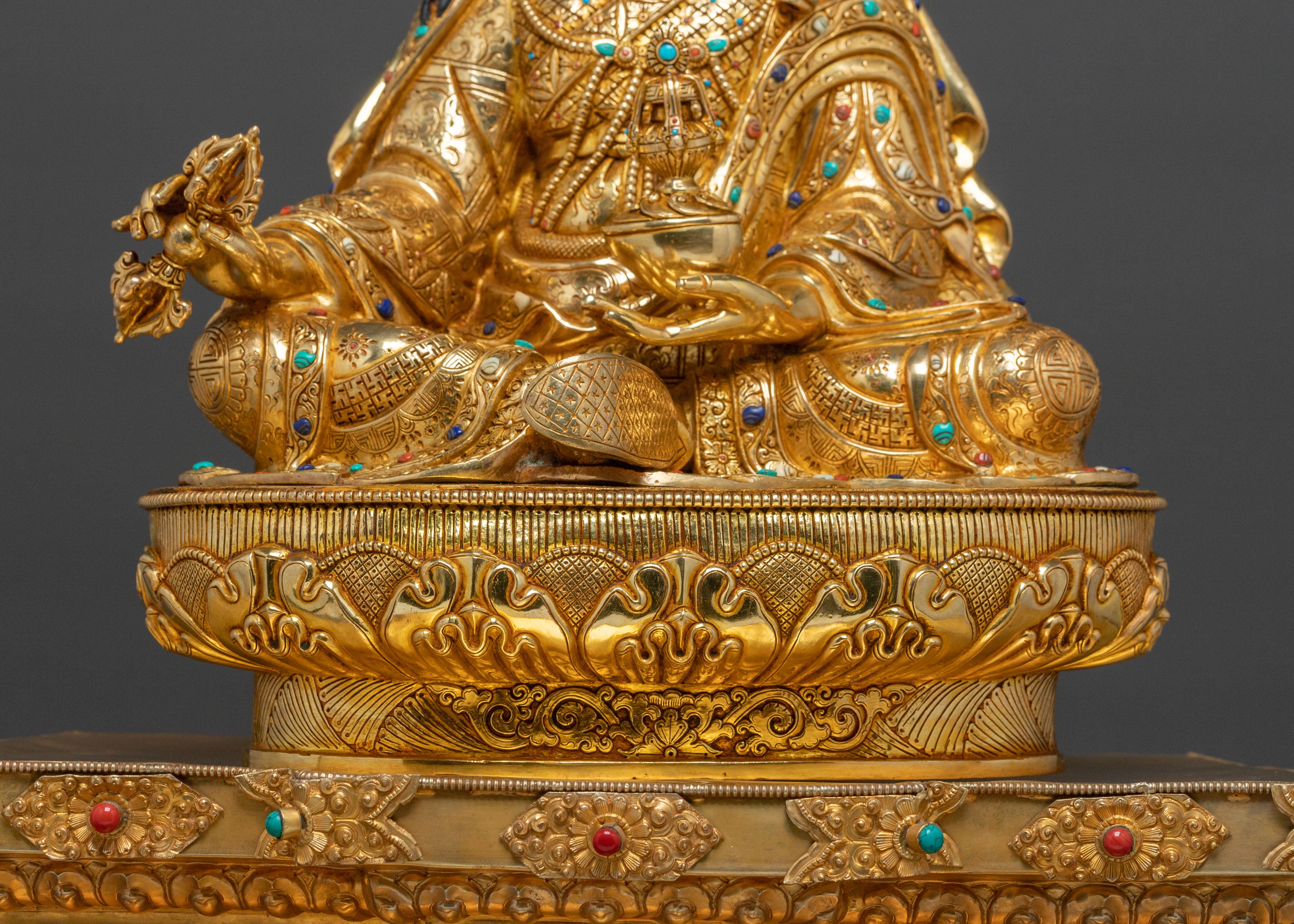
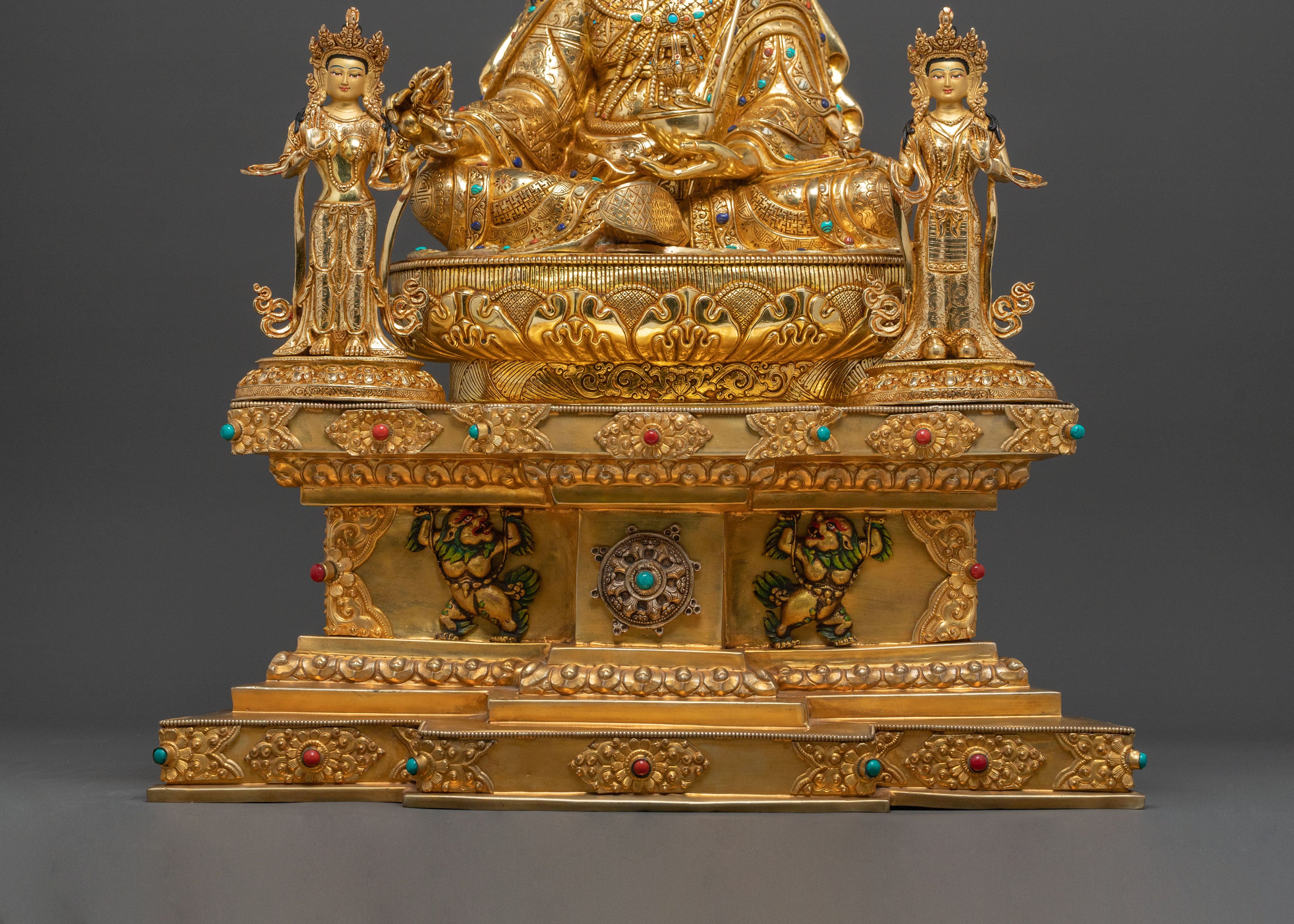
Handcrafted in Nepal, this magnificent Guru Rinpoche statue on a throne embodies Padmasambhava’s regal majesty, wisdom, and profound spiritual artistry. Formed from a copper body, it is adorned with acrylic paintings, hand-carved gemstones, and triple-layer 24K gold gilding. Deeply engraved carvings create a striking 3D-like effect, enhancing its sacred presence. Measuring 38.19 inches (97 cm) high with a 22.83-inch (58 cm) base and weighing 24.12 kg, this splendid masterpiece becomes a captivating centerpiece for altars, temples, and spiritual collections.
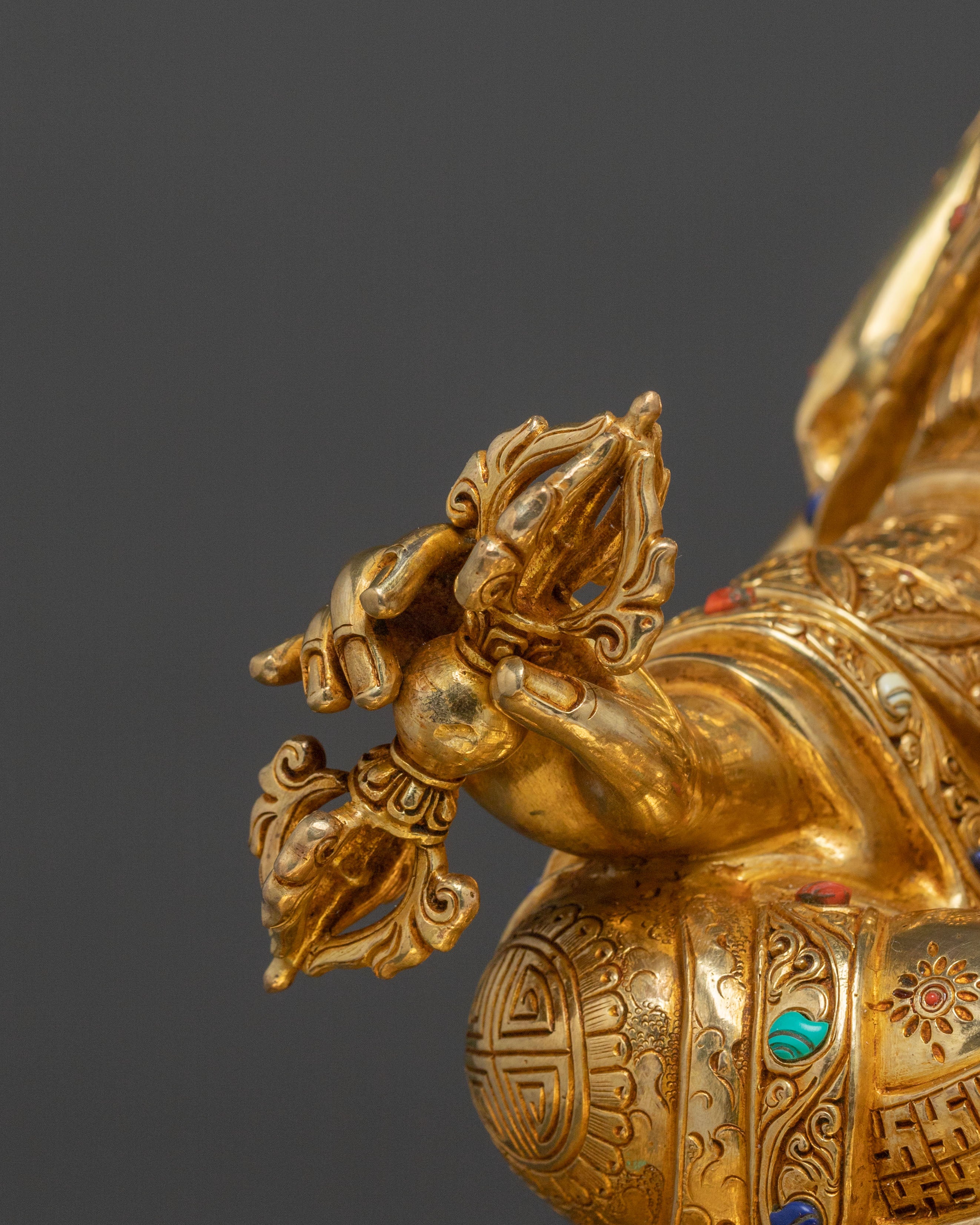
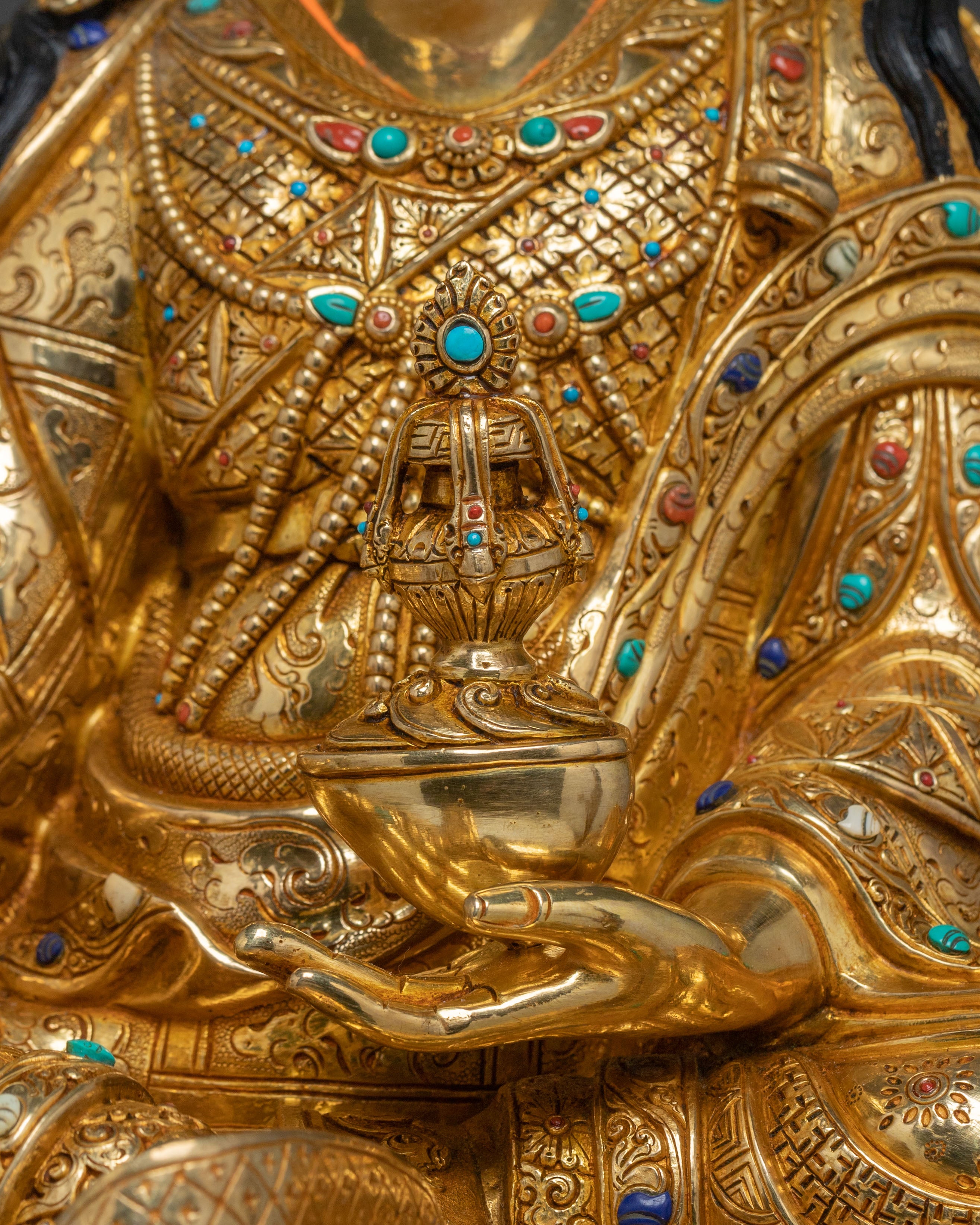
This premium depiction of Guru Rinpoche, also known as Padmasambhava, invites deep contemplation and a profound connection to the sacred Vajrayana lineage. Revered as the Lotus-Born master, his presence symbolizes the power to subdue negative forces, transform obstacles, and allow the Dharma to flourish. His right hand holds the vajra, representing indestructible wisdom and skillful means, while his left hand cradles the skull cup filled with nectar, signifying awakened wisdom and spiritual immortality. The lotus hat, layered robes, radiant ornaments, and khatvanga staff further express his tantric mastery, protective power, and enlightened realization. Meditating upon this sacred form inspires practitioners to cultivate unwavering devotion, compassion, purification, courage, and inner clarity. This statue serves as a powerful focal point for spiritual practice, guiding devotees toward transformation, protection, and deeper alignment with Guru Rinpoche’s profound teachings on liberation and awakening.
Size: 38.19”/97cm (Height) x 22.83”/58cm (Base)
Weight: 24.12 kg
Material: 24K Gold Gilded, Acrylic Paintings, Copper Body, Handcarved Gemstones
Guru Rinpoche, or Padmasambhava, is revered as the "Precious Master" in Tibetan Buddhism, particularly within the Nyingma tradition. He is credited with bringing Vajrayana Buddhism from India to Tibet in the 8th century, establishing the first monastery, Samye, and subduing local deities to protect the Dharma. He embodies enlightened activity, wisdom, and compassion, leaving behind numerous hidden teachings (termas) for future generations.