Guru Shapdum Statue | Embodiment of Profound Wisdom
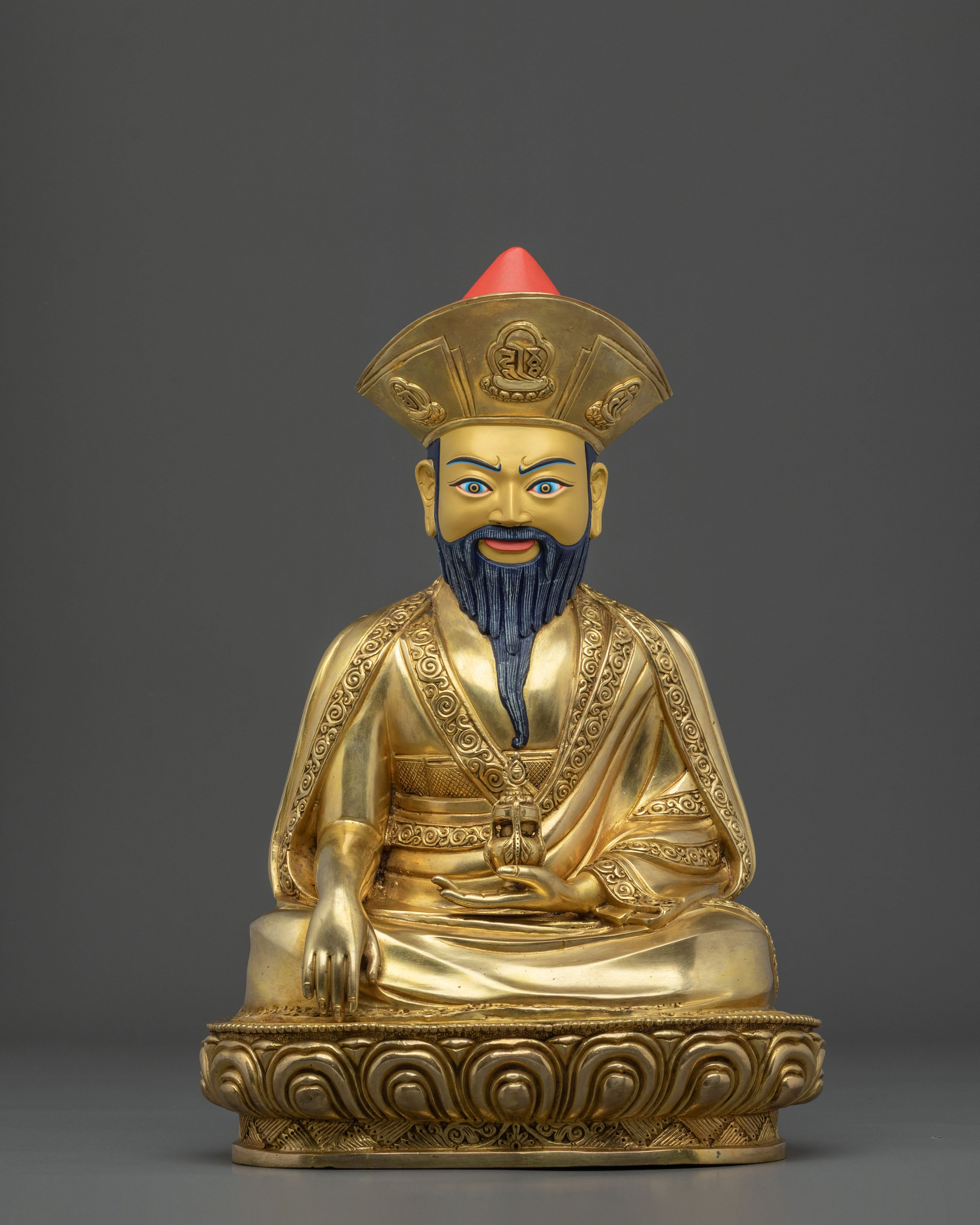
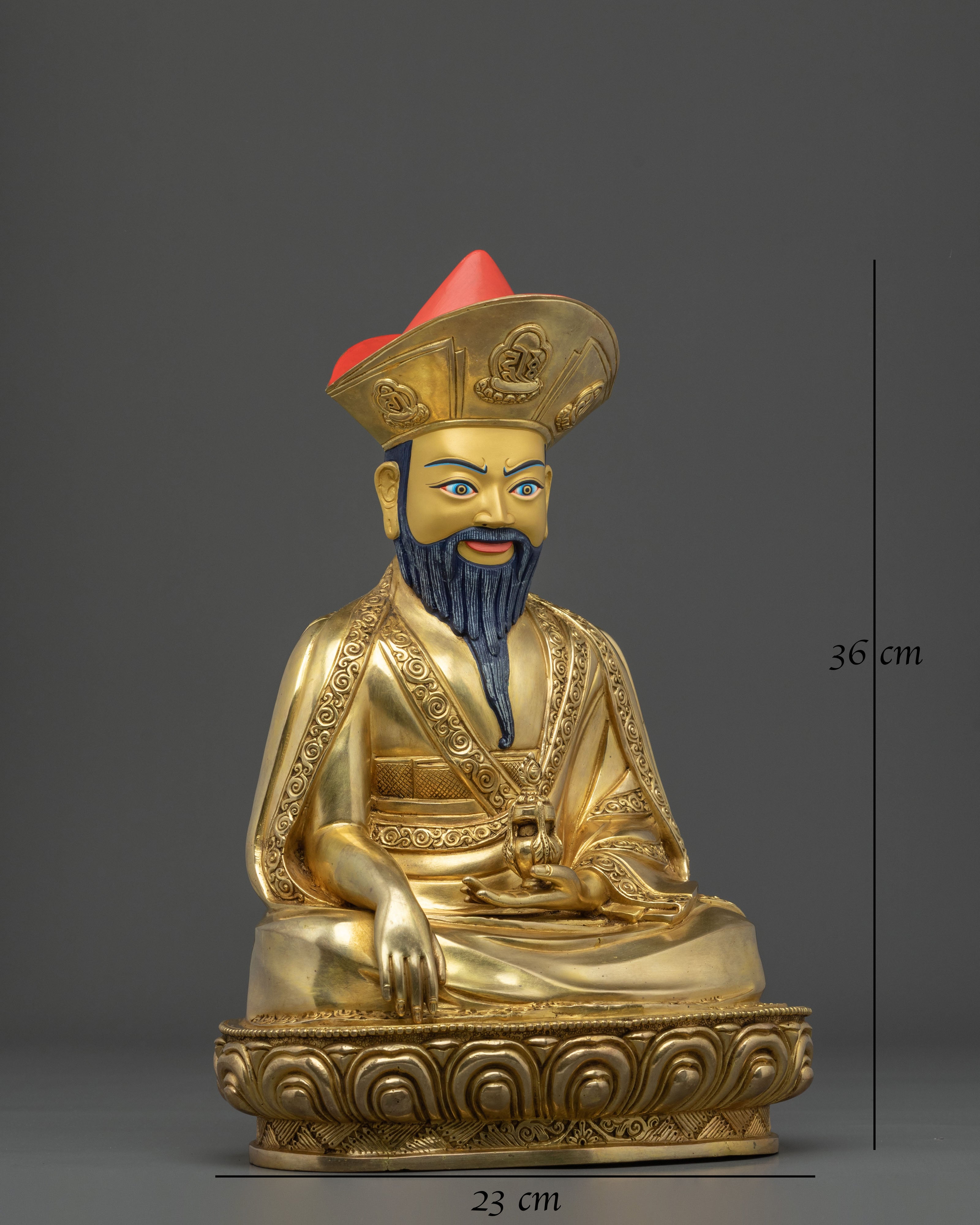
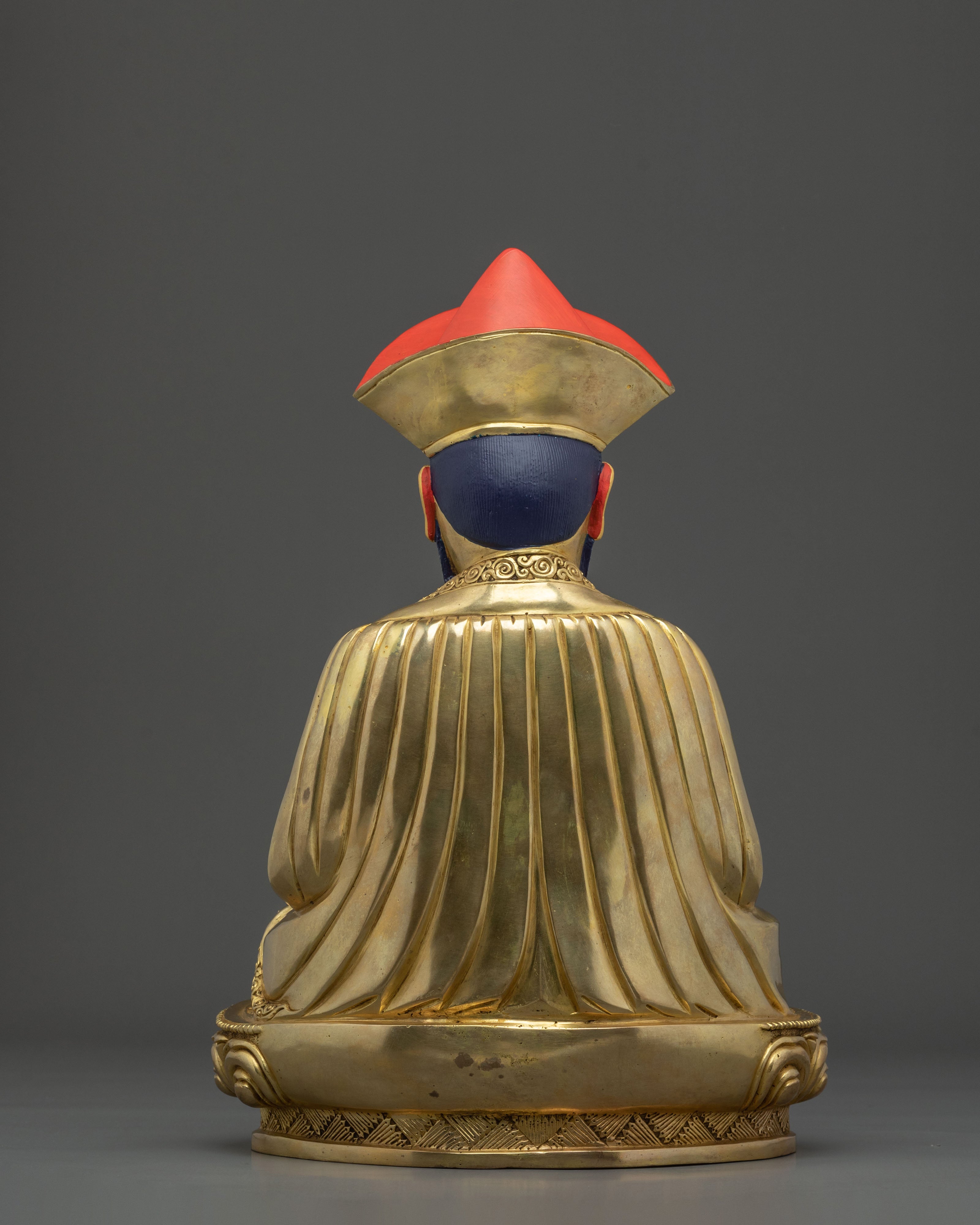
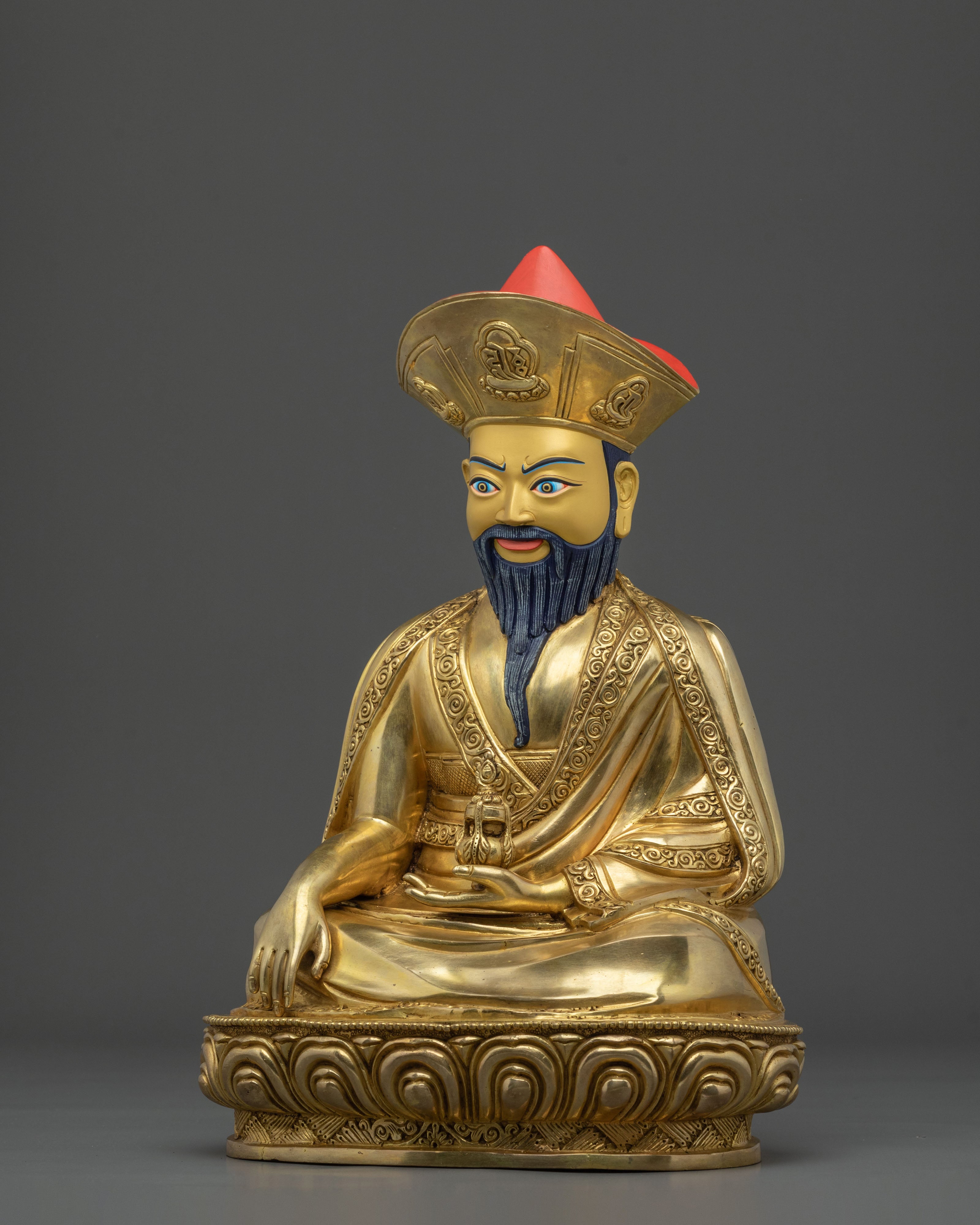
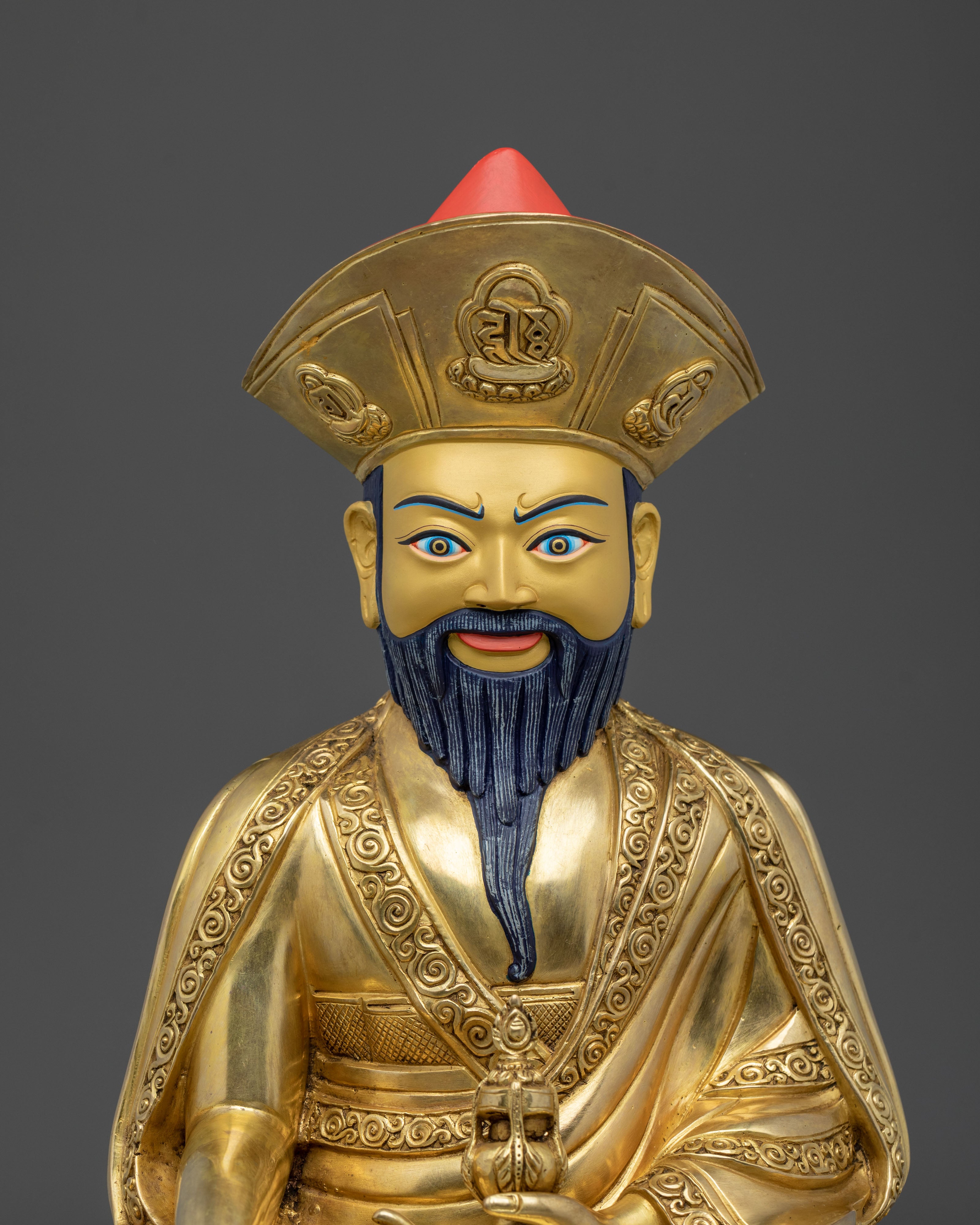
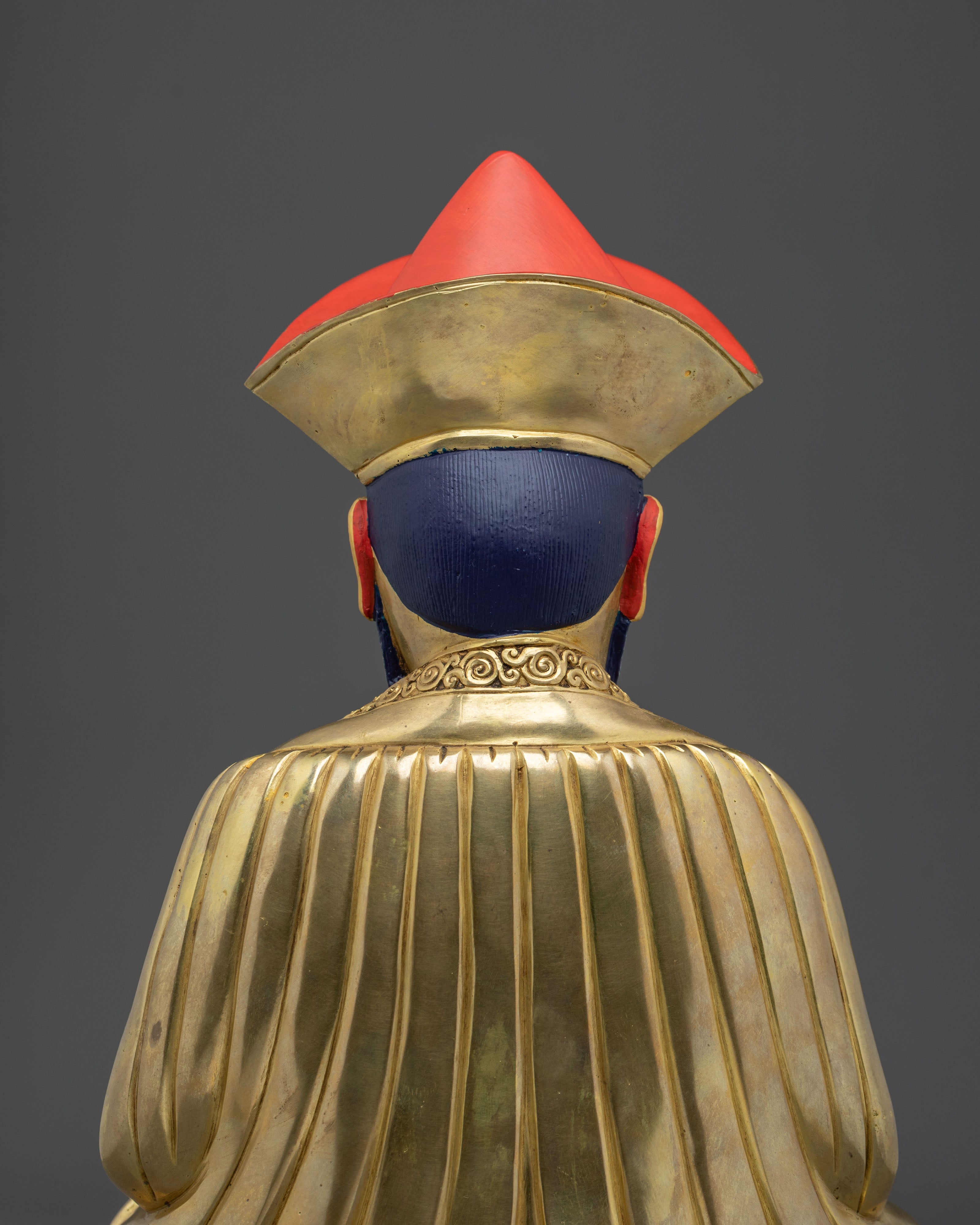
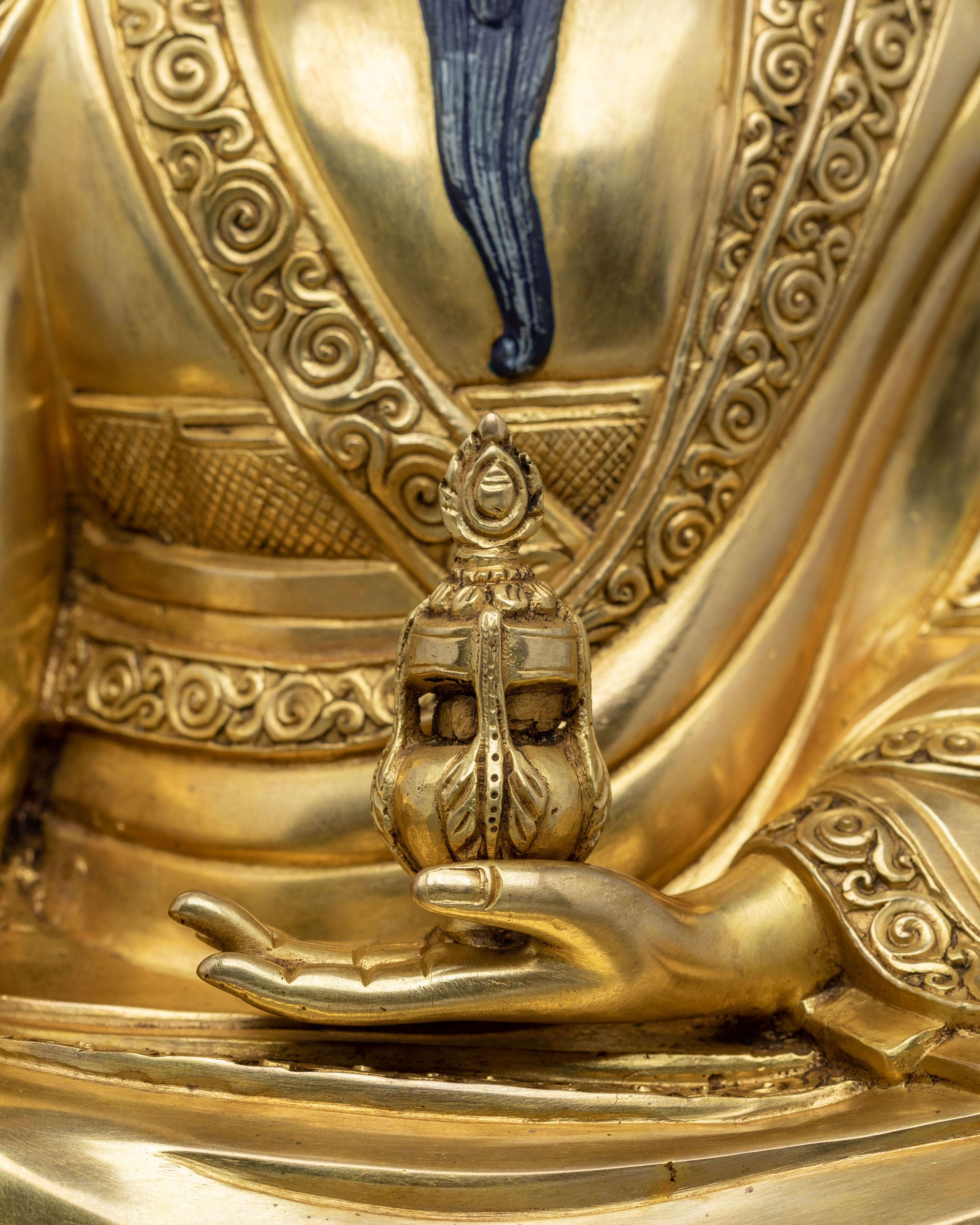
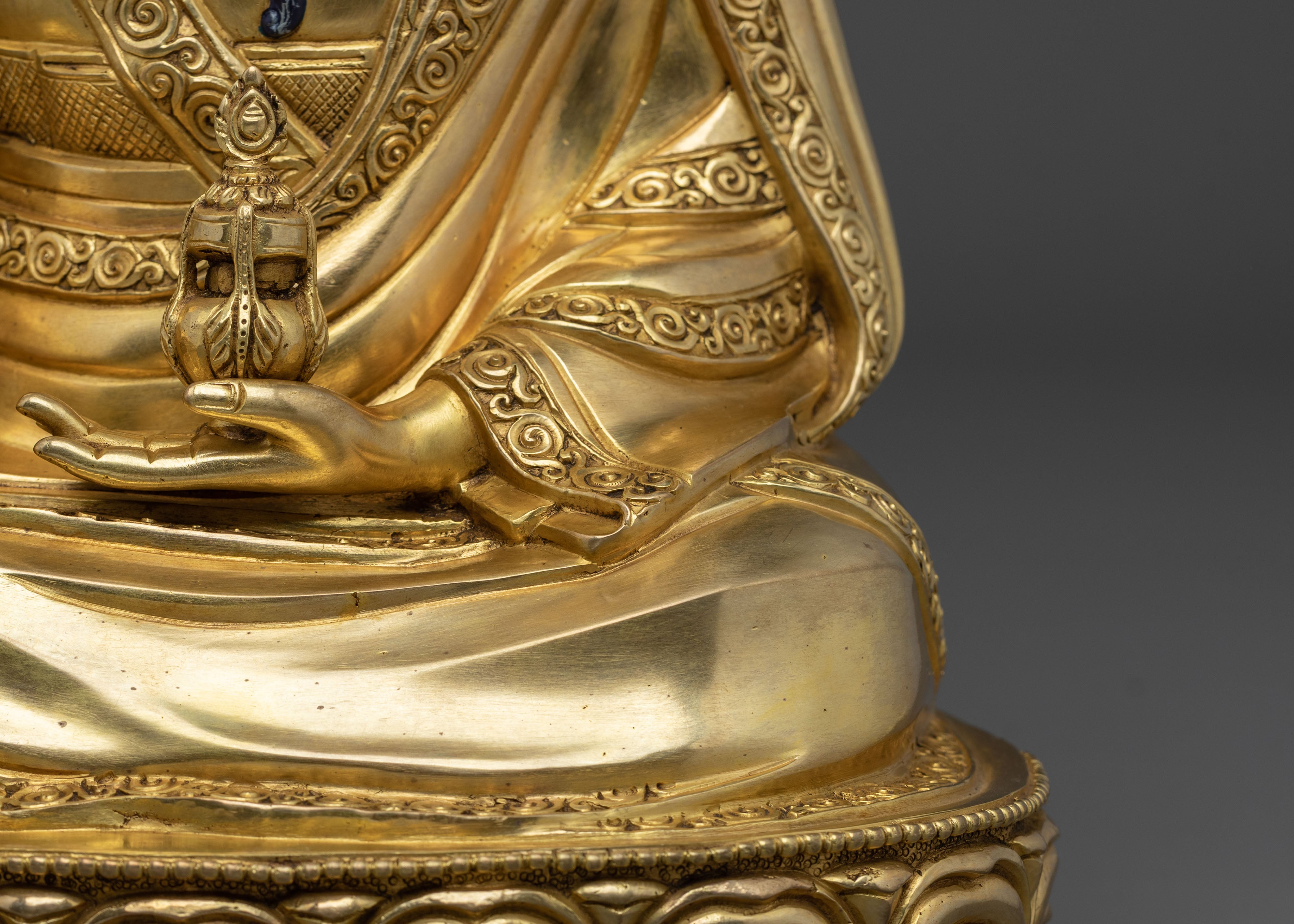
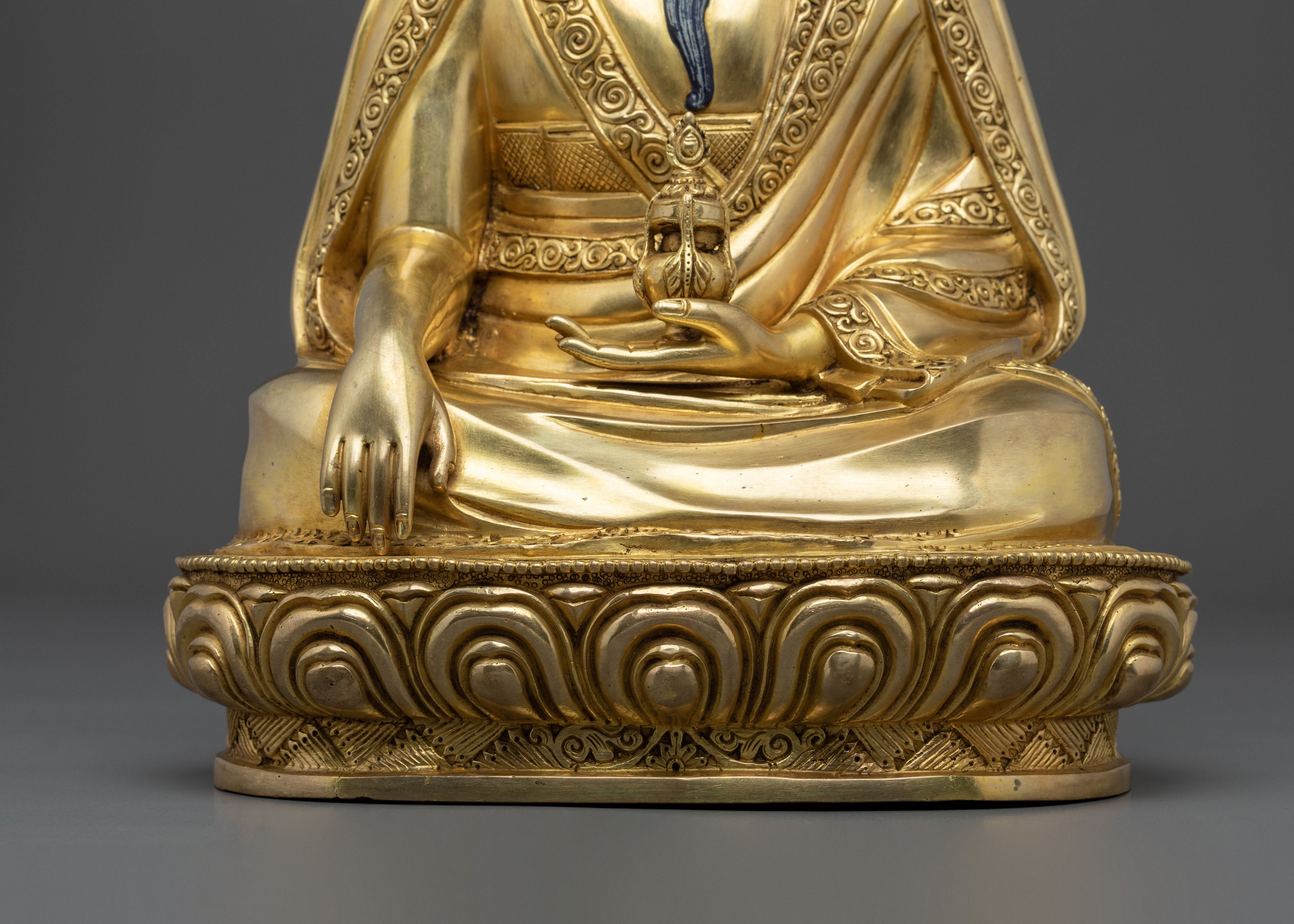
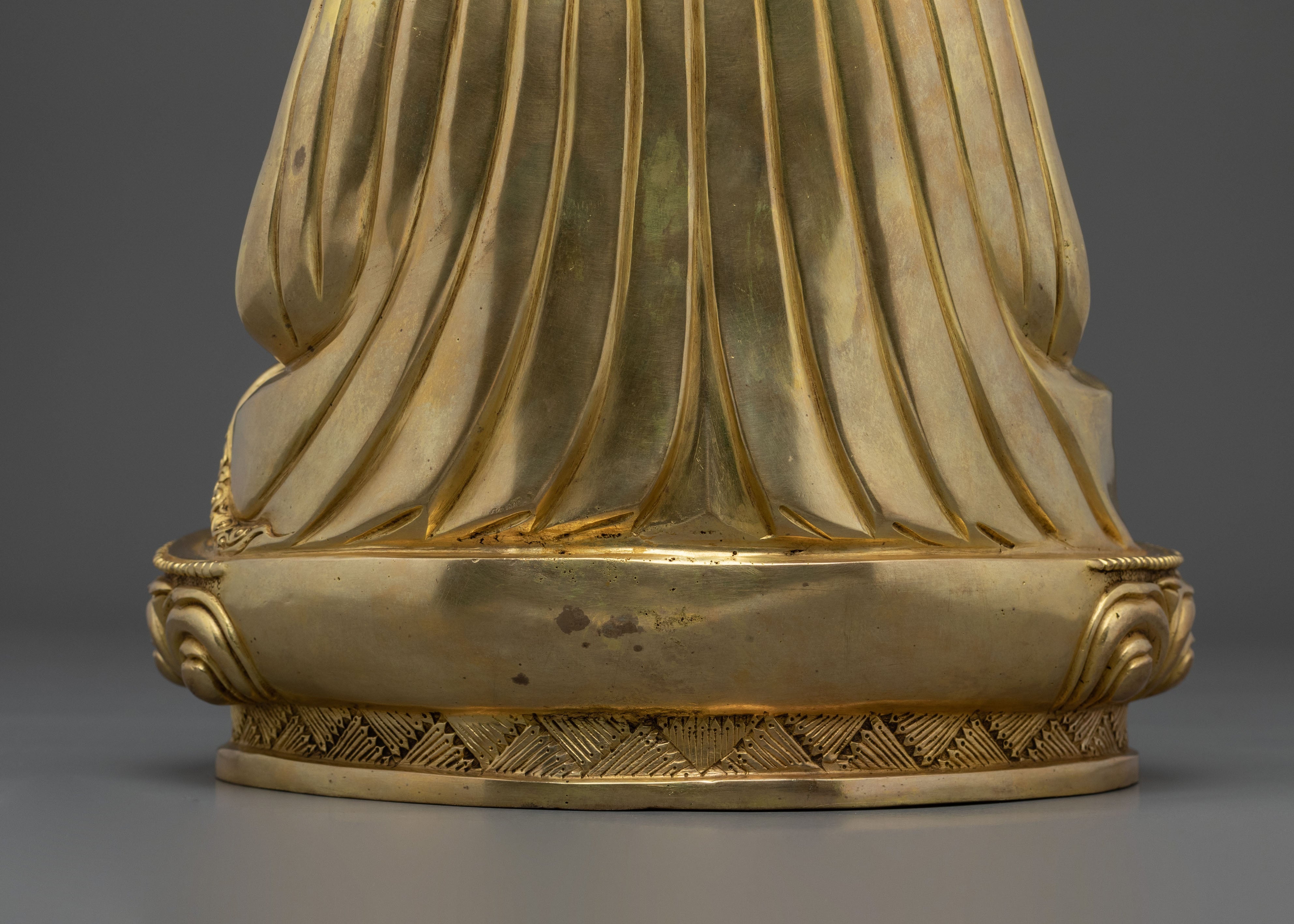
Handcrafted in Nepal, this Guru Shapdum Statue reflects the refined artistry and traditional craftsmanship of Himalayan artisans. Standing 36 cm (14.17 inches) tall with a 23 cm (9.1 inches) base and weighing 4.13 kg, it is carefully crafted from a copper body and enhanced with detailed acrylic painting and carefully set gemstones. The intricate surface work, finely sculpted features, colorful painted details, and gemstone embellishments demonstrate the precision and dedication of skilled Nepalese artisans. This finely crafted sculpture makes a meaningful addition to Buddhist altars, meditation spaces, temples, monasteries, or sacred collections, reflecting the rich heritage of Himalayan Buddhist art.
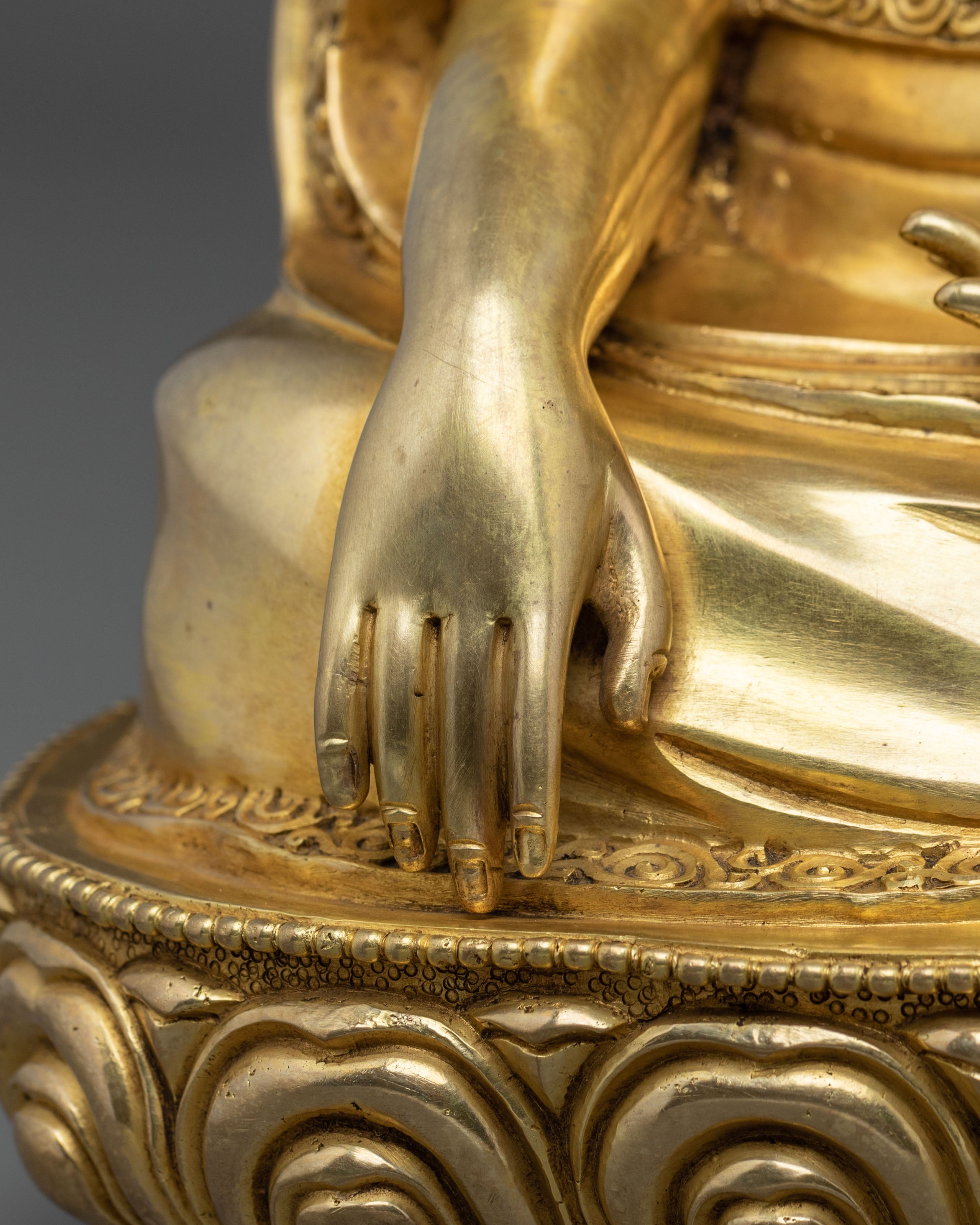
Guru Shapdum, a revered form of Guru Rinpoche (Padmasambhava), represents the enlightened power of transformation, wisdom, and the preservation of Vajrayana teachings. Depicted in the Bhumisparsha Mudra, with his right hand touching the earth, this gesture symbolizes unwavering determination, the victory over obstacles, and the grounding of enlightened realization in truth. The earth-touching gesture recalls the moment of awakening, representing the stability and authenticity of spiritual realization. His peaceful yet powerful presence reflects the union of compassionate activity and profound wisdom, while his sacred attributes symbolize the mastery of tantric teachings and the ability to transform negative forces into enlightened awareness. This sacred statue serves as a powerful meditation and devotional focus, inspiring practitioners to cultivate inner strength, devotion, clarity, and the courage to follow the path toward awakening.
Size: 14.17”/36cm (Height) x 9.1”/23cm (Base)
Weight: 4.13 kg
Material: Copper Body, Gemstones, Acrylic Painting
Guru Padmasambhava, also known as Padmasambhava or the 'Lotus-Born', is revered as a second Buddha in Tibetan Buddhism. He is credited with bringing Buddhism to Tibet in the 8th century and is considered the founder of the Nyingma school. His teachings and enlightened activities are central to Vajrayana practice, embodying profound realization and skillful means to transform obstacles into opportunities for awakening.
Explore our Guru Shapdum Statue Collection.