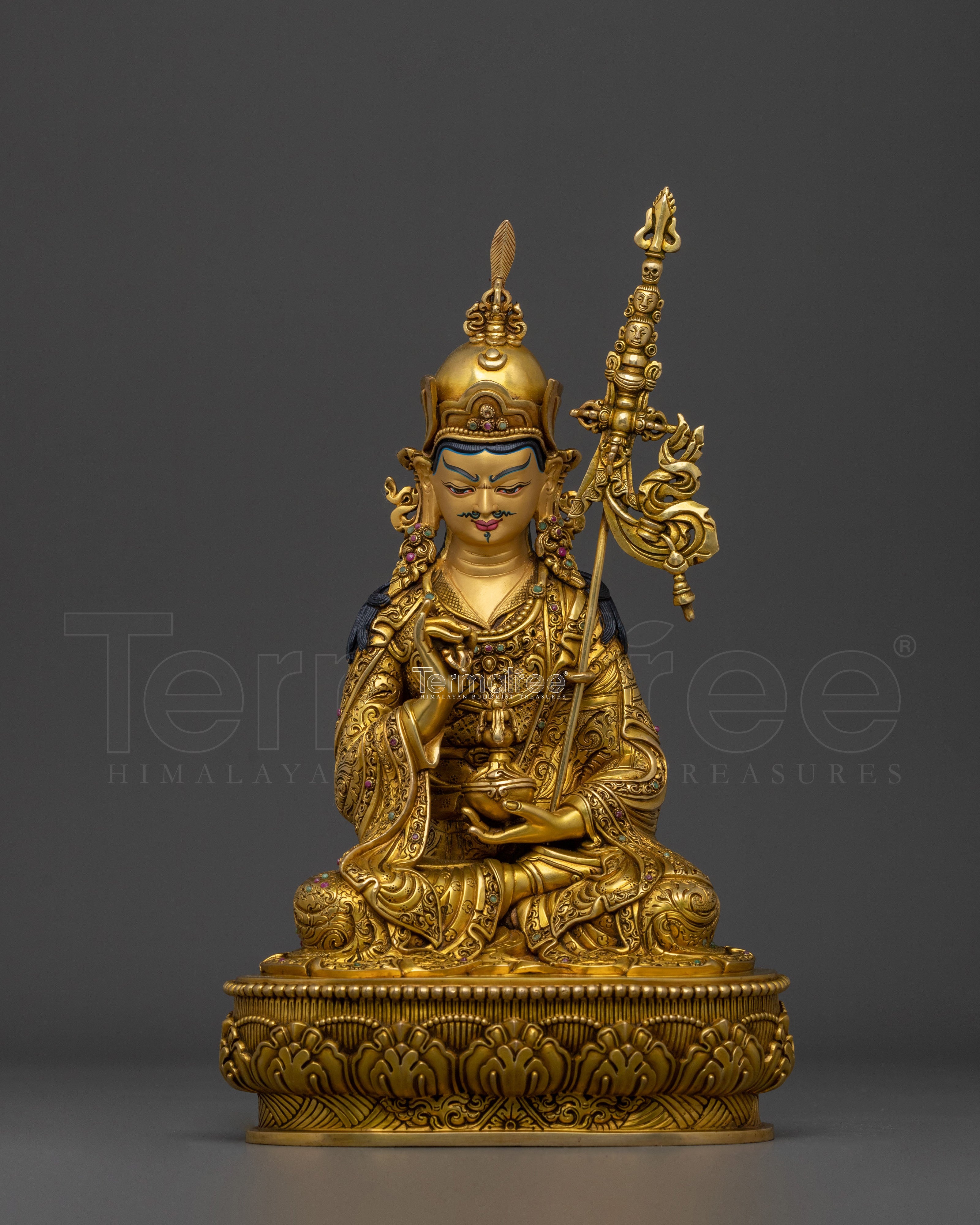
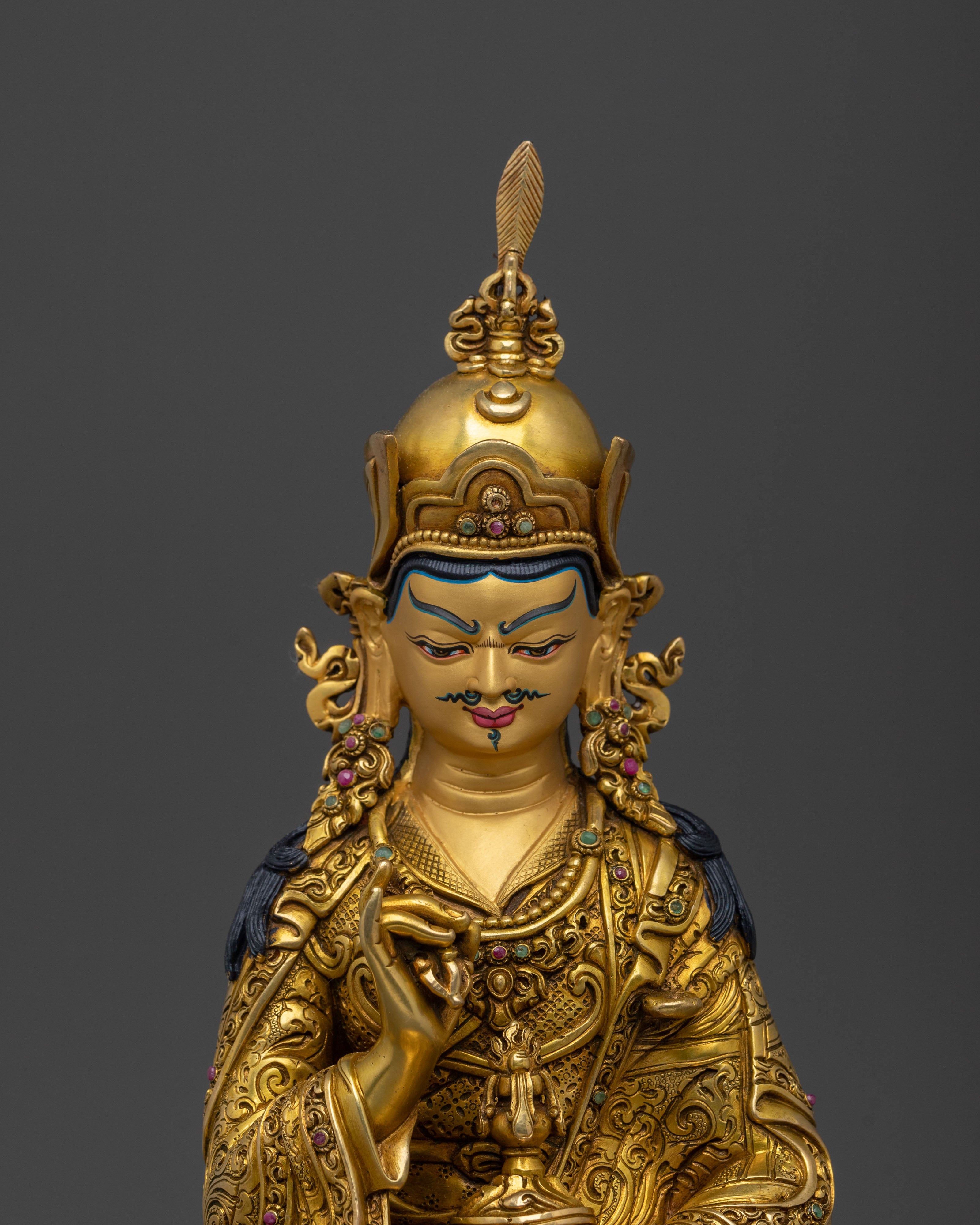
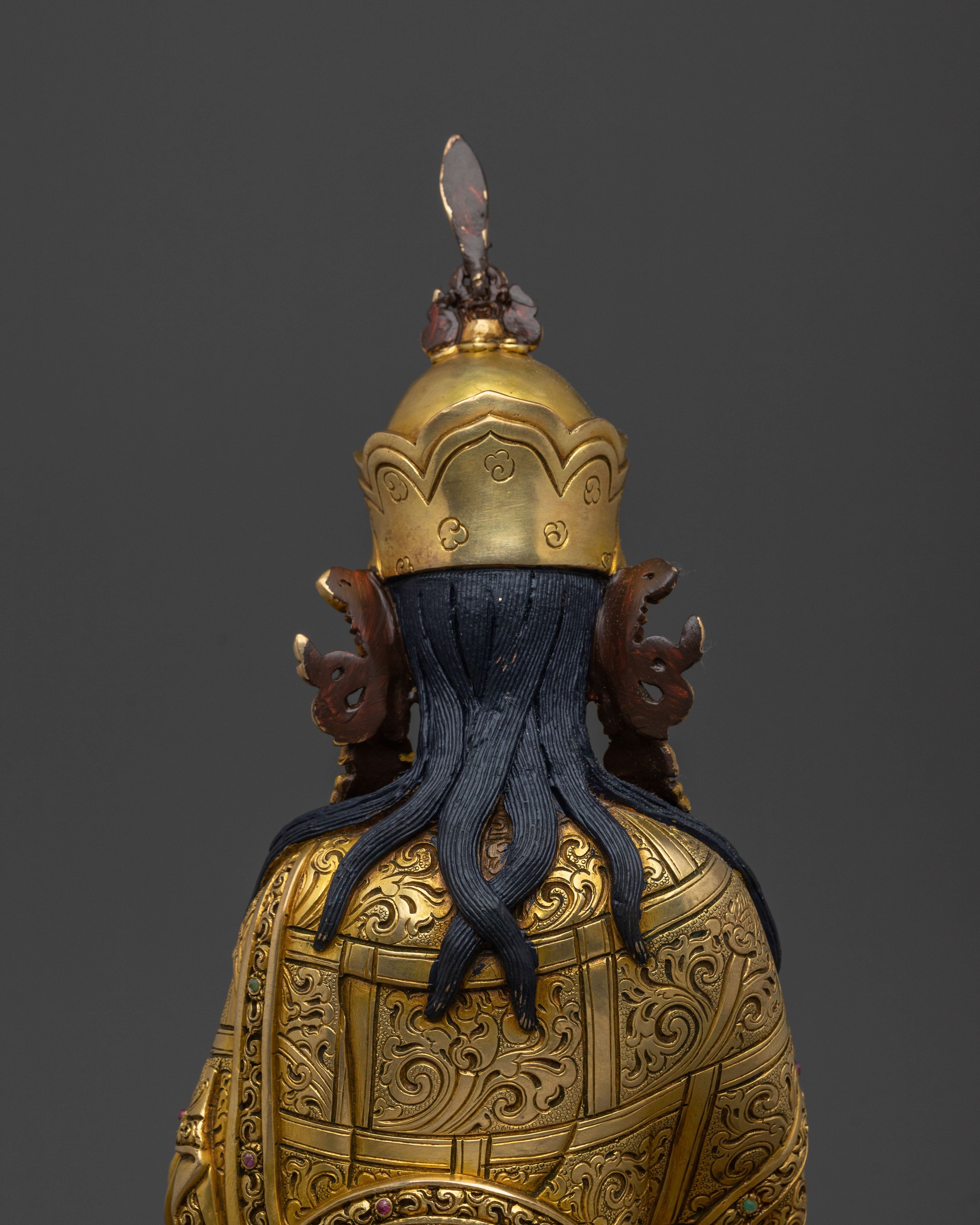
Handcrafted Guru Tsokye Dorje Statue | Embodiment of Sacred Lineage
Handcrafted in Nepal, this sacred Seven-Eyed White Tara statue embodies healing, longevity, and compassionate protection. Standing 22cm (8.66 inches) tall with an 18cm (7.08 inches) base and weighing 1.45kg, it is expertly formed from a solid copper body and enhanced with a triple layer of 24K gold gilding, deeply engraved carvings creating a magnificent 3D effect, and detailed acrylic painting. The seven eyes symbolize heightened awareness and the ability to perceive the suffering of all beings, while her serene expression radiates peace and benevolence, making this luminous statue a meaningful focal point for altars, meditation spaces, and devotional practice.
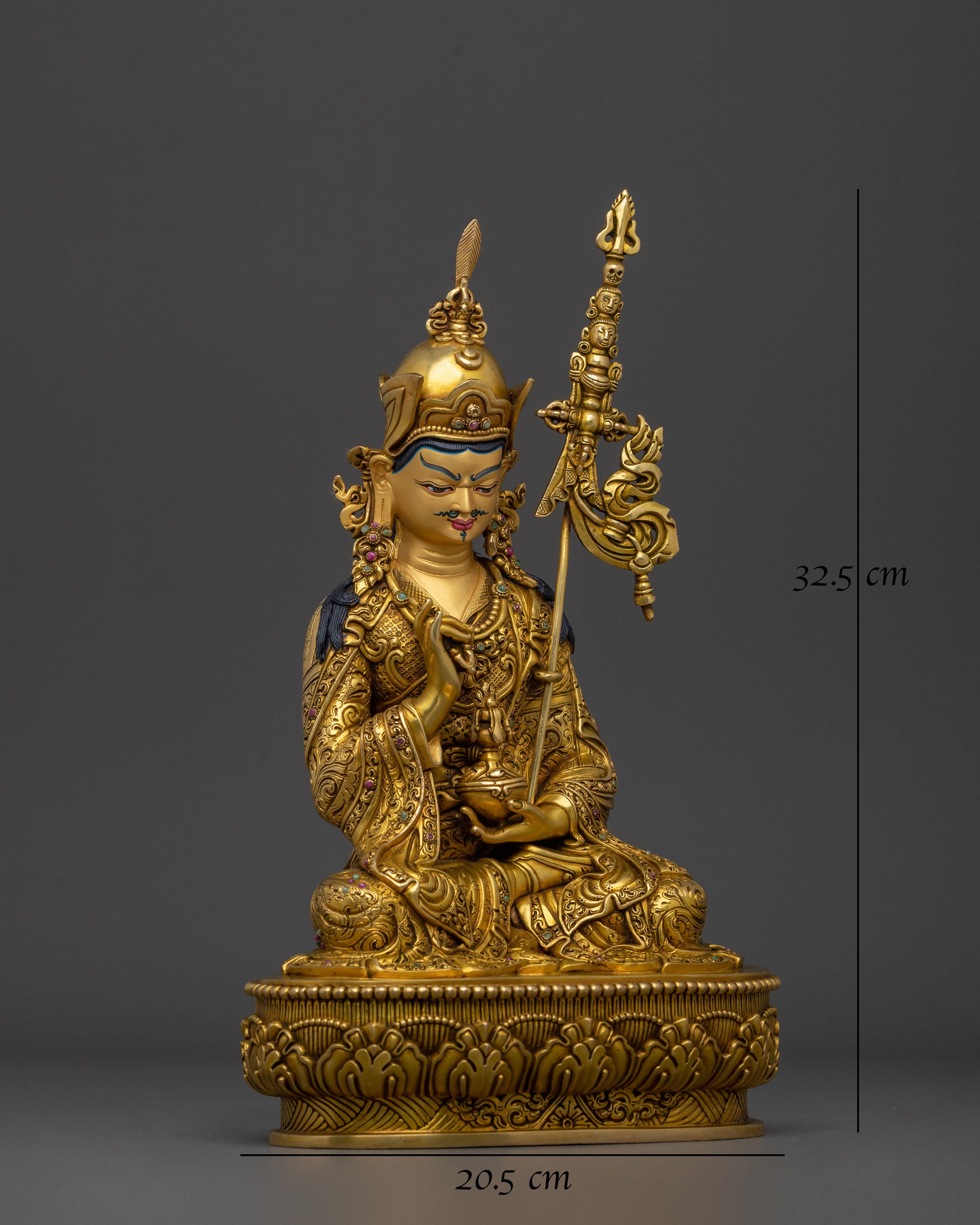
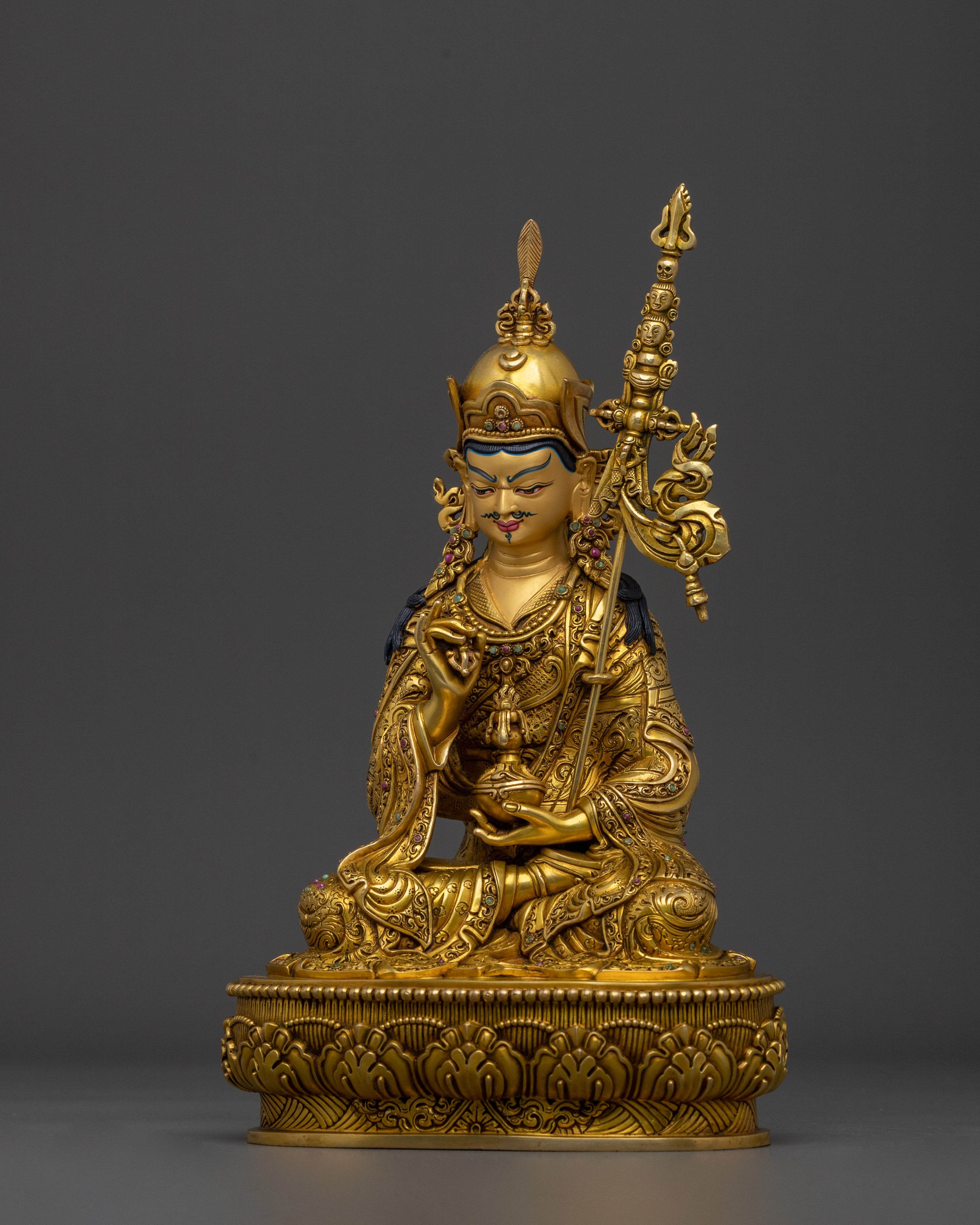
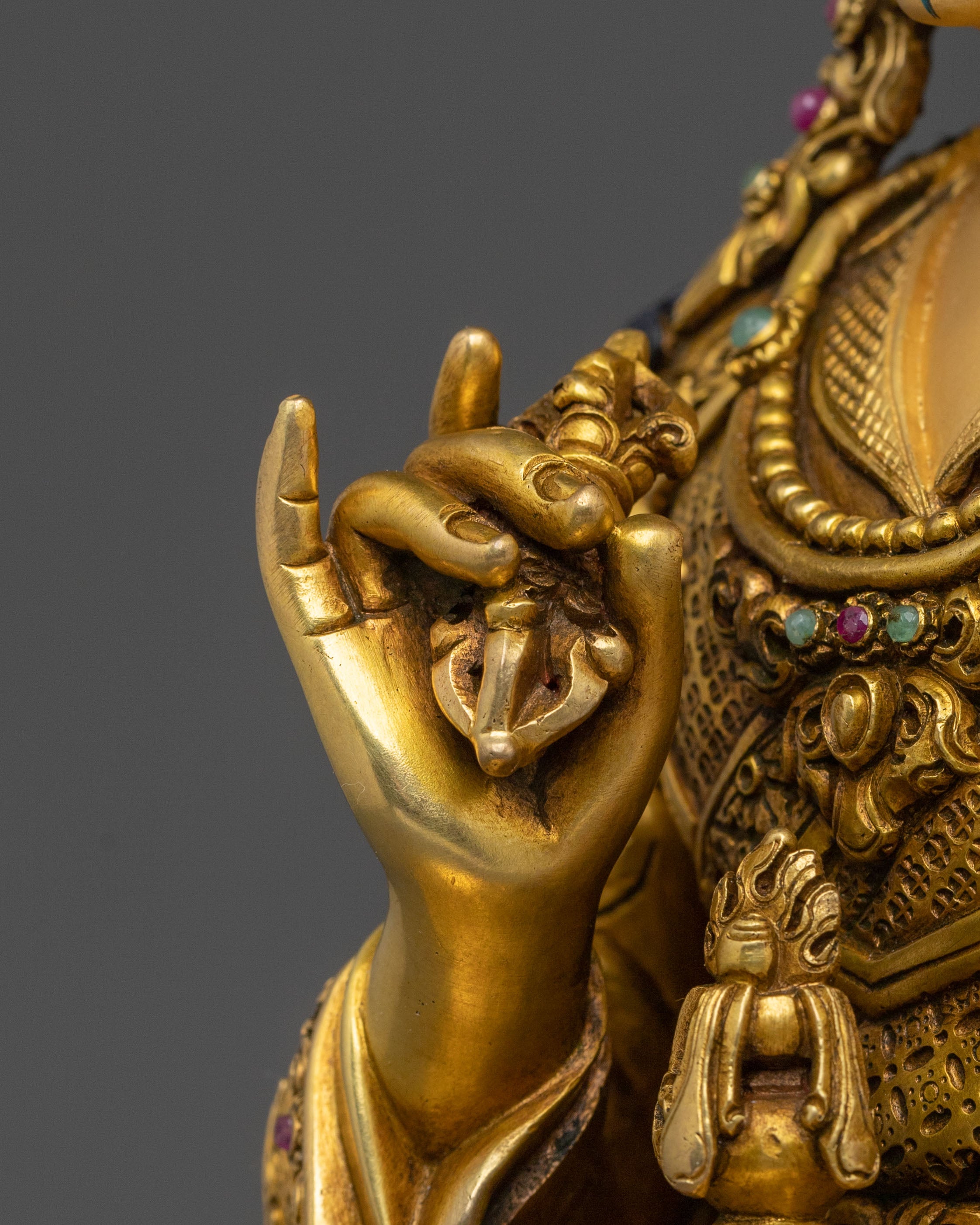
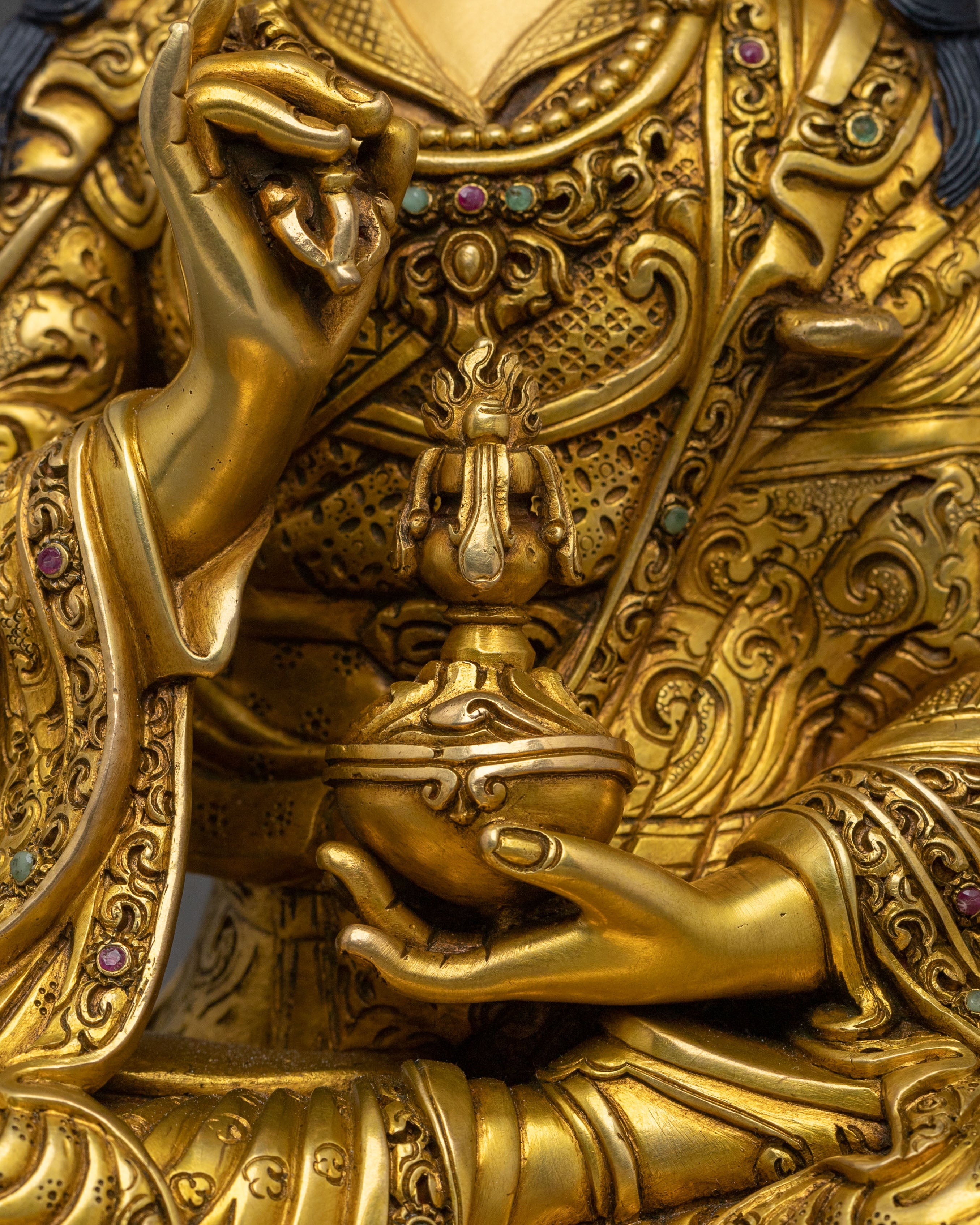
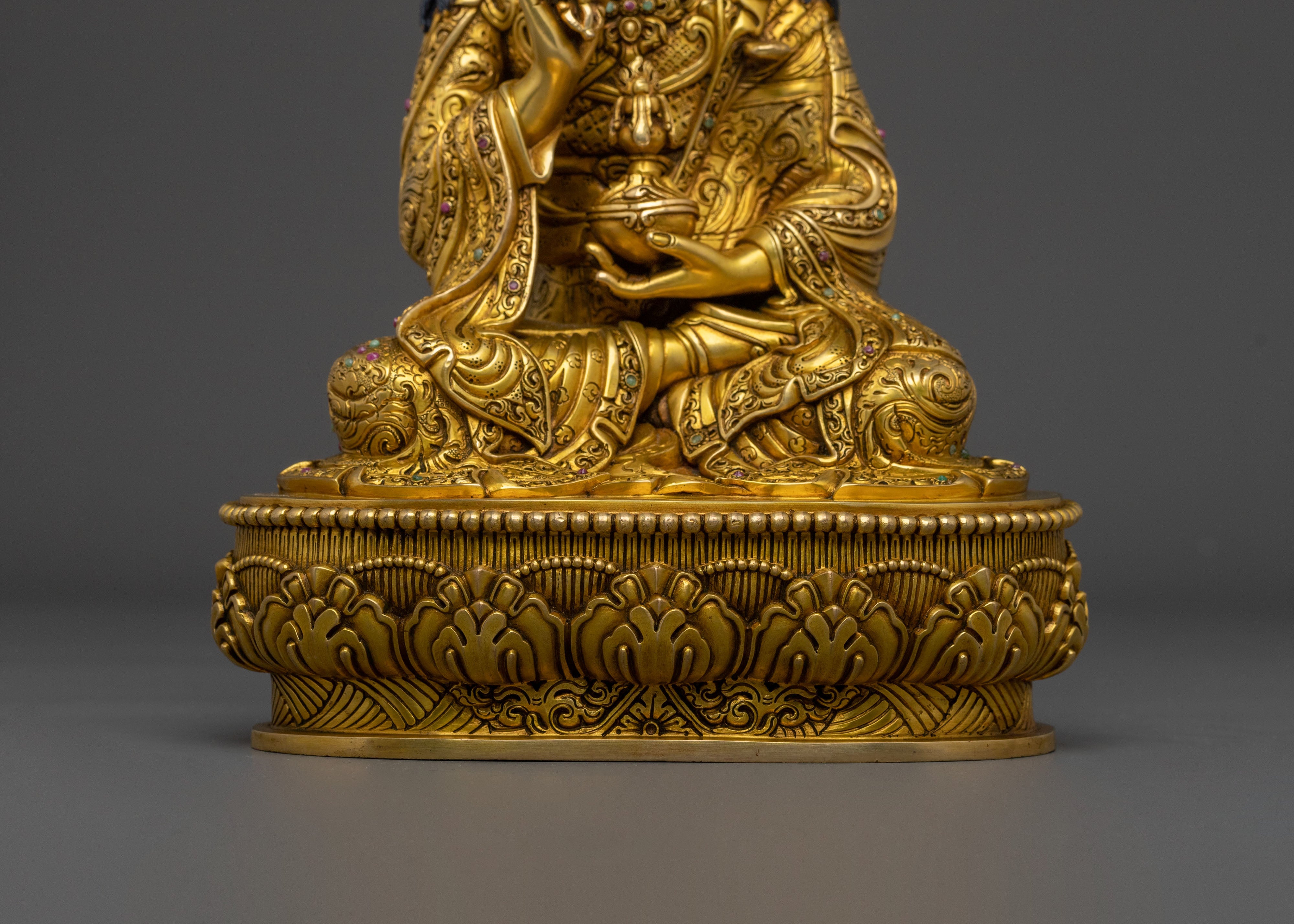
Guru Tsokye Dorje is depicted as a highly realized tantric master and protector, embodying the union of wisdom and method within Vajrayana Buddhism. Seated in a meditative posture, he holds the vajra, symbolizing indestructible wisdom, alongside the life vase, representing longevity, vitality, and the blessing of enduring merit. Resting on his shoulder is the tantric staff (khatvanga), signifying the integration of bliss and emptiness, mastery over the three kayas, and the transformative power of tantric practice. His serene yet commanding expression reflects profound clarity, compassion, and meditative stability, while his ornate robes, crown, and subtle celestial adornments highlight his enlightened status. This sacred icon serves as a meditation focus and spiritual guide, inspiring practitioners to cultivate purity, disciplined practice, and the inseparable union of wisdom and compassionate activity on the path to enlightenment.
Size: 12.8”/32.5cm (Height) x 8.1”/20.5cm (Base)
Weight: 2.73 kg
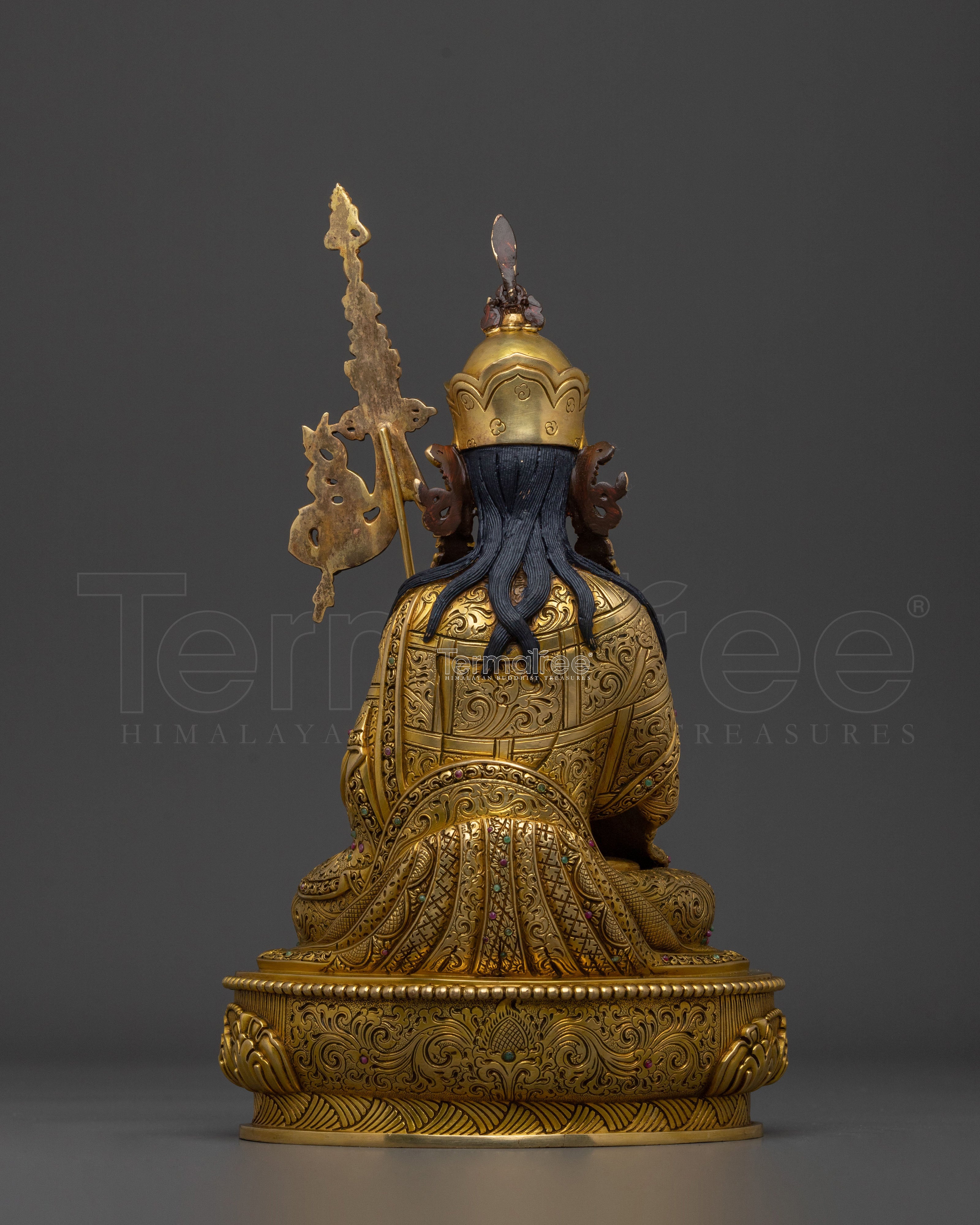
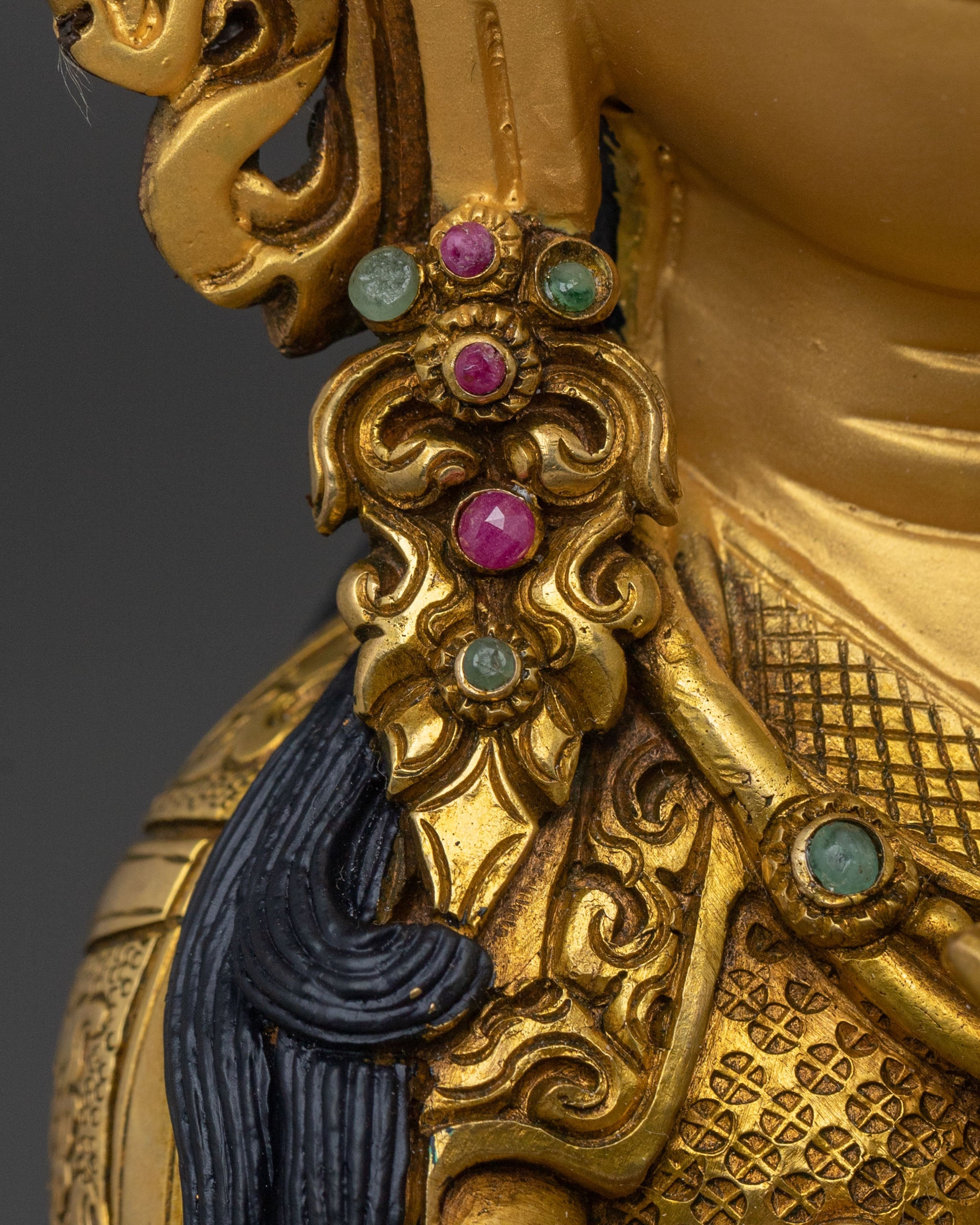
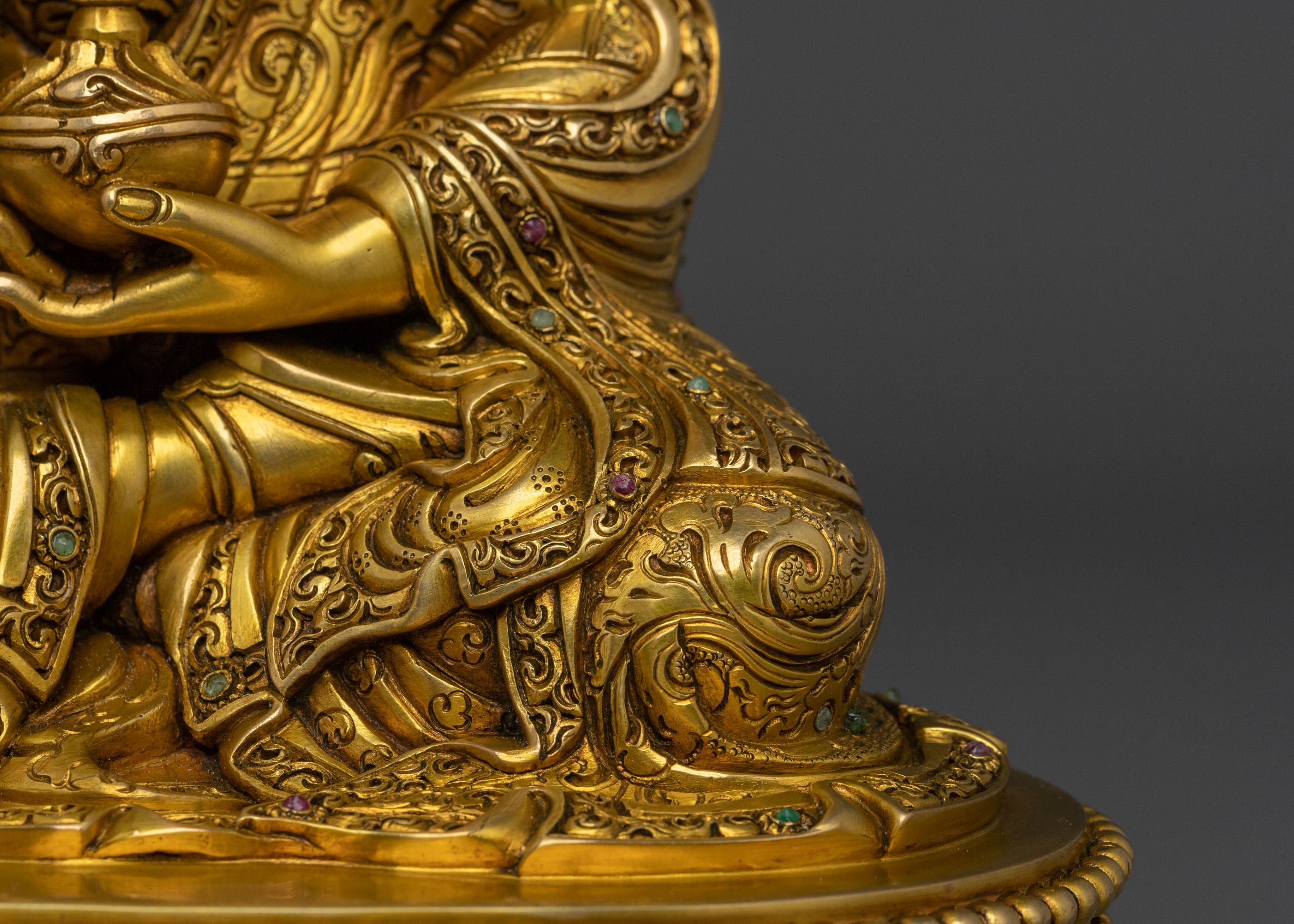
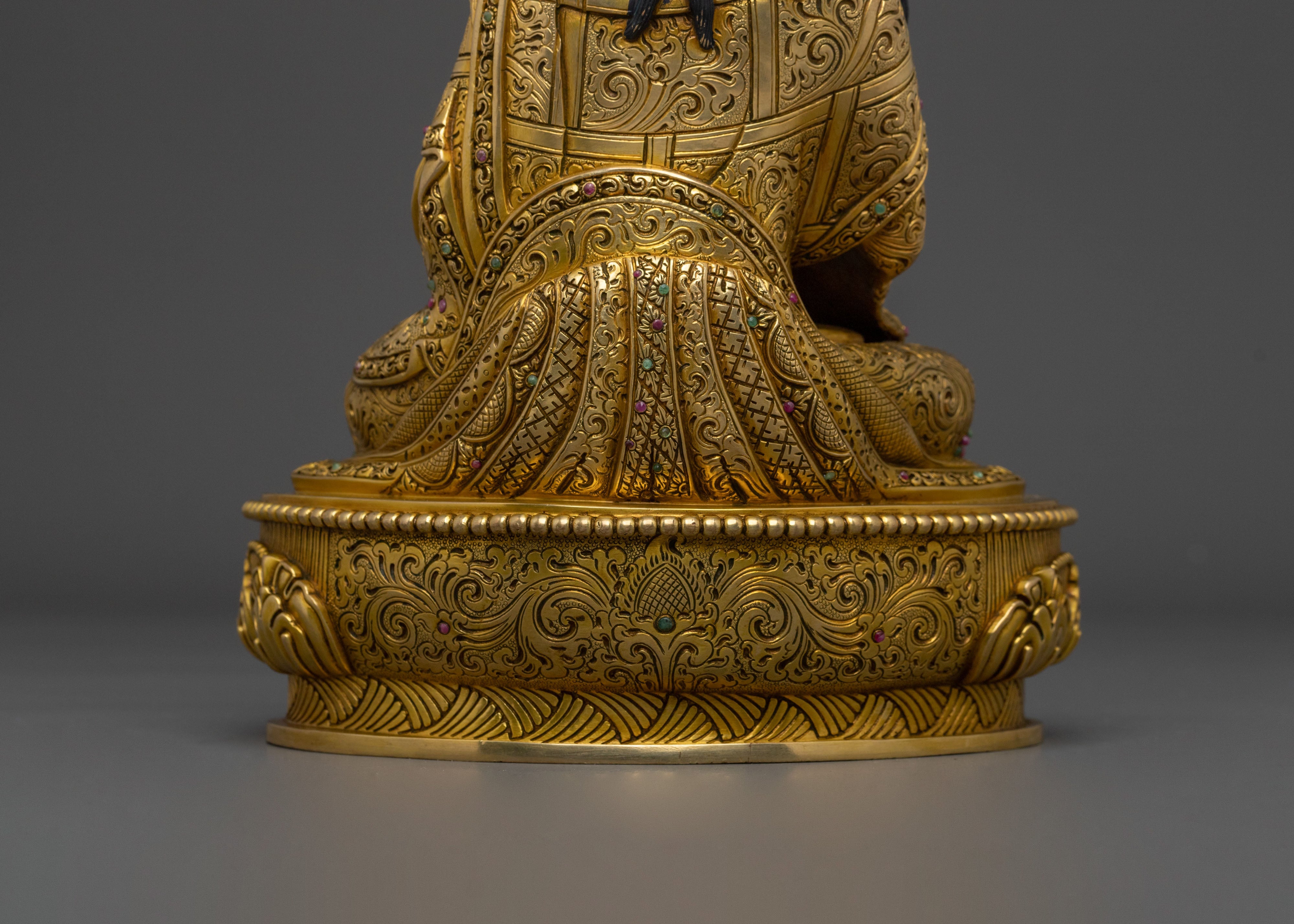
Material: Copper Body, 24K Gold Gilded, Acrylic Painting, Gemstones
Guru Tsokye Dorje is one of the eight principal manifestations of Guru Rinpoche (Padmasambhava), the Lotus-Born Master who introduced Vajrayana Buddhism to Tibet in the 8th century. Known as "Lake-Born Vajra," this form symbolizes Padmasambhava's power to subdue negative forces and obstacles to spiritual progress. He is often depicted in a wrathful yet compassionate aspect, serving as a fierce protector of the Dharma and a revealer of hidden spiritual treasures (termas).