The Handcrafted Art of Guru Padmasambhava | Tantric Deity of Vajrayana Buddhism
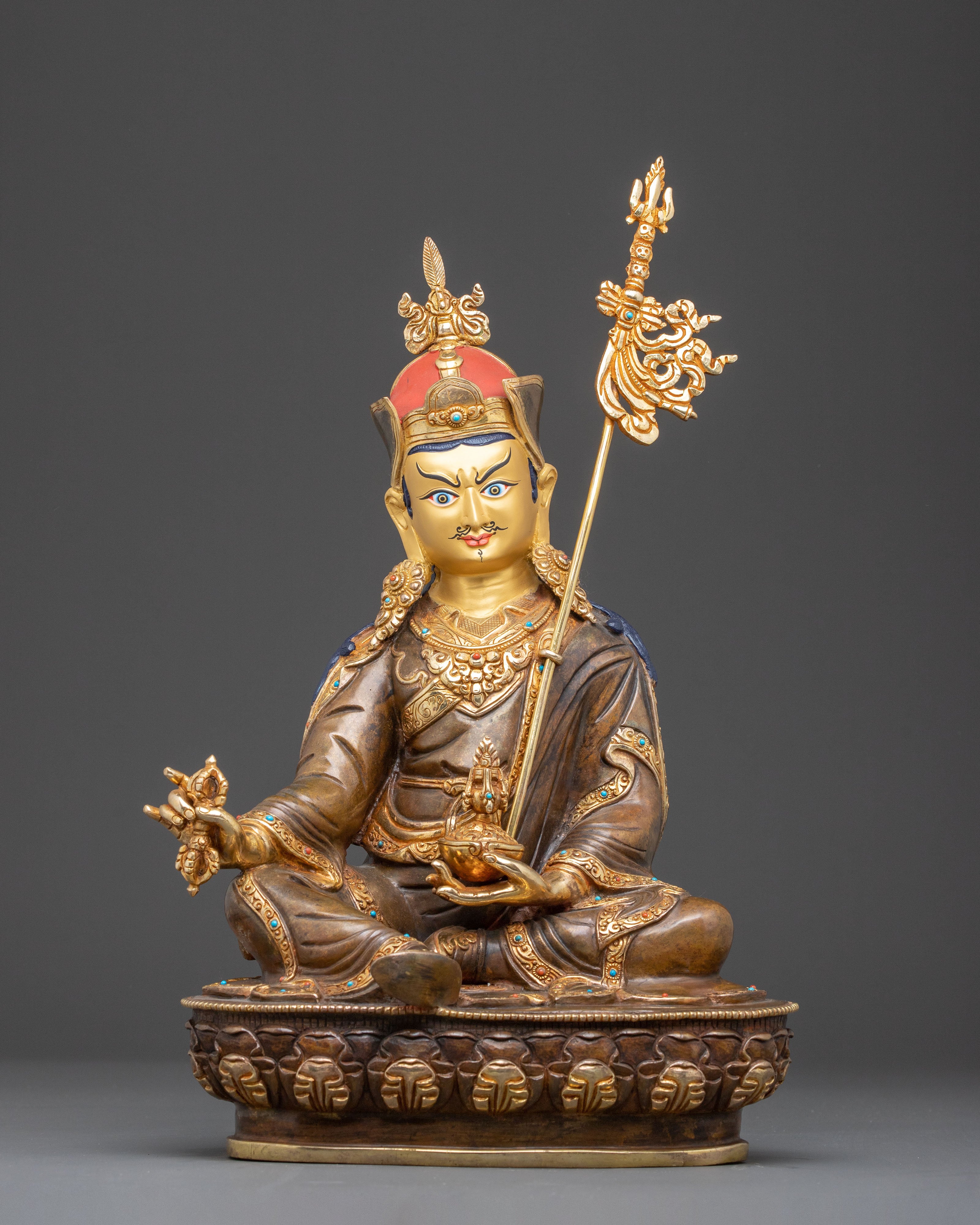
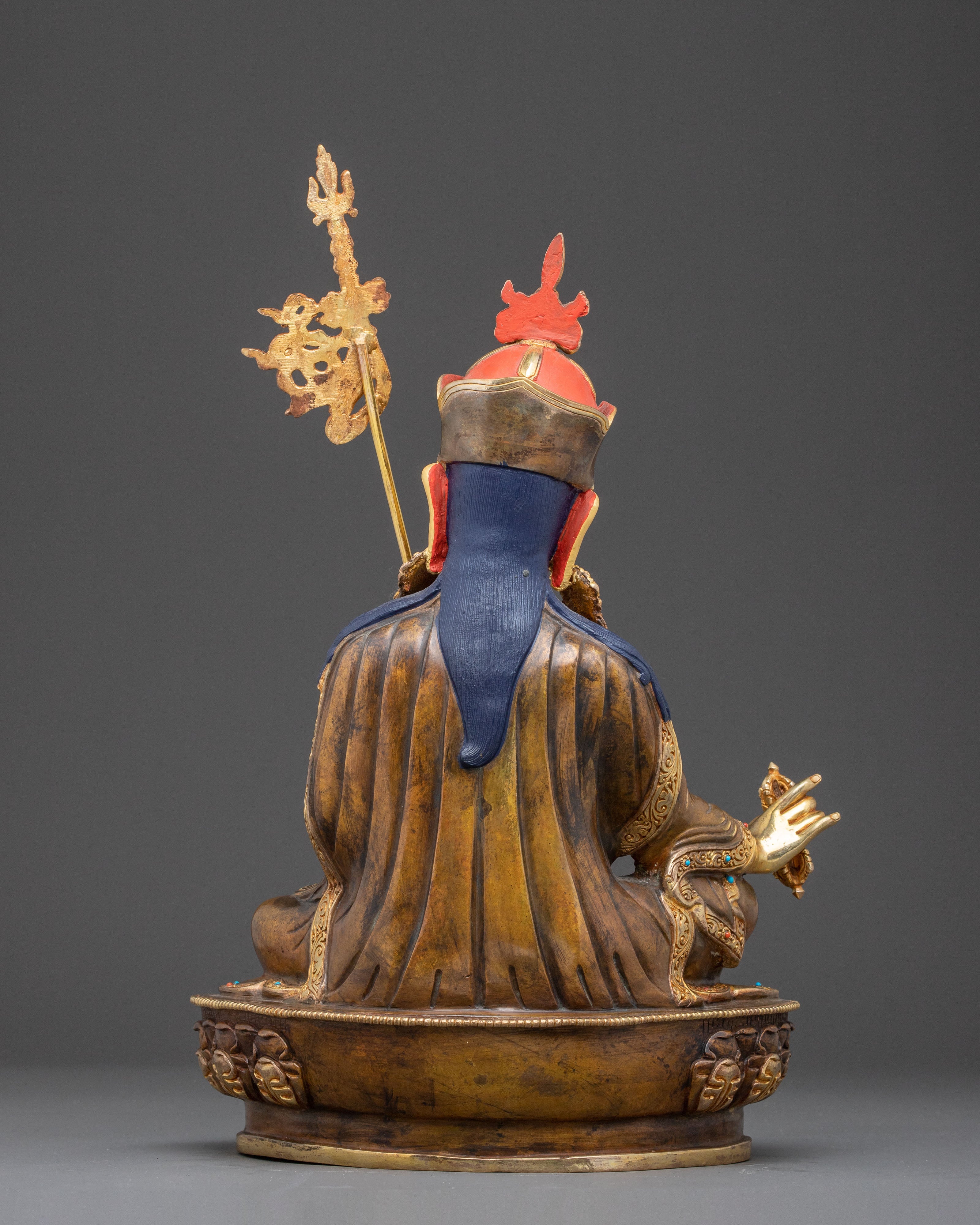
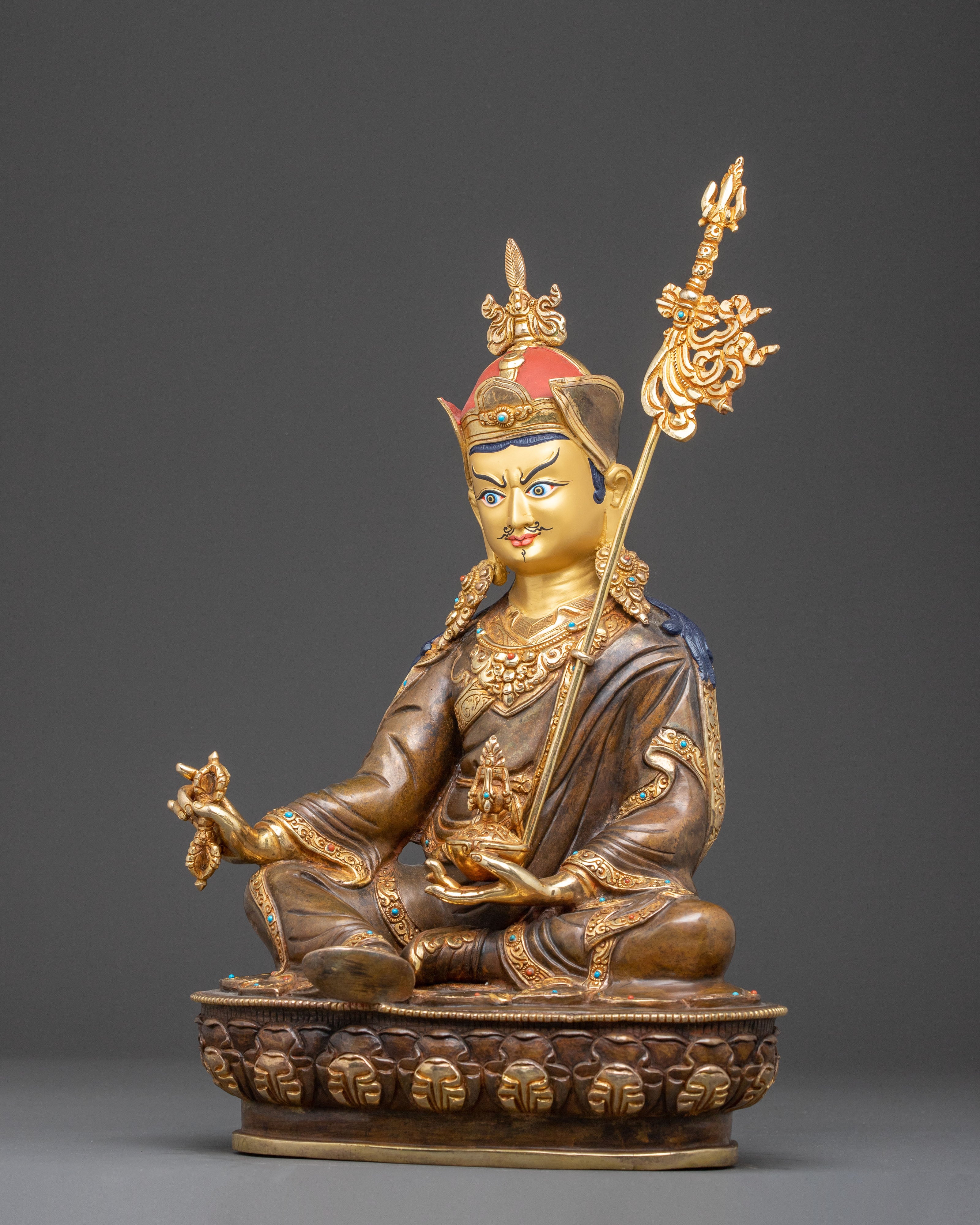
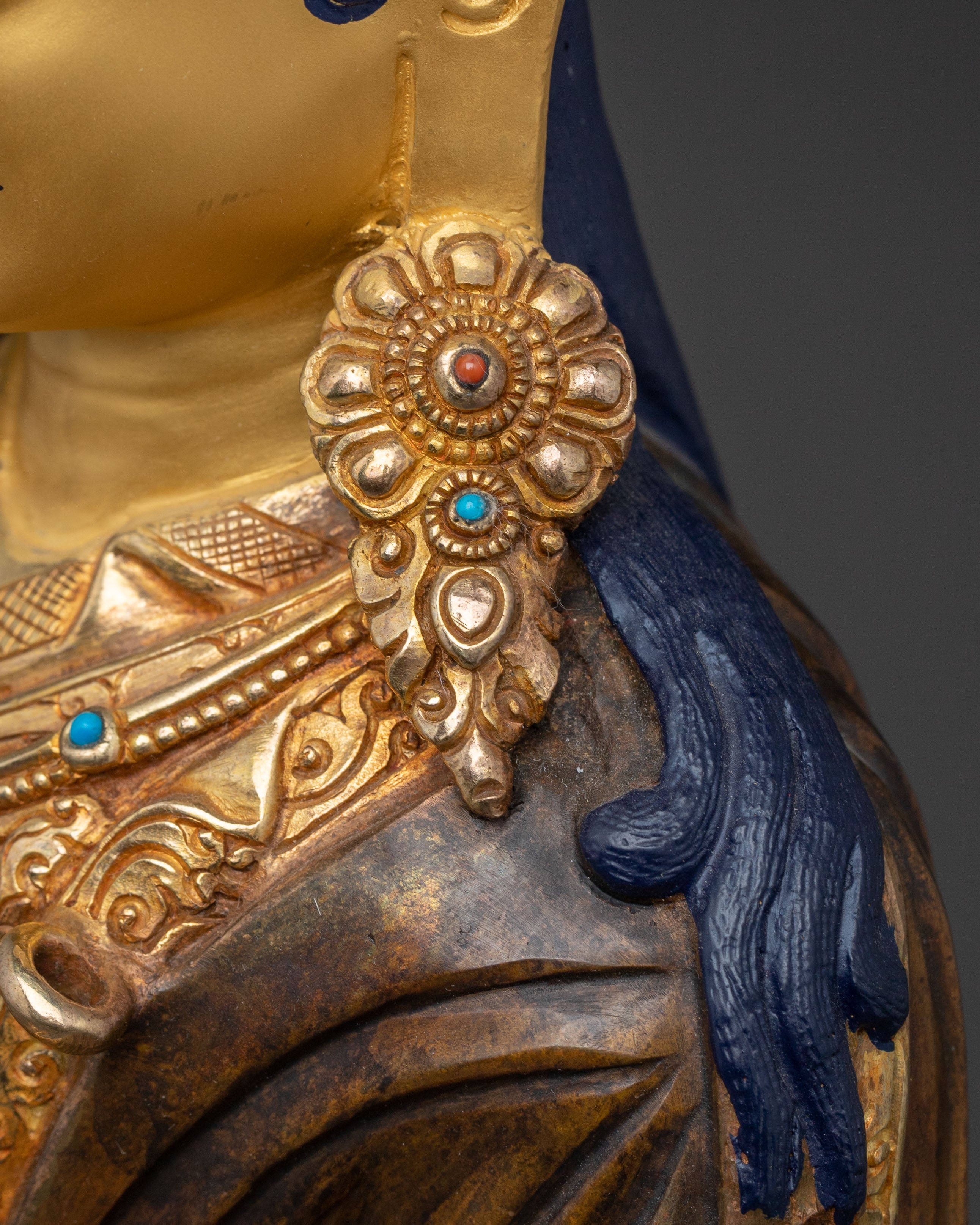
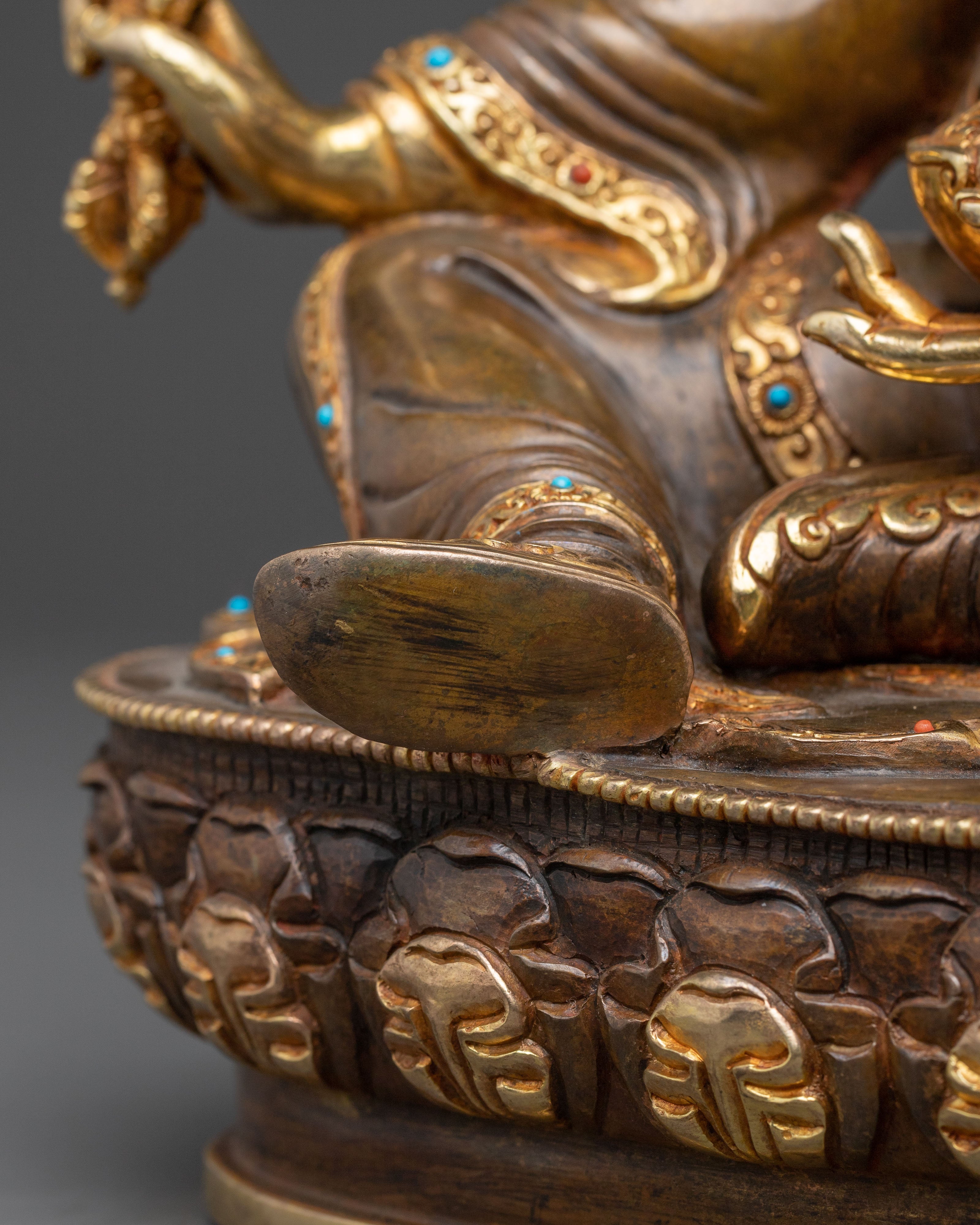
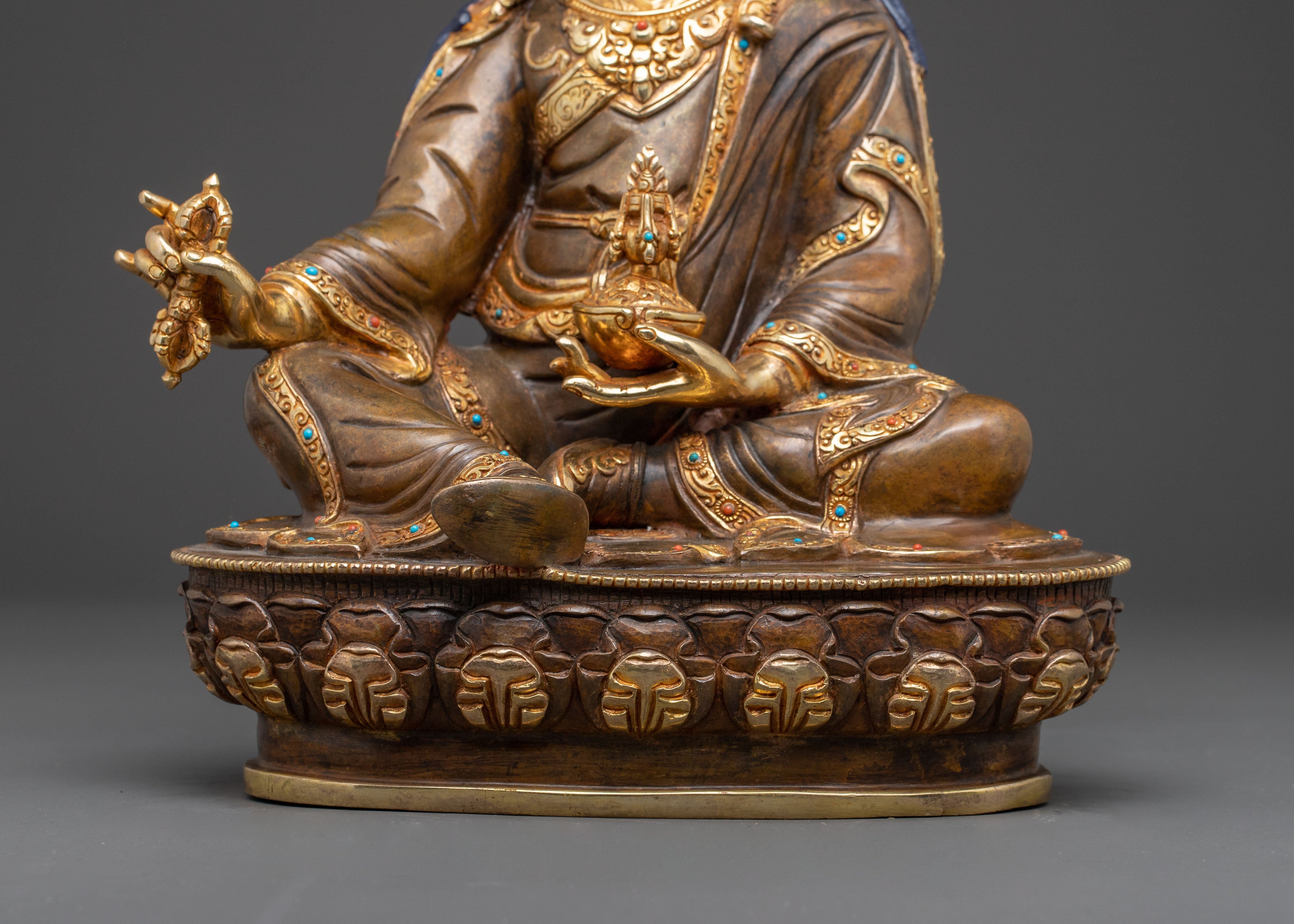
The handcrafted art of Guru Padmasambhava, also known as Padmasambhava, the founder of Tibetan Buddhism, embodies enlightenment, compassion, and spiritual mastery. This handmade statue is 15.4" (Height) x 9.8" (Base) and weighs 4.65 kg. It is made of copper, adorned with 24K gold gilding, and enhanced with intricate gold and acrylic paints. This sculpture, created by expert Nepalese artisans, symbolizes the spiritual traditions of Himalayan Buddhism and makes a meaningful addition to altars, meditation places, or sacred collections.
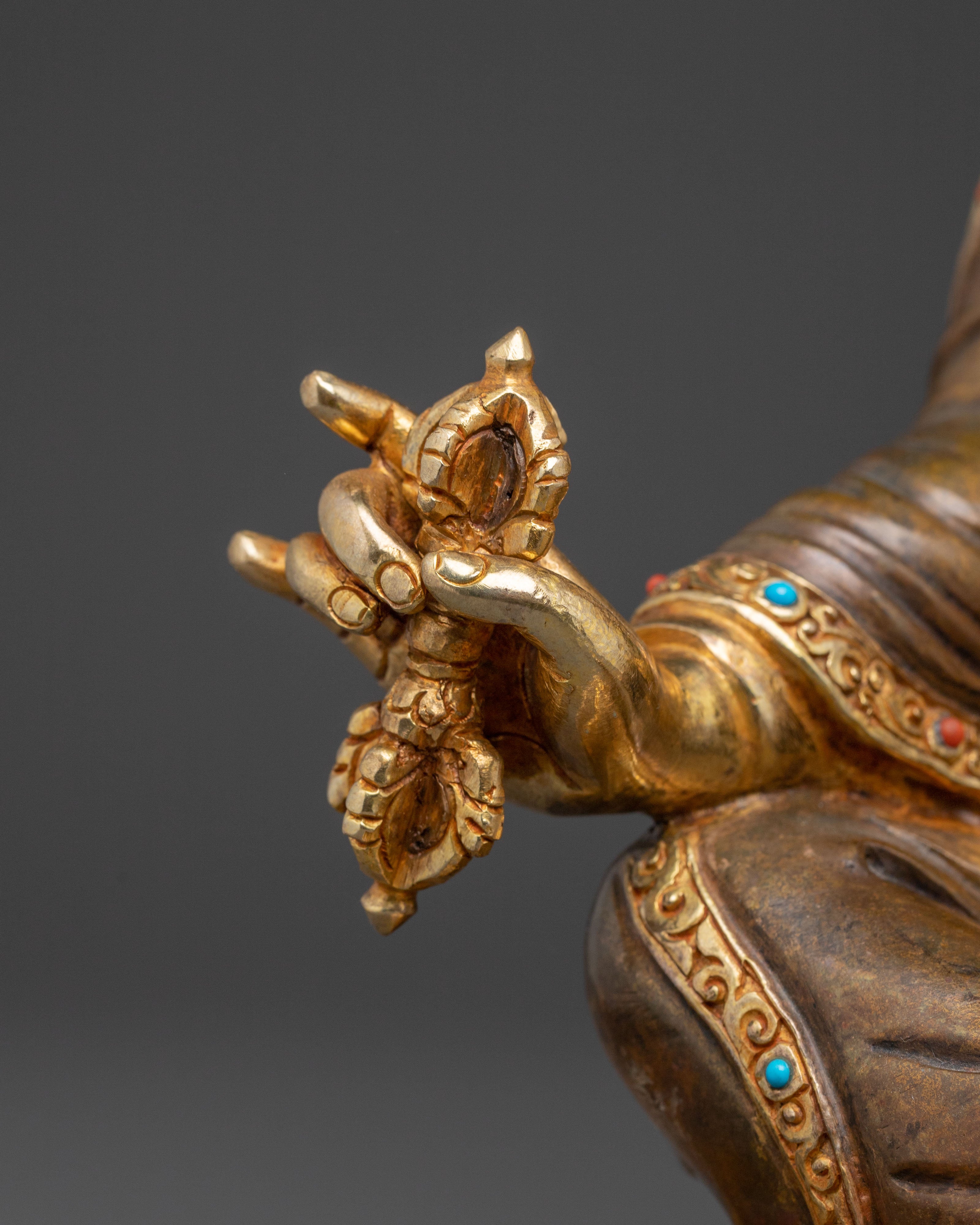
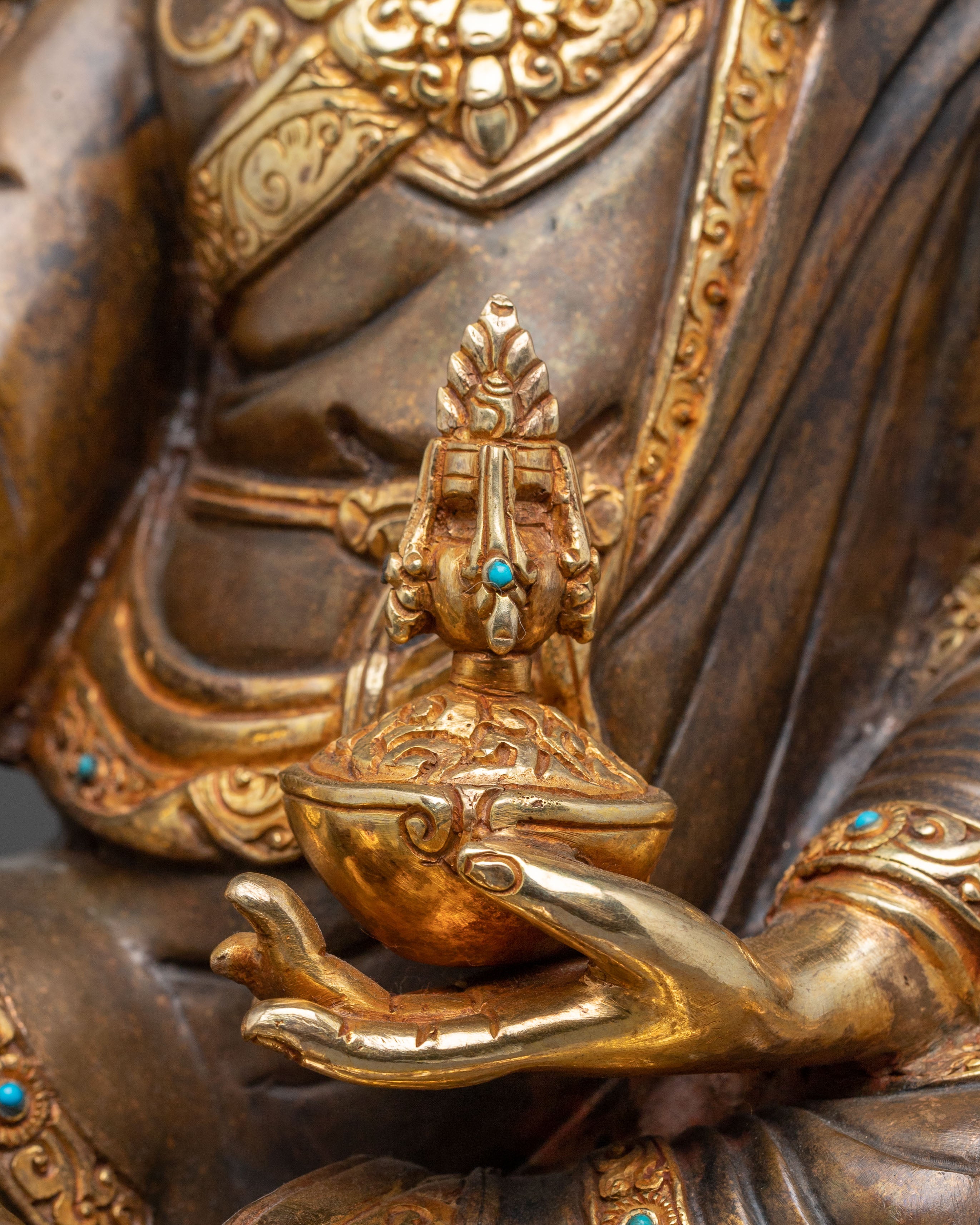
Guru Rinpoche (Padmasambhava), the revered master who brought Buddhism to Tibet, is depicted seated in a regal posture upon a lotus base, symbolizing his transcendence above worldly existence. He wears traditional monastic robes, elegantly draped, expressing both humility and spiritual authority. His right hand holds a vajra at his heart, symbolizing indestructible power and enlightened activity, while his left hand cradles a skull cup containing the vase of immortality, signifying the nectar of deathless wisdom. Resting gracefully on his left shoulder is a khatvanga trident, representing his consort Mandarava and the union of wisdom and method.
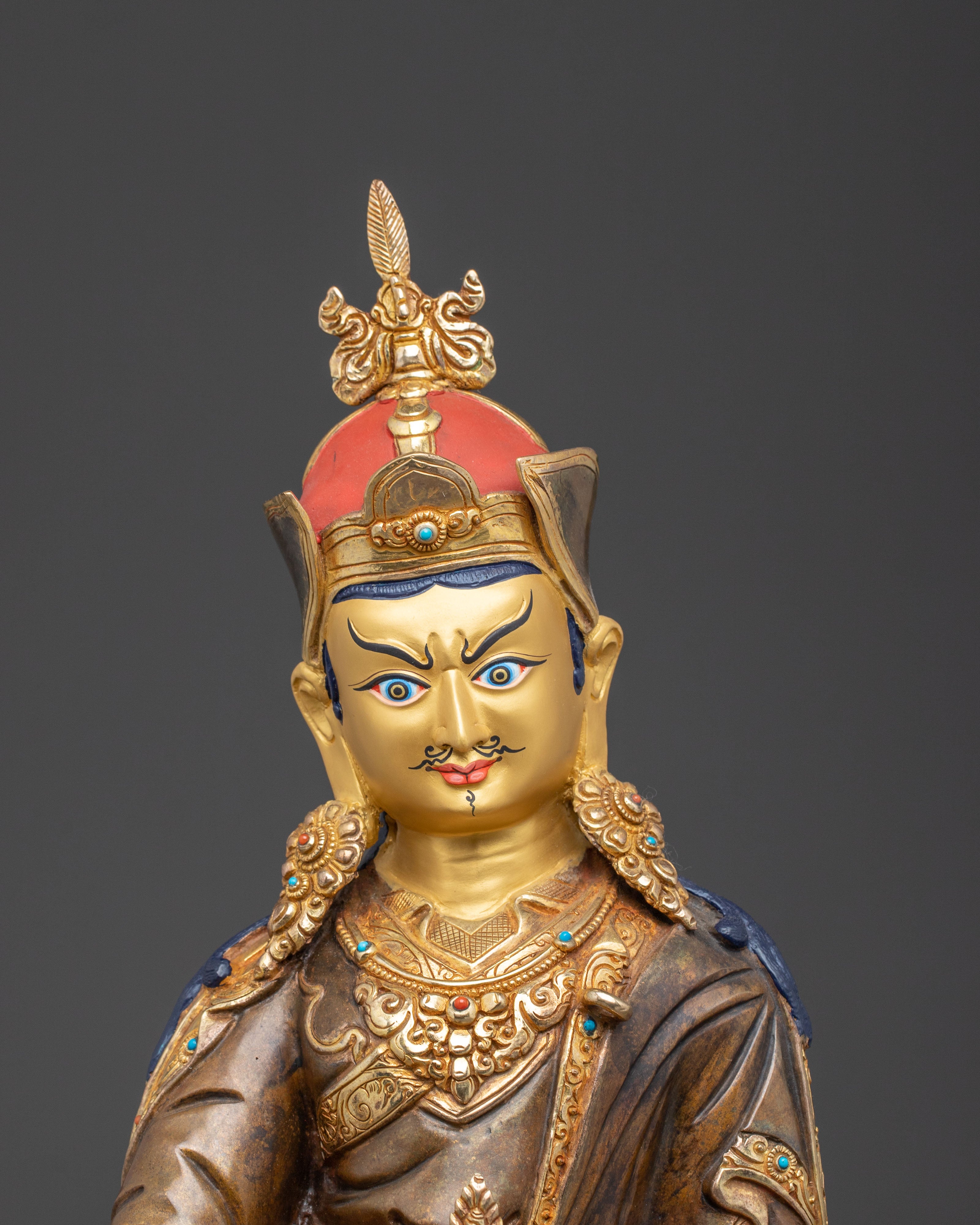
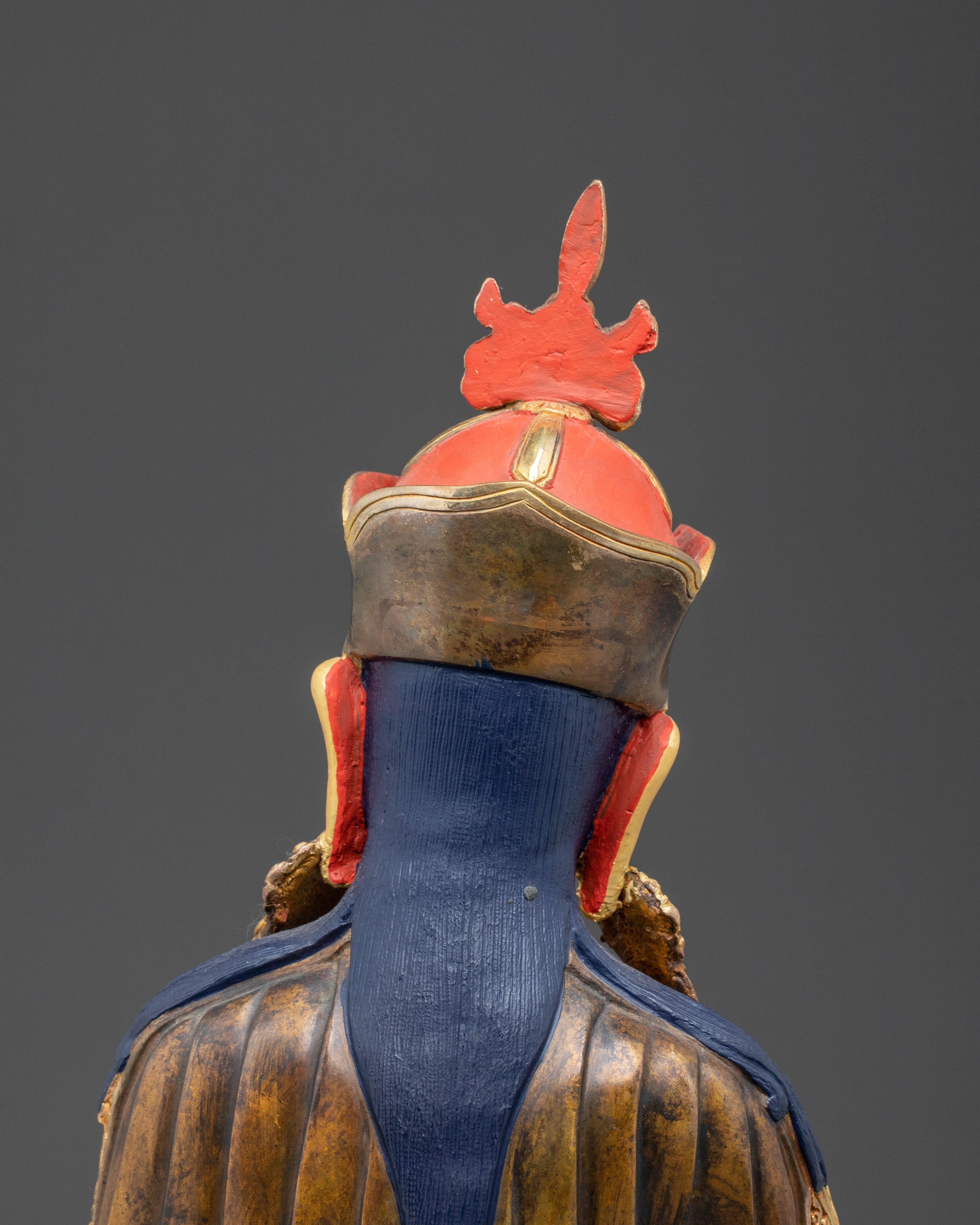
He is adorned with the distinctive lotus hat crowned by feathers, symbolizing his mastery of the three kayas (bodies of enlightenment) and his enlightened awareness of all realms. His calm yet commanding expression embodies the compassionate power of a realized being, ever guiding practitioners toward liberation.
Size: 15.4”/39cm (Height) x 9.8”/25cm (Base)
Weight: 4.65kg
Materials: 24K Gold Gilded, Copper Body, Gold & Acrylic Paintings
Guru Padmasambhava, also known as Guru Rinpoche, miraculously appeared at the age of eight from a blooming lotus in Lake Dhanakosha, fulfilling a prophecy of Shakyamuni Buddha. Not born from a womb, he manifested spontaneously, radiating profound wisdom and compassion. His arrival marked the dawn of Vajrayana Buddhism, and he became known as the Second Buddha, transforming obstacles and guiding beings toward enlightenment. Among his significant achievements, Guru Padmasambhava is credited with subduing powerful demons and spiritual barriers that hindered the spread of Buddhism. He established the foundation of Tibetan Buddhism by founding the first monastery in Tibet, Samye, and initiating the practice of tantra on the Himalayan plateau. His teachings combined wisdom, compassion, and transformative power, laying the groundwork for the flourishing of Tibetan Buddhist philosophy and practice. Guru Padmasambhava's legacy endures as a beacon of spiritual awakening, inspiring millions across the Buddhist world.