The Handcrafted Gautama Buddha Golden Statue of Knowledge | Sage of the Shakya Clan
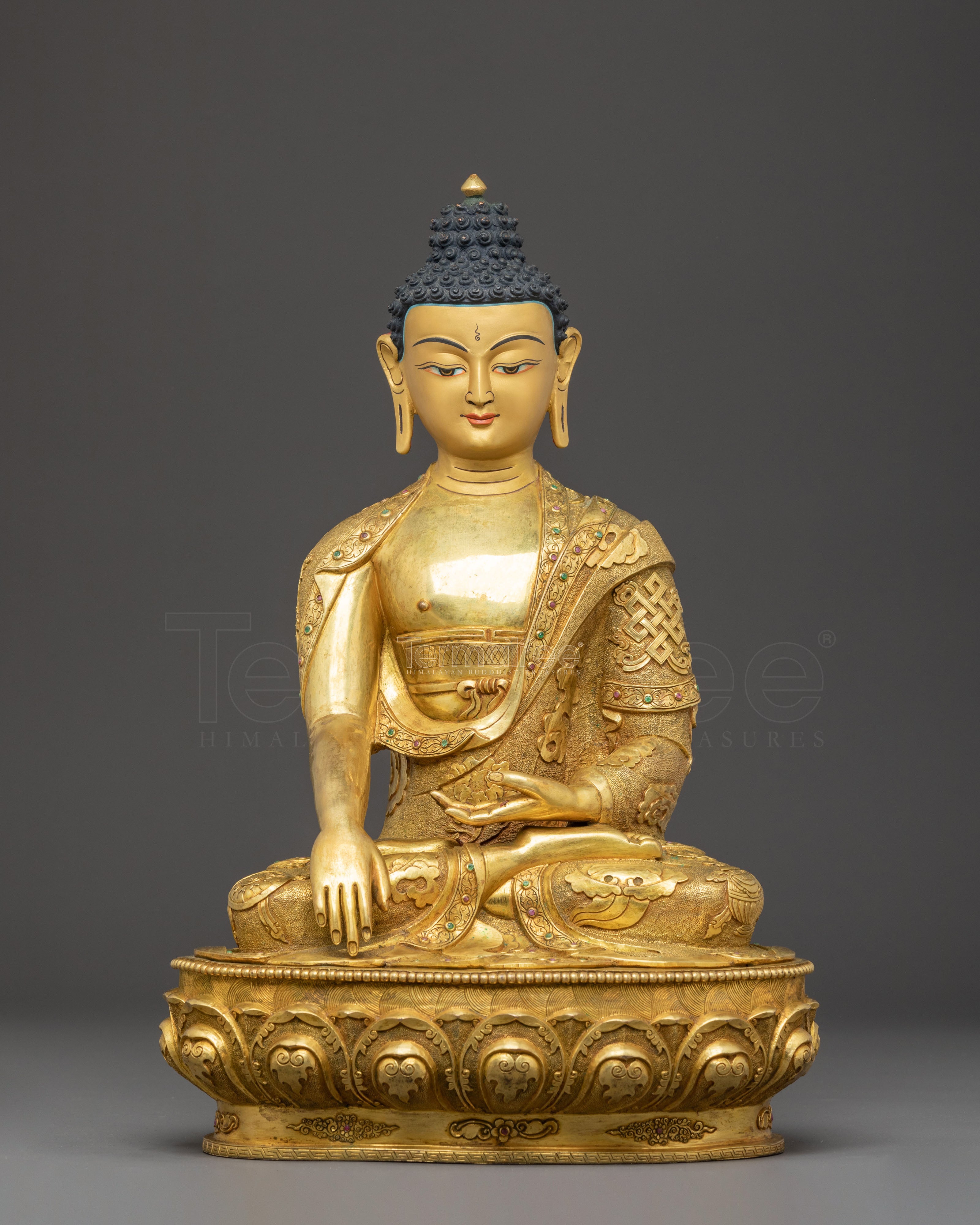
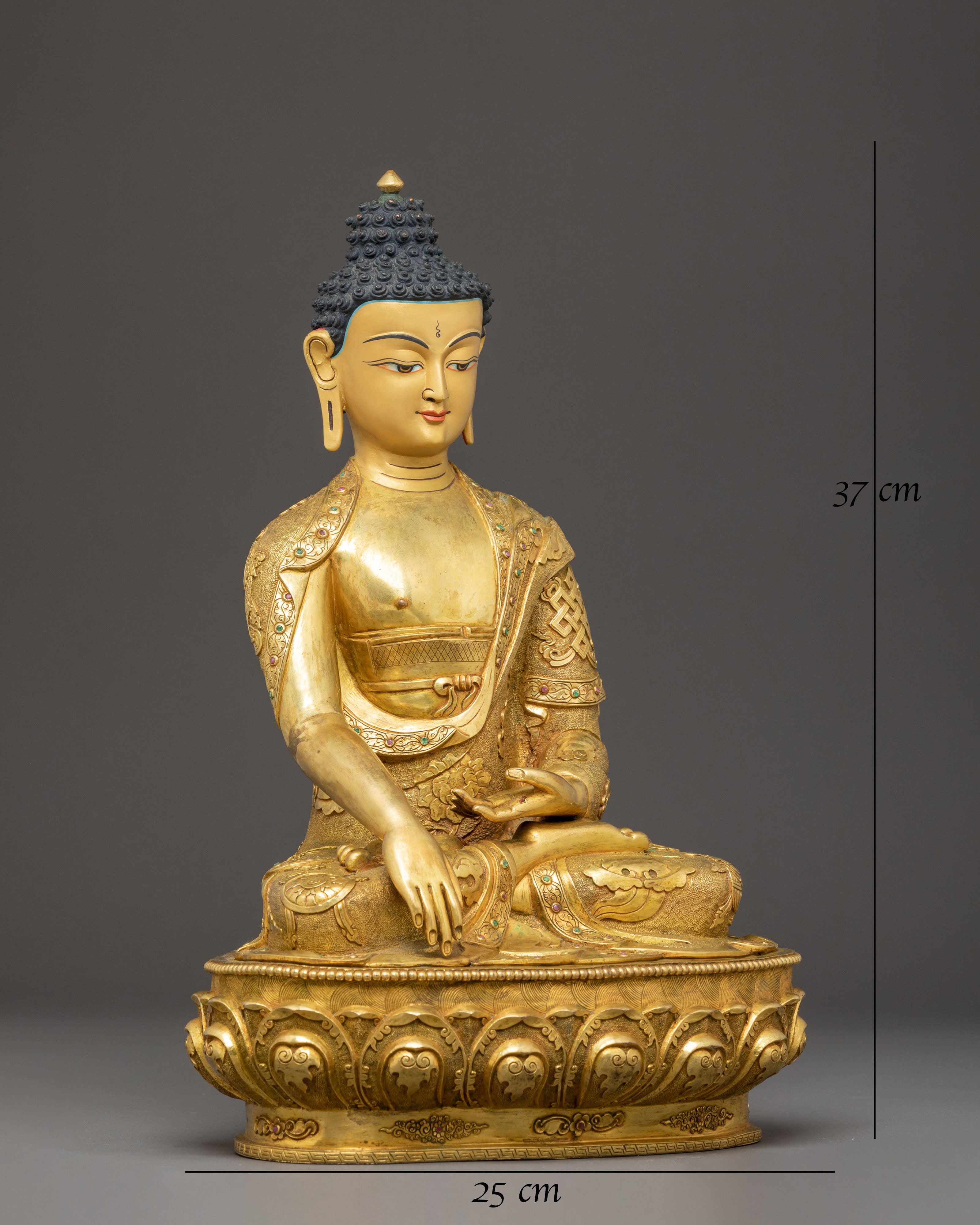
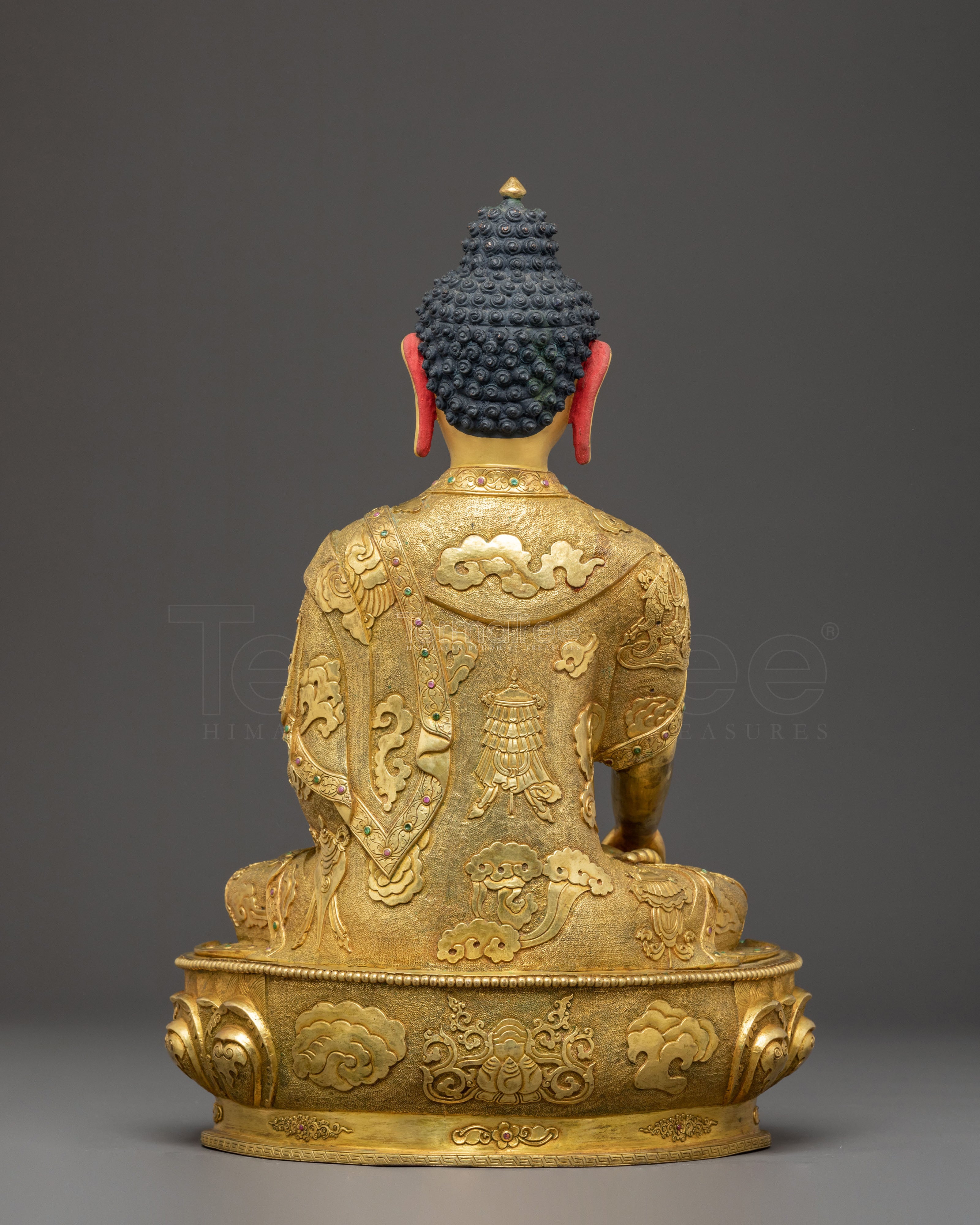
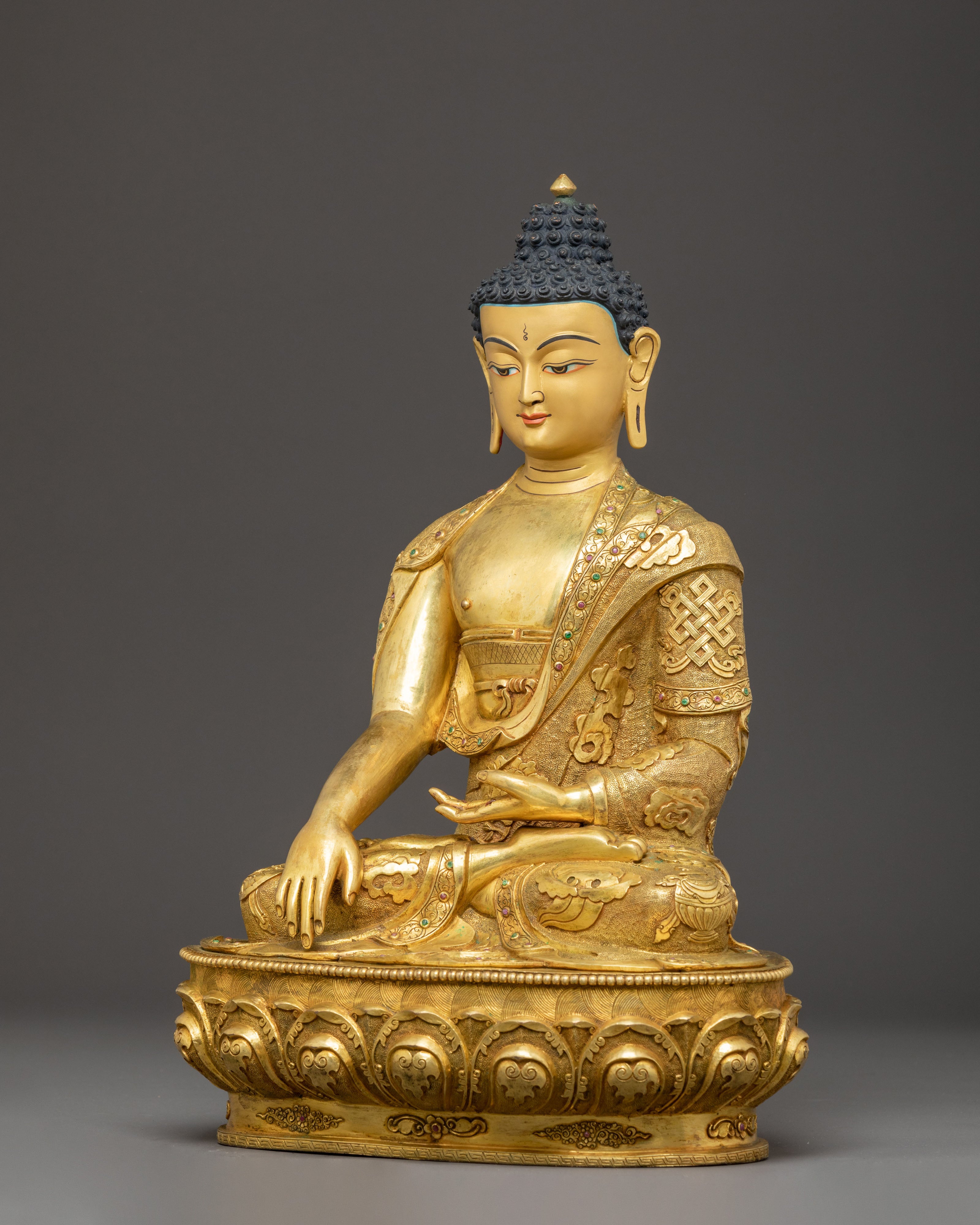
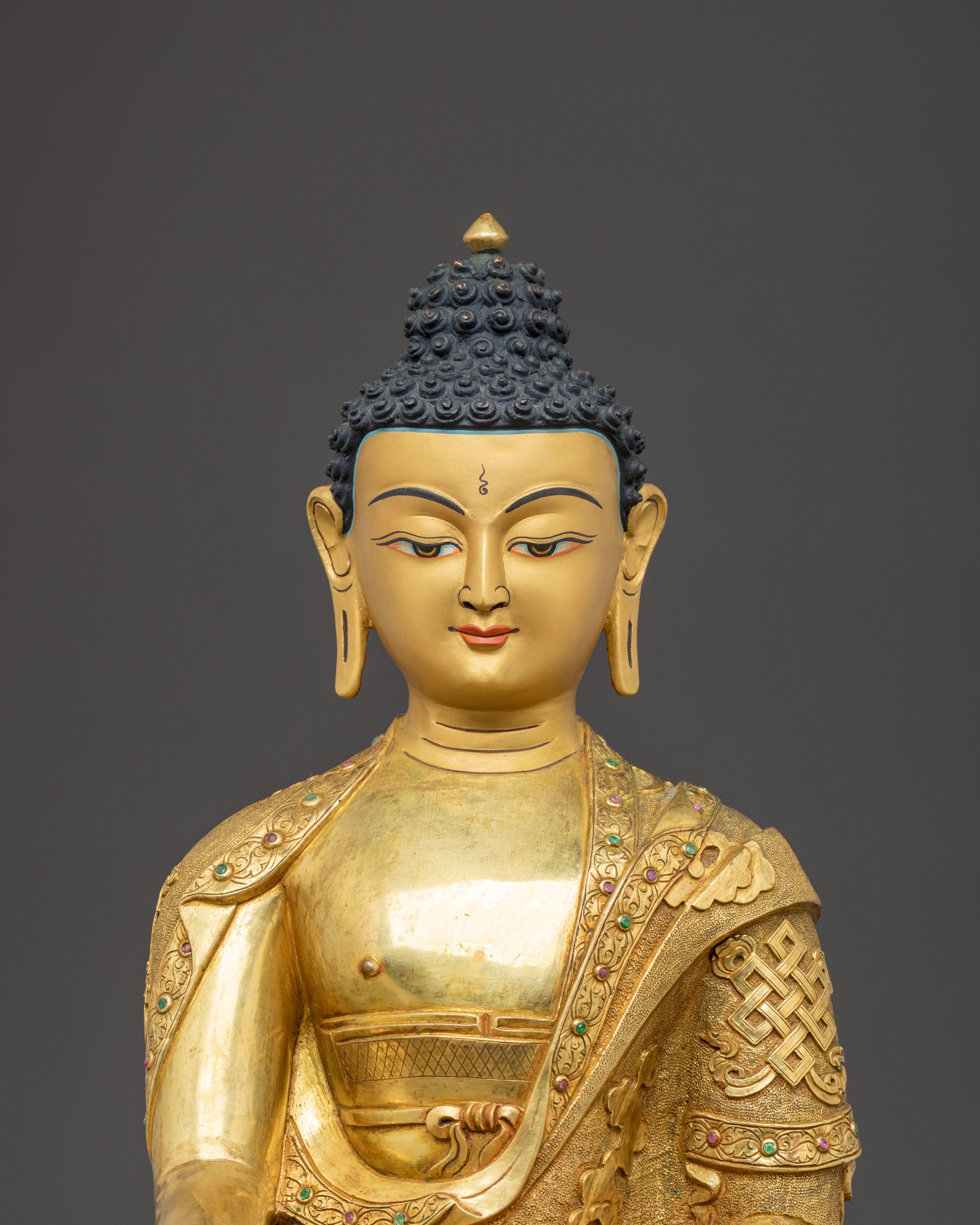
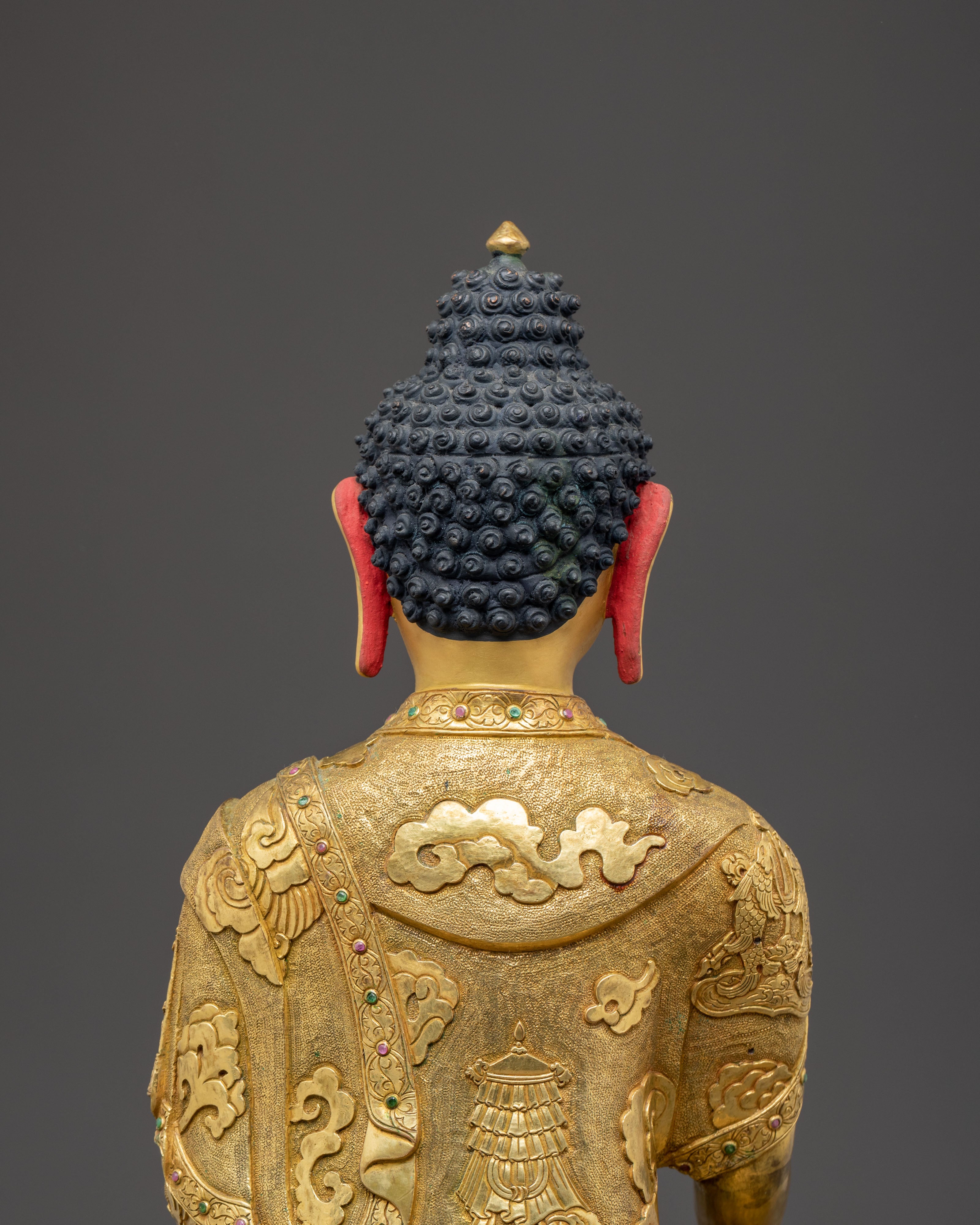
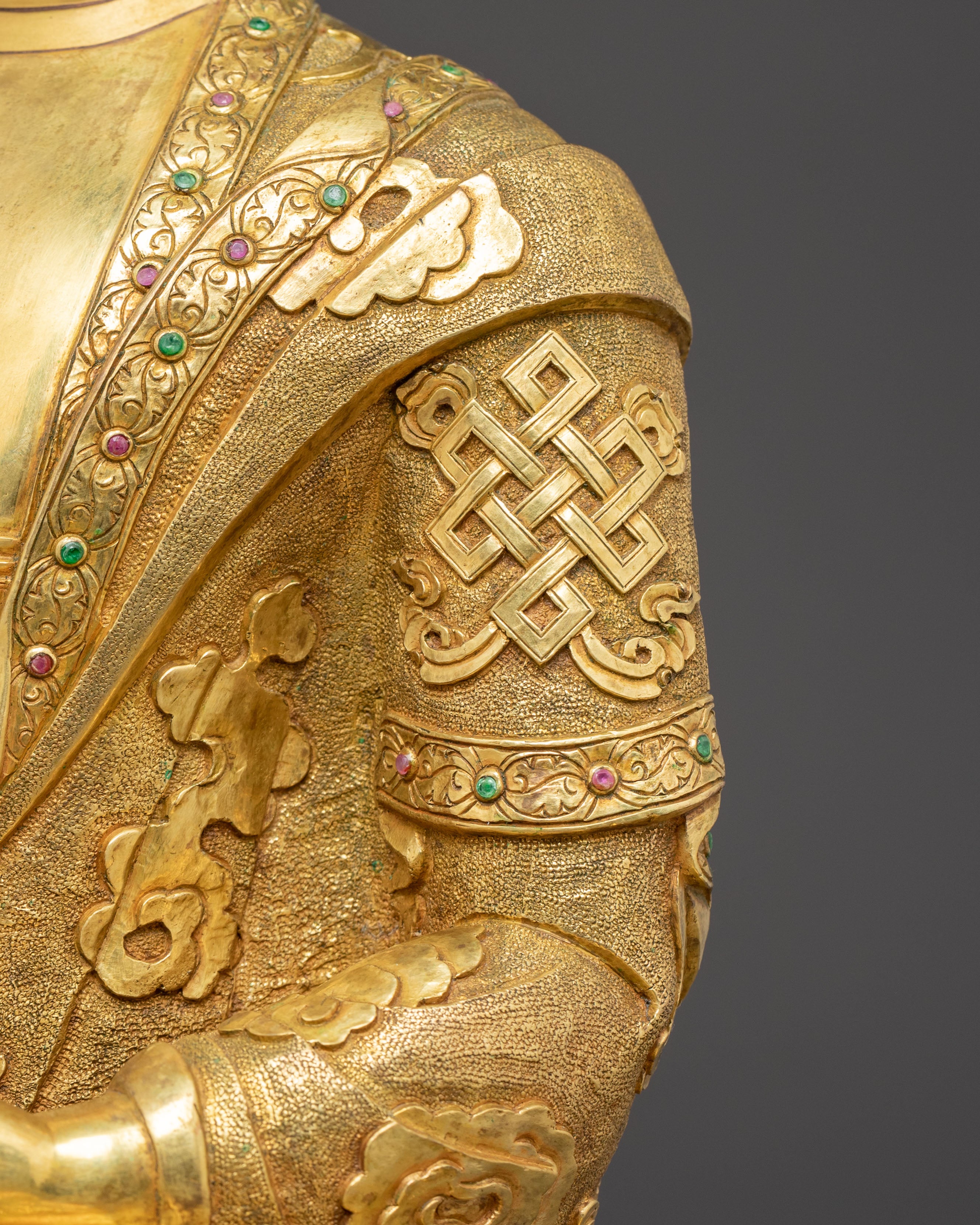
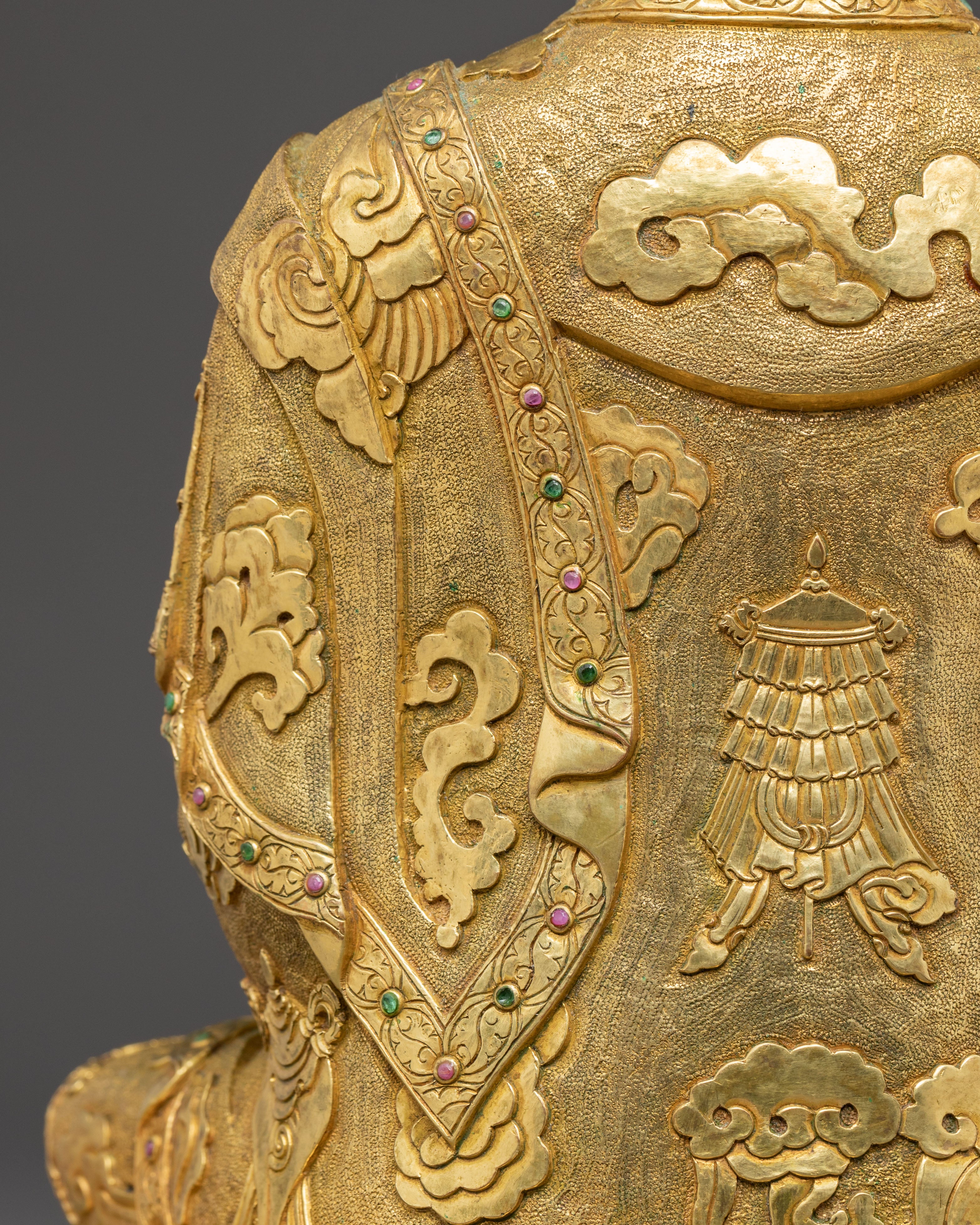
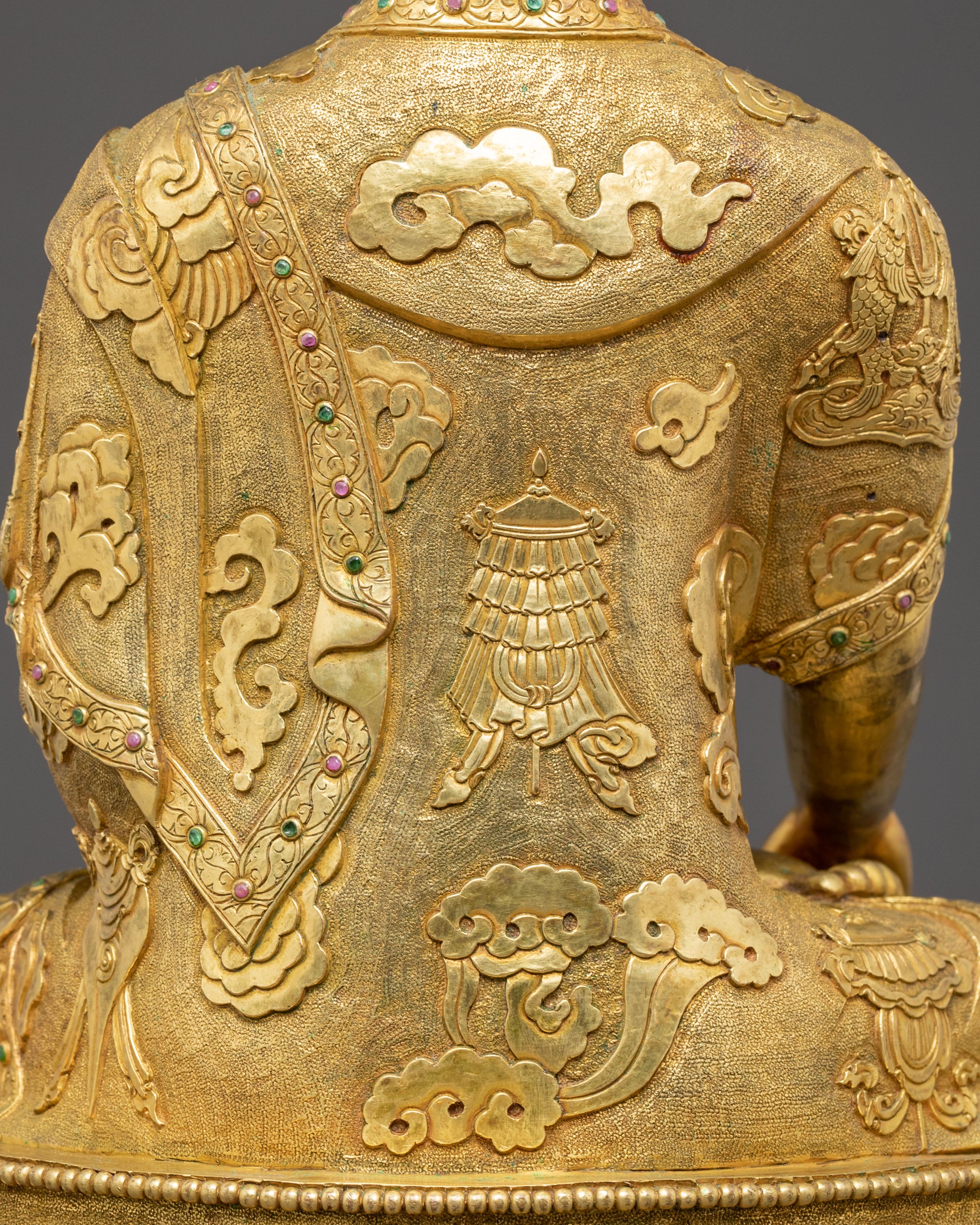
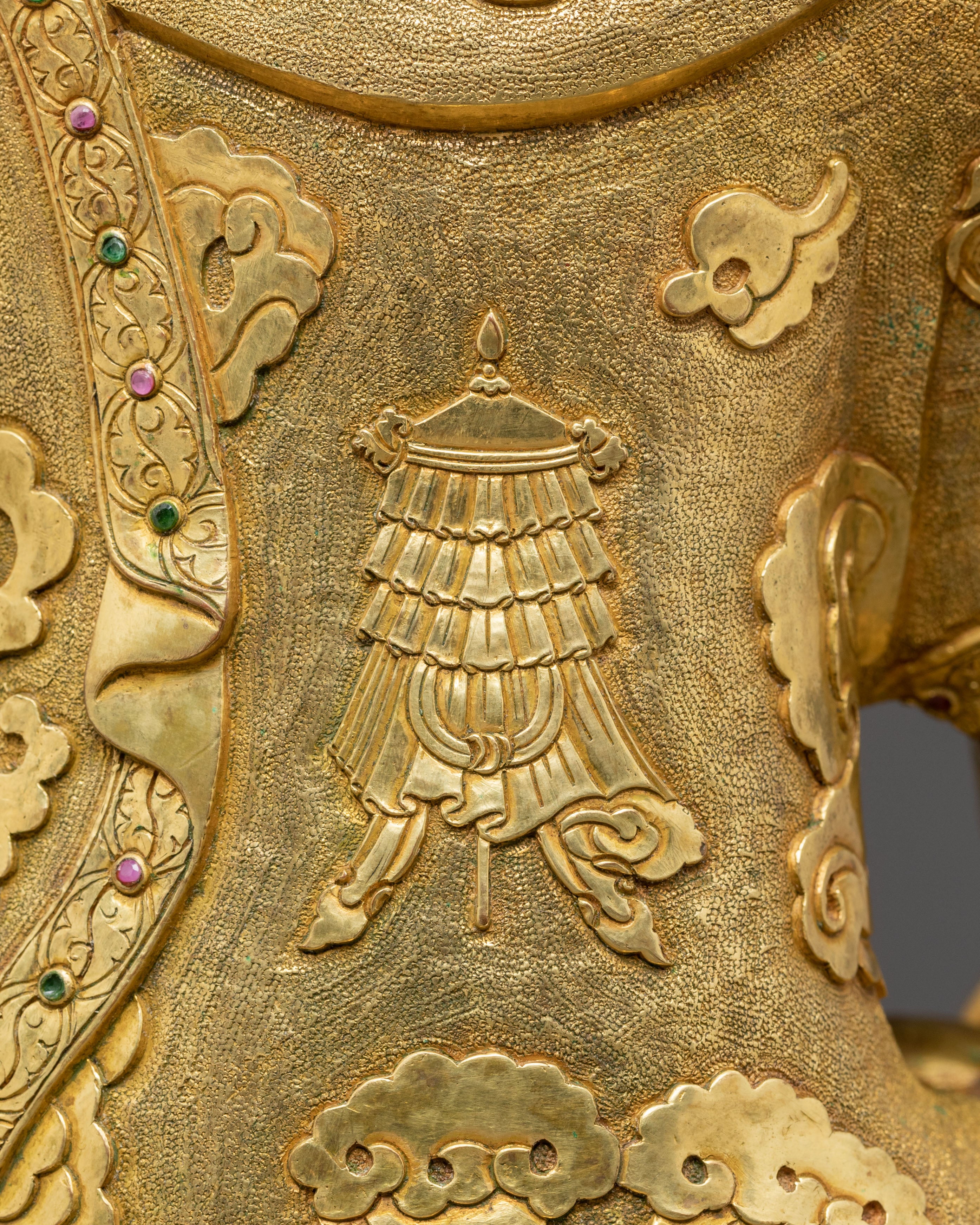
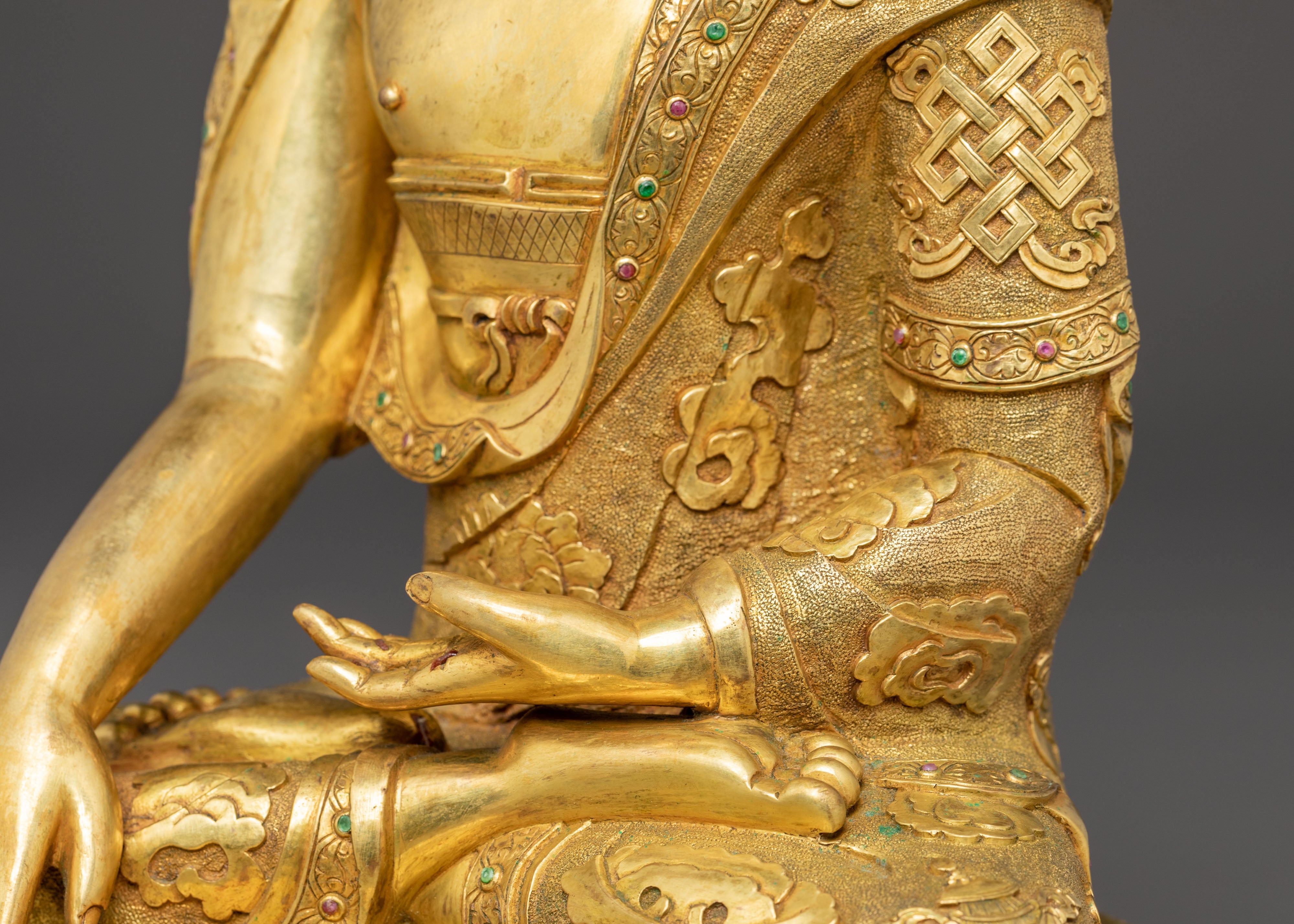
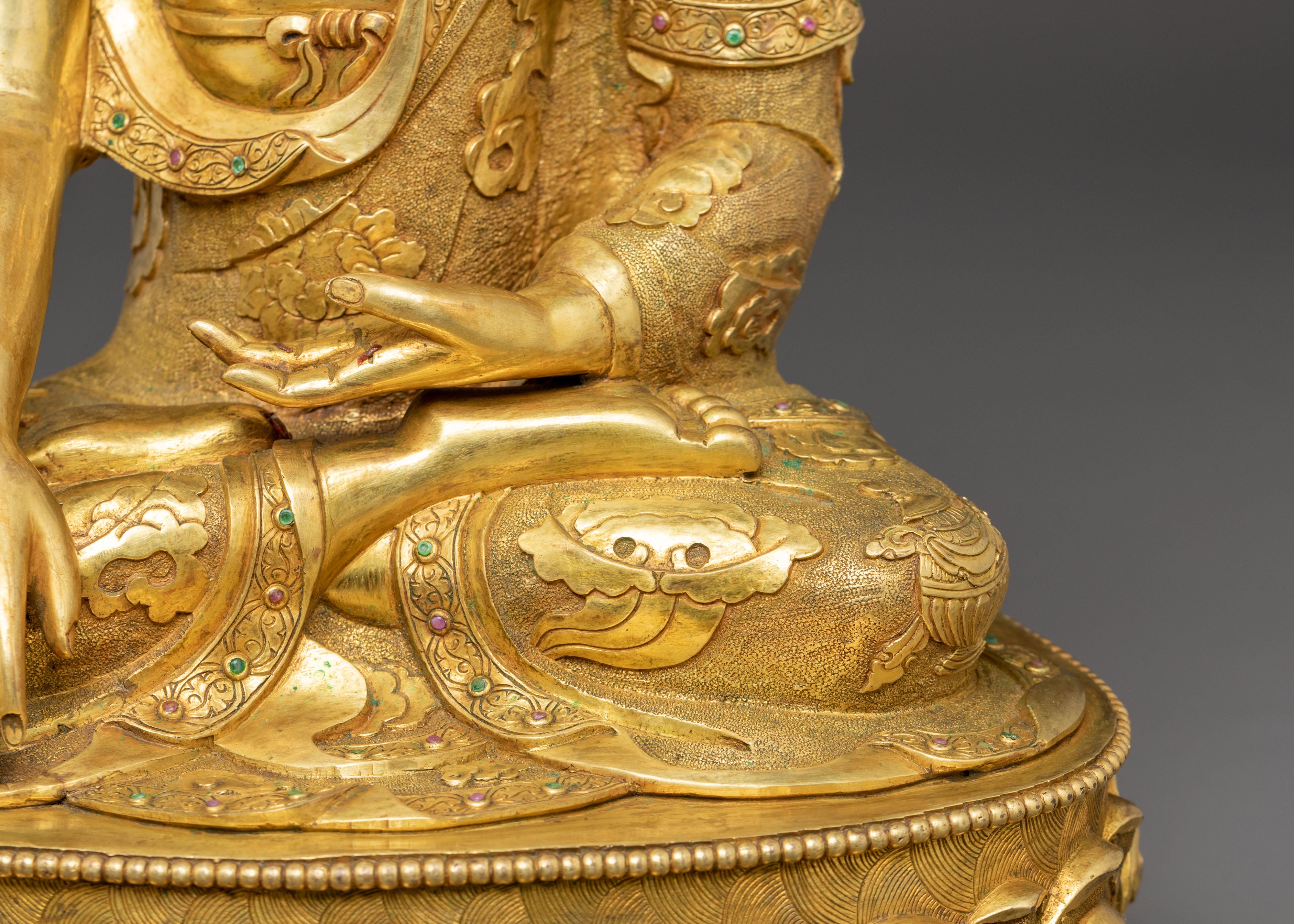
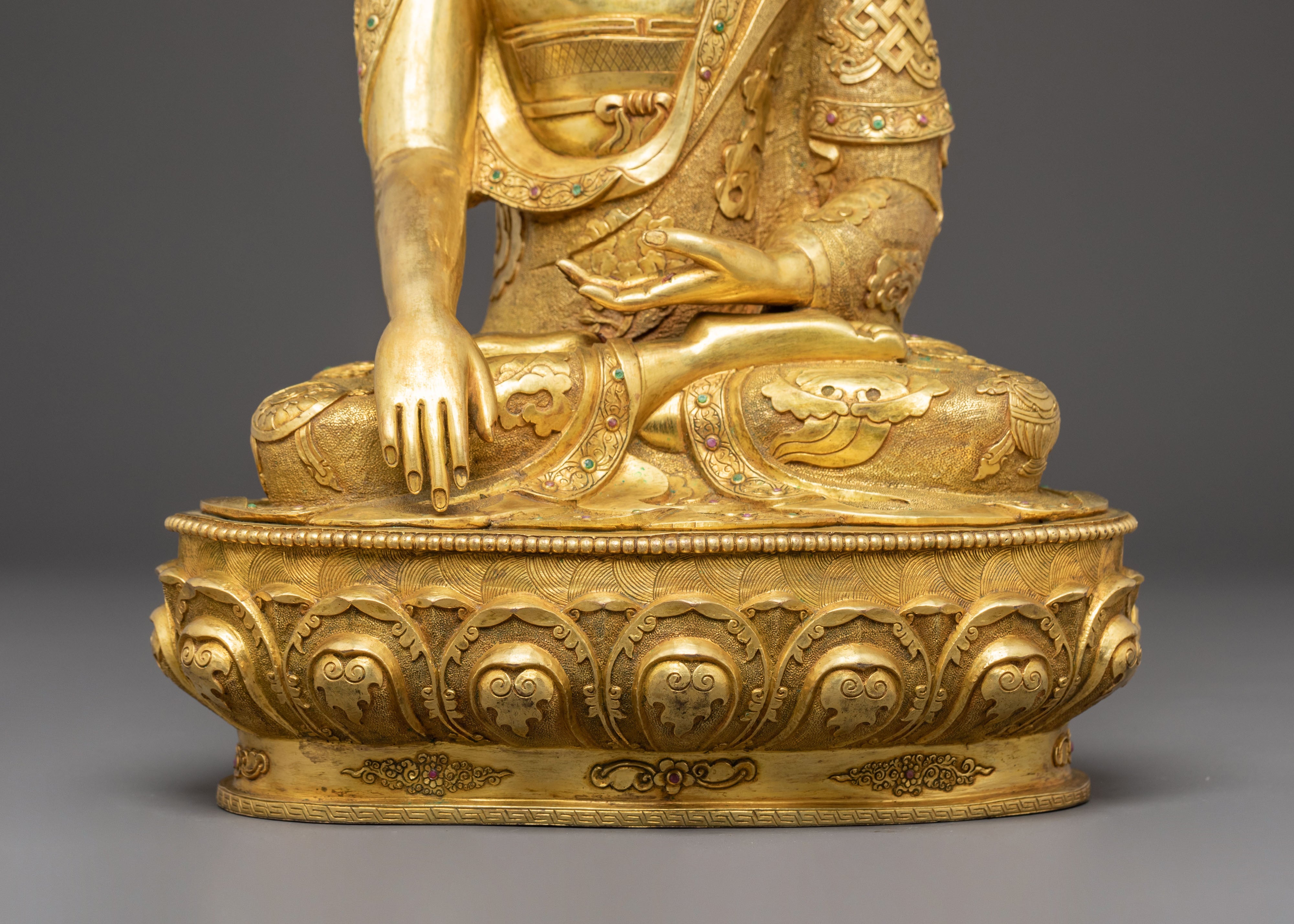
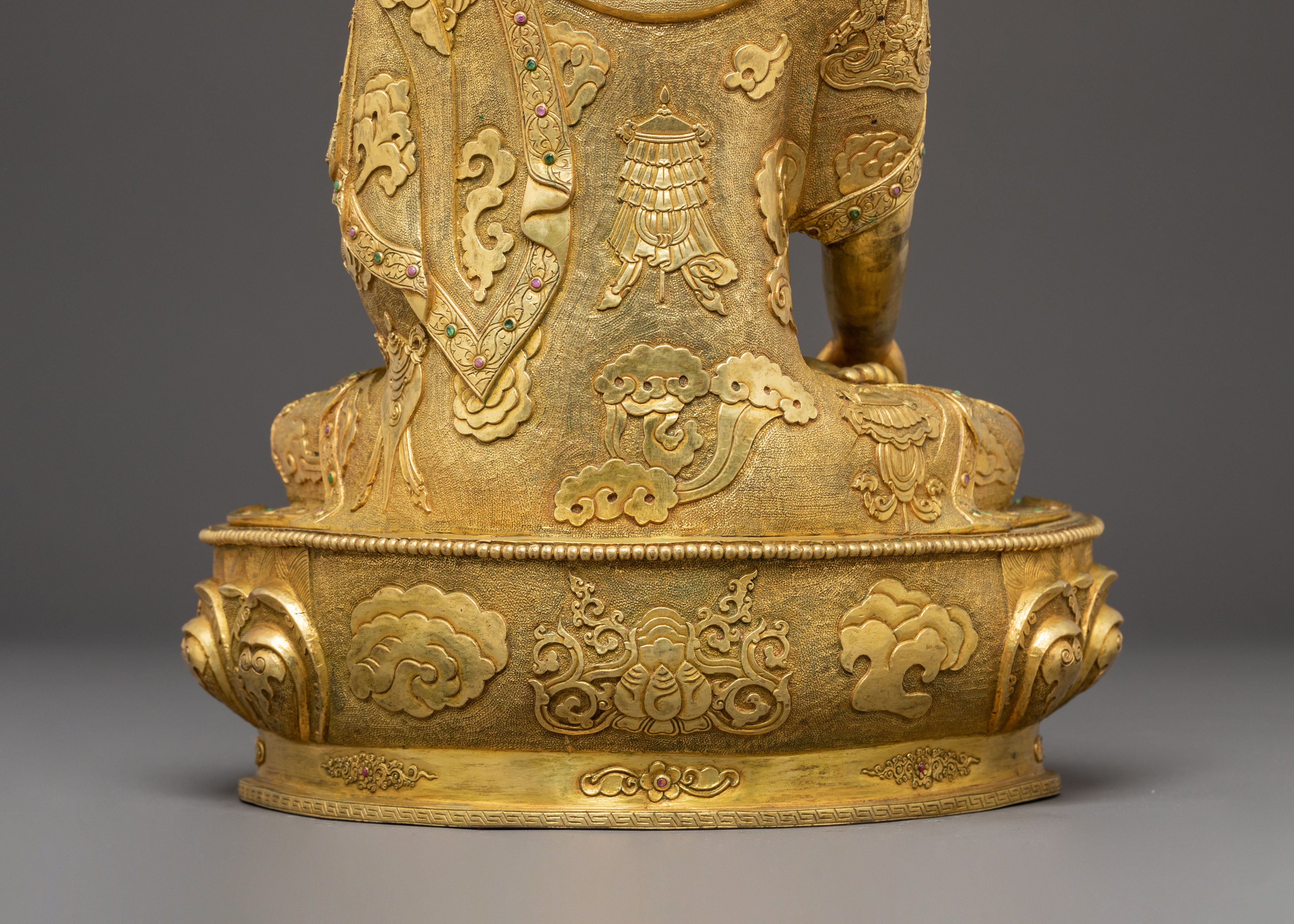
This Handcrafted Gautama Buddha Golden Statue of Knowledge, also known as the historical Buddha, weighs 5.17 kg and stands 14.6”/37 cm in height and 9.8”/25 cm at the base. It is made of copper, covered with a layer of 24K gold gilding. This sculpture, adorned with gemstones and handcrafted by expert Nepalese artisans, elegantly symbolises Himalayan Buddhism's sacred traditions, making it an appropriate addition to altars, meditation places, or sacred collections.
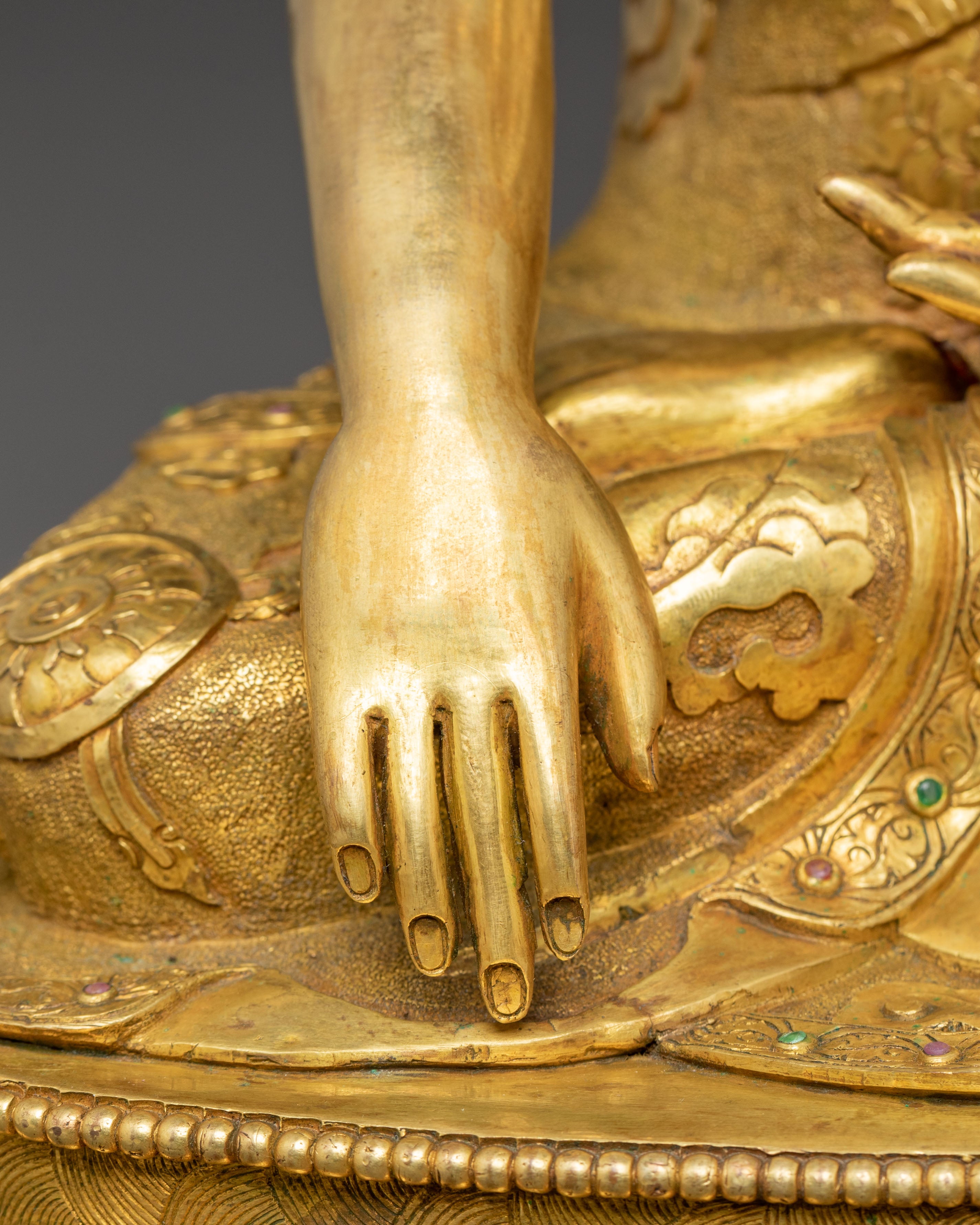
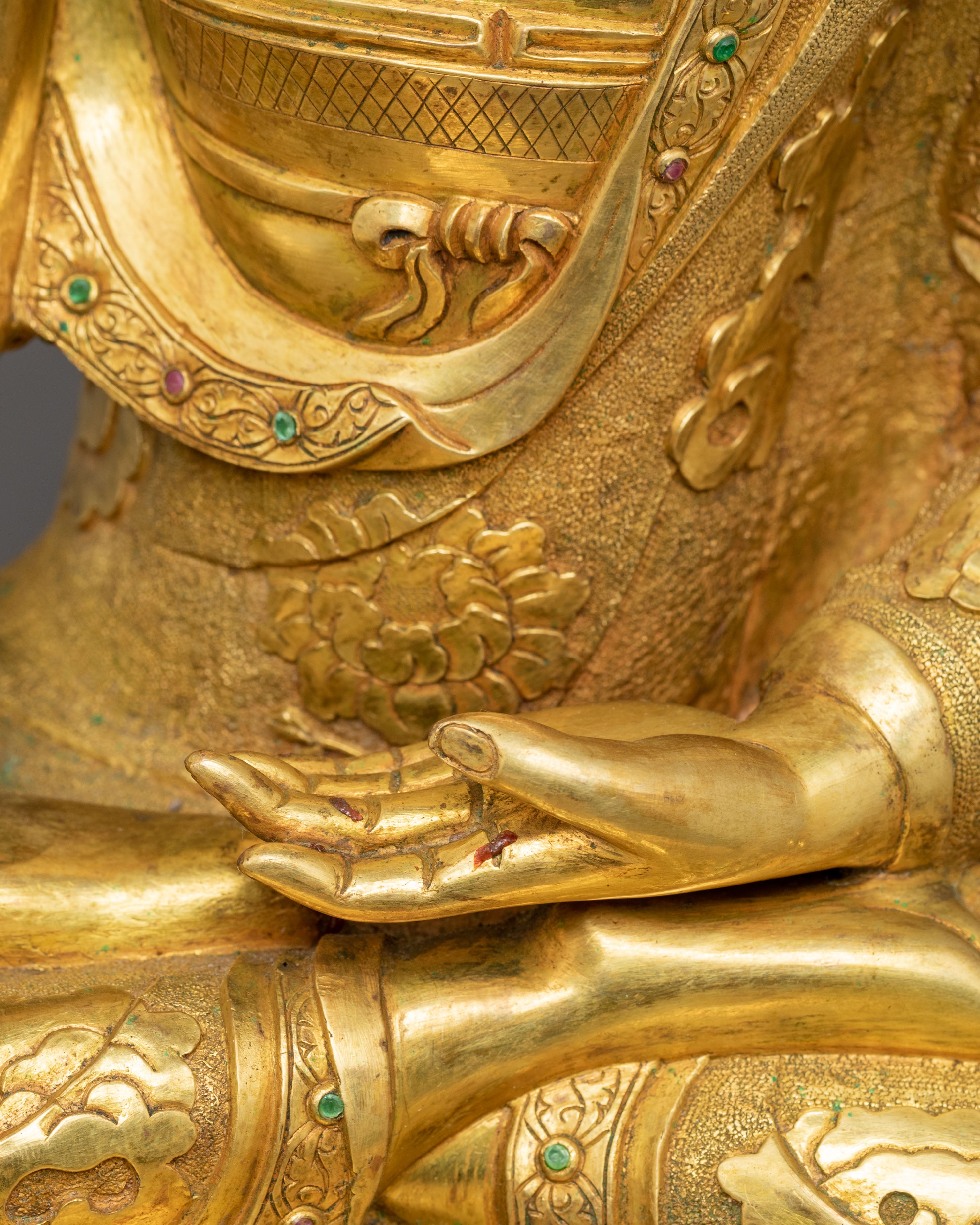
Gautama Buddha is depicted seated in the vajrāsana, or diamond posture, atop a moon disc lotus base, symbolising stability, purity, and spiritual awakening. His right hand reaches downward in the bhumisparśa mudrā, or earth-touching gesture, signifying the moment of his enlightenment when he called the Earth to witness his awakening. In his left hand, he holds an alms bowl, representing renunciation and the monastic path. His serene facial expression reflects deep inner peace and meditative stillness, while the ushnisha on top of his head symbolises his supreme wisdom. The elongated earlobes reflect his renounced past life as a prince, and the spiral curls on his head are said to represent the snails that protected him from the sun during his meditation under the Bodhi tree, symbolising nature’s reverence. This iconography honours the profound presence of the historical Buddha—serene, dignified, and rich with symbolic depth.
Size: 14.6”/37cm (Height) x 9.8”/25cm (Base)
Weight: 5.17kg
Materials: 24K Gold Gilded, Antique Finish, Copper Body
Gautama Buddha, also known as Shakyamuni Buddha, was a spiritual teacher and the founder of Buddhism, born as Siddhartha Gautama in ancient Nepal. Renouncing his royal life in search of truth, he attained enlightenment under the Bodhi tree and shared the path to liberation from suffering. At the core of his teachings are the Four Noble Truths: the truth of suffering (duḥkha), its origin (samudaya), its cessation (nirodha), and the path leading to its cessation (mārga). This path is known as the Noble Eightfold Path, which includes right view, right intention, right speech, right action, right livelihood, right effort, right mindfulness, and right concentration—a guide to ethical conduct, mental discipline, and wisdom that leads to the end of suffering and ultimate freedom (nirvāṇa).