






Description
Handcrafted Oxidized Copper Nagkanya Sculpture | A Fine Expression of Himalayan Sacred Art
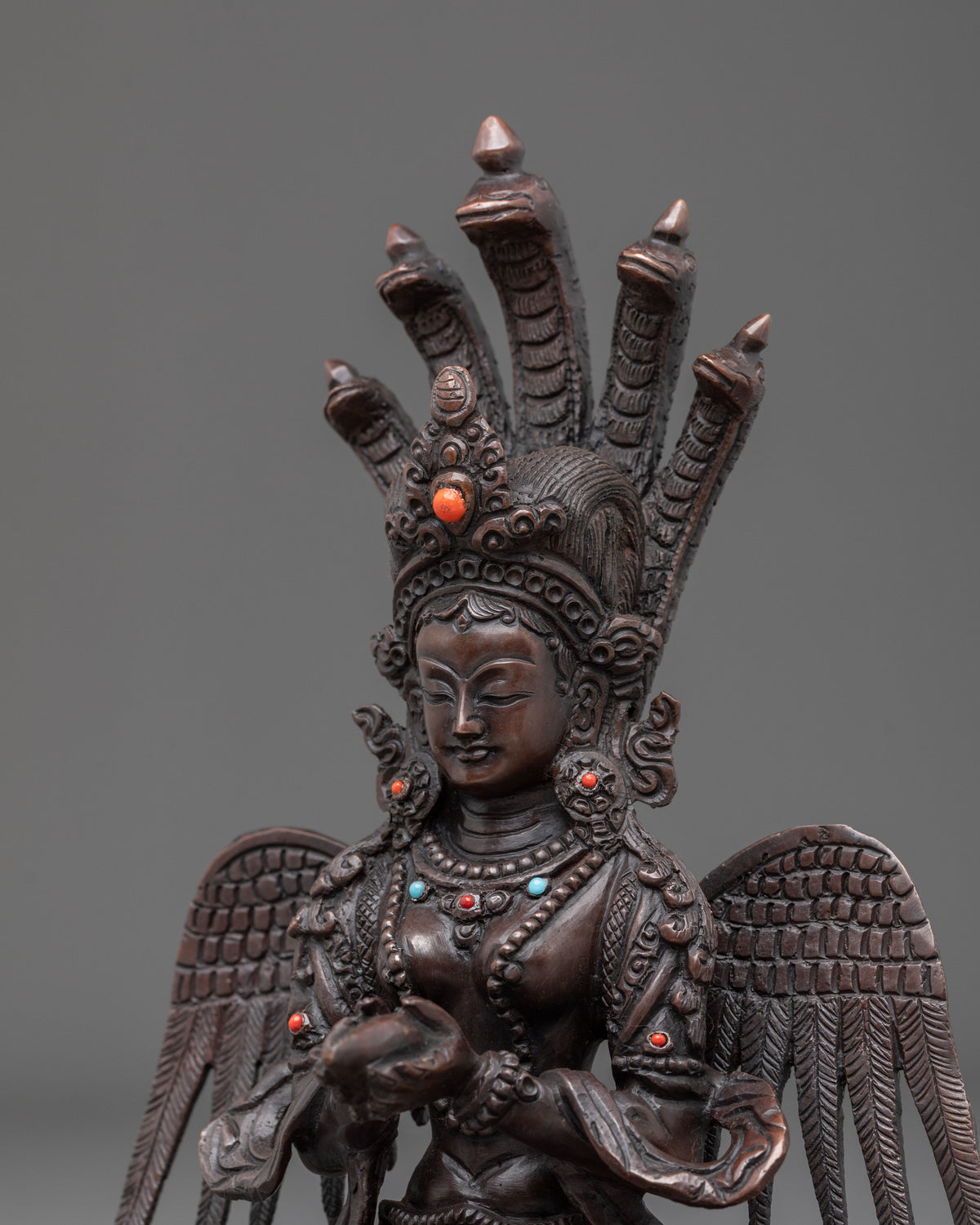
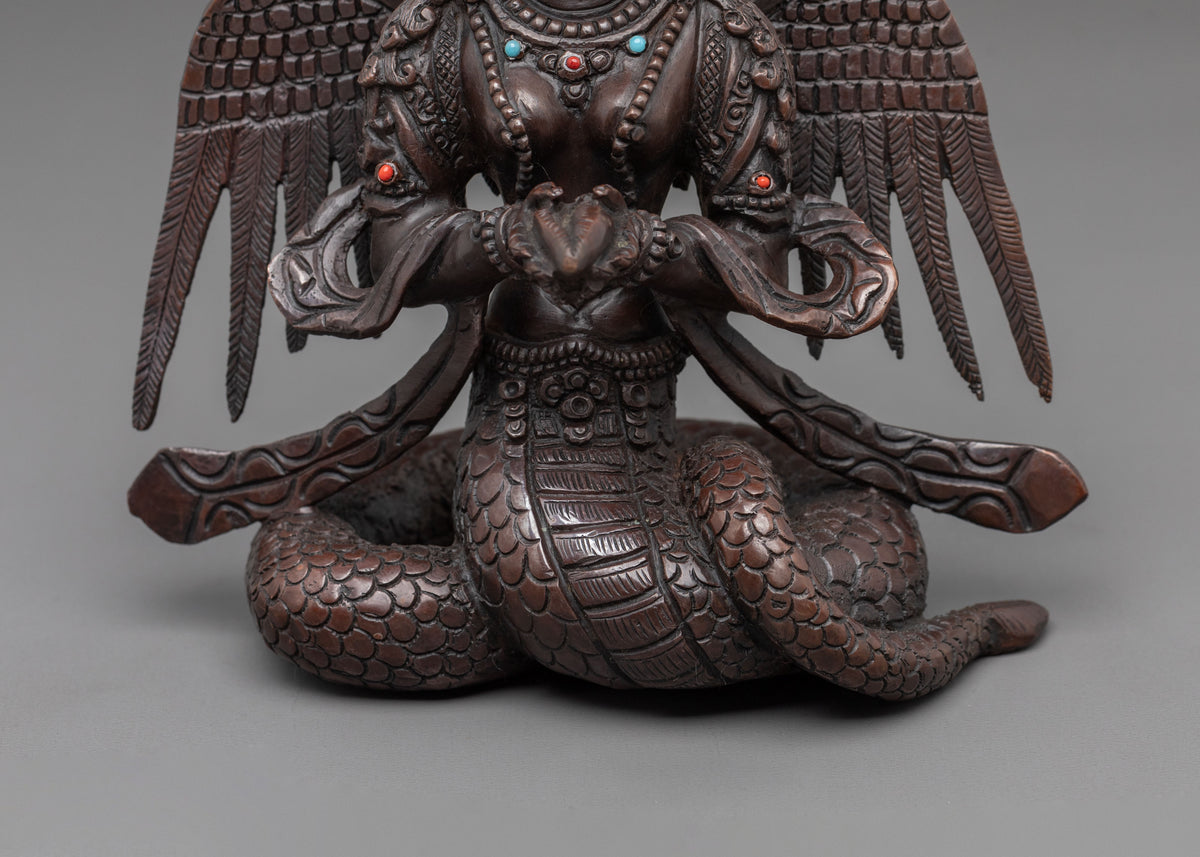
This Handcrafted Oxidized Copper Nagkanya Sculpture measures 9”/23cm in height with a 6.5”/16.5cm base and weighs 1.66 kg. Handcrafted in Nepal from an oxidized copper body, the sculpture features a naturally darkened finish that enhances the contours and finely worked surface, while carefully placed gemstones add subtle color and decorative refinement. The controlled oxidation, precise metalwork, and meticulous hand-finishing reflect the skill of Nepalese artisans and the enduring traditions of Himalayan craftsmanship. Spiritually, the figure is associated with the naga tradition and is connected with water, abundance, protection, and the sacred forces of the natural world.
Nagkanya, the serpent maiden, is depicted as a graceful feminine deity associated with the naga realm, water, fertility, protection, and abundance. She is portrayed with a serene expression and an elegant human form, while the serpent elements identify her connection with the naga world. Her elaborate crown, earrings, layered necklaces, armlets, bracelets, waist ornaments, and flowing garments emphasize her divine nature, while the carefully modeled body and graceful posture convey elegance and dignity. Serpent forms incorporated around the figure further emphasize her identity as a naga deity, while the lotus and ornamental elements symbolize purity, prosperity, and connection with the natural and aquatic realms. Together, her feminine form, serpent symbolism, elaborate adornments, and graceful presence express Nagkanya as a protective and auspicious figure connected with the naga realm, water, fertility, and abundance.
Size: 9”/23cm (Height) x 6.5”/16.5cm (Base)
Weight: 1.66 kg
Material: Oxidized Copper Body, Gemstones
Nagkanya, meaning “Nāga maiden” or “serpent maiden,” originates in ancient South Asian religious traditions and later became part of Buddhist and Himalayan sacred art. In Buddhist contexts, nāgas are semi-divine beings closely associated with water, fertility, hidden treasures, protection, and the guardianship of sacred teachings. Female nāgas are often represented in graceful human form with serpent characteristics and are connected with rivers, lakes, springs, and other life-giving waters. In Himalayan traditions, they may appear as protectors, attendants, or guardians of spiritual wealth, symbolizing abundance, natural forces, and the close relationship between the sacred and the elemental world.