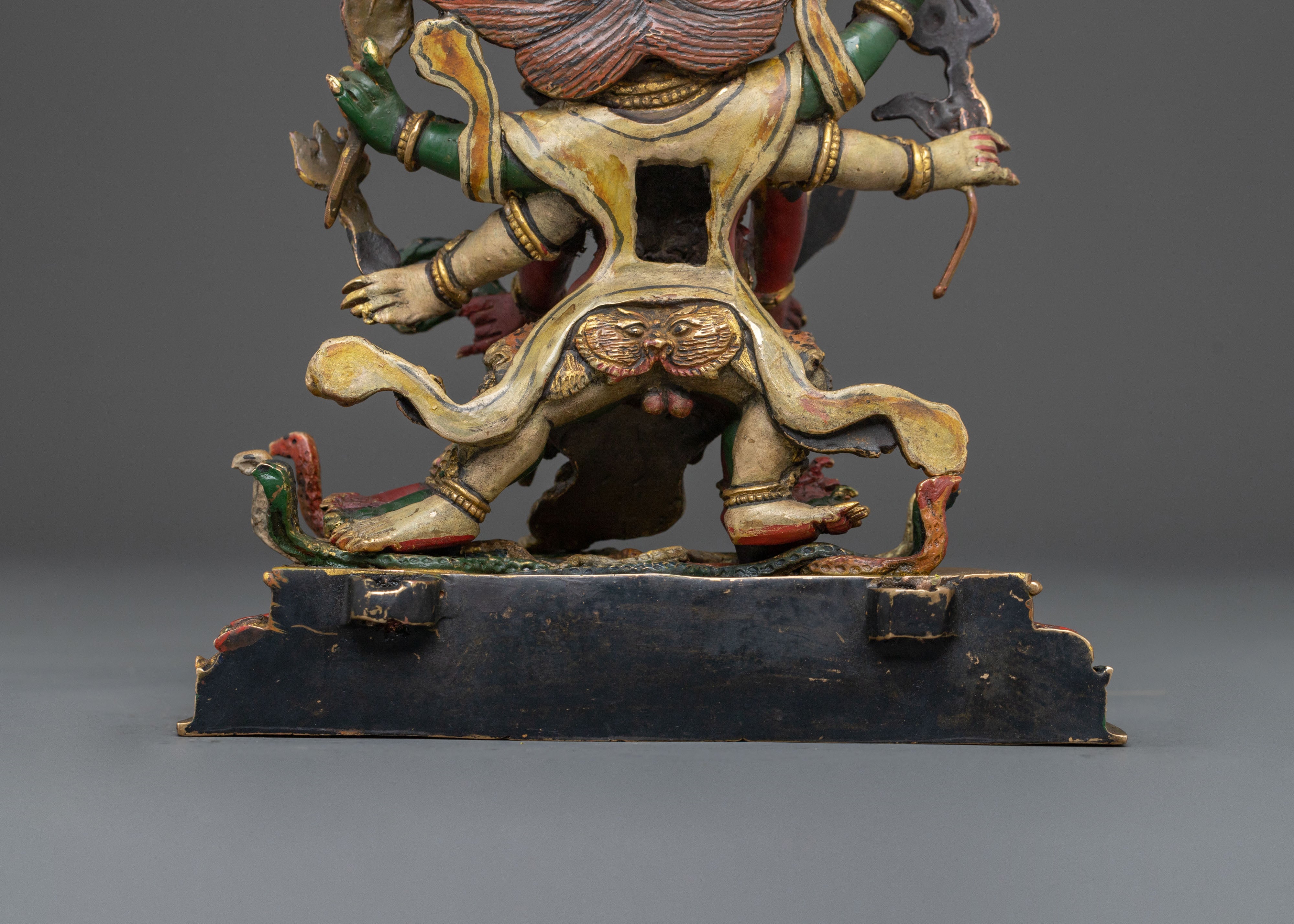
Embrace Inner Strength with This Heyagriva Statue for Spiritual Protection
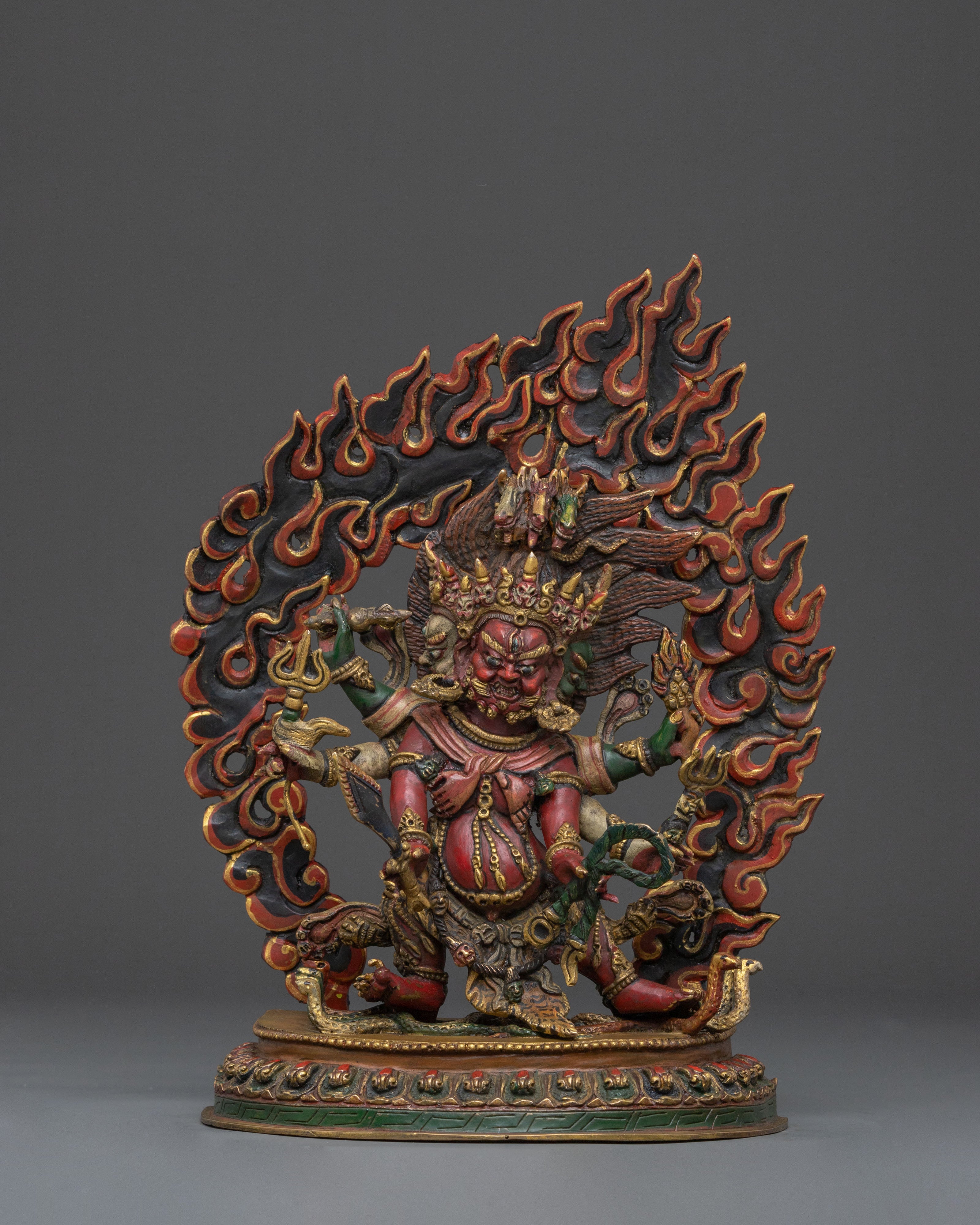
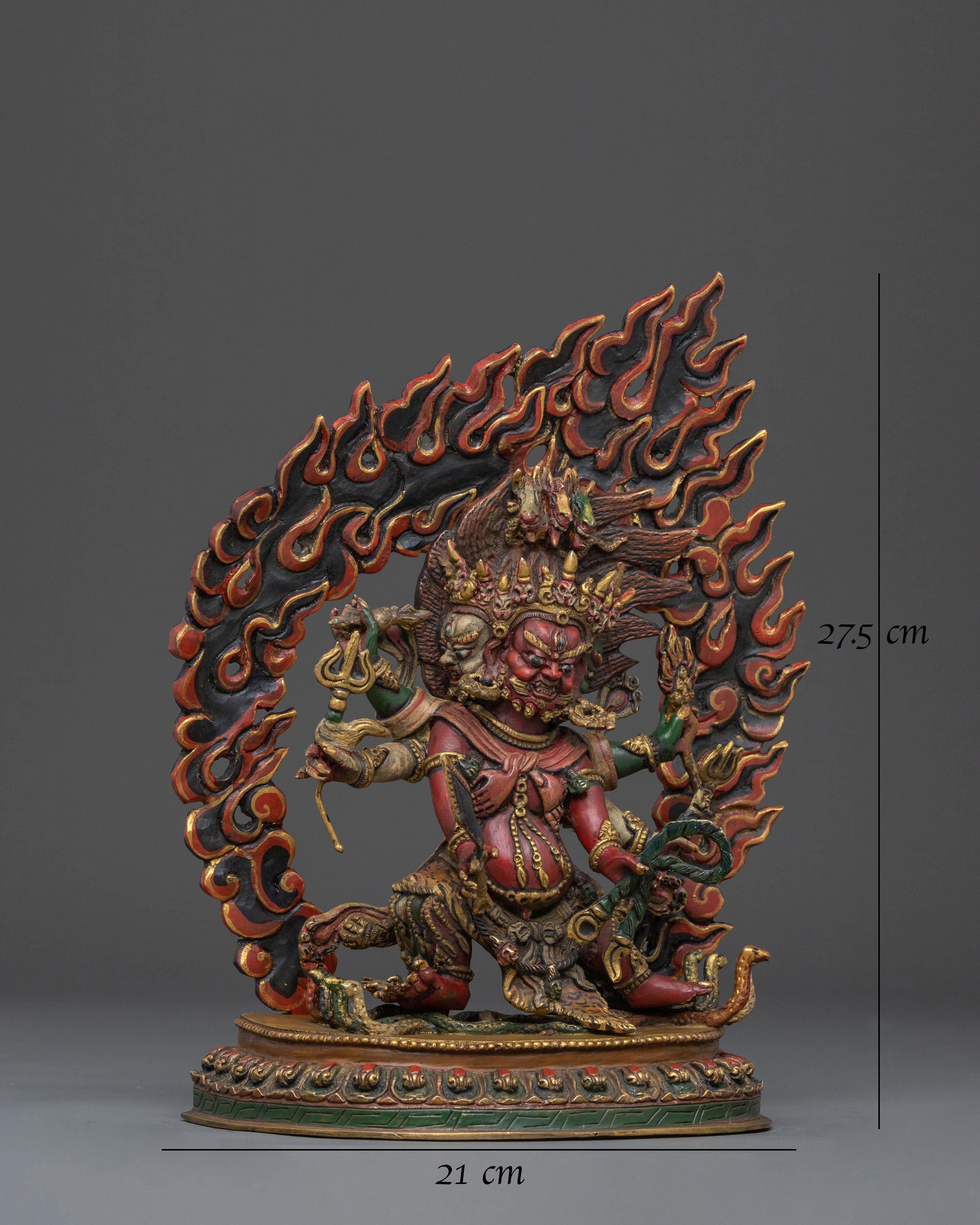
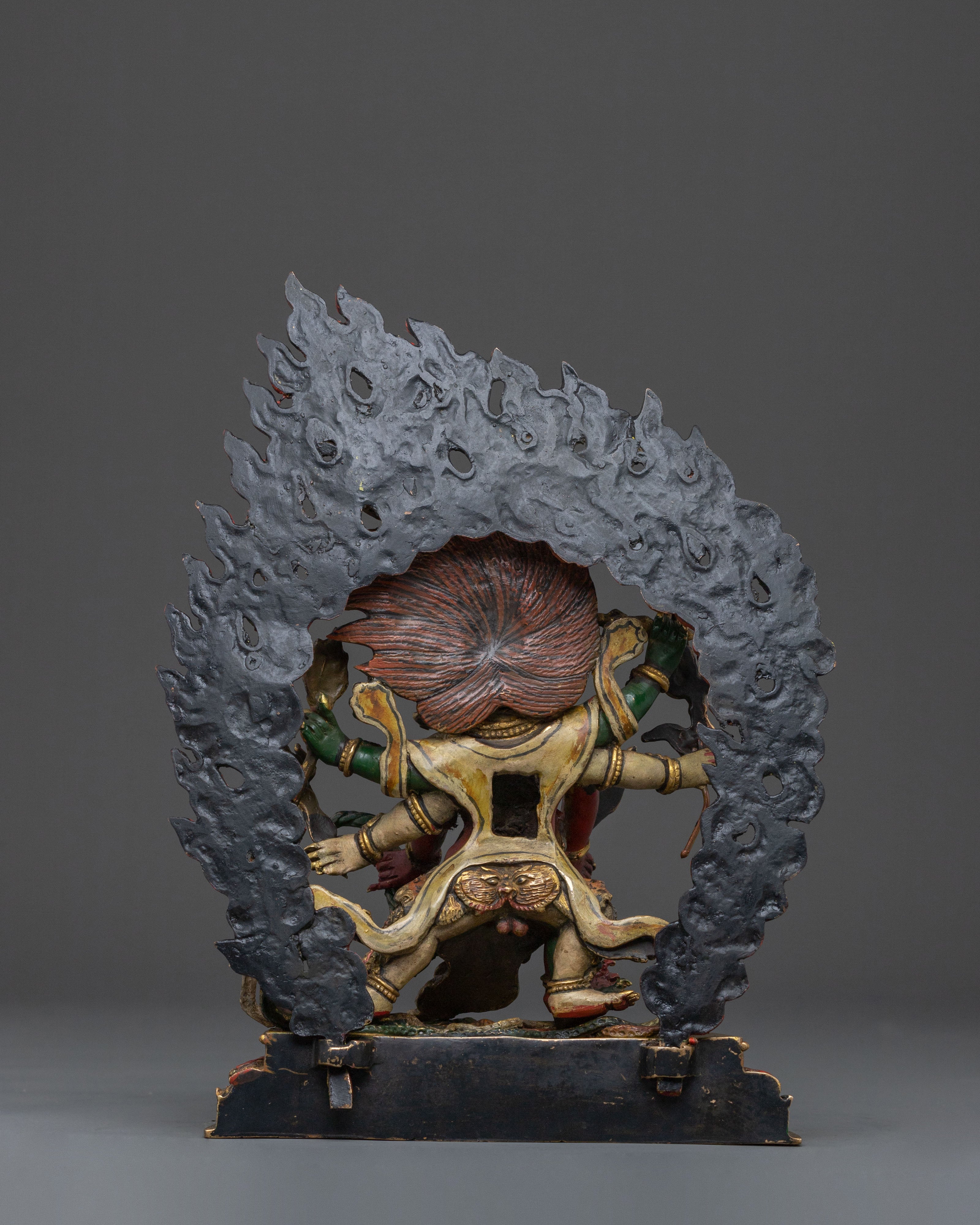
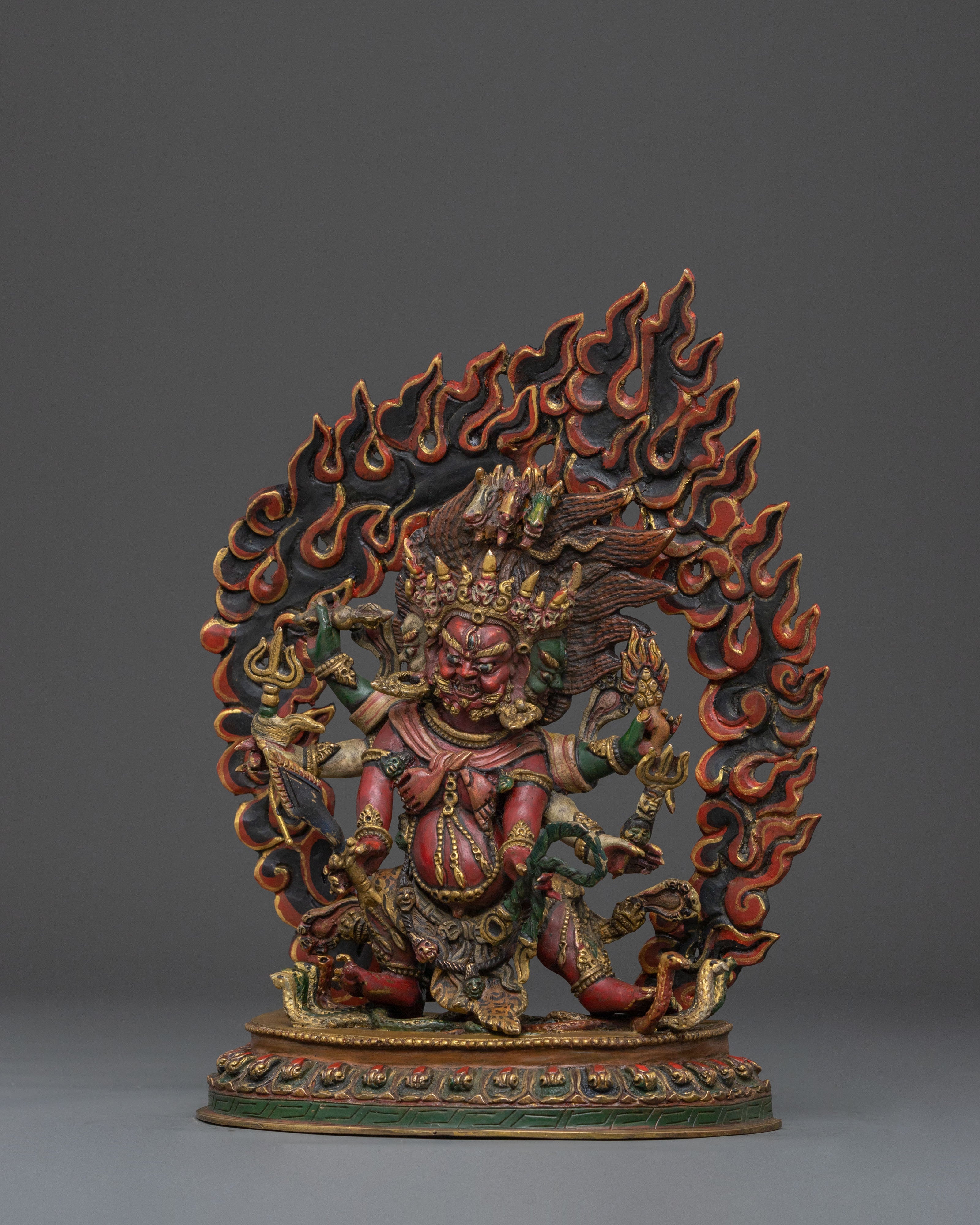
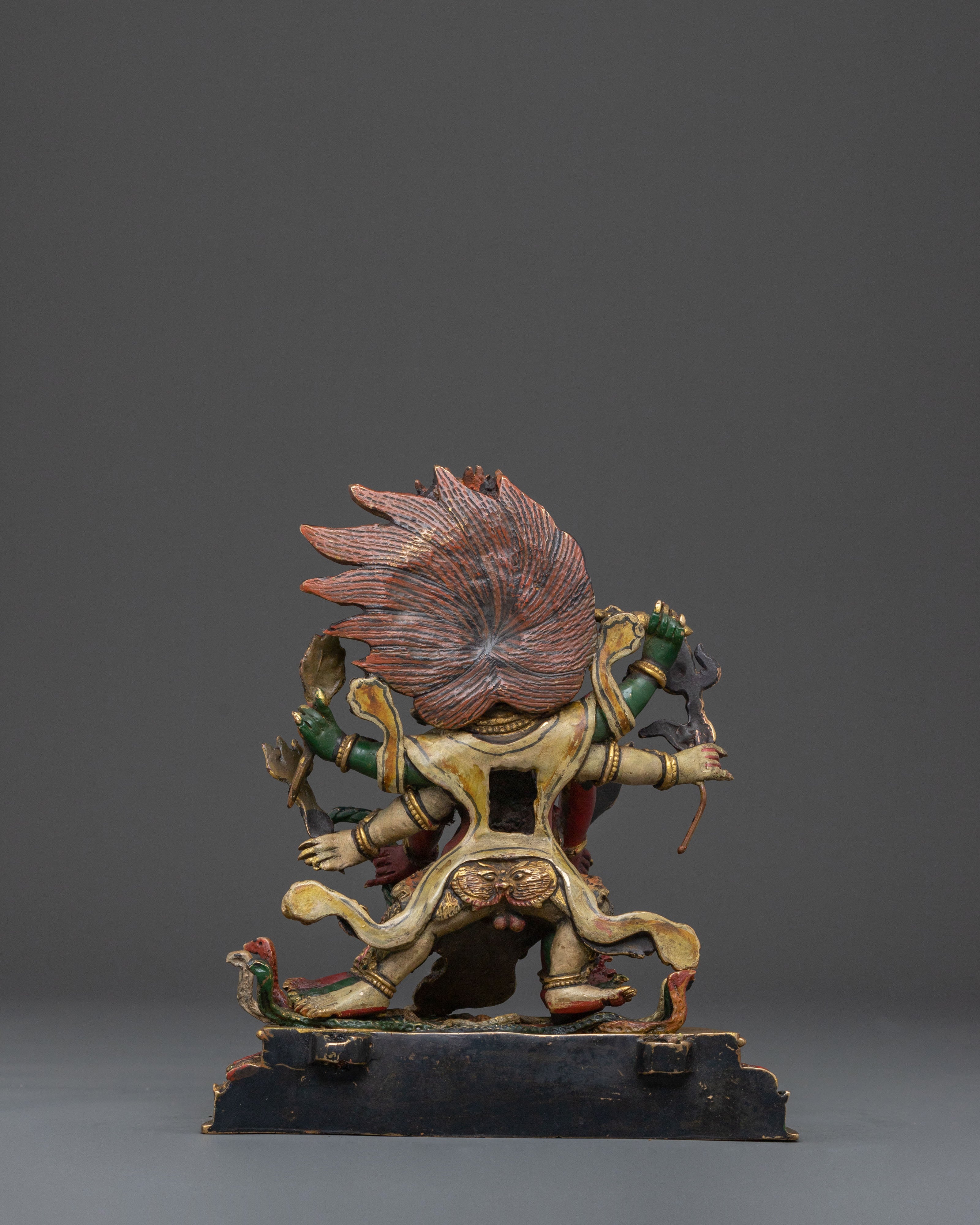
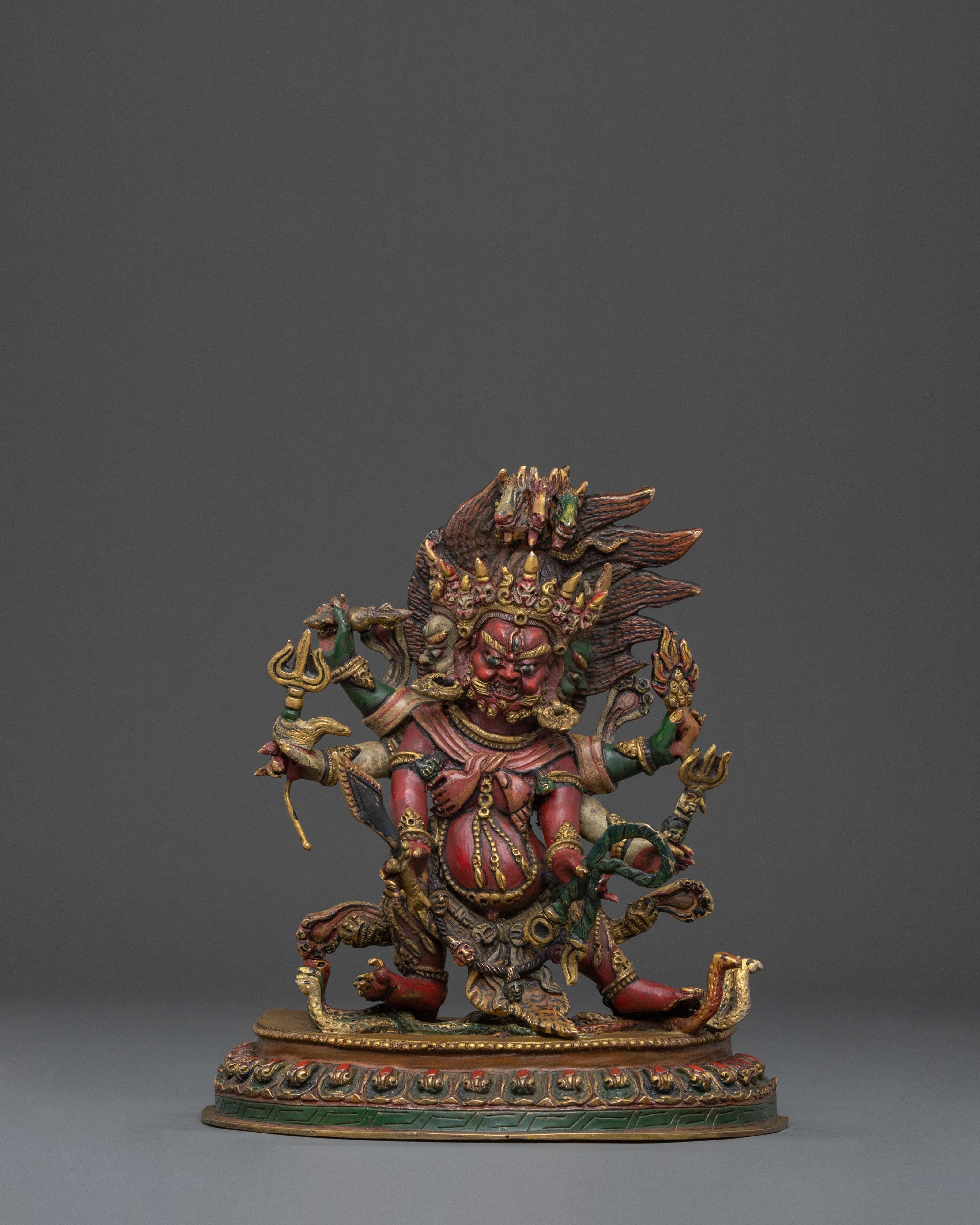
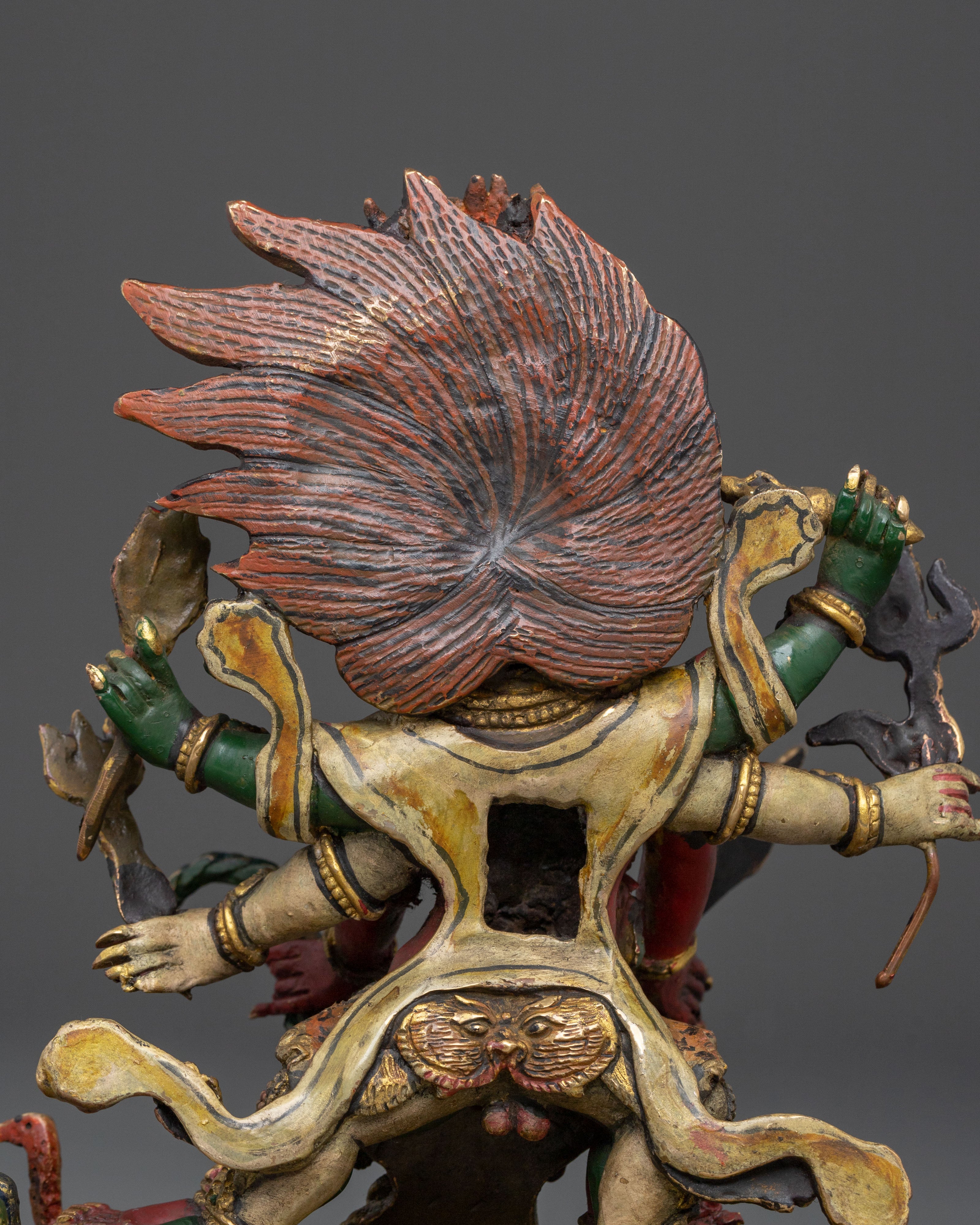
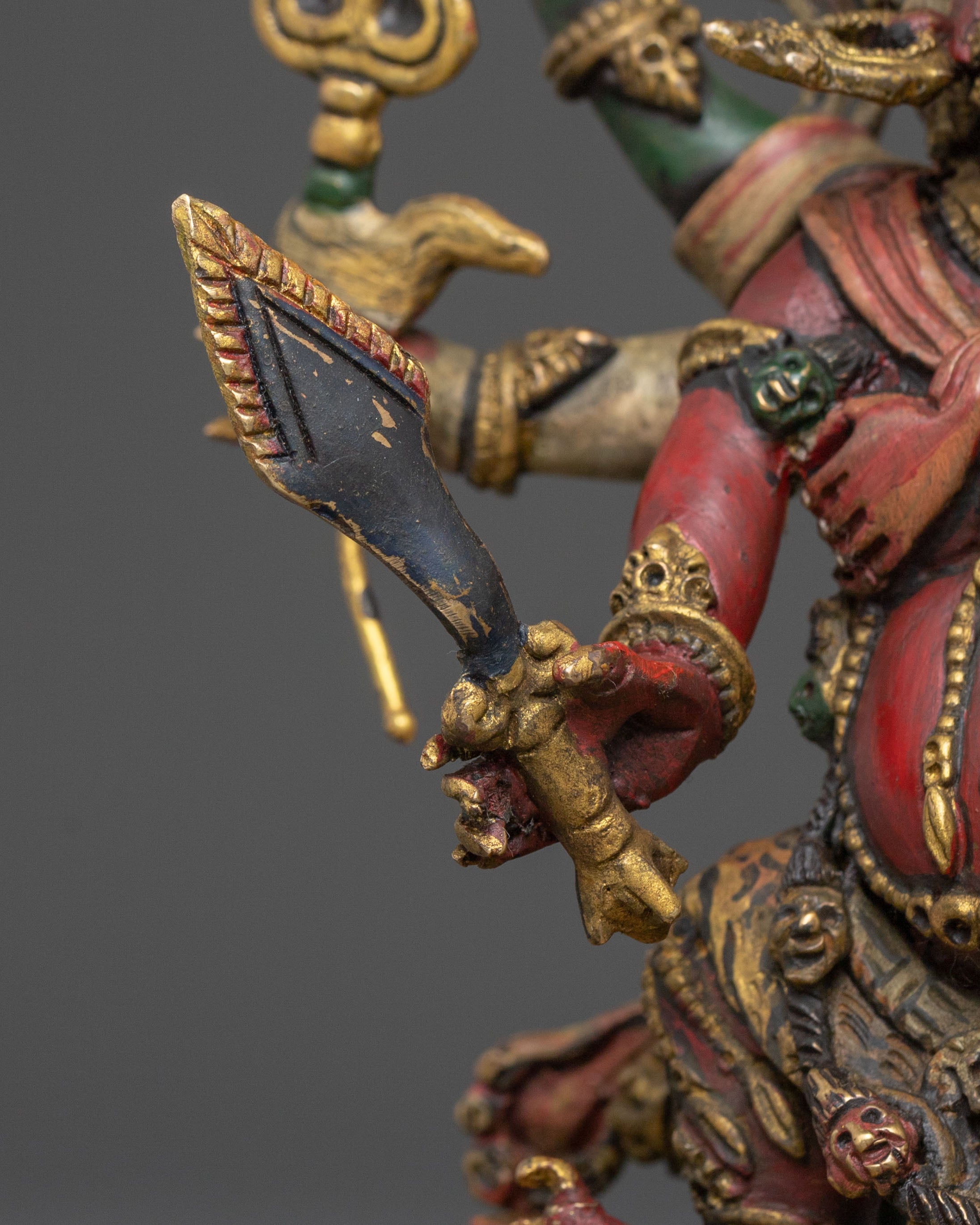
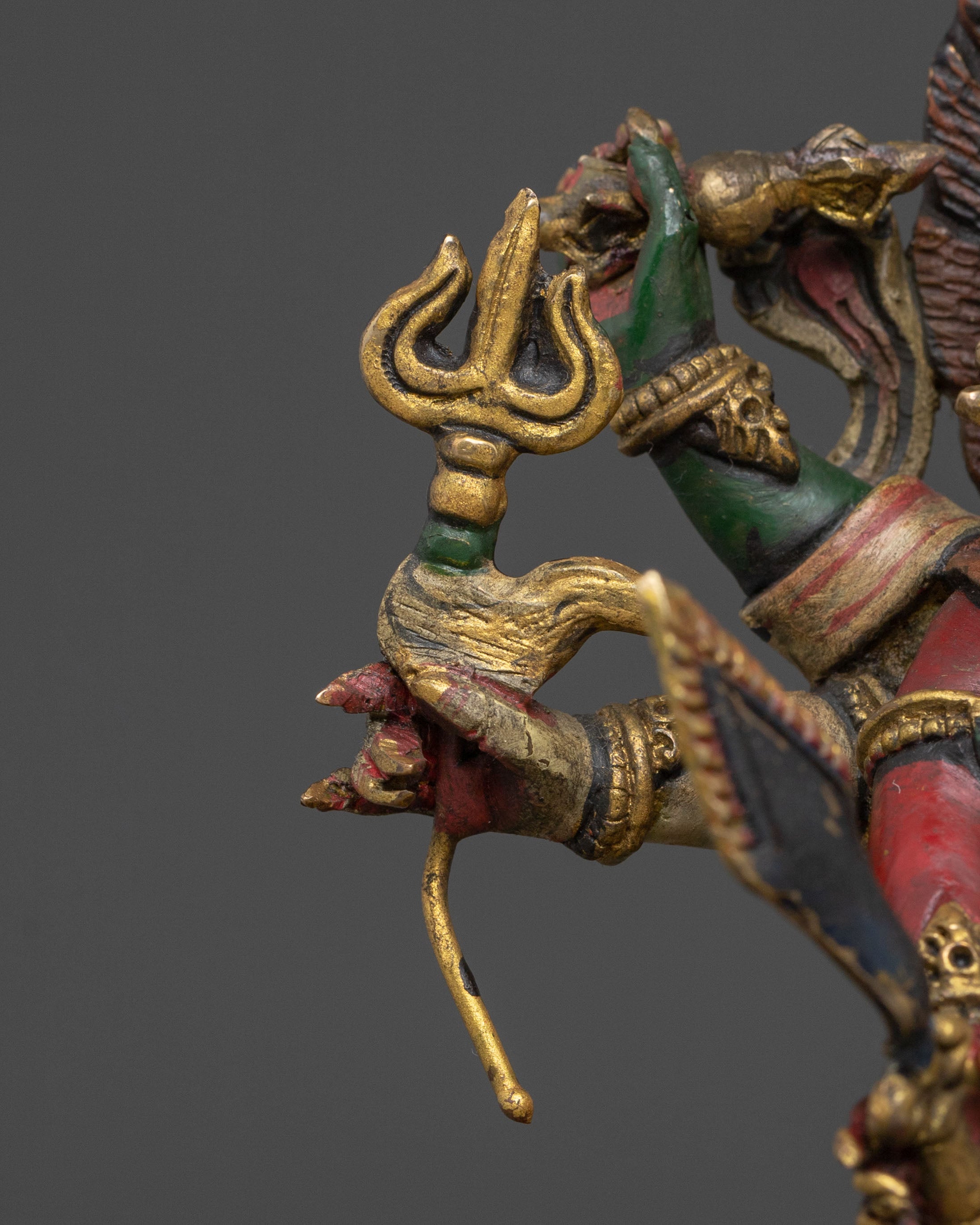
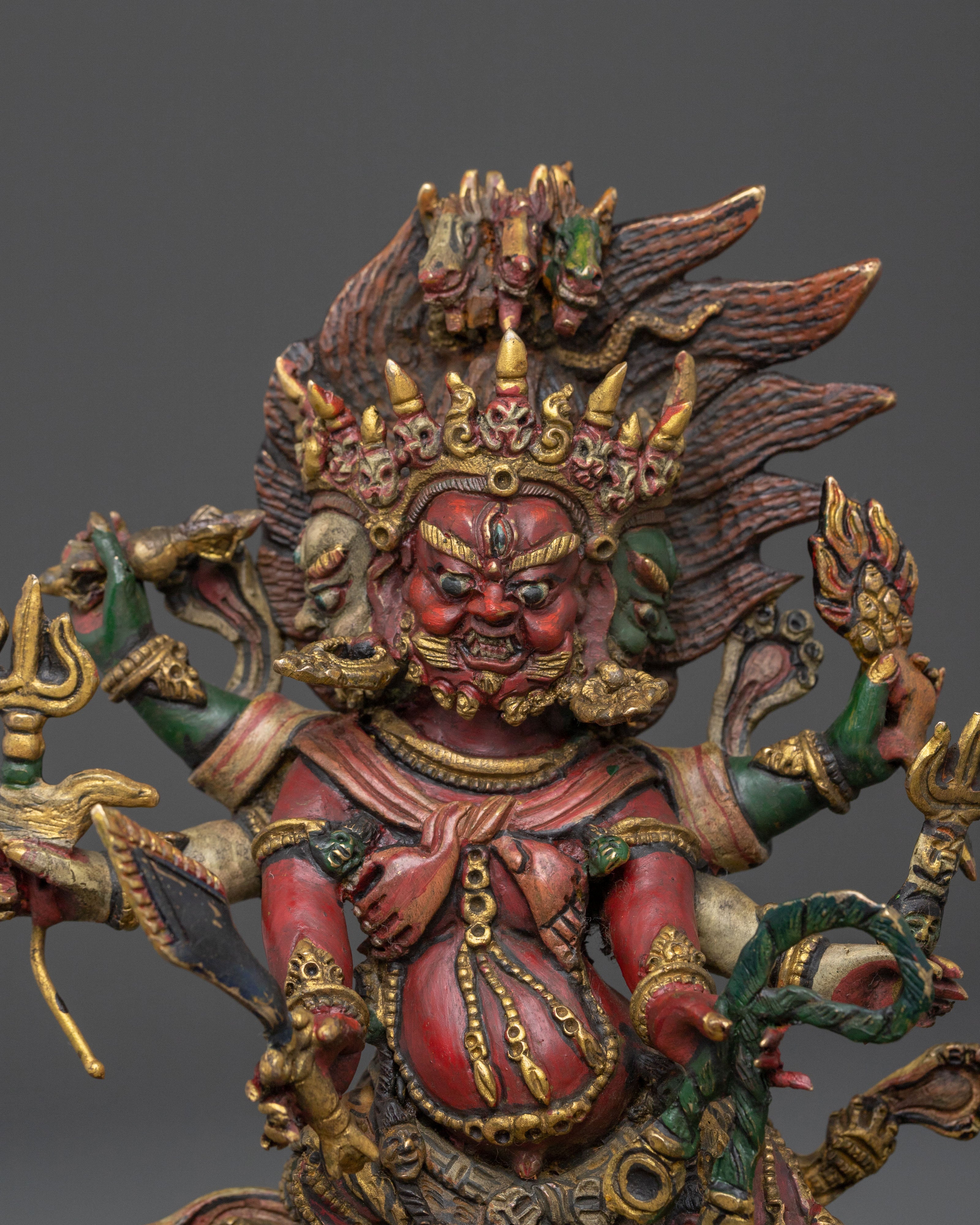
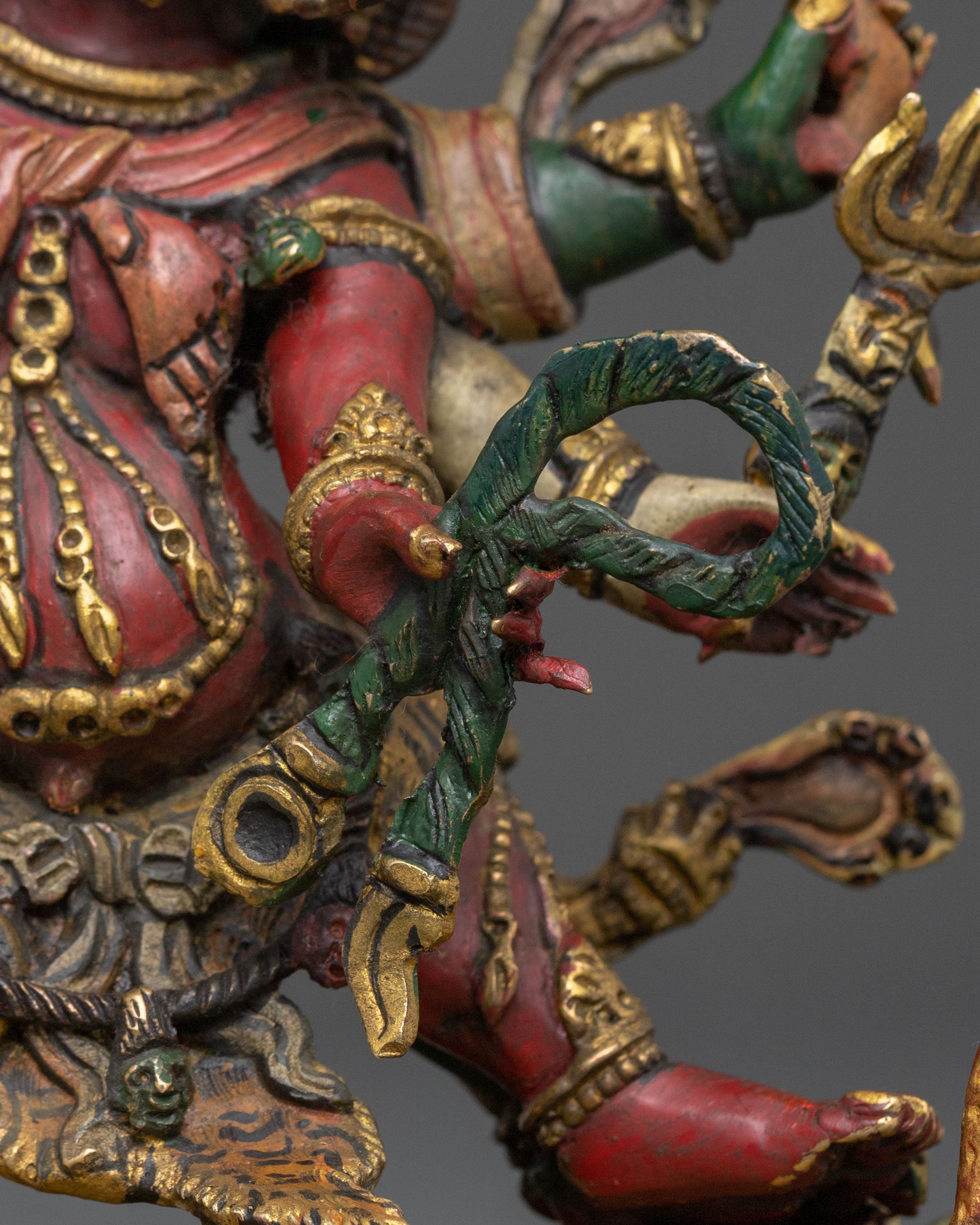
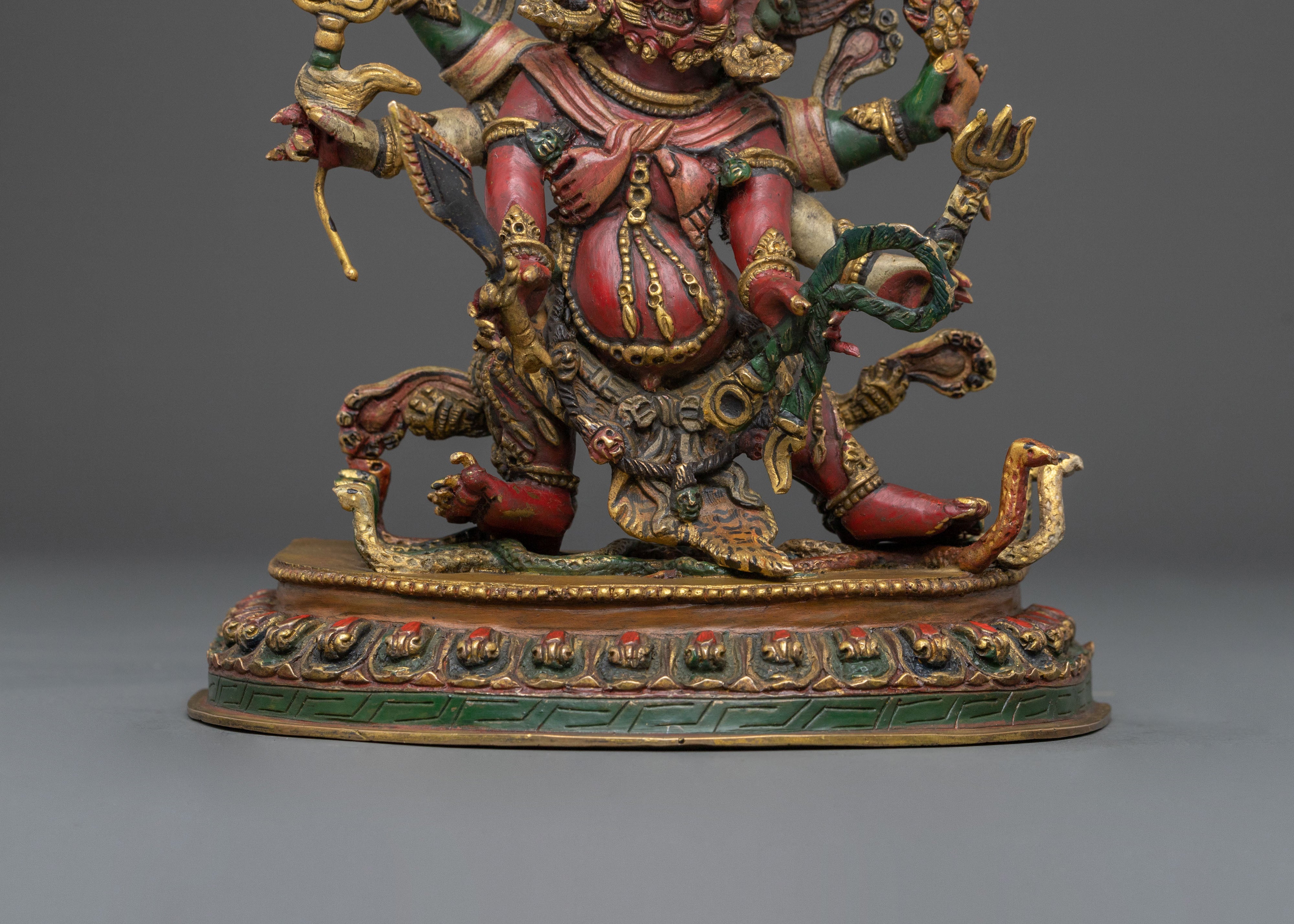
This handcrafted Hayagriva statue from Nepal stands 10.8” (27.5 cm) tall with an 8.3” (21 cm) base and weighs 2.64 kg. Forged from solid copper and adorned with gold and acrylic painting, it embodies fierce compassion and protection. Every intricate detail captures Heyagriva’s vigilant energy, symbolizing the subduing of obstacles and negativity. Ideal for altars or meditation spaces, this sacred piece serves as a focal point for spiritual focus, courage, and devotion, radiating inner strength and serene power in any sacred setting.
This sacred representation of Hayagriva embodies the fierce compassion of enlightened activity and is revered as one of the most powerful protector deities in Vajrayana Buddhism. Manifesting as the wrathful form of Avalokiteshvara, the Bodhisattva of Compassion, Hayagriva is traditionally depicted with a fierce expression and a horse's head rising above his crown, symbolizing his ability to shatter ignorance, disease, and negative forces. His dynamic posture and wrathful appearance represent the transformation of obstacles into wisdom and spiritual strength. Despite his fierce form, his essence is rooted in boundless compassion, dedicated to protecting practitioners and guiding them toward liberation. Revered for his power to dispel obstacles, heal afflictions, and overcome harmful influences, Hayagriva serves as a profound symbol of spiritual protection, courage, and enlightened power.
Size: 10.8”/27.5cm (Height) x 8.3”/21cm (Base)
Weight: 2.64 kg
Material: Copper Body, Gold and Acrylic Painting
Hayagriva, meaning 'horse-necked,' is a wrathful form of Avalokiteshvara or Amitabha Buddha, widely revered in Tibetan Buddhism. He is primarily known as a powerful Yidam (meditational deity) who swiftly removes obstacles to spiritual practice and protects against negative energies and diseases. His fierce appearance symbolizes the destruction of inner delusions and the compassionate transformation of aggression into wisdom, making him a crucial figure in Buddhist art.