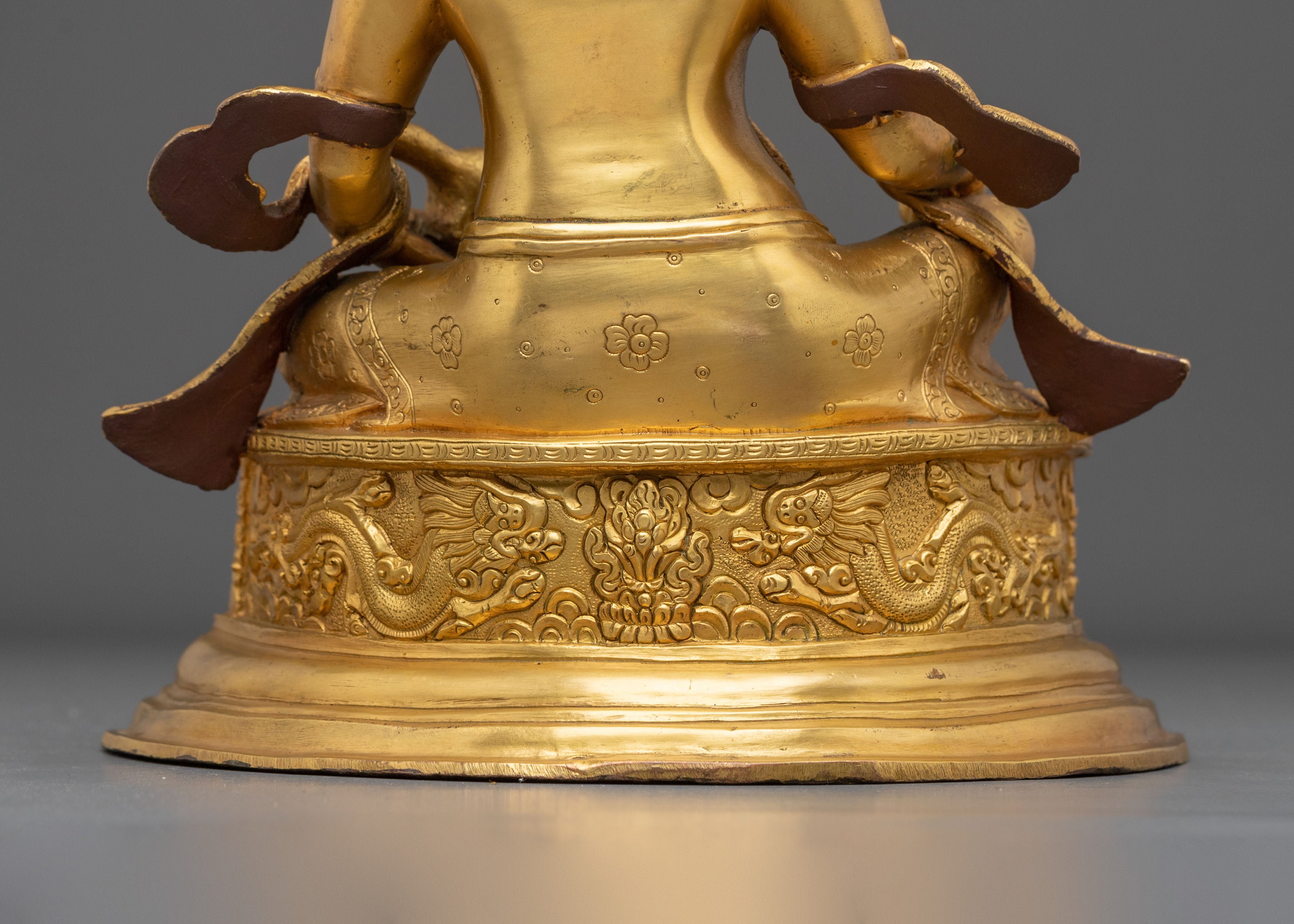
Jambhala Spiritual Statue | Embodiment of Abundance and Prosperity
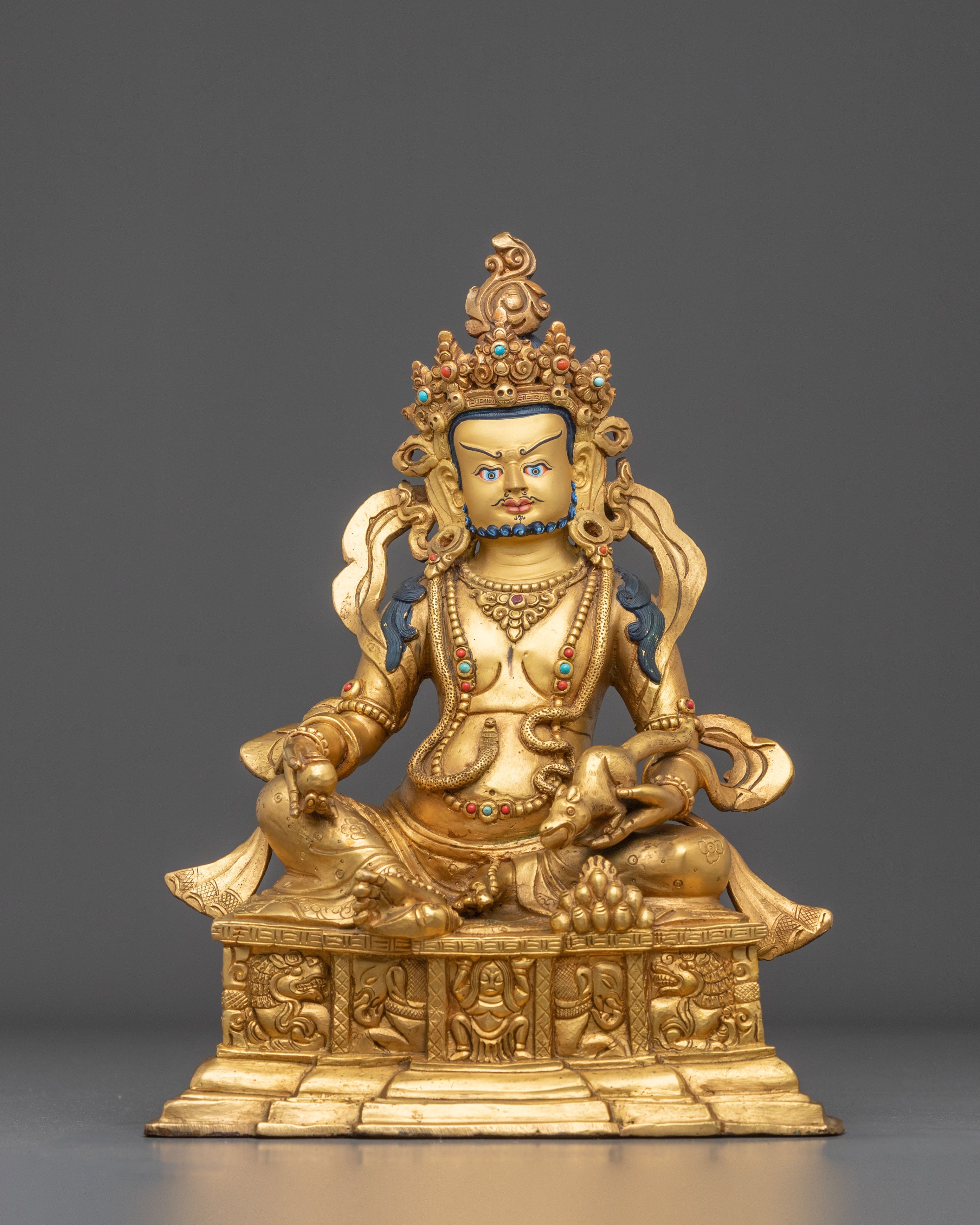
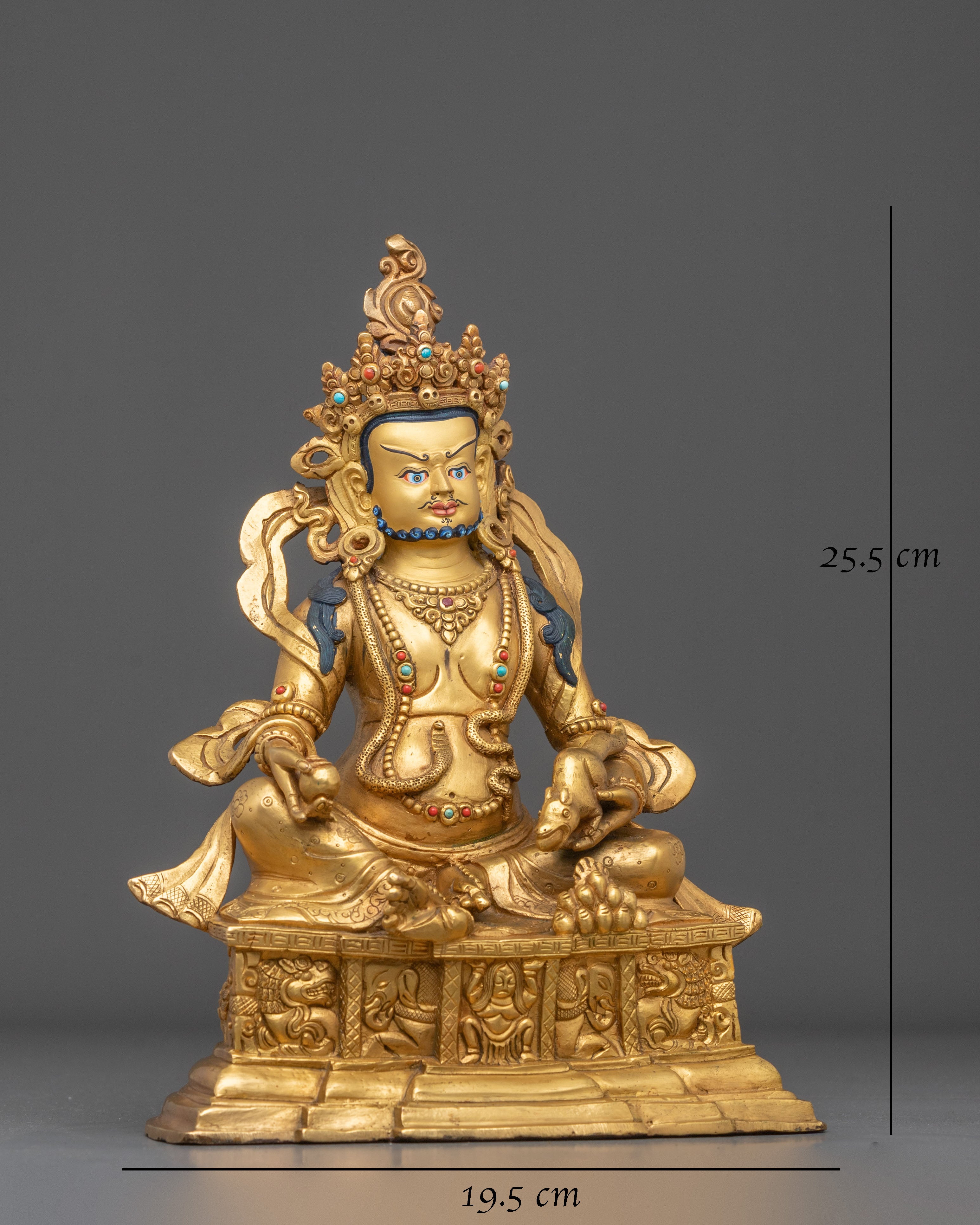
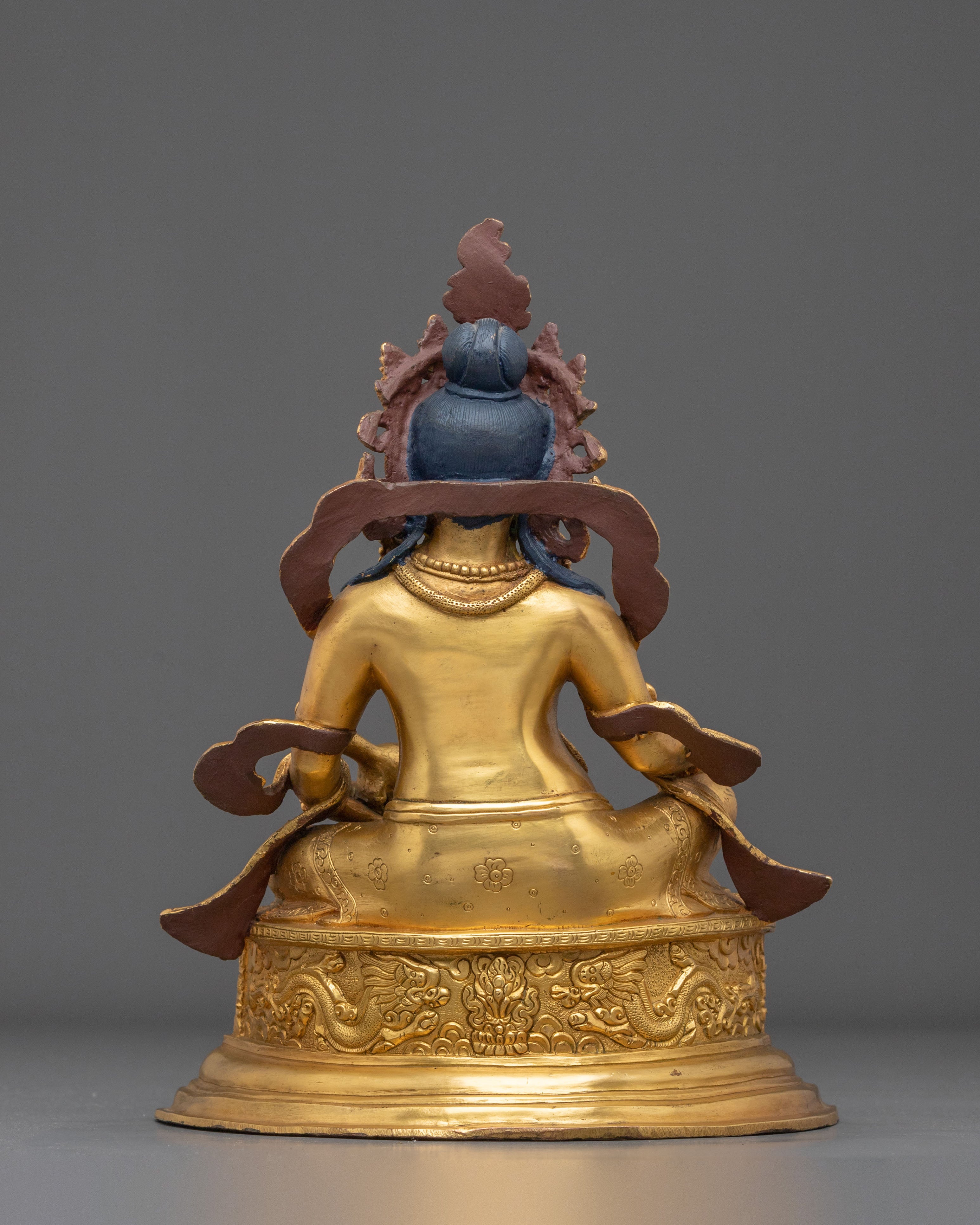
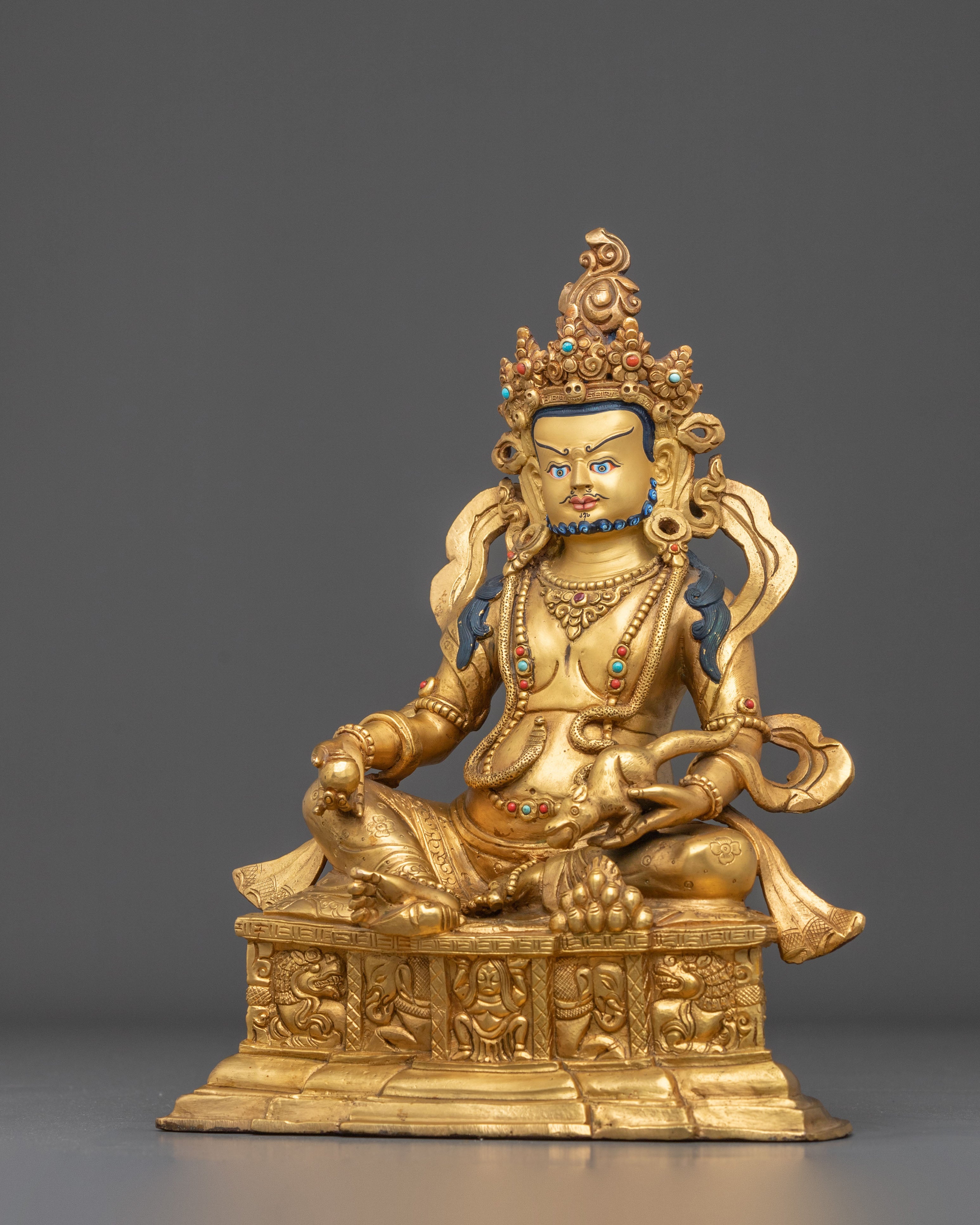
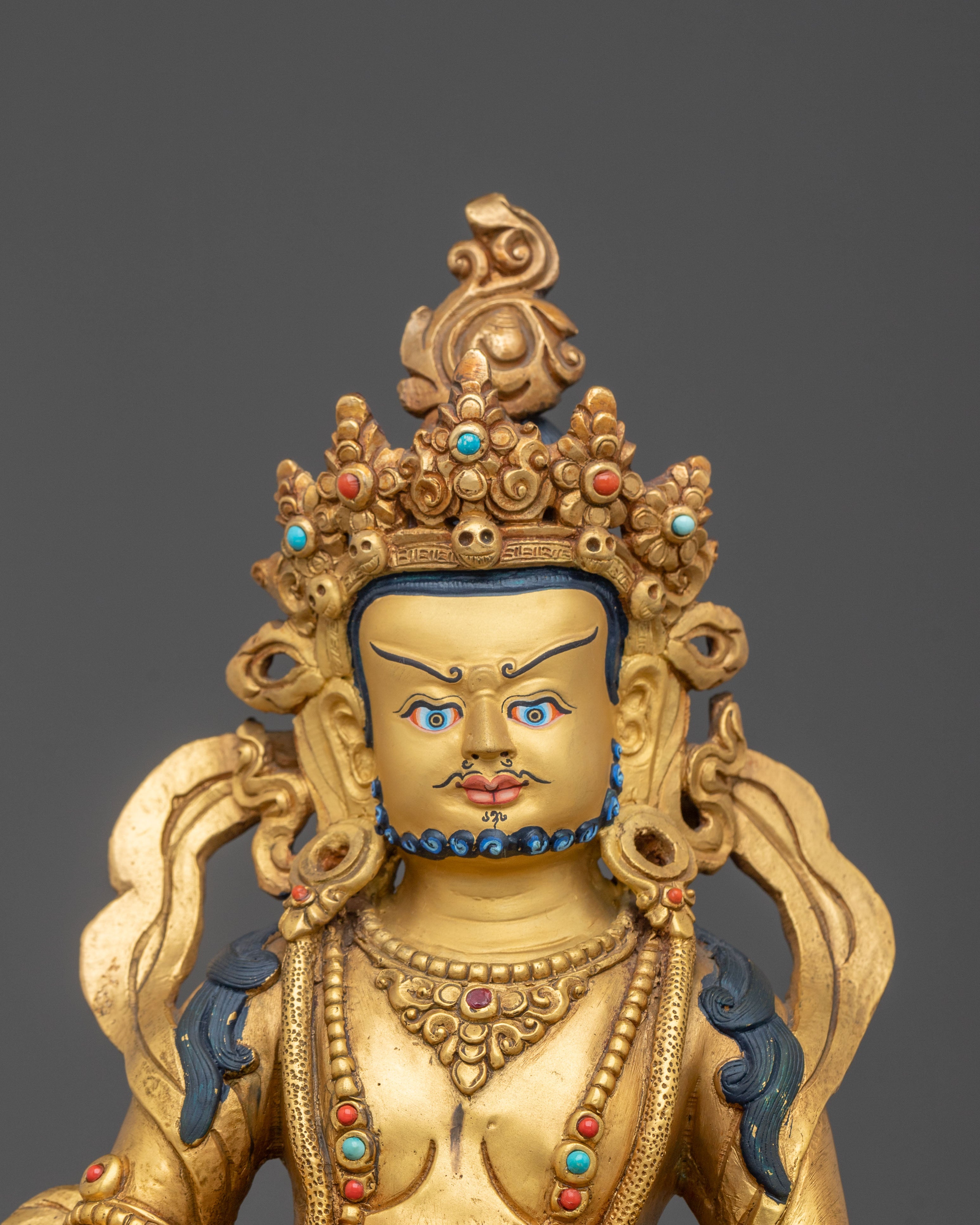
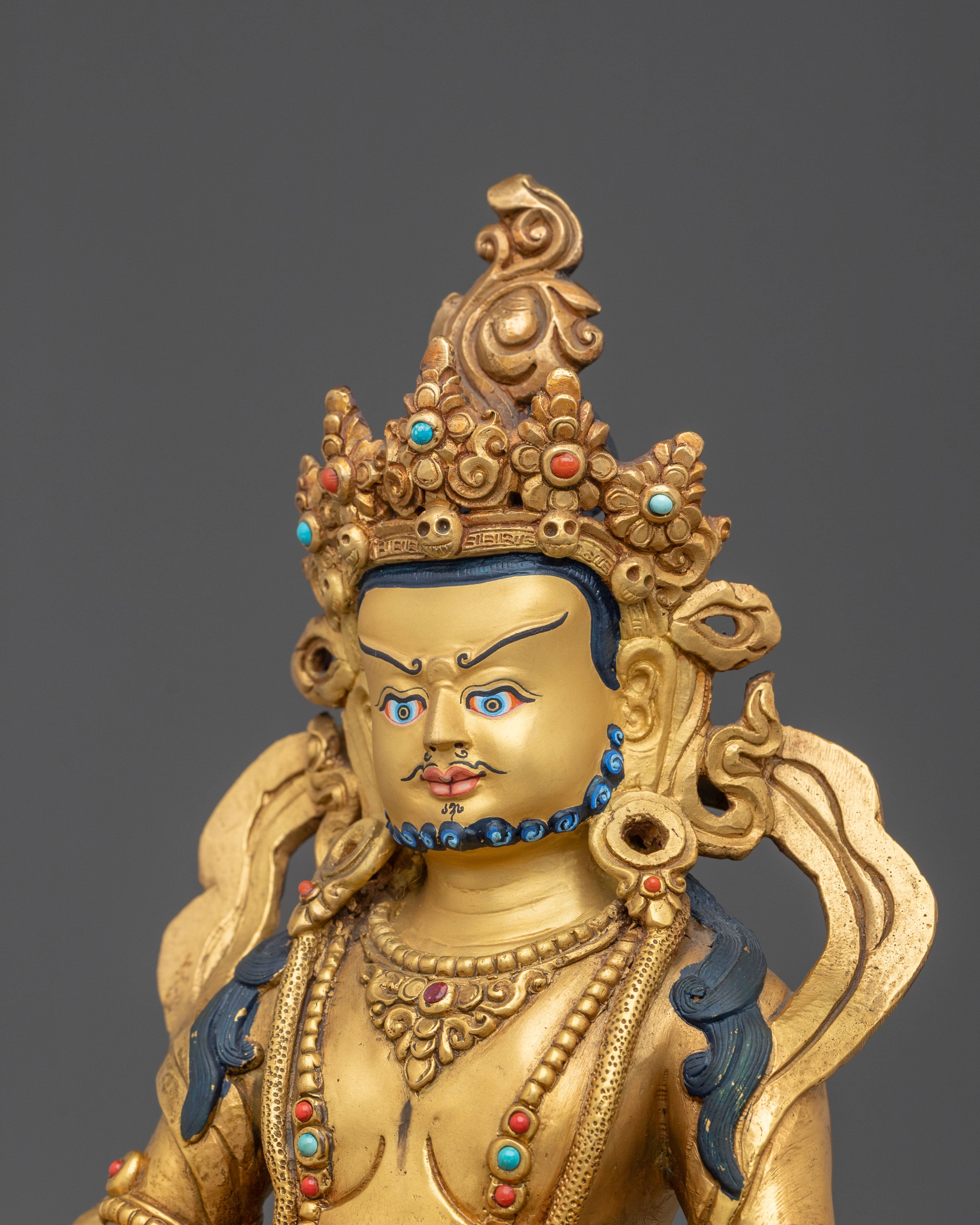
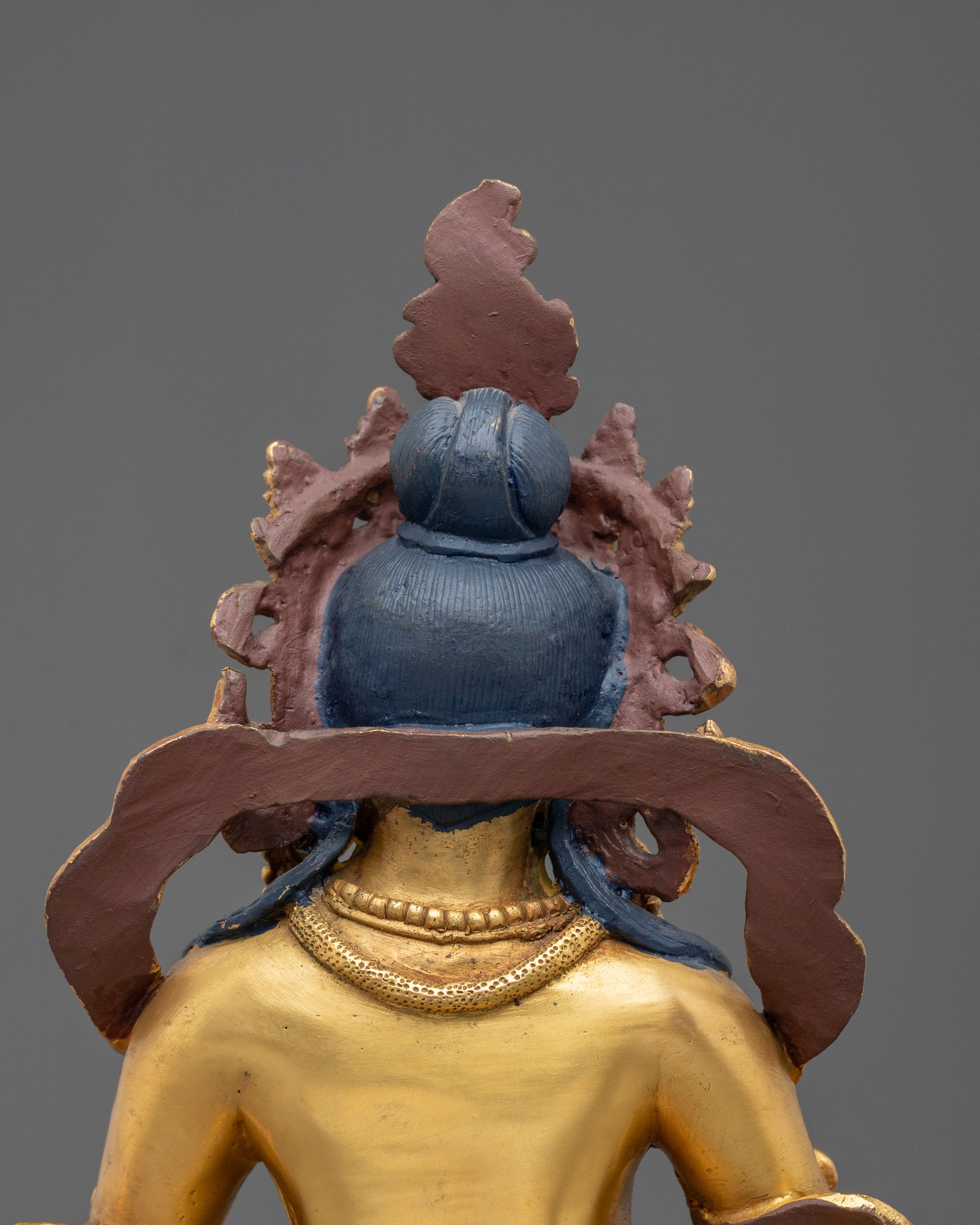
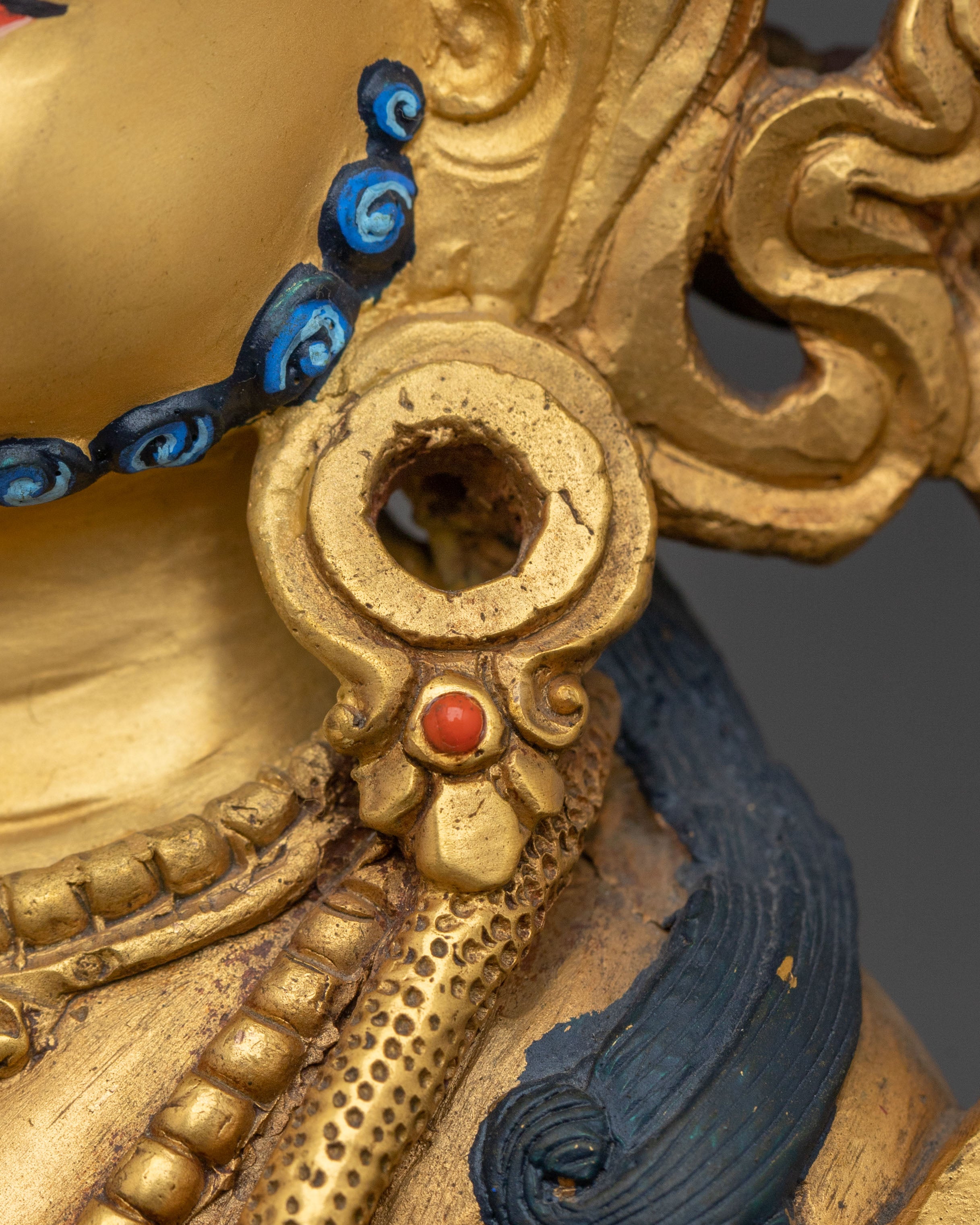
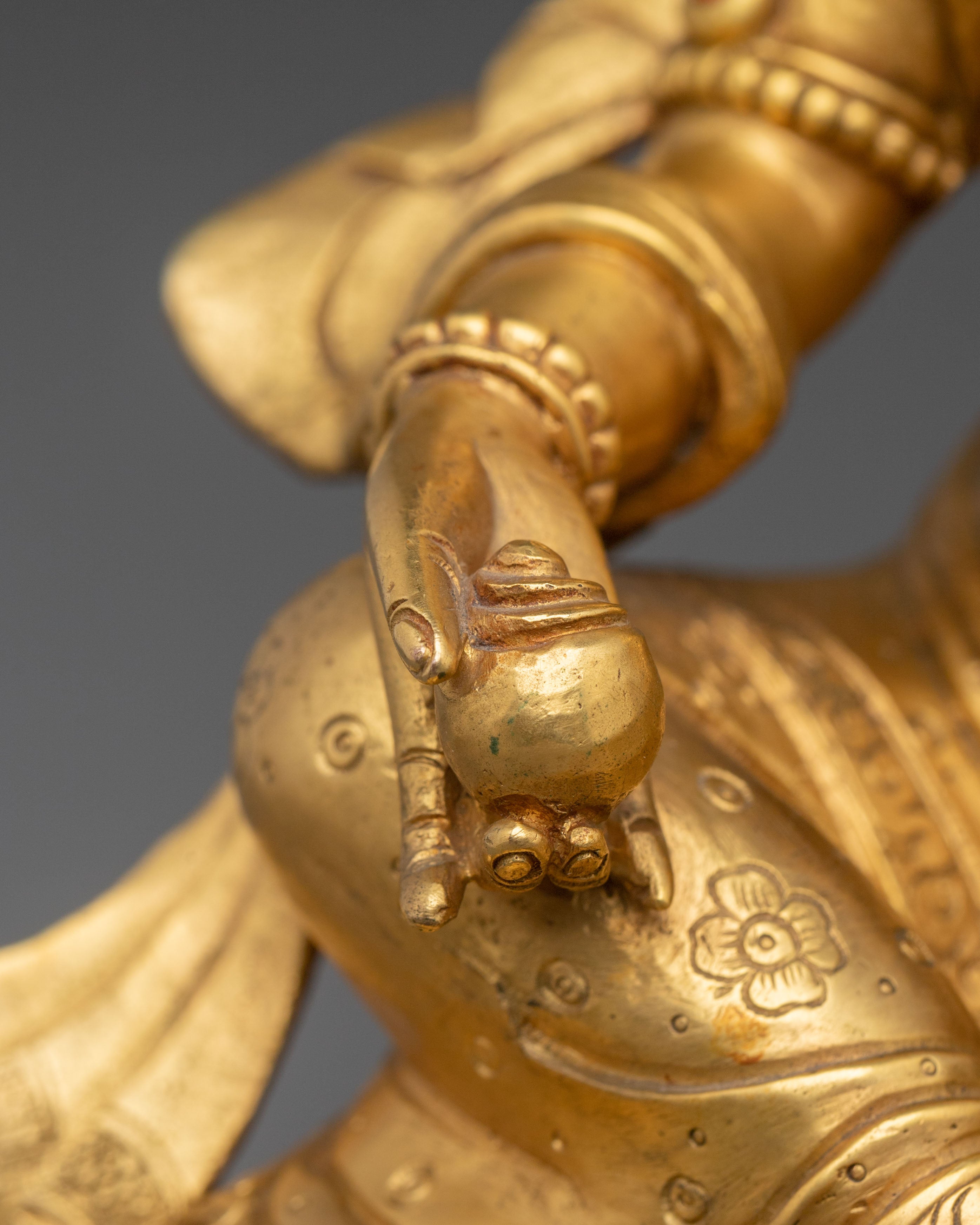
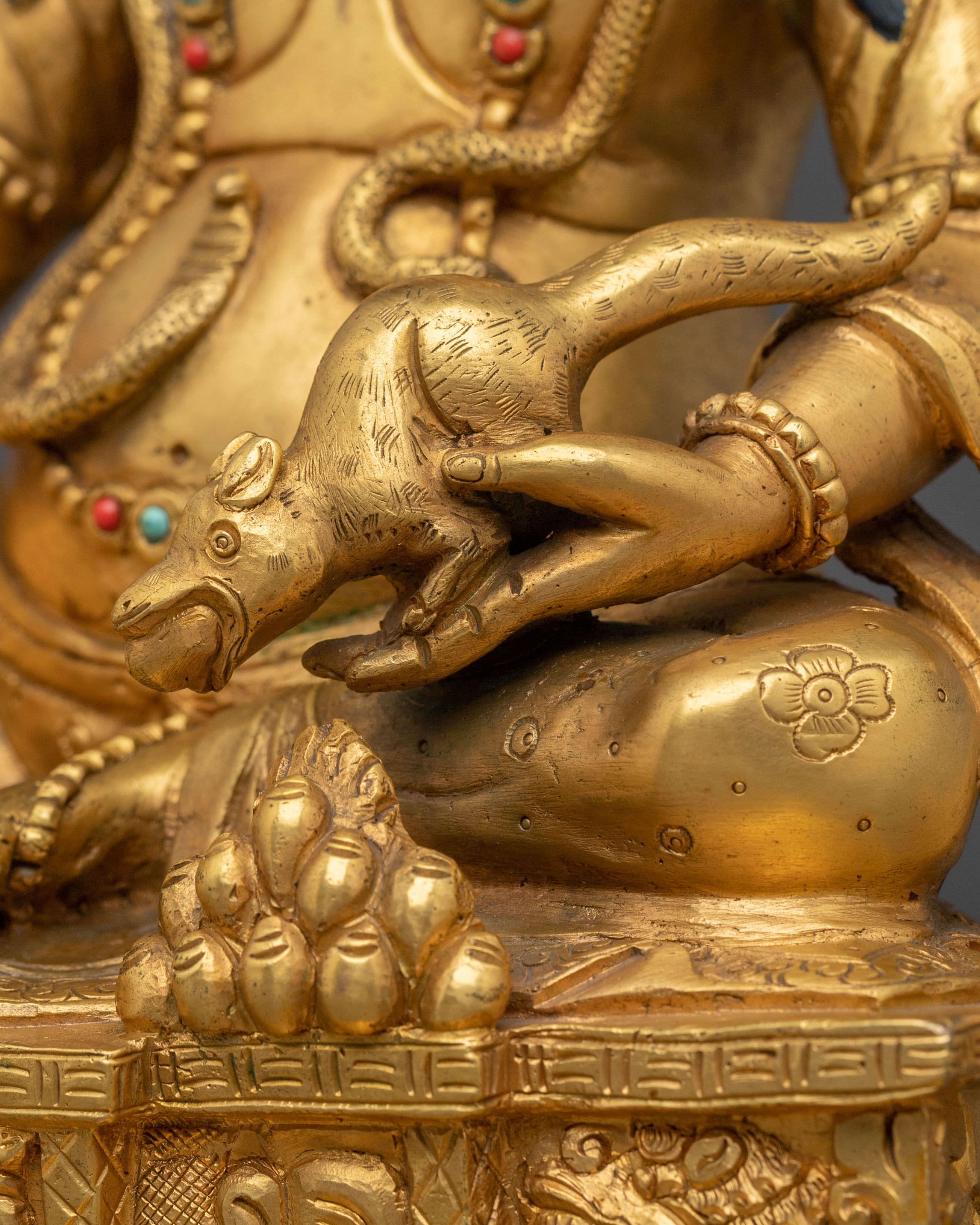
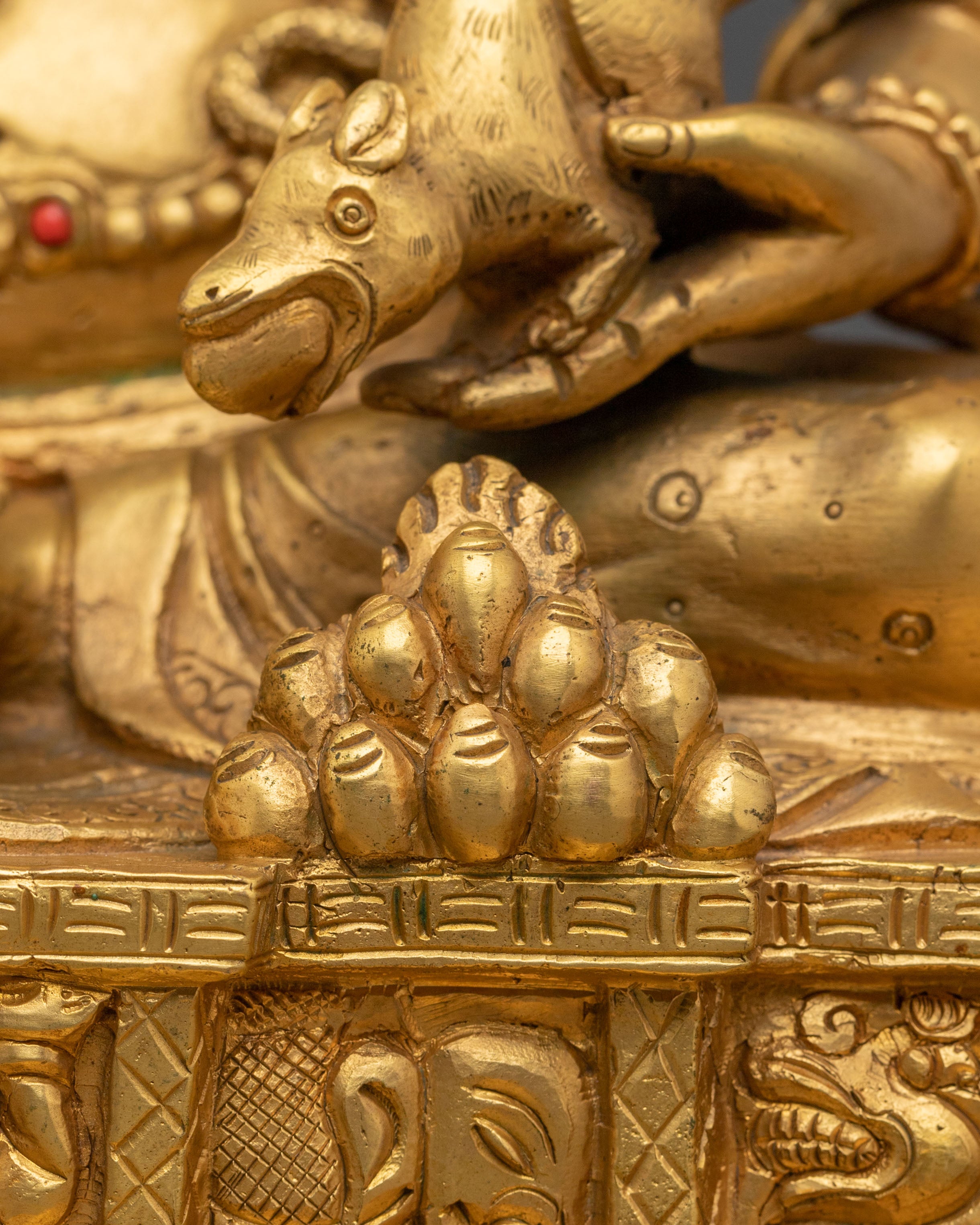
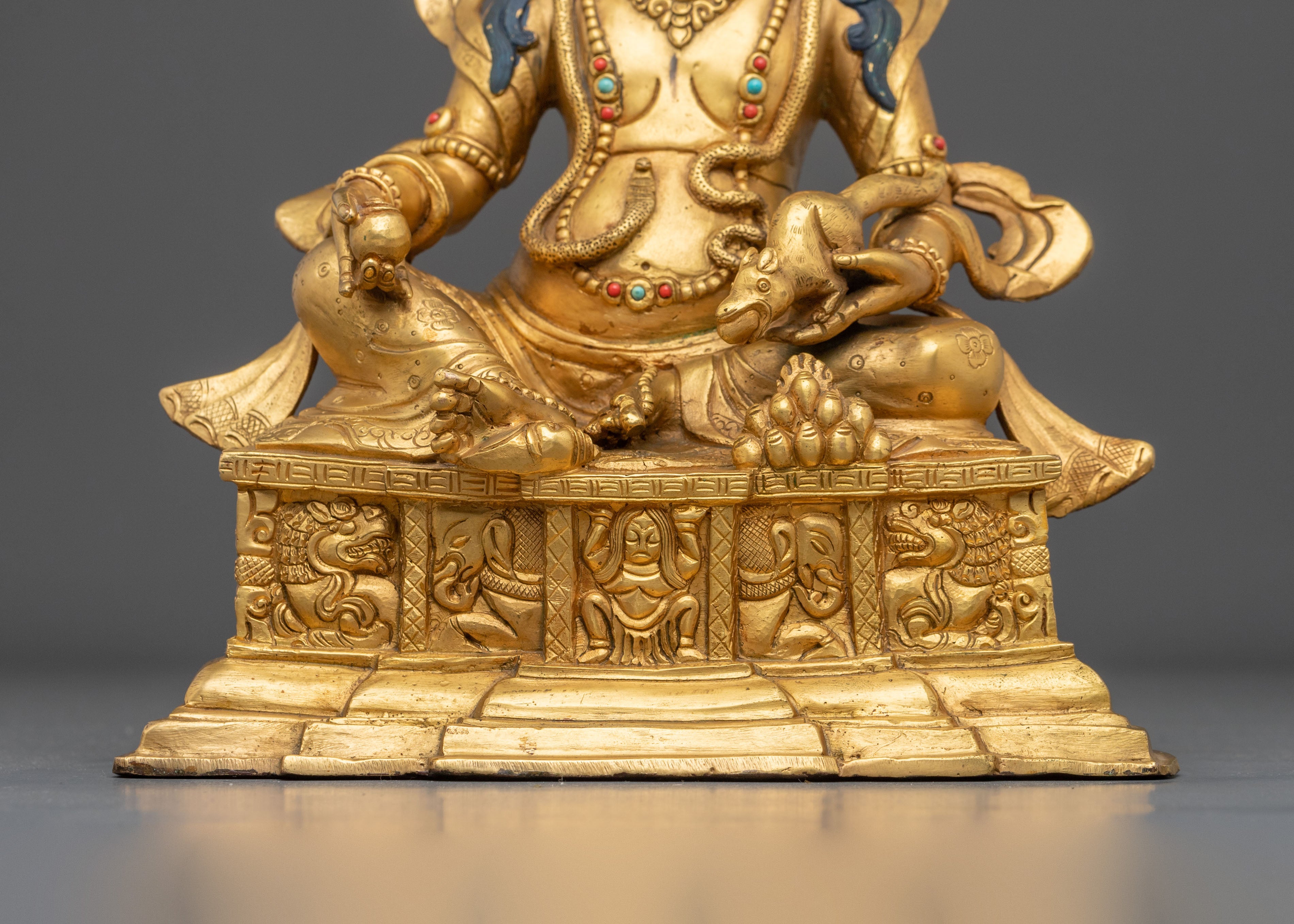
Handcrafted in Nepal, this Jambhala Spiritual Statue reflects the refined artistry and traditional craftsmanship of Himalayan artisans. Standing 25.5 cm (10.04 inches) tall with a 19.5 cm (7.7 inches) base and weighing 2.51 kg, it is carefully crafted from a copper body and adorned with 24K gold gilding, detailed acrylic painting, and carefully set gemstones. The radiant gold finish, intricate metalwork, painted details, and gemstone embellishments showcase the precision, patience, and dedication of skilled Nepalese artisans. This finely crafted sculpture makes a meaningful addition to Buddhist altars, meditation spaces, temples, or sacred collections, reflecting the rich heritage of Himalayan Buddhist art and craftsmanship.
Dzambhala, also known as Jambhala, is a revered Buddhist Wealth Deity who represents the enlightened qualities of generosity, abundance, prosperity, and the removal of obstacles. He is traditionally depicted holding a jewel-spitting mongoose, symbolizing the release of abundance, the overcoming of poverty, and the transformation of scarcity into generosity. His presence reflects a deeper understanding of wealth—not simply as material prosperity, but as the accumulation of merit, wisdom, compassion, and spiritual richness. As a meditation and devotional statue, Dzambhala serves as a meaningful reminder to overcome attachment and greed while cultivating an open-hearted spirit of giving, using prosperity to support virtuous actions and benefit others.
Size: 10.04”/25.5cm (Height) x 7.7”/19.5cm (Base)
Weight: 2.51 kg
Material: 24K Gold Gilded, Acrylic Painting, Copper Body, Gemstones
Jambhala, also known as Dzambhala, is a Buddhist deity associated with wealth, prosperity, generosity, and the removal of obstacles caused by scarcity. In Tibetan Buddhist traditions, he is regarded as a protector of the Dharma and is invoked to support both material well-being and spiritual development. His practice emphasizes that wealth should not become a source of attachment, but rather a means to cultivate generosity, compassion, and beneficial action. Through this perspective, Jambhala represents the understanding that true abundance is found not only in receiving, but also in using resources wisely to benefit others and support the Dharma.
Explore our Dzambhala Statue Collection.