Embodying the Wisdom of the Lotus Born Guru Rinpoche Statue
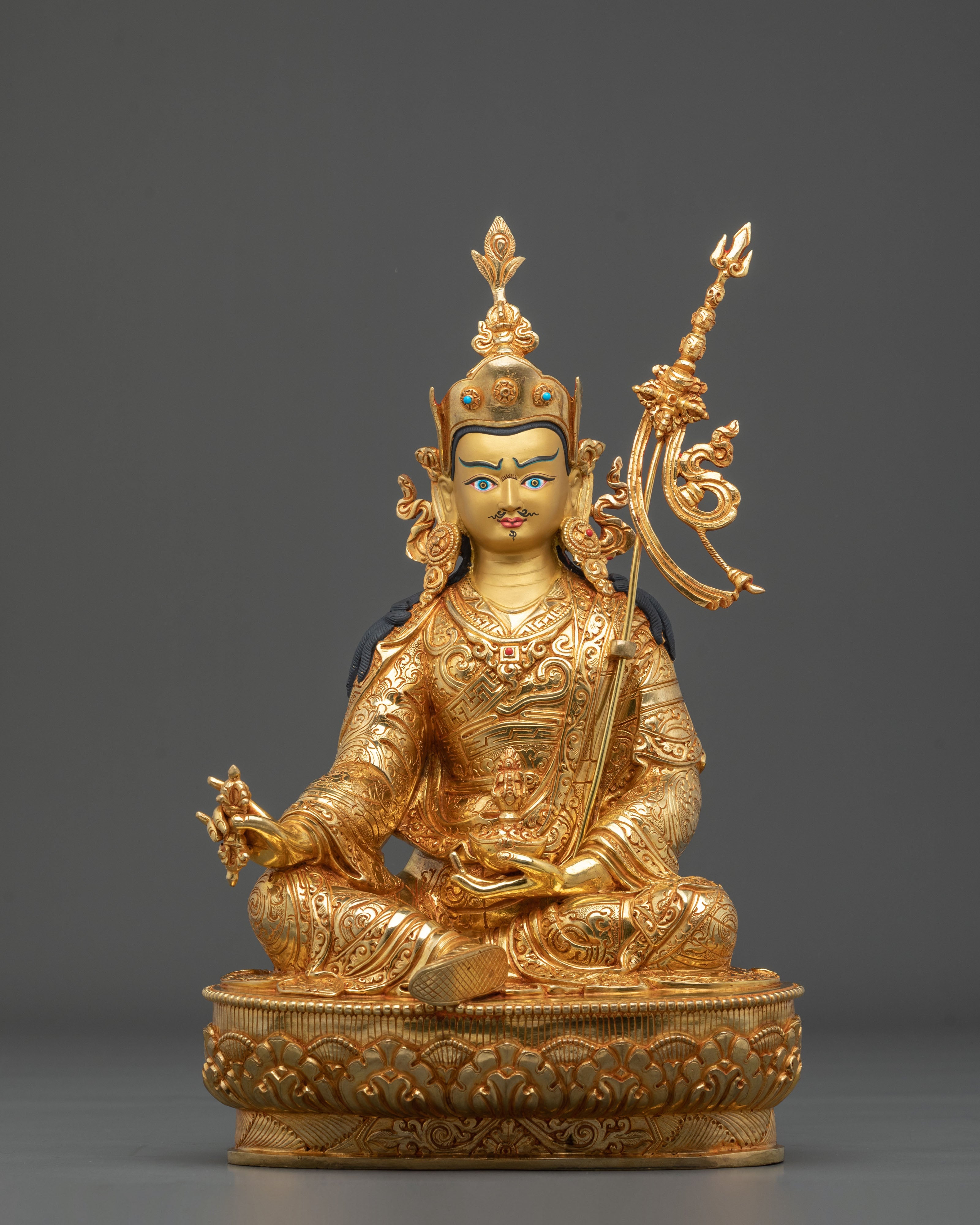
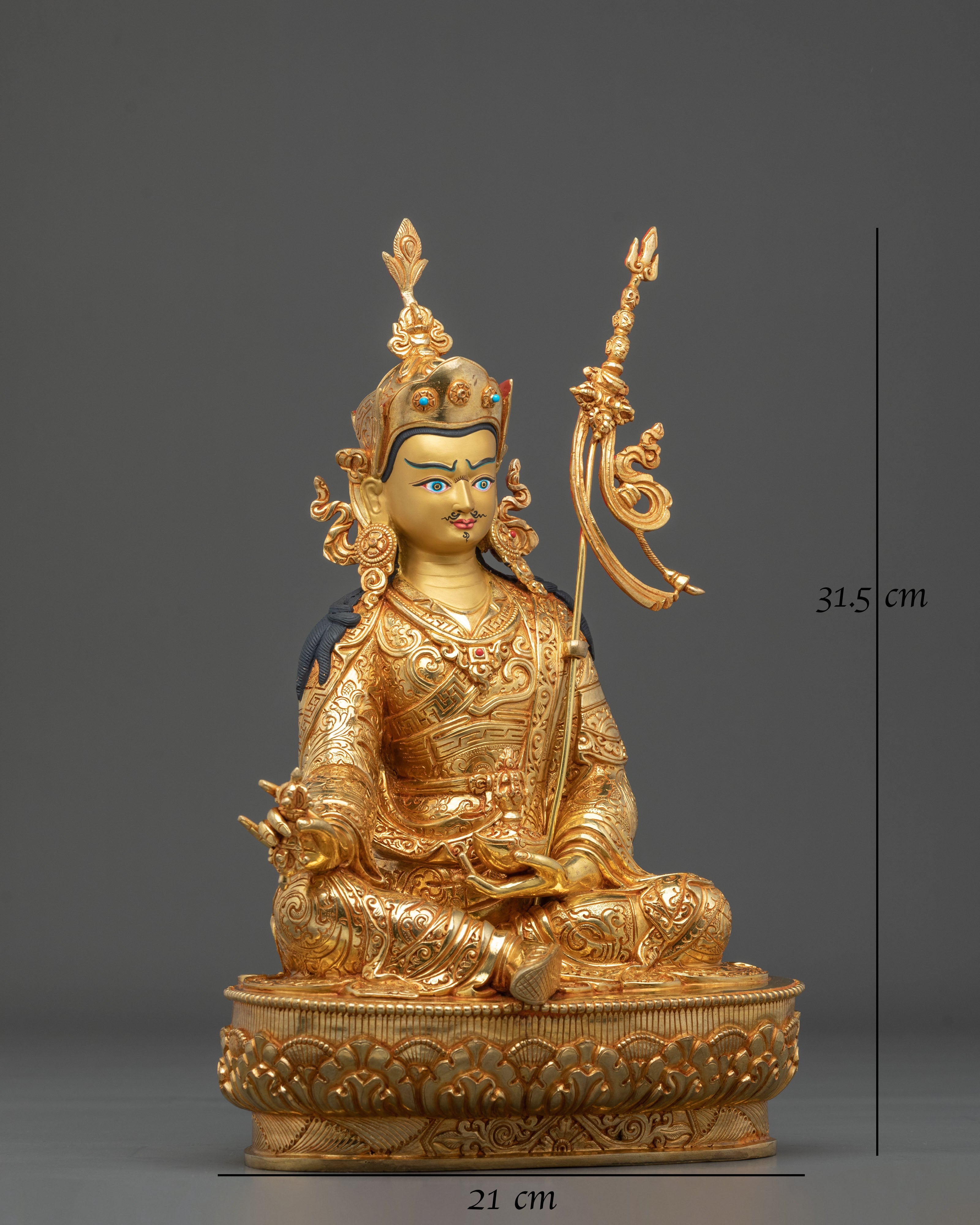
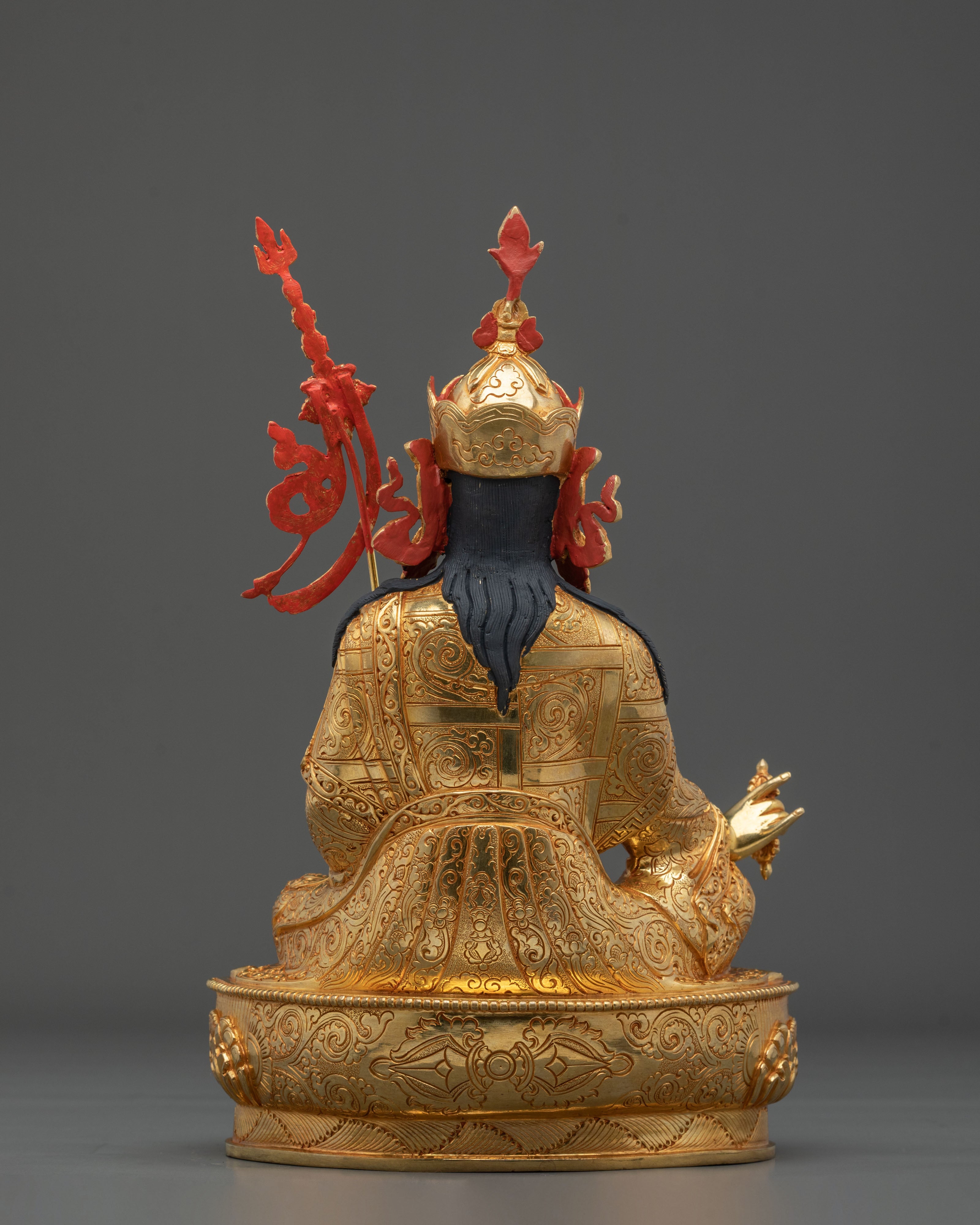
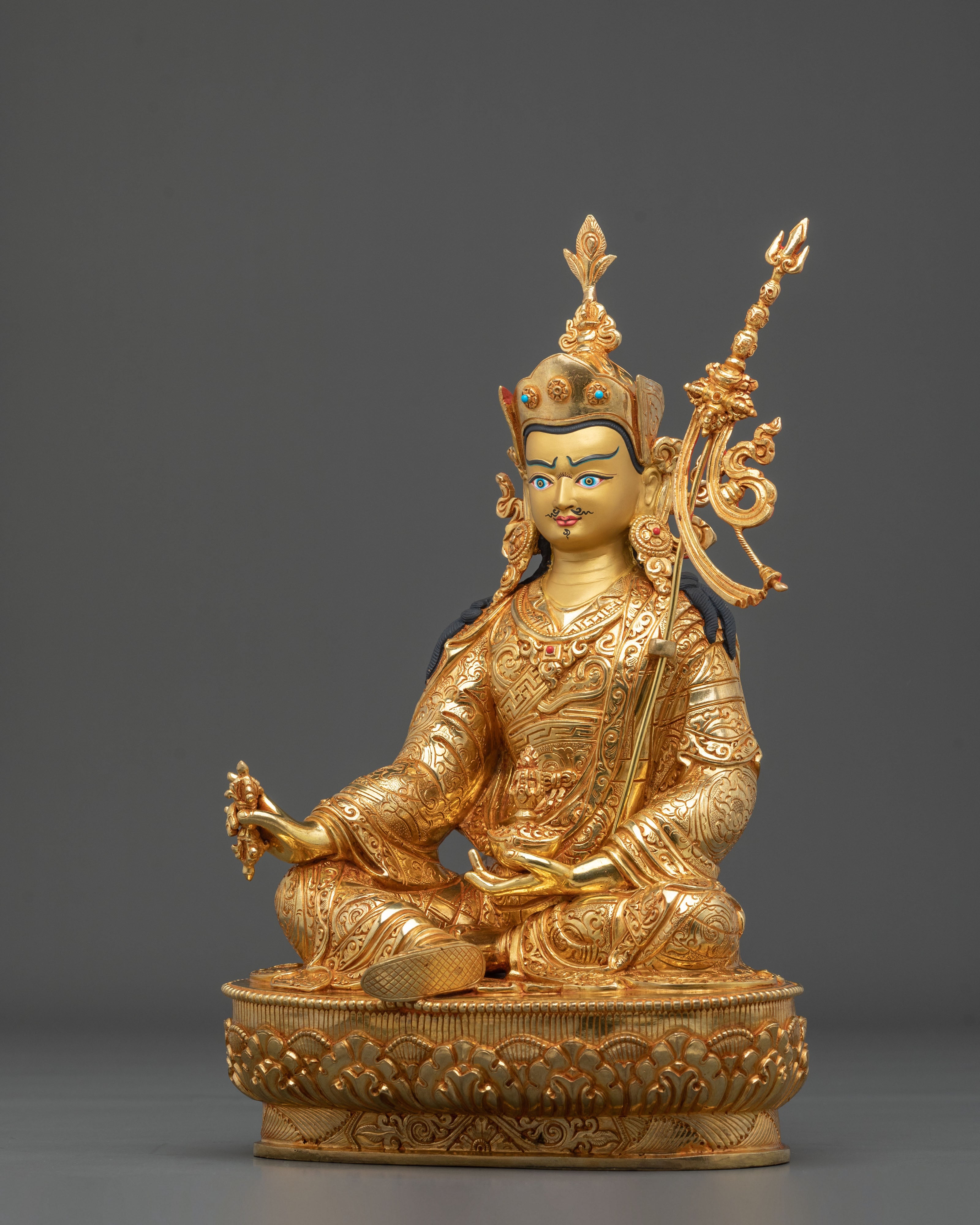
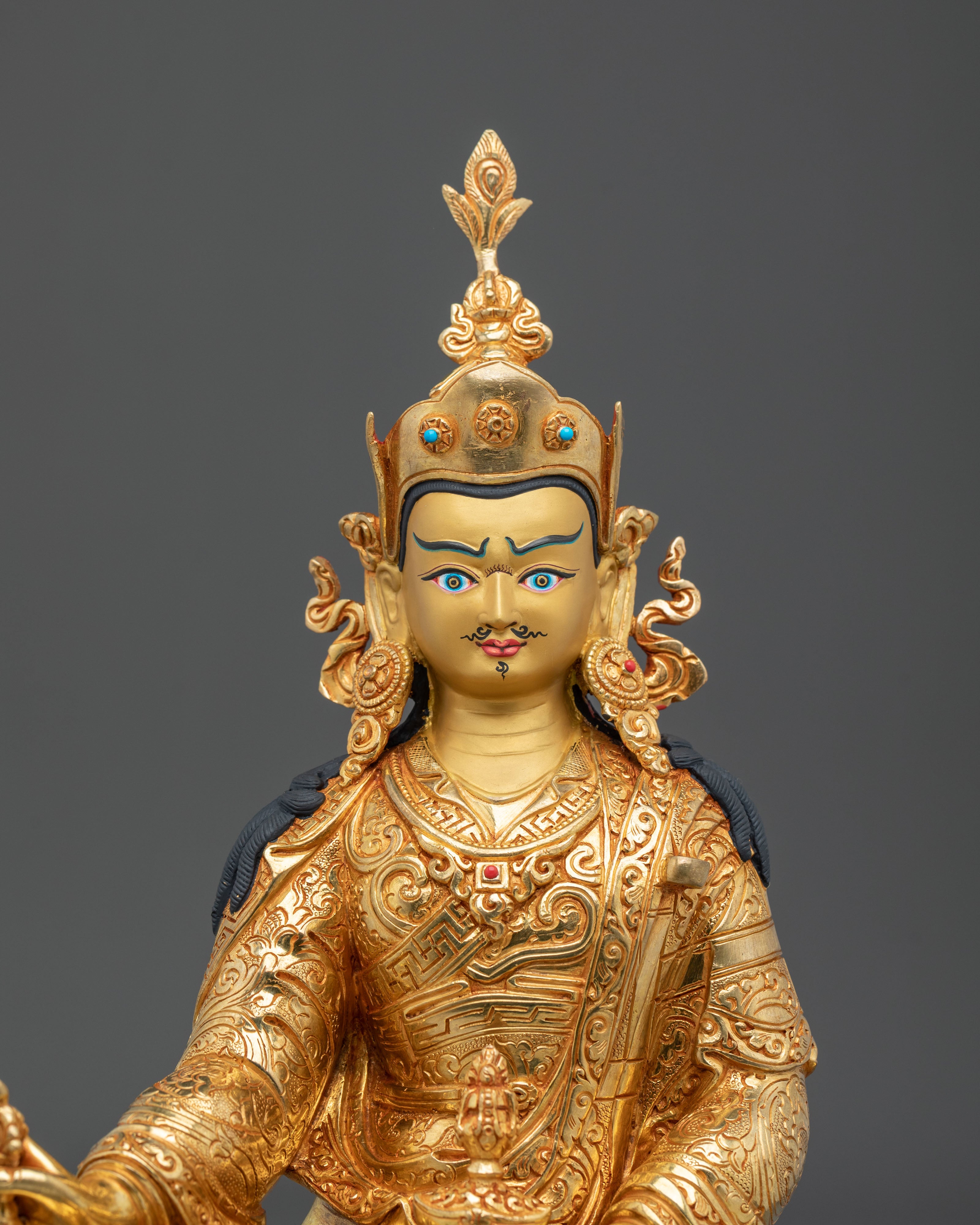
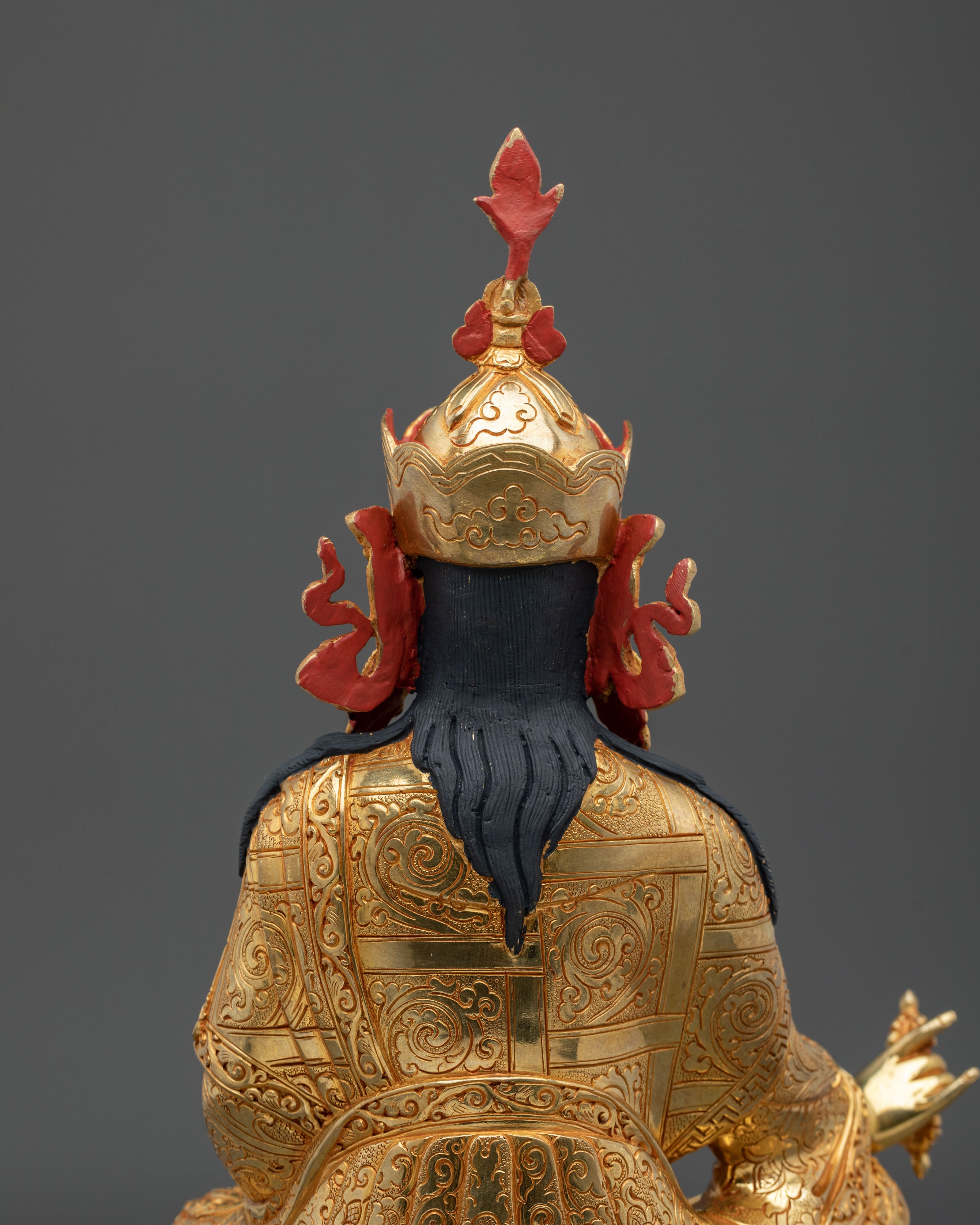
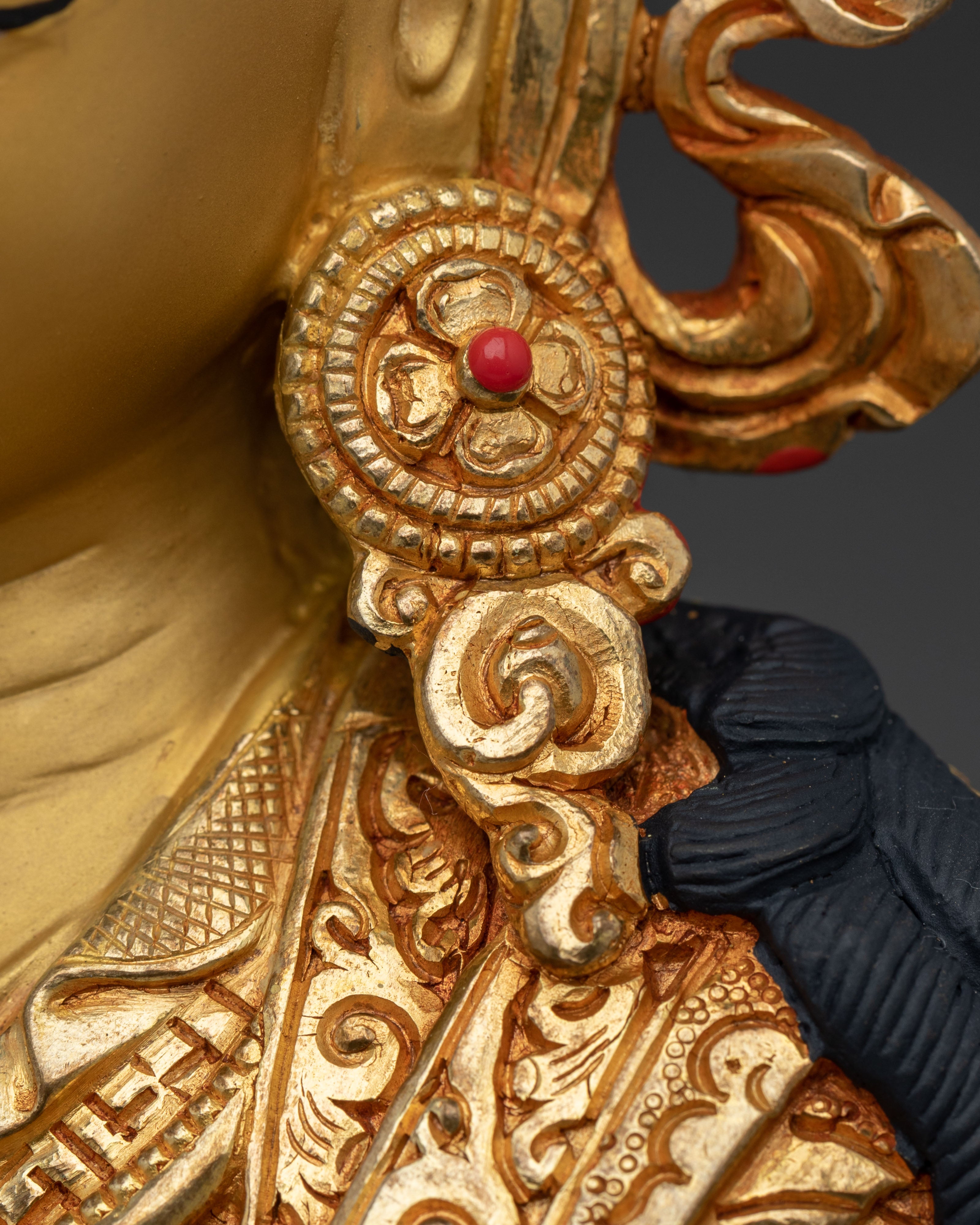
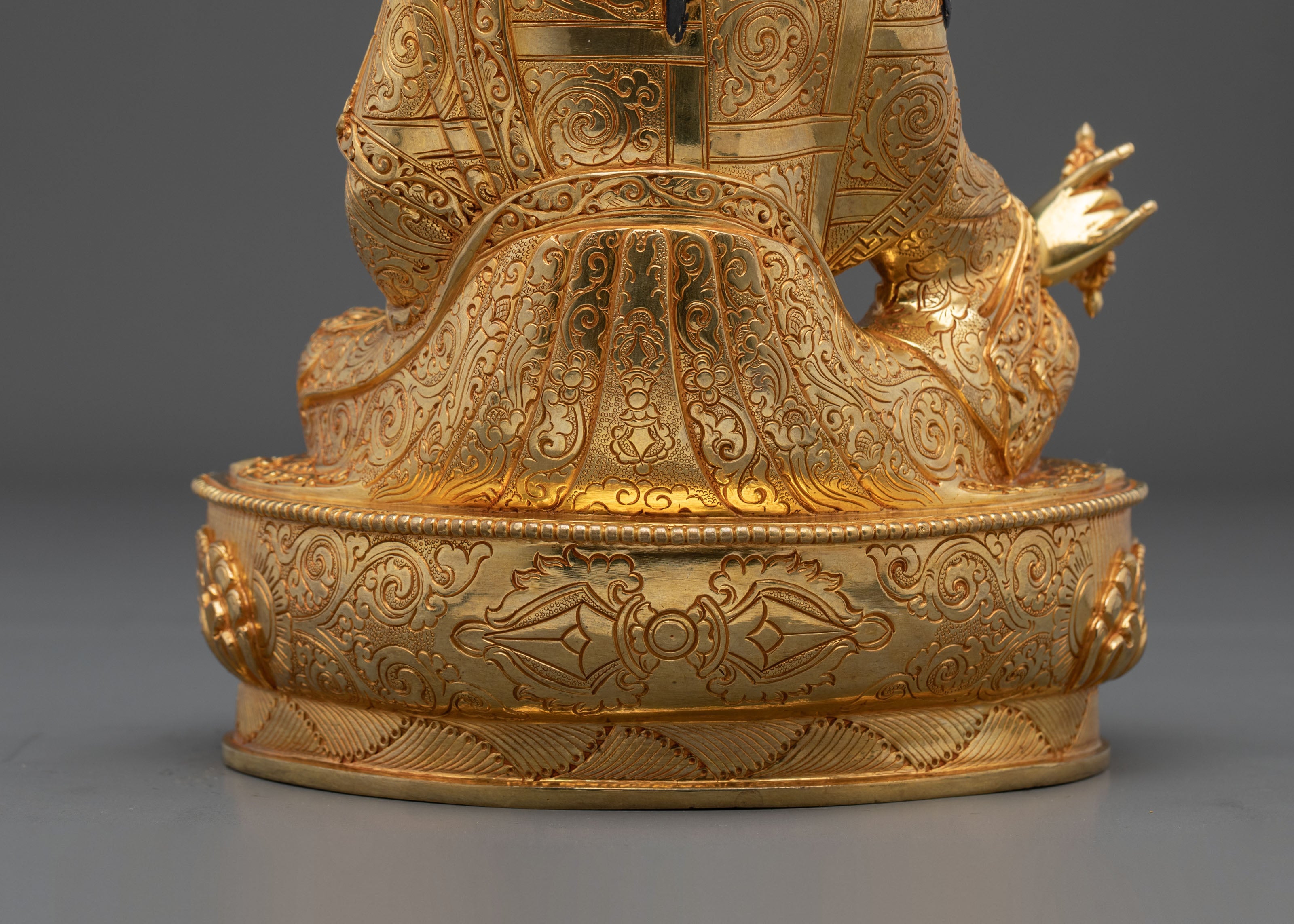
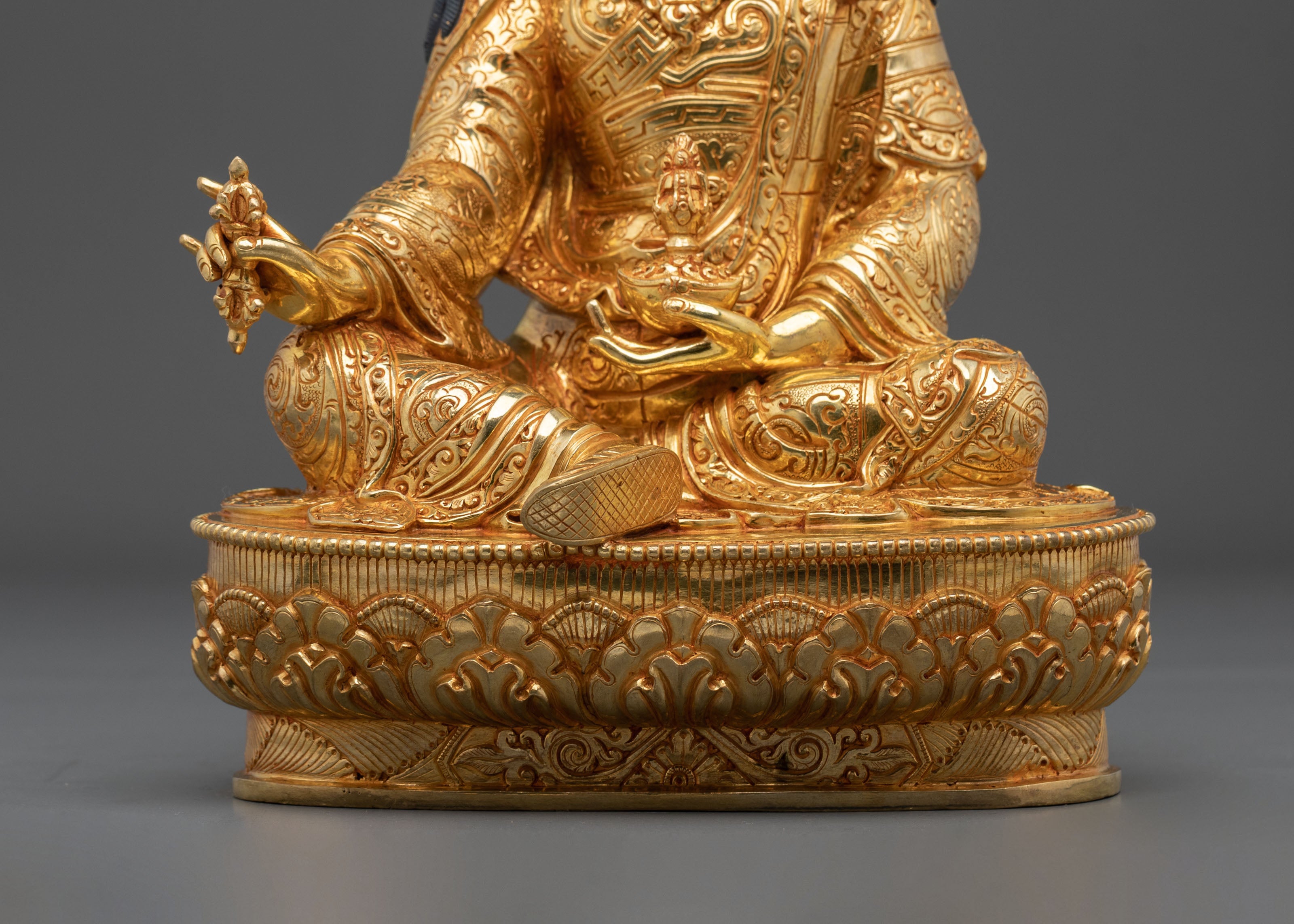
This Lotus Born Guru Rinpoche Statue measures 12.4 inches (31.5 cm) in height with an 8.3-inch (21 cm) base and weighs 3.31 kg. Formed from a copper body, the sculpture is enriched with radiant 24K gold gilding and carefully applied acrylic painting. The gilding brings warmth to the figure’s sculpted contours, while painted accents add definition and contrast to the facial features and decorative details. Together, these finishes emphasize the layered garments, ceremonial headwear, and ornamental pedestal associated with traditional Himalayan Buddhist sculpture. Its substantial yet manageable proportions make it suitable for a personal shrine, meditation room, or dedicated Buddhist altar, where it can serve as a focus for contemplation and devotional practice.
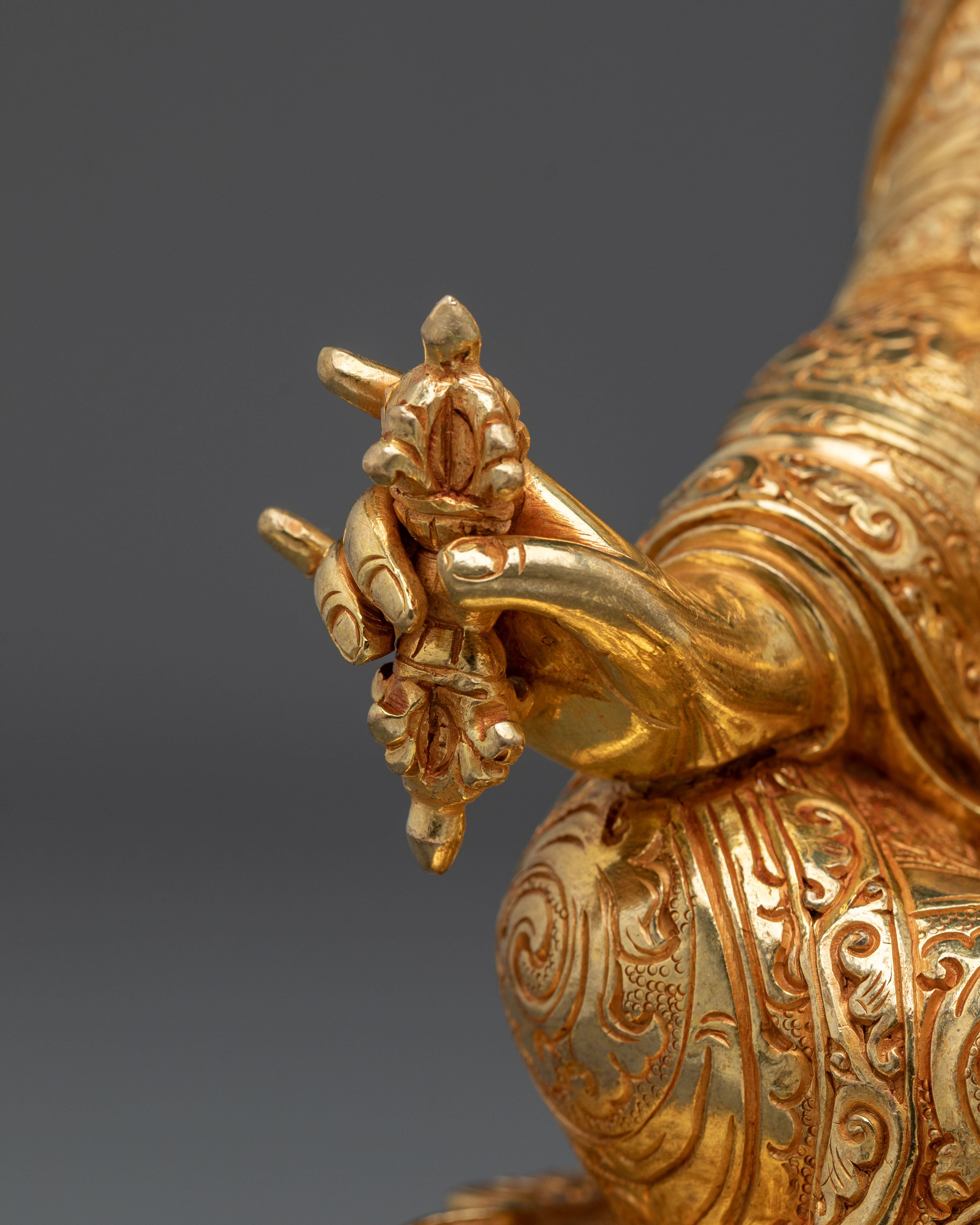
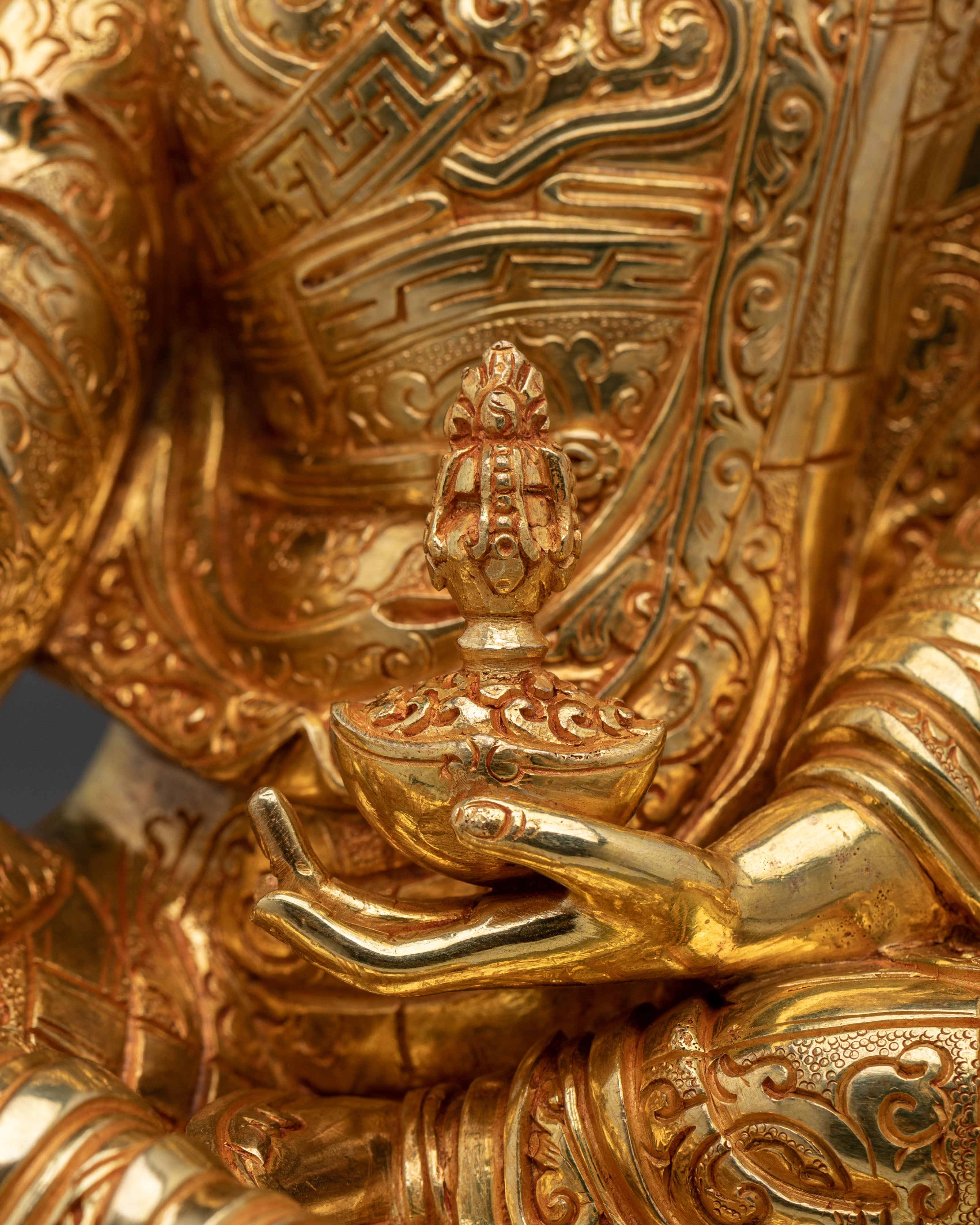
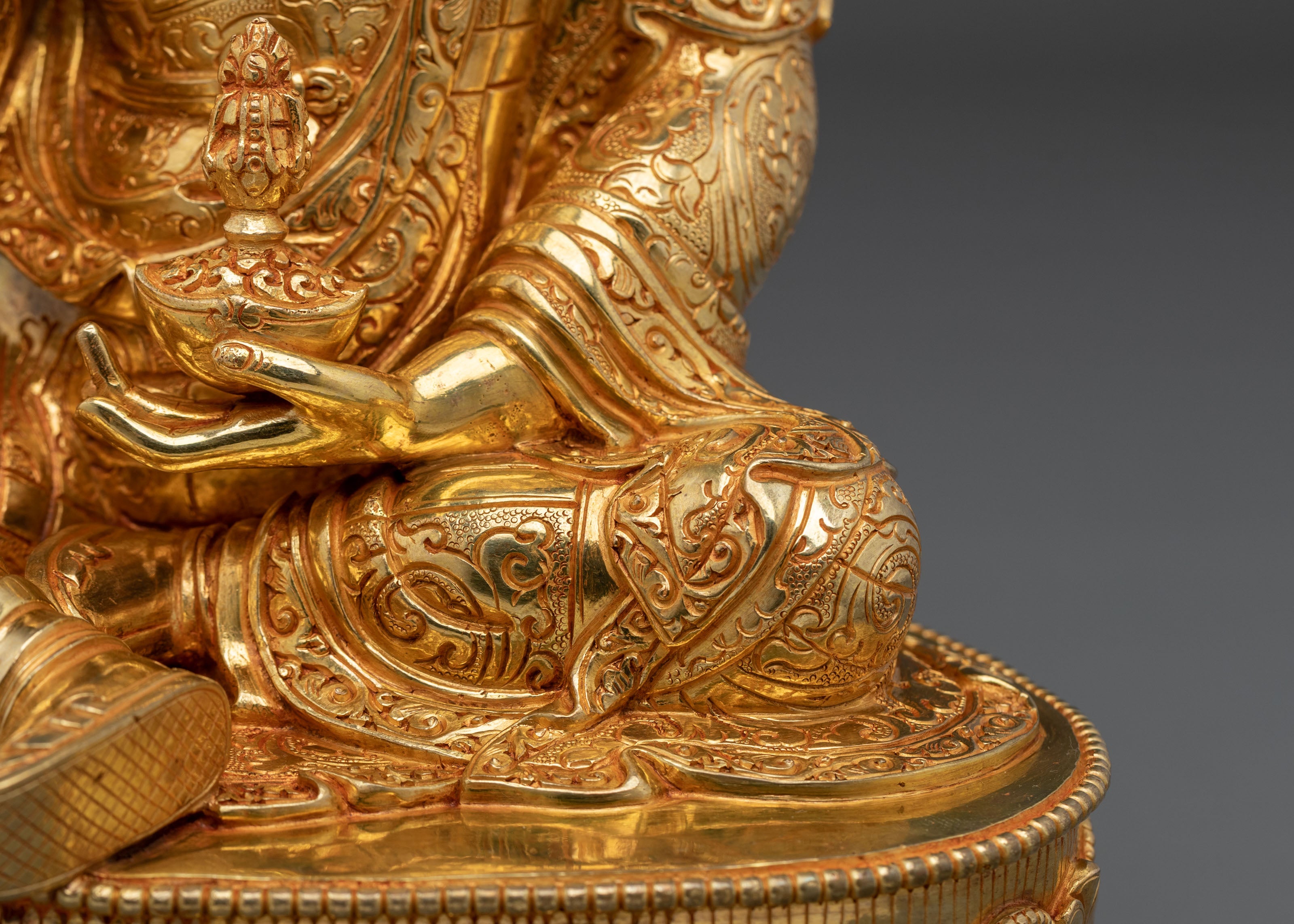
Guru Rinpoche, also known as Padmasambhava or the Lotus-Born Master, is traditionally portrayed seated upon a lotus pedestal, wearing richly layered robes and his distinctive lotus hat. His right hand holds a vajra near his heart, representing the indestructible nature of awakened wisdom, while his left supports a skull cup containing a long-life vase. The cup and vase are associated with the nectar of realization and longevity. A khatvanga staff rests beside his left shoulder, completing his recognizable tantric appearance and symbolizing the inseparability of wisdom and skillful means. His composed yet commanding expression conveys both compassionate guidance and the strength to overcome obstacles. The lotus recalls his traditional miraculous birth and the purity of awakening amid worldly conditions. Revered for his central role in establishing Vajrayana Buddhism in Tibet, Guru Rinpoche embodies the transformation of difficulties into opportunities for spiritual understanding and compassionate action.
Size: 12.4”/31.5cm (Height) x 8.3”/21cm (Base)
Weight: 3.31 kg
Material: 24K Gold Gilded, Acrylic Painting, Copper Body
Guru Rinpoche, or Padmasambhava, is the legendary "Lotus-Born" master who successfully introduced Vajrayana Buddhism to Tibet in the 8th century. Frequently referred to as the Second Buddha, he is credited with subduing obstacles to the Dharma and hiding "terma" or spiritual treasures for future generations to discover. His presence is central to Himalayan spiritual life, representing the ability to transform ordinary perception into enlightened wisdom through courageous practice.