Marpha and Gompopa Statue Set | Revered Kagyu Masters
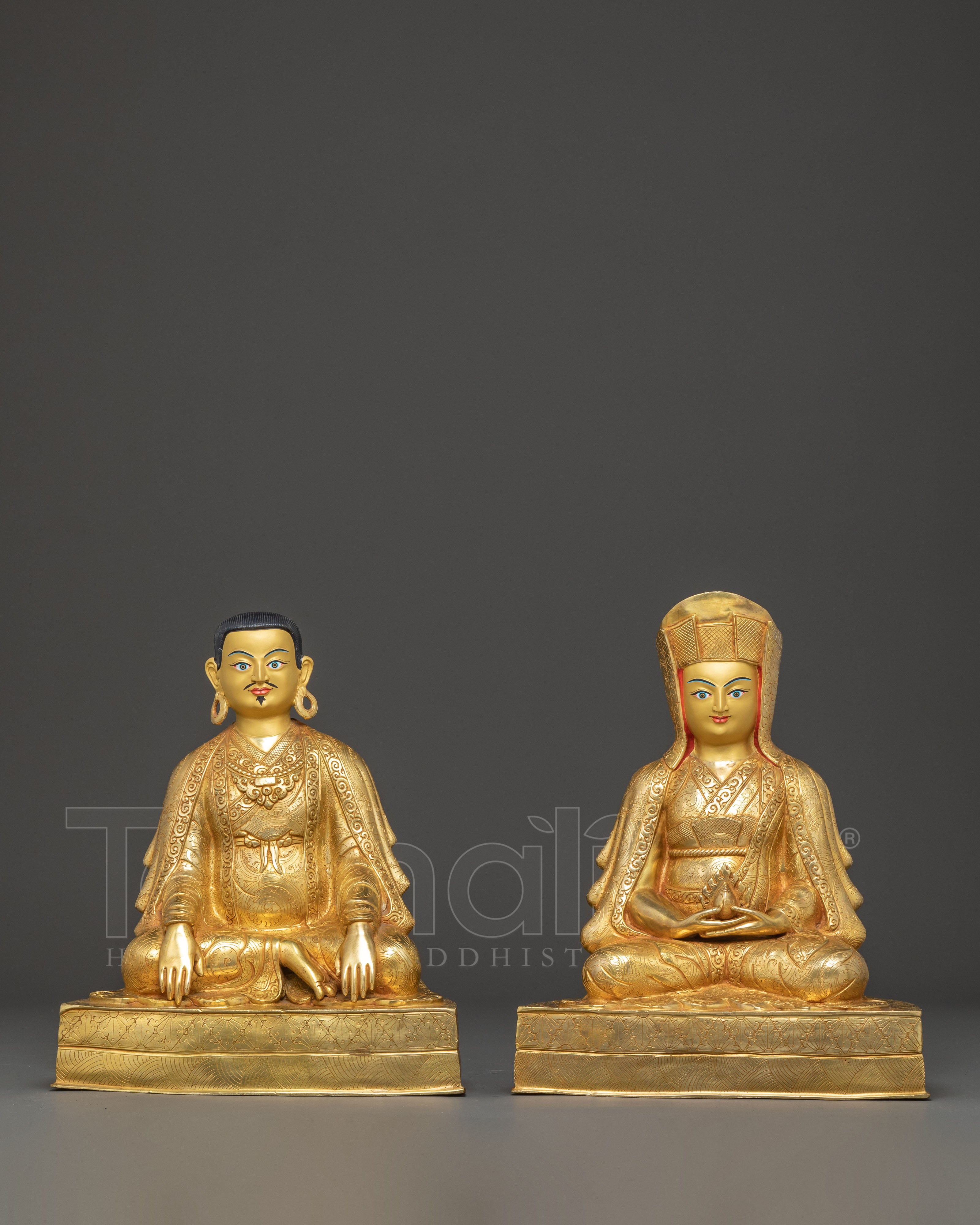
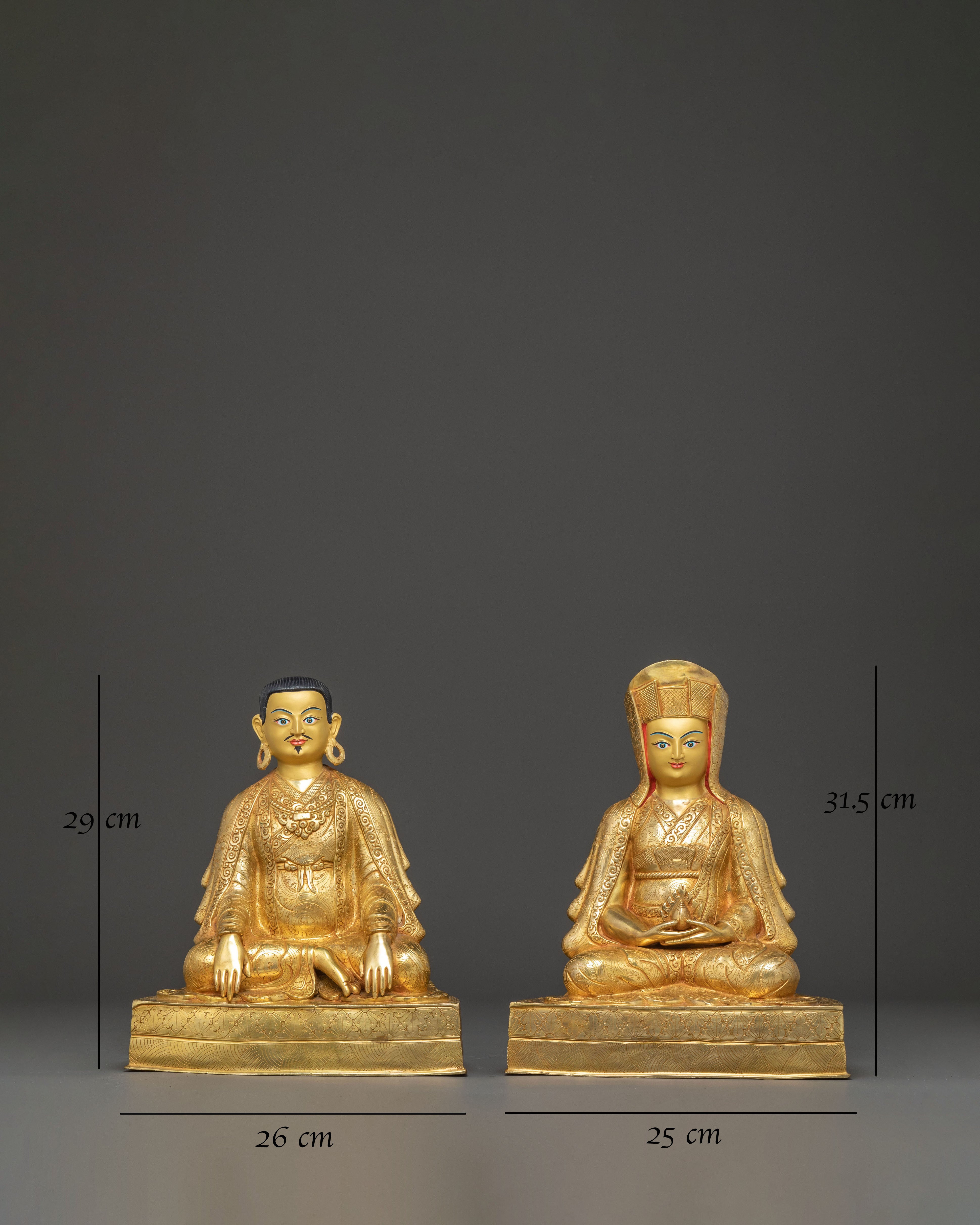
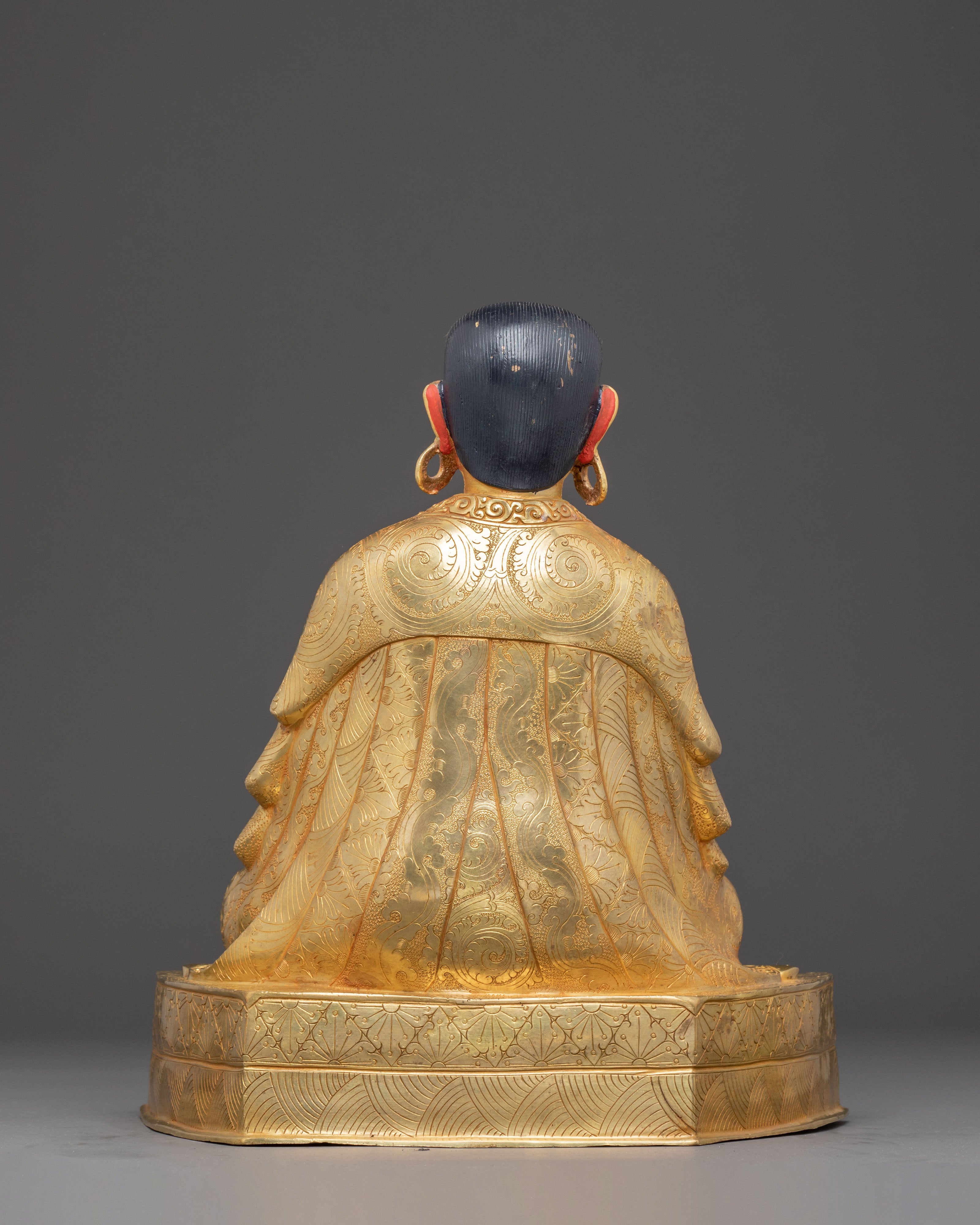
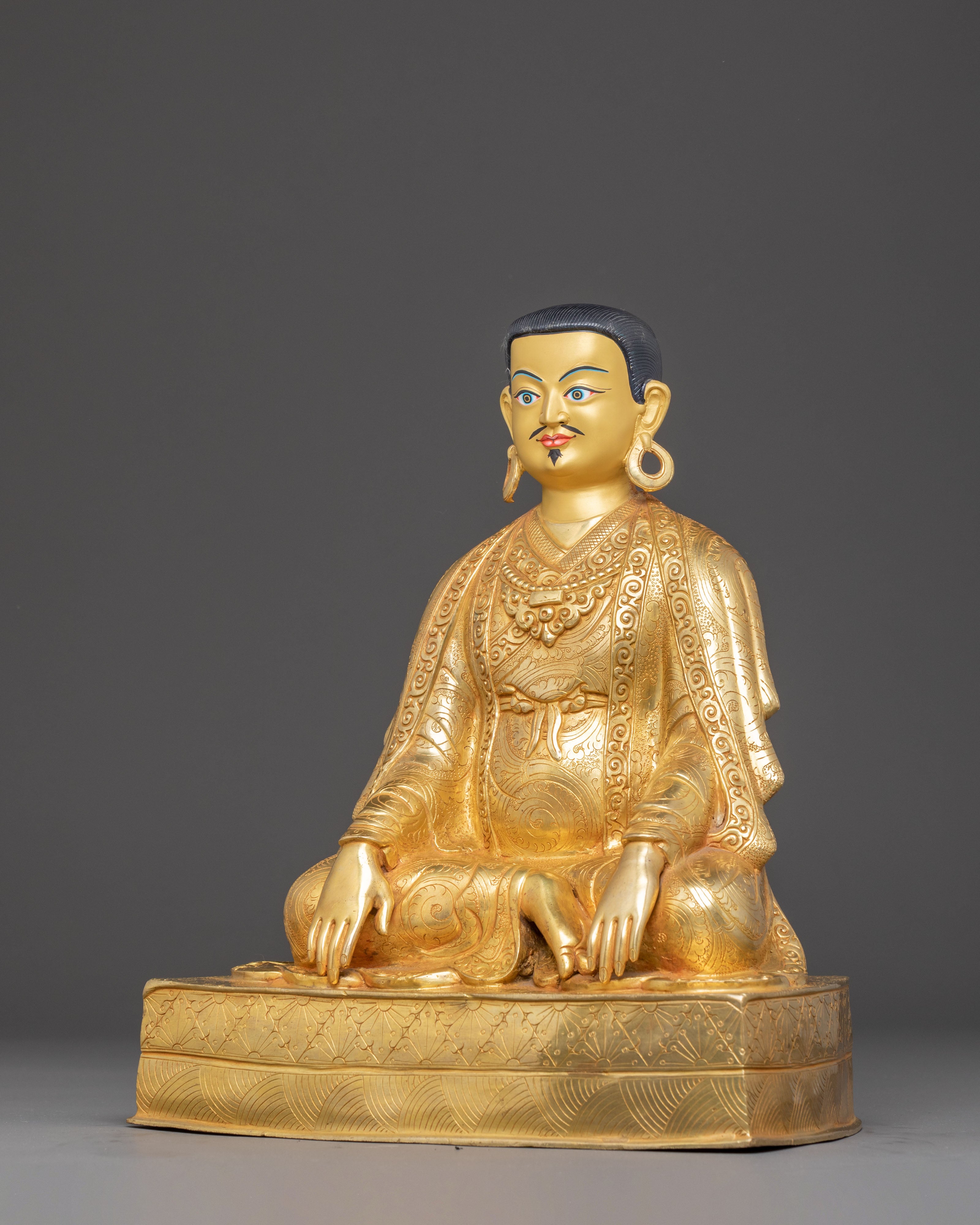
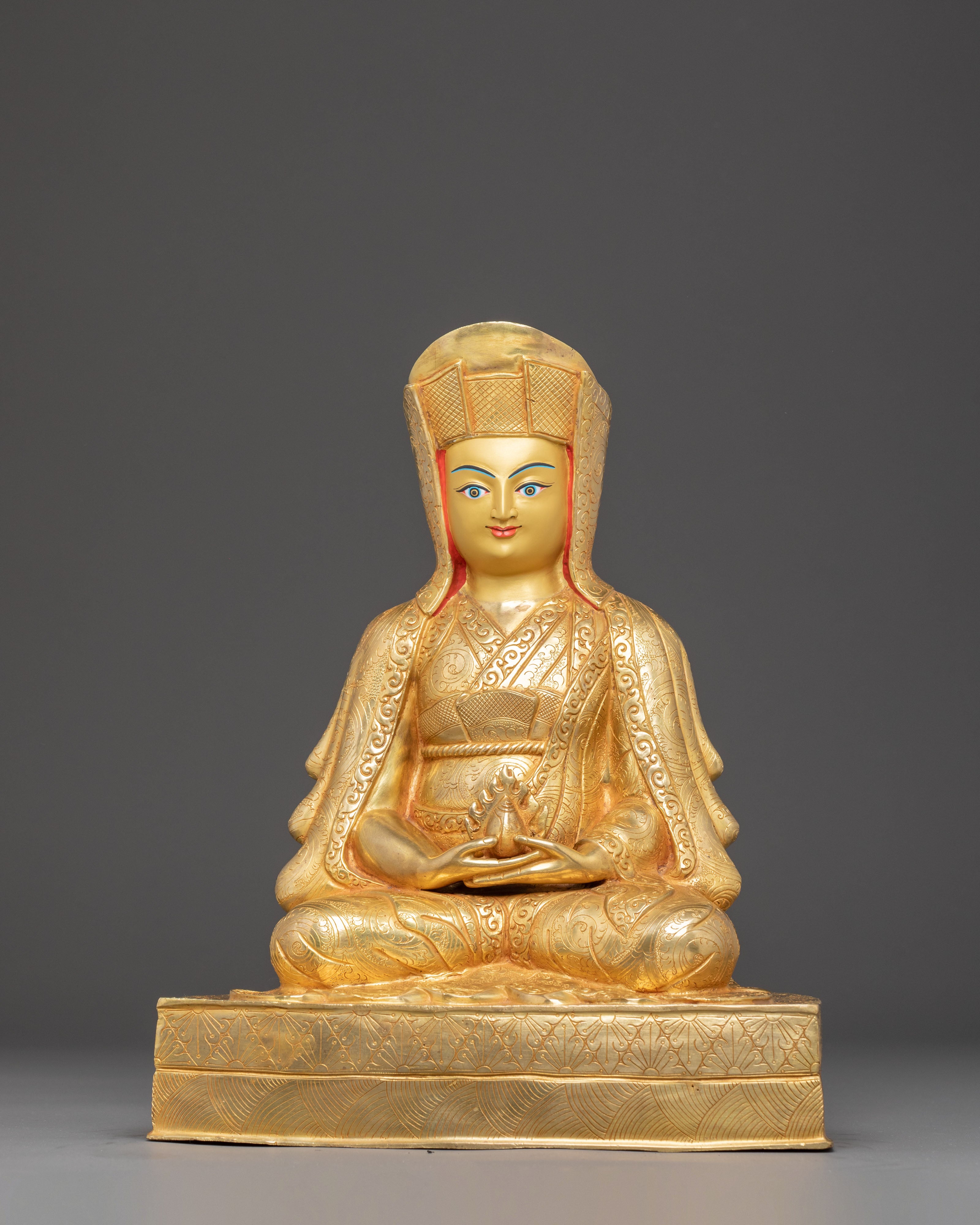
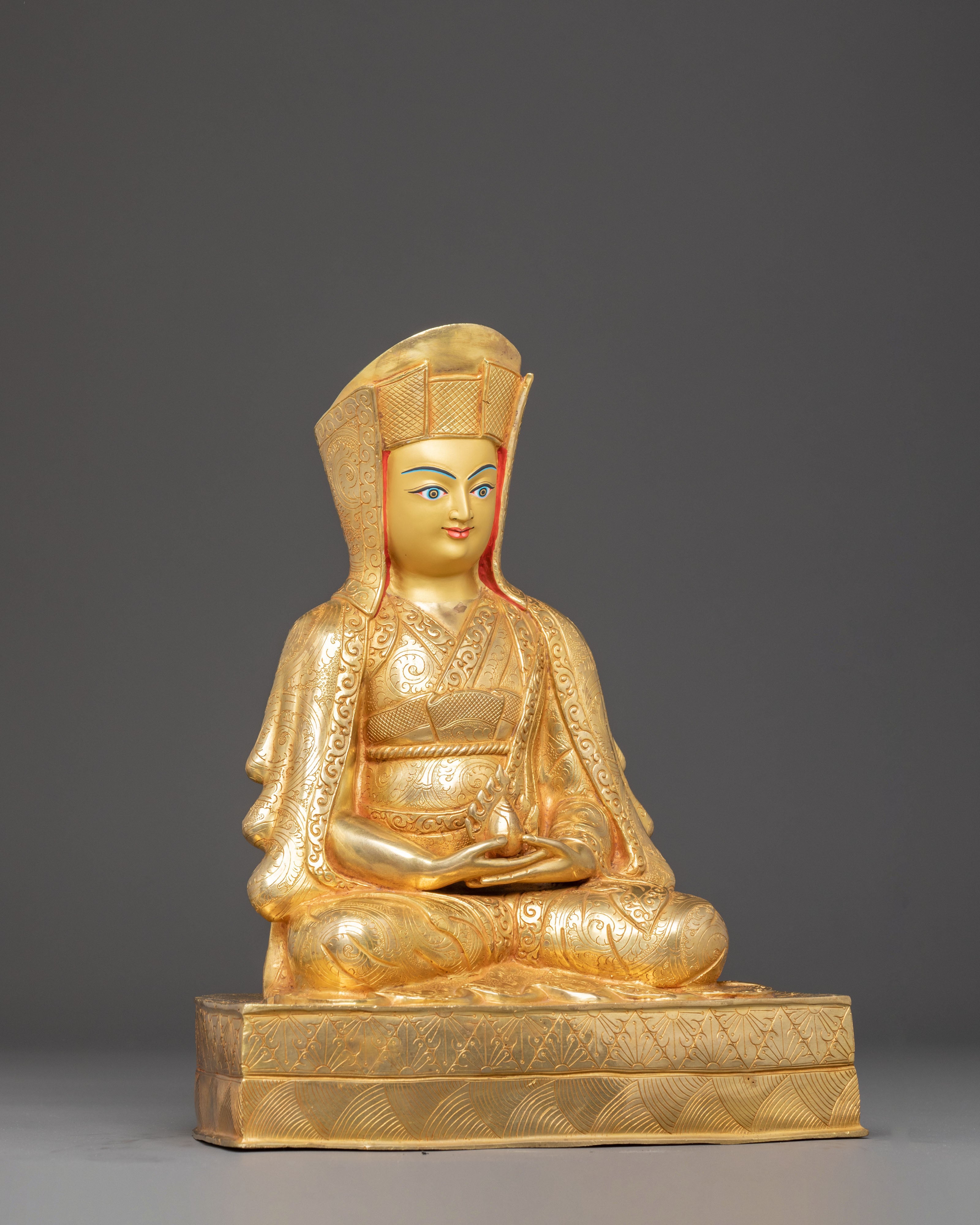
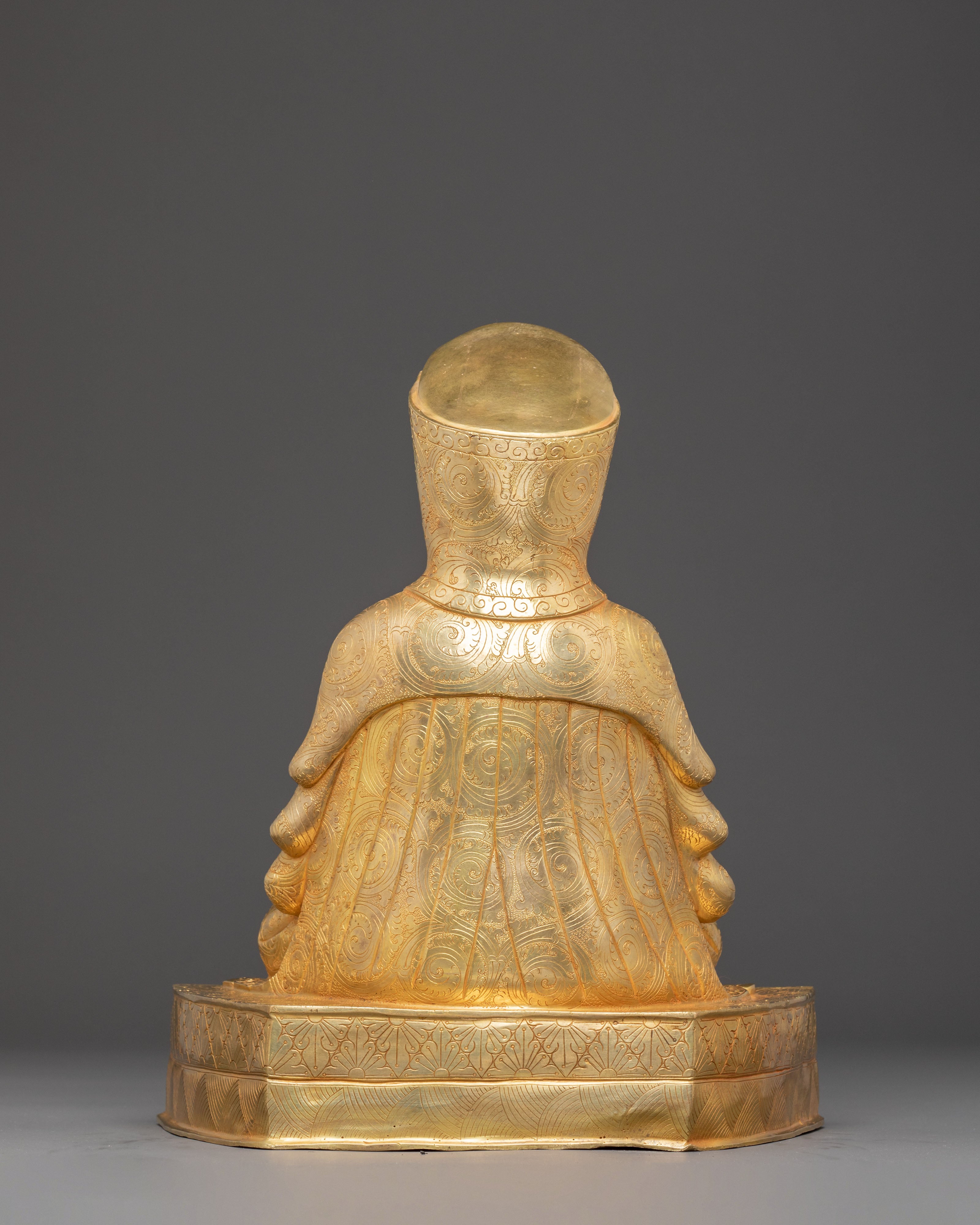
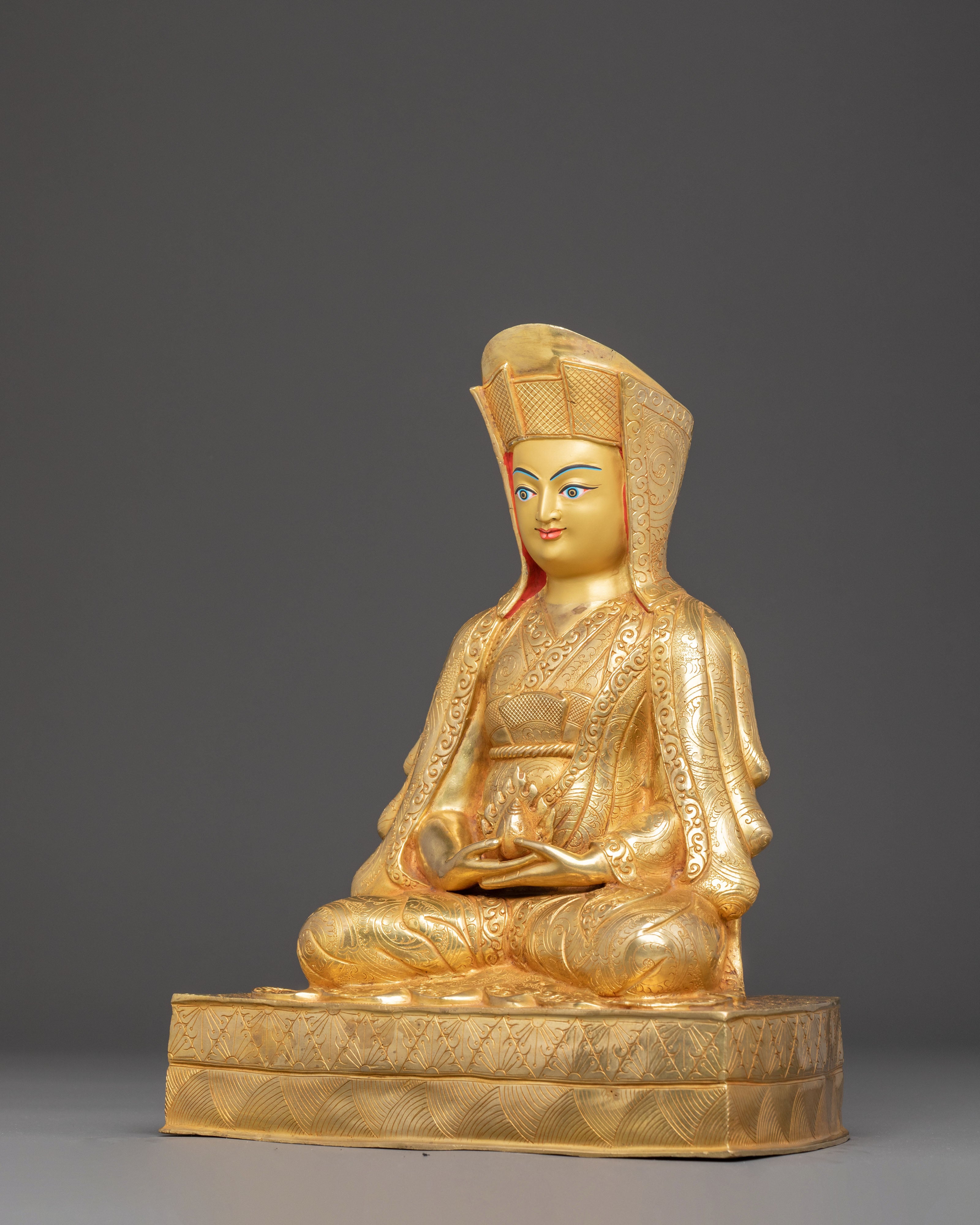
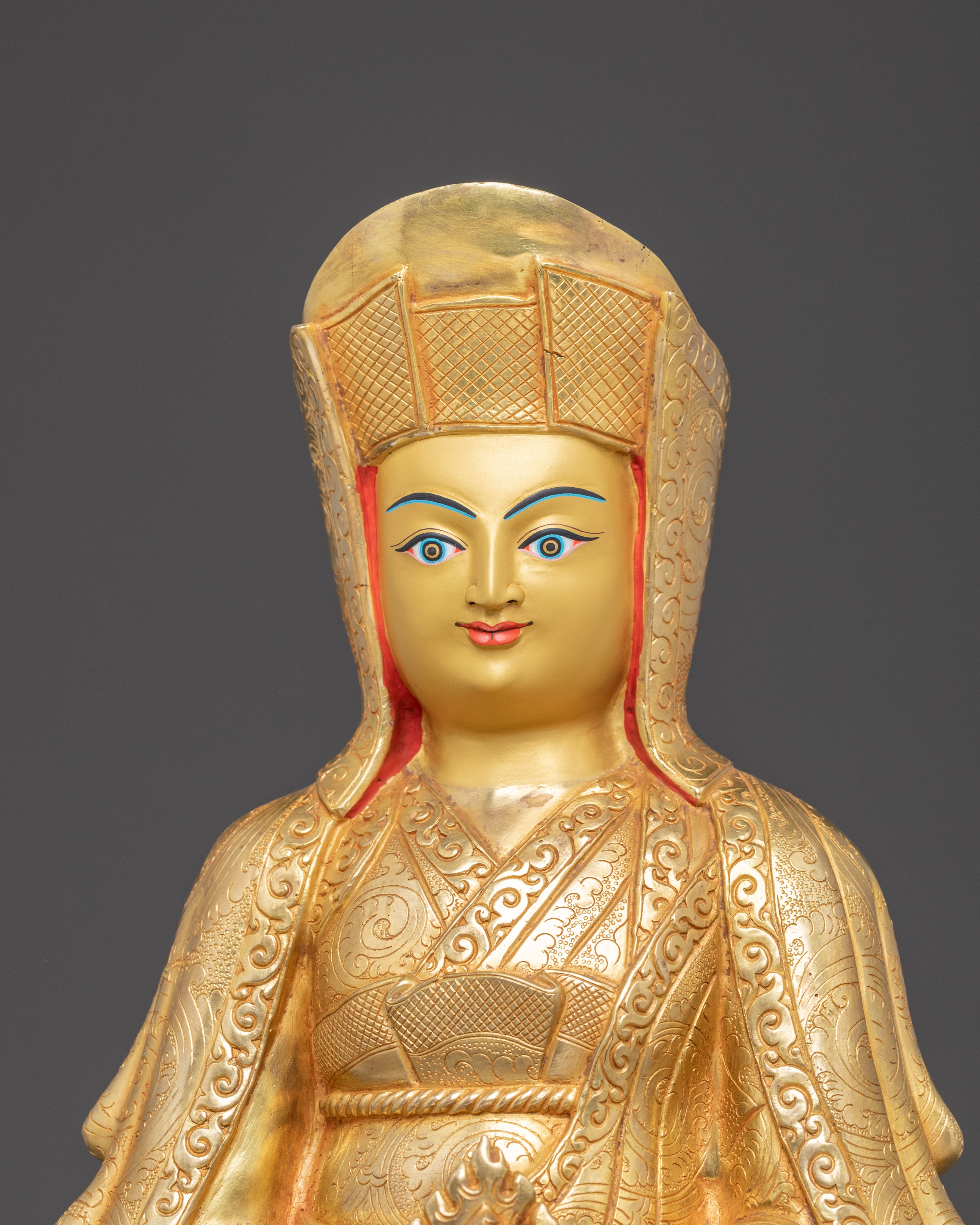
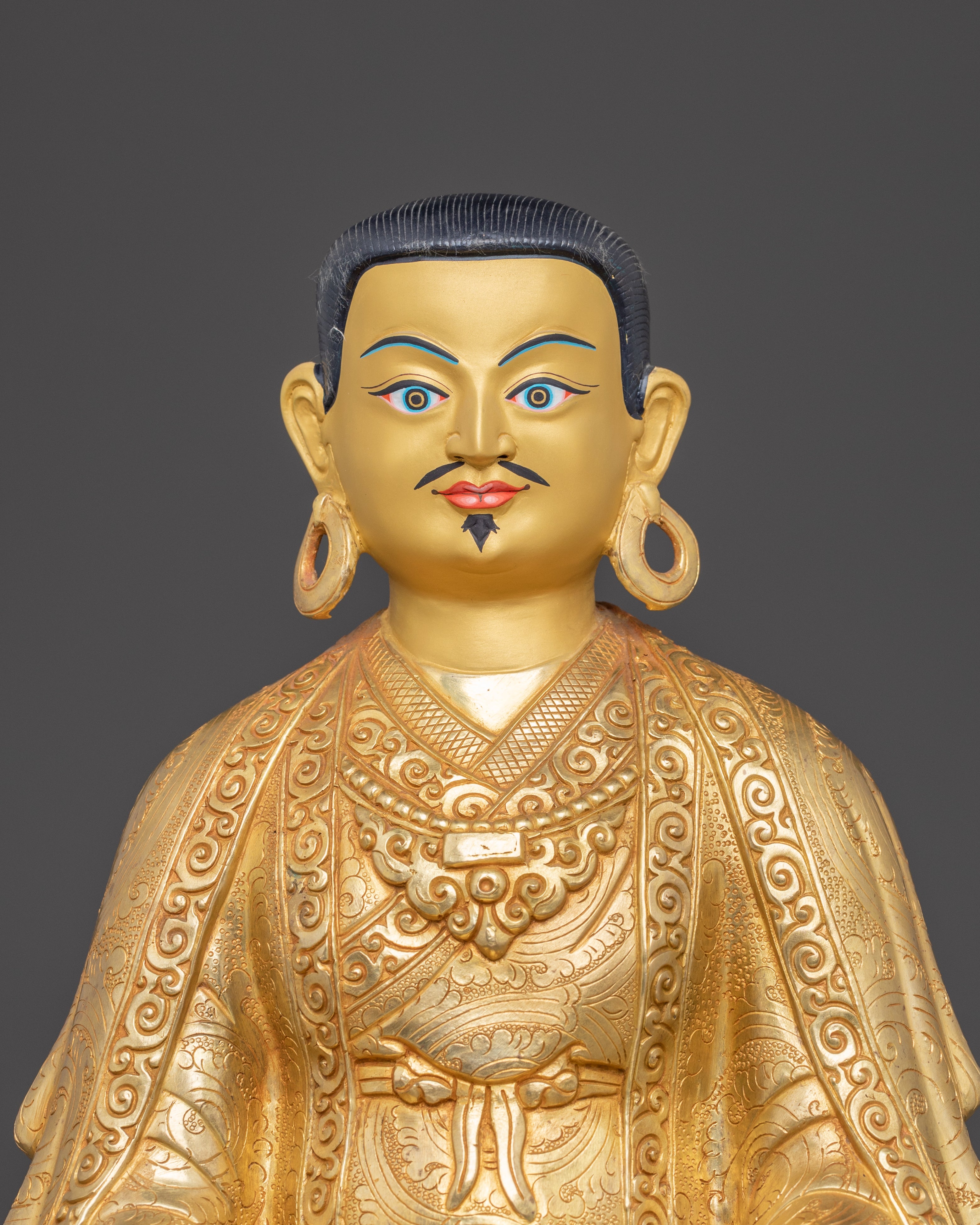
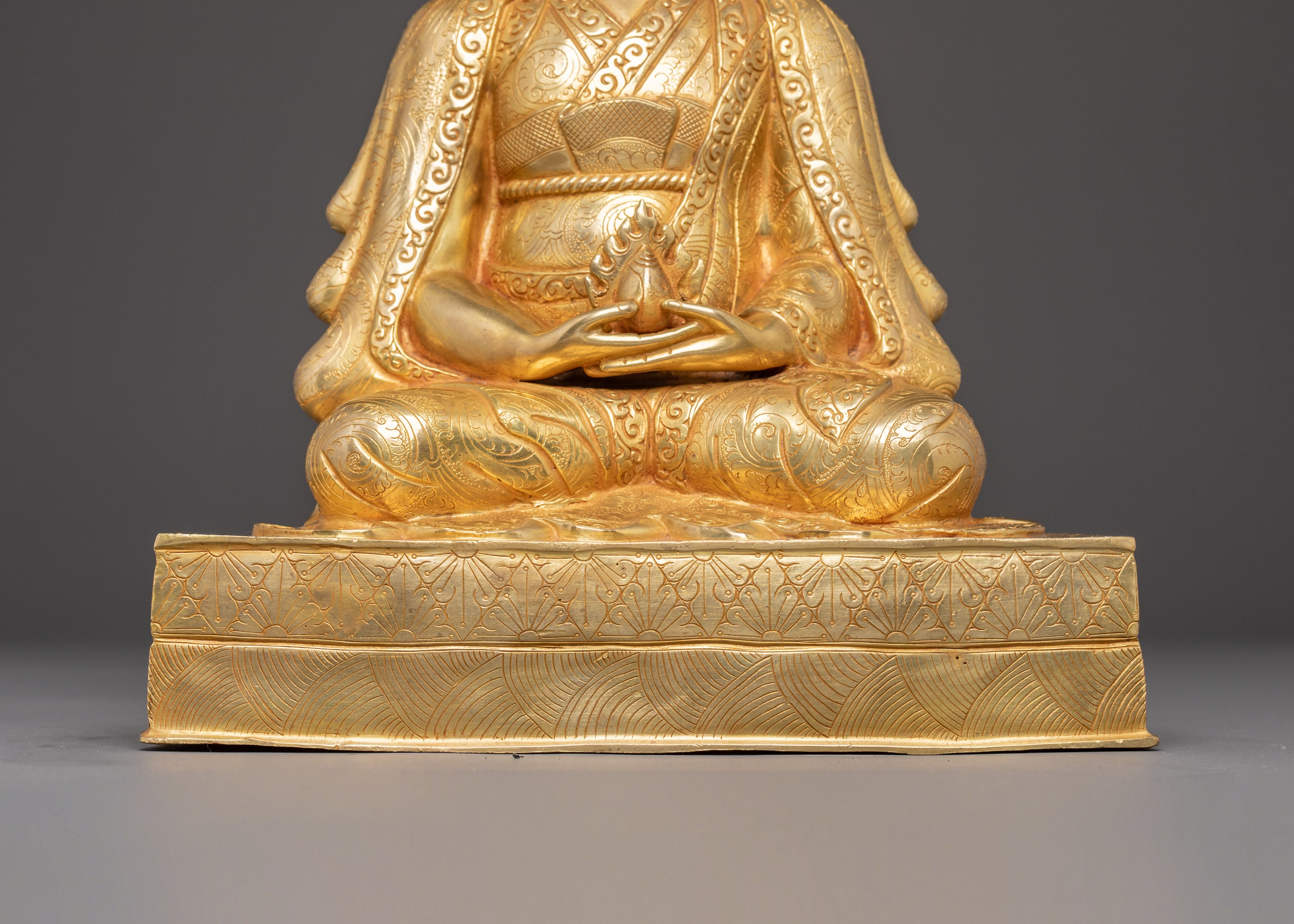
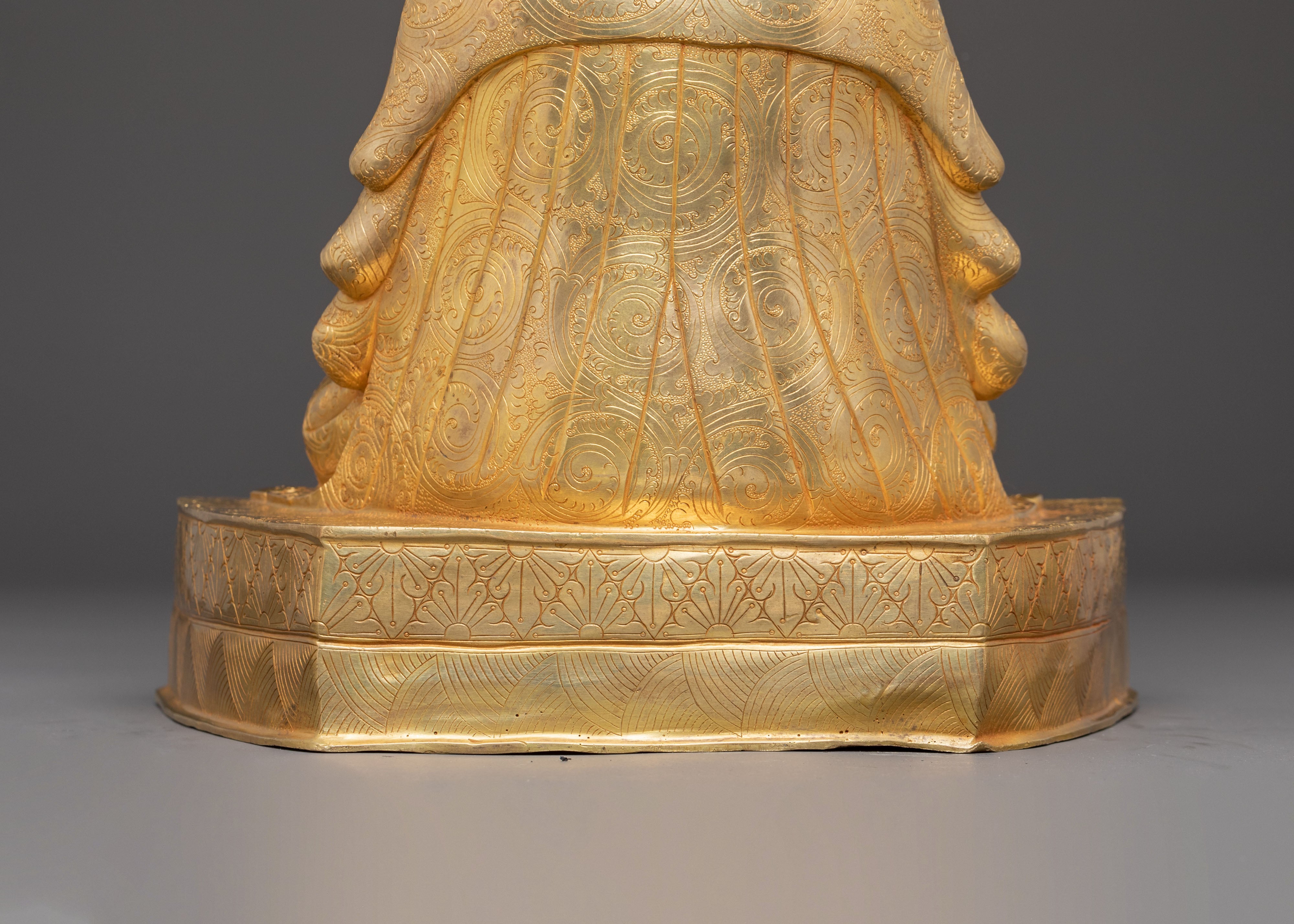
The Marpha and Gompopa Statue Set, revered Kagyu Masters, measures 12.4 inches (31.5 cm) in height and 9.8 inches (25 cm) at the base, representing two influential figures in Tibetan Buddhism. Weighing 4.65 kilograms, this statue is crafted with 24K gold gilding, gold and acrylic paintings, and a copper body, making it a perfect addition to any meditation space or spiritual collection.
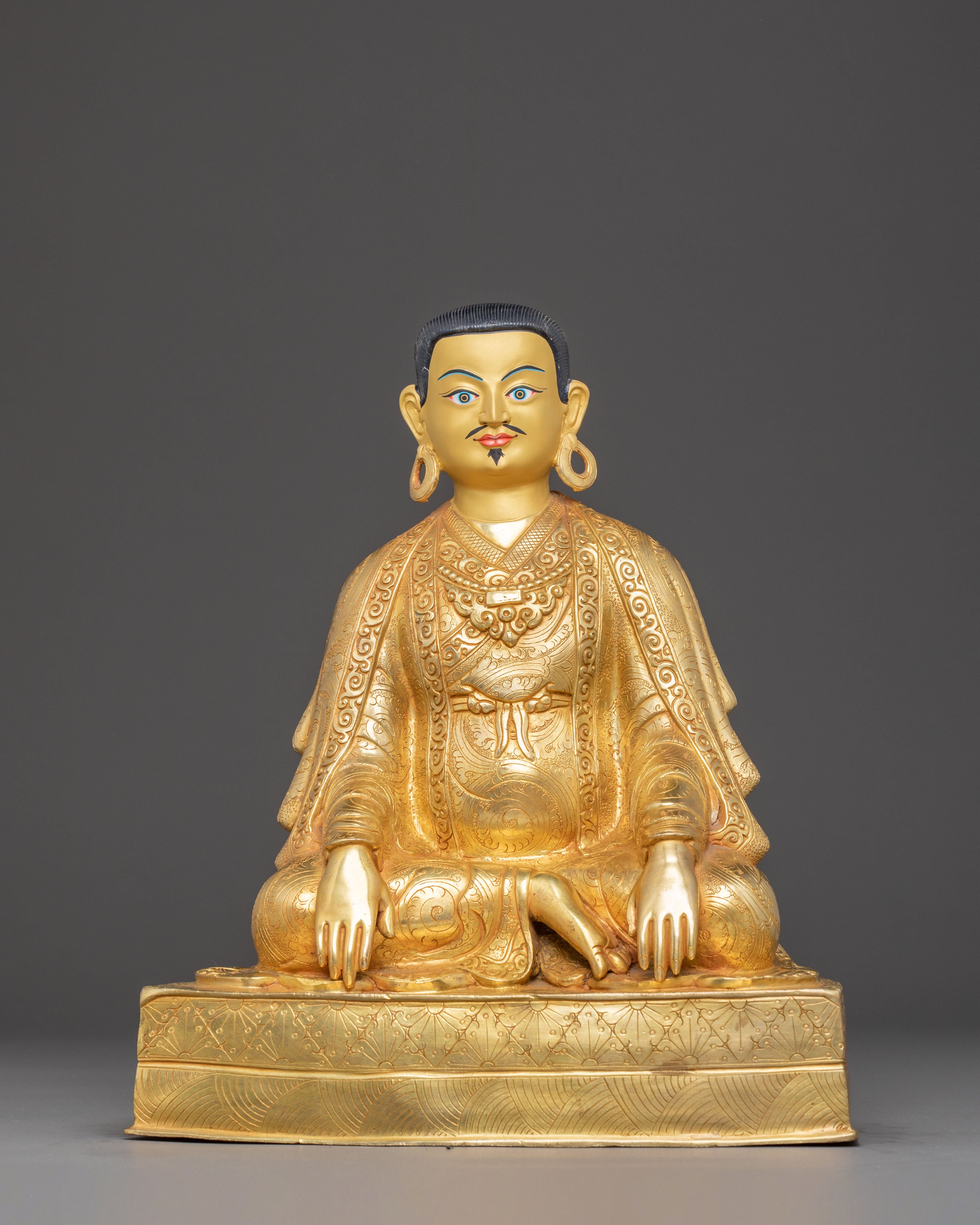
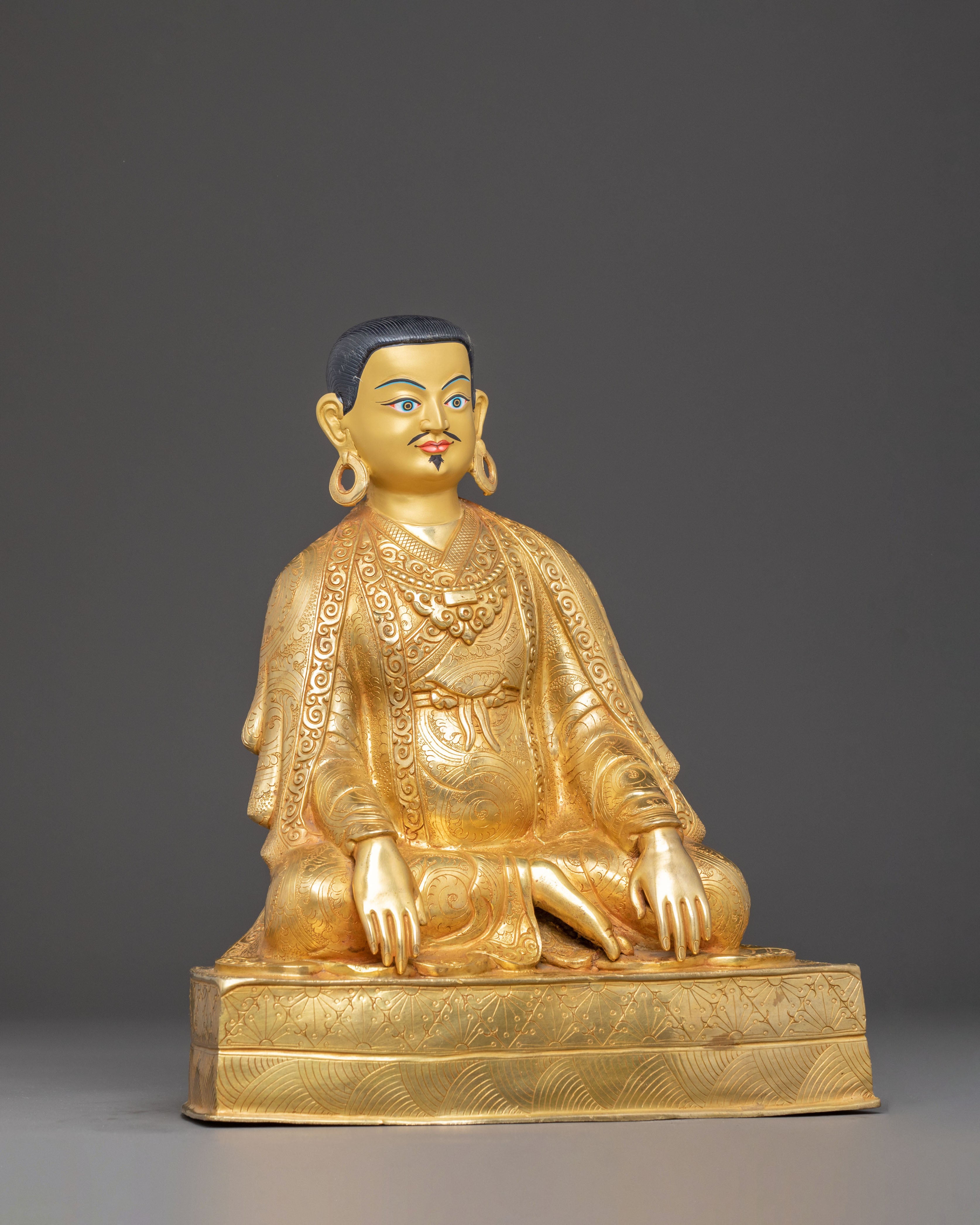
Marpa, the great Tibetan translator and teacher, is depicted seated in padmāsana (lotus posture), exuding calmness and grounded wisdom. He wears the traditional monastic robes, symbolizing discipline and renunciation. His mature face, with its black hair, radiates serenity and insight, reflecting the depth of his meditative realization. Both his hands rest in the bhūmisparśa mudrā (earth-touching gesture), signifying the moment of unwavering determination and the earth's call to witness his enlightenment.
The statue of Gampopa has typical Tibetan Buddhist imagery for this renowned figure. The figure is dressed in monastic robes that are patterned and symbolize his monastic rank and level of spiritual development. His position as a teacher and healer is symbolized by the gesture of his hands clutching a sacred object, which could be a medicinal plant or a depiction of the Dharma. Interestingly, he wears a distinctive headgear that denotes his status and power within the Kagyu lineage. The statue's serene expression invites reflection on his teachings and contributions to Buddhist philosophy, as it exudes wisdom and compassion.
Size: 12.4”/31.5cm (Height) x 9.8”/25cm (Base)
Weight: 4.65kg
Material: 24K Gold Gilded, Gold & Acrylic Paintings, Copper Body
Marpa (1012–1097), also known as Marpa Lotsawa, was a renowned Tibetan Buddhist master, translator, and teacher. He is considered one of the most excellent translators in Tibetan Buddhist history and is often referred to as the "King of Translators." Marpa studied extensively in India under renowned gurus, returning to Tibet to teach and transmit the Vajrayana teachings he had received. He is particularly known for his role in bringing the Mahamudra and Kadampa teachings to Tibet, founding the Kagyu school of Tibetan Buddhism. His life and teachings emphasized the importance of personal spiritual practice and close association with a qualified guru. Marpa is venerated as a great translator and teacher who played a pivotal role in establishing Vajrayana Buddhism in Tibet.
Dakpo Lharje, also known as Gampopa (1079–1153), was the founder of the Kagyu monastic tradition and a key figure in Tibetan Buddhism. He was a doctor before turning into a monk and being enlightened with the help of the renowned yogi Milarepa. Gampopa combined the teachings of Milarepa with the monastic discipline of the Kadampa, resulting in a distinctive fusion that served as the basis for the Kagyu school. Tibetan Buddhism was profoundly influenced by his foundational writings, such as "The Jewel Ornament of Liberation," and his students, who included the first Karmapa.