


Description
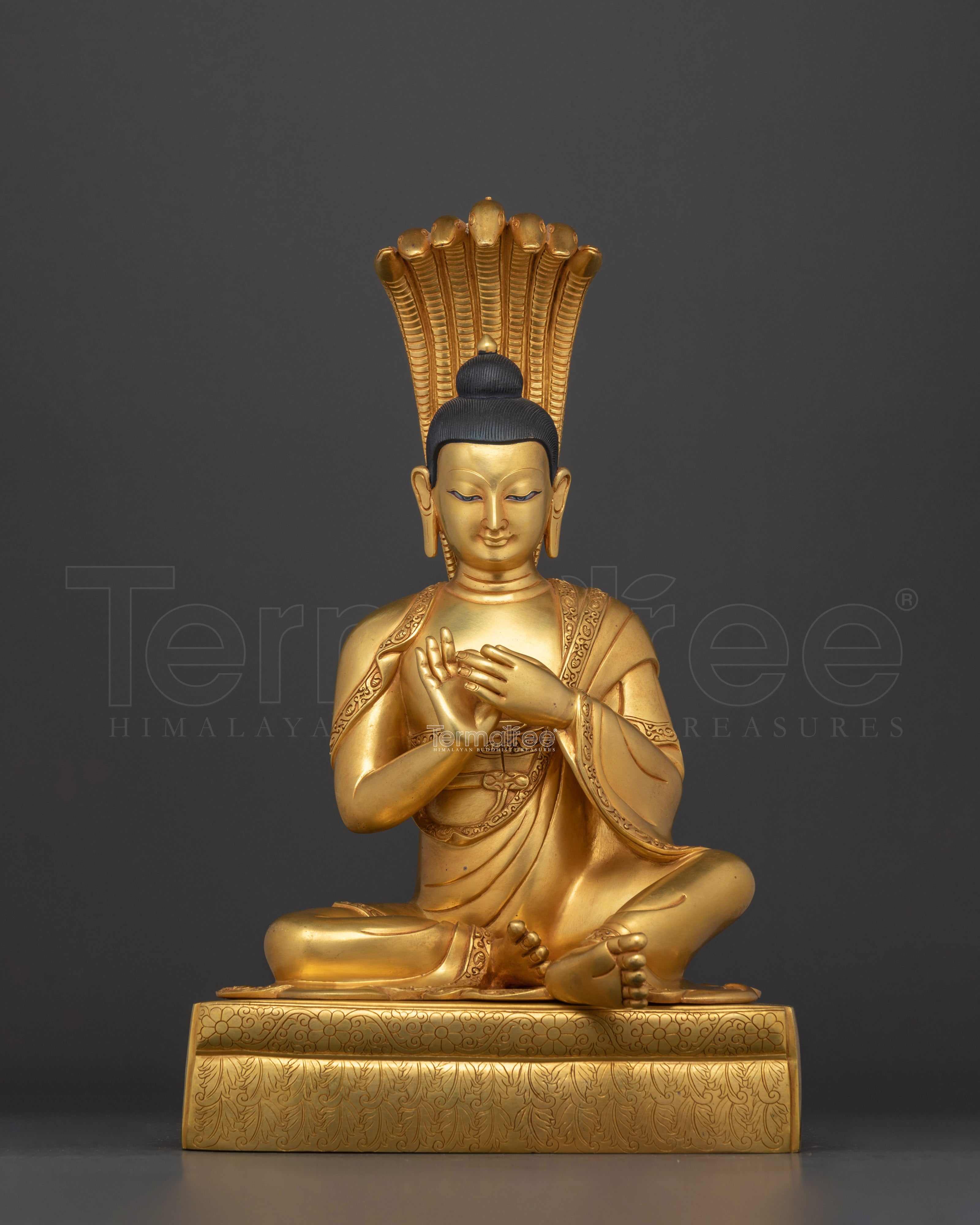
24K Gold Gilded Nagarjuna Figurine – The Revered Philosopher and Founder of Madhyamaka
This magnificent 24K Gold Gilded Copper Nagarjuna Figurine is a magnificent depiction of the respected philosopher and Madhyamaka founder. This traditionally crafted statue of the Buddha Naga Statue was crafted in our studio in Nepal with the best craftsmanship we have to show.
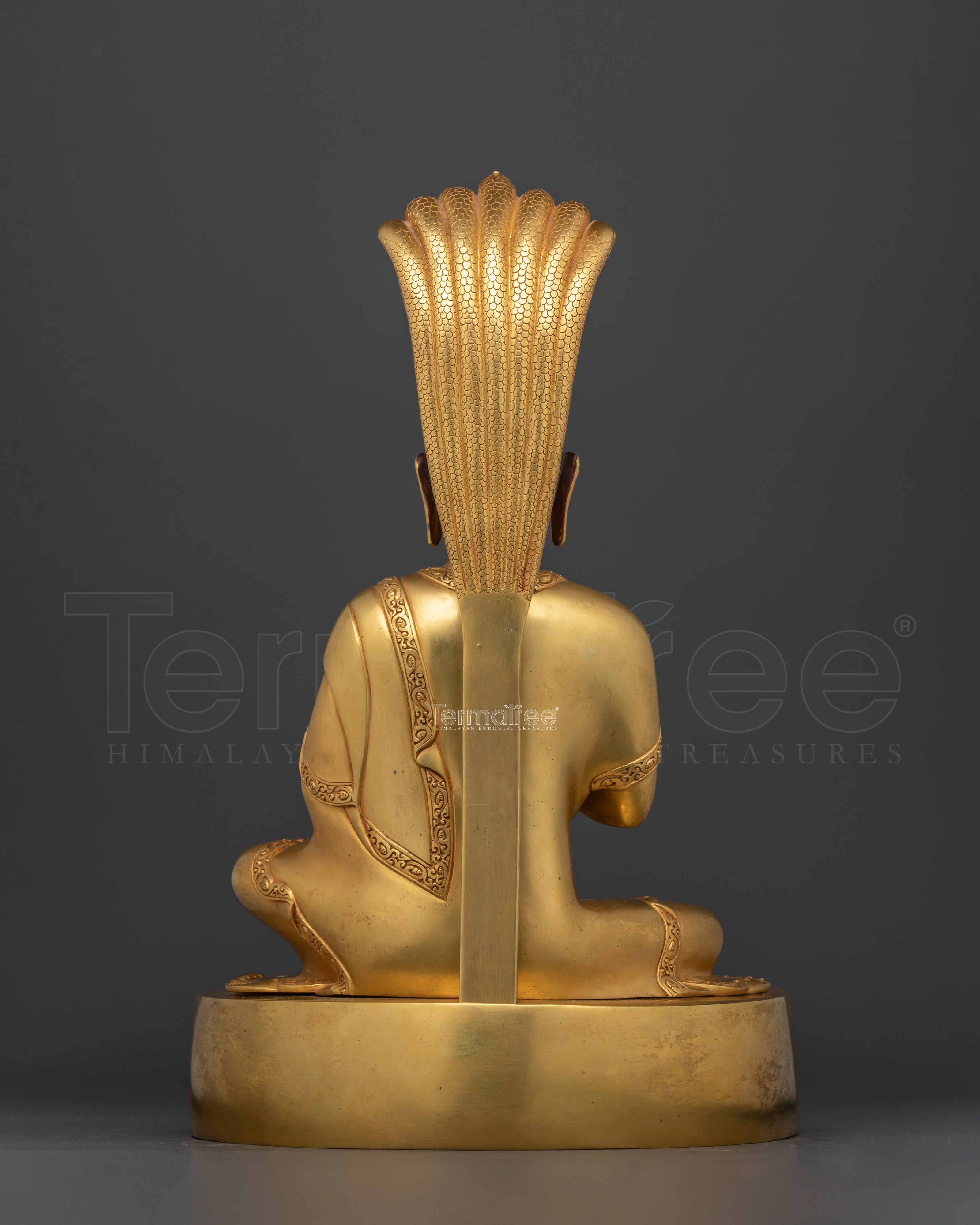
Buddha Nagarjuna is shown as a bodhisattva with a canopy of seven serpents standing upright above his head in the sculpture. To eradicate ego-grasping, the Buddha Nagarjuna is frequently shown in the Dharmacakra mudra, a symbol of the transmission of the theory of emptiness to all sentient beings. He sits on a cushion appropriate for a dharma teacher while donning a saffron-colored robe. This magnificent Buddha Naga Statue will be a wonderful present to a practitioner like you.
Size: 13.6”/34.5cm (Height) x 8.7”/22cm (Base)
Weight: 4.23 kg
Materials: 24K Gold Gilded, Gold & Acrylic Paintings, Copper Body
Two thousand years ago, Nagarjuna lived in India. The second part of the second century of the Christian period was the zenith of Nagarjuna. The Satavahana ruler Gautamiputra Yajnasri was friends with Nagarjuna at the time. He originated in Vidarbha from a prosperous brahmin family. The Middle Way School, often known as the Madhyamaka school of philosophy, was founded by Nagarjuna. Typically, Nagarjuna is shown as a monk wearing orange and crimson robes. The two hands are frequently clasped together as a teaching gesture. He stands out for two specific qualities. On the summit of the head is an ushnisha, which is the first. The second is a head-framing canopy or hood made of seven snakes. He explained sunyata's genuine meaning through a four-point examination. He holds that no phenomenon or individual has a real independent existence.